Download as PDF, PPTX



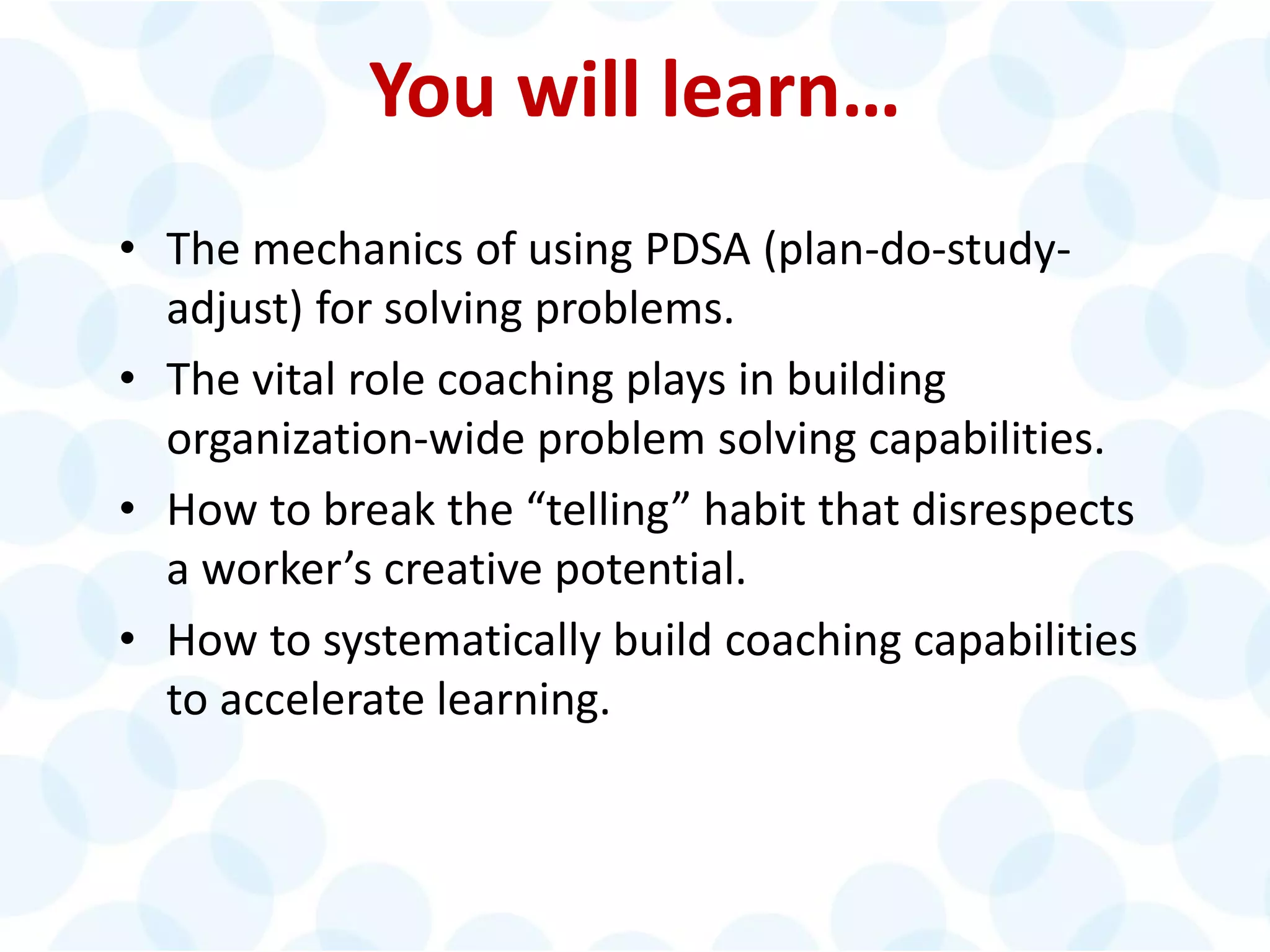







The document outlines a webinar on effective problem solving led by Karen Martin, emphasizing the use of the PDSA (Plan-Do-Study-Adjust) cycle for systematic problem-solving and coaching within organizations. Key components discussed include defining problems, conducting root cause analysis, and utilizing A3 management as a structured approach to foster improvement and critical thinking. The material aims to enhance problem-solving capabilities while stressing the importance of coaching in building these skills across various levels of an organization.
Webinar on effective problem solving facilitated by Karen Martin, showcasing global participation.
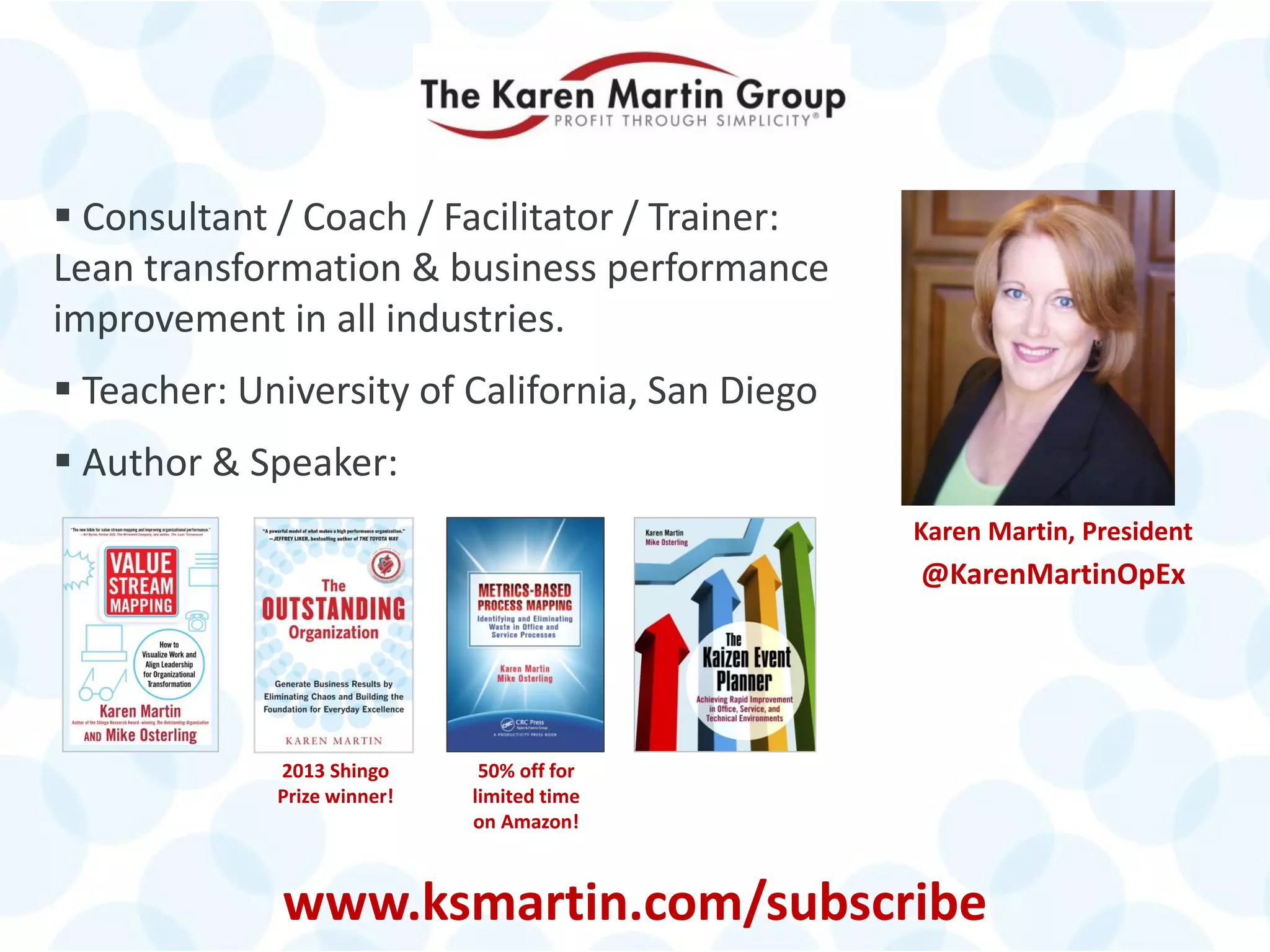
Karen Martin shares her credentials, including her experience in lean transformation and a Shingo Prize.
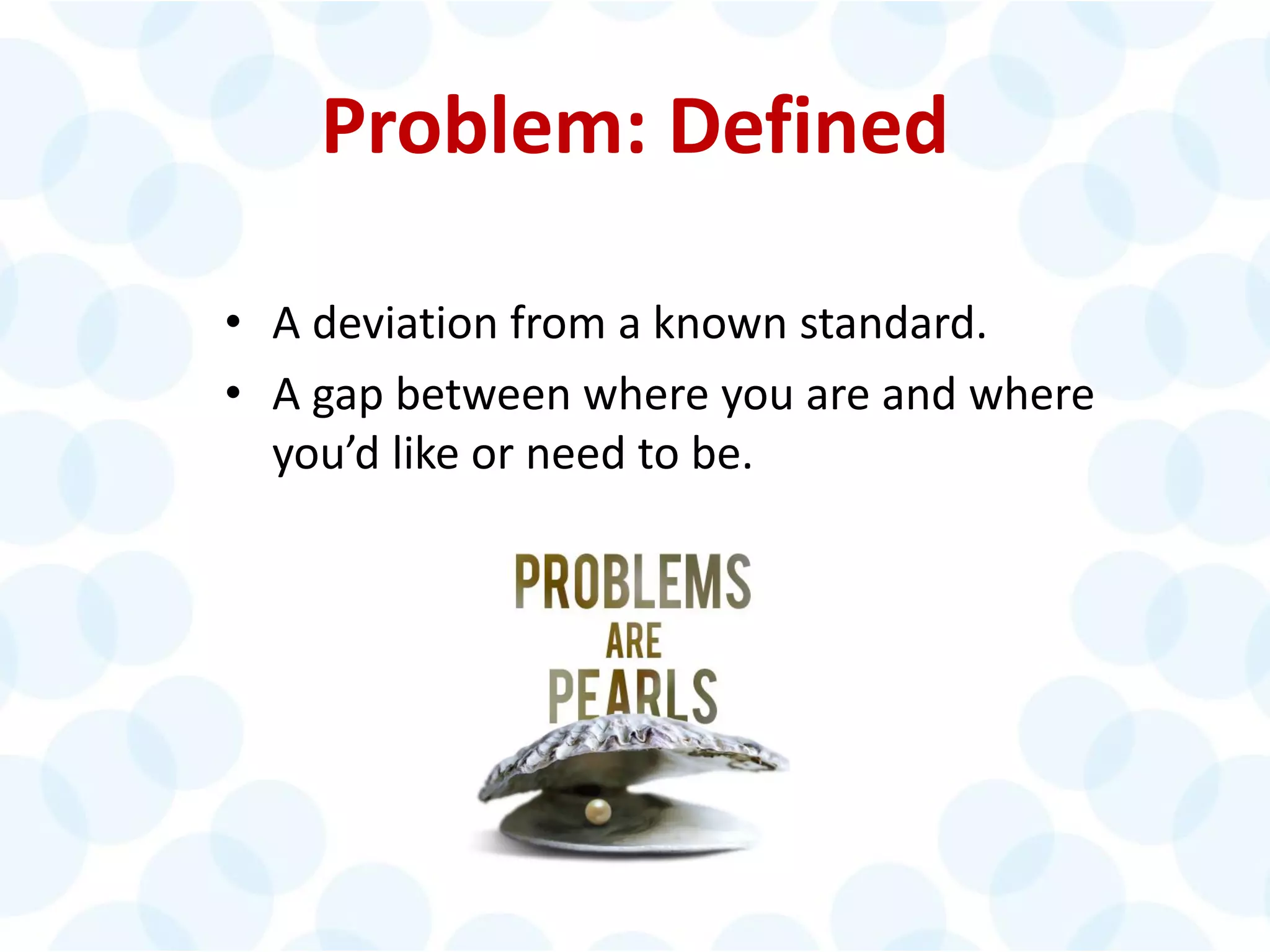
Clarifies what constitutes a problem as a deviation from standards, highlighting that proficiency in problem-solving is not innate.
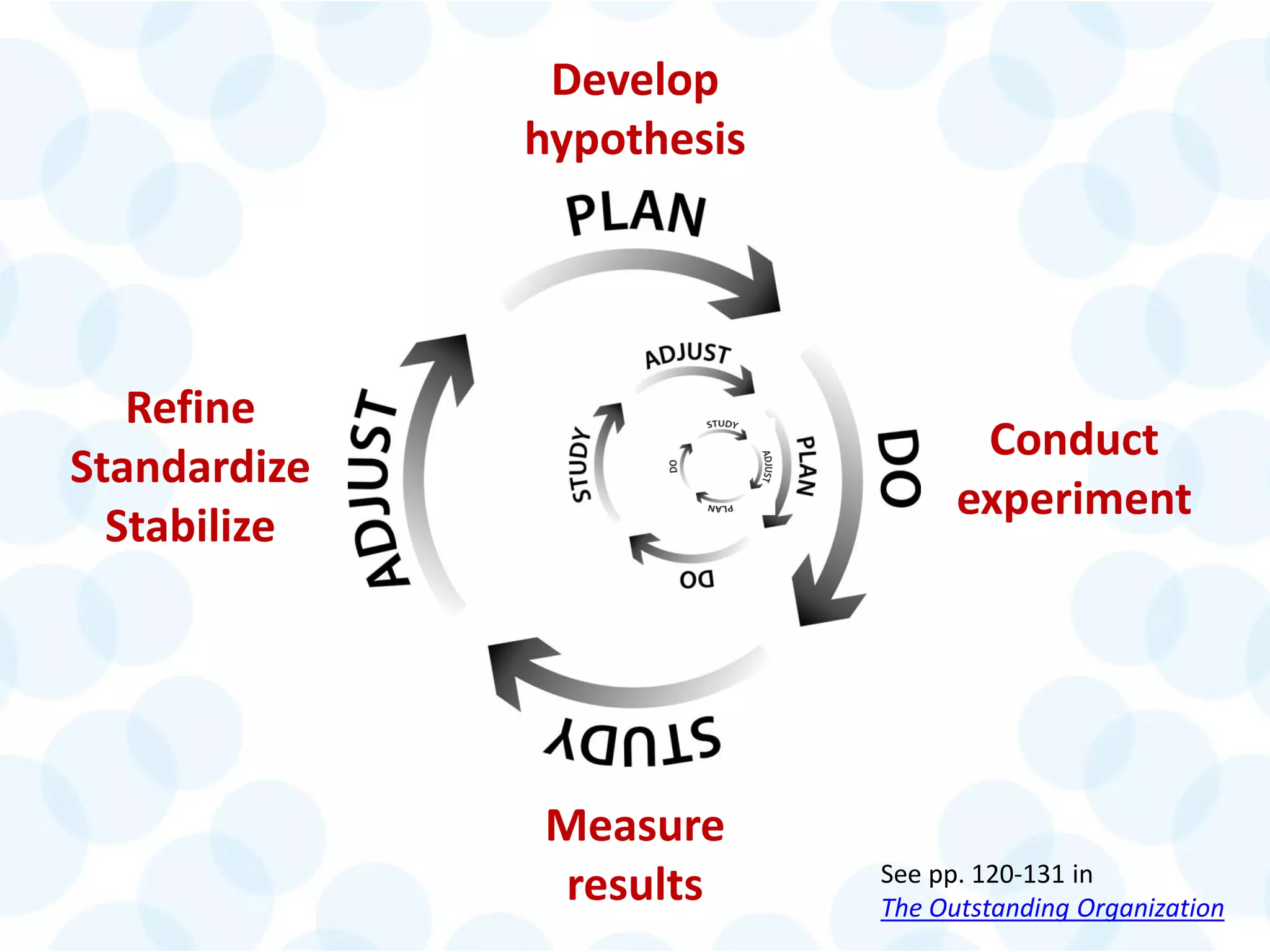
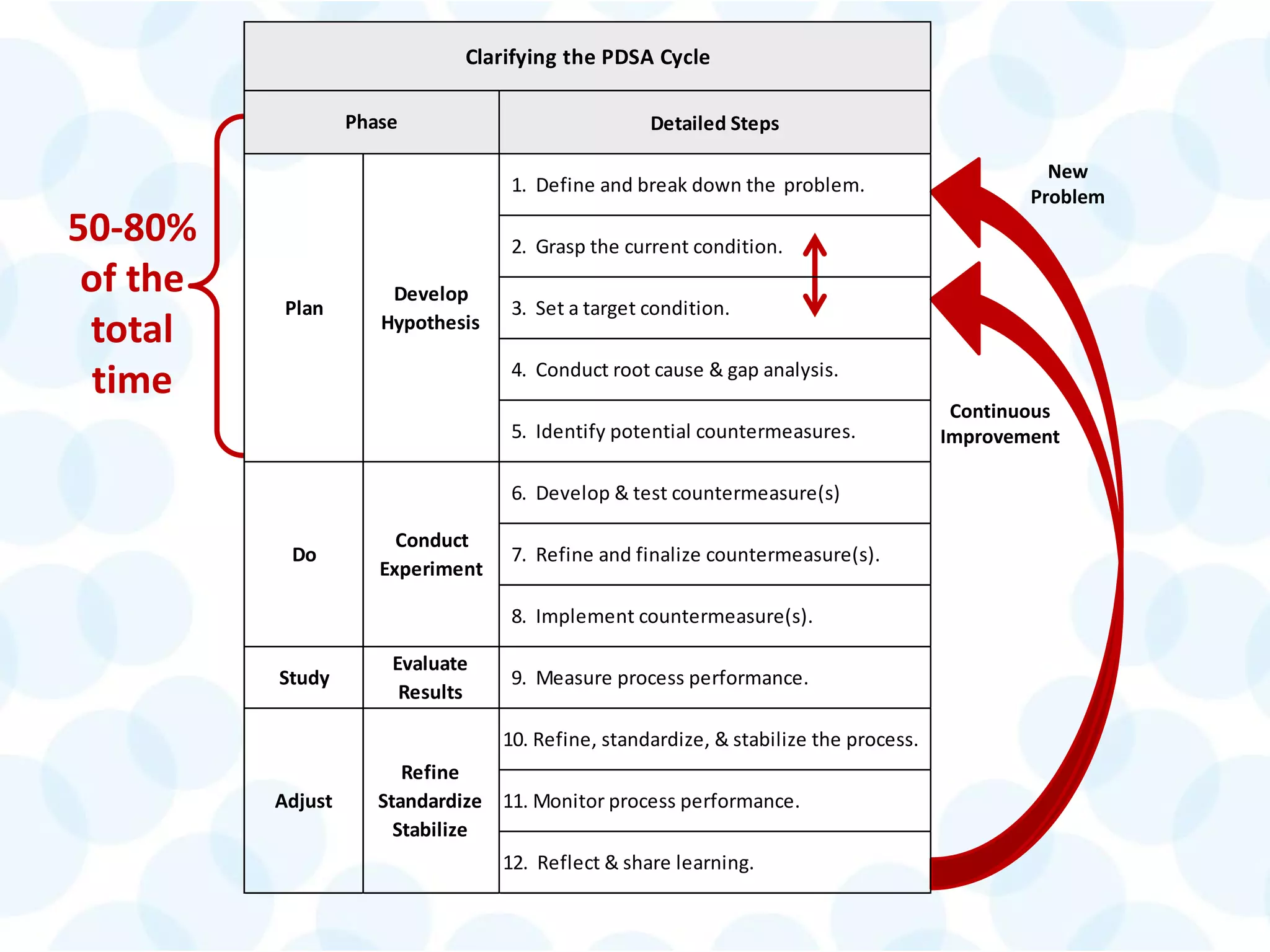
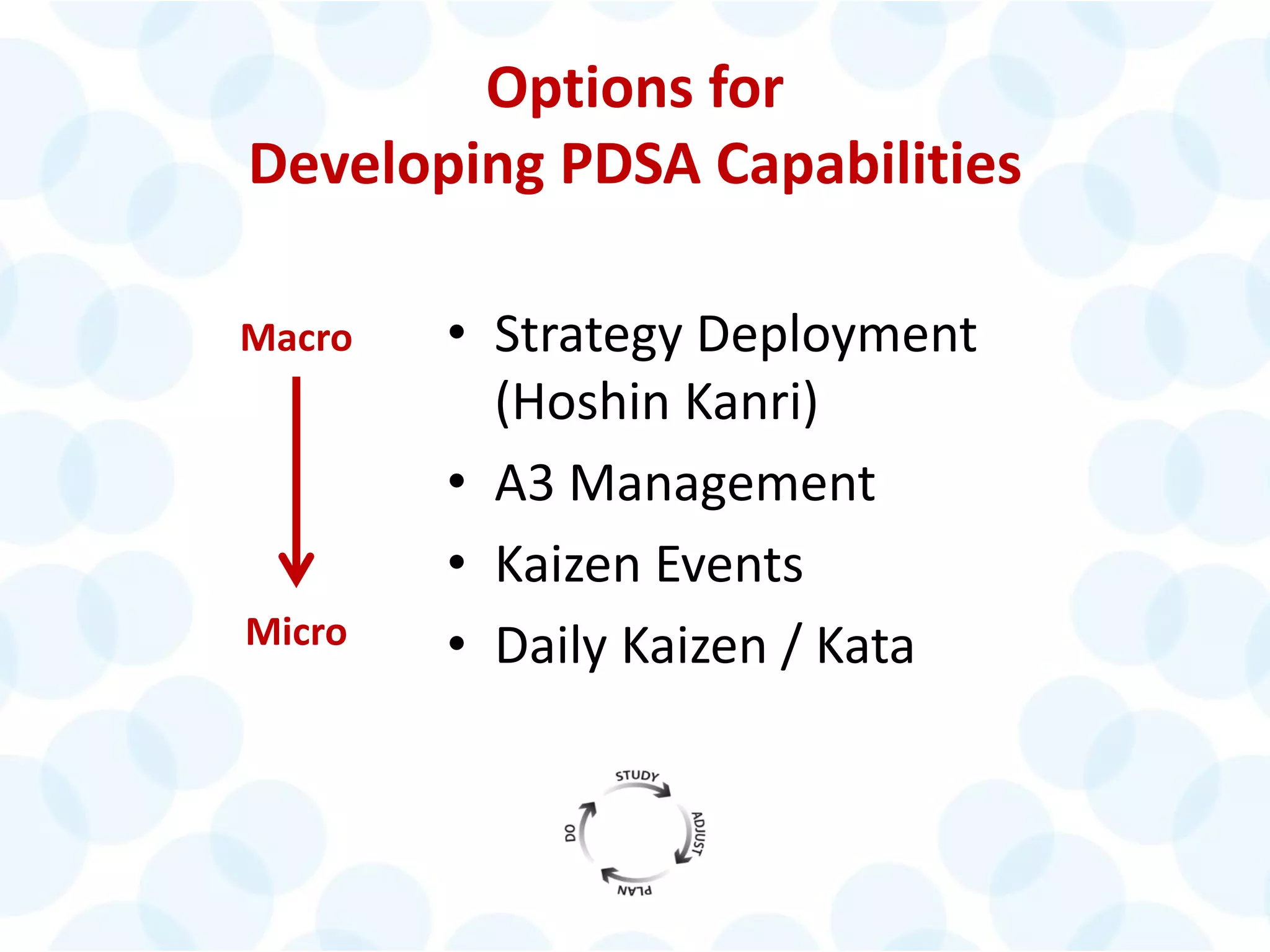
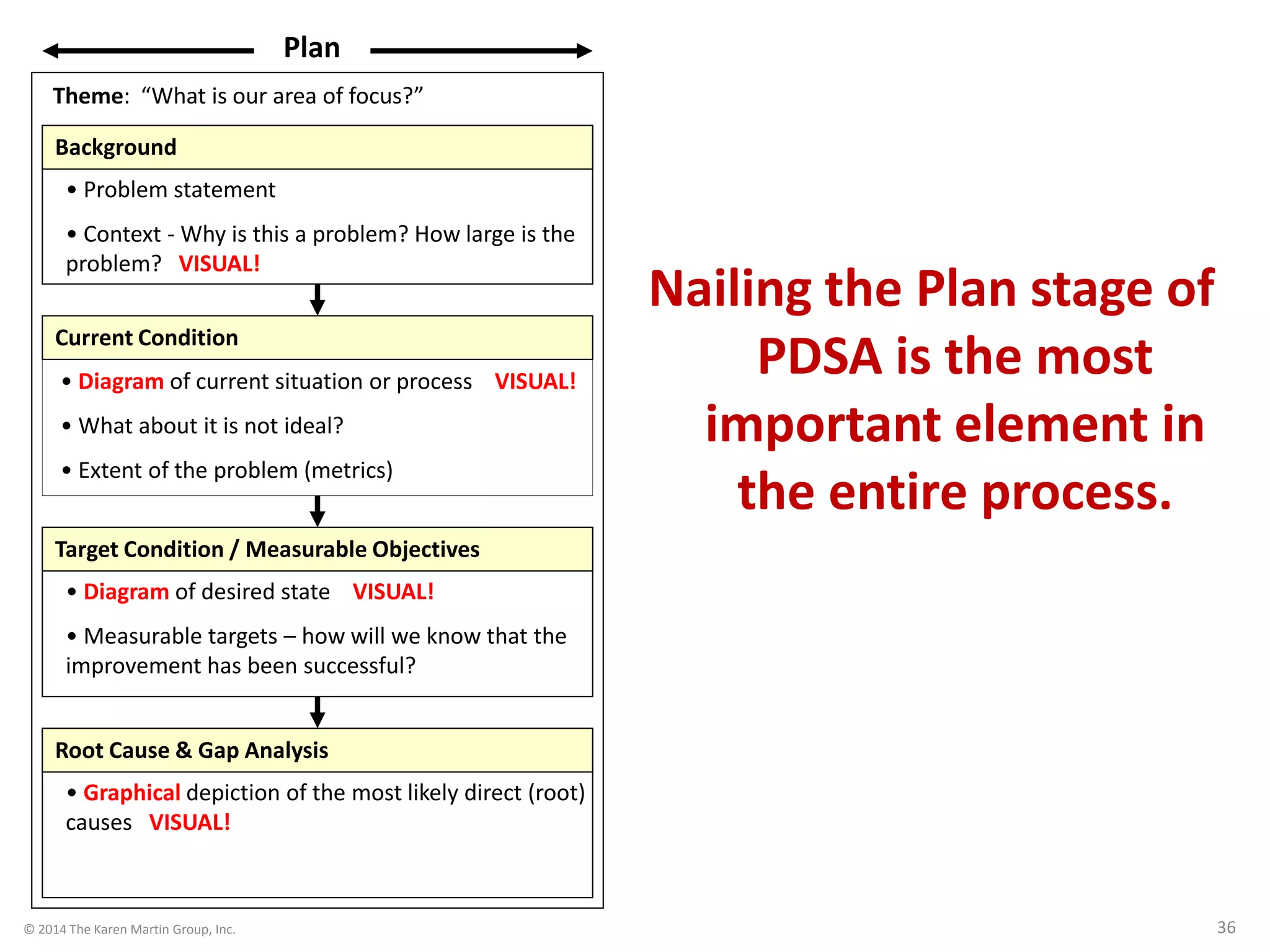
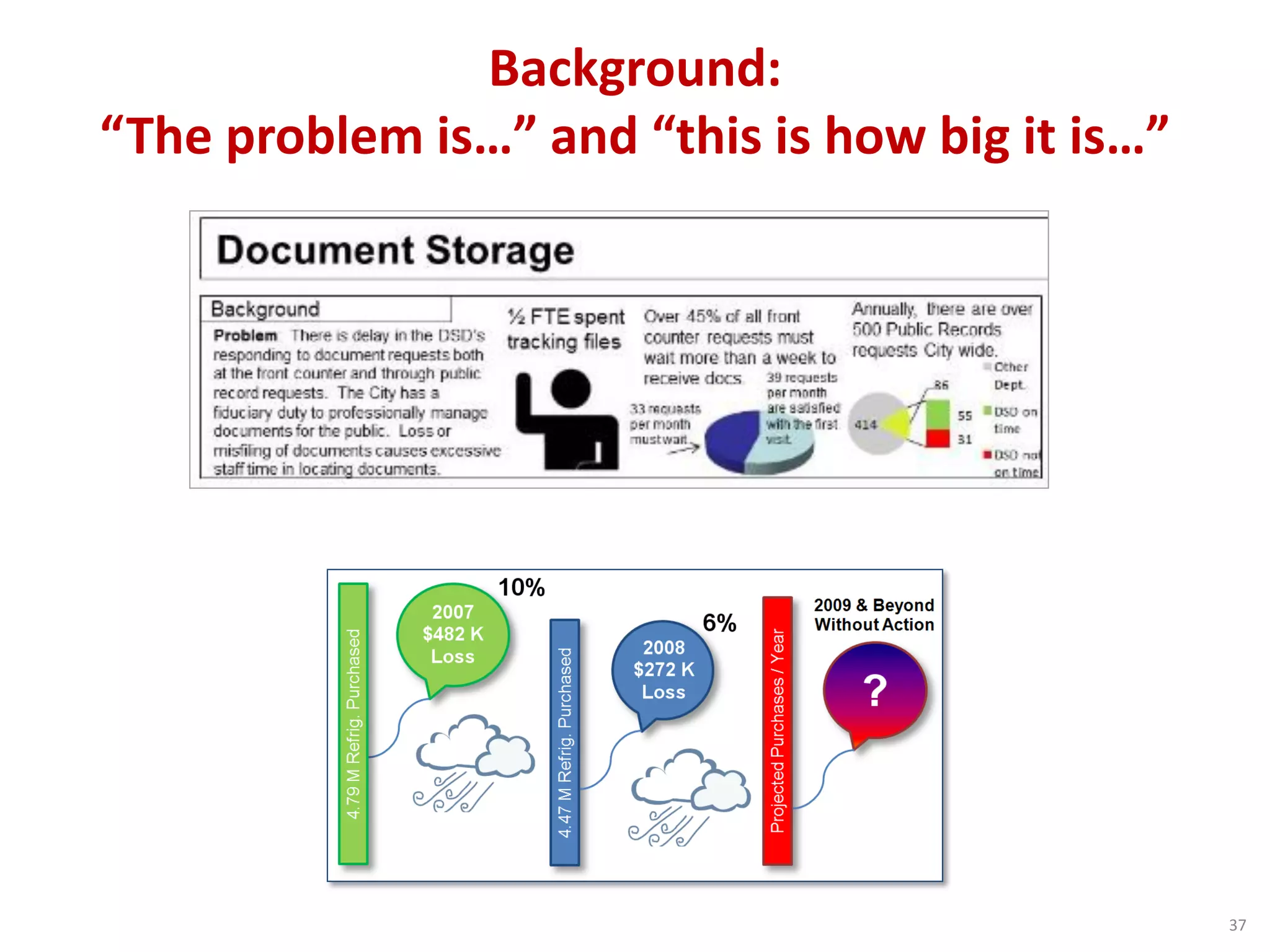
Details the steps in the PDSA cycle for continuous improvement, emphasizing systematic problem breakdown.
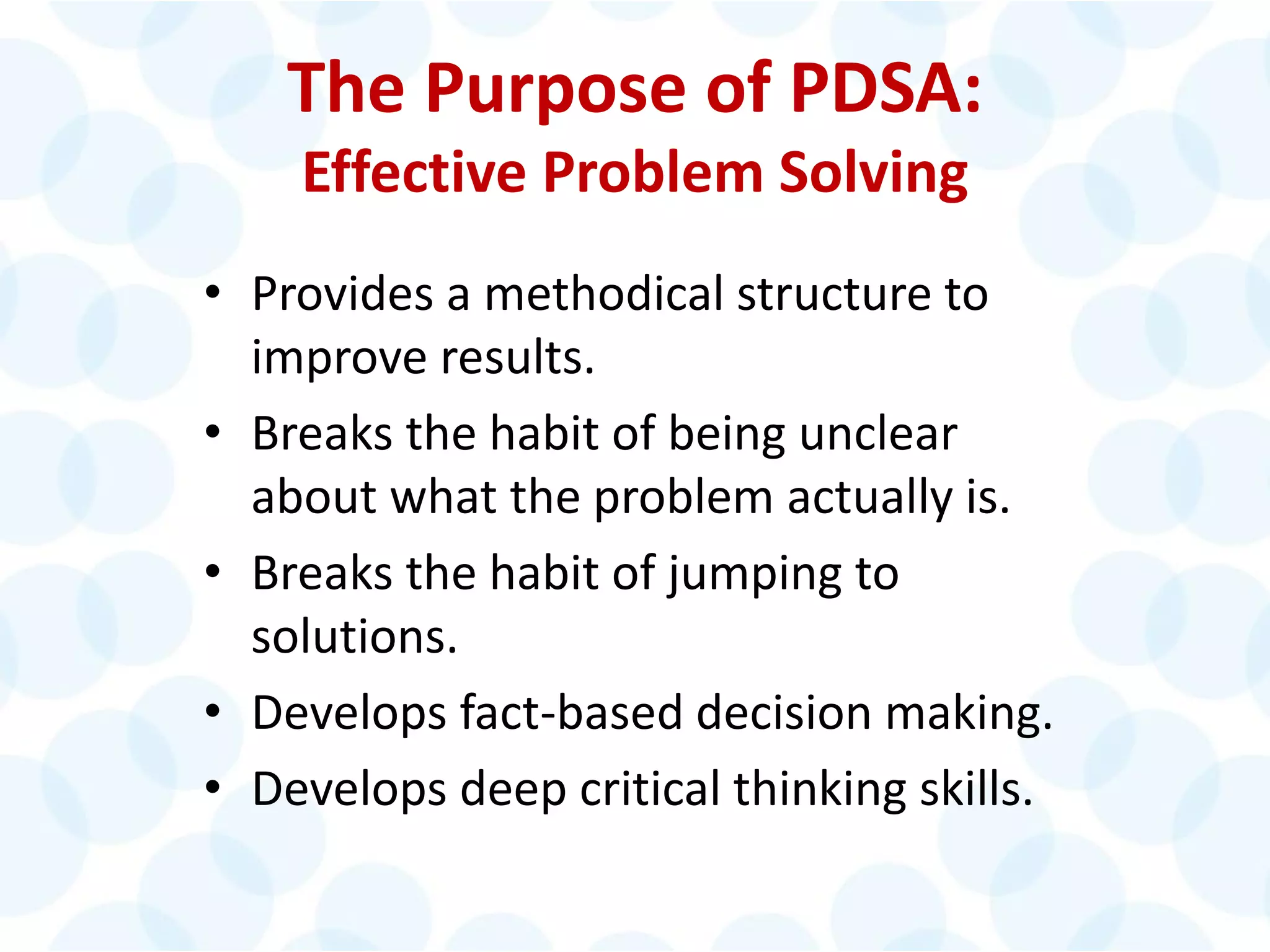
PDSA provides structured problem-solving, supports fact-based decision making, and enhances critical thinking.
Describes A3 Management as integral to Toyota's system, the methodical approach to problem-solving.
A3 Reports are designed for learning, assessing problem-solving effectiveness, and building consensus.
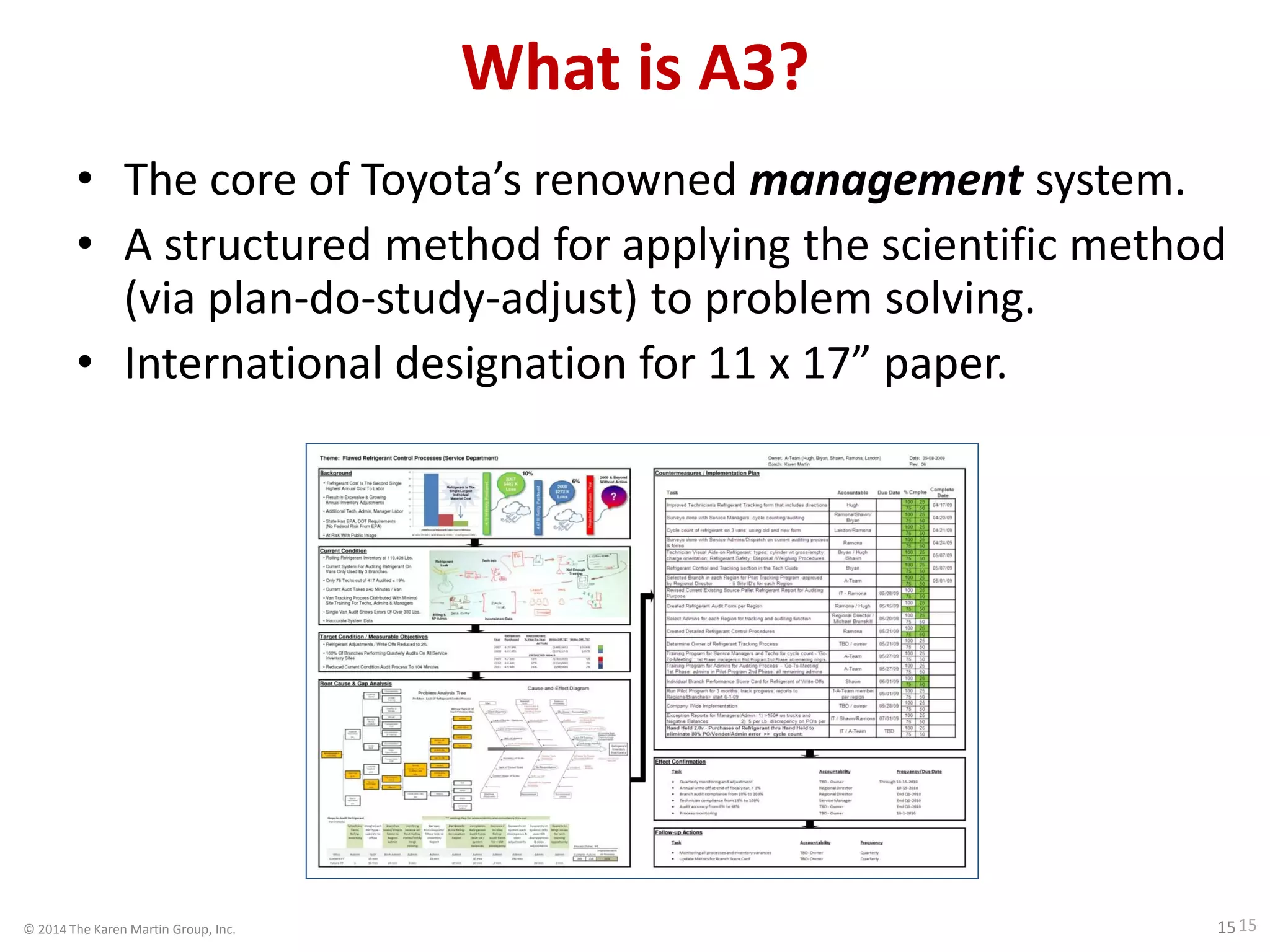
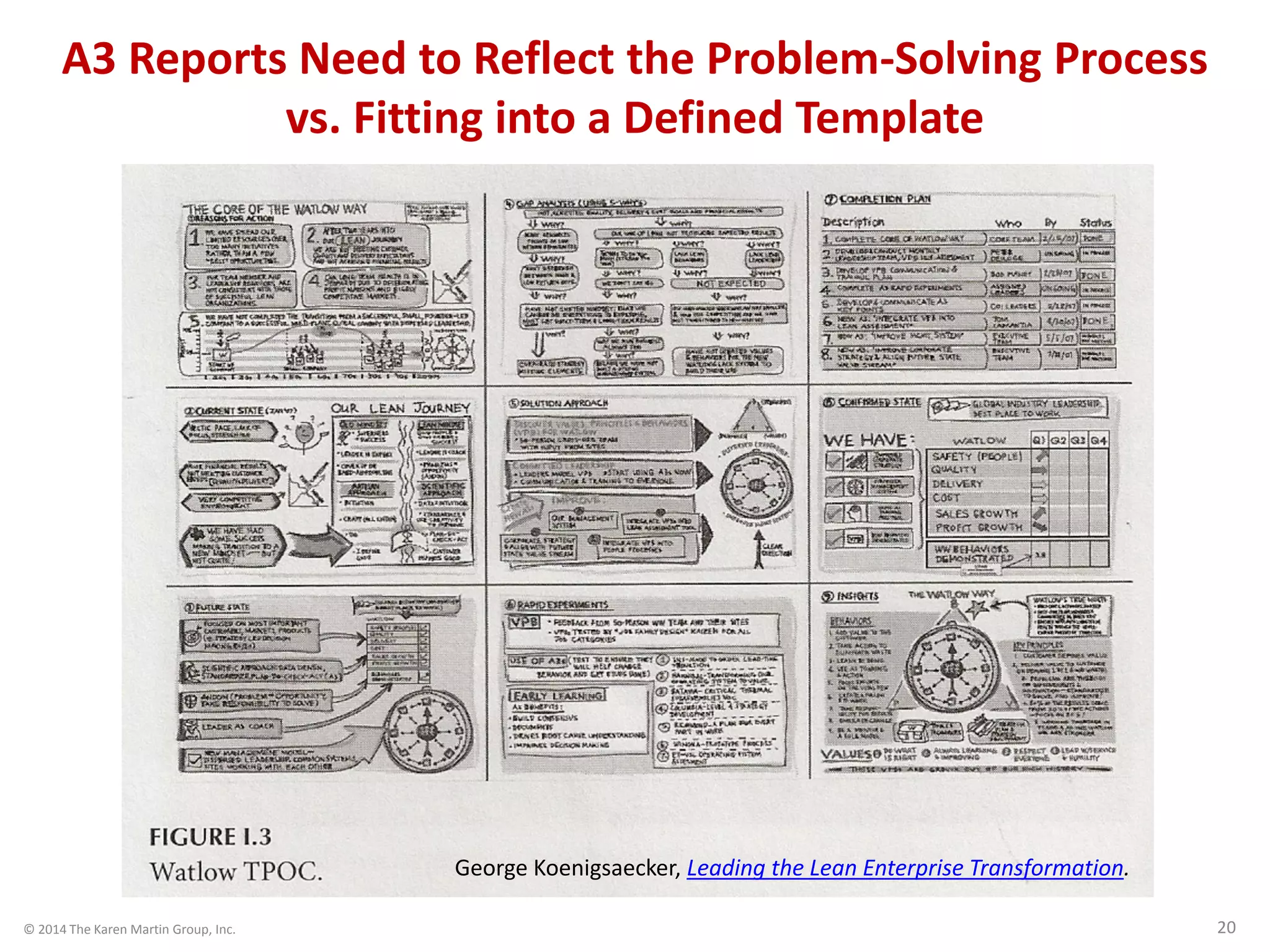
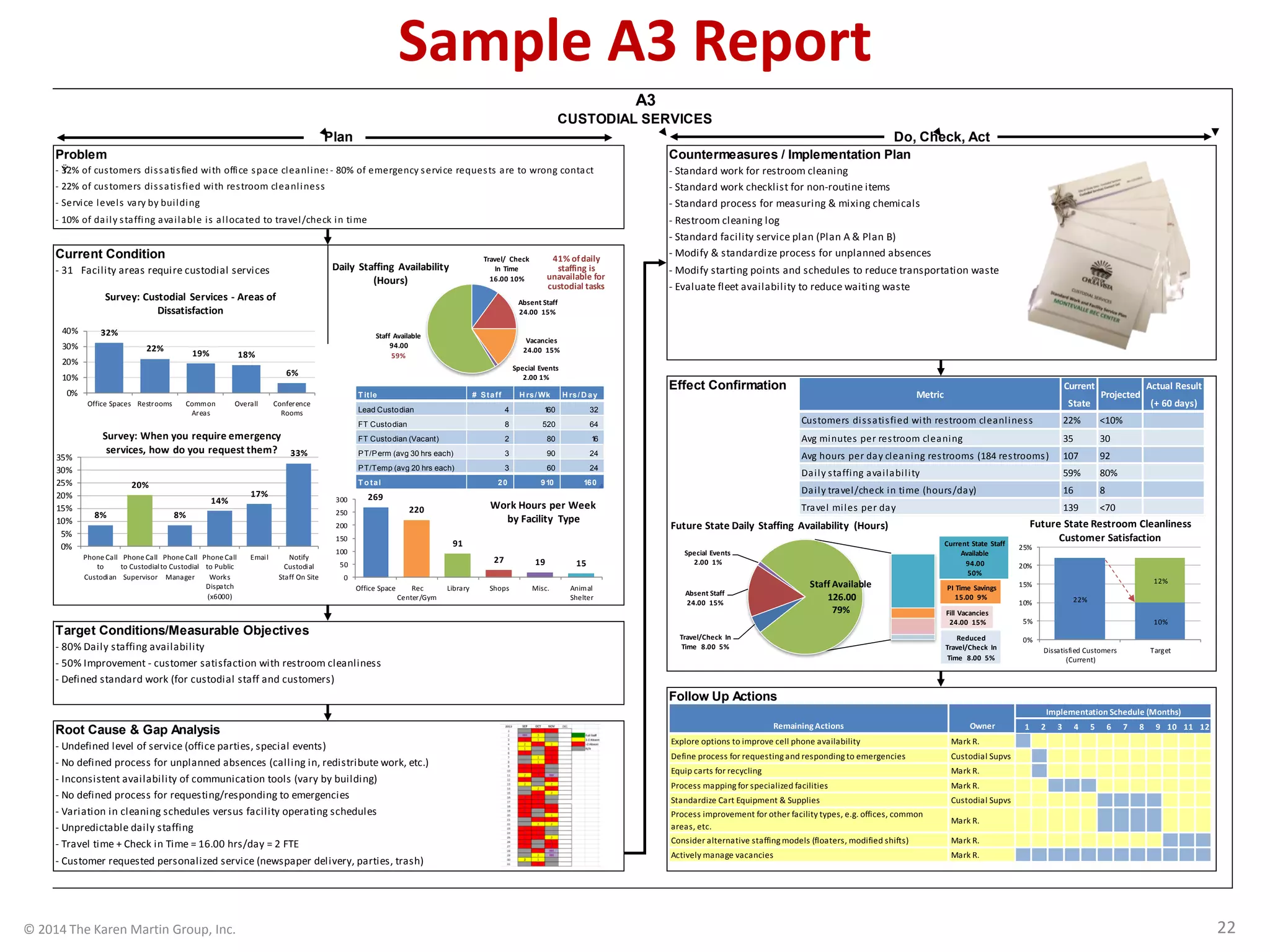
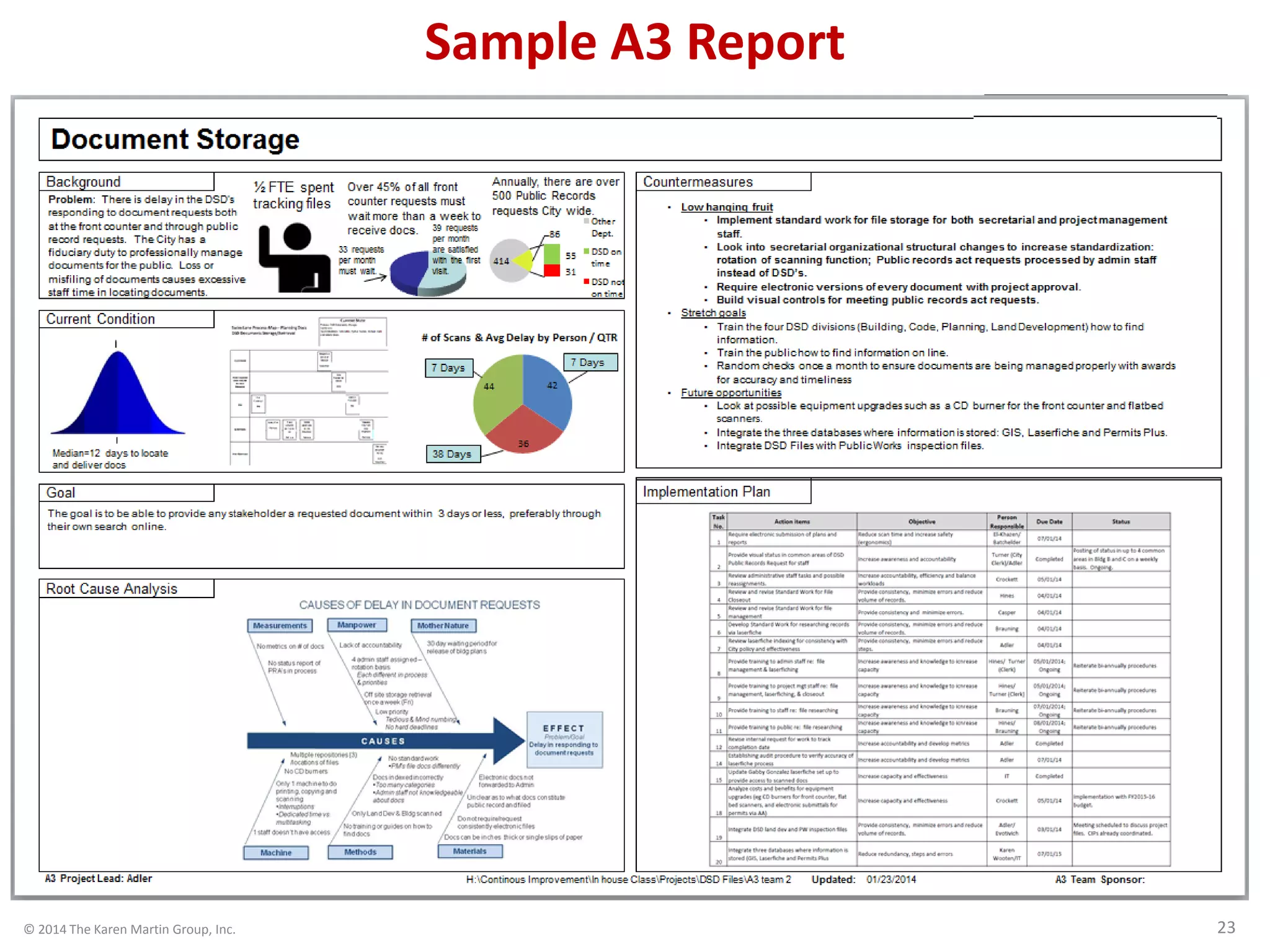
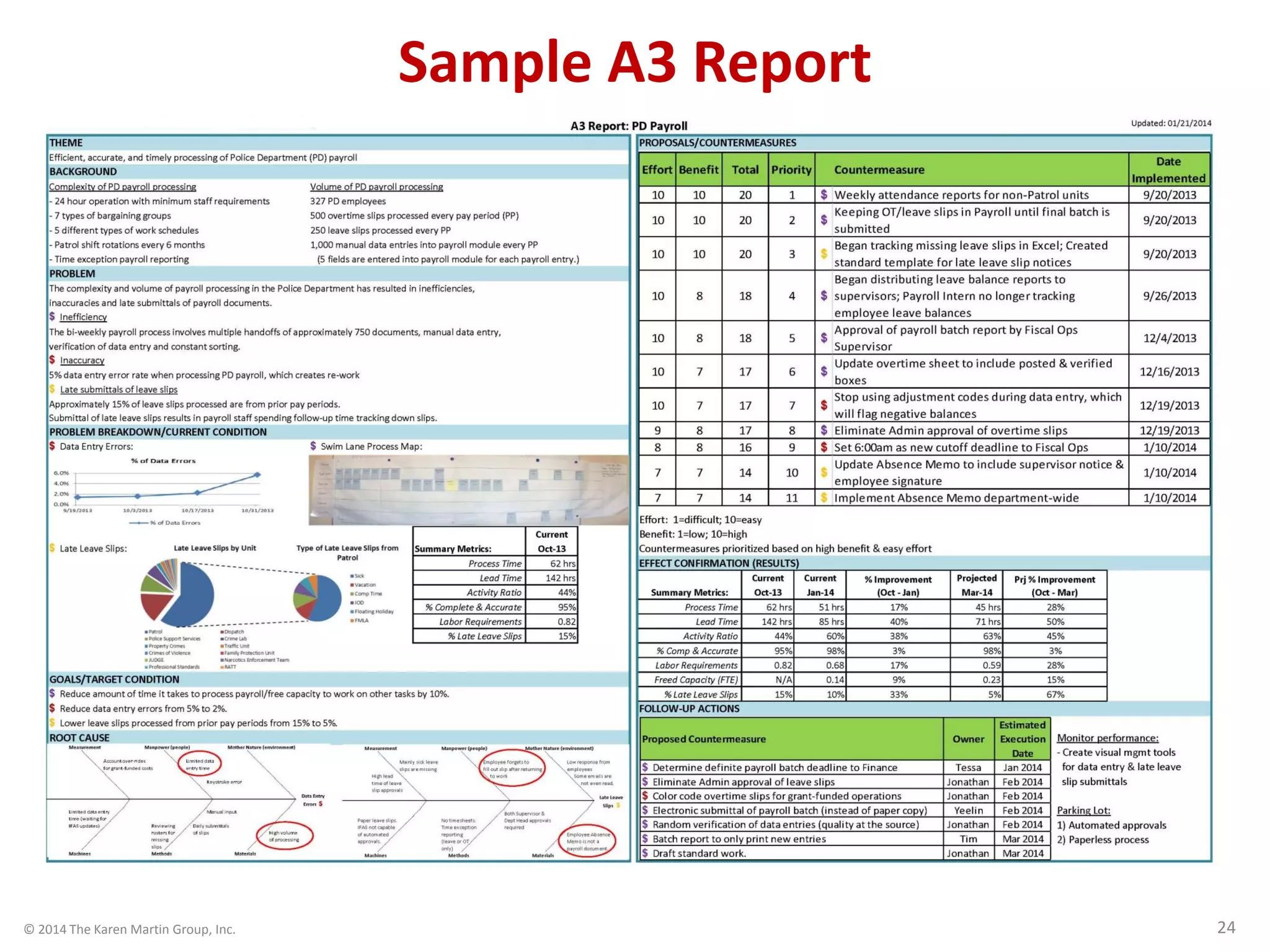
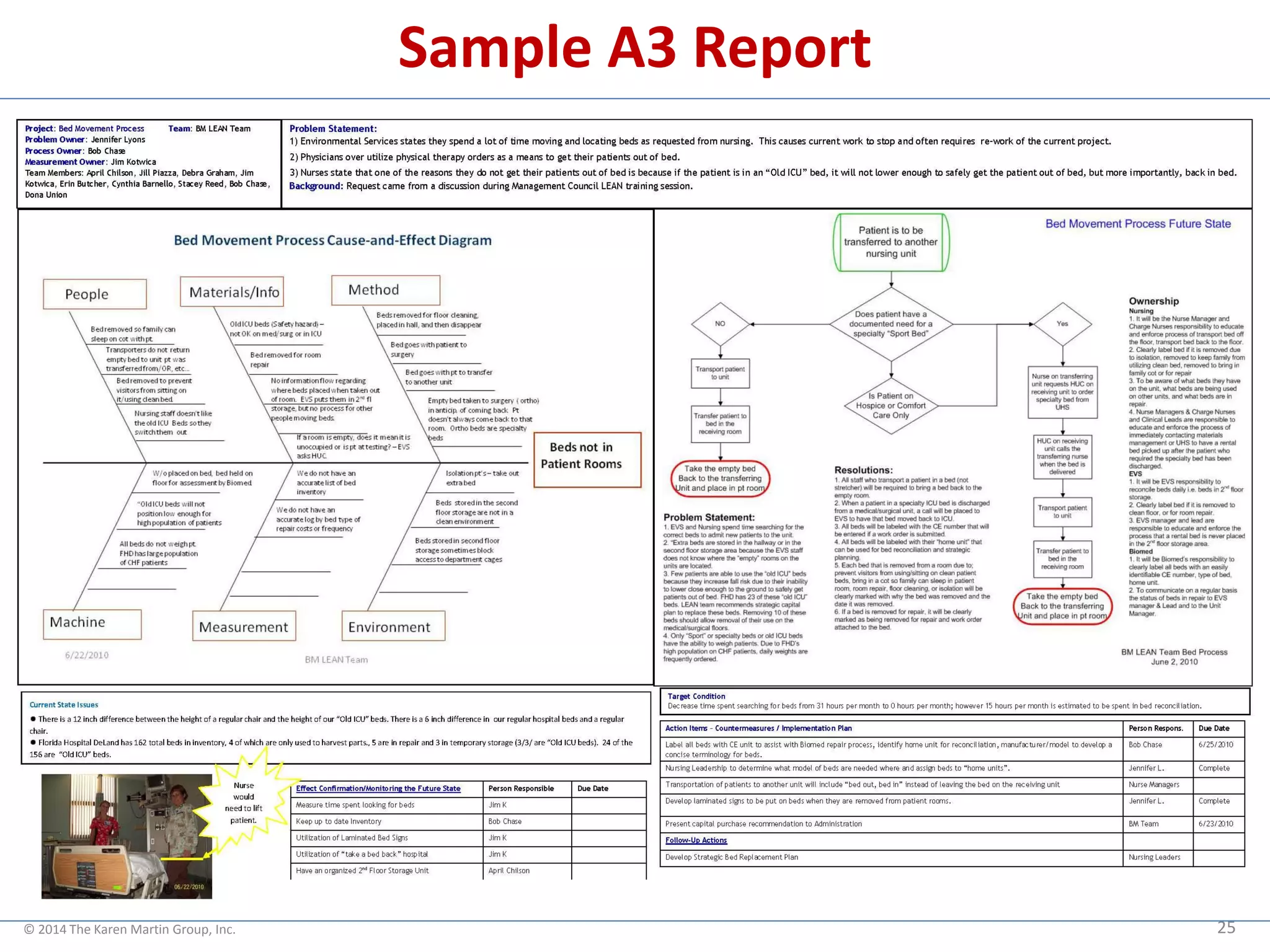
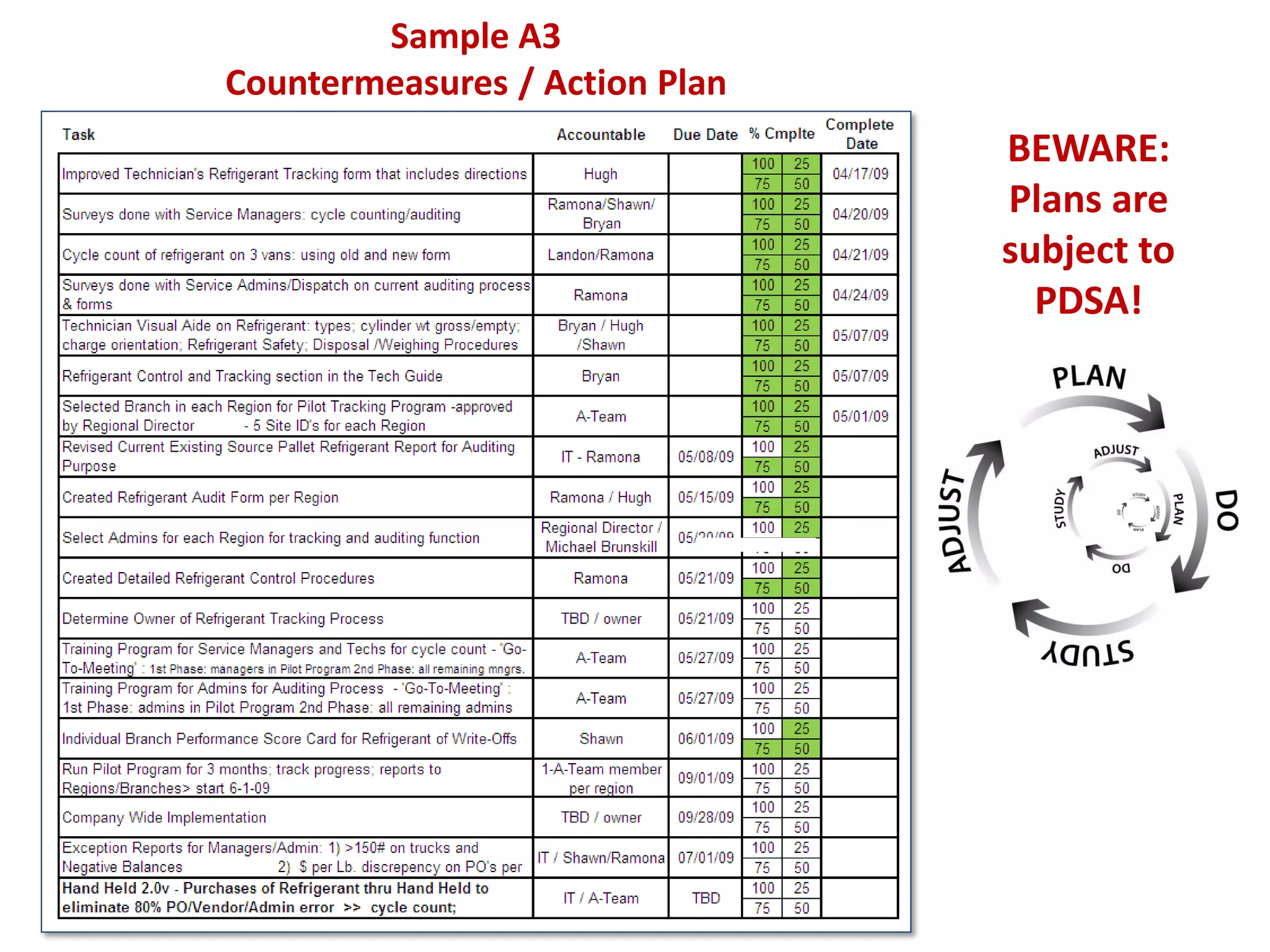
Illustrates example A3 reports showcasing problem statements, countermeasures, and results.
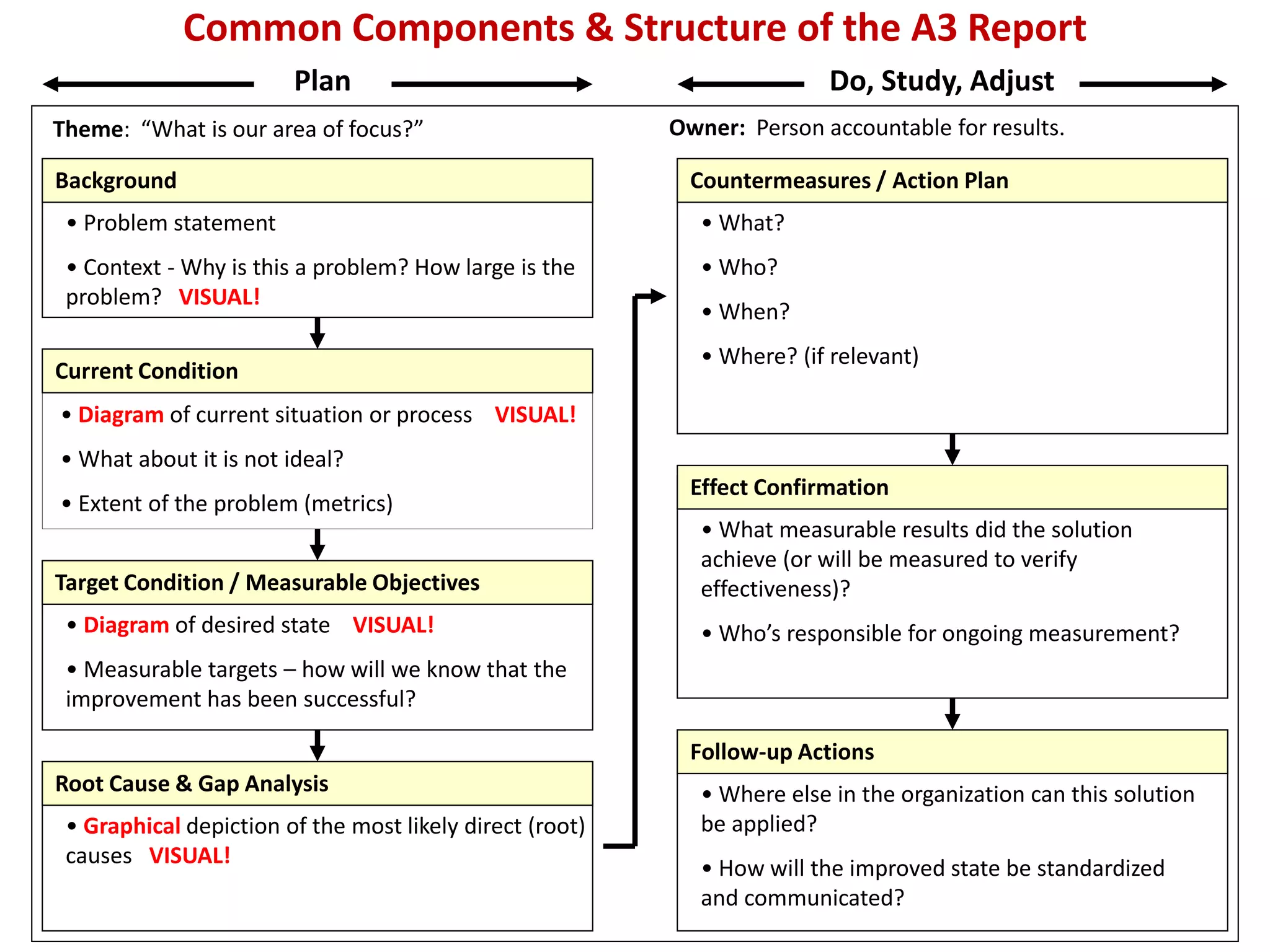
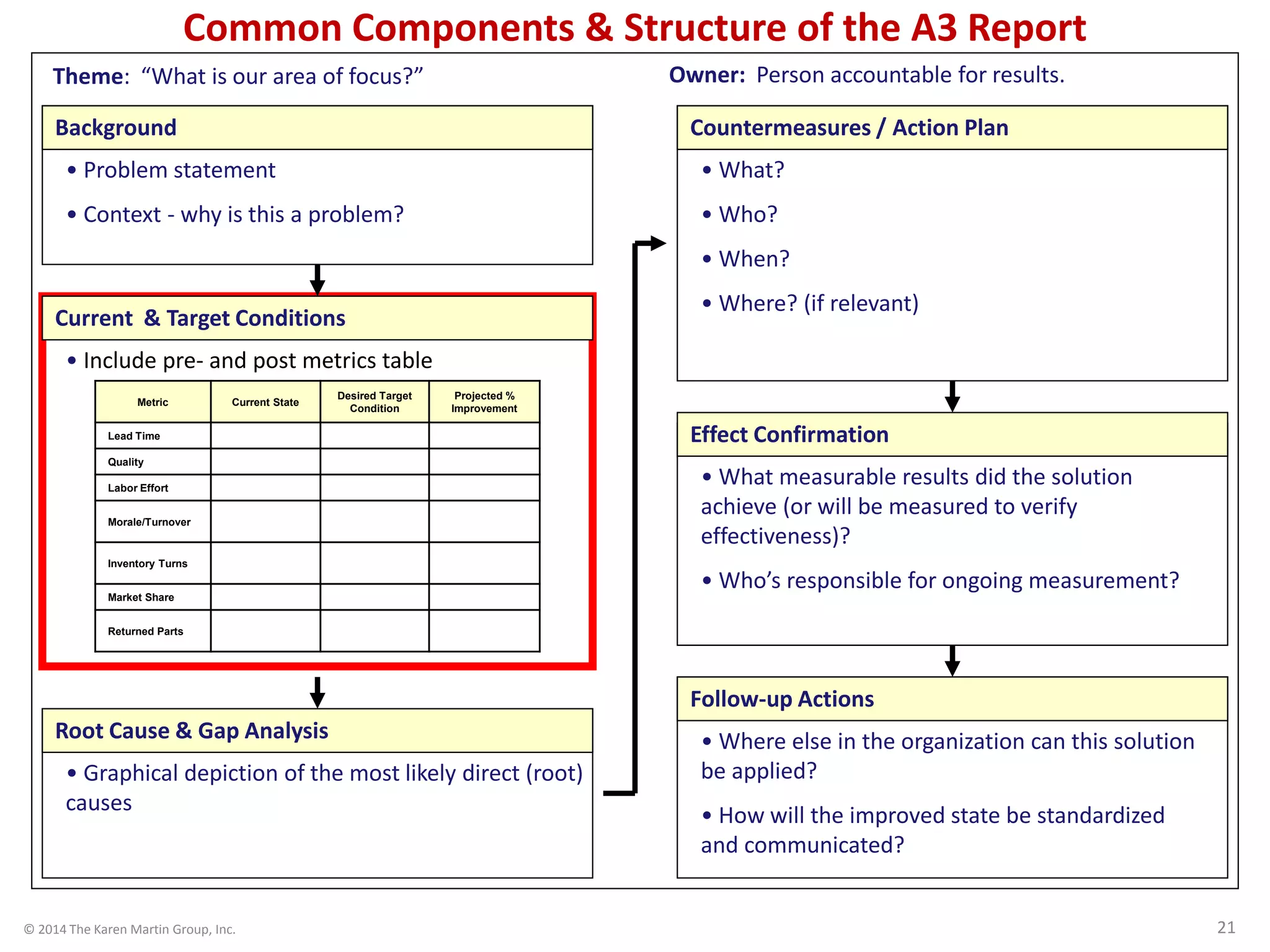
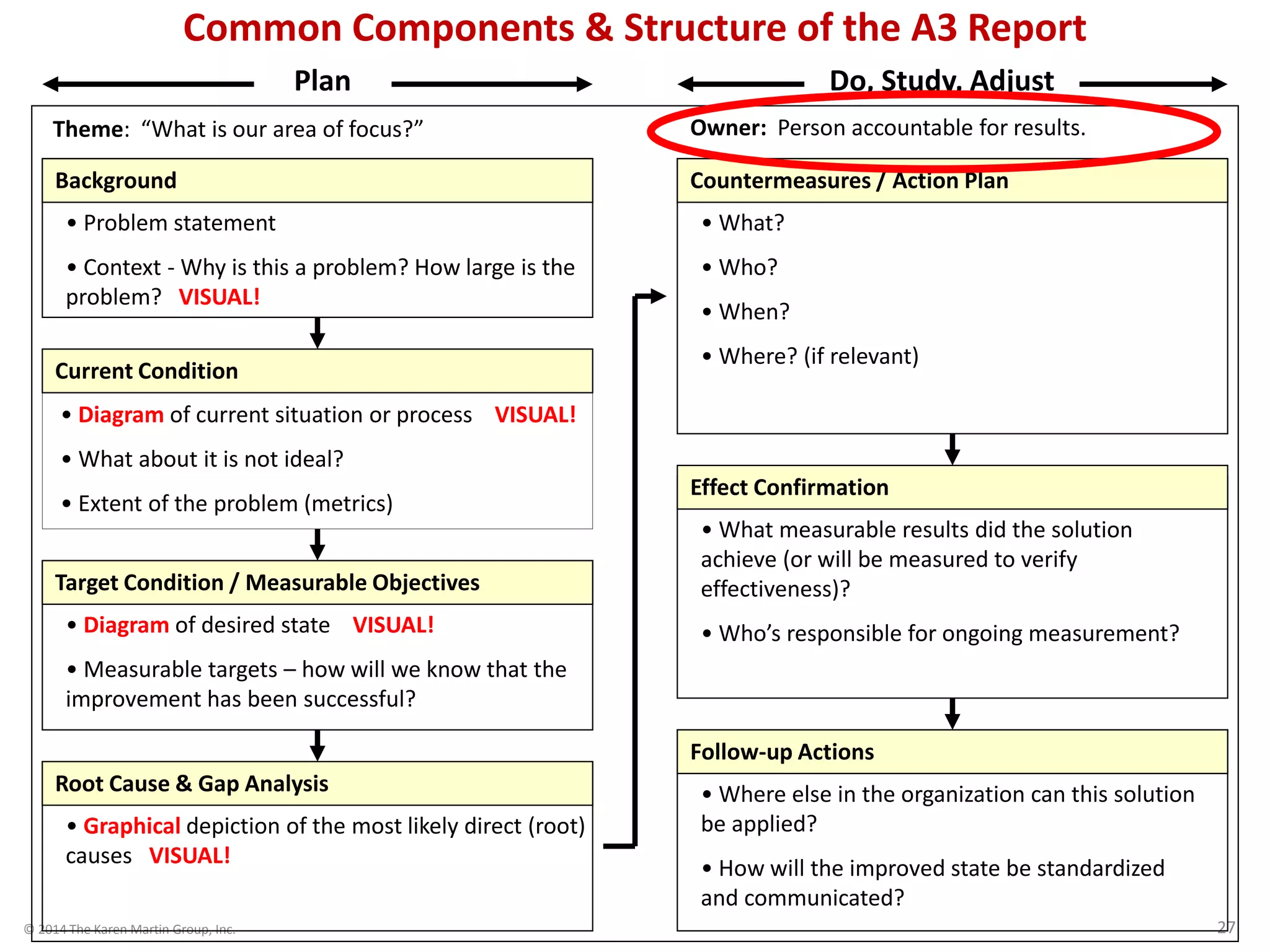
Summarizes key components of an A3 report, highlighting accountability and clarity in the problem-solving process.
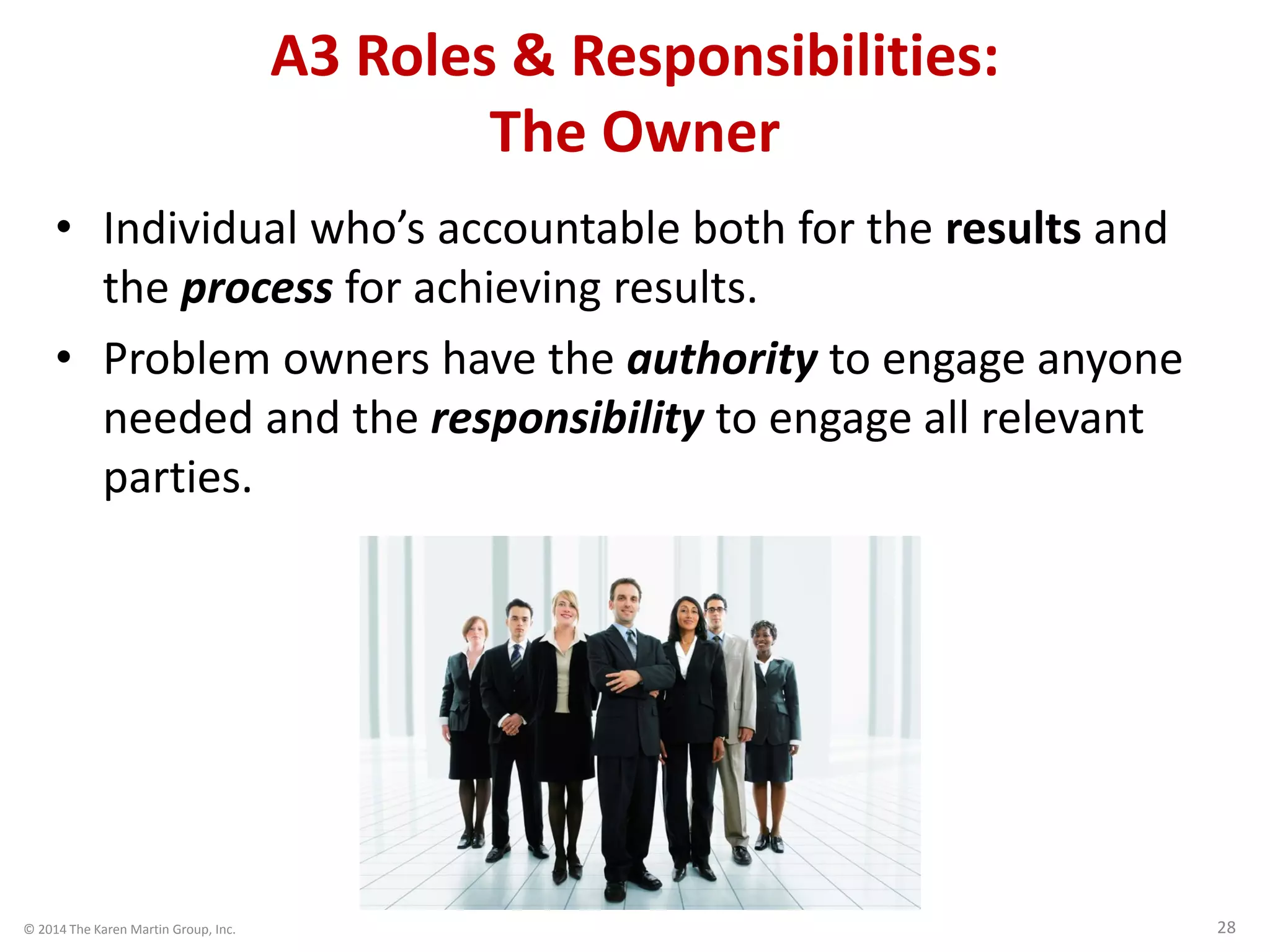
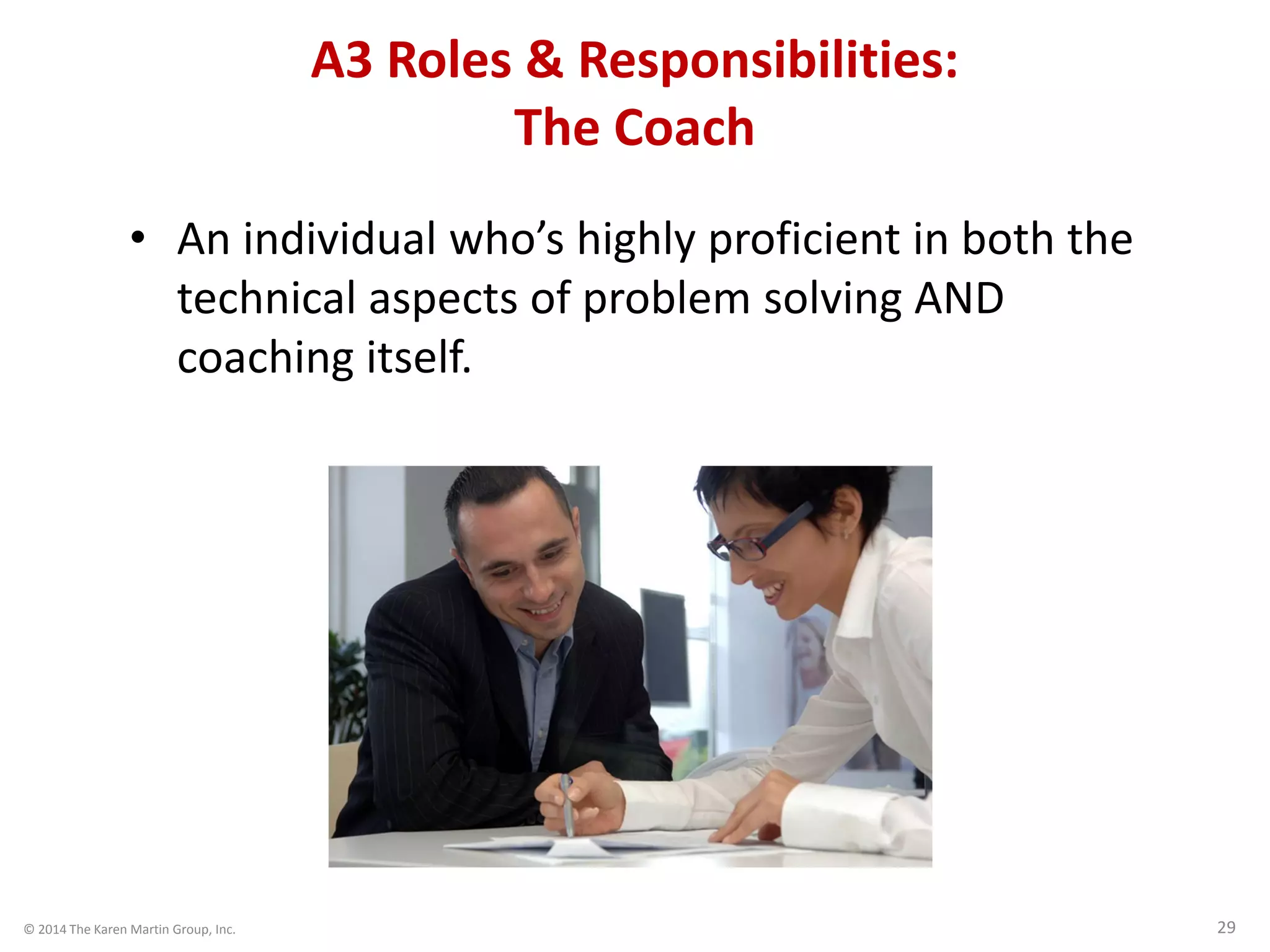
Identifies the Owner and Coach roles essential for implementing A3 effectively with responsibility and expertise.
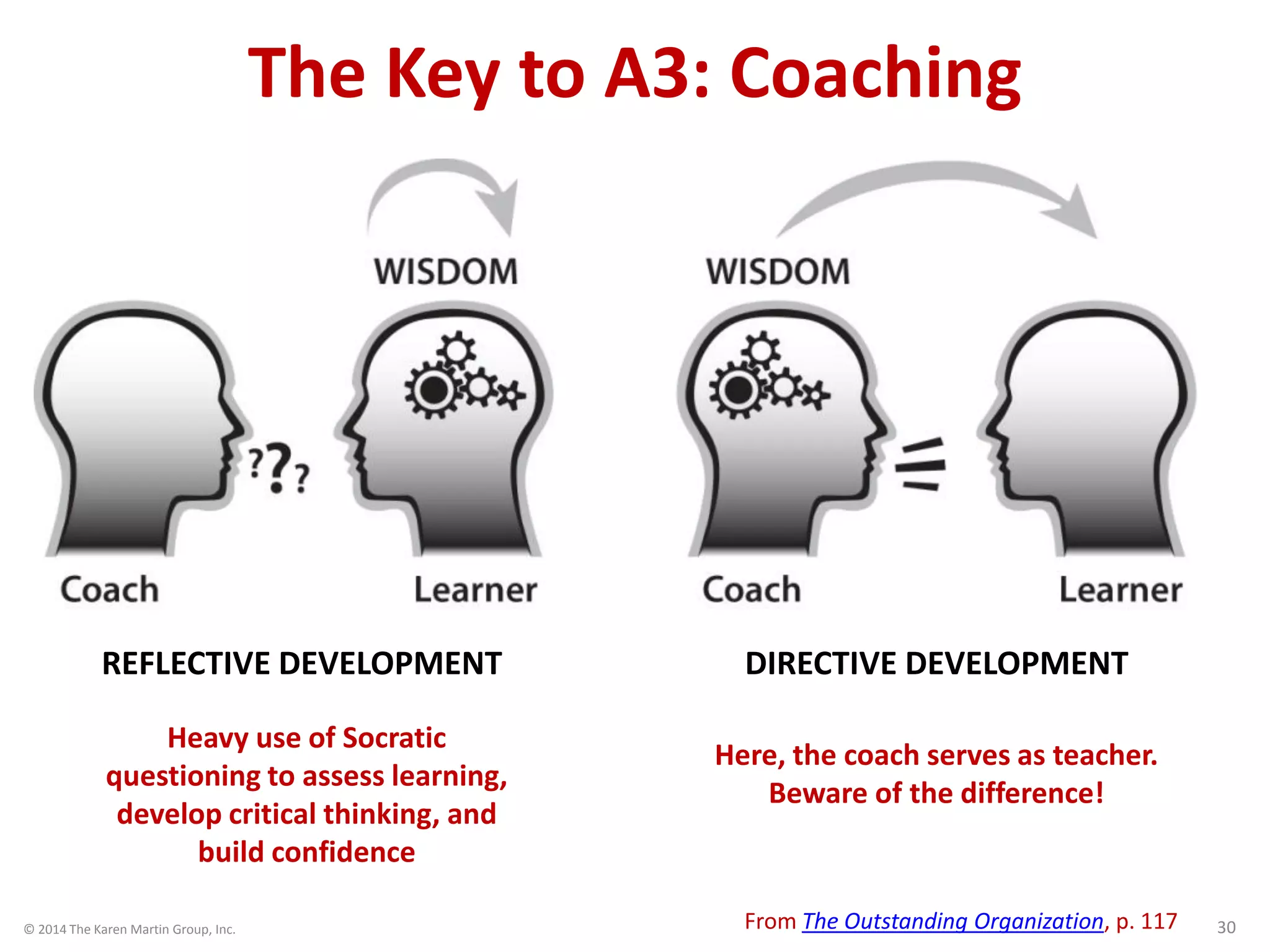
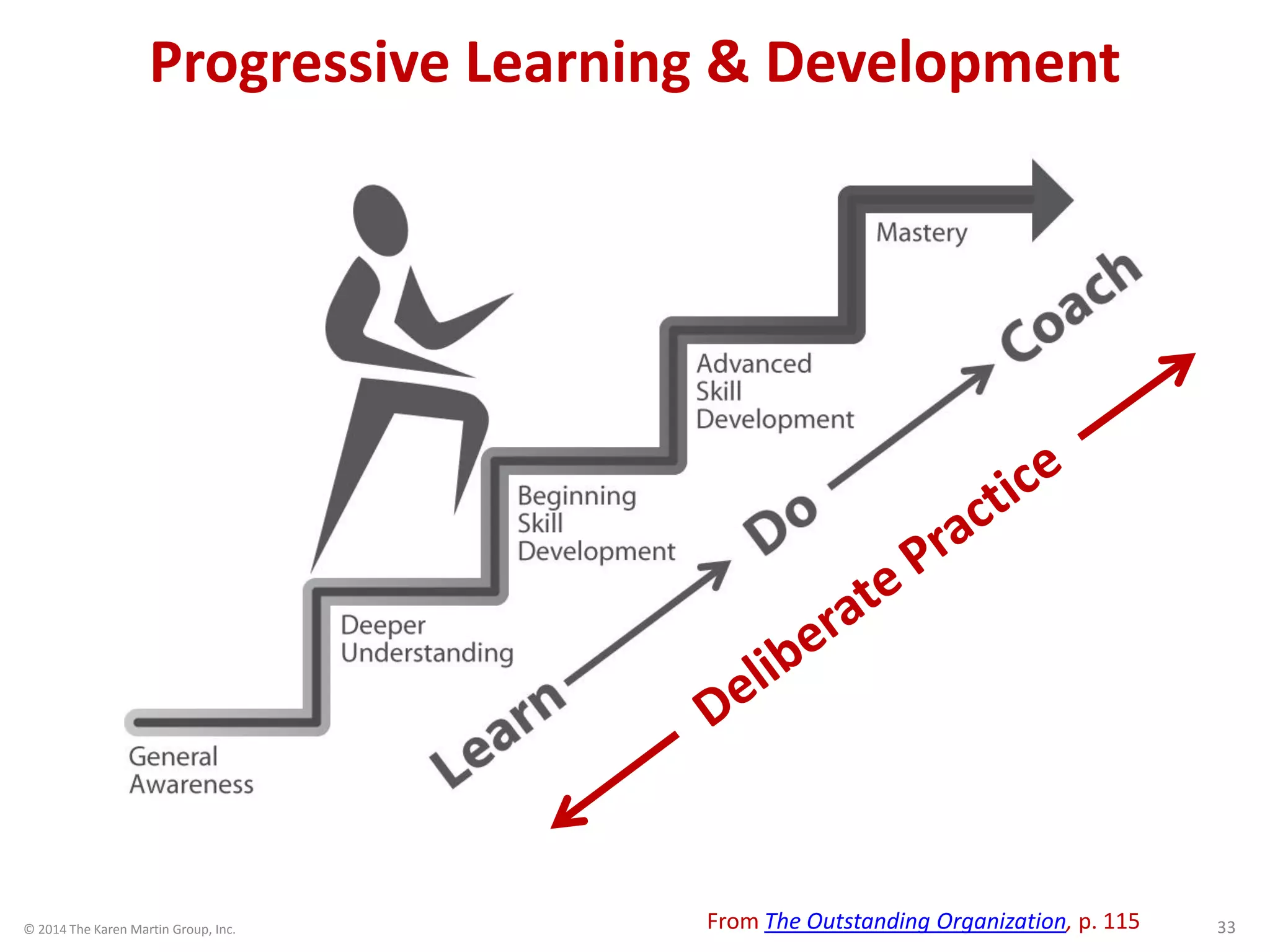
Emphasizes the critical role of coaching in the A3 process, focusing on developing critical thinking.
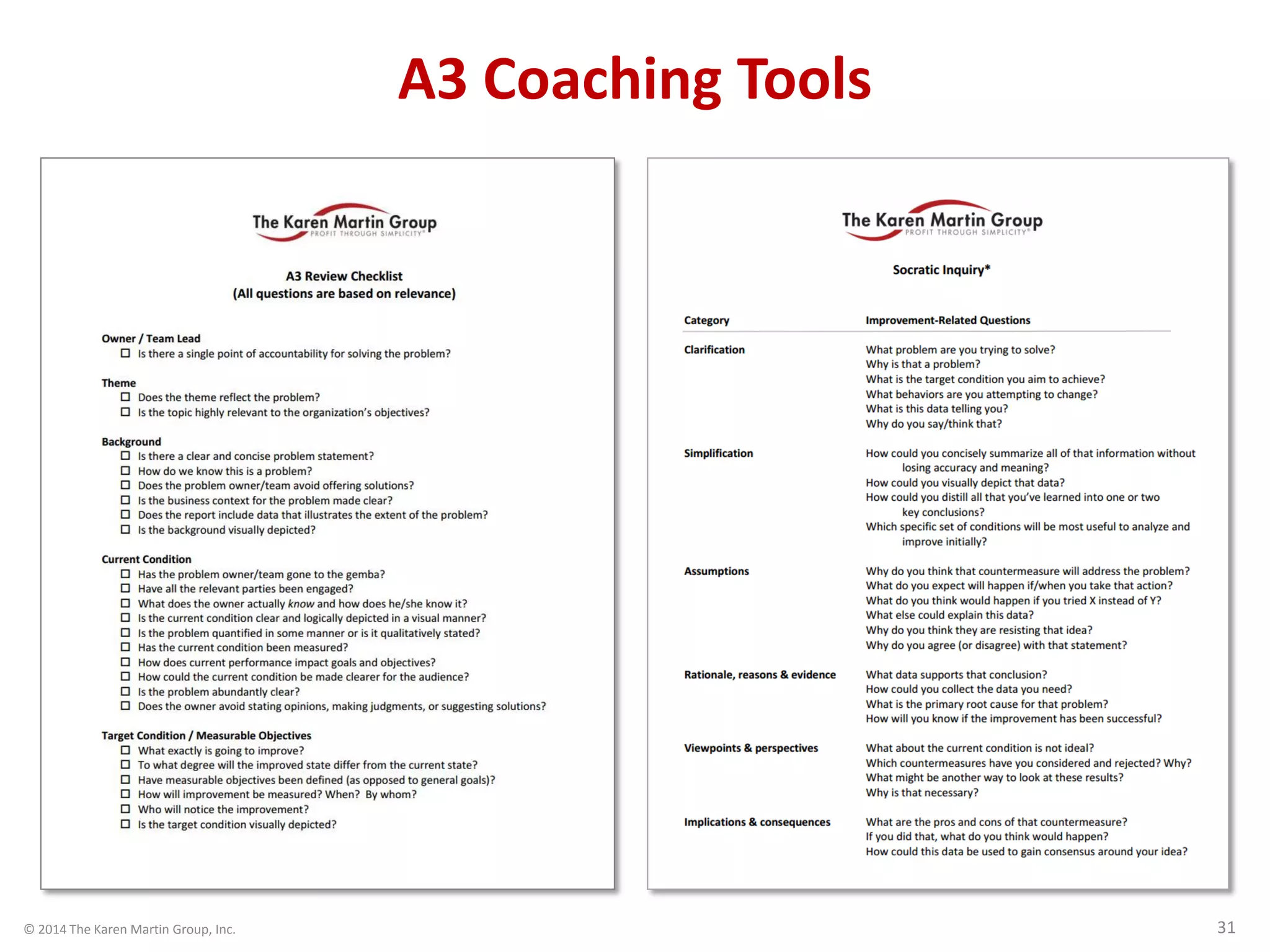
Provides resources for A3 Coaches to enhance their problem-solving coaching actions.
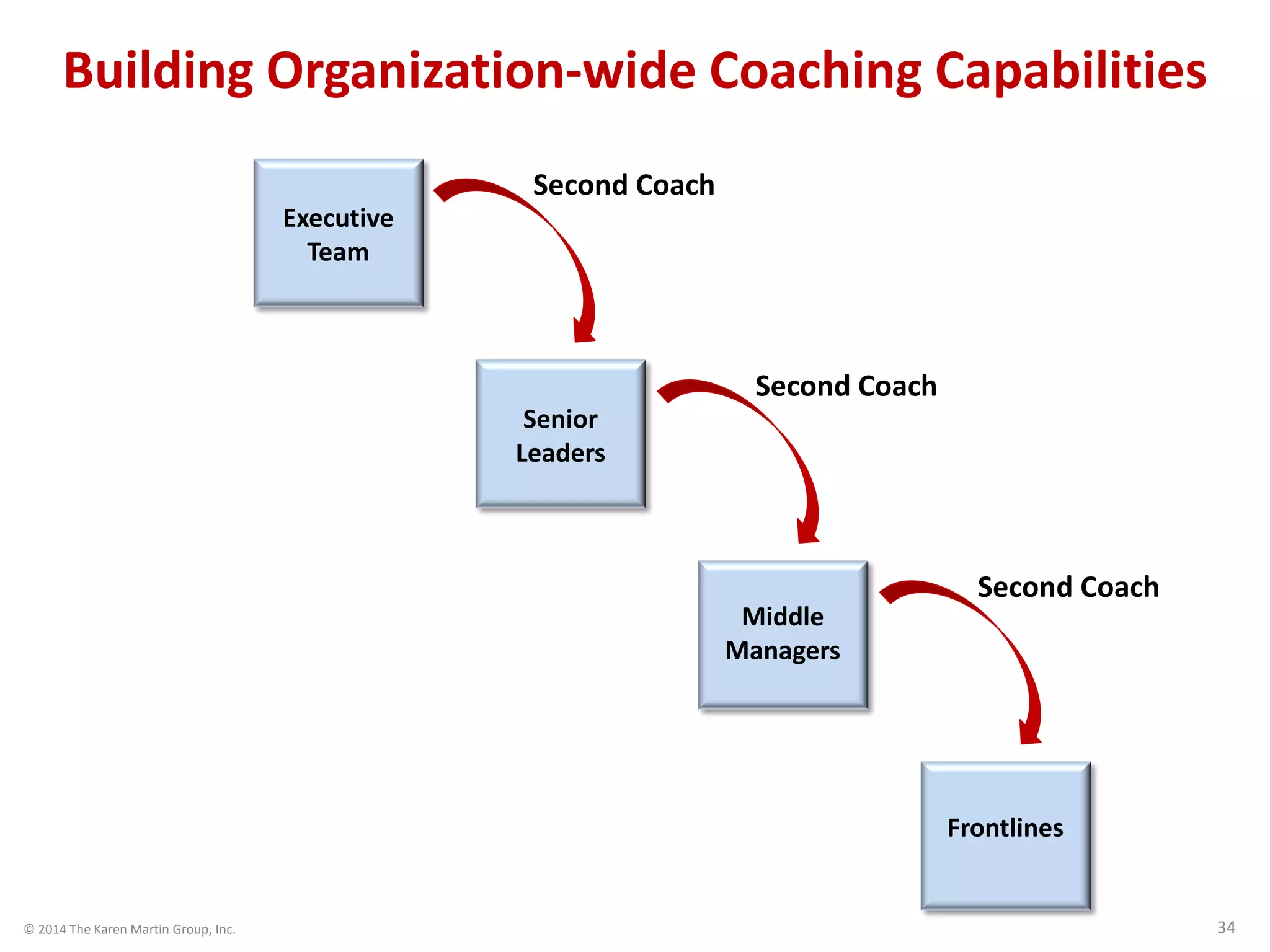
Strategies for building coaching capabilities across various levels of an organization to improve problem solving.
Concluding thoughts urging the importance of structured problem-solving within organizations.
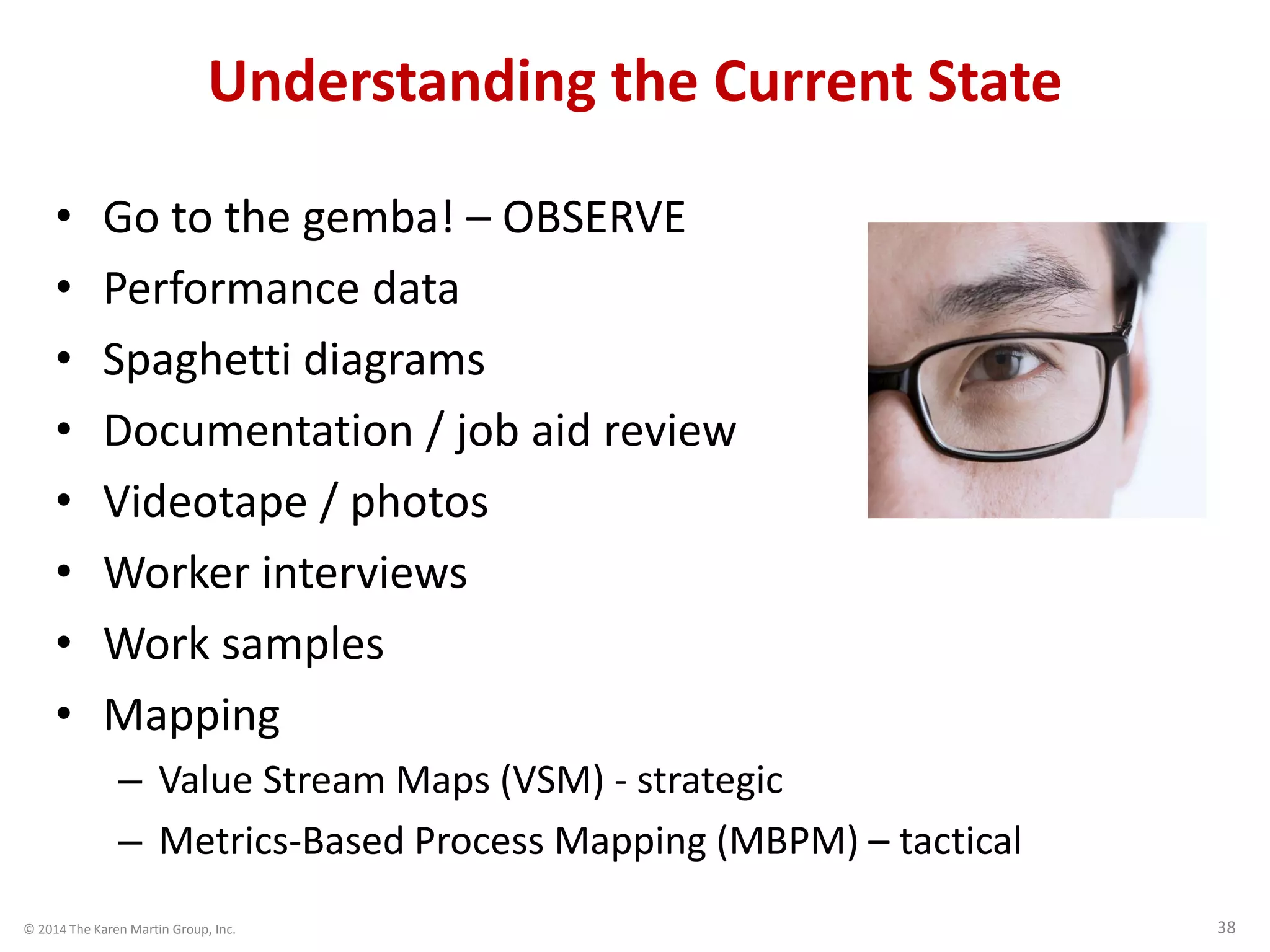
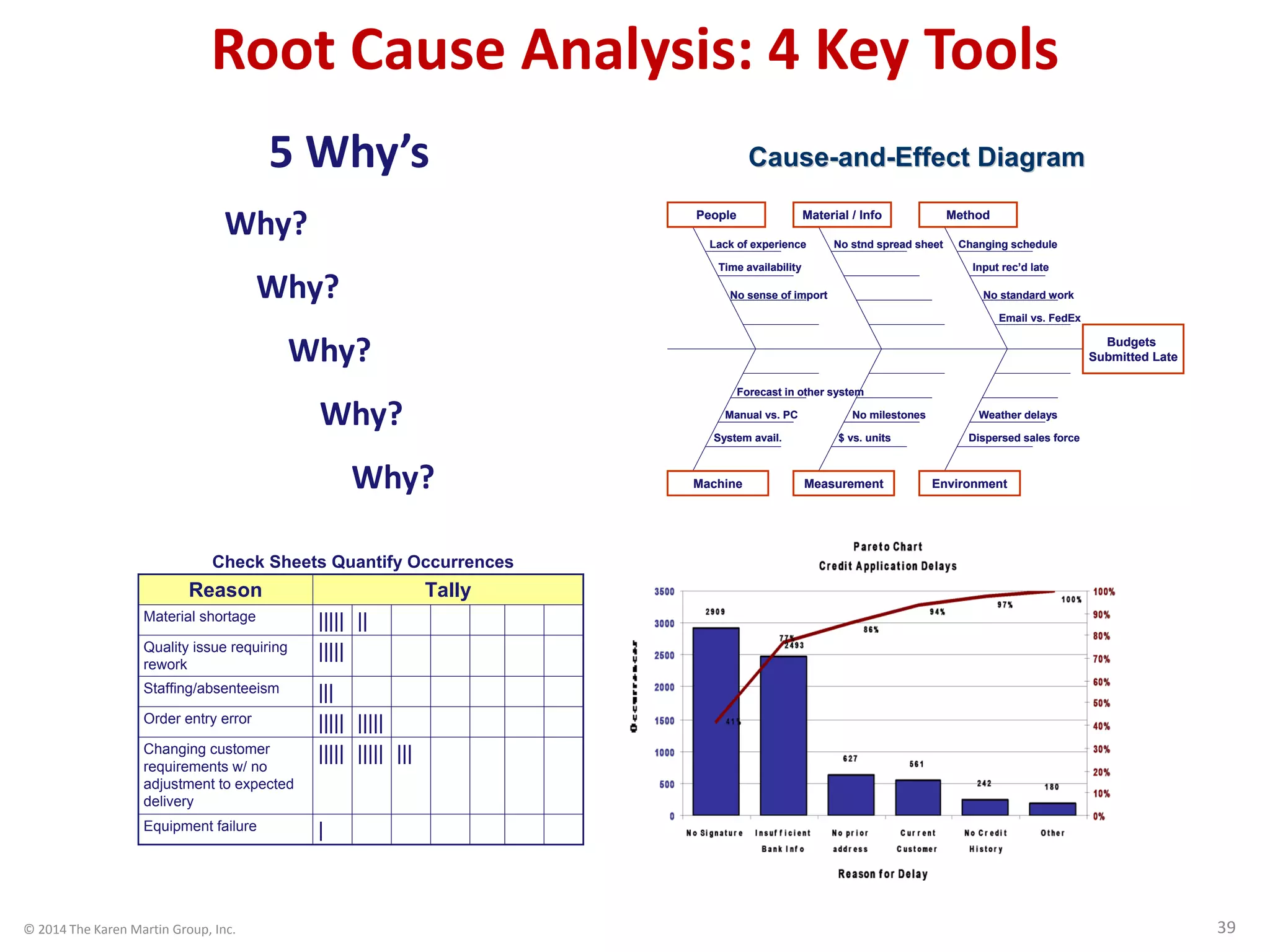
Discusses methods to gather data and analyze root causes, employing tools like Spaghetti diagrams and 5 Whys.
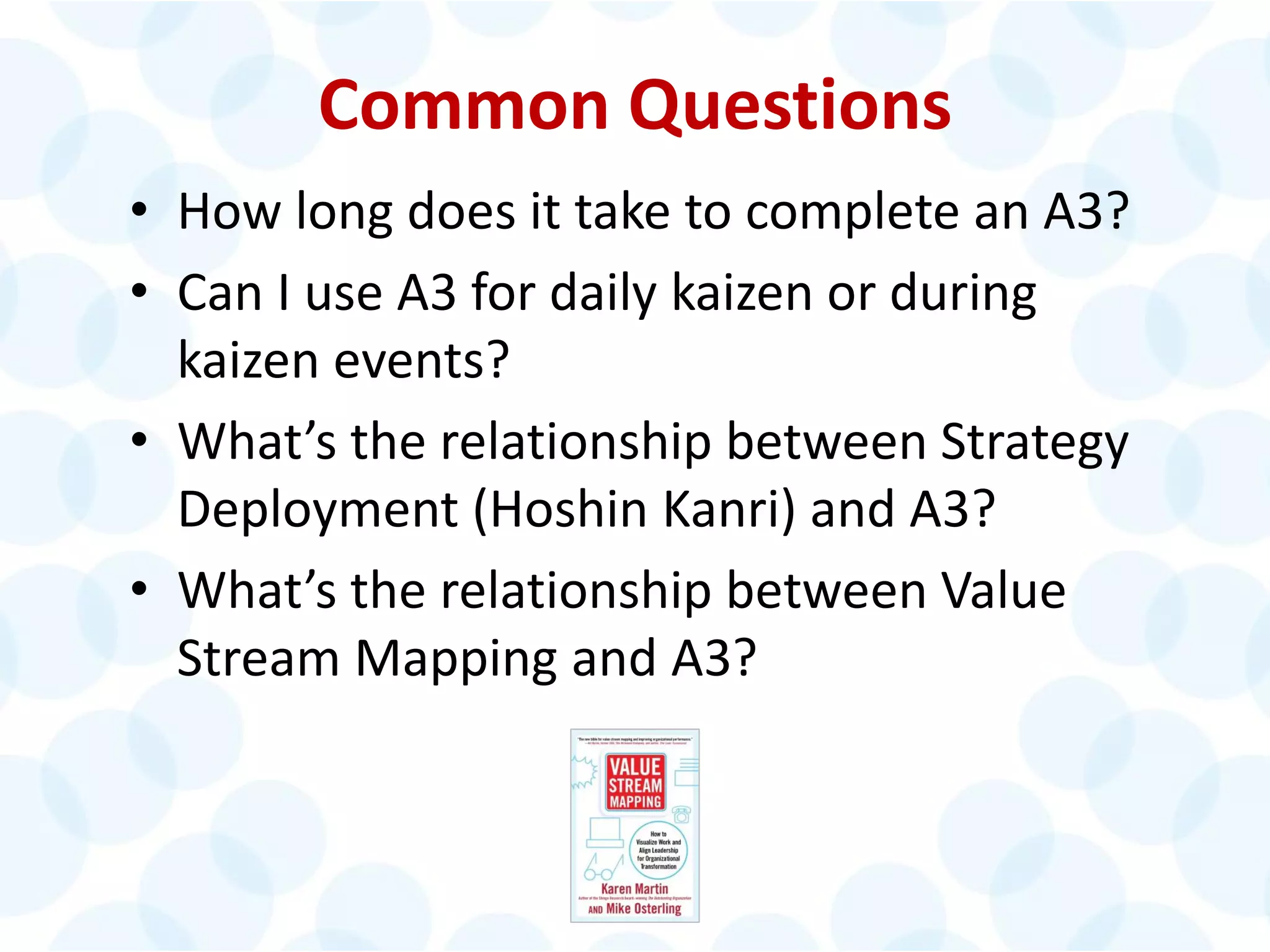
Answers to frequently asked questions regarding the application and timelines of A3 in various contexts.
Reiterates the necessity of having a coach to guide effective problem-solving efforts.
Announcement for the upcoming Coaching Summit in Long Beach, focusing on lean coaching frameworks.
Provides contact details for Karen Martin, encouraging further engagement and subscription to updates.


