OUR FATHER
Our Father, Who art in heaven,
Hallowed be Thy Name.
Thy Kingdom come.
Thy Will be done,
on earth as it is in Heaven.
Give us this day our daily bread.
And forgive us our trespasses,
as we forgive those who trespass against us.
And lead us not into temptation,
but deliver us from evil.
Amen.
LET’S HAVE A SCIENCE
SPELLING BEE
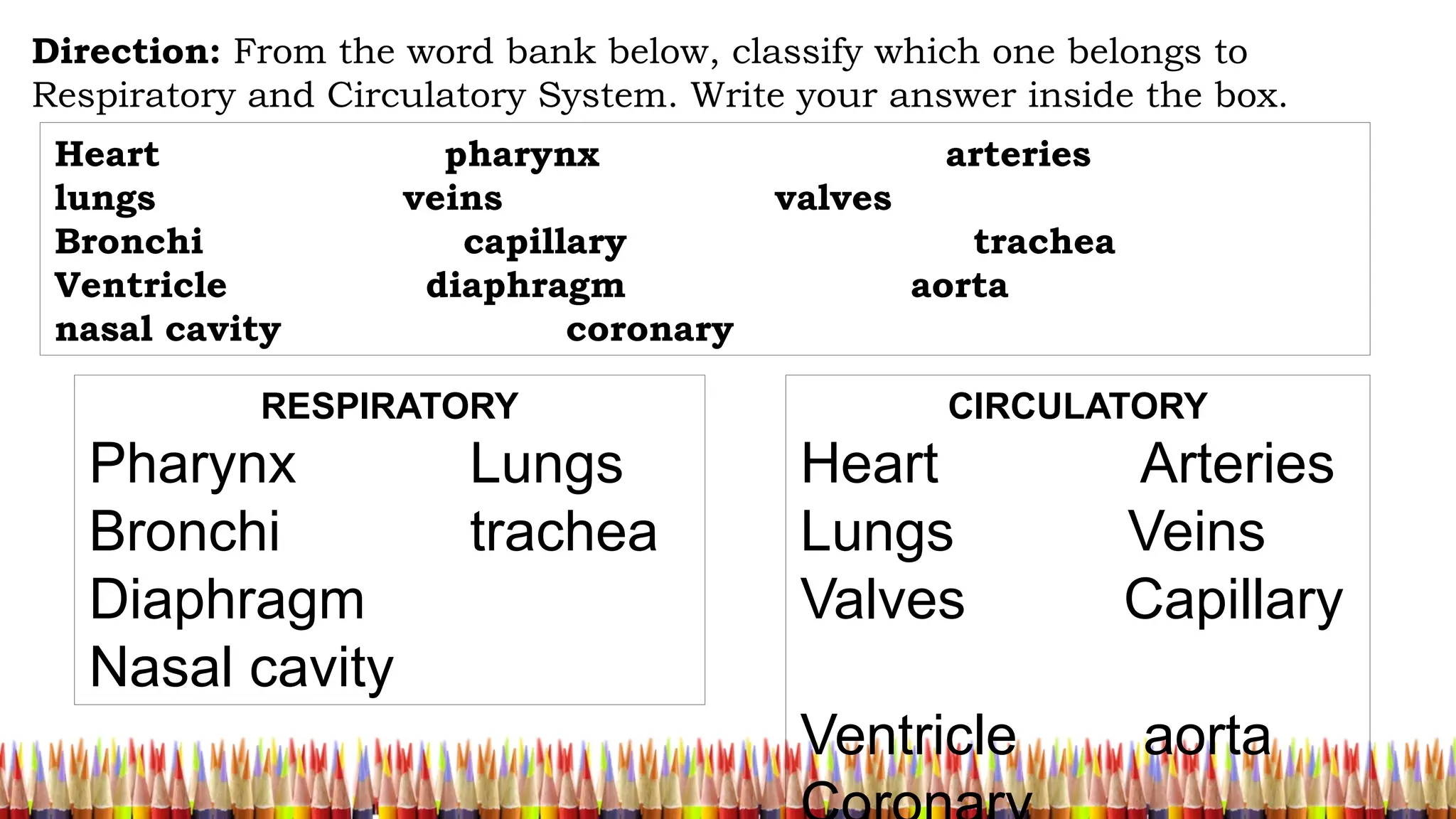
Direction: From the word bank below, classify which one belongs to
Respiratory and Circulatory System. Write your answer inside the box.
Heart pharynx arteries
lungs veins valves
Bronchi capillary trachea
Ventricle diaphragm aorta
nasal cavity coronary
RESPIRATORY
Pharynx Lungs
Bronchi trachea
Diaphragm
Nasal cavity
CIRCULATORY
Heart Arteries
Lungs Veins
Valves Capillary
Ventricle aorta
CIRCULATORY SYSTEM
-responsible for distributing materials throughout
the body.
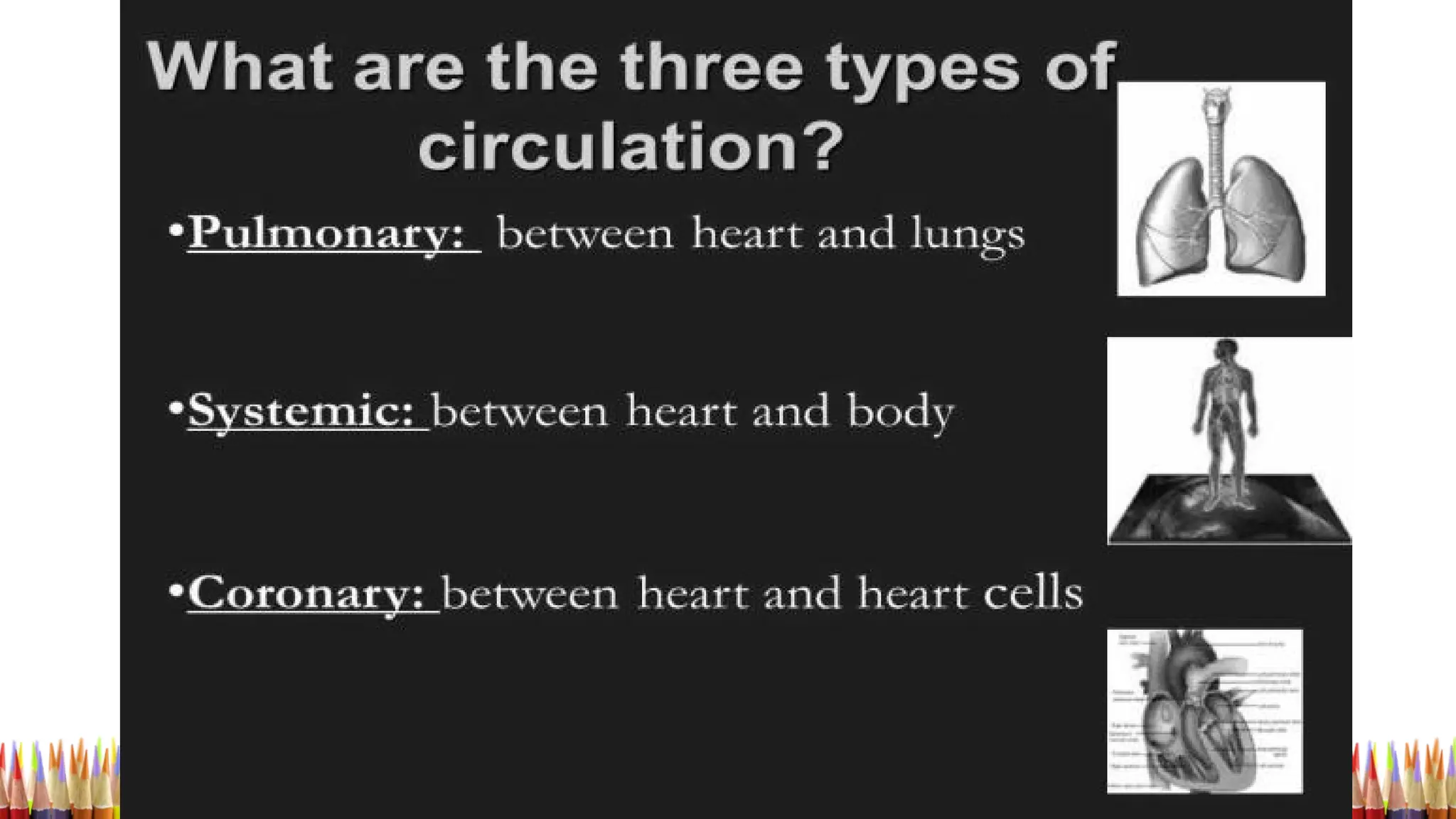
Circulation
- Means transportation or
movement in circles.
Three Major parts of the
Circulatory System
1.Heart
2.Blood Vessel
3.Blood
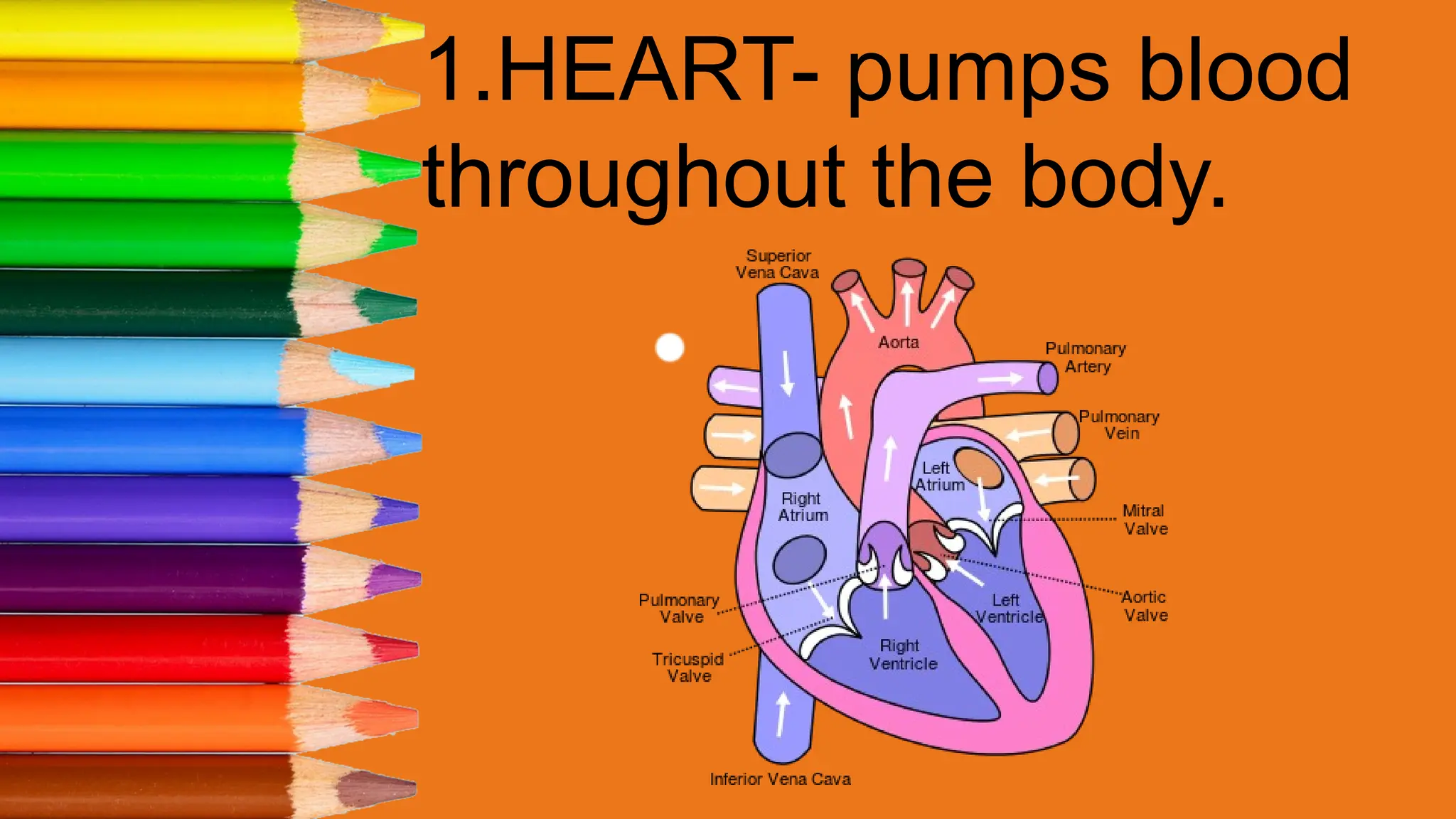
1.HEART- pumps blood
throughout the body.
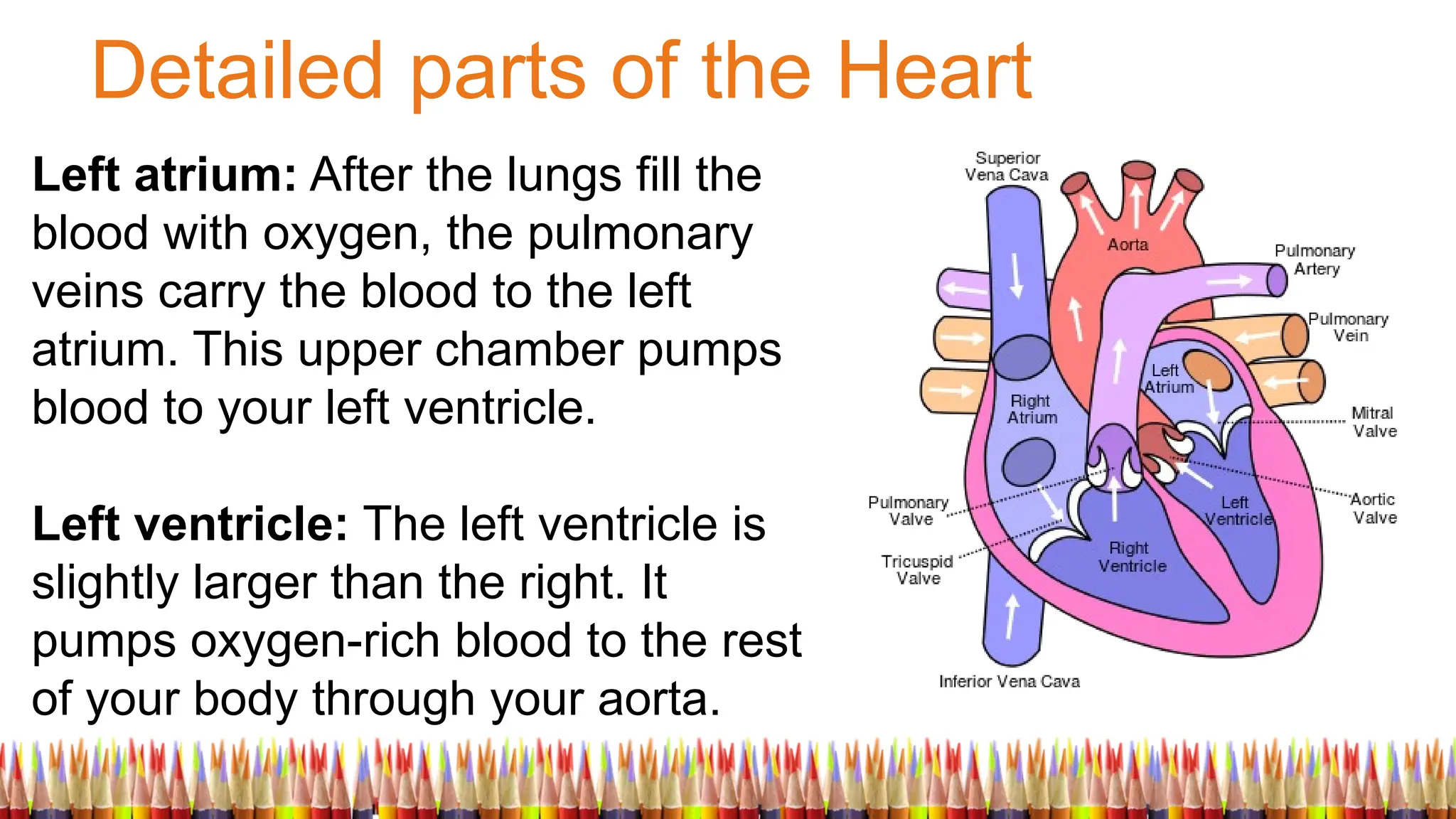
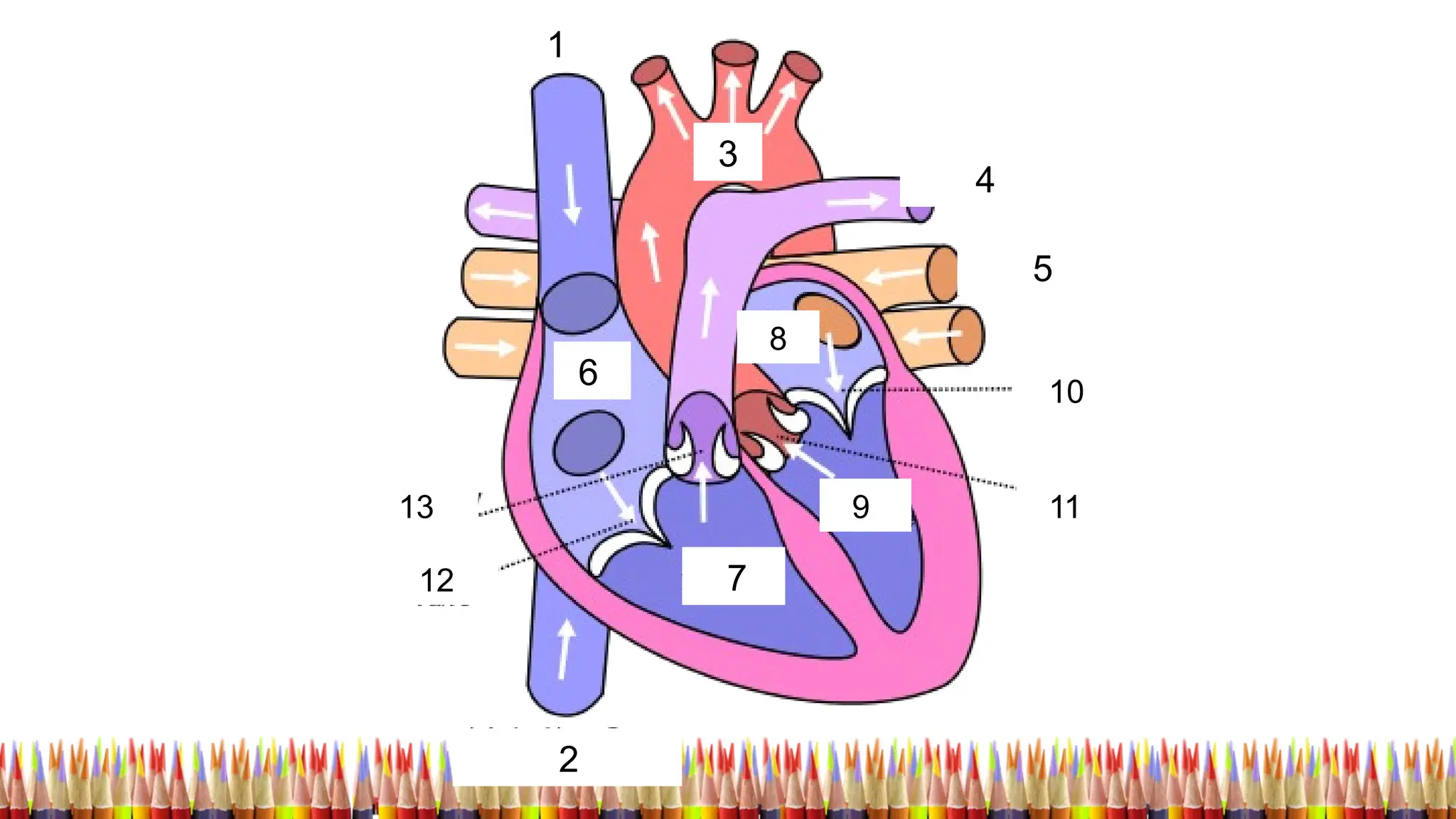
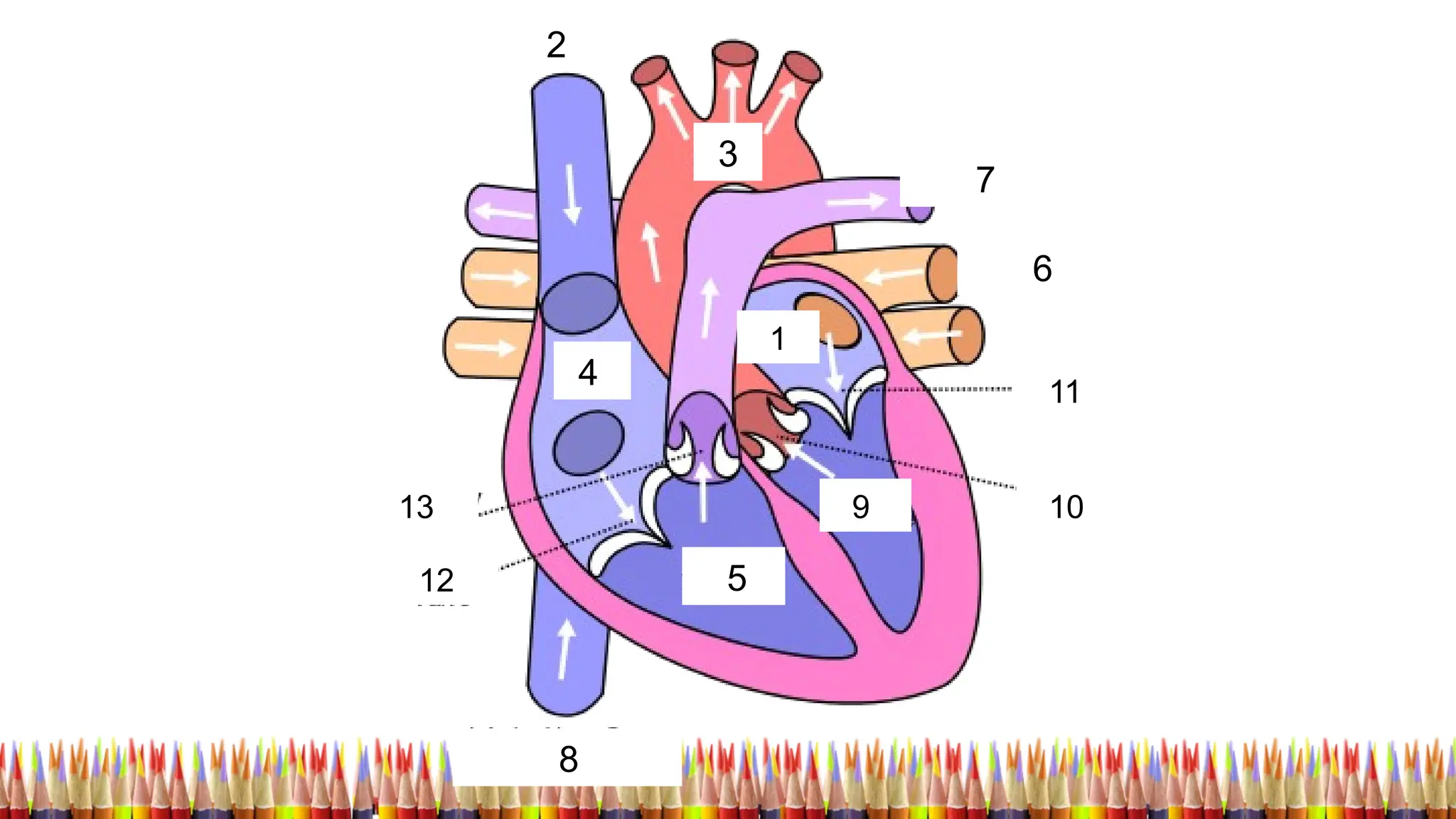
Detailed parts of the Heart
Heart Vessels
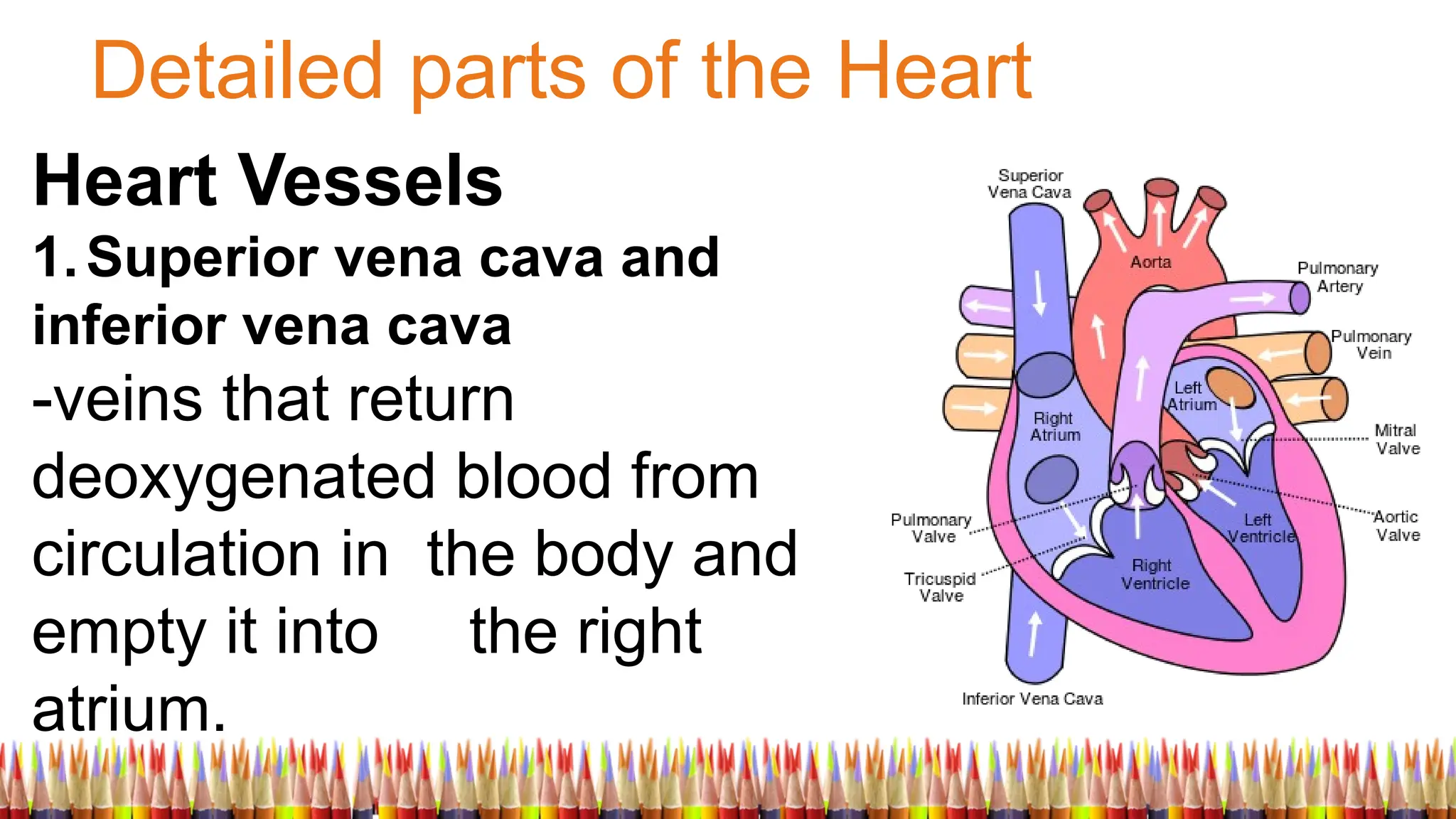
1.Superior vena cava and
inferior vena cava
-veins that return
deoxygenated blood from
circulation in the body and
empty it into the right
atrium.
Detailed parts of the Heart
Heart Vessels
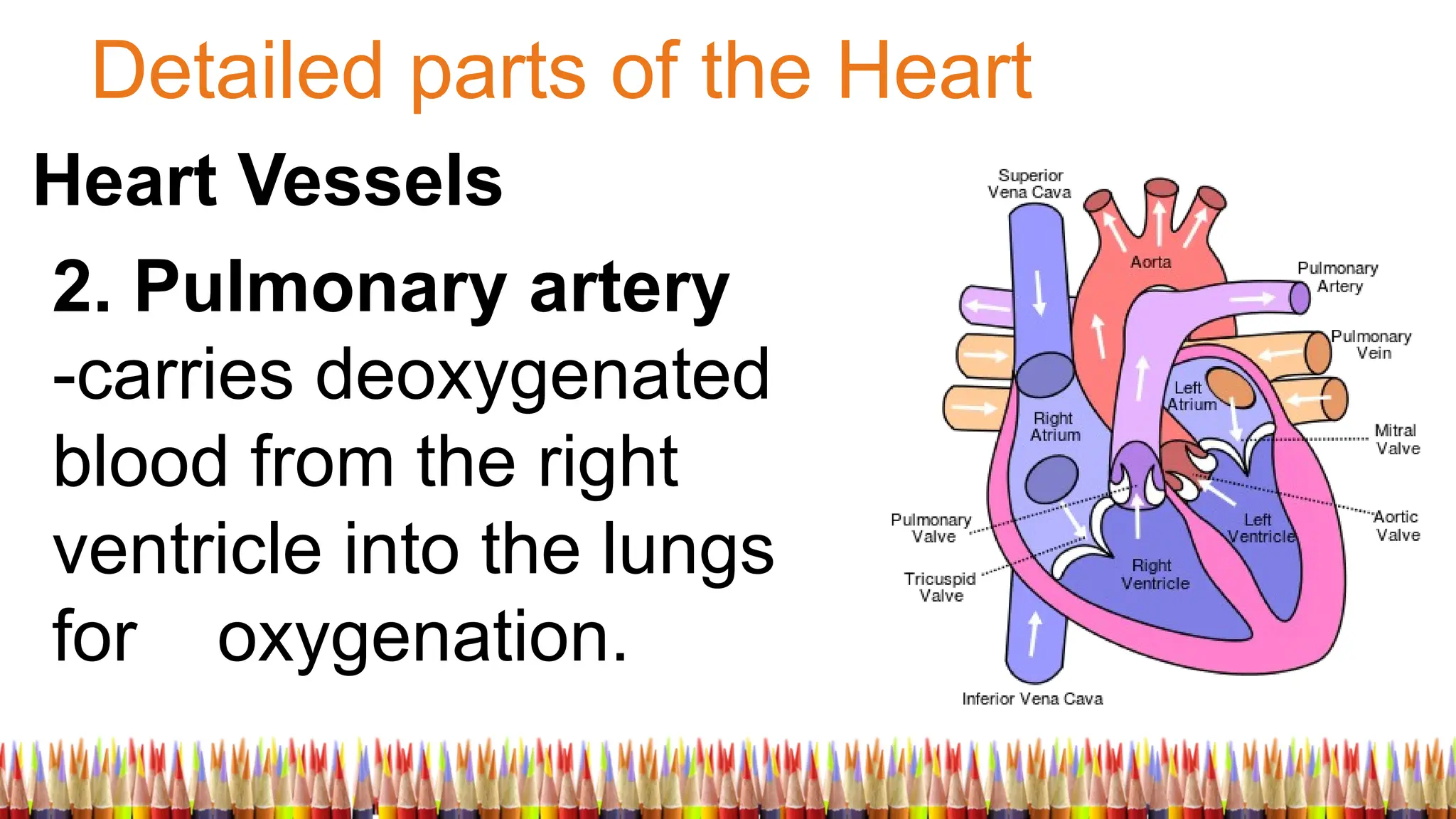
2. Pulmonary artery
-carries deoxygenated
blood from the right
ventricle into the lungs
for oxygenation.
Detailed parts of the Heart
Heart Vessels
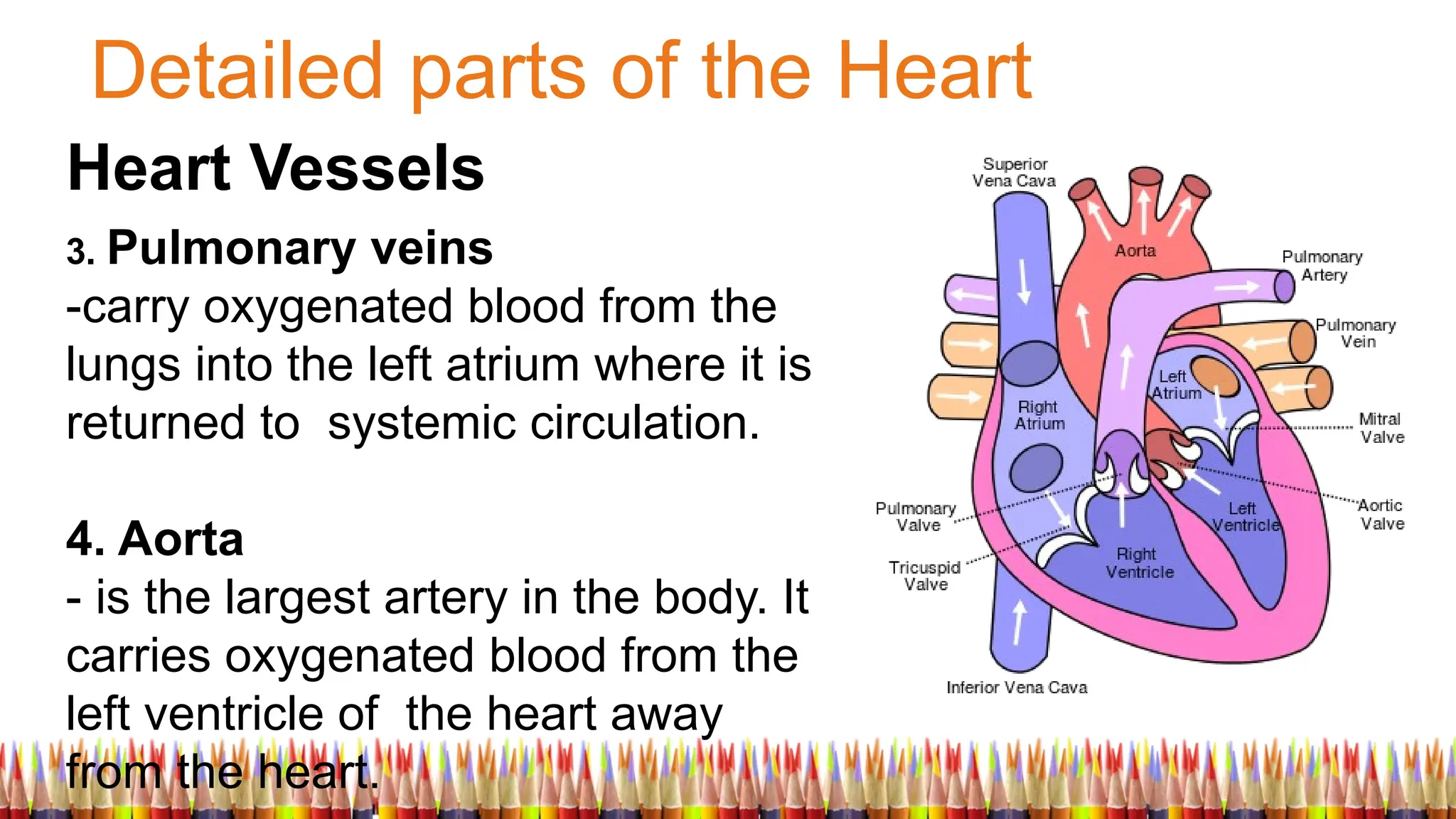
3. Pulmonary veins
-carry oxygenated blood from the
lungs into the left atrium where it is
returned to systemic circulation.
4. Aorta
- is the largest artery in the body. It
carries oxygenated blood from the
left ventricle of the heart away
from the heart.
Detailed parts of the Heart
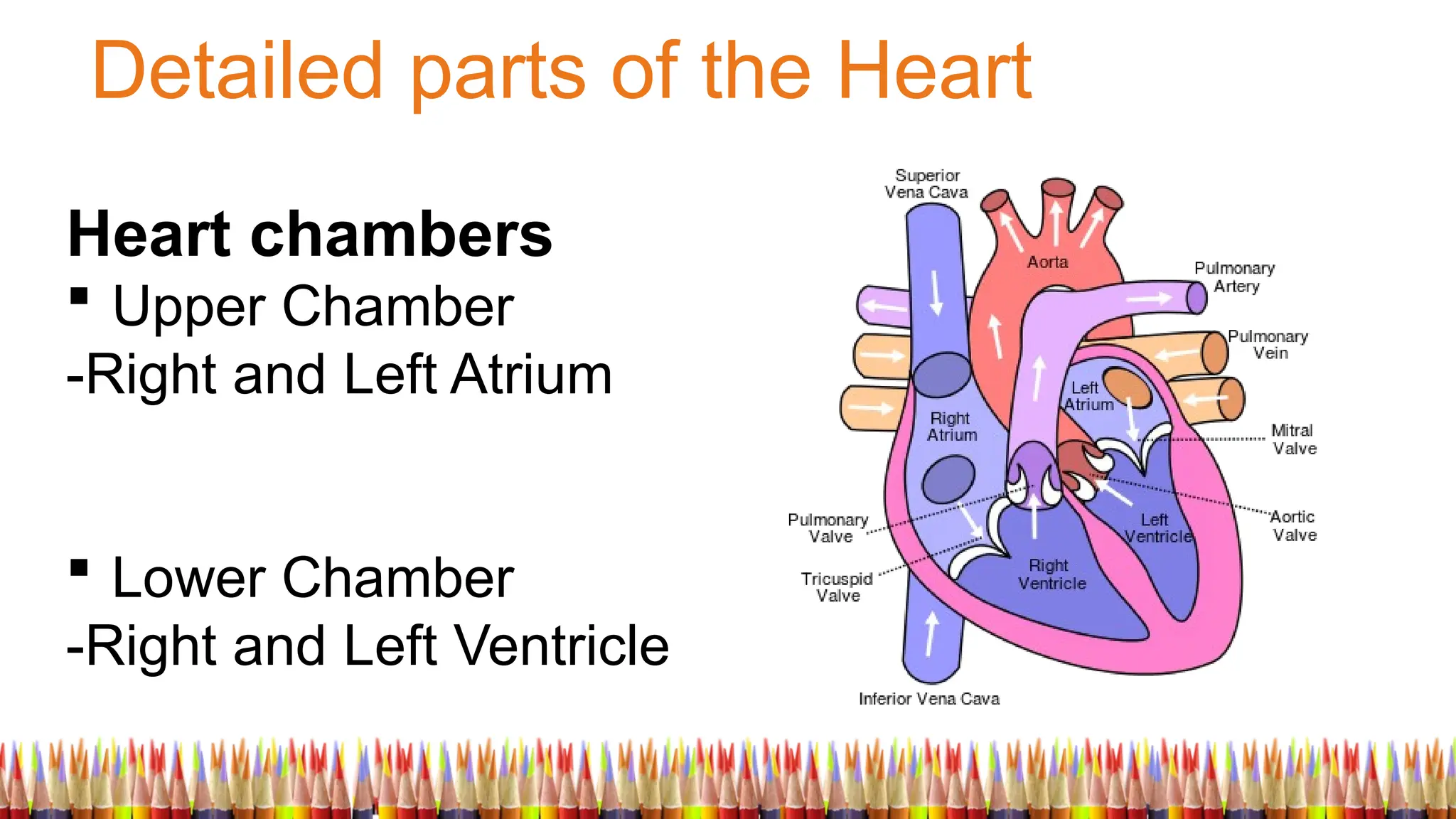
Heart chambers
 Upper Chamber
-Right and Left Atrium
 Lower Chamber
-Right and Left Ventricle
Detailed parts of the Heart
Left atrium: After the lungs fill the
blood with oxygen, the pulmonary
veins carry the blood to the left
atrium. This upper chamber pumps
blood to your left ventricle.
Left ventricle: The left ventricle is
slightly larger than the right. It
pumps oxygen-rich blood to the rest
of your body through your aorta.
Detailed parts of the Heart
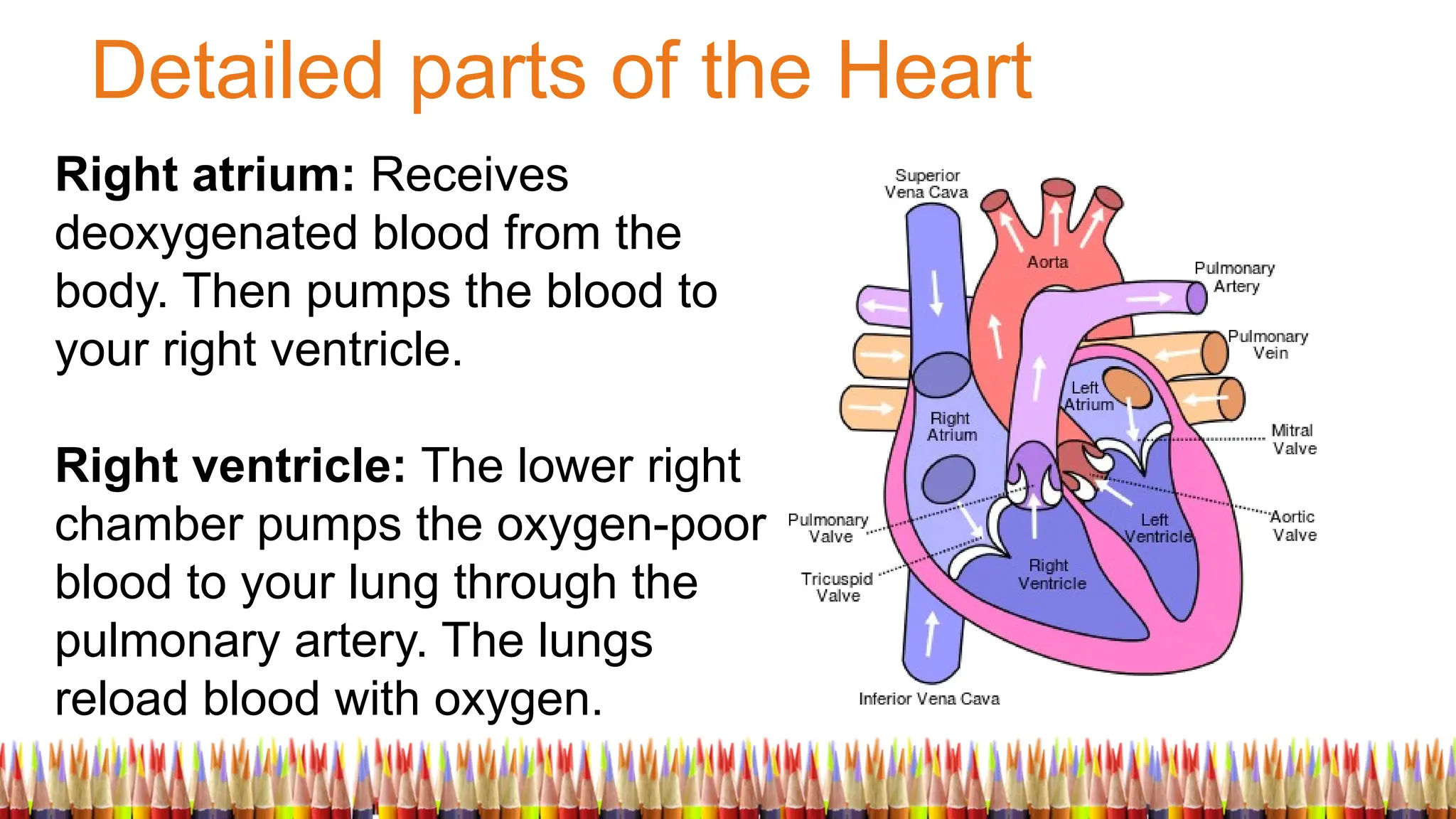
Right atrium: Receives
deoxygenated blood from the
body. Then pumps the blood to
your right ventricle.
Right ventricle: The lower right
chamber pumps the oxygen-poor
blood to your lung through the
pulmonary artery. The lungs
reload blood with oxygen.
Detailed parts of the Heart
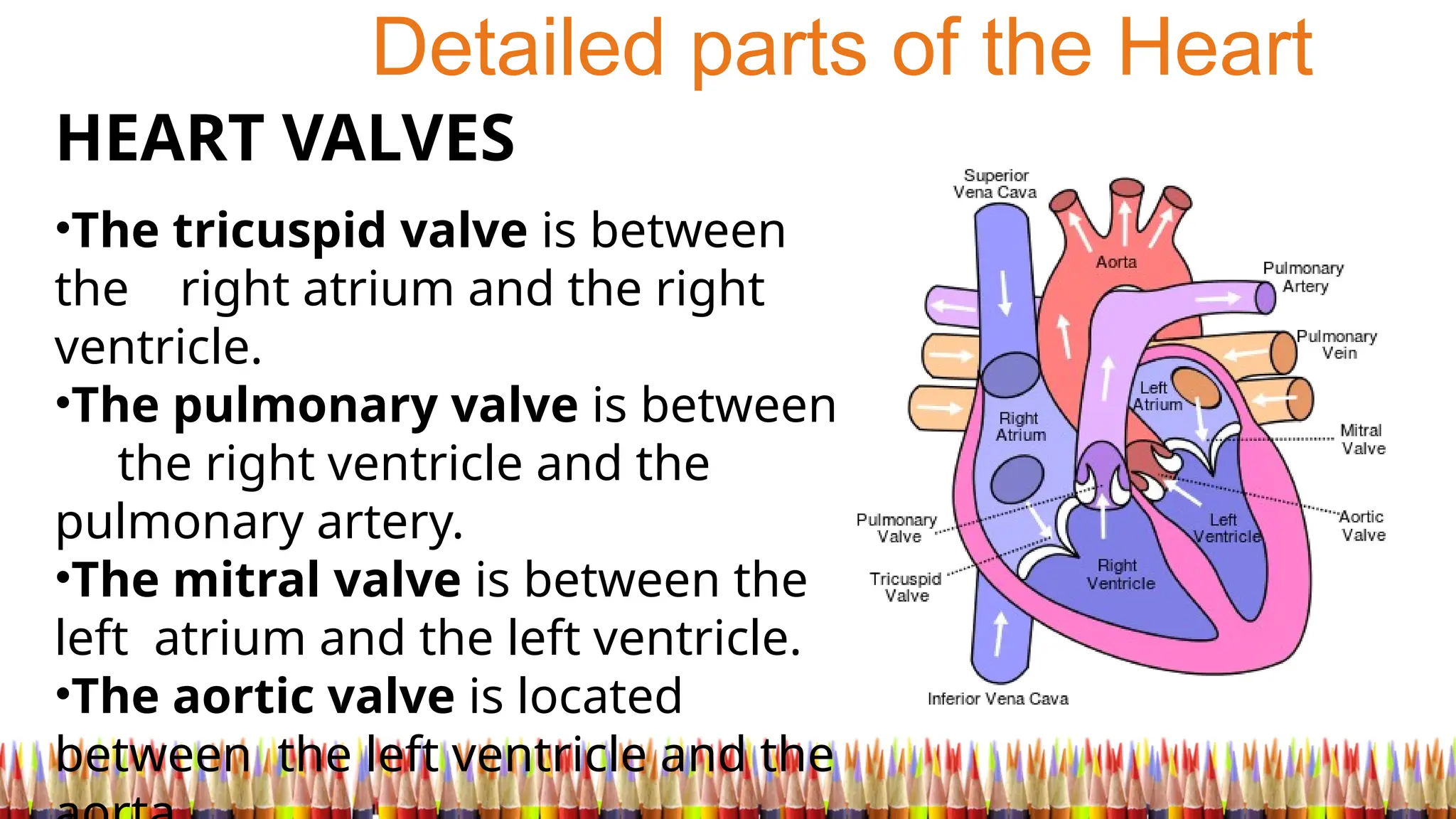
HEART VALVES
•The tricuspid valve is between
the right atrium and the right
ventricle.
•The pulmonary valve is between
the right ventricle and the
pulmonary artery.
•The mitral valve is between the
left atrium and the left ventricle.
•The aortic valve is located
between the left ventricle and the
1
2
3
4
5
6
7
8
9
10
11
12
13
2
8
3
7
6
4
5
1
9
11
10
12
13
2. BLOOD VESSEL
-carries the blood
throughout the body
3 TYPES
1. Arteries
2. Veins
3. Capillaries
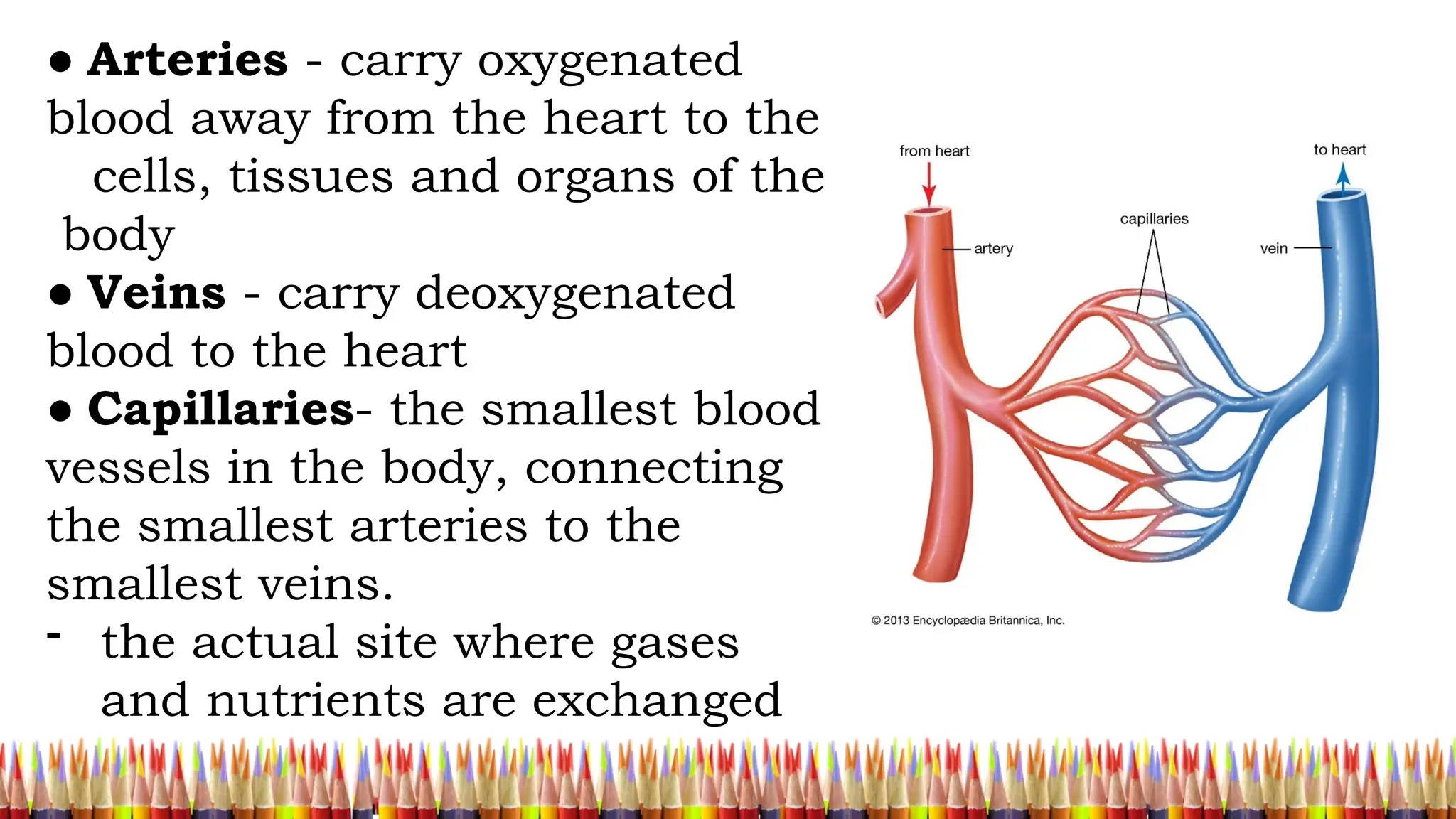
● Arteries - carry oxygenated
blood away from the heart to the
cells, tissues and organs of the
body
● Veins - carry deoxygenated
blood to the heart
● Capillaries- the smallest blood
vessels in the body, connecting
the smallest arteries to the
smallest veins.
- the actual site where gases
and nutrients are exchanged
3. Blood –
carries the materials
throughout the body
Circulatory System - Quarter 1 :Module 1

Circulatory System - Quarter 1 :Module 1

  • 1.
    OUR FATHER Our Father,Who art in heaven, Hallowed be Thy Name. Thy Kingdom come. Thy Will be done, on earth as it is in Heaven. Give us this day our daily bread. And forgive us our trespasses, as we forgive those who trespass against us. And lead us not into temptation, but deliver us from evil. Amen.
  • 2.
    LET’S HAVE ASCIENCE SPELLING BEE
  • 3.
    Direction: From theword bank below, classify which one belongs to Respiratory and Circulatory System. Write your answer inside the box. Heart pharynx arteries lungs veins valves Bronchi capillary trachea Ventricle diaphragm aorta nasal cavity coronary RESPIRATORY Pharynx Lungs Bronchi trachea Diaphragm Nasal cavity CIRCULATORY Heart Arteries Lungs Veins Valves Capillary Ventricle aorta
  • 4.
    CIRCULATORY SYSTEM -responsible fordistributing materials throughout the body.
  • 5.
    Circulation - Means transportationor movement in circles.
  • 6.
    Three Major partsof the Circulatory System 1.Heart 2.Blood Vessel 3.Blood
  • 7.
  • 9.
    Detailed parts ofthe Heart Heart Vessels 1.Superior vena cava and inferior vena cava -veins that return deoxygenated blood from circulation in the body and empty it into the right atrium.
  • 10.
    Detailed parts ofthe Heart Heart Vessels 2. Pulmonary artery -carries deoxygenated blood from the right ventricle into the lungs for oxygenation.
  • 11.
    Detailed parts ofthe Heart Heart Vessels 3. Pulmonary veins -carry oxygenated blood from the lungs into the left atrium where it is returned to systemic circulation. 4. Aorta - is the largest artery in the body. It carries oxygenated blood from the left ventricle of the heart away from the heart.
  • 12.
    Detailed parts ofthe Heart Heart chambers  Upper Chamber -Right and Left Atrium  Lower Chamber -Right and Left Ventricle
  • 13.
    Detailed parts ofthe Heart Left atrium: After the lungs fill the blood with oxygen, the pulmonary veins carry the blood to the left atrium. This upper chamber pumps blood to your left ventricle. Left ventricle: The left ventricle is slightly larger than the right. It pumps oxygen-rich blood to the rest of your body through your aorta.
  • 14.
    Detailed parts ofthe Heart Right atrium: Receives deoxygenated blood from the body. Then pumps the blood to your right ventricle. Right ventricle: The lower right chamber pumps the oxygen-poor blood to your lung through the pulmonary artery. The lungs reload blood with oxygen.
  • 15.
    Detailed parts ofthe Heart HEART VALVES •The tricuspid valve is between the right atrium and the right ventricle. •The pulmonary valve is between the right ventricle and the pulmonary artery. •The mitral valve is between the left atrium and the left ventricle. •The aortic valve is located between the left ventricle and the
  • 16.
  • 17.
  • 18.
    2. BLOOD VESSEL -carriesthe blood throughout the body 3 TYPES 1. Arteries 2. Veins 3. Capillaries
  • 19.
    ● Arteries -carry oxygenated blood away from the heart to the cells, tissues and organs of the body ● Veins - carry deoxygenated blood to the heart ● Capillaries- the smallest blood vessels in the body, connecting the smallest arteries to the smallest veins. - the actual site where gases and nutrients are exchanged
  • 20.
    3. Blood – carriesthe materials throughout the body

Editor's Notes

  • #4 Ciculatory system is the life support structure that nourishes your cells with nutrients from the food you eat and oxygen from the air you breathe
  • #5 Flow of materials through out the organism.
  • #7 The air that enters your lungs move into the left part of your heart. From there it is driven into the bloodstream all the way through your body. The blood which transports essential nutrients, oxygen and other chemicals to every cell in your body is pumped by the heart. Once the blood reaches the cells, oxygen processes the nutrients and energy is released. Carbon dioxide is given off during this process. The blood then delivers carbon dioxide into the right portion of your heart, from which it is pumped to the lungs. When you exhale, carbon dioxide leaves your body. These are the three major parts of the circulatory system and their functions:
  • #13 The air that enters your lungs move into the left part of your heart. From there it is driven into the bloodstream all the way through your body. The blood which transports essential nutrients, oxygen and other chemicals to every cell in your body is pumped by the heart. Once the blood reaches the cells, oxygen processes the nutrients and energy is released. Carbon dioxide is given off during this process. The blood then delivers carbon dioxide into the right portion of your heart, from which it is pumped to the lungs. When you exhale, carbon dioxide leaves your body. These are the three major parts of the circulatory system and their functions:
  • #14 The air that enters your lungs move into the left part of your heart. From there it is driven into the bloodstream all the way through your body. The blood which transports essential nutrients, oxygen and other chemicals to every cell in your body is pumped by the heart. Once the blood reaches the cells, oxygen processes the nutrients and energy is released. Carbon dioxide is given off during this process. The blood then delivers carbon dioxide into the right portion of your heart, from which it is pumped to the lungs. When you exhale, carbon dioxide leaves your body. These are the three major parts of the circulatory system and their functions:
  • #15 The air that enters your lungs move into the left part of your heart. From there it is driven into the bloodstream all the way through your body. The blood which transports essential nutrients, oxygen and other chemicals to every cell in your body is pumped by the heart. Once the blood reaches the cells, oxygen processes the nutrients and energy is released. Carbon dioxide is given off during this process. The blood then delivers carbon dioxide into the right portion of your heart, from which it is pumped to the lungs. When you exhale, carbon dioxide leaves your body. These are the three major parts of the circulatory system and their functions:
  • #18 The air that enters your lungs move into the left part of your heart. From there it is driven into the bloodstream all the way through your body. The blood which transports essential nutrients, oxygen and other chemicals to every cell in your body is pumped by the heart. Once the blood reaches the cells, oxygen processes the nutrients and energy is released. Carbon dioxide is given off during this process. The blood then delivers carbon dioxide into the right portion of your heart, from which it is pumped to the lungs. When you exhale, carbon dioxide leaves your body. These are the three major parts of the circulatory system and their functions:
  • #19 The air that enters your lungs move into the left part of your heart. From there it is driven into the bloodstream all the way through your body. The blood which transports essential nutrients, oxygen and other chemicals to every cell in your body is pumped by the heart. Once the blood reaches the cells, oxygen processes the nutrients and energy is released. Carbon dioxide is given off during this process. The blood then delivers carbon dioxide into the right portion of your heart, from which it is pumped to the lungs. When you exhale, carbon dioxide leaves your body. These are the three major parts of the circulatory system and their functions:
  • #20 The air that enters your lungs move into the left part of your heart. From there it is driven into the bloodstream all the way through your body. The blood which transports essential nutrients, oxygen and other chemicals to every cell in your body is pumped by the heart. Once the blood reaches the cells, oxygen processes the nutrients and energy is released. Carbon dioxide is given off during this process. The blood then delivers carbon dioxide into the right portion of your heart, from which it is pumped to the lungs. When you exhale, carbon dioxide leaves your body. These are the three major parts of the circulatory system and their functions: