Circulatory
Shock
Qedirya Ahmed
Halder Jamal
November 7th, 2023
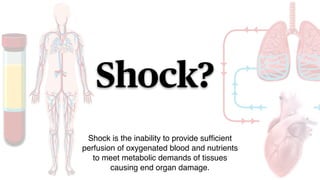
Shock?
Shock is the inability to provide suf
fi
cient
perfusion of oxygenated blood and nutrients
to meet metabolic demands of tissues
causing end organ damage.
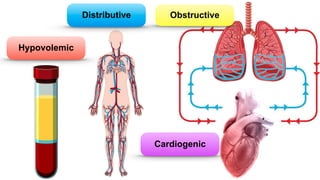
Distributive
Hypovolemic
Obstructive
Cardiogenic
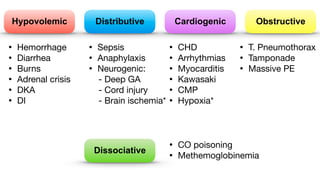
Distributive
Hypovolemic Obstructive
Cardiogenic
• Sepsis
• Anaphylaxis
• Neurogenic:
- Deep GA
- Cord injury
- Brain ischemia*
• Hemorrhage
• Diarrhea
• Burns
• Adrenal crisis
• DKA
• DI
• CHD
• Arrhythmias
• Myocarditis
• Kawasaki
• CMP
• Hypoxia*
• T. Pneumothorax
• Tamponade
• Massive PE
Dissociative
• CO poisoning
• Methemoglobinemia
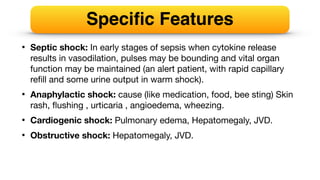
• Septic shock: In early stages of sepsis when cytokine release
results in vasodilation, pulses may be bounding and vital organ
function may be maintained (an alert patient, with rapid capillary
re
fi
ll and some urine output in warm shock).
• Anaphylactic shock: cause (like medication, food, bee sting) Skin
rash,
fl
ushing , urticaria , angioedema, wheezing.
• Cardiogenic shock: Pulmonary edema, Hepatomegaly, JVD.
• Obstructive shock: Hepatomegaly, JVD.
Speci
fi
c Features
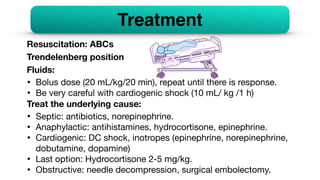
Resuscitation: ABCs
Trendelenberg position
Fluids:
• Bolus dose (20 mL/kg/20 min), repeat until there is response.
• Be very careful with cardiogenic shock (10 mL/ kg /1 h)
Treat the underlying cause:
• Septic: antibiotics, norepinephrine.
• Anaphylactic: antihistamines, hydrocortisone, epinephrine.
• Cardiogenic: DC shock, inotropes (epinephrine, norepinephrine,
dobutamine, dopamine)
• Last option: Hydrocortisone 2-5 mg/kg.
• Obstructive: needle decompression, surgical embolectomy.
Treatment
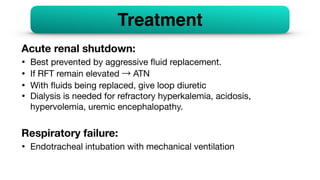
Acute renal shutdown:
• Best prevented by aggressive
fl
uid replacement.
• If RFT remain elevated → ATN
• With
fl
uids being replaced, give loop diuretic
• Dialysis is needed for refractory hyperkalemia, acidosis,
hypervolemia, uremic encephalopathy.
Respiratory failure:
• Endotracheal intubation with mechanical ventilation
Treatment
MOSF / MODS:
• Respiratory failure
• Renal failure
• Liver failure
• Coagulopathy
• Encephalopathy
• Anoxic brain injury
• Higher mortality
• Longer hospital stay
• Long term disability
Complications
Don’t let any patients die
without steroids

Circulatory Shock (causes and treatment)

  • 1.
  • 3.
    Shock? Shock is theinability to provide suf fi cient perfusion of oxygenated blood and nutrients to meet metabolic demands of tissues causing end organ damage.
  • 4.
  • 5.
    Distributive Hypovolemic Obstructive Cardiogenic • Sepsis •Anaphylaxis • Neurogenic: - Deep GA - Cord injury - Brain ischemia* • Hemorrhage • Diarrhea • Burns • Adrenal crisis • DKA • DI • CHD • Arrhythmias • Myocarditis • Kawasaki • CMP • Hypoxia* • T. Pneumothorax • Tamponade • Massive PE Dissociative • CO poisoning • Methemoglobinemia
  • 8.
    • Septic shock:In early stages of sepsis when cytokine release results in vasodilation, pulses may be bounding and vital organ function may be maintained (an alert patient, with rapid capillary re fi ll and some urine output in warm shock). • Anaphylactic shock: cause (like medication, food, bee sting) Skin rash, fl ushing , urticaria , angioedema, wheezing. • Cardiogenic shock: Pulmonary edema, Hepatomegaly, JVD. • Obstructive shock: Hepatomegaly, JVD. Speci fi c Features
  • 9.
    Resuscitation: ABCs Trendelenberg position Fluids: •Bolus dose (20 mL/kg/20 min), repeat until there is response. • Be very careful with cardiogenic shock (10 mL/ kg /1 h) Treat the underlying cause: • Septic: antibiotics, norepinephrine. • Anaphylactic: antihistamines, hydrocortisone, epinephrine. • Cardiogenic: DC shock, inotropes (epinephrine, norepinephrine, dobutamine, dopamine) • Last option: Hydrocortisone 2-5 mg/kg. • Obstructive: needle decompression, surgical embolectomy. Treatment
  • 10.
    Acute renal shutdown: •Best prevented by aggressive fl uid replacement. • If RFT remain elevated → ATN • With fl uids being replaced, give loop diuretic • Dialysis is needed for refractory hyperkalemia, acidosis, hypervolemia, uremic encephalopathy. Respiratory failure: • Endotracheal intubation with mechanical ventilation Treatment
  • 11.
    MOSF / MODS: •Respiratory failure • Renal failure • Liver failure • Coagulopathy • Encephalopathy • Anoxic brain injury • Higher mortality • Longer hospital stay • Long term disability Complications
  • 13.
    Don’t let anypatients die without steroids