Ciguatera Poisoning
By Tahzib Dihan
Introduction
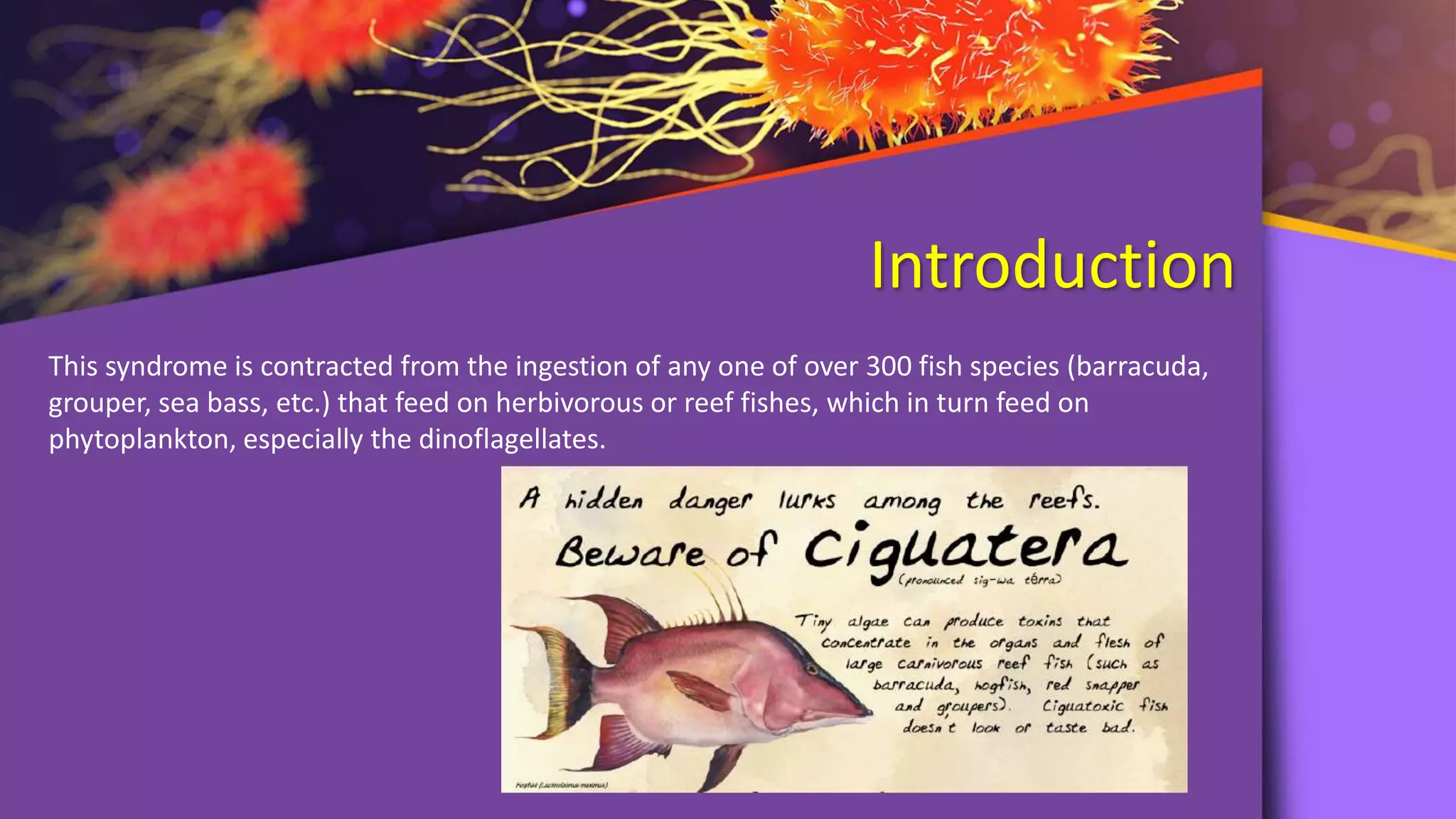
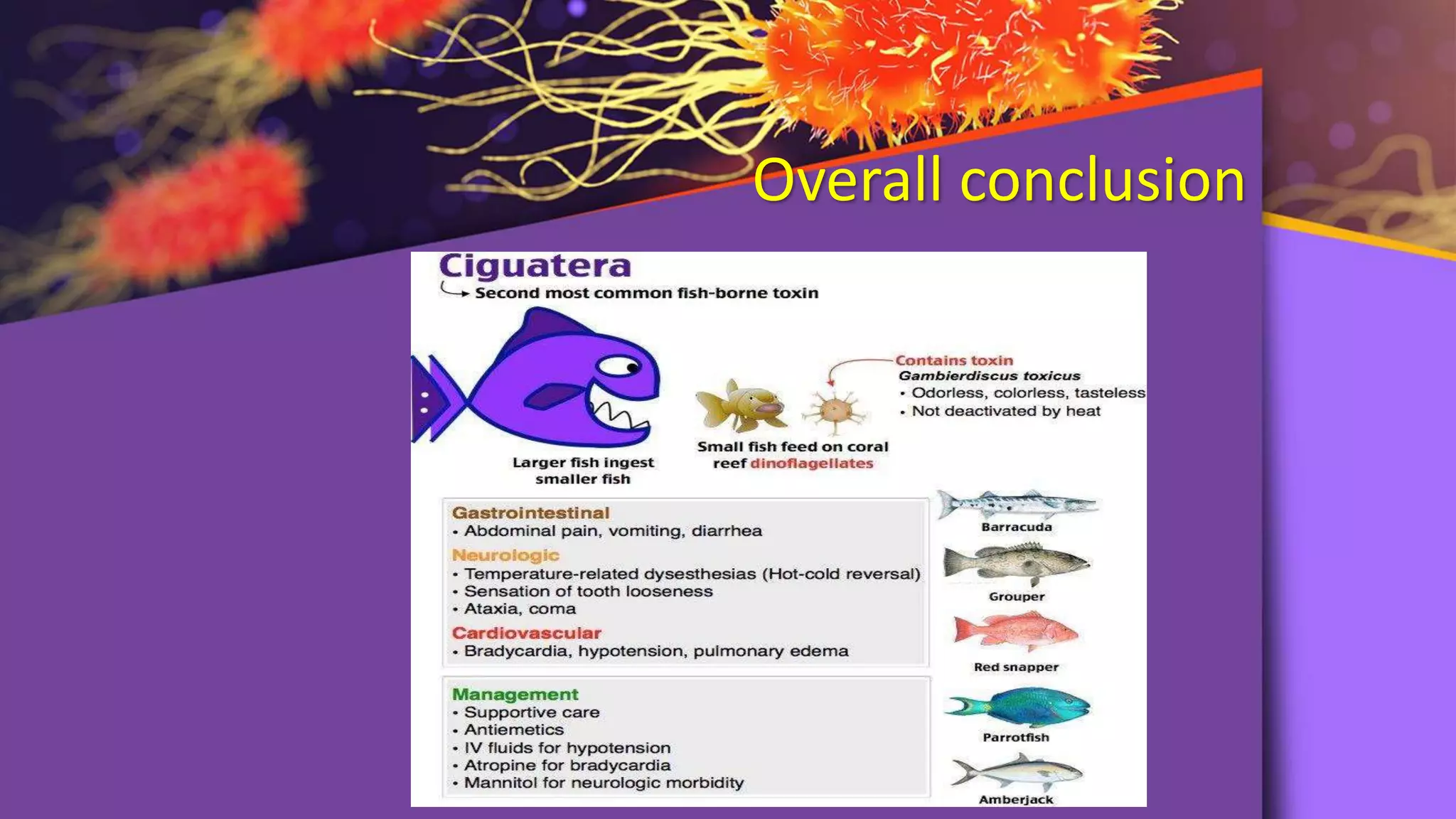
This syndrome is contracted from the ingestion of any one of over 300 fish species (barracuda,
grouper, sea bass, etc.) that feed on herbivorous or reef fishes, which in turn feed on
phytoplankton, especially the dinoflagellates.
Sources
Causative agents
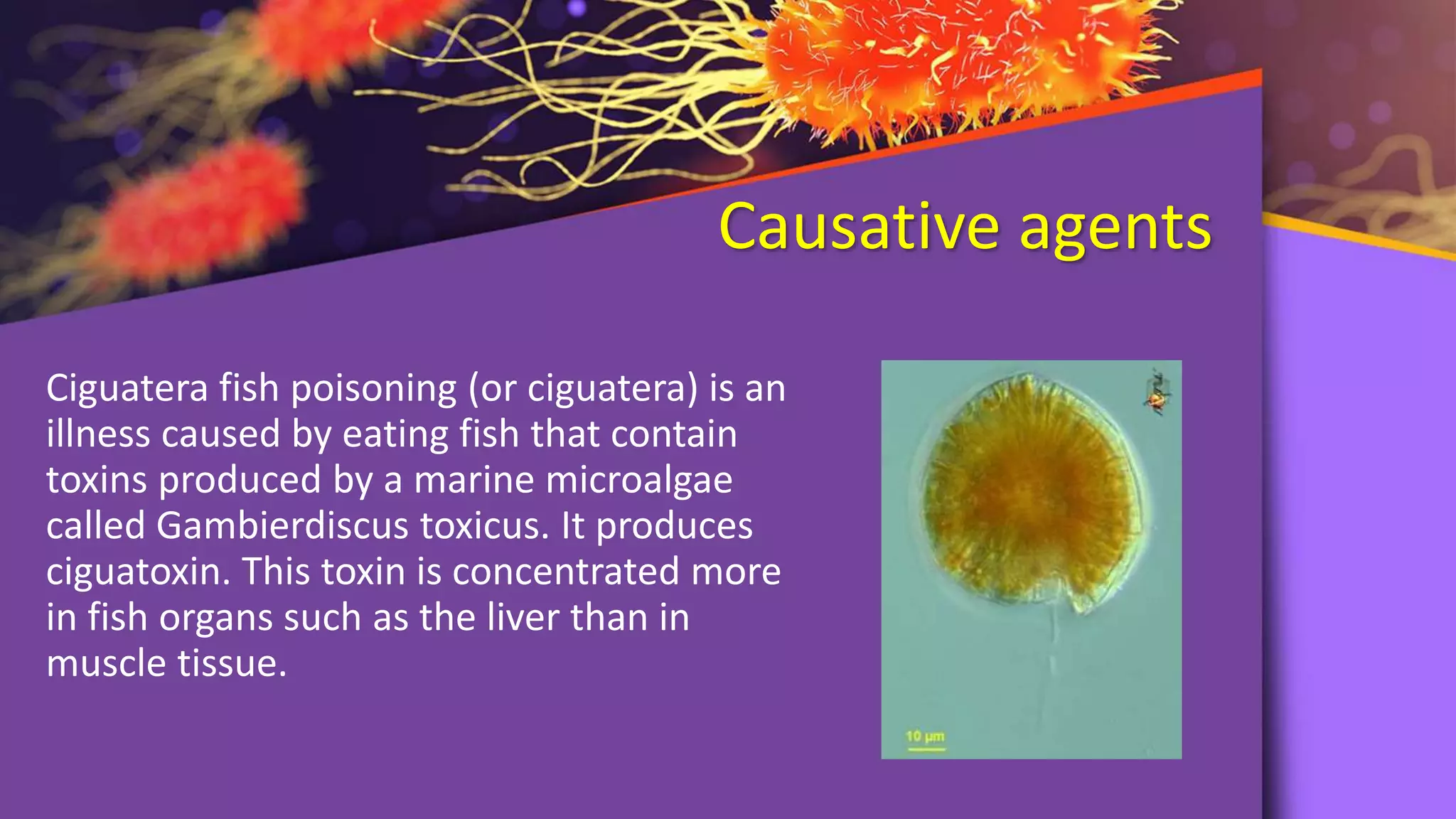
Ciguatera fish poisoning (or ciguatera) is an
illness caused by eating fish that contain
toxins produced by a marine microalgae
called Gambierdiscus toxicus. It produces
ciguatoxin. This toxin is concentrated more
in fish organs such as the liver than in
muscle tissue.
Mechanism of Action
Signs & Symptoms
Upon ingestion of toxic fish, symptoms occur within 3-6 hours (about the same as for
staphylococcal food poisoning), and consist of nausea and paresthesia about the mouth, tongue,
and throat. In general, the symptoms are quite similar to those for paralytic shellfish poisoning.
Respiratory paralysis is the consequence in the absence of appropriate therapy.
outbreaks
For the years 1983-1992, 129 outbreaks were reported to the CDC
involving 508 persons with no deaths.13 An outbreak in Texas in 1997
involved 17 crew members of a cargo ship, and the vehicle food was
barracuda.
Treatment
Treatments include:
Prevention
Overall conclusion

Ciguatera Poisoning.pptx

  • 1.
  • 2.
    Introduction This syndrome iscontracted from the ingestion of any one of over 300 fish species (barracuda, grouper, sea bass, etc.) that feed on herbivorous or reef fishes, which in turn feed on phytoplankton, especially the dinoflagellates.
  • 3.
  • 4.
    Causative agents Ciguatera fishpoisoning (or ciguatera) is an illness caused by eating fish that contain toxins produced by a marine microalgae called Gambierdiscus toxicus. It produces ciguatoxin. This toxin is concentrated more in fish organs such as the liver than in muscle tissue.
  • 5.
  • 6.
    Signs & Symptoms Uponingestion of toxic fish, symptoms occur within 3-6 hours (about the same as for staphylococcal food poisoning), and consist of nausea and paresthesia about the mouth, tongue, and throat. In general, the symptoms are quite similar to those for paralytic shellfish poisoning. Respiratory paralysis is the consequence in the absence of appropriate therapy.
  • 7.
    outbreaks For the years1983-1992, 129 outbreaks were reported to the CDC involving 508 persons with no deaths.13 An outbreak in Texas in 1997 involved 17 crew members of a cargo ship, and the vehicle food was barracuda.
  • 8.
  • 9.
  • 10.