Chronic liver failure
pathogenesis and complications


          Pratyush kumar
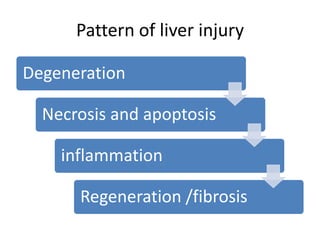
Pattern of liver injury

Degeneration

  Necrosis and apoptosis

    inflammation

      Regeneration /fibrosis
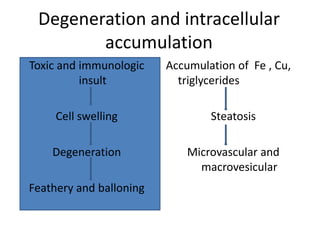
Degeneration and intracellular
        accumulation
Toxic and immunologic    Accumulation of Fe , Cu,
          insult           triglycerides

     Cell swelling               Steatosis

    Degeneration             Microvascular and
                               macrovesicular
Feathery and balloning
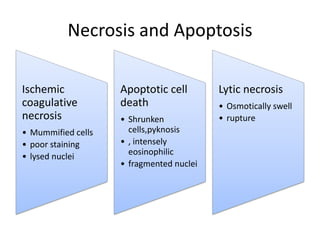
Necrosis and Apoptosis

Ischemic            Apoptotic cell        Lytic necrosis
coagulative         death                 • Osmotically swell
necrosis            • Shrunken            • rupture
• Mummified cells     cells,pyknosis
• poor staining     • , intensely
• lysed nuclei        eosinophilic
                    • fragmented nuclei
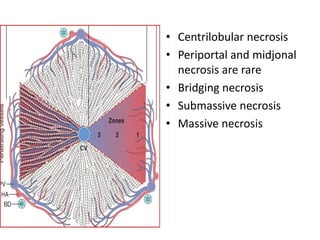
• Centrilobular necrosis
• Periportal and midjonal
  necrosis are rare
• Bridging necrosis
• Submassive necrosis
• Massive necrosis
INFLAMMATION
Influx of acute and chronic inflammatory cells
Collection of quiescent lymphocytes in portal
  tract
Kupffer cell engulf the apoptotic cell fragments
Regeneration
• Longer life span
• Mitoses,thickening of hepatocyte
  cord,disorganization of parenchyma
• DUCTULAR REACTION
• If connective tissue framework is intact almost
  perfect iver restitution may occur
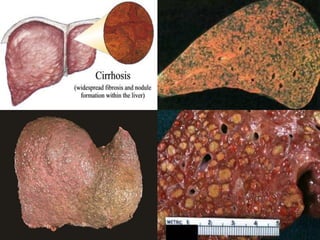
Fibrosis
•   Irreversible hepatic damage
•   Sites of collagen deposition
•   Nodule formation
•   cirrhosis
Portal hypertension and varices
• Portal pressure >12 mm of hg
• Pre,intra and post hepatic cause
• Portosystemic shunting to lower portal
  pressure
• Development of collateral circulation
• Recurrents bouts of haemorrhage
Complications
• Hepatic encephalopathy
  – Disorder of neurotransmission in cns and
    neuromuscular system
  – Increased level of ammonia
  – Confusion to coma
  – Edema and astrocytic reaction
• Hepatorenal disease
  – Renal failure without any intrinsic or functional
    cause of renal failure
  – Sodium retention,
  – Decreased renal perfusion
  – Decrease GFR
  – Ability to concentrate urine retained
• Hepatopulmonary syndrome
  – Chronic liver disease +hypoxemia+IPVD
  – Ventilation perfusion mismatch
  – Limitation of oxygen diffusion
  – Increase synthesis of NO
Thank you

Chronic liver failure

  • 1.
    Chronic liver failure pathogenesisand complications Pratyush kumar
  • 2.
    Pattern of liverinjury Degeneration Necrosis and apoptosis inflammation Regeneration /fibrosis
  • 3.
    Degeneration and intracellular accumulation Toxic and immunologic Accumulation of Fe , Cu, insult triglycerides Cell swelling Steatosis Degeneration Microvascular and macrovesicular Feathery and balloning
  • 4.
    Necrosis and Apoptosis Ischemic Apoptotic cell Lytic necrosis coagulative death • Osmotically swell necrosis • Shrunken • rupture • Mummified cells cells,pyknosis • poor staining • , intensely • lysed nuclei eosinophilic • fragmented nuclei
  • 5.
    • Centrilobular necrosis •Periportal and midjonal necrosis are rare • Bridging necrosis • Submassive necrosis • Massive necrosis
  • 7.
    INFLAMMATION Influx of acuteand chronic inflammatory cells Collection of quiescent lymphocytes in portal tract Kupffer cell engulf the apoptotic cell fragments
  • 8.
    Regeneration • Longer lifespan • Mitoses,thickening of hepatocyte cord,disorganization of parenchyma • DUCTULAR REACTION • If connective tissue framework is intact almost perfect iver restitution may occur
  • 9.
    Fibrosis • Irreversible hepatic damage • Sites of collagen deposition • Nodule formation • cirrhosis
  • 10.
    Portal hypertension andvarices • Portal pressure >12 mm of hg • Pre,intra and post hepatic cause • Portosystemic shunting to lower portal pressure • Development of collateral circulation • Recurrents bouts of haemorrhage
  • 11.
    Complications • Hepatic encephalopathy – Disorder of neurotransmission in cns and neuromuscular system – Increased level of ammonia – Confusion to coma – Edema and astrocytic reaction
  • 12.
    • Hepatorenal disease – Renal failure without any intrinsic or functional cause of renal failure – Sodium retention, – Decreased renal perfusion – Decrease GFR – Ability to concentrate urine retained
  • 13.
    • Hepatopulmonary syndrome – Chronic liver disease +hypoxemia+IPVD – Ventilation perfusion mismatch – Limitation of oxygen diffusion – Increase synthesis of NO
  • 14.