Chronic
bronchitis(COPD)
By_ Rathod Mihirsinh Ambarishbhai
To_ Aruna ma’am, proof. Internal disease
Chronic bronchitis
• Decline in lung function
• Heart failure
• Atypical metaplasia
• Dysplasia of respiratory
epithelium, may led to
cancerous development.
Features of chronic
bronchitis. • Mucus hypersecretion:-
in large airways.
hypertrophy of
submucosal gland in
trachea and bronchi.
inflammatory
mediators:- histamine, IL-
13.
inc. in goblet cell is
protective rxn against
smoke&pollutant.
inflammation
• Cellular damage, eliciting acute
and chronic inflammatory
response involving the
neutrophils, lymphocytes and
macrophages.
• Leads to chronic airways
obstruction due to long standing
inflammation by fibrosis.
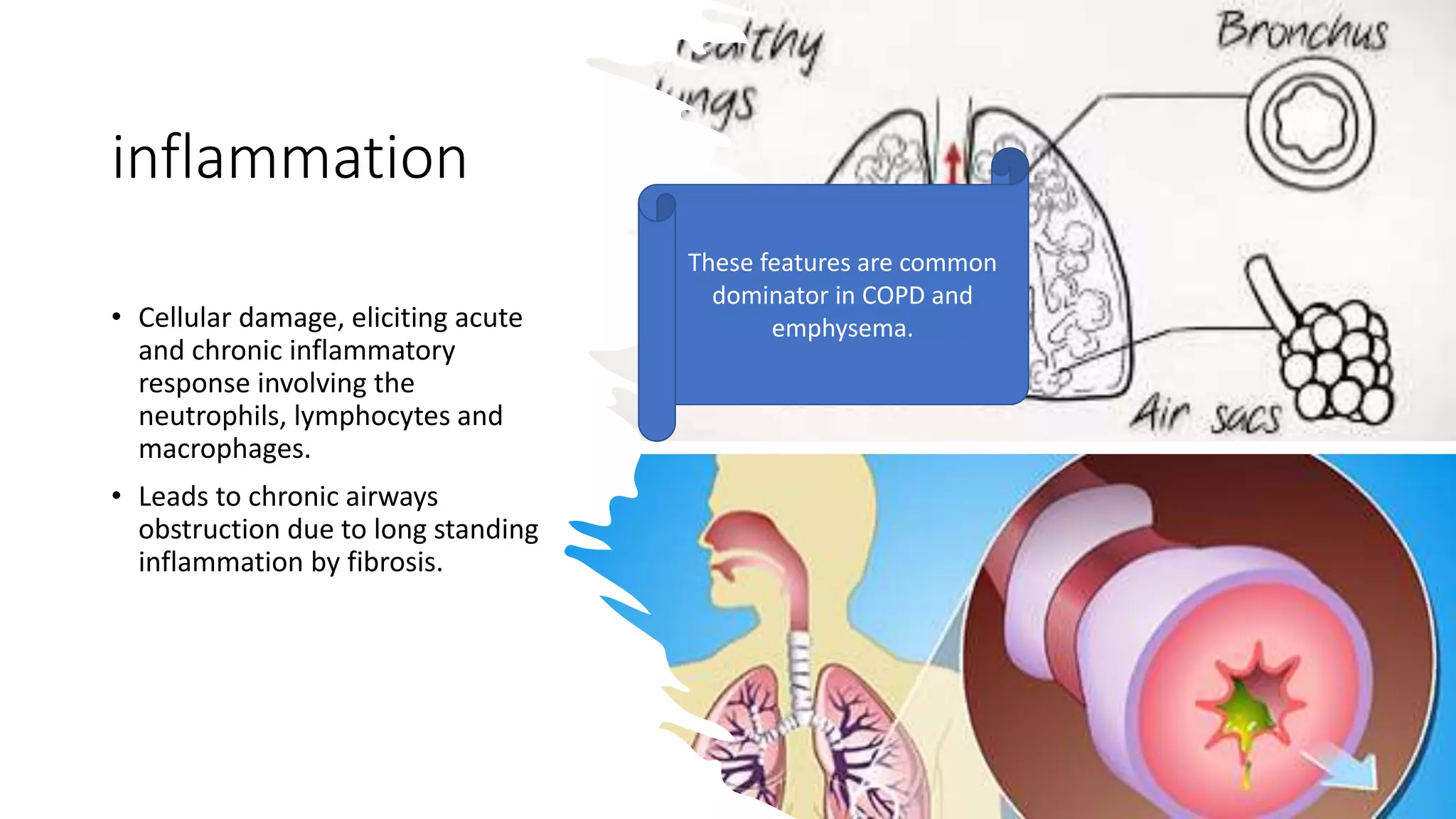
These features are common
dominator in COPD and
emphysema.
infection
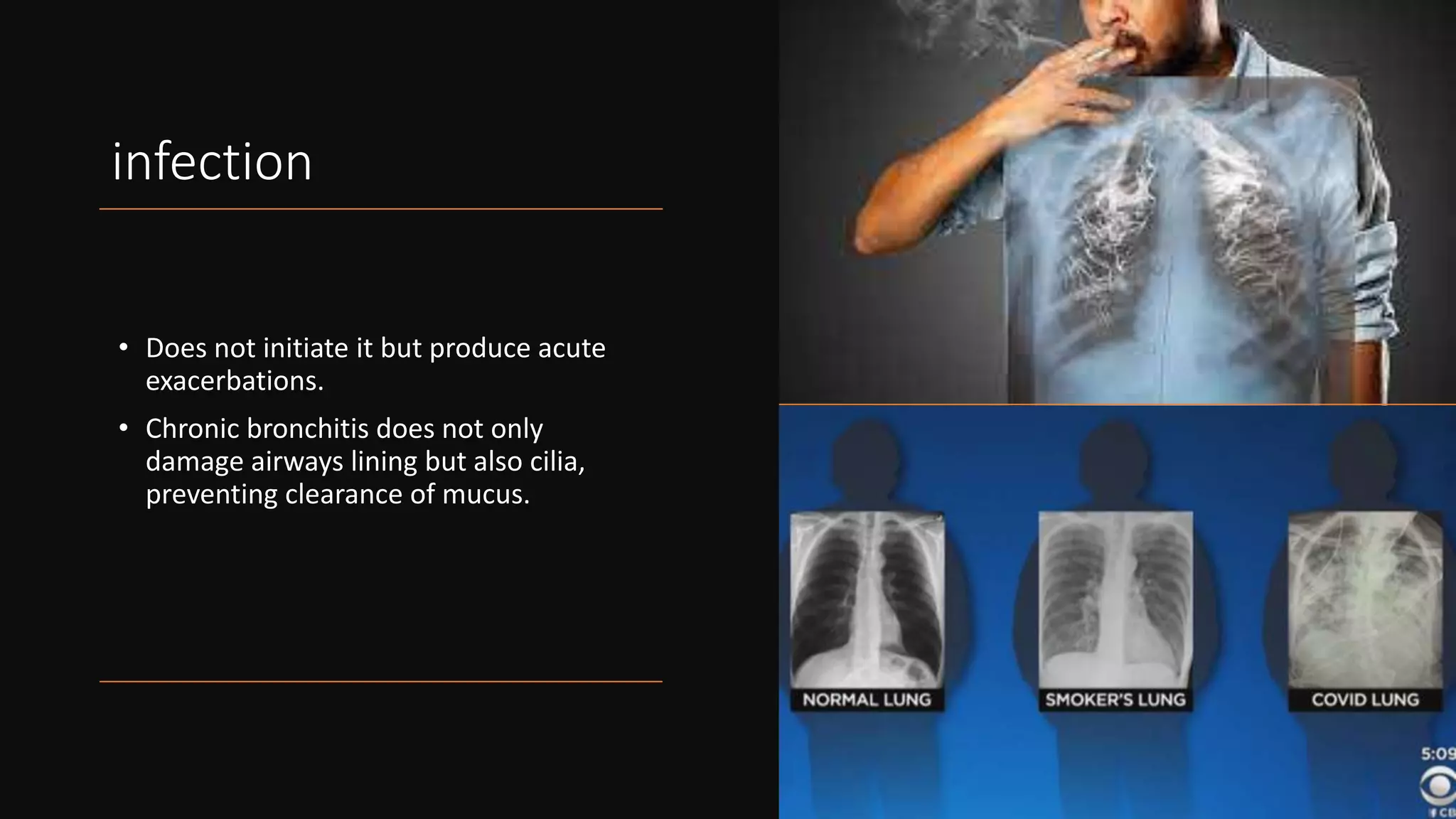
• Does not initiate it but produce acute
exacerbations.
• Chronic bronchitis does not only
damage airways lining but also cilia,
preventing clearance of mucus.
morphology
• Changes in mucus membrane:-
Hyperemia, edema, hyperplasia
increase Reid index(ratio of thickness of
mucus gland layer is to thickness of wall wall
between epithelium and cartilage.
Clinical features
• Persistence cough, sparse
sputum.
• Dyspnea of exertion
• On time hypercapnia,
hypoxemia, and mild
cyanosis(blue blotters) may
develop
• Long standing chronic
bronchitis may led to cardiac
failure.
How Is
Bronchitis
Diagnosed
?
• During the first few days of illness,
bronchitis symptoms are similar to that of
a common cold. Healthcare providers
diagnose bronchitis by asking patients
questions about symptoms and doing a
physical examination. Though they rarely
order additional tests, if you have a fever,
your physician may order a chest X-ray
to rule out pneumonia.
osculation
• Coarse crackles heard at
the beginning of
inspiration are commonly
heard in patients with
COPD, especially those
with chronic bronchitis.
These crackles have a
“popping-like” character,
vary in number and timing
and may be heard over any
lung region.
• Palpation:- no specific
alteration.
percussion
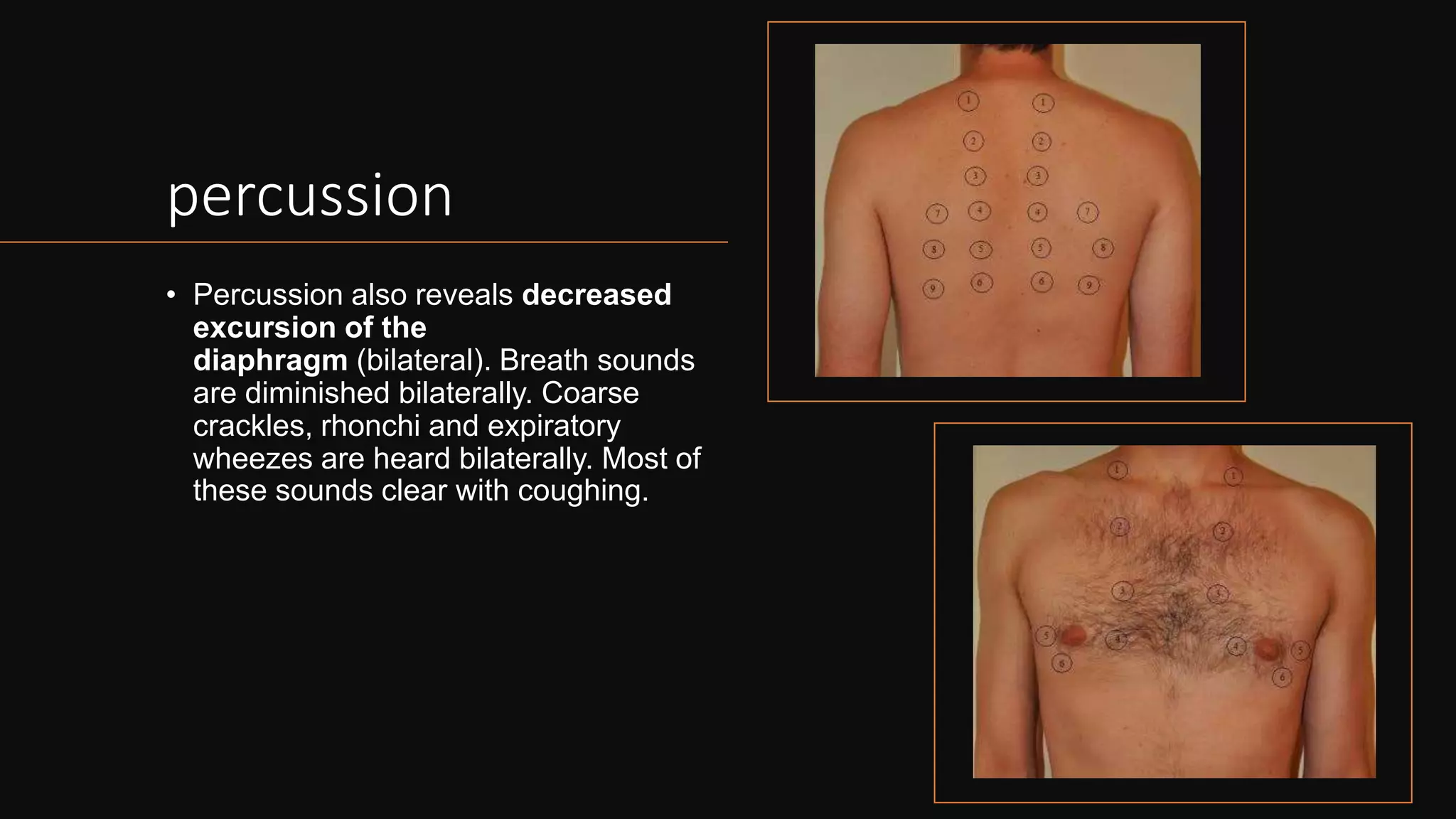
• Percussion also reveals decreased
excursion of the
diaphragm (bilateral). Breath sounds
are diminished bilaterally. Coarse
crackles, rhonchi and expiratory
wheezes are heard bilaterally. Most of
these sounds clear with coughing.
Treatment
Most cases of bronchitis go away on their own. The infection simply has to run
its course over several weeks. Treatment options your doctor may suggest are:
Resting and getting plenty of fluids
Drinking lots of water, which helps loosen chest congestion
A cough suppressant and/or pain reliever
A humidifier or steam
Antibiotics are not effective for treating viral infections, but if your doctor
suspects that you have a bacterial infection, they may prescribe one.
Quiz question 1.
•4.0
•5.0
•6.0
•8.0
Q. What is
the normal
value for
Reid index in
normal
lungs?
Quiz question 2
•IL-13
•Histamine
•None of above
•Both of the above
What are the
inflammatory
mediators for
the chronic
bronchitis?
Chronic bronchitis(COPD).pptx

Chronic bronchitis(COPD).pptx

  • 1.
    Chronic bronchitis(COPD) By_ Rathod MihirsinhAmbarishbhai To_ Aruna ma’am, proof. Internal disease
  • 2.
    Chronic bronchitis • Declinein lung function • Heart failure • Atypical metaplasia • Dysplasia of respiratory epithelium, may led to cancerous development.
  • 3.
    Features of chronic bronchitis.• Mucus hypersecretion:- in large airways. hypertrophy of submucosal gland in trachea and bronchi. inflammatory mediators:- histamine, IL- 13. inc. in goblet cell is protective rxn against smoke&pollutant.
  • 4.
    inflammation • Cellular damage,eliciting acute and chronic inflammatory response involving the neutrophils, lymphocytes and macrophages. • Leads to chronic airways obstruction due to long standing inflammation by fibrosis. These features are common dominator in COPD and emphysema.
  • 5.
    infection • Does notinitiate it but produce acute exacerbations. • Chronic bronchitis does not only damage airways lining but also cilia, preventing clearance of mucus.
  • 6.
    morphology • Changes inmucus membrane:- Hyperemia, edema, hyperplasia increase Reid index(ratio of thickness of mucus gland layer is to thickness of wall wall between epithelium and cartilage.
  • 7.
    Clinical features • Persistencecough, sparse sputum. • Dyspnea of exertion • On time hypercapnia, hypoxemia, and mild cyanosis(blue blotters) may develop • Long standing chronic bronchitis may led to cardiac failure.
  • 8.
    How Is Bronchitis Diagnosed ? • Duringthe first few days of illness, bronchitis symptoms are similar to that of a common cold. Healthcare providers diagnose bronchitis by asking patients questions about symptoms and doing a physical examination. Though they rarely order additional tests, if you have a fever, your physician may order a chest X-ray to rule out pneumonia.
  • 9.
    osculation • Coarse cracklesheard at the beginning of inspiration are commonly heard in patients with COPD, especially those with chronic bronchitis. These crackles have a “popping-like” character, vary in number and timing and may be heard over any lung region. • Palpation:- no specific alteration.
  • 10.
    percussion • Percussion alsoreveals decreased excursion of the diaphragm (bilateral). Breath sounds are diminished bilaterally. Coarse crackles, rhonchi and expiratory wheezes are heard bilaterally. Most of these sounds clear with coughing.
  • 11.
    Treatment Most cases ofbronchitis go away on their own. The infection simply has to run its course over several weeks. Treatment options your doctor may suggest are: Resting and getting plenty of fluids Drinking lots of water, which helps loosen chest congestion A cough suppressant and/or pain reliever A humidifier or steam Antibiotics are not effective for treating viral infections, but if your doctor suspects that you have a bacterial infection, they may prescribe one.
  • 12.
    Quiz question 1. •4.0 •5.0 •6.0 •8.0 Q.What is the normal value for Reid index in normal lungs?
  • 13.
    Quiz question 2 •IL-13 •Histamine •Noneof above •Both of the above What are the inflammatory mediators for the chronic bronchitis?