E-voting: An Acceptable Risk?

      Project CSO Christian Bull
Background
Background


…or not. We don’t have time for that!
Remote Voting Over The Internet
Legal requirements for remote e-voting
• The secrecy of the ballot can not be compromised!
• Secrecy is retained by implementing the following:
   – Allowing unlimited re-voting
   – Votes cast in a controlled environment always supersede those
     cast uncontrolled (paper votes may supersede electronic votes)
   – An e-voting system that does not reveal or retain any
     connection between voter and vote
   – A good authentication mechanism
   – E-voting only in the advance voting period
   – Remote voting only as a supplement to paper voting
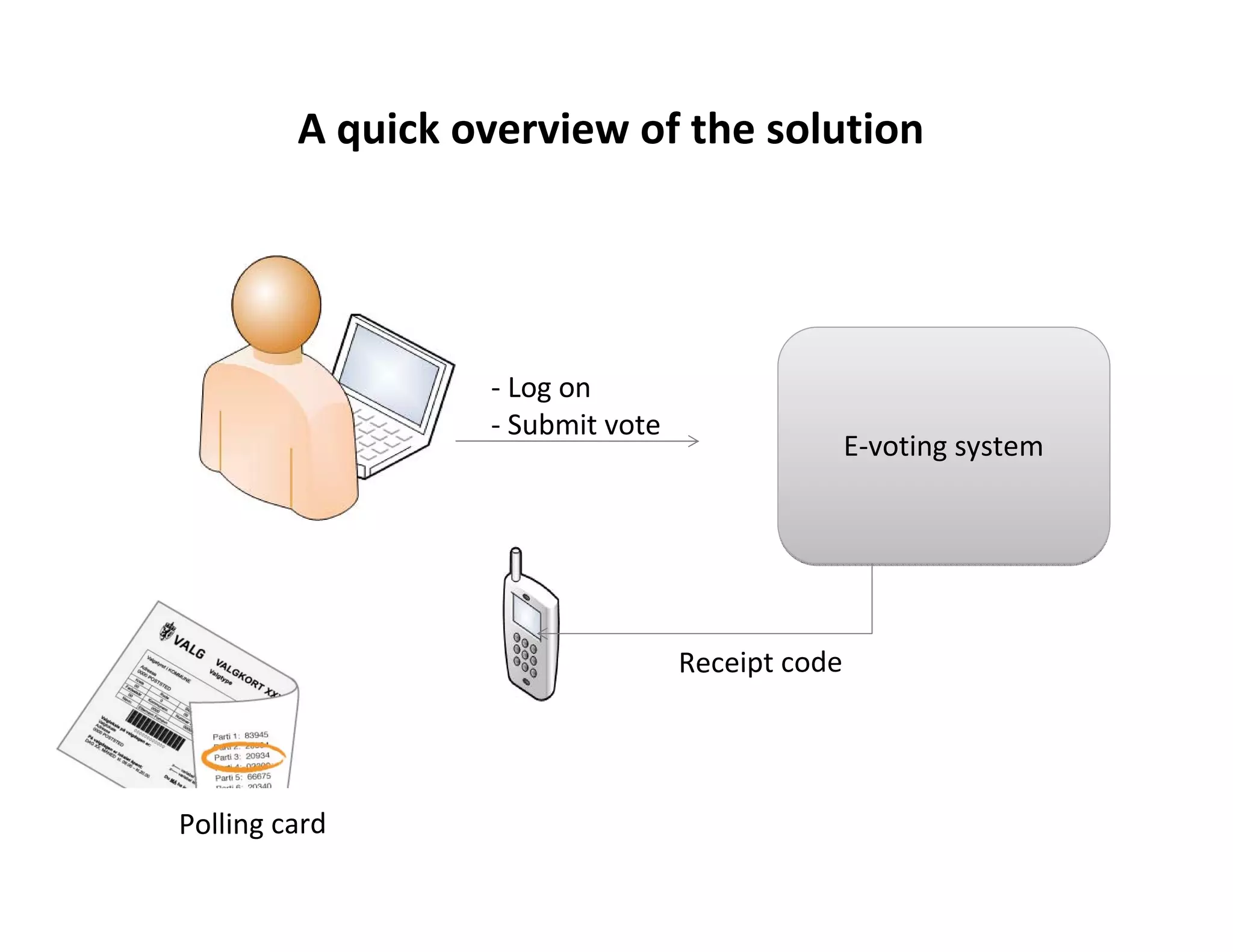
A quick overview of the solution


                  - Log on
                  - Submit vote
                                                 E-voting system


                                  Receipt code


Polling card
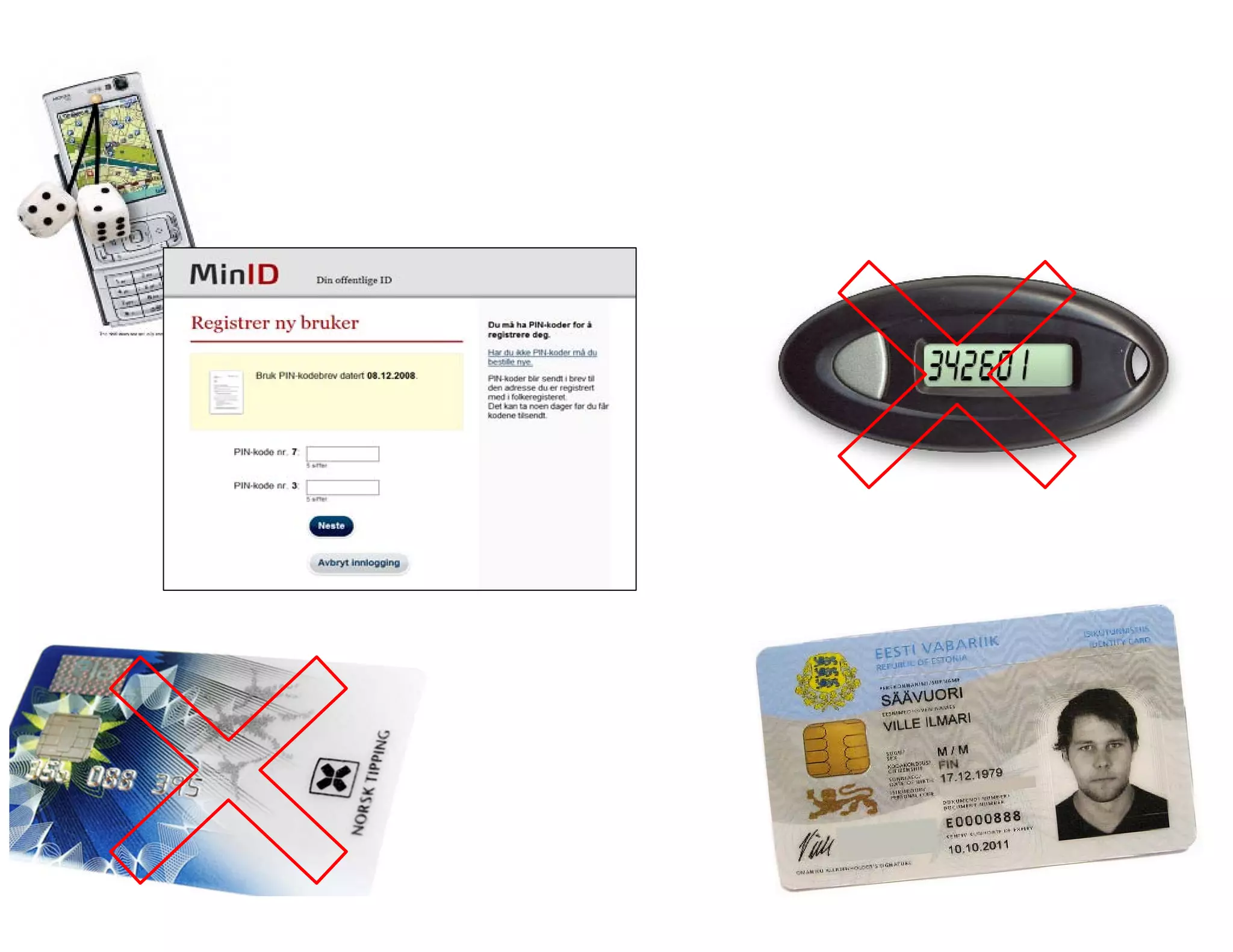
How does the system know who I am?
Authentiwhat?

• When you turn up at the polling station, you
  are required to identify yourself.
• Only since 2007 have you been required to
  produce an ID-card.
• This is analogous to the process of
  authentication to a computer system, for
  instance using an eID.
Important properties of a good eID
• It must be obvious to the user that this is an
  identity document.
• A voter should not be tempted to sell his voting
  credentials.
  – It must have other uses than just e-voting.
  – These other uses must be familiar and of value to the
    voter
The Challenges of Remote e-
            voting
• Auditability / transparency to the lay
  person
• The buying and selling of votes
• Coercion / family voting
• Home computer security
• Anonymity of the vote
• Attacks scale
The Challenges of Remote e-
            voting
• Auditability / transparency to the
  lay person
• The buying and selling of votes
• Coercion / family voting
• Home computer security
• Anonymity of the vote
Transparent e-voting?
• Complete openness and transparecy in
  all aspects of the project
• Available source code
   – Unfourtunately cryptography is really,
     really hard.
• Cryptographic proofs of correctness
   – Even the voter gets one
   – The good thing about crypto is that it’s all
     just maths
• Logging of all system events
Transparent e-voting?
• Obviously open source won’t make
  the system understandable to
  ”everyone”
• …and extensive use of esoteric
  cryptography makes things worse…
• ..but at least the lay person can
  choose which expert to trust.
• Besides, paper voting really isn’t
  that easy to understand either!
Communicating the crypto
               protocol
• The cryptographer behind it is working on a
  conceptual description which should be
  understandable for anyone with high school
  maths
• Amongst other things, we will try to integrate the
  protocol into maths education in high school.
The Challenges of Remote e-
            voting
• Auditability / transparency to the
  lay person
• The buying and selling of votes
• Coercion / family voting
• Home computer security
• Anonymity of the vote
Buying and selling of votes
• In practice this doesn’t scale
• The seller can re-vote
  – Receipt for all cast votes, not only the final
• Votes submitted from a polling station will
  supersede any vote cast remotely
• Buyer would have to control seller’s eID
  – Would require the voter to give up a lot more
    than his vote
The Challenges of Remote e-
            voting
• Auditability / transparency to the
  lay person
• The buying and selling of votes
• Coercion / family voting
• Home computer security
• Anonymity of the vote
Coercion/family voting
• The coerced can re-vote
   – Receipt for all cast votes, not only the final
• Votes submitted from a polling station will
  supersede any vote cast remotely
• The system will never divulge that a previous
  vote has allready been recorded
• If you accept that bastards are evenly distributed
  across the political spectrum, this doesn’t scale
  either.
The Challenges of Remote e-
            voting
• Auditability / transparency to the
  lay person
• The buying and selling of votes
• Coercion / family voting
• Home computer security
• Anonymity of the vote
Encryption and storage of the vote
Conceptual model
                                             Distribution of secrets

                                     Vote
        Voting     Internet                                                    Administrative
Voter                                Collection                                system
        client                       Server


                                     Return Code                         Air gap
                 Vote verification   Generator


                                                          Mix and
                                                          count


                                                   M of N key shares
                                                   from parties with
                                                   competing interests
”Cleansing service”

                      Counting e-votes


                                                Parti A   2
                                                Parti B   1

                           Decryption service
    Mixing service

Christian bull eVoting

  • 1.
    E-voting: An AcceptableRisk? Project CSO Christian Bull
  • 2.
  • 3.
    Background …or not. Wedon’t have time for that!
  • 4.
    Remote Voting OverThe Internet
  • 5.
    Legal requirements forremote e-voting • The secrecy of the ballot can not be compromised! • Secrecy is retained by implementing the following: – Allowing unlimited re-voting – Votes cast in a controlled environment always supersede those cast uncontrolled (paper votes may supersede electronic votes) – An e-voting system that does not reveal or retain any connection between voter and vote – A good authentication mechanism – E-voting only in the advance voting period – Remote voting only as a supplement to paper voting
  • 6.
    A quick overviewof the solution - Log on - Submit vote E-voting system Receipt code Polling card
  • 7.
    How does thesystem know who I am?
  • 8.
    Authentiwhat? • When youturn up at the polling station, you are required to identify yourself. • Only since 2007 have you been required to produce an ID-card. • This is analogous to the process of authentication to a computer system, for instance using an eID.
  • 9.
    Important properties ofa good eID • It must be obvious to the user that this is an identity document. • A voter should not be tempted to sell his voting credentials. – It must have other uses than just e-voting. – These other uses must be familiar and of value to the voter
  • 11.
    The Challenges ofRemote e- voting • Auditability / transparency to the lay person • The buying and selling of votes • Coercion / family voting • Home computer security • Anonymity of the vote • Attacks scale
  • 13.
    The Challenges ofRemote e- voting • Auditability / transparency to the lay person • The buying and selling of votes • Coercion / family voting • Home computer security • Anonymity of the vote
  • 14.
    Transparent e-voting? • Completeopenness and transparecy in all aspects of the project • Available source code – Unfourtunately cryptography is really, really hard. • Cryptographic proofs of correctness – Even the voter gets one – The good thing about crypto is that it’s all just maths • Logging of all system events
  • 15.
    Transparent e-voting? • Obviouslyopen source won’t make the system understandable to ”everyone” • …and extensive use of esoteric cryptography makes things worse… • ..but at least the lay person can choose which expert to trust. • Besides, paper voting really isn’t that easy to understand either!
  • 16.
    Communicating the crypto protocol • The cryptographer behind it is working on a conceptual description which should be understandable for anyone with high school maths • Amongst other things, we will try to integrate the protocol into maths education in high school.
  • 17.
    The Challenges ofRemote e- voting • Auditability / transparency to the lay person • The buying and selling of votes • Coercion / family voting • Home computer security • Anonymity of the vote
  • 18.
    Buying and sellingof votes • In practice this doesn’t scale • The seller can re-vote – Receipt for all cast votes, not only the final • Votes submitted from a polling station will supersede any vote cast remotely • Buyer would have to control seller’s eID – Would require the voter to give up a lot more than his vote
  • 19.
    The Challenges ofRemote e- voting • Auditability / transparency to the lay person • The buying and selling of votes • Coercion / family voting • Home computer security • Anonymity of the vote
  • 20.
    Coercion/family voting • Thecoerced can re-vote – Receipt for all cast votes, not only the final • Votes submitted from a polling station will supersede any vote cast remotely • The system will never divulge that a previous vote has allready been recorded • If you accept that bastards are evenly distributed across the political spectrum, this doesn’t scale either.
  • 21.
    The Challenges ofRemote e- voting • Auditability / transparency to the lay person • The buying and selling of votes • Coercion / family voting • Home computer security • Anonymity of the vote
  • 22.
  • 23.
    Conceptual model Distribution of secrets Vote Voting Internet Administrative Voter Collection system client Server Return Code Air gap Vote verification Generator Mix and count M of N key shares from parties with competing interests
  • 24.
    ”Cleansing service” Counting e-votes Parti A 2 Parti B 1 Decryption service Mixing service