Components of the Nervous System

 Glial cells (glia)
    Provide firmness and structure to the brain
    Get nutrients into the system
    Form myelin
    Create the blood-brain barrier
    Initially thought to be passive in comparison to “flashy” neurons
    Communicate with other glia & neurons
    New frontier: play a central role in addiction and mental health issues
 Neurons
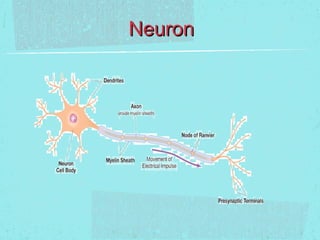
  Analyze and transmit information
  Four defined regions
          Cell body
          Dendrites
          Axon
          Presynaptic terminals
  Communicate through neurotransmitters
Neuron
Chemical Pathways: Neurotransmitters


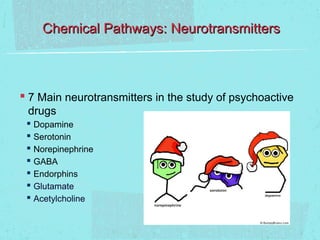
 7 Main neurotransmitters in the study of psychoactive
 drugs
  Dopamine
  Serotonin
  Norepinephrine
  GABA
  Endorphins
  Glutamate
  Acetylcholine
Chemical Pathways: Neurotransmitters


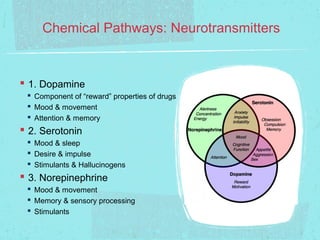
 1. Dopamine
  Component of “reward” properties of drugs
  Mood & movement
  Attention & memory
 2. Serotonin
  Mood & sleep
  Desire & impulse
  Stimulants & Hallucinogens
 3. Norepinephrine
  Mood & movement
  Memory & sensory processing
  Stimulants
Chemical Pathways: Neurotransmitters


 4. GABA
  Sedation, drowsiness and relaxation
  Depressants
 5. Endorphins
  Pain relief & sedation
  Rate of bodily functions
  Opioids
 6. Glutamate
   Learning, cognition & memory
   Hallucinogens & alcohol
 7. Acetylcholine
  Involved in diverse processes: memory, attention & mood
  Nicotine
Impact on Neurotransmission


 Psychoactive substances can impact neurotransmitters in
  both the intoxication and withdrawal process
 Many ways psychoactive drugs can impact
  neurotransmission - 3 common ways:
  Increase neurotransmitter activity
    Agonist
  Reduce neurotransmitter activity
    Antagonist
  Blocking reuptake of neurotransmitter
    Reuptake inhibitors
Chemical Theories of Behavior


 Variations in behavior
 explained through changes
 in brain chemistry
   Historical and cultural perspectives
   Monoamine theory of mood
   Issue of experimental support
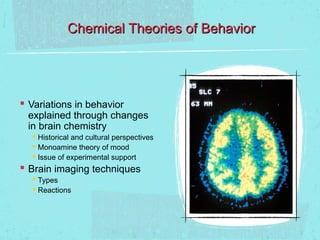
 Brain imaging techniques
   Types
   Reactions

Chpt 4 part 2

  • 1.
    Components of theNervous System  Glial cells (glia)  Provide firmness and structure to the brain  Get nutrients into the system  Form myelin  Create the blood-brain barrier  Initially thought to be passive in comparison to “flashy” neurons  Communicate with other glia & neurons  New frontier: play a central role in addiction and mental health issues  Neurons  Analyze and transmit information  Four defined regions  Cell body  Dendrites  Axon  Presynaptic terminals  Communicate through neurotransmitters
  • 2.
  • 3.
    Chemical Pathways: Neurotransmitters 7 Main neurotransmitters in the study of psychoactive drugs  Dopamine  Serotonin  Norepinephrine  GABA  Endorphins  Glutamate  Acetylcholine
  • 4.
    Chemical Pathways: Neurotransmitters 1. Dopamine  Component of “reward” properties of drugs  Mood & movement  Attention & memory  2. Serotonin  Mood & sleep  Desire & impulse  Stimulants & Hallucinogens  3. Norepinephrine  Mood & movement  Memory & sensory processing  Stimulants
  • 5.
    Chemical Pathways: Neurotransmitters 4. GABA  Sedation, drowsiness and relaxation  Depressants  5. Endorphins  Pain relief & sedation  Rate of bodily functions  Opioids  6. Glutamate  Learning, cognition & memory  Hallucinogens & alcohol  7. Acetylcholine  Involved in diverse processes: memory, attention & mood  Nicotine
  • 6.
    Impact on Neurotransmission Psychoactive substances can impact neurotransmitters in both the intoxication and withdrawal process  Many ways psychoactive drugs can impact neurotransmission - 3 common ways:  Increase neurotransmitter activity  Agonist  Reduce neurotransmitter activity  Antagonist  Blocking reuptake of neurotransmitter  Reuptake inhibitors
  • 7.
    Chemical Theories ofBehavior  Variations in behavior explained through changes in brain chemistry  Historical and cultural perspectives  Monoamine theory of mood  Issue of experimental support  Brain imaging techniques  Types  Reactions