Chinese Writing Chinese Language Giorgio D'Addezio
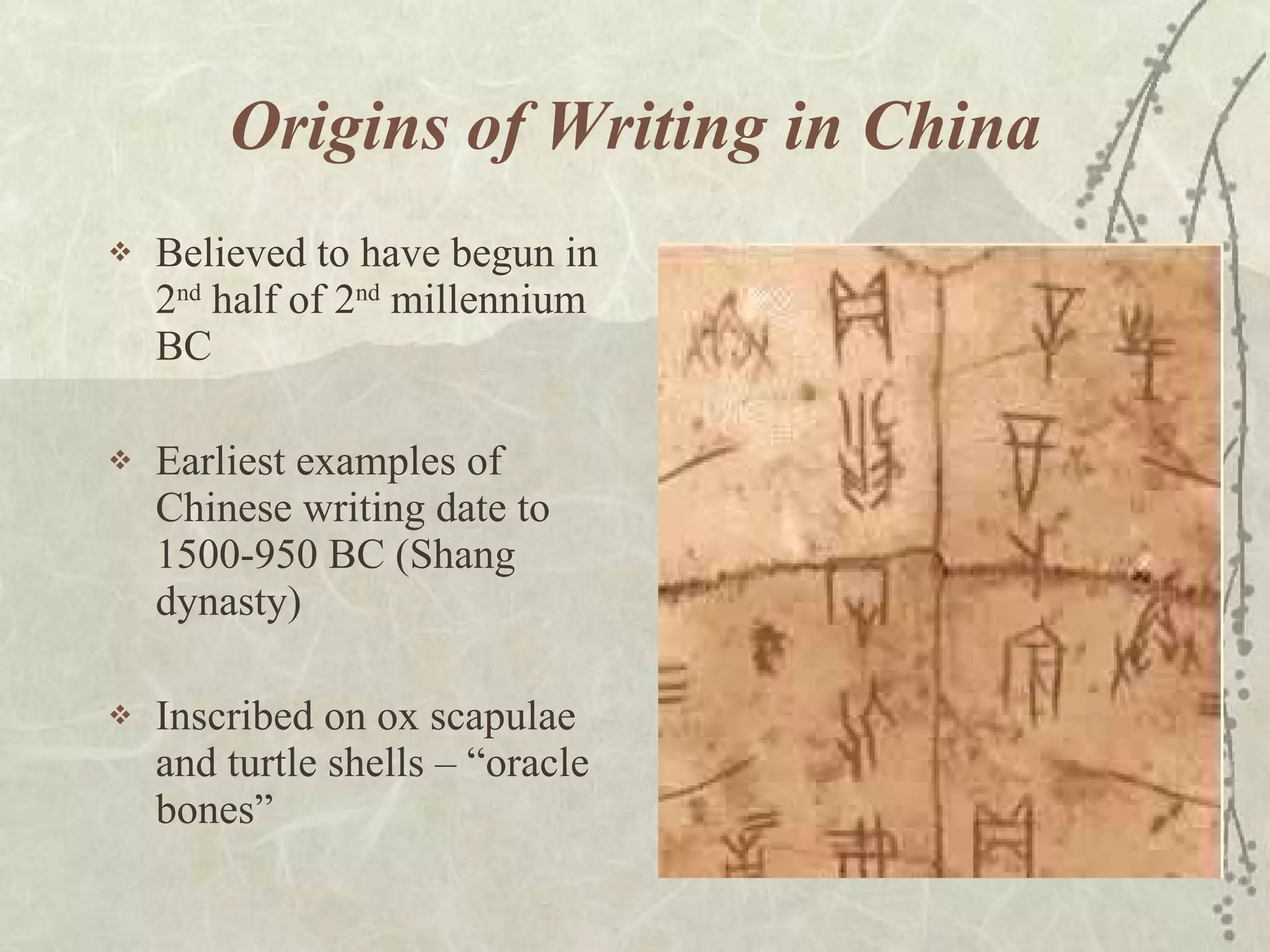
Origins of Writing in China Believed to have begun in 2 nd  half of 2 nd  millennium BC Earliest examples of Chinese writing date to 1500-950 BC (Shang dynasty) Inscribed on ox scapulae and turtle shells – “oracle bones”
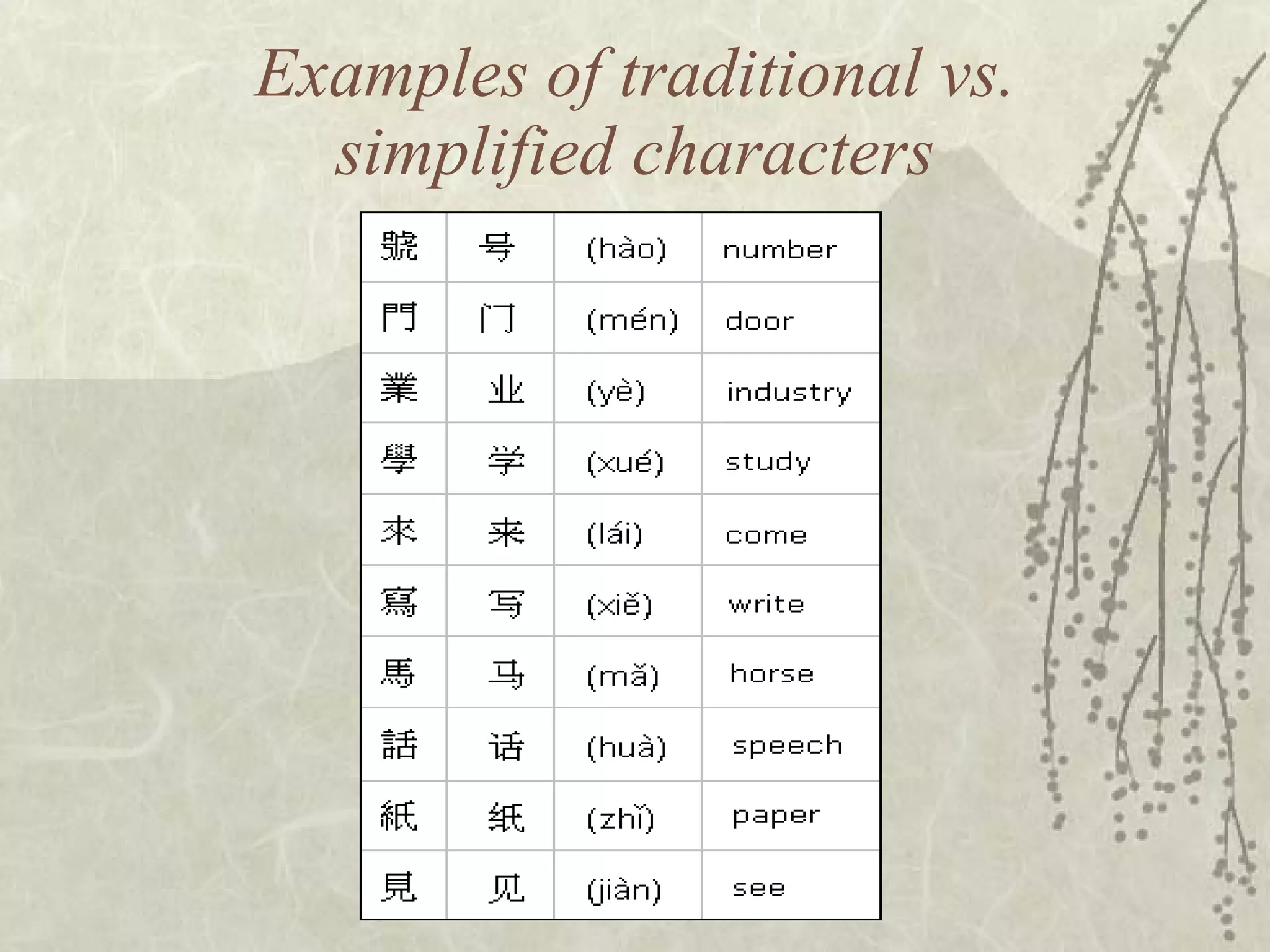
Development of characters Oracle bones developed into Chinese characters which have gone through several phases Presently there are 2 completely different sets of characters: non-simplified and simplified
Simplified Chinese Characters Adopted in the People's Republic of China in 1949 Northern dialect of Mandarin Known as  báihùa  (plain language)  Not all writers wanted to adopt the new style  Traditional characters are still used in Taiwan, Hong Kong, Macau and Malaysia.
Examples of traditional vs. simplified characters
Groups of Characters There have been many attempts to group characters for learning purposes. 4 groups of characters:  Pictographs Ideographs Compound pictograph/ideographs  Semantic-phonetic compounds
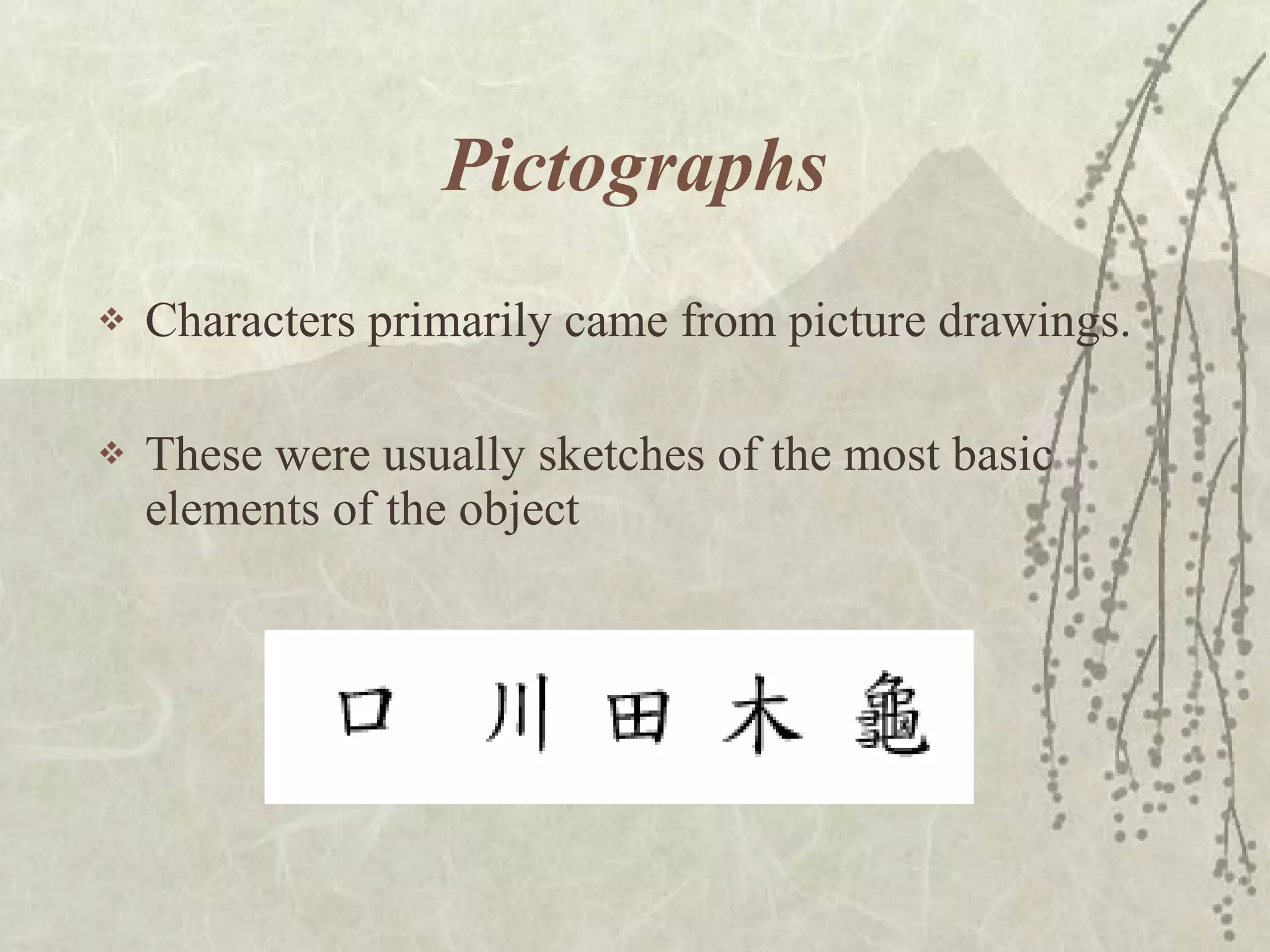
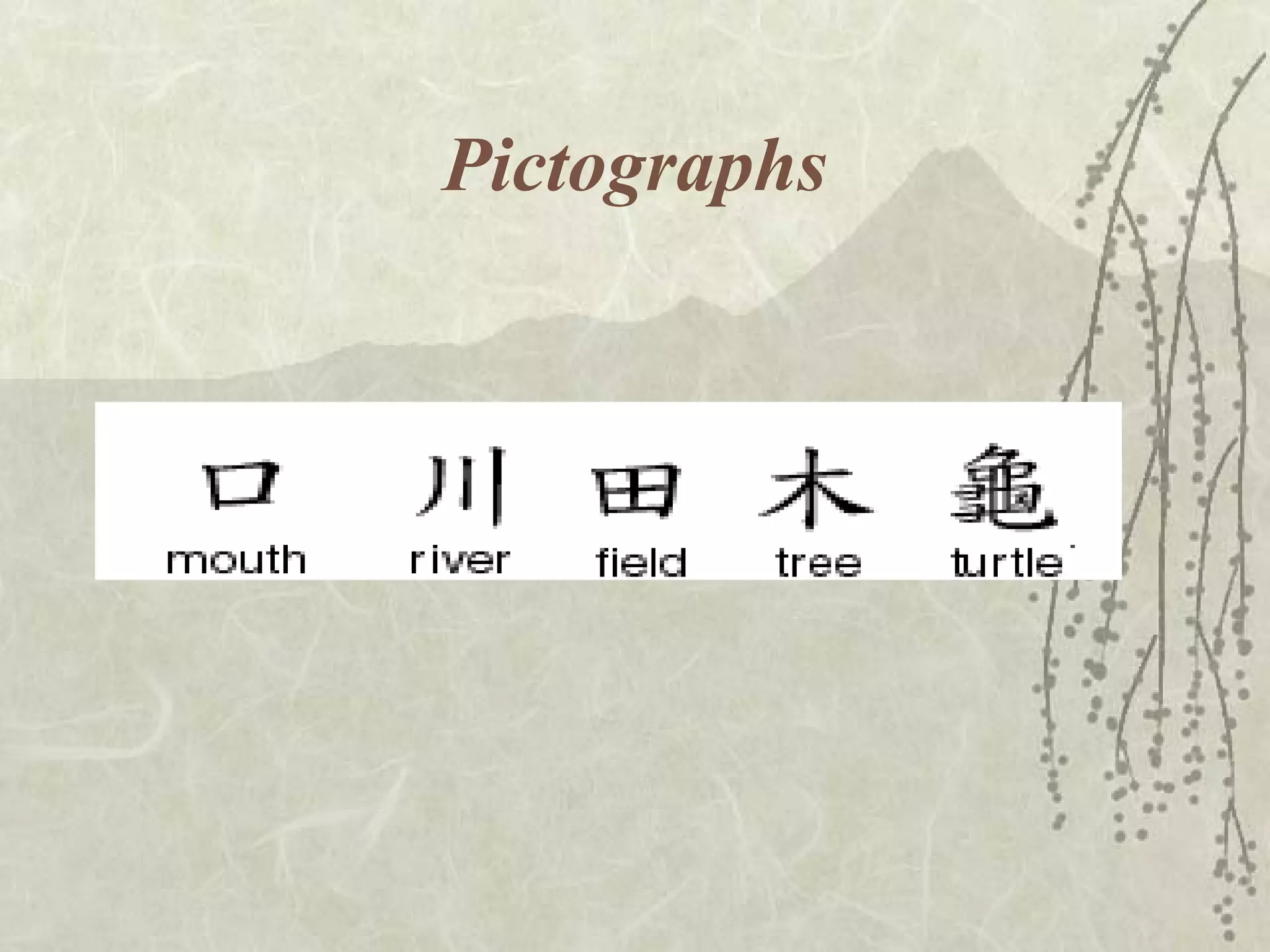
Pictographs Characters primarily came from picture drawings. These were usually sketches of the most basic elements of the object
Pictographs
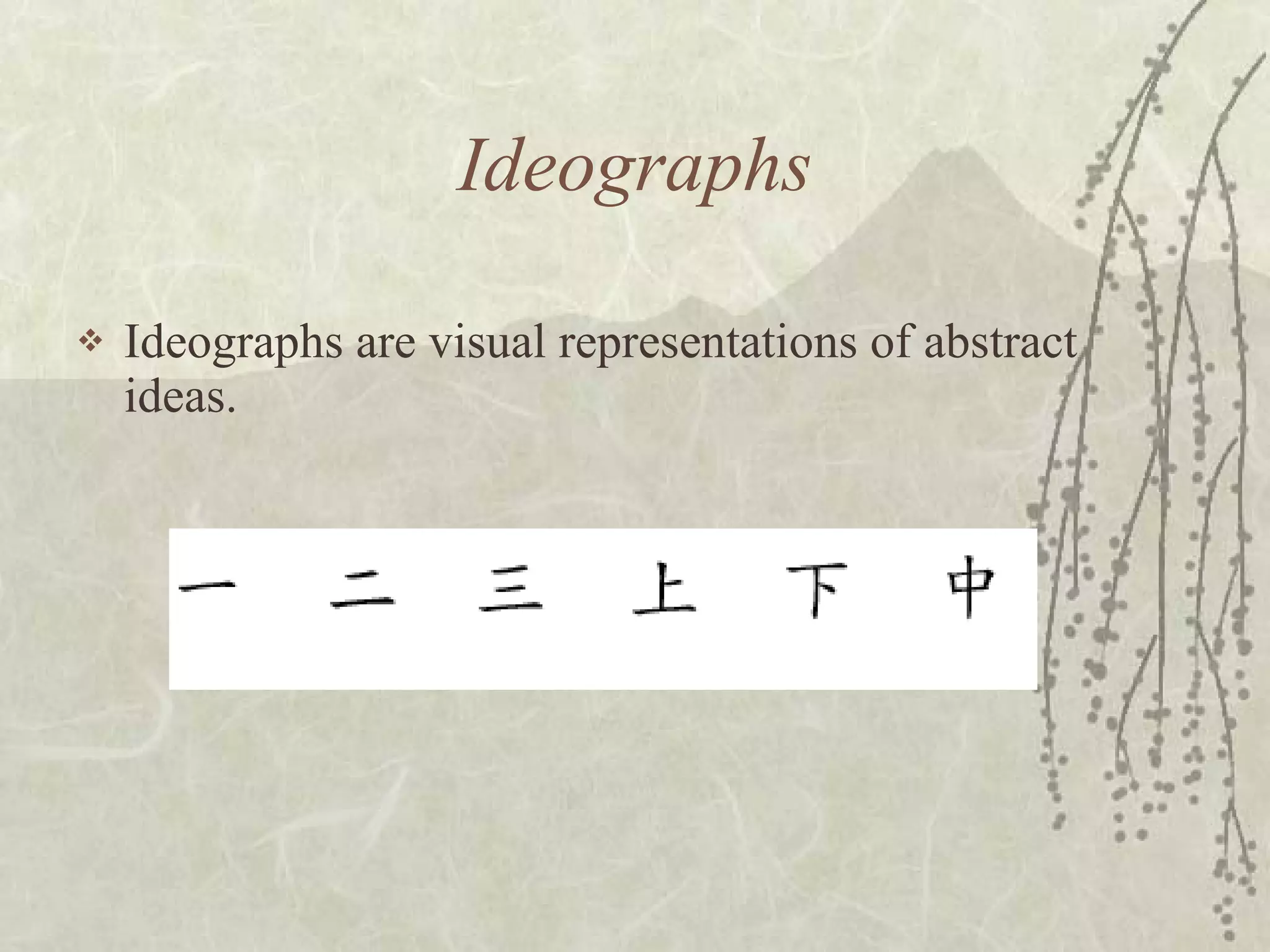
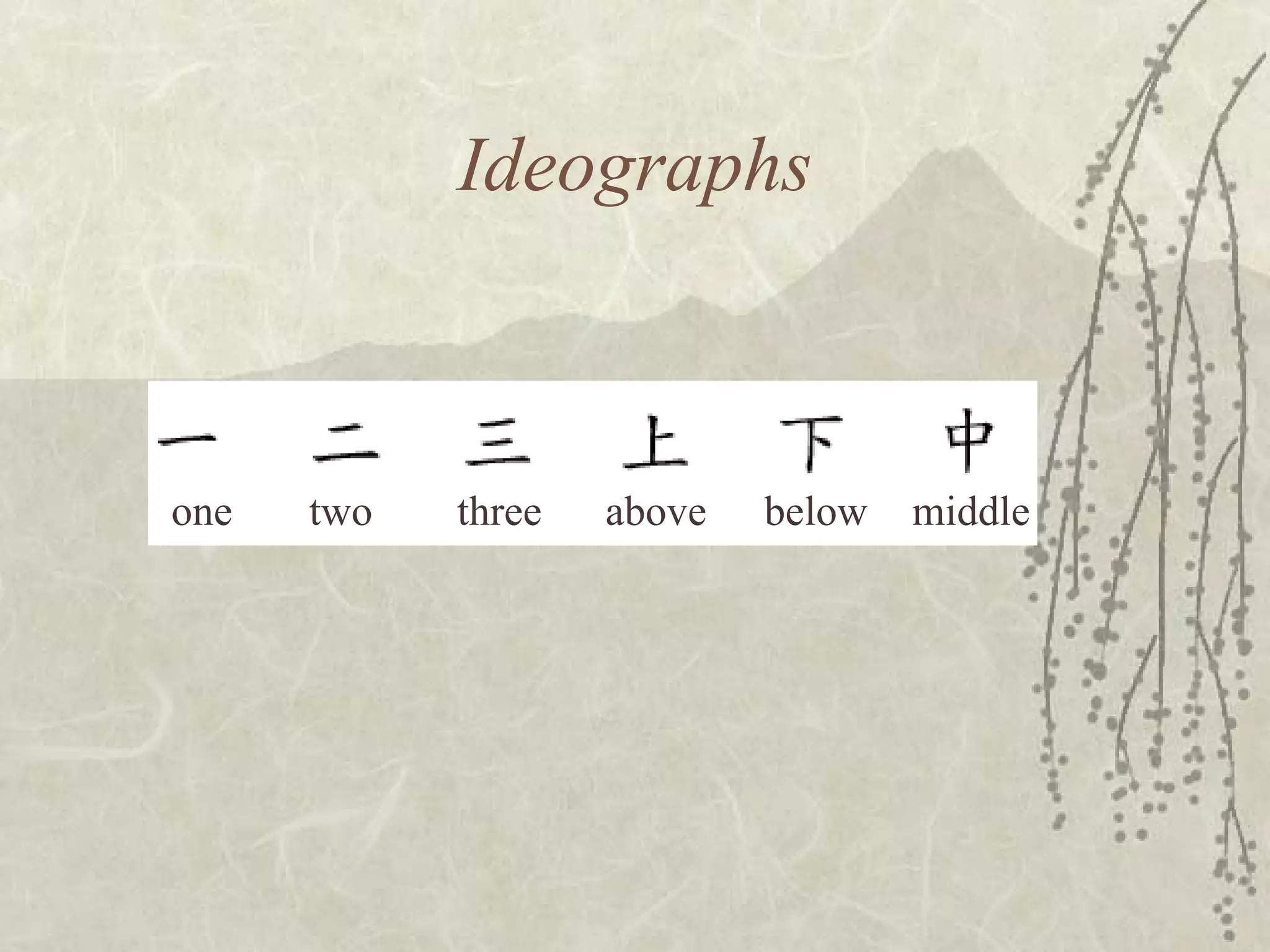
Ideographs Ideographs are visual representations of abstract ideas.
Ideographs one two three above below middle
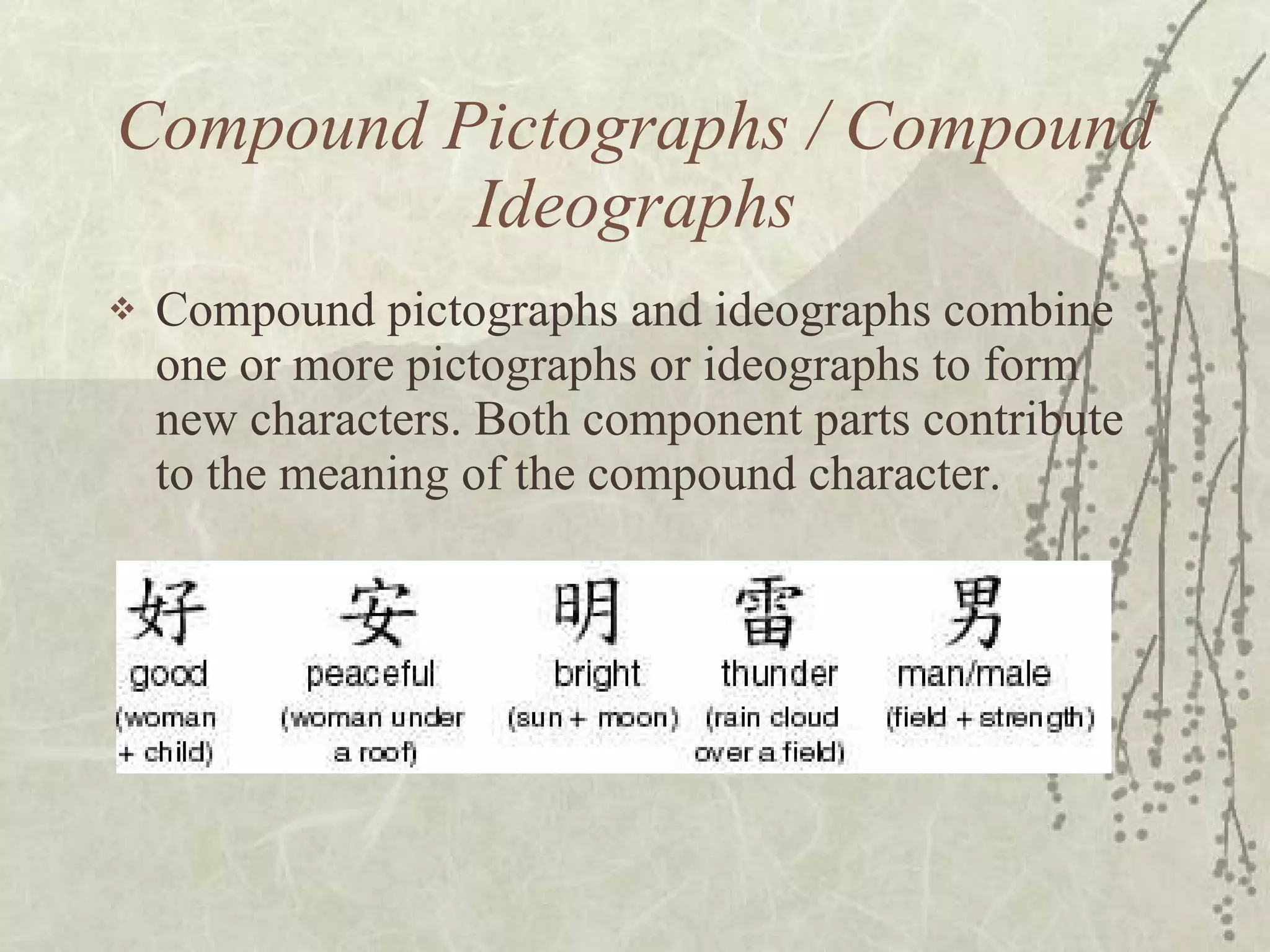
Compound Pictographs / Compound Ideographs Compound pictographs and ideographs combine one or more pictographs or ideographs to form new characters. Both component parts contribute to the meaning of the compound character.
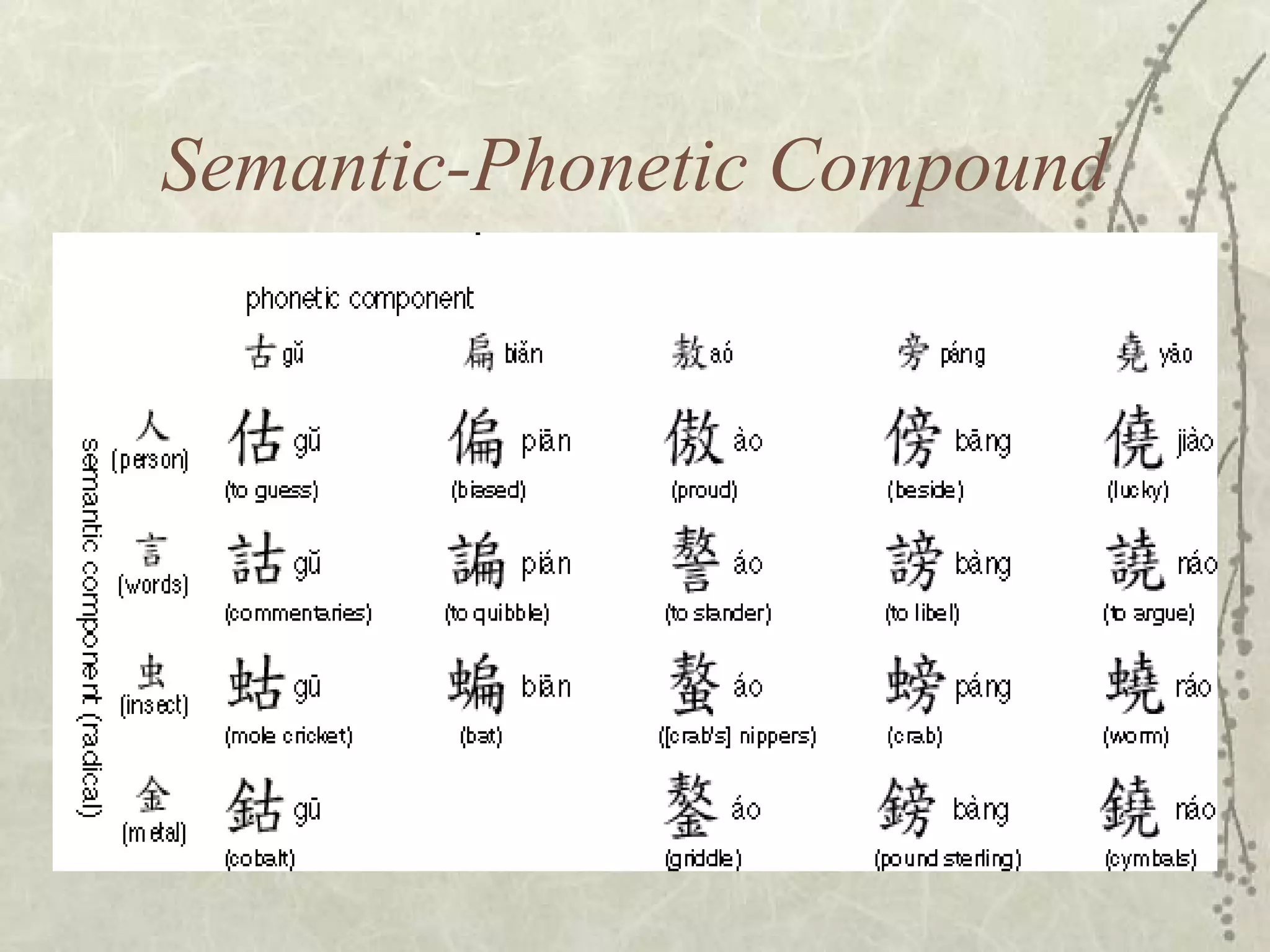
Semantic-Phonetic Compound
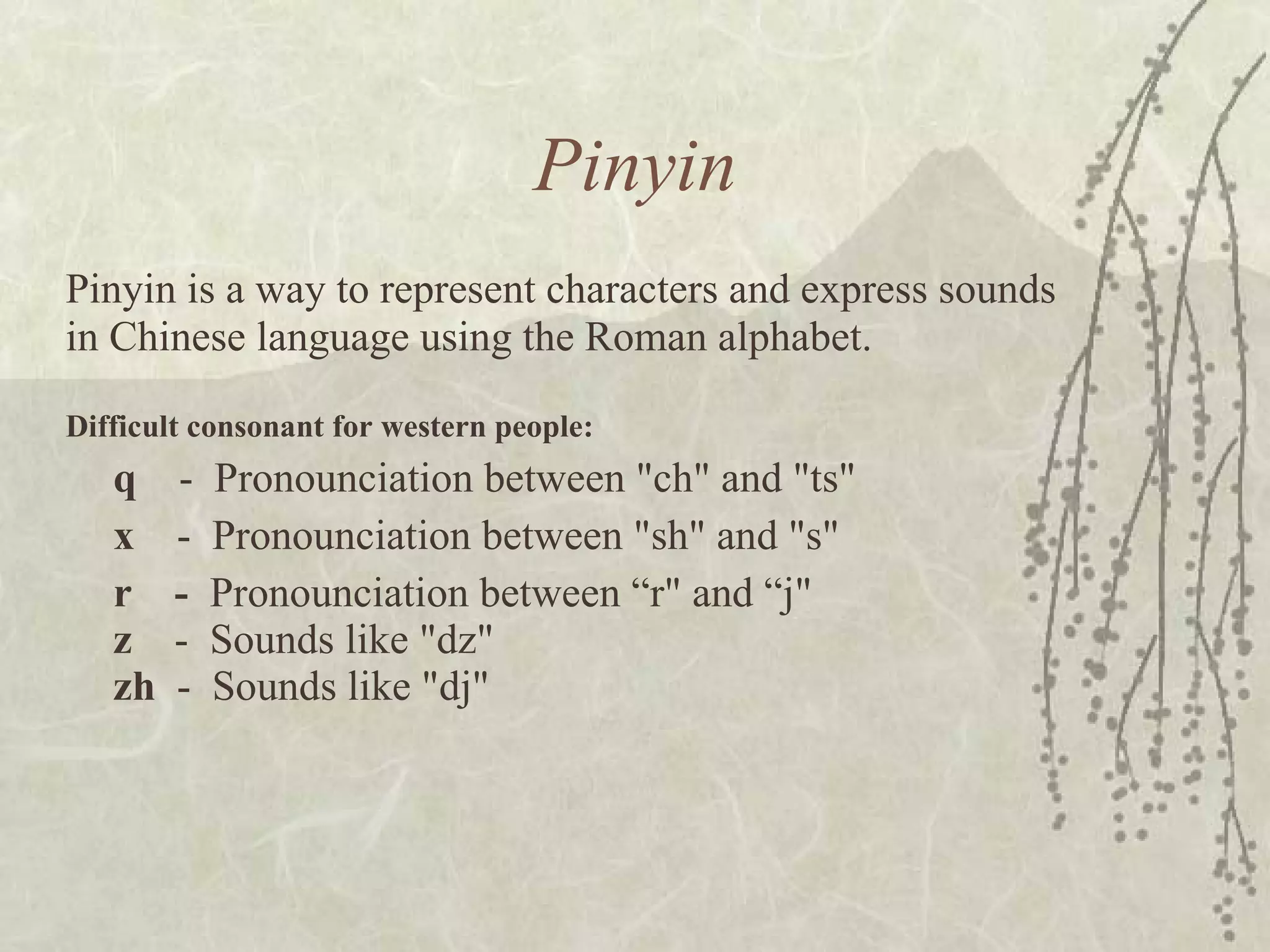
Pinyin Pinyin is a way to represent characters and express sounds in Chinese language using the Roman alphabet.  Difficult consonant for western people: q   -  Pronounciation between "ch" and "ts" x   -  Pronounciation between "sh" and "s" r  -  Pronounciation between “r" and “j" z   -  Sounds like "dz" zh   -  Sounds like "dj"
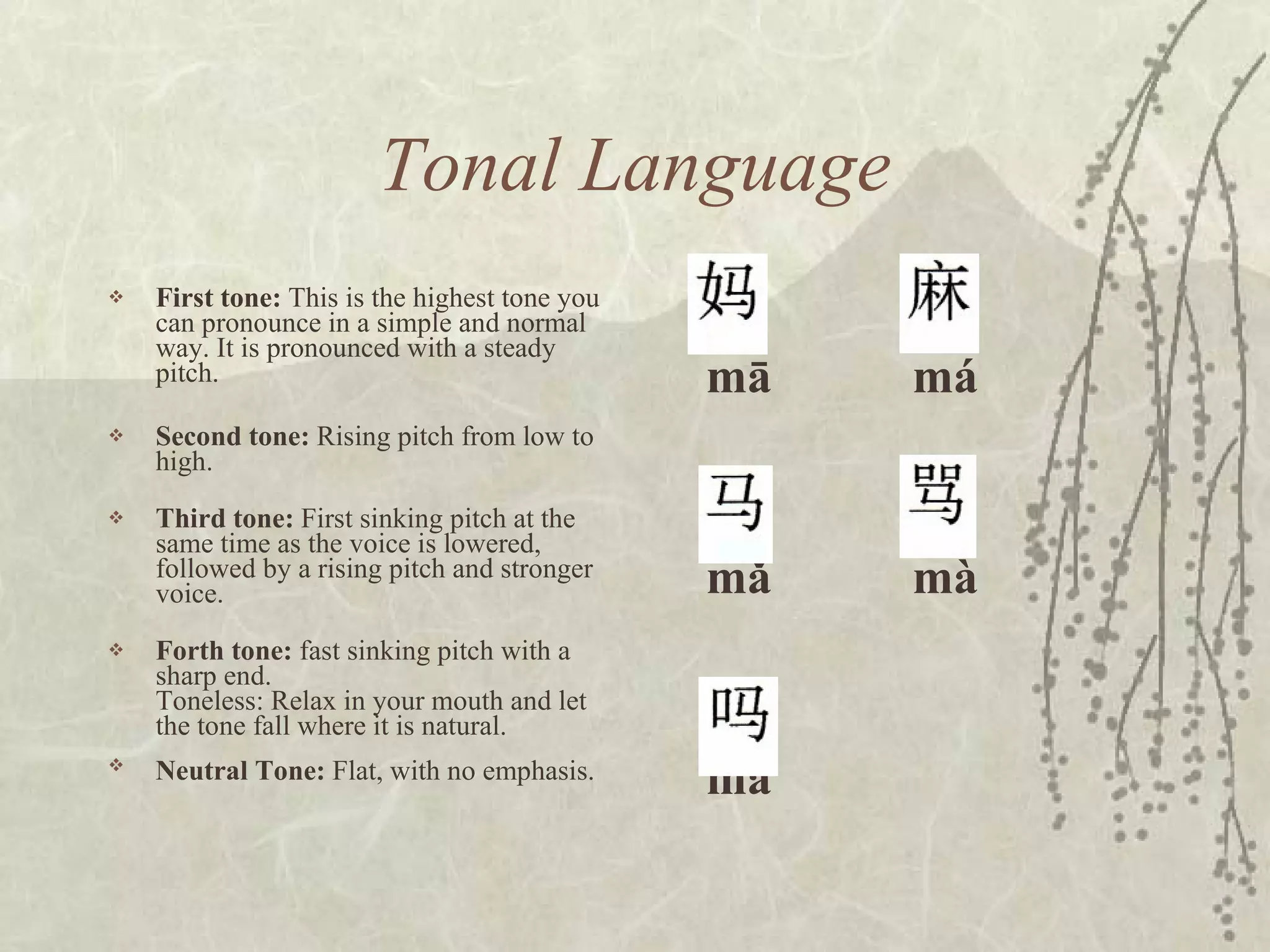
Tonal Language First tone:  This is the highest tone you can pronounce in a simple and normal way. It is pronounced with a steady pitch.  Second tone:  Rising pitch from low to high.  Third tone:  First sinking pitch at the same time as the voice is lowered, followed by a rising pitch and stronger voice.  Forth tone:  fast sinking pitch with a sharp end.  Toneless: Relax in your mouth and let the tone fall where it is natural. Neutral Tone:  Flat, with no emphasis.   mā  má mǎ mà ma
Stroke Order
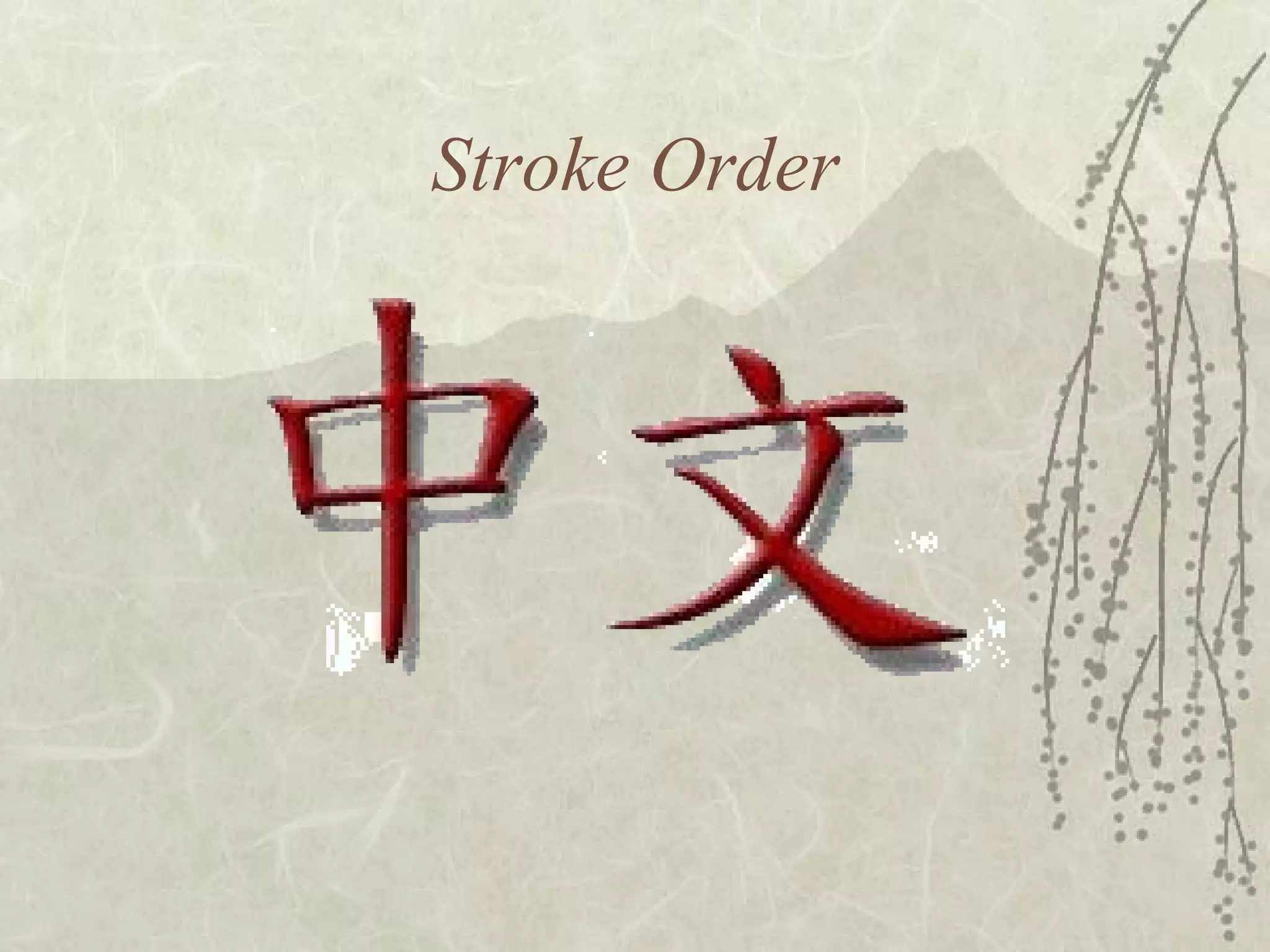
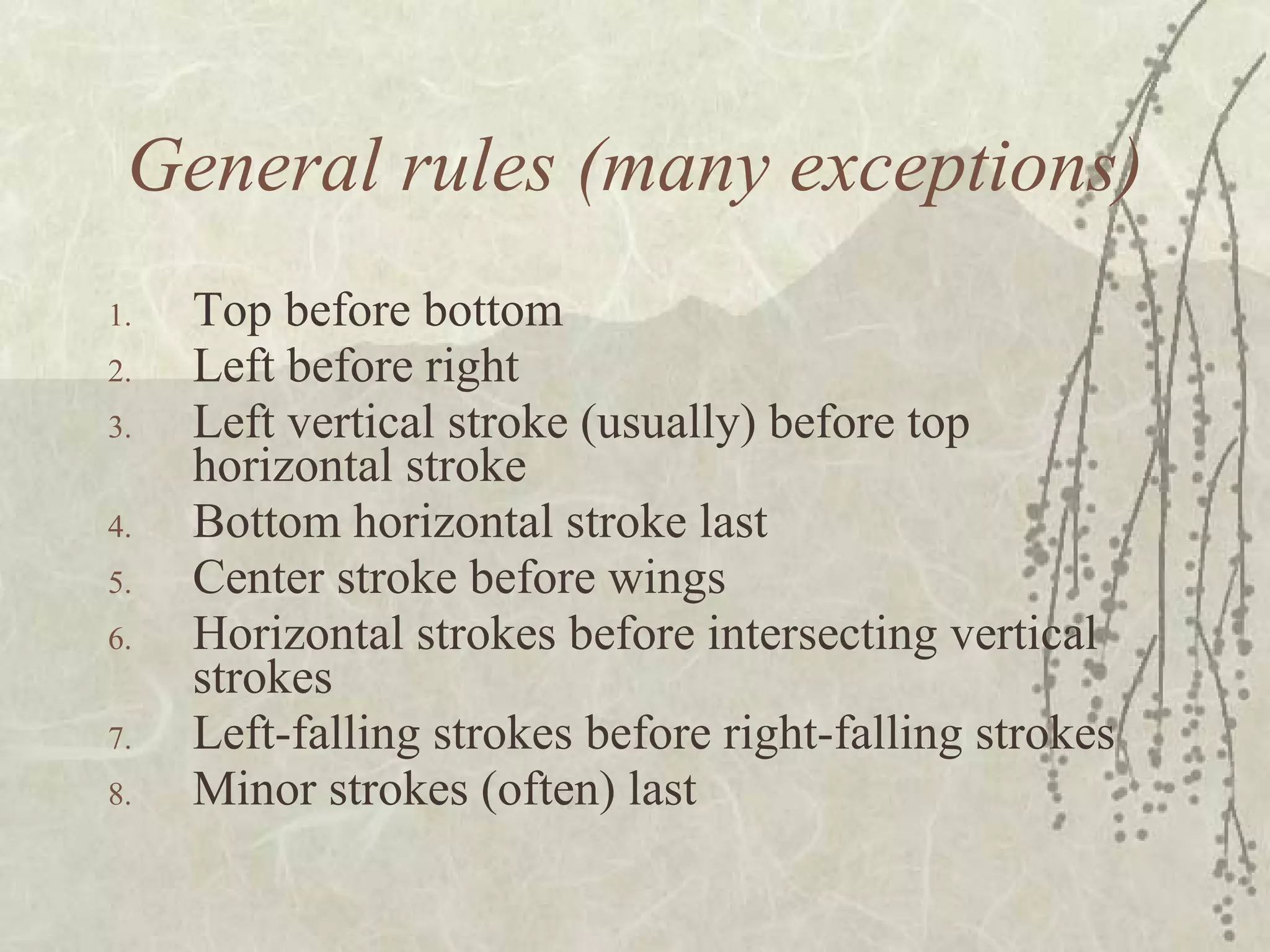
General rules (many exceptions) Top before bottom  Left before right  Left vertical stroke (usually) before top horizontal stroke Bottom horizontal stroke last Center stroke before wings  Horizontal strokes before intersecting vertical strokes  Left-falling strokes before right-falling strokes Minor strokes (often) last

Chinese language

  • 1.
    Chinese Writing ChineseLanguage Giorgio D'Addezio
  • 2.
    Origins of Writingin China Believed to have begun in 2 nd half of 2 nd millennium BC Earliest examples of Chinese writing date to 1500-950 BC (Shang dynasty) Inscribed on ox scapulae and turtle shells – “oracle bones”
  • 3.
    Development of charactersOracle bones developed into Chinese characters which have gone through several phases Presently there are 2 completely different sets of characters: non-simplified and simplified
  • 4.
    Simplified Chinese CharactersAdopted in the People's Republic of China in 1949 Northern dialect of Mandarin Known as báihùa (plain language) Not all writers wanted to adopt the new style Traditional characters are still used in Taiwan, Hong Kong, Macau and Malaysia.
  • 5.
    Examples of traditionalvs. simplified characters
  • 6.
    Groups of CharactersThere have been many attempts to group characters for learning purposes. 4 groups of characters: Pictographs Ideographs Compound pictograph/ideographs Semantic-phonetic compounds
  • 7.
    Pictographs Characters primarilycame from picture drawings. These were usually sketches of the most basic elements of the object
  • 8.
  • 9.
    Ideographs Ideographs arevisual representations of abstract ideas.
  • 10.
    Ideographs one twothree above below middle
  • 11.
    Compound Pictographs /Compound Ideographs Compound pictographs and ideographs combine one or more pictographs or ideographs to form new characters. Both component parts contribute to the meaning of the compound character.
  • 12.
  • 13.
    Pinyin Pinyin isa way to represent characters and express sounds in Chinese language using the Roman alphabet. Difficult consonant for western people: q - Pronounciation between "ch" and "ts" x - Pronounciation between "sh" and "s" r - Pronounciation between “r" and “j" z - Sounds like "dz" zh - Sounds like "dj"
  • 14.
    Tonal Language Firsttone: This is the highest tone you can pronounce in a simple and normal way. It is pronounced with a steady pitch. Second tone: Rising pitch from low to high. Third tone: First sinking pitch at the same time as the voice is lowered, followed by a rising pitch and stronger voice. Forth tone: fast sinking pitch with a sharp end. Toneless: Relax in your mouth and let the tone fall where it is natural. Neutral Tone: Flat, with no emphasis. mā má mǎ mà ma
  • 15.
  • 16.
    General rules (manyexceptions) Top before bottom Left before right Left vertical stroke (usually) before top horizontal stroke Bottom horizontal stroke last Center stroke before wings Horizontal strokes before intersecting vertical strokes Left-falling strokes before right-falling strokes Minor strokes (often) last