Generating High Growth Innovation HubsSteve Blankwww.steveblank.comTwitter: sgblank
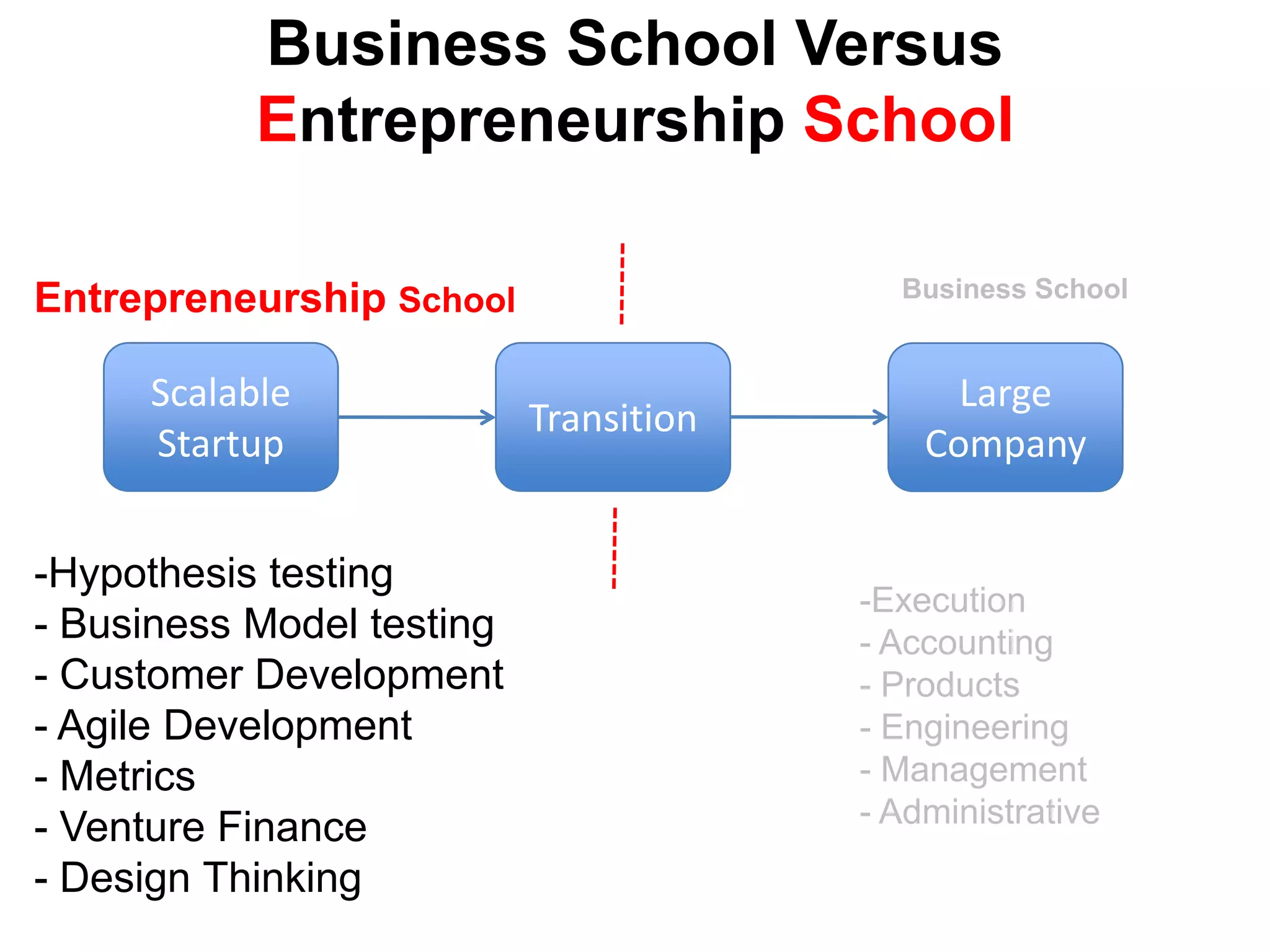
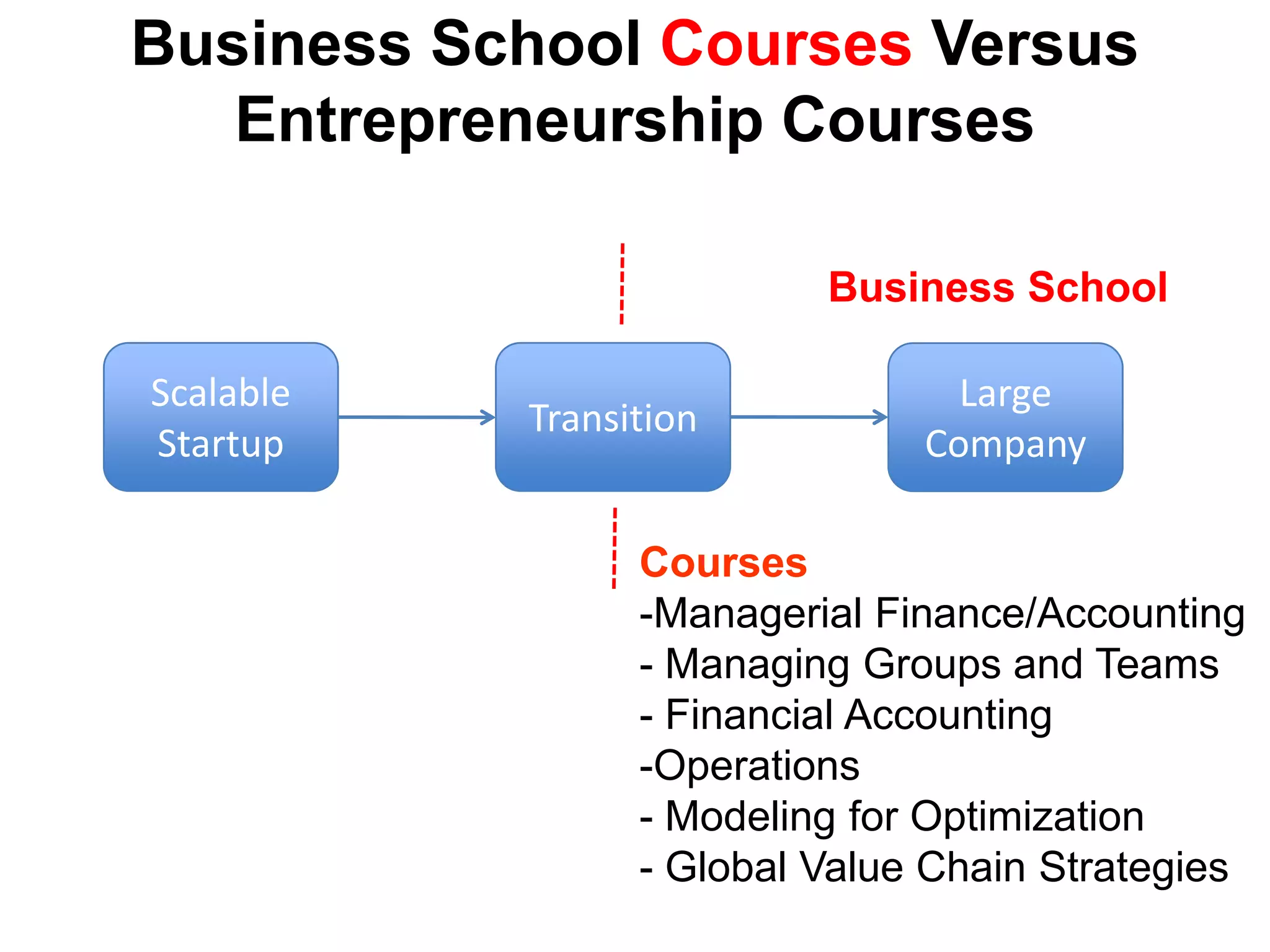
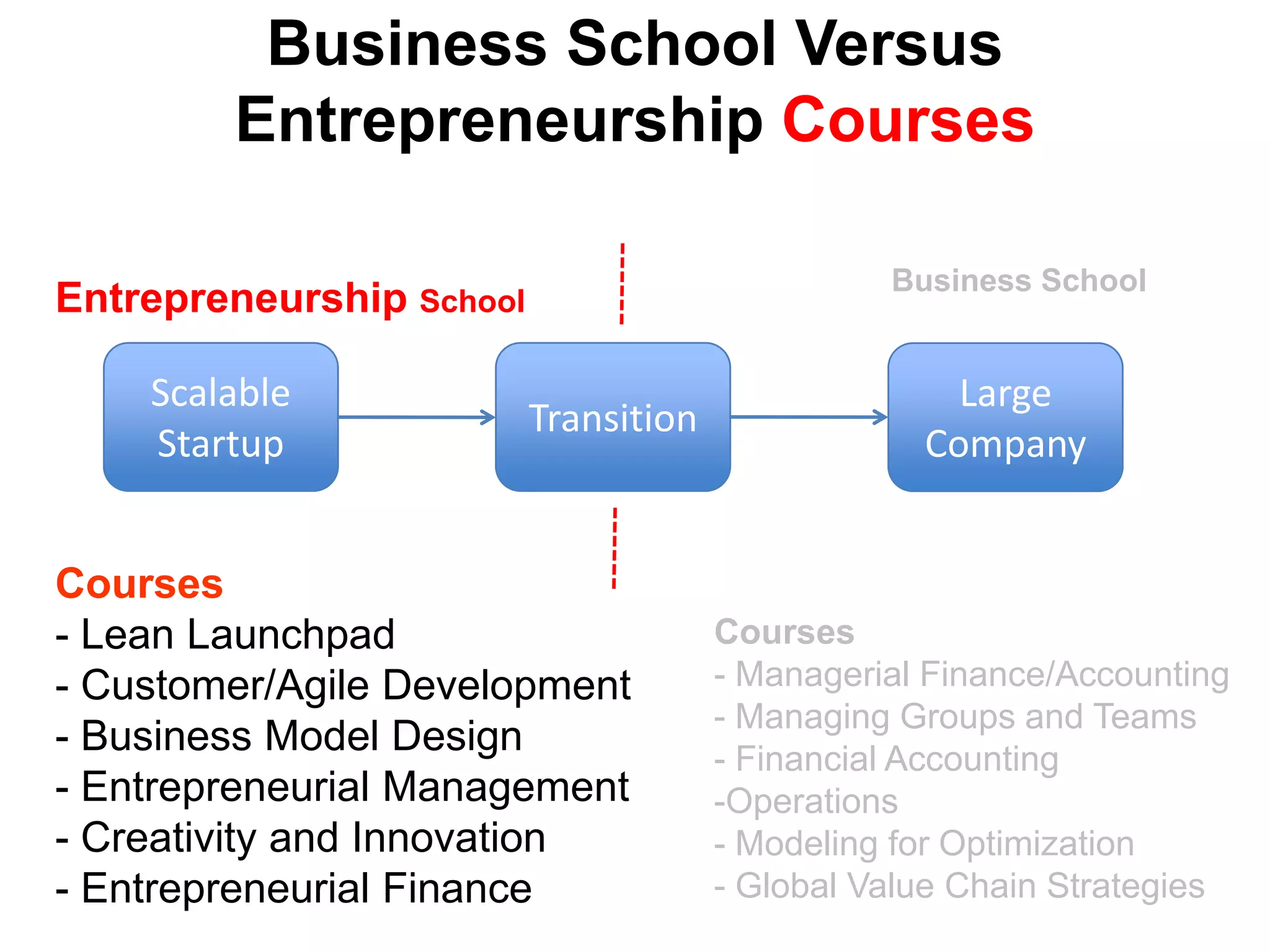
A Few Short StoriesSilicon Valley HistoryAll Startups Are Not the SameWhy Startups and Companies DifferE- School Versus B-School
To predict the future you need to understand the past
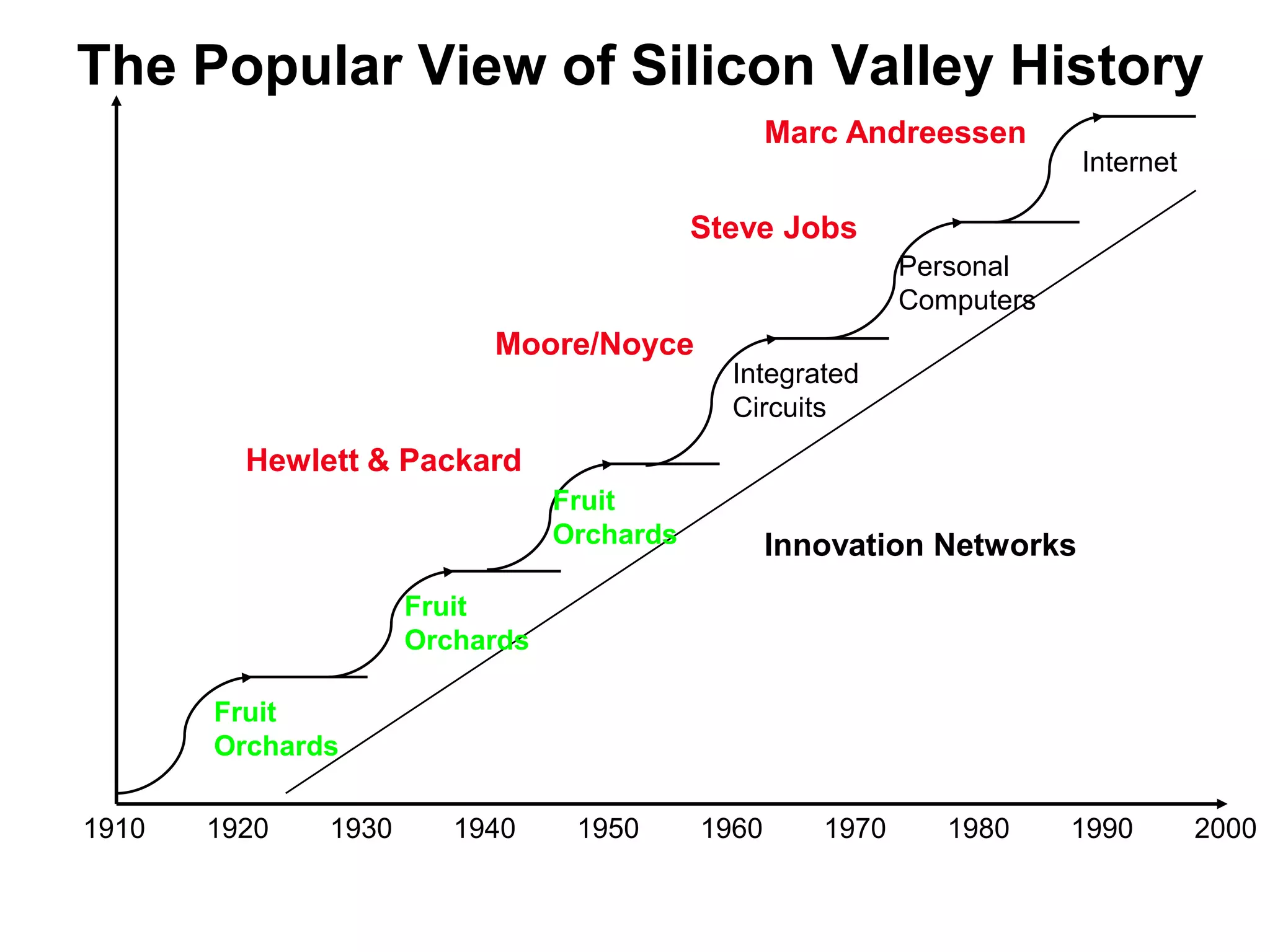
InternetPersonalComputersIntegratedCircuitsFruitOrchardsFruitOrchardsFruitOrchardsThe Popular View of Silicon Valley HistoryMarc AndreessenSteve JobsMoore/NoyceHewlett & PackardInnovation Networks1910196019701980200019901930194019501920
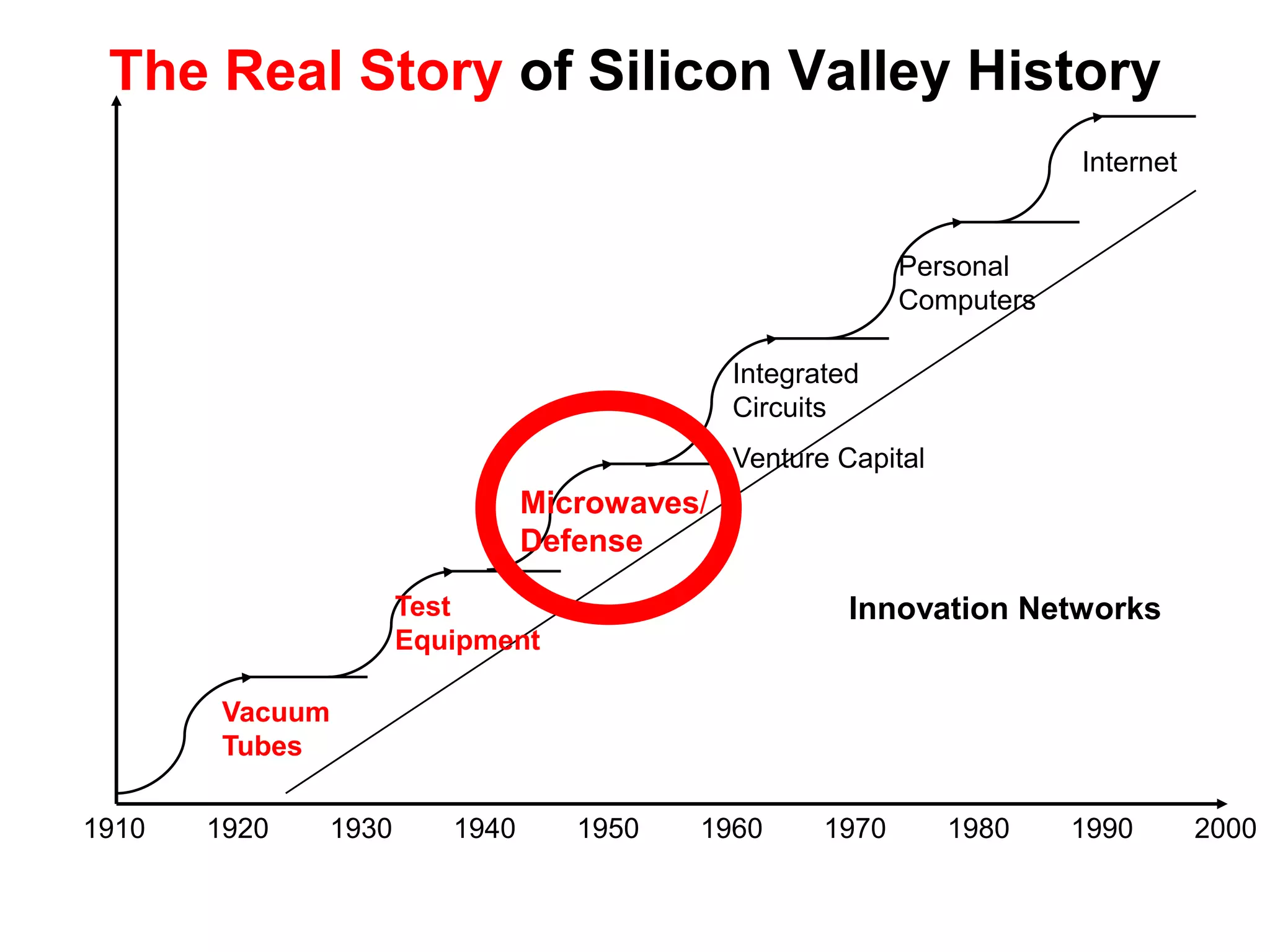
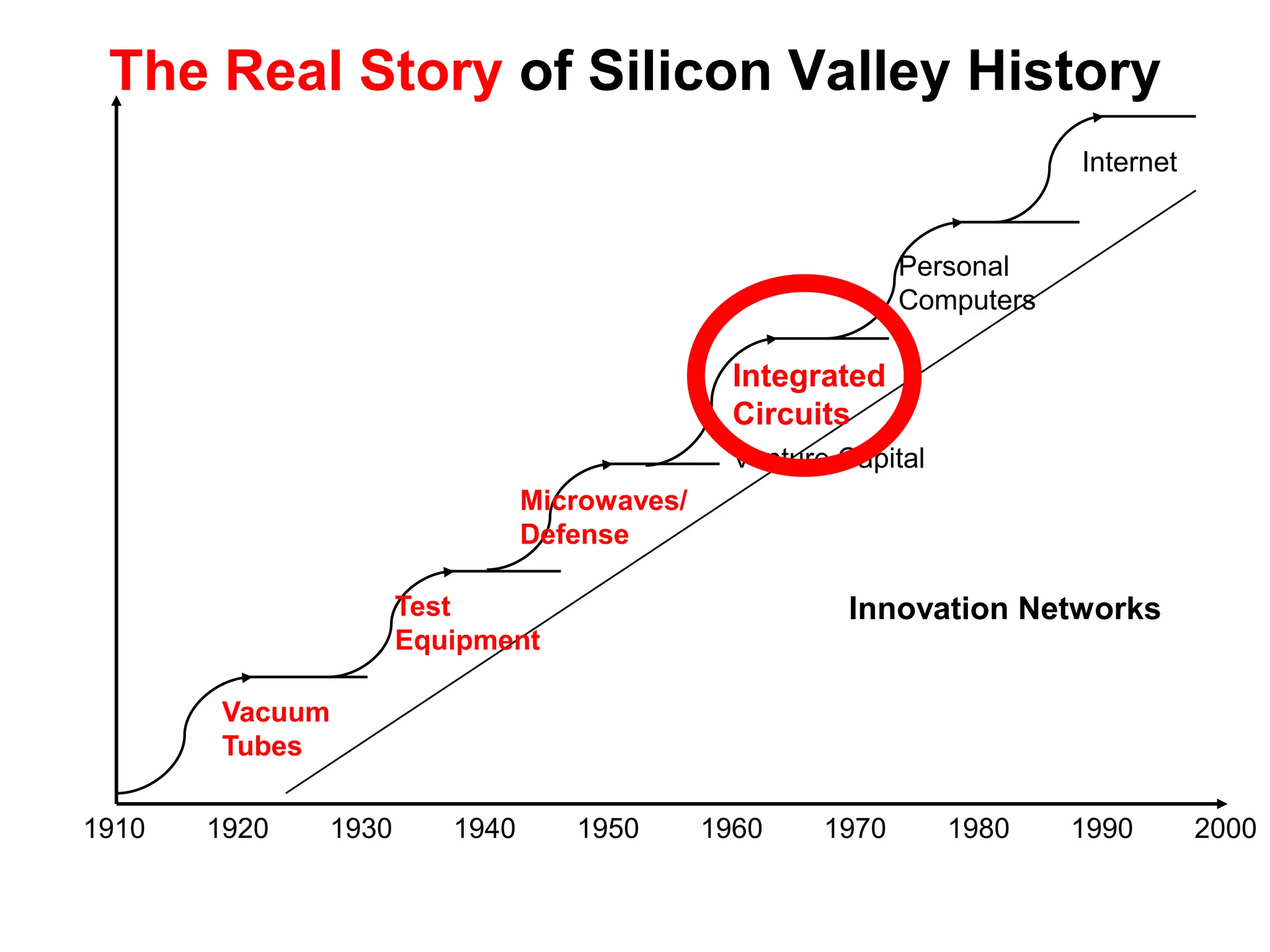
InternetPersonalComputersIntegratedCircuitsMicrowaves/DefenseTestEquipmentVacuumTubesThe Real Story of Silicon Valley HistoryVenture CapitalInnovation Networks1910196019701980200019901930194019501920
Story 1: WWII  The First Electronic War
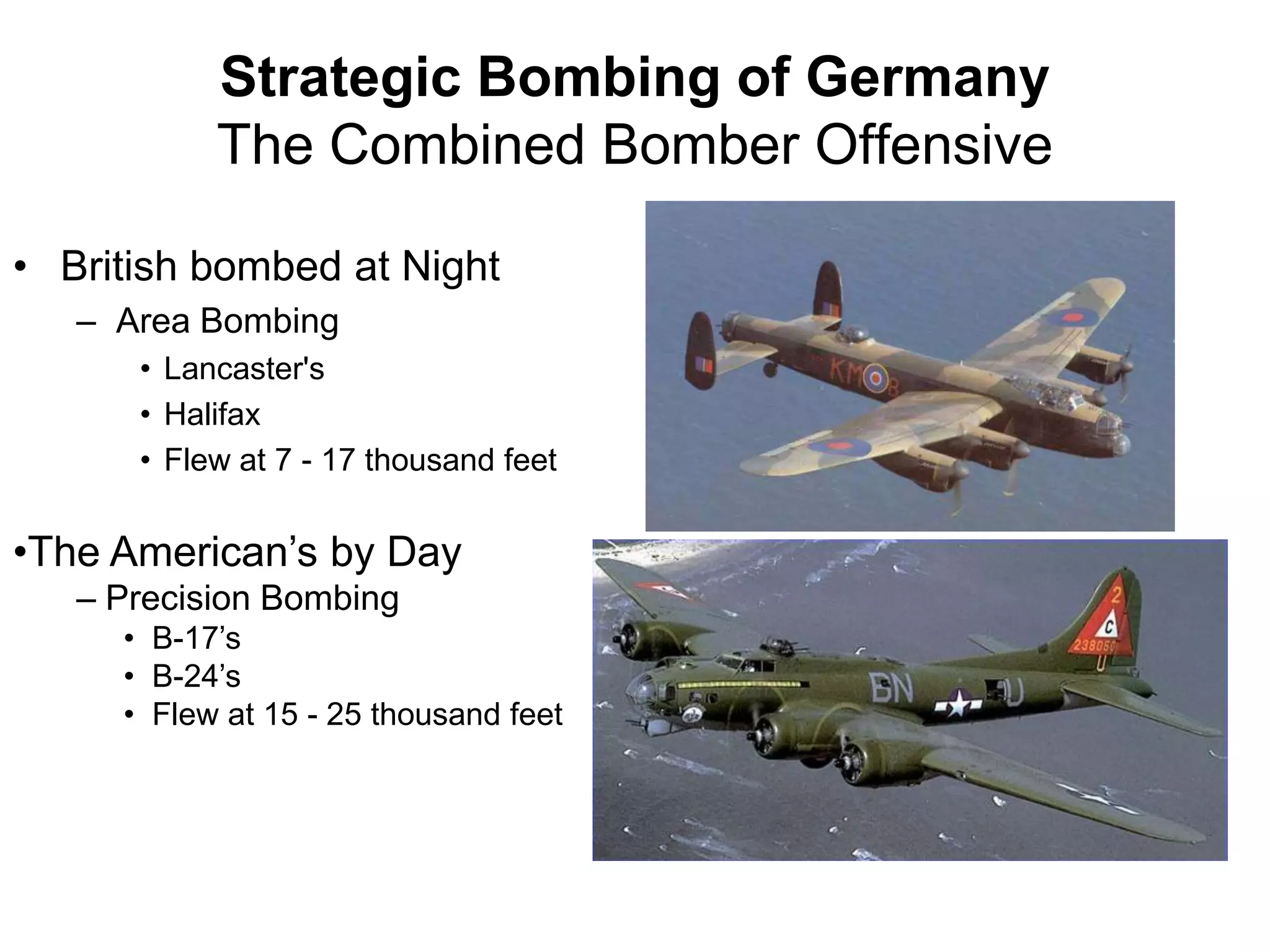
The American’s by Day
 Precision Bombing
  B-17’s
  B-24’s
  Flew at 15 - 25 thousand feetStrategic Bombing of Germany The Combined Bomber OffensiveBritish bombed at NightArea BombingLancaster'sHalifaxFlew at 7 - 17 thousand feet
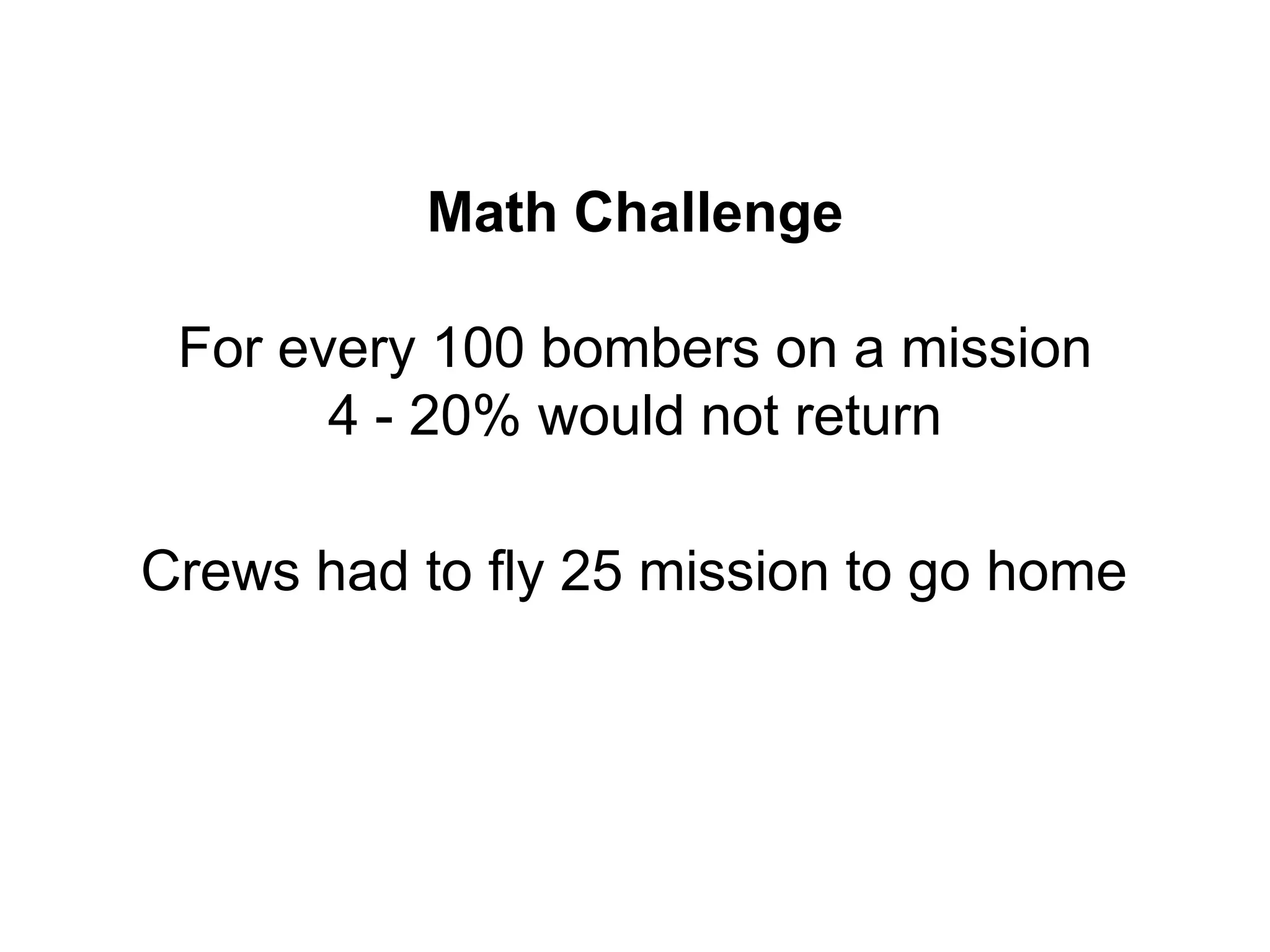
Math ChallengeFor every 100 bombers on a mission 4 - 20% would not returnCrews had to fly 25 mission to go home
Story 2: The Electronic Shield – Electronic Warfare
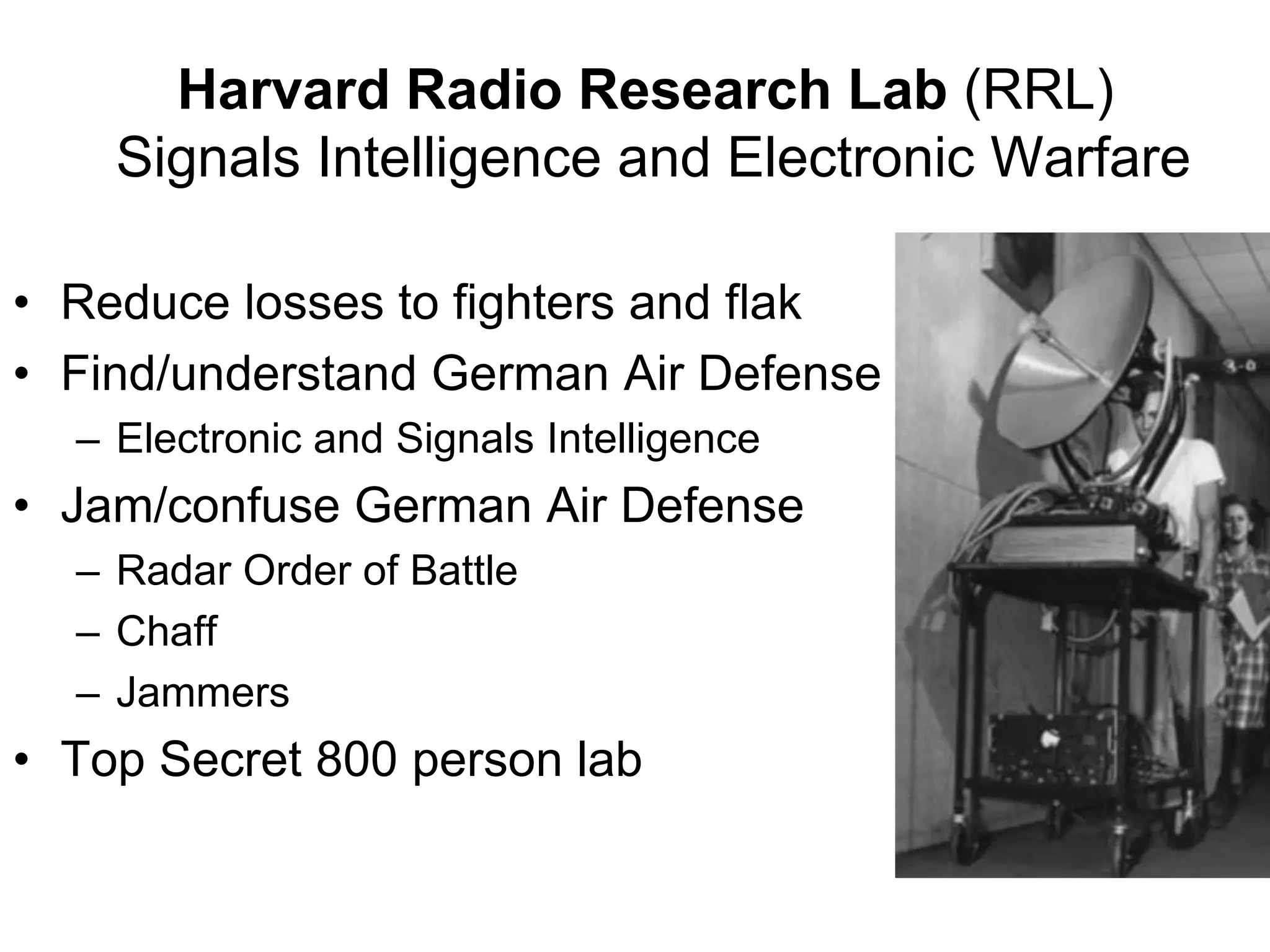
Harvard Radio Research Lab (RRL) Signals Intelligence and Electronic WarfareReduce losses to fighters and flakFind/understand German Air Defense Electronic and Signals IntelligenceJam/confuse German Air DefenseRadar Order of BattleChaffJammersTop Secret 800 person lab
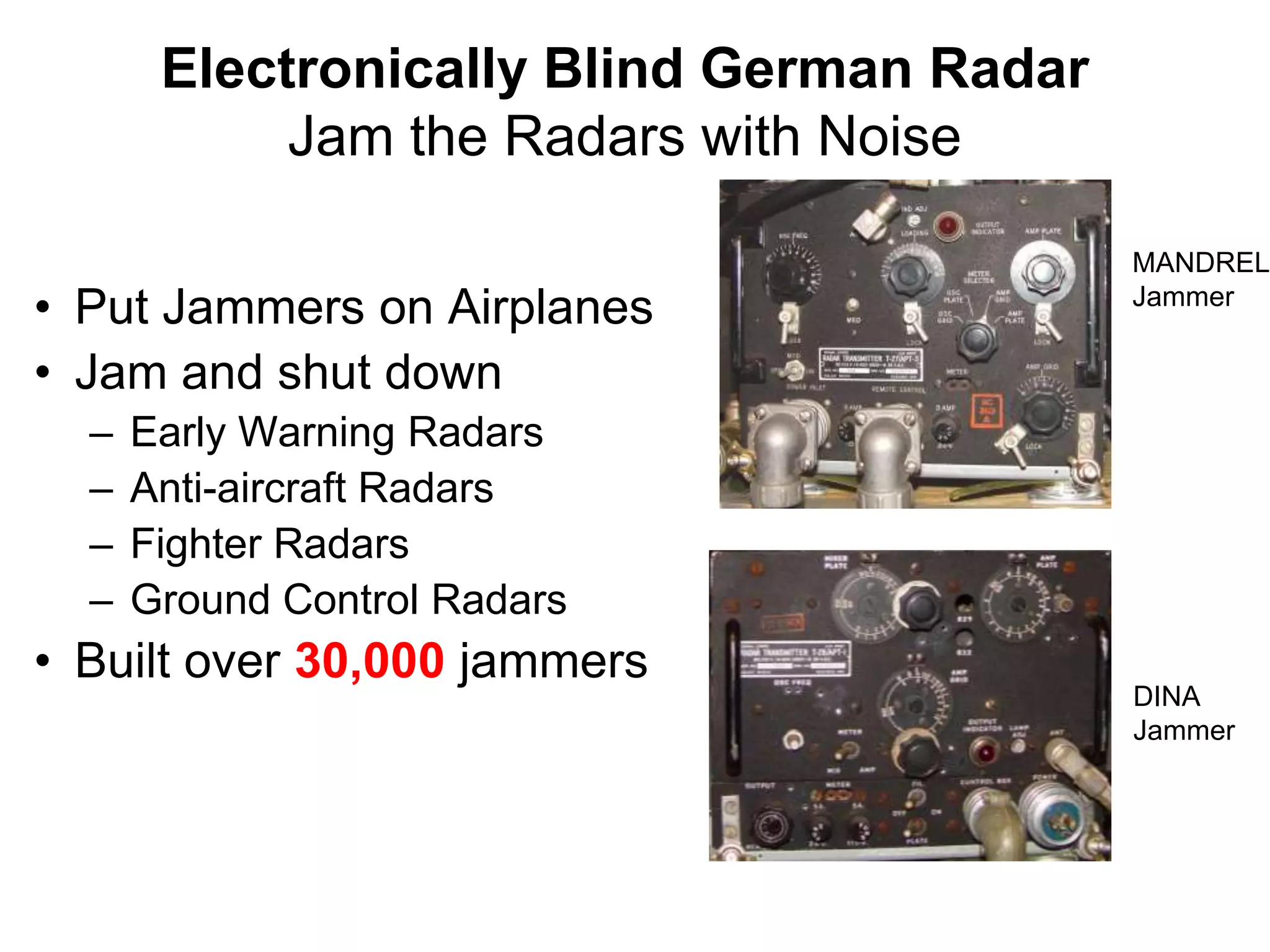
Electronically Blind German RadarJam the Radars with NoiseMANDRELJammerPut Jammers on AirplanesJam and shut down Early Warning RadarsAnti-aircraft RadarsFighter RadarsGround Control RadarsBuilt over 30,000 jammersDINAJammer
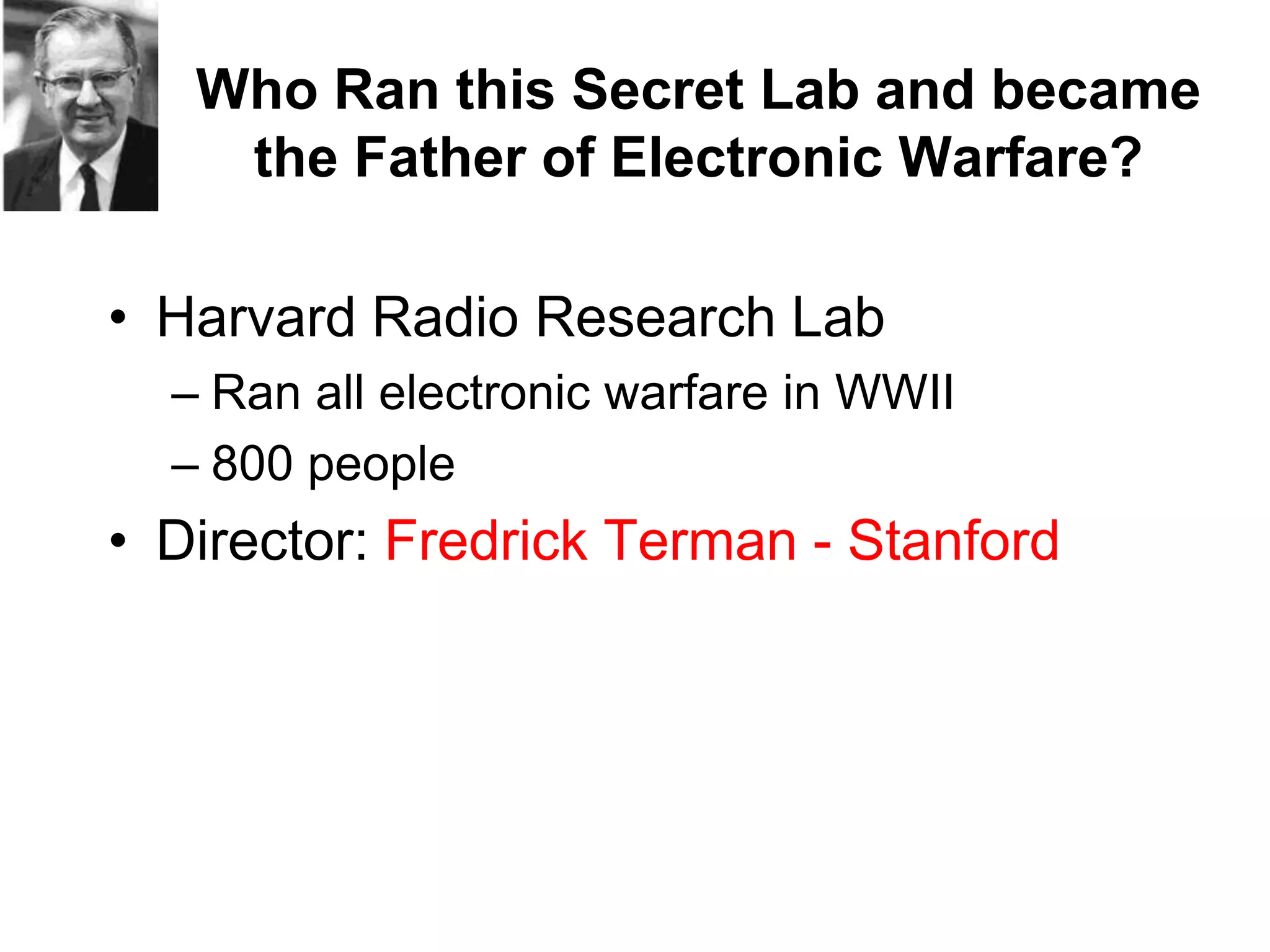
Who Ran this Secret Lab and became the Father of Electronic Warfare?Harvard Radio Research LabRan all electronic warfare in WWII 800 peopleDirector: Fredrick Terman - Stanford
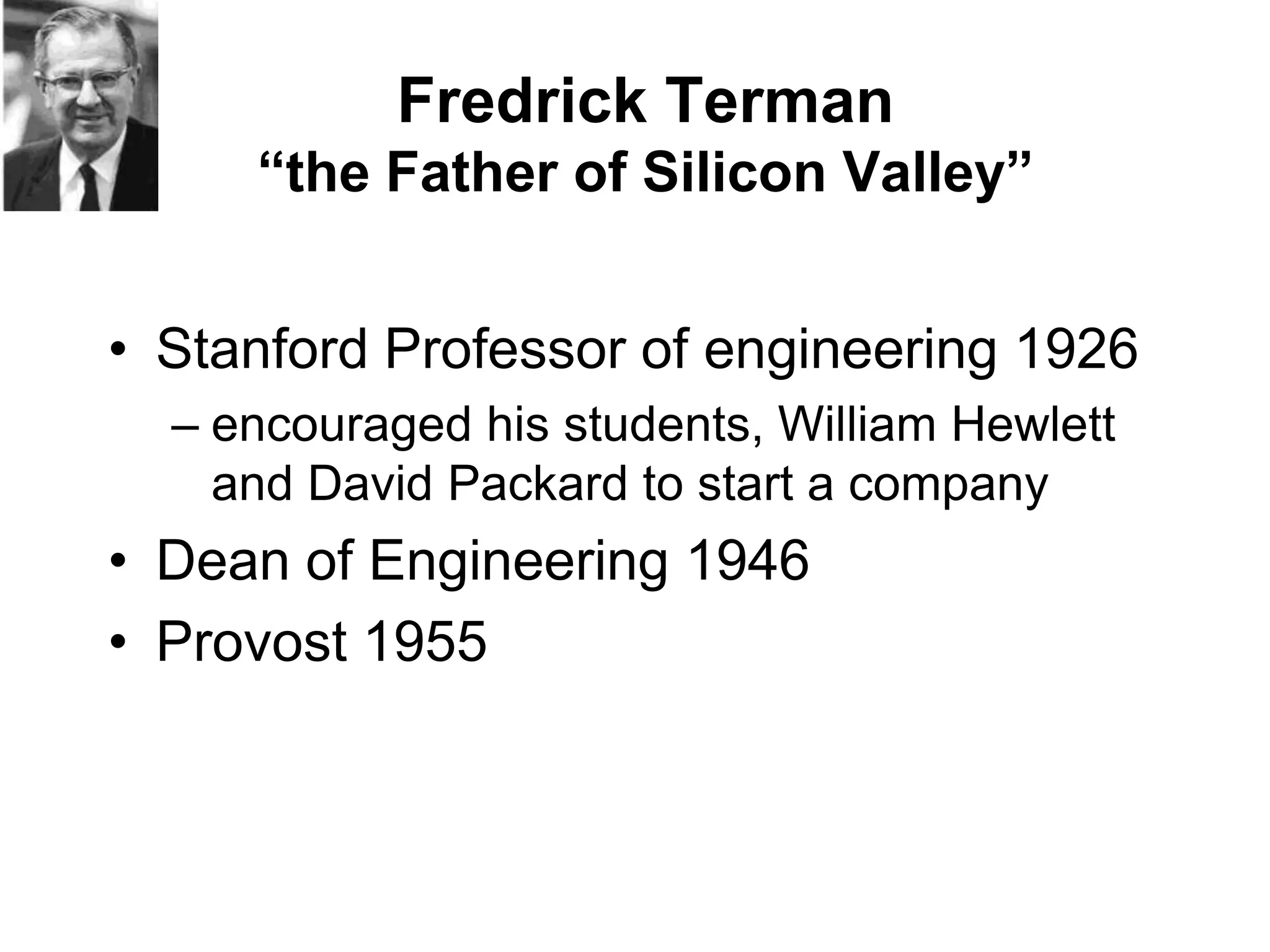
Fredrick Terman“the Father of Silicon Valley”Stanford Professor of engineering 1926encouraged his students, William Hewlett and David Packard to start a companyDean of Engineering 1946Provost 1955
Story 3: Stanford And The Cold War
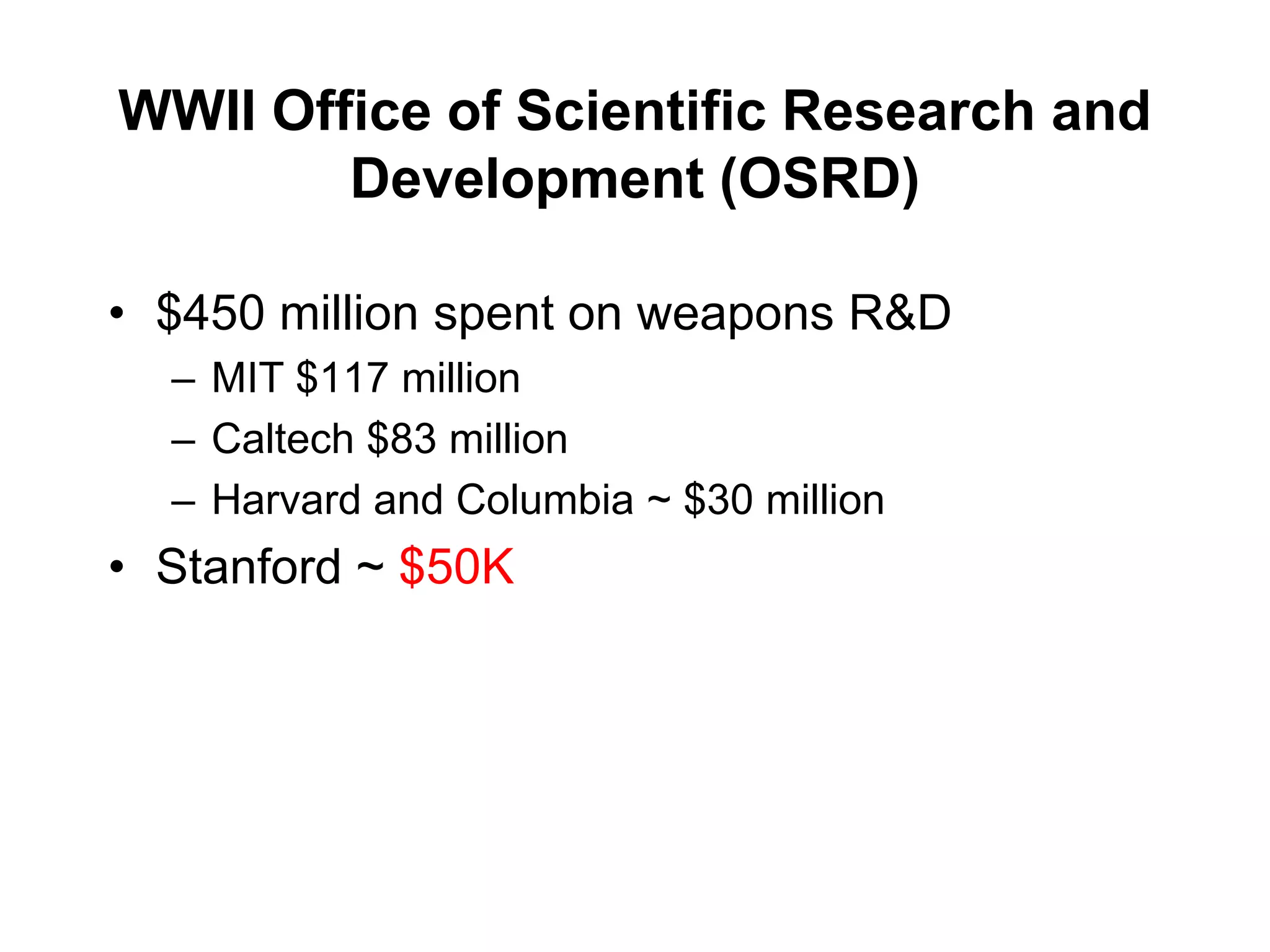
WWII Office of Scientific Research and Development (OSRD)$450 million spent on weapons R&D MIT $117 millionCaltech $83 millionHarvard and Columbia ~ $30 millionStanford ~ $50K
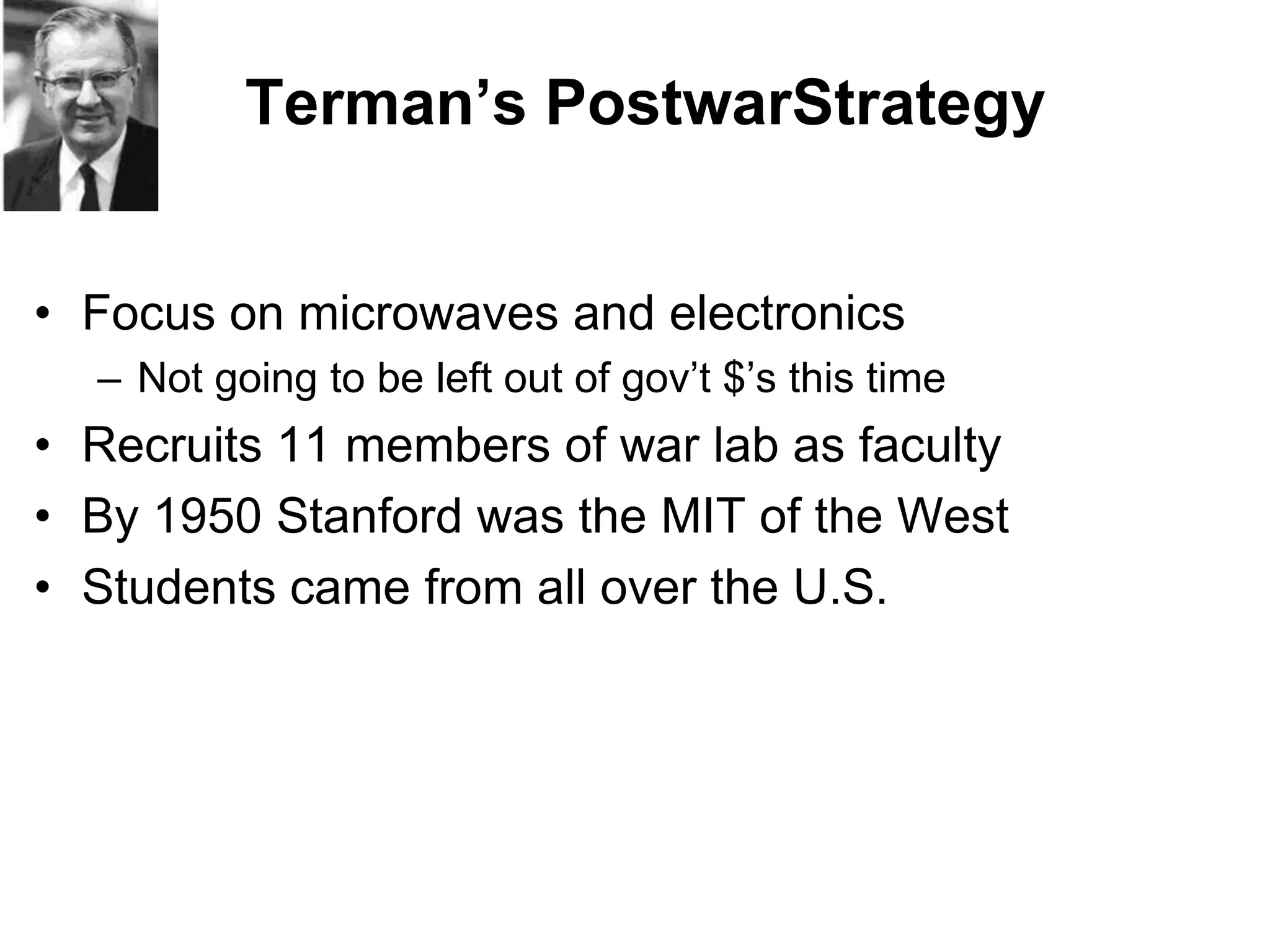
Terman’s PostwarStrategyFocus on microwaves and electronicsNot going to be left out of gov’t $’s this timeRecruits 11 members of war lab as facultyBy 1950 Stanford was the MIT of the WestStudents came from all over the U.S.
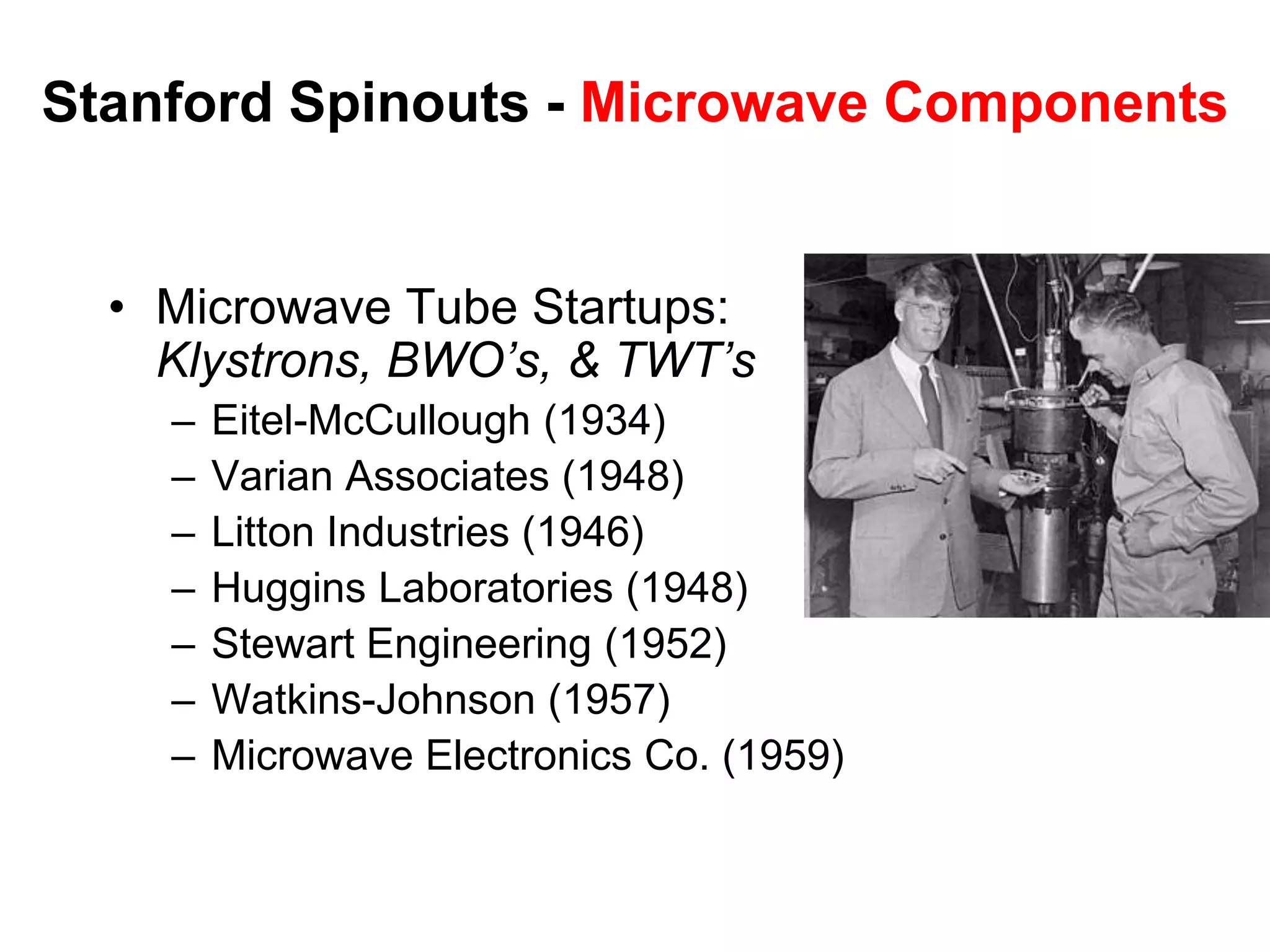
Stanford Spinouts - Microwave ComponentsMicrowave Tube Startups:Klystrons, BWO’s, & TWT’sEitel-McCullough (1934)Varian Associates (1948)Litton Industries (1946)Huggins Laboratories (1948)Stewart Engineering (1952) Watkins-Johnson (1957)Microwave Electronics Co. (1959)
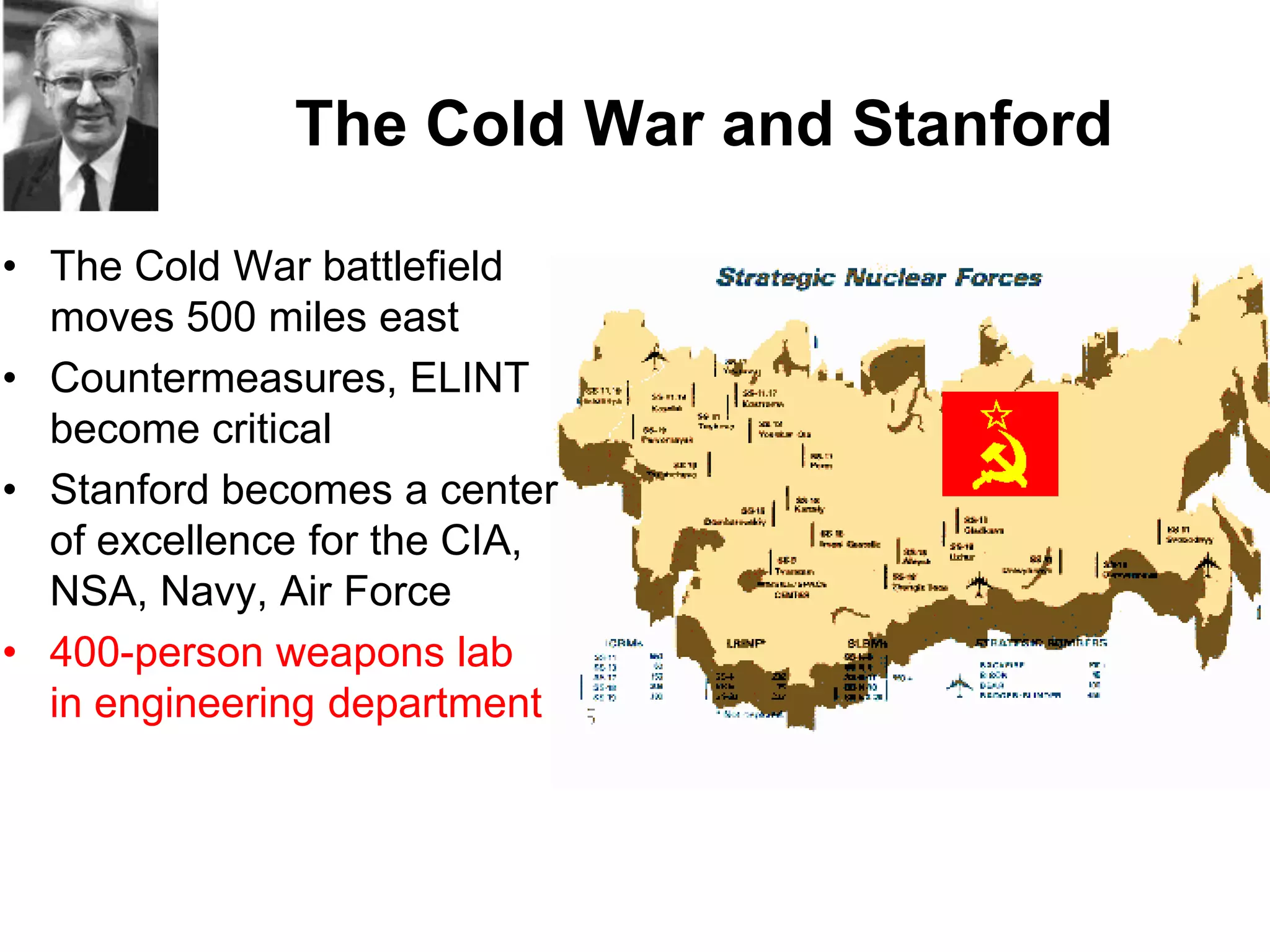
The Cold War and StanfordThe Cold War battlefield moves 500 miles eastCountermeasures, ELINT become criticalStanford becomes a center of excellence for the CIA, NSA, Navy, Air Force400-person weapons lab in engineering department
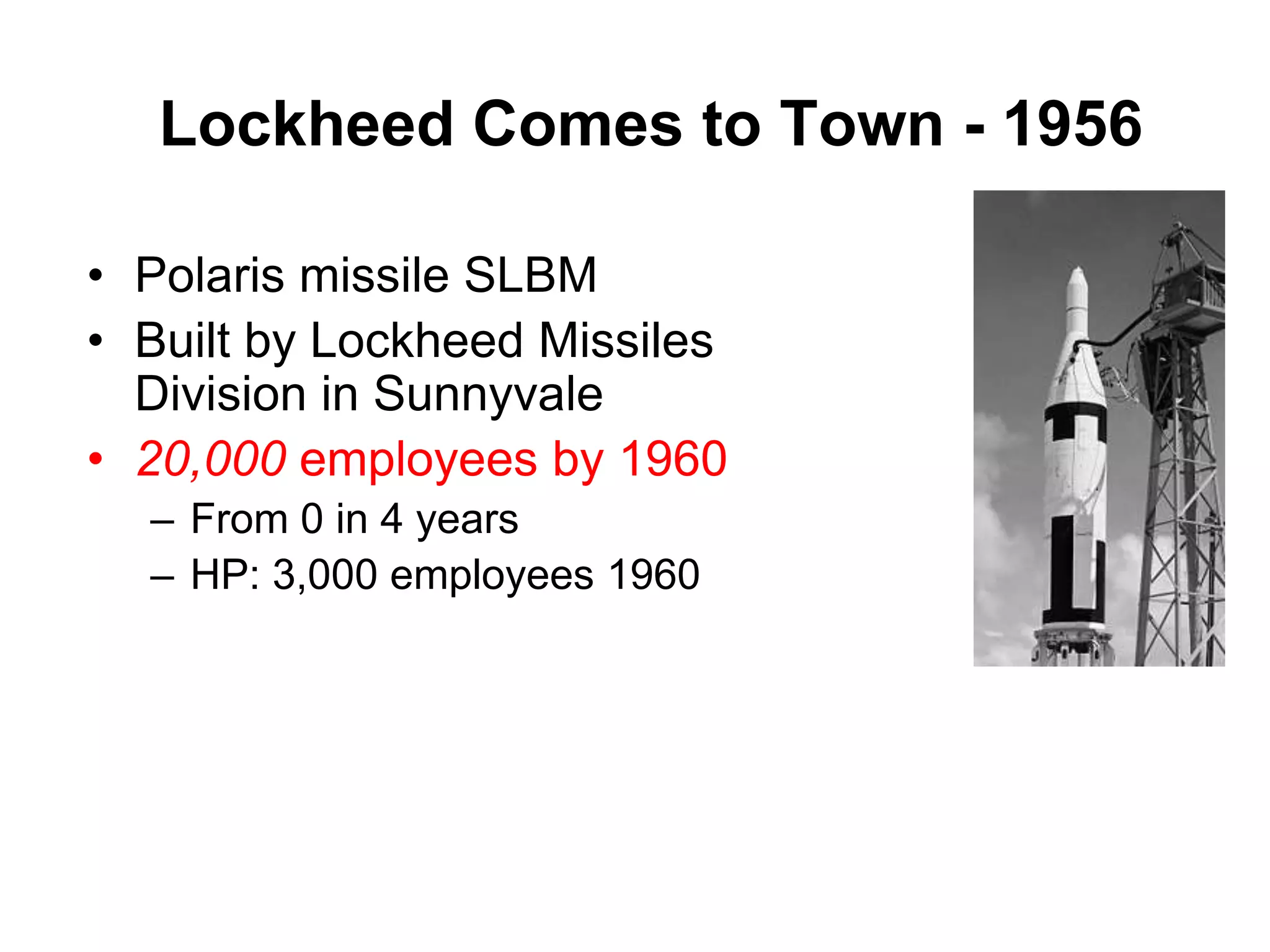
Lockheed Comes to Town - 1956Polaris missile SLBMBuilt by Lockheed Missiles Division in Sunnyvale20,000 employees by 1960 From 0 in 4 yearsHP: 3,000 employees 1960
Stanford Spinouts - Military Systems Sylvania Electronics Defense Laboratory (1953)GE Microwave Laboratory (1956)Granger Associates (1956)Applied Technology (1959)Electronic Systems Laboratories (ESL) (1964)Argo Systems (1969)Advent Systems (1972)
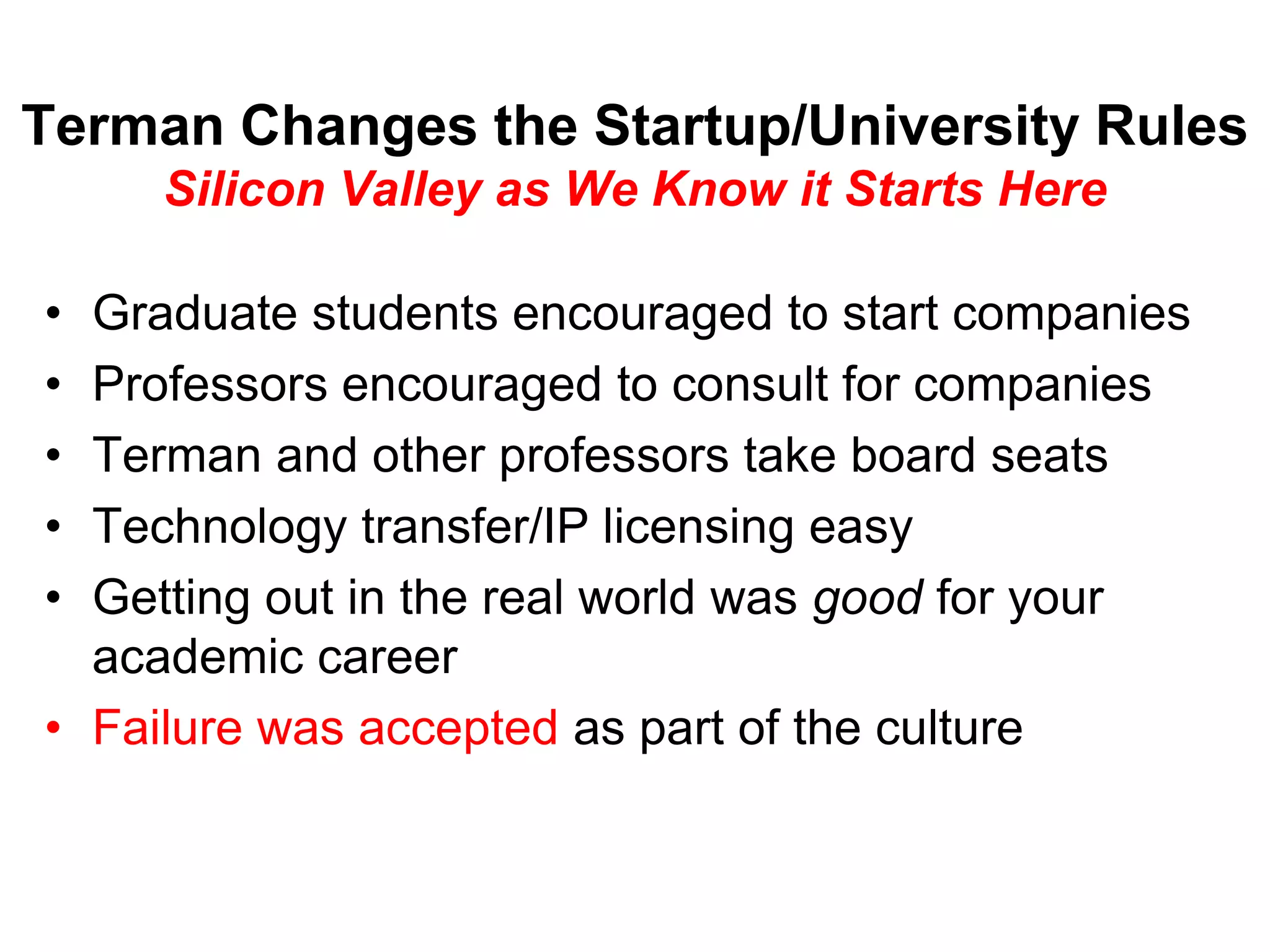
Terman Changes the Startup/University RulesSilicon Valley as We Know it Starts HereGraduate students encouraged to start companiesProfessors encouraged to consult for companiesTerman and other professors take board seatsTechnology transfer/IP licensing easyGetting out in the real world was good for your academic careerFailure was accepted as part of the culture
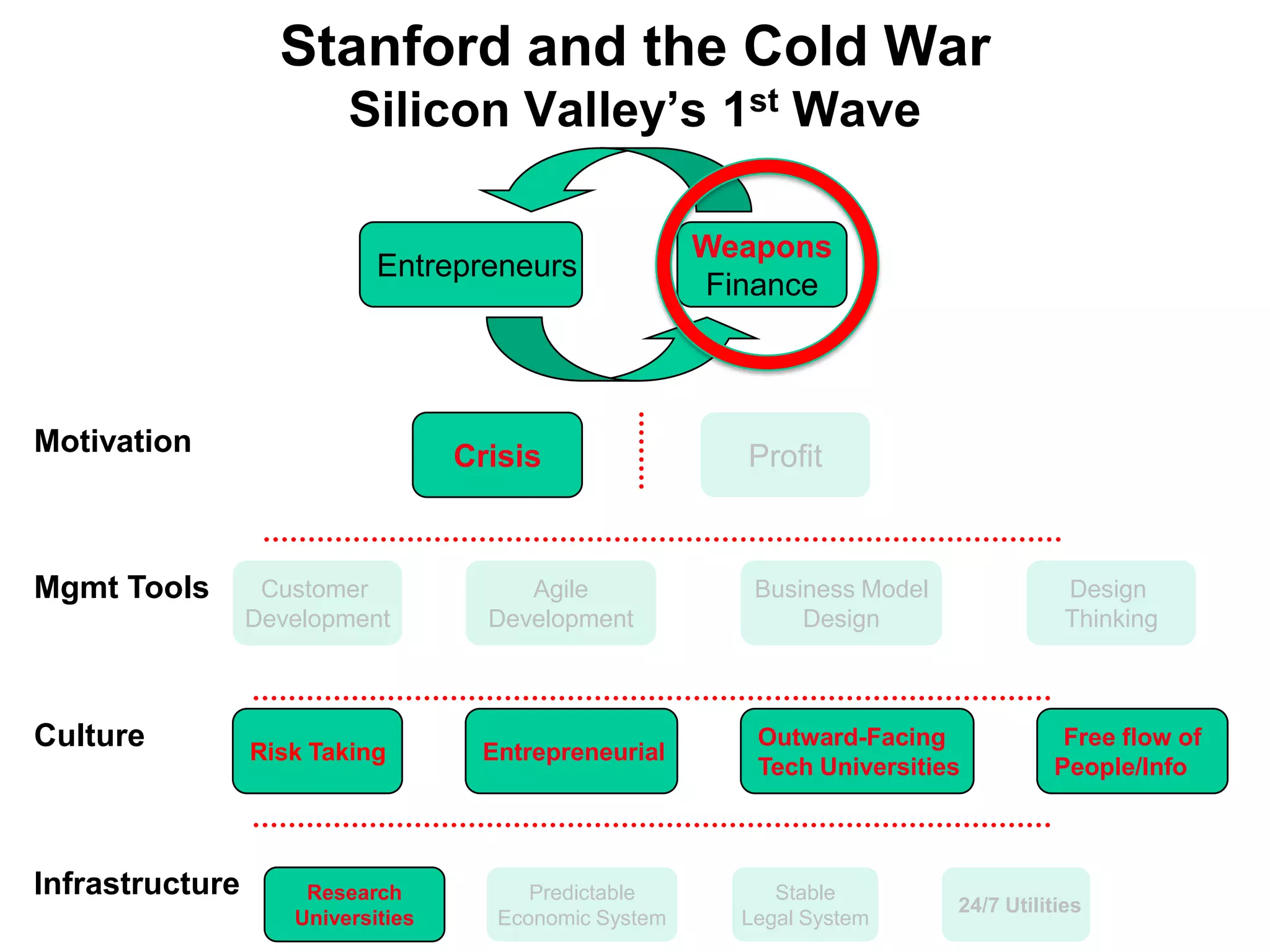
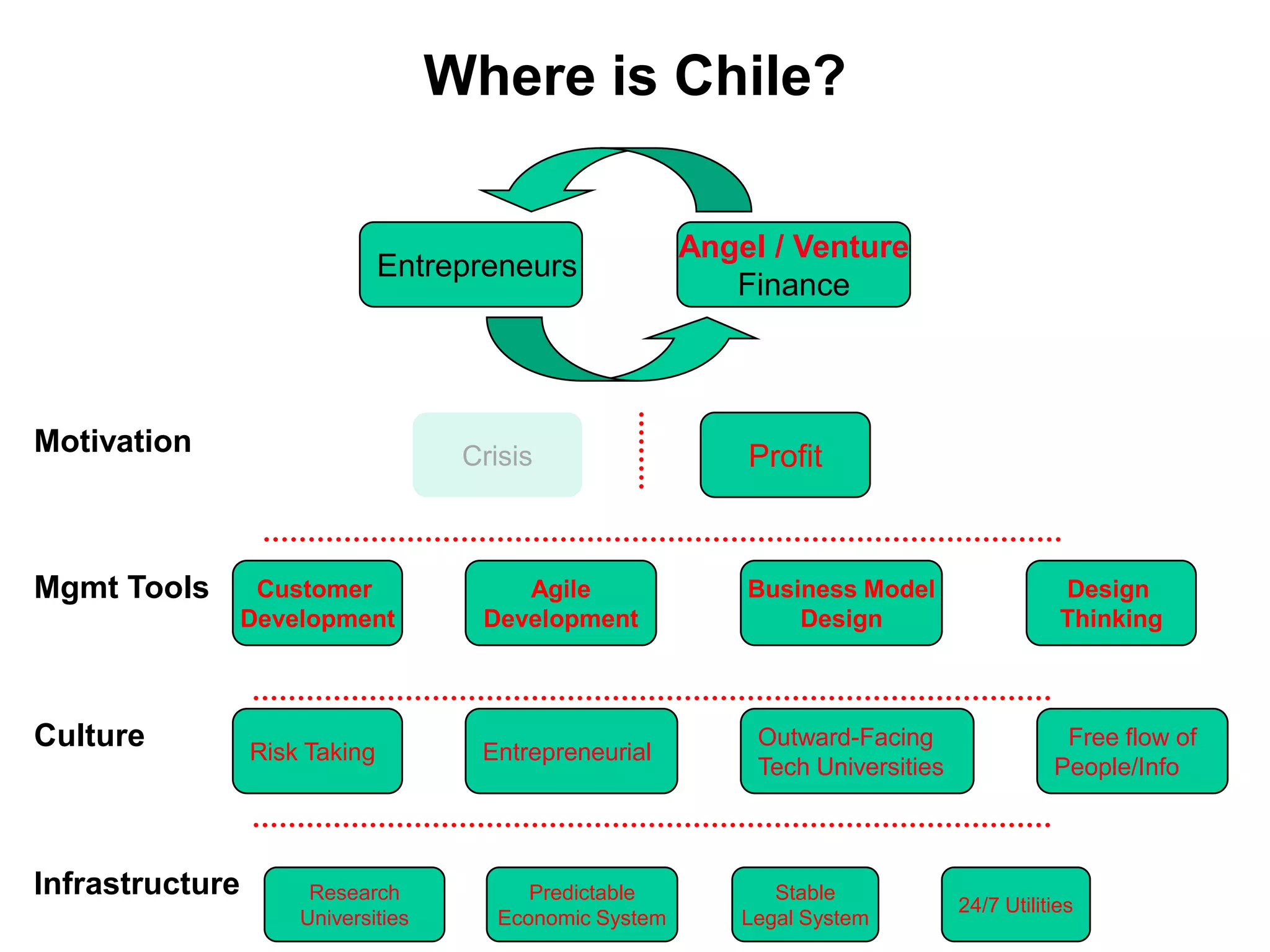
EntrepreneursWeaponsFinanceCrisisProfitMotivationCustomer DevelopmentMgmt ToolsAgileDevelopmentBusiness ModelDesignDesign ThinkingStanford and the Cold War Silicon Valley’s 1st WaveRisk TakingCultureEntrepreneurialOutward-FacingTech UniversitiesFree flow ofPeople/InfoInfrastructure24/7 UtilitiesPredictableEconomic SystemStableLegal SystemResearchUniversities
Story 4:  1956 - The Year it Becomes Silicon Valley
Meanwhile, on the Other Side of Town…The Head of Radar Bombing training for Air Force starts a Company
InternetPersonalComputersIntegratedCircuitsMicrowaves/DefenseTestEquipmentVacuumTubesThe Real Story of Silicon Valley HistoryVenture CapitalInnovation Networks1910196019701980200019901930194019501920
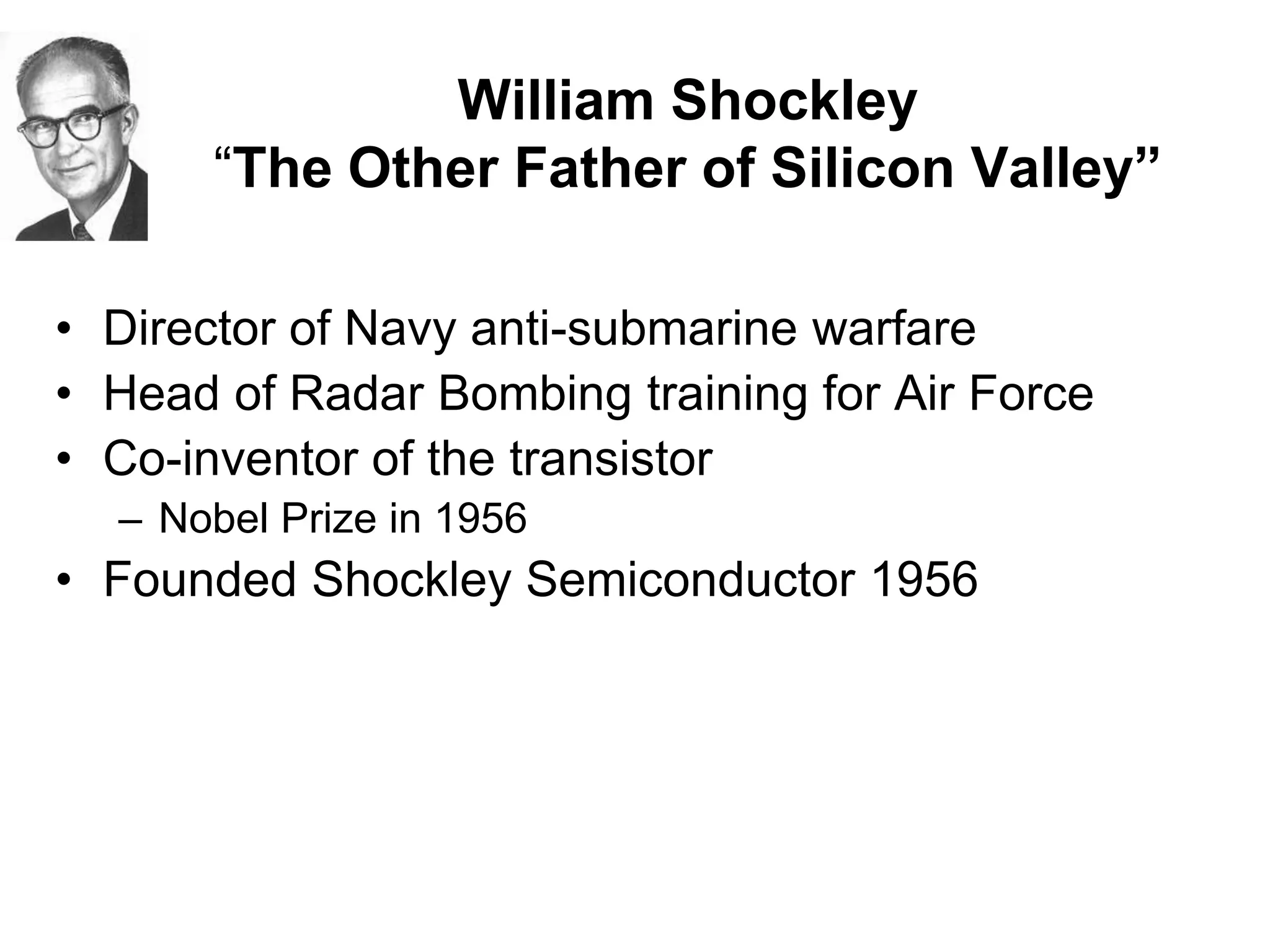
William Shockley“The Other Father of Silicon Valley”Director of Navy anti-submarine warfareHead of Radar Bombing training for Air ForceCo-inventor of the transistor Nobel Prize in 1956Founded Shockley Semiconductor 1956
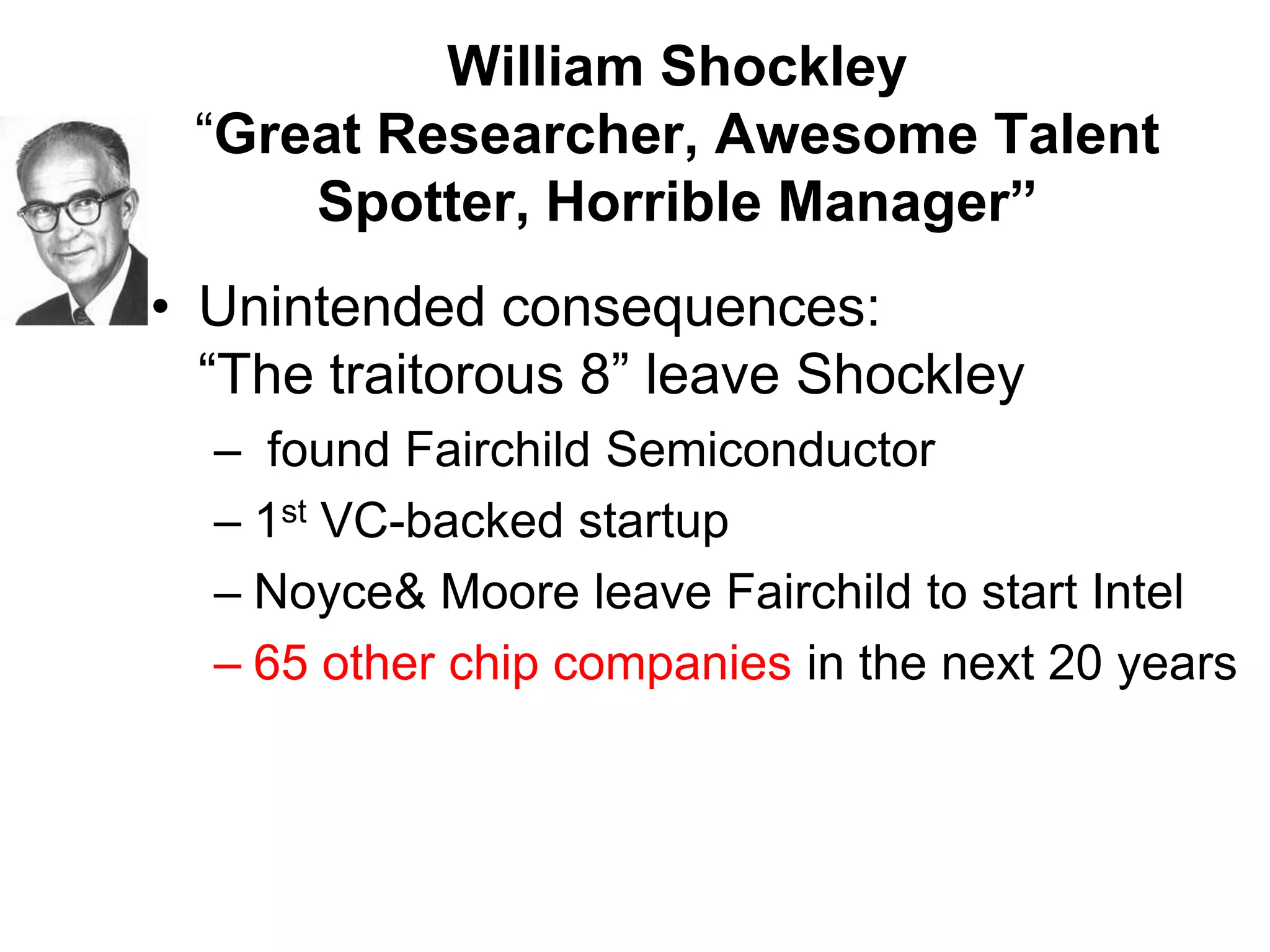
William Shockley“Great Researcher, Awesome Talent Spotter, Horrible Manager”Unintended consequences: “The traitorous 8” leave Shockley  found Fairchild Semiconductor1st VC-backed startupNoyce & Moore leave Fairchild to start Intel65 other chip companies in the next 20 years
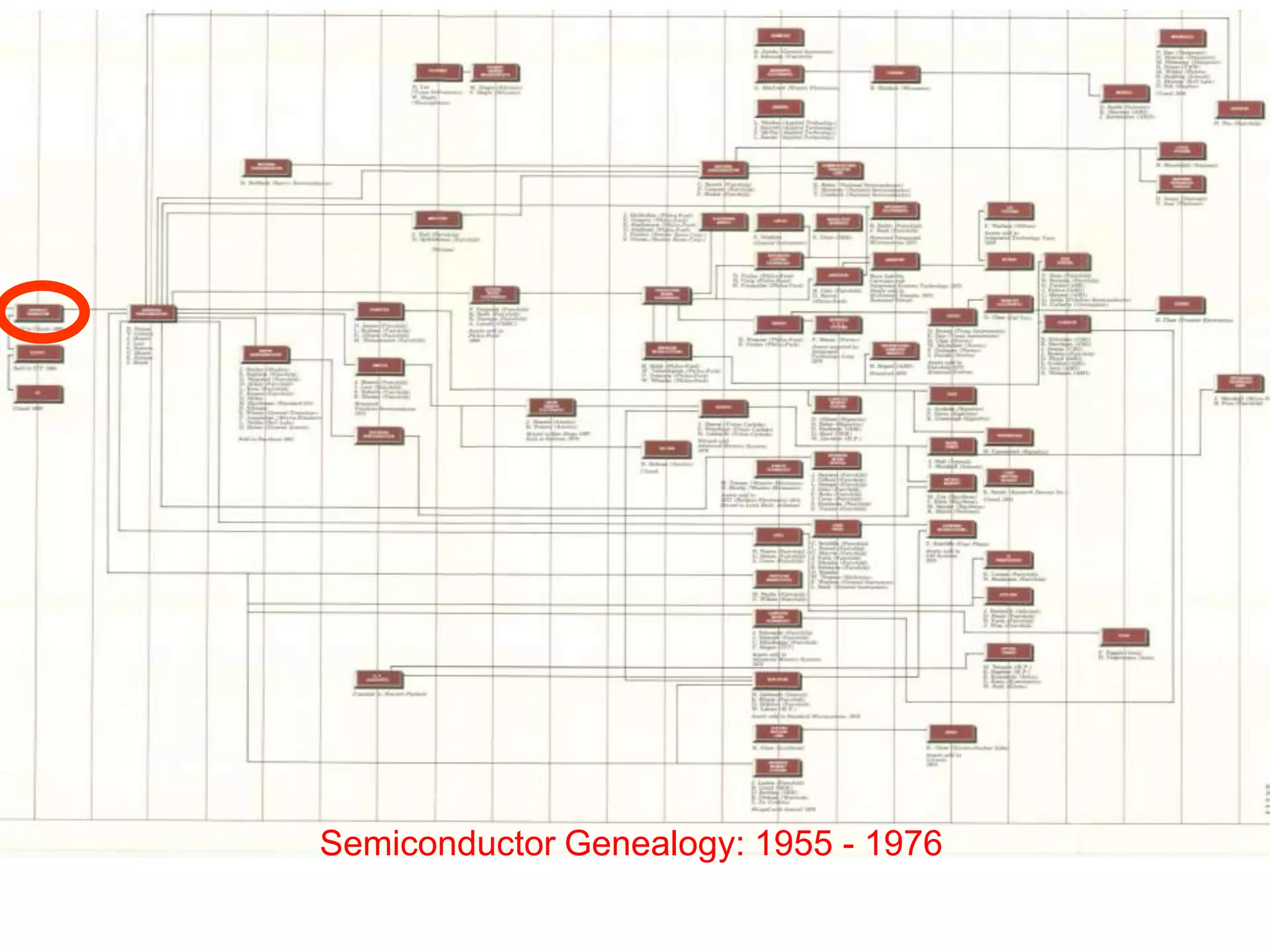
Semiconductor Genealogy: 1955 - 1976
Story 5: The Rise of VentureCapital
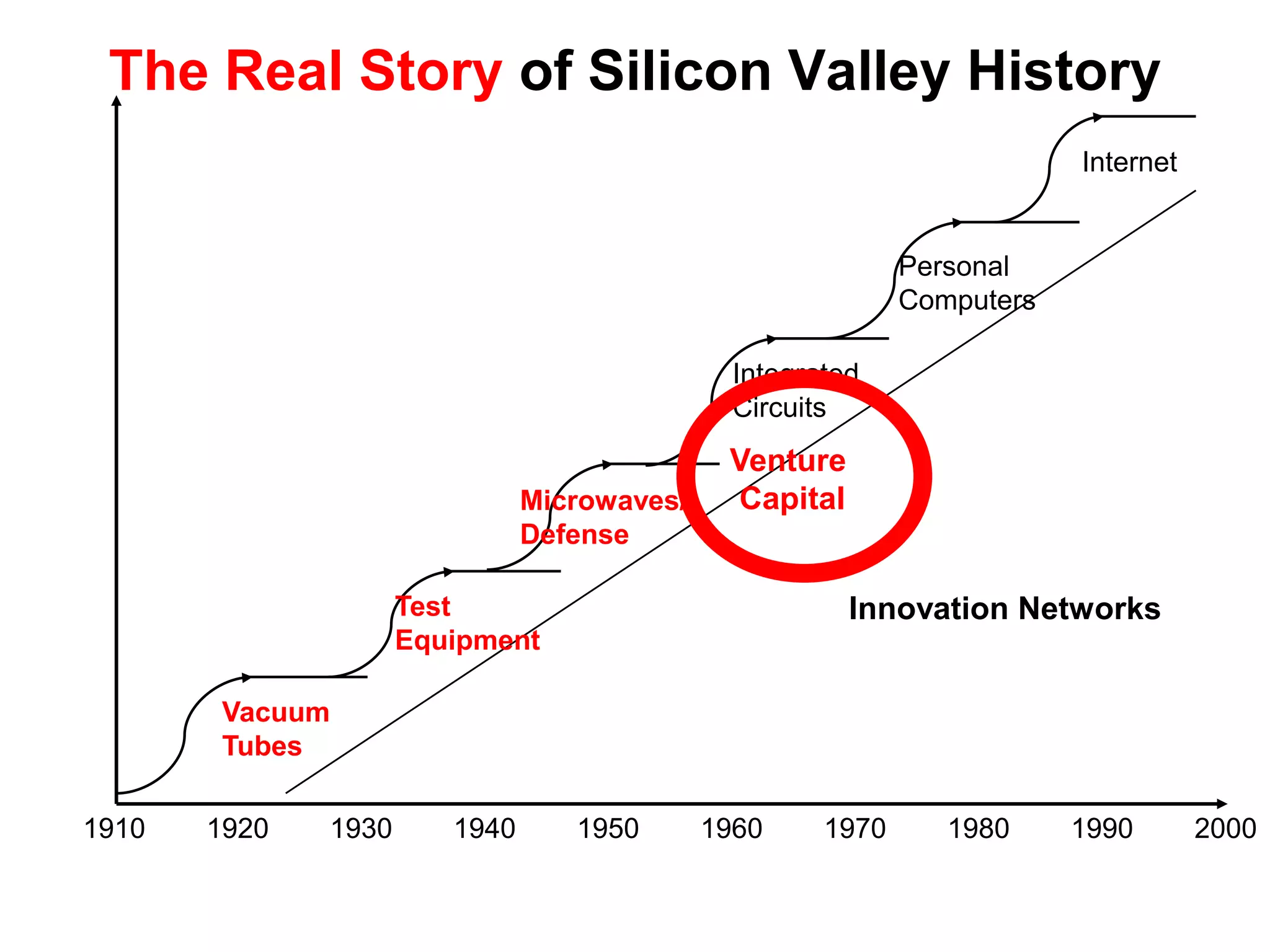
InternetPersonalComputersIntegratedCircuitsMicrowaves/DefenseTestEquipmentVacuumTubesThe Real Story of Silicon Valley HistoryVenture CapitalInnovation Networks1910196019701980200019901930194019501920
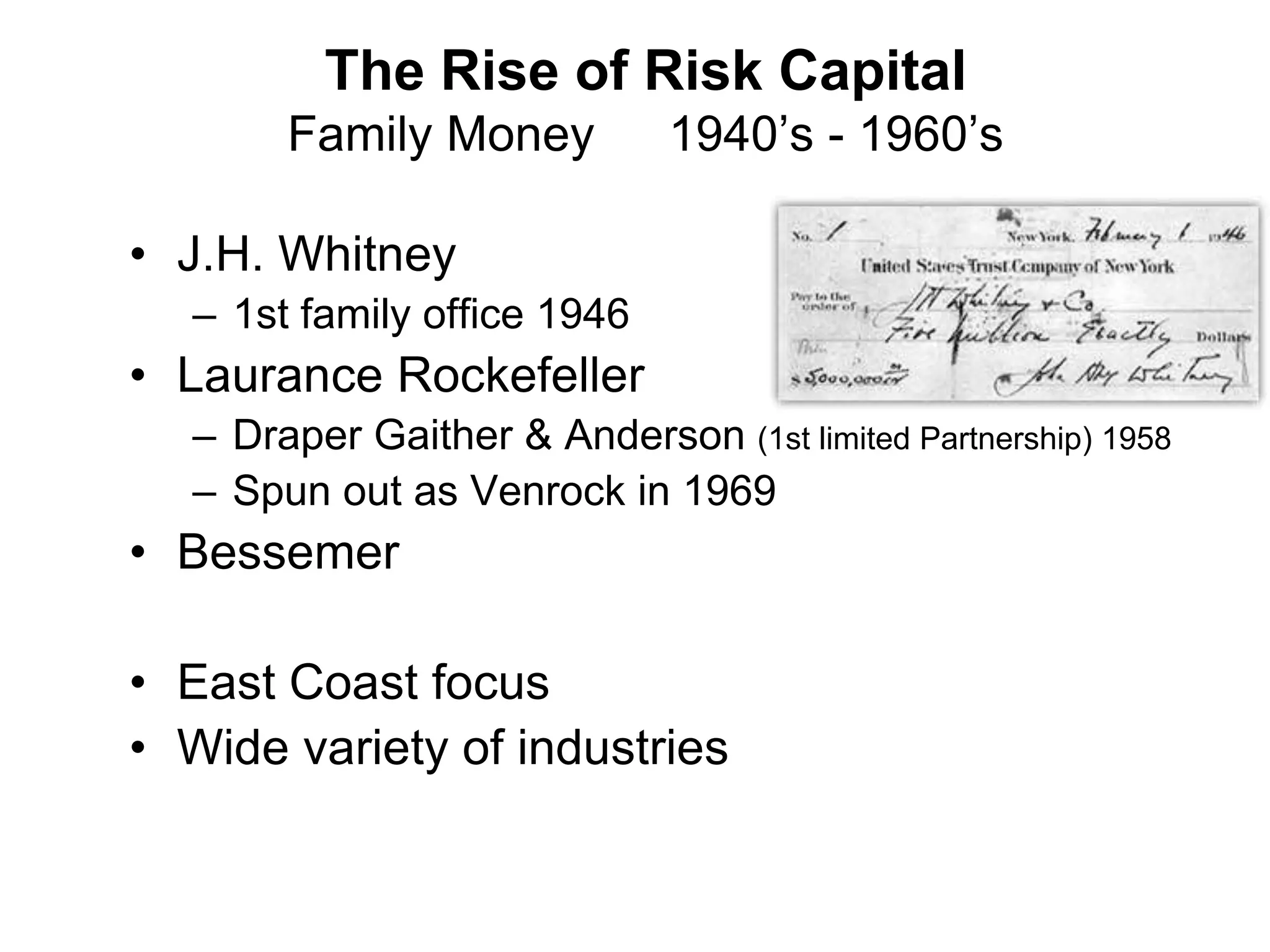
The Rise of Risk CapitalFamily Money 	1940’s - 1960’sJ.H. Whitney	1st family office 1946Laurance RockefellerDraper Gaither & Anderson (1st limited Partnership) 1958Spun out as Venrock in 1969BessemerEast Coast focusWide variety of industries
The Valley Attracts Financial AttentionThe 1st West Coast IPO’s1956	Varian 1957	Hewlett Packard1958	Ampex
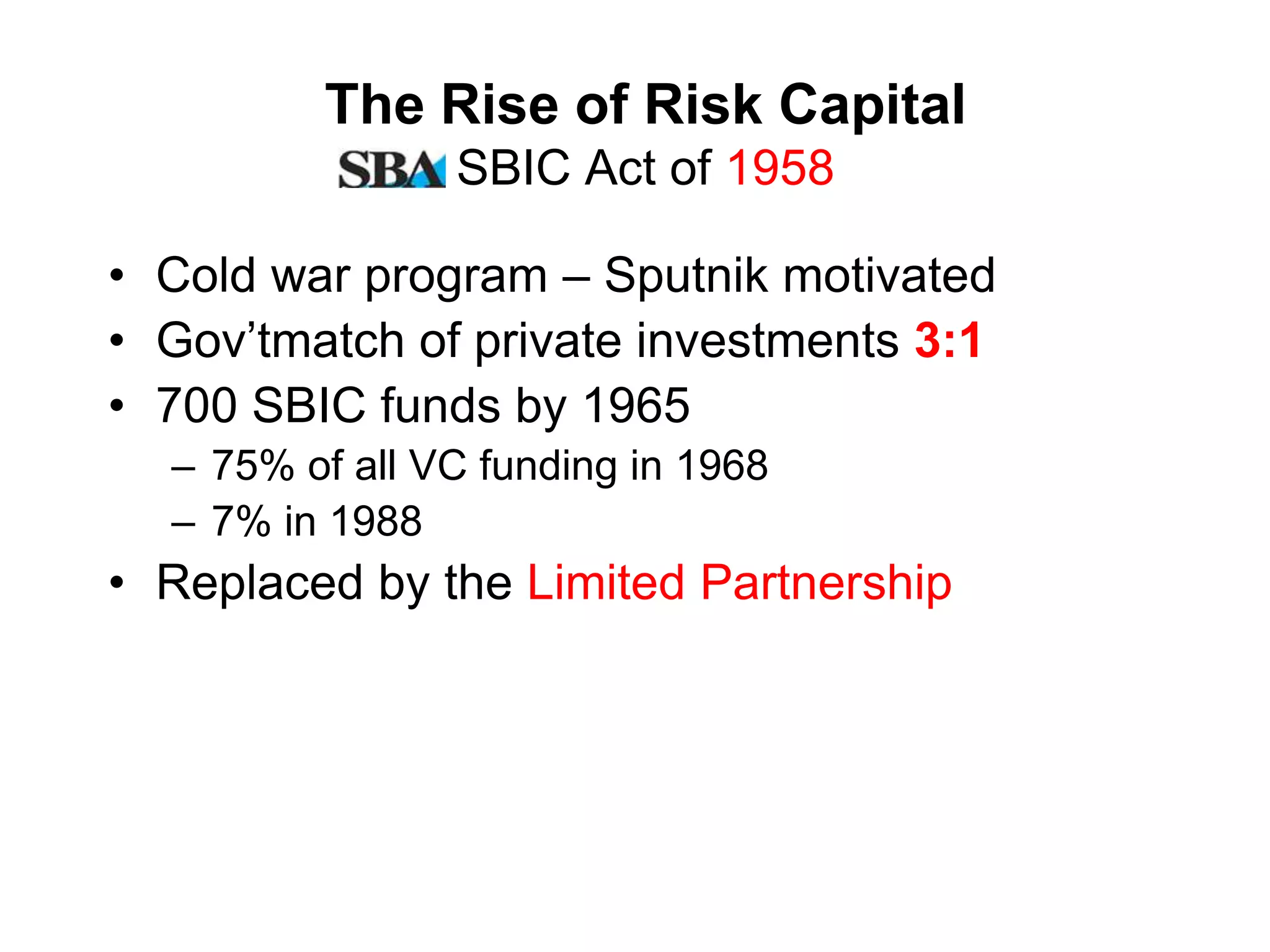
The Rise of Risk CapitalSBIC Act of 1958Cold war program – Sputnik motivatedGov’tmatch of private investments 3:1700 SBIC funds by 1965 75% of all VC funding in 19687% in 1988Replaced by the Limited Partnership
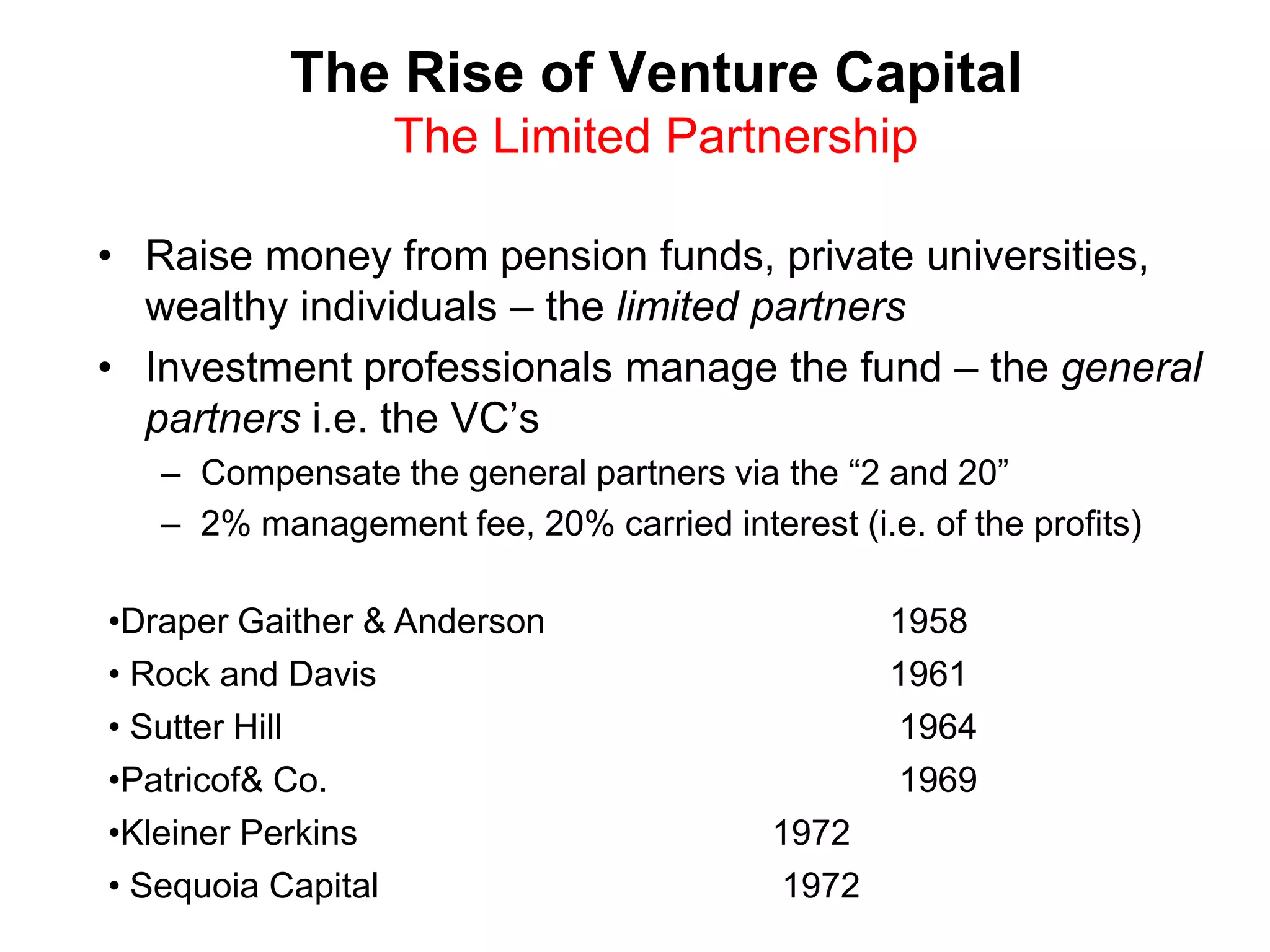
The Rise of Venture CapitalThe Limited PartnershipRaise money from pension funds, private universities, wealthy individuals – the limited partnersInvestment professionals manage the fund – the general partners i.e. the VC’sCompensate the general partners via the “2 and 20”2% management fee, 20% carried interest (i.e. of the profits)Draper Gaither & Anderson	 		  1958
 Rock and Davis 	 			  1961
 Sutter Hill					   1964
Patricof & Co.					   1969
Kleiner Perkins				   1972
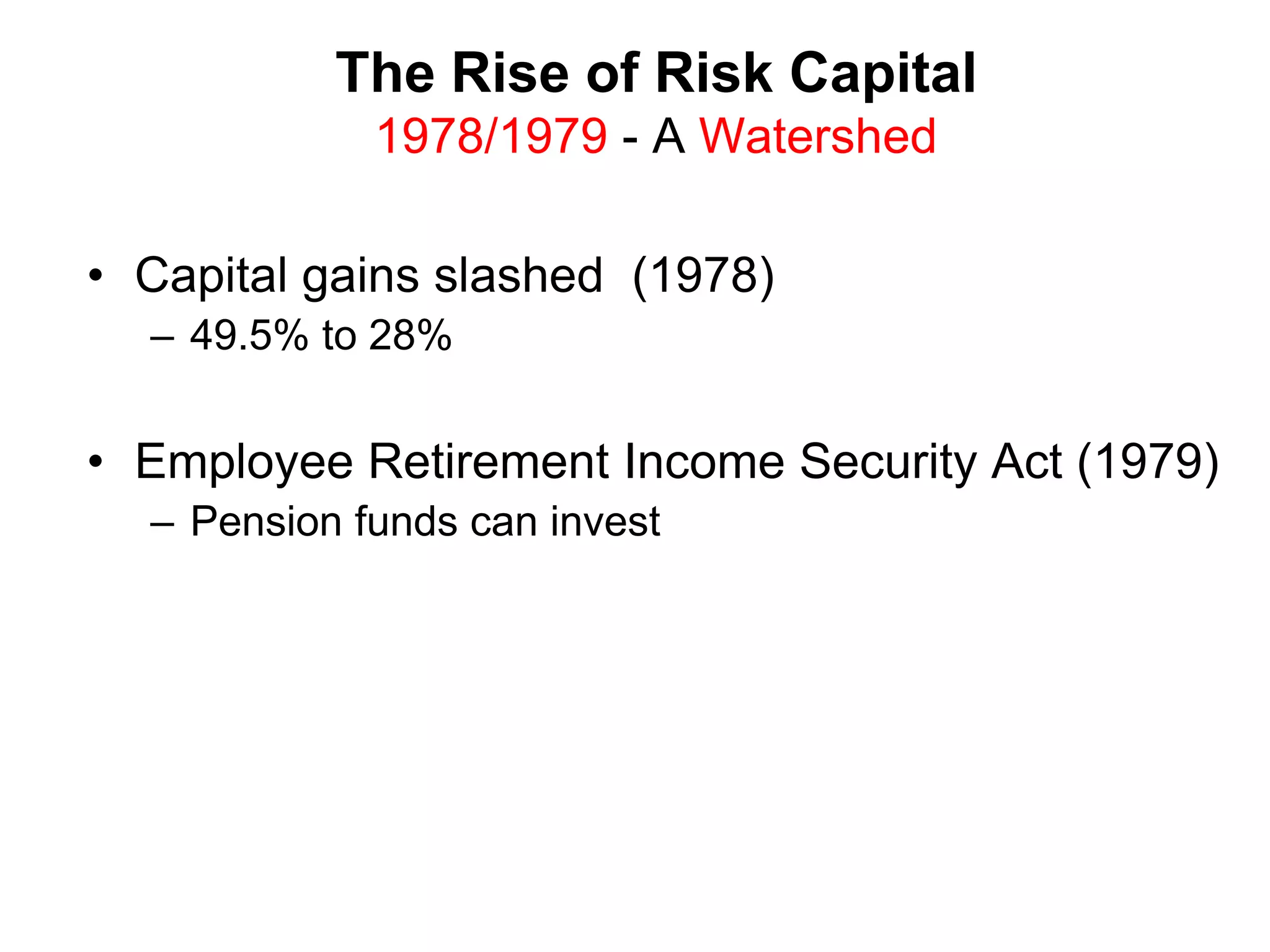
 Sequoia Capital			    1972The Rise of Risk Capital1978/1979 - A WatershedCapital gains slashed  (1978)49.5% to 28%Employee Retirement Income Security Act (1979) Pension funds can invest
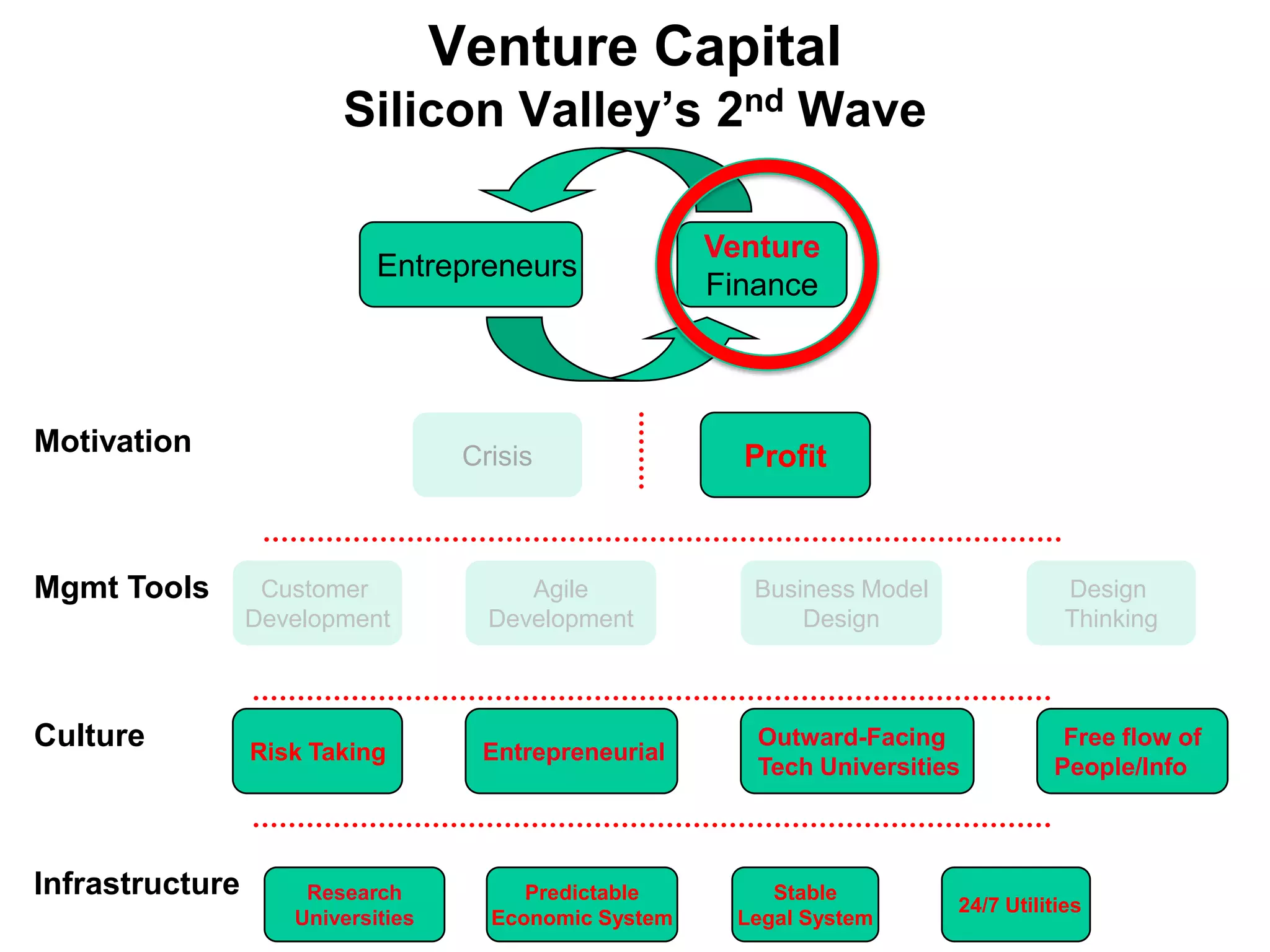
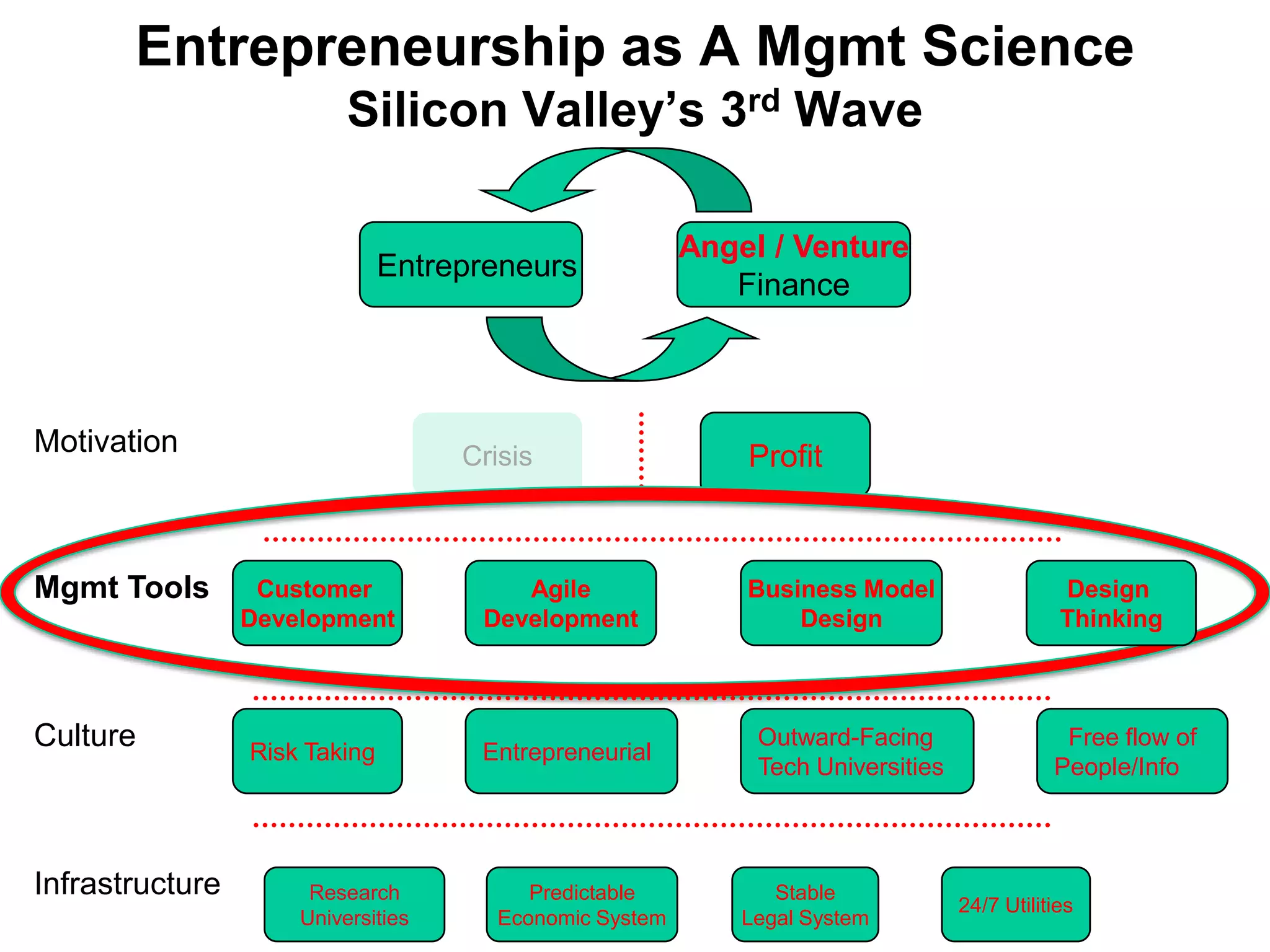
EntrepreneursVentureFinanceCrisisProfitMotivationCustomer DevelopmentMgmt ToolsAgileDevelopmentBusiness ModelDesignDesign ThinkingVenture CapitalSilicon Valley’s 2nd WaveRisk TakingCultureEntrepreneurialOutward-FacingTech UniversitiesFree flow ofPeople/InfoInfrastructure24/7 UtilitiesPredictableEconomic SystemStableLegal SystemResearchUniversities
Story 6:Entrepreneurship as a Management ScienceNot All Startups Are Equal
Companies Get EducatedGov’t charted companies ~1600’sModern corporations ~1800’sBusiness Schools to educate corporate execsOrganize body of knowledgeFirst Harvard MBA – 1908
Startups Get EducatedEvery company began as a startupModern startups ~ 1950’sVenture funded startups ~1970’sEntrepreneurship Schools to educate foundersOrganize body of knowledgeEmerging now
Wait a Minute…Aren’t Startups Small Versions of Large Companies?50 Years of Experience Says NO
Story 7:Not All Startups Are EqualSmall BusinessScalable StartupsLarge Company Innovation
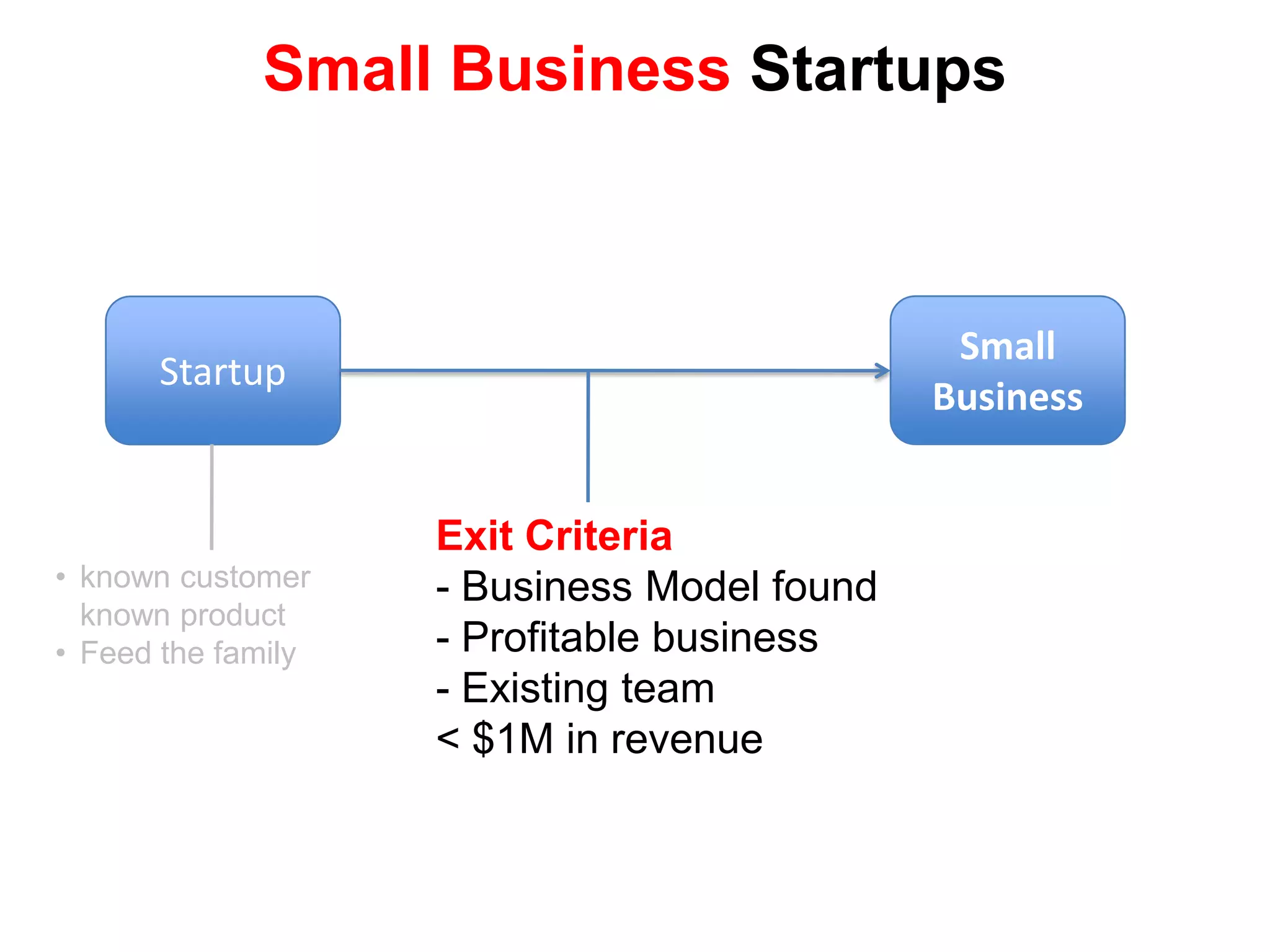
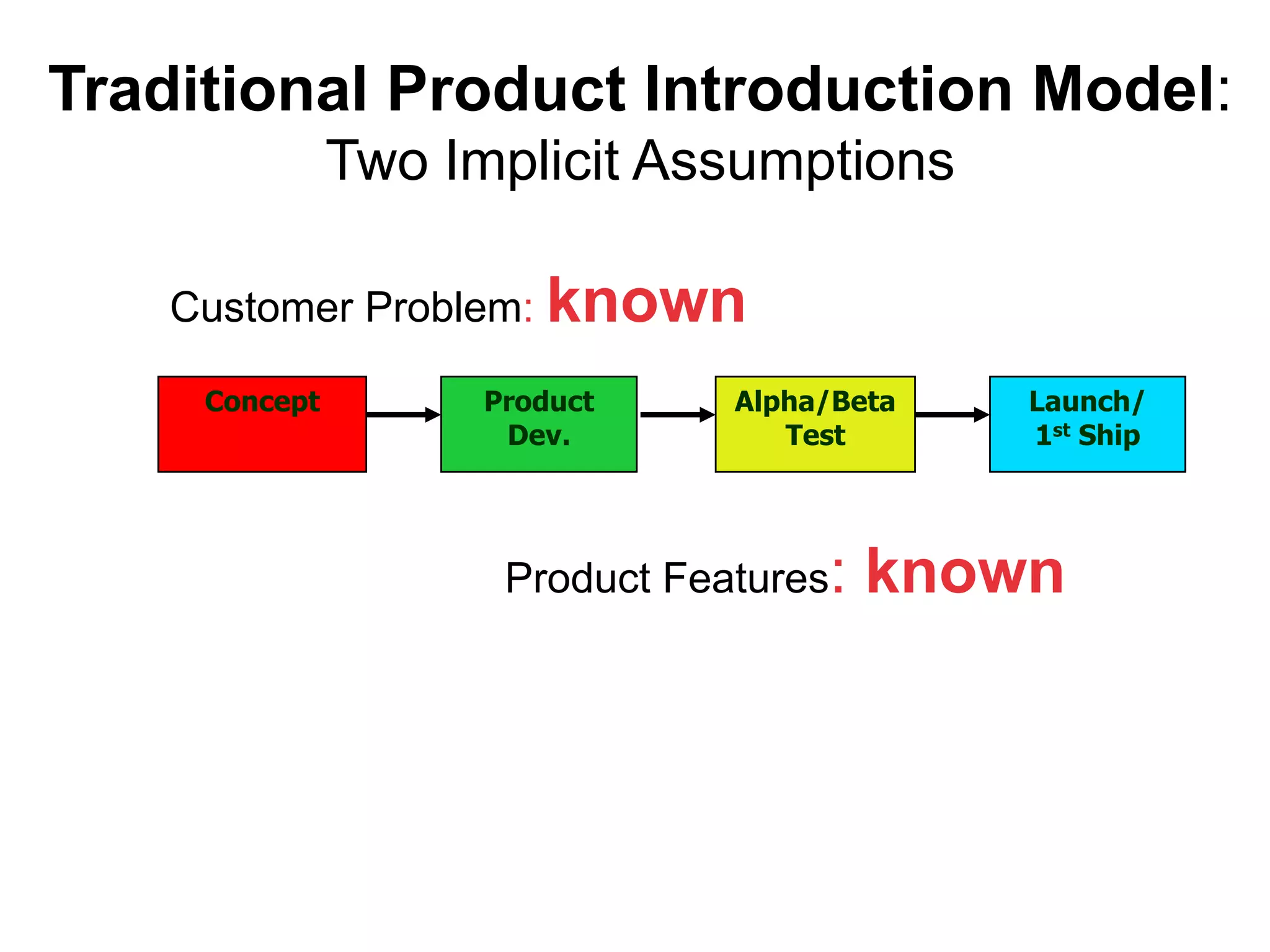
Small BusinessStartupExit Criteria Business Model found- Profitable business Existing team< $1M in revenueSmall Business Startupsknown customer known product
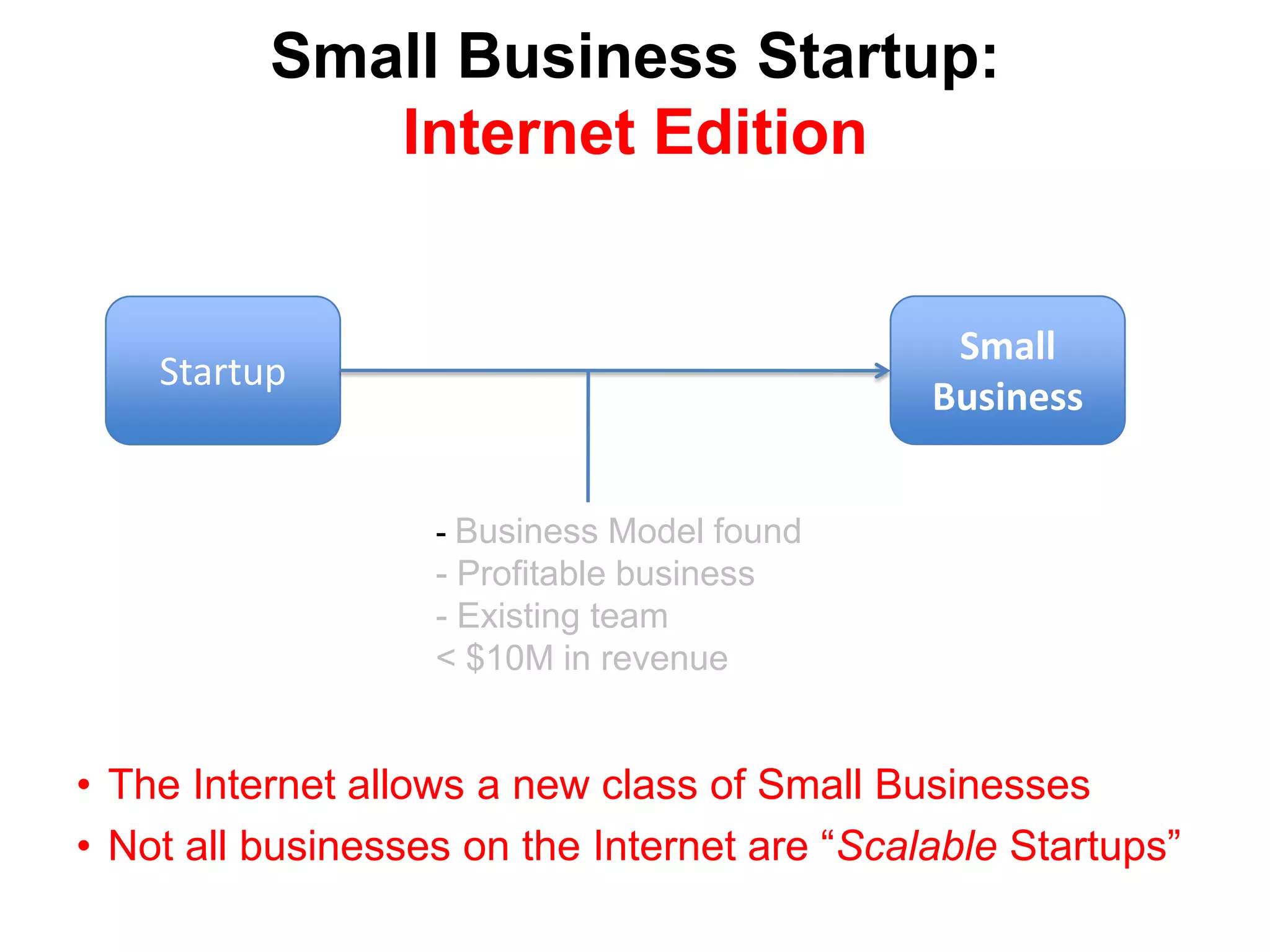
Feed the familySmall Business Startup:Internet EditionSmall BusinessStartup- Business Model found- Profitable business Existing team< $10M in revenueThe Internet allows a new class of Small Businesses
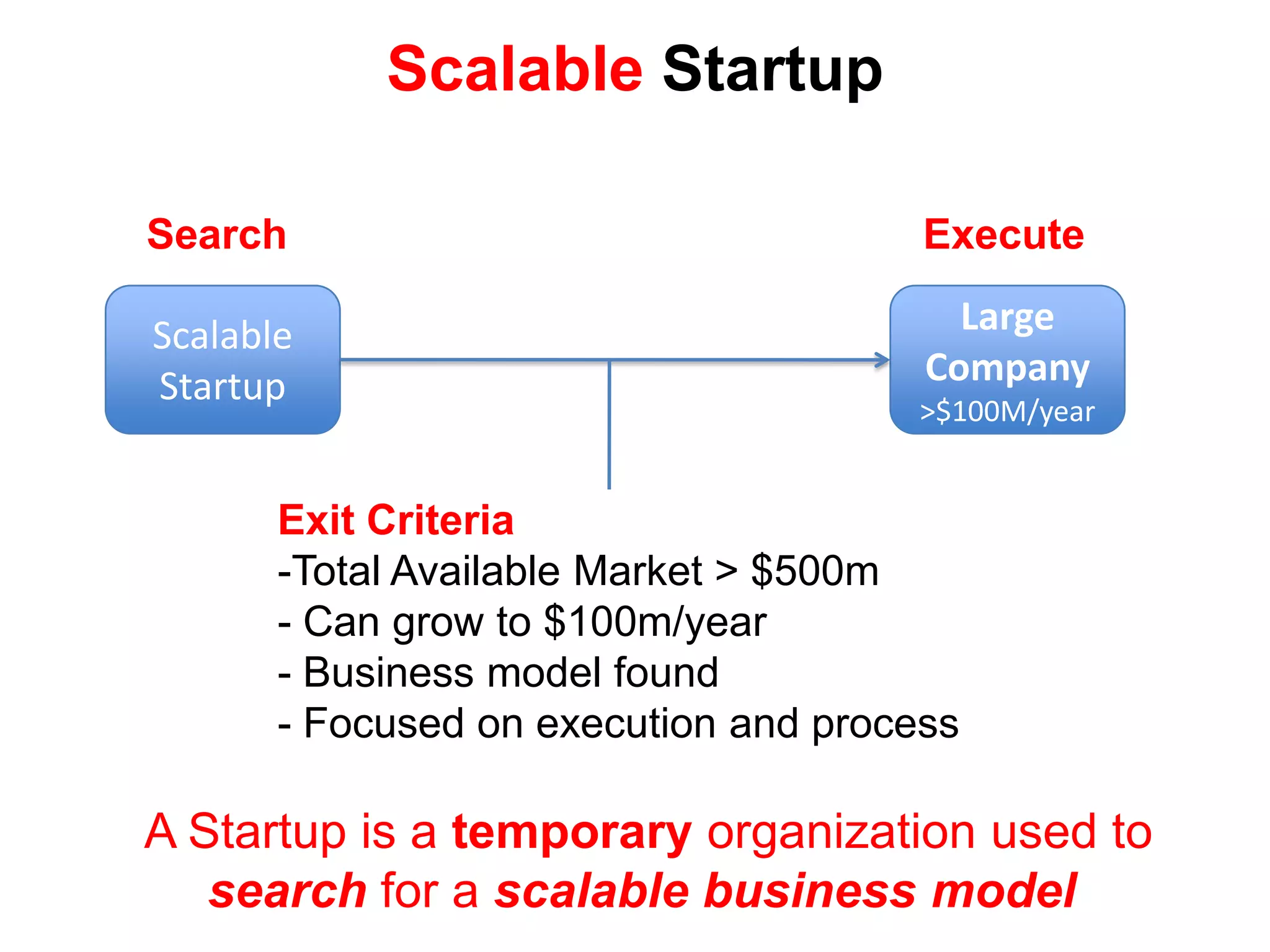
Not all businesses on the Internet are “Scalable Startups”ScalableStartupLarge Company>$100M/yearExit CriteriaTotal Available Market > $500m
 Can grow to $100m/year
 Business model found
 Focused on execution and processScalable StartupExecuteSearchA Startup is a temporary organization used tosearch for a scalable business model
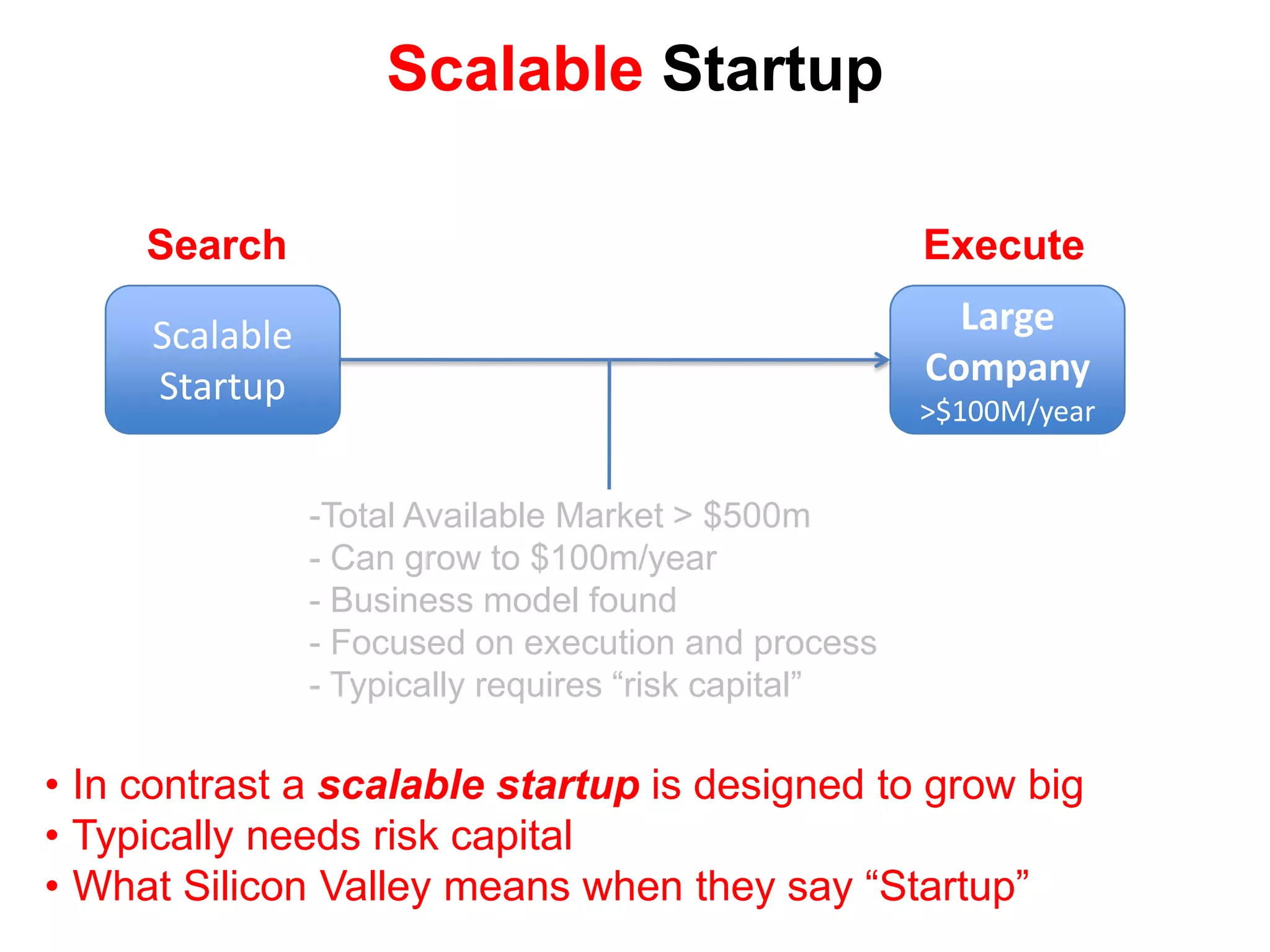
ScalableStartupLarge Company>$100M/yearTotal Available Market > $500m
 Can grow to $100m/year
 Business model found
 Focused on execution and process
 Typically requires “risk capital”Scalable StartupExecuteSearch In contrast a scalable startup is designed to grow big
 Typically needs risk capital
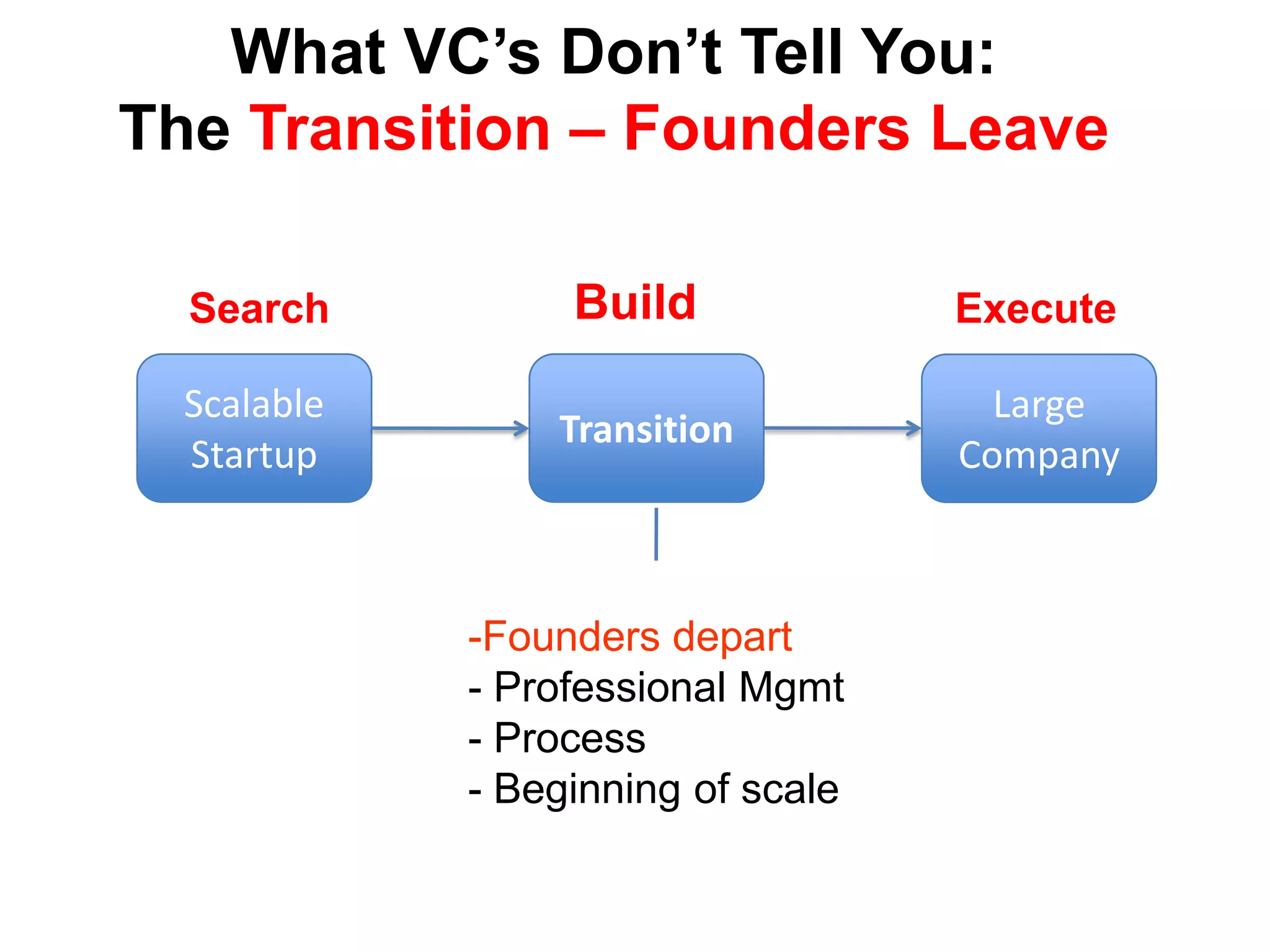
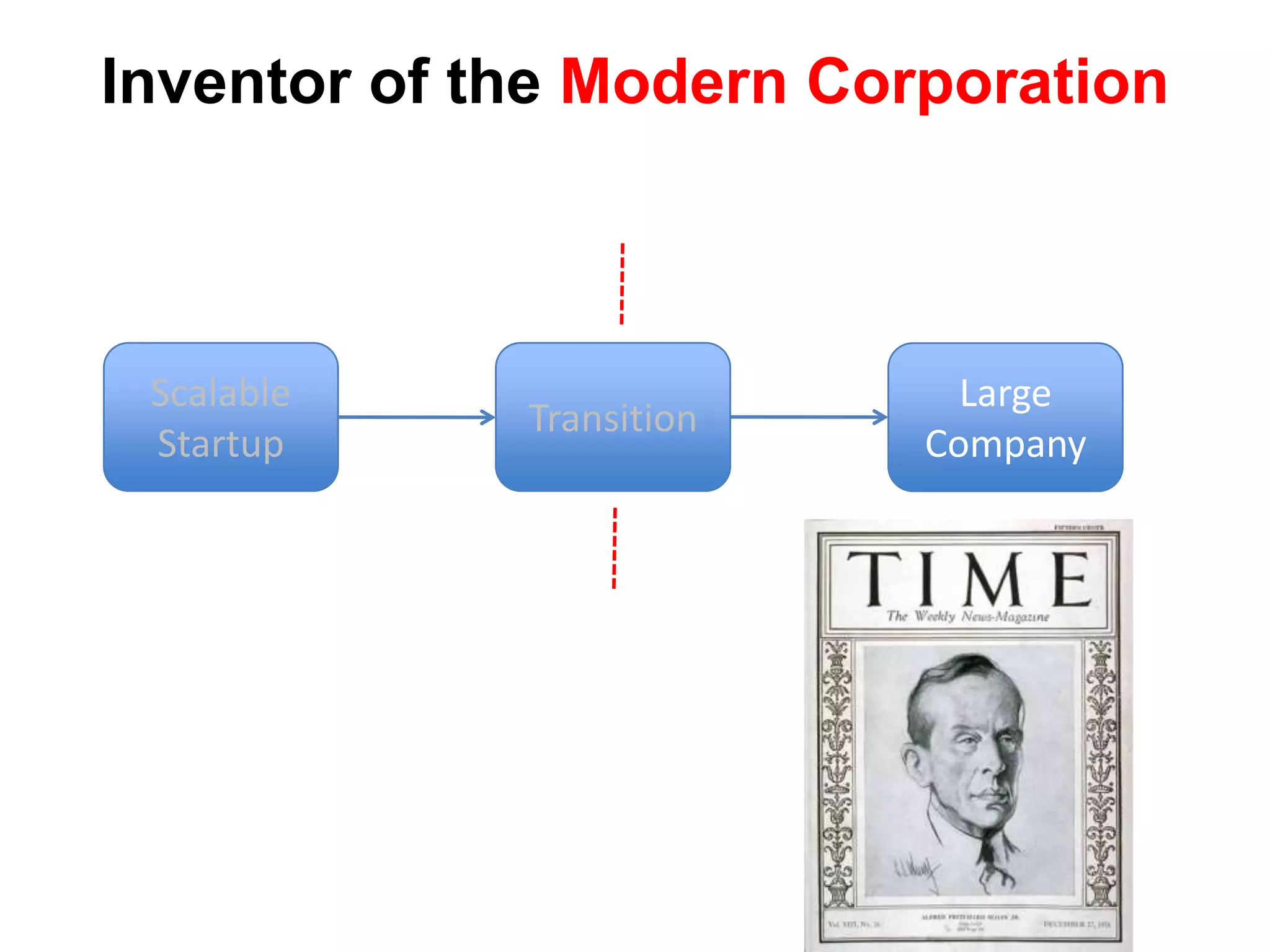
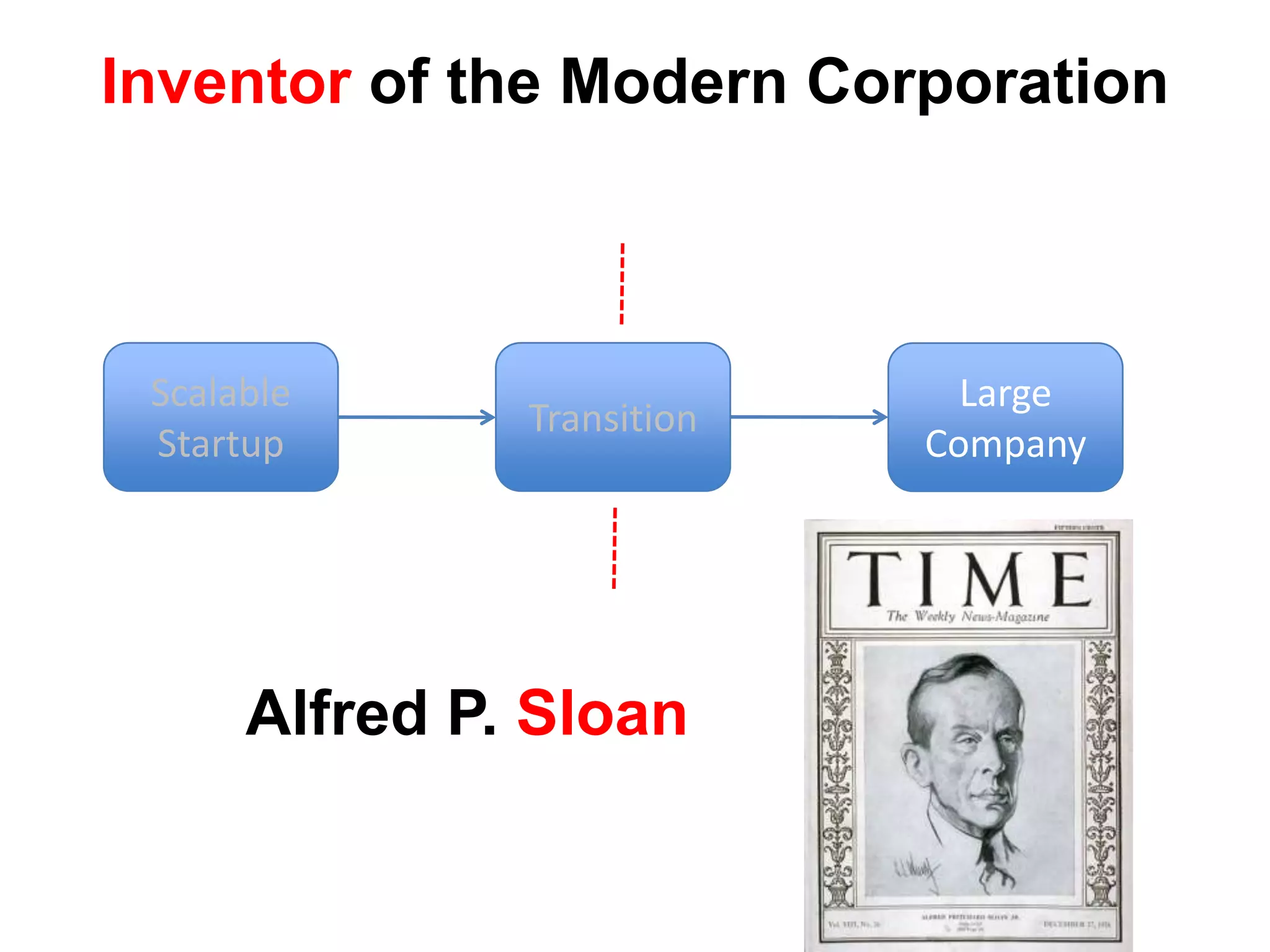
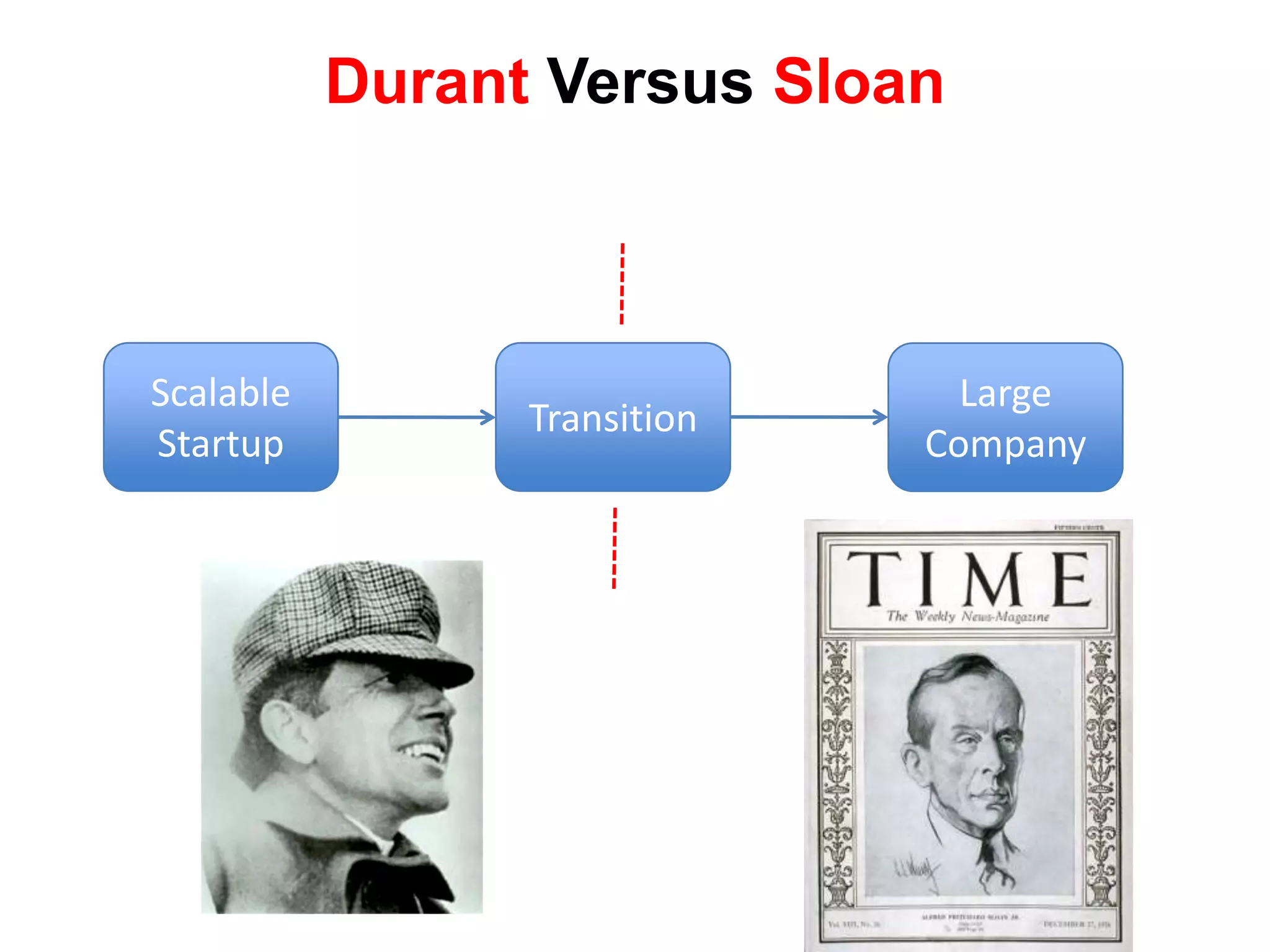
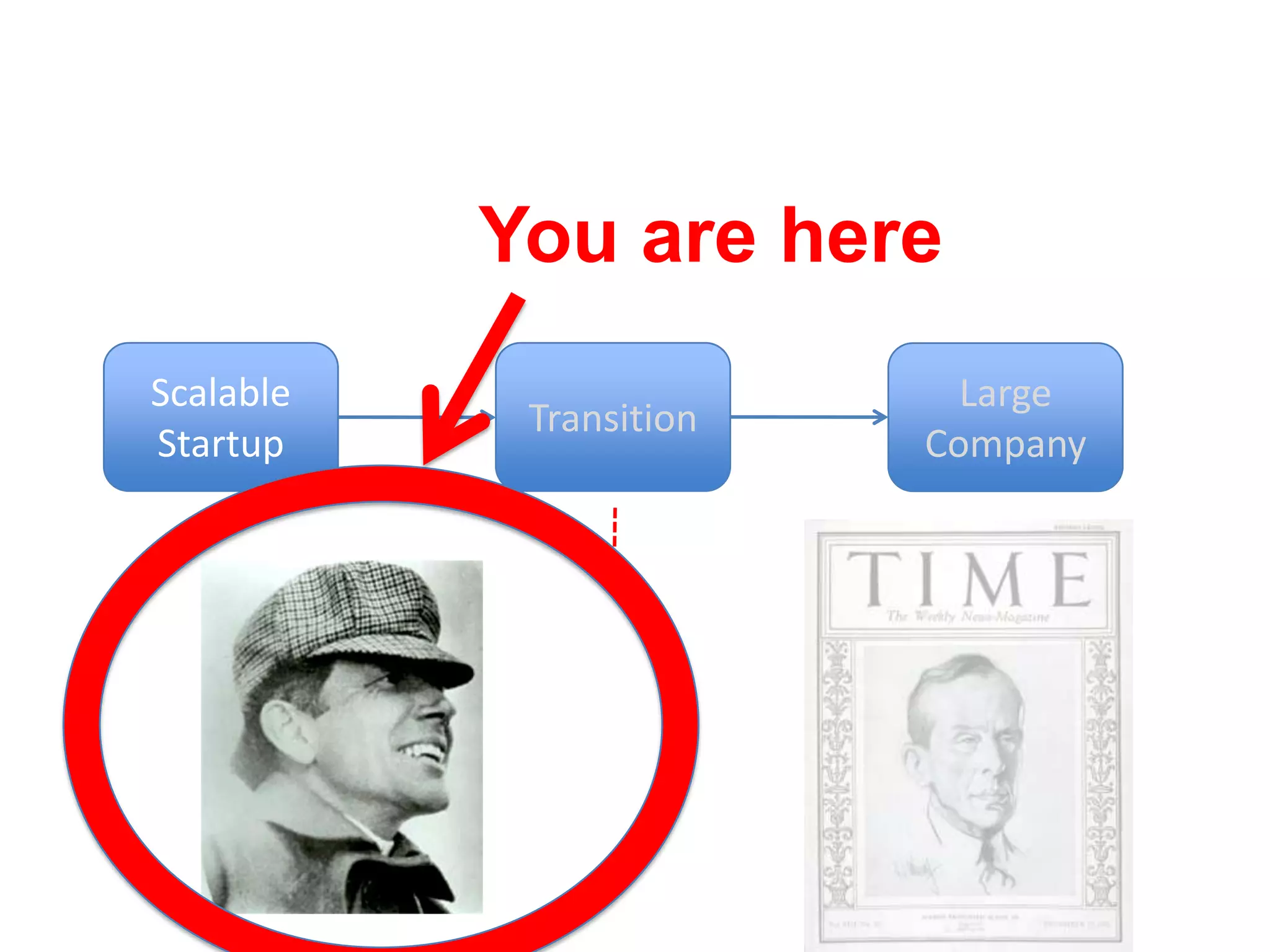
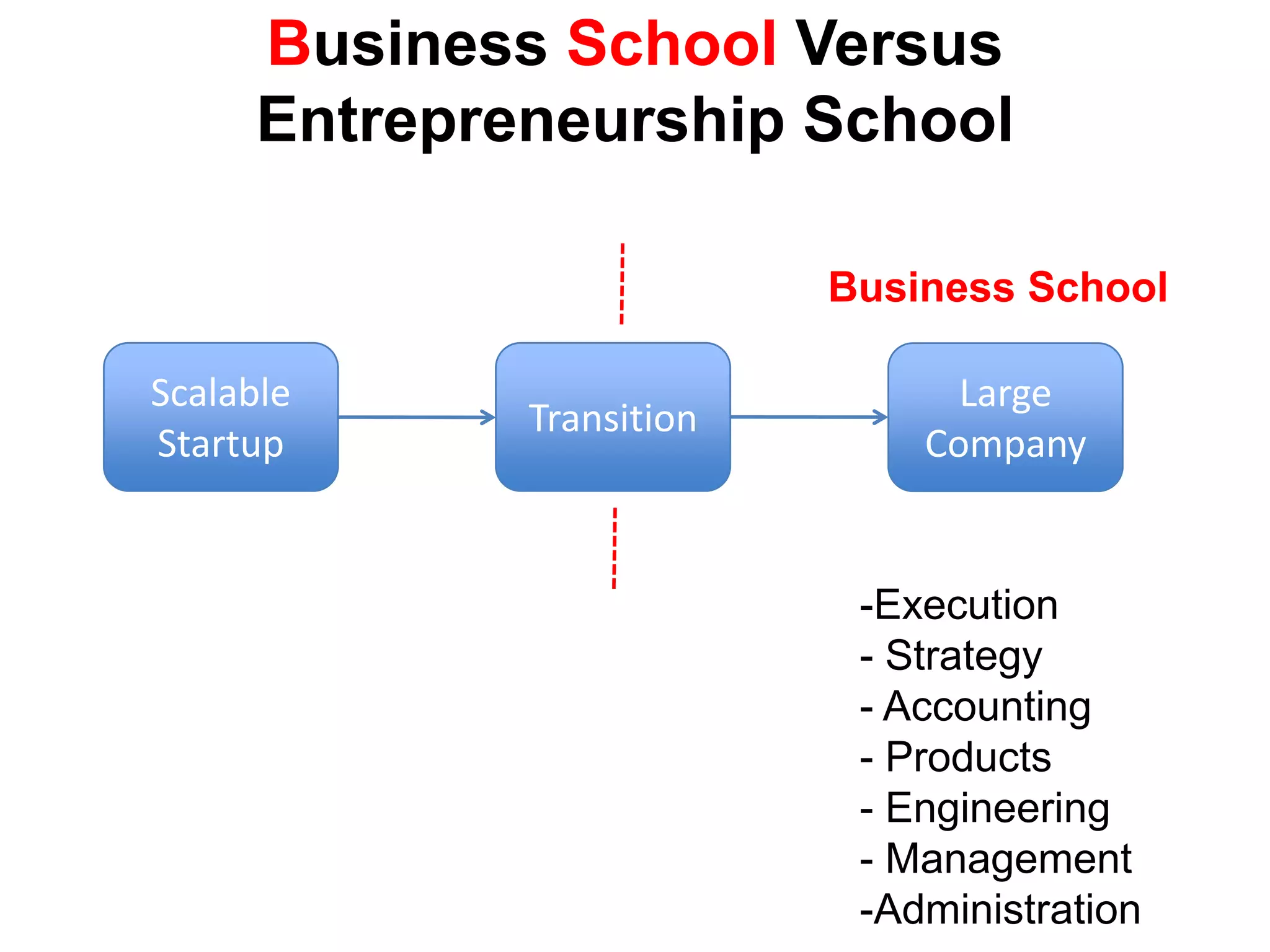
 What Silicon Valley means when they say “Startup”What VC’s Don’t Tell You:The Transition – Founders LeaveBuildExecuteSearchScalableStartupTransitionLarge CompanyFounders depart
 Professional Mgmt
 Process
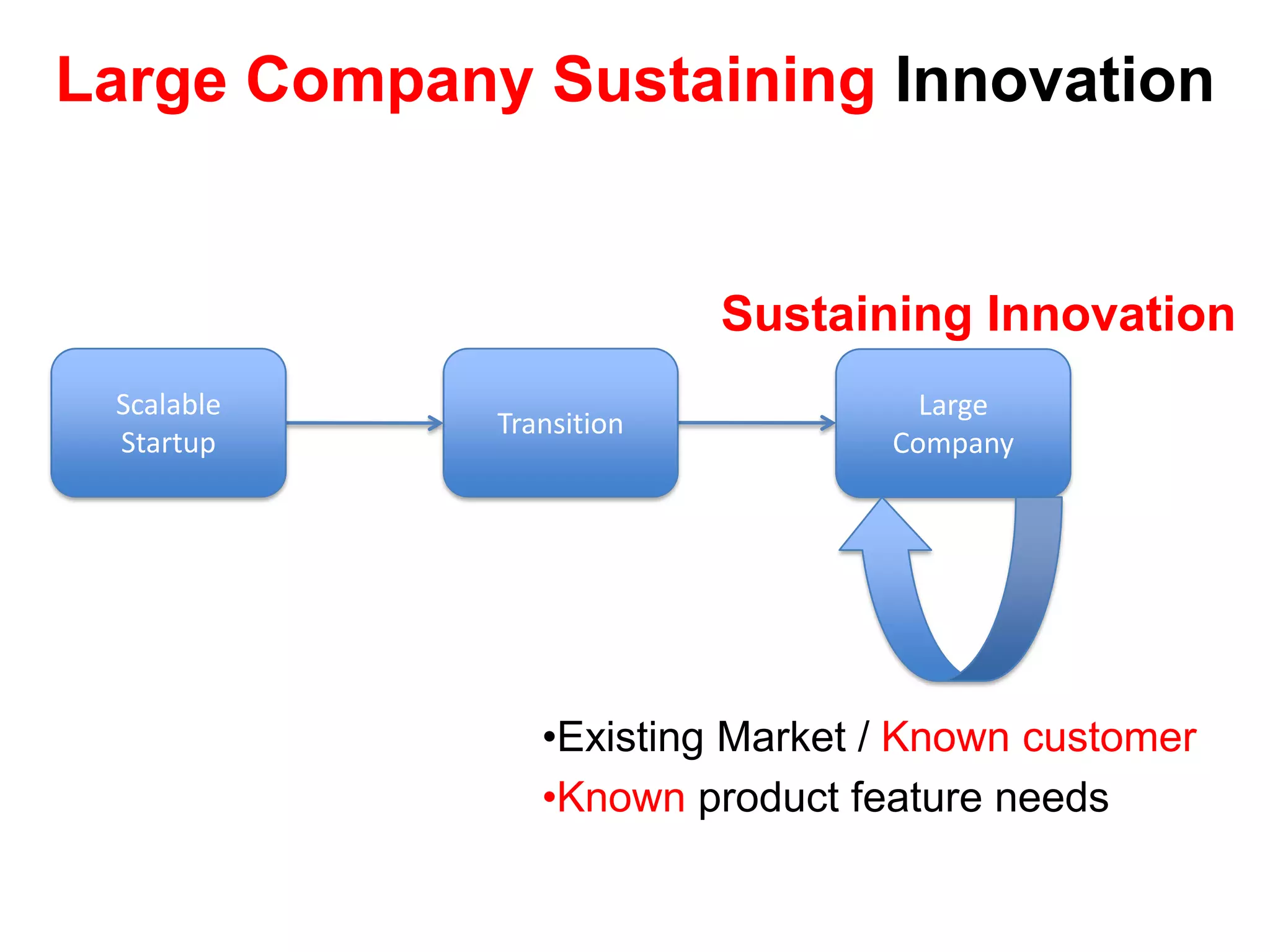
 Beginning of scaleLarge Company Sustaining InnovationSustaining InnovationTransitionScalableStartupLarge CompanyExisting Market / Known customer
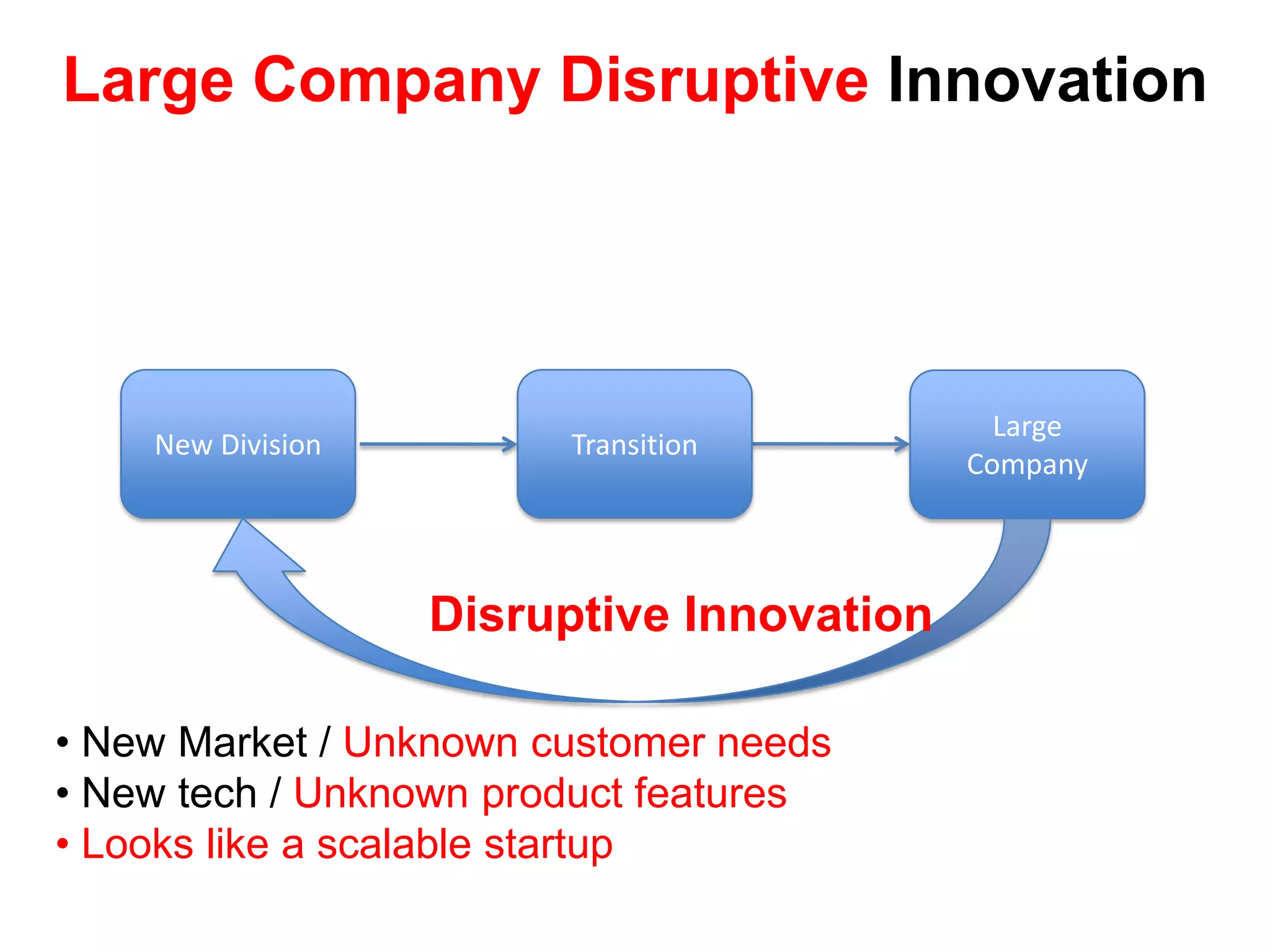
Known product feature needsLarge Company Disruptive InnovationNew DivisionTransitionLarge CompanyDisruptive Innovation New Market / Unknown customer needs
 New tech / Unknown product features
 Looks like a scalable startupStory 8:Why Startups Are Not Small Versions of Large Companies
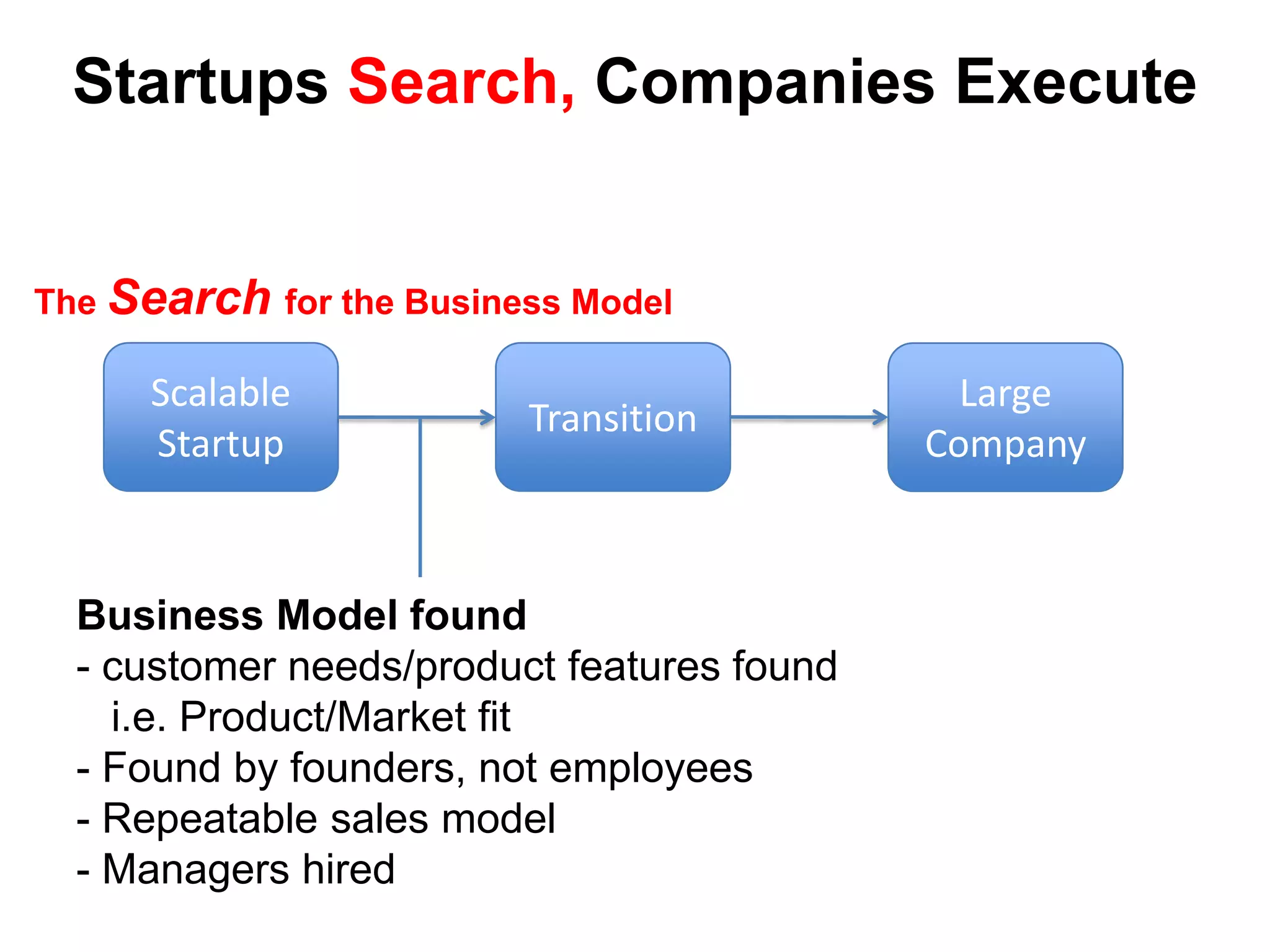
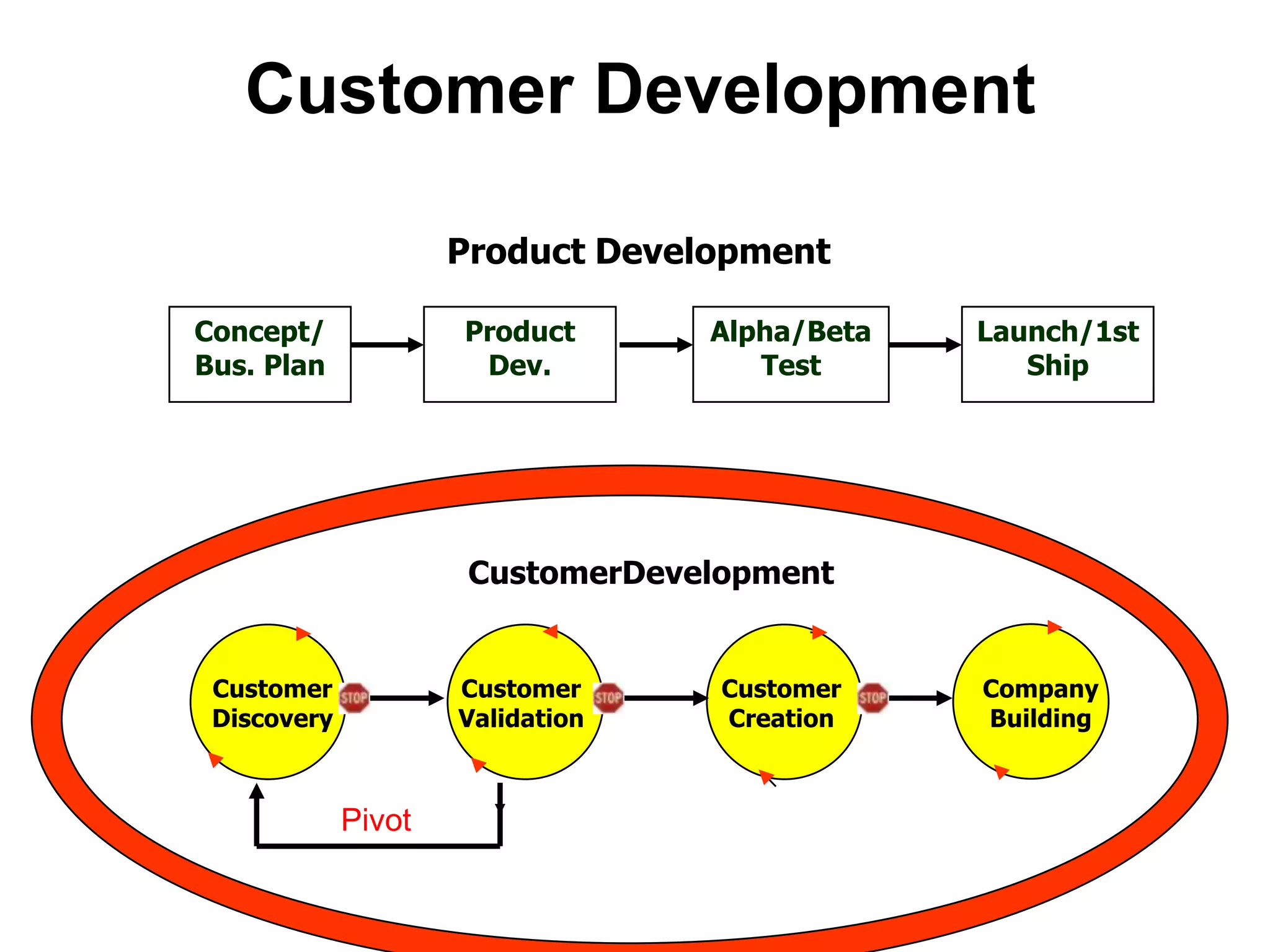
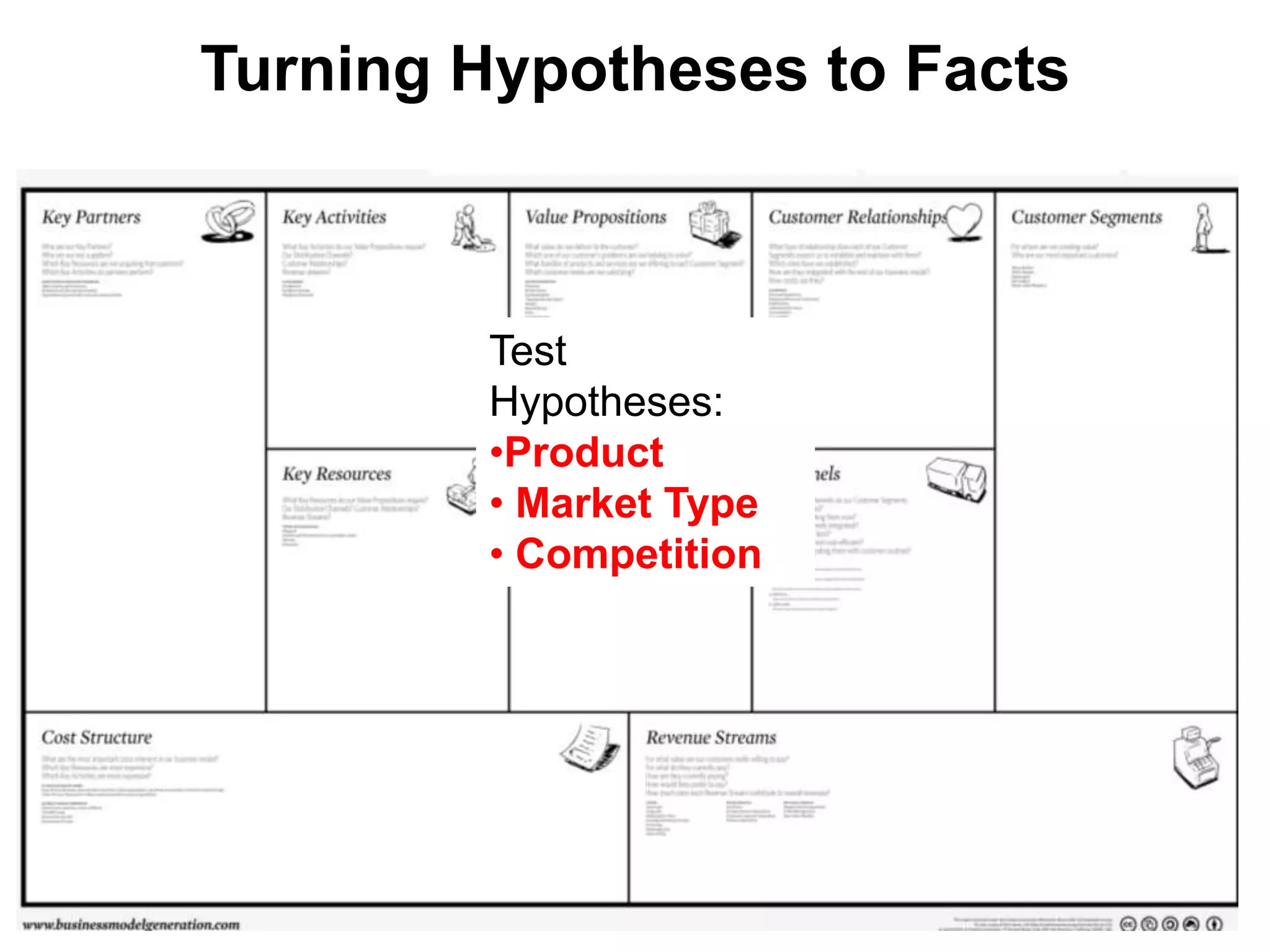
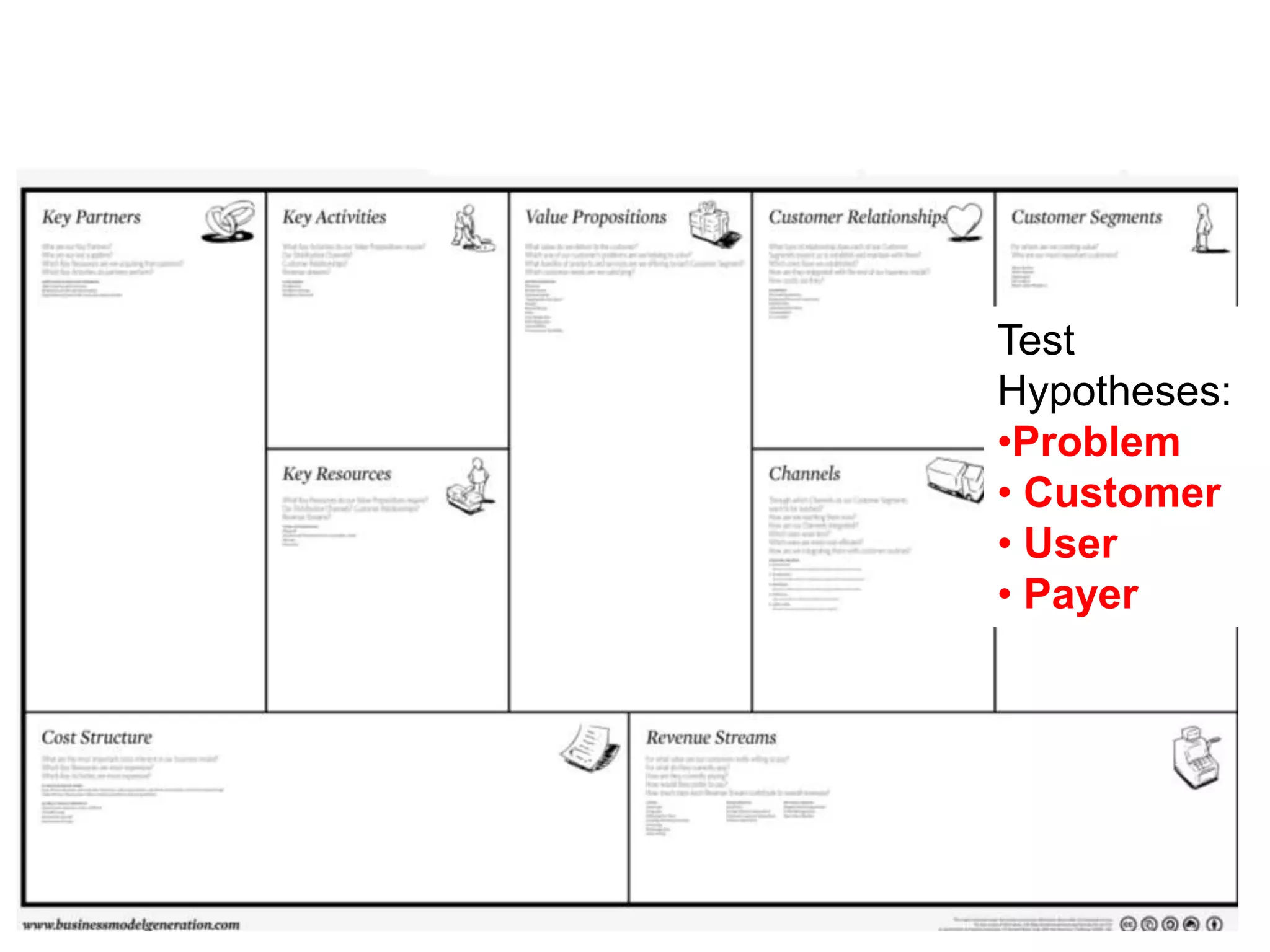
Startups Search, Companies ExecuteThe Search for the Business ModelScalableStartupTransitionLarge CompanyBusiness Model found customer needs/product features found   i.e. Product/Market fit Found by founders, not employees
 Repeatable sales model- Managers hired
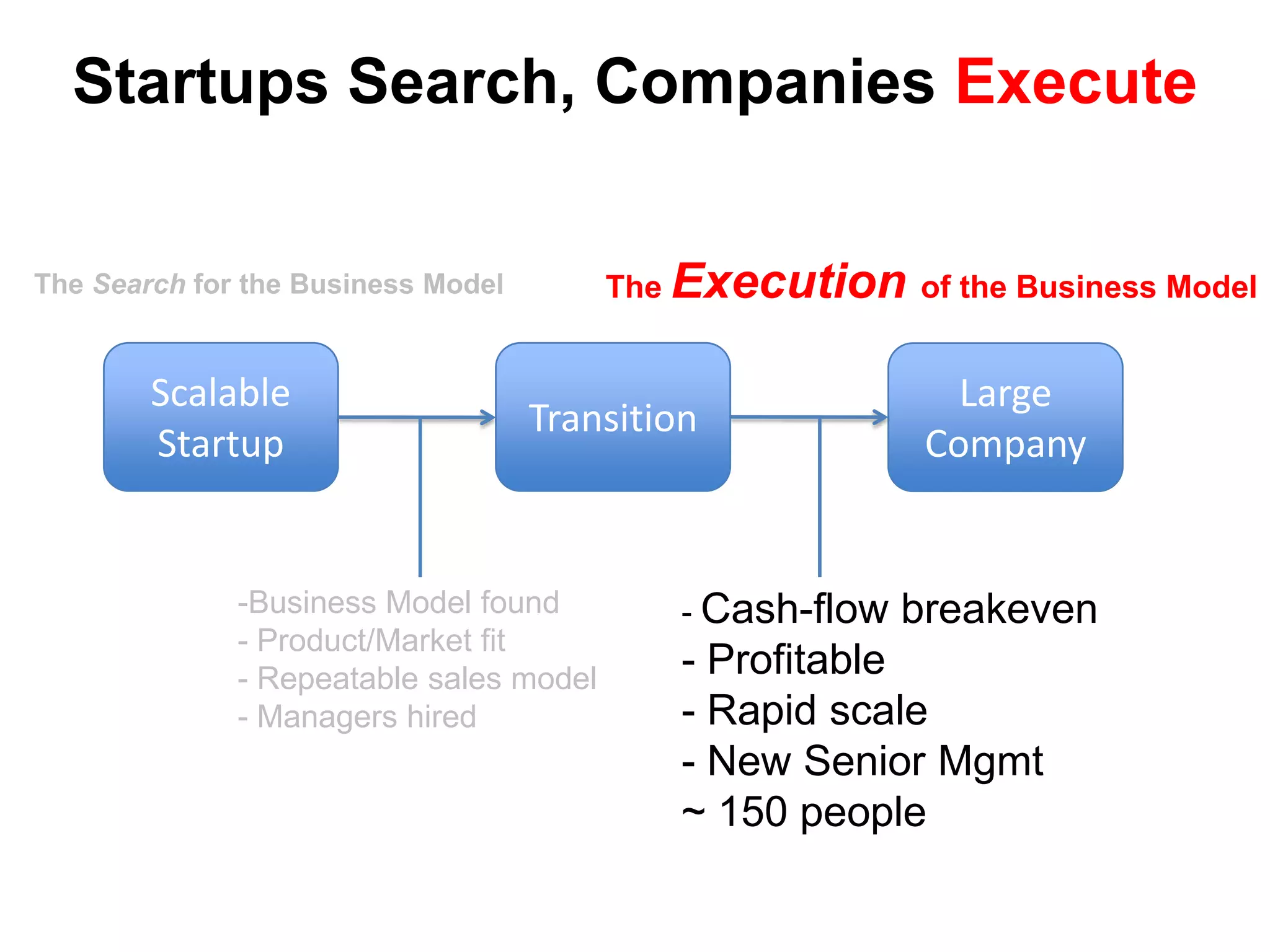
Startups Search, Companies ExecuteThe Execution of the Business ModelThe Search for the Business ModelScalableStartupTransitionLarge Company- Cash-flow breakeven- Profitable- Rapid scale- New Senior Mgmt~ 150 peopleBusiness Model found
 Product/Market fit- Repeatable sales model- Managers hired
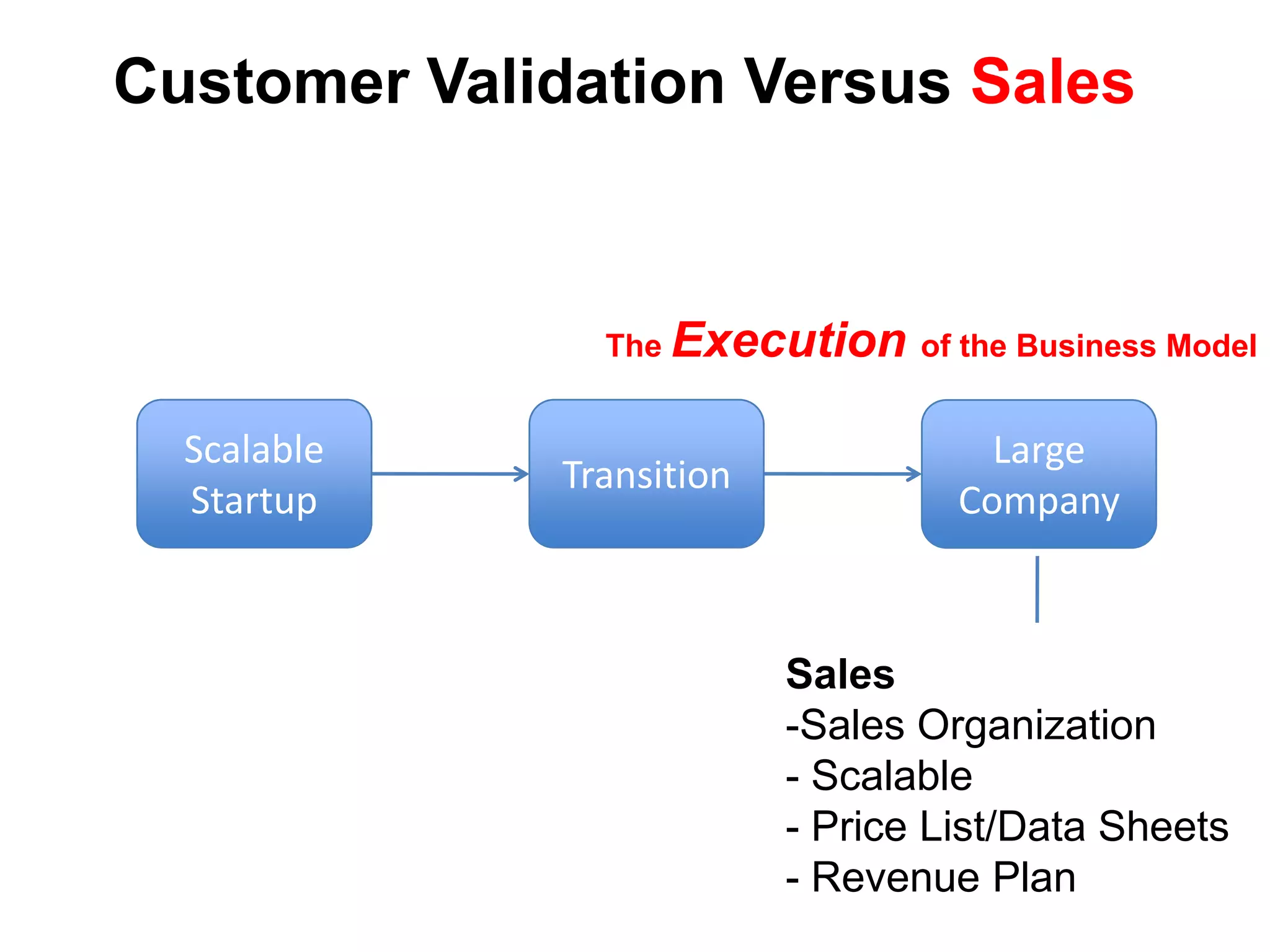
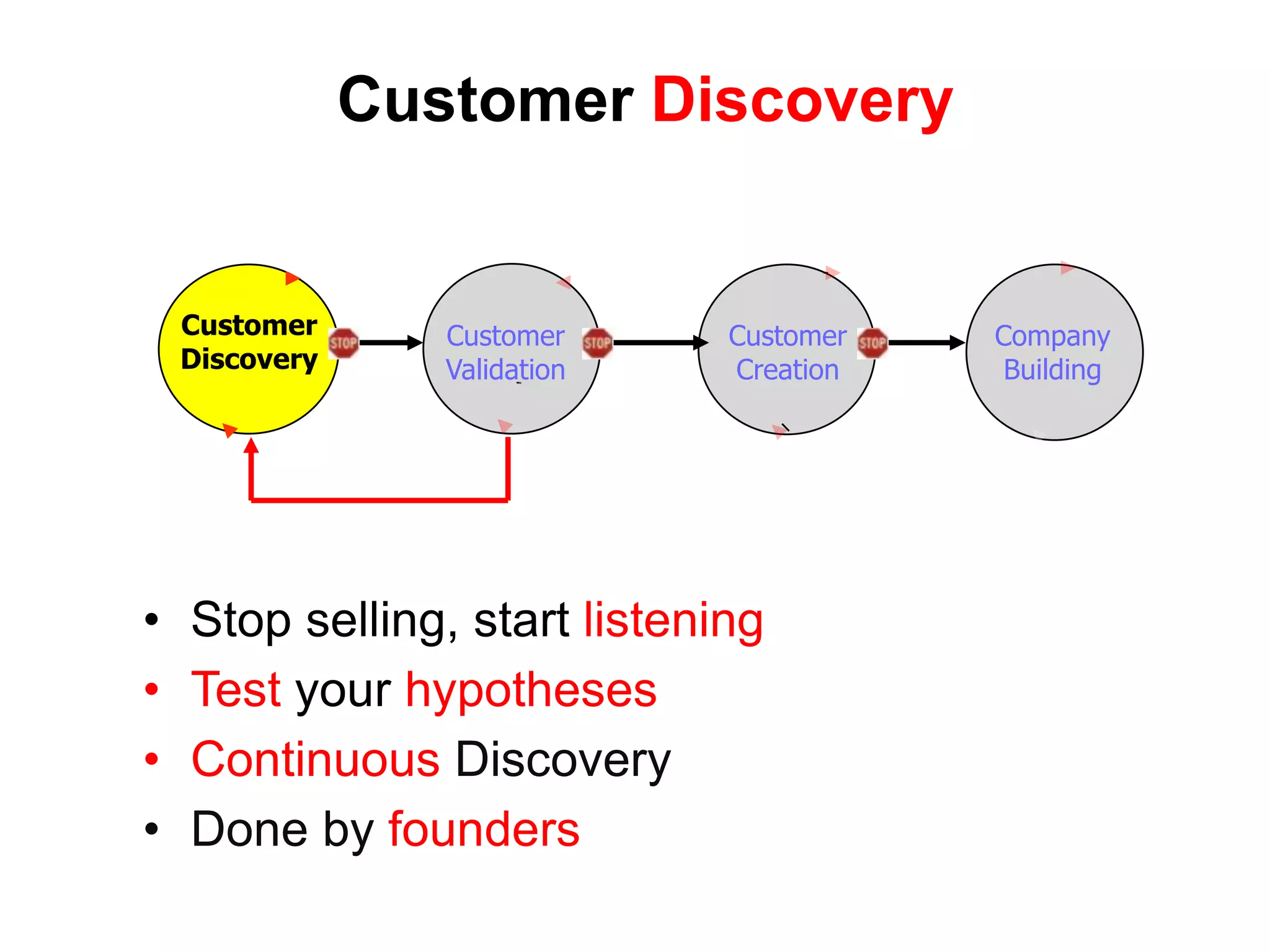
Customer Validation Versus SalesThe Execution of the Business ModelScalableStartupTransitionLargeCompanySalesSales Organization
 Scalable
 Price List/Data Sheets
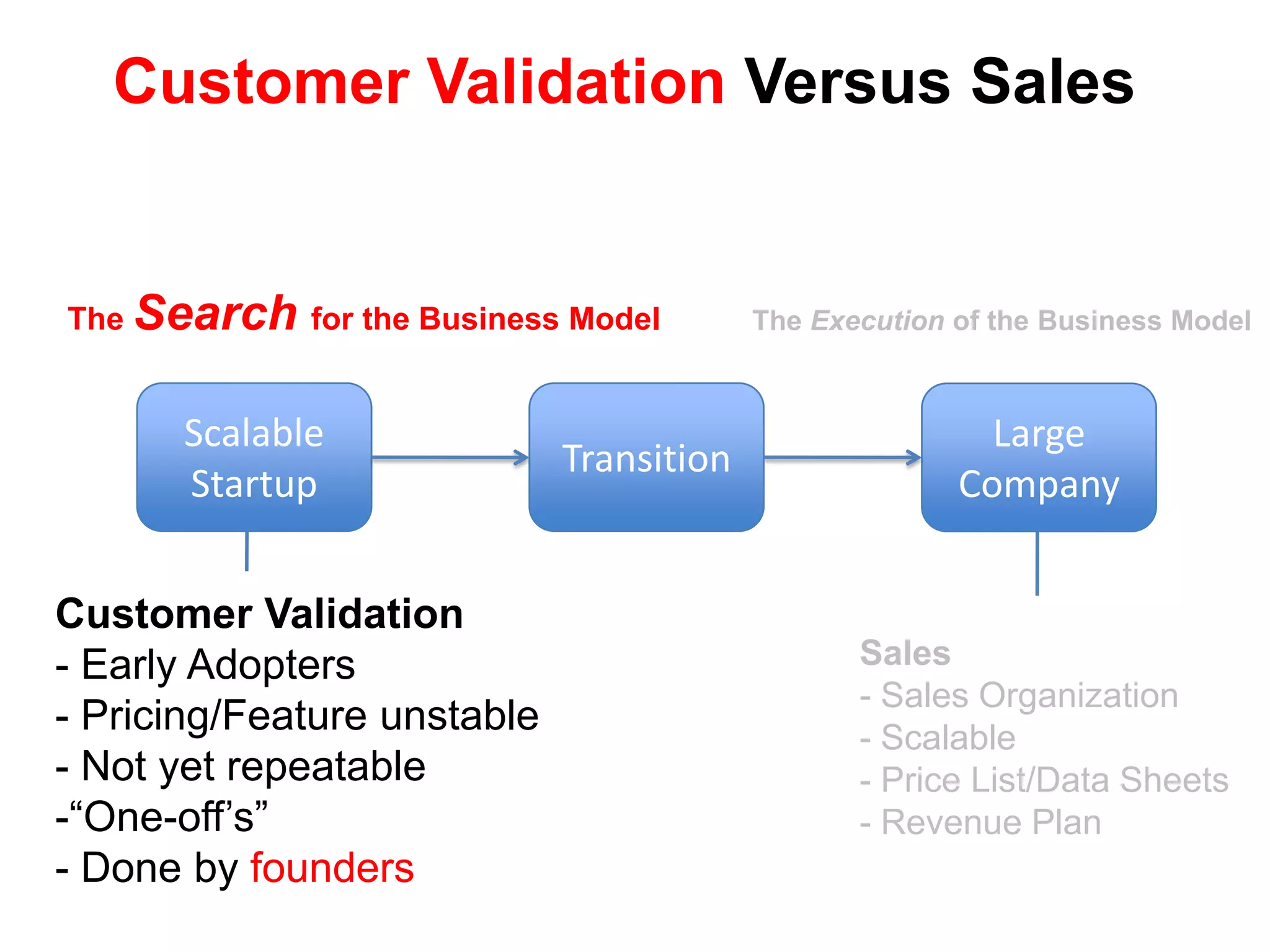
 Revenue PlanCustomer Validation Versus SalesThe Search for the Business ModelThe Execution of the Business ModelScalableStartupTransitionLargeCompanyCustomer Validation Early Adopters
 Pricing/Feature unstable
 Not yet repeatable
“One-off’s”
 Done by foundersSales Sales Organization
 Scalable
 Price List/Data Sheets
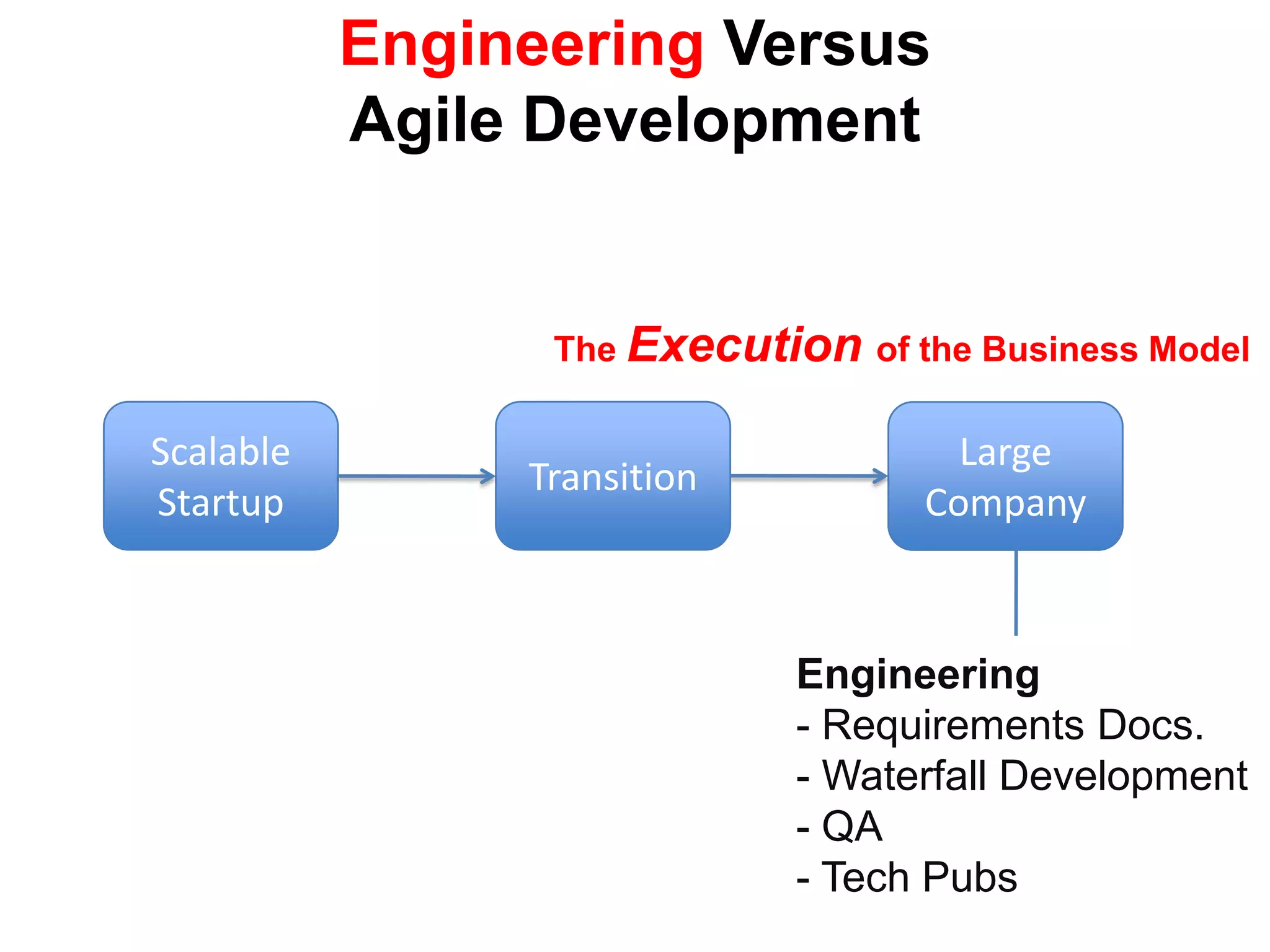
 Revenue PlanEngineering Versus Agile DevelopmentThe Execution of the Business ModelScalableStartupTransitionLarge CompanyEngineering Requirements Docs.
 Waterfall Development
 QA
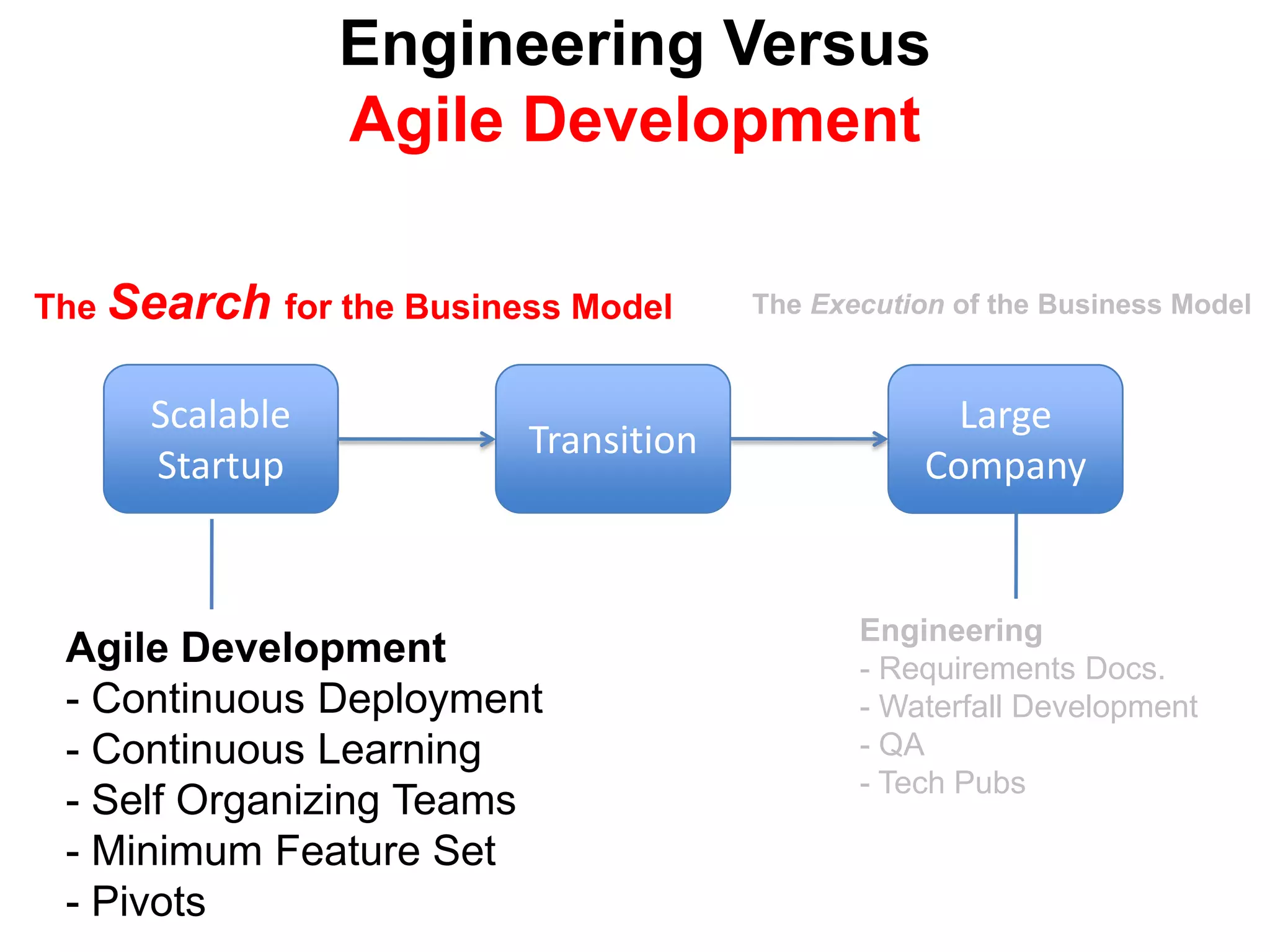
 Tech PubsEngineering Versus Agile DevelopmentThe Search for the Business ModelThe Execution of the Business ModelScalableStartupTransitionLarge CompanyEngineering Requirements Docs.
 Waterfall Development
 QA
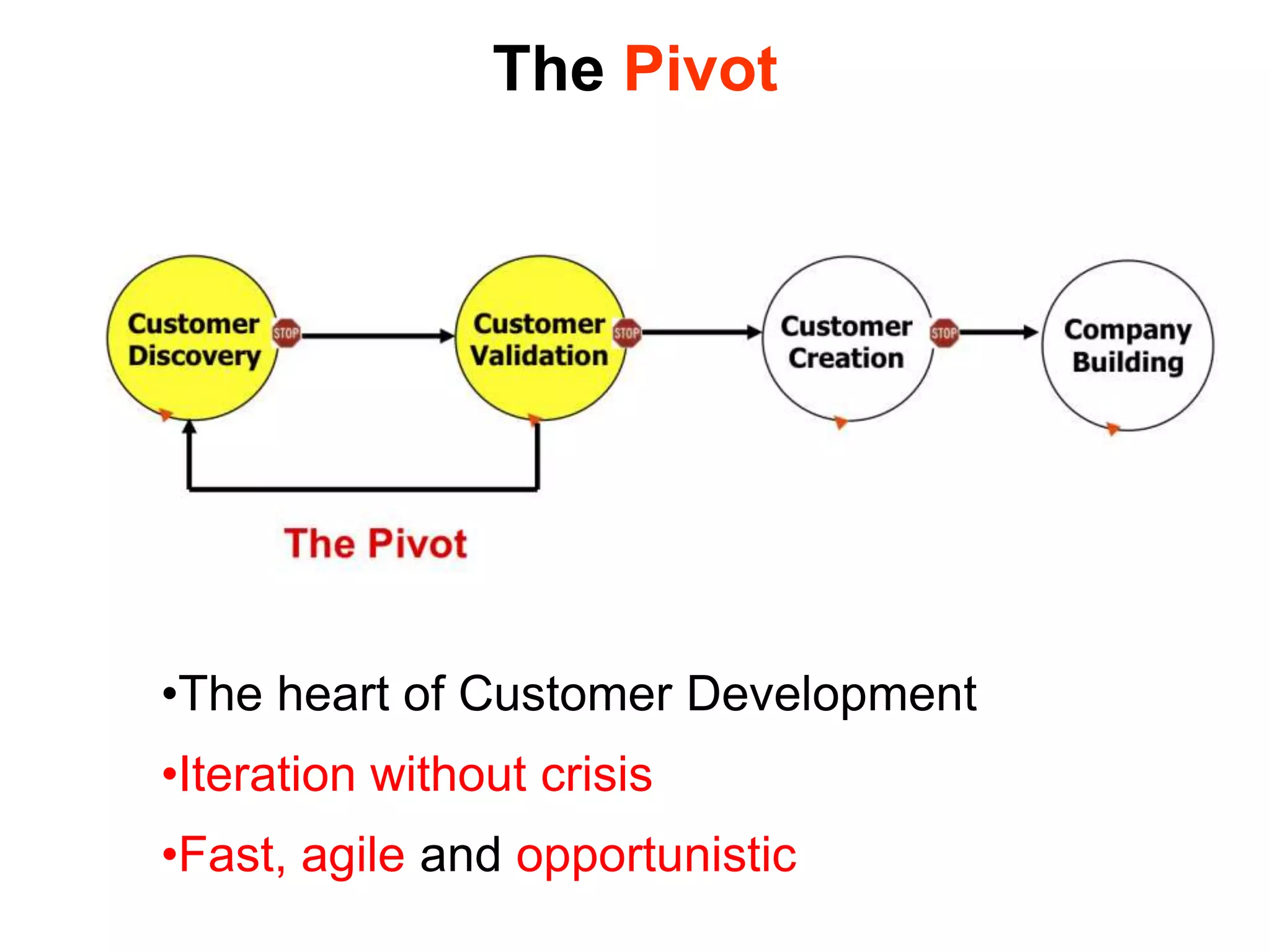
 Tech PubsAgile Development Continuous Deployment
 Continuous Learning
 Self Organizing Teams
 Minimum Feature Set
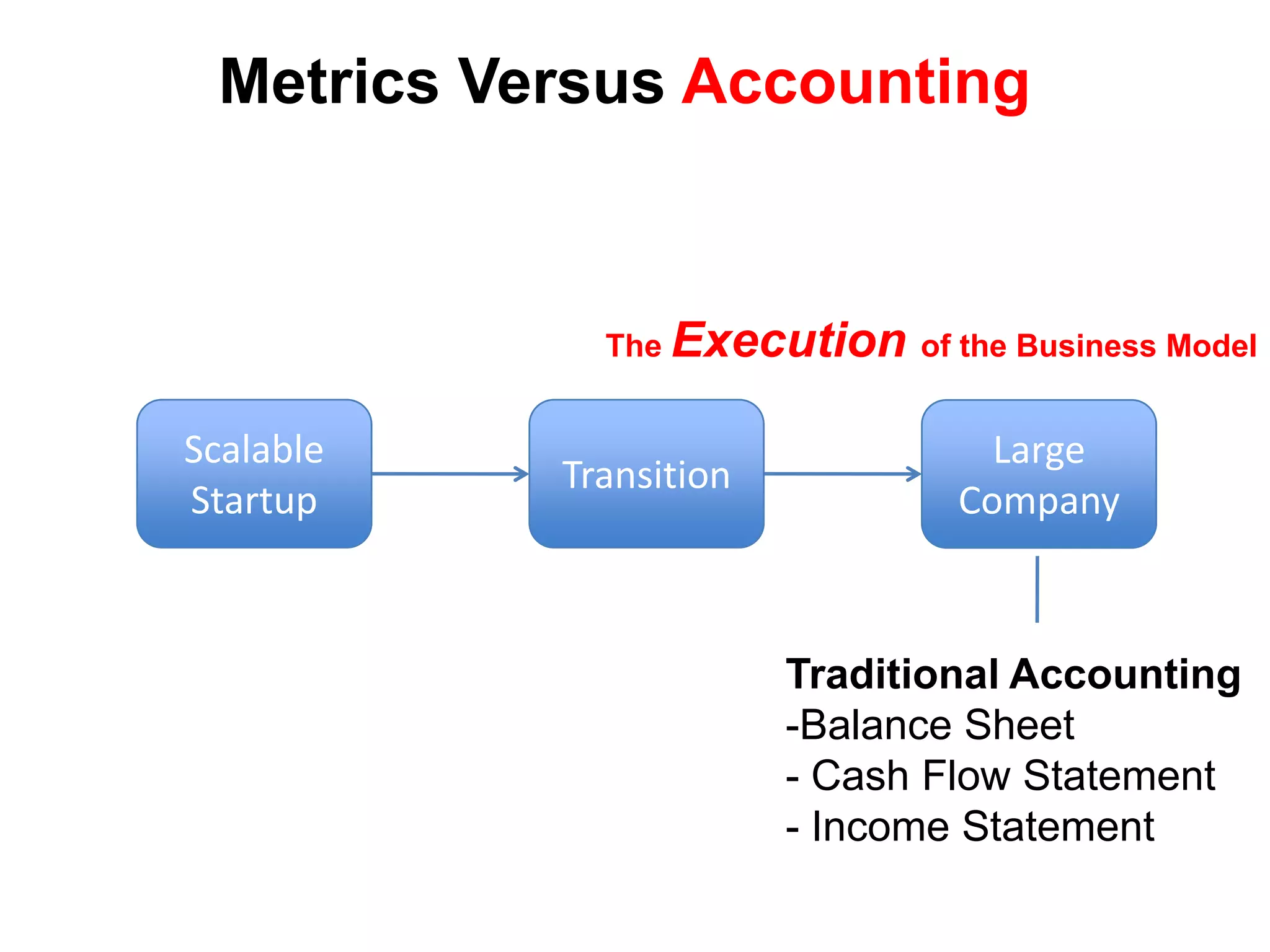
 PivotsMetrics Versus AccountingThe Execution of the Business ModelScalableStartupTransitionLargeCompanyTraditional AccountingBalance Sheet
 Cash Flow Statement
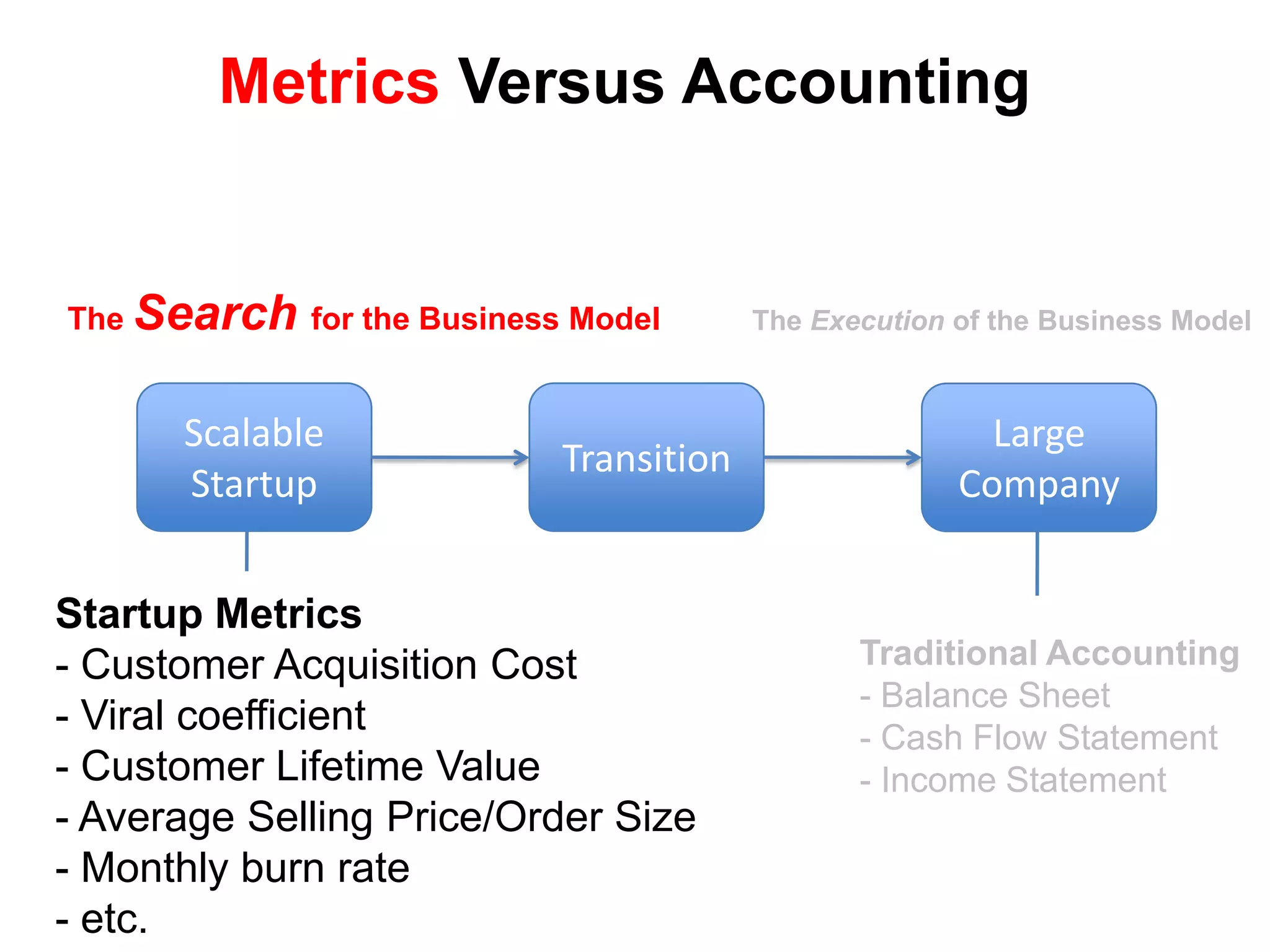
 Income StatementMetrics Versus AccountingThe Search for the Business ModelThe Execution of the Business ModelScalableStartupTransitionLargeCompanyStartup Metrics Customer Acquisition Cost
 Viral coefficient
 Customer Lifetime Value
 Average Selling Price/Order Size
 Monthly burn rate
 etc.  Traditional Accounting Balance Sheet
 Cash Flow Statement
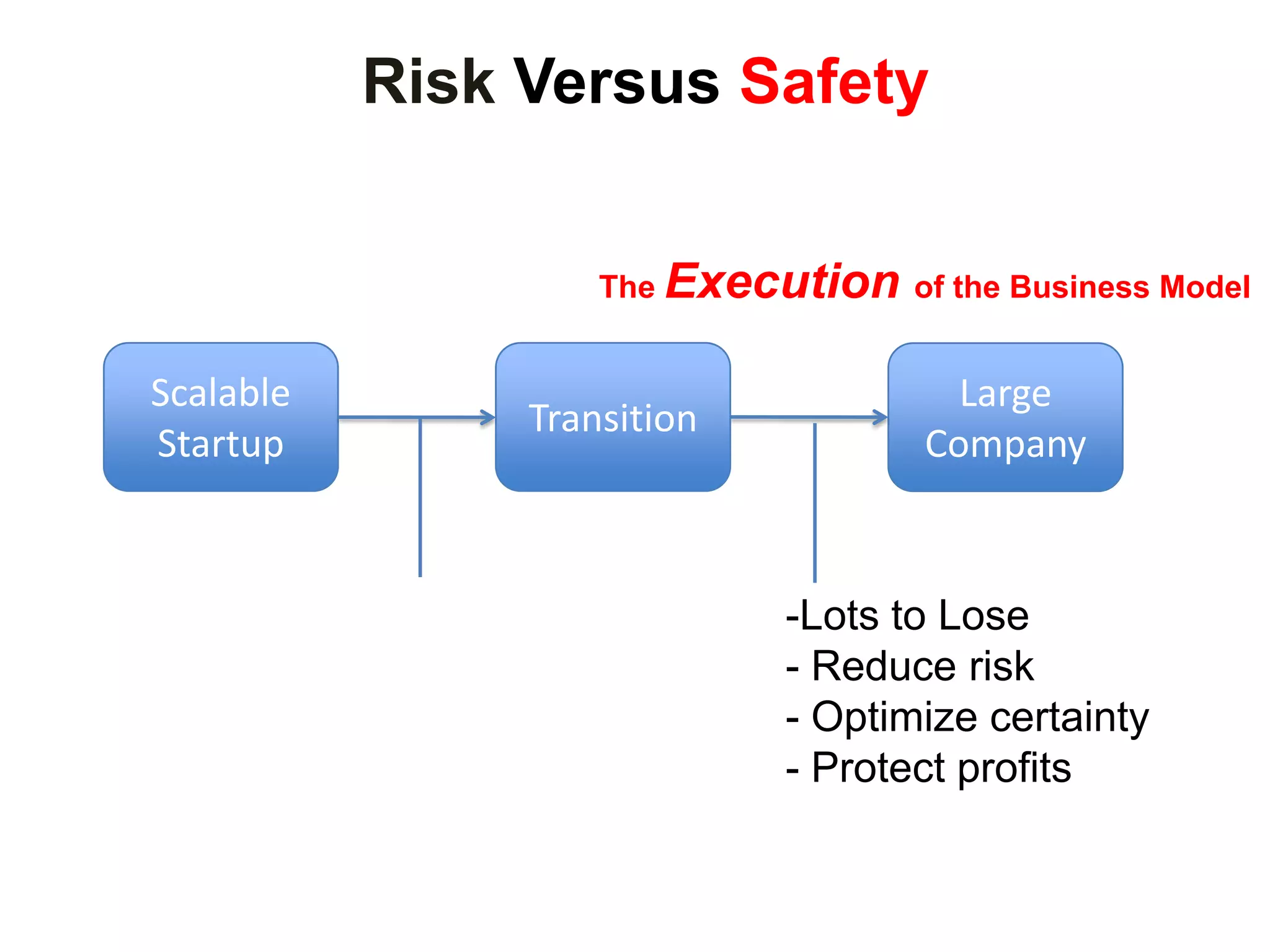
 Income StatementRisk Versus SafetyThe Execution of the Business ModelScalableStartupTransitionLarge CompanyLots to Lose
 Reduce risk
 Optimize certainty
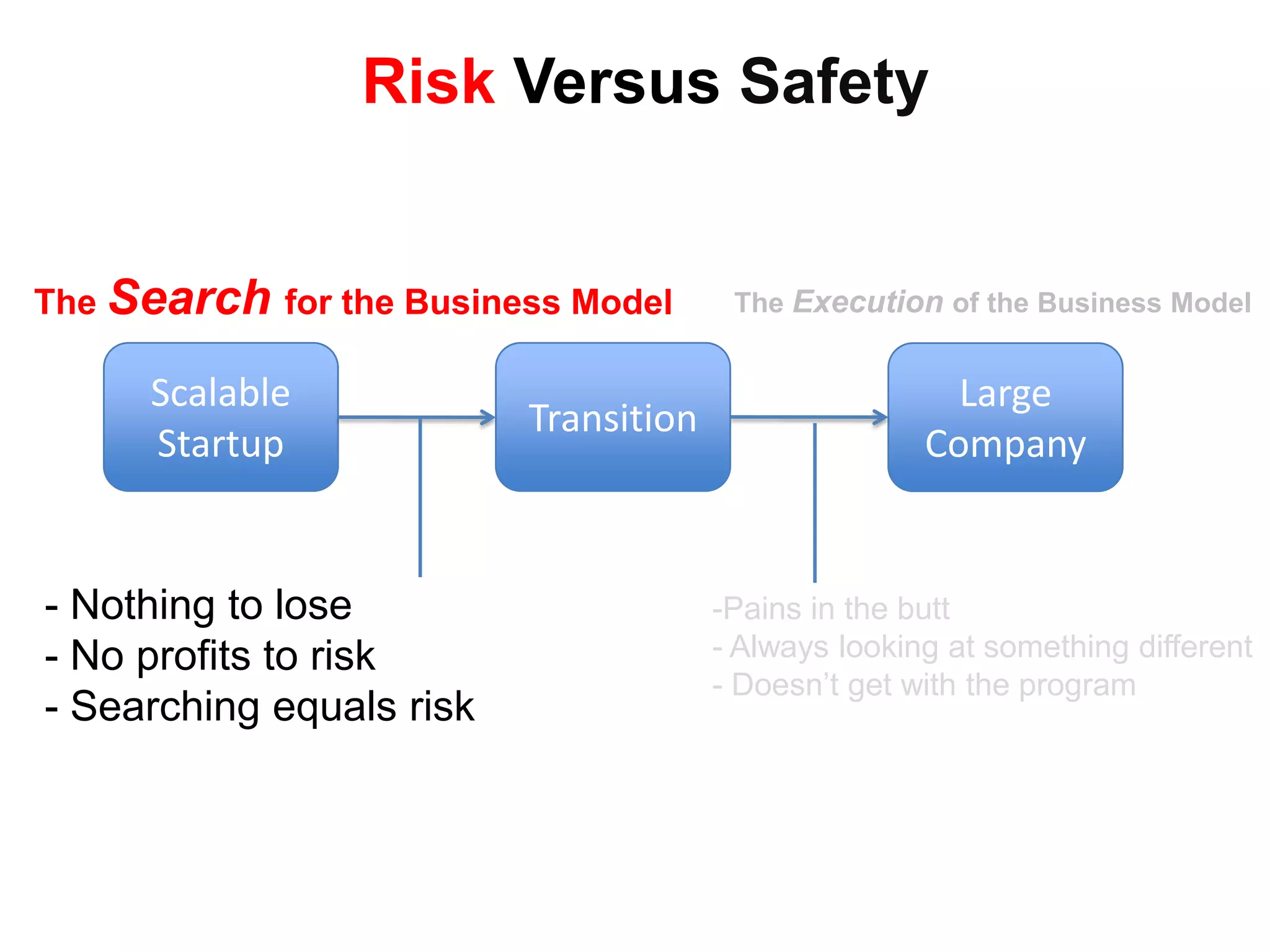
 Protect profitsRisk Versus SafetyThe Search for the Business ModelThe Execution of the Business ModelScalableStartupTransitionLarge Company Nothing to lose
 No profits to risk
 Searching equals risk
Pains in the butt
 Always looking at something different
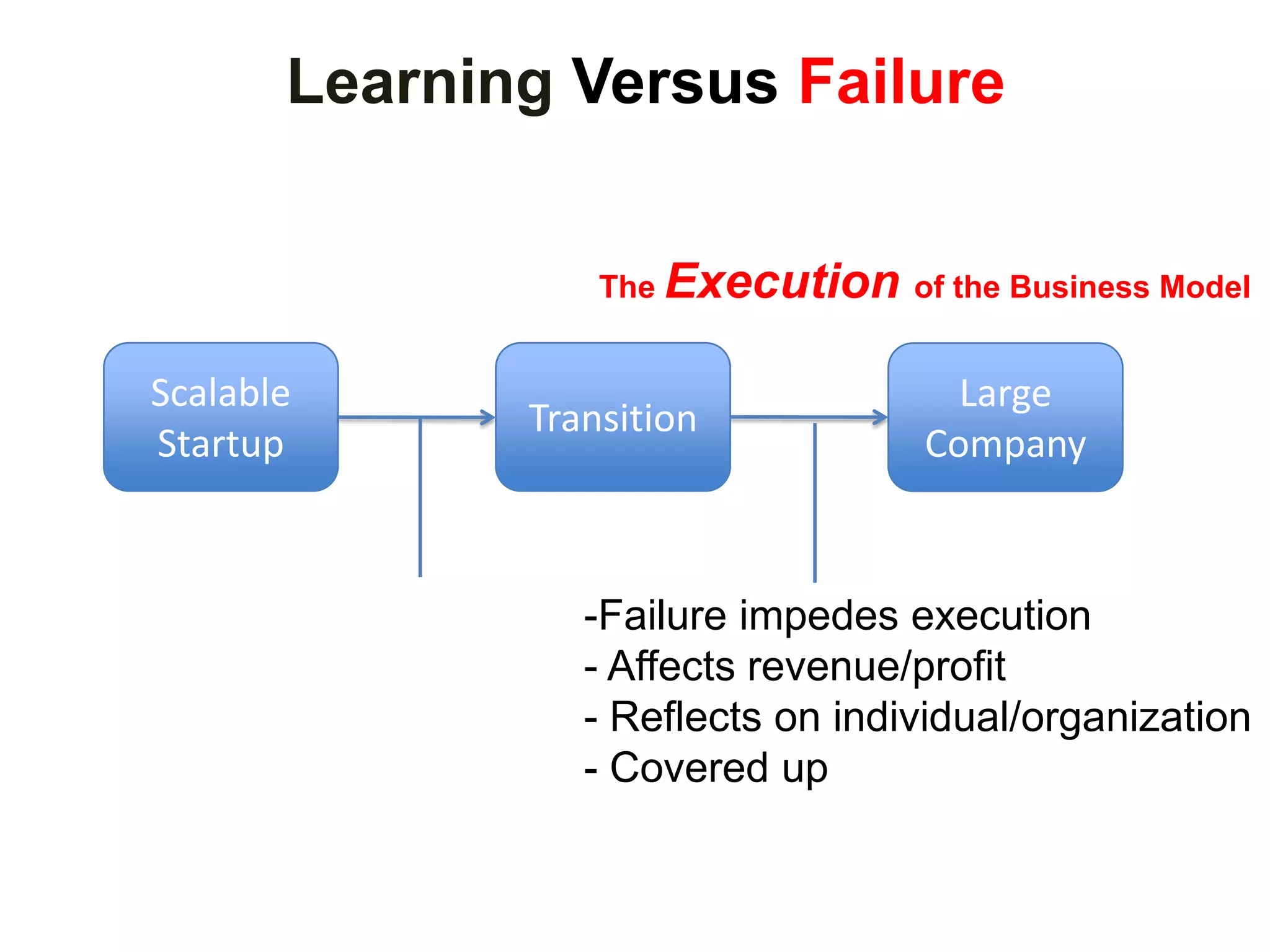
 Doesn’t get with the programLearning Versus FailureThe Execution of the Business ModelScalableStartupTransitionLarge CompanyFailure impedes execution
 Affects revenue/profit
 Reflects on individual/organization
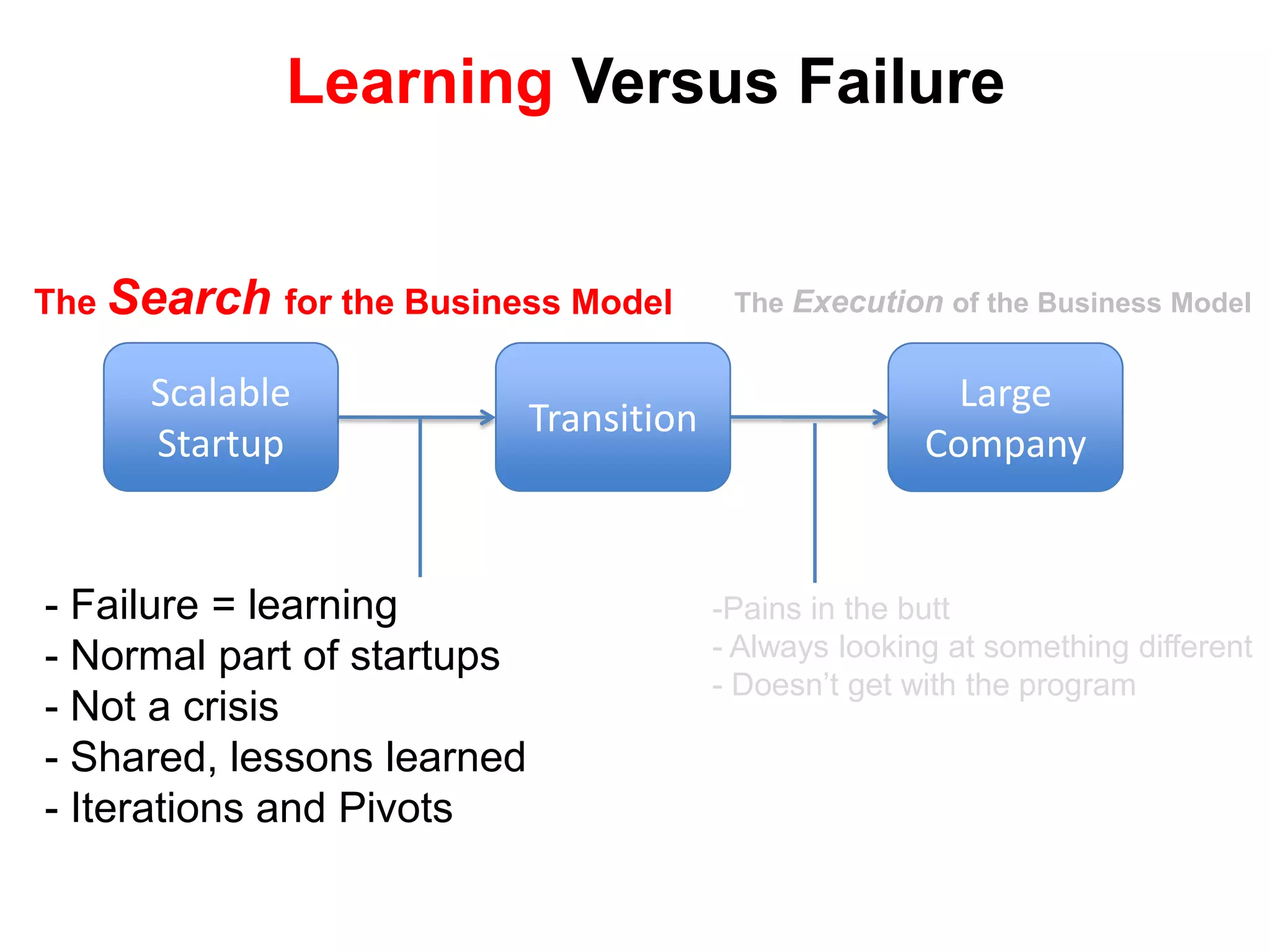
 Covered upLearning Versus FailureThe Search for the Business ModelThe Execution of the Business ModelScalableStartupTransitionLarge Company Failure = learning
 Normal part of startups
 Not a crisis
 Shared, lessons learned
 Iterations and Pivots
Pains in the butt
 Always looking at something different
 Doesn’t get with the programStory 9:Plan versus Model

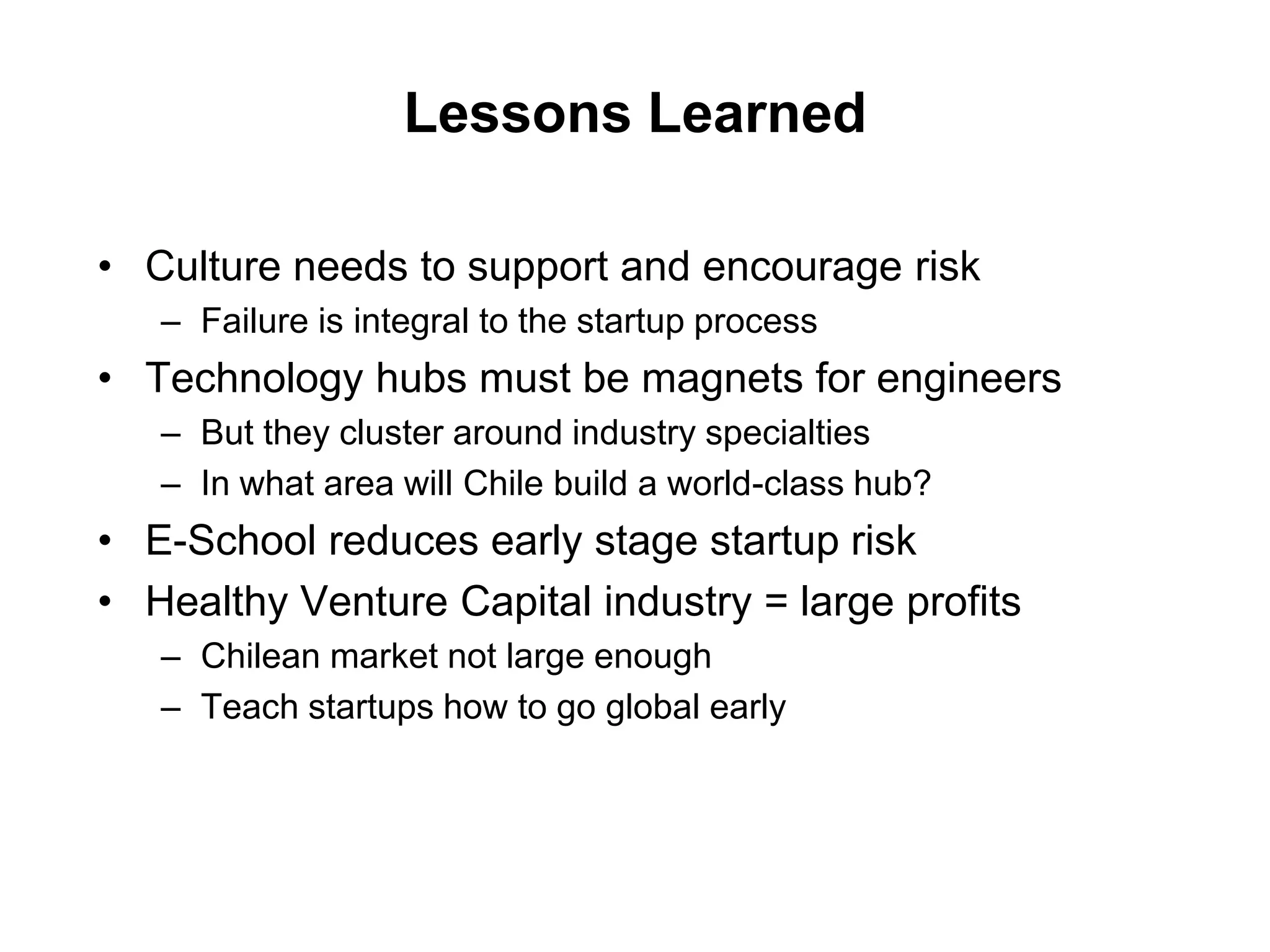
Chile 1208 generating innovation hubs 2010