Chickenpox
Prepared by
Muhammad Abrar
LEARING OBJECTS
• Definition of Chickenpox
• Etiology
• Pathogenesis
• Transmission
• Clinical Features
• Complications
• Diagnosis
• Differential Diagnosis
• Treatment
• Prevention
CHICKENPOX(VARICELLA)
• Chickenpox is a common childhood exanthema caused by human
herpes virus varicella-zoster virus (VZV) characterized by
papulovesicular rash.
• After chickenpox immunity is life long
• When a person recover from chickenpox the virus remains in the
dorsal root (sensory) ganglion the latent state for decades. As
immunity decrease in late adulthood the virus may reactivate (in
10-15% of cases) and caused the herpes zoster or shingles
PATHOGENESIS
• VZV is one of the several human herpes-viruses. It is a DNA virus.
• Incubation period is usually 14-15 days (range 10-20 days)
• Initial site of infection is the conjunctivea or upper respiratory
track
• The virus then replicates for about four to six days at a local site
in the head or neck
• Thereafter virus is transmitted throughout the body (primary
viremia)
CONTINUE
• Virus is released in large amounts one week later after a second
replication (secondary viremia) an invades the cutaneous tissues.
• When the virus leaves the capillaries and enters the epidermis,
vesicles of chickenpox appear on the skin.
TRANSMISSION
• Chickenpox is transmitted by droplets in respiratory secretions. Air
currents from an infected person to a susceptible person carry
these water droplets.
• Varicella is a contagious from 24-48 hours before the rash appears
and while un-crusted vesicles are present, which is usually 3 to 7
days.
CLINICAL FEATURES
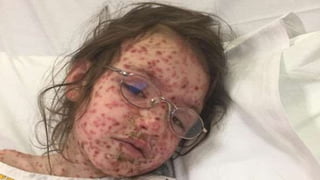
• The characteristic feature of chickenpox is vesicle.
• Exanthema develops over 3-6 days. Usually, it begins along the
hair line on the face. Rash begin as a red macules that progresses
to tiny vesicles with surrounding erythema (dew drops on a rose
petal), form pustules, become crusted, scabbed over, and leave no
scar. The rash then appears in successive crops over the trunk and
then the extremities.
CONTINUE
• In the first week there are lesions in different stages of
development (upto to 5 crops of lesions may be seen.
• Prodrome is mild with malaise and low grade fever. Temperature
rises when pox appears. Temperature is rarely above 102F,
Secondary cases (having aninfected sibling) have more severe
disease.
CONTINUE
• Child become afebrile by the end of the first week and the
cutaneous lesions start crusting and become dry and fall off.
• Adults and Infants have more severe disease but in infants due to
persisting maternal antibody, chickenpox in the first few months
may be mild. Children on high-dose corticosteroid therapy are at
greater risk of fatal chickenpox.
• In adults chickenpox also usually more severe and can be life
threatening in complicated cases.
COMPLICATIONS
• Bacterial infection of vesicular lesion is most frequent
complication of chickenpox.
• Viral sequelae of chickenpox may be involve all systems most
common are pneumonitis, (cough, dyspnea, tachypnea, rales, and
cyanosis are seen several days after the onset of rash), hepatitis,
arthritis, pericarditis, glomerulonephritis, orchitis and
involvement of the CNS (encephalitis).
CONTINUE
• Purpura fulminans
• Reye’s syndrome
• If the mother of newborn develop varicella from 6 days before 2
days after delivery the baby will get severe or fatal disease. In
such new born varicella zoster immune globulin should be given
DIAGNOSIS
• Diagnosis is usually apparent on clinical examination
(characteristic vesicular rash).
• Leukocyte counts are normal or low leukocytosis suggest
secondary bacterial infection.
• On X-ray varicella pneumonia, there are numerous bilateral
nodular densities and hyperinflation.
• The most reliable method for VZV, fluorescent antibody to
membrane antigen(FAMA )and enzyme-linked immunosorbent
assay (ELISA)
DIFFERNCIAL DIAGNOSIS
• Coxsackie-virus infection. There are fewer lesions and there is no
crusting
• Impetigo
• Papular urticarial: there is history of insact bite and rash is non
vesicular
• Scabies
TREATMENT
• Chickenpox in healthy child is not usually a serious disease.
• Maintenance of hydration is important.
• Fever can be treated with paracetamol. Asprin should not be given
to avoid the risk of reye’s syndrome.
• Calamine lotion
• Anti allergic medicine
• Antibiotics are given for the secondary skin infection.
CONTINUE
• For immunocompromised patient or a patient on corticosteroid
therapy, VZIG should be given
• In case of chickenpox there is no beneficial effect of VZIG after 4th
day post-exposure. In such a case acyclovir is given for 7 days
• Total daily dose 1500 mg in children and 4000mg in adults.
• Disease can be prevented by varicella vaccine. One dose of 0.5 ml
is recommended after 12 month to 18 month of age
Prevention
• Chickenpox is highly preventable by vaccination with
live attenuated varicella vaccine.one dose of 0.5 ml is
recommended after 12 month to 18 month of age and
the second dose should be given at ages 4 to 6 years.
• About 2% of the children who are vaccinated develop a
very mild case of chickenpox usually no more than five
to six blisters.
• Older children and adults should have two shots,with 4
to 8 weeks between the first and second shot
• .
• About 2 % of the children who are vaccinated develop a very mild
case of chicken pox usually with no more than five to six blister
• It is also possible for a person who has been vaccinated for
chickenpox to develop chickenpox at some later point in life
• It is important to keep in mind that up to 90 % of the people who
get the vaccine will not catch chickenpox.
Contraindication of Vaccine
• Anyone who is moderately to severely ill when a chickenpox shot
is scheduled or allergic to chickenpox vaccine
• Pregnant women
• Anyone with an immune system disease
• Anyone allergic to neomycin
• Patient on high dose of steroids
• Patient on chemotherapy or radiotherapy
• Anyone who had a transfusion or received blood product within
five month prior to the shot.
• Anyone allergic to gelatin,a gelatin free version of vaccine
available
PROGNOSIS
• Mortality rate in children is about 1:50,000, and in infants is
1:13,000.

chickenpox presentation

  • 1.
  • 2.
    LEARING OBJECTS • Definitionof Chickenpox • Etiology • Pathogenesis • Transmission • Clinical Features • Complications • Diagnosis • Differential Diagnosis • Treatment • Prevention
  • 3.
    CHICKENPOX(VARICELLA) • Chickenpox isa common childhood exanthema caused by human herpes virus varicella-zoster virus (VZV) characterized by papulovesicular rash. • After chickenpox immunity is life long • When a person recover from chickenpox the virus remains in the dorsal root (sensory) ganglion the latent state for decades. As immunity decrease in late adulthood the virus may reactivate (in 10-15% of cases) and caused the herpes zoster or shingles
  • 7.
    PATHOGENESIS • VZV isone of the several human herpes-viruses. It is a DNA virus. • Incubation period is usually 14-15 days (range 10-20 days) • Initial site of infection is the conjunctivea or upper respiratory track • The virus then replicates for about four to six days at a local site in the head or neck • Thereafter virus is transmitted throughout the body (primary viremia)
  • 8.
    CONTINUE • Virus isreleased in large amounts one week later after a second replication (secondary viremia) an invades the cutaneous tissues. • When the virus leaves the capillaries and enters the epidermis, vesicles of chickenpox appear on the skin.
  • 9.
    TRANSMISSION • Chickenpox istransmitted by droplets in respiratory secretions. Air currents from an infected person to a susceptible person carry these water droplets. • Varicella is a contagious from 24-48 hours before the rash appears and while un-crusted vesicles are present, which is usually 3 to 7 days.
  • 10.
    CLINICAL FEATURES • Thecharacteristic feature of chickenpox is vesicle. • Exanthema develops over 3-6 days. Usually, it begins along the hair line on the face. Rash begin as a red macules that progresses to tiny vesicles with surrounding erythema (dew drops on a rose petal), form pustules, become crusted, scabbed over, and leave no scar. The rash then appears in successive crops over the trunk and then the extremities.
  • 11.
    CONTINUE • In thefirst week there are lesions in different stages of development (upto to 5 crops of lesions may be seen. • Prodrome is mild with malaise and low grade fever. Temperature rises when pox appears. Temperature is rarely above 102F, Secondary cases (having aninfected sibling) have more severe disease.
  • 12.
    CONTINUE • Child becomeafebrile by the end of the first week and the cutaneous lesions start crusting and become dry and fall off. • Adults and Infants have more severe disease but in infants due to persisting maternal antibody, chickenpox in the first few months may be mild. Children on high-dose corticosteroid therapy are at greater risk of fatal chickenpox. • In adults chickenpox also usually more severe and can be life threatening in complicated cases.
  • 13.
    COMPLICATIONS • Bacterial infectionof vesicular lesion is most frequent complication of chickenpox. • Viral sequelae of chickenpox may be involve all systems most common are pneumonitis, (cough, dyspnea, tachypnea, rales, and cyanosis are seen several days after the onset of rash), hepatitis, arthritis, pericarditis, glomerulonephritis, orchitis and involvement of the CNS (encephalitis).
  • 14.
    CONTINUE • Purpura fulminans •Reye’s syndrome • If the mother of newborn develop varicella from 6 days before 2 days after delivery the baby will get severe or fatal disease. In such new born varicella zoster immune globulin should be given
  • 15.
    DIAGNOSIS • Diagnosis isusually apparent on clinical examination (characteristic vesicular rash). • Leukocyte counts are normal or low leukocytosis suggest secondary bacterial infection. • On X-ray varicella pneumonia, there are numerous bilateral nodular densities and hyperinflation. • The most reliable method for VZV, fluorescent antibody to membrane antigen(FAMA )and enzyme-linked immunosorbent assay (ELISA)
  • 16.
    DIFFERNCIAL DIAGNOSIS • Coxsackie-virusinfection. There are fewer lesions and there is no crusting • Impetigo • Papular urticarial: there is history of insact bite and rash is non vesicular • Scabies
  • 17.
    TREATMENT • Chickenpox inhealthy child is not usually a serious disease. • Maintenance of hydration is important. • Fever can be treated with paracetamol. Asprin should not be given to avoid the risk of reye’s syndrome. • Calamine lotion • Anti allergic medicine • Antibiotics are given for the secondary skin infection.
  • 18.
    CONTINUE • For immunocompromisedpatient or a patient on corticosteroid therapy, VZIG should be given • In case of chickenpox there is no beneficial effect of VZIG after 4th day post-exposure. In such a case acyclovir is given for 7 days • Total daily dose 1500 mg in children and 4000mg in adults. • Disease can be prevented by varicella vaccine. One dose of 0.5 ml is recommended after 12 month to 18 month of age
  • 19.
    Prevention • Chickenpox ishighly preventable by vaccination with live attenuated varicella vaccine.one dose of 0.5 ml is recommended after 12 month to 18 month of age and the second dose should be given at ages 4 to 6 years. • About 2% of the children who are vaccinated develop a very mild case of chickenpox usually no more than five to six blisters. • Older children and adults should have two shots,with 4 to 8 weeks between the first and second shot • .
  • 20.
    • About 2% of the children who are vaccinated develop a very mild case of chicken pox usually with no more than five to six blister • It is also possible for a person who has been vaccinated for chickenpox to develop chickenpox at some later point in life • It is important to keep in mind that up to 90 % of the people who get the vaccine will not catch chickenpox.
  • 21.
    Contraindication of Vaccine •Anyone who is moderately to severely ill when a chickenpox shot is scheduled or allergic to chickenpox vaccine • Pregnant women • Anyone with an immune system disease • Anyone allergic to neomycin • Patient on high dose of steroids • Patient on chemotherapy or radiotherapy • Anyone who had a transfusion or received blood product within five month prior to the shot. • Anyone allergic to gelatin,a gelatin free version of vaccine available
  • 22.
    PROGNOSIS • Mortality ratein children is about 1:50,000, and in infants is 1:13,000.