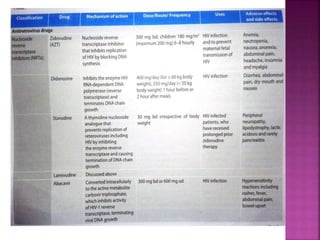
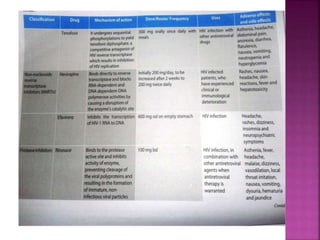
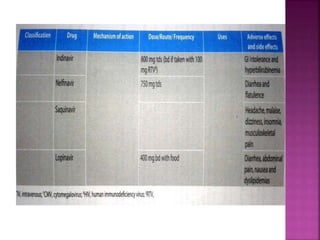
SANJAY JOSEPH
ASSISTANT PROFESSOR
B.C.M. COLLEGE OF NURSING
sanjayjoseph86@gmail.com
 Chemotherapy in infectious diseases is the use of
chemicals for the treatment of diseases caused by
bacteria and other pathogenic microorganisms ,
parasites and tumor cells.
 Antimicrobial's are any substance that kills or
inhibits the growth of a microorganism.
 All antibiotics are antimicrobials , but not all
antimicrobials are antibiotics .
 The first antibiotic was discovered by Alexander
Fleming in 1928.
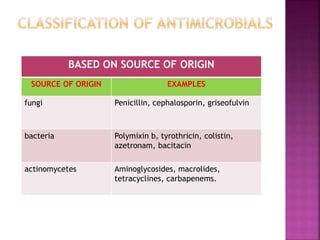
BASED ON SOURCE OF ORIGIN
SOURCE OF ORIGIN EXAMPLES
fungi Penicillin, cephalosporin, griseofulvin
bacteria Polymixin b, tyrothricin, colistin,
azetronam, bacitacin
actinomycetes Aminoglycosides, macrolides,
tetracyclines, carbapenems.
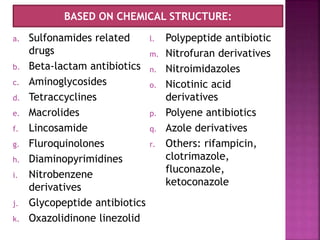
a. Sulfonamides related
drugs
b. Beta-lactam antibiotics
c. Aminoglycosides
d. Tetraccyclines
e. Macrolides
f. Lincosamide
g. Fluroquinolones
h. Diaminopyrimidines
i. Nitrobenzene
derivatives
j. Glycopeptide antibiotics
k. Oxazolidinone linezolid
l. Polypeptide antibiotic
m. Nitrofuran derivatives
n. Nitroimidazoles
o. Nicotinic acid
derivatives
p. Polyene antibiotics
q. Azole derivatives
r. Others: rifampicin,
clotrimazole,
fluconazole,
ketoconazole
BASED ON CHEMICAL STRUCTURE:
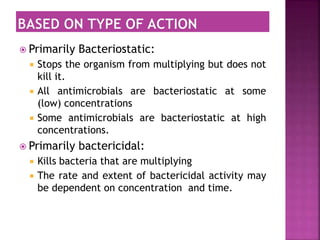
 Primarily Bacteriostatic:
 Stops the organism from multiplying but does not
kill it.
 All antimicrobials are bacteriostatic at some
(low) concentrations
 Some antimicrobials are bacteriostatic at high
concentrations.
 Primarily bactericidal:
 Kills bacteria that are multiplying
 The rate and extent of bactericidal activity may
be dependent on concentration and time.
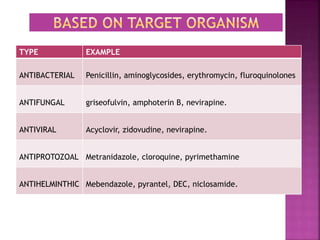
TYPE EXAMPLE
ANTIBACTERIAL Penicillin, aminoglycosides, erythromycin, fluroquinolones
ANTIFUNGAL griseofulvin, amphoterin B, nevirapine.
ANTIVIRAL Acyclovir, zidovudine, nevirapine.
ANTIPROTOZOAL Metranidazole, cloroquine, pyrimethamine
ANTIHELMINTHIC Mebendazole, pyrantel, DEC, niclosamide.
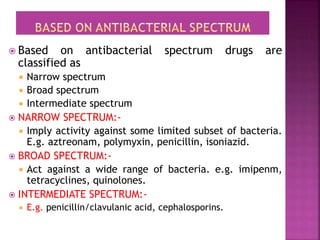
 Based on antibacterial spectrum drugs are
classified as
 Narrow spectrum
 Broad spectrum
 Intermediate spectrum
 NARROW SPECTRUM:-
 Imply activity against some limited subset of bacteria.
E.g. aztreonam, polymyxin, penicillin, isoniazid.
 BROAD SPECTRUM:-
 Act against a wide range of bacteria. e.g. imipenm,
tetracyclines, quinolones.
 INTERMEDIATE SPECTRUM:-
 E.g. penicillin/clavulanic acid, cephalosporins.
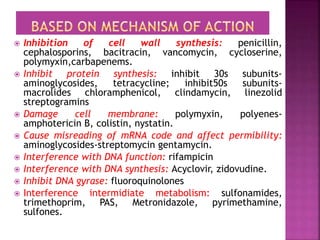
 Inhibition of cell wall synthesis: penicillin,
cephalosporins, bacitracin, vancomycin, cycloserine,
polymyxin,carbapenems.
 Inhibit protein synthesis: inhibit 30s subunits-
aminoglycosides, tetracycline; inhibit50s subunits-
macrolides chloramphenicol, clindamycin, linezolid
streptogramins
 Damage cell membrane: polymyxin, polyenes-
amphotericin B, colistin, nystatin.
 Cause misreading of mRNA code and affect permibility:
aminoglycosides-streptomycin gentamycin.
 Interference with DNA function: rifampicin
 Interference with DNA synthesis: Acyclovir, zidovudine.
 Inhibit DNA gyrase: fluoroquinolones
 Interference intermidiate metabolism: sulfonamides,
trimethoprim, PAS, Metronidazole, pyrimethamine,
sulfones.
 Have highly selective toxicity to the pathogenic
microorganisms in host body
 Have no or less toxicity to the host
 Low propensity for development of resistance
 Not include hypersensitivity reactions in the
host.
 Have rapid and extensive tissue distribution
 Be free of interactions with other drugs
 Be relatively inexpensive.
 The simultaneous use of two or more drugs
separately or combination of drug in a single
pharmaceutical formulation is called drug
combination
 Effect of combination therapy:-
 Additive/indifferent: action of the combination is
equal to the sum of the actions of each component.
 Synergistic: action of the combination is significantly
greater than the sum of the actions of each
component. It occurs, when a chemotherapeutic
agent potentates the action of other
chemotherapeutic agent
 Sequential inhibition of successive steps in
metabolism, e.g. trimethoprim sulfame thoxazole.
 Sequential inhibition of cell wall synthesis, e.g.
mecillinam-ampicillin
 Facilitation of drug entry of one antibiotic by
another e.g. beta lactam minoglycoside
 Inhibition of inactivating enzymes, e.g. ampicillin-
clavulanic acid.
 Prevention of emergence of resistant populations
e.g, erythromycin-rifampicin
 Antagonistic: action of the combination is
significantly less than the sum of the actions each
component. E.g. bacteriostatic drugs inhibits action
of bctericidal drugs
 Use of antimicrobial combinations
 Combination of two or more antimicrobial agents is
recommended in a few scenarios such as
 When agents exhibit synergistic activity against
a microorganism
 When critically ill patient requires empiric
therapy before microbiological etiology and or
microbial susceptibility can be determined
 To extend the antimicrobial spectrum beyond
that achieved by use of a single agent for
treatment of polymicrobial infections
 To prevent emergence of resistance
 To reduce severity and incidence of adverse
effects.
 Disadvantage of antimicrobial combinations:-
 Increased incidence and variability of adverse
events ; toxicity of one agent may be enhanced
by other- e.g. vancomycin+ tobramycin produce
exaggerated kidney failure.
 Increased chances of superinfections
 May lead to emergence of resistance
 Higher cost of therapy.
 SUSCEPTIBILITY:-
 Refers to the presence of targets of antimicrobial
activity with in genre or species of bacteria.
Antimicrobial susceptibility testing measures the
ability of a specific organism to grow in the
presence of a particular drug in vitro. E.g. E.Coli
is susceptible to gentamicin.
 Predictable susceptibility: we can list specific
drugs, doses and intervals for which we can
expect efficacy for certain bacteria. All isolates
of coryne-bacterium, bacillus, beta hemolytic
streptococci are susceptible to pencillin G.
 Unpredictable Susceptibility: some strains of
bacteria have acquired resistance to almost all
antimicrobials. Expression of susceptibility to a
variety of antimicrobials. E.g. enterobacteriaceae,
staphylococci, pseudomonas aeruginosa.
 SENSITIVITY:-
 It is the measure of the concentration of an
antimicrobial drug necessary to demonstrate activity
against a particular isolate.
 e.g. E. coli isolate is sensitive to gentamicin.
 Antimicrobial resistance is defined as a
microorganism’s resistance to an antimicrobial drug
that was once able to treat an infection by that
microorganism.
 can be categorized in three types
 Natural or intrinsic resistance
 Acquired resistance
 First exposure effects.
 NATURAL OR INTRINSIC RESISTANCE:-
 It refers to the innate ability of a bacterial species to resist
activity of a particular antimicrobial agent through its
inherent structural or functional characteristics, which
allow tolerance of a particular drug or antimicrobial class
 Natural or intrinsic resistance mechanisms include
 Inaccessibility off the target; i.e. impermeability
resistance due to the absence of an adequate
transporter, e.g.aminoglycoside resistance in strict
anaerobes.
 Multi drug efflux system, i.e acrE in E coli, mexB in
P.Aeruginosa.
 Drug inactivation, i.e. AmpC cephalosporinase in
Klebsiella.
 ACQUIRED RESISTANCE:-
 It occurs when a particular microorgnism obtains the
ability to resist the activity of a particular
antimicrobial agent to which it was previously
susceptible.
 Acquired resistance is of two types
 Mutational resistance
 Extra chromosomal resistance.
 Mutational resistance:-
 Target site modification: e.g. streptomycin resistance-
mutations in rDNA genes, Beta lactam resistance- change in
penicillin binding proteins.
 Reduced permeability or uptake
 Metabolic bypass: trimethoprim resistance- overproduction
of DHF(dihydrofolate) reductase or thi-mutants in S-aureus.
 Depression of multidrug efflux systems.
 Extrachromosomal resistance:-
 Drug inactivation-aminoglycoside-modifying enzymes, beta
lactamases, chloramphenicol acetyltransferanse.
 Efflux system- tertacycline
 Target site modification-i.e. methylation in the 23S
component of the 50S ribosomal subunit-Erm methylases.
 Metabolic bypass- i.e. trimethoprim resistance –resistant
DHF reductase.
 First exposure effects:-
 Refers to the bacteria that survive the first dose of an
antibiotic and develop s adaptive resistance.
 PROPHYLACTIC USE
 EMPIRIC THERAPY
 KNOWN PATHOGEN/DEFINITIVE THERAPY
 SWITCH THERAPY
PROPHYLACTIC USE:-
 Used to prevent infection.
 In hospital used in surgery to prevent wound infection
 Other indications include bacterial endocarditis, post
exposure prophylaxis against human immunodeficiency
virus infection(needle stick) or meningococcal exposure.
TYPES OF ANTIMICROBAL THERAPY
 EMPIRIC THERAPY:-
 Broad-spectrum antimicrobial agents are used for
initial empiric therapy with the intent to cover
multiple possible pathogens commonly associated
with the specific clinical syndrome.
 It is used to cover different organisms capable of
causing an infection.
 Before initiation of drug, appropriate specimen for
stain and cultures of microorganisms should be
obtained.
 The use of agents in this situation should not extend
beyond the time required to obtain results of
cultures and susceptibility.
 SWITCH THERAPY:-
 In ‘switch therapy use’ oral antimicrobials replace
intravenous usage for completion of therapy.
 IV therapy is employed in serious infections to ensure
maximal serum levels.
 In patients with infections localized in areas of poor
antibiotic penetration and in patients with
immunodeficiency states IV antibiotics are recommended
for the complete duration of therapy.
 KNOWN PATHOGEN/DEFINITIVE THERAPY:-
 Definitive antimicrobial therapy is used, when the
microbiology laboratory has identified the microorganism
causing the infection and the susceptibility pattern is
known.
 In this therapy the broad spectrum therapy will be
narrowed and antimicrobial therapy should be continued
with an appropriate narrow-spectrum antibiotic to avoid
colonization with resistant organisms, super infections
and drug toxicity.
 Factors affecting antimicrobial include
 Host factors
 Organism-related factors
 Drug-related factors
 HOST FACTORS:-
 Renal and Hepatic function
 Kidney and the liver are the primary organs responsible for
elimination of drugs from the body
 Effective functioning of organs determines the elimination of
drug.
 Doses might need to be increased to avoid under dosing
young healthy patients with rapid renal elimination or those
with rapid hepatic metabolism due to enzyme induction by
concomitant use of drugs such as rifampicin or phenytoin.
 Age:-
Patients at both extremes of age handle drugs
differently, primarily due to differences in body
size and kidney function.
Pediatric drug dosing is guided by weight
In geriatric drug dosing depends on the
estimation of creatinine clearance by factoring in
age and weight .
 Genetic variation:-
Genetic susceptibility to the adverse effects of
antimicrobial agents has be demonstrated.
So testing for such variability before
administration of certain drugs.
E.g. antiretroviral drug abacvir part of the
standard combination treatment for HIV
infection, is associated with a well- described
and potentially fatal hypersensitivity reaction.
 The risk of experiencing this reaction has been shown to
be significantly higher in patients with the human
leukocyte antigen allele HLA-B*5701.
 Glucose -6- phosphate dehydrogenase deficiency can
result in hemolysis in individuals when exposed to
certain antimicrobial agents such as dapsone, primaquine
and nitrofurantoin.
 Pregnancy and lactation:-
 In the case of the mother, increases in plasma volume
and renal blood flow, especially by the third trimester,
can result in more rapid clearance and lower serum
levels of pharmaceutical agents including antimicrobial
agents.
 In case of developing fetus, many antimicrobial agents
can be either teratogenic (disturb the development of
embryo) or otherwise toxic to the fetus.
 penicillin, cephalosporins and macrolides are commonly
safe during pregnancy. Tetracyclines and
chloramphenicol have fetal and neonatal adverse effects
 History of Allergy or intolerance:-
A history of antimicrobial allergy or intolerance should be
routinely obtained in the evaluation and management of
infection.
 History Of Recent Antimicrobial Use:-
 Eliciting a history of exposure to antimicrobial agents in
the recent past can also help in selection of antimicrobial
therapy
 If the causative microorganisms for a current episode of
infection has emerged under the selective pressure of
recently used antimicrobial agent, it is likely to be resistant
to that drug and / or drug class, and an alternative agent
should be used.
HOST DEFENSE IMPAIRMENT
 The bactericidal activity depends on concentration.
 The more compromised the host or the more rapid
a cure required , the higher the blood and tissue
concentration should be.
LOCAL FACTORS
 Presence of pus/ secretion and abscess formation
decrease efficacy of most antimicrobial agents
,especially sulfonamides and aminoglycosides.
 Presence of necrotic material or foreign body
including catheters, implants, and prosthesis
makes eradication of infection difficult .
 Hematoma formation foster bacterial growth
.Tetracycline's , penicillin's, and cephalosporin's
get bound to the degraded hemoglobin in the
hematoma.
 Lowering of pH at the site of infection reduces
activity of macrolide and aminoglycoside
antibiotics.
 Penetration barriers at certain site prevent access
of antimicrobials to the site , e.g. endopthalmitis,
sub acute bacterial endocarditis , prostatitis
ORGANISM RELATED FACTORS
 Once the organism is ascertained through microbiological
studies definite therapy should be initiated based on
sensitivity.
DRUG RELATED FACTORS
 Spectrum of activity
 Type of activity- Bacteriostatic / bactericidal
 Relative toxicity
 Pharmacokinetic profile
Drug concentration- The optimum concentration
required to inhibit the organism for a particular drug
varies
Optimum dose interval-It is the sum of the ‘time
required for the most effective kill + duration of post
antibiotic effects + time for bacterial lag phase’ .There is
no method for calculating the optimum dose interval. It
is however , an important theoretical concern which
should be considered when you decide among options.
 Efficacy at the site of infection: the efficacy of
antimicrobial agents depends on their capacity
to achieve a concentration equal to or greater
than the minimum inhibitory concentration at
the site of infection and modification of activity
at certain sites.
 Antimicrobial concentrations attained at some
sites are often much lower than serum levels
e.g. ocular fluid, CSF, abscess cavity, prostate
and bone)
 E.g. 1st and 2nd generation cephalosporins and
macrolides do not cross the blood brain barrier
and are not recommended for central nervous
system infections.
 Post antibiotic effects: bacterial growth may be
inhibited by some antibiotics even after
concentration fall.
 Their antibiotic effect persist for several hours after
removal of some drugs
 No bacterial growth occurs for some time after
concentrations fall below MIC of antibiotic.
 Route of administration
 Hospitalized patients with serious infections are
often treated with IV antimicrobial therapy
 Patients with mild to moderate infections are
treated with well absorbed oral microbial agents.
 Patients initially treated with parenteral therapy
can be safely switched to oral antibiotics, when
they become clinically stable.
 Evidence of clinical efficacy of the drug.
 Right diagnosis should be made either
clinically or by laboratory.
 Right decision should be made whether the
chemotherapy is needed or not
 Proper selection of drug based on
 Specificity
 Route of administration
 Cost-effectiveness
 Safe drug
 Proper combination.
 easy availability
 Essential drug: drug needed for vast majority of the
population.
 Right dose: initial loading dose followed by
maintenance dose.
 Right duration
 Right time schedule: to maintain MIC and MBC
 Status of the patient:
 Age
 hepatic and renal function
 Pregnancy
 lactating mother
 immune system of the patient.
 Toxicity
 Local irritancy
 Systemic toxicity
 Masking of an infection
 Hypersensitivity reactions
 Drug resistance
 Superinfection
 Nutritional deficiencies
 Prolonged use of antimicrobials alter intestinal flora,
which synthesis vitamin B12 and K leading to their
deficiency.
 Neomycin causes morphological abnormalities in the
intestinal mucosa leading to malabsorption syndrome and
steatorrhea.
 Delay in diagnosis or therapy
 Wrong or incomplete diagnosis
 No infection, other cause of fever like collagen diseases
or malignancy
 Non-bacterial infection
 Polymicrobial infection
 Error in antimicrobial susceptibility testing
 Inadequate concentration of antibiotic at the site of
infection
 Improper dose
 Decreased absorption from food or drug interaction
 Increased elimination of agent
 High protein binding
 Poor delivery(vascular disease)
 Decreased activity at the site
 Chemical factor(pH etc.)
 Antibiotic antagonism
 Other factors at the site of infection
 Collection requiring drainage
 Necrotic tissue
 Foreign body
 Other host factors
 Impaired immune response
 Infection in a protected site requiring bactericidal drug or
combination(infecting organism present behind barriers such
as vegetation on heart valves, inside the eyeball, blood brain
barrier
 Development of resistance to antimicrobial agents such as
presence of dormant or altered organisms, which later give
rise to relapse
 Superinfection.
 Refers to the appearance of bacteriological and clinical
evidence of new infection during the chemotherapy of a
primary one.
 Commonly occurs in broad spectrum
 This is due to the removal of the inhibitory infulence of
the drug-sensitive flora that is normally inhibited in the
nasopharynx and other body orifices.
 These flora produce antibacterial substance called
bacteriocin.
 Alteration of normal microbial flora of the host results in
growth of exogenous microorganism and endogenous
proliferation of microorganisms, which are not sensitive
to that particular antibiotic.
 So secondary infection is superimposed on the original
infection.
 Common causative organisms of super infection
includes
 Candidia or fungal infection
 Enterobacteriaceae
 (shigella, salmonella, escherichiaklebsiella)
 Pseudomonas
 Staphylococcus
 Chemoprophylaxis is the use of antimicrobial agents to
prevent infection.
RECOMMENDATION
 In healthy persons
 Penicillin G is given for prevention of gonorrhea or
syphilis in patients after contact with infected persons
called postexposure prophylaxis.
 Malaria- In healthy individuals visiting an endemic area
– chemoprophylaxis with chloroquine is given.
 To prevent infection in high risk patients;
 In neutropenic patients receiving anticancer drugs
,immunosupressive agents and patients with acquired
immunodeficiency syndrome, antibacterial like penicillin
or fluoroquinolones or cotrimoxazole may reduce the
incidence of bacterial infection.
 In patients with contaminated or exposed wounds as
in road traffic accidents.
 Catheterization of urinary tract- norfloxacin is used
 In burns , to prevent colonization by bacteria
 Surgical prophylaxis- prior to surgery
chemoprophylaxis is recommended.
Adequate antibacterial activity should be present
during surgery.
Hence the drug is started parenteraliy 30-60
minutes before surgery.
A drug which is effective against all organisms that
are likely to contaminate the wound is usually
selected
 In close contacts- Chemoprophylaxis is
recommended particularly in children ,when
infectious cases of leprosy or tuberculosis are in
close contact
PROBIOTICS
 Probiotics are products that containing viable , non
pathogenic microorganisms given orally to alter
the intestinal microflora.
 Lactobacillus, Bifidobacterium , Streptococcus
salivarius, some enterococci and Saccharomyces
boulardii are some presently tried probiotics.
 They are found to be useful in acute infectious
diarrhea following antibiotic use.
GENERAL NURSING IMPLICATIONS WHILE
USING ANTIMICOBIALS
1. Assess
a. Nephrotoxicity including increased BUN , creatinine
, and in elderly creatinine clearance as well.
b. Blood studies- Alanine transaminase (ALT) Aspertate
aminotransferace (AST) CBC, hematocrit,
bilirubin.Test monthly if long term therapy.
c. Urine output- If decreasing notify prescriber
d. Daily bowel pattern-If severe diarrhea occurs drug
would have to be discontinued .Notify the prescriber.
e. Allergic reaction including rashes, fever, pruritis ,
urticaria . Notify the prescriber and discontinue the
drug
f. Bleeding- Eecchymosis , bleeding gums ,
hematuria, stool guaiac daily
g. Over growth of infection- Manifested by perineal
itching, fever, malaise, redness, pain, swelling ,
drainage, rash, diarrhea, change in cough and
sputum.
2. Before starting empirical antimicrobial therapy
collect and send samples for culture and sensitivity.
3.Assess the culture and sensitivity reports, and
identify the infecting organism before starting the
definitive antimicrobial agent therapy.
4. Know the difference between bacteriostatic and
bactericidal
 Educate the patient to complete the course of
antimicrobial drugs, even after symptoms subside,
to prevent the recurrence of infection and to
minimize the risk of developing resistance to the
antimicrobial agents.
 Many antibiotics decrease the effectiveness of
birth control pills .Hence ,advise the patients to use
other type of contraception if the patient is taking
birth control pills.
 Drug therapy monitoring should be carried out to
know the peak and trough level( level just before
the next dose) by drawing blood samples
immediately after administration of drug and again
10-30 minutes before the administration of next
dose
 Monitor the blood counts to evaluate the
effectiveness of the antimicrobial agent( leukocyte
counts should return to normal range )
 In case patient complains of mild diarrhea ,
instruct the patient to take buttermilk or probiotics
if prescribed to restore normal intestinal flora.
 Educate patient and family to report sore throat ,
bruising , bleeding, and joint pain as they may
indicate blood dyscrasias . Also teach them signs
and symptoms of possible adverse reactions and to
report if any.
Beta-lactams constitute one of the most important
and most frequently used groups of antibiotics
available to combact infectious diseases.
PENCILLINS
- Pencillins are the oldest class of antibiotics and
have a common structure , which they share with the
cephalosporins.
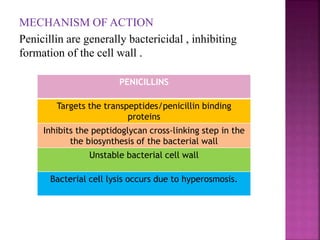
MECHANISM OF ACTION
Penicillin are generally bactericidal , inhibiting
formation of the cell wall .
PENICILLINS
Targets the transpeptides/penicillin binding
proteins
Inhibits the peptidoglycan cross-linking step in the
the biosynthesis of the bacterial wall
Unstable bacterial cell wall
Bacterial cell lysis occurs due to hyperosmosis.
 The reason penicillin are able to inhibit penicillin
binding proteins (PBPs) is because they
structurally resemble the natural substrate D-
alanine –alanine, which is found on the side chain
of the peptidoglycan chains. Since mammal cells
do not have the same type of cell walls, penicillin
specifically inhibits only bacterial cell wall
synthesis. Each organism has several PBPs and
PBPs obtained from different bacterial species
differ in their affinity toward different beta-lactam
antibiotic .This probably explains the differing
sensitivity various gram positive bacterial species
to various beta lactam antibiotics.
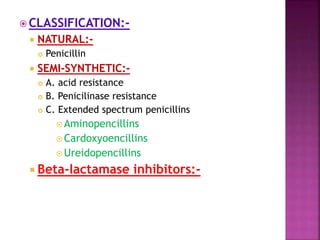
 CLASSIFICATION:-
 NATURAL:-
 Penicillin
 SEMI-SYNTHETIC:-
 A. acid resistance
 B. Penicilinase resistance
 C. Extended spectrum penicillins
 Aminopencillins
 Cardoxyoencillins
 Ureidopencillins
 Beta-lactamase inhibitors:-
 SEMISYNTHETIC PENICILLINS
 Acid –resistant penicillins are acid stable and can be
given orally.
 Penicillinase –resistant penicillins are resistant to
hydrolysis by pencillinase produced by bacteria. They
have side chains that protect the beta lactam ring
however this partially protects the bacteria also
against beta lactam ring. Therefore against other
microorganisms –they are less effective than penicillin
G .
 Extended spectrum penicillins ; these semisynthetic
penicillins are active against a variety of gram
negative bacilli as well;
a. Aminopenicillins-These agents cover a wider
antibacterial spectrum including many gram
negative bacilli. They are orally effective but are
sensitive to penicillinases.
b. Carboxypenicillins- In addition to activity
against gram positive and gram negative
organisms are also effective against
pseudomonas aeruginosa and proteus infections
c. Ureidopenicillins – It has a wider antibacterial
spectrum than ticarcillin and are effective
against a variety of gram negative organisms
including pseudomonas and klebsiella .Moreover
, their sodium content is low. Hence ,they have
almost replaced carboxypenicillins.
 BETA – LACTAMASE INHIBITORS
 Beta-lactamases are enzymes produced by
bacteria that open up the beta –lactam ring and
inactivate the beta lactam antibiotics.
 Beta-lactamase inhibitors bind to and inactivate
beta – lactamases preventing the destruction of the
beta -lactam antibiotics.
 They broaden the antibacterial spectrum of
penicillins ,e.g.sulbactam, tazobactam, clavulanic
acid.
POTENTIAL DRUG-DRUG INTERCTIONS
 Oral contraceptives- penicillins may interact with
oral contraceptives and decrease the effectiveness
of the oral contraceptives.
 Probenecid-This antigout medication may
compete with penicillin for renal tubular secretion
and result in higher serum levels of penicillin.
PENICILLIN HYPERSESITIVITY
 The penicillin allergy results , when in affliated
individuals the beta lactam ring binds to serum
proteins, initiating an IgE – mediated
inflammatory response.
 Every time a person is exposed to this allergen,
their immune system will mount a response
causing rash most commonly and sometimes an
anaphylactic reaction.
 Some specific symptoms including an itchy rash,
swelling of the throat / mouth area and difficulty
in breathing.
 PENICILLIN RESISTANCE:-
 Beta lactamases enzymes inactivate the antibiotic
agent by hydrolyzing the peptide bond in the beta
lactam ring of the nucleus
 Other mechanisms are decreased affinity of the
enzyme, specifically PBP for pencillin
 PENICILLIN SUBISTITUTES:-
 Penicillin substitutes inhibit cell wall synthesis of
bacteria
 are similar to penicillin
 Are narrow-spectrum antibiotics
 uses:-
 To treat Staphylococci or streptococci infections
 Patients with allergic to cephalosporins
 Commonly drugs:-
 Vancomycin, clindamycin, spectinomycin
 Are semisynthetic antibiotic derived from
cephalosporin C, which is produced from
cephalosporium acremonium.
 Cephalosporins have beta-lactam ring structure
that interferes with synthesis off the bacterial cell
wall
 So are bactericidal
 Are grouped into generations by their antimicrobial
properties.
 Newer generations has a broad spectrum of activity
than the one before
 Mechanism of action:-
 They disrupt the synthesis of the peptidoglycan layer
of bacterial cell walls.
 USES:-
 Gram negative infections: urinary, respiratory, and
soft tissue infections due to gram-negative
organisms respond-a third generation agent is used.
 Surgical prophylaxis: cefazolin is preferred due to its
longer half-life and better tissue penetrability.
 Meningitis: due to H influenzae, N-meningitidis and
pneumoniae-third generation agents are useful-
cefotaxime or ceftriaxone may be used.
Pseudomonas memingitis- ceftrazidime +
aminoglycoside found effective.
 Mixed aerobic and anaerobic infections: common
following pelvic surgery- a third generation agent
are used.
 Typhoid: as alternative to ciprofloxacin
 Nosocomial infections: third generation
cephalosporins
 Limitations:-
 Lack of activity against enterococci
 Lack of activity against methicillin – resistant
staphylococci
 Lack of activity against anaerobic gram-negative
bacilli.
 contraindications:-
 Hypersensitivity
 In infants less than 1 month cephalosporin 1st and 2nd
is contraindicated
 Second generation cephalosporins should not be
used in patients with seizures
 Precaution:-
 Pregnancy
 Lactation
 Renal disease
 Hypersensitivity to penicillins
 Children
 Pharmacodynamics:-
 Penetrates well into most of the body fluids(ECF)
 It reaches CSF level high enough to treat meningitis.
 Penetrate poorly into intracellular fluids and vitreous
humor.
 Excreted primarily in urine which require dose
adjustment
 Few drugs have biliary excretion and do not require
dose adjustment
 Adverse effects:-
 Hypersensitivity reactions: 20% of patients allergic to
penicillin show cross reactivity to cephalosporins.
 Nephrotoxicity: mild
 Diarrhea
 Bleeding due to hypothrombinemia, which is
common among malnourished patients.
 Low WBC count
 Pain in injection site
 Disulfiram-like reaction (flushing, tachycardia and
hypotension ) with alcohol
 Seizures.
 Resistance:-
 Beta lactamases and altered target proteins
determines resistance.
 Contain a beta lactam ring fused with a five
membered penem ring
 Have wide antibacterial spectrum
 Inhibits various gram positive as well as gram
negative organisms
 Also active against anaerobes including
streptococci, staphylococci enterococci,
listeria, enterobacteriaceae, pseudomonas and
B,fragilis.
 Mechanism of action:-
 Inhibits bacterial cell wall synthesis
 USES:-
 UTI,skin, respiratory, bone, soft tissue intra abdominal
and gynecological infections due to susceptible
microorganisms.
 Enterobacter
 Penicillin-resistant pneumococci and other nosocomial
infections resistant to other antibiotics.
 Used in combination with aminoglycoside in pseudomonas
infections
 Active against: H. influenza, anaerobes,, methicillin
sensitive staphylococci and streptococci, including S.
pneumoniae.
 Contraindications:-
 Hypersensitivity to any particular imipenem drug or its
components
 Anaphylactic reaction to beta-lactams
 Intramuscular hypersensitivity to local anesthetic of
amide type.
 Precaution:-
 Pregnancy
 Lactation
 Children
 Elderly
 Renal disease
 Adverse effect:-
 High doses-occasionally cause seizures.
 Nausea, vomiting, diarrhea
 Allergic reactions especially in patients allergic to
other beta-lactam antibiotics
 AZTREONAM:-
 Inhibits cell wall synthesis
 Used mainly for severe aerobic gram-negative bacillary
infections, including meningitis
 Active against gram negative bacilli including
pseudomonas aeruginosa.
 Uses:-
 Gram negative infections, UTI, septicemia,
skin/muscle/bone infections, lower respiratory tract
infections, intra-abdominal infections.
 Dose and route:-
 500mg-2g IV/IM q8-12h; do not exceed 8g/day.
 Contraindications:-
 hypersensitivity
 First synthetic efficient bacteriostatic antibiotics
 Alone act as bacteriostatic agent.
 Administered in conjunction with other
antimicrobial agents like trimethoprim.
 Mechanism of action:-
 Sulfonamides inhibit conversion of PABA (p=amino benzoic
acid) to dihydropteroate, which is needed for bacteria
for folate synthesis and ultimately purine and DNA
synthesis.
 Classification:-
 Short acting: sulfisoxazole, sulfadiazine
 Intermediate acting: sulfamethoxazole
 Long acting: sulfamethoxypyridazine, sulfadoxine.
 Oral nonabsorbable: sulfasalazine
 Topical use: sulfacetamide,mefenide silver sulfadiazine.
 Antibacterial spectrum:-
 Active against gram positive and gram negative bacteria,
plasmodium and toxoplasma species.
 Residence is wider
 resistance to one sulfonamide indicates resistance to all.
 Indications:-
 Urinary tract infections
 Nocardiosis
 Toxoplasmosis
 Trachoma and conjunctivitis
 Lymphogranuloma venereum by chlamydia trachomatis
and chancroid( alceration of lymph nodes in the groin.)
 Chloroquine resistance malaria
 Prophylactic use: streptococcal pharyngitis in rheumatic
fever, patients allergic to penicillins.
 Burn- to prevent infection
 Ulcerative colitis and rheumatoid arthritis.
 Contraindications:-
 Patients allergic to sulfonamides
 Patients with prophyria
 Neonates
 Early and late pregnancy and lactating mothers.
 Pharmacokinetics:-
 Orally absorbed from GI tract
 Distributed easily
 Cross BBB
 Protein binding varies widely
 Metabolized in liver by process of acetylation and
glucuronidation(glucuronic acid conjugated
withtoxins.
 Excreted via kidney
 Mechanism of action:-
 Sulamethoxazole and trimethoprim in combination
block sequential steps in bacterial folate
metabolism.
 Trimethoprim prevents reduction of dihydrofolate to
tetrahydrofolate
 Sulfamethoxazole inhibits conversion of p-
aminobenzoic acid to dihydrofolate,
 This synergy results in maximal antibacterial activity
and act as bactericidal.
 Indications:-
 Urinary tract infections: uncomplicated, chronic and
recurrent.
 Bacterial prostatitis
 Respiratory tract infection: upper and lower tract
infections including bronchitis, sinusitis and otitis media.
 Bacterial gastroenteritis due to shigella and E-coli
 Typhoid: used as an alternative to fluroquinolones
 Pneumocystis jiroveci infection: for prophylaxis and
treatment of pneumocystis jiroveci pneumonia in
neutropenic and AIDS patients.
 Chancroid
 Uncomplicated cystitis in women
 Nocardia and listeria monocytogenes infections
 Methicillin-resistant staphylococcus aureus infections:
used if patients cannot tolerate vancomycin.
 Contraindications:-
 An allergic to either drug
 Neonates
 Early and late pregnancy, lactation
 Porphyria
 Relative contraindications
 Folate deficiency
 Liver dysfunction
 Renal insufficiency.
 Dose:-
 Trimethoprim 80mg and sulfamethoxazole
400mg.
 Double strength: trimethoprim 160mg and
sulfamethoxazole 800mg
 Oral/IV infusion.
 Adverse effects:-
 Those associated with sulfonamide
 Folate deficiency
 Hyperkalemia
 Renal insufficiency
 Megaloblastic anemia
 Leukopenia
 granulocytopenia
 Are antimicrobials that act against gram-negative
bacteria
 They act by inhibiting DNA replication.
 The first quinolone, nalidixic acid, was introduced
in 1962.
 Other quinolones include oxalinic acid and cinoxacin
 Classification:-
 First generation: nalidixic acid, cinoxacin
 Second generation: norfloxacin, ciprofloxacin,
lomefloxacin, ofloxacin, levofloxacin
 Third generation: sparfloxacin, gatifloxacin,
grepafloxacin
 Fourth generation: trovafloxacin, moxifloxacin,
gemifloxacin.
 Act as bactericidal against various gram-
negative organisms like E-coli, Shigella, proteus
and Klebsiella.
 Mechanism of action:-
 Inhibit the bacterial enzyme DNA gyrase which is
required for DNA replication and transcription.
 By inhibiting the enzyme DNA gyrase quinolones
inhibit DNA replication.
 The damaged DNA is digested by exonucleases and as
a result of which the cell dies leading to the
bactericidal action.
 USES:-
 Uncomplicated UTI and diarrhea due to E-coli,
Shigella and proteus.
 Contraindications:-
 Infants
 Dosage:-
 0.5-1g 3-4 times a day per oral.
 Adverse effects:-
 Hemolytic anemia
 Allergic reactions
 Central nervous system: headache, myalgia,
vertigo, visual disturbance and drowsiness
 Occasionally seizures.
 Synthetic fluorinated analogue of nalidixic acid.
 They exhibit concentration-dependent bactericidal
activity by inhibiting the activity of DNA gyrase
and topoisomerase , enzymes essential for
bacterial DNA replication.
 CLASSIFICATION
 Older group: ciprofloxacin, norfloxacin and ofloxacin
 Newer group: gemifloxacin, levofloxacin and
moxifloxacin.
 Uses:-
 Urinary tract infections when escherichia coli
resistance to trimethoprim, sulfamethoxazole
 Bacterial prostatitis
 Salmonella bacteremia
 Typhoid fever
 Infectious diarrhea
 Respiratory infections unresponsive to beta lactams.
 Community-acquired pneumonia
 Legionella pneumonia
 Hospital-acquiredpneumonia
 Long term treatment of gram-negative bacillary or
staphylococcus aureus osteomyelitis
 Meningococcal prophylaxis
 Anthrax prophylaxis
 Chancroid-as an alternative to cotrimoxazole
 Chlamydia trachomatis infections
 Eye infections
 Tuberculosis
 Neutropenic patients
 Contraindications:-
 Hypersensitivity
 Pregnancy
 Boys and girls less than 18 yrs. Of age due to damage to
growing cartilage in kids
 Patient receiving mefloquine, erythromycin, theophylline
and antiarrhythmic drugs.
 Pharmacodynamics:-
 Oral absorption is diminished by coadministration of
cations
 After oral and parenteral administration,
fluoroquinolones are widely distributed in most
extracellular and intracellular fluids
 Are concentrated in the postrate, lungs and bile.
 Metabolized in the liver
 Excreted in urine
 Adverse effects and side effects:-
 Nausea, vomiting, diarrhea
 Headache and dizziness
 Musculoskeletal problems: tendonitis, damage growing
cartilage in kids, inhibit early fracture healing.
 Percipitate seizures.
 QT – interval prolongation can occur, leading to
ventricular arrhythmias and sudden cardiac death.
 Are broad spectrum agents
 Act against wide range of gram-positive and
gram-negative bacteria, atypical organisms such
as chlamydiae, mycoplasmas, and rickettsiae
and protozoan parasites.
 Tetracyclines were derived from streptomyces
species
 Newer derivatives are semisynthetic.
 Mechanism of action:-
 Are bacteeriostatic antibiotics that bind to the 30s
subunit of the ribosome and prevent the binding of
tRNA to the ribosome, thus inhibiting bacteria
protein synthesis
 Classification:-
 First generation:
 obtained by biosynthesis- tetracycline,
chlortetracycline, demeclocycline,
oxytetracycline
 Second generation:
 derivatives of semisynthesis, e.g. doxycycline,
lymecycline, meclocycline, methacycline,
minocycline, rolitetracycline
 Third generation:
 obtained from total synthesis, e.g. tigecycline.
 Uses:-
 Grampositive and gram negative bacterial infection
 Aerobic and anaerobic bacterial infections
 Infections caused by rickettsiae and chamydia,
chlamydophila, mycoplasma and vibrio species
 Acute exacerbations of chronic bronchitis
 Cholera
 Lyme disease caused by boreliosis
 Brucellosis
 Antrax
 Plague
 Tularemia caused by francisella tularensis.
 Granuloma inguinale
 STDs
 Prophylaxis of malaria caused by chloroquine –resistant p
falciparum
 Traveller’s diarrhea
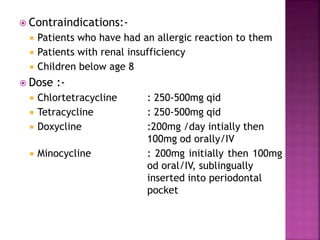
 Contraindications:-
 Patients who have had an allergic reaction to them
 Patients with renal insufficiency
 Children below age 8
 Dose :-
 Chlortetracycline : 250-500mg qid
 Tetracycline : 250-500mg qid
 Doxycline :200mg /day intially then
100mg od orally/IV
 Minocycline : 200mg initially then 100mg
od oral/IV, sublingually
inserted into periodontal
pocket
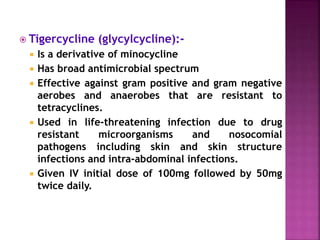
 Tigercycline (glycylcycline):-
 Is a derivative of minocycline
 Has broad antimicrobial spectrum
 Effective against gram positive and gram negative
aerobes and anaerobes that are resistant to
tetracyclines.
 Used in life-threatening infection due to drug
resistant microorganisms and nosocomial
pathogens including skin and skin structure
infections and intra-abdominal infections.
 Given IV initial dose of 100mg followed by 50mg
twice daily.
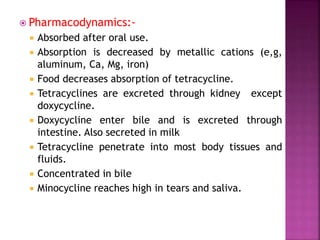
 Pharmacodynamics:-
 Absorbed after oral use.
 Absorption is decreased by metallic cations (e,g,
aluminum, Ca, Mg, iron)
 Food decreases absorption of tetracycline.
 Tetracyclines are excreted through kidney except
doxycycline.
 Doxycycline enter bile and is excreted through
intestine. Also secreted in milk
 Tetracycline penetrate into most body tissues and
fluids.
 Concentrated in bile
 Minocycline reaches high in tears and saliva.
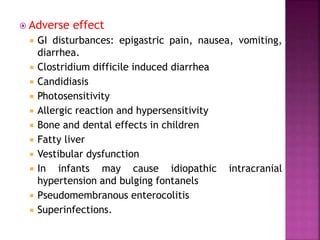
 Adverse effect
 GI disturbances: epigastric pain, nausea, vomiting,
diarrhea.
 Clostridium difficile induced diarrhea
 Candidiasis
 Photosensitivity
 Allergic reaction and hypersensitivity
 Bone and dental effects in children
 Fatty liver
 Vestibular dysfunction
 In infants may cause idiopathic intracranial
hypertension and bulging fontanels
 Pseudomembranous enterocolitis
 Superinfections.
 Broad spectrum antibiotic
 Obtained from streptomyces venezuelae
 Act as bacteriostatic as well as bactericidal
 Binds to 50S subunit of ribosomes, thereby inhibiting
bacterial protein synthesis
 Uses:-
 Gram positive and gram negative cocci and bacilli
 Rickettsia, mycoplasma, chlamydia and chalmydophila
species
 Serious Infections due to multidrug resistant bacteria
 Typhoid fever
 Bacterial meningitis
 Anaerobic infections
 Eye infections.
 Contraindications:-
 If another drug can be used instead
 Pregnancy
 Breastfeeding
 Severe renal and hepatic disease
 Hypersensitivity.
 Dose and route:-
 50-75 mg /kg/day oral IV in divided dose q6h
 Meningitis- 100mg/kg/day
 Maximum dose 4g/day
 Pharmacodynamics:-
 Well absorbed orally
 Widely distributed in body fluids, including CSF
 Excreted through urine
 Adverse effects:-
 GI disturbances: nausea, vomiting and diarrhea
 Bone marrow depression: aplastic anemia
 Gray baby syndrome: hypothermia, cyanosis,
flaccidity and circulatory collapse.
 Hypersensitivity reactions
 Superinfections.
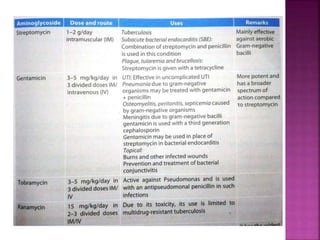
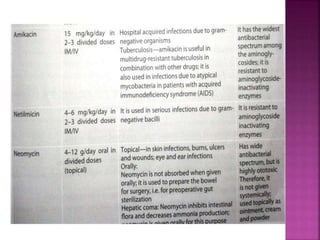
 Are antibiotics with amnio sugar in glycosidic
linkages
 Derived from the soil actinomycetes of the
genus streptomyces and from the genus
micromonospora
 Have concentration-dependent bactericidal
activity.
 Mechanism of action:-
 Prnetrate the bacterial cell membrane through pores
and bind to 30S ribosomal subunit leading to
misleading of mRNA.
 This misleading leads to abnormal peptide synthesis
that accumulate intracellularly resulting to cell
death.
 Pharmacodynamics and pharmacokinetics:-
 Poorly absorbed orally
 Well absorbed from the peritoneum, pleural cavity
and joints and denuded skin.
 Route of administration : IV
 Well distributed into ECF, except vitreous humor,
CSF, respiratory secretions and bile
 Excreted by glomerular filtration
 Serum half life : 2-3hr.
 Bactericidal effect remains even after the plasma
levels of drug decreases.
 Contraindications:-
 Hypersensitivity
 Pregnancy
 Severe renal disease
 Bowel obstruction
 Precautions:-
 Neonate
 Elderly
 Myasthenia gravis
 Lactation
 Renal disease
 Parkinson disease
 Adverse effects:-
 Ototoxicity
 Nephrotoxicity
 CNS: neuromuscular blockade, neurotoxicity,
eosinophilla, anemia
 Nystgmus.
 Contains macrocyclic lactone ring attached with
sugar.
 Bacteriostatic
 Binds to the 50S subunit of the ribosome
 Inhibits bacterial protein synthesis
 Uses:-
 As an alternative to pnicillin
 Atypical pneumonia due to mycoplasma pneumoniae
 Legionnaries pneumoniae
 Whooping cough
 Streptococcal infections: pharyngitis, tonsillitis and
scarlet fever
 Staphyloccoccal infections
 Diphtheria
 Syphilis and gonorrhea
 Camphylobacter gastroenteritis
 Tetanus
 Anthrax
 Skin infections and boils
 H.pylori infections in peptic ulcer: as combination
therapy along with ameprazole and amoxicillin
 Atypical mycobacterial infections in AIDS patients as
prophylaxis drug.
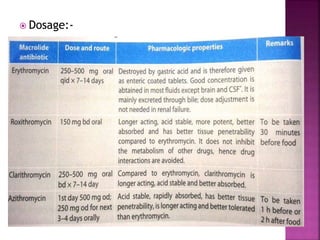
 Dosage:-
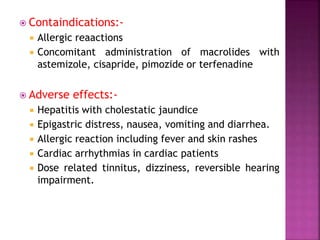
 Containdications:-
 Allergic reaactions
 Concomitant administration of macrolides with
astemizole, cisapride, pimozide or terfenadine
 Adverse effects:-
 Hepatitis with cholestatic jaundice
 Epigastric distress, nausea, vomiting and diarrhea.
 Allergic reaction including fever and skin rashes
 Cardiac arrhythmias in cardiac patients
 Dose related tinnitus, dizziness, reversible hearing
impairment.
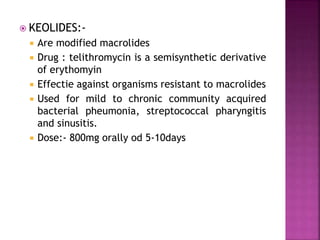
 KEOLIDES:-
 Are modified macrolides
 Drug : telithromycin is a semisynthetic derivative
of erythomyin
 Effectie against organisms resistant to macrolides
 Used for mild to chronic community acquired
bacterial pheumonia, streptococcal pharyngitis
and sinusitis.
 Dose:- 800mg orally od 5-10days
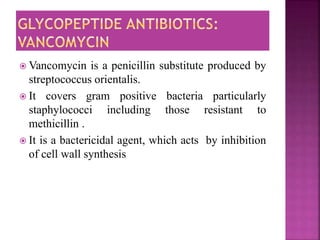
 Vancomycin is a penicillin substitute produced by
streptococcus orientalis.
 It covers gram positive bacteria particularly
staphylococci including those resistant to
methicillin .
 It is a bactericidal agent, which acts by inhibition
of cell wall synthesis
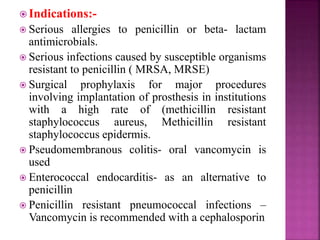
 Indications:-
 Serious allergies to penicillin or beta- lactam
antimicrobials.
 Serious infections caused by susceptible organisms
resistant to penicillin ( MRSA, MRSE)
 Surgical prophylaxis for major procedures
involving implantation of prosthesis in institutions
with a high rate of (methicillin resistant
staphylococcus aureus, Methicillin resistant
staphylococcus epidermis.
 Pseudomembranous colitis- oral vancomycin is
used
 Enterococcal endocarditis- as an alternative to
penicillin
 Penicillin resistant pneumococcal infections –
Vancomycin is recommended with a cephalosporin
CONTRAINDICATIONS
 Hypersensitivity
 Previous hearing loss
PRECAUTION
 Pregnancy and lactation
 Renal disease
 Elderly
 Neonates
DOSE AND ROUTE
 500 mg q6-8 h or 1 g q 12 h iv infusion over one
hour.
PHRMACODYNAMICS
 Vancomycin is not absorbed orally-hence given IV.
 It is widely distributed and excreted through kidneys.
ADVERSE EFFECTS
 Skin rashes, pain at the site of injection ,
thrombophlebitis
 Ototoxicity and nephrotoxicity : concurrent use of
other ototoxic and nephrotoxic drugs should be
avoided.
 Red man syndrome: IV infusion of vancomycin can
sometimes provoke histamine release resulting in a
maculopopular rash over the head , neck, and back
with fever and chills-described as redman or red –neck
syndrome ; this can be avoided by diluting
vancomycin and injecting it as an infusion over 1-2
hours.
 Pseudomembranous colitis
 nausea
 Cardiac arrest
 vascular collapse
 Anaphylaxis and allergic reactions
 Leuopenia
 Eosinophilia
 neutropenia
 Are antibacterial agent.
 Administered through IM route
 Less toxic
 Occasionally causes allergic reactions
 More active against methicillin-resistant
staphylococci aureus and enterococci
 Used to teat osteomyelitis and endocarditis
 Dose: 200-400 mg/day
 Route : IV/ IM
 LINEZOLID:-
 It binds to the 50S subunit and acts by preventing
the formation of the initiation complex between the
30S and 50S subunits of the ribosome thereby
inhibiting bacterial protein synthesis.
 Uses:-
 Hospital-acquired infections resistant to other drugs
 Community acquired pneumonia
 Vancomycin-resistant enterococcus faecium injection
 Nosocomial pneumonia
 Uncomplicated or complicated skin structure infections.
 Contraindications
 Prior allergic reaction
 Patient treat with monoanine oxidase inhibitors, serotonin
reuptake inhibitors, tricyclic antidepressents, serotonin
1B/1D receptor agonists, meperidine or buspirone , within
2 weeks.
 Carcinoid syndrome.
 Precaution:-
 Patients on sympathomimetic drugs, vasopressors,
dopaminergic drugs.
 Uncontrolled hypertension
 Thyrotoxicosis
 Pheochromocytoma
 Dose and route:-
 400-600mg Q12h IV /per oral
 Adverse effects:-
 Nausea , diarrhea, dizziness and thrombocytopenia
 Reversible myelosupression(bone marrow activity
decreased)
 Irreversible peripheral neuropathy
 Reversible optic neuropathy
 Serotonin syndrome: hyperserotonergic state
charaterized by mental status changes, neurologic
abnormalities and autonomic instability
 Binds to 50S ribosomal subunits and suppresses
protein synthesis
 Are bacteriostatic
 Uses:-
 Anaerobic infections: abdominal, pelvic, bone and joint
infections.
 Also used in combination with an aminoglycoside or a
cephalosporin
 Streptococcal and staphylococcal infections: skin and
soft tissue infections.
 Pneumocystis jiroveci pneumonia and toxoplasmosis in
AIDS patient.
 Prophylaxis in valvular heart diseases, dental procedures
 As alternative to penicillin and erythromycin.
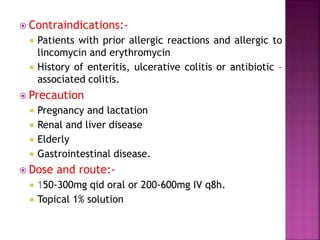
 Contraindications:-
 Patients with prior allergic reactions and allergic to
lincomycin and erythromycin
 History of enteritis, ulcerative colitis or antibiotic –
associated colitis.
 Precaution
 Pregnancy and lactation
 Renal and liver disease
 Elderly
 Gastrointestinal disease.
 Dose and route:-
 150-300mg qid oral or 200-600mg IV q8h.
 Topical 1% solution
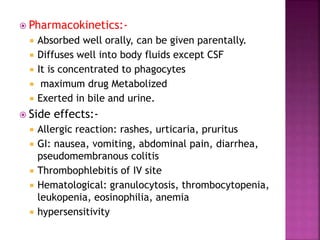
 Pharmacokinetics:-
 Absorbed well orally, can be given parentally.
 Diffuses well into body fluids except CSF
 It is concentrated to phagocytes
 maximum drug Metabolized
 Exerted in bile and urine.
 Side effects:-
 Allergic reaction: rashes, urticaria, pruritus
 GI: nausea, vomiting, abdominal pain, diarrhea,
pseudomembranous colitis
 Thrombophlebitis of IV site
 Hematological: granulocytosis, thrombocytopenia,
leukopenia, eosinophilia, anemia
 hypersensitivity
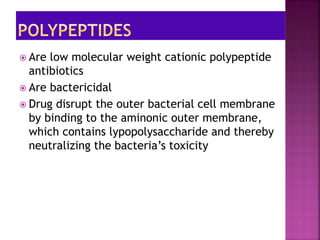
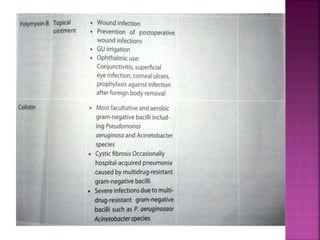
 Are low molecular weight cationic polypeptide
antibiotics
 Are bactericidal
 Drug disrupt the outer bacterial cell membrane
by binding to the aminonic outer membrane,
which contains lypopolysaccharide and thereby
neutralizing the bacteria’s toxicity
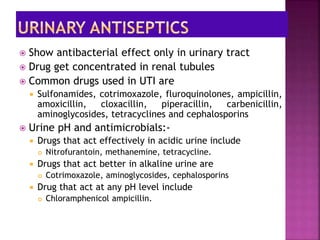
 Show antibacterial effect only in urinary tract
 Drug get concentrated in renal tubules
 Common drugs used in UTI are
 Sulfonamides, cotrimoxazole, fluroquinolones, ampicillin,
amoxicillin, cloxacillin, piperacillin, carbenicillin,
aminoglycosides, tetracyclines and cephalosporins
 Urine pH and antimicrobials:-
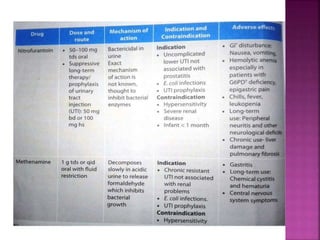
 Drugs that act effectively in acidic urine include
 Nitrofurantoin, methanemine, tetracycline.
 Drugs that act better in alkaline urine are
 Cotrimoxazole, aminoglycosides, cephalosporins
 Drug that act at any pH level include
 Chloramphenicol ampicillin.
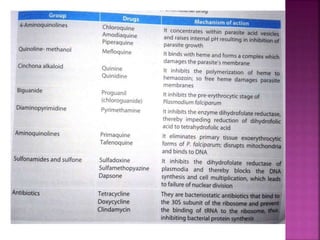
 Antimalarial drugs are used for prophylaxis,
treatment and prevention of relapses of
malaria.
 Malaria is caused by plasmodium parasite
 Transmitted by the bite of infective female
anopheles mosquito
 Species of plasmodium includes
 P.vivax
 P.falciparum
 P.malaria
 P.ovale.
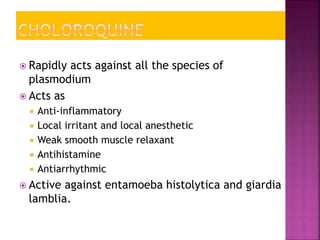
 Rapidly acts against all the species of
plasmodium
 Acts as
 Anti-inflammatory
 Local irritant and local anesthetic
 Weak smooth muscle relaxant
 Antihistamine
 Antiarrhythmic
 Active against entamoeba histolytica and giardia
lamblia.
 Uses:-
 All plasmodium species
 Extraintestinal amebiasis
 Rheumatoid arthritis
 Discoid lupus erythematosus
 Leprosy
 Photogenic reactions.
 Side effects:-
 Nausea
 Vomiting
 Anorexia
 Uncontrolled itching
 Epigastric pain
 Uneasiness and difficulty in accommodation
 Mefloquine is effective drug for prophylaxis of
malaria among travellers to endemic areas with
multidrug resistance 250 mg per week is started
preferably 1-2 weeks before travelling.
 It is not recommended for prophylaxis in residents
of the endemic area.
 It cannot be given parenterally and is not used in
complicated or severe malaria
 Individual can have dizziness, nausea, vomiting,
diarrhea, abdominal pain, sinus bradycardia, and
Q-T prolongation as its side effects
 It destroys erythrocytic forms of the parasite
similar to chloroquine but it is less effective and
more toxic than it.
 It inhibits the polymerization of heme; free heme
damages the membrane of the parasite.
 It has mild analgesic and antipyretic actions and
can also act as local anesthetic and has skeletal
muscle relaxant properties.
 It is given orally for uncomplicated CQ resistant
and IV for complicated or cerebral malaria.
 quinine + doxycycline /clindamycin is the 2 nd
line treatment of CQ-resistant malaria.
 Quinine salt 10 mg /kg between 8 hourly in 5%
dextrose saline is preferred in case of complicated
and severe malaria including cerebral malaria.
 Total 24 hour intake should not exceed 1.8 g in
adults till the patient is able to take orally.
 Patient should not be switched over to oral quinine
as early as possible and oral dose is 10 mg/kg
between 8 hourly not exceeding 2 gm. in a day in
any case.
 It has little role in prophylaxis or in clinical cure of
malaria.
 Atovaquone –proguanil is used in travellers as a
prophylactic while visiting CQ-resistant /multidrug
resistant plasmodium falciparum endemic areas.
PYRIMETHAMINE
 It is used with combination with sulfonamide to treat
falciparum malaria.
 It is relatively safer drug but sometimes it may cause
nausea and rashes
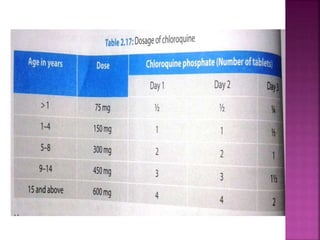
 It is used in dosage of sulfadoxine 1,500mg+
pyrimethamine 75 mg ( 3 tab) single dose ( children 9-
14 year 2 tablet , 5-8 year 1 ½ tablet , 1-4 year 1
tablet)
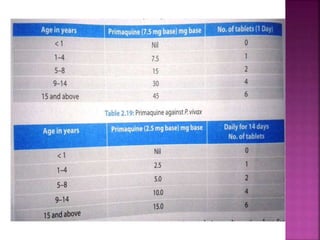
PRIMAQUINE
 It active against the preethrocytic stage of
P.falciparum than that of P.vivax
 Primaquine 15 mg / day given with clindamycin
600 mg tds is an alternative drug for pneumocystis
jiroveci pneumonia in AIDS
 Side effects of primaquine are abdominal pain , GI
upset , weakness or uneasiness in chest , they can
be minimized when drug is taken with meal.
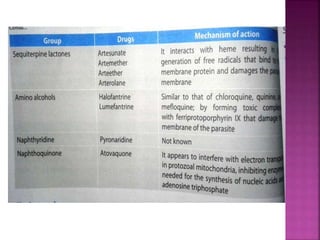
ARTEMISININ DERIVATIVES
 Injectable form of artemisinin derivatives are used
for management of severe and complicated
malaria.
 They are used in case of uncomplicated falciparum
and for severe and complicated falciparum
malaria.
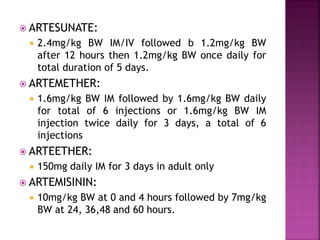
 ARTESUNATE:
 2.4mg/kg BW IM/IV followed b 1.2mg/kg BW
after 12 hours then 1.2mg/kg BW once daily for
total duration of 5 days.
 ARTEMETHER:
 1.6mg/kg BW IM followed by 1.6mg/kg BW daily
for total of 6 injections or 1.6mg/kg BW IM
injection twice daily for 3 days, a total of 6
injections
 ARTEETHER:
 150mg daily IM for 3 days in adult only
 ARTEMISININ:
 10mg/kg BW at 0 and 4 hours followed by 7mg/kg
BW at 24, 36,48 and 60 hours.
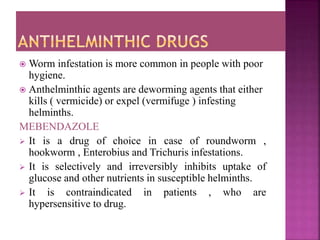
 Worm infestation is more common in people with poor
hygiene.
 Anthelminthic agents are deworming agents that either
kills ( vermicide) or expel (vermifuge ) infesting
helminths.
MEBENDAZOLE
 It is a drug of choice in case of roundworm ,
hookworm , Enterobius and Trichuris infestations.
 It is selectively and irreversibly inhibits uptake of
glucose and other nutrients in susceptible helminths.
 It is contraindicated in patients , who are
hypersensitive to drug.
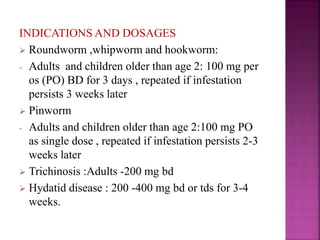
INDICATIONS AND DOSAGES
 Roundworm ,whipworm and hookworm:
- Adults and children older than age 2: 100 mg per
os (PO) BD for 3 days , repeated if infestation
persists 3 weeks later
 Pinworm
- Adults and children older than age 2:100 mg PO
as single dose , repeated if infestation persists 2-3
weeks later
 Trichinosis :Adults -200 mg bd
 Hydatid disease : 200 -400 mg bd or tds for 3-4
weeks.
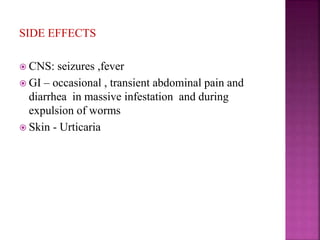
SIDE EFFECTS
 CNS: seizures ,fever
 GI – occasional , transient abdominal pain and
diarrhea in massive infestation and during
expulsion of worms
 Skin - Urticaria
 ALBENDAZOLE
 It is a congener of mebendazole with actions and
mechanism of action similar to mebendazole.
INDICATIONS AND DOSAGE
 Ascaris, hookworm , enerobius and trichuris : A
single dose of 400 mg ( for adults and children
above 2 years ), 200 mg for 1-2 year age.
 Tapeworm and strongyloidosis : 400 mg daily for
3 consecutive days.
 Neurocysticercosis : 400 mg bd for 8-15 days
 Cutaneous larva margins : 400 mg bd for 4 weeks
repeat after 2 weeks ( if required) up to 3 courses.
SIDE EFFECTS
 CNS- Dizziness, headache, vertigo, fever
 Dermatologic –Alopecia
 GI – Abdominal pain , nausea , vomiting
 Hepatic – Jaundice , increased LFTs.
PYRANTEL PAMOATE
 Efficacy of pyrantel pamoate against Ascaris ,
Enterobius , and Ancylostoma is high than that of
mabendazole.
MECHANISM OF ACTION
 Pyrantel pamoate blocks neuromuscular action ,
paralysing the worm and causing its expulsion
INDICATIONS AND DOSAGE
 Ascaris ,Enterobius , and Ancylostoma : 10 mg /kg
in a single dose is recommended .
 A 3 day course for Necator
 SIDE EFFECTS
 CNS- headache , fever, dizziness, insomina,
weakness
 GI- Anorexia, nausea, vomiting , abdominal
cramps , diarrhea
 Skin- Rash
PIPARAZINE CITRATE
 It blocks the action of acetylcholine and therby
contractions in the worms
 Flaccid paralysis results and the worms are expelled.
 Adverse effects are mild GI symptoms – headache ,
dizziness
 It is indicated for roundworm in dosage of 4 g once a
day for consecutive days ( for adults)
 0.75 g/ year ( children) maximum 4 g
 pinworm infestations dosages of 50 mg /kg (
maximum 2 g) once a day for 7 days or 75 mg/kg (
maximum 4 g) single dose repeated after 3 weeks .
 It is also safe in pregnancy but contraindicated in renal
insufficiency and in epileptics.
LEVAMISOLE ,TETRAMINSOLE
 They are active against many nematodes , but there
use is restricted to ascariasis and ancylostomiasis.
 For ascariasis dosage- single dose for adults , 100
mg for children and 20-39 kg body weight ,50 mg
for 10-19 kg and in case of ancylostomiasis two
doses at 12 hour intervals is used.
 Nausea, abdominal pain , giddiness , fatigue,
drowsiness are its side effects.
DIETHYLCARBAMAZINE CITRATE:-
 Is a drug for filariasis caused by nematodes
wuchereria bancrofti and brugia malayi
 Highly selective effect on microfilariae
 Filariasis : 2mg/kg tds as first line drug
 Pulmonary eosinophilia 2-4mg/kg tds for 2-3
weeks
 Side effects: Nausea, loss of appetite,
headache, weakness and dizziness
 Scabies caused by sarcoptes scabiei (itch mite)
 Transmitted by close body contact with an
infected person.
 CROTAMITON:-
 Effective against lice and scabies
 Available in cream and lotions
 In parasitic infestation of scabies scrub the entire
body with soap and water.
 Remove scales and crusts
 Apply a thin layer of cream over entire body
 Apply second coat in 24 hours.
 Wait for another 48 hours and then wash off.
 Repeat treatment in 7-10 days
 LINDANE:-
 Appears to inhibit neuronal membrane functions
in arthropods, causing neuronal hypersensitivity,
seizures and death after penetrating the
parasite’s exoskeleton.
 Indications
 Scabies and pediculosis
 Side effects
 Dizziness
 Seizures
 Skin irritation
 Contraindications:-
 Hypersensitive to drug or its components
 Seizures
 Inflamed skin
 Premature neonates.
 PERMETHRIN:-
 Act on parasite nerve cells to disrupt the sodium
channel current, causing parasitic paralysis
 Indications and dose:-
 Pediculus capitis infection: 25-50ml of liquid applied
to hair and scalp for 10 minutes and rinse with water.
 Sarcoptes scabies infestation: massage into skin from
the head to the soles. Infants: apply on hairline, neck,
scalp and forehead and wash off after 8-14 hours.
 Side effects:-
 Pruritus
 Burning
 Stringing
 Edema
 Tingling
 Scalp numbness or discomfort
 Mild erythema and scalp rash.
 BENZYL BENZOATE:-
 Available in the form of liquid 25% emulsion
 Applied to the entire body below the chin
including the soles of the feet after hot scrub
bath.
 Repeat the procedure after 12hours and after the
next 12 hours the hot scrub bath should be
repeated.
 May cause irritation
 These drugs inhibit viral multiplication
 But also interfere with host cell function
because the viral multiplication takes place
within the host cell.
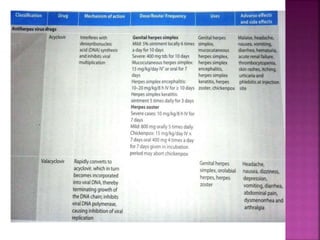
Classifications:-
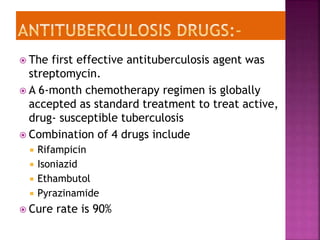
 The first effective antituberculosis agent was
streptomycin.
 A 6-month chemotherapy regimen is globally
accepted as standard treatment to treat active,
drug- susceptible tuberculosis
 Combination of 4 drugs include
 Rifampicin
 Isoniazid
 Ethambutol
 Pyrazinamide
 Cure rate is 90%
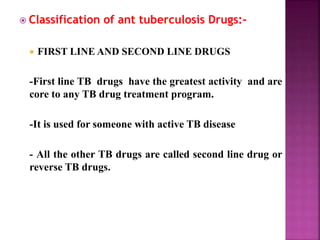
 Classification of ant tuberculosis Drugs:-
 FIRST LINE AND SECOND LINE DRUGS
-First line TB drugs have the greatest activity and are
core to any TB drug treatment program.
-It is used for someone with active TB disease
- All the other TB drugs are called second line drug or
reverse TB drugs.
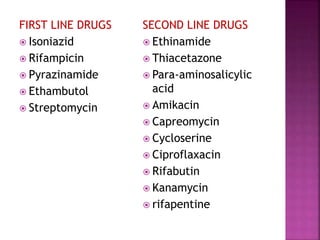
FIRST LINE DRUGS
 Isoniazid
 Rifampicin
 Pyrazinamide
 Ethambutol
 Streptomycin
SECOND LINE DRUGS
 Ethinamide
 Thiacetazone
 Para-aminosalicylic
acid
 Amikacin
 Capreomycin
 Cycloserine
 Ciproflaxacin
 Rifabutin
 Kanamycin
 rifapentine
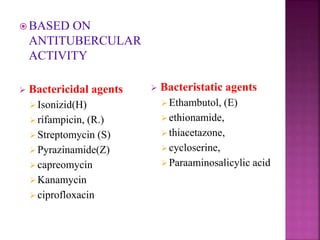
 BASED ON
ANTITUBERCULAR
ACTIVITY
 Bactericidal agents
Isonizid(H)
rifampicin, (R.)
Streptomycin (S)
Pyrazinamide(Z)
capreomycin
Kanamycin
ciprofloxacin
 Bacteristatic agents
Ethambutol, (E)
ethionamide,
thiacetazone,
cycloserine,
Paraaminosalicylic acid
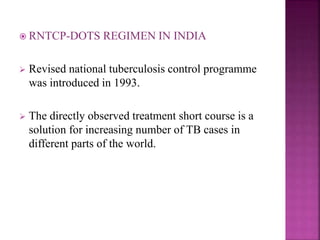
 RNTCP-DOTS REGIMEN IN INDIA
 Revised national tuberculosis control programme
was introduced in 1993.
 The directly observed treatment short course is a
solution for increasing number of TB cases in
different parts of the world.
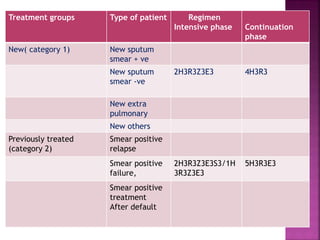
 DOTS REGIMENTreatment groups Type of patient Regimen
Intensive phase Continuation
phase
New( category 1) New sputum
smear + ve
New sputum
smear -ve
2H3R3Z3E3 4H3R3
New extra
pulmonary
New others
Previously treated
(category 2)
Smear positive
relapse
Smear positive
failure,
2H3R3Z3E3S3/1H
3R3Z3E3
5H3R3E3
Smear positive
treatment
After default
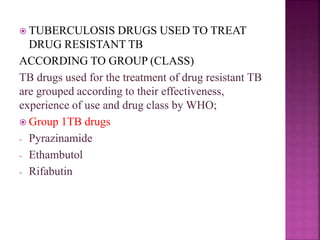
 TUBERCULOSIS DRUGS USED TO TREAT
DRUG RESISTANT TB
ACCORDING TO GROUP (CLASS)
TB drugs used for the treatment of drug resistant TB
are grouped according to their effectiveness,
experience of use and drug class by WHO;
 Group 1TB drugs
- Pyrazinamide
- Ethambutol
- Rifabutin
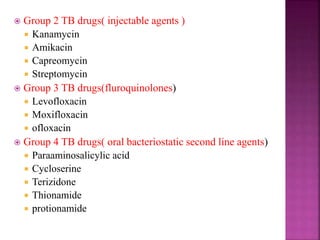
 Group 2 TB drugs( injectable agents )
 Kanamycin
 Amikacin
 Capreomycin
 Streptomycin
 Group 3 TB drugs(fluroquinolones)
 Levofloxacin
 Moxifloxacin
 ofloxacin
 Group 4 TB drugs( oral bacteriostatic second line agents)
 Paraaminosalicylic acid
 Cycloserine
 Terizidone
 Thionamide
 protionamide
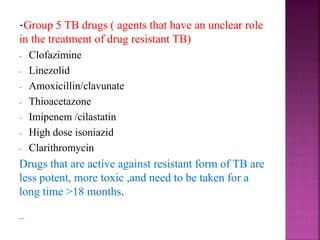
-Group 5 TB drugs ( agents that have an unclear role
in the treatment of drug resistant TB)
- Clofazimine
- Linezolid
- Amoxicillin/clavunate
- Thioacetazone
- Imipenem /cilastatin
- High dose isoniazid
- Clarithromycin
Drugs that are active against resistant form of TB are
less potent, more toxic ,and need to be taken for a
long time >18 months.
 DRUGS FOR LEPROSY
 Sulfones- Dapsone
 Anti tubercular drugs- Rifamicin, Ethionamide,and
protionamide
 Phenazine derivative –Clofazimine
 Other antibiotics- Ofloxacin, moxifloxacin,
minocycline, claithromycin
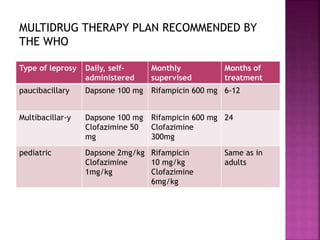
MULTIDRUG THERAPY PLAN RECOMMENDED BY
THE WHO
Type of leprosy Daily, self-
administered
Monthly
supervised
Months of
treatment
paucibacillary Dapsone 100 mg Rifampicin 600 mg 6-12
Multibacillar-y Dapsone 100 mg
Clofazimine 50
mg
Rifampicin 600 mg
Clofazimine
300mg
24
pediatric Dapsone 2mg/kg
Clofazimine
1mg/kg
Rifampicin
10 mg/kg
Clofazimine
6mg/kg
Same as in
adults
LEPRA REACTIONS
 acute exacerbations
 triggered by acute infections, stress, anxiety and
treatment with dapsone.
 Clinical indications of a reactions are
 Nerve pain
 Loss of sensation
 Loss of function
 Severe and irreversible
 Treatment with multidrug therapy reduces the
frequency and severity of lepra reactions
TYPE 1 LEPRA REACTIONS OR REVERSAL
REACTIONS
 These are associated with the development of M.leprae
antigenic determinants.
 Delayed hypersensitivity reactions and may occur in both
paucibacillary leprosy and multibacillary leprosy.
 There is a high risk of permanent damage to the peripheral
nerve trunks.
 Cutaneous manifestations of a type 1 reaction generally do
not require additional therapy other than aspirin. Patient
may have loss of sensation or other peripheral nerve
symptoms.
 Administer corticosteroids or clofazimine should be
started immediately to prevent permanent damage.
TYPE 2 REACTIONS
 It is known as erythema nodosum leprosum in which new
lesions appear and the existing lesions become worse.
 Fever , lymphadenitis, myositis and neuralgia may occur.
 They are associated with circulation and tissue deposition
of immune complexes .
 They are an antibody response or immune complex
response to M. leprae antigenic determinants which occur
only in multibacillary leprosy.
 Type 2 reactions can be treated with clofazimine which is
effective due to its anti-inflammatory properties.
 Chloroquine, corticosteroids or thalidomide and
pentoxyphylline are also effective .
 Daspone should be continued.
DRUG DOSE/ROUTE REMARK
Corticosteroid/
prednisone
1mg/kg up to 80mg/day
tapered over several
months
thalidomide Initial dose is 100-
300mg/day
Once symptoms subside
tapered by 50mg every 2-4
weeks.
MOA: reduces
systemic
concentration of
tumor necrosis factor
alpha.effective
against eryema
nodosum leprosum
pentoxiphylline 400-800mg 3 times/day MOA unknown
Decrease levels of
TNF Alpha.
 Chemoprophylaxis:-
 1% of contacts develop clinical disease
 For child contact : Dapsone 100mg daily and
rifampicin 600mg once a month for 6 months or
till the contact case becomes noninfectious are
recommended.
 a single dose of Acedapsone IM injection for
every 10 weeks is recommended.
 Future therapy:-
 Diarylquinolone, new drug with bactericidal
activity which inhibits ATP synthesis is an option
for the future.
 Anti cancer drug inhibits the growth of
cancer cells by killing them or modifying
their growth.
 CLASSIFICATION:-
 Cytotoxic Drugs
 Targeted Drugs
 Hormonal Drugs
 ALKYLATING AGENTS:-
 Mechlorethamine:-
 Cytotoxic and radiomimetic action
 Highly reactive
 Dose: 0.1mg/g Iv daily for 4 days
 Indications: Hodgkin’s and Non-Hodgkin’s lymphomas
 S/E: Nausea, vomiting and Hemodynamic changes
 Cylophosphamide:-
 Immunosuppressant
 Indication: solid tumors
 Dose: 2-3mg/kg/day or 10-15mg/kg/day IV every7-10days
IM.
 S/E: Alopecia, cystitis
 Ifosfamide:-
 Indications: bronchogenic, breast, testicular,
bladder head and neck carcinomas, osteogenic
sarcoma and some lymphomas.
 Chlorambucil:-
 Slow acting agent, which act on lymphoid tissue
 Indications: chronic lymphatic leukemia, non-
hodgkin’s lymphoma and solid tumors.
 Dose: 4-10mg(0.1-0.2mg/kg)daily for 3-6 weeks then
2mg daily as maintenance dose.
 Melphalan:-
 Indications: advanced ovarian cancer, multiple myeloma
 Dose: 10mg daily for 7 days or 6mg /day for 2-3 weeks.
 Complications: bone marrow depression, infections,
pancreatitis and dirrhea.
 Busulfon:-
 Indication: chronic myeloid leukemia
 Dosage: 2-6mg/day orally
 S/E: hyperuricaemia, pulmonary fibrosis, skin
pigmentation and sterility
 Dacarbazine:-
 Indication: malignant melanoma, hodgkin’s
lymphoma.
 Dose: 3.5mg/kg/day IV for 10 days. Repeated
after 4 weeks.
 A/E: nausea, vomiting, flu-like symptoms,
neuropathy and myelosupression.
 Plantinum coordination complexes:-
 Cisplatin
 It is drug of choice in case of metastatic testicular
and ovarian carcinoma and can also be used in
other solid tumors like lung , bladder , esophageal
, gastric, hepatic,head and neck carcinomas.
 It is administered slow IV infusion in dosage of
50-100 mg/m2 .
 It has highly emetic action ,so antiemetics are
routinely administered before infusing it.
 It can also cause renal toxicity, tinnitus,
deafness,sensory neuropathy,and
hyperurecemia
CARBOPLATIN
 Better tolerated drug than cisplatin
 Indication-
 ovarian carcinoma of epithelial origin
 squamous cell carcinoma of head and neck
 Small cell lung cancer
 Breast cancer
 seminoma
OXALIPLATIN
 Indications
 Colorectal cancer
 Gastro esophageal CA
 Pancreatic CA
 DOSE-85 mg /m2 IV every 2 weeks
 SIDE EFFECTS-Diarrhea , acute allergic reactions
,sensory parathesias
ANTIMETABOLITES
METHOTREXATE
 It is an antineoplastic drug and it has an
immunosuppressant action
 INDICATIONS
 Rheumatoid arthritis
 Psoriasis
 Auto immune disorders
 DOSE : -15-30 mg /day for 5 days orally
-20-40 mg /m2 BSA IM or IV in
choriocarcinoma
 SIDE EFFECTS
 Megaloblastic anemia in lower doses
 Pancytopenia in higher doses
 Mucositis
 Diarrhea
 GI bleed
 MERCAPTOPURINE
 It is highly effective antineoplastic agent
INDICATIONS
 Childhood acute leukemia
 Choriocarcinoma
 Solid tumors
DOSE
 2.5 mg /kg/day ,half dose for maintenance
TOXIC EFFECTS
 Bone marrow depression
 Nausea
 Vomiting
 Reversible jaundice
 hyperuricemia
 5-Flurouracil
INDICATIONS
1. Colon, rectum, stomach, pancreas, liver, urinary,
bladder, head and neck malignancies
DOSE
 500 mg/m2 IV infusion over 1-3 hours weekly for 6-8
weeks or
 12 mg /kg/day for 4 days followed by 6 mg /kg/IV on
alternate days
SIDE EFFECTS
 Myelosuppression
 Muositis
 Diarrhea
 Nausea
 vomiting
 CYTARABINE
Indications – leukemias ,lymphomas not for solid
tumors
Dose – IV 100 mg /m2 once or twice for 5-10 days
or by continous infusion over 5-7 days
Toxic effects
 Leukopenia
 Thrombocytopenia
 Anemia
 Mucositis
 diarrhea
MICROTUBULE DAMAGING AGENTS
 VINCRISTINE
INDICATIONS
 Myeloid leukemia
 Hodgkins disease
 Wilms tumor
 Ewings sarcoma
 Neuroblastoma
 Carcinoma lung
DOSE
 1.5-2 mg/m2 BSA IV weekly
SIDE EFFECTS
 Peripheral neuropathy
 Alopecia
 Ataxia
 Nerve palsies
 Postural hypotension
 Paralytic ileus
 Urinary retention
 seizures
 VINBLASTIN
Indications-
 Hodgkin's disease
 Kaposi sarcoma
 Neuroblastoma
 Non- Hodgkin's lymphoma
 Brest and testicular carcinoma
Dose – 0.1 -0.15 mg /kg IV weekly 3 doses
Side effects
 Bone marrow toxicity
 Neurotoxicity
 Alopecia
 PACLITAXEL
 Indications
 Metastatic ovarian cancer
 Breast CA
 Head and neck CA
 Small cell lung CA
 Esophageal adenocarcinoma
 Urinary and hormone refractory prostrate CA
 Dose
 135-175 mg/m2 by infusion over 3 hour and repeat every
weeks
 Side effects-
 Nausea
 Chest pain
 Arthralgia
 Myalgia
 Mucositis
 edema
 ESTRAMUSTINE
 Indications
 Advanced and metastatic prostrate CA
 DOSE
 4-5 mg /kg orally 3 times daily
 Side effects
 Gynecomastia
 Impotence
 Fluid retention
 Increased risk of thromboembolism
 Impaired glucose tolerance
 TOPOISOMERASE-II INHIBITORS
 ETOPOSIDE
 INDICATIONS
 Testicular tumors
 Lung cancer
 Hodgkin's lymphoma
 Carcinoma of bladder
 Stomach CA
 DOSE
 50-100 mg/m2 /day IV for 5 days
 100 – 200 mg /day orally
 Side effects
 Alopecia
 Leukopenia
 GIT disturbance
 TOPOISOMERASE –I INHIBITORS
 TOPOTECAN
 INDICATIONS
 Cervical cancer
 Metastatic carcinoma of ovary
 Small cell lung cancer after primary chemotherapy has
failed
 DOSE
 1.5 mg/m2 IV min daily for 5 days every 3 weeks 4 or
more cycles
 SIDE EFFECTS
 Bone marrow depression
 Pain in abdomen
 Vomiting
 Anorexia
 diarrhea
 IRINOTECAN
 INDICATIONS
 Metastatic /advanced colorectal carcinoma
 Cancer of lung, cervix,ovary and stomach
 DOSE
 125 mg/ m2 IV over 90min, weekly for 4 weeks
 SIDE EFFECTS
 Neutropenia
 Thrombocytopenia
 Hemorrhage
 Body ache
 weakness
 ANTIBIOTICS
 ACTINOMYCIN D
 Indications
 Wilms tumor
 Chidhood rhabdomyosarcoma
 Ewings sarcoma
 Metastatic testicular carcinoma
 DOSE
 15 micro/kg IV daily for 5 days
 SIDE EFFECTS
 Vomiting
 Stomatitis
 Diarrhea
 Erythema
 Desquamation of skin
 Alopecia
 Bone marrow depression
 DOXORUBICIN
They act by blocking DNA as well as RNA synthesis
 INDICATIONS
 Acute myeloid
 Lymphoblastic leukemia
 Solid tumors like breast , thyroid,ovary ,bladder
 Lung cancer
 Sarcomas
 Neuroblastoma
 DOSE
 30-50 mg/m2 BSA IV for 3 days then repeated every 3-4 weeks
 SIDE EFFECTS
 Cardiotoxicity
 Bone marrow depression
 Alopecia
 Stomatitis
 Vomiting
 Local tissue damage
 EPIRUBICIN
 INDICATIONS
 Breast cancer
 Gastroesophageal CA
 Pancreatic CA
 Hepatic CA
 Bladder CA
 DOSE
 60-90 mg/m2 IV over 15min, repeated at 3 weeks
 Total dose 900 mg /m2 is to be given to avoid cardio
toxicity
 SIDE EFFECTS
 Alopecia
 Hyperpigmentation of skin and oral mucosa
 Painful oral ulcers
 Fever
 GI symptoms
 MITOMYCIN C
 This drug is usually combined with 5 Flu and
radiation
 It generate free radicals to damage DNA
 INDICATIONS
 Resistant cancers of stomach, cervix, colon,
rectum,breast etc.
 DOSE
 10 mg/ m2 BSA, infused IV in one day or divided
in 5 doses and infused over 5 days
 Injections are repeated only after 6 weeks or more
 SIDE EFFECTS
 It affects bone marrow and GIT
 TARGETED DRUGS
- IMATINIB
- GEFITINIB
- ERLOTINIB
- BEVACIZUMAB
- SUNITINIB
 IMATINIB
 INDICATIONS – Chronic myeloid leukemia
 DOSE-
 400 mg/ day with meals
 Accelerated phase of chronic myeloid leukemia dose is
increased to 600-800 mg /day
 SIDE EFFECTS
 Abdominal pain
 Vomiting
 Fluid retention
 Peri orbital edema
 Pleural effusion
 Myalgia
 Liver damage
 Chronic heart failure
 GEFITINIB
 INDICATIONS- Non-small cell lung cancer
 DOSE- 250 mg/ day orally
 SIDE EFFECTS
 Skin rashes
 Diarrhea
 Nausea
 Anorexia
 Itching
 ERLOTINIB
It can be combined with gefitinib for advanced
Metastatic pancreatic cancer
 DOSE- 100- 150 mg od to be taken 1 hour before
or 2 hours after meals.
 Side effects and adverse effects are similar to
gefitinib
 SUNITINIB
 INDICATIONS- Metastatic renal cell carcinoma,
GI stromal tumor
 DOSE- administered orally daily in 4 weeks cycle
 SIDE EFFECTS – Hypertension , rashes, diarrhea,
weakness, bleeding, proteinuria, hypothyroidism,
neutropenia
 BEVACIZUMAB
In combination with 5 FU
Indications
 Metastatic colorectal cancer
 Metastatic non small cell lung cancer
 Breast cancer
 Glioblastoma
DOSE- IV ever 2-3 week
SIDE EFFECTS
 Rise in BP
 Arterial thromboembolism leading to heart attack ,
stroke, hemorrhage, heart failure, proteinuria, GI
perforation, healing defects
 HORMONAL DRUGS
 GLUCOCORTICOIDS
 ESTOGENS
 GONADOTROPIN-RELEASING HORMONE
AGONISTS
 PROGESTINS
 GLUCOCORTICOIDS
 INDICATIONS
 Acute childhood leukemia
 Lymphomas
 Controlling complications like hypercalcemia,
hemolysis
 Bleeding due to thrombocytopenia ,retinoic acid
syndrome , increased intracranial tension,
mediastinal edema
 Amongst all prednisolone / dexamethasone are
most commonly used drugs.
 ESTOGENS
 They helps to reduce symptoms in carcinoma
prostrate – Fosfestrol 600 -1200 mg IV initially
and for maintenance 120- 240 mg orally can be
used.
 GONADOTROPIN –RELEASING HORMONE
AGONISTS
 They are generally used in combination with
antiandrogens
 They have palliative effect In advanced estrogen
/androgen dependent carcinoma breast / prostrate
 PROGESTIN
 They are used in palliative treatment of metastatic
carcinoma of breast

Chemotherapy

  • 1.
    SANJAY JOSEPH ASSISTANT PROFESSOR B.C.M.COLLEGE OF NURSING sanjayjoseph86@gmail.com
  • 2.
     Chemotherapy ininfectious diseases is the use of chemicals for the treatment of diseases caused by bacteria and other pathogenic microorganisms , parasites and tumor cells.  Antimicrobial's are any substance that kills or inhibits the growth of a microorganism.  All antibiotics are antimicrobials , but not all antimicrobials are antibiotics .  The first antibiotic was discovered by Alexander Fleming in 1928.
  • 3.
    BASED ON SOURCEOF ORIGIN SOURCE OF ORIGIN EXAMPLES fungi Penicillin, cephalosporin, griseofulvin bacteria Polymixin b, tyrothricin, colistin, azetronam, bacitacin actinomycetes Aminoglycosides, macrolides, tetracyclines, carbapenems.
  • 4.
    a. Sulfonamides related drugs b.Beta-lactam antibiotics c. Aminoglycosides d. Tetraccyclines e. Macrolides f. Lincosamide g. Fluroquinolones h. Diaminopyrimidines i. Nitrobenzene derivatives j. Glycopeptide antibiotics k. Oxazolidinone linezolid l. Polypeptide antibiotic m. Nitrofuran derivatives n. Nitroimidazoles o. Nicotinic acid derivatives p. Polyene antibiotics q. Azole derivatives r. Others: rifampicin, clotrimazole, fluconazole, ketoconazole BASED ON CHEMICAL STRUCTURE:
  • 5.
     Primarily Bacteriostatic: Stops the organism from multiplying but does not kill it.  All antimicrobials are bacteriostatic at some (low) concentrations  Some antimicrobials are bacteriostatic at high concentrations.  Primarily bactericidal:  Kills bacteria that are multiplying  The rate and extent of bactericidal activity may be dependent on concentration and time.
  • 6.
    TYPE EXAMPLE ANTIBACTERIAL Penicillin,aminoglycosides, erythromycin, fluroquinolones ANTIFUNGAL griseofulvin, amphoterin B, nevirapine. ANTIVIRAL Acyclovir, zidovudine, nevirapine. ANTIPROTOZOAL Metranidazole, cloroquine, pyrimethamine ANTIHELMINTHIC Mebendazole, pyrantel, DEC, niclosamide.
  • 7.
     Based onantibacterial spectrum drugs are classified as  Narrow spectrum  Broad spectrum  Intermediate spectrum  NARROW SPECTRUM:-  Imply activity against some limited subset of bacteria. E.g. aztreonam, polymyxin, penicillin, isoniazid.  BROAD SPECTRUM:-  Act against a wide range of bacteria. e.g. imipenm, tetracyclines, quinolones.  INTERMEDIATE SPECTRUM:-  E.g. penicillin/clavulanic acid, cephalosporins.
  • 8.
     Inhibition ofcell wall synthesis: penicillin, cephalosporins, bacitracin, vancomycin, cycloserine, polymyxin,carbapenems.  Inhibit protein synthesis: inhibit 30s subunits- aminoglycosides, tetracycline; inhibit50s subunits- macrolides chloramphenicol, clindamycin, linezolid streptogramins  Damage cell membrane: polymyxin, polyenes- amphotericin B, colistin, nystatin.  Cause misreading of mRNA code and affect permibility: aminoglycosides-streptomycin gentamycin.  Interference with DNA function: rifampicin  Interference with DNA synthesis: Acyclovir, zidovudine.  Inhibit DNA gyrase: fluoroquinolones  Interference intermidiate metabolism: sulfonamides, trimethoprim, PAS, Metronidazole, pyrimethamine, sulfones.
  • 9.
     Have highlyselective toxicity to the pathogenic microorganisms in host body  Have no or less toxicity to the host  Low propensity for development of resistance  Not include hypersensitivity reactions in the host.  Have rapid and extensive tissue distribution  Be free of interactions with other drugs  Be relatively inexpensive.
  • 10.
     The simultaneoususe of two or more drugs separately or combination of drug in a single pharmaceutical formulation is called drug combination  Effect of combination therapy:-  Additive/indifferent: action of the combination is equal to the sum of the actions of each component.  Synergistic: action of the combination is significantly greater than the sum of the actions of each component. It occurs, when a chemotherapeutic agent potentates the action of other chemotherapeutic agent
  • 11.
     Sequential inhibitionof successive steps in metabolism, e.g. trimethoprim sulfame thoxazole.  Sequential inhibition of cell wall synthesis, e.g. mecillinam-ampicillin  Facilitation of drug entry of one antibiotic by another e.g. beta lactam minoglycoside  Inhibition of inactivating enzymes, e.g. ampicillin- clavulanic acid.  Prevention of emergence of resistant populations e.g, erythromycin-rifampicin  Antagonistic: action of the combination is significantly less than the sum of the actions each component. E.g. bacteriostatic drugs inhibits action of bctericidal drugs
  • 12.
     Use ofantimicrobial combinations  Combination of two or more antimicrobial agents is recommended in a few scenarios such as  When agents exhibit synergistic activity against a microorganism  When critically ill patient requires empiric therapy before microbiological etiology and or microbial susceptibility can be determined  To extend the antimicrobial spectrum beyond that achieved by use of a single agent for treatment of polymicrobial infections  To prevent emergence of resistance  To reduce severity and incidence of adverse effects.
  • 13.
     Disadvantage ofantimicrobial combinations:-  Increased incidence and variability of adverse events ; toxicity of one agent may be enhanced by other- e.g. vancomycin+ tobramycin produce exaggerated kidney failure.  Increased chances of superinfections  May lead to emergence of resistance  Higher cost of therapy.
  • 14.
     SUSCEPTIBILITY:-  Refersto the presence of targets of antimicrobial activity with in genre or species of bacteria. Antimicrobial susceptibility testing measures the ability of a specific organism to grow in the presence of a particular drug in vitro. E.g. E.Coli is susceptible to gentamicin.  Predictable susceptibility: we can list specific drugs, doses and intervals for which we can expect efficacy for certain bacteria. All isolates of coryne-bacterium, bacillus, beta hemolytic streptococci are susceptible to pencillin G.
  • 15.
     Unpredictable Susceptibility:some strains of bacteria have acquired resistance to almost all antimicrobials. Expression of susceptibility to a variety of antimicrobials. E.g. enterobacteriaceae, staphylococci, pseudomonas aeruginosa.  SENSITIVITY:-  It is the measure of the concentration of an antimicrobial drug necessary to demonstrate activity against a particular isolate.  e.g. E. coli isolate is sensitive to gentamicin.
  • 16.
     Antimicrobial resistanceis defined as a microorganism’s resistance to an antimicrobial drug that was once able to treat an infection by that microorganism.  can be categorized in three types  Natural or intrinsic resistance  Acquired resistance  First exposure effects.  NATURAL OR INTRINSIC RESISTANCE:-  It refers to the innate ability of a bacterial species to resist activity of a particular antimicrobial agent through its inherent structural or functional characteristics, which allow tolerance of a particular drug or antimicrobial class
  • 17.
     Natural orintrinsic resistance mechanisms include  Inaccessibility off the target; i.e. impermeability resistance due to the absence of an adequate transporter, e.g.aminoglycoside resistance in strict anaerobes.  Multi drug efflux system, i.e acrE in E coli, mexB in P.Aeruginosa.  Drug inactivation, i.e. AmpC cephalosporinase in Klebsiella.  ACQUIRED RESISTANCE:-  It occurs when a particular microorgnism obtains the ability to resist the activity of a particular antimicrobial agent to which it was previously susceptible.  Acquired resistance is of two types  Mutational resistance  Extra chromosomal resistance.
  • 18.
     Mutational resistance:- Target site modification: e.g. streptomycin resistance- mutations in rDNA genes, Beta lactam resistance- change in penicillin binding proteins.  Reduced permeability or uptake  Metabolic bypass: trimethoprim resistance- overproduction of DHF(dihydrofolate) reductase or thi-mutants in S-aureus.  Depression of multidrug efflux systems.  Extrachromosomal resistance:-  Drug inactivation-aminoglycoside-modifying enzymes, beta lactamases, chloramphenicol acetyltransferanse.  Efflux system- tertacycline  Target site modification-i.e. methylation in the 23S component of the 50S ribosomal subunit-Erm methylases.  Metabolic bypass- i.e. trimethoprim resistance –resistant DHF reductase.
  • 19.
     First exposureeffects:-  Refers to the bacteria that survive the first dose of an antibiotic and develop s adaptive resistance.  PROPHYLACTIC USE  EMPIRIC THERAPY  KNOWN PATHOGEN/DEFINITIVE THERAPY  SWITCH THERAPY PROPHYLACTIC USE:-  Used to prevent infection.  In hospital used in surgery to prevent wound infection  Other indications include bacterial endocarditis, post exposure prophylaxis against human immunodeficiency virus infection(needle stick) or meningococcal exposure. TYPES OF ANTIMICROBAL THERAPY
  • 20.
     EMPIRIC THERAPY:- Broad-spectrum antimicrobial agents are used for initial empiric therapy with the intent to cover multiple possible pathogens commonly associated with the specific clinical syndrome.  It is used to cover different organisms capable of causing an infection.  Before initiation of drug, appropriate specimen for stain and cultures of microorganisms should be obtained.  The use of agents in this situation should not extend beyond the time required to obtain results of cultures and susceptibility.
  • 21.
     SWITCH THERAPY:- In ‘switch therapy use’ oral antimicrobials replace intravenous usage for completion of therapy.  IV therapy is employed in serious infections to ensure maximal serum levels.  In patients with infections localized in areas of poor antibiotic penetration and in patients with immunodeficiency states IV antibiotics are recommended for the complete duration of therapy.  KNOWN PATHOGEN/DEFINITIVE THERAPY:-  Definitive antimicrobial therapy is used, when the microbiology laboratory has identified the microorganism causing the infection and the susceptibility pattern is known.  In this therapy the broad spectrum therapy will be narrowed and antimicrobial therapy should be continued with an appropriate narrow-spectrum antibiotic to avoid colonization with resistant organisms, super infections and drug toxicity.
  • 22.
     Factors affectingantimicrobial include  Host factors  Organism-related factors  Drug-related factors  HOST FACTORS:-  Renal and Hepatic function  Kidney and the liver are the primary organs responsible for elimination of drugs from the body  Effective functioning of organs determines the elimination of drug.  Doses might need to be increased to avoid under dosing young healthy patients with rapid renal elimination or those with rapid hepatic metabolism due to enzyme induction by concomitant use of drugs such as rifampicin or phenytoin.
  • 23.
     Age:- Patients atboth extremes of age handle drugs differently, primarily due to differences in body size and kidney function. Pediatric drug dosing is guided by weight In geriatric drug dosing depends on the estimation of creatinine clearance by factoring in age and weight .  Genetic variation:- Genetic susceptibility to the adverse effects of antimicrobial agents has be demonstrated. So testing for such variability before administration of certain drugs. E.g. antiretroviral drug abacvir part of the standard combination treatment for HIV infection, is associated with a well- described and potentially fatal hypersensitivity reaction.
  • 24.
     The riskof experiencing this reaction has been shown to be significantly higher in patients with the human leukocyte antigen allele HLA-B*5701.  Glucose -6- phosphate dehydrogenase deficiency can result in hemolysis in individuals when exposed to certain antimicrobial agents such as dapsone, primaquine and nitrofurantoin.  Pregnancy and lactation:-  In the case of the mother, increases in plasma volume and renal blood flow, especially by the third trimester, can result in more rapid clearance and lower serum levels of pharmaceutical agents including antimicrobial agents.  In case of developing fetus, many antimicrobial agents can be either teratogenic (disturb the development of embryo) or otherwise toxic to the fetus.  penicillin, cephalosporins and macrolides are commonly safe during pregnancy. Tetracyclines and chloramphenicol have fetal and neonatal adverse effects
  • 25.
     History ofAllergy or intolerance:- A history of antimicrobial allergy or intolerance should be routinely obtained in the evaluation and management of infection.  History Of Recent Antimicrobial Use:-  Eliciting a history of exposure to antimicrobial agents in the recent past can also help in selection of antimicrobial therapy  If the causative microorganisms for a current episode of infection has emerged under the selective pressure of recently used antimicrobial agent, it is likely to be resistant to that drug and / or drug class, and an alternative agent should be used.
  • 26.
    HOST DEFENSE IMPAIRMENT The bactericidal activity depends on concentration.  The more compromised the host or the more rapid a cure required , the higher the blood and tissue concentration should be. LOCAL FACTORS  Presence of pus/ secretion and abscess formation decrease efficacy of most antimicrobial agents ,especially sulfonamides and aminoglycosides.  Presence of necrotic material or foreign body including catheters, implants, and prosthesis makes eradication of infection difficult .
  • 27.
     Hematoma formationfoster bacterial growth .Tetracycline's , penicillin's, and cephalosporin's get bound to the degraded hemoglobin in the hematoma.  Lowering of pH at the site of infection reduces activity of macrolide and aminoglycoside antibiotics.  Penetration barriers at certain site prevent access of antimicrobials to the site , e.g. endopthalmitis, sub acute bacterial endocarditis , prostatitis
  • 28.
    ORGANISM RELATED FACTORS Once the organism is ascertained through microbiological studies definite therapy should be initiated based on sensitivity. DRUG RELATED FACTORS  Spectrum of activity  Type of activity- Bacteriostatic / bactericidal  Relative toxicity  Pharmacokinetic profile Drug concentration- The optimum concentration required to inhibit the organism for a particular drug varies Optimum dose interval-It is the sum of the ‘time required for the most effective kill + duration of post antibiotic effects + time for bacterial lag phase’ .There is no method for calculating the optimum dose interval. It is however , an important theoretical concern which should be considered when you decide among options.
  • 29.
     Efficacy atthe site of infection: the efficacy of antimicrobial agents depends on their capacity to achieve a concentration equal to or greater than the minimum inhibitory concentration at the site of infection and modification of activity at certain sites.  Antimicrobial concentrations attained at some sites are often much lower than serum levels e.g. ocular fluid, CSF, abscess cavity, prostate and bone)  E.g. 1st and 2nd generation cephalosporins and macrolides do not cross the blood brain barrier and are not recommended for central nervous system infections.
  • 30.
     Post antibioticeffects: bacterial growth may be inhibited by some antibiotics even after concentration fall.  Their antibiotic effect persist for several hours after removal of some drugs  No bacterial growth occurs for some time after concentrations fall below MIC of antibiotic.  Route of administration  Hospitalized patients with serious infections are often treated with IV antimicrobial therapy  Patients with mild to moderate infections are treated with well absorbed oral microbial agents.  Patients initially treated with parenteral therapy can be safely switched to oral antibiotics, when they become clinically stable.  Evidence of clinical efficacy of the drug.
  • 31.
     Right diagnosisshould be made either clinically or by laboratory.  Right decision should be made whether the chemotherapy is needed or not  Proper selection of drug based on  Specificity  Route of administration  Cost-effectiveness  Safe drug  Proper combination.  easy availability
  • 32.
     Essential drug:drug needed for vast majority of the population.  Right dose: initial loading dose followed by maintenance dose.  Right duration  Right time schedule: to maintain MIC and MBC  Status of the patient:  Age  hepatic and renal function  Pregnancy  lactating mother  immune system of the patient.
  • 33.
     Toxicity  Localirritancy  Systemic toxicity  Masking of an infection  Hypersensitivity reactions  Drug resistance  Superinfection  Nutritional deficiencies  Prolonged use of antimicrobials alter intestinal flora, which synthesis vitamin B12 and K leading to their deficiency.  Neomycin causes morphological abnormalities in the intestinal mucosa leading to malabsorption syndrome and steatorrhea.
  • 34.
     Delay indiagnosis or therapy  Wrong or incomplete diagnosis  No infection, other cause of fever like collagen diseases or malignancy  Non-bacterial infection  Polymicrobial infection  Error in antimicrobial susceptibility testing  Inadequate concentration of antibiotic at the site of infection  Improper dose  Decreased absorption from food or drug interaction  Increased elimination of agent  High protein binding  Poor delivery(vascular disease)
  • 35.
     Decreased activityat the site  Chemical factor(pH etc.)  Antibiotic antagonism  Other factors at the site of infection  Collection requiring drainage  Necrotic tissue  Foreign body  Other host factors  Impaired immune response  Infection in a protected site requiring bactericidal drug or combination(infecting organism present behind barriers such as vegetation on heart valves, inside the eyeball, blood brain barrier  Development of resistance to antimicrobial agents such as presence of dormant or altered organisms, which later give rise to relapse  Superinfection.
  • 36.
     Refers tothe appearance of bacteriological and clinical evidence of new infection during the chemotherapy of a primary one.  Commonly occurs in broad spectrum  This is due to the removal of the inhibitory infulence of the drug-sensitive flora that is normally inhibited in the nasopharynx and other body orifices.  These flora produce antibacterial substance called bacteriocin.  Alteration of normal microbial flora of the host results in growth of exogenous microorganism and endogenous proliferation of microorganisms, which are not sensitive to that particular antibiotic.  So secondary infection is superimposed on the original infection.
  • 37.
     Common causativeorganisms of super infection includes  Candidia or fungal infection  Enterobacteriaceae  (shigella, salmonella, escherichiaklebsiella)  Pseudomonas  Staphylococcus
  • 38.
     Chemoprophylaxis isthe use of antimicrobial agents to prevent infection. RECOMMENDATION  In healthy persons  Penicillin G is given for prevention of gonorrhea or syphilis in patients after contact with infected persons called postexposure prophylaxis.  Malaria- In healthy individuals visiting an endemic area – chemoprophylaxis with chloroquine is given.  To prevent infection in high risk patients;  In neutropenic patients receiving anticancer drugs ,immunosupressive agents and patients with acquired immunodeficiency syndrome, antibacterial like penicillin or fluoroquinolones or cotrimoxazole may reduce the incidence of bacterial infection.
  • 39.
     In patientswith contaminated or exposed wounds as in road traffic accidents.  Catheterization of urinary tract- norfloxacin is used  In burns , to prevent colonization by bacteria  Surgical prophylaxis- prior to surgery chemoprophylaxis is recommended. Adequate antibacterial activity should be present during surgery. Hence the drug is started parenteraliy 30-60 minutes before surgery. A drug which is effective against all organisms that are likely to contaminate the wound is usually selected
  • 40.
     In closecontacts- Chemoprophylaxis is recommended particularly in children ,when infectious cases of leprosy or tuberculosis are in close contact PROBIOTICS  Probiotics are products that containing viable , non pathogenic microorganisms given orally to alter the intestinal microflora.  Lactobacillus, Bifidobacterium , Streptococcus salivarius, some enterococci and Saccharomyces boulardii are some presently tried probiotics.  They are found to be useful in acute infectious diarrhea following antibiotic use.
  • 41.
    GENERAL NURSING IMPLICATIONSWHILE USING ANTIMICOBIALS 1. Assess a. Nephrotoxicity including increased BUN , creatinine , and in elderly creatinine clearance as well. b. Blood studies- Alanine transaminase (ALT) Aspertate aminotransferace (AST) CBC, hematocrit, bilirubin.Test monthly if long term therapy. c. Urine output- If decreasing notify prescriber d. Daily bowel pattern-If severe diarrhea occurs drug would have to be discontinued .Notify the prescriber. e. Allergic reaction including rashes, fever, pruritis , urticaria . Notify the prescriber and discontinue the drug
  • 42.
    f. Bleeding- Eecchymosis, bleeding gums , hematuria, stool guaiac daily g. Over growth of infection- Manifested by perineal itching, fever, malaise, redness, pain, swelling , drainage, rash, diarrhea, change in cough and sputum. 2. Before starting empirical antimicrobial therapy collect and send samples for culture and sensitivity. 3.Assess the culture and sensitivity reports, and identify the infecting organism before starting the definitive antimicrobial agent therapy. 4. Know the difference between bacteriostatic and bactericidal
  • 43.
     Educate thepatient to complete the course of antimicrobial drugs, even after symptoms subside, to prevent the recurrence of infection and to minimize the risk of developing resistance to the antimicrobial agents.  Many antibiotics decrease the effectiveness of birth control pills .Hence ,advise the patients to use other type of contraception if the patient is taking birth control pills.  Drug therapy monitoring should be carried out to know the peak and trough level( level just before the next dose) by drawing blood samples immediately after administration of drug and again 10-30 minutes before the administration of next dose
  • 44.
     Monitor theblood counts to evaluate the effectiveness of the antimicrobial agent( leukocyte counts should return to normal range )  In case patient complains of mild diarrhea , instruct the patient to take buttermilk or probiotics if prescribed to restore normal intestinal flora.  Educate patient and family to report sore throat , bruising , bleeding, and joint pain as they may indicate blood dyscrasias . Also teach them signs and symptoms of possible adverse reactions and to report if any.
  • 45.
    Beta-lactams constitute oneof the most important and most frequently used groups of antibiotics available to combact infectious diseases. PENCILLINS - Pencillins are the oldest class of antibiotics and have a common structure , which they share with the cephalosporins.
  • 46.
    MECHANISM OF ACTION Penicillinare generally bactericidal , inhibiting formation of the cell wall . PENICILLINS Targets the transpeptides/penicillin binding proteins Inhibits the peptidoglycan cross-linking step in the the biosynthesis of the bacterial wall Unstable bacterial cell wall Bacterial cell lysis occurs due to hyperosmosis.
  • 47.
     The reasonpenicillin are able to inhibit penicillin binding proteins (PBPs) is because they structurally resemble the natural substrate D- alanine –alanine, which is found on the side chain of the peptidoglycan chains. Since mammal cells do not have the same type of cell walls, penicillin specifically inhibits only bacterial cell wall synthesis. Each organism has several PBPs and PBPs obtained from different bacterial species differ in their affinity toward different beta-lactam antibiotic .This probably explains the differing sensitivity various gram positive bacterial species to various beta lactam antibiotics.
  • 48.
     CLASSIFICATION:-  NATURAL:- Penicillin  SEMI-SYNTHETIC:-  A. acid resistance  B. Penicilinase resistance  C. Extended spectrum penicillins  Aminopencillins  Cardoxyoencillins  Ureidopencillins  Beta-lactamase inhibitors:-
  • 49.
     SEMISYNTHETIC PENICILLINS Acid –resistant penicillins are acid stable and can be given orally.  Penicillinase –resistant penicillins are resistant to hydrolysis by pencillinase produced by bacteria. They have side chains that protect the beta lactam ring however this partially protects the bacteria also against beta lactam ring. Therefore against other microorganisms –they are less effective than penicillin G .  Extended spectrum penicillins ; these semisynthetic penicillins are active against a variety of gram negative bacilli as well;
  • 50.
    a. Aminopenicillins-These agentscover a wider antibacterial spectrum including many gram negative bacilli. They are orally effective but are sensitive to penicillinases. b. Carboxypenicillins- In addition to activity against gram positive and gram negative organisms are also effective against pseudomonas aeruginosa and proteus infections c. Ureidopenicillins – It has a wider antibacterial spectrum than ticarcillin and are effective against a variety of gram negative organisms including pseudomonas and klebsiella .Moreover , their sodium content is low. Hence ,they have almost replaced carboxypenicillins.
  • 51.
     BETA –LACTAMASE INHIBITORS  Beta-lactamases are enzymes produced by bacteria that open up the beta –lactam ring and inactivate the beta lactam antibiotics.  Beta-lactamase inhibitors bind to and inactivate beta – lactamases preventing the destruction of the beta -lactam antibiotics.  They broaden the antibacterial spectrum of penicillins ,e.g.sulbactam, tazobactam, clavulanic acid.
  • 52.
    POTENTIAL DRUG-DRUG INTERCTIONS Oral contraceptives- penicillins may interact with oral contraceptives and decrease the effectiveness of the oral contraceptives.  Probenecid-This antigout medication may compete with penicillin for renal tubular secretion and result in higher serum levels of penicillin.
  • 53.
    PENICILLIN HYPERSESITIVITY  Thepenicillin allergy results , when in affliated individuals the beta lactam ring binds to serum proteins, initiating an IgE – mediated inflammatory response.  Every time a person is exposed to this allergen, their immune system will mount a response causing rash most commonly and sometimes an anaphylactic reaction.  Some specific symptoms including an itchy rash, swelling of the throat / mouth area and difficulty in breathing.
  • 54.
     PENICILLIN RESISTANCE:- Beta lactamases enzymes inactivate the antibiotic agent by hydrolyzing the peptide bond in the beta lactam ring of the nucleus  Other mechanisms are decreased affinity of the enzyme, specifically PBP for pencillin  PENICILLIN SUBISTITUTES:-  Penicillin substitutes inhibit cell wall synthesis of bacteria  are similar to penicillin  Are narrow-spectrum antibiotics  uses:-  To treat Staphylococci or streptococci infections  Patients with allergic to cephalosporins  Commonly drugs:-  Vancomycin, clindamycin, spectinomycin
  • 55.
     Are semisyntheticantibiotic derived from cephalosporin C, which is produced from cephalosporium acremonium.  Cephalosporins have beta-lactam ring structure that interferes with synthesis off the bacterial cell wall  So are bactericidal  Are grouped into generations by their antimicrobial properties.  Newer generations has a broad spectrum of activity than the one before
  • 56.
     Mechanism ofaction:-  They disrupt the synthesis of the peptidoglycan layer of bacterial cell walls.  USES:-  Gram negative infections: urinary, respiratory, and soft tissue infections due to gram-negative organisms respond-a third generation agent is used.  Surgical prophylaxis: cefazolin is preferred due to its longer half-life and better tissue penetrability.  Meningitis: due to H influenzae, N-meningitidis and pneumoniae-third generation agents are useful- cefotaxime or ceftriaxone may be used. Pseudomonas memingitis- ceftrazidime + aminoglycoside found effective.  Mixed aerobic and anaerobic infections: common following pelvic surgery- a third generation agent are used.
  • 57.
     Typhoid: asalternative to ciprofloxacin  Nosocomial infections: third generation cephalosporins  Limitations:-  Lack of activity against enterococci  Lack of activity against methicillin – resistant staphylococci  Lack of activity against anaerobic gram-negative bacilli.  contraindications:-  Hypersensitivity  In infants less than 1 month cephalosporin 1st and 2nd is contraindicated  Second generation cephalosporins should not be used in patients with seizures
  • 58.
     Precaution:-  Pregnancy Lactation  Renal disease  Hypersensitivity to penicillins  Children  Pharmacodynamics:-  Penetrates well into most of the body fluids(ECF)  It reaches CSF level high enough to treat meningitis.  Penetrate poorly into intracellular fluids and vitreous humor.  Excreted primarily in urine which require dose adjustment  Few drugs have biliary excretion and do not require dose adjustment
  • 59.
     Adverse effects:- Hypersensitivity reactions: 20% of patients allergic to penicillin show cross reactivity to cephalosporins.  Nephrotoxicity: mild  Diarrhea  Bleeding due to hypothrombinemia, which is common among malnourished patients.  Low WBC count  Pain in injection site  Disulfiram-like reaction (flushing, tachycardia and hypotension ) with alcohol  Seizures.  Resistance:-  Beta lactamases and altered target proteins determines resistance.
  • 60.
     Contain abeta lactam ring fused with a five membered penem ring  Have wide antibacterial spectrum  Inhibits various gram positive as well as gram negative organisms  Also active against anaerobes including streptococci, staphylococci enterococci, listeria, enterobacteriaceae, pseudomonas and B,fragilis.  Mechanism of action:-  Inhibits bacterial cell wall synthesis
  • 61.
     USES:-  UTI,skin,respiratory, bone, soft tissue intra abdominal and gynecological infections due to susceptible microorganisms.  Enterobacter  Penicillin-resistant pneumococci and other nosocomial infections resistant to other antibiotics.  Used in combination with aminoglycoside in pseudomonas infections  Active against: H. influenza, anaerobes,, methicillin sensitive staphylococci and streptococci, including S. pneumoniae.  Contraindications:-  Hypersensitivity to any particular imipenem drug or its components  Anaphylactic reaction to beta-lactams  Intramuscular hypersensitivity to local anesthetic of amide type.
  • 62.
     Precaution:-  Pregnancy Lactation  Children  Elderly  Renal disease  Adverse effect:-  High doses-occasionally cause seizures.  Nausea, vomiting, diarrhea  Allergic reactions especially in patients allergic to other beta-lactam antibiotics
  • 63.
     AZTREONAM:-  Inhibitscell wall synthesis  Used mainly for severe aerobic gram-negative bacillary infections, including meningitis  Active against gram negative bacilli including pseudomonas aeruginosa.  Uses:-  Gram negative infections, UTI, septicemia, skin/muscle/bone infections, lower respiratory tract infections, intra-abdominal infections.  Dose and route:-  500mg-2g IV/IM q8-12h; do not exceed 8g/day.  Contraindications:-  hypersensitivity
  • 64.
     First syntheticefficient bacteriostatic antibiotics  Alone act as bacteriostatic agent.  Administered in conjunction with other antimicrobial agents like trimethoprim.  Mechanism of action:-  Sulfonamides inhibit conversion of PABA (p=amino benzoic acid) to dihydropteroate, which is needed for bacteria for folate synthesis and ultimately purine and DNA synthesis.  Classification:-  Short acting: sulfisoxazole, sulfadiazine  Intermediate acting: sulfamethoxazole  Long acting: sulfamethoxypyridazine, sulfadoxine.  Oral nonabsorbable: sulfasalazine  Topical use: sulfacetamide,mefenide silver sulfadiazine.
  • 65.
     Antibacterial spectrum:- Active against gram positive and gram negative bacteria, plasmodium and toxoplasma species.  Residence is wider  resistance to one sulfonamide indicates resistance to all.  Indications:-  Urinary tract infections  Nocardiosis  Toxoplasmosis  Trachoma and conjunctivitis  Lymphogranuloma venereum by chlamydia trachomatis and chancroid( alceration of lymph nodes in the groin.)  Chloroquine resistance malaria  Prophylactic use: streptococcal pharyngitis in rheumatic fever, patients allergic to penicillins.  Burn- to prevent infection  Ulcerative colitis and rheumatoid arthritis.
  • 66.
     Contraindications:-  Patientsallergic to sulfonamides  Patients with prophyria  Neonates  Early and late pregnancy and lactating mothers.  Pharmacokinetics:-  Orally absorbed from GI tract  Distributed easily  Cross BBB  Protein binding varies widely  Metabolized in liver by process of acetylation and glucuronidation(glucuronic acid conjugated withtoxins.  Excreted via kidney
  • 67.
     Mechanism ofaction:-  Sulamethoxazole and trimethoprim in combination block sequential steps in bacterial folate metabolism.  Trimethoprim prevents reduction of dihydrofolate to tetrahydrofolate  Sulfamethoxazole inhibits conversion of p- aminobenzoic acid to dihydrofolate,  This synergy results in maximal antibacterial activity and act as bactericidal.
  • 68.
     Indications:-  Urinarytract infections: uncomplicated, chronic and recurrent.  Bacterial prostatitis  Respiratory tract infection: upper and lower tract infections including bronchitis, sinusitis and otitis media.  Bacterial gastroenteritis due to shigella and E-coli  Typhoid: used as an alternative to fluroquinolones  Pneumocystis jiroveci infection: for prophylaxis and treatment of pneumocystis jiroveci pneumonia in neutropenic and AIDS patients.  Chancroid  Uncomplicated cystitis in women  Nocardia and listeria monocytogenes infections  Methicillin-resistant staphylococcus aureus infections: used if patients cannot tolerate vancomycin.
  • 69.
     Contraindications:-  Anallergic to either drug  Neonates  Early and late pregnancy, lactation  Porphyria  Relative contraindications  Folate deficiency  Liver dysfunction  Renal insufficiency.  Dose:-  Trimethoprim 80mg and sulfamethoxazole 400mg.  Double strength: trimethoprim 160mg and sulfamethoxazole 800mg  Oral/IV infusion.
  • 70.
     Adverse effects:- Those associated with sulfonamide  Folate deficiency  Hyperkalemia  Renal insufficiency  Megaloblastic anemia  Leukopenia  granulocytopenia
  • 71.
     Are antimicrobialsthat act against gram-negative bacteria  They act by inhibiting DNA replication.  The first quinolone, nalidixic acid, was introduced in 1962.  Other quinolones include oxalinic acid and cinoxacin  Classification:-  First generation: nalidixic acid, cinoxacin  Second generation: norfloxacin, ciprofloxacin, lomefloxacin, ofloxacin, levofloxacin  Third generation: sparfloxacin, gatifloxacin, grepafloxacin  Fourth generation: trovafloxacin, moxifloxacin, gemifloxacin.
  • 72.
     Act asbactericidal against various gram- negative organisms like E-coli, Shigella, proteus and Klebsiella.  Mechanism of action:-  Inhibit the bacterial enzyme DNA gyrase which is required for DNA replication and transcription.  By inhibiting the enzyme DNA gyrase quinolones inhibit DNA replication.  The damaged DNA is digested by exonucleases and as a result of which the cell dies leading to the bactericidal action.  USES:-  Uncomplicated UTI and diarrhea due to E-coli, Shigella and proteus.
  • 73.
     Contraindications:-  Infants Dosage:-  0.5-1g 3-4 times a day per oral.  Adverse effects:-  Hemolytic anemia  Allergic reactions  Central nervous system: headache, myalgia, vertigo, visual disturbance and drowsiness  Occasionally seizures.
  • 74.
     Synthetic fluorinatedanalogue of nalidixic acid.  They exhibit concentration-dependent bactericidal activity by inhibiting the activity of DNA gyrase and topoisomerase , enzymes essential for bacterial DNA replication.
  • 75.
     CLASSIFICATION  Oldergroup: ciprofloxacin, norfloxacin and ofloxacin  Newer group: gemifloxacin, levofloxacin and moxifloxacin.  Uses:-  Urinary tract infections when escherichia coli resistance to trimethoprim, sulfamethoxazole  Bacterial prostatitis  Salmonella bacteremia  Typhoid fever  Infectious diarrhea  Respiratory infections unresponsive to beta lactams.  Community-acquired pneumonia  Legionella pneumonia  Hospital-acquiredpneumonia
  • 76.
     Long termtreatment of gram-negative bacillary or staphylococcus aureus osteomyelitis  Meningococcal prophylaxis  Anthrax prophylaxis  Chancroid-as an alternative to cotrimoxazole  Chlamydia trachomatis infections  Eye infections  Tuberculosis  Neutropenic patients  Contraindications:-  Hypersensitivity  Pregnancy  Boys and girls less than 18 yrs. Of age due to damage to growing cartilage in kids  Patient receiving mefloquine, erythromycin, theophylline and antiarrhythmic drugs.
  • 77.
     Pharmacodynamics:-  Oralabsorption is diminished by coadministration of cations  After oral and parenteral administration, fluoroquinolones are widely distributed in most extracellular and intracellular fluids  Are concentrated in the postrate, lungs and bile.  Metabolized in the liver  Excreted in urine  Adverse effects and side effects:-  Nausea, vomiting, diarrhea  Headache and dizziness  Musculoskeletal problems: tendonitis, damage growing cartilage in kids, inhibit early fracture healing.  Percipitate seizures.  QT – interval prolongation can occur, leading to ventricular arrhythmias and sudden cardiac death.
  • 78.
     Are broadspectrum agents  Act against wide range of gram-positive and gram-negative bacteria, atypical organisms such as chlamydiae, mycoplasmas, and rickettsiae and protozoan parasites.  Tetracyclines were derived from streptomyces species  Newer derivatives are semisynthetic.  Mechanism of action:-  Are bacteeriostatic antibiotics that bind to the 30s subunit of the ribosome and prevent the binding of tRNA to the ribosome, thus inhibiting bacteria protein synthesis
  • 79.
     Classification:-  Firstgeneration:  obtained by biosynthesis- tetracycline, chlortetracycline, demeclocycline, oxytetracycline  Second generation:  derivatives of semisynthesis, e.g. doxycycline, lymecycline, meclocycline, methacycline, minocycline, rolitetracycline  Third generation:  obtained from total synthesis, e.g. tigecycline.
  • 80.
     Uses:-  Grampositiveand gram negative bacterial infection  Aerobic and anaerobic bacterial infections  Infections caused by rickettsiae and chamydia, chlamydophila, mycoplasma and vibrio species  Acute exacerbations of chronic bronchitis  Cholera  Lyme disease caused by boreliosis  Brucellosis  Antrax  Plague  Tularemia caused by francisella tularensis.  Granuloma inguinale  STDs  Prophylaxis of malaria caused by chloroquine –resistant p falciparum  Traveller’s diarrhea
  • 81.
     Contraindications:-  Patientswho have had an allergic reaction to them  Patients with renal insufficiency  Children below age 8  Dose :-  Chlortetracycline : 250-500mg qid  Tetracycline : 250-500mg qid  Doxycline :200mg /day intially then 100mg od orally/IV  Minocycline : 200mg initially then 100mg od oral/IV, sublingually inserted into periodontal pocket
  • 82.
     Tigercycline (glycylcycline):- Is a derivative of minocycline  Has broad antimicrobial spectrum  Effective against gram positive and gram negative aerobes and anaerobes that are resistant to tetracyclines.  Used in life-threatening infection due to drug resistant microorganisms and nosocomial pathogens including skin and skin structure infections and intra-abdominal infections.  Given IV initial dose of 100mg followed by 50mg twice daily.
  • 83.
     Pharmacodynamics:-  Absorbedafter oral use.  Absorption is decreased by metallic cations (e,g, aluminum, Ca, Mg, iron)  Food decreases absorption of tetracycline.  Tetracyclines are excreted through kidney except doxycycline.  Doxycycline enter bile and is excreted through intestine. Also secreted in milk  Tetracycline penetrate into most body tissues and fluids.  Concentrated in bile  Minocycline reaches high in tears and saliva.
  • 84.
     Adverse effect GI disturbances: epigastric pain, nausea, vomiting, diarrhea.  Clostridium difficile induced diarrhea  Candidiasis  Photosensitivity  Allergic reaction and hypersensitivity  Bone and dental effects in children  Fatty liver  Vestibular dysfunction  In infants may cause idiopathic intracranial hypertension and bulging fontanels  Pseudomembranous enterocolitis  Superinfections.
  • 85.
     Broad spectrumantibiotic  Obtained from streptomyces venezuelae  Act as bacteriostatic as well as bactericidal  Binds to 50S subunit of ribosomes, thereby inhibiting bacterial protein synthesis  Uses:-  Gram positive and gram negative cocci and bacilli  Rickettsia, mycoplasma, chlamydia and chalmydophila species  Serious Infections due to multidrug resistant bacteria  Typhoid fever  Bacterial meningitis  Anaerobic infections  Eye infections.
  • 86.
     Contraindications:-  Ifanother drug can be used instead  Pregnancy  Breastfeeding  Severe renal and hepatic disease  Hypersensitivity.  Dose and route:-  50-75 mg /kg/day oral IV in divided dose q6h  Meningitis- 100mg/kg/day  Maximum dose 4g/day  Pharmacodynamics:-  Well absorbed orally  Widely distributed in body fluids, including CSF  Excreted through urine
  • 87.
     Adverse effects:- GI disturbances: nausea, vomiting and diarrhea  Bone marrow depression: aplastic anemia  Gray baby syndrome: hypothermia, cyanosis, flaccidity and circulatory collapse.  Hypersensitivity reactions  Superinfections.
  • 88.
     Are antibioticswith amnio sugar in glycosidic linkages  Derived from the soil actinomycetes of the genus streptomyces and from the genus micromonospora  Have concentration-dependent bactericidal activity.  Mechanism of action:-  Prnetrate the bacterial cell membrane through pores and bind to 30S ribosomal subunit leading to misleading of mRNA.  This misleading leads to abnormal peptide synthesis that accumulate intracellularly resulting to cell death.
  • 89.
     Pharmacodynamics andpharmacokinetics:-  Poorly absorbed orally  Well absorbed from the peritoneum, pleural cavity and joints and denuded skin.  Route of administration : IV  Well distributed into ECF, except vitreous humor, CSF, respiratory secretions and bile  Excreted by glomerular filtration  Serum half life : 2-3hr.  Bactericidal effect remains even after the plasma levels of drug decreases.
  • 92.
     Contraindications:-  Hypersensitivity Pregnancy  Severe renal disease  Bowel obstruction  Precautions:-  Neonate  Elderly  Myasthenia gravis  Lactation  Renal disease  Parkinson disease
  • 93.
     Adverse effects:- Ototoxicity  Nephrotoxicity  CNS: neuromuscular blockade, neurotoxicity, eosinophilla, anemia  Nystgmus.
  • 94.
     Contains macrocycliclactone ring attached with sugar.  Bacteriostatic  Binds to the 50S subunit of the ribosome  Inhibits bacterial protein synthesis  Uses:-  As an alternative to pnicillin  Atypical pneumonia due to mycoplasma pneumoniae  Legionnaries pneumoniae  Whooping cough
  • 95.
     Streptococcal infections:pharyngitis, tonsillitis and scarlet fever  Staphyloccoccal infections  Diphtheria  Syphilis and gonorrhea  Camphylobacter gastroenteritis  Tetanus  Anthrax  Skin infections and boils  H.pylori infections in peptic ulcer: as combination therapy along with ameprazole and amoxicillin  Atypical mycobacterial infections in AIDS patients as prophylaxis drug.
  • 96.
  • 97.
     Containdications:-  Allergicreaactions  Concomitant administration of macrolides with astemizole, cisapride, pimozide or terfenadine  Adverse effects:-  Hepatitis with cholestatic jaundice  Epigastric distress, nausea, vomiting and diarrhea.  Allergic reaction including fever and skin rashes  Cardiac arrhythmias in cardiac patients  Dose related tinnitus, dizziness, reversible hearing impairment.
  • 98.
     KEOLIDES:-  Aremodified macrolides  Drug : telithromycin is a semisynthetic derivative of erythomyin  Effectie against organisms resistant to macrolides  Used for mild to chronic community acquired bacterial pheumonia, streptococcal pharyngitis and sinusitis.  Dose:- 800mg orally od 5-10days
  • 99.
     Vancomycin isa penicillin substitute produced by streptococcus orientalis.  It covers gram positive bacteria particularly staphylococci including those resistant to methicillin .  It is a bactericidal agent, which acts by inhibition of cell wall synthesis
  • 100.
     Indications:-  Seriousallergies to penicillin or beta- lactam antimicrobials.  Serious infections caused by susceptible organisms resistant to penicillin ( MRSA, MRSE)  Surgical prophylaxis for major procedures involving implantation of prosthesis in institutions with a high rate of (methicillin resistant staphylococcus aureus, Methicillin resistant staphylococcus epidermis.  Pseudomembranous colitis- oral vancomycin is used  Enterococcal endocarditis- as an alternative to penicillin  Penicillin resistant pneumococcal infections – Vancomycin is recommended with a cephalosporin
  • 101.
    CONTRAINDICATIONS  Hypersensitivity  Previoushearing loss PRECAUTION  Pregnancy and lactation  Renal disease  Elderly  Neonates DOSE AND ROUTE  500 mg q6-8 h or 1 g q 12 h iv infusion over one hour.
  • 102.
    PHRMACODYNAMICS  Vancomycin isnot absorbed orally-hence given IV.  It is widely distributed and excreted through kidneys. ADVERSE EFFECTS  Skin rashes, pain at the site of injection , thrombophlebitis  Ototoxicity and nephrotoxicity : concurrent use of other ototoxic and nephrotoxic drugs should be avoided.  Red man syndrome: IV infusion of vancomycin can sometimes provoke histamine release resulting in a maculopopular rash over the head , neck, and back with fever and chills-described as redman or red –neck syndrome ; this can be avoided by diluting vancomycin and injecting it as an infusion over 1-2 hours.
  • 103.
     Pseudomembranous colitis nausea  Cardiac arrest  vascular collapse  Anaphylaxis and allergic reactions  Leuopenia  Eosinophilia  neutropenia
  • 104.
     Are antibacterialagent.  Administered through IM route  Less toxic  Occasionally causes allergic reactions  More active against methicillin-resistant staphylococci aureus and enterococci  Used to teat osteomyelitis and endocarditis  Dose: 200-400 mg/day  Route : IV/ IM
  • 105.
     LINEZOLID:-  Itbinds to the 50S subunit and acts by preventing the formation of the initiation complex between the 30S and 50S subunits of the ribosome thereby inhibiting bacterial protein synthesis.  Uses:-  Hospital-acquired infections resistant to other drugs  Community acquired pneumonia  Vancomycin-resistant enterococcus faecium injection  Nosocomial pneumonia  Uncomplicated or complicated skin structure infections.
  • 106.
     Contraindications  Priorallergic reaction  Patient treat with monoanine oxidase inhibitors, serotonin reuptake inhibitors, tricyclic antidepressents, serotonin 1B/1D receptor agonists, meperidine or buspirone , within 2 weeks.  Carcinoid syndrome.  Precaution:-  Patients on sympathomimetic drugs, vasopressors, dopaminergic drugs.  Uncontrolled hypertension  Thyrotoxicosis  Pheochromocytoma  Dose and route:-  400-600mg Q12h IV /per oral
  • 107.
     Adverse effects:- Nausea , diarrhea, dizziness and thrombocytopenia  Reversible myelosupression(bone marrow activity decreased)  Irreversible peripheral neuropathy  Reversible optic neuropathy  Serotonin syndrome: hyperserotonergic state charaterized by mental status changes, neurologic abnormalities and autonomic instability
  • 108.
     Binds to50S ribosomal subunits and suppresses protein synthesis  Are bacteriostatic  Uses:-  Anaerobic infections: abdominal, pelvic, bone and joint infections.  Also used in combination with an aminoglycoside or a cephalosporin  Streptococcal and staphylococcal infections: skin and soft tissue infections.  Pneumocystis jiroveci pneumonia and toxoplasmosis in AIDS patient.  Prophylaxis in valvular heart diseases, dental procedures  As alternative to penicillin and erythromycin.
  • 109.
     Contraindications:-  Patientswith prior allergic reactions and allergic to lincomycin and erythromycin  History of enteritis, ulcerative colitis or antibiotic – associated colitis.  Precaution  Pregnancy and lactation  Renal and liver disease  Elderly  Gastrointestinal disease.  Dose and route:-  150-300mg qid oral or 200-600mg IV q8h.  Topical 1% solution
  • 110.
     Pharmacokinetics:-  Absorbedwell orally, can be given parentally.  Diffuses well into body fluids except CSF  It is concentrated to phagocytes  maximum drug Metabolized  Exerted in bile and urine.  Side effects:-  Allergic reaction: rashes, urticaria, pruritus  GI: nausea, vomiting, abdominal pain, diarrhea, pseudomembranous colitis  Thrombophlebitis of IV site  Hematological: granulocytosis, thrombocytopenia, leukopenia, eosinophilia, anemia  hypersensitivity
  • 111.
     Are lowmolecular weight cationic polypeptide antibiotics  Are bactericidal  Drug disrupt the outer bacterial cell membrane by binding to the aminonic outer membrane, which contains lypopolysaccharide and thereby neutralizing the bacteria’s toxicity
  • 114.
     Show antibacterialeffect only in urinary tract  Drug get concentrated in renal tubules  Common drugs used in UTI are  Sulfonamides, cotrimoxazole, fluroquinolones, ampicillin, amoxicillin, cloxacillin, piperacillin, carbenicillin, aminoglycosides, tetracyclines and cephalosporins  Urine pH and antimicrobials:-  Drugs that act effectively in acidic urine include  Nitrofurantoin, methanemine, tetracycline.  Drugs that act better in alkaline urine are  Cotrimoxazole, aminoglycosides, cephalosporins  Drug that act at any pH level include  Chloramphenicol ampicillin.
  • 116.
     Antimalarial drugsare used for prophylaxis, treatment and prevention of relapses of malaria.  Malaria is caused by plasmodium parasite  Transmitted by the bite of infective female anopheles mosquito  Species of plasmodium includes  P.vivax  P.falciparum  P.malaria  P.ovale.
  • 119.
     Rapidly actsagainst all the species of plasmodium  Acts as  Anti-inflammatory  Local irritant and local anesthetic  Weak smooth muscle relaxant  Antihistamine  Antiarrhythmic  Active against entamoeba histolytica and giardia lamblia.
  • 121.
     Uses:-  Allplasmodium species  Extraintestinal amebiasis  Rheumatoid arthritis  Discoid lupus erythematosus  Leprosy  Photogenic reactions.  Side effects:-  Nausea  Vomiting  Anorexia  Uncontrolled itching  Epigastric pain  Uneasiness and difficulty in accommodation
  • 122.
     Mefloquine iseffective drug for prophylaxis of malaria among travellers to endemic areas with multidrug resistance 250 mg per week is started preferably 1-2 weeks before travelling.  It is not recommended for prophylaxis in residents of the endemic area.  It cannot be given parenterally and is not used in complicated or severe malaria  Individual can have dizziness, nausea, vomiting, diarrhea, abdominal pain, sinus bradycardia, and Q-T prolongation as its side effects
  • 123.
     It destroyserythrocytic forms of the parasite similar to chloroquine but it is less effective and more toxic than it.  It inhibits the polymerization of heme; free heme damages the membrane of the parasite.  It has mild analgesic and antipyretic actions and can also act as local anesthetic and has skeletal muscle relaxant properties.  It is given orally for uncomplicated CQ resistant and IV for complicated or cerebral malaria.
  • 124.
     quinine +doxycycline /clindamycin is the 2 nd line treatment of CQ-resistant malaria.  Quinine salt 10 mg /kg between 8 hourly in 5% dextrose saline is preferred in case of complicated and severe malaria including cerebral malaria.  Total 24 hour intake should not exceed 1.8 g in adults till the patient is able to take orally.  Patient should not be switched over to oral quinine as early as possible and oral dose is 10 mg/kg between 8 hourly not exceeding 2 gm. in a day in any case.
  • 125.
     It haslittle role in prophylaxis or in clinical cure of malaria.  Atovaquone –proguanil is used in travellers as a prophylactic while visiting CQ-resistant /multidrug resistant plasmodium falciparum endemic areas. PYRIMETHAMINE  It is used with combination with sulfonamide to treat falciparum malaria.  It is relatively safer drug but sometimes it may cause nausea and rashes  It is used in dosage of sulfadoxine 1,500mg+ pyrimethamine 75 mg ( 3 tab) single dose ( children 9- 14 year 2 tablet , 5-8 year 1 ½ tablet , 1-4 year 1 tablet)
  • 126.
    PRIMAQUINE  It activeagainst the preethrocytic stage of P.falciparum than that of P.vivax  Primaquine 15 mg / day given with clindamycin 600 mg tds is an alternative drug for pneumocystis jiroveci pneumonia in AIDS  Side effects of primaquine are abdominal pain , GI upset , weakness or uneasiness in chest , they can be minimized when drug is taken with meal.
  • 128.
    ARTEMISININ DERIVATIVES  Injectableform of artemisinin derivatives are used for management of severe and complicated malaria.  They are used in case of uncomplicated falciparum and for severe and complicated falciparum malaria.
  • 129.
     ARTESUNATE:  2.4mg/kgBW IM/IV followed b 1.2mg/kg BW after 12 hours then 1.2mg/kg BW once daily for total duration of 5 days.  ARTEMETHER:  1.6mg/kg BW IM followed by 1.6mg/kg BW daily for total of 6 injections or 1.6mg/kg BW IM injection twice daily for 3 days, a total of 6 injections  ARTEETHER:  150mg daily IM for 3 days in adult only  ARTEMISININ:  10mg/kg BW at 0 and 4 hours followed by 7mg/kg BW at 24, 36,48 and 60 hours.
  • 130.
     Worm infestationis more common in people with poor hygiene.  Anthelminthic agents are deworming agents that either kills ( vermicide) or expel (vermifuge ) infesting helminths. MEBENDAZOLE  It is a drug of choice in case of roundworm , hookworm , Enterobius and Trichuris infestations.  It is selectively and irreversibly inhibits uptake of glucose and other nutrients in susceptible helminths.  It is contraindicated in patients , who are hypersensitive to drug.
  • 131.
    INDICATIONS AND DOSAGES Roundworm ,whipworm and hookworm: - Adults and children older than age 2: 100 mg per os (PO) BD for 3 days , repeated if infestation persists 3 weeks later  Pinworm - Adults and children older than age 2:100 mg PO as single dose , repeated if infestation persists 2-3 weeks later  Trichinosis :Adults -200 mg bd  Hydatid disease : 200 -400 mg bd or tds for 3-4 weeks.
  • 132.
    SIDE EFFECTS  CNS:seizures ,fever  GI – occasional , transient abdominal pain and diarrhea in massive infestation and during expulsion of worms  Skin - Urticaria
  • 133.
     ALBENDAZOLE  Itis a congener of mebendazole with actions and mechanism of action similar to mebendazole. INDICATIONS AND DOSAGE  Ascaris, hookworm , enerobius and trichuris : A single dose of 400 mg ( for adults and children above 2 years ), 200 mg for 1-2 year age.  Tapeworm and strongyloidosis : 400 mg daily for 3 consecutive days.  Neurocysticercosis : 400 mg bd for 8-15 days  Cutaneous larva margins : 400 mg bd for 4 weeks repeat after 2 weeks ( if required) up to 3 courses.
  • 134.
    SIDE EFFECTS  CNS-Dizziness, headache, vertigo, fever  Dermatologic –Alopecia  GI – Abdominal pain , nausea , vomiting  Hepatic – Jaundice , increased LFTs. PYRANTEL PAMOATE  Efficacy of pyrantel pamoate against Ascaris , Enterobius , and Ancylostoma is high than that of mabendazole. MECHANISM OF ACTION  Pyrantel pamoate blocks neuromuscular action , paralysing the worm and causing its expulsion
  • 135.
    INDICATIONS AND DOSAGE Ascaris ,Enterobius , and Ancylostoma : 10 mg /kg in a single dose is recommended .  A 3 day course for Necator  SIDE EFFECTS  CNS- headache , fever, dizziness, insomina, weakness  GI- Anorexia, nausea, vomiting , abdominal cramps , diarrhea  Skin- Rash
  • 136.
    PIPARAZINE CITRATE  Itblocks the action of acetylcholine and therby contractions in the worms  Flaccid paralysis results and the worms are expelled.  Adverse effects are mild GI symptoms – headache , dizziness  It is indicated for roundworm in dosage of 4 g once a day for consecutive days ( for adults)  0.75 g/ year ( children) maximum 4 g  pinworm infestations dosages of 50 mg /kg ( maximum 2 g) once a day for 7 days or 75 mg/kg ( maximum 4 g) single dose repeated after 3 weeks .  It is also safe in pregnancy but contraindicated in renal insufficiency and in epileptics.
  • 137.
    LEVAMISOLE ,TETRAMINSOLE  Theyare active against many nematodes , but there use is restricted to ascariasis and ancylostomiasis.  For ascariasis dosage- single dose for adults , 100 mg for children and 20-39 kg body weight ,50 mg for 10-19 kg and in case of ancylostomiasis two doses at 12 hour intervals is used.  Nausea, abdominal pain , giddiness , fatigue, drowsiness are its side effects.
  • 138.
    DIETHYLCARBAMAZINE CITRATE:-  Isa drug for filariasis caused by nematodes wuchereria bancrofti and brugia malayi  Highly selective effect on microfilariae  Filariasis : 2mg/kg tds as first line drug  Pulmonary eosinophilia 2-4mg/kg tds for 2-3 weeks  Side effects: Nausea, loss of appetite, headache, weakness and dizziness
  • 139.
     Scabies causedby sarcoptes scabiei (itch mite)  Transmitted by close body contact with an infected person.  CROTAMITON:-  Effective against lice and scabies  Available in cream and lotions  In parasitic infestation of scabies scrub the entire body with soap and water.  Remove scales and crusts  Apply a thin layer of cream over entire body  Apply second coat in 24 hours.  Wait for another 48 hours and then wash off.  Repeat treatment in 7-10 days
  • 140.
     LINDANE:-  Appearsto inhibit neuronal membrane functions in arthropods, causing neuronal hypersensitivity, seizures and death after penetrating the parasite’s exoskeleton.  Indications  Scabies and pediculosis  Side effects  Dizziness  Seizures  Skin irritation  Contraindications:-  Hypersensitive to drug or its components  Seizures  Inflamed skin  Premature neonates.
  • 141.
     PERMETHRIN:-  Acton parasite nerve cells to disrupt the sodium channel current, causing parasitic paralysis  Indications and dose:-  Pediculus capitis infection: 25-50ml of liquid applied to hair and scalp for 10 minutes and rinse with water.  Sarcoptes scabies infestation: massage into skin from the head to the soles. Infants: apply on hairline, neck, scalp and forehead and wash off after 8-14 hours.  Side effects:-  Pruritus  Burning  Stringing  Edema  Tingling  Scalp numbness or discomfort  Mild erythema and scalp rash.
  • 142.
     BENZYL BENZOATE:- Available in the form of liquid 25% emulsion  Applied to the entire body below the chin including the soles of the feet after hot scrub bath.  Repeat the procedure after 12hours and after the next 12 hours the hot scrub bath should be repeated.  May cause irritation
  • 143.
     These drugsinhibit viral multiplication  But also interfere with host cell function because the viral multiplication takes place within the host cell. Classifications:-
  • 152.
     The firsteffective antituberculosis agent was streptomycin.  A 6-month chemotherapy regimen is globally accepted as standard treatment to treat active, drug- susceptible tuberculosis  Combination of 4 drugs include  Rifampicin  Isoniazid  Ethambutol  Pyrazinamide  Cure rate is 90%
  • 153.
     Classification ofant tuberculosis Drugs:-  FIRST LINE AND SECOND LINE DRUGS -First line TB drugs have the greatest activity and are core to any TB drug treatment program. -It is used for someone with active TB disease - All the other TB drugs are called second line drug or reverse TB drugs.
  • 154.
    FIRST LINE DRUGS Isoniazid  Rifampicin  Pyrazinamide  Ethambutol  Streptomycin SECOND LINE DRUGS  Ethinamide  Thiacetazone  Para-aminosalicylic acid  Amikacin  Capreomycin  Cycloserine  Ciproflaxacin  Rifabutin  Kanamycin  rifapentine
  • 155.
     BASED ON ANTITUBERCULAR ACTIVITY Bactericidal agents Isonizid(H) rifampicin, (R.) Streptomycin (S) Pyrazinamide(Z) capreomycin Kanamycin ciprofloxacin  Bacteristatic agents Ethambutol, (E) ethionamide, thiacetazone, cycloserine, Paraaminosalicylic acid
  • 156.
     RNTCP-DOTS REGIMENIN INDIA  Revised national tuberculosis control programme was introduced in 1993.  The directly observed treatment short course is a solution for increasing number of TB cases in different parts of the world.
  • 157.
     DOTS REGIMENTreatmentgroups Type of patient Regimen Intensive phase Continuation phase New( category 1) New sputum smear + ve New sputum smear -ve 2H3R3Z3E3 4H3R3 New extra pulmonary New others Previously treated (category 2) Smear positive relapse Smear positive failure, 2H3R3Z3E3S3/1H 3R3Z3E3 5H3R3E3 Smear positive treatment After default
  • 158.
     TUBERCULOSIS DRUGSUSED TO TREAT DRUG RESISTANT TB ACCORDING TO GROUP (CLASS) TB drugs used for the treatment of drug resistant TB are grouped according to their effectiveness, experience of use and drug class by WHO;  Group 1TB drugs - Pyrazinamide - Ethambutol - Rifabutin
  • 159.
     Group 2TB drugs( injectable agents )  Kanamycin  Amikacin  Capreomycin  Streptomycin  Group 3 TB drugs(fluroquinolones)  Levofloxacin  Moxifloxacin  ofloxacin  Group 4 TB drugs( oral bacteriostatic second line agents)  Paraaminosalicylic acid  Cycloserine  Terizidone  Thionamide  protionamide
  • 160.
    -Group 5 TBdrugs ( agents that have an unclear role in the treatment of drug resistant TB) - Clofazimine - Linezolid - Amoxicillin/clavunate - Thioacetazone - Imipenem /cilastatin - High dose isoniazid - Clarithromycin Drugs that are active against resistant form of TB are less potent, more toxic ,and need to be taken for a long time >18 months.
  • 162.
     DRUGS FORLEPROSY  Sulfones- Dapsone  Anti tubercular drugs- Rifamicin, Ethionamide,and protionamide  Phenazine derivative –Clofazimine  Other antibiotics- Ofloxacin, moxifloxacin, minocycline, claithromycin
  • 163.
    MULTIDRUG THERAPY PLANRECOMMENDED BY THE WHO Type of leprosy Daily, self- administered Monthly supervised Months of treatment paucibacillary Dapsone 100 mg Rifampicin 600 mg 6-12 Multibacillar-y Dapsone 100 mg Clofazimine 50 mg Rifampicin 600 mg Clofazimine 300mg 24 pediatric Dapsone 2mg/kg Clofazimine 1mg/kg Rifampicin 10 mg/kg Clofazimine 6mg/kg Same as in adults
  • 164.
    LEPRA REACTIONS  acuteexacerbations  triggered by acute infections, stress, anxiety and treatment with dapsone.  Clinical indications of a reactions are  Nerve pain  Loss of sensation  Loss of function  Severe and irreversible  Treatment with multidrug therapy reduces the frequency and severity of lepra reactions
  • 165.
    TYPE 1 LEPRAREACTIONS OR REVERSAL REACTIONS  These are associated with the development of M.leprae antigenic determinants.  Delayed hypersensitivity reactions and may occur in both paucibacillary leprosy and multibacillary leprosy.  There is a high risk of permanent damage to the peripheral nerve trunks.  Cutaneous manifestations of a type 1 reaction generally do not require additional therapy other than aspirin. Patient may have loss of sensation or other peripheral nerve symptoms.  Administer corticosteroids or clofazimine should be started immediately to prevent permanent damage.
  • 166.
    TYPE 2 REACTIONS It is known as erythema nodosum leprosum in which new lesions appear and the existing lesions become worse.  Fever , lymphadenitis, myositis and neuralgia may occur.  They are associated with circulation and tissue deposition of immune complexes .  They are an antibody response or immune complex response to M. leprae antigenic determinants which occur only in multibacillary leprosy.  Type 2 reactions can be treated with clofazimine which is effective due to its anti-inflammatory properties.  Chloroquine, corticosteroids or thalidomide and pentoxyphylline are also effective .  Daspone should be continued.
  • 167.
    DRUG DOSE/ROUTE REMARK Corticosteroid/ prednisone 1mg/kgup to 80mg/day tapered over several months thalidomide Initial dose is 100- 300mg/day Once symptoms subside tapered by 50mg every 2-4 weeks. MOA: reduces systemic concentration of tumor necrosis factor alpha.effective against eryema nodosum leprosum pentoxiphylline 400-800mg 3 times/day MOA unknown Decrease levels of TNF Alpha.
  • 168.
     Chemoprophylaxis:-  1%of contacts develop clinical disease  For child contact : Dapsone 100mg daily and rifampicin 600mg once a month for 6 months or till the contact case becomes noninfectious are recommended.  a single dose of Acedapsone IM injection for every 10 weeks is recommended.  Future therapy:-  Diarylquinolone, new drug with bactericidal activity which inhibits ATP synthesis is an option for the future.
  • 169.
     Anti cancerdrug inhibits the growth of cancer cells by killing them or modifying their growth.  CLASSIFICATION:-  Cytotoxic Drugs  Targeted Drugs  Hormonal Drugs
  • 170.
     ALKYLATING AGENTS:- Mechlorethamine:-  Cytotoxic and radiomimetic action  Highly reactive  Dose: 0.1mg/g Iv daily for 4 days  Indications: Hodgkin’s and Non-Hodgkin’s lymphomas  S/E: Nausea, vomiting and Hemodynamic changes  Cylophosphamide:-  Immunosuppressant  Indication: solid tumors  Dose: 2-3mg/kg/day or 10-15mg/kg/day IV every7-10days IM.  S/E: Alopecia, cystitis
  • 171.
     Ifosfamide:-  Indications:bronchogenic, breast, testicular, bladder head and neck carcinomas, osteogenic sarcoma and some lymphomas.  Chlorambucil:-  Slow acting agent, which act on lymphoid tissue  Indications: chronic lymphatic leukemia, non- hodgkin’s lymphoma and solid tumors.  Dose: 4-10mg(0.1-0.2mg/kg)daily for 3-6 weeks then 2mg daily as maintenance dose.  Melphalan:-  Indications: advanced ovarian cancer, multiple myeloma  Dose: 10mg daily for 7 days or 6mg /day for 2-3 weeks.  Complications: bone marrow depression, infections, pancreatitis and dirrhea.
  • 172.
     Busulfon:-  Indication:chronic myeloid leukemia  Dosage: 2-6mg/day orally  S/E: hyperuricaemia, pulmonary fibrosis, skin pigmentation and sterility  Dacarbazine:-  Indication: malignant melanoma, hodgkin’s lymphoma.  Dose: 3.5mg/kg/day IV for 10 days. Repeated after 4 weeks.  A/E: nausea, vomiting, flu-like symptoms, neuropathy and myelosupression.
  • 173.
     Plantinum coordinationcomplexes:-  Cisplatin  It is drug of choice in case of metastatic testicular and ovarian carcinoma and can also be used in other solid tumors like lung , bladder , esophageal , gastric, hepatic,head and neck carcinomas.  It is administered slow IV infusion in dosage of 50-100 mg/m2 .  It has highly emetic action ,so antiemetics are routinely administered before infusing it.  It can also cause renal toxicity, tinnitus, deafness,sensory neuropathy,and hyperurecemia
  • 174.
    CARBOPLATIN  Better tolerateddrug than cisplatin  Indication-  ovarian carcinoma of epithelial origin  squamous cell carcinoma of head and neck  Small cell lung cancer  Breast cancer  seminoma OXALIPLATIN  Indications  Colorectal cancer  Gastro esophageal CA  Pancreatic CA  DOSE-85 mg /m2 IV every 2 weeks  SIDE EFFECTS-Diarrhea , acute allergic reactions ,sensory parathesias
  • 175.
    ANTIMETABOLITES METHOTREXATE  It isan antineoplastic drug and it has an immunosuppressant action  INDICATIONS  Rheumatoid arthritis  Psoriasis  Auto immune disorders  DOSE : -15-30 mg /day for 5 days orally -20-40 mg /m2 BSA IM or IV in choriocarcinoma  SIDE EFFECTS  Megaloblastic anemia in lower doses  Pancytopenia in higher doses  Mucositis  Diarrhea  GI bleed
  • 176.
     MERCAPTOPURINE  Itis highly effective antineoplastic agent INDICATIONS  Childhood acute leukemia  Choriocarcinoma  Solid tumors DOSE  2.5 mg /kg/day ,half dose for maintenance TOXIC EFFECTS  Bone marrow depression  Nausea  Vomiting  Reversible jaundice  hyperuricemia
  • 177.
     5-Flurouracil INDICATIONS 1. Colon,rectum, stomach, pancreas, liver, urinary, bladder, head and neck malignancies DOSE  500 mg/m2 IV infusion over 1-3 hours weekly for 6-8 weeks or  12 mg /kg/day for 4 days followed by 6 mg /kg/IV on alternate days SIDE EFFECTS  Myelosuppression  Muositis  Diarrhea  Nausea  vomiting
  • 178.
     CYTARABINE Indications –leukemias ,lymphomas not for solid tumors Dose – IV 100 mg /m2 once or twice for 5-10 days or by continous infusion over 5-7 days Toxic effects  Leukopenia  Thrombocytopenia  Anemia  Mucositis  diarrhea
  • 179.
    MICROTUBULE DAMAGING AGENTS VINCRISTINE INDICATIONS  Myeloid leukemia  Hodgkins disease  Wilms tumor  Ewings sarcoma  Neuroblastoma  Carcinoma lung DOSE  1.5-2 mg/m2 BSA IV weekly SIDE EFFECTS  Peripheral neuropathy  Alopecia  Ataxia  Nerve palsies  Postural hypotension  Paralytic ileus  Urinary retention  seizures
  • 180.
     VINBLASTIN Indications-  Hodgkin'sdisease  Kaposi sarcoma  Neuroblastoma  Non- Hodgkin's lymphoma  Brest and testicular carcinoma Dose – 0.1 -0.15 mg /kg IV weekly 3 doses Side effects  Bone marrow toxicity  Neurotoxicity  Alopecia
  • 181.
     PACLITAXEL  Indications Metastatic ovarian cancer  Breast CA  Head and neck CA  Small cell lung CA  Esophageal adenocarcinoma  Urinary and hormone refractory prostrate CA  Dose  135-175 mg/m2 by infusion over 3 hour and repeat every weeks  Side effects-  Nausea  Chest pain  Arthralgia  Myalgia  Mucositis  edema
  • 182.
     ESTRAMUSTINE  Indications Advanced and metastatic prostrate CA  DOSE  4-5 mg /kg orally 3 times daily  Side effects  Gynecomastia  Impotence  Fluid retention  Increased risk of thromboembolism  Impaired glucose tolerance
  • 183.
     TOPOISOMERASE-II INHIBITORS ETOPOSIDE  INDICATIONS  Testicular tumors  Lung cancer  Hodgkin's lymphoma  Carcinoma of bladder  Stomach CA  DOSE  50-100 mg/m2 /day IV for 5 days  100 – 200 mg /day orally  Side effects  Alopecia  Leukopenia  GIT disturbance
  • 184.
     TOPOISOMERASE –IINHIBITORS  TOPOTECAN  INDICATIONS  Cervical cancer  Metastatic carcinoma of ovary  Small cell lung cancer after primary chemotherapy has failed  DOSE  1.5 mg/m2 IV min daily for 5 days every 3 weeks 4 or more cycles  SIDE EFFECTS  Bone marrow depression  Pain in abdomen  Vomiting  Anorexia  diarrhea
  • 185.
     IRINOTECAN  INDICATIONS Metastatic /advanced colorectal carcinoma  Cancer of lung, cervix,ovary and stomach  DOSE  125 mg/ m2 IV over 90min, weekly for 4 weeks  SIDE EFFECTS  Neutropenia  Thrombocytopenia  Hemorrhage  Body ache  weakness
  • 186.
     ANTIBIOTICS  ACTINOMYCIND  Indications  Wilms tumor  Chidhood rhabdomyosarcoma  Ewings sarcoma  Metastatic testicular carcinoma  DOSE  15 micro/kg IV daily for 5 days  SIDE EFFECTS  Vomiting  Stomatitis  Diarrhea  Erythema  Desquamation of skin  Alopecia  Bone marrow depression
  • 187.
     DOXORUBICIN They actby blocking DNA as well as RNA synthesis  INDICATIONS  Acute myeloid  Lymphoblastic leukemia  Solid tumors like breast , thyroid,ovary ,bladder  Lung cancer  Sarcomas  Neuroblastoma  DOSE  30-50 mg/m2 BSA IV for 3 days then repeated every 3-4 weeks  SIDE EFFECTS  Cardiotoxicity  Bone marrow depression  Alopecia  Stomatitis  Vomiting  Local tissue damage
  • 188.
     EPIRUBICIN  INDICATIONS Breast cancer  Gastroesophageal CA  Pancreatic CA  Hepatic CA  Bladder CA  DOSE  60-90 mg/m2 IV over 15min, repeated at 3 weeks  Total dose 900 mg /m2 is to be given to avoid cardio toxicity  SIDE EFFECTS  Alopecia  Hyperpigmentation of skin and oral mucosa  Painful oral ulcers  Fever  GI symptoms
  • 189.
     MITOMYCIN C This drug is usually combined with 5 Flu and radiation  It generate free radicals to damage DNA  INDICATIONS  Resistant cancers of stomach, cervix, colon, rectum,breast etc.  DOSE  10 mg/ m2 BSA, infused IV in one day or divided in 5 doses and infused over 5 days  Injections are repeated only after 6 weeks or more  SIDE EFFECTS  It affects bone marrow and GIT
  • 190.
     TARGETED DRUGS -IMATINIB - GEFITINIB - ERLOTINIB - BEVACIZUMAB - SUNITINIB
  • 191.
     IMATINIB  INDICATIONS– Chronic myeloid leukemia  DOSE-  400 mg/ day with meals  Accelerated phase of chronic myeloid leukemia dose is increased to 600-800 mg /day  SIDE EFFECTS  Abdominal pain  Vomiting  Fluid retention  Peri orbital edema  Pleural effusion  Myalgia  Liver damage  Chronic heart failure
  • 192.
     GEFITINIB  INDICATIONS-Non-small cell lung cancer  DOSE- 250 mg/ day orally  SIDE EFFECTS  Skin rashes  Diarrhea  Nausea  Anorexia  Itching
  • 193.
     ERLOTINIB It canbe combined with gefitinib for advanced Metastatic pancreatic cancer  DOSE- 100- 150 mg od to be taken 1 hour before or 2 hours after meals.  Side effects and adverse effects are similar to gefitinib  SUNITINIB  INDICATIONS- Metastatic renal cell carcinoma, GI stromal tumor  DOSE- administered orally daily in 4 weeks cycle  SIDE EFFECTS – Hypertension , rashes, diarrhea, weakness, bleeding, proteinuria, hypothyroidism, neutropenia
  • 194.
     BEVACIZUMAB In combinationwith 5 FU Indications  Metastatic colorectal cancer  Metastatic non small cell lung cancer  Breast cancer  Glioblastoma DOSE- IV ever 2-3 week SIDE EFFECTS  Rise in BP  Arterial thromboembolism leading to heart attack , stroke, hemorrhage, heart failure, proteinuria, GI perforation, healing defects
  • 195.
     HORMONAL DRUGS GLUCOCORTICOIDS  ESTOGENS  GONADOTROPIN-RELEASING HORMONE AGONISTS  PROGESTINS
  • 196.
     GLUCOCORTICOIDS  INDICATIONS Acute childhood leukemia  Lymphomas  Controlling complications like hypercalcemia, hemolysis  Bleeding due to thrombocytopenia ,retinoic acid syndrome , increased intracranial tension, mediastinal edema  Amongst all prednisolone / dexamethasone are most commonly used drugs.
  • 197.
     ESTOGENS  Theyhelps to reduce symptoms in carcinoma prostrate – Fosfestrol 600 -1200 mg IV initially and for maintenance 120- 240 mg orally can be used.  GONADOTROPIN –RELEASING HORMONE AGONISTS  They are generally used in combination with antiandrogens  They have palliative effect In advanced estrogen /androgen dependent carcinoma breast / prostrate  PROGESTIN  They are used in palliative treatment of metastatic carcinoma of breast