CHEMISTRY OF PLASTIC
BY
DR SHABNUM ARA QAZI
ASSOCIATE PROFESSOR
GOVT. COLLEGE FOR WOMEN NAWAKADAL, SRINAGAR
• Plastic is the term commonly used to describe a wide range of
synthetic or semi-synthetic materials.
• The term” plastic” is derived from the Greek word “plastikos”
meaning fit for moulding.
• A wide range of Industrial plastic is made from petrochemicals.
Petrochemicals are the products made from petroleum,which is a
hydrocarbon mixture.
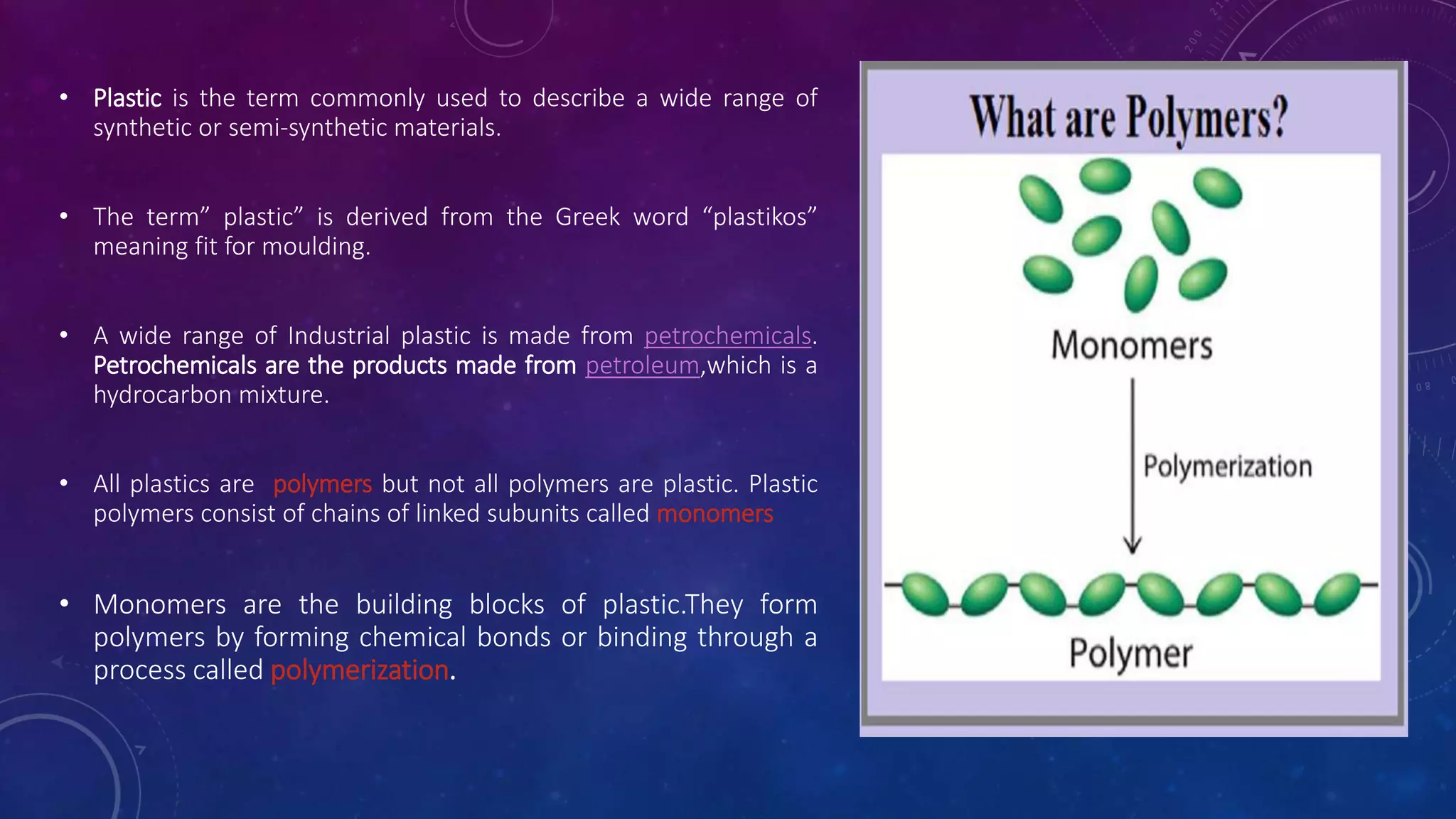
• All plastics are polymers but not all polymers are plastic. Plastic
polymers consist of chains of linked subunits called monomers
• Monomers are the building blocks of plastic.They form
polymers by forming chemical bonds or binding through a
process called polymerization.
Branched Polymer Chain
Straight Polymer Chain
Traditional Plastic Bags :
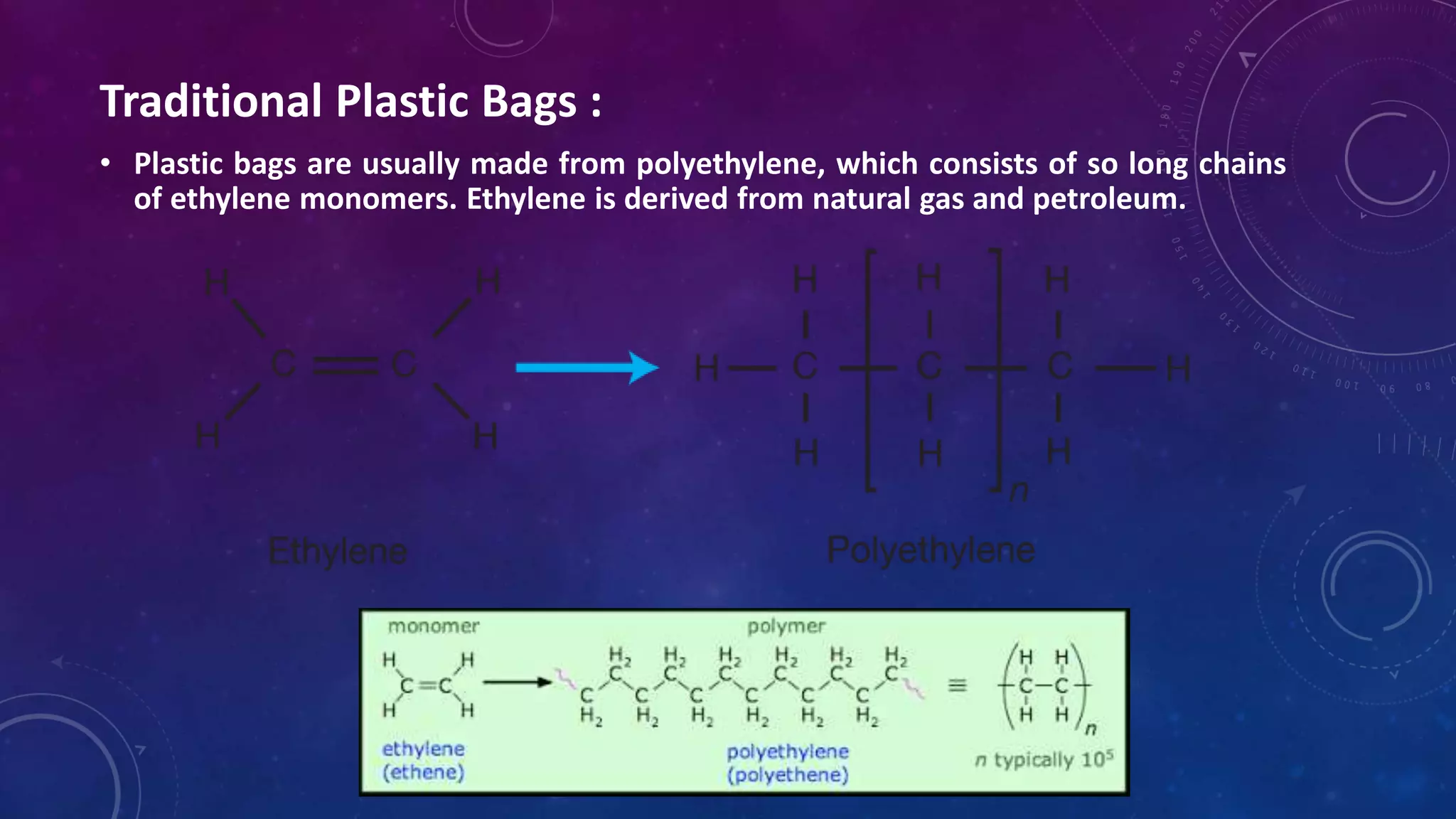
• Plastic bags are usually made from polyethylene, which consists of so long chains
of ethylene monomers. Ethylene is derived from natural gas and petroleum.
HISTORY OF POLYETHYLENE BAGS
• In 1965, one piece of polyethylene shopping bag was
patented by Swedish company Celloplast and designed by
engineer Sten Gustaf Thulin.
• He came up with an idea to protect environment from
deforestation.
• A rare novelty in the 1970s, plastic shopping bags are now an
omnipresent global product , produced at a rate of one
trillion a year.
• They are showing up in the darkest depths of the oceans, to
the summit of the Mount Everest and to the polar ice caps
creating major environmental challenges.
•
WHY IS PLASTIC HAZARDOUS!
• Plastic carry bags are manufactured using organic and inorganic
additives like colourants and pigments, plasticizers, antioxidants,
stabilizers and metals.
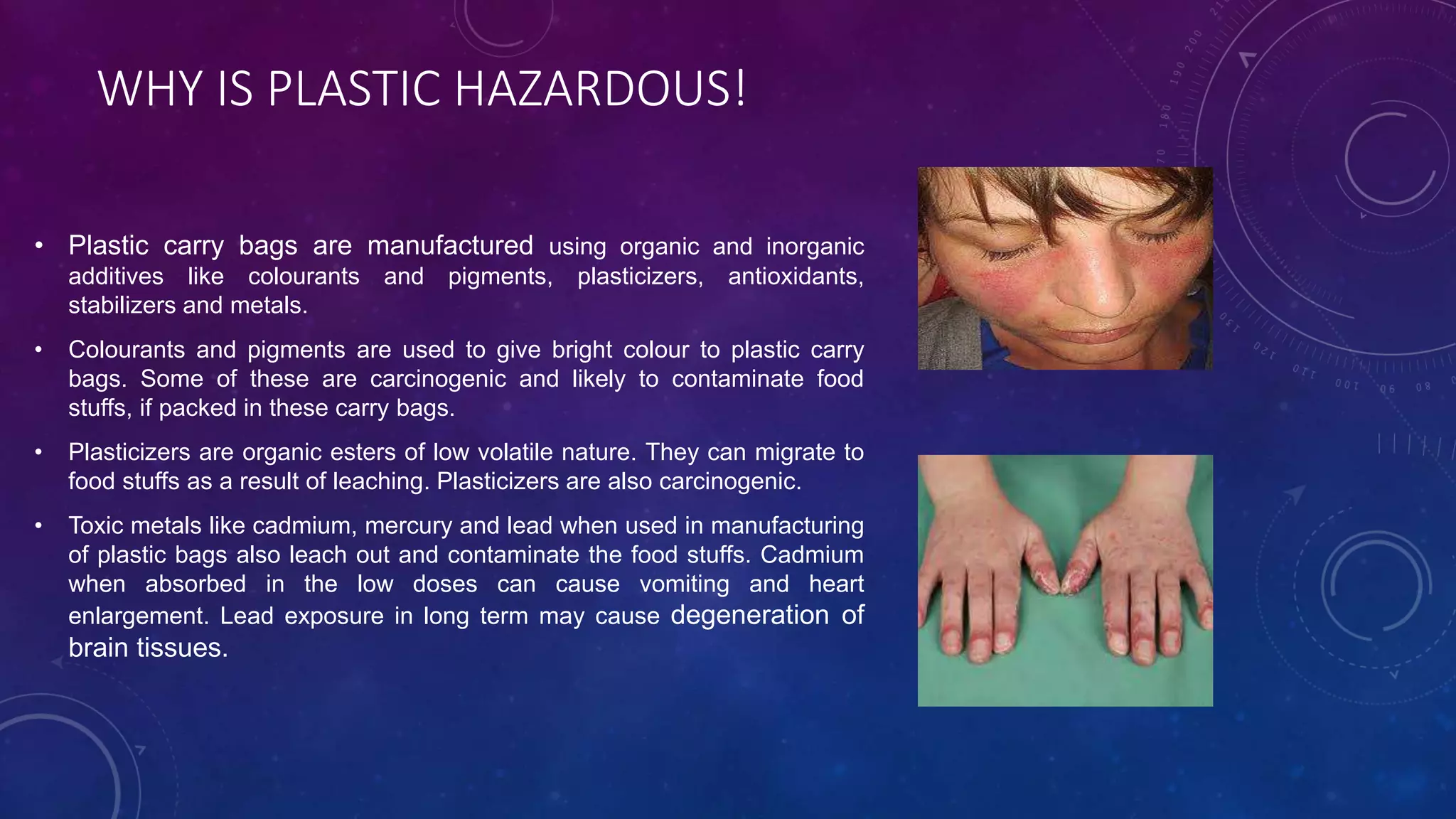
• Colourants and pigments are used to give bright colour to plastic carry
bags. Some of these are carcinogenic and likely to contaminate food
stuffs, if packed in these carry bags.
• Plasticizers are organic esters of low volatile nature. They can migrate to
food stuffs as a result of leaching. Plasticizers are also carcinogenic.
• Toxic metals like cadmium, mercury and lead when used in manufacturing
of plastic bags also leach out and contaminate the food stuffs. Cadmium
when absorbed in the low doses can cause vomiting and heart
enlargement. Lead exposure in long term may cause degeneration of
brain tissues.
• Microplastics are also consumed by people through
food and in the air. It’s estimated that globally, people
consume the equivalent of a credit card of plastic
every week, and it’s expected that there will be more
plastic than fish in the sea by 2050.
• The plastic typically used in bottles, bags and food
containers contain chemical additives such as
endocrine disruptors, which are associated with
negative health effects including cancers, birth defects
and immune system suppression in humans and
wildlife.
• Chemical leachates from plastic bags impair the
growth of the world’s most important microorganisms,
Prochlorococcus, a marine bacterium that provides
one tenth of the world’s oxygen.
DECOMPOSITION
It takes 1,000 years for a plastic bag to degrade in a landfill. Unfortunately,
the bags don't break down completely but instead photo-degrade, becoming microplastics
that absorb toxins and continue to pollute the environment.
Plastic Bags are said to present significant challenge in terms of recycling. Recycle facilities
do not have the capacity to recycle plastic bags and thus do not accept them. Therefore the
actual recycling rate for plastic bags is about 5%.
Since Plastic bags never degrade completely, which means that as more of them are
produced by companies, more are introduced into the environment. Therefore, the more the
amount of plastic bags, the more there is plastic pollution and its effects. Banning the use of
plastic bags will help reduce this great effect.
WAYS YOU CAN HELP AND MAKE PLASTIC BAG
FREE PLANET :
• Be the one to lead the change.
• Feel proud to get a chance to save mother earth and thus your
motherland.
• Revive old art and culture of using willow baskets and cloth
bags which will help to boost local economy also.
• Its everyone’s duty towards our motherland to Take
responsibility of one”s ownself and SAY A BIG NO to polythene
bags.
• let this pledge reach out to masses through you our dear students as
you are young and energetic and have the power to turn the tables just
starting from their own homes from today and onwards.
• Lets us all stand together and reduce polythene bag usage.
Thank You All

Chemistry of Plastic

  • 1.
    CHEMISTRY OF PLASTIC BY DRSHABNUM ARA QAZI ASSOCIATE PROFESSOR GOVT. COLLEGE FOR WOMEN NAWAKADAL, SRINAGAR
  • 2.
    • Plastic isthe term commonly used to describe a wide range of synthetic or semi-synthetic materials. • The term” plastic” is derived from the Greek word “plastikos” meaning fit for moulding. • A wide range of Industrial plastic is made from petrochemicals. Petrochemicals are the products made from petroleum,which is a hydrocarbon mixture. • All plastics are polymers but not all polymers are plastic. Plastic polymers consist of chains of linked subunits called monomers • Monomers are the building blocks of plastic.They form polymers by forming chemical bonds or binding through a process called polymerization.
  • 3.
  • 4.
    Traditional Plastic Bags: • Plastic bags are usually made from polyethylene, which consists of so long chains of ethylene monomers. Ethylene is derived from natural gas and petroleum.
  • 5.
    HISTORY OF POLYETHYLENEBAGS • In 1965, one piece of polyethylene shopping bag was patented by Swedish company Celloplast and designed by engineer Sten Gustaf Thulin. • He came up with an idea to protect environment from deforestation. • A rare novelty in the 1970s, plastic shopping bags are now an omnipresent global product , produced at a rate of one trillion a year. • They are showing up in the darkest depths of the oceans, to the summit of the Mount Everest and to the polar ice caps creating major environmental challenges. •
  • 6.
    WHY IS PLASTICHAZARDOUS! • Plastic carry bags are manufactured using organic and inorganic additives like colourants and pigments, plasticizers, antioxidants, stabilizers and metals. • Colourants and pigments are used to give bright colour to plastic carry bags. Some of these are carcinogenic and likely to contaminate food stuffs, if packed in these carry bags. • Plasticizers are organic esters of low volatile nature. They can migrate to food stuffs as a result of leaching. Plasticizers are also carcinogenic. • Toxic metals like cadmium, mercury and lead when used in manufacturing of plastic bags also leach out and contaminate the food stuffs. Cadmium when absorbed in the low doses can cause vomiting and heart enlargement. Lead exposure in long term may cause degeneration of brain tissues.
  • 7.
    • Microplastics arealso consumed by people through food and in the air. It’s estimated that globally, people consume the equivalent of a credit card of plastic every week, and it’s expected that there will be more plastic than fish in the sea by 2050. • The plastic typically used in bottles, bags and food containers contain chemical additives such as endocrine disruptors, which are associated with negative health effects including cancers, birth defects and immune system suppression in humans and wildlife. • Chemical leachates from plastic bags impair the growth of the world’s most important microorganisms, Prochlorococcus, a marine bacterium that provides one tenth of the world’s oxygen.
  • 8.
    DECOMPOSITION It takes 1,000years for a plastic bag to degrade in a landfill. Unfortunately, the bags don't break down completely but instead photo-degrade, becoming microplastics that absorb toxins and continue to pollute the environment. Plastic Bags are said to present significant challenge in terms of recycling. Recycle facilities do not have the capacity to recycle plastic bags and thus do not accept them. Therefore the actual recycling rate for plastic bags is about 5%. Since Plastic bags never degrade completely, which means that as more of them are produced by companies, more are introduced into the environment. Therefore, the more the amount of plastic bags, the more there is plastic pollution and its effects. Banning the use of plastic bags will help reduce this great effect.
  • 9.
    WAYS YOU CANHELP AND MAKE PLASTIC BAG FREE PLANET : • Be the one to lead the change. • Feel proud to get a chance to save mother earth and thus your motherland. • Revive old art and culture of using willow baskets and cloth bags which will help to boost local economy also. • Its everyone’s duty towards our motherland to Take responsibility of one”s ownself and SAY A BIG NO to polythene bags. • let this pledge reach out to masses through you our dear students as you are young and energetic and have the power to turn the tables just starting from their own homes from today and onwards. • Lets us all stand together and reduce polythene bag usage.
  • 10.