chemistry
presentation
Corrosion
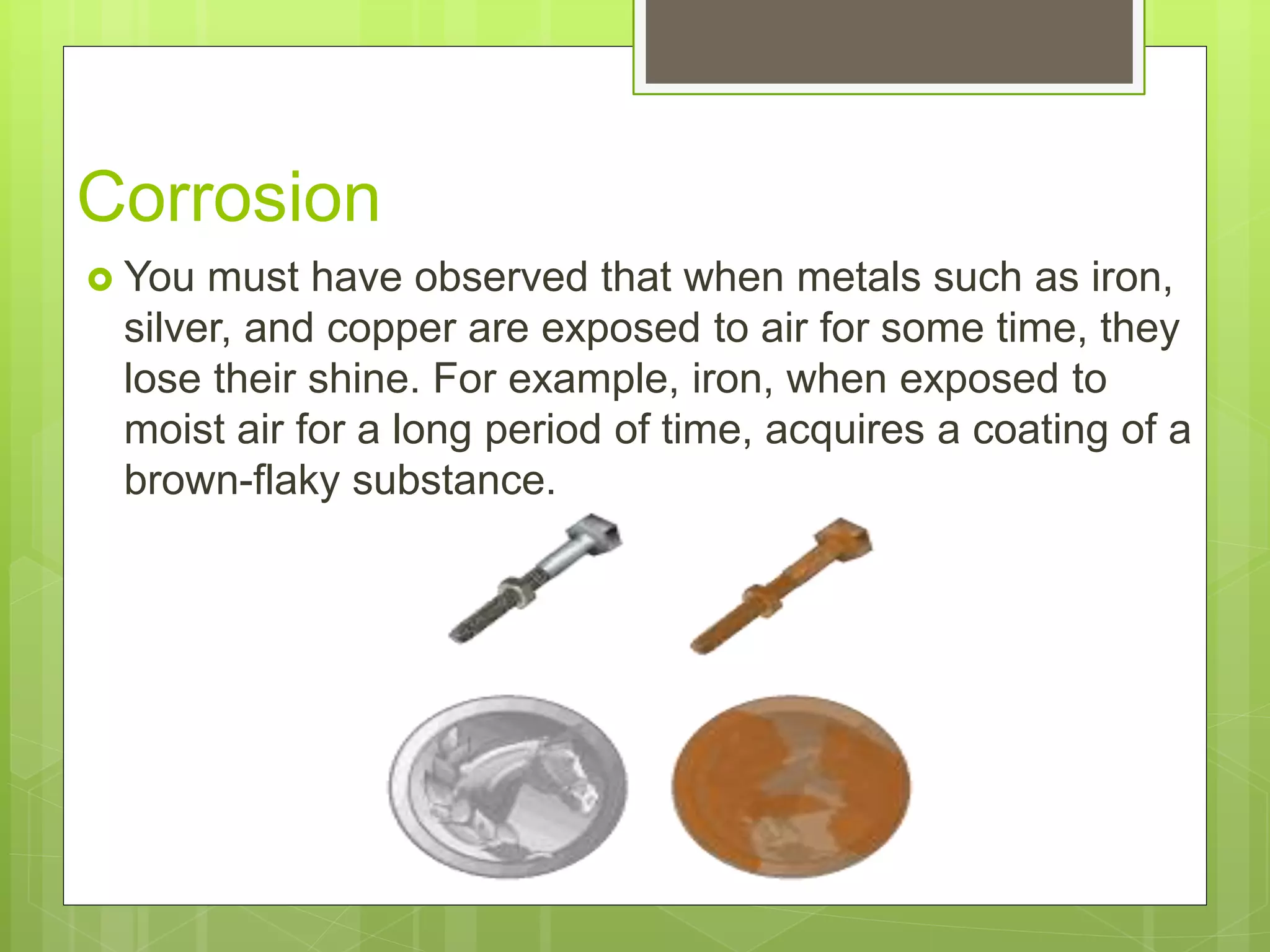
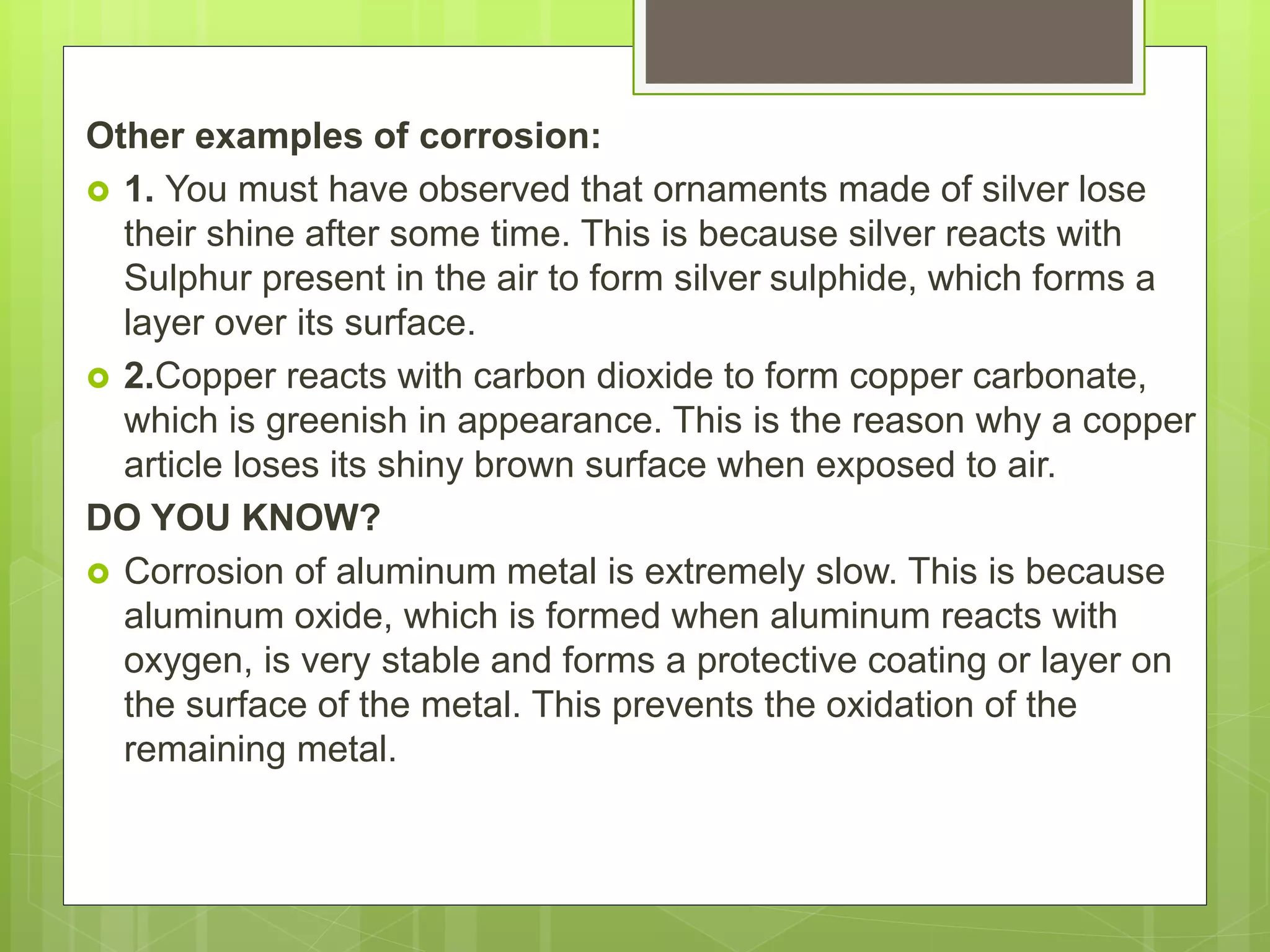
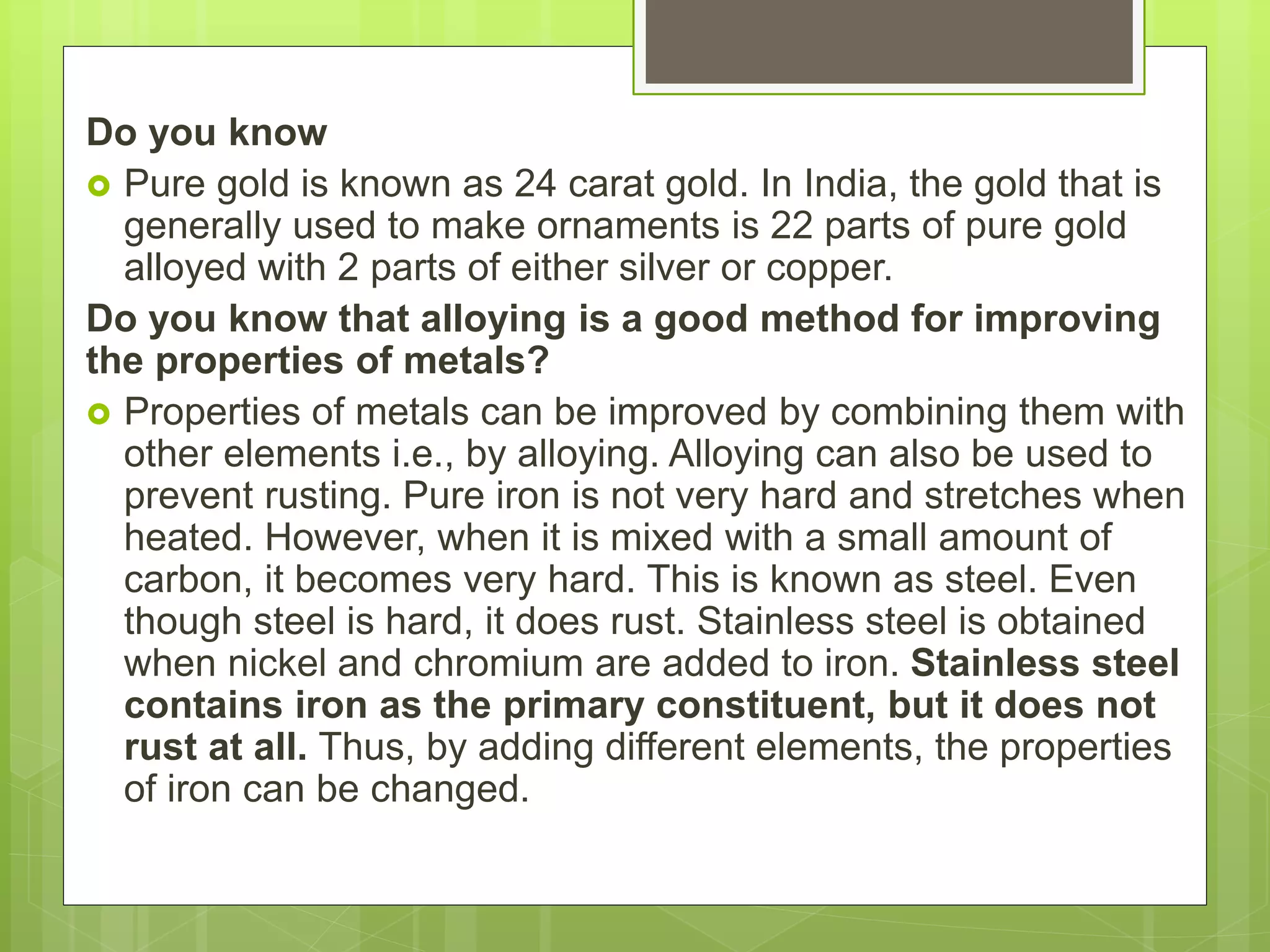
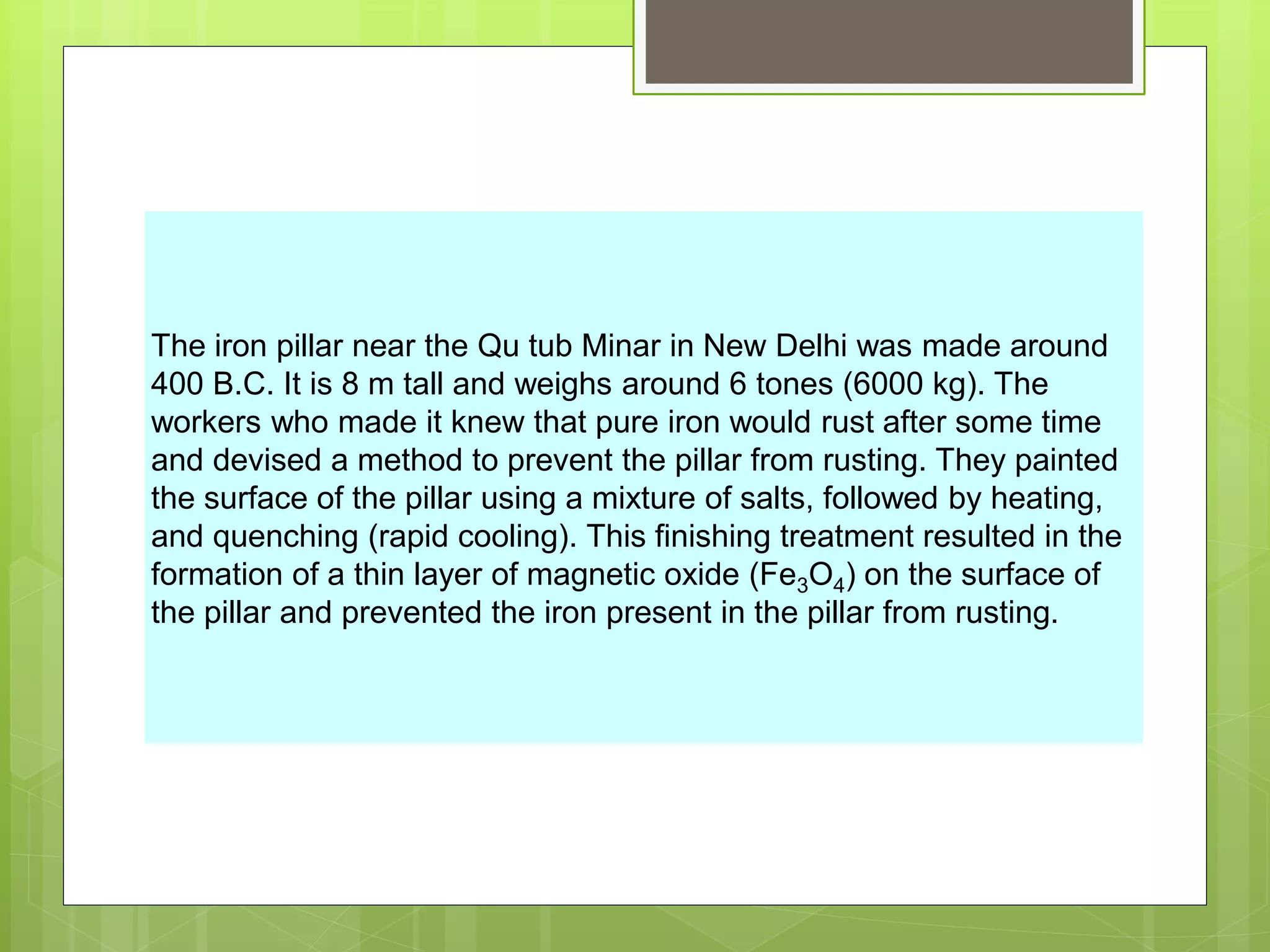
 You must have observed that when metals such as iron,
silver, and copper are exposed to air for some time, they
lose their shine. For example, iron, when exposed to
moist air for a long period of time, acquires a coating of a
brown-flaky substance.
This is because metals react with moisture and the
different gases present in the air. The process of
breaking down of metals because of their reactions
with moisture and gases present in the air is known as
corrosion. Rusting of iron is the most common example of
corrosion.
DO YOU KNOW?
 Rust is a general term given to iron oxides, which are
formed when iron reacts with oxygen in the presence of
moisture. Rust primarily consists of hydrated iron (III)
oxides, Fe2O3 .nH2O. The number of water molecules in
rust is variable. Hence, they are represented by n.
Other examples of corrosion:
 1. You must have observed that ornaments made of silver lose
their shine after some time. This is because silver reacts with
Sulphur present in the air to form silver sulphide, which forms a
layer over its surface.
 2.Copper reacts with carbon dioxide to form copper carbonate,
which is greenish in appearance. This is the reason why a copper
article loses its shiny brown surface when exposed to air.
DO YOU KNOW?
 Corrosion of aluminum metal is extremely slow. This is because
aluminum oxide, which is formed when aluminum reacts with
oxygen, is very stable and forms a protective coating or layer on
the surface of the metal. This prevents the oxidation of the
remaining metal.
 Corrosion can drastically reduce the quality and strength
of metals. The higher a metal lies in the reactivity series,
more readily it is corroded. Here, we will study about the
rusting of iron and the conditions necessary for the
same. Let us find out about the conditions necessary for
rusting of iron to take place with the help of the following
activity.
Do you know
 Pure gold is known as 24 carat gold. In India, the gold that is
generally used to make ornaments is 22 parts of pure gold
alloyed with 2 parts of either silver or copper.
Do you know that alloying is a good method for improving
the properties of metals?
 Properties of metals can be improved by combining them with
other elements i.e., by alloying. Alloying can also be used to
prevent rusting. Pure iron is not very hard and stretches when
heated. However, when it is mixed with a small amount of
carbon, it becomes very hard. This is known as steel. Even
though steel is hard, it does rust. Stainless steel is obtained
when nickel and chromium are added to iron. Stainless steel
contains iron as the primary constituent, but it does not
rust at all. Thus, by adding different elements, the properties
of iron can be changed.
The iron pillar near the Qu tub Minar in New Delhi was made around
400 B.C. It is 8 m tall and weighs around 6 tones (6000 kg). The
workers who made it knew that pure iron would rust after some time
and devised a method to prevent the pillar from rusting. They painted
the surface of the pillar using a mixture of salts, followed by heating,
and quenching (rapid cooling). This finishing treatment resulted in the
formation of a thin layer of magnetic oxide (Fe3O4) on the surface of
the pillar and prevented the iron present in the pillar from rusting.
Chemistry

Chemistry

  • 1.
  • 2.
    Corrosion  You musthave observed that when metals such as iron, silver, and copper are exposed to air for some time, they lose their shine. For example, iron, when exposed to moist air for a long period of time, acquires a coating of a brown-flaky substance.
  • 3.
    This is becausemetals react with moisture and the different gases present in the air. The process of breaking down of metals because of their reactions with moisture and gases present in the air is known as corrosion. Rusting of iron is the most common example of corrosion. DO YOU KNOW?  Rust is a general term given to iron oxides, which are formed when iron reacts with oxygen in the presence of moisture. Rust primarily consists of hydrated iron (III) oxides, Fe2O3 .nH2O. The number of water molecules in rust is variable. Hence, they are represented by n.
  • 4.
    Other examples ofcorrosion:  1. You must have observed that ornaments made of silver lose their shine after some time. This is because silver reacts with Sulphur present in the air to form silver sulphide, which forms a layer over its surface.  2.Copper reacts with carbon dioxide to form copper carbonate, which is greenish in appearance. This is the reason why a copper article loses its shiny brown surface when exposed to air. DO YOU KNOW?  Corrosion of aluminum metal is extremely slow. This is because aluminum oxide, which is formed when aluminum reacts with oxygen, is very stable and forms a protective coating or layer on the surface of the metal. This prevents the oxidation of the remaining metal.
  • 5.
     Corrosion candrastically reduce the quality and strength of metals. The higher a metal lies in the reactivity series, more readily it is corroded. Here, we will study about the rusting of iron and the conditions necessary for the same. Let us find out about the conditions necessary for rusting of iron to take place with the help of the following activity.
  • 6.
    Do you know Pure gold is known as 24 carat gold. In India, the gold that is generally used to make ornaments is 22 parts of pure gold alloyed with 2 parts of either silver or copper. Do you know that alloying is a good method for improving the properties of metals?  Properties of metals can be improved by combining them with other elements i.e., by alloying. Alloying can also be used to prevent rusting. Pure iron is not very hard and stretches when heated. However, when it is mixed with a small amount of carbon, it becomes very hard. This is known as steel. Even though steel is hard, it does rust. Stainless steel is obtained when nickel and chromium are added to iron. Stainless steel contains iron as the primary constituent, but it does not rust at all. Thus, by adding different elements, the properties of iron can be changed.
  • 7.
    The iron pillarnear the Qu tub Minar in New Delhi was made around 400 B.C. It is 8 m tall and weighs around 6 tones (6000 kg). The workers who made it knew that pure iron would rust after some time and devised a method to prevent the pillar from rusting. They painted the surface of the pillar using a mixture of salts, followed by heating, and quenching (rapid cooling). This finishing treatment resulted in the formation of a thin layer of magnetic oxide (Fe3O4) on the surface of the pillar and prevented the iron present in the pillar from rusting.