Presented by
Jim Castrataro
Director Summer Programs
Babson College
Checklist for Running Programs on Campus
• Welcome to Babson College
• Director of Summer Programs
▫ Internal Sports Camps
▫ Internal Academic Programs
▫ Internal International Programs
▫ External Rentals
• Been a part of Summer Programs and Babson College for 17 years.
Introduction
• Will touch on all aspects of Running programs on a campus
• Please ask Questions!!
Quick Overview
A. Identify all needs. Classrooms, theater, lab, athletic fields, parking,
residential, food service
B. Connect with the department who schedules these spaces for
confirmation
C. Identify and inspect all program related equipment.
D. Contact local board of health or building inspector for inspection
guidelines for temporary structures. (Tents, trailers, temporary
shelters)
Facilities and Equipment
A. 6 Months in advance
B. Contact with Local Board of Health.
Licensing
a.Contact Legal council to review application and hiring process
b.Is Human Resources involved?
c.Background checks
i. State or National?
ii.Does it look at juvenile record.
iii.Drivers license infractions.
iv. Is the Company doing the check reputable.
Staffing
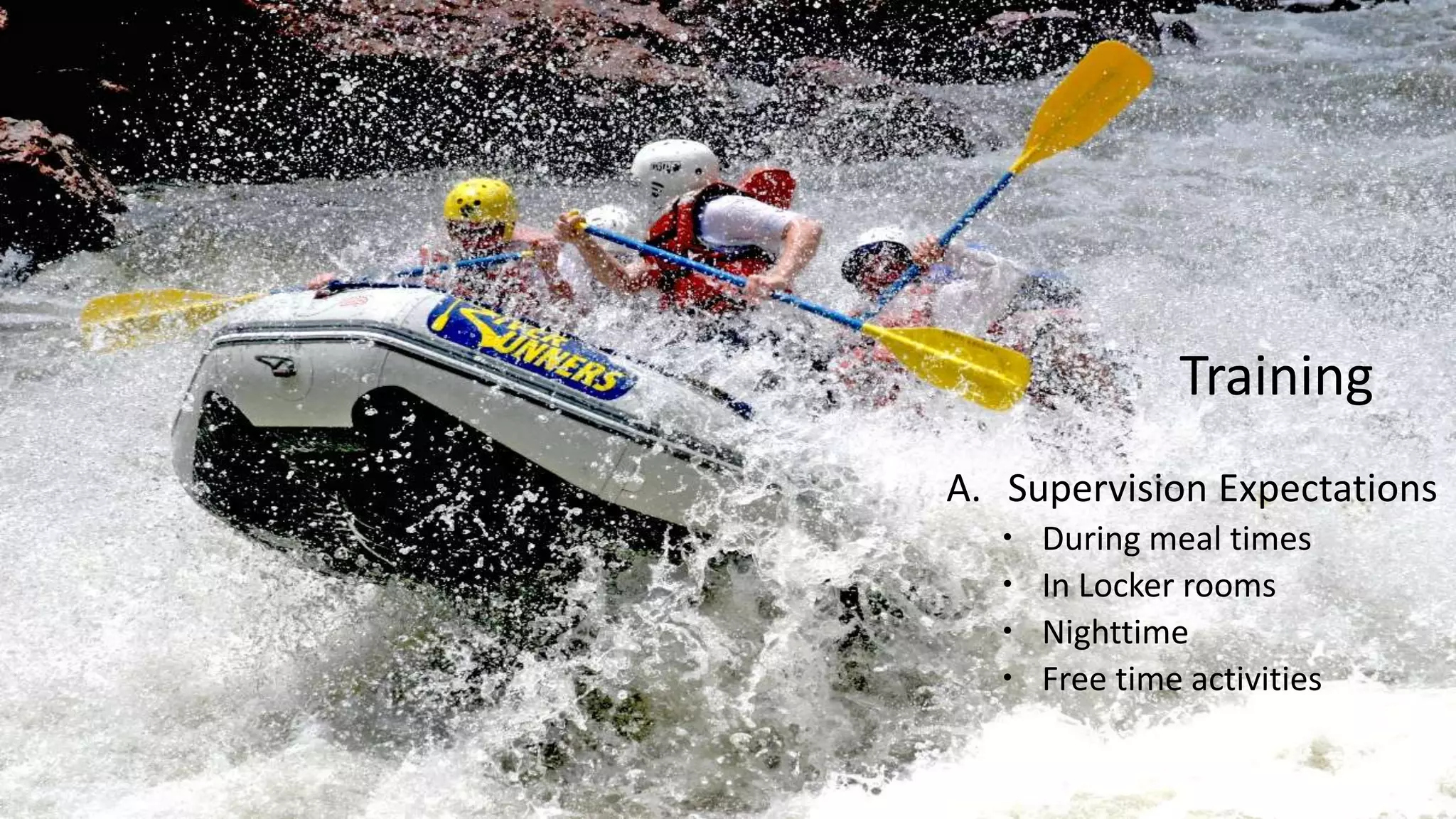
A. Supervision Expectations
 During meal times
 In Locker rooms
 Nighttime
 Free time activities
Training
A. Physical and Emotional Safety
B. How to talk to a participant
C. Missing persons protocol
D. Early dismissal protocol
E. General Emergency Procedures
F. Incident reports
G. Suspected Child abuse or neglect procedures
H. Staff reporting of security concerns
I. Training of returning staff
1 Same from year to year
2 The late hire
3 Mid program hire
Training Continued
a.Meet staff ratios of the state or host institution.
b.Procedure for emergency staff. “On call”
i. On-call background check? Policy of Institution
c.Policy for investigation or wrong doing by a staff member.
d.Preventative measures to avoid wrong doing.
e.Who observes the staff, how often and how frequently.
Supervision
A. Legal Review of promotional materials
B. Are there any risks?
C. Potential for injuries or Physical Requirements
i. Swimming
ii.Ice Skating
iii.White water rafting
iv.Simple trip to the beach
Instructional Program
a.Program should have a written health policy that articulates the
scope of health care services.
b.Ensure an annual or bi-annual review of the policy.
c.Documentation of all incidents.
d.Permission form allowing program to provide routine health care and
seek emergency medical treatment.
Health and Medical Care
A. Administer Medication form if required.
B. Are they stored correctly? Locked and Refrigerated.
C. Non-prescription drugs being dispensed according to parents
written instructions.
Medication Management
A. Notify Campus Security
B. Fire Officials for emergency locations
C. Local law enforcement of potential risks
D. Staff member trained as a first responder
E. Emergency transportation
F. Location of Automatic External Defibrillators
G. Written Procedures and Crisis Communication for:
 Physical or sexual abuse of a participant
 Fire
 Weather
 Crime
 Lost or missing participant
 Natural disasters
 Death, illness or injury of a participant or staff member
Emergency Planning
A. Information on all participants and staff under the age of 18.
 Name, DOB, age, Phone number of emergency contact, name and phone
number of physician, contact information for adult responsible for the
minor.
 Current health information: Up to date physical, past medical treatments,
Immunizations and allergies.
B. Have a trained staff member review health information looking for.
 Special Medical needs.
 Allergies.
 Alert staff members while following HIPPA guidelines.
Contact and Health Information
A. Prior to the Program how do you communicate designated drop-off and
pick up locations for day programs?
B. Alternate locations in case of inclement weather – How is this procedure
rolled into action and communicated to parents?
C. How will students arrive for overnight programs?
D. Where will they drop off? Is there enough room and will you keep fire
lanes clear?
E. If using staff are they driver certified?
F. If using own vans, are they regularly evaluated for mechanical
soundness?
Transportation
A. Risk Management Review – Determine Risk of program. High,
medium or low.
B. Legal Council Review – Determine contract.
C. Insurance Review by on campus personnel or Insurance Agent.
D. Who is the third party on campus? Are they additionally insured?
E. 6 months in advance minimum for first time externals.
Contracts and Insurance for Outsourced Programs
A. Inspect the site prior to and daily.
a. Tripping hazards, debris, construction, maintenance, overgrown trees,
shrubs, Poison Ivy.
b. Physical security issues – Access to building or space, unlocked or broken
doors, faulty windows, key card access outside of program.
Pre-Program Inspections
a.Collect feedback outside of the trenches.
b.Meet with staff to hear feedback.
c.Review injury documents with an eye for consistencies.
d.Save all documents – Applications, insurance and contract
information, administer medication forms for 7 years or policy of the
institution.
Post Program Evaluations
A. We have touched on many subjects.
B. Be aware of your surroundings.
C. Use common sense.
D. Don’t be afraid to make the call for help or a second opinion.
Summary

Checklist for Running Programs on Campus slides only

  • 1.
    Presented by Jim Castrataro DirectorSummer Programs Babson College Checklist for Running Programs on Campus
  • 2.
    • Welcome toBabson College • Director of Summer Programs ▫ Internal Sports Camps ▫ Internal Academic Programs ▫ Internal International Programs ▫ External Rentals • Been a part of Summer Programs and Babson College for 17 years. Introduction
  • 3.
    • Will touchon all aspects of Running programs on a campus • Please ask Questions!! Quick Overview
  • 4.
    A. Identify allneeds. Classrooms, theater, lab, athletic fields, parking, residential, food service B. Connect with the department who schedules these spaces for confirmation C. Identify and inspect all program related equipment. D. Contact local board of health or building inspector for inspection guidelines for temporary structures. (Tents, trailers, temporary shelters) Facilities and Equipment
  • 5.
    A. 6 Monthsin advance B. Contact with Local Board of Health. Licensing
  • 6.
    a.Contact Legal councilto review application and hiring process b.Is Human Resources involved? c.Background checks i. State or National? ii.Does it look at juvenile record. iii.Drivers license infractions. iv. Is the Company doing the check reputable. Staffing
  • 7.
    A. Supervision Expectations During meal times  In Locker rooms  Nighttime  Free time activities Training
  • 8.
    A. Physical andEmotional Safety B. How to talk to a participant C. Missing persons protocol D. Early dismissal protocol E. General Emergency Procedures F. Incident reports G. Suspected Child abuse or neglect procedures H. Staff reporting of security concerns I. Training of returning staff 1 Same from year to year 2 The late hire 3 Mid program hire Training Continued
  • 9.
    a.Meet staff ratiosof the state or host institution. b.Procedure for emergency staff. “On call” i. On-call background check? Policy of Institution c.Policy for investigation or wrong doing by a staff member. d.Preventative measures to avoid wrong doing. e.Who observes the staff, how often and how frequently. Supervision
  • 10.
    A. Legal Reviewof promotional materials B. Are there any risks? C. Potential for injuries or Physical Requirements i. Swimming ii.Ice Skating iii.White water rafting iv.Simple trip to the beach Instructional Program
  • 11.
    a.Program should havea written health policy that articulates the scope of health care services. b.Ensure an annual or bi-annual review of the policy. c.Documentation of all incidents. d.Permission form allowing program to provide routine health care and seek emergency medical treatment. Health and Medical Care
  • 12.
    A. Administer Medicationform if required. B. Are they stored correctly? Locked and Refrigerated. C. Non-prescription drugs being dispensed according to parents written instructions. Medication Management
  • 13.
    A. Notify CampusSecurity B. Fire Officials for emergency locations C. Local law enforcement of potential risks D. Staff member trained as a first responder E. Emergency transportation F. Location of Automatic External Defibrillators G. Written Procedures and Crisis Communication for:  Physical or sexual abuse of a participant  Fire  Weather  Crime  Lost or missing participant  Natural disasters  Death, illness or injury of a participant or staff member Emergency Planning
  • 14.
    A. Information onall participants and staff under the age of 18.  Name, DOB, age, Phone number of emergency contact, name and phone number of physician, contact information for adult responsible for the minor.  Current health information: Up to date physical, past medical treatments, Immunizations and allergies. B. Have a trained staff member review health information looking for.  Special Medical needs.  Allergies.  Alert staff members while following HIPPA guidelines. Contact and Health Information
  • 15.
    A. Prior tothe Program how do you communicate designated drop-off and pick up locations for day programs? B. Alternate locations in case of inclement weather – How is this procedure rolled into action and communicated to parents? C. How will students arrive for overnight programs? D. Where will they drop off? Is there enough room and will you keep fire lanes clear? E. If using staff are they driver certified? F. If using own vans, are they regularly evaluated for mechanical soundness? Transportation
  • 16.
    A. Risk ManagementReview – Determine Risk of program. High, medium or low. B. Legal Council Review – Determine contract. C. Insurance Review by on campus personnel or Insurance Agent. D. Who is the third party on campus? Are they additionally insured? E. 6 months in advance minimum for first time externals. Contracts and Insurance for Outsourced Programs
  • 17.
    A. Inspect thesite prior to and daily. a. Tripping hazards, debris, construction, maintenance, overgrown trees, shrubs, Poison Ivy. b. Physical security issues – Access to building or space, unlocked or broken doors, faulty windows, key card access outside of program. Pre-Program Inspections
  • 18.
    a.Collect feedback outsideof the trenches. b.Meet with staff to hear feedback. c.Review injury documents with an eye for consistencies. d.Save all documents – Applications, insurance and contract information, administer medication forms for 7 years or policy of the institution. Post Program Evaluations
  • 19.
    A. We havetouched on many subjects. B. Be aware of your surroundings. C. Use common sense. D. Don’t be afraid to make the call for help or a second opinion. Summary

Editor's Notes

  • #3 How presentation will benefit audience: Adult learners are more interested in a subject if they know how or why it is important to them. Presenter’s level of expertise in the subject: Briefly state your credentials in this area, or explain why participants should listen to you.
  • #4 How presentation will benefit audience: Adult learners are more interested in a subject if they know how or why it is important to them. Presenter’s level of expertise in the subject: Briefly state your credentials in this area, or explain why participants should listen to you.
  • #5 Lesson descriptions should be brief.
  • #6 Example objectives At the end of this lesson, you will be able to: Save files to the team Web server. Move files to different locations on the team Web server. Share files on the team Web server.
  • #7 Example objectives At the end of this lesson, you will be able to: Save files to the team Web server. Move files to different locations on the team Web server. Share files on the team Web server.
  • #8 Example objectives At the end of this lesson, you will be able to: Save files to the team Web server. Move files to different locations on the team Web server. Share files on the team Web server.
  • #9 Example objectives At the end of this lesson, you will be able to: Save files to the team Web server. Move files to different locations on the team Web server. Share files on the team Web server.
  • #10 Example objectives At the end of this lesson, you will be able to: Save files to the team Web server. Move files to different locations on the team Web server. Share files on the team Web server.
  • #11 Example objectives At the end of this lesson, you will be able to: Save files to the team Web server. Move files to different locations on the team Web server. Share files on the team Web server.
  • #12 Example objectives At the end of this lesson, you will be able to: Save files to the team Web server. Move files to different locations on the team Web server. Share files on the team Web server.
  • #13 Example objectives At the end of this lesson, you will be able to: Save files to the team Web server. Move files to different locations on the team Web server. Share files on the team Web server.
  • #14 Example objectives At the end of this lesson, you will be able to: Save files to the team Web server. Move files to different locations on the team Web server. Share files on the team Web server.
  • #15 Example objectives At the end of this lesson, you will be able to: Save files to the team Web server. Move files to different locations on the team Web server. Share files on the team Web server.
  • #16 Example objectives At the end of this lesson, you will be able to: Save files to the team Web server. Move files to different locations on the team Web server. Share files on the team Web server.
  • #17 Example objectives At the end of this lesson, you will be able to: Save files to the team Web server. Move files to different locations on the team Web server. Share files on the team Web server.
  • #18 Example objectives At the end of this lesson, you will be able to: Save files to the team Web server. Move files to different locations on the team Web server. Share files on the team Web server.
  • #19 Example objectives At the end of this lesson, you will be able to: Save files to the team Web server. Move files to different locations on the team Web server. Share files on the team Web server.