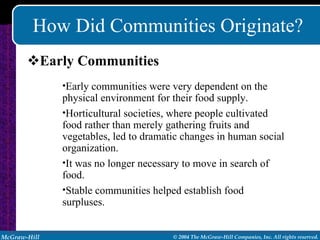
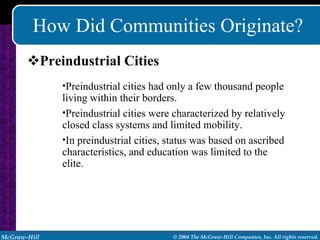
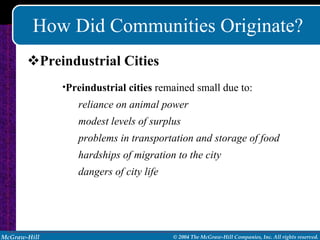
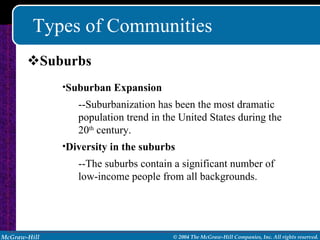
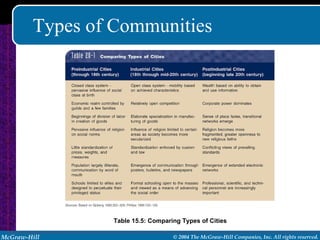
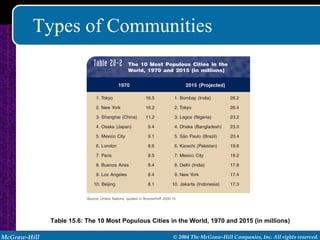
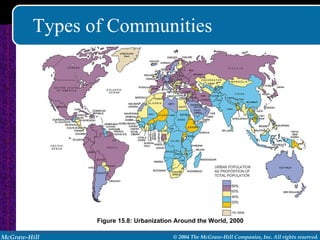
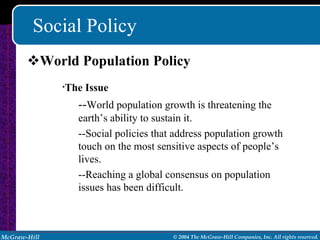
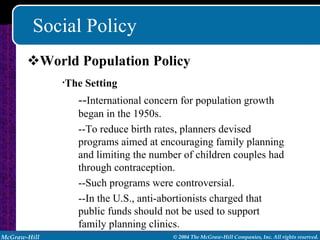
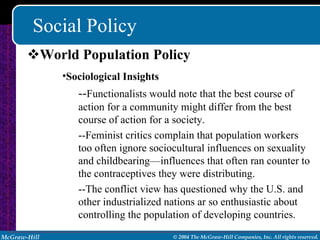
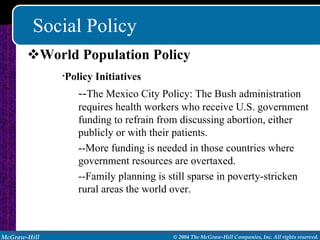
Early communities formed around agriculture, which allowed people to settle instead of constantly moving. Preindustrial cities remained small due to reliance on animal power, limited surplus, and difficulties with transportation and food storage. The Industrial Revolution led to larger industrial cities with more open class systems and mobility. Postindustrial cities in the late 20th century were based on finance, information flow, and decentralized production. Addressing population growth through policies that encourage family planning and contraception has been controversial globally due to cultural and political sensitivities.




![Getting Started with Apache Spark: Big Data Made Simple [Free Meetup]](https://cdn.slidesharecdn.com/ss_thumbnails/apachesparkgettingstarted-260203175547-8361bcc3-thumbnail.jpg?width=640&height=640&fit=bounds)


