Systems of Social Stratification
9.1 Compare and contrast slavery (including bonded labor), caste, estate, and class systems of social
stratification.
• Slavery
• Caste
• Estate
• Class
• Global Stratification and the Status of Females
• The Global Superclass
Slavery (1 of 2)
• Slavery
• Causes
• Conditions
• Bonded Labor
• Slavery in the New World
• Slavery Today
Slavery (2 of 2)
I have read a lot
about slavery, but I
did not know that
slaves were ever
offered as prizes in
raffles. You might also
note that top billing
in this 1800s poster
from Missouri goes to
a horse.
Caste (1 of 2)
• India’s religious caste
• South Africa
• U.S. racial caste system
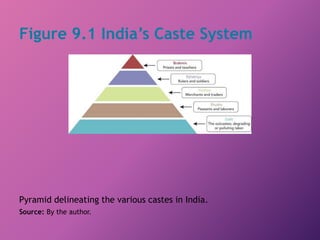
Figure 9.1 India’s Caste System
Pyramid delineating the various castes in India.
Source: By the author.
Caste (2 of 2)
After centuries of
silence, women of
India are daring to
protest rape publicly.
This photo of students
holding a candlelight
march was taken in
Allahabad, India.
Estate
• Nobility
• Clergy
• Commoners
• Women
Class (1 of 2)
• More open
• Possibility of social mobility
Class (2 of 2)
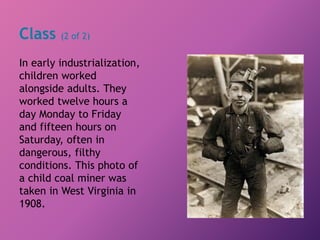
In early industrialization,
children worked
alongside adults. They
worked twelve hours a
day Monday to Friday
and fifteen hours on
Saturday, often in
dangerous, filthy
conditions. This photo of
a child coal miner was
taken in West Virginia in
1908.
Global Stratification and the Status of Females
• Gender is basis of social stratification
• This is the case all over the world
The Global Superclass
• Richest 1,000 have more wealth than the 2.5 billion
poorest people
• Almost all are white
• Almost all are male unless they are “wives of” or
“daughters of”
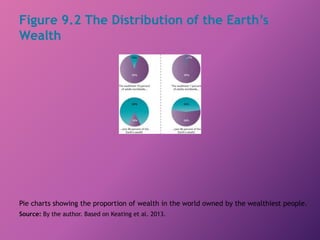
Figure 9.2 The Distribution of the Earth’s
Wealth
Pie charts showing the proportion of wealth in the world owned by the wealthiest people.
Source: By the author. Based on Keating et al. 2013.
What Determines Social Class?
9.2 Contrast the views of Marx and Weber on what determines social class.
• Karl Marx: The Means of Production
• Max Weber: Property, Power, and Prestige
Marx’s Perspective
• Means of production
• Bourgeoisie
• Proletariat
• Class consciousness
• False class consciousness
Weber’s Perspective
• Property
• Power
• Prestige
• Combination
Figure 9.3 Weber’s Three Components of
Social Class
Examples of the ways in which
power, property, and prestige
can each lead to other
components of social class.
Source: By the author.
Why Is Social Stratification Universal?
9.3 Contrast the functional and conflict views of why social stratification is universal.
• The Functionalist View: Motivating Qualified People
• The Conflict Perspective: Class Conflict and Scarce
Resources
• Lenski’s Synthesis
The Functionalist View: Motivating Qualified
People
• Davis and Moore’s explanation
• Tumin’s critique
The Conflict View: Encountering Class Conflict
and Scarce Resources (1 of 2)
• Mosca’s argument
• Marx’s argument
• Current applications of conflict theory
The Conflict View: Encountering Class Conflict
and Scarce Resources (2 of 2)
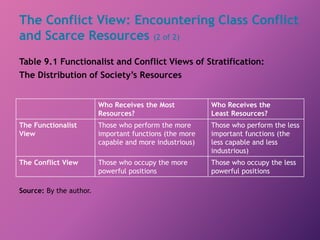
Table 9.1 Functionalist and Conflict Views of Stratification:
The Distribution of Society’s Resources
Blank
Who Receives the Most
Resources?
Who Receives the
Least Resources?
The Functionalist
View
Those who perform the more
important functions (the more
capable and more industrious)
Those who perform the less
important functions (the
less capable and less
industrious)
The Conflict View Those who occupy the more
powerful positions
Those who occupy the less
powerful positions
Source: By the author.
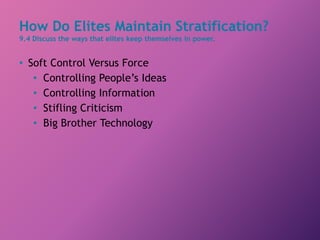
How Do Elites Maintain Stratification?
9.4 Discuss the ways that elites keep themselves in power.
• Soft Control Versus Force
• Controlling People’s Ideas
• Controlling Information
• Stifling Criticism
• Big Brother Technology
Comparative Social Stratification
9.5 Contrast social stratification in Great Britain and the former Soviet Union.
• Social Stratification in Great Britain
• Social Stratification in the Former Soviet Union
Global Stratification: Three Worlds (1 of 4)
9.6 Compare social stratification in the Most Industrialized Nations, the Industrializing Nations,
and the Least Industrialized Nations.
• The Most Industrialized Nations
• The Industrializing Nations
• The Least Industrialized Nations
• Modifying the Model
Global Stratification: Three Worlds (2 of 4)
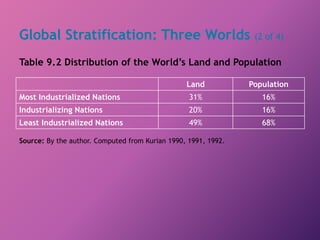
Table 9.2 Distribution of the World’s Land and Population
Blank
Land Population
Most Industrialized Nations 31% 16%
Industrializing Nations 20% 16%
Least Industrialized Nations 49% 68%
Source: By the author. Computed from Kurian 1990, 1991, 1992.
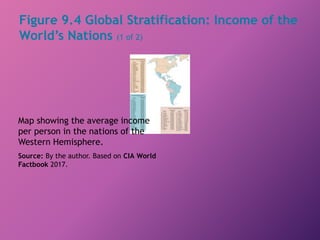
Figure 9.4 Global Stratification: Income of the
World’s Nations (1 of 2)
Map showing the average income
per person in the nations of the
Western Hemisphere.
Source: By the author. Based on CIA World
Factbook 2017.
Figure 9.4 Global Stratification: Income of the
World’s Nations (2 of 2)
Map showing the average income
per person in the nations of the
Eastern Hemisphere.
Source: By the author. Based on CIA
World Factbook 2017.
Global Stratification: Three Worlds (3 of 4)
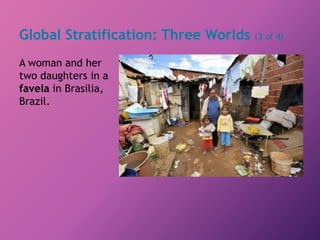
A woman and her
two daughters in a
favela in Brasilia,
Brazil.
Global Stratification: Three Worlds (4 of 4)
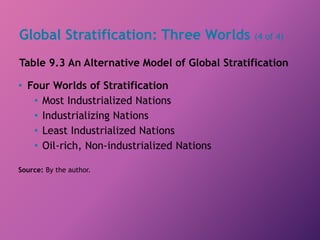
Table 9.3 An Alternative Model of Global Stratification
• Four Worlds of Stratification
• Most Industrialized Nations
• Industrializing Nations
• Least Industrialized Nations
• Oil-rich, Non-industrialized Nations
Source: By the author.
How Did the World’s Nations Become Stratified?
9.7 Discuss how colonialism and world system theory explain how the world’s nations became
stratified.
• Colonialism
• World System Theory
• Culture of Poverty
• Evaluating the Theories
Globalization Comes Home: Maquiladoras
South of the Border (1 of 2)
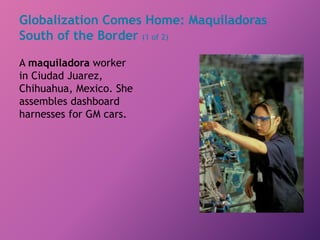
A maquiladora worker
in Ciudad Juarez,
Chihuahua, Mexico. She
assembles dashboard
harnesses for GM cars.
Globalization Comes Home: Maquiladoras
South of the Border (2 of 2)
Inside the home of a
maquiladora worker
in Nuevo Laredo,
Mexico.
Maintaining Global Stratification
9.8 Explain how neocolonialism, multinational corporations, and technology help to maintain global
stratification.
• Neocolonialism
• Multinational Corporations
• Technology and Global Domination
Strains in the Global System
9.9 Identify strains in today’s system of global stratification.
• Contradictions Threaten Failure or Collapse
• Historical shifts bring cataclysmic disruptions
• We are now living through such a time

Chapter 9 Lecture Notes.pptx

  • 1.
    Systems of SocialStratification 9.1 Compare and contrast slavery (including bonded labor), caste, estate, and class systems of social stratification. • Slavery • Caste • Estate • Class • Global Stratification and the Status of Females • The Global Superclass
  • 2.
    Slavery (1 of2) • Slavery • Causes • Conditions • Bonded Labor • Slavery in the New World • Slavery Today
  • 3.
    Slavery (2 of2) I have read a lot about slavery, but I did not know that slaves were ever offered as prizes in raffles. You might also note that top billing in this 1800s poster from Missouri goes to a horse.
  • 4.
    Caste (1 of2) • India’s religious caste • South Africa • U.S. racial caste system
  • 5.
    Figure 9.1 India’sCaste System Pyramid delineating the various castes in India. Source: By the author.
  • 6.
    Caste (2 of2) After centuries of silence, women of India are daring to protest rape publicly. This photo of students holding a candlelight march was taken in Allahabad, India.
  • 7.
  • 8.
    Class (1 of2) • More open • Possibility of social mobility
  • 9.
    Class (2 of2) In early industrialization, children worked alongside adults. They worked twelve hours a day Monday to Friday and fifteen hours on Saturday, often in dangerous, filthy conditions. This photo of a child coal miner was taken in West Virginia in 1908.
  • 10.
    Global Stratification andthe Status of Females • Gender is basis of social stratification • This is the case all over the world
  • 11.
    The Global Superclass •Richest 1,000 have more wealth than the 2.5 billion poorest people • Almost all are white • Almost all are male unless they are “wives of” or “daughters of”
  • 12.
    Figure 9.2 TheDistribution of the Earth’s Wealth Pie charts showing the proportion of wealth in the world owned by the wealthiest people. Source: By the author. Based on Keating et al. 2013.
  • 13.
    What Determines SocialClass? 9.2 Contrast the views of Marx and Weber on what determines social class. • Karl Marx: The Means of Production • Max Weber: Property, Power, and Prestige
  • 14.
    Marx’s Perspective • Meansof production • Bourgeoisie • Proletariat • Class consciousness • False class consciousness
  • 15.
    Weber’s Perspective • Property •Power • Prestige • Combination
  • 16.
    Figure 9.3 Weber’sThree Components of Social Class Examples of the ways in which power, property, and prestige can each lead to other components of social class. Source: By the author.
  • 17.
    Why Is SocialStratification Universal? 9.3 Contrast the functional and conflict views of why social stratification is universal. • The Functionalist View: Motivating Qualified People • The Conflict Perspective: Class Conflict and Scarce Resources • Lenski’s Synthesis
  • 18.
    The Functionalist View:Motivating Qualified People • Davis and Moore’s explanation • Tumin’s critique
  • 19.
    The Conflict View:Encountering Class Conflict and Scarce Resources (1 of 2) • Mosca’s argument • Marx’s argument • Current applications of conflict theory
  • 20.
    The Conflict View:Encountering Class Conflict and Scarce Resources (2 of 2) Table 9.1 Functionalist and Conflict Views of Stratification: The Distribution of Society’s Resources Blank Who Receives the Most Resources? Who Receives the Least Resources? The Functionalist View Those who perform the more important functions (the more capable and more industrious) Those who perform the less important functions (the less capable and less industrious) The Conflict View Those who occupy the more powerful positions Those who occupy the less powerful positions Source: By the author.
  • 21.
    How Do ElitesMaintain Stratification? 9.4 Discuss the ways that elites keep themselves in power. • Soft Control Versus Force • Controlling People’s Ideas • Controlling Information • Stifling Criticism • Big Brother Technology
  • 22.
    Comparative Social Stratification 9.5Contrast social stratification in Great Britain and the former Soviet Union. • Social Stratification in Great Britain • Social Stratification in the Former Soviet Union
  • 23.
    Global Stratification: ThreeWorlds (1 of 4) 9.6 Compare social stratification in the Most Industrialized Nations, the Industrializing Nations, and the Least Industrialized Nations. • The Most Industrialized Nations • The Industrializing Nations • The Least Industrialized Nations • Modifying the Model
  • 24.
    Global Stratification: ThreeWorlds (2 of 4) Table 9.2 Distribution of the World’s Land and Population Blank Land Population Most Industrialized Nations 31% 16% Industrializing Nations 20% 16% Least Industrialized Nations 49% 68% Source: By the author. Computed from Kurian 1990, 1991, 1992.
  • 25.
    Figure 9.4 GlobalStratification: Income of the World’s Nations (1 of 2) Map showing the average income per person in the nations of the Western Hemisphere. Source: By the author. Based on CIA World Factbook 2017.
  • 26.
    Figure 9.4 GlobalStratification: Income of the World’s Nations (2 of 2) Map showing the average income per person in the nations of the Eastern Hemisphere. Source: By the author. Based on CIA World Factbook 2017.
  • 27.
    Global Stratification: ThreeWorlds (3 of 4) A woman and her two daughters in a favela in Brasilia, Brazil.
  • 28.
    Global Stratification: ThreeWorlds (4 of 4) Table 9.3 An Alternative Model of Global Stratification • Four Worlds of Stratification • Most Industrialized Nations • Industrializing Nations • Least Industrialized Nations • Oil-rich, Non-industrialized Nations Source: By the author.
  • 29.
    How Did theWorld’s Nations Become Stratified? 9.7 Discuss how colonialism and world system theory explain how the world’s nations became stratified. • Colonialism • World System Theory • Culture of Poverty • Evaluating the Theories
  • 30.
    Globalization Comes Home:Maquiladoras South of the Border (1 of 2) A maquiladora worker in Ciudad Juarez, Chihuahua, Mexico. She assembles dashboard harnesses for GM cars.
  • 31.
    Globalization Comes Home:Maquiladoras South of the Border (2 of 2) Inside the home of a maquiladora worker in Nuevo Laredo, Mexico.
  • 32.
    Maintaining Global Stratification 9.8Explain how neocolonialism, multinational corporations, and technology help to maintain global stratification. • Neocolonialism • Multinational Corporations • Technology and Global Domination
  • 33.
    Strains in theGlobal System 9.9 Identify strains in today’s system of global stratification. • Contradictions Threaten Failure or Collapse • Historical shifts bring cataclysmic disruptions • We are now living through such a time

Editor's Notes

  • #6 From top to bottom, they are labeled as Brahmin (Priests and teachers); Kshatriya (Rulers and soldiers); Vaishya (Merchants and traders); Shudra (Peasants and laborers); and Dalit (the outcastes; degrading or polluting labor).
  • #13 The first shows that the wealthiest 10 percent of adults worldwide own 86 percent of the earth's wealth, while the other 10 percent own 14 percent. The second shows the wealthiest 1 percent of adults worldwide own 46 percent of the earth's wealth, while the other 99 percent own 54 percent.
  • #17 The Weber’s three components of social class are as follows: • Power leads to o Property (crooked politicians) o Prestige (Abe Lincoln; Barack Obama) • Property leads to o Power (Donald Trump; the wealthy who become presidents) o Prestige ((Warren Buffet; the wealthy in general) • Prestige leads to o Power (Ronald Reagan; Arnold Schwarzenegger) o Property (Olympic gold medalists who endorse products).
  • #26 The ranking and the income per person in “The Most Industrialized Nations” are as follows: 1. Luxembourg: $102,000 2. Singapore: $87,100 3. Norway: $69,300 4. Switzerland: $59,400 5. Hong Kong: $58,100 6. United States: $57, 300 7. Netherlands: $50, 800 8. Sweden: $49,700 9. Australia: $48,800 10. Germany: $48,200 11. Iceland: $48,100 12. Austria: $47,900 13. Taiwan: $47,800 14. Denmark: $46,600 15. Canada: $46,200 16. Belgium: $44,900 17. United Kingdom: $42,500 18. France: $42,400 19. Finland: $41,800 20. Japan: $38,900 21. Greenland: $37,900 22. Korea, South: $37,900 23. New Zealand: $37,100 24. Italy: $36,300 25. Israel: $34,800 26. Czech Republic: $33,200 27. Slovenia: $32,000 The Industrializing Nations 28. Ireland: $69,400 29. Spain: $36,500 30. Trinidad: $31,900 31. Slovakia: $31,200 32. Lithuania: $29,900 33. Estonia: $29,500 34. Portugal: $28,500 35. Poland: $27,700 36. Hungary: $27,200 37. Malaysia: $27,200 38. Greece: $26,800 39. Russia: $26,100 40. Latvia: $25,700 41. Chile: $24,100 42. Croatia: $22,400 43. Romania: $22,300 44. Turkey: $21,100 45. Mauritius: $20,500 46. Argentina: $20,200 47. Bulgaria: $20,100 48. Gabon: $19,300 49. Mexico: $18,900 50. Costa Rica: $16,100 51. China: $15,400 52. Brazil: $15,200 53. Venezuela: $15,100 54. South Africa: $13,200 55. Cuba: $11,600 The Least Industrialized Nations 56. Panama: $22,800 57. Uruguay: $21,600 58. Lebanon: $18,500 59. Azerbaijan: $17,700 60. Belarus: $17,500 61. Turkmenistan: $17,300 62. Botswana: $16,900 63. Thailand: $16,800 64. Dominican Rep.: $15,900 65. Suriname: $15,200 66. Algeria: $15,000 67. Macedonia: $14,500 68. Colombia: $14,200 69. Peru: $13,000 70. Mongolia: $12,200 71. Egypt: $12,100 72. Albania: $11,900 73. Namibia: $11,800 74. Indonesia: $11,700 75. Tunisia: $11,700 76. Sri Lanka: $11,200 77. Jordan: $11,100 78. Bosnia: $11,000 79. Ecuador:11,000 80. Georgia: $10,100 81. Swaziland: $9,800 82. Paraguay: 9,400 83. Jamaica: $9,000 84. Armenia: 8,900 85. El Salvador: 8,900 86. Morocco: $8,400 87. French Guiana: $8,300 88. Belize: $8,200
  • #27 The Least Industrialized Nations: 89. Ukraine: $8,200 90. Bhutan: $8,100 91. Guatemala: $7,900 92. Guyana: $7,900 93. Philippines: $7,700 94. Bolivia: $7,200 95. Angola: $6,800 96. Congo, Rep. of: $6,800 97. India: $6,700 98. Uzbekistan: $6,500 99. Vietnam: $6,400 100. Burma (Myanmar): $6,000 101. Nigeria: $5,900 102. Laos: $5,700 103. Honduras: $5,300 104. Nicaragua: $5,200 105. Moldova: $5,200 106. Pakistan: $5,100 107. Sudan: $4,500 108. Ghana: $4,400 109. Mauritania: $4,400 110. Bangladesh: $3,900 111. Zambia: $3,900 112. Cambodia: $3,700 113. Cote d'Ivoire: $3,600 114. Cameroon: $3,500 115. Kyrgyzstan: $3,500 116. Papua-New Guinea: $3,500 117. Djibouti: $3,400 118. Kenya: $3,400 119. Lesotho: $3,100 120. Tanzania: $3,100 121. Tajikistan: $3,000 122. Syria: $2,900 123. Chad: $2,600 124. Senegal: $2,600 125. Nepal: $2,500 126. Western Sahara: $2,500 127. Yemen: $2,500 128. Mali: $2,300 129. Benin: $2,200 130. Uganda: $2,100 131. Afghanistan: $2,000 132. Zimbabwe: $2,000 133. Ethiopia: $1,900 134. Rwanda: $1,900 135. Burkina Faso: $1,800 136. Haiti: $1,800 137. Korea, North: $1,800 138. Gambia: $1,700 139. Sierra Leone: $1,700 140. Guinea-Bissau: $1,600 141. Madagascar: $1,500 142. Togo: 1,500 143. Eritrea: $1,300 144. Guinea: $1,300 145. Mozambique: $1,200 146. Malawi: $1,100 147. Niger: $1,100 148. Burundi: $800 149. Congo, Dem. Rep.: $800 150. Central African Rep.: $700 151. Somalia: $400 The Oil-Rich Nations: 152. Qatar: $129,700 153. Kuwait: $71,200 154. United Arab Emirates: $67,700 155. Saudi Arabia: $54,100 156. Bahrain: $50,300 157. Oman: $43,700 158. Equatorial Guinea: $38,700 159. Kazakhstan: $25,700 160. Iran: $18,100 161. Iraq superscript c: $16,500 162. Libya: $14,200.