Chapter 6: Acid and Alkali
Prepared by:
Pn. Syamimi Othman
SMJK Chung Ling, Penang
Neutralisation
1. Neutralisation is the reaction between acid and alkali produces salt and water.
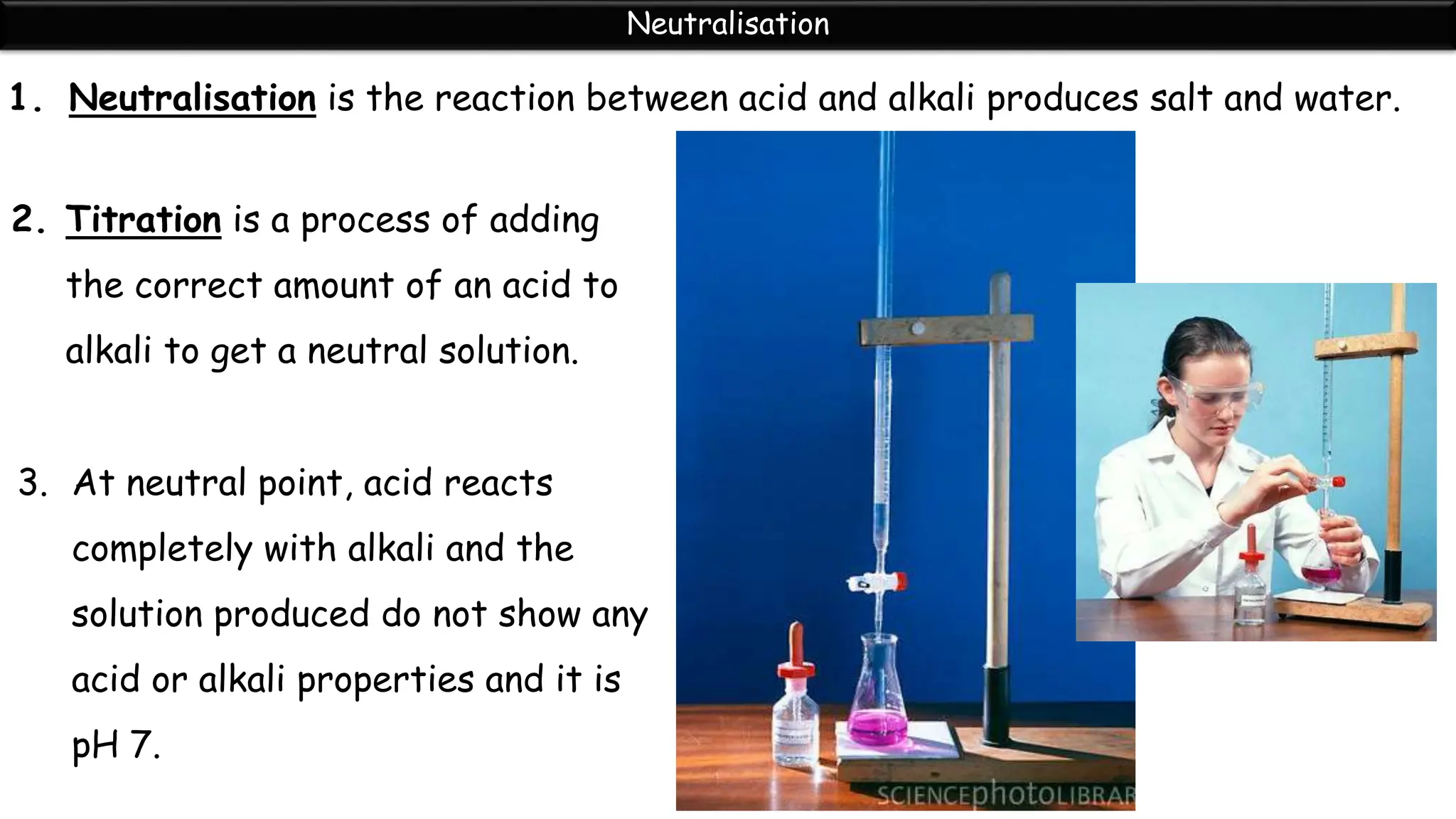
2. Titration is a process of adding
the correct amount of an acid to
alkali to get a neutral solution.
3. At neutral point, acid reacts
completely with alkali and the
solution produced do not show any
acid or alkali properties and it is
pH 7.
Neutralisation
acid + alkali  salt + water
• The word equation for the neutralisation is as below:
• Example:
• Hydrochloric acid + Sodium hydroxide  Sodium chloride + water
• Sulphuric acid + Potassium hydroxide  Potassium sulphate + water
• Nitric acid + Calcium hydroxide  Calcium nitrate + water
Neutralisation
Neutralisation
Neutralisation
Neutralisation
Applications of Neutralisation in Daily Life
(a)
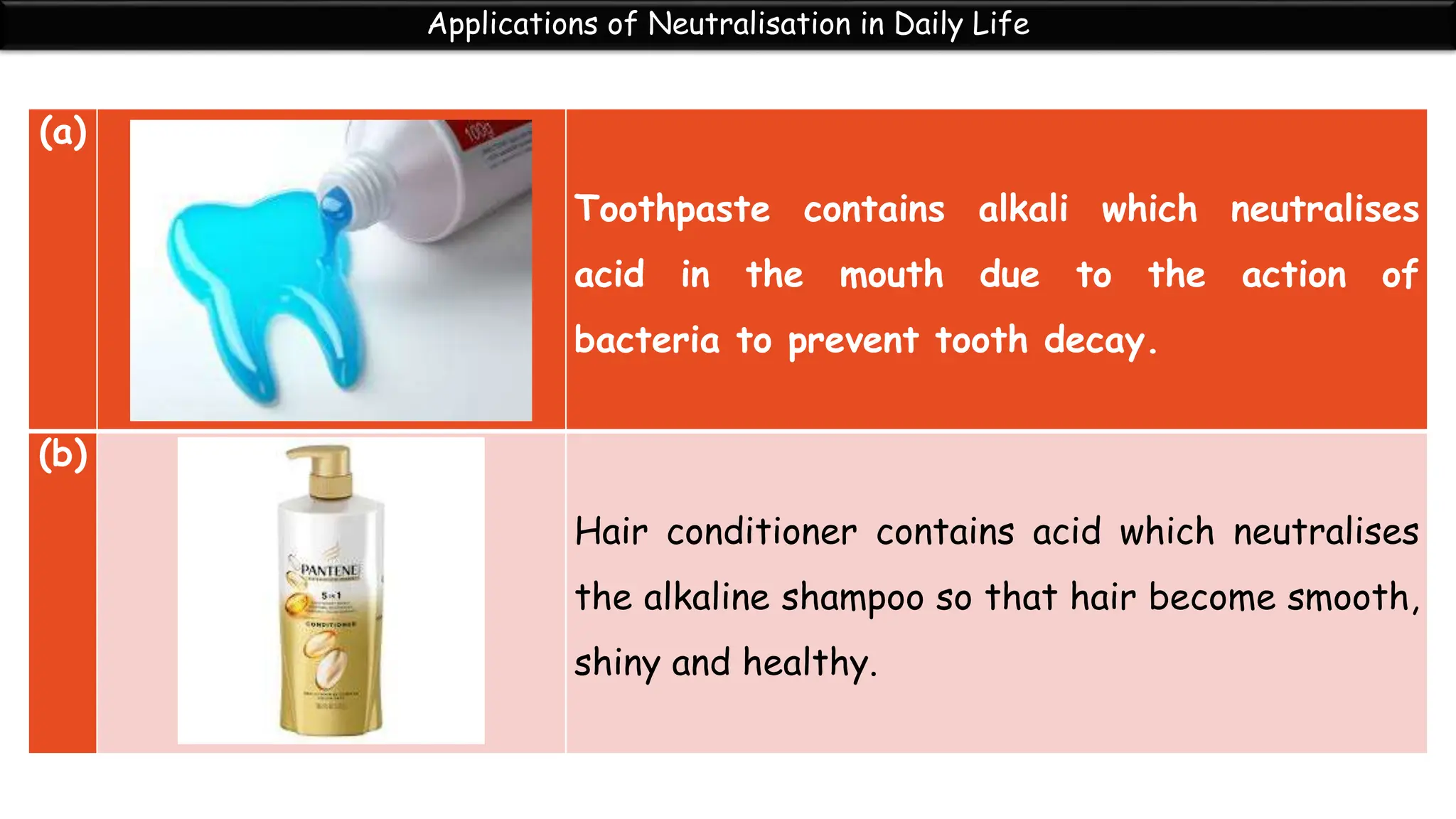
Toothpaste contains alkali which neutralises
acid in the mouth due to the action of
bacteria to prevent tooth decay.
(b)
Hair conditioner contains acid which neutralises
the alkaline shampoo so that hair become smooth,
shiny and healthy.
Applications of Neutralisation in Daily Life
(c)
Fabric softener has acidic properties which
reduces the pH value of fabric which become
alkaline due to the use of detergent powder.
(d)
Acidic soil can be treated by adding slaked lime
(calcium hydroxide) which is alkaline in order for
plants to grow well.
Applications of Neutralisation in Daily Life
(e)
Quicklime (calcium oxide) is used to treat
acidic substances from the factory before
being discarded.
(f)
Vinegar is used to treat wasps’ stings which are
alkaline.
Applications of Neutralisation in Daily Life
(g)
Bicarbonate powder is used to treat bee stings
and ants’ bites which is acidic.
(h)
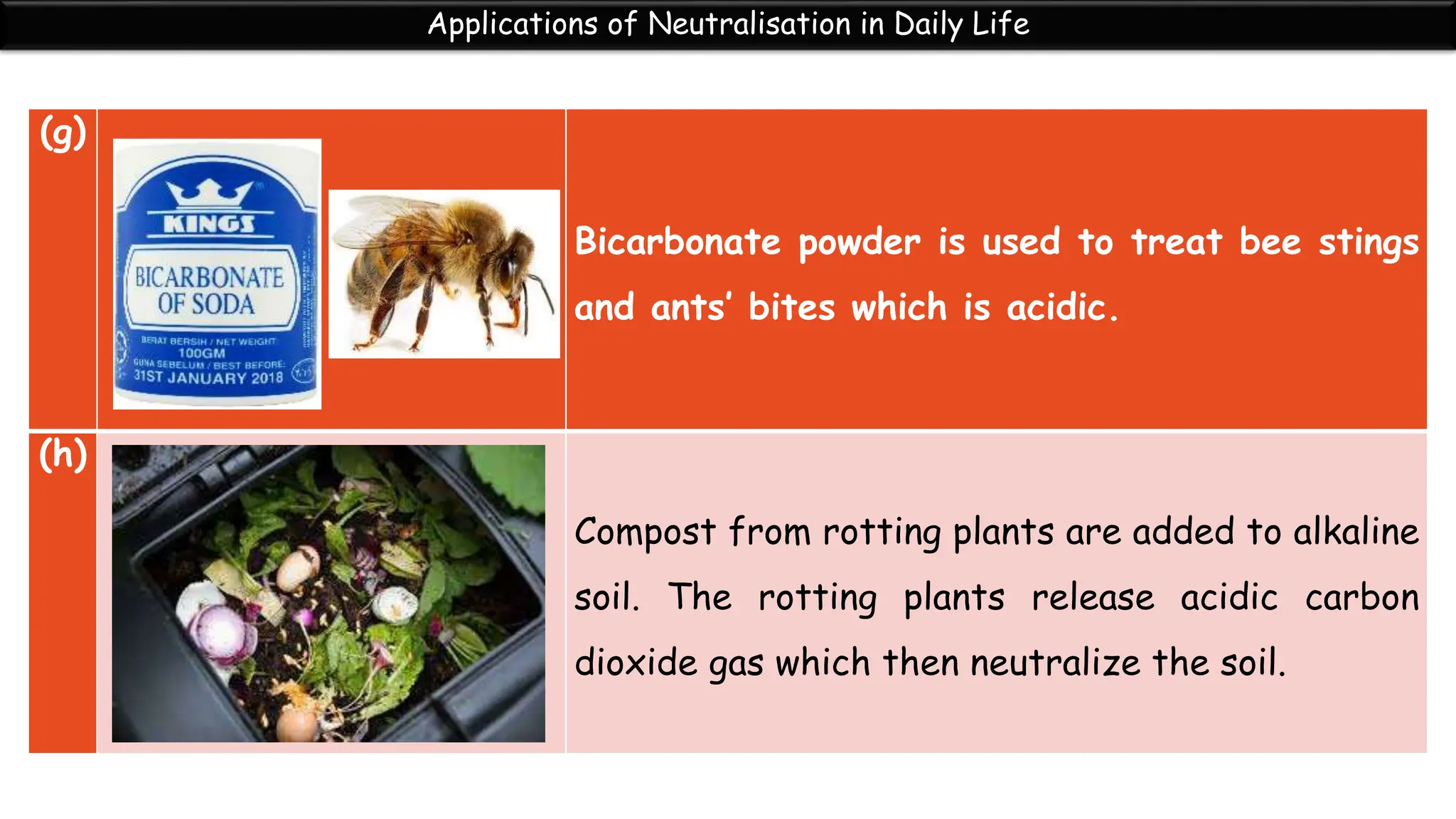
Compost from rotting plants are added to alkaline
soil. The rotting plants release acidic carbon
dioxide gas which then neutralize the soil.
Make Your Own pH Indicator Using Red Cabbage
• Red cabbage contains a chemical called anthocyanin that changes color
depending on the acidity of its environment.
https://youtu.be/PYYowXOEZZE
Do Formative Practice 6.2,
Summative Practice 6 &
HOTS Mastery 6

chapter 6.2. Neutralisation (Acid and Alkali)

  • 1.
    Chapter 6: Acidand Alkali Prepared by: Pn. Syamimi Othman SMJK Chung Ling, Penang
  • 2.
    Neutralisation 1. Neutralisation isthe reaction between acid and alkali produces salt and water. 2. Titration is a process of adding the correct amount of an acid to alkali to get a neutral solution. 3. At neutral point, acid reacts completely with alkali and the solution produced do not show any acid or alkali properties and it is pH 7.
  • 3.
    Neutralisation acid + alkali salt + water • The word equation for the neutralisation is as below: • Example: • Hydrochloric acid + Sodium hydroxide  Sodium chloride + water • Sulphuric acid + Potassium hydroxide  Potassium sulphate + water • Nitric acid + Calcium hydroxide  Calcium nitrate + water
  • 4.
  • 5.
  • 6.
  • 7.
  • 8.
    Applications of Neutralisationin Daily Life (a) Toothpaste contains alkali which neutralises acid in the mouth due to the action of bacteria to prevent tooth decay. (b) Hair conditioner contains acid which neutralises the alkaline shampoo so that hair become smooth, shiny and healthy.
  • 9.
    Applications of Neutralisationin Daily Life (c) Fabric softener has acidic properties which reduces the pH value of fabric which become alkaline due to the use of detergent powder. (d) Acidic soil can be treated by adding slaked lime (calcium hydroxide) which is alkaline in order for plants to grow well.
  • 10.
    Applications of Neutralisationin Daily Life (e) Quicklime (calcium oxide) is used to treat acidic substances from the factory before being discarded. (f) Vinegar is used to treat wasps’ stings which are alkaline.
  • 11.
    Applications of Neutralisationin Daily Life (g) Bicarbonate powder is used to treat bee stings and ants’ bites which is acidic. (h) Compost from rotting plants are added to alkaline soil. The rotting plants release acidic carbon dioxide gas which then neutralize the soil.
  • 12.
    Make Your OwnpH Indicator Using Red Cabbage • Red cabbage contains a chemical called anthocyanin that changes color depending on the acidity of its environment. https://youtu.be/PYYowXOEZZE
  • 13.
    Do Formative Practice6.2, Summative Practice 6 & HOTS Mastery 6