Vitamins
Chapter 6
Azhar Bin Mustafa@erican
Chapter 6 Vitamins
Azhar Bin Mustafa@erican
Certain vitamins and minerals are needed for
the body to function.
• 13 vitamins
• 22 minerals
Two types of vitamins
• Water-soluble
• Fat-soluble
Chapter 6 Vitamins
Azhar Bin Mustafa@erican
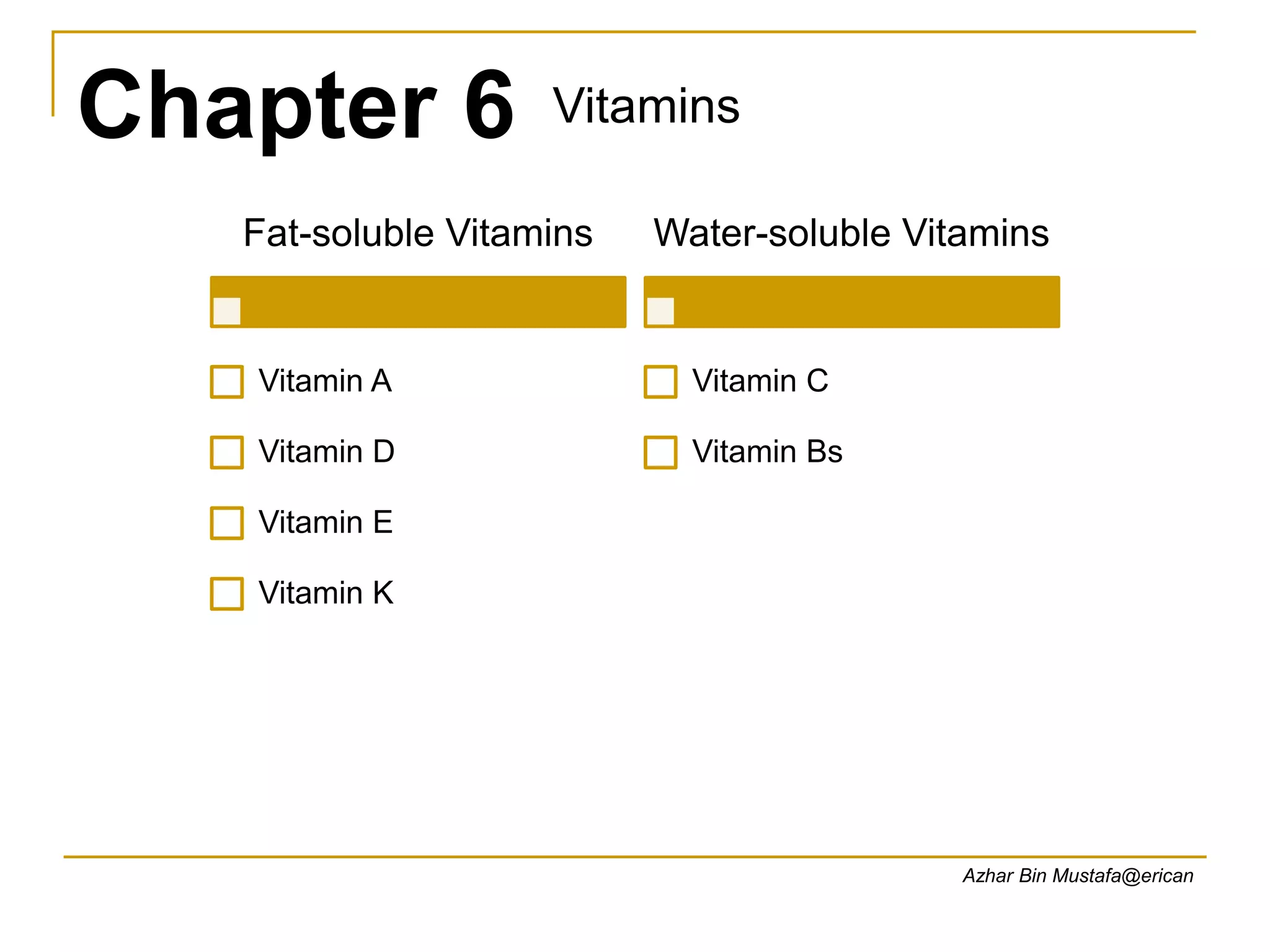
Fat-soluble Vitamins
Vitamin A
Vitamin D
Vitamin E
Vitamin K
Water-soluble Vitamins
Vitamin C
Vitamin Bs
Chapter 6 Vitamins
Azhar Bin Mustafa@erican
Vitamin A (Retinol)
Beta-carotene is converted into vitamin A
Vitamin A:
◦ Promotes good vision
◦ Promotes healthy skin
◦ Helps with growth and maintenance of
bones, teeth, and cell structure
Chapter 6 Vitamins
Azhar Bin Mustafa@erican
Vitamin A (Retinol)
Too much vitamin A:
• May turn your skin orange
• May cause fatigue, weakness, severe headache, blurred vision, hair
loss and joint pain.
Too little vitamin A:
• May cause night blindness
• Lowered immune system
Chapter 6 Vitamins
Azhar Bin Mustafa@erican
Vitamin A (Retinol)
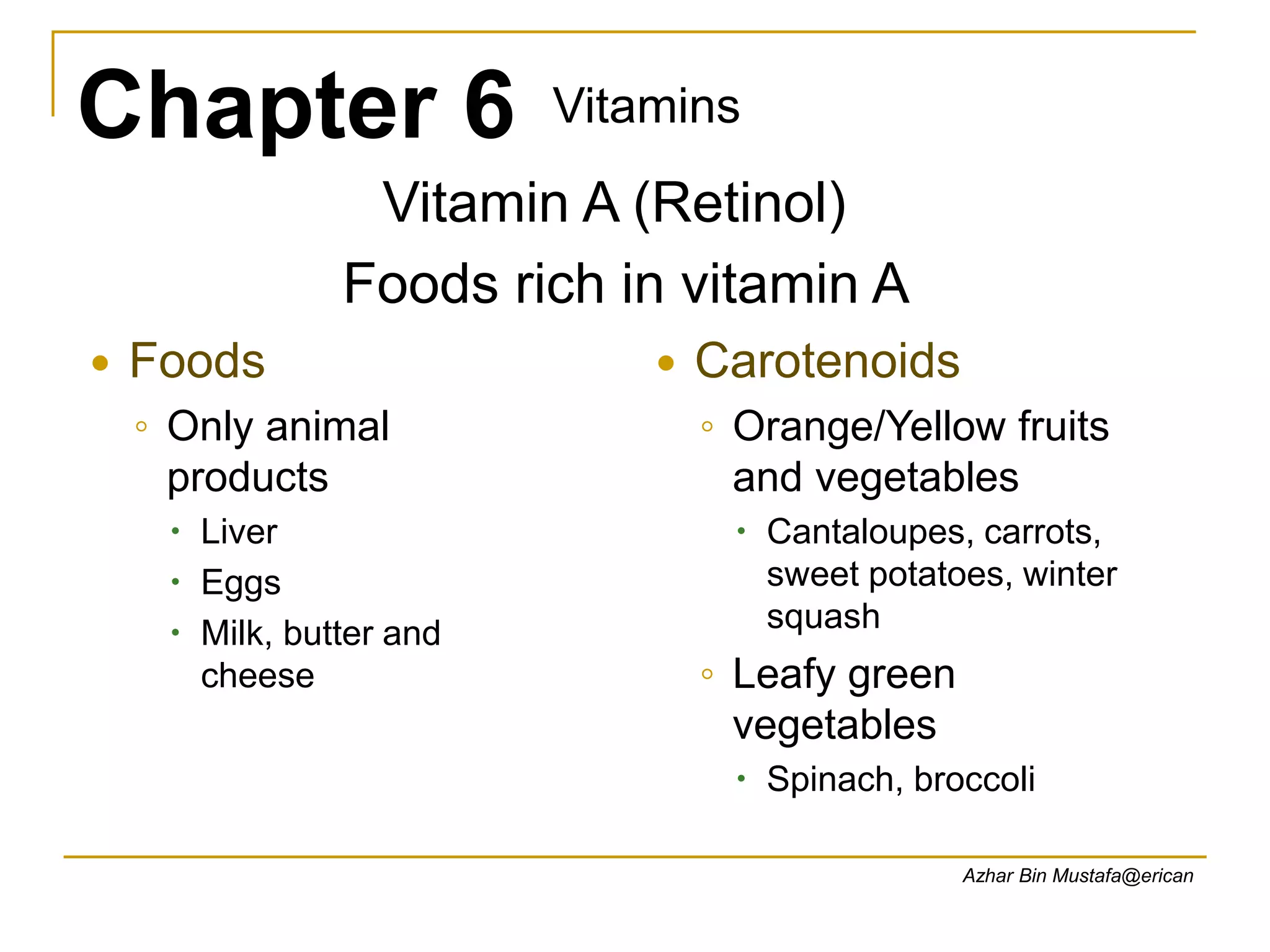
Foods rich in vitamin A
 Foods
◦ Only animal
products
 Liver
 Eggs
 Milk, butter and
cheese
 Carotenoids
◦ Orange/Yellow fruits
and vegetables
 Cantaloupes, carrots,
sweet potatoes, winter
squash
◦ Leafy green
vegetables
 Spinach, broccoli
Chapter 6 Vitamins
Azhar Bin Mustafa@erican
Vitamin D – “The Sunshine Vitamin”
• Essential for building and maintaining bones and
teeth
• Responsible for absorption and utilization of
calcium
• Other health benefits:
• May boost immune system
• May also help decrease certain cancers
• RDA: 5 micrograms until age 50 10 micrograms /
day until 70; 15 mcg 70+
Chapter 6 Vitamins
Azhar Bin Mustafa@erican
Vitamin D – “The Sunshine Vitamin”
Too little vitamin D
 May lead to osteomalacia and/or
osteoporosis
Chapter 6 Vitamins
Azhar Bin Mustafa@erican
Foods rich in vitamin D
 Sun exposure for 10 minutes a day
 Foods:
◦ Fortified milk
◦ Tuna
◦ Salmon
◦ May need a supplement
Vitamin D – “The Sunshine Vitamin”
Chapter 6 Vitamins
Azhar Bin Mustafa@erican
Vitamin E
• Important to red blood cells, muscles and other
tissues
• Deficiency is rare
• Toxicity is rare
• But Vitamin E acts as a blood thinner
• Foods:
• Vegetable oils, salad dressings, whole grain
cereals, green leafy vegetables, nuts, seeds,
peanut butter and wheat germ.
Chapter 6 Vitamins
Azhar Bin Mustafa@erican
Vitamin K
• Important for blood clotting
• Also has a role for bone health
• Mostly made in the intestines
• Foods:
• Turnip greens, cauliflower, spinach,
liver, broccoli, kale and cabbage
Chapter 6 Vitamins
Azhar Bin Mustafa@erican
Water-Soluble Vitamins
 Vitamins Bs and C
 Eight B vitamins:
• Thiamin (B-1)
• Riboflavin (B-2)
• Niacin (B-3)
• Pyridoxine (B-4)
• Cobalamin (B-12)
• Folic acid
• Pantothenic acid
• Biotin
Chapter 6 Vitamins
Azhar Bin Mustafa@erican
Vitamin C
 Important to bone health, blood vessel health,
cell structure and absorption of iron
 Foods:
◦ Melons, berries, tomatoes, potatoes, broccoli,
fortified juices, kiwi, mangos, yellow peppers
and citrus fruits

Chapter 6 vITAMIN.ppt

  • 1.
  • 2.
    Chapter 6 Vitamins AzharBin Mustafa@erican Certain vitamins and minerals are needed for the body to function. • 13 vitamins • 22 minerals Two types of vitamins • Water-soluble • Fat-soluble
  • 3.
    Chapter 6 Vitamins AzharBin Mustafa@erican Fat-soluble Vitamins Vitamin A Vitamin D Vitamin E Vitamin K Water-soluble Vitamins Vitamin C Vitamin Bs
  • 4.
    Chapter 6 Vitamins AzharBin Mustafa@erican Vitamin A (Retinol) Beta-carotene is converted into vitamin A Vitamin A: ◦ Promotes good vision ◦ Promotes healthy skin ◦ Helps with growth and maintenance of bones, teeth, and cell structure
  • 5.
    Chapter 6 Vitamins AzharBin Mustafa@erican Vitamin A (Retinol) Too much vitamin A: • May turn your skin orange • May cause fatigue, weakness, severe headache, blurred vision, hair loss and joint pain. Too little vitamin A: • May cause night blindness • Lowered immune system
  • 6.
    Chapter 6 Vitamins AzharBin Mustafa@erican Vitamin A (Retinol) Foods rich in vitamin A  Foods ◦ Only animal products  Liver  Eggs  Milk, butter and cheese  Carotenoids ◦ Orange/Yellow fruits and vegetables  Cantaloupes, carrots, sweet potatoes, winter squash ◦ Leafy green vegetables  Spinach, broccoli
  • 7.
    Chapter 6 Vitamins AzharBin Mustafa@erican Vitamin D – “The Sunshine Vitamin” • Essential for building and maintaining bones and teeth • Responsible for absorption and utilization of calcium • Other health benefits: • May boost immune system • May also help decrease certain cancers • RDA: 5 micrograms until age 50 10 micrograms / day until 70; 15 mcg 70+
  • 8.
    Chapter 6 Vitamins AzharBin Mustafa@erican Vitamin D – “The Sunshine Vitamin” Too little vitamin D  May lead to osteomalacia and/or osteoporosis
  • 9.
    Chapter 6 Vitamins AzharBin Mustafa@erican Foods rich in vitamin D  Sun exposure for 10 minutes a day  Foods: ◦ Fortified milk ◦ Tuna ◦ Salmon ◦ May need a supplement Vitamin D – “The Sunshine Vitamin”
  • 10.
    Chapter 6 Vitamins AzharBin Mustafa@erican Vitamin E • Important to red blood cells, muscles and other tissues • Deficiency is rare • Toxicity is rare • But Vitamin E acts as a blood thinner • Foods: • Vegetable oils, salad dressings, whole grain cereals, green leafy vegetables, nuts, seeds, peanut butter and wheat germ.
  • 11.
    Chapter 6 Vitamins AzharBin Mustafa@erican Vitamin K • Important for blood clotting • Also has a role for bone health • Mostly made in the intestines • Foods: • Turnip greens, cauliflower, spinach, liver, broccoli, kale and cabbage
  • 12.
    Chapter 6 Vitamins AzharBin Mustafa@erican Water-Soluble Vitamins  Vitamins Bs and C  Eight B vitamins: • Thiamin (B-1) • Riboflavin (B-2) • Niacin (B-3) • Pyridoxine (B-4) • Cobalamin (B-12) • Folic acid • Pantothenic acid • Biotin
  • 13.
    Chapter 6 Vitamins AzharBin Mustafa@erican Vitamin C  Important to bone health, blood vessel health, cell structure and absorption of iron  Foods: ◦ Melons, berries, tomatoes, potatoes, broccoli, fortified juices, kiwi, mangos, yellow peppers and citrus fruits