Vitamins
What are Vitamins ??
 Nutrients that our body does not make on its
own. Thus we must obtain them from the
foods we eat, or via vitamin supplements.
 They are essential for providing good health
and are necessary for many life functions.
Types of Vitamins
 Fat-Soluble Vitamins
 Water-Soluble Vitamins
Fat-Soluble Vitamins:
 Fat-soluble vitamins are happy to remain in
your body for a while, some stay for some
days, some for up to six months! Then, once it
is time for them to be used, special carriers in
your body take them to wherever they are
required.
 Vitamins A, D, K, and E are all fat-soluble
vitamins.
Water-Soluble Vitamins:
 Water-soluble vitamins are totally different. after you eat foods that have
soluble vitamins, the vitamins aren't getting keep the maximum amount in
your body. Instead, they travel through your blood. whatever your body
does not use comes out after you urinate.
 So, these types of vitamins are required to replace often as they do not
stick around. Vitamins which come under this category are mentioned
below:
 Biotin
 B2 (riboflavin)
 B1 (thiamin)
 Niacin
 B12 (cobalamine)
 Folic acid
 B6 (pyridoxine)
 Vitamin C
What is Vitamin A?
 Fat-soluble
 Retinol
 One of the most
active, usable
forms
 Found in animal
and plant
sources
Sources of Vitamin A
 The sources of Vitamin A are eggs, milk,
butter, papaya, mango, liver fish, liver oil,
sweet potatoes, green and yellow vegetables
etc.
Too much vitamin A
 May turn your skin orange
 May cause fatigue, weakness, severe
headache, blurred vision, hair loss and joint
pain.
 Toxicity:
 May cause severe liver or brain damage
 Birth defects
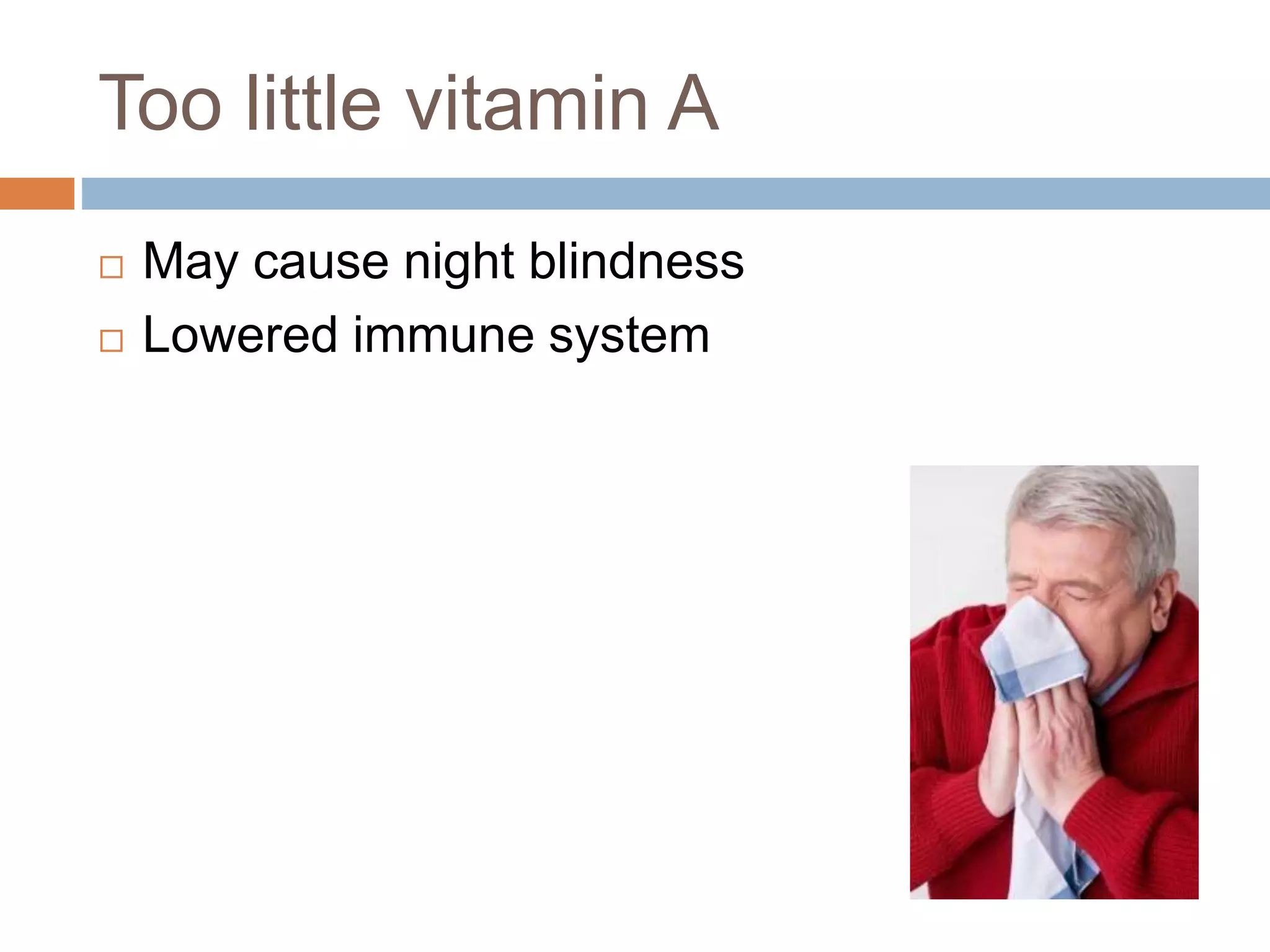
Too little vitamin A
 May cause night blindness
 Lowered immune system
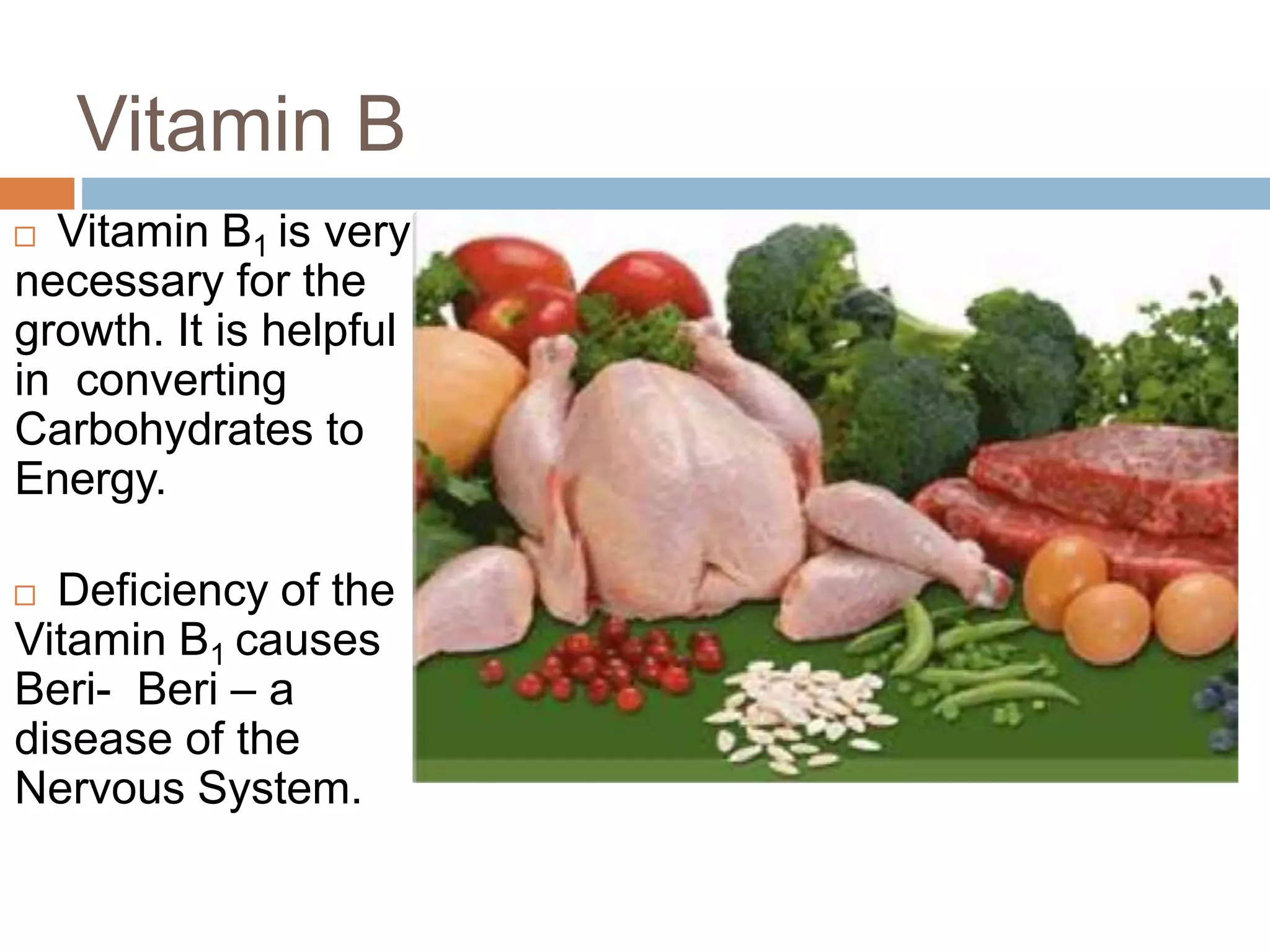
Vitamin B
 Vitamin B1 is very
necessary for the
growth. It is helpful
in converting
Carbohydrates to
Energy.
 Deficiency of the
Vitamin B1 causes
Beri- Beri – a
disease of the
Nervous System.
Sources of Vitamin B1
 Main Sources of Vitamin B1 are: cereals, yeast,
nuts, peas, potatoes and almost all the
vegetables.
Vitamin C
 Ascorbic acid
(Toxic to
viruses,bacteria,
and some
malignant tumor
cells)
 Antioxidant
 water-soluble
What are C’s functions in the
body?
 Protects you body from free radicals
 helps form connective tissue that hold your
bones, muscles, and tissues together
(collagen)
 aids in the healing of wounds
 aids the body in absorbing iron from plant
sources
 helps to keep your gums healthy
 helps your body to fight infections
 aids in the prevention of heart disease
 helps prevent some forms of cancer
Sources of Vitamin C
 Guava, Broccoli, Cantaloupe, Red Bell
Pepper, Orange Juice, Strawberries, Tomato
Juice, Raw Tomato, Sweet Potato, Tangerine,
Spinach, Leafy Greens, Berries, Citrus Fruits
 LINK (list of fruits &veggies that are good
sources of C)
Vitamin E
 Fat soluble
 Antioxidant
 Reduce the energy of
the free radical
 Stop the free radical
from forming in the
first place
 Interrupt an oxidizing
chain reaction to
minimize the damage
of free radicals
What does it do?
 Protects cell membranes and other fat-soluble parts of
the body (LDL cholesterol) from oxidation
 May reduce the risk of heart disease
 May also discourage development of some types of
cancer
 Promotes normal growth and development
 Promotes normal red blood cell formation
 Acts as anti-blood clotting agent
 Plays some role in the body’s ability to process glucose
 Also been known to aid the process of wound healing
Sources of Vitamin E
 Sunflower seeds, almonds, spinach,
avocados, squash, kiwifruit, trout, shrimp, olive
oil, wheat germ oil, and broccoli.
Vitamin D -“The Sunshine
Vitamin”
 Vitamin D aids our body in absorbing
phosphorous and calcium from the food we
eat.
 It deposits phosphorous and calcium in teeth
and bones and makes them healthier and
stronger.
 It also protects us from other infections by
keeping our immune system healthy.
Sources of Vitamin D
 Very few foods in nature contain vitamin D.
The flesh of fatty fish (such as salmon, tuna,
and mackerel) and fish liver oils are among the
best sources . Small amounts of vitamin D are
found in beef liver, cheese, and egg yolks.
Too little vitamin D
 Vitamin D deficiency has been in the news a
lot lately.
 Deficiency may occur from:
 Inadequate diet
 Vegetarianism, lactose intolerance, milk allergy
 Body unable to absorb needed vitamin D
 Limited exposure to sunlight
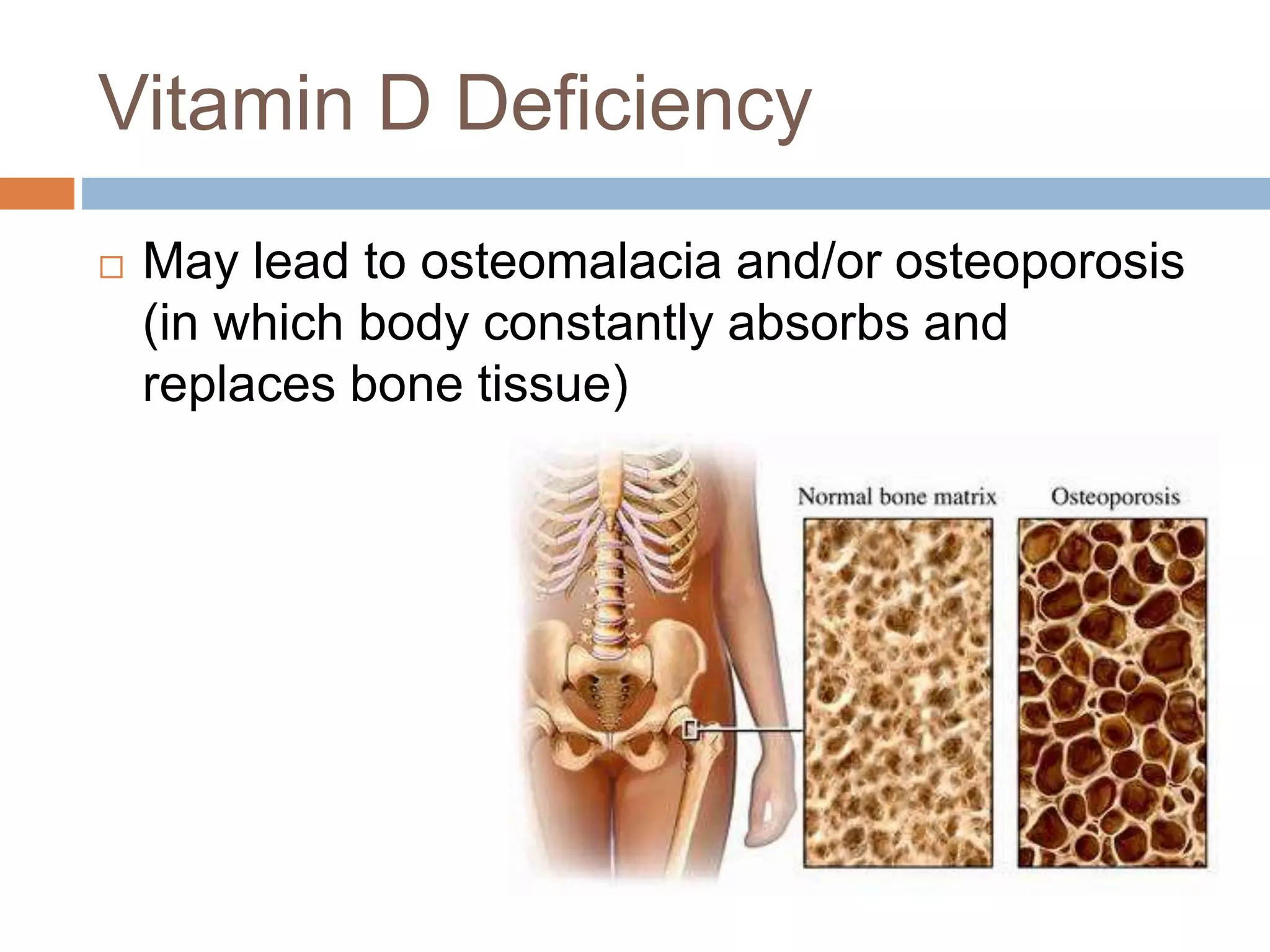
Vitamin D Deficiency
 May lead to osteomalacia and/or osteoporosis
(in which body constantly absorbs and
replaces bone tissue)
Vitamin K
 Vitamin K is essential for blood clotting.
 Deficiency of Vitamin K also affects in the healing
of the injuries.
 Best source of Vitamin K are green leafy vegetables,
like cabbages, spinach and cauliflower.
Sources of Vitamin K
 Foods high in vitamin K include leafy green
vegetables (cooked and raw), broccoli,
brussels sprouts, cabbage, pickled cucumber,
asparagus, kiwifruit, okra, green beans, and
salad greens like lettuce
References
 www.google.com
 www.wikipedia.com
 www.studymafia.org
THANKS

Vitamins And Types of Vitamins

  • 1.
  • 2.
    What are Vitamins??  Nutrients that our body does not make on its own. Thus we must obtain them from the foods we eat, or via vitamin supplements.  They are essential for providing good health and are necessary for many life functions.
  • 3.
    Types of Vitamins Fat-Soluble Vitamins  Water-Soluble Vitamins
  • 4.
    Fat-Soluble Vitamins:  Fat-solublevitamins are happy to remain in your body for a while, some stay for some days, some for up to six months! Then, once it is time for them to be used, special carriers in your body take them to wherever they are required.  Vitamins A, D, K, and E are all fat-soluble vitamins.
  • 5.
    Water-Soluble Vitamins:  Water-solublevitamins are totally different. after you eat foods that have soluble vitamins, the vitamins aren't getting keep the maximum amount in your body. Instead, they travel through your blood. whatever your body does not use comes out after you urinate.  So, these types of vitamins are required to replace often as they do not stick around. Vitamins which come under this category are mentioned below:  Biotin  B2 (riboflavin)  B1 (thiamin)  Niacin  B12 (cobalamine)  Folic acid  B6 (pyridoxine)  Vitamin C
  • 6.
    What is VitaminA?  Fat-soluble  Retinol  One of the most active, usable forms  Found in animal and plant sources
  • 7.
    Sources of VitaminA  The sources of Vitamin A are eggs, milk, butter, papaya, mango, liver fish, liver oil, sweet potatoes, green and yellow vegetables etc.
  • 8.
    Too much vitaminA  May turn your skin orange  May cause fatigue, weakness, severe headache, blurred vision, hair loss and joint pain.  Toxicity:  May cause severe liver or brain damage  Birth defects
  • 9.
    Too little vitaminA  May cause night blindness  Lowered immune system
  • 10.
    Vitamin B  VitaminB1 is very necessary for the growth. It is helpful in converting Carbohydrates to Energy.  Deficiency of the Vitamin B1 causes Beri- Beri – a disease of the Nervous System.
  • 11.
    Sources of VitaminB1  Main Sources of Vitamin B1 are: cereals, yeast, nuts, peas, potatoes and almost all the vegetables.
  • 12.
    Vitamin C  Ascorbicacid (Toxic to viruses,bacteria, and some malignant tumor cells)  Antioxidant  water-soluble
  • 13.
    What are C’sfunctions in the body?  Protects you body from free radicals  helps form connective tissue that hold your bones, muscles, and tissues together (collagen)  aids in the healing of wounds  aids the body in absorbing iron from plant sources  helps to keep your gums healthy  helps your body to fight infections  aids in the prevention of heart disease  helps prevent some forms of cancer
  • 14.
    Sources of VitaminC  Guava, Broccoli, Cantaloupe, Red Bell Pepper, Orange Juice, Strawberries, Tomato Juice, Raw Tomato, Sweet Potato, Tangerine, Spinach, Leafy Greens, Berries, Citrus Fruits  LINK (list of fruits &veggies that are good sources of C)
  • 15.
    Vitamin E  Fatsoluble  Antioxidant  Reduce the energy of the free radical  Stop the free radical from forming in the first place  Interrupt an oxidizing chain reaction to minimize the damage of free radicals
  • 16.
    What does itdo?  Protects cell membranes and other fat-soluble parts of the body (LDL cholesterol) from oxidation  May reduce the risk of heart disease  May also discourage development of some types of cancer  Promotes normal growth and development  Promotes normal red blood cell formation  Acts as anti-blood clotting agent  Plays some role in the body’s ability to process glucose  Also been known to aid the process of wound healing
  • 17.
    Sources of VitaminE  Sunflower seeds, almonds, spinach, avocados, squash, kiwifruit, trout, shrimp, olive oil, wheat germ oil, and broccoli.
  • 18.
    Vitamin D -“TheSunshine Vitamin”  Vitamin D aids our body in absorbing phosphorous and calcium from the food we eat.  It deposits phosphorous and calcium in teeth and bones and makes them healthier and stronger.  It also protects us from other infections by keeping our immune system healthy.
  • 19.
    Sources of VitaminD  Very few foods in nature contain vitamin D. The flesh of fatty fish (such as salmon, tuna, and mackerel) and fish liver oils are among the best sources . Small amounts of vitamin D are found in beef liver, cheese, and egg yolks.
  • 20.
    Too little vitaminD  Vitamin D deficiency has been in the news a lot lately.  Deficiency may occur from:  Inadequate diet  Vegetarianism, lactose intolerance, milk allergy  Body unable to absorb needed vitamin D  Limited exposure to sunlight
  • 21.
    Vitamin D Deficiency May lead to osteomalacia and/or osteoporosis (in which body constantly absorbs and replaces bone tissue)
  • 22.
    Vitamin K  VitaminK is essential for blood clotting.  Deficiency of Vitamin K also affects in the healing of the injuries.  Best source of Vitamin K are green leafy vegetables, like cabbages, spinach and cauliflower.
  • 23.
    Sources of VitaminK  Foods high in vitamin K include leafy green vegetables (cooked and raw), broccoli, brussels sprouts, cabbage, pickled cucumber, asparagus, kiwifruit, okra, green beans, and salad greens like lettuce
  • 24.
  • 25.