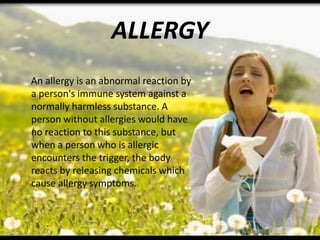
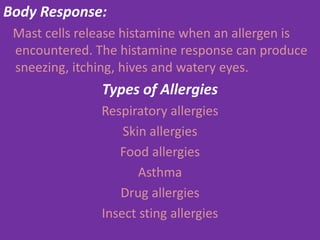
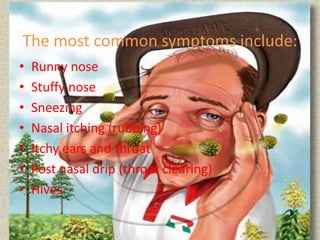
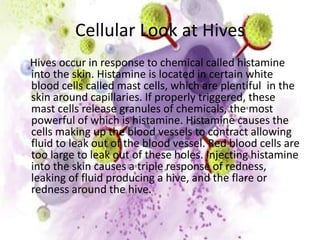
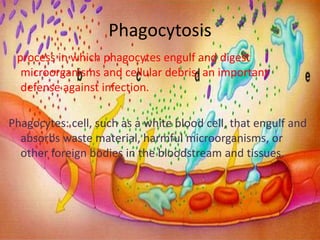
An allergy is an abnormal immune reaction to a normally harmless substance. When an allergic person encounters the trigger substance, their body releases chemicals like histamine that cause allergy symptoms such as sneezing, itching, hives and watery eyes. Common allergies include respiratory, skin, food, asthma, drugs and insect stings. Hives occur when histamine is released into the skin from mast cells, causing blood vessels to leak fluid and form raised, itchy welts on the skin. Treatment for hives typically involves antihistamines. Phagocytosis is the process where phagocytes like white blood cells engulf and digest microbes and debris to defend against infection.


![Chapter 6 6 h power point [autosaved]](https://cdn.slidesharecdn.com/ss_thumbnails/chapter66hpowerpointautosaved-110928223805-phpapp01-thumbnail.jpg?width=640&height=640&fit=bounds)


