Chapter 6: Lymphatic and Immune SystemsBy: Emily Salutric
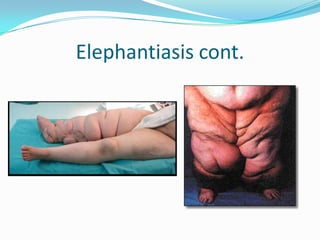
ElephantiasisInflammation, obstruction, and destruction of the lymph vessels which results in enlarged tissues due to edemaThe skin usually becomes thickened, and has a pebbly appearance and may become darkened and ulceratedThe lymphatic blockage may be caused by repeated bacterial infections and from microscopic thread-like wormsTreatments include chemotherapy and antibiotics to kill the worms, as well at heightened hygiene to aid the body’s immune system while it is down
Elephantiasis cont.
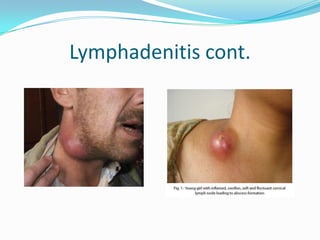
LymphadenitisInflammation of the lymph nodesThis is also known as swollen glandsCauses: infection, malignancy, or auto-immune diseaseSymptoms include swollen, tender or hard lymph nodes, and red, tender skin over the lymph nodeTreatments may include antibiotics, analgesics, anti-inflammatory medications, using cool compresses, and possibly surgery for drainage
Lymphadenitis cont.
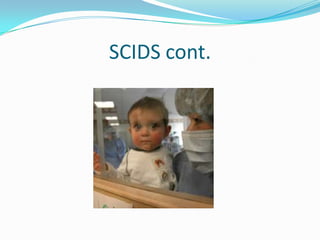
Severe Combined Immunodeficiency Syndrome (SCIDS)This is a disease that is seen in children who are born with a nonfunctioning immune systemThese children are often forced to live in sealed, sterile roomsChildren inherit SCIDS through autosomal recessive inheritance, in which is receives a defective gene from each parent. The most common treatment is a bone marrow transplant, and gene therapy is now being tested as an alternative
SCIDS cont.

Chapter 6

  • 1.
    Chapter 6: Lymphaticand Immune SystemsBy: Emily Salutric
  • 2.
    ElephantiasisInflammation, obstruction, anddestruction of the lymph vessels which results in enlarged tissues due to edemaThe skin usually becomes thickened, and has a pebbly appearance and may become darkened and ulceratedThe lymphatic blockage may be caused by repeated bacterial infections and from microscopic thread-like wormsTreatments include chemotherapy and antibiotics to kill the worms, as well at heightened hygiene to aid the body’s immune system while it is down
  • 3.
  • 4.
    LymphadenitisInflammation of thelymph nodesThis is also known as swollen glandsCauses: infection, malignancy, or auto-immune diseaseSymptoms include swollen, tender or hard lymph nodes, and red, tender skin over the lymph nodeTreatments may include antibiotics, analgesics, anti-inflammatory medications, using cool compresses, and possibly surgery for drainage
  • 5.
  • 6.
    Severe Combined ImmunodeficiencySyndrome (SCIDS)This is a disease that is seen in children who are born with a nonfunctioning immune systemThese children are often forced to live in sealed, sterile roomsChildren inherit SCIDS through autosomal recessive inheritance, in which is receives a defective gene from each parent. The most common treatment is a bone marrow transplant, and gene therapy is now being tested as an alternative
  • 7.