MANAGING
INVENTORY
CHAPTER 5
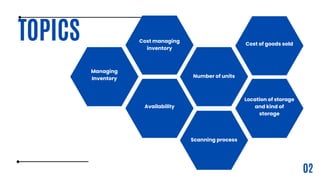
TOPICS Cost managing
inventory
Number of units
Availability
Managing
Inventory
Review Scanning process
Location of storage
and kind of
storage
Cost of goods sold
02
MANAGING INVENTORY
Managing inventory is a systematic
approach to sourcing, storing, and
selling inventory—both raw materials
(components) and finished goods
(products). In business terms,
inventory management means the
right stock, at the right levels, in the
right place, at the right time, and at
the right cost as well as price.
04
05
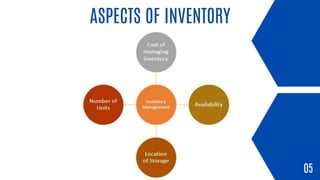
ASPECTS OF INVENTORY
COST
MANAGING
INVENTORY
how much is the managing cost of inventory
this include revolving fund for supply cycle,
warehousing, holding cost, facility cost and
labor cost for the stockman or officer in-charge
on inventory
06
AVAILABILITY
availability is a factory of in inventory
management when an items is
limited and a necessity for the
operation due to the locality of
supplier. Availability should be held
into consideration for the level of
stock but always take into account
that large amount will end up
holding cost and also can be
subjected to be expired and result to
spoilage.
07
08
LOCATION OF
STORAGE AND KIND
OF STORAGE
the location of the storage should be near
to the suppliers markets to be accessible,
traffic should be take into consideration.
Kind of storage perishable good need to be
store in a facility that keep the quality and
avoid spoilage.
NUMBER OF UNITS
the level of inventory should always
monitored on the none-moving stock. And
also those items which needs to maintain
a safe level of stock due to is highly-order
and movable.
09
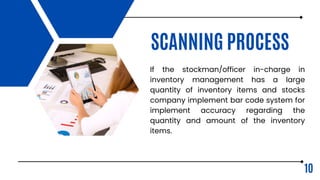
SCANNING PROCESS
If the stockman/officer in-charge in
inventory management has a large
quantity of inventory items and stocks
company implement bar code system for
implement accuracy regarding the
quantity and amount of the inventory
items.
10
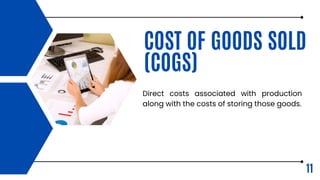
COST OF GOODS SOLD
(COGS)
Direct costs associated with production
along with the costs of storing those goods.
11
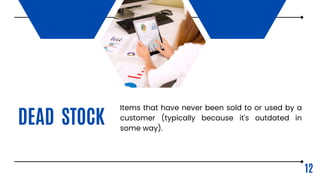
DEAD STOCK
Items that have never been sold to or used by a
customer (typically because it's outdated in
some way).
12
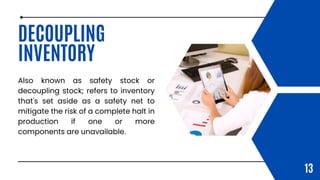
DECOUPLING
INVENTORY
Also known as safety stock or
decoupling stock; refers to inventory
that's set aside as a safety net to
mitigate the risk of a complete halt in
production if one or more
components are unavailable.
13
14
ECONOMIC ORDER
QUANTITY (EOQ)
EOQ refers to how much you should reorder,
taking into account demand and your inventory
holding costs.
HOLDING COST
Also known as carrying costs,the cost your
business incurs to store and hold stock in
a warehouse until it’s sold to the
customers.
15
LANDED COSTS
These are the costs of
shipping,import fees,duties,taxes
and other expenses associated
with transporting and buying
inventory.
16
LEAD TIME
The time it takes a supplier to deliver
goods after an order is placed along
with the timeframe for a business’
reordering needs.
17
ISSUING
18
The complete lifecycle of an item will be
prepared/produce for the customers
consumption.
PIPELINE INVENTORY
Any inventory that is in the “pipeline”
of a business’ supply chain-eg ,in
production or shipping -but hasn’t
yet reached its final destination.
19
20
RECORDER POINT
• Set inventory qoutas that
determine when recording shoukd
occur, taking into account current
and future demand as well as
lead time. (s)
SAFETY STOCK
• also known as buffer stock; inventory
held in a reserve to guard against
shortages.
21
SALES ORDER
• the transactional document
sent to customers after a
purchase is made but before
an order is fulfilled.
22
• unique tracking code (aplhanumeric)
assigned to each of your products,
indicating style, size, color, and other
attributes.
23
STOCK KEEPING
UNIT (SKU)
PRODUCTION
COST
• the total price paid for the resources used to
manufacture a product or create service,
such as raw materials, labors, and others is
called the production cost. The
product/service created is to be sold to
consumers.
24
THANK
YOU

Chapter-5.pptx Managing Inventory. Presentation

  • 1.
  • 2.
    TOPICS Cost managing inventory Numberof units Availability Managing Inventory Review Scanning process Location of storage and kind of storage Cost of goods sold 02
  • 3.
    MANAGING INVENTORY Managing inventoryis a systematic approach to sourcing, storing, and selling inventory—both raw materials (components) and finished goods (products). In business terms, inventory management means the right stock, at the right levels, in the right place, at the right time, and at the right cost as well as price. 04
  • 4.
  • 5.
    COST MANAGING INVENTORY how much isthe managing cost of inventory this include revolving fund for supply cycle, warehousing, holding cost, facility cost and labor cost for the stockman or officer in-charge on inventory 06
  • 6.
    AVAILABILITY availability is afactory of in inventory management when an items is limited and a necessity for the operation due to the locality of supplier. Availability should be held into consideration for the level of stock but always take into account that large amount will end up holding cost and also can be subjected to be expired and result to spoilage. 07
  • 7.
    08 LOCATION OF STORAGE ANDKIND OF STORAGE the location of the storage should be near to the suppliers markets to be accessible, traffic should be take into consideration. Kind of storage perishable good need to be store in a facility that keep the quality and avoid spoilage.
  • 8.
    NUMBER OF UNITS thelevel of inventory should always monitored on the none-moving stock. And also those items which needs to maintain a safe level of stock due to is highly-order and movable. 09
  • 9.
    SCANNING PROCESS If thestockman/officer in-charge in inventory management has a large quantity of inventory items and stocks company implement bar code system for implement accuracy regarding the quantity and amount of the inventory items. 10
  • 10.
    COST OF GOODSSOLD (COGS) Direct costs associated with production along with the costs of storing those goods. 11
  • 11.
    DEAD STOCK Items thathave never been sold to or used by a customer (typically because it's outdated in some way). 12
  • 12.
    DECOUPLING INVENTORY Also known assafety stock or decoupling stock; refers to inventory that's set aside as a safety net to mitigate the risk of a complete halt in production if one or more components are unavailable. 13
  • 13.
    14 ECONOMIC ORDER QUANTITY (EOQ) EOQrefers to how much you should reorder, taking into account demand and your inventory holding costs.
  • 14.
    HOLDING COST Also knownas carrying costs,the cost your business incurs to store and hold stock in a warehouse until it’s sold to the customers. 15
  • 15.
    LANDED COSTS These arethe costs of shipping,import fees,duties,taxes and other expenses associated with transporting and buying inventory. 16
  • 16.
    LEAD TIME The timeit takes a supplier to deliver goods after an order is placed along with the timeframe for a business’ reordering needs. 17
  • 17.
    ISSUING 18 The complete lifecycleof an item will be prepared/produce for the customers consumption.
  • 18.
    PIPELINE INVENTORY Any inventorythat is in the “pipeline” of a business’ supply chain-eg ,in production or shipping -but hasn’t yet reached its final destination. 19
  • 19.
    20 RECORDER POINT • Setinventory qoutas that determine when recording shoukd occur, taking into account current and future demand as well as lead time. (s)
  • 20.
    SAFETY STOCK • alsoknown as buffer stock; inventory held in a reserve to guard against shortages. 21
  • 21.
    SALES ORDER • thetransactional document sent to customers after a purchase is made but before an order is fulfilled. 22
  • 22.
    • unique trackingcode (aplhanumeric) assigned to each of your products, indicating style, size, color, and other attributes. 23 STOCK KEEPING UNIT (SKU)
  • 23.
    PRODUCTION COST • the totalprice paid for the resources used to manufacture a product or create service, such as raw materials, labors, and others is called the production cost. The product/service created is to be sold to consumers. 24
  • 24.