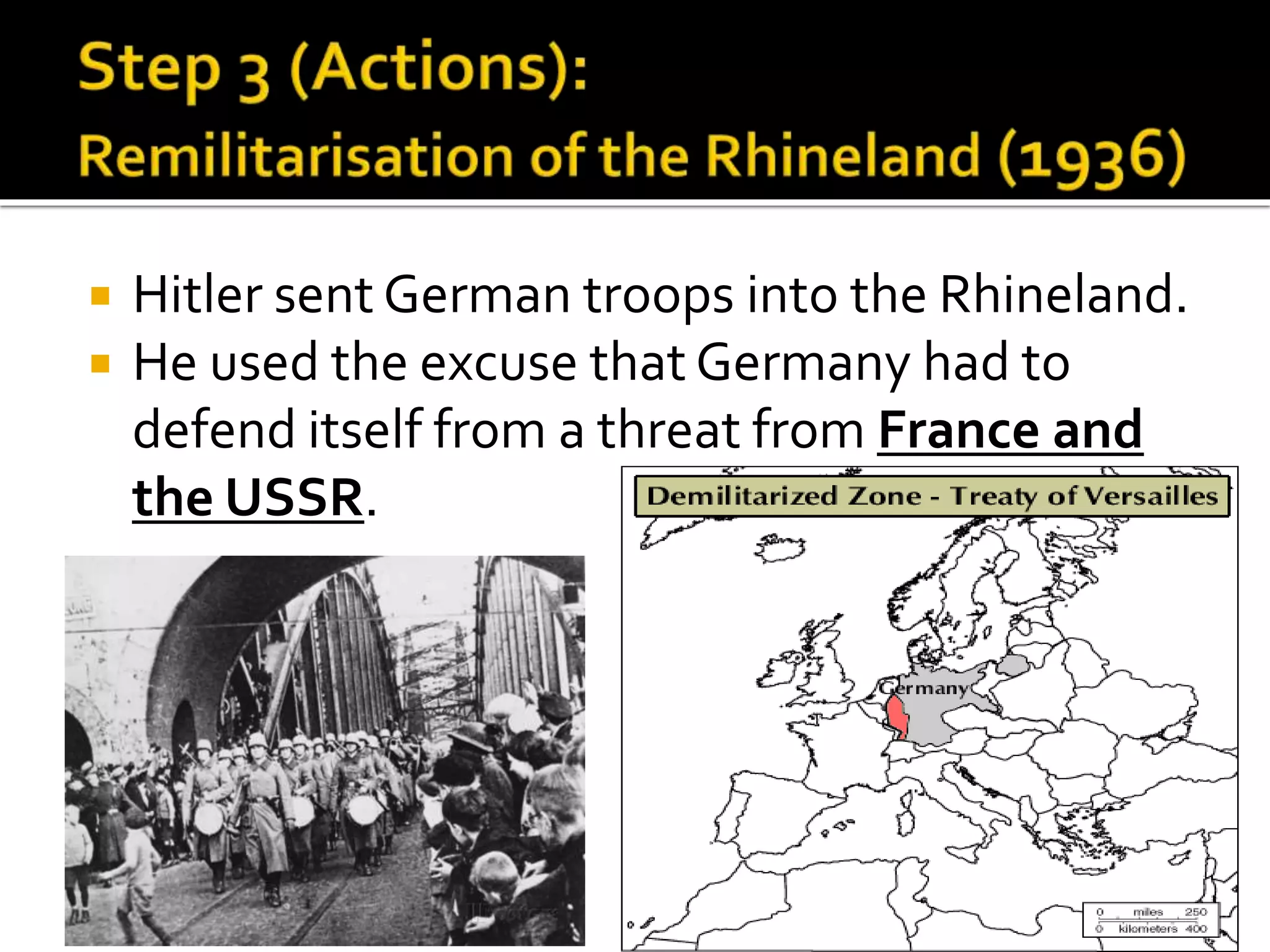
 Hitler sent German troops into the Rhineland.
 He used the excuse that Germany had to
defend itself from a threat from France and
the USSR.
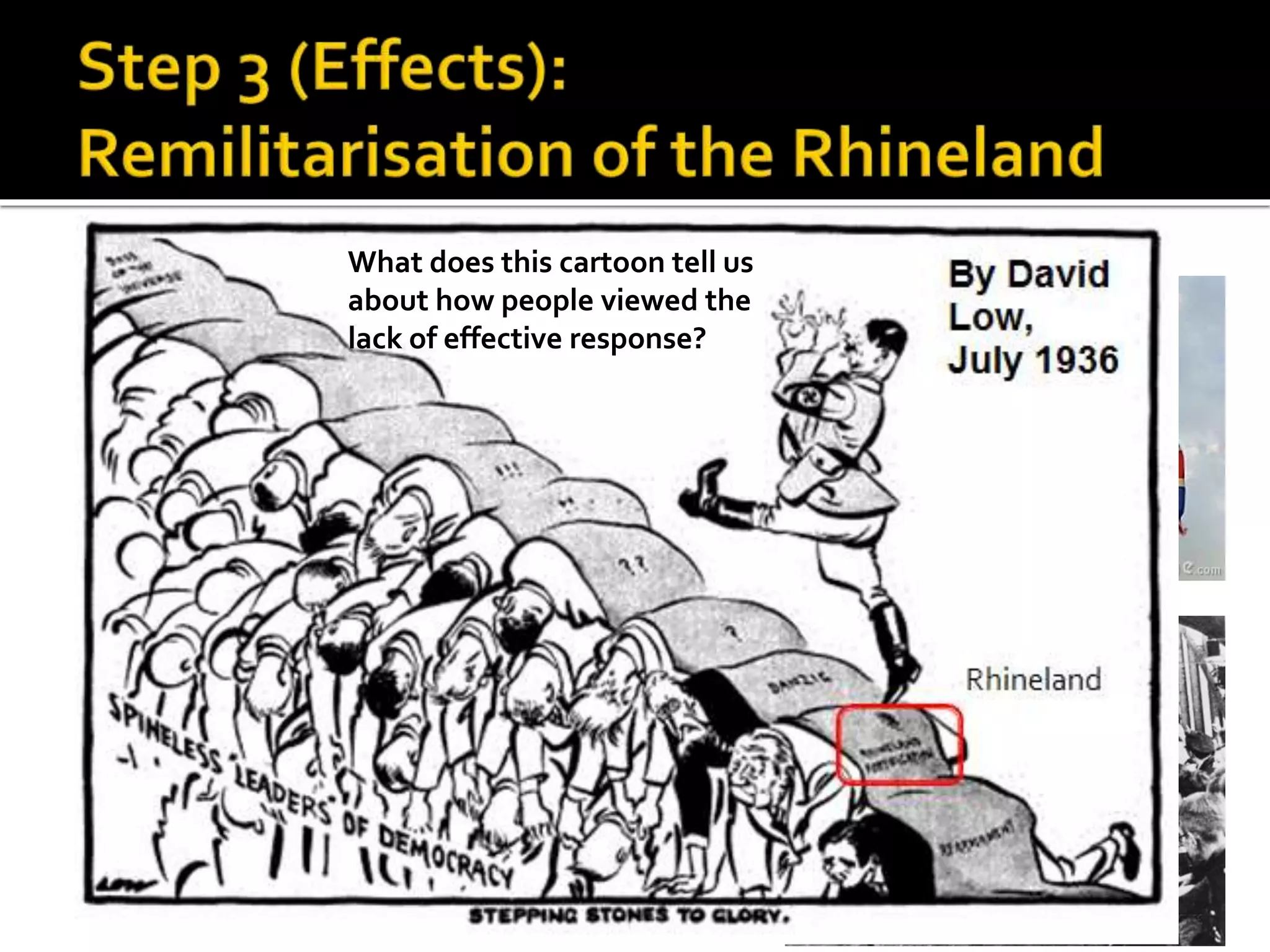
 Britain and France did
not take any action
against Hitler.
 Hitler became even
more popular with the
German people and
military. –why?
 He became bolder in
his demands.
What does this cartoon tell us
about how people viewed the
lack of effective response?
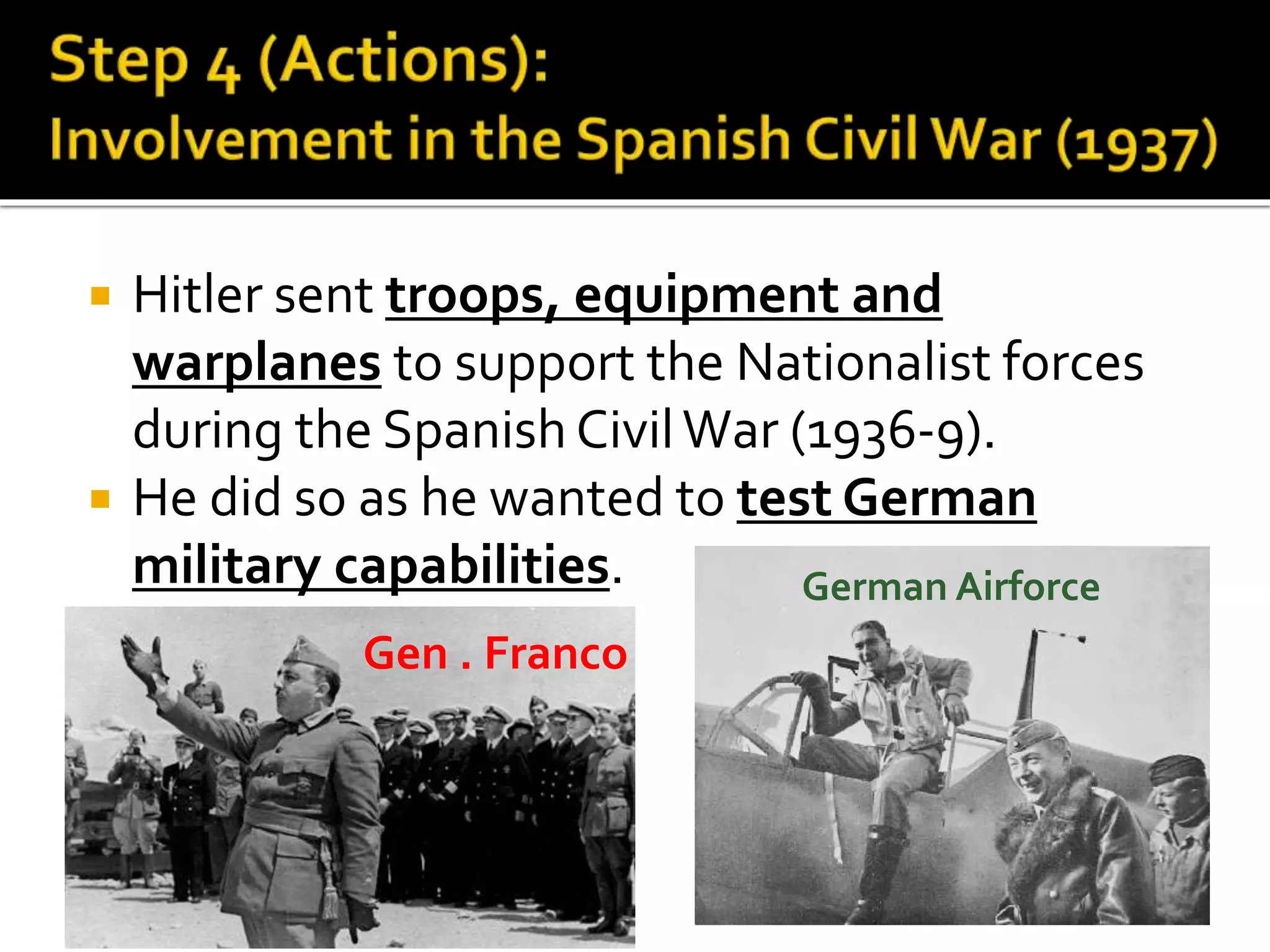
 Hitler sent troops, equipment and
warplanes to support the Nationalist forces
during the Spanish CivilWar (1936-9).
 He did so as he wanted to test German
military capabilities.
Gen . Franco
German Airforce
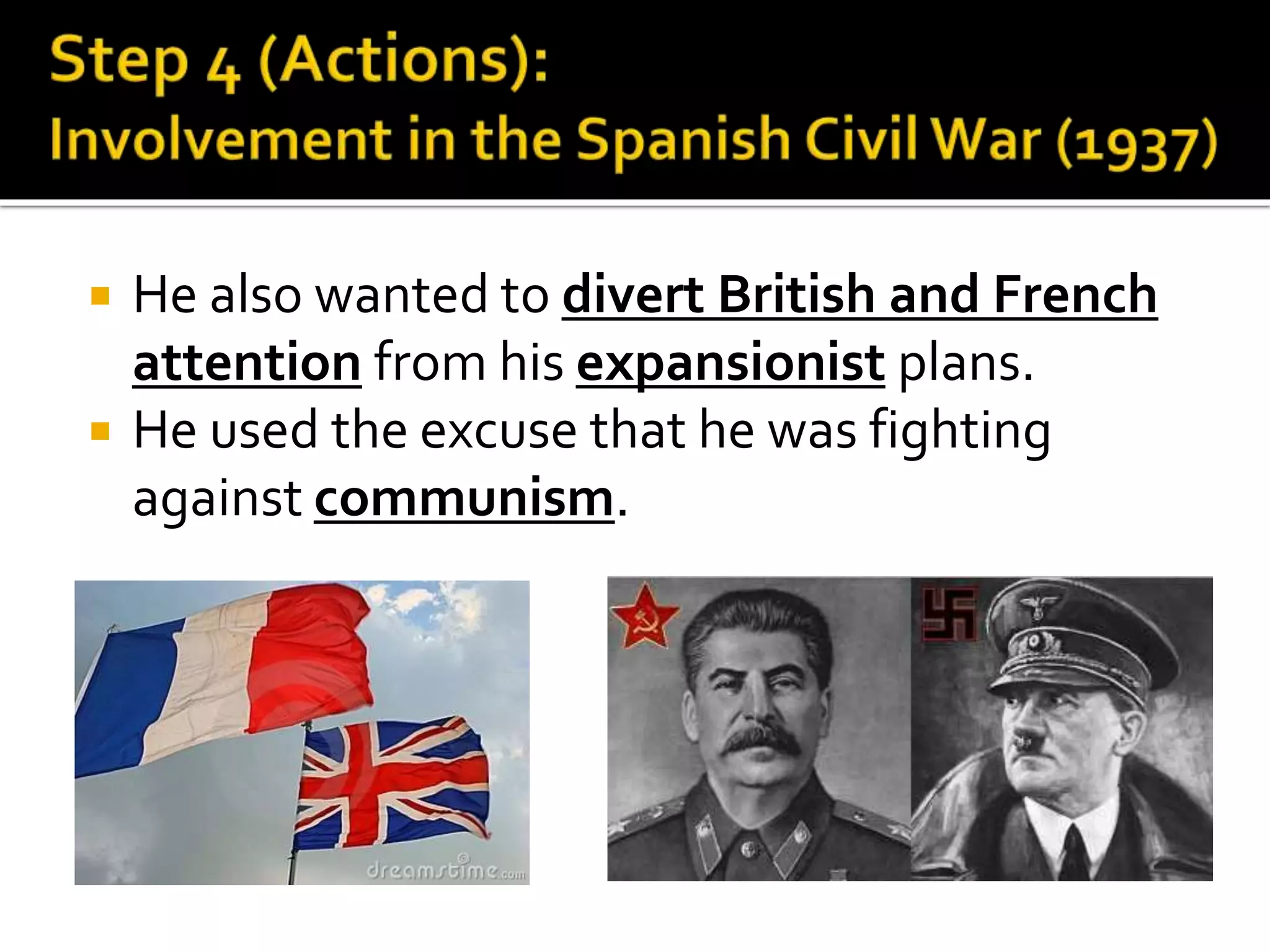
 He also wanted to divert British and French
attention from his expansionist plans.
 He used the excuse that he was fighting
against communism.
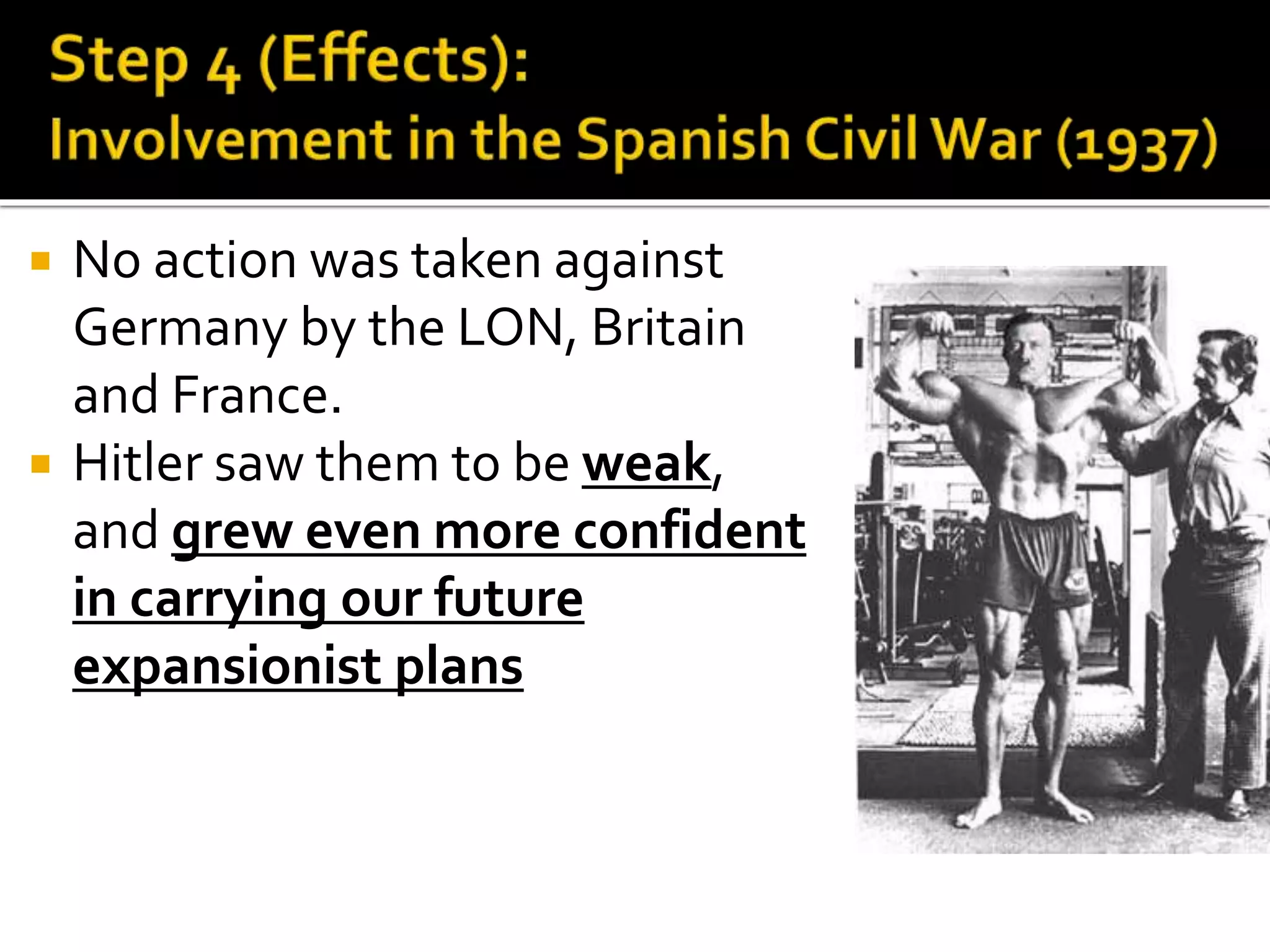
 No action was taken against
Germany by the LON, Britain
and France.
 Hitler saw them to be weak,
and grew even more confident
in carrying our future
expansionist plans
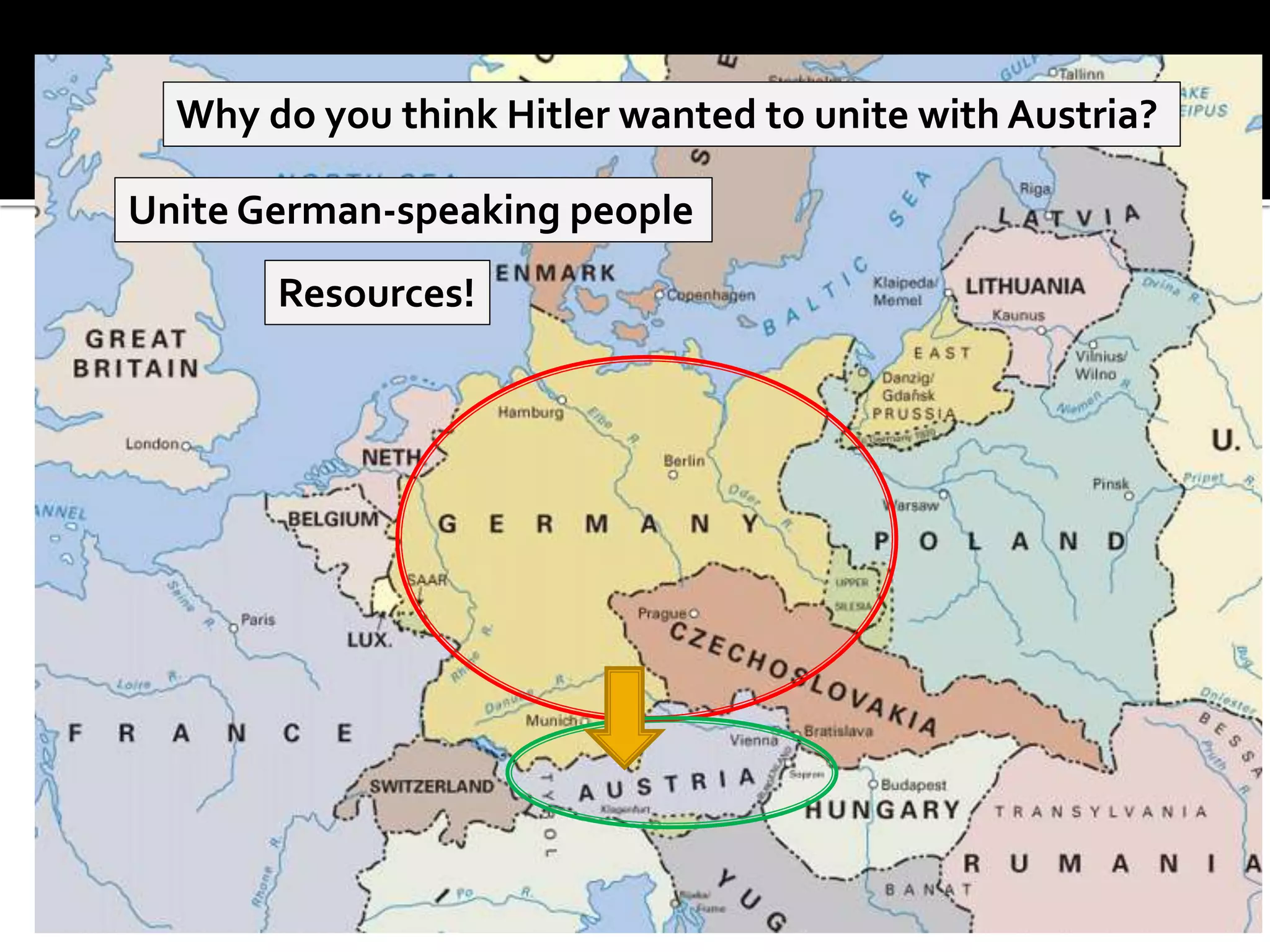
Why do you think Hitler wanted to unite with Austria?
Unite German-speaking people
Resources!
 Hitler encouraged the Nazis in Austria to
cause trouble and pressurise the Austrian
Chancellor to agree to Anschluss.
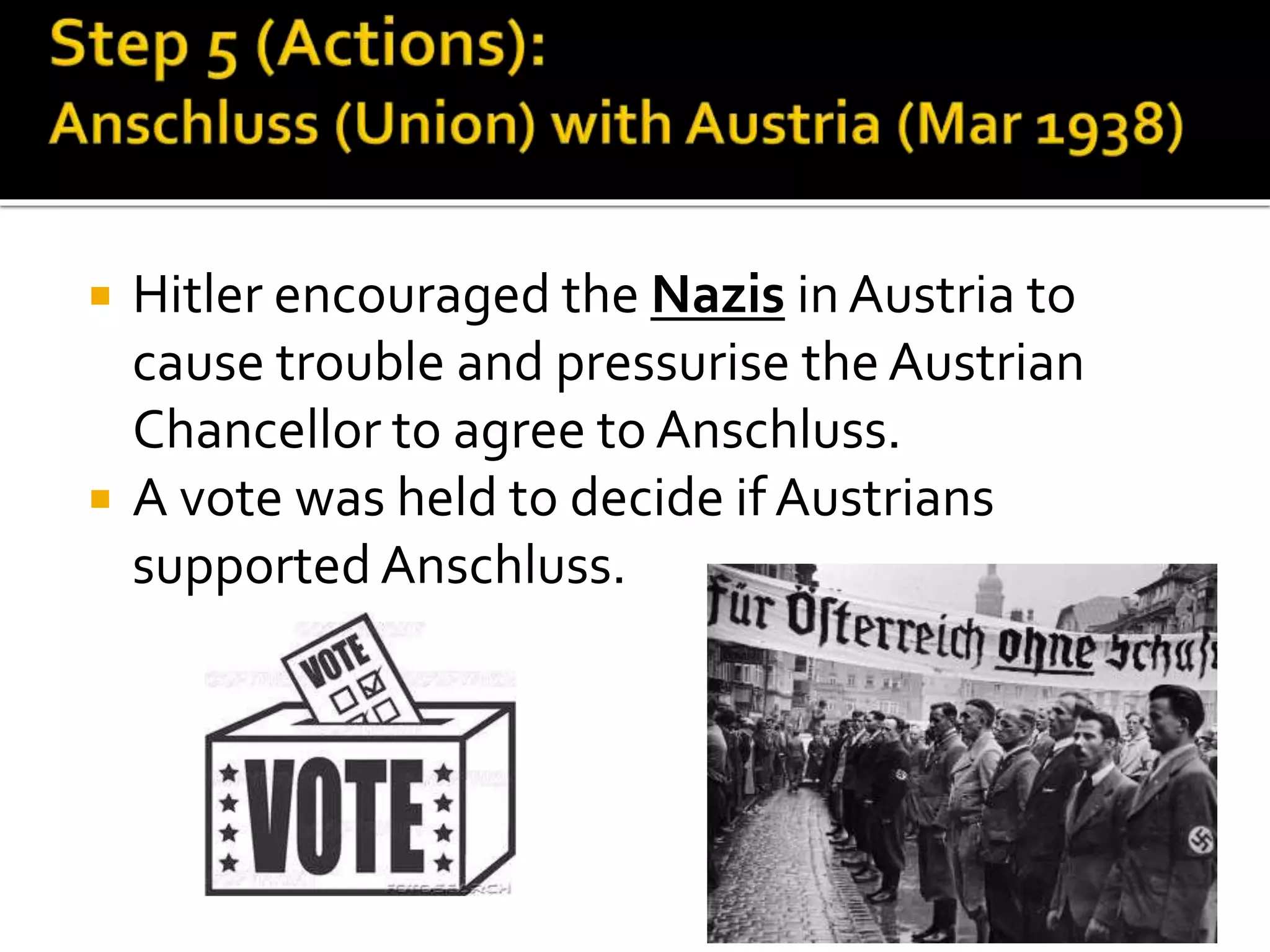
 A vote was held to decide if Austrians
supported Anschluss.
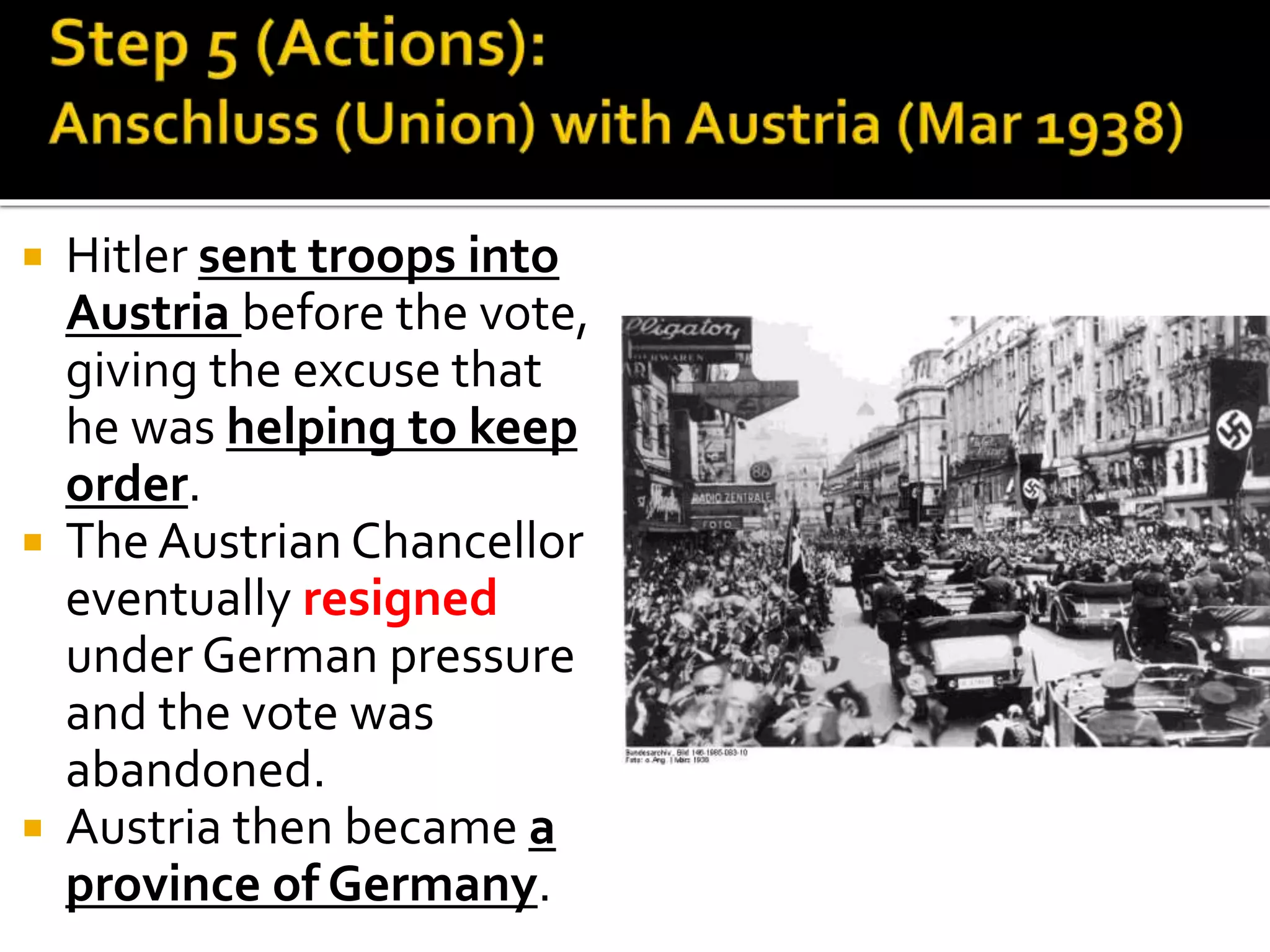
 Hitler sent troops into
Austria before the vote,
giving the excuse that
he was helping to keep
order.
 The Austrian Chancellor
eventually resigned
under German pressure
and the vote was
abandoned.
 Austria then became a
province of Germany.
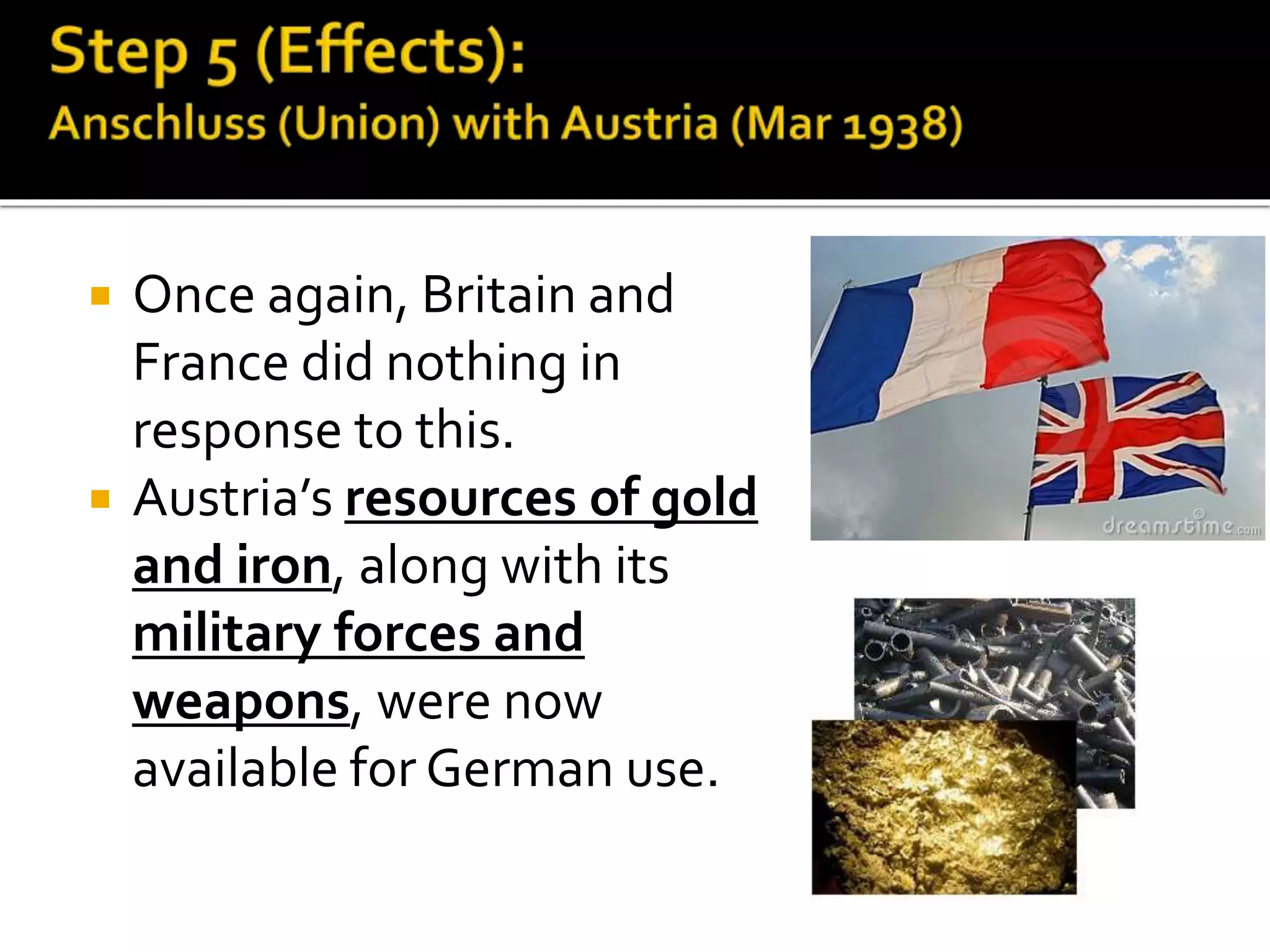
 Once again, Britain and
France did nothing in
response to this.
 Austria’s resources of gold
and iron, along with its
military forces and
weapons, were now
available for German use.
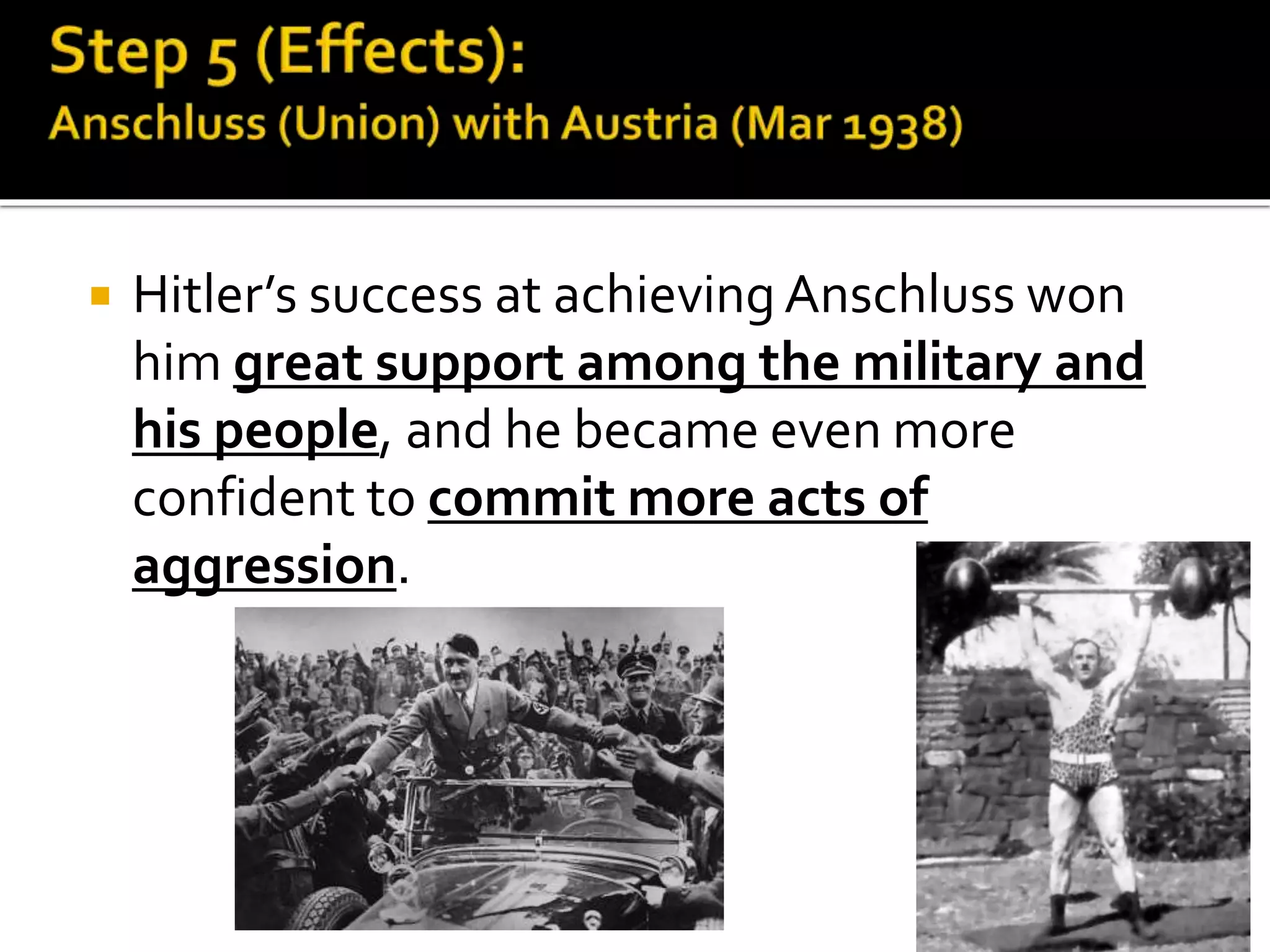
 Hitler’s success at achieving Anschluss won
him great support among the military and
his people, and he became even more
confident to commit more acts of
aggression.
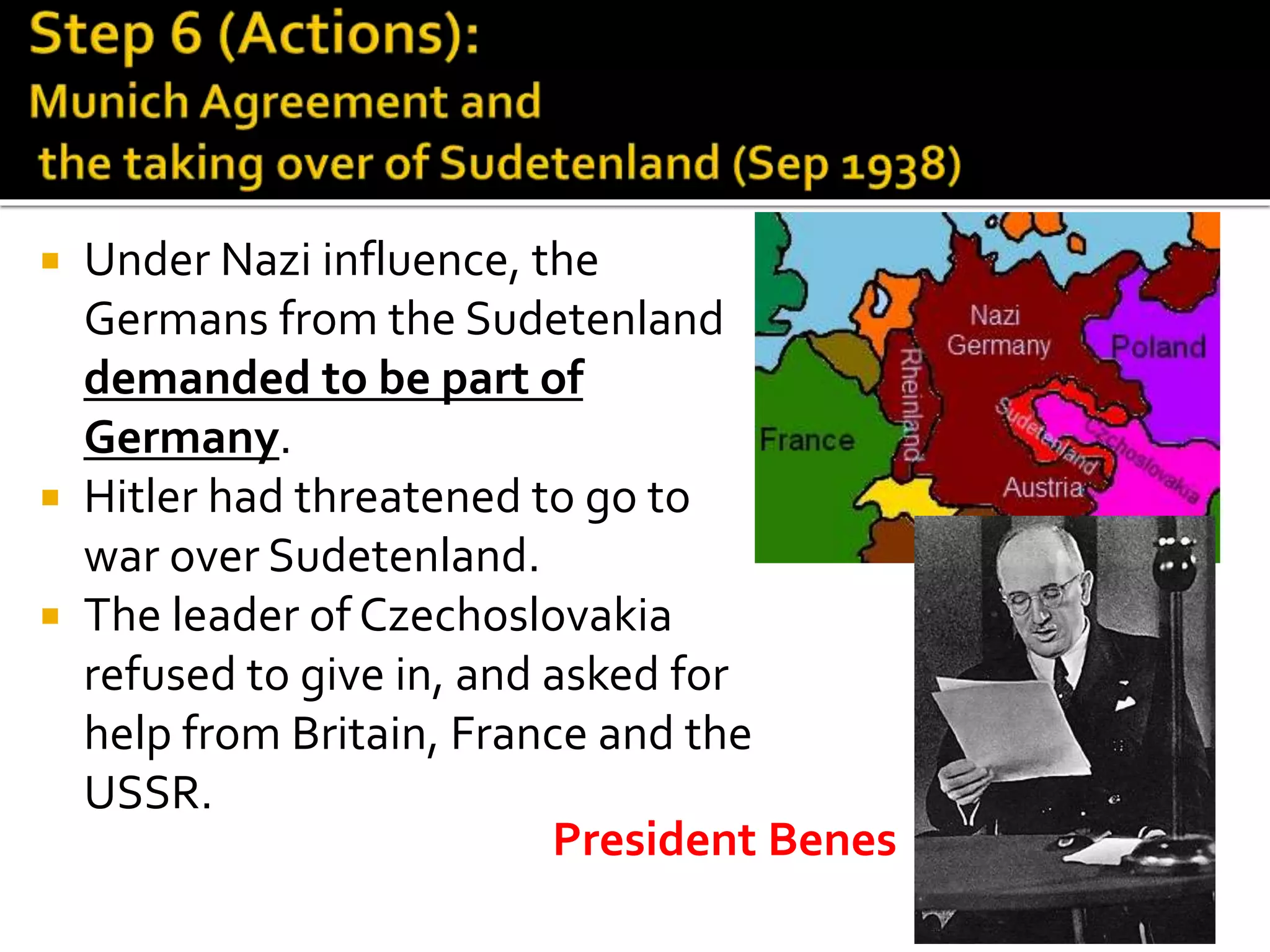
 Under Nazi influence, the
Germans from the Sudetenland
demanded to be part of
Germany.
 Hitler had threatened to go to
war over Sudetenland.
 The leader of Czechoslovakia
refused to give in, and asked for
help from Britain, France and the
USSR.
President Benes
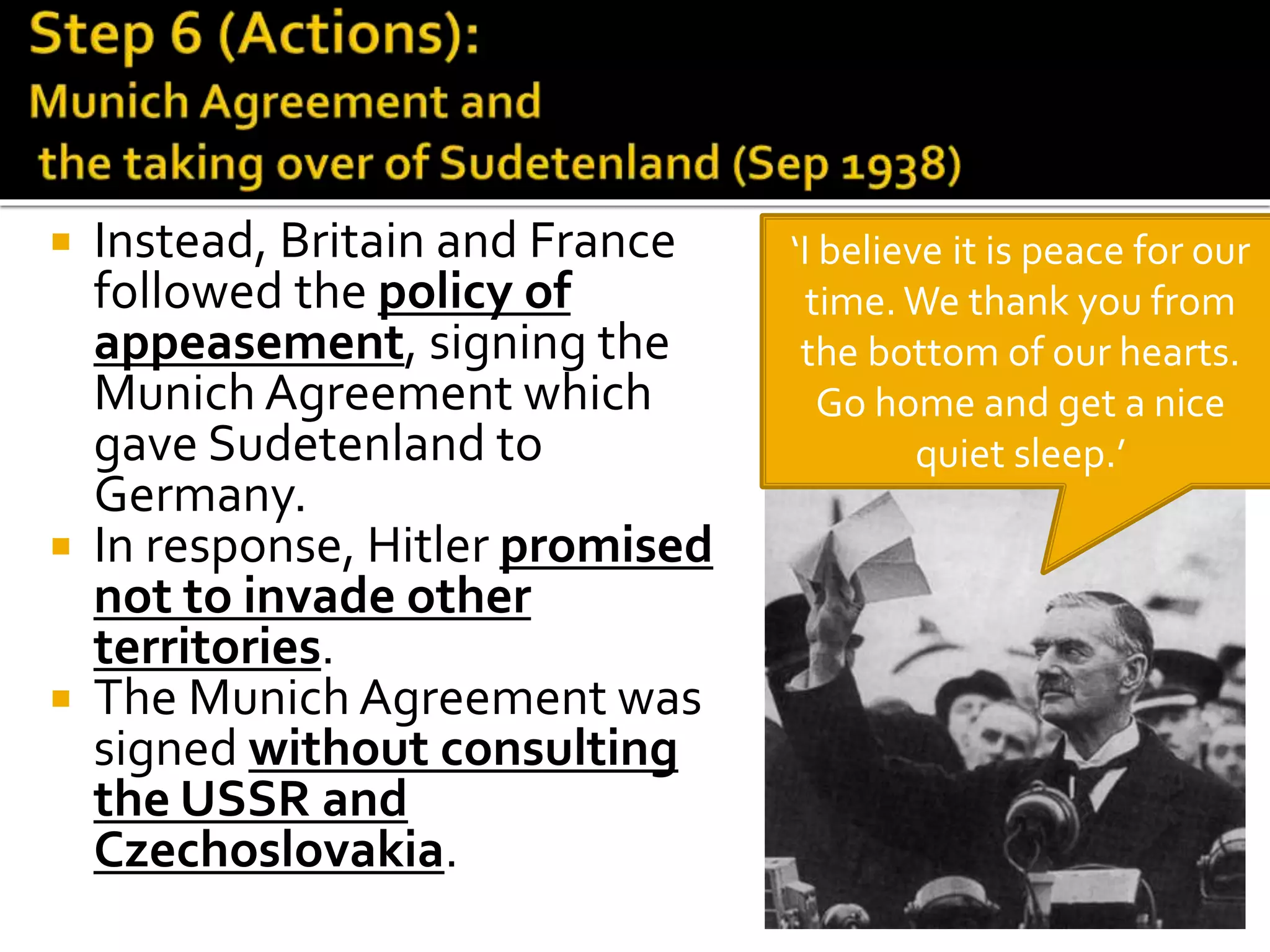
 Instead, Britain and France
followed the policy of
appeasement, signing the
Munich Agreement which
gave Sudetenland to
Germany.
 In response, Hitler promised
not to invade other
territories.
 The Munich Agreement was
signed without consulting
the USSR and
Czechoslovakia.
‘I believe it is peace for our
time. We thank you from
the bottom of our hearts.
Go home and get a nice
quiet sleep.’
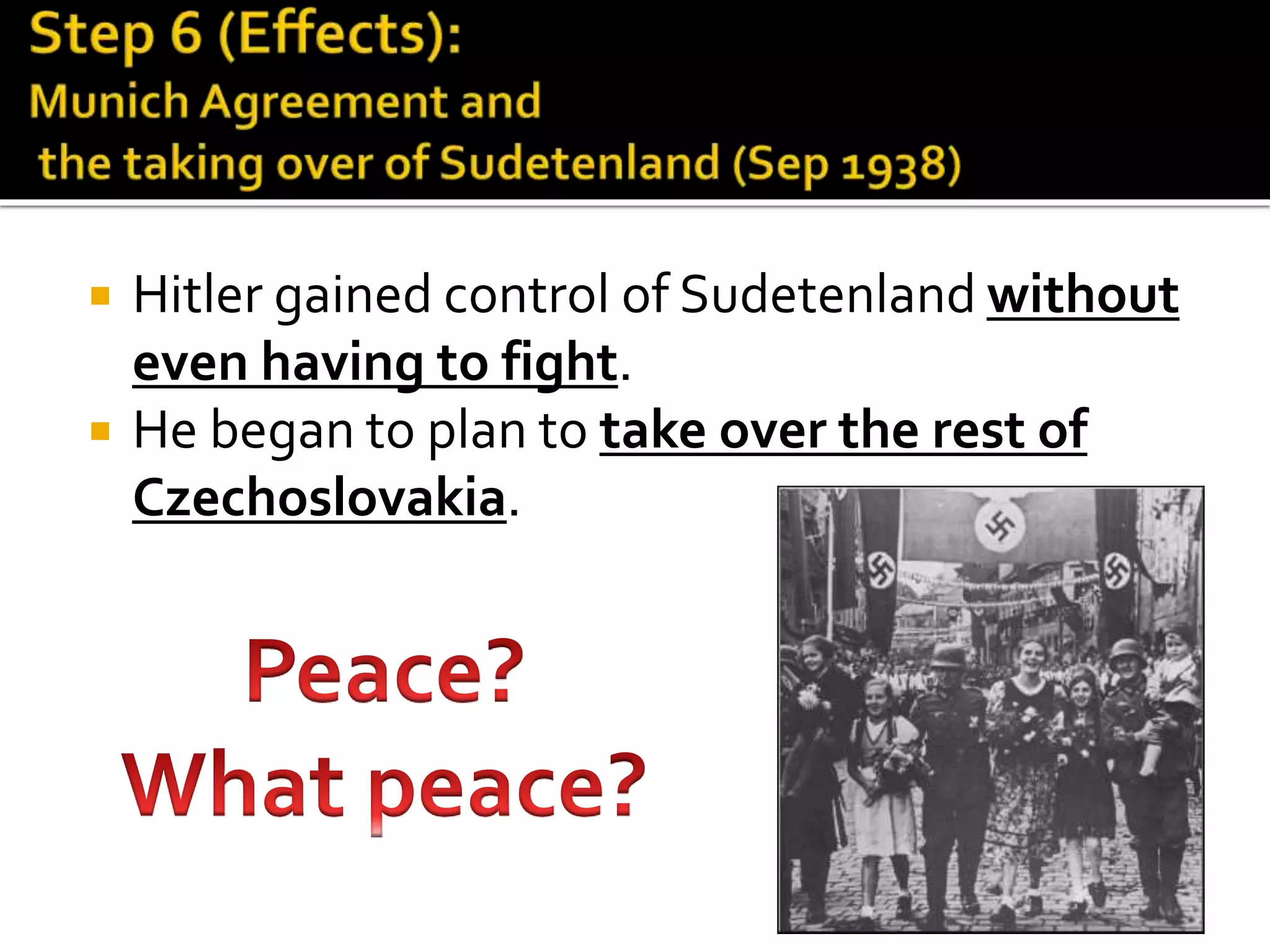
 Hitler gained control of Sudetenland without
even having to fight.
 He began to plan to take over the rest of
Czechoslovakia.
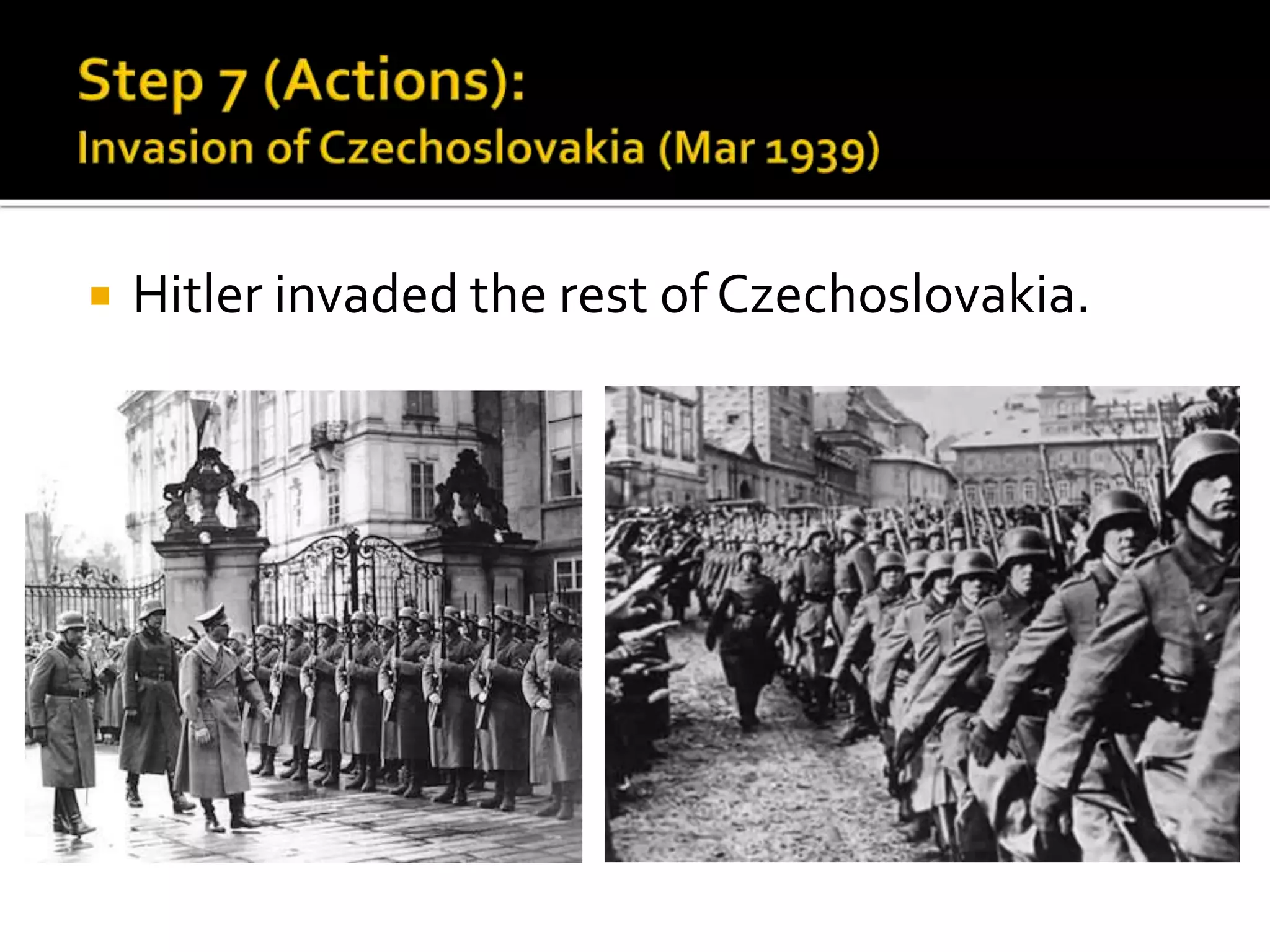
 Hitler invaded the rest of Czechoslovakia.
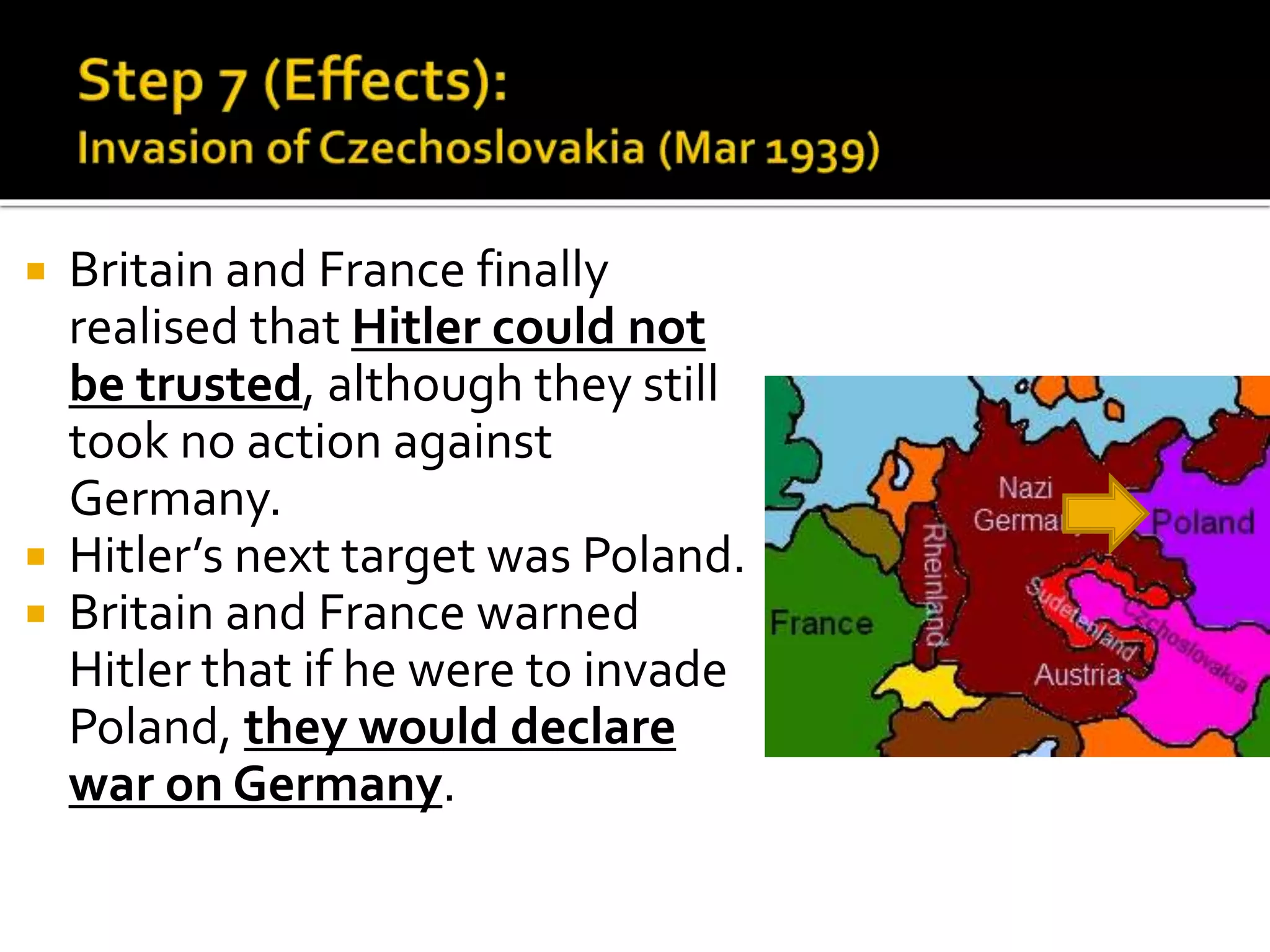
 Britain and France finally
realised that Hitler could not
be trusted, although they still
took no action against
Germany.
 Hitler’s next target was Poland.
 Britain and France warned
Hitler that if he were to invade
Poland, they would declare
war on Germany.
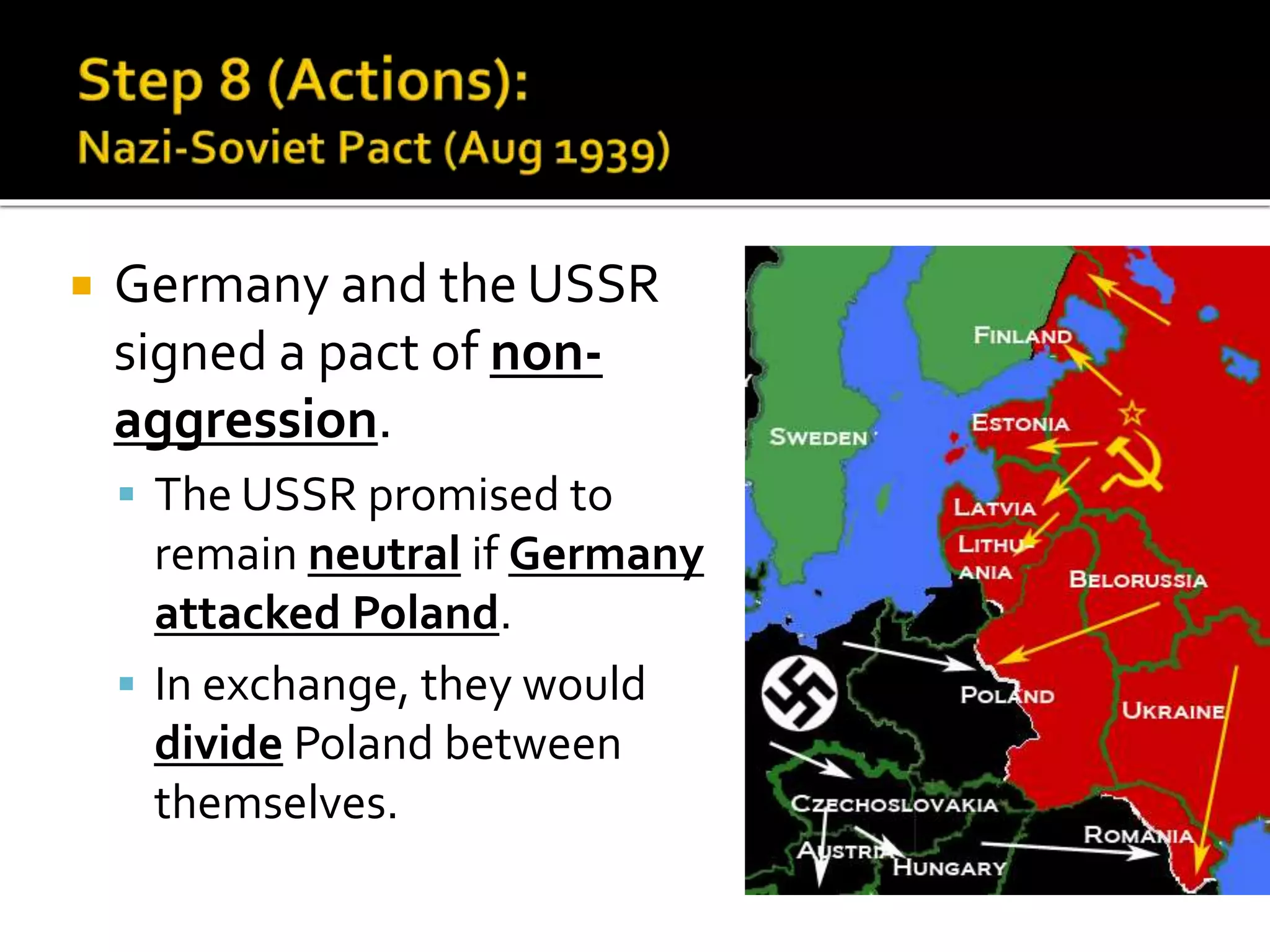
 Germany and the USSR
signed a pact of non-
aggression.
 The USSR promised to
remain neutral if Germany
attacked Poland.
 In exchange, they would
divide Poland between
themselves.
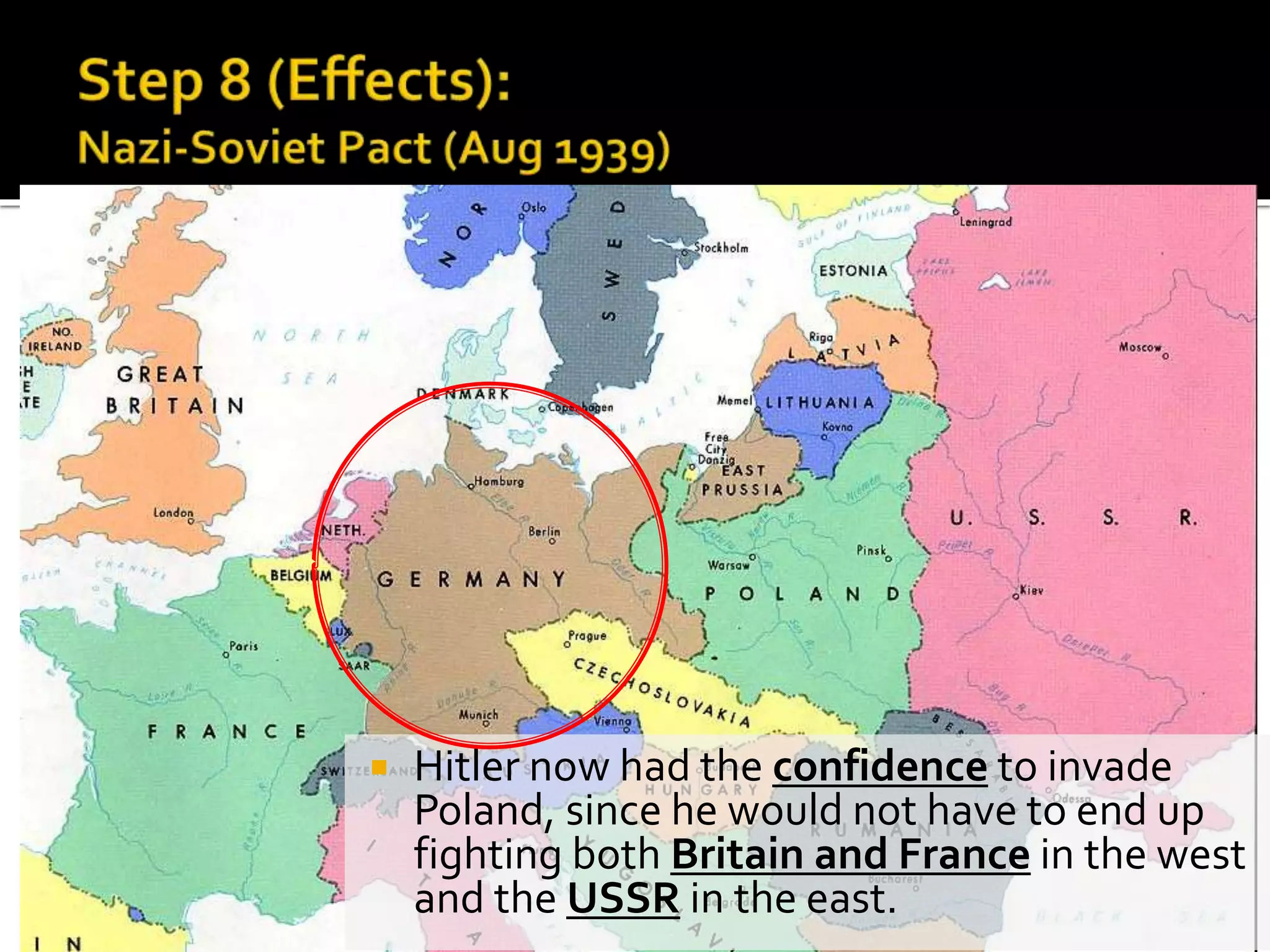
 Hitler now had the confidence to invade
Poland, since he would not have to end up
fighting both Britain and France in the west
and the USSR in the east.
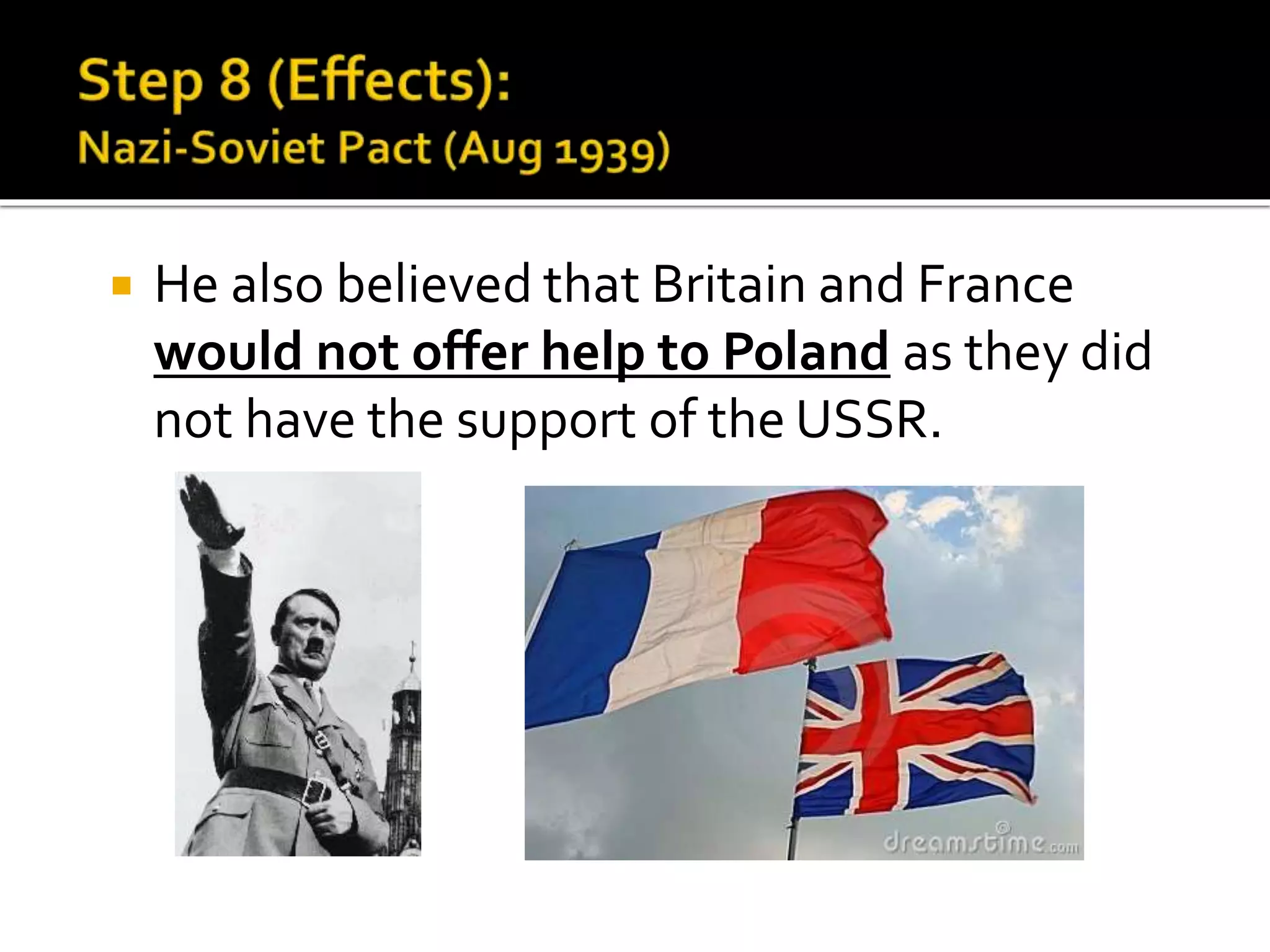
 He also believed that Britain and France
would not offer help to Poland as they did
not have the support of the USSR.
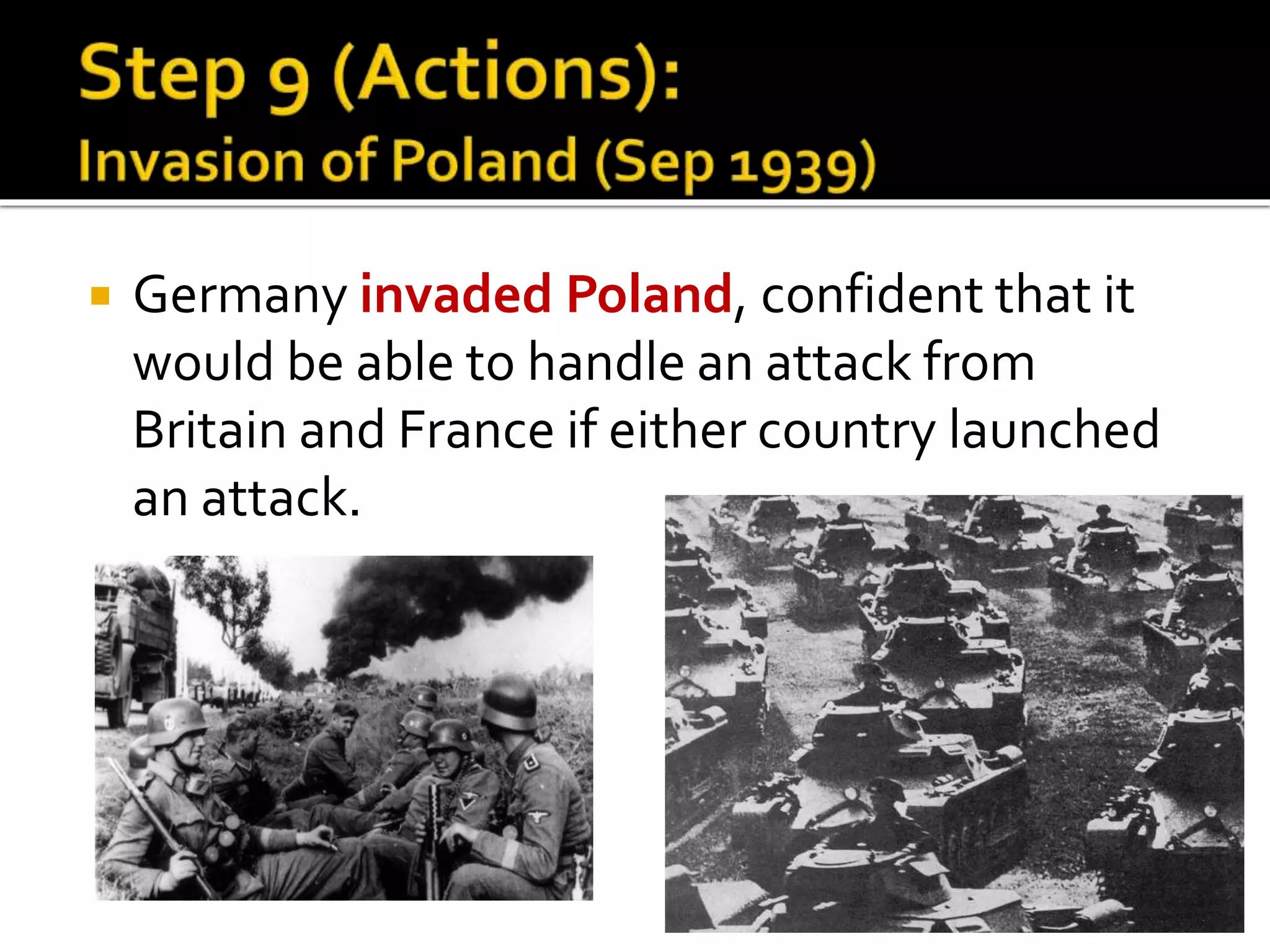
 Germany invaded Poland, confident that it
would be able to handle an attack from
Britain and France if either country launched
an attack.
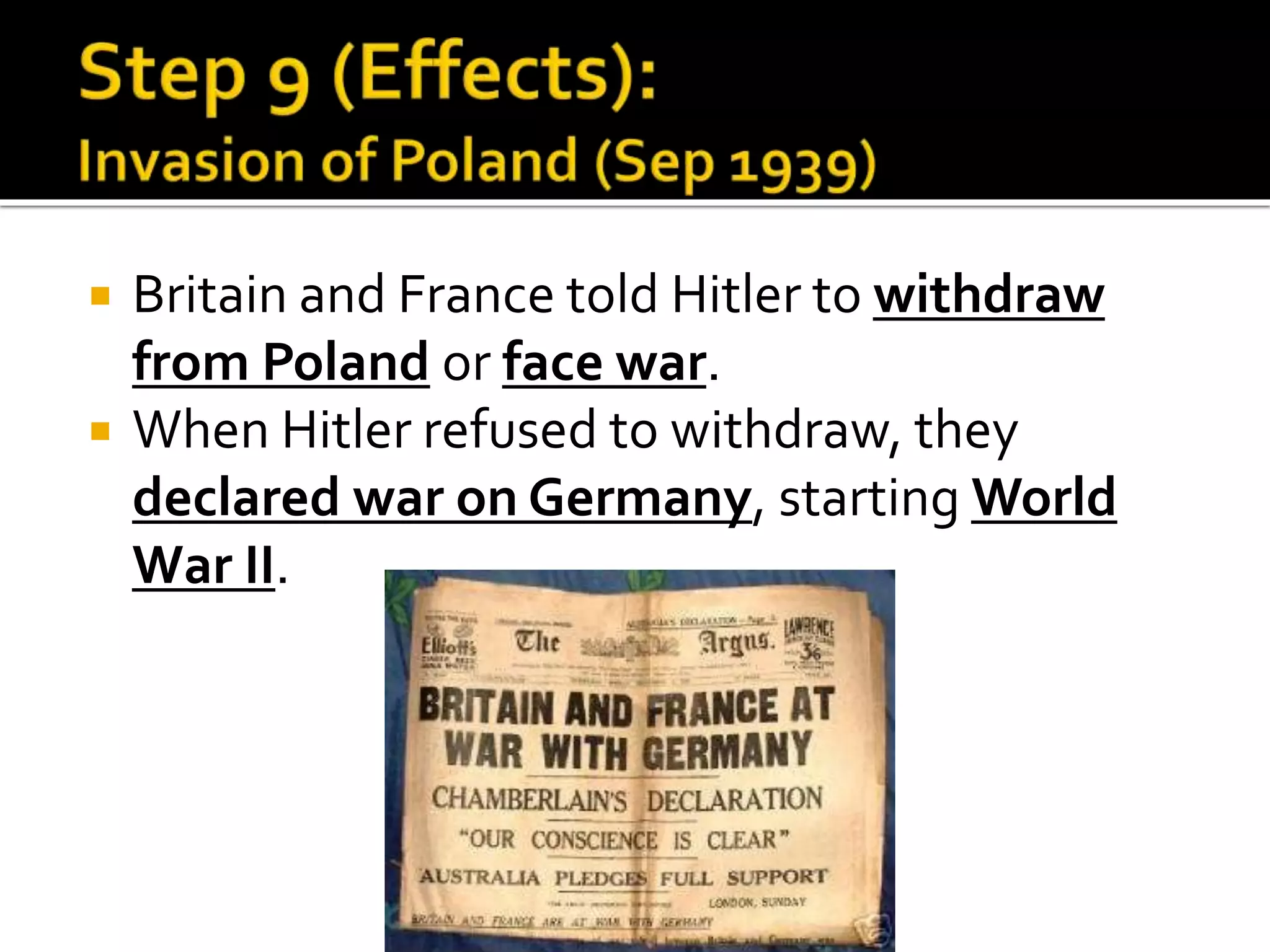
 Britain and France told Hitler to withdraw
from Poland or face war.
 When Hitler refused to withdraw, they
declared war on Germany, starting World
War II.
Chapter 4 Part Two (Hitler's expansionist policy)

Chapter 4 Part Two (Hitler's expansionist policy)

  • 3.
     Hitler sentGerman troops into the Rhineland.  He used the excuse that Germany had to defend itself from a threat from France and the USSR.
  • 4.
     Britain andFrance did not take any action against Hitler.  Hitler became even more popular with the German people and military. –why?  He became bolder in his demands. What does this cartoon tell us about how people viewed the lack of effective response?
  • 5.
     Hitler senttroops, equipment and warplanes to support the Nationalist forces during the Spanish CivilWar (1936-9).  He did so as he wanted to test German military capabilities. Gen . Franco German Airforce
  • 6.
     He alsowanted to divert British and French attention from his expansionist plans.  He used the excuse that he was fighting against communism.
  • 7.
     No actionwas taken against Germany by the LON, Britain and France.  Hitler saw them to be weak, and grew even more confident in carrying our future expansionist plans
  • 8.
    Why do youthink Hitler wanted to unite with Austria? Unite German-speaking people Resources!
  • 9.
     Hitler encouragedthe Nazis in Austria to cause trouble and pressurise the Austrian Chancellor to agree to Anschluss.  A vote was held to decide if Austrians supported Anschluss.
  • 10.
     Hitler senttroops into Austria before the vote, giving the excuse that he was helping to keep order.  The Austrian Chancellor eventually resigned under German pressure and the vote was abandoned.  Austria then became a province of Germany.
  • 11.
     Once again,Britain and France did nothing in response to this.  Austria’s resources of gold and iron, along with its military forces and weapons, were now available for German use.
  • 12.
     Hitler’s successat achieving Anschluss won him great support among the military and his people, and he became even more confident to commit more acts of aggression.
  • 13.
     Under Naziinfluence, the Germans from the Sudetenland demanded to be part of Germany.  Hitler had threatened to go to war over Sudetenland.  The leader of Czechoslovakia refused to give in, and asked for help from Britain, France and the USSR. President Benes
  • 14.
     Instead, Britainand France followed the policy of appeasement, signing the Munich Agreement which gave Sudetenland to Germany.  In response, Hitler promised not to invade other territories.  The Munich Agreement was signed without consulting the USSR and Czechoslovakia. ‘I believe it is peace for our time. We thank you from the bottom of our hearts. Go home and get a nice quiet sleep.’
  • 15.
     Hitler gainedcontrol of Sudetenland without even having to fight.  He began to plan to take over the rest of Czechoslovakia.
  • 16.
     Hitler invadedthe rest of Czechoslovakia.
  • 17.
     Britain andFrance finally realised that Hitler could not be trusted, although they still took no action against Germany.  Hitler’s next target was Poland.  Britain and France warned Hitler that if he were to invade Poland, they would declare war on Germany.
  • 18.
     Germany andthe USSR signed a pact of non- aggression.  The USSR promised to remain neutral if Germany attacked Poland.  In exchange, they would divide Poland between themselves.
  • 19.
     Hitler nowhad the confidence to invade Poland, since he would not have to end up fighting both Britain and France in the west and the USSR in the east.
  • 20.
     He alsobelieved that Britain and France would not offer help to Poland as they did not have the support of the USSR.
  • 21.
     Germany invadedPoland, confident that it would be able to handle an attack from Britain and France if either country launched an attack.
  • 22.
     Britain andFrance told Hitler to withdraw from Poland or face war.  When Hitler refused to withdraw, they declared war on Germany, starting World War II.

Editor's Notes

  • #5 Discuss David Low cartoon – Democratic countries not standing up to Hitler