CHAPTER 3:Prenatal Development, Birth, and the Newborn
Period of the Zygote: Week 1-2
Key terms:
 Ovulation; fertilization, implantation, fallopian tube;
zygote, blastocyst; germ disc
Characteristics:
 2 weeks duration; rapid division
Let’s look at the next slide to view
this period more closely.
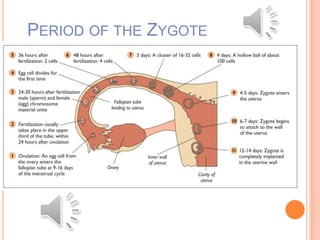
PERIOD OF THE ZYGOTE
Period of the Embryo: Week 3-8
Key terms:
 Embryo
 Ectoderm, mesoderm, endoderm
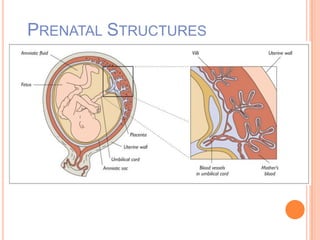
 Amnion and amniotic fluid
 Umbilical cord
 Placenta
 Villi
Characteristics:
 Third to eighth weeks of prenatal development
 Differentiation of organs and organ systems occurs
PRENATAL STRUCTURES
Period of the Fetus: Weeks 9-38
Key Terms:
 Cerebral cortex
 Vernix
 Age of viability
Characteristics:
 From 9 weeks after conception to birth
 Increase in size
 Systems begin to function
Period of the Fetus
Fetal Behavior:
 Fetal movement
 Behavioral maturity of sense
 Changes during prenatal development
Five Steps Toward a Healthy Baby
1. Regular check-ups
2. Healthy foods
3. No alcohol or caffeinated beverages
4. Exercise
5. Adequate diet
General Risk Factors
 Nutrition
 Chronic stress
 Mother’s age
Teratogens: Diseases, Drugs,
and Environmental Hazards
Teratogen:
Agent that causes abnormal prenatal development
 Diseases passing through placenta directly or attacking at
birth
 Potentially dangerous drugs
 Environmental hazards
Can you hear me now???
Is cell phone usage a potential
teratogen for pregnant women?
Check out Yale’s recent study…
http://www.nydailynews.com/life-
style/health/yale-study-cellphone-
pregnancy-bad-babies-health-article-
1.1039527
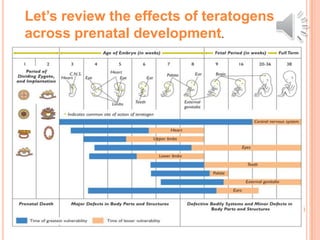
Let’s review the effects of teratogens
across prenatal development.
Prenatal Diagnosis & Treatment
Diagnosis
 Ultrasound - http://www.youtube.com/watch?v=JEFh13-
qcNs
 Amniocentesis –
http://www.youtube.com/watch?v=DQQyZ8v7_C8
 Chorionic villus sampling (CVS)
http://www.youtube.com/watch?v=goEZ7feoZVk
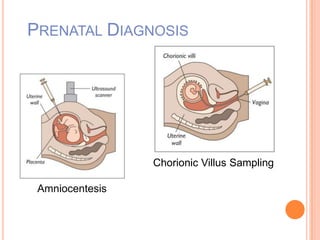
PRENATAL DIAGNOSIS
Amniocentesis
Chorionic Villus Sampling
Labor and Delivery
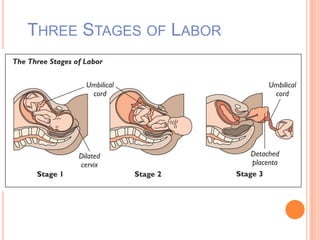
Labor is usually divided into three stages
Let’s watch some men give it a try…
http://www.youtube.com/watch?v=A44oEcmDn1c&list=PL
mc_JvKoNAoqH1xNuQVMs8rLrlPn7EnYA 
Stage 1
• Starts
when
muscles
of uterus
contract
and ends
when
cervix is
fully
enlarged
Stage 2
• Baby is
pushed
through
the birth
canal
Stage 3
• Placenta
is
expelled
THREE STAGES OF LABOR
Approaches to Childbirth
 Prepared childbirth
 Natural childbirth
 Childbirth with doula
 Choice of place of birth
Approaches to Childbirth
Childbirth classes
 Content
 Benefits
Additional Resources:
http://www.spinningbabies.com/
Adjusting to Parenthood
 Reorganization of old routines
 Physical and emotional reactions
 Postpartum depression
Birth Complications
 Hypoxia
 Cephalopelvic disproportion
 Irregular position
 Preeclampsia
 Prolapsed umbilical cord
 Prematurity
 Low birth weight
True or False?
Infant mortality is relatively low in the United States
compared to other industrialized countries.
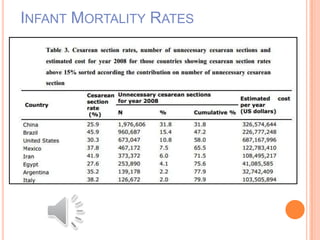
Let’s look at these rates around the world.
INFANT MORTALITY RATES
Assessing the Newborn
 Apgar score (Table 3-5)
 Neonatal Behavioral Assessment Scale (NBAS)
Newborns’ reflexes prepare them to interact with the
world
 Survival reflexes
 Protective reflexes
 Foundational reflexes
Newborn States: Primary
Four primary states
 Alert inactivity
 Waking activity
 Crying
Three distinctive types of cries
 Basic
 Mad
 Pain
 Sleeping
Check out how to determine the 5 words all newborns
say…Dunstan Baby Language Method (Oprah Clip)
http://www.youtube.com/watch?v=nWQ51099C24
Newborn States: Sleep
 Developmental change in sleep-wake cycle
 Types of sleep (REM/non-REM)
 Co-sleeping
Perception and Learning in the
Newborn
All the basic perceptual processes
are operating at birth
Newborns can see, hear, taste,
smell, and feel
Newborns can also learn and
remember

Chapter 3 psy 202 - www

  • 1.
    CHAPTER 3:Prenatal Development,Birth, and the Newborn
  • 2.
    Period of theZygote: Week 1-2 Key terms:  Ovulation; fertilization, implantation, fallopian tube; zygote, blastocyst; germ disc Characteristics:  2 weeks duration; rapid division Let’s look at the next slide to view this period more closely.
  • 3.
  • 4.
    Period of theEmbryo: Week 3-8 Key terms:  Embryo  Ectoderm, mesoderm, endoderm  Amnion and amniotic fluid  Umbilical cord  Placenta  Villi Characteristics:  Third to eighth weeks of prenatal development  Differentiation of organs and organ systems occurs
  • 5.
  • 6.
    Period of theFetus: Weeks 9-38 Key Terms:  Cerebral cortex  Vernix  Age of viability Characteristics:  From 9 weeks after conception to birth  Increase in size  Systems begin to function
  • 7.
    Period of theFetus Fetal Behavior:  Fetal movement  Behavioral maturity of sense  Changes during prenatal development
  • 8.
    Five Steps Towarda Healthy Baby 1. Regular check-ups 2. Healthy foods 3. No alcohol or caffeinated beverages 4. Exercise 5. Adequate diet
  • 9.
    General Risk Factors Nutrition  Chronic stress  Mother’s age
  • 10.
    Teratogens: Diseases, Drugs, andEnvironmental Hazards Teratogen: Agent that causes abnormal prenatal development  Diseases passing through placenta directly or attacking at birth  Potentially dangerous drugs  Environmental hazards
  • 11.
    Can you hearme now??? Is cell phone usage a potential teratogen for pregnant women? Check out Yale’s recent study… http://www.nydailynews.com/life- style/health/yale-study-cellphone- pregnancy-bad-babies-health-article- 1.1039527
  • 12.
    Let’s review theeffects of teratogens across prenatal development.
  • 13.
    Prenatal Diagnosis &Treatment Diagnosis  Ultrasound - http://www.youtube.com/watch?v=JEFh13- qcNs  Amniocentesis – http://www.youtube.com/watch?v=DQQyZ8v7_C8  Chorionic villus sampling (CVS) http://www.youtube.com/watch?v=goEZ7feoZVk
  • 14.
  • 15.
    Labor and Delivery Laboris usually divided into three stages Let’s watch some men give it a try… http://www.youtube.com/watch?v=A44oEcmDn1c&list=PL mc_JvKoNAoqH1xNuQVMs8rLrlPn7EnYA  Stage 1 • Starts when muscles of uterus contract and ends when cervix is fully enlarged Stage 2 • Baby is pushed through the birth canal Stage 3 • Placenta is expelled
  • 16.
  • 17.
    Approaches to Childbirth Prepared childbirth  Natural childbirth  Childbirth with doula  Choice of place of birth
  • 18.
    Approaches to Childbirth Childbirthclasses  Content  Benefits Additional Resources: http://www.spinningbabies.com/
  • 19.
    Adjusting to Parenthood Reorganization of old routines  Physical and emotional reactions  Postpartum depression
  • 20.
    Birth Complications  Hypoxia Cephalopelvic disproportion  Irregular position  Preeclampsia  Prolapsed umbilical cord  Prematurity  Low birth weight
  • 21.
    True or False? Infantmortality is relatively low in the United States compared to other industrialized countries. Let’s look at these rates around the world.
  • 22.
  • 23.
    Assessing the Newborn Apgar score (Table 3-5)  Neonatal Behavioral Assessment Scale (NBAS) Newborns’ reflexes prepare them to interact with the world  Survival reflexes  Protective reflexes  Foundational reflexes
  • 24.
    Newborn States: Primary Fourprimary states  Alert inactivity  Waking activity  Crying Three distinctive types of cries  Basic  Mad  Pain  Sleeping Check out how to determine the 5 words all newborns say…Dunstan Baby Language Method (Oprah Clip) http://www.youtube.com/watch?v=nWQ51099C24
  • 25.
    Newborn States: Sleep Developmental change in sleep-wake cycle  Types of sleep (REM/non-REM)  Co-sleeping
  • 26.
    Perception and Learningin the Newborn All the basic perceptual processes are operating at birth Newborns can see, hear, taste, smell, and feel Newborns can also learn and remember