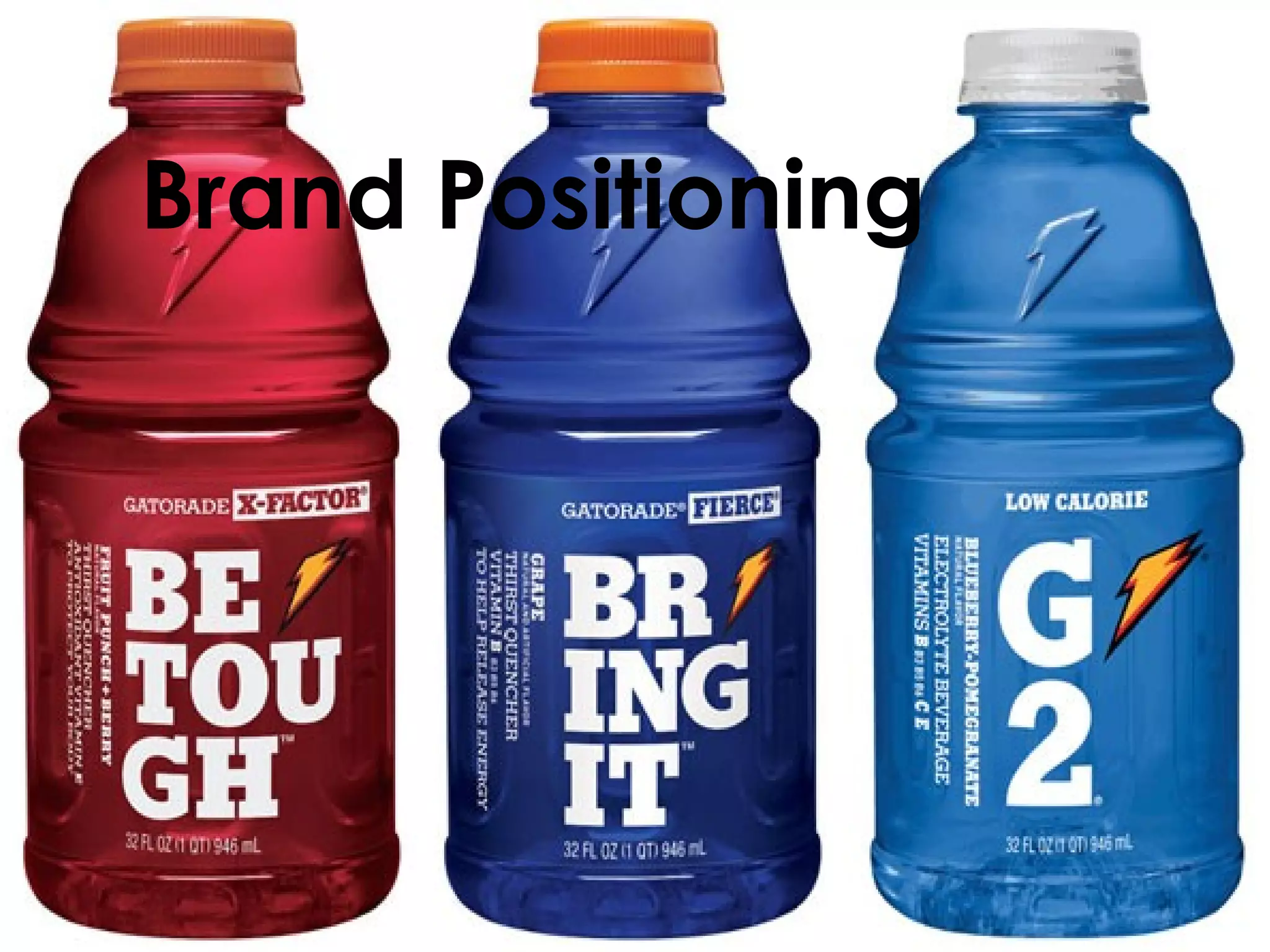
Brand Positioning
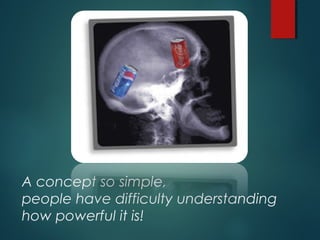
A concept so simple,
people have difficulty understanding
how powerful it is!
What…
 Positioning is owning a
piece of consumer’s mind
 Positioning is not what you
do to a product
 It’s what you do to the mind
of the prospect
 You position the product in
the prospect’s mind
 ‘It’s incorrect to call it Product
Positioning’ – Ries & Trout
Positioning Statement
Format
 The language of a well crafted positioning usually
takes this general form:
“To (target market), Brand X is the (definition of
business) that provides you with (stated point of
difference/key benefit)”
Examples
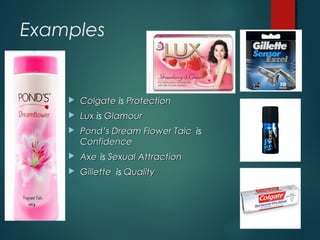
 ColgateColgate is ProtectionProtection
 LuxLux is GlamourGlamour
 Pond’s Dream Flower TalcPond’s Dream Flower Talc is
ConfidenceConfidence
 AxeAxe is Sexual AttractionSexual Attraction
 GilletteGillette is QualityQuality
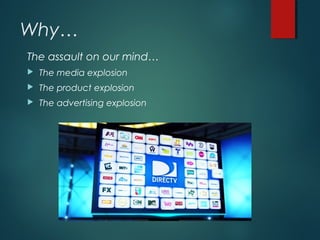
Why…
The assault on our mind…
 The media explosion
 The product explosion
 The advertising explosion
How…
 The easy way to get into a person’s mind
is to be first
 Xerox, Kodak, Polaroid, Sun TV
 If you didn’t get into the mind of your
prospect first, then you have a positioning
problem
 Better to be first than be best
 In the positioning era, you must, however,
be first to get into the prospect’s mind
How…
 The basic approach is not to create
something new or different, but
manipulate what’s already in the mind
 To find a unique position, you must ignore
conventional logic
 Conventional logic says you find concept
inside product
 Not true; look inside prospect’s mind
 You won’t find an uncola idea inside 7-
up; you find it inside cola drinker’s head
‘You concentrate
on the perceptions of the prospect,
not the reality of the product’
- Al Ries & Jack Trout
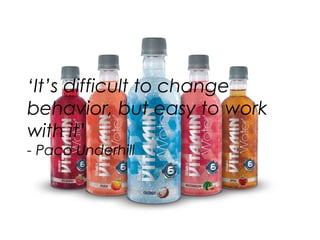
‘It’s difficult to change
behavior, but easy to work
with it’
- Paco Underhill
What you need…
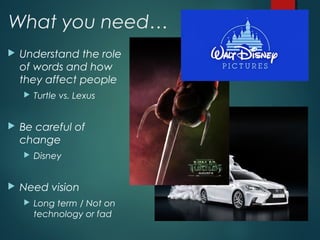
 Understand the role
of words and how
they affect people
 Turtle vs. Lexus
 Be careful of
change
 Disney
 Need vision
 Long term / Not on
technology or fad
What you need…
 Courage
 To slug it out when others watch and wait
 Objectivity
 You need a backboard / a springboard
 Simplicity
 Not complicated or convoluted
What you need…
 Subtlety
 Unique position and appeal that’s not narrow
 Willingness to sacrifice
 Rexona wooing male and female
 Patience
 Geographical roll out / Demographic /
Chronological
 Global outlook
 Taj Mahal tea
Guidelines
 Start by looking not at the product but at
the position in the market that you wish to
occupy, in relation to competition
 Think about how the brand will answer
the main consumer questions
 What will it do for me that others will not?
 Why should I believe you?
 Try to keep it short and make every word
count and be as specific as possible
 Vagueness opens the way to confused
executions
Guidelines
 Keep the positioning up-do-date
 Give as careful consideration to
change as you did to the original
statement
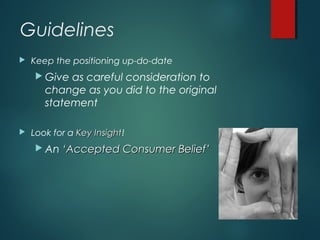
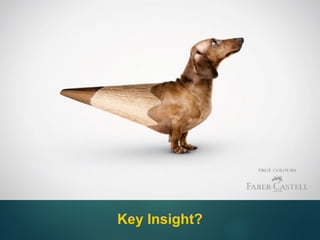
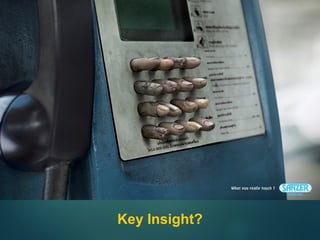
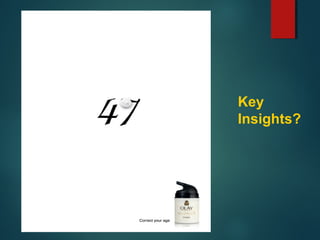
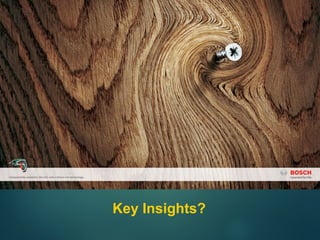
 Look for a Key InsightKey Insight!
 An ‘Accepted Consumer Belief’‘Accepted Consumer Belief’
What is key insight?
 Key Insight is ‘seeing below the surface’ /
‘seeing inside the consumer’
 Insight expresses the totality of all that we
know from seeing inside the consumer
 An insight is a single aspect of this that we
use to gain competitive advantage
 By identifying a specific way…
 That the brand can either solve a problem or
 Create an opportunity for the consumer
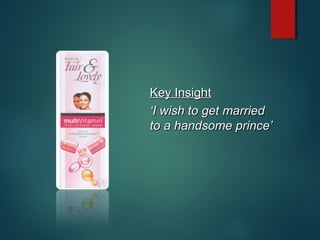
Key InsightKey Insight
‘‘I wish to get marriedI wish to get married
to a handsome prince’to a handsome prince’
Key InsightKey Insight
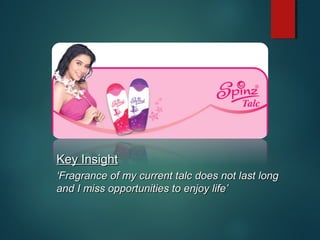
‘‘Fragrance of my current talc does not last longFragrance of my current talc does not last long
and I miss opportunities to enjoy life’and I miss opportunities to enjoy life’
Key InsightKey Insight
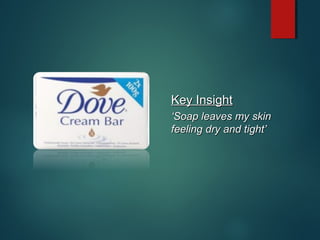
‘‘Soap leaves my skinSoap leaves my skin
feeling dry and tight’feeling dry and tight’
Key
Insights?
Key Insights?
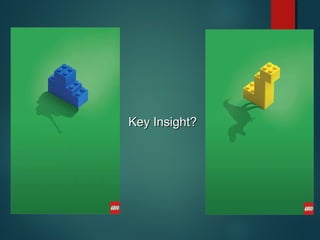
Key Insight?Key Insight?
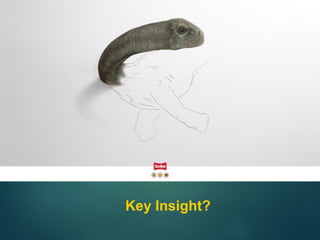
Key Insight?
Key Insight?
Key Insight?
Key Insight?
Key Insight?
Key Insight?
Key Insight?
Key Insight?
More on key insight…
 It will require two separate thoughts to be
related to each other in a new and fresh
way
 Insight will generally be enduring
 Often the process will lead to several
insights
 The one to use is the one that offers to be
the source of greatest competitive
advantage
More on key insight…
 No need for insight to change if you have
identified the higher-order needs of consumers
 Keep asking ‘why’ to find the real need behind
the obvious insight
 Remember, the insight is always the basis for a
brand’s positioning
How to find one?
 What are the ways in which the category /
brand can improve someone’s life?
 What are the conflicting needs that people
face and that the brand can solve?
 How important is it that the product delivers?
Who will notice?
 What is standard of excellence in the
category?
 With every answer you get, you need to probe
deeper:
 ‘Why is that?’
The 3C’s of positioning
 Be Crystal clear
 Be Consumer-based
 Be relevant and credible to the consumer
 Write in consumer language and from consumer’s view point
 Be Competitive
 Be distinctive
 Focus on building brand elements into powerful discriminator
 Be persuasive
 Be sustainable
And then…
 The brand name!
 The name is the first point of contact between
the message and the mind
 ‘‘The brand name is a knife that cuts the mind toThe brand name is a knife that cuts the mind to
let the brand message inside’let the brand message inside’
– Ries & TroutRies & Trout
Guidelines
 It’s not the goodness or badness of the name
in an aesthetic sense that determines
effectiveness
 It’s the appropriateness of the same
 Name begins the positioning process, tells the
prospect what the product’s major benefit is
 Fair & Lovely
 Close Up
 Krack
 Head & Shoulders
 Vaseline Intensive Care Body Lotion
Checklist: Brand name
 Should be simple
 Should be acceptable in all key languages
 Should be appropriate when geographically
spread
 Should be amenable for easy registration

Chapter 3 (brand positioning)

  • 1.
  • 2.
    A concept sosimple, people have difficulty understanding how powerful it is!
  • 3.
    What…  Positioning isowning a piece of consumer’s mind  Positioning is not what you do to a product  It’s what you do to the mind of the prospect  You position the product in the prospect’s mind  ‘It’s incorrect to call it Product Positioning’ – Ries & Trout
  • 4.
    Positioning Statement Format  Thelanguage of a well crafted positioning usually takes this general form: “To (target market), Brand X is the (definition of business) that provides you with (stated point of difference/key benefit)”
  • 5.
    Examples  ColgateColgate isProtectionProtection  LuxLux is GlamourGlamour  Pond’s Dream Flower TalcPond’s Dream Flower Talc is ConfidenceConfidence  AxeAxe is Sexual AttractionSexual Attraction  GilletteGillette is QualityQuality
  • 23.
    Why… The assault onour mind…  The media explosion  The product explosion  The advertising explosion
  • 24.
    How…  The easyway to get into a person’s mind is to be first  Xerox, Kodak, Polaroid, Sun TV  If you didn’t get into the mind of your prospect first, then you have a positioning problem  Better to be first than be best  In the positioning era, you must, however, be first to get into the prospect’s mind
  • 25.
    How…  The basicapproach is not to create something new or different, but manipulate what’s already in the mind  To find a unique position, you must ignore conventional logic  Conventional logic says you find concept inside product  Not true; look inside prospect’s mind  You won’t find an uncola idea inside 7- up; you find it inside cola drinker’s head
  • 26.
    ‘You concentrate on theperceptions of the prospect, not the reality of the product’ - Al Ries & Jack Trout
  • 27.
    ‘It’s difficult tochange behavior, but easy to work with it’ - Paco Underhill
  • 28.
    What you need… Understand the role of words and how they affect people  Turtle vs. Lexus  Be careful of change  Disney  Need vision  Long term / Not on technology or fad
  • 29.
    What you need… Courage  To slug it out when others watch and wait  Objectivity  You need a backboard / a springboard  Simplicity  Not complicated or convoluted
  • 30.
    What you need… Subtlety  Unique position and appeal that’s not narrow  Willingness to sacrifice  Rexona wooing male and female  Patience  Geographical roll out / Demographic / Chronological  Global outlook  Taj Mahal tea
  • 31.
    Guidelines  Start bylooking not at the product but at the position in the market that you wish to occupy, in relation to competition  Think about how the brand will answer the main consumer questions  What will it do for me that others will not?  Why should I believe you?  Try to keep it short and make every word count and be as specific as possible  Vagueness opens the way to confused executions
  • 32.
    Guidelines  Keep thepositioning up-do-date  Give as careful consideration to change as you did to the original statement  Look for a Key InsightKey Insight!  An ‘Accepted Consumer Belief’‘Accepted Consumer Belief’
  • 33.
    What is keyinsight?  Key Insight is ‘seeing below the surface’ / ‘seeing inside the consumer’  Insight expresses the totality of all that we know from seeing inside the consumer  An insight is a single aspect of this that we use to gain competitive advantage  By identifying a specific way…  That the brand can either solve a problem or  Create an opportunity for the consumer
  • 34.
    Key InsightKey Insight ‘‘Iwish to get marriedI wish to get married to a handsome prince’to a handsome prince’
  • 35.
    Key InsightKey Insight ‘‘Fragranceof my current talc does not last longFragrance of my current talc does not last long and I miss opportunities to enjoy life’and I miss opportunities to enjoy life’
  • 36.
    Key InsightKey Insight ‘‘Soapleaves my skinSoap leaves my skin feeling dry and tight’feeling dry and tight’
  • 37.
  • 38.
  • 39.
  • 40.
  • 41.
  • 42.
  • 43.
  • 44.
  • 45.
  • 46.
  • 47.
  • 48.
    More on keyinsight…  It will require two separate thoughts to be related to each other in a new and fresh way  Insight will generally be enduring  Often the process will lead to several insights  The one to use is the one that offers to be the source of greatest competitive advantage
  • 49.
    More on keyinsight…  No need for insight to change if you have identified the higher-order needs of consumers  Keep asking ‘why’ to find the real need behind the obvious insight  Remember, the insight is always the basis for a brand’s positioning
  • 50.
    How to findone?  What are the ways in which the category / brand can improve someone’s life?  What are the conflicting needs that people face and that the brand can solve?  How important is it that the product delivers? Who will notice?  What is standard of excellence in the category?  With every answer you get, you need to probe deeper:  ‘Why is that?’
  • 51.
    The 3C’s ofpositioning  Be Crystal clear  Be Consumer-based  Be relevant and credible to the consumer  Write in consumer language and from consumer’s view point  Be Competitive  Be distinctive  Focus on building brand elements into powerful discriminator  Be persuasive  Be sustainable
  • 52.
    And then…  Thebrand name!  The name is the first point of contact between the message and the mind  ‘‘The brand name is a knife that cuts the mind toThe brand name is a knife that cuts the mind to let the brand message inside’let the brand message inside’ – Ries & TroutRies & Trout
  • 53.
    Guidelines  It’s notthe goodness or badness of the name in an aesthetic sense that determines effectiveness  It’s the appropriateness of the same  Name begins the positioning process, tells the prospect what the product’s major benefit is  Fair & Lovely  Close Up  Krack  Head & Shoulders  Vaseline Intensive Care Body Lotion
  • 54.
    Checklist: Brand name Should be simple  Should be acceptable in all key languages  Should be appropriate when geographically spread  Should be amenable for easy registration