Chapter 23
As a result of successfully completing this
chapter, students will be able to:
 Review basic similarities and some differences
between sterile processing in hospitals and other
healthcare facilities
 Explain basic standards and practices used for
sterile processing in ambulatory surgical centers:
 Overview and History
 Ownership and Regulatory Standards
 ASC Processing Personnel
 Processing Environment
 Explain basic standards and practices used for
sterile processing in dental facilities:
 Environmental Issues
 Instrument Processing Procedures
 Provide an overview of Veterans’ Administration
(VA) facilities, and list sterile processing
differences between VA and other healthcare
facilities
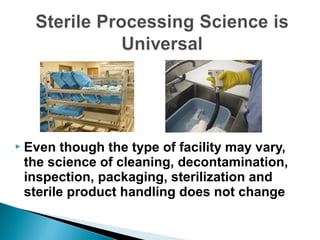
 Even though the type of facility may vary,
the science of cleaning, decontamination,
inspection, packaging, sterilization and
sterile product handling does not change
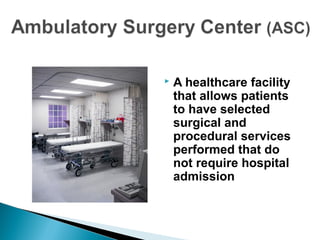
 A healthcare facility
that allows patients
to have selected
surgical and
procedural services
performed that do
not require hospital
admission
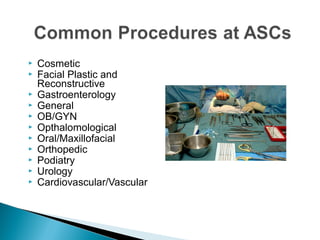
 Cosmetic
 Facial Plastic and
Reconstructive
 Gastroenterology
 General
 OB/GYN
 Opthalomological
 Oral/Maxillofacial
 Orthopedic
 Podiatry
 Urology
 Cardiovascular/Vascular
 ASCs came into being in the 1970s.
Prior to that, all surgical procedures
were performed in the hospital
 ASCs must have at least 1
dedicated operating room
 Physicians are involved in the
ownership of the majority of ASCs
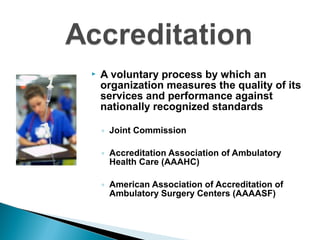
 A voluntary process by which an
organization measures the quality of its
services and performance against
nationally recognized standards
◦ Joint Commission
◦ Accreditation Association of Ambulatory
Health Care (AAAHC)
◦ American Association of Accreditation of
Ambulatory Surgery Centers (AAAASF)
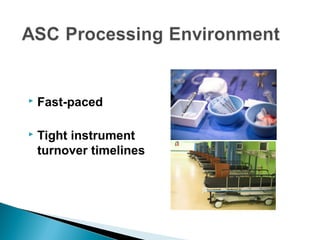
 Fast-paced
 Tight instrument
turnover timelines
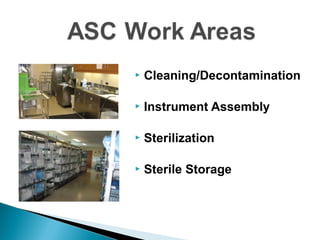
 Cleaning/Decontamination
 Instrument Assembly
 Sterilization
 Sterile Storage
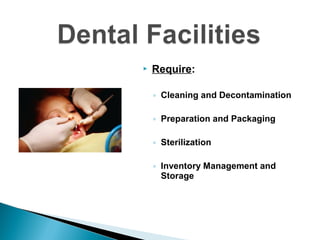
 Require:
◦ Cleaning and Decontamination
◦ Preparation and Packaging
◦ Sterilization
◦ Inventory Management and
Storage
 Clinical Contact Surfaces (infection control)
◦ - Surfaces that can be directly contaminated during patient care;
examples are: contamination from sprays, splatters, or direct contact
with a dental professional’s gloved hand
 Housekeeping Surfaces (infection control)
◦ - Surfaces such as floors, walls, and sinks that pose a risk of
disease transmission
 Environmental Surfaces (infection control)
◦ - Surfaces or equipment that do not contact the patient directly, but
may become contaminated during patient acre; examples are: light
and power unit switches and drawer knobs
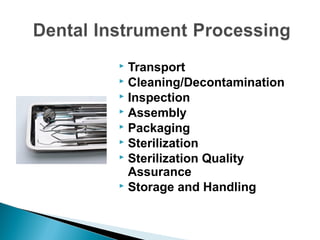
 Transport
 Cleaning/Decontamination
 Inspection
 Assembly
 Packaging
 Sterilization
 Sterilization Quality
Assurance
 Storage and Handling
 Central Service Departments are called
Supply, Processing, and Distribution (SPD)
Departments
 Has its own certification program and
continuing education requirements
 Follows directives that set guidelines for
sterile processing
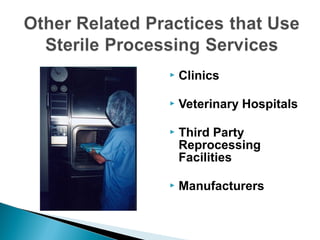
 Clinics
 Veterinary Hospitals
 Third Party
Reprocessing
Facilities
 Manufacturers

Chapter 23 sterile processing for ambulatory surgery and other practices

  • 1.
  • 2.
    As a resultof successfully completing this chapter, students will be able to:  Review basic similarities and some differences between sterile processing in hospitals and other healthcare facilities  Explain basic standards and practices used for sterile processing in ambulatory surgical centers:  Overview and History  Ownership and Regulatory Standards  ASC Processing Personnel  Processing Environment
  • 3.
     Explain basicstandards and practices used for sterile processing in dental facilities:  Environmental Issues  Instrument Processing Procedures  Provide an overview of Veterans’ Administration (VA) facilities, and list sterile processing differences between VA and other healthcare facilities
  • 4.
     Even thoughthe type of facility may vary, the science of cleaning, decontamination, inspection, packaging, sterilization and sterile product handling does not change
  • 5.
     A healthcarefacility that allows patients to have selected surgical and procedural services performed that do not require hospital admission
  • 6.
     Cosmetic  FacialPlastic and Reconstructive  Gastroenterology  General  OB/GYN  Opthalomological  Oral/Maxillofacial  Orthopedic  Podiatry  Urology  Cardiovascular/Vascular
  • 7.
     ASCs cameinto being in the 1970s. Prior to that, all surgical procedures were performed in the hospital  ASCs must have at least 1 dedicated operating room  Physicians are involved in the ownership of the majority of ASCs
  • 8.
     A voluntaryprocess by which an organization measures the quality of its services and performance against nationally recognized standards ◦ Joint Commission ◦ Accreditation Association of Ambulatory Health Care (AAAHC) ◦ American Association of Accreditation of Ambulatory Surgery Centers (AAAASF)
  • 9.
     Fast-paced  Tightinstrument turnover timelines
  • 10.
     Cleaning/Decontamination  InstrumentAssembly  Sterilization  Sterile Storage
  • 11.
     Require: ◦ Cleaningand Decontamination ◦ Preparation and Packaging ◦ Sterilization ◦ Inventory Management and Storage
  • 12.
     Clinical ContactSurfaces (infection control) ◦ - Surfaces that can be directly contaminated during patient care; examples are: contamination from sprays, splatters, or direct contact with a dental professional’s gloved hand  Housekeeping Surfaces (infection control) ◦ - Surfaces such as floors, walls, and sinks that pose a risk of disease transmission  Environmental Surfaces (infection control) ◦ - Surfaces or equipment that do not contact the patient directly, but may become contaminated during patient acre; examples are: light and power unit switches and drawer knobs
  • 13.
     Transport  Cleaning/Decontamination Inspection  Assembly  Packaging  Sterilization  Sterilization Quality Assurance  Storage and Handling
  • 14.
     Central ServiceDepartments are called Supply, Processing, and Distribution (SPD) Departments  Has its own certification program and continuing education requirements  Follows directives that set guidelines for sterile processing
  • 15.
     Clinics  VeterinaryHospitals  Third Party Reprocessing Facilities  Manufacturers