Chapter 2
(CMC, Diffusion and Social Theories)
Maria Ciallella, Jacqueline Furey,
Ochuwa Musa, and Matthew
Thomas
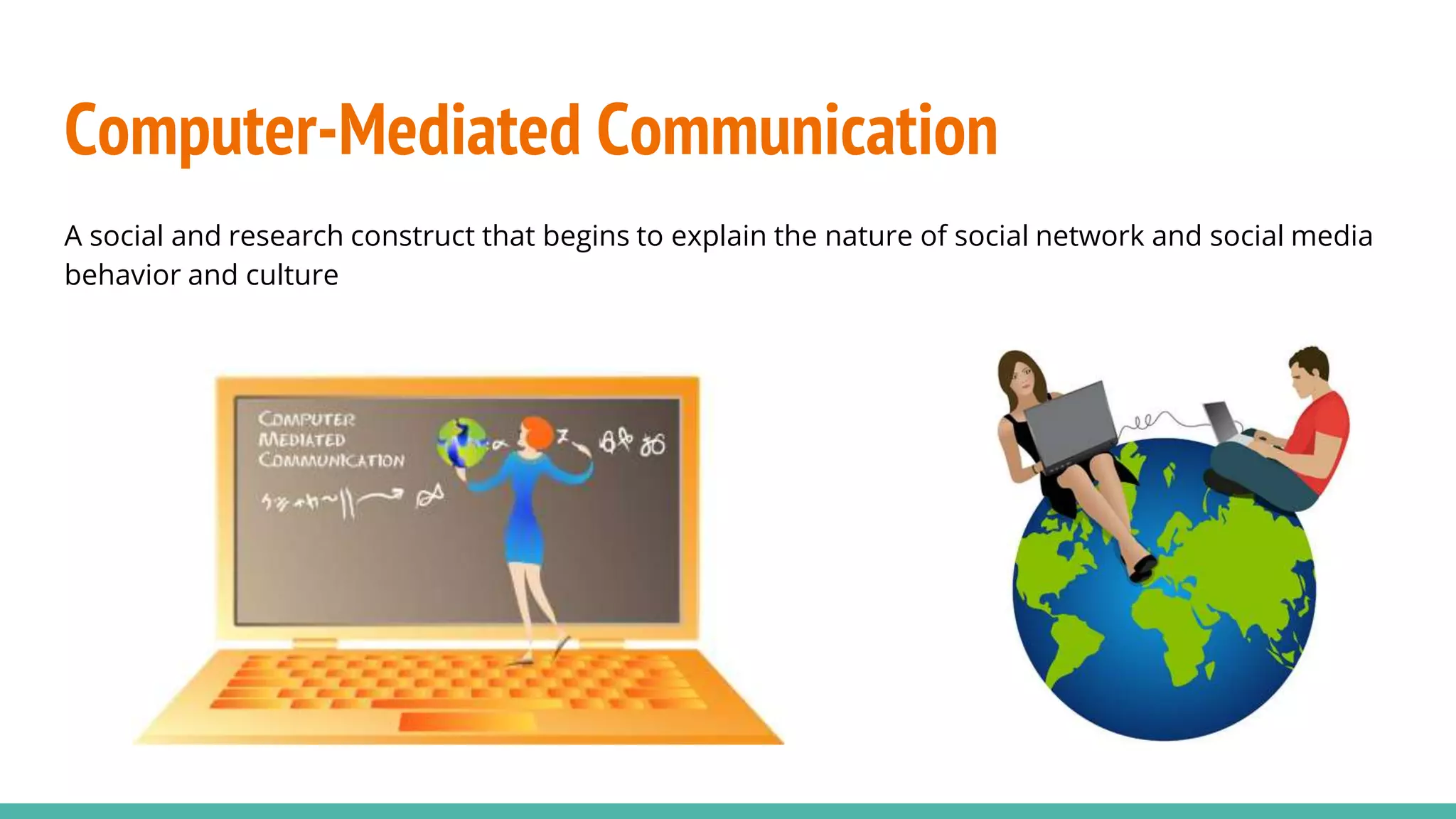
Computer-Mediated Communication
A social and research construct that begins to explain the nature of social network and social media
behavior and culture
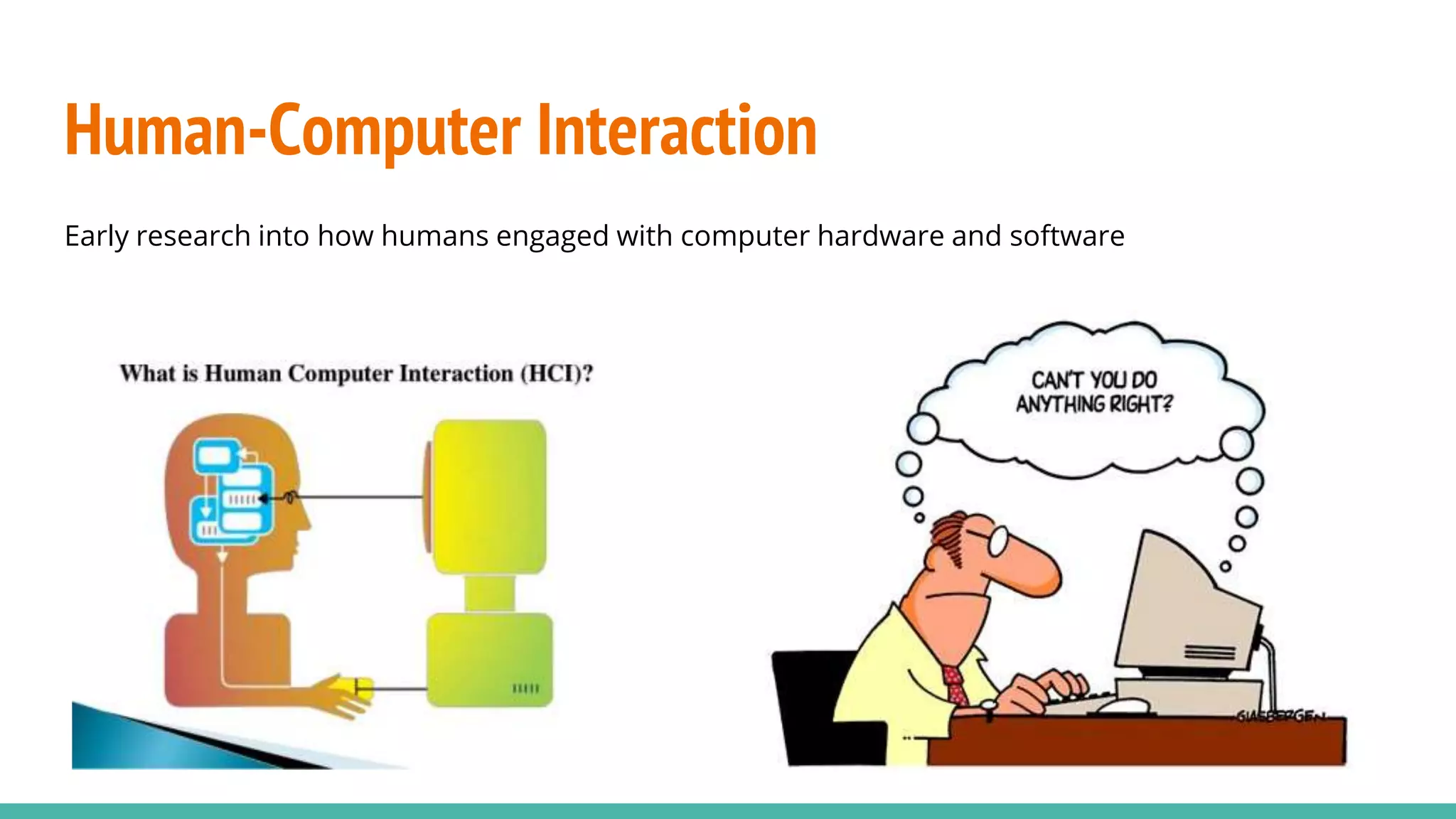
Human-Computer Interaction
Early research into how humans engaged with computer hardware and software
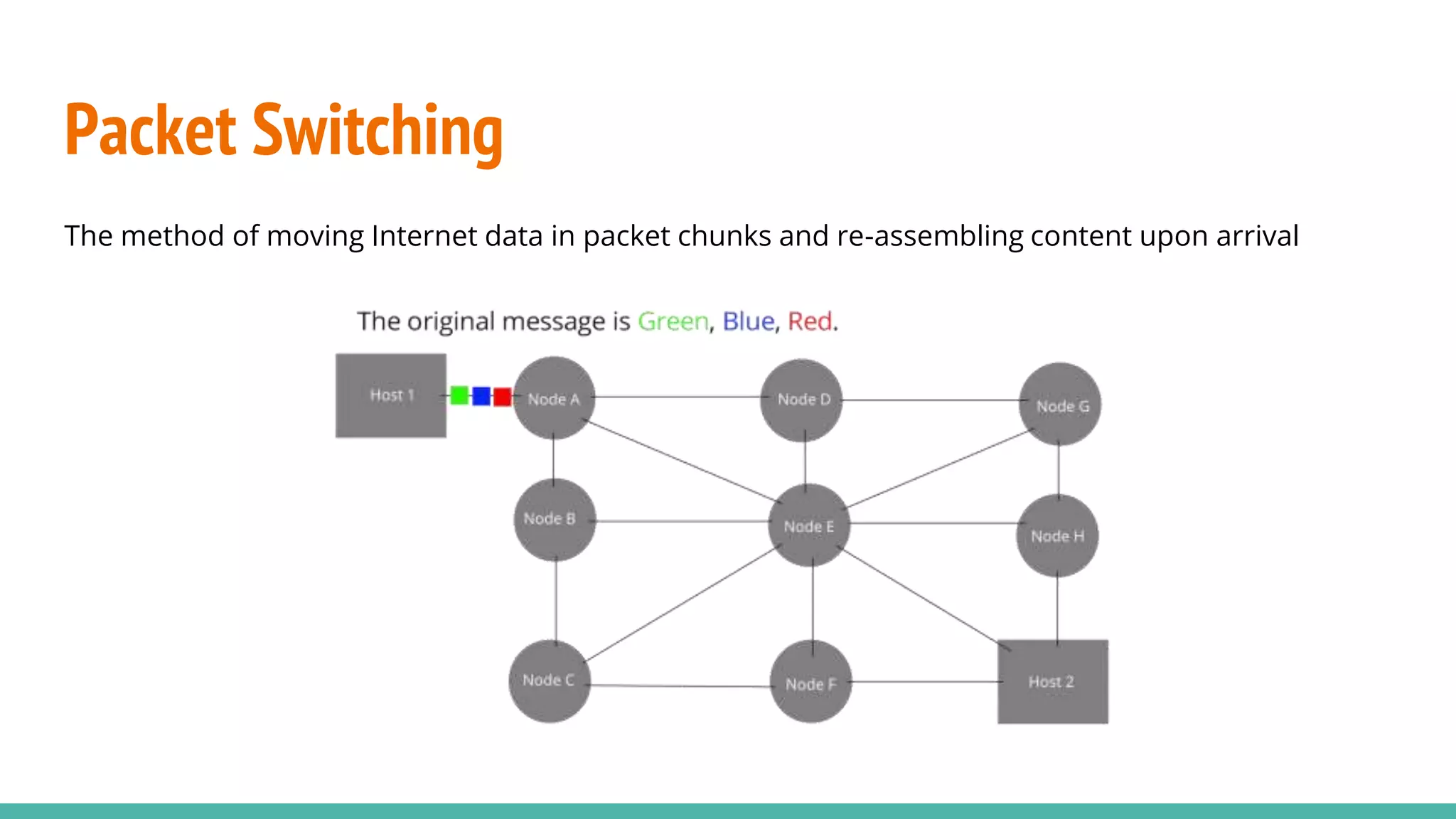
Packet Switching
The method of moving Internet data in packet chunks and re-assembling content upon arrival
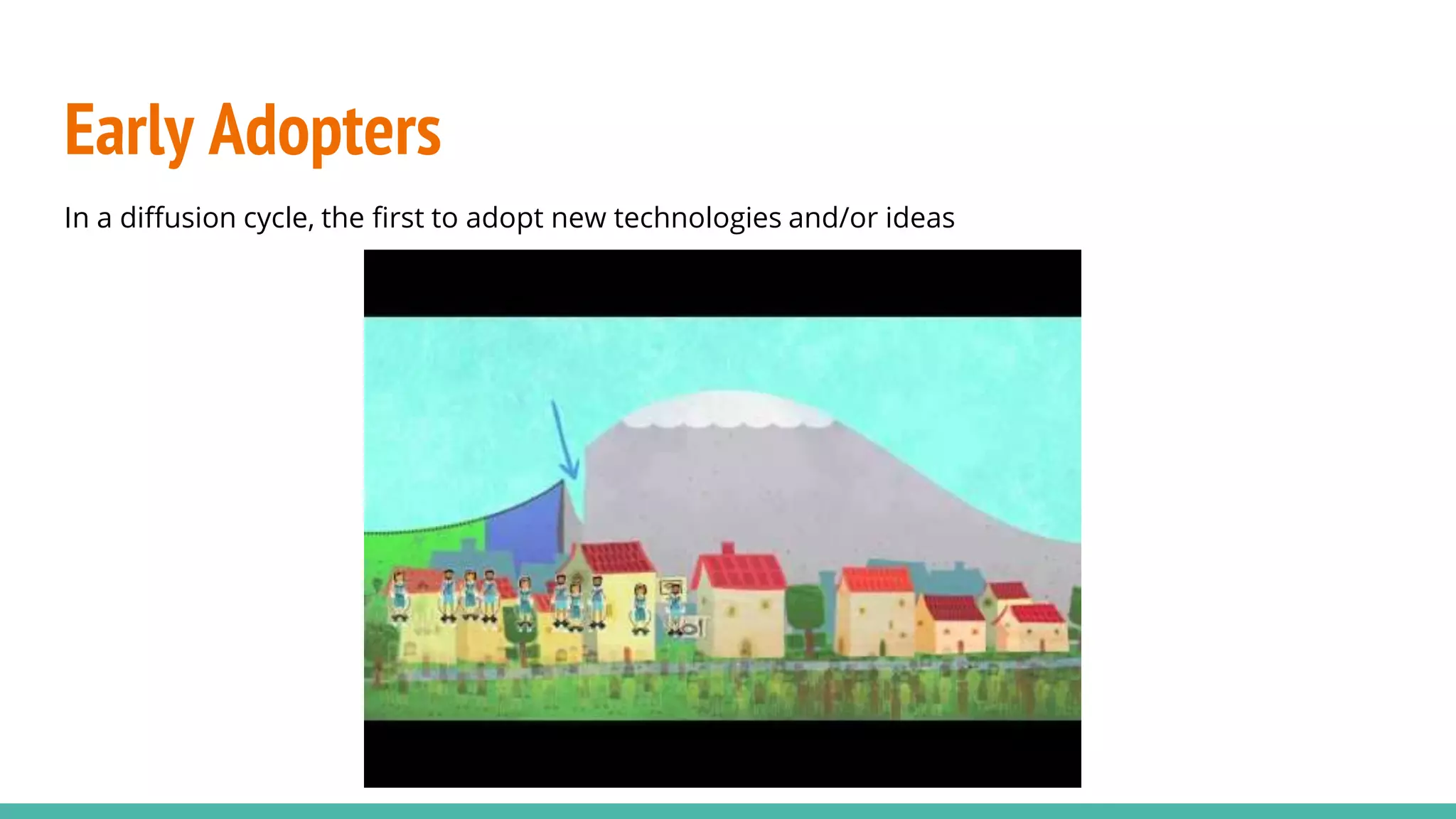
Early Adopters
In a diffusion cycle, the first to adopt new technologies and/or ideas
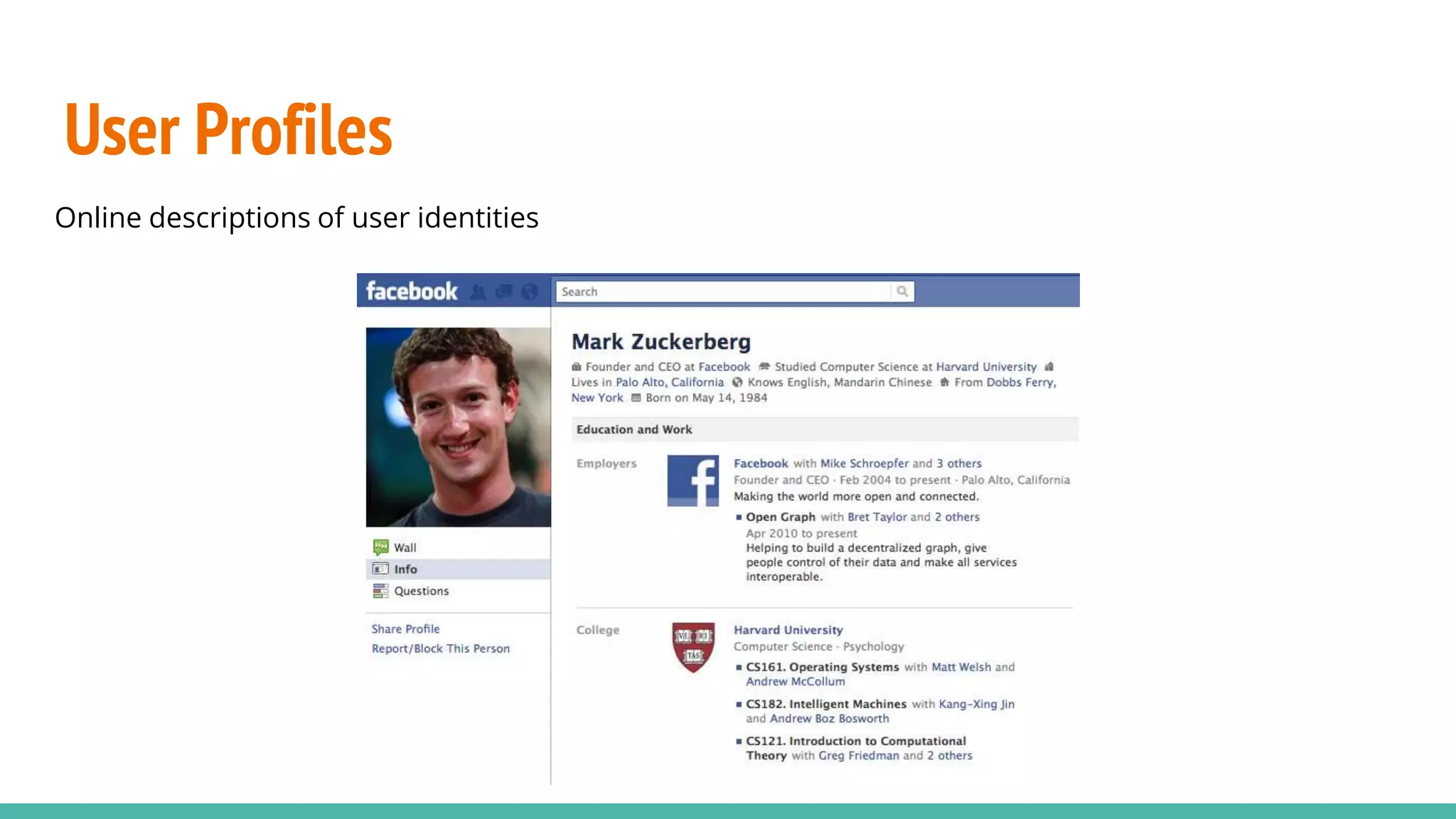
User Profiles
Online descriptions of user identities
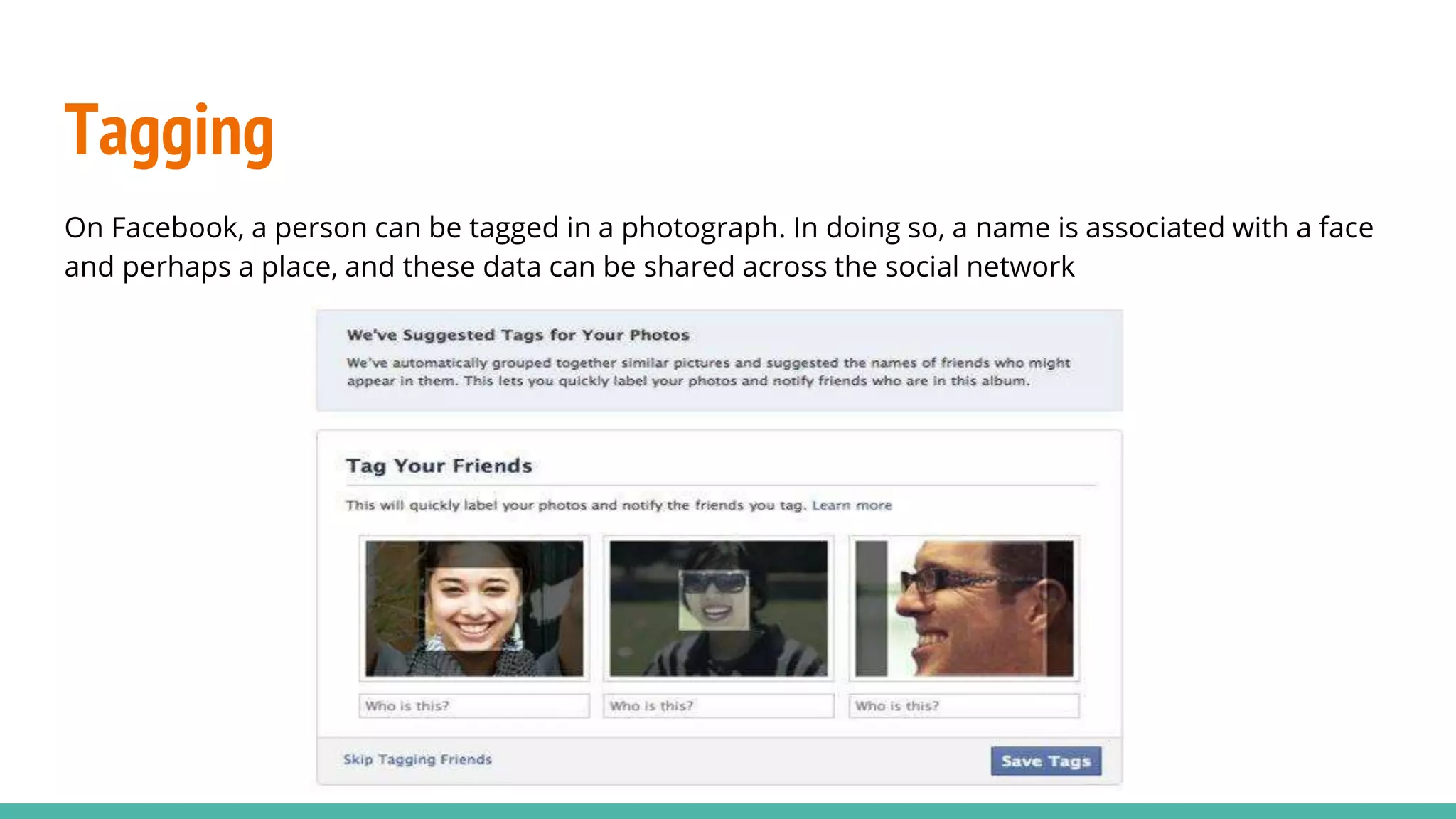
Tagging
On Facebook, a person can be tagged in a photograph. In doing so, a name is associated with a face
and perhaps a place, and these data can be shared across the social network
Geotagging
Use of a computer software code that identifies location
Vlogs
Video bloggers use video posts instead of texts
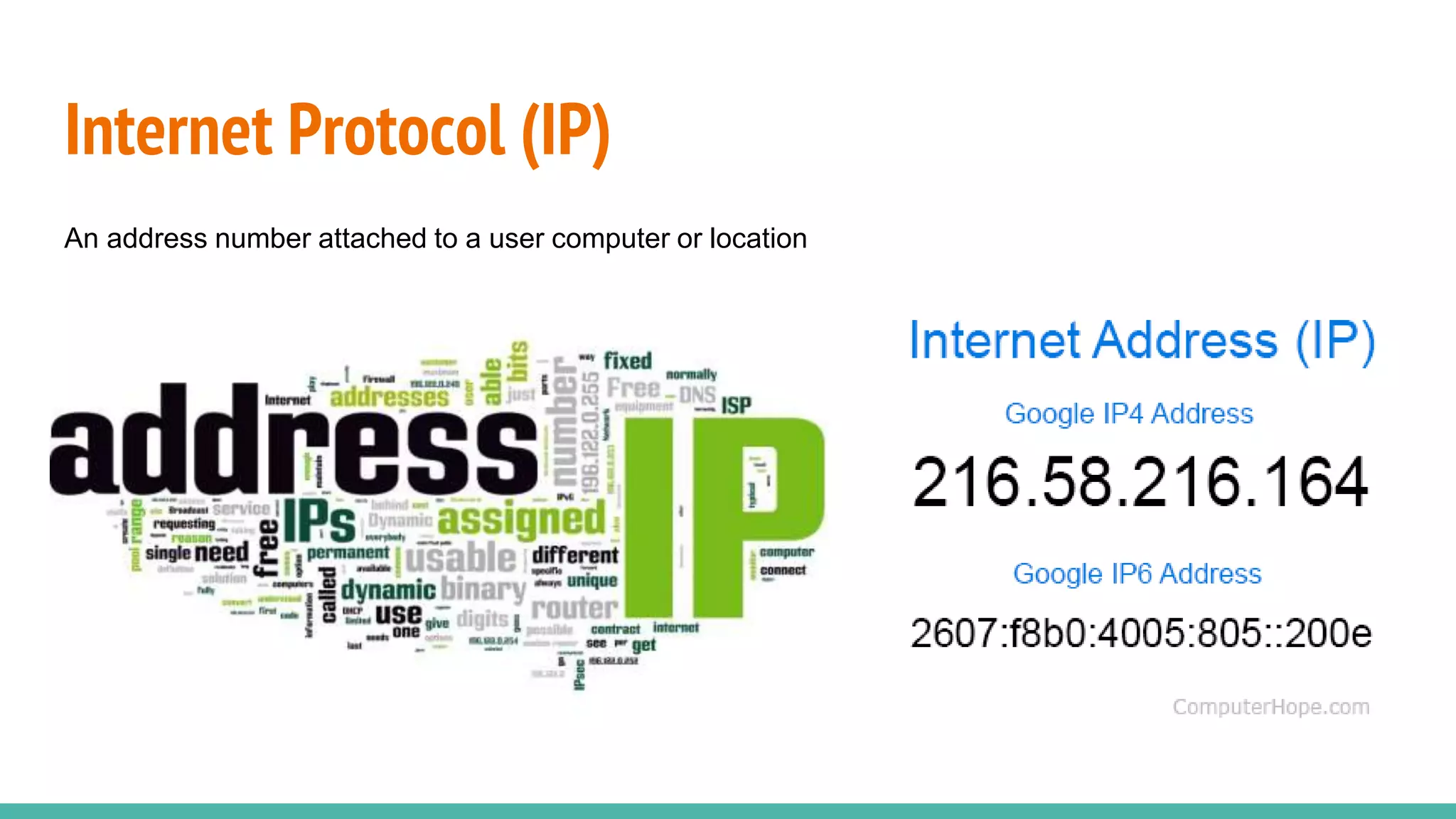
Internet Protocol (IP)
An address number attached to a user computer or location
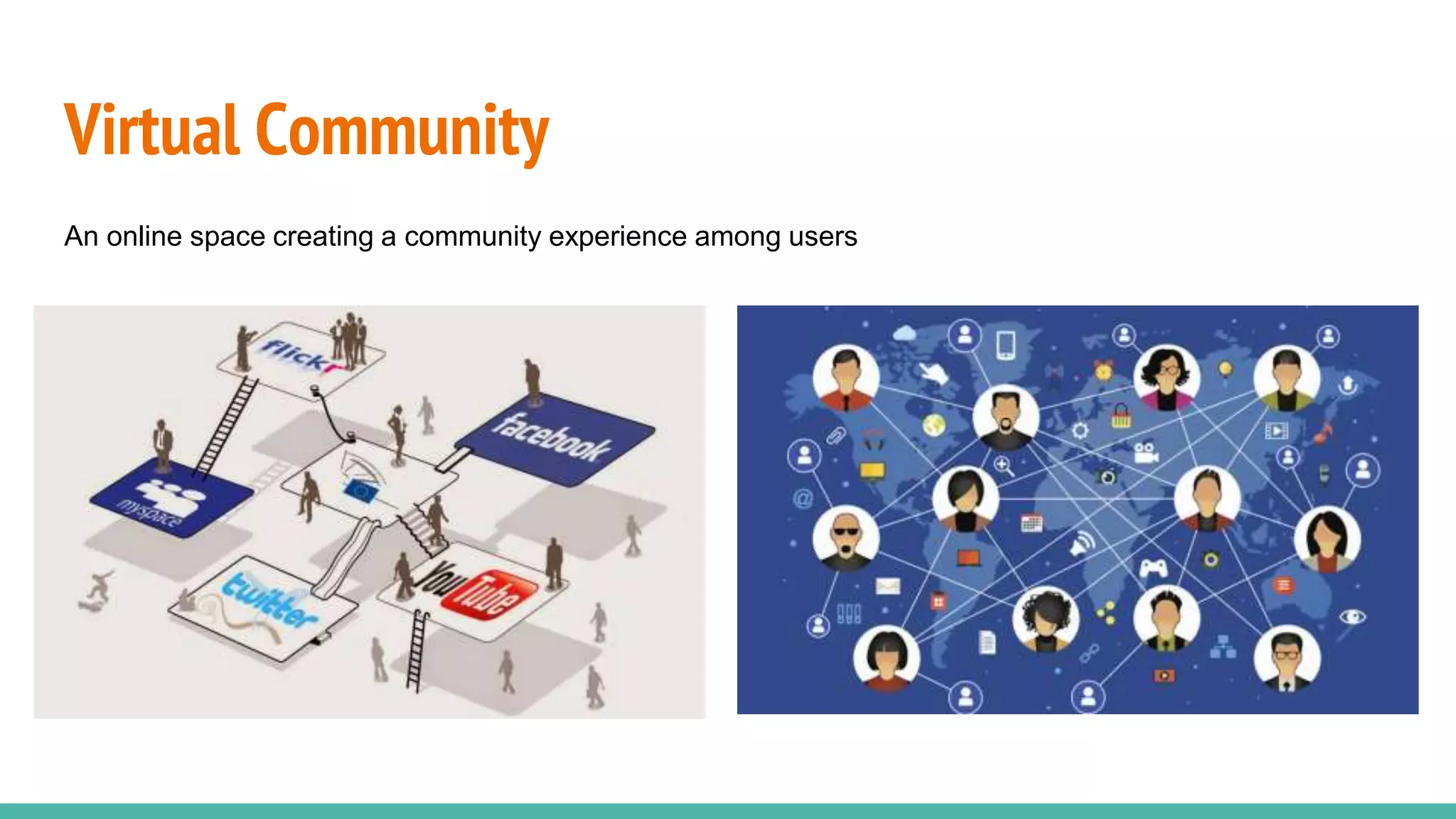
Virtual Community
An online space creating a community experience among users
Electronic Frontier Foundation (EFF)
An international, non-profit digital rights group founded by John Barlow in 1990
The Electronic Frontier Foundation
(EFF) is the leading organization
defending civil liberties in the digital
world. For decades EFF has worked
tirelessly in the courts and with
activists to protect the freedom to
hack, tinker, remix, and create for the
long term good of society. EFF
defends free speech on the Internet,
fights illegal surveillance, supports
freedom-enhancing technologies, and
much more.
Discussion Question - 1
How has CMC influenced the way we form relationships? How may it blur the lines
between reality and fantasy?
Computer-mediated communication (CMC) has influenced the way we form relationships in many ways.
CMC may offer a voice to group with similar interests seeking social change, cultural shifts, and even
political power (pg. 26). It is also influential in forming personal relationships via social media and social
networking sites. CMC may blur the line between reality and fantasy because people may be having
online interactions with others who may not be who they say they are, or are tricking a person into
believing something that is not real.
Discussion Question - 2
How would a visualization of your social networks depict communication patterns
and relationships? How could this be used to influence future online behavior?
Some visual examples of social networks that depicts communication patterns and relationships are
Google's Gmail which connects usually identifiable users with others across the internet. Similarly,
LinkedIn reconnects business contacts by offering current work status and other information.The core idea
of social media communication is to use online networks to connect with others and broaden social
networks. In future online behaviors communication patterns can be used to maintain existing offline
relationships or solidify offline connections, as opposed to meeting new people.
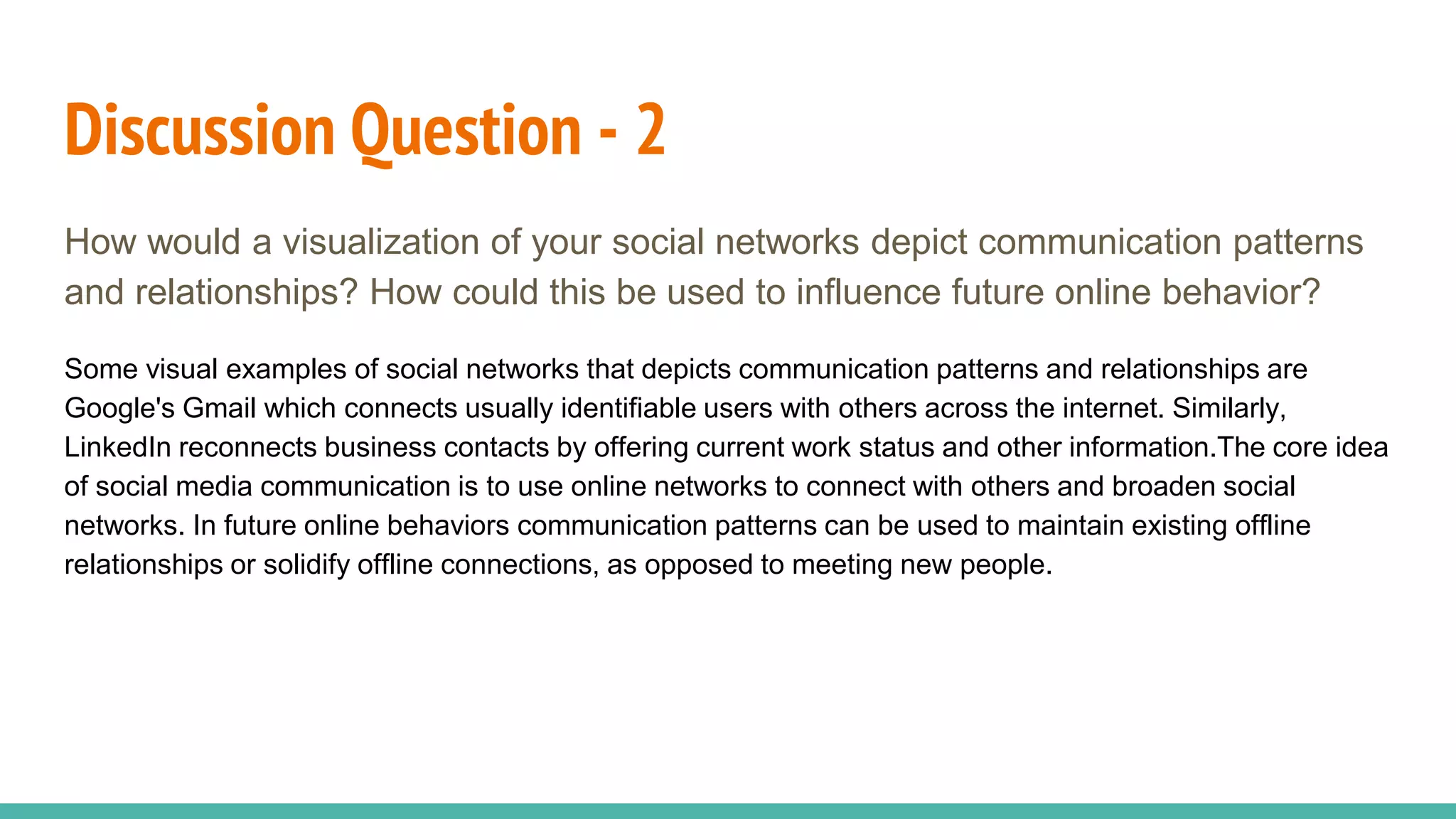
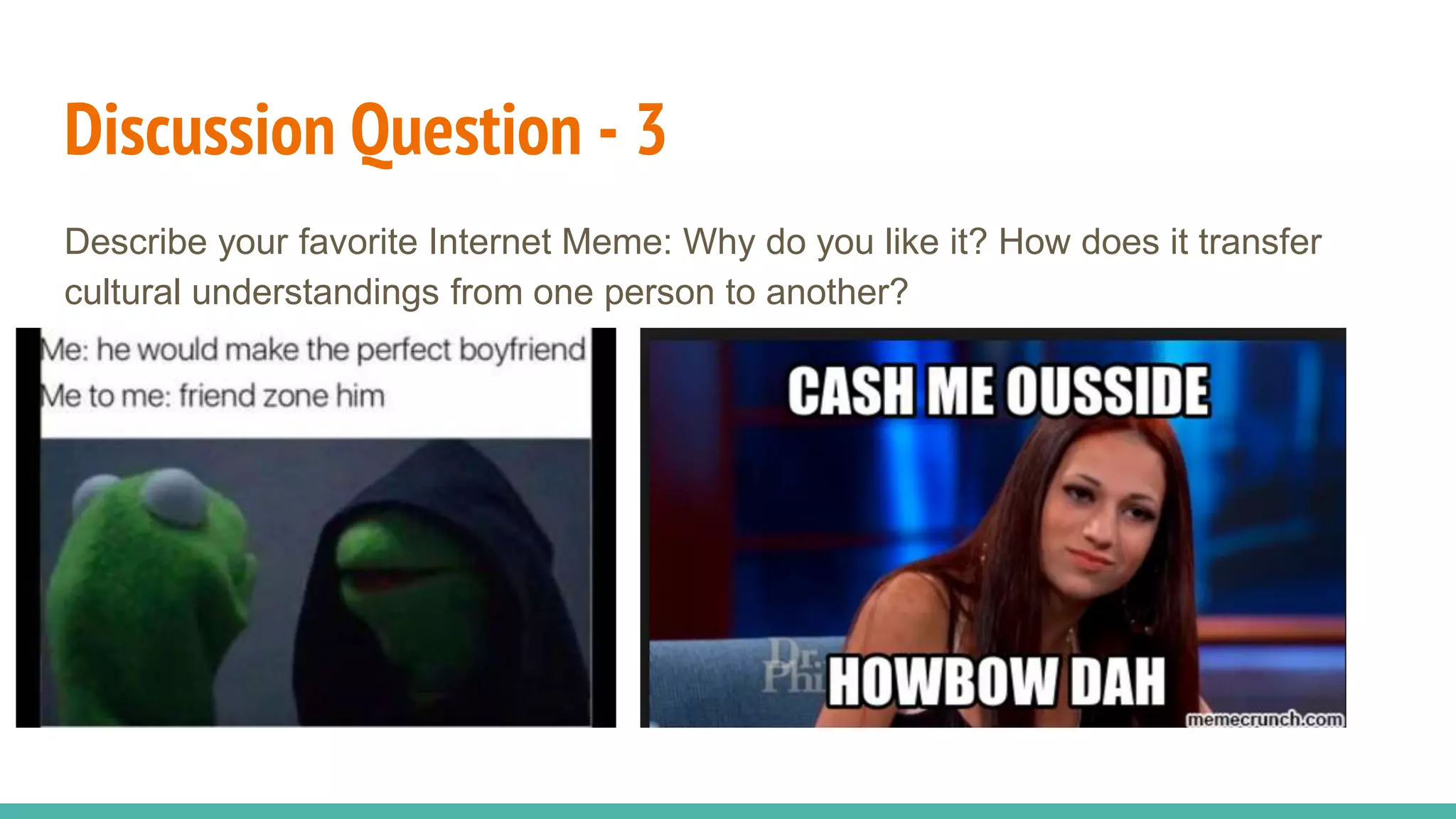
Discussion Question - 3
Describe your favorite Internet Meme: Why do you like it? How does it transfer
cultural understandings from one person to another?
Kahoot Game
https://kahoot.com/welcomeback
https://kahoot.it

Chapter 2

  • 1.
    Chapter 2 (CMC, Diffusionand Social Theories) Maria Ciallella, Jacqueline Furey, Ochuwa Musa, and Matthew Thomas
  • 2.
    Computer-Mediated Communication A socialand research construct that begins to explain the nature of social network and social media behavior and culture
  • 3.
    Human-Computer Interaction Early researchinto how humans engaged with computer hardware and software
  • 4.
    Packet Switching The methodof moving Internet data in packet chunks and re-assembling content upon arrival
  • 5.
    Early Adopters In adiffusion cycle, the first to adopt new technologies and/or ideas
  • 6.
  • 7.
    Tagging On Facebook, aperson can be tagged in a photograph. In doing so, a name is associated with a face and perhaps a place, and these data can be shared across the social network
  • 8.
    Geotagging Use of acomputer software code that identifies location
  • 9.
    Vlogs Video bloggers usevideo posts instead of texts
  • 10.
    Internet Protocol (IP) Anaddress number attached to a user computer or location
  • 11.
    Virtual Community An onlinespace creating a community experience among users
  • 12.
    Electronic Frontier Foundation(EFF) An international, non-profit digital rights group founded by John Barlow in 1990 The Electronic Frontier Foundation (EFF) is the leading organization defending civil liberties in the digital world. For decades EFF has worked tirelessly in the courts and with activists to protect the freedom to hack, tinker, remix, and create for the long term good of society. EFF defends free speech on the Internet, fights illegal surveillance, supports freedom-enhancing technologies, and much more.
  • 13.
    Discussion Question -1 How has CMC influenced the way we form relationships? How may it blur the lines between reality and fantasy? Computer-mediated communication (CMC) has influenced the way we form relationships in many ways. CMC may offer a voice to group with similar interests seeking social change, cultural shifts, and even political power (pg. 26). It is also influential in forming personal relationships via social media and social networking sites. CMC may blur the line between reality and fantasy because people may be having online interactions with others who may not be who they say they are, or are tricking a person into believing something that is not real.
  • 14.
    Discussion Question -2 How would a visualization of your social networks depict communication patterns and relationships? How could this be used to influence future online behavior? Some visual examples of social networks that depicts communication patterns and relationships are Google's Gmail which connects usually identifiable users with others across the internet. Similarly, LinkedIn reconnects business contacts by offering current work status and other information.The core idea of social media communication is to use online networks to connect with others and broaden social networks. In future online behaviors communication patterns can be used to maintain existing offline relationships or solidify offline connections, as opposed to meeting new people.
  • 15.
    Discussion Question -3 Describe your favorite Internet Meme: Why do you like it? How does it transfer cultural understandings from one person to another?
  • 16.