Anis Ashraf
Senior Nursing Faculty
At the end of this lecture the learners will be able to:
1. Review anatomy and physiology of parathyroid
gland.
2. Identify potential complications of thyroid
disorders and describe appropriate measures in
this regard.
3. Explain hyperparathyroidism, hypothyroidism and
its management.
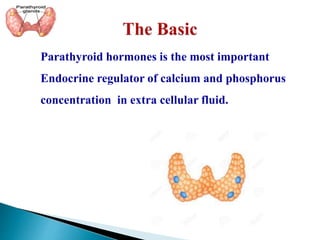
Parathyroid hormones is the most important
Endocrine regulator of calcium and phosphorus
concentration in extra cellular fluid.
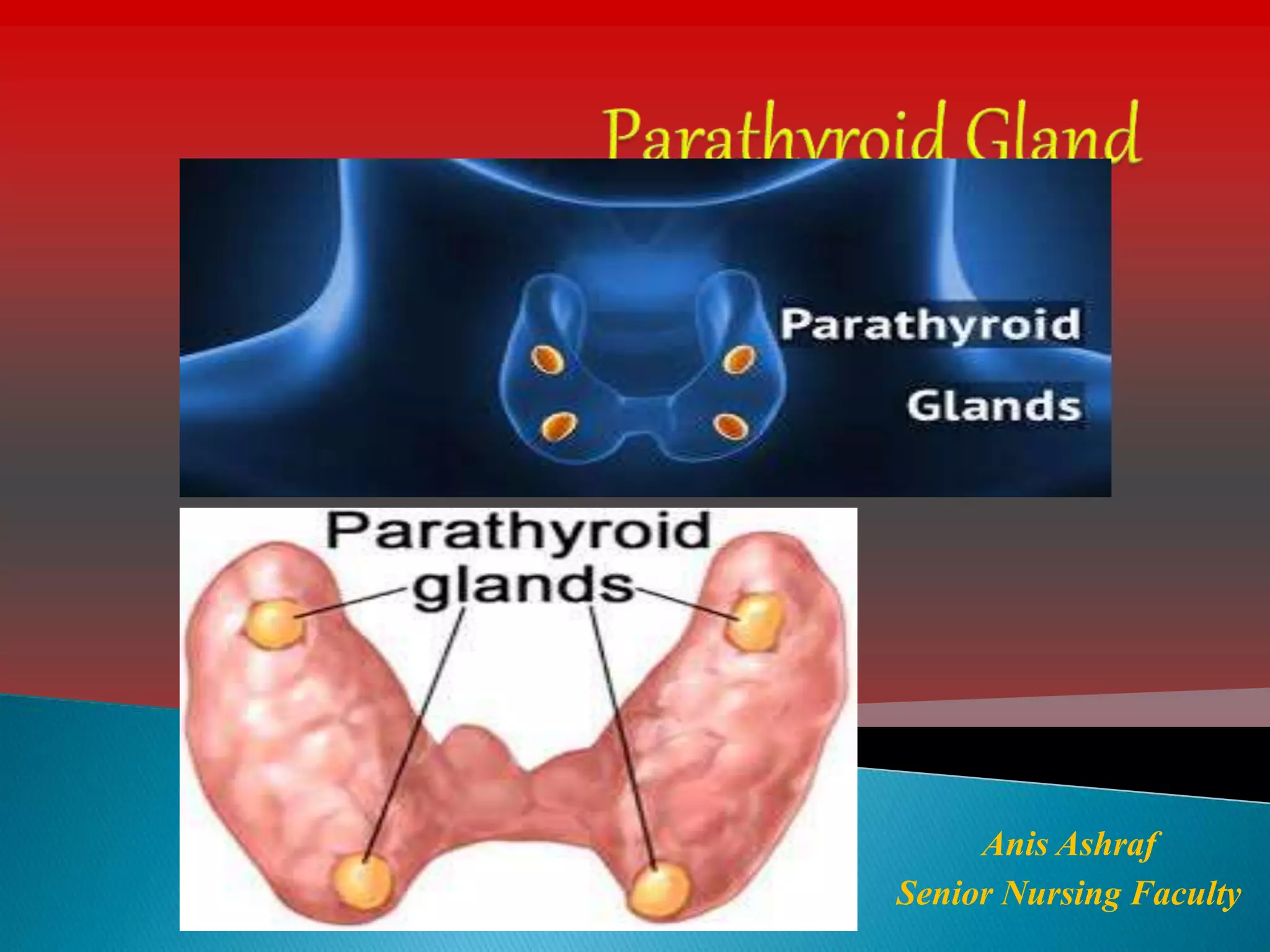
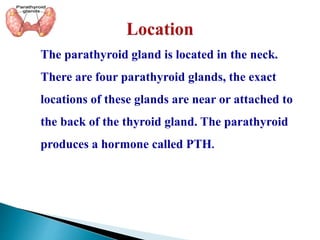
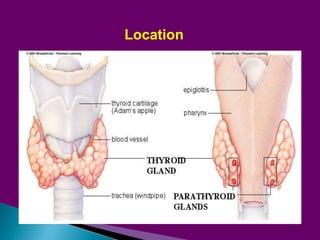
The parathyroid gland is located in the neck.
There are four parathyroid glands, the exact
locations of these glands are near or attached to
the back of the thyroid gland. The parathyroid
produces a hormone called PTH.
Location
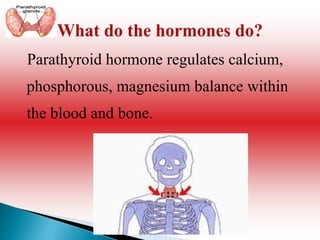
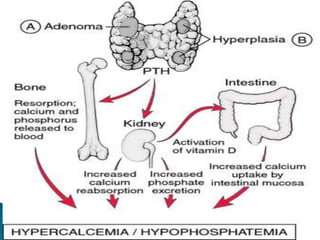
Parathyroid hormone regulates calcium,
phosphorous, magnesium balance within
the blood and bone.
Excess parathormone can result in
markedly increased levels of serum
calcium, which is a potentially life
threatening situation. When the product
of serum calcium and serum phosphorus
rises may precipitate in various organs of
the body e.g kidney and cause tissue
calcification
se
Calcium is important to the body because
 Good Teeth
 Strong Bones
 Function of Nerves
 Muscles
 Kidneys
 Heart
Not having enough calcium in the diet is one of many
factors associated with an increased risk of
osteoporosis, a disease that speeds up the process of
the natural loss of calcium in the bones.
Phosphorus is involved with the creation
of bones and teeth. In fact, thiamin, or
Vitamin B1, cannot be used by the body
without phosphorus, which means that
this mineral also has a role in the
digestive system, as well as the nervous
system. So without the parathyroid
multiple systems would fail.
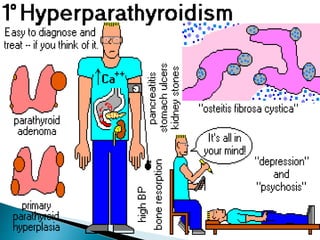
Parathyroid hormone in the bloodstream due to over activity
of one or more of the body's four parathyroid glands.
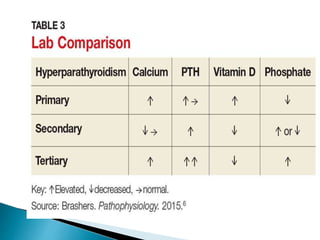
Two types of hyperparathyroidism exist.
In primary hyperparathyroidism an enlargement of one or
more of the parathyroid glands causes overproduction of the
hormone resulting in high levels of calcium in the blood
(hypercalcemia) which can cause a variety of health problems.
Secondary hyperparathyroidism occurs as a result of
another disease that initially causes low levels of calcium in
the body and over time increased parathyroid hormone levels
occur.
Etiology
• Overproduction of the cells secreting PTH
• Parathyroid develops a tumer
Pathogenesis
• Bone Pain
• Depression
• Frequent urination
• Kidney stones
• Nausea
• Loss of appetite
Surgery
◦Remove the tumor surgically
◦Hydration Therapy
◦Mobility
◦Diet and medications
Hypo parathyroidism is an uncommon condition in
which body secretes abnormally low levels of
parathyroid hormone (PTH).
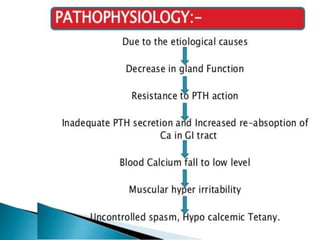
The low production of PTH in hypoparathyroidism
leads to abnormally low ionized calcium levels in
blood and bones and to an increase of serum
phosphorus.
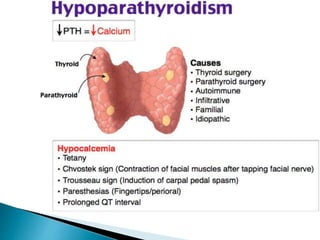
Etiology
• Family History
• Autoimmune Disorder
• Excessive radiation
• Low levels of Mg in blood
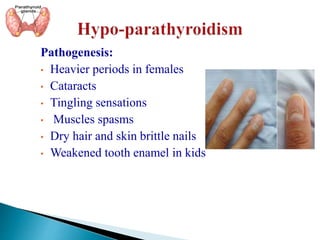
Pathogenesis:
• Heavier periods in females
• Cataracts
• Tingling sensations
• Muscles spasms
• Dry hair and skin brittle nails
• Weakened tooth enamel in kids
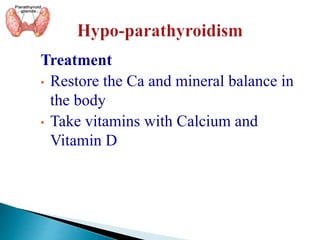
Treatment
• Restore the Ca and mineral balance in
the body
• Take vitamins with Calcium and
Vitamin D
Waugh, A,. & Grant, A. (2011). Ross and Wilson: Anatomy and Physiology in Health
and Illness (11thed.). Hong Kong: Livingstone.
Smeltzer, C.S. et al. (2010). Brunner & Suddarth’s Medical Surgical Nursing
(12thed.). India: Wolters Kluwer/Lippincott Williams & Wilkins.
Lippincott. (2008). Medical Surgical Nursing Made Incredibily Easy (2nded.). India:
Wolters Kluwer.
Chintamani. (2010). Lewis’s Medical Surgical Nursing: Assessment and
Management of Clinical Problems (1sted.). India: Elsevier.
Gingrich, M.M. (2000). Medical Surgical Nursing (2nd ed.). USA: Springhouse.
McKenzie, G., & Porter, T. (2008). Clinicle Companion Medical Surgical Nursing.
New York: Mosby, Elsevier.
Basavanthappa, BT. (2009). Medical Surgical Nursing (2nded.). India: Jaypee.
Priscilla, L. & Burke, K. (2008). Medical Surgical Nursing (4thed.) India:Pearson.
Digiulio, M. & Jackson, D. (2007). Medical Surgical Nursing Demystified. New York:
Mc.Graw.Hill.
Rashmi, A. (2010). Applying Nursing Process: A tool for critical thinking (1sted.).
India : Anmol Publicattions.
Basavanthappa. (2011). Essentials of Medical Surgical Nursing (1sted.). India:
Jaypee.
Munden.J.et.al(2002) Medical Surgical Nursing Certification(3rd.ed)USA :Lippincott
Williams & Wilkins.

Musculoskeletal system

  • 1.
  • 2.
    At the endof this lecture the learners will be able to: 1. Review anatomy and physiology of parathyroid gland. 2. Identify potential complications of thyroid disorders and describe appropriate measures in this regard. 3. Explain hyperparathyroidism, hypothyroidism and its management.
  • 3.
    Parathyroid hormones isthe most important Endocrine regulator of calcium and phosphorus concentration in extra cellular fluid.
  • 4.
    The parathyroid glandis located in the neck. There are four parathyroid glands, the exact locations of these glands are near or attached to the back of the thyroid gland. The parathyroid produces a hormone called PTH.
  • 5.
  • 6.
    Parathyroid hormone regulatescalcium, phosphorous, magnesium balance within the blood and bone.
  • 7.
    Excess parathormone canresult in markedly increased levels of serum calcium, which is a potentially life threatening situation. When the product of serum calcium and serum phosphorus rises may precipitate in various organs of the body e.g kidney and cause tissue calcification
  • 8.
    se Calcium is importantto the body because  Good Teeth  Strong Bones  Function of Nerves  Muscles  Kidneys  Heart
  • 9.
    Not having enoughcalcium in the diet is one of many factors associated with an increased risk of osteoporosis, a disease that speeds up the process of the natural loss of calcium in the bones.
  • 10.
    Phosphorus is involvedwith the creation of bones and teeth. In fact, thiamin, or Vitamin B1, cannot be used by the body without phosphorus, which means that this mineral also has a role in the digestive system, as well as the nervous system. So without the parathyroid multiple systems would fail.
  • 11.
    Parathyroid hormone inthe bloodstream due to over activity of one or more of the body's four parathyroid glands. Two types of hyperparathyroidism exist. In primary hyperparathyroidism an enlargement of one or more of the parathyroid glands causes overproduction of the hormone resulting in high levels of calcium in the blood (hypercalcemia) which can cause a variety of health problems. Secondary hyperparathyroidism occurs as a result of another disease that initially causes low levels of calcium in the body and over time increased parathyroid hormone levels occur.
  • 14.
    Etiology • Overproduction ofthe cells secreting PTH • Parathyroid develops a tumer Pathogenesis • Bone Pain • Depression • Frequent urination • Kidney stones • Nausea • Loss of appetite
  • 16.
    Surgery ◦Remove the tumorsurgically ◦Hydration Therapy ◦Mobility ◦Diet and medications
  • 18.
    Hypo parathyroidism isan uncommon condition in which body secretes abnormally low levels of parathyroid hormone (PTH). The low production of PTH in hypoparathyroidism leads to abnormally low ionized calcium levels in blood and bones and to an increase of serum phosphorus.
  • 19.
    Etiology • Family History •Autoimmune Disorder • Excessive radiation • Low levels of Mg in blood
  • 20.
    Pathogenesis: • Heavier periodsin females • Cataracts • Tingling sensations • Muscles spasms • Dry hair and skin brittle nails • Weakened tooth enamel in kids
  • 23.
    Treatment • Restore theCa and mineral balance in the body • Take vitamins with Calcium and Vitamin D
  • 26.
    Waugh, A,. &Grant, A. (2011). Ross and Wilson: Anatomy and Physiology in Health and Illness (11thed.). Hong Kong: Livingstone. Smeltzer, C.S. et al. (2010). Brunner & Suddarth’s Medical Surgical Nursing (12thed.). India: Wolters Kluwer/Lippincott Williams & Wilkins. Lippincott. (2008). Medical Surgical Nursing Made Incredibily Easy (2nded.). India: Wolters Kluwer. Chintamani. (2010). Lewis’s Medical Surgical Nursing: Assessment and Management of Clinical Problems (1sted.). India: Elsevier. Gingrich, M.M. (2000). Medical Surgical Nursing (2nd ed.). USA: Springhouse. McKenzie, G., & Porter, T. (2008). Clinicle Companion Medical Surgical Nursing. New York: Mosby, Elsevier. Basavanthappa, BT. (2009). Medical Surgical Nursing (2nded.). India: Jaypee. Priscilla, L. & Burke, K. (2008). Medical Surgical Nursing (4thed.) India:Pearson. Digiulio, M. & Jackson, D. (2007). Medical Surgical Nursing Demystified. New York: Mc.Graw.Hill. Rashmi, A. (2010). Applying Nursing Process: A tool for critical thinking (1sted.). India : Anmol Publicattions. Basavanthappa. (2011). Essentials of Medical Surgical Nursing (1sted.). India: Jaypee. Munden.J.et.al(2002) Medical Surgical Nursing Certification(3rd.ed)USA :Lippincott Williams & Wilkins.

Editor's Notes

  • #23 Infiltrative=: relating to or characterized by infiltration Infiltration (hydrology) Infiltration is the process by which water on the ground surface enters the soil. ... If the precipitation rate exceeds the infiltration rate, runoff will usually occur unless there is some physical barrier. It is related to the saturated hydraulic conductivity of the near-surface soil. Familial=: of, relating to, or suggestive of a family e.g. it's a familial duty as well as a tradition for everyone in my family to eat dinner together