THE ENDOCINE SYSTEMBy: Stacey Smith
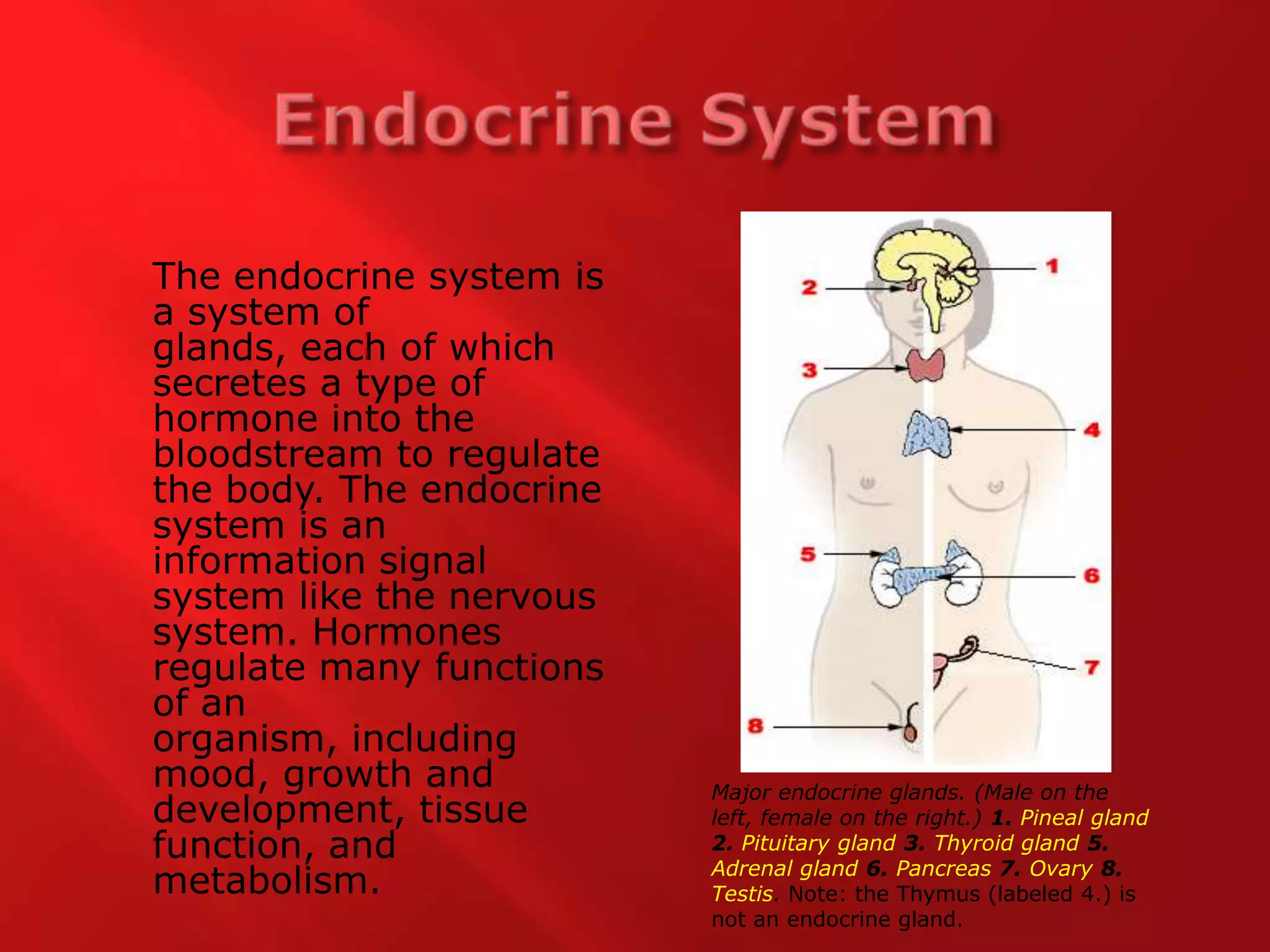
Endocrine System	The endocrine system is a system of glands, each of which secretes a type of hormone into the bloodstream to regulate the body. The endocrine system is an information signal system like the nervous system. Hormones regulate many functions of an organism, including mood, growth and development, tissue function, and metabolism. Major endocrine glands. (Male on the left, female on the right.) 1.Pineal gland 2.Pituitary gland 3.Thyroid gland 5.Adrenal gland 6.Pancreas 7.Ovary8.Testis. Note: the Thymus (labeled 4.) is not an endocrine gland.
Suffix -emiaIn medical terminology this suffix means: in the blood
-emiaHypercalcemiahyperkalemiaan elevated calcium level in the bloodprimary hyperparathyroidism and malignancy account for about 90% of cases of hypercalcemiait can be due to excessive skeletal calcium release, increased intestinal calcium absorption, or decreased renal calcium excretionan elevated potassium level in the bloodextreme hyperkalemia is a medical emergency due to the risk of potentially fatal abnormal heart rhythms Some causes include: renal insufficiency	medication that interferes with urinary excretion: ACE inhibitorsPotassium-sparing diuretics
Suffix -tropinIn medical terminology this suffix means: to stimulate
-tropinAdrenocortico-tropin (acth)somatropinRegulates the function of the adrenal cortexIt is a polypeptide tropic hormone produced and secreted by the anterior pituitary glandis a protein-based poly-peptide hormoneIt stimulates growth, cell reproduction and regenerationGrowth hormone is used clinically to treat children's growth disorders and adult growth hormone deficiency
Refernces:www.webmd.comwww.medicalterminology.comwww.kidshealth.com

The endocine system

  • 1.
  • 2.
    Endocrine System The endocrinesystem is a system of glands, each of which secretes a type of hormone into the bloodstream to regulate the body. The endocrine system is an information signal system like the nervous system. Hormones regulate many functions of an organism, including mood, growth and development, tissue function, and metabolism. Major endocrine glands. (Male on the left, female on the right.) 1.Pineal gland 2.Pituitary gland 3.Thyroid gland 5.Adrenal gland 6.Pancreas 7.Ovary8.Testis. Note: the Thymus (labeled 4.) is not an endocrine gland.
  • 3.
    Suffix -emiaIn medicalterminology this suffix means: in the blood
  • 4.
    -emiaHypercalcemiahyperkalemiaan elevated calciumlevel in the bloodprimary hyperparathyroidism and malignancy account for about 90% of cases of hypercalcemiait can be due to excessive skeletal calcium release, increased intestinal calcium absorption, or decreased renal calcium excretionan elevated potassium level in the bloodextreme hyperkalemia is a medical emergency due to the risk of potentially fatal abnormal heart rhythms Some causes include: renal insufficiency medication that interferes with urinary excretion: ACE inhibitorsPotassium-sparing diuretics
  • 5.
    Suffix -tropinIn medicalterminology this suffix means: to stimulate
  • 6.
    -tropinAdrenocortico-tropin (acth)somatropinRegulates thefunction of the adrenal cortexIt is a polypeptide tropic hormone produced and secreted by the anterior pituitary glandis a protein-based poly-peptide hormoneIt stimulates growth, cell reproduction and regenerationGrowth hormone is used clinically to treat children's growth disorders and adult growth hormone deficiency
  • 7.