Chapter 11 “Capital Budgeting” from Finance by Boundless is
used under the terms of the
Creative Commons Attribution-ShareAlike 3.0 Unported
license. © 2014, boundless.com. UMGC
has modified this work and it is available under the original
license.
https://www.boundless.com/finance/textbooks/boundless-
finance-textbook/introduction-to-the-field-and-goals-of-
financial-management-1/
http://creativecommons.org/licenses/by-sa/3.0/
Chapter 11
Capital
Budgeting
https://www.boundless.com/finance/capital-budgeting/
What is Capital Budgeting
The Goals of Capital Budgeting
Accounting Flows and Cash Flows
Ranking Investment Proposals
Reinvestment Assumptions
Long-Term vs. Short-Term Financing
Section 1
Introduction to Capital Budgeting
599
https://www.boundless.com/finance/capital-
budgeting/introduction-to-capital-budgeting/
What is Capital Budgeting
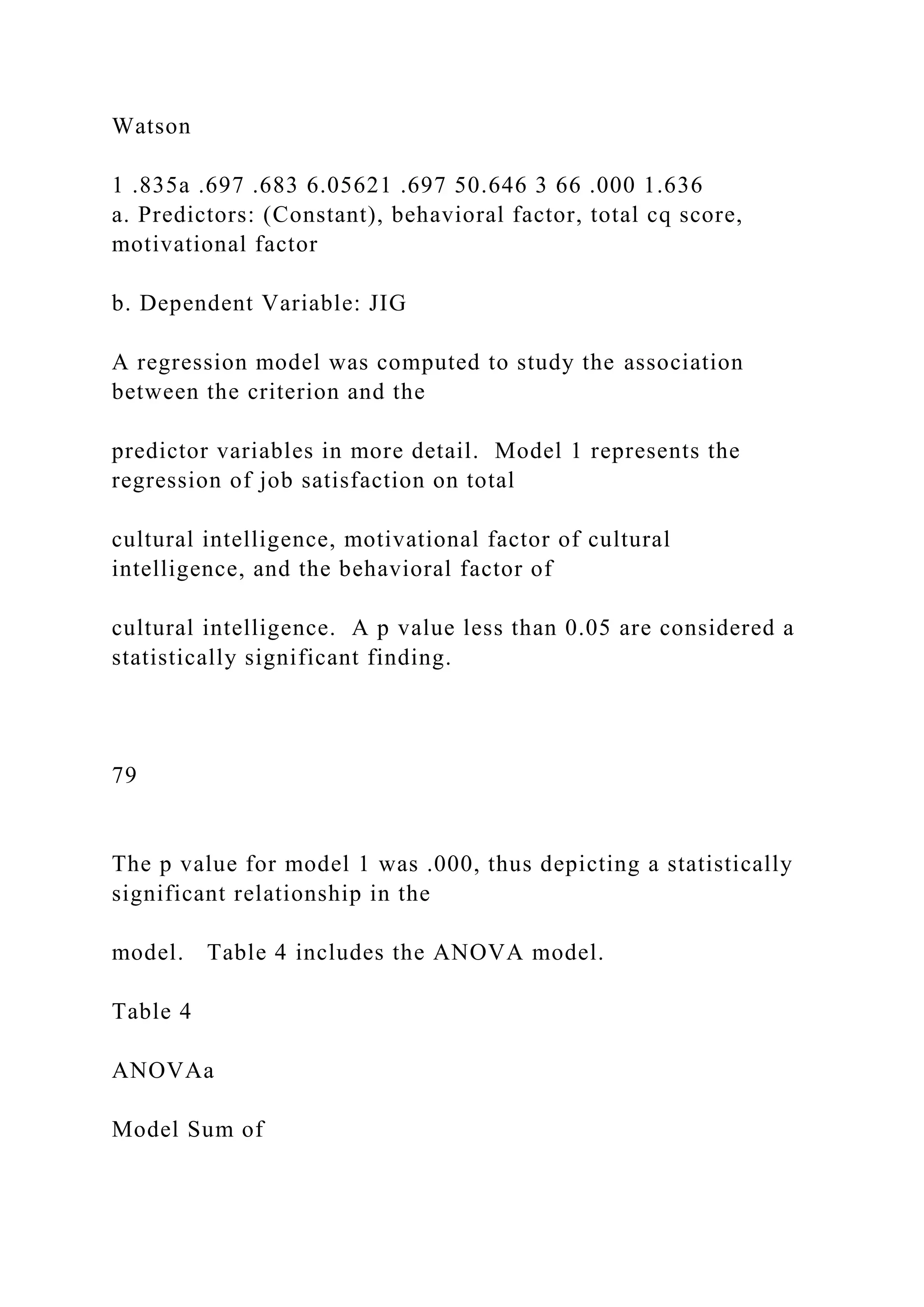
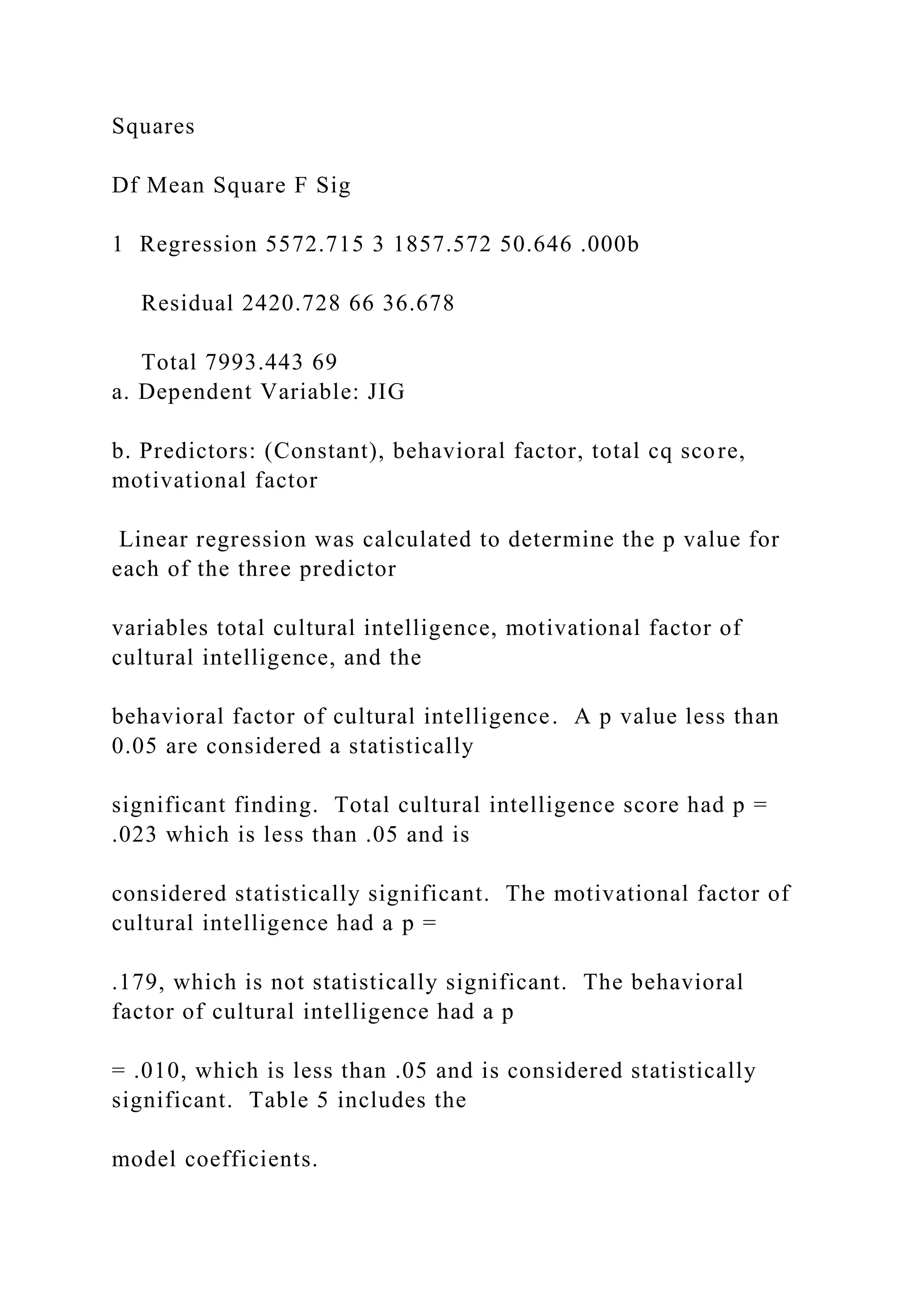
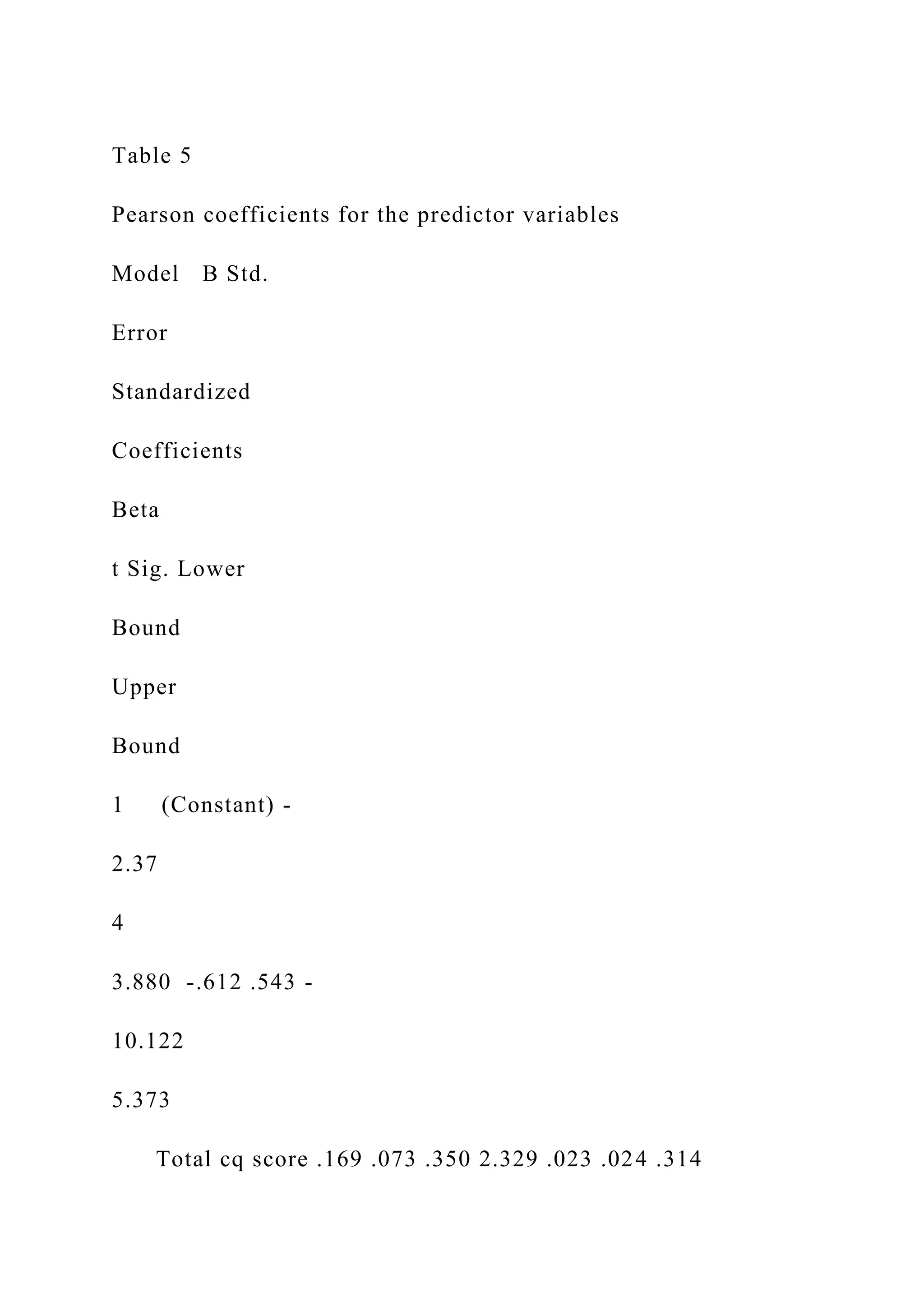
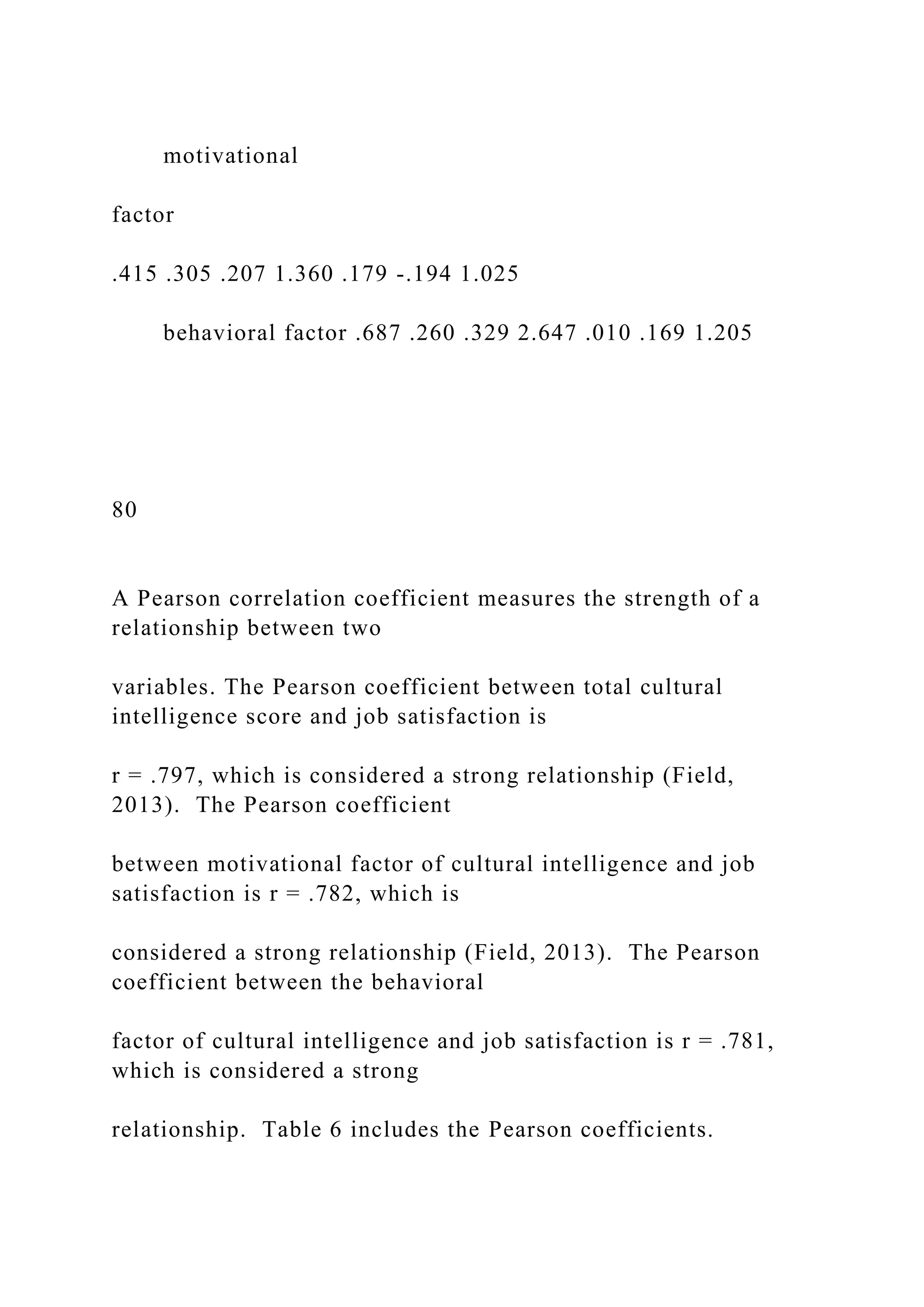
Capital budgeting is the planning process used to
determine which of an organization's long term
investments are worth pursuing.
KEY POINTS
• Capital budgeting, which is also called investment appraisal,
is the planning process used to determine whether an
organization's long term investments, major capital, or
expenditures are worth pursuing.
• Major methods for capital budgeting include Net present
value, Internal rate of return, Payback period, Profitability
index, Equivalent annuity and Real options analysis.
• The IRR method will result in the same decision as the NPV
method for non-mutually exclusive projects in an
unconstrained environment; Nevertheless, for mutually
exclusive projects, the decision rule of taking the project with
the highest IRR may select a project with a lower NPV.
Capital Budgeting
Capital budgeting, which is also called "investment appraisal,"
is the
planning process used to determine which of an organization's
long
term investments such as new machinery, replacement
machinery,
new plants, new products, and research development projects
are
worth pursuing. It is to budget for major capital investments or
expenditures (Figure 11.1).
Major Methods
Many formal methods are used in capital budgeting, including
the
techniques as followed:
• Net present value
• Internal rate of return
• Payback period
• Profitability index
600
Investment in real
estate needs capital
budgeting in
advance.
Figure 11.1 Capital
Budgeting
• Equivalent annuity
• Real options analysis
Net Present Value
Net present value (NPV) is used to estimate each potential
project's
value by using a discounted cash flow (DCF) valuation. This
valuation requires estimating the size and timing of all the
incremental cash flows from the project. The NPV is greatly
affected by the discount rate, so selecting the proper rate–
sometimes called the hurdle rate–is critical to making the right
decision.
This should reflect the riskiness of the investment, typically
measured by the volatility of cash flows, and must take into
account
the financing mix. Managers may use models, such as the
CAPM or
the APT, to estimate a discount rate appropriate for each
particular
project, and use the weighted average cost of capital(WACC) to
reflect the financing mix selected. A common practice in
choosing a
discount rate for a project is to apply a WACC that applies to
the
entire firm, but a higher discount rate may be more appropriate
when a project's risk is higher than the risk of the firm as a
whole.
Internal Rate of Return
The internal rate of return (IRR) is defined as the discount rate
that
gives a net present value (NPV) of zero. It is a commonly used
measure of investment efficiency.
The IRR method will result in the same decision as the NPV
method
for non-mutually exclusive projects in an unconstrained
environment, in the usual cases where a negative cash flow
occurs
at the start of the project, followed by all positive cash flows.
Nevertheless, for mutually exclusive projects, the decision rule
of
taking the project with the highest IRR, which is often used,
may
select a project with a lower NPV.
One shortcoming of the IRR method is that it is commonly
misunderstood to convey the actual annual profitability of an
investment. Accordingly, a measure called "Modified Internal
Rate of Return (MIRR)" is often used.
Payback Period
Payback period in capital budgeting refers to the period of time
required for the return on an investment to "repay" the sum of
the
original investment. Payback period intuitively measures how
long
something takes to "pay for itself." All else being equal, shorter
payback periods are preferable to longer payback periods.
601
The payback period is considered a method of analysis with
serious
limitations and qualifications for its use, because it does not
account for the time value of money, risk, financing, or other
important considerations, such as the opportunity cost.
Profitability Index
Profitability index (PI), also known as profit investment ratio
(PIR)
and value investment ratio (VIR), is the ratio of payoff to
investment of a proposed project. It is a useful tool for ranking
projects, because it allows you to quantify the amount of value
created per unit of investment.
Equivalent Annuity
The equivalent annuity method expresses the NPV as an
annualized
cash flow by dividing it by the present value of the annuity
factor. It
is often used when comparing investment projects of unequal
lifespans. For example, if project A has an expected lifetime of
seven
years, and project B has an expected lifetime of 11 years, it
would be
improper to simply compare the net present values (NPVs) of
the
two projects, unless the projects could not be repeated.
Real Options Analysis
The discounted cash flow methods essentially value projects as
if
they were risky bonds, with the promised cash flows known. But
managers will have many choices of how to increase future cash
inflows or to decrease future cash outflows. In other words,
managers get to manage the projects, not simply accept or reject
them. Real options analysis try to value the choices–the option
value–that the managers will have in the future and adds these
values to the NPV.
These methods use the incremental cash flows from each
potential
investment or project. Techniques based on accounting earnings
and accounting rules are sometimes used. Simplified and hybrid
methods are used as well, such as payback period and
discounted
payback period.
EXAMPLE
Payback period: For example, a $1000 investment which
returned $500 per year would have a two year payback period.
The time value of money is not taken into account.
Source: https://www.boundless.com/finance/capital-budgeting/
introduction-to-capital-budgeting/what-is-capital-budgeting/
CC-BY-SA
Boundless is an openly licensed educational resource
602
The Goals of Capital
Budgeting
The main goals of capital budgeting are not only to
control resources and provide visibility, but also to rank
projects and raise funds.
KEY POINTS
• Basically, the purpose of budgeting is to provide a forecast of
revenues and expenditures and construct a model of how
business might perform financially.
• Capital Budgeting is most involved in ranking projects and
raising funds when long-term investment is taken into
account.
• Capital budgeting is an important task as large sums of
money are involved and a long-term investment, once made,
can not be reversed without significant loss of invested
capital.
The purpose of budgeting is to provide a forecast of revenues
and
expenditures. That is, to construct a model of how a business
might
perform financially if certain strategies, events, and plans are
carried out. It enables the actual financial operation of the
business
to be measured against the forecast, and it establishes the cost
constraint for a project, program, or operation.
Budgeting helps to aid the planning of actual operations by
forcing
managers to consider how the conditions might change, and
what
steps should be taken in such an event. It encourages managers
to
consider problems before they arise. It also helps co-ordinate
the
activities of the organization by compelling managers to
examine
relationships between their own operation and those of other
departments.
Other essential functions of a budget include:
• To control resources
• To communicate plans to various responsibility center
managers
• To motivate managers to strive to achieve budget goals
• To evaluate the performance of managers
• To provide visibility into the company's performance
Capital Budgeting, as a part of budgeting, more specifically
focuses
on long-term investment, major capital and capital expenditures.
The main goals of capital budgeting involve:
603
Ranking Projects
The real value of capital budgeting is to rank projects. Most
organizations have many projects that could potentially be
financially rewarding. Once it has been determined that a
particular
project has exceeded its hurdle, then it should be ranked against
peer projects (e.g. - highest Profitability index to lowest
Profitability
index). The highest ranking projects should be implemented
until
the budgeted capital has been expended (Figure 11.2).
Raising funds
When a corporation determines its capital budget, it must
acquire
funds. Three methods are generally available to publicly-traded
corporations: corporate bonds, preferred stock, and common
stock.
The ideal mix of those funding sources is determined by the
financial managers of the firm and is related to the amount of
financial risk that the corporation is willing to undertake.
Corporate bonds entail the lowest financial risk and, therefore,
generally have the lowest interest rate. Preferred stock have no
financial risk but dividends, including all in arrears, must be
paid to
the preferred stockholders before any cash disbursements can be
made to common stockholders; they generally have interest
rates
higher than those of corporate bonds. Finally, common stocks
entail
no financial risk but are the most expensive way to finance
capital
projects.The Internal Rate of Return is very important.
Capital budgeting is an important task as large sums of money
are
involved, which influences the profitability of the firm. Plus, a
long-
term investment, once made, cannot be reversed without
significant
loss of invested capital. The implication of long-term
investment
decisions are more extensive than those of short-run decisions
because of the time factor involved; capital budgeting decisions
are
subject to a higher degree of risk and uncertainty than are short-
run
decisions.
Source: https://www.boundless.com/finance/capital-budgeting/
introduction-to-capital-budgeting/the-goals-of-capital-
budgeting/
CC-BY-SA
Boundless is an openly licensed educational resource
604
The main goal of capital budgeting is to rank projects.
Figure 11.2 Goals of capital budgeting
Accounting Flows and Cash
Flows
Accounting flows are used when transactions occur
and documents are produced; Cash flow is the
movement of money into or out of a business.
KEY POINTS
• Accounting flows involve Journal entries, Ledger accounts
and Balancing to present a business's financial position in an
Income statement, a Balance sheet and a Cash flow
statement.
• Cash flow is the movement of money into or out of a business,
project or financial product.
• Statement of cash flows includes three parts: Operational
cash flows, Investment cash flows and Financing cash flows.
Accounting Flows
When a transaction occurs, a document is produced. Most of the
time these documents are external to the business; however,
they
can also be internal documents, such as inter-office sales. These
are
referred to as source documents (Figure 11.3).
Basic accounting flows are as followed:
1. Identify the transaction through an original source document
(such as an invoice, receipt, cancelled check, time card,
deposit slip, purchase order) which provides the date,
amount, description (account or business purpose), name
and address of the other party.
605
The basic cycle
from open period to
close period.
Figure 11.3
Accounting cycle
2. Analyze the transaction – determine which accounts are
affected, how (increase or decrease), and by how much.
3. Make journal entries – record the transaction in the journal
as both a debit and a credit. Journals are kept in
chronological order and may include a sales journal, a
purchases journal, a cash receipts journal, a cash payments
journal and the general journal.
4. Post to ledger – transfer the journal entries to ledger
accounts.
5. Trial Balance – a calculation to verify that the sum of the
debits equals the sum of the credits. If they don’t balance,
you have to fix the unbalanced trial balance before you go on
to the rest of the accounting cycle.
6. Adjusting entries – prepare and post accrued and deferred
items to journals and ledger T-accounts.
7. Adjusted trial balance – make sure the debits still equal the
credits after making the period end adjustments.
8. Financial Statements – prepare income statement, balance
sheet, statement of retained earnings and statement of cash
flows.
9. Closing entries – prepare and post closing entries to transfer
the balances from temporary accounts.
Cash flows
Cash flow is the movement of money into or out of a business,
project or financial product. It is usually measured during a
specified, finite period of time. Measurement of cash flow can
be
used for calculating other parameters that give information on a
company's value and situation. Cash flow can be used, for
example,
for calculating parameters:
• To determine a project's rate of return or value. The time that
cash flows into and out of projects is used as inputs in
financial models such as internal rate of return and net
present value.
• To determine problems with a business's liquidity. Being
profitable does not necessarily mean being liquid. A company
can fail because of a shortage of cash even while profitable.
• To be used as an alternative measure of a business's profits
when it is believed that accrual accounting concepts do not
represent economic realities.
• To evaluate the 'quality' of income generated by accrual
accounting. When net income is composed of large non-cash
items it is considered low quality.
606
• To evaluate the risks within a financial product, e.g. matching
cash requirements, evaluating default risk, re-investment
requirements, etc.
Subsets of cash flow in a business's financials include:
• Operational cash flows: Cash received or expended as a result
of the company's internal business activities. It includes cash
earnings plus changes to working capital. Over the medium
term, this must be net positive if the company is to remain
solvent.
• Investment cash flows: Cash received from the sale of long-
life
assets, or spent on capital expenditure (investments,
acquisitions and long-life assets).
• Financing cash flows: Cash received from the issue of debt
and equity, or paid out as dividends, share repurchases or
debt repayments.
Cash flow is a generic term used differently depending on the
context. It may be defined by users for their own purposes. It
can
refer to actual past flows or projected future flows. It can refer
to the
total of all flows involved or a subset of those (Figure 11.4).
EXAMPLE
For example, a company may be notionally profitable but
generating little operational cash (as may be the case for a
company that barters its products rather than selling for cash).
In such a case, the company may be deriving additional
operating cash by issuing shares or raising additional debt
finance.
Source: https://www.boundless.com/finance/capital-budgeting/
introduction-to-capital-budgeting/accounting-flows-and-cash-
flows/
CC-BY-SA
Boundless is an openly licensed educational resource
607
The movement of
money into and out
of a business,
project or financial
product.
Figure 11.4 Cash
flow
Ranking Investment
Proposals
Several methods are commonly used to rank
investment proposals, including NPV, IRR, PI, payback
period, and ARR.
KEY POINTS
• The higher the NPV, the more attractive the investment
proposal.
• The higher a project's IRR, the more desirable it is to
undertake the project.
• As the value of the profitability index increases, so does the
financial attractiveness of the proposed project.
• Shorter payback periods are preferable to longer payback
periods.
• The higher the ARR, the more attractive the investment.
The most valuable aim of capital budgeting is to rank
investment
proposals. To choose the most valuable investment option,
several
methods are commonly used (Figure 11.5):
Net Present Value (NPV):
NPV can be described as the “difference amount” between the
sums
of discounted: cash inflows and cash outflows. In the case when
all
future cash flows are incoming, and the only outflow of cash is
the
purchase price, the NPV is simply the PV of future cash flows
minus
the purchase price (which is its own PV). The higher the NPV,
the
more attractive the investment proposal. NPV is a central tool in
discounted cash flow (DCF) analysis and is a standard method
for
using the time value of money to appraise long-term projects.
Used
for capital budgeting and widely used throughout economics,
finance, and accounting, it measures the excess or shortfall of
cash
flows, in present value terms, once financing charges are met
(Figure 11.6).
608
Choosing the best
investment
proposal for
business
Figure 11.5
Investment
Proposal
In financial theory, if there is a choice between two mutually
exclusive alternatives, the one yielding the higher NPV should
be
selected. The rules of decision making are:
• When NPV > 0, the investment would add value to the firm so
the project may be accepted
• When NPV < 0, the investment would subtract value from the
firm so the project should be rejected
• When NPV = 0, the investment would neither gain nor lose
value for the firm. We should be indifferent in the decision
whether to accept or reject the project. This project adds no
monetary value. Decision should be based on other criteria
(e.g., strategic positioning or other factors not explicitly
included in the calculation).
An NPV calculated using variable discount rates (if they are
known
for the duration of the investment) better reflects the situation
than
one calculated from a constant discount rate for the entire
investment duration.
Internal Rate of Return (IRR)
The internal rate of return on an investment or project is the
"annualized effective compounded return rate" or "rate of
return"
that makes the net present value (NPV as NET*1/(1+IRR)^year)
of
all cash flows (both positive and negative) from a particular
investment equal to zero.
IRR calculations are commonly used to evaluate the desirability
of
investments or projects. The higher a project's IRR, the more
desirable it is to undertake the project. Assuming all projects
require the same amount of up-front investment, the project
with
the highest IRR would be considered the best and undertaken
first.
Profitability Index (PI)
It is a useful tool for ranking projects, because it allows you to
quantify the amount of value created per unit of investment. The
ratio is calculated as follows:
Profitability index = PV of future cash flows / Initial investment
As the value of the profitability index increases, so does the
financial attractiveness of the proposed project. Rules for
selection
or rejection of a project:
• If PI > 1 then accept the project
609
Each cash inflow/outflow is discounted back to its present value
(PV). Then they are
summed. Therefore, NPV is the sum of all terms.
Figure 11.6 NPV formula
• If PI < 1 then reject the project
Payback Period
Payback period intuitively measures how long something takes
to
"pay for itself." All else being equal, shorter payback periods
are
preferable to longer payback periods. Payback period is widely
used
because of its ease of use despite the recognized limitations:
The
time value of money is not taken into account.
Accounting Rate of Return (ARR)
The ratio does not take into account the concept of time value
of
money. ARR calculates the return, generated from net income of
the
proposed capital investment. The ARR is a percentage return.
Say, if
ARR = 7%, then it means that the project is expected to earn
seven
cents out of each dollar invested. If the ARR is equal to or
greater
than the required rate of return, the project is acceptable. If it is
less
than the desired rate, it should be rejected. When comparing
investments, the higher the ARR, the more attractive the
investment. Basic formulae:
ARR = Average profit / Average investment
Where: Average investment = (Book value at beginning of year
1 +
Book value at end of user life) / 2
Source: https://www.boundless.com/finance/capital-budgeting/
introduction-to-capital-budgeting/ranking-investment-proposals/
CC-BY-SA
Boundless is an openly licensed educational resource
610
Reinvestment Assumptions
NPV and PI assume reinvestment at the discount rate,
while IRR assumes reinvestment at the internal rate of
return.
KEY POINTS
• If trying to decide between alternative investments in order
to maximize the value of the firm, the reinvestment rate
would be a better choice.
• NPV and PI assume reinvestment at the discount rate.
• IRR assumes reinvestment at the internal rate of return.
Reinvestment Rate
To some extent, the selection of the discount rate is dependent
on
the use to which it will be put. If the intent is simply to
determine
whether a project will add value to the company, using the
firm's
weighted average cost of capital may be appropriate (Figure
11.7). If
trying to decide between alternative investments in order to
maximize the value of the firm, the corporate reinvestment rate
would probably be a better choice (Figure 11.8).
NPV Reinvestment Assumption
The rate used to discount future cash flows to the present value
is a
key variable of this process. A firm's weighted average cost of
capital
(after tax) is often used, but many people believe that it is
appropriate to use higher discount rates to adjust for risk or
other
factors. A variable discount rate with higher rates applied to
cash
flows occurring further along the time span might be used to
reflect
the yield curve premium for long-term debt.
Another approach to choosing the discount rate factor is to
decide
the rate that the capital needed for the project could return if
invested in an alternative venture. Related to this concept is to
use
the firm's reinvestment rate. Reinvestment rate can be defined
as
611
Describe how the reinvestment factors related to total return.
Figure 11.7 Reinvestment Factor
Reinvestment to
expand business
Figure 11.8
Reinvestment
the rate of return for the firm's investments on average. When
analyzing projects in a capital constrained environment, it may
be
appropriate to use the reinvestment rate, rather than the firm's
weighted average cost of capital as the discount factor. It
reflects
opportunity cost of investment, rather than the possibly lower
cost
of capital.
PI Reinvestment Assumption
Profitability index assumes that the cash flow calculated does
not
include the investment made in the project, which means PI
reinvestment at the discount rate as NPV method. A
profitability
index of 1 indicates break even. Any value lower than one
would
indicate that the project's PV is less than the initial investment.
As
the value of the profitability index increases, so does the
financial
attractiveness of the proposed project.
IRR Reinvestment Assumption
As an investment decision tool, the calculated IRR should not
be
used to rate mutually exclusive projects but only to decide
whether
a single project is worth the investment. In cases where one
project
has a higher initial investment than a second mutually exclusive
project, the first project may have a lower IRR (expected return)
but
a higher NPV (increase in shareholders' wealth) and, thus,
should
be accepted over the second project (assuming no capital
constraints).
IRR assumes reinvestment of interim cash flows in projects with
equal rates of return (the reinvestment can be the same project
or a
different project). Therefore, IRR overstates the annual
equivalent
rate of return for a project that has interim cash flows which are
reinvested at a rate lower than the calculated IRR. This presents
a
problem, especially for high IRR projects, since there is
frequently
not another project available in the interim that can earn the
same
rate of return as the first project.
When the calculated IRR is higher than the true reinvestment
rate
for interim cash flows, the measure will overestimate–
sometimes
very significantly–the annual equivalent return from the project.
This makes IRR a suitable (and popular) choice for analyzing
venture capital and other private equity investments, as these
strategies usually require several cash investments throughout
the
project, but only see one cash outflow at the end of the project
(e.g.,
via IPO or M&A).
612
MIRR is calculated as follows:
Figure 11.9 Calculation of the MIRR
When a project has multiple IRRs, it may be more convenient to
compute the IRR of the project with the benefits reinvested.
Accordingly, MIRR is used, which has an assumed reinvestment
rate, usually equal to the project's cost of capital (Figure 11.9).
EXAMPLE
At the end of the first quarter, the investor had capital of
$1,010.00, which then earned $10.10 during the second
quarter. The extra dime was interest on his additional $10
investment.
Source: https://www.boundless.com/finance/capital-budgeting/
introduction-to-capital-budgeting/reinvestment-assumptions/
CC-BY-SA
Boundless is an openly licensed educational resource
Long-Term vs. Short-Term
Financing
Long-term financing is generally for assets and projects
and short term financing is typically for continuing
operations.
KEY POINTS
• Management must match long-term financing or short-term
financing mix to the assets being financed in terms of both
timing and cash flow.
• Long-term financing includes equity issued, Corporate bond,
Capital notes and so on.
• Short-term financing includes Commercial papers,
Promissory notes, Asset-based loans, Repurchase
agreements, letters of credit and so on.
Achieving the goals of corporate finance requires appropriate
financing of any corporate investment. The sources of financing
are,
generically, capital that is self-generated by the firm and capital
from external funders, obtained by issuing new debt and equity.
Management must attempt to match the long-term or short-term
financing mix to the assets being financed as closely as
possible, in
terms of both timing and cash flows (Figure 11.10).
613
Long-Term Financing
Businesses need long-term financing for acquiring new
equipment,
R&D, cash flow enhancement and company expansion. Major
methods for long-term financing are as follows:
Equity Financing
This includes preferred stocks and common stocks and is less
risky
with respect to cash flow commitments. However, it does result
in a
dilution of share ownership, control and earnings. The cost of
equity is also typically higher than the cost of debt - which is,
additionally, a deductible expense - and so equity financing may
result in an increased hurdle rate which may offset any
reduction in
cash flow risk.
Corporate Bond
A corporate bond is a bond issued by a corporation to raise
money
effectively so as to expand its business. The term is usually
applied
to longer-term debt instruments, generally with a maturity date
falling at least a year after their issue date.
Some corporate bonds have an embedded call option that allows
the
issuer to redeem the debt before its maturity date. Other bonds,
known as convertible bonds, allow investors to convert the bond
into equity.
Capital Notes
Capital notes are a form of convertible security exercisable into
shares. They are equity vehicles. Capital notes are similar to
warrants, except that they often do not have an expiration date
or
an exercise price (hence, the entire consideration the company
expects to receive, for its future issue of shares, is paid when
the
capital note is issued). Many times, capital notes are issued in
connection with a debt-for-equity swap restructuring: instead of
issuing the shares (that replace debt) in the present, the
company
gives creditors convertible securities – capital notes – so the
dilution will occur later.
614
To manage
business often
requires long-term
and short-term
financing.
Figure 11.10
Financing
Short-Term Financing
Short-term financing can be used over a period of up to a year
to
help corporations increase inventory orders, payrolls and daily
supplies. Short-term financing includes the following financial
instruments:
Commercial Paper
This is an unsecured promissory note with a fixed maturity of 1
to
364 days in the global money market. It is issued by large
corporations to get financing to meet short-term debt
obligations. It
is only backed by an issuing bank or corporation's promise to
pay
the face amount on the maturity date specified on the note.
Since it
is not backed by collateral, only firms with excellent credit
ratings
from a recognized rating agency will be able to sell their
commercial
paper at a reasonable price.
Asset-backed commercial paper (ABCP) is a form of
commercial
paper that is collateralized by other financial assets. ABCP is
typically a short-term instrument that matures between 1 and
180
days from issuance and is typically issued by a bank or other
financial institution.
Promissory Note
This is a negotiable instrument, wherein one party (the maker or
issuer) makes an unconditional promise in writing to pay a
determinate sum of money to the other (the payee), either at a
fixed
or determinable future time or on demand of the payee, under
specific terms.
Asset-based Loan
This type of loan, often short term, is secured by a company's
assets.
Real estate, accounts receivable (A/R), inventory and equipment
are typical assets used to back the loan. The loan may be backed
by
a single category of assets or a combination of assets (for
instance, a
combination of A/R and equipment).
Repurchase Agreements
These are short-term loans (normally for less than two weeks
and
frequently for just one day) arranged by selling securities to an
investor with an agreement to repurchase them at a fixed price
on a
fixed date.
Letter of Credit
This is a document that a financial institution or similar party
issues
to a seller of goods or services which provides that the issuer
will
615
pay the seller for goods or services the seller delivers to a third-
party buyer. The issuer then seeks reimbursement from the
buyer or
from the buyer's bank. The document serves essentially as a
guarantee to the seller that it will be paid by the issuer of the
letter
of credit, regardless of whether the buyer ultimately fails to
pay.
Source: https://www.boundless.com/finance/capital-budgeting/
introduction-to-capital-budgeting/long-term-vs-short-term-
financing/
CC-BY-SA
Boundless is an openly licensed educational resource
616
Defining the Payback Method
Calculating the Payback Period
Discounted Payback
Advantages of the Payback Method
Disadvantages of the Payback Method
Section 2
Payback Method
617
https://www.boundless.com/finance/capital-budgeting/payback-
method/
Defining the Payback Method
The payback method is a method of evaluating a
project by measuring the time it will take to recover the
initial investment.
KEY POINTS
• The payback period is the number of months or years it takes
to return the initial investment.
• To calculate a more exact payback period: payback period =
amount to be invested / estimated annual net cash flow.
• The payback method also ignores the cash flows beyond the
payback period; thus, it ignores the long-term profitability of
a project.
Defining the Payback Method
In capital budgeting, the payback period refers to the period of
time
required for the return on an investment to "repay" the sum of
the
original investment.
As a tool of analysis, the payback method is often used because
it is
easy to apply and understand for most individuals, regardless of
academic training or field of endeavor. When used carefully to
compare similar investments, it can be quite useful. As a stand-
alone tool to compare an investment, the payback method has no
explicit criteria for decision-making except, perhaps, that the
payback period should be less than infinity.
The payback method is considered a method of analysis with
serious limitations and qualifications for its use, because it does
not
account for the time value of money, risk, financing or other
important considerations, such as opportunity cost. While the
time
value of money can be rectified by applying a weighted average
cost
of capital discount, it is generally agreed that this tool for
investment decisions should not be used in isolation.
Alternative
measures of "return" preferred by economists are net present
value
and internal rate of return. An implicit assumption in the use of
the
payback method is that returns to the investment continue after
the
payback period. The payback method does not specify any
required
618
The payback method is a
simple way to evaluate the
number of years or months it
takes to return the initial
investment.
Figure 11.11 Capital
Investment in Plant and
Property
comparison to other investments or even to not making an
investment (Figure 11.11).
The payback period is usually expressed in years. Start by
calculating net cash flow for each year: net cash flow year one
=
cash inflow year one - cash outflow year one. Then cumulative
cash
flow = (net cash flow year one + net cash flow year two + net
cash
flow year three). Accumulate by year until cumulative cash flow
is a
positive number, which will be the payback year.
EXAMPLE
A $1000 investment which returned $500 per year would have
a two year payback period.
Source: https://www.boundless.com/finance/capital-budgeting/
payback-method/defining-the-payback-method/
CC-BY-SA
Boundless is an openly licensed educational resource
Calculating the Payback
Period
To calculate a more exact payback period: Payback
Period = Amount to be initially invested / Estimated
Annual Net Cash Inflow.
KEY POINTS
• Payback period is usually expressed in years. Start by
calculating Net Cash Flow for each year, then accumulate by
year until Cumulative Cash Flow is a positive number: that
year is the payback year.
• Some businesses modified this method by adding the time
value of money to get the discounted payback period. They
discount the cash inflows of the project by the cost of capital,
and then follow usual steps of calculating the payback period.
• Additional complexity arises when the cash flow changes sign
several times (i.e., it contains outflows in the midst or at the
end of the project lifetime). The modified payback period
algorithm may be applied.
Payback period in capital budgeting refers to the period of time
required for the return on an investment to "repay" the sum of
the
original investment.
619
Payback period is usually expressed in years. Start by
calculating
Net Cash Flow for each year: Net Cash Flow Year 1 = Cash
Inflow
Year 1 - Cash Outflow Year 1. Then Cumulative Cash Flow =
(Net
Cash Flow Year 1 + Net Cash Flow Year 2 + Net Cash Flow
Year 3 ...
etc.) Accumulate by year until Cumulative Cash Flow is a
positive
number: that year is the payback year.
To calculate a more exact payback period:
Payback Period = Amount to be initially invested / Estimated
Annual Net Cash Inflow.
Payback period method does not take into account the time
value of
money. Some businesses modified this method by adding the
time
value of money to get the discounted payback period. They
discount
the cash inflows of the project by a chosen discount rate (cost
of
capital), and then follow usual steps of calculating the payback
period (Figure 11.12).
Additional complexity arises when the cash flow changes sign
several times (i.e., it contains outflows in the midst or at the
end of
the project lifetime). The modified payback period algorithm
may
be applied then. First, the sum of all of the cash outflows is
calculated. Then the cumulative positive cash flows are
determined
for each period. The modified payback period is calculated as
the
moment in which the cumulative positive cash flow exceeds the
total cash outflow.
Let's take a look at one example. Year 0: -1000, year 1: 4000,
year
2: -5000, year 3: 6000, year 4: -6000, year 5: 7000. The sum of
all
cash outflows = 1000 + 5000 + 6000 = 12000.
The modified payback period is in year 5, since the cumulative
positive cash flows (17000) exceeds the total cash outflows
(12000)
in year 5. To be more detailed, the payback period would be: 4
+ 2/7
= 4.29 year.
Source: https://www.boundless.com/finance/capital-budgeting/
payback-method/calculating-the-payback-period/
CC-BY-SA
Boundless is an openly licensed educational resource
620
Discount rate set by
Central Bank of
Russia in
1992-2009.
Figure 11.12
Discount rate
Discounted Payback
Discounted payback period is the amount of time to
cover the cost, by adding positive discounted cash flow
coming from the profits of the project.
KEY POINTS
• The payback period is considered a method of analysis with
serious limitations and qualifications for its use, because it
does not account for the time value of money.
• The discounted payback period takes the time value of money
into consideration.
• Whilst the time value of money can be rectified by applying a
weighted average cost of capital discount, it is generally
agreed that this tool for investment decisions should not be
used in isolation.
Payback period in capital budgeting refers to the period of time
required for the return on an investment to "repay" the sum of
the
original investment. The payback period is considered a method
of
analysis with serious limitations and qualifications for its use,
because it does not account for the time value of money, risk,
financing, or other important considerations, such as the
opportunity cost.
Compared to payback period, the discounted payback period
takes
the time value of money into consideration. It is the amount of
time
that it takes to cover the cost of a project, by adding positive
discounted cash flow coming from the profits of the project
(Figure
11.13).
That is, we want Net Present Value greater than 0. The income
of
the project will be discounted to assess the loss in value due to
time
(inflation or opportunity cost) to find how long it would take to
recover the initially money invested.
Whilst the time value of money can be rectified by applying a
weighted average cost of capital discount, it is generally agreed
that
this tool for investment decisions should not be used in
isolation.
621
Bundesbank
discount interest
rates from 1948 to
1998. The vertical
scale shows the
interest rate in
percent and the
horizontal scale
shows years.
Figure 11.13
Discount rates
An implicit assumption in the use of payback period is that
returns
to the investment continue after the payback period. Payback
period
does not specify any required comparison to other investments
or
even to not making an investment.
Let take a look at one example. In the following situation, the
cash
flows are as presented.
Year 0: -2000, year 1: 1000, year 2: 1000, year 3: 2000.
Assuming the discount rate is 10%, we would apply the
following
formula to each cash flow. Discounted Cash Flow at 10%: Year
0:
-2000, year 1: 909, year 2: 827, year 3: 1503.
The next step is to compute the cumulative discounted cash
flow, by
summing the discounted cash flow for each year. Accumulated
discounted cash flows: Year 0: -2000, year 1: -1091, year 2: -
264,
year 3: 1239.
We see that between years 2 and 3 we will recover our initial
investment. To calculate specifically when we could see how
long it
took to recover the 264 remaining by end of year 2 as followed:
264/1503 = 0.1756 years. Thus, it will take a total of 2.1756
years to
recover the initial investment.
Source: https://www.boundless.com/finance/capital-budgeting/
payback-method/discounted-payback/
CC-BY-SA
Boundless is an openly licensed educational resource
622
Advantages of the Payback
Method
Payback period as a tool of analysis is easy to apply
and easy to understand, yet effective in measuring
investment risk.
KEY POINTS
• Payback period, as a tool of analysis, is often used because it
is easy to apply and easy to understand for most individuals,
regardless of academic training or field of endeavor.
• The payback period is an effective measure of investment
risk. It is widely used when liquidity is an important criteria
to choose a project.
• Payback period method is suitable for projects of small
investments. It not worth spending much time and effort in
sophisticated economic analysis in such projects.
Payback period in capital budgeting refers to the period of time
required for the return on an investment to "repay" the sum of
the
original investment.
Payback period, as a tool of analysis, is often used because it is
easy
to apply and easy to understand for most individuals, regardless
of
academic training or field of endeavor. When used carefully or
to
compare similar investments, it can be quite useful. All else
being
equal, shorter payback periods are preferable to longer payback
periods. As a stand-alone tool to compare an investment to
"doing
nothing," payback period has no explicit criteria for decision-
making (except, perhaps, that the payback period should be less
than infinity).
The term is also widely used in other types of investment areas,
often with respect to energy efficiency technologies,
maintenance,
upgrades, or other changes. For example, a compact fluorescent
light bulb may be described as having a payback period of a
certain
number of years or operating hours, assuming certain costs.
Here,
the return to the investment consists of reduced operating costs.
Although primarily a financial term, the concept of a payback
period is occasionally extended to other uses, such as energy
payback period (the period of time over which the energy
savings of
a project equal the amount of energy expended since project
inception). These other terms may not be standardized or widely
used.
The payback period is an effective measure of investment risk.
The
project with a shortest payback period has less risk than with
the
project with longer payback period. The payback period is often
623
used when liquidity is an important criteria to choose a project
(Figure 11.14).
Payback period method is suitable for projects of small
investments.
It not worth spending much time and effort on sophisticated
economic analysis in such projects.
Source: https://www.boundless.com/finance/capital-budgeting/
payback-method/advantages-of-the-payback-method/
CC-BY-SA
Boundless is an openly licensed educational resource
Disadvantages of the
Payback Method
Payback period analysis ignores the time value of
money and the value of cash flows in future periods.
KEY POINTS
• Payback ignores the time value of money.
• Payback ignores cash flows beyond the payback period,
thereby ignoring the "profitability" of a project.
• To calculate a more exact payback period: Payback Period =
Amount to be Invested/Estimated Annual Net Cash Flow.
Disadvantages of the Payback Method
The payback period is considered a method of analysis with
serious
limitations and qualifications for its use, because it does not
account for the time value of money, risk, financing, or other
important considerations, such as the opportunity cost. While
the
time value of money can be rectified by applying a weighted
average
cost of capital discount, it is generally agreed that this tool for
investment decisions should not be used in isolation.
Alternative
measures of "return" preferred by economists are net present
value
and internal rate of return. An implicit assumption in the use of
624
The payback
method is a simple
way to evaluate the
number of years or
months it takes to
return the initial
investment.
Figure 11.14
Capital Investment
in Plant and
Property
payback period is that returns to the investment continue after
the
payback period. Payback period does not specify any required
comparison to other investments or even to not making an
investment (Figure 11.15).
Payback ignores the time value of money. For example, two
projects
are viewed as equally attractive if they have the same payback
regardless of when the payback occurs. If both project require
an
initial investment of $300,000, but Project 1 has a payback of
one
year and Project two of three years, the projects are viewed
equally,
although Project 1 is more valuable because additional interest
could be earned on the funds in year two and three.
Payback although ignores the cash flows beyond the payback
period, thereby ignoring the profitability of the project. Thus,
one
project may be more valuable than another based on future cash
flows, but the payback method does not capture this.
Additional complexity arises when the cash flow changes sign
several times (i.e., it contains outflows in the midst or at the
end of
the project lifetime). The modified payback period algorithm
may
be applied then. First, the sum of all of the cash outflows is
calculated. Then the cumulative positive cash flows are
determined
for each period. The modified payback period is calculated as
the
moment in which the cumulative positive cash flow exceeds the
total cash outflow.
Source: https://www.boundless.com/finance/capital-budgeting/
payback-method/disadvantages-of-the-payback-method/
CC-BY-SA
Boundless is an openly licensed educational resource
625
Payback is the amount of
time it takes to return an
initial investment; however,
it does not account for the
time value of money, risk,
financing, or other
important considerations,
such as the opportunity
cost.
Figure 11.15 Zhuhai sea
front development
Defining the IRR
Calculating the IRR
Advantages of the IRR Method
Disadvantages of the IRR Method
Multiple IRRs
Modified IRR
Section 3
Internal Rate of Return
626
https://www.boundless.com/finance/capital-budgeting/internal-
rate-of-return/
Defining the IRR
IRR is a rate of return used in capital budgeting to
measure and compare the profitability of investments;
the higher IRR, the more desirable the project.
KEY POINTS
• The IRR of an investment is the discount rate at which the
net present value of costs (negative cash flows) of the
investment equals the net present value of the benefits
(positive cash flows) of the investment.
• The higher a project's IRR, the more desirable it is to
undertake the project.
• A firm (or individual) should, in theory, undertake all
projects or investments available with IRRs that exceed the
cost of capital. Investment may be limited by availability of
funds to the firm and/or by the firm's capacity or ability to
manage numerous projects.
The internal rate of return (IRR) or economic rate of return
(ERR)
is a rate of return used in capital budgeting to measure and
compare
the profitability of investments. It is also called the "discounted
cash
flow rate of return" (DCFROR) or the rate of return (ROR). In
the
context of savings and loans the IRR is also called the
"effective
interest rate." The term "internal" refers to the fact that its
calculation does not incorporate environmental factors (e.g., the
interest rate or inflation).
(Figure 11.16) The internal rate of return on an investment or
project is the "annualized effective compounded return rate" or
"rate of return" that makes the net present value (NPV as
NET*1/
(1+IRR)^year) of all cash flows (both positive and negative)
from a
particular investment equal to zero. In more specific terms, the
IRR
of an investment is the discount rate at which the net present
value
of costs (negative cash flows) of the investment equals the net
present value of the benefits (positive cash flows) of the
investment.
IRR calculations are commonly used to evaluate the desirability
of
investments or projects. The higher a project's IRR, the more
desirable it is to undertake the project. Assuming all projects
require the same amount of up-front investment, the project
with
the highest IRR would be considered the best and undertaken
first.
A firm (or individual) should, in theory, undertake all projects
or
627
Showing the position of the IRR on the
graph of NPV(r) (r is labelled 'i' in the
graph).
Figure 11.16 IRR
investments available with IRRs that exceed the cost of capital.
Investment may be limited by availability of funds to the firm
and/
or by the firm's capacity or ability to manage numerous
projects.
Source: https://www.boundless.com/finance/capital-budgeting/
internal-rate-of-return/defining-the-irr/
CC-BY-SA
Boundless is an openly licensed educational resource
Calculating the IRR
Given a collection of pairs (time, cash flow), a rate of
return for which the net present value is zero is an
internal rate of return.
KEY POINTS
• Given the (period, cash flow) pairs (n, Cn) where n is a
positive integer, the total number of periods N, and the net
present value NPV, the internal rate of return is given by the
function in which NPV = 0.
• Any fixed time can be used in place of the present (e.g., the
end of one interval of an annuity); the value obtained is zero
if and only if the NPV is zero.
• If the IRR is greater than the cost of capital, accept the
project. If the IRR is less than the cost of capital, reject the
project.
Given a collection of pairs (time, cash flow) involved in a
project,
the internal rate of return follows from the net present value as
a
function of the rate of return. A rate of return for which this
function is zero is an internal rate of return.
Given the (period, cash flow) pairs (n, Cn) where n is a positive
integer, the total number of periods N, and the net present value
628
NPV, the internal rate of return is
given by r in: (Figure 11.17)
The period is usually given in years,
but the calculation may be made
simpler if r is calculated using the
period in which the majority of the problem is defined (e.g.,
using
months if most of the cash flows occur at monthly intervals) and
converted to a yearly period thereafter. Any fixed time can be
used
in place of the present (e.g., the end of one interval of an
annuity);
the value obtained is zero if and only if the NPV is zero.
For example, if an investment may be given by the sequence of
cash
flows: (Figure 11.18)
Because the internal rate of return on
an investment or project is the
"annualized effective compounded
return rate" or "rate of return" that
makes the net present value of all cash
flows (both positive and negative) from
a particular investment equal to zero,
then the IRR r is given by the formula:
(Figure 11.19)
In this case, the answer is 14.3%. If the IRR is greater than the
cost
of capital, accept the project. If the IRR is less than the cost of
capital, reject the project.
Source: https://www.boundless.com/finance/capital-budgeting/
internal-rate-of-return/calculating-the-irr/
CC-BY-SA
Boundless is an openly licensed educational resource
629
NPV formula with r as IRR
Figure 11.17 Calculating IRR
Cash flows and time
Figure 11.18 Calculating IRR
IRR is the rate at which NPV = 0.
Figure 11.19 Calculating IRR
Advantages of the IRR
Method
The IRR method is easily understood, it recognizes the
time value of money, and compared to the NPV method
is an indicator of efficiency.
KEY POINTS
• The IRR method is very clear and easy to understand. An
investment is considered acceptable if its internal rate of
return is greater than an established minimum acceptable
rate of return or cost of capital.
• The IRR method also uses cash flows and recognizes the time
value of money.
• The internal rate of return is a rate quantity, an indicator of
the efficiency, quality, or yield of an investment.
The internal rate of return (IRR) or economic rate of return
(ERR)
is a rate of return used in capital budgeting to measure and
compare
the profitability of investment. IRR calculations are commonly
used
to evaluate the desirability of investments or projects. The
higher a
project's IRR, the more desirable it is to undertake the project
(Figure 11.20).
One advantage of the IRR method is that it is very clear and
easy to
understand. Assuming all projects require the same amount of
up-
front investment, the project with the highest IRR would be
considered the best and undertaken first. A firm (or individual)
should, in theory, undertake all projects or investments
available
with IRRs that exceed the cost of capital. In other words, an
investment is considered acceptable if its internal rate of return
is
greater than an established minimum acceptable rate of return or
cost of capital. Most analysts and financial managers can
understand the opportunity costs of a company. If the IRR
exceeds
this rate, then the project provides financial accretion. However,
if
the rate of an investment is projected to be below the IRR, then
the
630
Internal rate of return is the
rate at which the NPV of an
investment equals 0.
Figure 11.20 Internal rate of
return
investment would destroy company value. IRR is used in many
company financial profiles due its clarity for all parties.
The IRR method also uses cash flows and recognizes the time
value
of money. Compared to payback period method, IRR takes into
account the time value of money. This is because the IRR
method
expects high interest rate from investments.
In addition, the internal rate of return is a rate quantity, it is an
indicator of the efficiency, quality, or yield of an investment.
This is
in contrast with the net present value, which is an indicator of
the
value or magnitude of an investment.
Source: https://www.boundless.com/finance/capital-budgeting/
internal-rate-of-return/advantages-of-the-irr-method/
CC-BY-SA
Boundless is an openly licensed educational resource
Disadvantages of the IRR
Method
IRR can't be used for exclusive projects or those of
different durations; IRR may overstate the rate of return.
KEY POINTS
• The first disadvantage of IRR method is that IRR, as an
investment decision tool, should not be used to rate mutually
exclusive projects, but only to decide whether a single project
is worth investing in.
• IRR overstates the annual equivalent rate of return for a
project whose interim cash flows are reinvested at a rate
lower than the calculated IRR.
• IRR does not consider cost of capital; it should not be used to
compare projects of different duration.
• In the case of positive cash flows followed by negative ones
and then by positive ones, the IRR may have multiple values.
The first disadvantage of the IRR method is that IRR, as an
investment decision tool, should not be used to rate mutually
exclusive projects but only to decide whether a single project is
worth investing in. In cases where one project has a higher
initial
investment than a second mutually exclusive project, the first
631
project may have a lower IRR (expected return), but a higher
NPV
(increase in shareholders' wealth) and should thus be accepted
over
the second project (assuming no capital constraints) (Figure
11.21).
In addition, IRR assumes reinvestment of interim cash flows in
projects with equal rates of return (the reinvestment can be the
same project or a different project). Therefore, IRR overstates
the
annual equivalent rate of return for a project whose interim cash
flows are reinvested at a rate lower than the calculated IRR.
This
presents a problem, especially for high IRR projects, since there
is
frequently not another project available in the interim that can
earn
the same rate of return as the first project. When the calculated
IRR
is higher than the true reinvestment rate for interim cash flows,
the
measure will overestimate–sometimes very significantly–the
annual equivalent return from the project. The formula assumes
that the company has additional projects, with equally attractive
prospects, in which to invest the interim cash flows.
Moreover, since IRR does not consider cost of capital, it should
not
be used to compare projects of different duration. Modified
Internal
Rate of Return (MIRR) does consider cost of capital and
provides a
better indication of a project's efficiency in contributing to the
firm's
discounted cash flow.
Last but not least, in the case of positive cash flows followed by
negative ones and then by positive ones, the IRR may have
multiple
values.
Source: https://www.boundless.com/finance/capital-budgeting/
internal-rate-of-return/disadvantages-of-the-irr-method/
CC-BY-SA
Boundless is an openly licensed educational resource
632
NPV vs discount rate comparison for two mutually exclusive
projects. Project A has
a higher NPV (for certain discount rates), even though its IRR
(= x-axis intercept) is
lower than for project B
Figure 11.21 Disadvantage of IRR
Multiple IRRs
When cash flows of a project change sign more than
once, there will be multiple IRRs; in these cases NPV is
the preferred measure.
KEY POINTS
• In the case of positive cash flows followed by negative ones
and then by positive ones, the IRR may have multiple values.
• It has been shown that with multiple internal rates of return,
the IRR approach can still be interpreted in a way that is
consistent with the present value approach provided that the
underlying investment stream is correctly identified as net
investment or net borrowing.
• NPV remains the "more accurate" reflection of value to the
business. IRR, as a measure of investment efficiency may give
better insights in capital constrained situations. However,
when comparing mutually exclusive projects, NPV is the
appropriate measure.
In the case of positive cash flows followed by negative ones and
then
by positive ones, the IRR may have multiple values. In this case
a
discount rate may be used for the borrowing cash flow and the
IRR
calculated for the investment cash flow. This applies for
example
when a customer makes a deposit before a specific machine is
built.
In a series of cash flows like (−10, 21, −11), one initially
invests
money, so a high rate of return is best, but then receives more
than
one possesses, so then one owes money, so now a low rate of
return
is best. In this case it is not even clear whether a high or a low
IRR
is better. There may even be multiple IRRs for a single project,
like
in the above example 0% as well as 10%. Examples of this type
of
project are strip mines and nuclear power plants, where there is
usually a large cash outflow at the end of the project (Figure
11.22).
When a project has multiple IRRs, it may be more convenient to
compute the IRR of the project with the benefits reinvested.
Accordingly, Modified Internal Rate of Return (MIRR) is used,
which has an assumed reinvestment rate, usually equal to the
project's cost of capital.
633
As cash flows of a
project change sign
more than once, there
will be multiple IRRs.
NPV is a preferable
metric in these cases.
Figure 11.22 Multiple
internal rates of return
It has been shown that with multiple internal rates of return, the
IRR approach can still be interpreted in a way that is consistent
with the present value approach provided that the underlying
investment stream is correctly identified as net investment or
net
borrowing.
Despite a strong academic preference for NPV, surveys indicate
that
executives prefer IRR over NPV. Apparently, managers find it
easier
to compare investments of different sizes in terms of percentage
rates of return than by dollars of NPV. However, NPV remains
the
"more accurate" reflection of value to the business. IRR, as a
measure of investment efficiency may give better insights in
capital
constrained situations. However, when comparing mutually
exclusive projects, NPV is the appropriate measure.
Source: https://www.boundless.com/finance/capital-budgeting/
internal-rate-of-return/multiple-irrs/
CC-BY-SA
Boundless is an openly licensed educational resource
Modified IRR
The MIRR is a financial measure of an investment's
attractiveness; it is used to rank alternative investments
of equal size.
KEY POINTS
• MIRR is a modification of the internal rate of return (IRR)
and as such aims to resolve some problems with the IRR.
• More than one IRR can be found for projects with alternating
positive and negative cash flows, which leads to confusion
and ambiguity. MIRR finds only one value.
• MIRR = {[FV(positive cash flows, reinvestment rate)/-
PV(negative cash flows, finance rate)]^(1/n)}-1.
The modified internal rate of return (MIRR) is a financial
measure
of an investment's attractiveness. It is used in capital budgeting
to
rank alternative investments of equal size. As the name implies,
MIRR is a modification of the internal rate of return (IRR) and
as
such aims to resolve some problems with the IRR.
While there are several problems with the IRR, MIRR resolves
two
of them. Firstly, IRR assumes that interim positive cash flows
are
reinvested at the same rate of return as that of the project that
generated them. This is usually an unrealistic scenario and a
more
634
likely situation is that the funds will be reinvested at a rate
closer to
the firm's cost of capital. The IRR therefore often gives an
unduly
optimistic picture of the projects under study. Generally, for
comparing projects more fairly, the weighted average cost of
capital
should be used for reinvesting the interim cash flows. Secondly,
more than one IRR can be found for projects with alternating
positive and negative cash flows, which leads to confusion and
ambiguity. MIRR finds only one value.
MIRR is calculated as follows (Figure 11.23):
Where n is the number of equal periods at the end of which the
cash
flows occur (not the number of cash flows), PV is present value
(at
the beginning of the first period), and FV is future value (at the
end
of the last period).
The formula adds up the negative cash flows after discounting
them
to time zero using the external cost of capital, adds up the
positive
cash flows including the proceeds of reinvestment at the
external
reinvestment rate to the final period, and then works out what
rate
of return would cause the magnitude of the discounted negative
cash flows at time zero to be equivalent to the future value of
the
positive cash flows at the final time period.
Let’s take a look at one example. If an investment project is
described by the sequence of cash flows: Year 0: -1000, year 1:
-4000, year 2: 5000, year 3: 2000. Then the IRR is given by:
NPV =
-1000 - 4000 * (1+r)-1 + 5000*(1+r)-2 + 2000*(1+r)-3 = 0. IRR
can
be 25.48%, -593.16% or -132.32%.
To calculate the MIRR, we will assume a finance rate of 10%
and a
reinvestment rate of 12%. First, we calculate the present value
of the
negative cash flows (discounted at the finance rate):
PV(negative
cash flows, finance rate) = -1000 - 4000 *(1+10%)-1 = -
4636.36.
Second, we calculate the future value of the positive cash flows
(reinvested at the reinvestment rate): FV (positive cash flows,
reinvestment rate) = 5000*(1+12%) +2000 = 7600.
Third, we find the MIRR: MIRR = (7600/4636.36)(1/3) - 1 =
17.91%.
Source: https://www.boundless.com/finance/capital-budgeting/
internal-rate-of-return/modified-irr/
CC-BY-SA
Boundless is an openly licensed educational resource
635
The formula for calculating MIRR.
Figure 11.23 MIRR
Defining NPV
Calculating the NPV
Interpreting the NPV
Advantages of the NPV method
Disadvantages of the NPV method
NPV Profiles
Section 4
Net Present Value
636
https://www.boundless.com/finance/capital-budgeting/net-
present-value/
Defining NPV
Net Present Value (NPV) is the sum of the present
values of the cash inflows and outflows.
KEY POINTS
• Because of the time value of money, cash inflows and
outflows only can be compared at the same point in time.
• NPV discounts each inflow and outflow to the present, and
then sums them to see how the value of the inflows compares
to the other.
• A positive NPV means the investment is worthwhile, an NPV
of 0 means the inflows equal the outflows, and a negative
NPV means the investment is not good for the investor.
Every investment includes cash outflows and cash inflows.
There is
the cash that is required to make the investment and (hopefully)
the
return.
In order to see whether the cash outflows are less than the cash
inflows (i.e., the investment earns a positive return), the
investor
aggregates the cash flows. Since cash flows occur over a period
of
time, the investor knows that due to the time value of money,
each
cash flow has a certain value today (Figure 11.24). Thus, in
order to
sum the cash inflows and outflows, each cash flow must be
discounted to a common point in time.
The net present value (NPV) is simply the sum of the present
values
(PVs) and all the outflows and inflows:
NPV = PVInflows+ PVOutflows
Don't forget that inflows and outflows have opposite signs;
outflows
are negative.
Also recall that PV is found by the formula PV =
F V
(1 + i )t
where FV is
the future value (size of each cash flow), i is the discount rate,
and t
is the number of periods between the present and future. The PV
of
multiple cash flows is simply the sum of the PVs for each cash
flow.
637
Before purchasing a
new airplane,
airlines evaluate the
NPV of the plan by
calculating the PV
of the revenue it
can earn from it and
the PV of its cost
(e.g., purchase
cost, maintenance,
fuel, etc.).
Figure 11.24
Airplane
The sign of NPV can explain a lot about whether the investment
is
good or not:
• NPV > 0: The PV of the inflows is greater than the PV of the
outflows. The money earned on the investment is worth more
today than the costs, therefore, it is a good investment.
• NPV = 0: The PV of the inflows is equal to the PV of the
outflows. There is no difference in value between the value of
the money earned and the money invested.
• NPV < 0: The PV of the inflows is less than the PV of the
outflows. The money earned on the investment is worth less
today than the costs, therefore, it is a bad investment.
Source: https://www.boundless.com/finance/capital-
budgeting/net-
present-value/defining-npv/
CC-BY-SA
Boundless is an openly licensed educational resource
Calculating the NPV
The NPV is found by summing the present values of
each individual cash flow.
KEY POINTS
• Cash inflows have a positive sign, while cash outflows are
negative.
• To find the NPV accurately, the investor must know the exact
size and time of occurrence of each cash flow. This is easy to
find for some investments (like bonds), but more difficult for
others (like industrial machinery).
• Investors use different rates for their discount rate such as
using the weighted average cost of capital, variable rates, and
reinvestment rate.
Calculating the NPV
The NPV of an investment is calculated by adding the PVs
(present
values) of all of the cash inflows and outflows (Figure 11.25).
Cash
inflows (such as coupon payments or the repayment of principal
on
a bond) have a positive sign while cash outflows (such as the
money
used to purchase the investment) have a negative sign.
638
The accurate calculation of NPV relies on knowing the amount
of
each cash flow and when each will occur. For securities like
bonds,
this is an easy requirement to meet. The bond clearly states
when
each coupon payment will occur, the size of each payment,
when the
principal will be repaid, and the cost of the bond. For other
investments, this is not so simple to determine. When a new
piece
of machinery is purchased, for example, the investor (the
purchasing company) has to estimate the size and occurrence of
maintenance costs as well as the size and occurrence of the
revenues
generated by the machine.
The other integral input variable for calculating NPV is the
discount
rate. There are many methods for calculating the appropriate
discount rate. A firm's weighted average cost of capital after tax
(WACC) is often used. Since many people believe that it is
appropriate to use higher discount rates to adjust for risk or
other
factors, they may choose to use a variable discount rate.
Another approach to selecting the discount rate factor is to
decide
the rate that the capital needed for the project could return if
invested in an alternative venture. If, for example, the capital
required for Project A can earn 5% elsewhere, use this discount
rate
in the NPV calculation to allow a direct comparison to be made
between Project A and the alternative. Related to this concept is
to
use the firm's reinvestment rate. Reinvestment rate can be
defined
as the rate of return for the firm's investments on average,
which
can also be used as the discount rate.
Source: https://www.boundless.com/finance/capital-
budgeting/net-
present-value/calculating-the-npv/
CC-BY-SA
Boundless is an openly licensed educational resource
639
NPV is the sum of of the present values of all cash flows
associated with a
project. The business will receive regular payments, represented
by variable R, for a
period of time. This period of time is expressed in variable t.
The payments are
discounted using a selected interest rate, signified by the i
variable.
Figure 11.25 Net Present Value (NPV) Formula
Interpreting the NPV
A positive NPV means the investment makes sense
financially, while the opposite is true for a negative NPV.
KEY POINTS
• When inflows exceed outflows and they are discounted to the
present, the NPV is positive. The investment adds value for
the investor. The opposite is true when NPV is negative.
• A NPV of 0 means there is no change in value from the
investment.
• In theory, investors should invest when the NPV is positive
and it has the highest NPV of all available investment
options.
• In practice, determining NPV depends on being able to
accurately determine the inputs, which is difficult.
The NPV is a metric that is able to determine whether or not an
investment opportunity is a smart financial decision. NPV is the
present value (PV) of all the cash flows (with inflows being
positive
cash flows and outflows being negative), which means that the
NPV
can be considered a formula for revenues minus costs. If NPV is
positive, that means that the value of the revenues (cash
inflows) is
greater than the costs (cash outflows). When revenues are
greater
than costs, the investor makes a profit. The opposite is true
when
the NPV is negative. When the NPV is 0, there is no gain or
loss.
In theory, an investor should make any investment with a
positive
NPV, which means the investment is making money. Similarly,
an
investor should refuse any option that has a negative NPV
because
it only subtracts from the value. When faced with multiple
investment choices, the investor should always choose the
option
with the highest NPV. This is only true if the option with the
highest
NPV is not negative. If all the investment options have negative
NPVs, none should be undertaken.
The decision is rarely that cut and dry, however. The NPV is
only as
good as the inputs. The NPV depends on knowing the discount
rate,
when each cash flow will occur, and the size of each flow. Cash
flows
may not be guaranteed in size or when they occur, and the
discount
640
Being able to accurately
find the NPV of a piece
of machinery means
having a good idea
when all costs are going
to occur (when it will
need fixing) and when it
will generate revenue
(when it will be used on
a job).
Figure 11.26 Machinery
rate may be hard to determine. Any inaccuracies and the NPV
will
be affected, too (Figure 11.26).
Source: https://www.boundless.com/finance/capital-
budgeting/net-
present-value/interpreting-the-npv/
CC-BY-SA
Boundless is an openly licensed educational resource
Advantages of the NPV
method
NPV is easy to use, easily comparable, and
customizable.
KEY POINTS
• When NPV is positive, it adds value to the firm. When it is
negative, it subtracts value. An investor should never
undertake a negative NPV project.
• As long as all options are discounted to the same point in
time, NPV allows for easy comparison between investment
options. The investor should undertake the investment with
the highest NPV, provided it is possible.
• An advantage of NPV is that the discount rate can be
customized to reflect a number of factors, such as risk in the
market.
Calculating the NPV is a way investors determine how
attractive a
potential investment is. Since it essentially determines the
present
value of the gain or loss of an investment, it is easy to
understand
and is a great decision making tool.
When NPV is positive, the investment is worthwhile; On the
other
hand, when it is negative, it should not be undertaken; and when
it
641
is 0, there is no difference in the present values of the cash
outflows
and inflows. In theory, an investor should undertake positive
NPV
investments, and never undertake negative NPV investments
(Figure 11.27). Thus, NPV makes the decision making process
relatively straight forward.
Another advantage of the NPV method is that it allows for easy
comparisons of potential investments. As long as the NPV of all
options are taken at the same point in time, the investor can
compare the magnitude of each option. When presented with the
NPVs of multiple options, the investor will simply choose the
option
with the highest NPV because it will provide the most
additional
value for the firm. However, if none of the options has a
positive
NPV, the investor will not choose any of them; none of the
investments will add value to the firm, so the firm is better off
not
investing.
Furthermore, NPV is customizable so that it accurately reflects
the
financial concerns and demands of the firm. For example, the
discount rate can be adjusted to reflect things such as risk,
opportunity cost, and changing yield curve premiums on long-
term
debt.
Source: https://www.boundless.com/finance/capital-
budgeting/net-
present-value/advantages-of-the-npv-method/
CC-BY-SA
Boundless is an openly licensed educational resource
642
NPV simply and clearly shows whether a project adds value to
the firm or not. It's
easy of use in decision making is one of its advantages.
Figure 11.27 NPV Decision Table
Disadvantages of the NPV
method
NPV is hard to estimate accurately, does not fully
account for opportunity cost, and does not give a
complete picture of an investment's gain or loss.
KEY POINTS
• NPV is based on future cash flows and the discount rate, both
of which are hard to estimate with 100% accuracy.
• There is an opportunity cost to making an investment which
is not built into the NPV calculation.
• Other metrics, such as internal rate of return, are needed to
fully determine the gain or loss of an investment.
There are a number of disadvantages to NPV. NPV is still
commonly
used, but firms will also use other metrics before making
investment decisions.
The first disadvantage is that NPV is only as accurate as the
inputted information. It requires that the investor know the
exact
discount rate, the size of each cash flow, and when each cash
flow
will occur. Often, this is impossible to determine. For example,
when developing a new product, such as a new medicine, the
NPV is
based on estimates of costs and revenues (Figure 11.28). The
cost of
developing the drug is unknown and the revenues from the sale
of
the drug can be hard to estimate, especially many years in the
future.
Furthermore, the NPV is only useful for comparing projects at
the
same time; it does not fully build in opportunity cost. For
example,
the day after the company makes a decision about which
investment
to undertake based on NPV, it may discover there is a new
option
that offers a superior NPV. Thus, investors don't simply pick
the
option with the highest NPV; they may pass on all options
because
they think another, better, option may come along in the future.
NPV does not build in the opportunity cost of not having the
capital
to spend on future investment options.
643
Drug developers
must try to
calculate the future
revenues of a drug
in order to find the
NPV to determine if
it is worth the cost
of development.
Figure 11.28
Medicine
Another issue with relying on NPV is that it does not provide an
overall picture of the gain or loss of executing a certain project.
To
see a percentage gain relative to the investments for the project,
internal rate of return (IRR) or other efficiency measures are
used
as a complement to NPV.
Source: https://www.boundless.com/finance/capital-
budgeting/net-
present-value/disadvantages-of-the-npv-method/
CC-BY-SA
Boundless is an openly licensed educational resource
NPV Profiles
The NPV Profile graphs the relationship between NPV
and discount rates.
KEY POINTS
• The NPV Profile is a graph with the discount rate on the x-
axis and the NPV of the investment on the y-axis.
• Higher discount rates mean cash flows that occur sooner are
more influential to NPV. Since the earlier payments tend to
be the outflows, the NPV profile generally shows an inverse
relationship between the discount rate and NPV.
• The discount rate at which the NPV equals 0 is called the
internal rate of return (IRR).
NPV Profiles
The NPV calculation involves discounting all cash flows to the
present based on an assumed discount rate. When the discount
rate
is large, there are larger differences between PV and FV
(present
and future value) for each cash flow than when the discount rate
is
small. Thus, when discount rates are large, cash flows further in
the
future affect NPV less than when the rates are small.
Conversely, a
low discount rate means that NPV is affected more by the cash
flows
that occur further in the future.
644
The relationship between NPV and the discount rate used is
calculated in a chart called an NPV Profile (Figure 11.29). The
independent variable is the discount rate and the dependent is
the
NPV. The NPV Profile assumes that all cash flows are
discounted at
the same rate.
The NPV profile usually shows an inverse relationship between
the
discount rate and the NPV. While this is not necessarily true for
all
investments, it can happen because outflows generally occur
before
the inflows. A higher discount rate places more emphasis on
earlier
cash flows, which are generally the outflows. When the value of
the
outflows is greater than the inflows, the NPV is negative.
A special discount rate is highlighted in (Figure 11.29) the IRR,
which stands for Internal Rate of Return. It is the discount rate
at
which the NPV is equal to zero. And it is the discount rate at
which
the value of the cash inflows equals the value of the cash
outflows.
Source: https://www.boundless.com/finance/capital-
budgeting/net-
present-value/npv-profiles/
CC-BY-SA
Boundless is an openly licensed educational resource
645
The NPV Profile
graphs how NPV
changes as the
discount rate used
changes.
Figure 11.29 NPV
Profile
Cash Flow Factors
Replacement Projects
Sunk Costs
Opportunity Costs
Externalities
Tax Rate
Depreciation
Elective Expensing
Section 5
Cash Flow Analysis and Other Factors
646
https://www.boundless.com/finance/capital-budgeting/cash-
flow-analysis-and-other-factors/
Cash Flow Factors
Cash flow factors are the operational, financial, or
investment activities which cause cash to enter or leave
the organization.
KEY POINTS
• Cash flow factors can be used to calculate parameters to
measure organizational performance.
• Operational cash flows are those originating from the
organization's internal business.
• Financing cash flows are those originating from the issuance
of debt or equity.
• Investment cash flows are those originating from assets and
capital expenditures.
Definition
Cash flow is the movement of money into or out of a business,
project, or financial product (Figure 11.30). It is usually
measured
during a specified, finite period of time. Measurement of cash
flow
can be used for calculating other parameters that give
information
on a company's value and situation.
Statement of Cash Flow in a Business's Financial
Statements
A business's Statement of Cash Flows illustrates it's calculated
net
cash flow. The net cash flow of a company over a period
(typically a
quarter or a full year) is equal to the change in cash balance
over
this period: It's positive if the cash balance increases (more cash
becomes available); it's negative if the cash balance decreases.
The
total net cash flow is composed of several factors:
• Operational cash flows: Cash received or expended as a result
of the company's internal business activities. This includes
cash earnings plus changes to working capital. Over the
medium term, this must be net positive if the company is to
remain solvent.
647
Cash flows reflect
cash entering or
leaving the
organization.
Figure 11.30 Cash
• Investment cash flows: Cash received from the sale of long-
life
assets or spent on capital expenditure, such as, investments,
acquisitions, and long-life assets.
• Financing cash flows: Cash received from the issue of debt
and equity, or paid out as dividends, share repurchases or
debt repayments.
Uses
Cash flow factors can be used for calculating parameters, such
as:
• to determine a project's rate of return or value. The cash flows
into and out of projects are used as inputs in financial models,
such as internal rate of return and net present value.
• to determine problems with a business's liquidity. Being
profitable does not necessarily mean being liquid. A company
can fail because of a shortage of cash even while profitable.
• as an alternative measure of a business's profits when it is
believed that accrual accounting concepts do not represent
economic realities. For example, a company may be notionally
profitable but generating little operational cash (as may be the
case for a company that barters its products rather than selling
for cash). In such a case, the company may be deriving
additional operating cash by issuing shares or raising
additional debt finance.
• can be used to evaluate the "quality" of income generated by
accrual accounting. When net income is composed of large
non-cash items, it is considered low quality.
• to evaluate the risks within a financial product (e.g., matching
cash requirements, evaluating default risk, re-investment
requirements, etc)
Cash flow is a generic term used differently depending on the
context. It may be defined by users for their own purposes. It
can
refer to actual past flows or projected future flows. It can refer
to the
total of all flows involved or a subset of those flows.
Source: https://www.boundless.com/finance/capital-
budgeting/cash-
flow-analysis-and-other-factors/cash-flow-factors/
CC-BY-SA
Boundless is an openly licensed educational resource
648
Replacement Projects
A replacement project is an undertaking in which the
company eliminates a project at the end of its life and
substitutes another investment.
KEY POINTS
• The cash flow analysis must take all cash flow components
into account, such as opportunity costs and depreciation and
maintenance expense.
• The replacement project's cash flows are the additional
inflows and outflows to be provided by the prospective
replacement project.
• The comparison between the replacement and the current
project informs the decision whether to undertake the
replacement and, if applicable, at what point replacement
should occur.
Definition
The possibility of replacement projects must be taken into
account
during the process of capital budgeting and subsequent project
management. A replacement project is an undertaking in which
the
company eliminates a project at the end of its life and
substitutes
another investment. This replacement project can serve the
purpose
of replacing an expiring investment with a new, identical one,
or
replacing an existing investment that is producing unfavorable
results with one that management believes will perform better.
When analyzing a project, and ultimately deciding whether it is
a
good investment decision or not, one focuses on the expected
cash
flows associated with the project. These cash flows form the
basis
for the project's value, usually after implementing a method of
discounted cash flow analysis. Most projects have a finite
useful life.
Analysis can be undertaken in order to determine when the
optimum point of replacement will be, as well as if replacement
is a
viable option in the first place. To accomplish this, one
analyzes the
cash flows of the current project in relation to the expected cash
flows from the replacement project (Figure 11.31).
649
Replacement project analysis
tells a company whether the
costs of a replacement project
provide a suitable return on
investment.
Figure 11.31 Replacing a
window sill vs. keeping the
old one
Analysis
The net cash flows for a project take into account revenues and
costs generated by the project, along with more indirect
implications, such as sunk costs, opportunity costs and
depreciation costs related to the project. All of these
considerations
taken together allow management to consider the project's
incremental cash flows, which are inflows and outflows the
project
produces over predictable periods of time. Discounted cash flow
analysis should be undertaken for both the existing project and
the
potential replacement project. These analyses can then be used
to
compare the expected profitability of both projects; which will,
in
theory, lead management to make the right decision regarding
the
investments.
In general, there will be some sort of cash inflow from ending
the
old project — for example, from the terminal value realized
upon
the sale of existing equipment — and a subsequent cash outflow
to
begin the new project. The loss of expected future cash flows
from
the previous project, or opportunity cost, must also be taken
into
account. A general form that can be used to analyze these cash
flows
is:
Increase in Net Income + (Depreciation on New Investment -
Depreciation on Old Investment)
Source: https://www.boundless.com/finance/capital-
budgeting/cash-
flow-analysis-and-other-factors/replacement-projects/
CC-BY-SA
Boundless is an openly licensed educational resource
650
Sunk Costs
Sunk costs are retrospective costs that cannot be
recovered, and are therefore irrelevant to future
investment decisions in the project which incurs them.
KEY POINTS
• Only prospective costs should impact an investment decision.
Therefore, sunk costs are not to be considered when deciding
whether to undertake a project.
• A sunk cost is distinct from an economic loss. A loss may be
caused by a sunk cost, however.
• Sunk costs are irrecoverable.
Definition
Sunk costs are retrospective costs that have already been
incurred
and cannot be recovered. Sunk costs are sometimes contrasted
with
prospective costs, which are future costs that may be incurred or
changed if an action is taken (Figure 11.32).
Impact on Investment Decision
The idea of sunk costs is often employed when analyzing
business
decisions. In traditional microeconomic theory, only
prospective
(future) costs are relevant to an investment decision. For
example
the research and development of a pharmaceutical are
retrospective
once it is time to market the product. Once spent, such costs are
sunk and should have no effect on future pricing decisions. The
company will charge market prices whether R&D had cost one
dollar or one million dollars. Therefore, the costs of R&D are
considered sunk once they are retrospective and irrecoverable.
At
that point, they have no rational bearing on further investment
decisions.
Difference from Economic Loss
The sunk cost is distinct from economic loss. For example,
when a
car is purchased, it can subsequently be resold; however, it will
probably not be resold for the original purchase price. The
economic loss is the difference between these values (including
651
Sunk costs are
irrecoverable.
Figure 11.32 Sunk
transaction costs). The sum originally paid should not affect any
rational future decision-making about the car, regardless of the
resale value. If the owner can derive more value from selling
the car
than not selling it, then it should be sold, regardless of the price
paid. In this sense, the sunk cost is not a precise quantity, but
an
economic term for a sum paid in the past, which is no longer
relevant to decisions about the future. The sunk cost may be
used to
refer to the original cost or the expected economic loss. It may
also
be used as shorthand for an error in analysis due to the sunk
cost
fallacy, irrational decision-making or, most simply, as
irrelevant
data.
Source: https://www.boundless.com/finance/capital-
budgeting/cash-
flow-analysis-and-other-factors/sunk-costs/
CC-BY-SA
Boundless is an openly licensed educational resource
Opportunity Costs
Opportunity cost refers to the value lost when a choice
is made between two mutually exclusive options.
KEY POINTS
• Opportunity cost can be seen as the second-best choice
available to an economic actor.
• Opportunity cost can be measured monetarily, or more
subjectively in terms of pleasure or utility.
• Opportunity cost shows not only that resources are scarce,
but also that economic choices are limited.
Definition
Opportunity cost is the cost of any activity measured in terms of
the
value of the next best alternative forgone (that is not chosen). In
other words, it is the sacrifice of the second best choice
available to
someone, or group, who has picked among several mutually
exclusive choices. (Figure 11.33).
Economic Concept
Opportunity cost is a key concept in economics; it relates the
scarcity of resources to the mutually exclusive nature of choice.
The
652
notion of opportunity cost plays a crucial role in ensuring that
scarce resources are allocated efficiently. Thus, opportunity
costs
are not restricted to monetary or financial costs: the real cost of
output forgone, lost time, pleasure or any other benefit that
provides utility are also considered implicit. or opportunity,
costs.
In the context of cash flow analysis, opportunity cost can be
thought
of as a cash flow that could be generated from assets the
organization already owns, if they are not used for the project in
question. There is always a trade-off between making decisions
on
the allocation of assets.
Assessing Opportunity Cost
Opportunity cost is assessed not only in monetary or material
terms, but also in terms of anything which is of value to the
decision
maker. For example, a person who desires to watch each of two
television programs being broadcast simultaneously, and cannot
record one, can only watch one of the desired programs.
Therefore,
the opportunity cost of watching an NFL football game could be
not
enjoying the college football game, or vice versa.
Examples
In a restaurant situation, the opportunity cost of eating steak
could
be trying the salmon. The opportunity cost of ordering both
meals
could be twofold: the extra $20 to buy the second meal, and
reputation with peers, as the diner may be thought of as greedy
or
extravagant for ordering two meals. A family might decide to
use a
short period of vacation time to visit Disneyland rather than
doing
household improvement work. The opportunity cost of having
happier children could therefore be a remodeled bathroom.
In a job situation, a person could either choose to run their own
bakery, or work as an employee for a restaurant. There are
explicit
costs on the line, such as the capital necessary to start a
business,
purchase of all the inputs, and so forth. However, there are
possible
implicit benefits, such as autonomy and freedom to be "your
own
boss", and implicit costs, such as the stress of running your own
business. If the individual chooses to run their own bakery,
their
opportunity costs are the salary that the restaurant would have
paid, and the smaller burden of responsibility as an employee
instead of an owner.
653
Choosing one
alternative means
another is foregone.
Figure 11.33
Alternative choices
Source: https://www.boundless.com/finance/capital-
budgeting/cash-
flow-analysis-and-other-factors/opportunity-costs--2/
CC-BY-SA
Boundless is an openly licensed educational resource
Externalities
An externality is an effect of an economic action, the
cost or benefit of which is shouldered by someone
outside the transaction.
KEY POINTS
• An externality that is a cost is a negative externality, while
one that is a benefit is a positive externality.
• Prices do not reflect externalities because they affect people
outside the economic transaction.
• Negative externalities can lead to over-production, while
positive externalities can lead to under-production. The
former case occurs because the producer does not pay the
external cost, while the latter occurs because the benefit is
generated without profit.
Definition
In economics, an externality is a cost or benefit that is not
transmitted through prices and is incurred by a party who was
not
involved as either a buyer or seller of the goods or services. The
cost
of an externality is a negative externality (Figure 11.34), or
external
cost, while the benefit of an externality is a positive externality,
or
external benefit.
654
Relation to Prices
In the case of both negative and positive externalities, prices in
a
competitive market do not reflect the full costs or benefits of
producing or consuming a product or service. Producers and
consumers may neither bear all of the costs nor reap all of the
benefits of the economic activity.
Over- and Under-Production
Standard economic theory states that any voluntary exchange is
mutually beneficial to both parties involved in the trade. This is
because buyers or sellers would not trade if either thought it
was
not beneficial.
However, an exchange can cause additional effects on third
parties.
Those who suffer from external costs do so involuntarily, while
those who enjoy external benefits do so at no cost. A voluntary
exchange may reduce total economic benefit if external costs
exist.
The person who is affected by the negative externalities in the
case
of air pollution will see it as lowered utility: either subjective
displeasure or potentially explicit costs, such as higher medical
expenses.
On the other hand, a positive externality would increase the
utility
of third parties at no cost to them. Since collective societal
welfare is
improved, but the providers have no way of monetizing the
benefit,
less of the good will be produced than would be optimal for
society
as a whole.
For example, manufacturing that causes air pollution imposes
costs
on the whole society, while public education is a benefit to the
whole society. If there exist external costs such as pollution, the
good will be overproduced by a competitive market, as the
producer
does not take into account the external costs when producing
the
good.
If there are external benefits, such as in areas of education, too
little
of the good would be produced by private markets as producers
and
buyers do not take into account the external benefits to others.
655
Pollution is an
example of a
negative externality.
Figure 11.34
Pollution
Here, overall cost and benefit to society is defined as the sum of
the
economic benefits and costs for all parties involved.
"Free Rider" Problem
Positive externalities are often associated with the free rider
problem. For example, individuals who are vaccinated reduce
the
risk of contracting the relevant disease for all others around
them,
and at high levels of vaccination, society may receive large
health
and welfare benefits. Conversely, any one individual can refuse
vaccination, still avoiding the disease by "free riding" on the
costs
borne by others.
Market Correction
The market-driven approach to correcting externalities is to
"internalize" third-party costs and benefits, for example, by
requiring a polluter to repair any damage that they cause. But in
many cases internalizing costs or benefits is not feasible,
especially
if the true monetary values cannot be determined.
Source: https://www.boundless.com/finance/capital-
budgeting/cash-
flow-analysis-and-other-factors/externalities/
CC-BY-SA
Boundless is an openly licensed educational resource
Tax Rate
The tax rate is the amount of tax expressed as a
percentage.
KEY POINTS
• The methods used to present a tax rate include: statutory,
average, marginal, and effective rates.
• Statutory tax rates are those imposed by law.
• Average tax rate is the total tax liability divided by taxable
income.
• Marginal tax rate is the rate at a specific level of spending or
income. It is also known as tax "on the last dollar," earned or
spent.
• Effective tax rate describes when varying measures of tax are
divided by varying measures of the tax base. It is
inconsistently defined in practice.
Definition
In a tax system, the tax rate describes the ratio at which a
business
or person is taxed (Figure 11.35).
656
Methods
There are several methods used to present a tax rate:
• statutory
• average
• marginal
• effective
Statutory
A statutory tax rate is the legally imposed rate. An income tax
could
have multiple statutory rates for different income levels,
whereas a
sales tax may have a flat statutory rate.
Average
An average tax rate is the ratio of the amount of taxes paid to
the
tax base (taxable income or spending). To calculate the average
tax
rate on an income tax, divide the total tax liability by the
taxable
income.
Marginal
A marginal tax rate is the tax rate that applies to the last dollar
of
the tax base (taxable income or spending) and is often applied
to
the change in one's tax obligation as income rises.
For an individual, this rate can be determined by increasing or
decreasing the income earned or spent and calculating the
change
in taxes payable. An individual's tax bracket is the range of
income
for which a given marginal tax rate applies.
The marginal tax rate may increase or decrease as income or
consumption increases, although in most countries the tax rate
is
progressive in principle. In such cases, the average tax rate will
be
lower than the marginal tax rate. For instance, an individual
may
have a marginal tax rate of 45%, but pay an average tax of half
this
amount.
In a jurisdiction with a flat tax on earnings, every taxpayer pays
the
same percentage of income, regardless of income or
consumption.
657
The tax rate is a percentage
of the taxable base.
Figure 11.35 Tax Rate
Some proponents of this system propose to exempt a fixed
amount
of earnings (such as the first $10,000) from the flat tax.
Marginal tax rates may be published explicitly, together with
the
corresponding tax brackets, but they can also be derived from
published tax tables showing the tax for each income. It may be
calculated by noting how tax changes with changes in pre-tax
income, rather than with taxable income.
Effective
The term effective tax rate has significantly different meanings
when used in different contexts or by different sources.
Generally it
means that some amount of tax is divided by some amount of
income or other tax base. In U.S. income tax law, the term is
used in
relation to determining whether a foreign income tax on specific
types of income exceeds a certain percentage of U.S. tax that
might
apply on such income.
The popular press, Congressional Budget Office, and various
think
tanks have used the term to refer to varying measures of tax
divided
by varying measures of income, with little consistency in
definition.
An effective tax rate may incorporate econometric, estimated,
or
assumed adjustments to actual data, or may be based entirely on
assumptions or simulations. It also incorporates tax breaks or
exemptions.
Source: https://www.boundless.com/finance/capital-
budgeting/cash-
flow-analysis-and-other-factors/tax-rate/
CC-BY-SA
Boundless is an openly licensed educational resource
658
Depreciation
Depreciation is the process by which an asset is used
up, and its cost is allocated over a period of time.
KEY POINTS
• Fair value depreciation is an estimate of the market value of
an asset.
• The cost of an asset that is to be allocated by depreciation is
the amount paid for it minus any salvage value it will have at
the end of its useful life.
• Methods used for apportioning the cost over a period of time
include fixed percentage, straight-line, and declining balance.
Definition
Depreciation refers to two very different but related concepts:
the
decrease in value of assets (fair value depreciation), and the
allocation of the cost of assets to periods in which the assets are
used (depreciation with the matching principle).
Fair Value Depreciation
Fair value depreciation affects the values of businesses and
entities.
It is a concept used in accounting and economics, defined as a
rational and unbiased estimate of the potential market price of a
good, service, or asset, taking into account the amount at which
the
asset could be bought or sold in a current transaction between
willing parties.
Allocation of Cost with Matching Principle
(Figure 11.36) The allocation of the cost of an asset to periods
in
which it is used up affects net income. Any business or income
producing activity using tangible assets incurs costs related to
those
assets. In determining the net income from an activity, the
receipts
from the activity must be reduced by appropriate costs.
One such cost is the cost of assets used but not currently
consumed
in the activity. Such costs must be allocated to the period of
use.
659
Depreciation measures how
much of an asset is used up in a
certain amount of time.
Figure 11.36 Depreciated value
Where the assets produce benefit in future periods, the matching
principle of accrual accounting dictates that those costs must be
deferred rather than treated as a current expense.
The business records depreciation expense as an allocation of
such
costs for financial reporting. The costs are allocated in a
rational
and systematic manner as a depreciation expense to each period
in
which the asset is used, beginning when the asset is placed in
service.
Generally this involves four criteria:
• the cost of the asset
• the expected salvage value, also known as residual value of
the
asset
• the estimated useful life of the asset
• a method of apportioning the cost over such life.
The cost of an asset so allocated is the difference between the
amount paid for the asset and the salvage value.
Methods
Depreciation is any method of allocating net cost to those
periods
expected to benefit from use of the asset. Generally the cost is
allocated as a depreciation expense, among the periods in which
the
asset is expected to be used. Such expense is recognized by
businesses for financial reporting and tax purposes. Methods of
computing depreciation may vary by asset for the same
business.
Methods may be specified in the accounting or tax rules of a
country. Several standard methods of computing depreciation
expense may be used, including:
• fixed percentage
• straight line
• declining balance method
Depreciation expense generally begins when the asset is placed
in
service. For instance, a depreciation expense of 100 dollars per
year
for 5 years may be recognized for an asset costing 500 dollars.
Source: https://www.boundless.com/finance/capital-
budgeting/cash-
flow-analysis-and-other-factors/depreciation--5/
CC-BY-SA
Boundless is an openly licensed educational resource
660
Elective Expensing
Section 179 of the IRS code allows some pieces of
property to be expensed entirely when they are
purchased, rather than depreciated.
KEY POINTS
• Usually this provision applies to small businesses because
there are limitations on what and how much property can be
expensed.
• Though buildings were not originally eligible, a 2010 law
included them.
• The total deduction for a year cannot exceed the person's
income for that year.
Definition
Section 179 of the United States Internal Revenue Code (26
U.S.C. §
179) allows a taxpayer to elect to deduct the cost of certain
types of
property on their income taxes as an expense, rather than
requiring
the cost of the property to be capitalized and depreciated. This
property is generally limited to tangible, depreciable, personal
property which is acquired by purchase for use in the active
conduct
of a trade or business (Figure 11.37). This can afford
considerable
tax savings in some circumstances.
Property
Buildings were not eligible for section 179 deductions prior to
the
passage of the Small Business Jobs Act of 2010; however,
qualified
real property may now be deducted. Depreciable property that is
not eligible for a section 179 deduction is still deductible over a
number of years through MACRS depreciation according to
sections
167 and 168. The 179 election is optional, and the eligible
property
may be depreciated according to sections 167 and 168 if
preferable
for tax reasons. Furthermore, the 179 election may be made only
for
the year the equipment is placed in use and is waived if not
taken
for that year. However, if the election is made, it is irrevocable
unless special permission is given.
661
Expensing is
applied to property
used in a business,
such as trucks.
Figure 11.37 Truck
Limitations
The § 179 election is subject to three important limitations:
1. There is a dollar limitation. Under section 179(b)(1), the
maximum deduction a taxpayer may elect to take in a year is
500,000 dollars in 2010 and 2011, 125,000 dollars in 2012,
and 25,000 dollars for years beginning after 2012.
2. If a taxpayer places more than 2 million dollars worth of
section 179 property into service during a single taxable year,
the 179 deduction is reduced, dollar for dollar, by the amount
exceeding the 2 million threshold. This threshold is further
reduced to 500,000 dollars beginning in 2012, and then
200,000 dollars afterward.
3. Lastly, the section provides that a taxpayer's 179 deduction
for any taxable year may not exceed the taxpayer's aggregate
income from the active conduct of trade or business by the
taxpayer for that year. If, for example, the taxpayer's net
trade or business income from active conduct of trade or
business was 72,500 dollars in 2006, then the deduction
cannot exceed 72,500 dollars that year. However, any
deduction not allowed in a given year under this limitation
can be carried over to the next year.
Source: https://www.boundless.com/finance/capital-
budgeting/cash-
flow-analysis-and-other-factors/elective-expensing/
CC-BY-SA
Boundless is an openly licensed educational resource
662
NORMAN, ELTON_CMP9601B-8-1 2
NORMAN, ELTON_CMP9601B-8-1 1
Create an Annotated Bibliography for Selected Topic
CMP-9601B Assignment # 1
Elton Norman
Dr. Riyad Abubaker
1 December 2019
Workforce diversity covers a wide range of areas including
gender, age, ethnicity, and race. Many researchers have come up
with studies that focus on various types of diversity in the
workplace and their effects. Below is an annotated bibliography
of past researches that was conducted on various elements of
diversity in the financial service sector. Three of the articles
talk about gender diversity in the banking sector, while one
talks about how to improve workforce diversity in banks. The
remaining article talks about the effects of workforce diversity
on employee performance.
García-Meca, E., García-Sánchez, I., & Martínez-Ferrero, J.
(2015). Board diversity and its effects on bank performance: An
international analysis. Journal Of Banking & Finance, 53, 202-
214. doi: 10.1016/j.jbankfin.2014.12.002
This article shows the effects of board diversity, gender, and
nationality, on the performance of the bank. This study focused
on the board because they play a vital role in steering the
performance of the bank. This research was built on two
hypotheses; that gender diversity does not affect the
performance of the bank and that the board nationality diversity
does not affect the performance of the bank. To test this, 159
banks from nine different countries were put under observation
between 2004 and 2010. Out of this research, 877 observations
were recorded. Throughout this period, the characteristics of the
board members were noted from the Spencer & Stuart Board
Index databases. On the other hand, data and information used
to measure performance were derived from the Compustat
database.
The results of this study suggested that the type of diversity
may have different effects on the bank’s performance.
Specifically, it suggested that nationality diversity in the board
had negative effects on the bank's performance, while on the
other hand gender diversity proved to have positive effects on
the work performed. This research study is very useful to
financial institutions especially when it comes to the
appointment of board members while ensuring diversity.
Thanh Tu, T., Huu Loi, H., & Hoang Yen, T. (2019).
Relationship between Gender Diversity on Boards and Firm’s
Performance - Case Study about ASEAN Banking Sector. Doi:
10.5430/ijfr.v6n2p150
This is a study that aims to get the relationship between gender
diversity in the board of management and directors, and job
performance in the banking industry. The study focused on the
ASEAN banking system, which consists of countries with
growing development but low rates of gender diversity. The
study incorporated a literature review from past researches and
afterward a research process that they conducted. The
methodology involved a sample of 100 banks from 4 countries,
in a period of 4 years. Information for these banks in the period
of observation was derived from databases. In three of the
selected countries, the results showed that women’s presence on
the board led to higher profitability. The remaining which
showed negative implications of women being on the board of
directors revealed these kinds of results due to other factors like
economic and cultural background.
The results obtained from the data were scientifically analyzed
to give a conclusion. However, further research should be
conducted on the same, focusing on different countries to get a
conclusive theoretical explanation of this relationship. It is,
however, clear that diversity in terms of gender has positive
implications on the performance of the bank.
Kramaric, T., & Pervan, M. (2016). Does Board Structure
Affect the Performance of Croatian Banks?. Journal Of
Financial Studies And Research, 1-11. doi:
10.5171/2016.158535
This study was aimed at analyzing how and the extent to which
board structure influences a bank’s performance. The board
structure being analyzed was the gender of the president, female
members in the management board, board size and supervisory
board female members. The study involved a sample study that
focused on the banking sector in Croatia. The research focused
on all Croatian banks that were active between 2002 and 2013.
To measure the performance of the bank, Return on Equity was
employed as a variable. From the results, the gender of the
president did not affect the performance of the bank. On the
contrary, the analysis from the results showed that gender
diversity affected the bank’s performance negatively. Also, the
researchers concluded that the call for gender diversity was not
derived from the need for job performance, but rather from
sociological needs.
Nunley, J., Pugh, A., Romero, N., & Seals, R. (2015). Racial
Discrimination in the Labor Market for Recent College
Graduates: Evidence from a Field Experiment. The B.E. Journal
Of Economic Analysis & Policy, 15(3), 1093-1125. doi:
10.1515/bejeap-2014-0082
This article is aimed at presenting experimental evidence on
racial discrimination among graduates. The study involved
random creation of resumes that were sent to different online
advertisements, in various economic sectors, including banking,
finance, and management. The resumes were sent to seven
different cities in the U.S. Eight names were used for the whole
process, in which there were four males and four females.
Additionally, among the four males and female names, two were
white names and two were black female names. For each
advertisement, four resumes were sent, maintaining equality
among white and black names. The results observed were
analyzed using the regression method. It was observed that out
of all the applications, black applicants received fewer
invitations for an interview as compared to white applicants.
Also, racial discrimination was seen more on the jobs that
required more interaction with customers. One strength of this
research study is that it ensured uniformity among the
participants and the resumes were distributed evenly in the
different organizations. This uniformity ensures the accuracy of
the study. It creates a need for further study changing other
factors like the type of degree.
Flory, J., Leibbrandt, A., Rott, C., & Stoddard, O. (2019).
Increasing Workplace Diversity: Evidence from a Recruiting
Experiment at a Fortune 500 Company. Journal Of Human
Resources, 0518-9489R1. doi: 10.3368/jhr.56.1.0518-9489r1
This article contains a research study conducted to show how
workplace diversity can be enhanced. It emphasizes the need for
diversity in the workplace. The need for this study was
triggered by the fact that minority groups like Hispanic and
black Americans are underrepresented in leadership roles. This
research involved the use of experiments to test hypotheses
related to effective ways of attracting minority groups in top
professions. The three hypotheses used include: making
diversity an organizational value, attracting employees from
different fields of training and including factual information to
support claims on diversity. The experiment design used in this
research involved a firm that intends to recruit fresh graduates
into its program in careers in financial services. This process
involves the sending of advertisements to various networks
where applicants get the links that guide them to the application
process. Once the click on the link, applicants are required to
fill their names after which they are subjected to random
treatments. These treatments involve the use of certain
messages that may influence the applicants. Different types of
signals were sent to the applicants, and the results were
analyzed to determine how effective the signals were on the
minority groups based on The results from this study suggested
that signals addressing workplace diversity have a great impact
on the people applying for jobs, especially in the financial
industry. This research study creates a need for further research
on other ways that can be used to attract diversity in the
workplace. This is because diversity in the workplace is an area
of major concern today.
Rizwan, M., Khan, M. N., Nadeem, B., & Abbas, Q. (2016). The
impact of workforce diversity on employee performance:
Evidence from the banking sector of Pakistan. American Journal
of Marketing Research, 2(2), 53-60.
Workforce diversity can be achieved in various forms like age
diversity, ethnicity, and gender diversity. Diversity has been
proved to have positive outcomes for any organization.
Therefore, this article focuses on research that was conducted to
determine the effect of diversity on the performance of
employees, in the banking industry in Pakistan. Among many
other questions, this research sought to answer the relationship
between workforce diversity and employee performance. The
technique used to conduct this research was a random sampling
method that involved the distribution of questionnaires to
participants from different banks in Lahore. The data collected
was analyzed using the regression analysis. The results showed
that ethnicity has a positive impact on employee performance.
An increase in ethnicity diversity increases employee
performance. This research created opportunities for further
research to be conducted on the same. This will help in the
making of informed decisions especially by human resource
management during recruitments. Also, further research should
be conducted on other minority groups like the physically
challenged to reduce discrimination during recruitment.
However, the study conducted is significant because it has
focused on a specific effect, employee performance, which
results from diversity. Other potential effects of diversity
include employee turnover and employee satisfaction.
After reviewing these articles, I would like to focus my
attention on the effects of gender diversity on job performance.
This is because these articles have created a gap, especially
since some articles reveal negative effects while others reveal
positive effects of gender diversity on performance. Also, with
the change in trends, the researches might be outdated and
might not be a true representation of the current situations in
the current world in the banking sector.
References
Flory, J., Leibbrandt, A., Rott, C., & Stoddard, O. (2019).
Increasing Workplace Diversity: Evidence from a Recruiting
Experiment at a Fortune 500 Company. Journal Of Human
Resources, 0518-9489R1. doi: 10.3368/jhr.56.1.0518-9489r1
García-Meca, E., García-Sánchez, I., & Martínez-Ferrero, J.
(2015). Board diversity and its effects on bank performance: An
international analysis. Journal Of Banking & Finance, 53, 202-
214. doi: 10.1016/j.jbankfin.2014.12.002
Kramaric, T., & Pervan, M. (2016). Does Board Structure
Affect the Performance of Croatian Banks?. Journal Of
Financial Studies And Research, 1-11. doi:
10.5171/2016.158535
Nunley, J., Pugh, A., Romero, N., & Seals, R. (2015). Racial
Discrimination in the Labor Market for Recent College
Graduates: Evidence from a Field Experiment. The B.E. Journal
Of Economic Analysis & Policy, 15(3), 1093-1125. doi:
10.1515/bejeap-2014-0082
Rizwan, M., Khan, M. N., Nadeem, B., & Abbas, Q. (2016). The
impact of workforce diversity on employee performance:
Evidence from the banking sector of Pakistan. American Journal
of Marketing Research, 2(2), 53-60.
Thanh Tu, T., Huu Loi, H., & Hoang Yen, T. (2019).
Relationship between Gender Diversity on Boards and Firm’s
Performance - Case Study about ASEAN Banking Sector. Doi:
10.5430/ijfr.v6n2p150
Examining the Relationship Between Cultural Intelligence of
Accountants and Job Satisfaction
Dissertation Proposal
Submitted to Northcentral University
Graduate Faculty of the School of Business and Technology
in Partial Fulfillment of the
Requirements for the Degree of
DOCTOR OF PHILOSOPHY
by
ROBERT M. MCKINLEY JR.
Prescott Valley, Arizona
April 2018
ii
Abstract
Recruitment and retention with the public accounting profession
has long been a problem due to
high rates of employee turnover. The problem addressed in the
study is the inability of
accounting firms to recruit and retain sufficient numbers of
accountants to maintain and grow the
firm. The purpose of the study was to examine the relationship
between cultural intelligence on
job satisfaction among accounting professionals. The
quantitative correlational study
investigated the relationship between cultural intelligence and
job satisfaction among 70 public
accountants working for certified public accounting firms in
Alabama who are members of the
Alabama Society of Certified Public Accountants (ASCPAs).
Participants completed two self-
report survey instruments: the Cultural Intelligence Survey to
measure cultural intelligence,
motivational factor of cultural intelligence, the behavioral
factor of cultural intelligence, and the
Job In General (JIG) to measure job satisfaction. Results
revealed total cultural intelligence score
was positively and significantly correlated with job satisfaction,
r = .797, p < .023. Results
revealed the behavioral factor of cultural intelligence was
positively and significantly correlated
with job satisfaction, r = .781, p < .010. The results indicate
that leaders of public accounting
firms might consider using cultural intelligence and the
behavioral factor of cultural intelligence
as a tool in the selection and recruitment of new accountants to
address the problem of
accounting firms retaining adequate number of accounting
professional to meet current demand
and to grow the firm if needed. Future studies should include a
larger sample size so results can
be generalized to all U.S. public accountants.
iii
Acknowledgements
I would like to thank my chair, Dr. Brain Allen, who has guided
me through this process
and given me the advice, direction, and feedback required to
achieve this arduous task of
completing the dissertation. I am forever grateful, he is a true
student advocate and mentor in
every definition of the word. Additionally, I would like to thank
my committee members Dr.
Joseph Oloyede and Dr. Sharon Kimmel for their guidance and
assistance with my study. Their
review and commentary were invaluable to complete the study.
I would like to thank my parents and other family members who
helped me become the
person I am today. Without their love and support, my life
would be very different, and I am
eternally grateful.
I would like to thank my best friend and wife, Soraya for her
love and support throughout
my graduate and doctoral studies. My passion and zeal to
complete my research and write my
dissertation consumed a lot of my time, which should have been
spent with you and the kids.
Thank you for always being there for me.
I want to thank my son, Christopher for his patience during my
studies, as on more than
one occasion I had to say “no” to do something with him in
order to research and write. When I
started this quest, you were in high school and now you are
about to graduate from college. Your
mom and I are very proud of you.
I want to thank my daughter Christina for being a bundle full of
joy and excitement. You
bring a smile to my face each day. You are full of energy and
endless curiosity; please keep
asking those hard questions.
Completing this doctoral program was a life-long goal for me. It
was a very illuminating
experience, which gave me a great appreciation for those who
have completed the same before
iv
me. I thank Northcentral University for the opportunity to learn
from so many talented scholars
on the faculty. Finally, I want to thank my Lord and Savior,
Jesus Christ, who is responsible for
every good thing and with whom all things are possible.
v
Table of Contents
Chapter 1: Introduction
...............................................................................................
........ 1
Background
...............................................................................................
.................... 1
Statement of the Problem
..............................................................................................
4
Purpose of the Study
...............................................................................................
...... 5
Theoretical Framework
...............................................................................................
.. 7
Research Questions
............................................................................... ................
........ 9
Nature of the Study
...............................................................................................
...... 11
Significance of the Study
............................................................................................
13
Definition of Key Terms
.............................................................................................
15
Summary
...............................................................................................
...................... 16
Chapter 2: Literature Review
............................................................................................
18
Documentation
...............................................................................................
............. 19
Theoretical and Conceptual Frameworks
................................................................... 19
Recruitment and Retention of Accountants
................................................................ 30
Globalization
...............................................................................................
................ 31
Culture and the Need for Cultural Intelligence
........................................................... 31
Cultural
Intelligence.............................................................................
....................... 35
Job Satisfaction
...............................................................................................
............ 50
Summary
...............................................................................................
...................... 55
Chapter 3: Research Method
.............................................................................................
57
Research Method and Design
..................................................................................... 59
Population
...............................................................................................
.................... 60
Sample....................................................................................
..................................... 60
Instrument
...............................................................................................
.................... 61
Operational Definition of
Variables............................................................................ 63
Data Collection, Processing, and Analysis
................................................................. 66
Assumptions
...............................................................................................
................. 68
Limitations
...............................................................................................
................... 69
Delimitations
...............................................................................................
................ 69
Ethical Assurances
...............................................................................................
....... 69
Summary
...............................................................................................
...................... 70
Chapter 4: Findings
...............................................................................................
............ 72
Results
...............................................................................................
.......................... 72
Evaluation of Findings
...............................................................................................
. 83
Summary
...............................................................................................
...................... 85
Chapter 5: Implications, Recommendations, and Conclusions
........................................ 87
Implications............................................................................
..................................... 88
Recommendations
...............................................................................................
........ 91
Conclusions
...............................................................................................
.................. 93
vi
References
...............................................................................................
.......................... 95
Appendix A: Survey Questions Used
............................................................................. 107
Appendix B: Cultural Intelligence Permission Letter
..................................................... 111
Appendix C: JIG Permission Letter
................................................................................ 112
vii
List of Tables
Table 1: Sample
Characteristics………………………………………………………
….75
Table 2: Table showing descriptive statistics of the criterion
and predictor variables…...76
Table 3: Model Summary of the linear regression with r square
value and
Durbin-Watson
value…………………………………………………………………
….78
Table 4: ANOVA
a……………………………………………………………………….
79
Table 5: Pearson coefficients for the predictor
variables………………………………...79
Table 6: Shows the Pearson correlations for the criterion and
predictor variables………80
Table 7: Shows the model summary with r and p
values………………………………..81
Table 8: Regression of p values for the predictor
variables……………………………..82
Table 9: Step-wise regression with the excluded
variables……………………………...83
viii
List of Figures
FIGURE 1. CULTURAL INTELLIGENCE MODEL.
...............................................................................................
............... 36
1
Chapter 1: Introduction
Over the past twenty-years, accounting firms encountered
problems recruiting
experienced accounting professionals (McCabe 2017; O’Malley,
2017). Likewise, it was equally
challenging for these same firms to retain their accountants
once hired. Overall, the accounting
industry experienced turnover rates as high as 20% and thus
many large accounting firms
increased the capacity of their recruiting efforts on large
college campuses in response
(O'Malley, 2017). Deal, Eide, Morehead, and Smith (2016),
found 68% of Chief Financial
Officers (CFOs) surveyed indicated it was very challenging to
find skilled candidates for their
accounting jobs. Inevitability the partners in these firms
decided to truncate their developmental
efforts due to the shortage of accountants.
Majeed (2013) found in turnover of personnel, especially of
high-performing employees,
there was a loss of investment and a reduced capacity to meet
company objectives, which totaled
up to 150% of the departed employee’s annual salary. Some of
the costs associated with hiring a
replacement included advertising for the position, selection
costs, and recruiting costs, and
training of the replacement employee. When facing high
turnover rates and the associated costs
of hiring replacements prompting Certified Public Accounting
(CPA) firms to look for new ways
to increase the retention of good employees as it related directly
to profits and earnings
(Richardson, 2016). Warr, 2012 found there was a relationship
between job satisfaction and job
retention. When an employee has a higher level of job
satisfaction the more likely the employee
was to stay with their employer (Warr, 2012).
Background
Han, 2015 and Moreland 2013 indicated job satisfaction
contributed to multiple
important work outcomes to include productivity and retention
and noted job fit may contribute
2
to both job satisfaction and employee retention. Job fit is when
an employee’s personal
characteristics are compatible with the type of work they are
doing (Mooreland, 2013). This is
exemplified in the common example of extrovert individuals
being best fitted to work in sales
versus an introvert individual who may not best fit the high
level of public interaction needed in
sales. Ivancevich, Konopaske, and Matteson (2014) provided
this case as employee’s personal
characteristics being opposite and thus not in line with their job
and thus poor job fit exists.
Within the focus of this study is the need to identify a solution
to the recruiting problems
experienced by accounting firms in hiring and retaining quality
workers who demonstrate the
best potential to fit the job personality in order to maximize
retention of accounting
professionals.
Moreland (2013) noted employees with good job fit have an
increased likelihood to of
commitment to the organization and have a higher level of job
satisfaction and job performance.
By increasing the job satisfaction levels of employees there is a
decrease in employee turnover
and thus increased employee retention levels. Chong and
Monroe (2015) noted job burnout
occurs when employees are exposed to a stressful work
environment over a long duration, which
may have psychological effects on employees. They noted the
key to avoiding job burnout is
development a set of soft skills that prevent job burnout from
hitting a critical level. Livermore
(2015) added further with the development and increase of
cultural intelligence skills employees
are less likely to experience burn out from the constant demand
faced by multicultural
interactions.
Low et al. (2013) documents soft skills are skillsets that enable
an individual to adapt to
situations better than others to include communicating with
diverse groups and backgrounds.
They noted, many firms realize the existence of the relationship
between employees’ soft skills
3
and the overall success of the organization. The American
Institute of Certified Public
Accountants (AICPA) list as one of the core competencies for
the accounting profession the
category of International or Global Perspective, which is a soft
skill, that accounting graduates
must have before entering the workforce (2017). The AICPA
requires accounting graduates “be
able to identify and communicate the variety of threats and
opportunities of doing business in a
borderless world. The accounting professional of the future
must provide services to support and
facilitate commerce in the global marketplace” (AICPA, 2017,
p. 17). This soft skill is cultural
intelligence which Livermore (2015) noted related to success in
the accounting career field and is
broadly classified as cultural intelligence.
Developing cultural intelligence leads to reduced stress for
individuals who interact with
a large number of cross-cultural situations on a regular basis
such as accountants, auditors, and
tax professionals (Livermore, 2015). Accountants with higher
levels of cultural intelligence are
less likely to burn out from this kind of work than those whose
cultural intelligence scores are
lower (Livermore, 2011). Not only can cultural intelligence
reduce stress in the workplace it also
may increase an individual’s personal satisfaction with their job
(Sternberg & Kaufmann, 2011).
Earley and Ang (2006) introduced the concept of cultural
intelligence as an aspect of intelligence
that illustrates an individual’s ability to adapt to unfamiliar
cultural setting. Livermore (2015)
noted even if a position does not require any international
travel, managers and Human Resource
(HR) leaders realize the importance of having culturally
perceptive employees who can
dynamically meet the challenges of serving a diverse customer
base at home and abroad, as well
as becoming effective participants of culturally diverse teams.
By having the self-awareness to
know what causes your anxiety to increase and then developing
the countermeasures to reduce
those stressors before they manifest is a good skill set to have
(Ivancevich, 2014). This makes the
4
cultural intelligence skills necessary for accounting leaders in
today’s globalized environment
(Livermore, 2015). The researcher in this study investigated the
use of cultural intelligence in
improving job retention in accounting firms. The desire is to
better understand the relationship
between cultural intelligence and job satisfaction, which could
aide accounting leaders
identifying additional methods for retaining accounting
professional.
Statement of the Problem
There is a recruiting problem with U.S. based accounting firms,
over the past twenty-
years; they have encountered problems recruiting experienced
accounting professionals (McCabe
2017; O’Malley, 2017). Despite a 2.8% increase in salaries for
accountants (Journal of
Accountancy, 2016; Report on Salary Surveys, 2015),
accounting firms are experiencing a
challenge in retaining accountants once hired (O’Malley, 2017).
Overall, the accounting industry
experienced turnover rates are as high as 20% and thus many
large accounting firms needed to
increase the capacity of their recruiting efforts on large college
campuses (O'Malley, 2017). The
recruiting challenge specifically denotes that the demand for
accountants, tax professionals, and
auditors will continue to rise. The U.S. Bureau of Labor
Statistics (2015) noted the demand for
accountants will increase by 11% from 2014 to 2024. This
problem negatively affected
accounting firms because of their inability to retain experienced
and qualified accountants
(Guthrie & Jones, 2012; McCabe, 2017).
A possible cause of the problem is accounting firms in the
southeastern region of the
United States are not screening job candidates properly, in order
to select candidates who are
inclined towards job satisfaction in the industry ensuring they
stay with the hiring firm (McCabe,
2017). A possible solution to the recruiting and retention
problem experienced by accounting
firms is to add cultural intelligence scores into the screening
process for hiring new accountants
5
(Livermore, 2015). There is a relationship between job
satisfaction and job retention (Moreland,
2013). When an employee has a higher level of job satisfaction
the more likely the employee will
stay with an employer (Warr, 2012). Job fit can contribute to
both job satisfaction and employee
retention (Moreland, 2013). Developing cultural intelligence
leads to reduce stress for
individuals who interact with a large number of cross-cultural
situations on a regular basis such
as accountant, auditors, and tax professionals (Livermore,
2015). Accountants with higher levels
of cultural intelligence may be less likely to depart from
accounting than those whose cultural
intelligence scores are lower (Livermore, 2011). Accountants
in the globalized marketplace
appear to require additional soft skills such as cultural
intelligence (Low et al., 2013; Weaver,
2014). Perhaps a quantitative study, which investigates the
relationship between cultural
intelligence and job satisfaction, may assist accounting leaders
to design new screening
processes that led to hiring accountants with a higher likelihood
of remaining with the hiring
firm and thus increase retention rates.
Purpose of the Study
The purpose of this quantitative correlational study was to
examine the
relationship between cultural intelligence and job satisfaction
among accounting professional
working in CPA firms in Alabama who are members of the
Alabama Society of CPAs. By
gaining a better understanding of the relationship between
cultural intelligence and job
satisfaction among accountants this may assist accounting
leaders to develop new methods to
recruit and retain accountants thus improving staffing levels for
their firms. Developing cultural
intelligence leads to reduced stress for individuals who interact
with a large number of cross-
cultural situations on a regular basis such as accountant,
auditors, and tax professionals
(Livermore, 2015). Accountants with higher levels of cultural
intelligence are less likely to burn
6
out from this kind of work than those whose cultural
intelligence scores are lower (Livermore,
2011). If a relationship exists between cultural intelligence and
job satisfaction, accounting
leaders may implement pre-employment screening criteria to
identify individuals with high
cultural intelligence levels that are more likely to be satisfied
with their jobs and thus remain in
the accounting profession.
Two survey instruments were used to conduct this study. The
construct of cultural
intelligence will be operationalized using the three predictor
variables (motivational CQ,
behavioral CQ, and total CQ), as measured by Cultural
Intelligence Scale. The four-factor
Cultural Intelligence Scale (CQS) will be used to measure the
participants Cultural Intelligence
score (Ang et al., 2006). Measurement of the criterion variable
of job satisfaction will be
operationalized using the Job In General (JIG) survey (Balzer,
1997; Stanton et al 1992). The
JIG is an 18-item self-report instrument measuring overall job
satisfaction, including the overall
long-term evaluation judgment about an individual’s job
(Balzer, 1997; Stanton et al 1992). The
participants had three answers to select from which are Yes, No,
or Cannot Decide. These
answers describe how the participants feel while at work using
the 18-items on the JIG (Balzer et
al, 1997; Stanton et al 1992). Both surveys were combined into
one electronic survey and posted
on the general member’s forum page with permission from the
Alabama Society of Certified
Public Accountants (ASCPA). Sample size, for this research,
was calculated based upon a
G*Power analysis with paired observation F-test, effect size,
0.25 (medium), a significance level
of 0.05, and the power setting of 0.85 with the fixed effects,
Friedman’s ANOVA (Field, 2013).
The results of the G*Power analysis indicated n=64 was
sufficient for a statistically calculable
rate appropriate to ensure validity.
7
Theoretical Framework
A theoretical framework with which to interpret the results of
this study was based on
Hofstede’s dimensions of culture, research from the Global
Leadership and Organizational
Behavior Effectiveness (GLOBE) study (Javidan & House,
2001), the construct of cultural
intelligence (Earley & Ang, 2003) and the construct of job
satisfaction. Hofstede’s (2001)
cultural dimensions and the GLOBE study (Javidan & House,
2001) documented important
examples in examining leadership behaviors in a global
environment. Both researchers
highlighted that global leadership requires cross-cultural
understanding as leaders work with
various cultural backgrounds and perspectives. Earley and Ang
(2003) presented a theoretical
overview of cultural intelligence in their research. They
discovered cultural intelligence to be
distinct from other intelligences such as social intelligence or
emotional intelligence. Current
research indicates that the promotion of cultural intelligence is
becoming increasingly important
in the environment; however, it is unclear what causes cultural
intelligence (Earley & Ang,
2003). However, there is a general agreement that “this kind of
sophisticated cultural
competence does not come naturally and requires a high level of
professionalism and
knowledge” (Early & Ang, 2003, p. 273). In this light, some
researchers maintain that cultural
intelligence must be learned (Early & Ang, 2003). Cultural
intelligence began with the
fundamental support of cross-cultural psychology, which
contributed to understanding of cross-
cultural influences of understanding intelligence (Early & Ang,
2003).
Cultural Intelligence is an individual’s ability to adapt to new
or foreign cultural
environments (Early & Ang, 2003). Individuals with high
cultural intelligence often change their
behavior, as well as, their tone and inflection of voice to
conform to the new environment.
Cultural Intelligence has four main elements: metacognition,
cognition, motivation, and
8
behavior. Metacognition is the process used to acquire and
understand cultural knowledge
(Earley & Ang, 2003). Livermore (2015) noted metacognitive
CQ is the individual’s cultural
consciousness and awareness. Cognition is the general
understanding of culture and cultural
differences (Earley & Ang, 2003). Livermore continued
cognition CQ reflects knowledge of
norms and practices of different cultures. Middleton (2014)
found individuals who have high
cognition CQ understand similarities and differences across
cultures. Motivation CQ is the
reason why individuals want to engage with individuals from
different cultures and understand
cultural differences (Earley & Ang, 2003). Livermore (2015)
found it was the drive behind and
the interest in adapting to different cultural contexts.
Behavioral CQ is how well an individual
can adapt and respond to new cultural settings (Earley & Ang,
2003). Middleton (2014) found
individuals with high behavioral CQ are capable of displaying
appropriate behaviors, gestures,
tones, and words.
Livermore (2015) defined cultural intelligence as the ability to
understand a culture
different from your own. In this light, culturally intelligence
individuals genuinely want to learn
about different cultures and during the process; they start to
view new cultures in a more positive
light. Likewise, individuals begin to recognize patterns of
behavior that are habits or norms in
the culture (Earley & Ang, 2003). Furthermore, individuals with
high cultural intelligence
display behavior that is appropriate during interactions with
people from different cultures.
Individuals with high levels of cultural intelligences were found
to have the ability to transfer
social skills across cultures, which leads to an increased level
of cross-cultural understanding and
the ability to recognize differences and adapt more readily
(Middleton, 2014). The outcome of
culturally intelligent behavior is more effective intercultural
communication, interaction, and
relationship building (Livermore, 2015).
9
Job satisfaction is an individual's emotional reaction to their
work environment. Job
satisfaction results when an individual enjoys where they are
working in relation to their peers
and to their supervisors (Warr & Inceoglu, 2012). Job
satisfaction is a subjective evaluation
based on how an individual feels while working in that job
environment (Ivancevich et al.,
2014). Moreland (2013) found job satisfaction related to several
positive outcomes in the work
environment. Two of these outcomes were job productivity and
job performance. Byrne,
Chughtai, Flood, and Willis (2016) found when workers have
high job satisfaction they have a
tendency to be more productive and have a lower rate of
absenteeism. Whereas an individual that
has low job satisfaction tends to have a higher rate of
absenteeism, higher rates of burn out, and
lower productivity (Han, Trinoff, & Gurses, 2015).
Understanding the factors that contribute to
positive job satisfaction may facilitate a better understanding of
how to retain accountants.
Research Questions
By studying whether cultural intelligence is a factor associated
with job satisfaction
among accounting professionals this could serve to increase
awareness of what may improve
accountant job satisfaction levels and by extension retention.
An understanding of how cultural
intelligence affects job satisfaction may assist recruiters in the
selection of new applicants, as
well as, for accounting leaders currently managing accounting
professionals in their firm to
increase retention efforts. While some research exists on the
topic of cultural intelligence and
job satisfaction the researcher found no studies existing on the
subject of cultural intelligence and
job satisfaction among accounting professionals. Below are the
research questions for this
quantitative study:
Q1. To what extent, if any, does a relationship exist between
total Cultural Intelligence
score and job satisfaction level among accounting
professionals?
10
Q2. To what extent, if any, does a relationship exist between the
motivational factor of
Cultural Intelligence score and job satisfaction level among
accounting professionals?
Q3. To what extent, if any, does a relationship exist between the
behavioral factor of
Cultural Intelligence score and job satisfaction level among
accounting professionals?
Hypotheses
H10. There is no statistical significant relationship between
Cultural Intelligence, as
measured by the total score on the Cultural Intelligence Scale,
and job satisfaction, as measured
by the total score on the Job In General score, among
accounting professionals.
H1a. There is a statistical significant relationship between
Cultural Intelligence, as
measured by the total score on the Cultural Intelligence survey,
and job satisfaction by the total
score on the Job In General survey, among accounting
professionals.
H20. There is no statistical significant relationship between the
motivational factor of
Cultural Intelligence, as measured by the total domain score for
Cultural Intelligence Scale, and
job satisfaction, as measured by the total score on the Job In
General survey, among accounting
professionals.
H2a. There is a statistical significant relationship between the
motivational factor of
Cultural Intelligence, as measured by the Cultural Intelligence
Scale; and job satisfaction, as
measured by the total score on the Job In General score, among
accounting professionals.
H30. There is no statistical significant relationship between the
behavioral factor of
Cultural Intelligence, as measured by the total domain score on
the Cultural Intelligence Scale,
and job satisfaction, as measured by the total score on the Job
In General score among
accounting professionals.
11
H3a. There is a statistical significant relationship between
behavioral factor of Cultural
Intelligence, as measured by the total domain score on the
Cultural Intelligence Scale, and job
satisfaction, as measured by the total score on the Job In
General score, among accounting
professionals.
Nature of the Study
The purpose of this quantitative correlational study was to
examine whether any
relationship exists between the construct of cultural intelligence
and job satisfaction among
accounting professional working in CPA firms in Alabama who
are members of the ALCPA.
The predictor variables are total Cultural Intelligence Score, the
second predictor variable is the
motivational sub-factor for cultural intelligence, and the third
predictor variable is the behavior
sub-factor of cultural intelligence. The criterion variable is the
total score Stanton’s (1989) Job in
General score. The survey instruments were posted in an online
member forum of the Alabama
Society of CPAs website. The type of data collected for this
study was form of survey data. The
participants completed a three-part survey. The survey collected
their demographic information,
age, gender, ethnicity, length of employment, years at the
current company, and type of
accounting work performed. Next, the survey collected their
answers to a 20-question Cultural
Intelligence examination as designed by Ang, Earley, and Tan
(2006). The cultural intelligence
examination designed by Ang, Early, and Tan (2006) is the only
examination to score an
individual’s CQS level via a survey. The 20 items were tested
for relevance, clarity, and
reliability. The advantage in using this scale is that the results
of this study can be compared to
the results of other studies using the same scale, and the results
of the current investigation may
contribute to the reliability and validity information within a
new population. The third part of
12
the survey collected participant answers to the Job In General
Survey, which measured their
levels of job satisfaction.
The data obtained from the responses of the cultural intelligence
survey and the Job In
General Survey was exported to the Statistical Package for the
Social Sciences (SPSS), version
25 (PASW Statistics, 2017) to calculate statistics related to the
participants cultural intelligence
scores and what effect, if any, their cultural intelligence scores
had on the job satisfaction. The
multivariate design of this quantitative research study was a
one-way analysis of variance
(ANOVA) calculation. The study was designed to determine if
there was a statistical correlation,
or variance interaction between the predictor variables of total
Cultural Intelligence Score, the
motivational factor score of cultural intelligence, the behavioral
factor score of cultural
intelligence, and their relationship to job satisfaction as
determined by the Job in General Survey.
The current research investigation attempted to add to the
existing literature on cultural
intelligence and clarify its benefits of increasing job
satisfaction amongst accounting
professionals. Livermore (2011) indicated when you develop
and increase cultural intelligence
capabilities individuals are less likely to experience burn out
from the constant demands faced by
multicultural interactions. Likewise, a lack of cultural
intelligence in business may contribute to
the deterioration of relationships and operating performance in
cross-border activities
(Livermore, 2015). The sampling frame for this non-
experimental design was an electronic
survey posted online in a member’s only forum of the Alabama
Society of CPAs website.
Permission was obtained from the leadership of the Alabama
Society of CPAs to post the survey
on their website. Once the permission was granted, additional
permission was obtained from
Northcentral University’s (NCU) Internal Review Board (IRB).
After obtaining approval from
NCU’s IRB, an informed consent form was provided to potential
participants before data
13
collection began. This number was calculated based upon a
G*Power analysis with paired
observation F-test, effect size, 0.25 (medium), a significance
level of 0.05, and the power setting
of 0.85 with the fixed effects, Friedman’s ANOVA (Field,
2009).
Significance of the Study
The purpose of this quantitative study was to determine the
relationship between cultural
intelligence and job satisfaction amongst accountants. The
predictor variables are total Cultural
Intelligence Score, the second predictor variable was the
motivational sub-factor for cultural
intelligence, and the third predictor variable was the behavior
sub-factor of cultural intelligence.
The criterion variable was the total score Stanton’s (1989) Job
in General score. An electronic
survey was posted in a member’s only forum of the Alabama
Society of CPAs website.
Accounting leaders need to know how to identify job candidates
that are more likely to
be satisfied with their positions and how to increase the job
satisfaction levels of currently
employed accountants in order to increase the firm’s retention
rates. The cost of replacing
employees can be expensive. According to CPA Practice
Advisor (2015), turnover of personnel
can cost the firm up to 30 percent of the employee’s annual
salary. Some of costs associated with
hiring a replacement include advertising for the position,
selection costs, and recruiting costs,
and training the new employee. Oakes (2012) found it can take
up to six-months for a new hire
to integrate fully into a new organization and up to one-year to
become a fully productive
employee. There are some hidden or often uncalculated costs
associated with a new hire. For
example, the costs associated with the supervisor taking time
out of their schedule to provide on-
the-job training. When the supervisor is training the new hire,
the supervisor is not meeting with
clients or other billable hours that generate revenue. Also, if the
organization has a mentoring
program there are the costs to the organization in terms of time
and effort on the mentor’s time.
14
Lastly, the most significant cost relates to the loss of
productivity until the new hire becomes
proficient in their new job.
This study may be of importance to accounting leaders as
identifying the factors
associated with job satisfaction may help to facilitate a better
understanding of how to recruit and
retain accounting professionals. The findings from the study
may be used to implement cultural
intelligence training programs for recently hired accountants
during their first assignments.
Accounting leaders may include cultural intelligence training
modules into the new accounting
hires onboarding training plan. By incorporating cultural
intelligence training earlier into the
onboarding process can help to reduce the new hires stress and
eventually lead to better
communication skills with clients from foreign countries. It is
possible that by improving the
cultural intelligence understanding of junior accountant this
will improve their job performance
and job satisfaction and thus increase retention rates.
Additionally, the findings of this study may be of value to other
professional audiences,
as well as, auditors. Managers of audit departments, whose
auditors travel frequently to client
locations in order to perform auditing functions may benefit by
increasing the cultural
intelligence levels of their auditors. Developing cultural
intelligence leads to reduce stress levels
for individuals who interact with a large number of cross-
cultural situations on a regular basis
such as accountant, auditors, and tax professionals (Livermore,
2015). Sternberg and Kaufman
(2011) noted individuals with high cultural intelligence levels
are better at making strategic
decisions and formulating strategy. Likewise, the findings of
this study may be employed by
human resources personnel across the spectrum of professional
services. For example, recruiters
may benefit from understanding whether cultural intelligence
relates to job satisfaction for
accountants. Recruiters may revise their screening criteria to
assess the cultural intelligence score
15
for potential hires and use this as an additional criterion to base
hiring decisions on. The cultural
intelligence assessment typically only takes 15-minutes or less
to complete and can be easily
incorporated into the human resources screening criteria for
most organizations. The results from
the study may finally contribute to the research literature,
because few studies, to date, addressed
the effects of cultural intelligence on the job satisfaction levels
of accounting professionals.
Definition of Key Terms
Auditor. An accounting professional that reviews financial
statements to assess their
fairness and compliance with general accounting principles
(Price, Haddock, and Farina, 2012).
Certified Public Accountant (CPAs). An independent accountant
who provides
accounting services to the public for a fee (Price, 2012).
Cross-cultural understanding. The ability to interpret and
appropriately respond to
culturally diverse individuals and situations (Crowne, 2008).
Culture. The learned and shared values, knowledge, and beliefs
of social groups that
influence behavior (Hofstede, 2001). Culture is the lens in
which an individual views the world
around him or her.
Cultural Intelligence. An aspect of intelligence that
demonstrates an individual’s ability
to adapt to an unfamiliar cultural setting (Livermore, 2015).
Cultural intelligence can mitigate
the stress and frustration an individual experiences when
working in a different cultural setting
(Early, Ang, & Tan, 2006).
Employee retention. The efforts taken by management to keep
productive employees
from leaving the organization (Ivancevich, 2014).
Globalization. The close integration of countries and peoples of
the world.
16
Job satisfaction. Is a perception an individual has that is either
positive or negative about
their job and work environment (Ivancevich, 2014).
Summary
Accounting firms have problems recruiting experienced
accounting professionals.
Similarly, accounting firms are experiencing a challenge in
retaining accountants once hired.
Overall, the accounting industry experienced turnover rates as
high as 20% and thus many large
accounting firms increased the capacity of their recruiting
efforts on large college campuses in
response (O'Malley, 2017). The researcher’s purpose of this
quantitative correlational study is to
determine the relationship between cultural intelligence and job
satisfaction amongst
accountants. The predictor variables are total Cultural
Intelligence Score, the second predictor
variable is the motivational sub-factor for cultural intelligence,
and the third predictor variable is
the behavior sub-factor of cultural intelligence. The criterion
variable is the total score using the
Stanton et al. (1992) Job in General score. Accountants with
higher levels of cultural intelligence
are less likely to experience burn out from this kind of work
than those whose cultural
intelligence scores are lower (Livermore, 2011). Developing
cultural intelligence leads to reduce
stress levels for individuals who interact with a large number of
cross-cultural situations on a
regular basis such as accountant, auditors, and tax professionals
(Livermore, 2015).
The more accounting leaders increase their knowledge regarding
cultural influences, their
ability to direct the organization will improve because of the
understanding of the behaviors of
their own employees and the global context in which they
operate (Livermore, 2015; Middleton,
2014). This study may be of importance to accounting leaders
because by identifying the factors
associated with job satisfaction it may help to facilitate a better
understanding of how to recruit
and retain accounting professionals. It is desired that the
findings from this study may be used to
17
implement cultural intelligence training programs for recently
hired accountants during the first
assignments. It is possible that by improving the cultural
intelligence understanding of junior
accountants this might improve their job performance and job
satisfaction and thus increase
retention rates. This chapter provided the statement of the
problem, introduced the research
questions, theoretical framework, and definition of key terms.
The next chapter will provide a
current literature review of what is known about culture,
cultural intelligence, global leadership,
and cultural competence.
18
Chapter 2: Literature Review
The specific problem addressed in this study was the inability
of accounting firms to
retain sufficient numbers of accountants (McCabe, 2017;
O’Malley, 2017). Problems in
retaining sufficient numbers of accountants may hinder a firm’s
profitability and undermine its
success. To retain accountants, firm leaders may need to
identify alternative techniques for
recruiting and retaining accountants to curb this problem.
The purpose of this quantitative correlational study was to
examine the relationship
between the construct of cultural intelligence and job
satisfaction among accounting
professionals working for CPA firms in Alabama who are
members of the ASCPA. Empirical
evidence does not exist that indicates a relationship exists
between cultural intelligence and job
satisfaction among accounting professionals; however,
identifying the internal variable of
cultural intelligence related to job satisfaction among
accounting professional is important to
leaders of accounting firms attempting to improve recruitment
and retention. Examining the
association between cultural intelligence and job satisfaction in
accounting may result in
identifying a possible solution for increasing employee
recruitment and retentions efforts.
The literature review begins with the documentation search
strategy of the study, then
with the theoretical framework of the study, and finally with a
review of the literature necessary
to frame this study. The literature review includes a review of
relevant historical and current
literature related to the recruitment and retention of accountants
and the study variables cultural
intelligence and job satisfaction. The review also includes
information on previous research
outcomes, as well as the theoretical and conceptual frameworks
directly related to cultural
intelligence and job satisfaction. The main topics reviewed are
the theory of cultural intelligence
(predictor variable), the theory of job satisfaction (criterion
variable), the relationship between
19
cultural intelligence and job satisfaction, and the variables
related to accountants and the problem
of recruiting and retaining accountants. The chapter concludes
with a focus on the gap in the
literature that supported the need for the study.
Documentation
The key words used to search for the literature on the problem
were recruitment of
accountants, retention of accountants, employee turnover, and
employee intent to resign. The
key words used to search for the literature on the predictor
variable cultural intelligence were
cultural intelligence, cultural intelligence scale, cultural
intelligence and decision making,
cultural intelligence and organizational success, and models of
cultural intelligence. The key
words used to search for the criterion variable job satisfaction
were determinants of job
satisfaction, job fit, job dissatisfaction, and job performance.
Sources for this literature review
included peer-reviewed scholarly journals, research documents,
and manuscripts accessed
through the Northcentral University Library using EBSCO and
ProQuest research databases.
The searches resulted in documents published between 2012 and
2017. Historical literature
published prior to 2012 contributes to a comprehensive
understanding of the problem and the
theoretical framework related to cultural intelligence and job
satisfaction for the study. The
literature review provides a framework for analyzing and
understanding the research questions
and hypotheses for this study.
Theoretical and Conceptual Frameworks
Definitions of job satisfaction. Researchers have used a
plethora of research definitions
to define job satisfaction. Schaumberg (2017) defined job
satisfaction as “the positive feeling
one has about his or her job that arises from an evaluation of its
characteristics” (p. 982). Sims
(2012) defined job satisfaction as “not a feeling; it is a
perception, a discerning, pervasive sense
20
of the extent of overall wellbeing evoked by the interaction of
many complex influences” (p. 16).
Ivancevich et al. (2014) defined job satisfaction as “the
feelings, beliefs, and attitudes that
employees have regarding their jobs” (p. 553). Similarly,
Biswas and Mazumder (2017) defined
job satisfaction as “the pleasurable state of mind or positive
feelings that employees have
towards their job” (p. 9). Furthermore, job satisfaction is a
direct consequence of interactions
among employees and the perception that they develop toward
their job and work environment
(Biswas & Mazumder, 2017). The following is a brief
discussion of some of the major theories
supporting these many definitions of job satisfaction.
Foundations of job satisfaction. Job satisfaction is a complex
construct, as a number of
workplace behavior and individual personality traits may affect
an employee’s level of job
satisfaction. Organizational leaders can apply multiple
theoretical approaches to explain an
employee’s level of job satisfaction. Three theoretical
approaches to explain job satisfaction are
situational approach, dispositional approach, and an interactive
approach (Novakovic & Gnika,
2015). From the dispositional perspective, job satisfaction
comes from the characteristics of the
employee rather than from the job. In terms of behavioral traits
and personality, an employee
brings personal dispositions to the job (Chan & Park, 2013).
The degree of job satisfaction of an
employee does not come from the attributes of the job, but the
disposition within the employee
(Bucker, Furrer, Poutsma, & Buyens, 2014). Cultural
intelligence is one element of an
individual’s disposition and thus becomes a factor in an
employee’s job satisfaction. The
dispositional theory will be the theoretical framework used in
the study.
The dispositional affect model consists of two dimensions:
positive affectivity and
negative affectivity (Judge, Weiss, Kammeyer-Mueller, &
Hulin, 2017). Positive affectivity
involves high energy, positive moods, pleasurable engagement,
and enthusiasm across various
21
situations. Negative affectivity includes distress, unpleasurable
engagement, nervousness, and a
negative view of oneself over time. Dispositional affect is a
predisposition to react to situation in
stable and predictable ways (Judge, 2017). Employees have a
certain level of both affectivities.
Dispositions related to the experience of positive affectivity and
negative affectivity have an
effect on job satisfaction. In a study conducted by
Bouckenooghe (2013), affectivities strongly
correlated with job satisfaction and job performance.
Bouckenooghe’s findings were consistent
with the dispositional approach to job satisfaction.
The dispositional approach is relevant to the relationship
between cultural intelligence
and job satisfaction. Based on studies on the effects of
particular traits, cultural intelligence will
relate with job satisfaction (MacNab, 2012). An employee’s
cultural intelligence may influence
job satisfaction because of increased cultural understanding and
better intercultural
communications, thus reducing stress at work (Bucker, 2014;
MacNab, 2012). An employee
who possesses higher levels of cultural intelligence would also
have greater levels of job
satisfaction than would other employees (Sims, 2012).
Taylor’s scientific management. Frederick Taylor’s Principles
and Methods of
Scientific Management (1911) was an early study on motivation
and job satisfaction. Taylor
outlined four principles of management and posited that only
through cooperation between
management and labor was the maximum good achievable in
society (Ivancevich, 2014). The
first principle of management addressed the need to develop a
science for each element of an
employee’s work (Huang, Tung, Lo, & Chou, 2013). If for
example, employees are laying brick,
then the process of bricklaying can benefit from applying
scientific principles. A uniform size
and shape for the brick and a standardized way to lay and
mortar the brick can increase
efficiency at the work site. This ensures the uniformity of
products and services during the
22
production process and may increase demand for the products
(Cummings & Bridgman, 2014;
Huang, 2013). The second principle of management is the
scientific selection and training of
employees. In the past, employees selected the work to perform
and self-trained on how to do it
(Ivancevich, 2014). Taylor advocated for thorough vetting of
potential employees’ academic and
professional qualifications, followed by an exhaustive interview
before deciding on the most
qualified applicant (Derksen, 2014; Huang, 2013). Once hired,
company leaders should hold
new employees to the organization’s standards and release any
employee who does not live up to
the standard (Ivancevich, 2014). If the task of assembling a
part should take 4 minutes, but a
particular employee consistently takes 5 minutes to assemble
the part, then that employee
undergo retraining to meet the standard. If retraining does not
result in compliance, then the
employee must lose his or her job. Therefore, each employee
will strive to meet or exceed the
standards to avoid dismissal from the organization. The third
principle of management is the
scientific education and development of the employee
(Cummings & Bridgman, 2014; Huang,
2013). Organizational leaders’ responsibility is to ensure
employees remain relevant at their
jobs. Management needs to provide periodic training for the
workforce to be more proficient in
performing their assigned tasks in an organization. The fourth
principle of management is the
cooperation between management and the workforce (Derksen,
2014). Taylor’s intention was a
clear division of responsibilities between the management team,
which performs the planning
and organizational function, and the employees, who perform
the routine and daily function of
producing the goods (Cummings & Bridgman, 2014).
Taylor’s emphasis on efficiency and reducing nonessential steps
in the production
process gave the impression that he was dehumanizing the
workers so that the workers did not
receive encouragement to excel or think on their own. Taylor
noted, “The worker will grow
23
happier and more prosperous, instead of being overworked”
(Huang, 2013, p. 83). Taylor’s
approach to efficiency gave the appearance his methods only
benefited the management team
(Huang, 2013).
Hawthorne studies. The Hawthorne studies serve as a preface to
the study of job
satisfaction. The studies started in the 1920s and occurred in
five stages over 8 years
(Ivancevich, 2014; Jung & Lee, 2016). The purpose of the
studies was to investigate work
behavior and attitudes deriving from an array of physical,
economic, and social variables (Lee,
2016). The first stage of the study took place in the Relay
Assembly Test Room and involved
investigating the effect physical conditions had on employee
behavior. The variations in
physical condition included work breaks, pay, temperature, and
humidity. The second stage of
the study took place in a second Relay Assembly Group Study,
and the third stage occurred in a
Mica Splitting Test Room to confirm the findings in the first
stage of the study. The results of
Stage 1 indicated that the observed increase in production was a
result of the changes in the
social situation work task, wage incentives, and reduced fatigue
(Lee, 2016). The focus of the
second stage was introducing a new pay incentive only, and the
focus of the third stage was
introducing new supervision but no new pay incentive. The
fourth stage of the study involved an
interviewing program designed to investigate worker attitudes
toward the job (Lee, 2016). The
fifth stage took place in the Bank-Wiring Observation Room
and involved studying informal
group organizations in work situations. The study resulted in
four catalogued findings that a
close relationship exists between behavior and sentiments
(Ivancevich, 2014; Jung & Lee, 2015).
The second set of findings was that group influences
significantly affect individual behavior
(Lee, 2016). The third finding was that group standards
establish individual worker output (Jung
24
& Lee, 2015). The fourth finding was that money was less of a
factor in determining output than
were group standards (Lee, 2016).
The Hawthorne studies were an attempt to apply the concept of
the scientific
management theory developed by Taylor to the work at the Bell
Telephone Western Electric
manufacturing plant in Hawthorne, Illinois (Ivancevich, 2014;
Lee, 2016). Taylor concluded that
changes in work conditions positively affected employee
productivity, as evidenced in the
increased productivity among the employees observed during
the experiments (Jung & Lee,
2015).
In 2016, Lee recreated the Hawthorne studies using the same
data but analyzed with
sophisticated data tools not available during the initial
Hawthorne study. Lee employed a time
series analysis that captured the wave effects of the variables.
During the experiment, Lee
included a human relations variable not studied during the
original experiment. Lee included the
employee’s past productivity level and predicted that it would
influence current productivity.
Lee concluded that the group and the most productive
individuals motivate and exert pressure on
an individual’s output over time. The experiment validated the
original conclusions of the
Hawthorne study, but also indicated that social facilitation and
social learning were underlying
factors (Lee, 2016).
Jung and Lee (2015) revisited the Hawthorne study by applying
it to the U.S. federal
workforce. Jung and Lee’s intent was not to recreate the
Hawthorne experiment but to apply the
same research methodology and survey to the U.S. federal
workforce. The results of the
experiment supported the external validity of the Hawthorne
study. Jung and Lee demonstrated
that social relations and participative management style have
stronger influences than physical
conditions on public employees’ perceived performance.
25
Maslow’s hierarchy of needs. Maslow believed that the
hierarchy of needs theory
outlines how people satisfy various personal needs in the
context of their work (Ivancevich et al.,
2014). Maslow advocated that a person would first attempt to
satisfy more basic needs such as
food and water, which he labeled physiological, before trying to
satisfy upper-level needs such as
self-esteem (Adams, Harris, & Martin, 2015; Ivancevich, 2014).
Maslow’s theory of
hierarchical needs plays a key role in understanding employee
satisfaction and motivation at
work (Adams, 2015; Ivancevich, 2014). Maslow’s theory was
and is popular with businesses
and served as the impetuous for other theories on job
satisfaction and motivation, such as
Alderfer’s ERG theory and Herzberg’s two-factor theory
(Ivancevich, 2014). Some researchers
are critical of Maslow’s theory; however, over the years since
its inception, the theory has
proved useful in providing coherence to human behavior and to
employee behavior in the
workplace (Adams, 2015; Zakaria, Ahmad, & Malek, 2014).
The first tier on Maslow’s
hierarchy of needs is physiological needs, such as air, water,
food, and, in contemporary terms,
sufficient salary to live (Adams, 2015; Harrington & Lamport,
2015). The next tier is safety and
security needs, such as working in a hazard-free environment,
receiving a regular salary, and, in
contemporary terms, having medical insurance (Adams, 2015).
The next higher tier is
belongingness, social, and love needs, such acceptance in
society, which may include acceptance
by workmates and friends, working in cooperative groups, and
having a supportive boss. The
fourth tier is esteem needs, such as earning a good reputation
among peers at work or receiving a
high-level promotion at work (Sewell, 2015). The last and
highest tier is self-actualization,
which may include starting a charity to help others or mentoring
others (Ivancevich, 2014).
Maslow believed that an employee could not feel satisfied
unless the employee met the elements
of the hierarchy of needs (Sewell, 2015). Maslow considered
the concept of self-actualization as
26
the ultimate state for satisfaction, but believed that very few
employees could achieve it
(Harrigan & Lamport, 2015).
Unsatisfied needs may cause employees to experience
frustration and stress (Ivancevich
et al. 2014; Zakaria, 2014). From an organizational perspective,
unsatisfied needs are negative,
as they may lead to poor performance outcomes. Businesses
leaders use Maslow’s hierarchy to
motivate their employees. For example, Mary Kay, Inc. uses
commissions and incentives such
as extra pay to motivate their consultants (Ivancevich et al.
2014). The consultant with the
highest sales and team-building attributes receives a Mary Kay
Pink Cadillac as a reward for
their efforts. Mary Kay consultants’ report they enjoy being a
part of the Mary Kay team, which
meets the belonging and social needs of Maslow’s hierarchy
(Ivancevich, 2014). Similarly,
consultants report they appreciate the recognition they receive
from Mary Kay based on their
efforts, which meets the esteem needs within Maslow’s
hierarchy (Ivancevich, 2014).
Vroom’s expectancy motivation theory. Vroom’s expectancy
motivation theory,
developed in 1964, is useful for predicting job satisfaction,
effort, and performance (Chen, Ellis,
& Suresh, 2016; Purvis, Zagenczyk, & McCray, 2015). The
expectancy theory has as its basis
the assumption that employees have an idea of the consequences
associated with their actions,
and they make conscious choices regarding the preference of the
outcomes (Purvis, 2015). Three
essential concepts within expectancy theory are expectancy,
instrumentality, and valence.
Expectancy is the likelihood of employees obtaining the
outcome they want (Chen, 2016).
Instrumentality is the extent to which employees see an outcome
leading to other outcomes
(Renko, Kroeck, & Bullough, 2012). Valence is the outcome
employees wish to obtain (Purvis,
2015). Employees believe behaving in a certain way may merit
certain job features (Purvis,
2015). Employees thus feel motivated to act in ways that may
create desired combinations of
27
expected outcomes (Chen et al, 2016). Researchers often refer
to Vroom’s expectancy theory as
a mathematical model because employees measure motivation
through their own expectations.
For example, if an employee expects to earn a higher salary,
then the employee will feel
motivated to work harder based on the expectation of a higher
salary in the future. The theory
also demonstrates that employees’ job satisfaction directly
harmonizes with their perceptions that
rewards will come. Within this theoretical context, employees
will only feel satisfied if they can
see the worth of the situation (Renko, 2012). Expectancy
theory remains widely used as a basis
for research to predict job satisfaction and job performance
(Chen, 2016; Purvis, 2015; Renko,
2012).
Frederick Herzberg’s two-factor theory. In 1964, Herzberg
introduced a new theory of
motivation. Herzberg posited that opportunities related to job
satisfaction are motivators and that
removing factors that are negative or create dissatisfaction have
a preventative value. Another
name for the two-factor theory is the motivator-hygiene theory
(Sanjeev & Surya, 2016).
Herzberg found two categories of factors related to job
satisfaction in the workplace: satisfiers
and dissatisfiers. Herzberg collected data through interviews
with over 200 engineers and
generated interview questions to gain a better understanding of
the factors involved with workers
being exceptionally happy or exceptionally unhappy with their
jobs. Herzberg’s research
revealed satisfiers related to work are achievement, recognition
for achievement, intrinsic
interest, responsibility, and advancement at work. Herzberg’s
research revealed that dissatisfiers
related to a worker’s environment are administration,
supervisor, salary, interpersonal
relationships, and working conditions. Herzberg categorized
satisfiers as motivators and
dissatisfiers as hygiene factors. Motivators affect job
satisfaction, and hygiene factors affect job
dissatisfaction. Furthermore, Herzberg’s data revealed that
although motivators affect job
28
satisfaction, they have minimal effect on job dissatisfaction.
Similarly, hygiene factors
contribute very little to job satisfaction.
Herzberg’s theory remains widely used as a basis for research
on job satisfaction and job
motivation (Fareed & Jan, 2016; Sanjeev & Surya, 2016; Sinha,
Trived, & Kumar, 2012).
Fareed and Jan (2016) studied 418 bank officers to assess their
job satisfaction levels via
Herzberg’s two-factor theory. Their research revealed that
hygiene factors, like relationship with
supervisors, company policy, salary, social status, and working
conditions, have a substantial
relationship with job satisfaction. However, Herzberg’s
motivator factors such as achievement,
recognition for achievement, intrinsic interest, responsibility,
and advancement at work had no
significant relationship with job satisfaction (Farred & Jan,
2016).
Snajeev and Surya (2016) studied 450 participants from
pharmaceutical sales and
marketing professionals, and their findings confirmed the
existence of the two-factor structure of
motivation and satisfaction. Their findings revealed employees
feel satisfied in the presence of
motivating factors, and hygiene factors do not have any
influence on satisfaction levels. Snajeev
and Surya concluded that managers are responsible for creating
and keeping satisfied employees.
Subsequently, satisfied employees enhance organizational
performance and they remain longer
in their jobs, which in turn increases organizational stability.
Locke’s range of affect theory. Locke’s range of affect theory is
the most popular job
satisfaction model used from academic research (Chaudhury,
2015; Morgan, 2014). According
to Locke’s affect theory, a discrepancy between what an
employee wants in a job and what the
employee has in a job determines job satisfaction (Morgan,
2014). Likewise, Locke opined that
job satisfaction comes from the value that an employee allocates
to a certain facet of work, such
as flexible work hours, and thus moderates how satisfied or
dissatisfied an employee becomes
29
with the job when the job meets or does not meet expectations
(Chaudhury, 2015; Eggert, 2014).
The common aspects of job satisfaction are benefits, pay,
promotions, and working conditions
(Eggert, Kelley, Maragiotta, Vaher, & Kaya, 2014). Within this
framework, employees working
for the same company may have different levels of job
satisfaction because of the different level
of regard they have for various facets at work based on their
interpretations (Chaudhury, 2015).
Job characteristics model. The job characteristics model serves
to explain the
interaction between job characteristics and individual
differences and their effect on job
satisfaction and motivation (Blanz, 2017; Casey, Hilton, &
Robbins, 2012; Ivancevich, 2014).
Managers use the job characteristics model in the planning and
implementation of job design
changes. The model has five core job characteristics:
autonomy, task identity and significance,
skill variety, and feedback (Blanz, 2017; Griffen, Hogan, &
Lambert, 2012). The interaction of
the five job characteristics leads to three psychological states:
experienced responsibility for
outcomes, experiences meaningfulness, and understanding the
actual results (Casey, 2012;
Griffin, 2012). The psychological states determined the
employees’ level of job satisfaction and
their work performance (Blanz, 2017). When organizational
leaders used the job characteristics
model for a job redesign, the organization experienced a
significant reduction in employee
turnover and absenteeism, improved job satisfaction, and
improved productivity (Casey et al.,
2012; Griffin, 2012; Ivancevich, 2014).
Summary of theories and models. Studying the various theories
leads to the conclusion
that an employee’s motivation depends on many factors and that
supervisors play key roles in the
achievement of the factors. Employees ascribe specific values
to various aspects of their jobs
that result in high or low job satisfaction. High job satisfaction
equates to low employee
turnover rates (Schaumberg, 2017). Accounting firms that can
retain their best accountants have
30
a competitive edge over accounting firms that have high
turnover rates (Ackerman, 2016;
Dillard, 2014). Understanding the factors contributing to job
satisfaction would help accounting
leaders make sure their accountants remain motivated and
satisfied (Granados, 2016).
Recruitment and Retention of Accountants
The demand for accountants is increasing in the United States;
researchers for the Bureau
of Labor Statistics (2015) estimated the demand for accountants
would increase by 11% from
2014 to 2024. Turnover rates as high as 20% exacerbate the
demand for accountants (O’Malley,
2017). Retention of accountants, once hired, is necessary for
accounting firms to maintain their
level of activities and service clients. The retention of talent is
the second highest concern of
accounting firms with 11 or more professionals; second only to
talent retention (Drew, 2015).
Understanding the motivational factors of employees can assist
in recruiting and retaining
staff. Recruiting employees with the right fit for the
organization contributes to retention and
employee job satisfaction (Ivancevich, 2014). Being the right
fit indicates employees feel
satisfied with their job and exhibit organizational citizenship
behaviors that are positive for
organizational outcomes and retention (Ivancevich, 2014;
Moreland, 2013). Accounting firms
may help their employees develop a passion for their profession
by matching employees’
interests with their work (Granados, 2016). When employees
feel like they have a calling to
their work, they are more prone to feel satisfied with their work
and thus have higher retention
rates (Granados, 2016). The workload for accountants and the
stress from the long hours
associated with tax season is one of the factors contributing to
CPAs leaving public accounting
(Drew, 2015). Developing cultural intelligence leads to reduced
stress for individuals who
interact with a large number of cross-cultural situations on a
regular basis, such as accountants,
auditors, and tax professionals (Livermore, 2015). A possible
solution to the recruiting and
31
retention problem experienced by accounting firms is to add
collecting cultural intelligence
scores to the screening process for hiring new accountants
(Livermore, 2015).
Globalization
Middleton (2014) noted globalization is the result of dramatic
shifts in economics,
politics, and technology. Livermore (2015) posited
globalization plays a part in new economic
dynamics and social relationships. Conducting business in a
global context revolves around
relationships with individuals who may be culturally different
from others. General Dempsey,
former chairman of the Joint Chiefs of Staff of the U.S.
Department of Defense said,
“Globalization is impacting nearly every aspect of human
activity. People, products, and
information are flowing across borders at unprecedented speed
and volume, acting as catalysts
for economic development while also increasing societal
tensions, competition for resources, and
political instability” (National Military Strategy, 2015, p. 1).
Globalization makes it a challenge
for accounting leaders to transfer their skills across cultures
with different value systems and
different cultural reference points. Dillard (2014) noted
practically all accounting firms, due to
globalization, have clients with international aspects to their
business. Livermore (2015) noted,
A participative leadership style in which managers involve
others in decision making was
viewed as essential way of working among the German leaders
and organizations
surveyed. However, this same style was viewed as a weakness
among the firms and
leaders surveyed in Saudi Arabia. The Saudis believed
authoritative leadership
demonstrated clarity and strength. (p. 17)
Thus, with globalization, accountants need to understand the
various cultures of their clients and
develop the cultural intelligence capacity to serve their clients
more effectively.
Culture and the Need for Cultural Intelligence
Globalization led to a need for organizations and leaders to face
the complexity of cross-
cultural differences on a daily basis (Low, Samkin, & Christina,
2013; Knight, 2013). Many
32
leadership challenges link to cultural issues and a lack of
understanding concerning the
differences that culture imposes on individuals and
organizations (Crowne, 2013; Strong, Babin,
Zbylut, & Roan, 2013). The definition of culture is “the
collective programming of the mind,
which distinguishes the members of one category of people
from another” (Peng, 2016, p. 36).
People both learn and acquire culture, and for the purposes of
this research, culture refers
to the beliefs, attitudes, values, habits, customs, and traditions
shared by a group of people
(Wang, Waldman, & Zhang, 2012). There are language
differences across cultures; however,
cultural differences are not the cause of all miscommunication
(Engle & Crowne, 2014;
Middleton, 2014). Leaders and organizations may gain an
advantage over other institutions that
do not appreciate cultural differences by exploring and
understanding the differences and using
them to their benefit (Crowne, 2013).
Budde-Sung (2011) analyzed the demographics from several
international business
classrooms from five Western countries: the United States, the
United Kingdom, New Zealand,
Australia, and Canada. Budde-Sung posited an international
classroom, due to its diverse
viewpoints, perspectives, and insights about business culture,
may enhance the study of
international business issues. Having international students
attend Western universities and take
classes side by side with Anglo students may enhance the
development of cultural intelligence,
which is a key success factor in the global business world
(Budde-Sung, 2011). As the
international business classroom becomes more international in
terms of foreign students,
instructors will need to change their teaching styles accordingly
to accommodate the learning
preferences of their foreign students (Budde-Sung, 2011).
Budde-Sung advocated, “A more
inclusive teaching style is—and will continue to be—one that
attempts to engage every student’s
33
learning style during a course, in effort to create a harmonious
educational environment” (p.
372).
MacNab and Worthley (2012) conducted a study to identify
global leaders. The topic of
the quantitative study was cultural intelligence and its relevance
to self-efficacy. MacNab and
Worthley studied over 370 managers representing over 30
nations. The independent variables
for the study were international travel experience, work
experience, management experience, and
self-efficacy. The dependent variables were the key indicators
of cultural intelligence
development: metacognitive motivation and behavior. In their
findings, general self-efficacy
demonstrated a significant relationship with cultural
intelligence. Somewhat counterintuitive to
this construct, formal international travel experience did not
have a meaningful relationship with
the development of cultural intelligence. MacNab and Worthley
(2012) noted the need for future
studies on cultural intelligence to look for other aspects of
cultural intelligence and education
that can affect self-efficacy.
Mueller and Baum (2011) studied best practices to hire leaders
for a multinational firm.
Mueller and Baum used their 40 years of human resource
practitioner experience to produce a
guide for hiring the right applicant for a position. The authors
highlighted and featured
contemporary recruitment literature and selection best practices
for human resource managers to
include, such as legal and technological developments. Mueller
and Baum provided a 12-step
sequentially reviewed guide for hiring the right applicant.
Their process started with job analysis
and ended with a background and reference check. Mueller and
Baum heavily cited other
prominent authors in the human resource field and relied on
their combined experience to
develop a series of vignettes illuminating the value of their
recommended 12 steps to hire the
right individual. The authors noted the human resource
manager is a company ambassador who
34
represents a company to an applicant. Their secondary role was
an investigator of character
credibility investigating how well the applicant may contribute
to the company. Finally, Mueller
and Baum advocated a vigorous background check on any
potential applicant, which included
contacting their references, specifically their three previous
supervisors, to determine if the
applicant would be a good fit for the new organization (Mueller
& Baum, 2011).
Voegtlin, Patzer, and Scherer (2012) studied the relationship
between responsible
leadership and global business. They advanced an
understanding of the concept of responsible
leadership while operating in a global context, and they
advocated that responsible leadership
produced legitimate decisions to secure the legitimacy of
organization. Voegtlin et al. made
seven propositions about responsible leadership. The first
proposition was that responsible
leadership helps to build and maintain the limit the legitimacy
of an organization. The second
proposition was that responsible leadership had a positive effect
on building trustful stakeholder
relations. The third proposition was that responsible leadership
behavior enhances the social
capital inherent in stakeholder relations. The fourth proposition
was that responsible leaders
might gradually change the ethical culture of any organization
over time. The fifth proposition
was that responsible leadership positively affects the perceived
importance of corporate social
responsibility within an organization. The sixth proposition
was that responsible leaders are
more likely to be active social entrepreneurs than
nonresponsible leaders are. The seventh and
final proposition was that responsible leaders should contribute
directly to the ethical behavior
performance of their organizations. Voegtlin et al. posited that
responsible leaders need to think
about the consequences of their decisions and balance the
effects of their decision among all
active stakeholders. Using a qualitative approach, Voegtlin et
al. defined responsible leadership
and revealed that it was distinct from transformational
leadership and authentic leadership.
35
Voegtlin et al. indicated future researchers could advance the
concept of responsible leadership
by examining the drivers of responsible leadership or
opportunities for training it on.
Additionally, future researchers need to focus on the limitations
of responsible leadership in
small businesses.
Cultural Intelligence
Dimensions. Cultural intelligence refers to a “person’s
capability to adapt effectively to
new cultural contexts and therefore represent a form of situated
intelligence where intelligently
adaptive behaviors are culturally bound to these values and
beliefs of a given society or culture”
(Engle & Crowne, 2014, p.31). Cultural intelligence has four
main elements: metacognition,
cognition, motivation, and behavior (Crowne, 2013).
Metacognition is the process used to
acquire and understand cultural knowledge. Livermore (2015)
noted metacognitive cultural
intelligence is an individual’s cultural consciousness and
awareness. Cognition is the general
understanding of culture and cultural differences (Engle &
Crowne, 2014). Livermore (2015)
noted cognitive cultural intelligence reflects knowledge of
norms and practices of different
cultures. Individuals who have high cognitive cultural
intelligence understand similarities and
differences across cultures (Middleton, 2014). Motivational
cultural intelligence is the reason
why individuals want to engage with individuals from different
cultures and understand cultural
differences (Engle & Crowne, 2014). Livermore (2015) noted it
is the drive behind and the
interest in adapting to different cultural contexts. Behavioral
cultural intelligence refers to how
well an individual can adapt and respond to new cultural
settings (Engle & Crowne, 2014).
According to Middleton (2014), individuals with high
behavioral cultural intelligence are
capable of displaying appropriate behaviors, gestures, tones,
and words.
36
Figure 1. Cultural intelligence model.
Livermore (2015) defined cultural intelligence as the ability to
understand a different
culture. Culturally intelligent individuals want to learn about
different cultures and during the
process; they start to view new cultures in a more positive light.
In addition, they begin to
recognize patterns of behavior that are habits or norms within
the culture (Engle & Crowne,
2014; Middleton, 2014). Furthermore, individuals with high
cultural intelligence display
behavior that is appropriate during interactions with people
from different cultures. Individuals
with high levels of cultural intelligence have the ability to
transfer social skills across cultures,
which leads to an increased level of cross-cultural
understanding and the ability to recognize
differences and adapt more readily (Engle, 2013; Middleton,
2014). The outcome of culturally
intelligent behavior is better intercultural communication,
interaction, and relationship building
(Livermore, 2015).
37
Lin, Chen, and Song (2012) studied cultural intelligence and
emotional intelligence and
its effect on one’s cross-cultural adjustment while operating in a
foreign country. This was a
quantitative study that involved surveying 295 college students
to determine the effect of cultural
intelligence and emotional intelligence on cross-cultural
adjustment. To measure cultural
intelligence Lin (2012) used the Cultural Intelligence Scale
developed by Ang et al. (2007). The
Cronbach’s alpha reliability for the Cultural Intelligence Scale
is .87. To measure emotional
intelligence, Lin et al. used the Emotional Intelligence Scale,
developed by Wong and Law
(2002). The Cronbach’s alpha reliability for the Emotional
Intelligence Scale is .89. To measure
cross-cultural adjustment, Lin et al. used the cross-cultural
adjustment 9-item scale developed by
Black and Stephen (1989). Cronbach’s alpha reliability for the
Cross-Cultural Adjustment Scale
was .78. The data revealed that cultural intelligence had a
positive effect on cross-cultural
adjustment and that emotional intelligence positively moderated
the relationship between cultural
intelligence and cross-cultural adjustment (Lin, 2012).
Employees with high cultural intelligence
levels may lessen the uncertainty caused by interacting with
clients from various cultures and
thus adjusting for them is easier (Lin et al., 2012).
Cultural intelligence and leadership. Engle and Crowne (2014)
used a convenience
sample to collect 134 survey responses in their study on global
intelligence and the factors that
contribute to increasing its capacity within individuals. Engle
and Crowne defined cultural
intelligence as the capability that allows individuals to
understand and act appropriately across a
wide range of cultures. Engle and Crowne concluded that
exposure to foreign cultures may
increase an individual’s cultural intelligence score. Engle and
Crowne intimated while exposure
to a foreign culture via a vacation can increase cultural
intelligence scores, the increase depends
on travelers’ motivation to experience the culture. Engle and
Crowne (2014) concluded the
38
exposures encountered on overseas business trips or study
abroad programs resulted in higher
cultural intelligence scores. Engle and Crowne (2014)
determined even short trips overseas
could increase an individual’s cultural intelligence score.
Seventy-nine percent of the control
group in their experiment increased their overall cultural
intelligence scores after living in a
foreign country for 6 to 11 days. The control group lived with a
host nation family, ate meals
with their host nation families, and conducted service projects
during the day. Engle and Crown
(2014) concluded that businesses should consider assessing
employees’ cultural intelligence
scores prior to dispatching them abroad for assignments.
Dries and Pepermans (2012) studied the leadership component
to cultural intelligence
and built upon two previous studies to address the issue of
identifying leadership potential. Dries
and Pepermans had four main goals for their research. The first
goal was to present the results of
an extensive review of literature on the topic of leadership
potential. The second was to develop
a comprehensive model to assess leadership potential. The third
was to provide a guide
explaining the implications of measurement for the model. The
fourth was to test their model on
a small sample of business leaders to assess their leadership
potential. The results of their four
studies resulted in a two-dimensional model of leadership that
consists of four quadrants
spanning 13 factors. The first quadrant was analytical skills.
This quadrant deals with decision
making and problem solving, which is one of the best predictors
of future performance as a
leader. The second quadrant was learning agility and referred
to the willingness to learn. The
third quadrant was the drive quadrant, which included results
orientation and dedication. The
fourth and final quadrant was emergent leadership, which
included the factors of motivation to
lead, self-promotion, and stakeholder sensitivity. Dries and
Pepermans indicated a need for
39
further research in terms of a longitudinal study to determine
the growth curves for the various
dimensions of leadership developed in the four quadrants of
their leadership potential model.
Ensari, Riggio, Christian, and Carslaw (2011) conducted a
meta-analytic study in an
effort to ascertain how certain leaders emerge as leaders within
a global context. Ensari (2011)
explored a variety of personality and individual differences,
along with variables as predictors of
how leaders emerge in a group. The study included 45 separate
publications on the topic of
leadership to identify the variables for leadership. The authors
identified 15 variables for
leadership emergence in a group. Ensari et al. (2011) revealed
certain personality traits lead to
favorable impressions of other individuals, which allows them
to emerge as leaders in various
positions. Their research found authoritarianism intelligence
and extroversion are predictors of
leader emergence in a group. Their research also found
conscientiousness, neuroticism, and
femininity did not prompt a leader to emerge in a group (Ensari,
2011).
Box (2014) conducted a quantitative study designed to
determine if a correlation existed
between cultural intelligence and transformational leadership
attributes in the managers of larger
U.S. businesses. In addition, Box studied the effects of the
interaction of both cultural
intelligence and transformational leadership on the abilities of
these managers. The participants
for Box’s study were a random sample of 265 business
managers located on both the east and
west coasts of the United States. The operationalized constructs
were the charismatic variables
of transformational leadership and the constructs of cultural
intelligence. These constructs were
collected using two surveys: the Multifactor Leadership
Questionnaire (MLQ) and the Cultural
Intelligence Scale. The MLQ constructs collected information
about participants’
transformational leadership characteristics and the Cultural
Intelligence Scale determined their
cultural intelligence score. Box used a nonexperimental (no
control group) quantitative survey
40
and a multivariate design (survey) for the research approach for
the experiment. Box conducted
a one-way analysis of variance (ANOVA) calculation to
determine if there was a statistical
correlation or variance interaction between the variables as
indicated by the survey results. Box
also used a Pearson’s r and t-test analyses methods for
nonexperimental purposes. Box noted,
Due to the fact the sample sizes of managers were not equal, a
Kruskal-Wallis statistical
test was run. This analysis was designed for non-parametric
data with a Pearson’s r,
ANOVA, and t-test analyses to determine the level and direction
of variation in the
research model. (p. 142)
Box’s (2014) results demonstrated a “statistically positive
relationship between the
cultural intelligence behaviors and transformational leadership
abilities of managers, B=.86,
t(259)=5.51, p< .05” (p. 210). The analysis of the survey
results from the MLQ and Cultural
Intelligence Scale revealed that managers and leaders need to
strengthen their cultural
intelligence levels. Box determined that cultural intelligence
might influence business results in
a positive manner.
Keung and Rockinson (2013) conducted a quantitative study to
ascertain the relationship
between various forms of leadership and cultural intelligence by
exploring the variables
transformational leadership and cultural intelligence. They
examined 193 international school
leaders via a survey that consisted of a tool to assess their
cultural intelligence score and another
instrument to assess their transformational leadership score and
then conducted a correlational
test. Their results revealed a positive relationship between
cultural intelligence and
transformational leadership in international school leaders.
Furthermore, leaders with a higher
level of cultural intelligence scores also demonstrated a higher
level of transformational
leadership (Keung & Rockinson, 2013), which indicated that
leaders with a higher level of
41
cultural intelligence can lead and manage projects more
effectively in an international setting
than those with lower cultural intelligence scores. Keung and
Rockinson (2013) recommended
that future school leaders receive training and instruction
designed to improve their cultural
intelligence and transformational leadership skills as they rise
through the ranks of academic
hierarchy (Keung & Rockinson, 2013). Lastly, when making a
final selection for a key senior
leadership position, the hiring official should consider
candidates’ cultural intelligence and
transformational leadership scores (Keung & Rockinson, 2013).
Delpechitre and Baker (2017) studied 143 sales students while
participating in an
advanced personal selling course over a six-semester period.
They examined the relationship
between sales students’ cultural intelligence level and its
influence on their adaptive selling
behaviors and their performance during role-play exercises
focused on cross-cultural scenarios.
The students also attended a 3-week cultural intelligence
training session. Measuring students’
cultural intelligence levels involved analyzing the Cultural
Intelligence Scale designed by Ang et
al. (2007). A survey developed by Comer, Marks, Vorhies, and
Badovick (1996) measured their
adaptive selling behavior score. The instructor scored all role-
play scenarios using the National
Collegiate Sales competition scale. The data revealed that
students who had a strong
understanding of different cultures could adjust their sales
tactics to suit the multicultural sales
environment they encountered (Delpechitre & Baker, 2017).
Motivational cultural intelligence
had a significant positive relationship with adaptive selling
behavior. Delpechitre and Baker
noted,
The relationship shows that when students invest effort in
becoming more knowledgeable
and adaptable when interacting with culturally different
customer, it assists students in
42
becoming more adaptable when it comes to their selling
behaviors and strategic approach
to the sales process. (p. 103)
The data revealed that behavioral cultural intelligence had a
strong and positive relationship with
adaptive selling behavior. Students who were able to alter their
selling techniques during buyer–
seller interactions based on cross-cultural attributes had better
scores during their role-play
presentations (Delpechitre & Baker, 2017). The study revealed
that when students increase their
cultural intelligence levels, there is an improvement in their
adaptive selling behaviors, and they
perform better in role-play exercises than students with lower
cultural intelligence levels
(Delpechitre & Baker, 2017).
Delpechitre and Baker (2017) posited that college students’
cognitive cultural intelligence
levels can increase through lectures, short case studies, and
applied video cases with a focus on
various cultural dimensions, including workplace and selling
environment. Delpechitre and
Baker also noted that college students’ metacognitive and
motivational cultural intelligence can
develop by including role-play scenarios, video case analysis,
and group discussion with a focus
on body language, including facial expressions and culture-
based protocols. Similarly, college
students’ behavioral cultural intelligence can improve when
they learn how to identify verbal and
nonverbal behavior in others through classroom instruction
followed up by role-player exercises
mediated by the instructor (Delpechitre & Baker, 2017).
Students need to learn effective
listening and conversational skills. Role-player exercises
should have first-generation
immigrants playing the role of the buyer, and the sales students
need to exercise their listening
and conversational skills throughout the role-play exercise
(Delpechitre & Baker, 2017).
Cultural intelligence and job satisfaction. Cultural intelligence
has a significant
positive correlation to job satisfaction (Sims, 2012). Sims
(2012) studied 1,300 educators
43
working at private high schools in Latin America. Educators
with higher cultural intelligence
scores felt more satisfied with their jobs than educators with
lower cultural intelligence scores.
Similarly, those with higher cultural intelligence scores were
more likely to renew their contracts
for another year of work. Cultural intelligence had a
significantly positive correlation to job
retention (Sims, 2012).
Cultural intelligence and decision making. Accountants in the
globalized marketplace
appear to require additional soft skills such as cultural
intelligence (Low et al., 2013; Weaver,
2014). Individuals with high cultural intelligence have an
improved ability to assess a situation
in a culturally diverse scenario and thus can make effective
decisions (Livermore, 2015).
Livermore (2015) determined that cultural intelligence “has
been found to predict judgment and
better decision making from leaders who are working with
intercultural issues and people” (p.
195). Individuals who have high cultural intelligence are better
at anticipating risk, managing
risk, and making decisions in a multicultural environment
(Groves, Feyerherm, & Gu, 2015;
Livermore, 2015; Middleton, 2014). Research of undergraduate
students in the United States
and the Republic of Singapore revealed that cognitive cultural
intelligence and metacognitive
cultural intelligence were instrumental in decision making and
cultural judgment (Groves et al.,
2015).
Gutierrez, Spencer, and Zhu (2012) studied cultural intelligence
from chief executive
officers’ (CEOs’) perspective. They examined the senior
leadership behaviors of several CEOs
in an international context. The sample consisted of Chinese,
Indian, and Western CEOs, and
the findings revealed several common characteristics for
outstanding CEOs, which resulted in an
orientation toward achievement and forward thinking. They
also identified distinctive
competencies from the three cultures. Although Indian CEOs
are more likely to display a
44
consideration of the welfare of their nation when making
business decisions, Chinese CEOs
uniquely look for mutual benefit as well as criticize themselves
(Gutierrez, 2012). Western
CEOs use interpersonal understanding and talent management
while executing their management
duties. The main research limitations in the study revolved
around the small group of CEOs they
interviewed. There was no opportunity to obtain a contrast
group in each of the countries they
studied. CEOs may use the findings of the study to increase
their cross-cultural management
styles. For example, Chinese CEOs might consider developing
a more innovative way of
thinking to broaden their competitiveness and international
contacts. Indian CEOs might
consider developing interpersonal understanding toward the
talent in their organizations.
Finally, Western CEOs might consider adding inner strength
and incorporating it into their
corporate social responsibility and sustainability practices while
operating in an international
context (Gutierrez, 2012).
Korzilius, Bucker, and Beerlage (2017) studied innovative work
behavior as a key
organizational competence. Korzilius (2017) surveyed 157
employees of an international
staffing agency to determine if cultural intelligence mediates
the effect of multiculturalism on
employees’ innovative work behaviors. Employees who can
develop and implement new ideas
for product development can enable an organization to succeed
in a competitive global market.
Korzilius (2017) examined the relationship between
multiculturalism, cultural intelligence, and
innovative work behaviors. To measure innovative work
behavior, Korzilius (2017) used the 10-
item survey developed by De Jong and Den Hartog (2010) for
knowledge-intensive service
companies. Cronbach’s alpha reliability for the Innovative
Work Behavior survey was .84. To
measure cultural intelligence, Korzilius (2017) used the
Cultural Intelligence Scale, developed
by Ang (2007). The Cronbach’s alpha reliability for Cultural
Intelligence Scale was 0.87. To
45
measure multiculturalism Korzilius (2017) used a survey
designed by Nguyen and Benet-
Martinez. The survey had three response categories:
monocultural, bicultural, or multicultural.
The data revealed 42% rated themselves monocultural, 12.7%
rated themselves bicultural, and
45.2% rated themselves multicultural. In addition, the data
revealed cultural intelligence fully
mediates the effect of multiculturalism on innovative work
behaviors. The bicultural and
multicultural employees had higher cultural intelligence scores
than monocultural employees.
The cultural intelligence scores from the bicultural and
multicultural employees contributed to
higher scores for innovative work behavior. Korzilius (2017)
posited organizations should
develop recruiting strategies to include screening employees for
multiculturalism and cultural
intelligence to have a workforce prone to innovative work
behaviors.
Cultural intelligence and job performance. Employees and
supervisors with high
levels of cultural intelligence are more effective in cross-
cultural situations and are also more
adaptable and innovative when operating in their own
environments (Livermore, 2015;
Middleton, 2014). Cultural intelligence improves the following
job-related tasks negotiation,
networking, and supervision or leadership (Sri Ramalu, Rose,
Uli, & Kumar, 2012). Employees
with high cultural intelligence levels are more successful at
cross-cultural negotiations compared
to employees with lower cultural intelligence. When involved
with a business situation that
entails intercultural communications, ambiguity often emerges
as a problem. Livermore (2015)
noted, “Heightened cultural intelligence will give you a better
understanding of how to read the
nonverbal cues during a negotiation and make you aware of how
to motivate an individual or
company from a different culture” (p. 15). Networking is
another job task that employees with
high levels of cultural intelligence can perform. Livermore’s
(2015) research revealed that
employees with high cultural intelligence are more creative and
better at building multinational
46
networks than employees with lower cultural intelligence levels.
Finally, due to globalization,
supervisors need to motivate and develop employees from a
variety of cultures. Supervisors
with high cultural intelligence levels “are more likely to
develop trust and effectively lead
multicultural groups and projects at home or dispersed around
the world” (Livermore, 2015, p.
16) than supervisors with low cultural intelligence levels.
Cultural intelligence may improve
employees’ and supervisors’ ability to perform a variety of job-
related tasks ranging from
negotiation to leadership (Crowne, 2013; Lin et al., 2012).
Cultural intelligence and burnout. Individuals with higher
cultural intelligence scores
are less likely to experience burnout at work than those with
lower cultural intelligence scores
(Livermore, 2015; Rosenblatt, Worthley, & Macnab, 2013). An
example is accountants who
must travel a lot both internationally and domestically. It is a
challenge to master the cultural
norms of every culture encountered. However, those with a
high cultural intelligence score can
bridge the gaps in cultural understanding (Bucker, 2014). Thus,
they are less likely to experience
burnout from multiple cultural encounters during business
travels (Livermore, 2015; Rosenblatt,
2013). Likewise, a higher level of cultural intelligence reduces
the level of anxiety in employees
(Bucker, 2014). Bucker (2014) found no significant effect
between anxiety and communication
effectiveness. Bucker (2014) determined that “cultural
intelligence reduces anxiety to such a
level that it does not harm communication” (p. 2081).
Screening and hiring accountants with
higher levels of cultural intelligence will reduce the chances of
experiencing stress in burnout
during a busy tax season or when trying to meet a suspense date
for a long-term accounting
project for a client.
Cultural intelligence and organizational success. Lima, West,
and Winston (2016)
developed a 21-item survey to measure cultural intelligence at
the organization level. The
47
instrument builds on the Cultural Intelligence Scale developed
by Ang (2007), which measures
an individual’s cultural intelligence level. Lima (2016)
designed their organizational scale via a
literature review and a Delphi technique with a panel of experts.
The researchers tested their
organizational instrument on 234 full-time employees from 10
North American organizations.
Lima (2016) used Ang and Inkpen’s conceptual model of
organizational cultural intelligence to
develop a scale, which can measure cultural intelligence at the
organizational level. There are
three concepts of cultural intelligence at the organizational
level: managerial, competitive, and
structural (Lima, 2016). Managerial cultural intelligence is the
aggregate score of the
organizational leaders’ individual cultural intelligence scores.
Competitive cultural intelligence
is a conceptualization based on the processes, routines, and
resources unique to the firm that
affords them a competitive edge. Structural cultural
intelligence is the method organizational
leaders use to harness and combine resources within the
organization to face the competition and
succeed in a challenging business environment. Lima (2016)
developed a 31-item survey, based
on their literature review, to measure organizational cultural
intelligence. After three rounds
with a panel of nine experts using the Delphi technique, Lima
(2016) refined their instrument and
added an additional nine questions, which resulted in a 40-item
instrument with a Likert-type
scaling format. Lima (2016) collected 230 responses to their
survey from individuals in 10
organizations. After statistical analysis using scale reliability
and Cronbach’s alpha, Lima
(2016) eliminated 19 items from the instrument due to no
statistical correlation. The remaining
21 items were significant for measuring organizational cultural
intelligence with the following
factors: leadership behavior, adaptability, training,
intentionality, and inclusion (Lima, 2016).
The instrument will allow organizational leaders to measure
cultural intelligence and identify
areas where they might need improvement. The data also reveal
the critical roles that
48
organizational leaders play in cultivating cultural intelligence
levels in their organizations.
Measuring cultural intelligence at the organizational level can
show whether a company’s
leadership training has a positive or negative effect on its
organizational cultural intelligence
levels.
Lin (2012) observed when leaders increase their knowledge
regarding cultural influences,
their ability to direct the organization will improve because of
the understanding of the behaviors
of their own employees and the global context in which they
operate. Developing cultural
intelligence skills and capacity in a workforce can increase the
capacity to operate better in a
global context (Livermore, 2015). Livermore (2015) noted the
companies whose leaders
implemented an 18-month cultural intelligence program that
used cultural intelligence elements
in hiring, training, and strategy had a 92% increase in revenue.
The company leaders contributed
the increased profits to implementing cultural intelligence in
their organizations (Livermore,
2015).
Cultural intelligence training. Middleton (2014) reported
several weaknesses in the
way multinational corporations approached the intercultural
development of their employees.
The weaknesses Middleton reported were the narrow focus of
country-specific knowledge and
the assumption that all persons required the same training
protocol. Livermore (2015) suggested
that organizations design their intercultural training around the
unique capabilities of an
individual to adapt and respond in a new cultural setting
reflected by the four facets of the
cultural intelligence model. Livermore introduced a new
conceptual framework for intercultural
training that identified specific capabilities based on a model of
cultural intelligence that portrays
cultural intelligence traits as a relatively malleable collection of
abilities that can improve over
time. Both Middleton and Livermore noted this approach is
superior to traditional
49
developmental approaches because of its unique tailoring to the
strengths and weaknesses of
employees. Second, the approach provides an integrated
approach to training and includes
knowledge and learning, motivational, and behavioral aspects.
Third, the approach followed a
holistic model of cultural adaption rather than the piecemeal
and county-specific approach to
training typically employed (Livermore, 2015). Dries and
Pepermans (2012) maintained cultural
intelligence training should emphasize the motivational and
metacognition components of
traditional cross-cultural training more. Cultural intelligence
training should be an integral
component to the development of leadership capabilities for a
global environment (MacNab,
2012). This information can serve to inform the uses of cultural
intelligence training in the
developmental programs of accounting firms more effectively to
groom and develop junior
accountants for managerial responsibilities with the firm.
Crowne (2013) examined the influence of cultural exposure on
cultural intelligence and
emotional intelligence. Crowne studied the breadth of exposure
to a foreign culture and the
depth of exposure to a foreign culture. The definition for the
breath of exposure was the number
of foreign countries visited (Crowne, 2013). The definition for
depth of exposure to a culture
was the types of experiences overseas, which included whether
the participants took part in
cultural experiences with locals (Crowne, 2013). For example,
travelers who often eat their
meals outside of the hotel at local cafes and make an effort to
visit historical landmarks during
their travel will have a deeper understanding of the local culture
than travelers who eat all their
meals in their hotel and never interact with the local inhabitants
except for work needs. Crowne
noted, “Multiple triggers should be generated from visits to
local establishments and thus cultural
and emotional learning should occur” (p. 11). The interactions
with the local culture should
afford travelers the opportunity to view which emotional and
cultural norms are acceptable and
50
thus model this behavior. The byproduct of this interaction will
prompt cultural adaptation,
which is the process an individual uses to adjust to a new
culture (Crowne, 2013). Crowne
surveyed 485 students from a U.S. university to measure their
cultural and emotional intelligence
levels, as well as their foreign travel experiences. Crowne used
the Cultural Intelligence Scale
developed by Ang (2007). Crowne also used the Wong and Law
Emotional Intelligence Scale to
measure the participants’ emotional intelligence level (Wong &
Law, 2002). Crowne revealed a
significant relationship between cultural intelligence scores and
cultural exposure. There was no
relationship indicated between emotional intelligence and
cultural exposure, but there was a
significant relationship between cultural intelligence and
breadth of cultural exposure. There
was no relationship between emotional intelligence and breadth
of cultural exposure, there was a
relationship between cultural intelligence and depth of cultural
exposure, and there was no
relationship between emotional intelligence and depth of
cultural exposure. The study revealed,
“Cultural exposure does not influence emotional intelligence
even when examining depth and
breadth of exposures” (Crowne, 2013, p. 16). Cultural
exposure, both in terms of depth and
breadth, had a significant influence on the cultural intelligence
levels of the participants of the
experiment. Hiring managers can use the data from Crowne’s
research to select candidates for
overseas work by using their cultural intelligence levels as a
screening mechanism.
Job Satisfaction
Measurements. There are three instruments to measure the
construct of job satisfaction
(Kieres, 2014; Thakre, 2016; Van Saane, 2003). Job
satisfaction is a complex construct due to
many behaviors such as job recognition, promotion, and pay
increase that influence the
construct. Assessing job satisfaction involves using one of two
primary methods. The first is a
survey that measures the overall concept of job satisfaction
(global surveys). The second method
51
is a survey that measures various components of job satisfaction
(facet surveys). The three most
commonly used instruments to measure job satisfaction are the
Job Satisfaction Survey (JSS), the
Minnesota Satisfaction Questionnaire (MSQ), and the Job in
General Survey (JIG; Kieres, 2014;
Thakre, 2016; Van Saane, 2003).
The JSS (1997) measures job satisfaction within the human
services industry. The nine
facets of job satisfaction that the JSS measures are pay,
promotion, supervision, fringe benefits,
contingent rewards, operating procedures, coworkers, nature of
work, and communication
(Thakre, 2016). The instrument assesses each facet with four
items and computes the total score
from all items (Thakre, 2016). The internal consistency
reliabilities of all nine facets are .91
(Van Saane, 2003). The MSQ is a good standard for measuring
the outcomes of employees’
intrinsic and extrinsic job contexts (Abugre, 2014; Kieres,
2014). The MSQ assesses the extent
to which a job provides for the fulfillment of several basic
needs (Kieres, 2014). The MSQ
consists of 100 items with five items per facet (Abugre, 2014).
The MSQ has an internal
consistency reliability of .81 (Van Saane, 2003).
Thakre and Shroff (2016) used the JSS to measure the job
satisfaction levels of 120
employees working in Mumbai. The authors examined
organizational climate, organizational
role stress, and job satisfaction among organization employees.
Thakre and Shroff determined
that employees with a favorable organizational climate scored
lower on organizational role stress
and had higher job satisfaction levels than employees with
unfavorable organizational climates.
Kieres and Gutmore (2014) used the MSQ to measure the job
satisfaction levels of 156
high school teachers. The authors examined the value added by
transformational leadership
practices to teachers’ job satisfaction and organizational
commitment. Kieres and Gutmore
determined that principals who used individualized
consideration had a profound influence on
52
teachers’ commitment and job satisfaction levels. For example,
principals who held regularly
scheduled goal-oriented meetings with their teachers and
provided feedback on their
performance and professional development had teachers with
higher levels of job satisfaction
and organizational commitment than principals who did not hold
regularly scheduled meetings.
Abugre (2014) used the MSQ to measure the job satisfaction
levels of public sector employees in
Ghana. Abugre noted 83% of the respondents indicated
dissatisfaction in their pay and the
amount of work they performed.
The most commonly accepted measurement instrument for job
satisfaction is the JIG
survey (Lopes, 2015). The JIG measures attitude toward a job.
Global measures allow
employees to self-assess what aspects are relevant factors of the
job when evaluating job
satisfaction. The JIG will be suitable for this study because it
measures job satisfaction of an
employee and has an internal consistency reliability of .91 (Van
Saane, 2003).
Determinants. Several studies have addressed the factors that
influence job satisfaction
and dissatisfaction (Bryrne, Chughtai, Flood, & Willis, 2012;
Han, Trinkoff, & Gurses, 2015).
Some researchers have noted that specific factors such as
promotion and fringe benefits
influence job satisfaction. However, other researchers believe
factors such as job security, role
clarity, work conditions, feedback from supervisors,
achievement, recognition, influence, job
satisfaction, and work–life balance influence job satisfaction.
Job satisfaction is an attitude that
employees have about their job. Employees’ attitude is a result
of how they perceive their jobs
and the degree to which there is a good fit between them as
individuals and their organization.
Some of the factors that contribute to job satisfaction are salary,
the work itself, fringe benefits,
working conditions, recognition, responsibility, and
institutional policies (Judge, 2017).
53
Ritter (2016) conducted a longitudinal study of 534 participants
over a 12-week period
and determined that role clarity positively relates and role
conflict negatively relates to job
satisfaction. Having good role clarity positively affects
employees’ job satisfaction.
Experiencing role conflict has a negative effect on job
satisfaction level (Ritter, 2016).
Han, Trinkoff, and Gurses (2015) studied 5,000 nurses in
Illinois and North Carolina to
examine the relationship between job satisfaction and various
work-related factors such as
autonomy, work schedule, supervisory, and peer support.
Nurses with low job satisfaction also
reported lower autonomy than nurses who felt satisfied with
their jobs. In addition, nurses with
low job satisfaction also reported lack of support from peers
and supervisors (Han, 2015).
Similarly, for intentions to leave, nurses who stated they
planned to leave their current job
reported significantly lower autonomy and less support from
their peers than nurses who
intended to stay (Han, 2015).
Dalton, Davis, and Viator (2015) surveyed 421 public
accounting professionals to study
the relationship between unfavorable supervisory feedback and
job satisfaction. The results
indicated that an association exists between unfavorable
supervisory feedback and lower job
satisfaction and role clarity, which leads to lower organizational
commitment and higher
turnover intention in public accountants. Likewise, Dalton
(2015) determined that external
mentoring attenuates the negative effect of unfavorable
supervisory feedback on both job
satisfaction and role clarity. External mentors serve to counsel
younger accountants on how to
work with supervisors who provide unhelpful feedback. A
mentor’s counsel serves to reduce
protégés’ stress and mitigate adverse effects on job satisfaction.
Finally, mentors can
communicate role-clarifying information to their protégés,
which can mitigate supervisors’
unfavorable feedback on role clarity (Dalton, 2015).
54
Mete and Bilen (2014) studied the relationship between work–
family conflict and
burnout on the performance of accounting professionals. Mete
and Bilen surveyed 112
accounting professionals using a structured questionnaire. To
assess burnout, they used
Kristensen (2005) Copenhagen Burnout Scale. To assess job
performance, they used Bakiev’s
Performance Scale, and to assess work–family conflict, they
used Netemeyer (1996) Work–
Family Scale. The data revealed a statistically significant and
positive relationship between
family–work conflict and burnout. Accountants with conflicts
at home experienced more
burnout at their workplace (Mete & Bilen, 2014). There was a
statistically significant and
positive relationship between the performance factor and the
burnout factor (Mete & Bilen,
2014). An accountant’s performance level can decrease from
past performance levels when they
experience burnout. The data demonstrated that both work–
family conflict and family–work
conflict had positive and significant effects on burnout levels
(Mete & Bilen, 2014). The data
highlighted that the conflicts that accountants experience at
home and the workplace can increase
their burnout levels (Mete & Bilen, 2014). Accountants who
experience burnout are more likely
to have lower job satisfaction levels, which can affect retention
(Buchheit, 2016; Ivancevich,
2014; Mete & Bilen, 2014).
Buchheit, Dalton, Harp and Hollinsworth (2016) surveyed 1,063
practicing CPAs to
examine work–life balance and burnout among large, medium,
and small accounting firms. In
addition, they examined the perceptions of accountants to
alternative work arrangements such as
working from home. The data revealed that Big 4 accountants
experienced higher work–family
conflict and burnout than accountants working at mid-sized
accounting firms (Buchheit, 2016).
Similarly, accountants at mid-sized accounting firms
experienced higher work–family conflict
and burnout than accountants working at small accounting firms
(Buchheit, 2016). The data
55
reflected that public accountants’ at large and medium firms
who experienced high levels of
burnout tended to leave public accounting before reaching the
partner level (Buchheit, 2016).
Lastly, accountants at the Big 4 firms had lower levels of
organizational support for alternative
work arrangements, and they were less likely to believe that
they could remain effective at their
jobs while using alternative work arrangements (Buchheit et al.
2016).
Summary
Job fit for accounting professionals may require more than
technical accounting skills, as
indicated by studies conducted by accounting researchers,
including negotiation skills,
intercultural skills, strategic and critical thinking skills, and
cross-cultural management
(Aldhizer, 2013; Daly, 2015, Eisenberg, 2013; Low, 2013).
Despite stereotypes, many
accounting jobs require the use of soft skills to build rapport
with clients from different cultures
to meet their needs and earn repeat business (Low, 2013).
There is an expectation that an
accountant’s abilities to extend beyond the tradition technical
skills of an accountant and into
nontechnical skills and as such, recruiters may use them as
considerations in evaluating job fit
(Ryan, 2014; Weaver & Kulesza, 2014). The importance of
interpersonal and cultural
intelligence within the accounting profession is increasing (Lin,
2012; Low et al., 2013).
Managing stress is another nontechnical skill considered
beneficial in the accounting
profession. Research has portrayed accounting as a stressful
profession (Buchheit, 2016)
because accountants need to be able to manage complex and
stressful situations through effective
planning and by organizing their time properly (Chong &
Monroe, 2015). Accountants respond
to stakeholders both within an organization and outside an
organization and thus will encounter
workplace challenges and must learn to negotiate these
obstacles while performing their duties.
Additionally, long work hours have caused accountants to
experience stress, especially when
56
closing monthly journals and during tax season. The effects of
stress include reduced job
satisfaction, job burnout, and increased employee turnover
(Guthrie & Jones, 2012). Stress at
work negatively contributes to job satisfaction (Judge, 2017).
However, employees with higher
levels of cultural intelligence are less likely to experience
burnout at work than those with lower
levels of cultural intelligence (Livermore, 2015).
This study is necessary because empirical evidence that an
association exists between
cultural intelligence and job satisfaction among accounting
professionals does not exist. Most
researchers have studied cultural intelligence and job
satisfaction in nontechnical fields (Byrne,
2012; Sims, 2012); however, the findings may be relevant to
technical fields such as accounting.
A limited amount of research exists on the construct of cultural
intelligence among the teaching
profession and how having the ability to relate and understand a
diverse cultural setting can
assist in career success and job satisfaction (Byrne, 2012).
Identifying how the variable cultural
intelligence relates to job satisfaction among accounting
professionals is important to public
firms whose leaders are looking for improved recruitment and
retention strategies.
Understanding the relationship between the two could assist
owners and managers of public
accounting firms to identify additional methods for retaining
accountants. This study may
provide insights into job satisfaction by examining the
relationship to cultural intelligence and
will allow a determination regarding what relationship, if any,
exists between the variables.
57
Chapter 3: Research Method
The specific problem addressed in this study was the inability
of accounting firms to
recruit and retain adequate numbers of accountants to sustain
and grow their firms (Guthrie &
Jones, 2012; McCabe, 2017). Accounting leaders need to
identify alternative methods from
recruiting and retaining accountants (Richardson, 2016). The
purpose of this quantitative
correlational study was to examine the relationship between
cultural intelligence and job
satisfaction among accounting professionals working in CPA
firms in Alabama who are
members of the ASCPA. A significant amount of research exists
on cultural intelligence and job
satisfaction as separate constructs (Box, 2014; Crowne, 2008;
Lin, 2012; Judge, 2017), yet
empirical evidence does not exists on how, if at all, cultural
intelligence relates to job satis faction
among accounting professions.
The three research questions guiding the study and the
associated null and alternative
hypotheses are below.
Q1. To what extent, if any, does a relationship exist between
total Cultural Intelligence
score and job satisfaction level among accounting
professionals?
Q2. To what extent, if any, does a relationship exist between the
motivational factor of
Cultural Intelligence score and job satisfaction level among
accounting professionals?
Q3. To what extent, if any, does a relationship exist between the
behavioral factor of
Cultural Intelligence score and job satisfaction level among
accounting professionals?
Hypotheses
H10. There is no statistically significant relationship between
Cultural Intelligence, as
measured by the total score on the Cultural Intelligence Scale,
and job satisfaction, as measured
by the total score on the Job In General score, among
accounting professionals.
58
H1a. There is a statistically significant relationship between
Cultural Intelligence, as
measured by the total score on the Cultural Intelligence survey,
and job satisfaction by the total
score on the Job In General survey, among accounting
professionals.
H20. There is no statistically significant relationship between
the motivational factor of
Cultural Intelligence, as measured by the total domain score for
Cultural Intelligence Scale, and
job satisfaction, as measured by the total score on the Job In
General survey, among accounting
professionals.
H2a. There is a statistically significant relationship between the
motivational factor of
Cultural Intelligence, as measured by the Cultural Intelligence
Scale; and job satisfaction, as
measured by the total score on the Job In General score, among
accounting professionals.
H30. There is no statistically significant relationship between
the behavioral factor of
Cultural Intelligence, as measured by the total domain score on
the Cultural Intelligence Scale,
and job satisfaction, as measured by the total score on the Job
In General score among
accounting professionals.
H3a. There is a statistically significant relationship between
behavioral factor of Cultural
Intelligence, as measured by the total domain score on the
Cultural Intelligence Scale, and job
satisfaction, as measured by the total score on the Job In
General score, among accounting
professionals.
Chapter 3 includes a discussion of the research methodology
used for the study to include
design appropriateness. The chapter includes a description of
the study population and the study
sample. Similarly, the chapter includes a description of the
instruments used in the study to
assess cultural intelligence and job satisfaction, along with
existing evidence of validity and
reliability for those instruments. Likewise, a description of the
data collection and analysis
59
procedures to be used in the study are discussed. Finally, the
chapter details the methodological
assumptions, limitations, and delimitations, and ethical
assurances to include informed consent
and assurances of confidentiality are covered.
Research Method and Design
To achieve the purpose of this study, the researcher deemed the
quantitative correlational
research method most appropriate to determine any existing
relationship between cultural
intelligence and job satisfaction among accounting
professionals. Quantitative research is “a
means for testing objective theories by examining the
relationship among variables. These
variables can be measured, typically on instruments, so that
numbered data can be analyzed
using statistical procedures” (Creswell, 2009, p. 233).
Quantitative research is about hard data
that is statistically valid (Leedy & Ormrod, 2013). The most
appropriate research method for this
study is the quantitative approach because the study involves
determining the correlation
between two known variables (Creswell, 2009; Leedy &
Ormrod, 2013). The known variables
are motivational cultural intelligence score, behavioral cultural
intelligence score, total cultural
intelligence score, and job satisfaction. The quantitative
approach is appropriate, as the objective
of this study is to collect numerical data and test hypotheses for
generalizing the results to the
general population (Creswell, 2009; Leedy & Ormrod, 2013).
The advantage of the quantitative approach is that it has a lower
risk of bias as the survey
instrument should evenly collect the information required for
the study from sample without the
interpretive analysis risks associated with qualitative research
methodologies. Also, the
quantitative approach has the advantage of allowing the
researcher to study a large number of
participants with the use of statistical software providing the
time to analyze the data will being
less time consuming when compared to the other approaches
(Leedy & Ormrod, 2013).
60
Quantitative researchers collect data from instruments, such as
surveys, with sample sizes
yielding findings with at least a 95% confidence level
(Creswell, 2009). Application of the
quantitative method allows researchers to test theory and
identify relationships and causation
(Creswell, 2009; Leedy & Ormrod, 2013). The purpose of the
study is to determine whether
cultural intelligence can predict job satisfaction among the
identified population. Finally, the
quantitative approach due to its use of numerical data can
potentially have the perception of
higher creditability and validation by other researchers
(Creswell, 2009).
Population
The target population for the study consists of public
accountants working in certified
public accounting firms in the U.S. state of Alabama who are
members of the ASCPA. The
population is appropriate because most public accountants in
Alabama are members of the
ASCPA, which has over 6,500 members (ASCPA, 2017). The
sampling frame to be used for this
study will be CPAs and accounting professionals employed in
CPA firms in Alabama.
Sample
The researcher in this study used a non-probability sampling
technique known as
purposive sampling. A purposive sample is used to select
participants that meet a specific
criterion (Cozy & Bates, 2012). The ASCPA will select the
subset of 6,500 CPAs and accounting
professionals employed by CPA firms in Alabama. Members of
the ASCPA who are not
employed in public practice, students, or retired members will
not be considered acceptable for
the sample. The researcher posted on an electronic survey
instrument, on a member’s only
ASCPA website, which included demographic collection
questions. The instrument will be
hosted on Survey Monkey.com. Following a participant’s
acknowledgment to participate,
demographic data was collected and then participants moved on
to the survey instrument for the
61
study. The survey allowed the researcher to collect data that
will help to measure participants’
cultural intelligence levels and their level of job satisfaction.
An appropriate sample size, for this
research, was calculated based upon a G*Power analysis with a
paired observation F-test, effect
size, 0.25 (medium), a significance level of 0.05, and the power
setting of 0.85 with the fixed
effects, Friedman’s ANOVA (Field, 2013). The results of the
G*Power analysis indicated n=64
is sufficient for a statistically calculable rate appropriate to
ensure validity.
Instrument
The participants completed one survey that consisted of three
parts following participant
acceptance and acknowledgment. Part I consisted of
demographic data such as the participants’
age, gender, education level, ethnicity, length of employment,
years at their current company,
and type of accounting work performed (Appendix A). Part 2 of
the survey consisted of the
Cultural Intelligence Survey as developed by Earley and Ang
(2003), which measures the
participant’s cultural intelligence score. Part 3 of the survey
consisted of the Job in General
survey (JIG), which measured the participants; job satisfaction
level (Appendix A).
Demographic information. Part I of the survey will consisted of
questions to collect the
demographic characteristics of the participants to obtain a
description of the sample. The
demographic data collected was age, gender, education level,
ethnicity, years at current
company, years of employment in public accounting, and type
of accounting work performed at
their firm (Appendix A).
Cultural Intelligence. Part II of the survey consisted of the
cultural intelligence scale as
developed by (Ang, 2006). The cultural intelligence scale has
four components to it:
metacognition, cognition, motivational, and behavioral.
Overall, the cultural intelligence scale is
a 20-item survey that consists of on overall score for cultural
intelligence and sub-scores for
62
metacognition, cognition, motivational, and behavioral.
Initially the cultural intelligence scale
started as a pool of 53 items gathered by Ang et al. (2006)
based on cross-cultural adjustment
literature and interviews with executives with significant
international experience. Then the 53
items were tested for relevance, clarity, and reliability. Next,
the researchers reviewed the scale
and retained the ten best items for each of the four factors,
resulting in a forty item cultural
intelligence scale (Sternberg & Kaufman, 2011). Lastly, the
researchers traveled to Singapore
and completed a second sample by surveying undergraduates in
Singapore thus finalizing the
cultural intelligence scale and confirmatory analysis (Sternberg
& Kaufman, 2011). Then
analysis of the two samples led to the 20-item survey. The
reliability of the 20-item scale was
acceptable at metacognitive (.72), cognitive (.86), motivational
(.76), and behavioral (.83) (Ang,
2006). Furthermore, the authors examined the use of the cultural
intelligence instrument across
time samples. Five months later, the participants completed the
20-item scale for a second time
and the results indicated invariance across time (Ang, 2006).
Likewise, cross-validation
included administering the cultural intelligence scale to 337
American undergraduates and the
findings were supportive of invariance in factor loading, factor
structure, and factor covariance’s
across the Singapore and American undergraduate samples (Ang
& Dyne, 2008). Lastly, the use
of the cultural intelligence scale has been used in several
studies one if which was Robert Sims
(2012) and he used the cultural intelligence scale to study
cultural intelligence as a predictor of
job satisfaction and intent to renew contract among expatriate
international schoolteachers in
Latin America.
Job satisfaction. Part III of the survey consisted of the Job in
General (JIG) questions
which measures a participants overall job satisfaction score.
The JIG is an 18-item self-reporting
instrument in which the participants select from three response
options: Yes, No, or Cannot
63
Decide to a series of adjectives, which describes the work the
participants currently perform
(Brodke, 2009). Numerous research endeavors about the job
attitudes of workers and to various
job organizations used JIG to measure job satisfaction
(Gillespie, 2016; Leck 2016). The JIG
survey has a total score of 54 and a low score of zero. A score
above 27 is considered to indicate
satisfaction on the part of the participant with their job. A
score of 54, which is the maximum
score a participant can receive, indicates a high level of job
satisfaction and a minimum score of
zero indicates a low-level of job satisfaction. There is evidence
to support reliability, validity,
and suitability of the JIG to assess job satisfaction in a
quantitative manner (Ironson, 1989;
Brodke, 2009). A Cronbach’s alpha calculation is the most
common measure of scale reliability
for surveys (Field, 2013). The JIG has a coefficient alpha
reliability factor of .92, which attests
to its reliability (Brodke, 2009). The JIG was selected to
measure job satisfaction because it is
one of the most widely used instruments for measuring job
satisfaction over the past 40 years and
has established validity and reliability (Brodke, 2009). The use
of the Job in General scale has
been used in several studies one if which was John Brooks 2014
study of the relationship
between job satisfaction and financial performance in
Pennsylvania community banks. Lastly,
Bradley Johnson used the JIG to study job satisfaction, self-
efficacy, burnout as predictors of
attrition in special education teachers.
Operational Definition of Variables
The purpose of the quantitative correlational study was to
examine the relationship
between the construct of cultural intelligence and job
satisfaction among accounting professional
working in CPA firms in Alabama and who are members of the
ASCPA. The construct of
cultural intelligence included three predictor variables: total
cultural intelligence score and both
the behavioral and motivational factors of cultural intelligence.
The criterion variable for this
64
study was job satisfactions as determined by the Job In General
survey. The demographic
variables are age, gender, education, ethnicity, length of
employment, years at the current
company, and type of accounting work the participants conduct.
The operational definition for
each variable is listed below.
Gender. Gender is a demographic variable and its measurement
is on a nominal scale.
The participant will choose either 1 = male or 2 = female
(Appendix A).
Age. Age is a demographic variable and its measurement is on
a nominal scale. The
participant will choose from among five age categories: 1 = 20-
29, 2 = 30-39, 3 = 40-49, 4 = 50-
59, 5 = over 60 (Appendix A).
Education level. Education level is a demographic variable and
its measurement is on a
nominal scale. The participant will choose from among four
categories: 1 = Bachelor’s degree, 2
= Some graduate level course work completed, 3 = Master’s
degree, 4 = Doctoral degree.
Ethnicity. Ethnicity is a demographic variable and its
measurement is on a nominal
scale. The participant will choose from among six ethnicity
categories: 1 = Hispanic or Latino, 2
= White or Caucasian, 3 = Black or African American, 4 =
American Indian or Alaska Native, 5
= Asian or 6 = Other (Appendix A).
Years of employment in public accounting. The number of
years the participant has
worked in public accounting is a demographic variable and its
measurement is on an ordinal
scale. The participant will choose from among six ethnicity
categories: 1 = Hispanic or Latino, 2
= White or Caucasian, 3 = Black or African American, 4 =
American Indian or Alaska Native, 5
= Asian or 6 = Other (Appendix A).
Years at the current company. Years the participant has worked
at their current
company is a demographic variable and its measurement is on
an ordinal scale. The participant
65
will choose from among five categories: 1 = less than 1 year, 2
= 2 to 5 years, 3 = 6 to 10 years,
4 = 11 to 15 years, or 5 = over 15 years (Appendix A).
Type of accounting work performed. The participant’s type of
accounting work is a
demographic variable and its measurement is on a nominal
scale. The participant will choose
from among six types of accounting categories: 1 = taxation, 2
= Audit, 3 = Forensic
Accounting, 4 = Financial Planning, 5 = Consulting, or 6 =
Other (Appendix A).
Total Cultural Intelligence. A participant’s total score on Ang
et al’s (2006) cultural
intelligence survey is operational definition for the predicator
variable of cultural intelligence.
There are 20 questions on this instrument and the participant
selects the response that best
describes your capabilities right now using a Likert scale with 1
= strongly disagree and 7 =
strong agree (Appendix A). There is a maximum score of 140
on this scale.
Motivational factor of Cultural Intelligence. A participant’s
score on Ang et al.’s
(2006) motivational factor of cultural intelligence is the
operational definition for the second
predicator variable of cultural intelligence. Motivational
cultural intelligence is “the capability
to direct attention and energy toward learning and functioning
in intercultural situations (Ang &
Dyne, 2008, p. 19). There are five questions on this instrument
and the participant selects the
response that best describes your capabilities right now using a
Likert scale with 1 = strongly
disagree and 7 = strong agree (Appendix A). There is a
maximum score of 35 on this scale.
Behavioral factor of Cultural Intelligence. A participant’s score
on Ang et al’s (2006)
behavioral factor of cultural intelligence is the operational
definition for the second predicator
variable of cultural intelligence. Behavioral cultural
intelligence is the capability to demonstrate
the appropriate action both verbal and non-verbal when
interacting with individual from different
cultures (Ang & Dyne, 2008). There are five questions on this
instrument and the participant
66
selects the response that best describes your capabilities right
now using a Likert scale with 1 =
strongly disagree and 7 = strong agree (Appendix A). There is a
maximum score of 35 on this
scale.
Job satisfaction. A participant’s total score on Ironson et al’s
(1989) JIG instrument is
the operational definition for the criterion variable of job
satisfaction. There are two scoring
scales for the instrument one based on positively worded
responses and one for negatively
worded responses. For positively worded responses the scores
are Yes = 3, No =0, and You
Cannot Decided =1. For negatively worded responses, the
scores are No=3, Yes=0, and You
Cannot Decided =1. The maximum possible score a participant
can receive is 54, which
demonstrates a high level of satisfaction and the lowest score
possible is 0 which translates to the
participant having a low job satisfaction level. A score of 27 or
above indicates job satisfaction
and a score below 27 indicates a participant is dissatisfied with
their job.
Data Collection, Processing, and Analysis
A member’s only ASCPA website was used to locate
participants for this research
endeavor. A SurveyMonkey.com instrument was posted in the
general member’s forum of the
ASCPAs website. Text in the posting invited members to
participate in the study and if they
wanted more information about the study to read the Microsoft
letter attached to the posting
(Appendix B). Data collection occurred online using
SurveyMonkey.com for the cultural
intelligence score and the Job In General score. Also,
participants before taking the survey were
afforded the opportunity to read a description of the study’s
background, rationale, potential,
benefits, and some background on the research process
(Appendix C). If the participant was still
interested they clicked on the link to SurveyMonkey
(https://www.surveymonkey.com/TBP), at
this time the participants read the informed consent form
(Appendix D). After reading the
https://www.surveymonkey.com/TBP
67
informed consent form the participant will either click button
titled “take the Survey” thus
advancing to the survey instrument or clicking the button titled
“exit survey” which will direct
the participant to a screen thanking them for their time. The
participants that click the “take the
survey” button will advance to a screen with a question titled,
“Do you work for private or public
accounting firm?” If the participant clicks, the button titled
“private accounting” they are
directed to a screen, which will state they do not meet the
criteria for the study and it will also
thank them for their time. For those participants that click the
button titled “public accounting”
they will progress to part I of the survey, which deals with
demographic information. Next the
participants will complete part II of the survey which will
assess their level of cultural
intelligence and the on to part III of the survey which will
assess their level of job satisfaction.
Data processing and analysis. Data was collected and then
downloaded from
SurveyMonkey.com and transferred to a Microsoft Excel
spreadsheet and then imported into
SPSS 25.0. Descriptive statistics were calculated to describe
the demographic characteristics of
the participants. Frequencies, percentages, the mode were
reported for the nominal variables of
gender, ethnicity, and type of work. Frequencies, percentages,
ranges, the median, and mode
were reported for the ordinal variables of age, years at current
company, and length of
employment. Descriptive statistics were reported for the
predictor variables of total cultural
intelligence score, score for the sub-factor of behavioral
cultural intelligence, and score for the
sub-factor of motivational cultural intelligence. Descriptive
statistics were reported for the
criterion variable of job satisfaction. The testing of all
hypotheses involved linear regression
analysis in which job satisfaction was the criterion variable.
The first regression analysis was used to test null hypothesis 1:
68
H10. There is no statistical significant relationship between
Cultural Intelligence, as
measured by the total score on the Cultural Intelligence Scale,
and job satisfaction, as measured
by the total score on the Job In General score, among
accounting professionals.
The total cultural intelligence score is the predictor variable.
The second regression analysis will be used to test null
hypotheses 2 and 3:
H20. There is no statistical significant relationship between the
motivational factor of
Cultural Intelligence, as measured by the total domain score for
Cultural Intelligence Scale, and
job satisfaction, as measured by the total score on the Job In
General survey, among accounting
professionals.
H30. There is no statistical significant relationship between
the behavioral factor of
Cultural Intelligence, as measured by the total domain score on
the Cultural Intelligence Scale,
and job satisfaction, as measured by the total score on the Job
In General score among
accounting professionals.
The regression analysis included the predictor variables of
motivational and behavioral
sub-factors of cultural intelligence. Both regression analysis,
determined the magnitude and
direction of the association for the predictor variables.
Assumptions
Two basic assumptions exist in the study. The first assumption
was the participants of
the study would be truthful in responding to the survey
questions. The second assumption was
the participants would respond with perspectives, inputs based
on their own experiences, and
refrain from any personal biases they might have.
69
Limitations
The research study had inherent limitations, as limitations are
potential weaknesses in the
study and are threats to internal validity (Trochim & Donnelly,
2008). The objective of the
research was to learn of any existing correlations between the
variables and the strength and
direction of any existing relationships (Field, 2013). The study,
however, did not involve
determining causality. Although a relationship between the
three variables may occur, a finding
will not mean that cultural intelligence causes job satisfaction
(Field, 2013; Trochim &
Donnelly, 2008). Some aspects of job satisfaction might
contribute to specific elements of
cultural intelligence. Other factors, such as the participants’
working environment, such as
location of job and quality and size of their office might
influence the outcome of the research.
Delimitations
Delimitations are threats to generalizability and external
validity to the study (Field,
2013). Due to the accessibility of the population, the sampling
frame was limited to ASCPA
members. Generalizing the results of the study to other
accounting professional in other states
and the larger population of public accountants in Alabama is
limited because participants may
not be representative of accountants in other locations.
Ethical Assurances
When conducting research on human beings, it is necessary to
take into consideration
ethical issues related with that research since human beings can
feel and experience
psychological distress. Leedy and Ormrod (2013) noted ethical
issues in research fall into four
categories: protection from harm, voluntary/informed consent,
right to privacy, and honesty with
professional colleagues. In the category of protection from
harm, any medical procedures that
can harm the participant must be approved in advance and the
benefits would need to outweigh
70
the risks to the participants (Cozby & Bates, 2012). In terms of
voluntary and informed consent,
most researchers have their participants sign an informed
consent form that acknowledges that
their participation in the study is voluntary and that they
understand they may decline without
penalty (Trochim & Donnelly, 2008). In terms of privacy, the
participants need to be assured
that their participation in the research will be kept private
(Creswell, 2009). Also, any
identifying data about them and their answers to the research
survey and data gleamed from the
research will not be released to the public (Cozby & Bates,
2012). In terms of honesty with
professional colleagues “researchers must report their findings
in a complete and honesty
fashion, without misrepresenting what they have done or
intentionally misleading others about
the nature of their findings” (Leedy & Ormrod, 2013, p. 108).
The results of this study may
contribute to the accounting profession and will contain
complete documentation of all material
and references.
The proposed research involved adults taking a survey designed
to collect information
pertaining to the cultural intelligence and job satisfaction levels
and thus little potential from
harm is assessed. The current research project does not involve
more than minimal risks to those
participating in the research. Also, the primary researcher for
this project obtained informed
consent forms from all participants. Likewise, the primary
researcher for this project will secure
the surveys and keep them under lock and key in his office. All
research data will be stored on a
password protected and fire walled computer system. IRB
approval was sought and obtained
prior to any data collected
Summary
The purpose of this study was to examine the relationship
between the constructs of
cultural intelligence and job satisfaction among public
accountants. The population to be
71
included in this study will be accounting practitioners from the
State of Alabama. The sampling
technique to be used to select the participants will be a
purposive sample to be provided by the
ASCPA. Power analysis determined a sample size of 64
participants would be sufficient for the
study. Three research questions will guide this study. The
study will be a quantitative,
correlational, survey research design. Ang et al. (2007)
Cultural Intelligence Scale and Ironson
et al. (1989) Job in General survey was the primary research
instruments for this study. Data
collection procedures included an online method, with the
instruments electronically transmitted
using the Survey Monkey website.
Statistical analysis used linear regression and all calculations
were made in SPSS Version
25 with the data being presented in the aggregate. The
confidentiality of the participants was
maintained throughout the study. The main objective of the
research was to ascertain the
relationship between cultural intelligence and job satisfaction
among public accountants.
The chapter includes discussion of the research method and
design, instruments used,
data collection procedures used, and analysis procedures used in
the study. The chapter
discussed the appropriateness of using a quantitative design for
the study. The purpose of the
research was to determine any association between cultural
intelligence and job satisfaction
among accounting professionals.
72
Chapter 4: Findings
The specific problem addressed by the study was the inability of
accounting firms to
retain sufficient numbers of accountants to maintain and grow
the firm (McCabe 2017;
O’Malley, 2017). Accounting leaders need to identify
alternative methods for recruiting and
retaining accountants (Livermore, 2015; McCabe, 2017). The
purpose of the quantitative
correlational study was to examine the relationship between
cultural intelligence and job
satisfaction among accounting professionals working in CPA
firms in Alabama who are
members of the ASCPAs. A substantial amount of research
exists on cultural intelligence and
job satisfaction as separate constructs (Han, Trinoff, & Gurses,
2015, Livermore, 2015;
Middleton, 2014), yet empirical evidence does not exist on how,
if at all, cultural intelligence
relates to job satisfaction among accounting professionals.
Chapter 4 includes a presentation of the findings of the study.
The first section focuses on
participant demographics and descriptive statistics for the study
variable. The second section
includes a description of the linear regression and Pearson
coefficients. The final section includes
an evaluation of the findings, interpreted based on dispositional
theory and current literature. The
chapter concludes with a summary of key results.
Results
Prior to data analysis, the collected data was screened to ensure
complete data for all
participants. Seventy-four participants clicked on the online
survey; however, only 70
participants completed all questions thus, N=70. The data was
screened for outliers and boxplots
of the variables were produced. No extreme values were
observed in the data.
The data from 70 participants were used in the final analyses.
Descriptive statistics were
calculated first to characterize demographic characteristics and
then frequency distributions and
73
percentages to characterize demographic profiles. Participants
were asked eight demographic
questions about their age, gender, highest level of education,
ethnicity, current employment as a
public accountant, number of years with current employer, and
type of work performed. Table 1
includes a summary of the sample demographics. The results
indicate that more than half of the
participants were older than 40 years old. Nine participants
(12.9%) of the study were between
20 and 29 years. Slightly less than one-third of the participants
(n=23, 32.9%) were between 30
and 39 years. Slightly less than one-quarter of the participants
(n=17, 24.3%) were 40 to 49
years. Twelve of the participants (17.1%) were 50 to 59 years.
Nine participants (12.9) of the
study were over 60 years. With more than half of the
participants (n = 38, 54.3%) being 40 years
old or more, indicates the sample was dominated by older
participants. The Trends Report
(AICPA, 2016) provided access to demographics of the
population for gender, race, and type of
work performed.
The overwhelming majority of participants (n = 65, 92.9%) in
the current study identified
themselves racially as White. The percentage of White or
Caucasian participants in the current
study was higher than the percentage (88%) reported in the
Trends Report (AICPA, 2016) for the
similar category. The percentages of African American (n = 4,
5.7%) was higher in the current
study than the (1%) reported in the Trends Report (AICPA,
2016). The percentage of Hispanics
in the current study (0%) was underrepresented compared to the
Trends Report (3%). The
percentage of American Indians in the current study (n = 1,
1.4%) was overrepresented compared
to the Trends Report (0.1%).
More than one-third of the participants (n = 24, 34.3%) were
employed in their current
position for 2 to 5 years, 17 (24.3%) were employed in their
current position for greater than 15
years. Thirteen participants (18.6%) were employed in their
current position for 6 to 10 years.
74
Eleven participants (15.7%) were employed in their current
position for 11 to 15 years. Five
participants (7.1%) were employed at their current job for less
than a year.
Almost half of the participants were (n= 33, 47.1%) worked in
the public accounting field
for over 15 years. Fifteen participants (21.4%) worked in the
public accounting field for 6 to 10
years. Thirteen participants (18.5%) worked in the public
accounting field between 11 to 15
years. Eight participants (11.4%) worked in the public
accounting field between 2 to 5 years.
Only one participant has worked in the public accounting field
for less than one year. The
current study is overrepresented by accounting professionals
who worked over fifteen years in
the public accounting field.
In the current study, most participants (n = 31. 44.3%)
performed tax work. The next
most frequent work type was audit work, reported by 19
(27.1%) participants. The
demographics reported by assignment in the Trend Report
(AICPA, 2016) for tax work was 36%
auditing was 45%. The current study is overrepresented in tax
work and underrepresented in
auditing.
75
Table 1
Sample Characteristics
Characteristic N Percent
Age
20-29 years 9 12.9
30-39 years 23 32.9
40-49 years 17 24.3
50-59 years 12 17.1
Over 60 years 9 12.9
Gender
Male 36 51.4
Female 34 48.6
Ethnicity
Hispanic or Latino 0 0
White or Caucasian 65 92.9
Black or African American 4 5.7
Asian 0 0
Other 1 1.4
Time Employed in current position
Less than 1 Year 5 7.1
2-5 Years 24 34.3
6-10 Years 13 18.6
11-15 Years 11 15.7
Over 15 Years 17 24.3
Time employed in public
accounting
Less than 1 Year 1 1.4
2-5 Years 8 11.4
6-10 Years 15 21.4
11-15 Years 13 18.6
Over 15 Years 33 47.1
Type of work perform in firm
Taxation 31 44.3
Audit 19 27.1
Forensic accounting 4 5.7
Financial planning 3 4.3
Consulting 5 7.1
Other 8 11.4
76
Descriptive statistics and graphical programs were utilized to
examine underlying
assumptions and tests. The underlying assumptions examined
were normality of the variables,
linearity, and homogeneity of variances. Skewness and kurtosis
were computed for the criterion
and predictor variables to examine the study hypotheses (see
table 2). Skewness and kurtosis are
components of normality of data related to distribution and
steepness of a distribution (Field,
2013). A skewed variable occurs when the mean is not
distributed in the middle. Kurtosis
occurs when the distribution is either too flat or too peaked.
The distribution is considered
normal when the values of skewness and kurtosis are zero. The
acceptable values of univariate
skewness are <2.0 and for kurtosis is <7.0 (Field, 2013). None
of the predictor variables
exceeded the acceptable limit for skewness and kurtosis. Table
2 includes the descriptive
statistics.
Table 2
Table showing descriptive Statistics of the Criterion and
Predictor Variables
Variables N Minimum Maximum Mean Std
Deviation
Skewness Kurtosis
Total CQ
score
70 78.00 140.00 106.8571 22.24064 -.118 -1.513
Motivational
subscore
70 17.00 31.00 25.8000 5.35575 -.623 -1.379
Behavioral
subscore
70 17.00 35.00 26.0714 5.15645 -.197 -1.144
JIG 70 23.00 54.00 44.3286 10.76322 -1.062 -.336
Accounting professionals working in public accounting took the
Cultural Intelligence
Survey to measure their level of cultural intelligence. Scores
were calculated for total CI score,
motivational factor of CI, and behavioral factor of CI. There
were five questions in each of the
four sections of the cultural intelligence survey. Each question
is graded on a scale from one to
seven. The maximum score for total cultural intelligence is 140
points. A score of 126 or above
77
for total cultural intelligence is considered excellent, as this
person has excellent overall cultural
intelligence in their ability to work in diverse cultural settings
both domestic and international.
A total cultural intelligence score of 95 to 125 is considered
average. A score of 94 and below is
considered a need to develop score. This participant would need
to develop their cultural
intelligence capabilities in order to work effectively in diverse
cultural settings both domestic
and international. There are five questions in the motivational
section of the cultural intelligence
survey. Each question is graded on a scale from one to seven.
A score of 30 or above is
considered excellent, a score of 21-29 is considered moderate
and a score of 20 and below
indicates the participant needs to develop their cultural
motivation score, especially if their
occupation requires them to interact with people from different
cultural backgrounds. There are
five questions in the behavioral factor for cultural intelligence.
Each question is graded on a
scale from one to seven. A score of 30 or above is considered
excellent, a score of 21-29 is
considered moderate and a score of 20 and below indicates the
participant needs to develop their
cultural behavior score, especially if their occupation requires
them to interact with people from
different cultural backgrounds. Results revealed accounting
professionals scored average for
total cultural intelligence (M = 106.85, SD = 22.24). The
participants scored moderate on the
motivational sub-score of cultural intelligence (M = 25.80, SD =
5.35). The participants scored
moderate on the behavioral factor of cultural intelligence (M =
26.07, SD = 5.15).
The participants, also, took the Job In General survey to
measure job satisfaction. A
score above 27 indicates a participant’s satisfaction with their
job; however, a score below 27
indicates dissatisfaction with their job (Brodke, 2009; Ironson,
1989). A maximum score on the
JIG survey is 54, which demonstrates a high level of job
satisfaction and a minimum score of
zero translates to a low level of job satisfaction. Scores on job
satisfaction ranged from 23 to 54,
78
with a mean of 44.32 (SD = 10.76). The distributions of the job
satisfaction scores in the current
study were negatively skewed and clustered near the high end of
the distribution. Distributions
with restricted ranges attenuate the relationship amongst the
variables, thus the relationships
observed in the current study may have depressed the strength
of the relationships between the
variables (Field, 2013).
The three research questions, which guided the current study,
examined the relationship
between cultural intelligence and job satisfaction of
accountants. The criterion variable was job
satisfaction and the predictor variables were total cultural
intelligence score, motivational sub-
score of cultural intelligence, and the behavioral sub-score of
cultural intelligence. A liner
regression was conducted on the predictor variables against the
dependent variable. Table 3
contains the model summary. The adjusted R square is .683 and
this indicates that 68.3% of the
proportion of the variance in the dependent variable is predicted
by the predictor variables. The
Durbin Watson score is 1.636 and a score less than two,
indicates a positive correlation (Field,
2013). Table 3 includes the model summary.
Table 3
Model summary of the linear regression with the r square value
and Durbin-Watson value
Model R R
Square
Adjusted
R Square
Std.
Error of
the
Estimate
R
Square
Change
F
Change
Df1 Df2 Sig F
change
Durbin-
Watson
1 .835a .697 .683 6.05621 .697 50.646 3 66 .000 1.636
a. Predictors: (Constant), behavioral factor, total cq score,
motivational factor
b. Dependent Variable: JIG
A regression model was computed to study the association
between the criterion and the
predictor variables in more detail. Model 1 represents the
regression of job satisfaction on total
cultural intelligence, motivational factor of cultural
intelligence, and the behavioral factor of
cultural intelligence. A p value less than 0.05 are considered a
statistically significant finding.
79
The p value for model 1 was .000, thus depicting a statistically
significant relationship in the
model. Table 4 includes the ANOVA model.
Table 4
ANOVAa
Model Sum of
Squares
Df Mean Square F Sig
1 Regression 5572.715 3 1857.572 50.646 .000b
Residual 2420.728 66 36.678
Total 7993.443 69
a. Dependent Variable: JIG
b. Predictors: (Constant), behavioral factor, total cq score,
motivational factor
Linear regression was calculated to determine the p value for
each of the three predictor
variables total cultural intelligence, motivational factor of
cultural intelligence, and the
behavioral factor of cultural intelligence. A p value less than
0.05 are considered a statistically
significant finding. Total cultural intelligence score had p =
.023 which is less than .05 and is
considered statistically significant. The motivational factor of
cultural intelligence had a p =
.179, which is not statistically significant. The behavioral
factor of cultural intelligence had a p
= .010, which is less than .05 and is considered statistically
significant. Table 5 includes the
model coefficients.
Table 5
Pearson coefficients for the predictor variables
Model B Std.
Error
Standardized
Coefficients
Beta
t Sig. Lower
Bound
Upper
Bound
1 (Constant) -
2.37
4
3.880 -.612 .543 -
10.122
5.373
Total cq score .169 .073 .350 2.329 .023 .024 .314
motivational
factor
.415 .305 .207 1.360 .179 -.194 1.025
behavioral factor .687 .260 .329 2.647 .010 .169 1.205
80
A Pearson correlation coefficient measures the strength of a
relationship between two
variables. The Pearson coefficient between total cultural
intelligence score and job satisfaction is
r = .797, which is considered a strong relationship (Field,
2013). The Pearson coefficient
between motivational factor of cultural intelligence and job
satisfaction is r = .782, which is
considered a strong relationship (Field, 2013). The Pearson
coefficient between the behavioral
factor of cultural intelligence and job satisfaction is r = .781,
which is considered a strong
relationship. Table 6 includes the Pearson coefficients.
Table 6
Shows the Pearson correlations for the criterion and predictor
variables
JIG Motivational
sub-score of
CI
Behavioral
sub-score of
CI
Total CI
score
Pearson
Correlation
JIG 1.000 .782 .781 .797
Motivational
sub-score
.782 1.000 .815 .877
Behavioral
sub-score
.781 .815 1.000 .810
Total CI
score
.797 .877 .810 1.000
Sig. (1-tailed) JIG . .000 .000 .000
Motivational
sub-score
.000 . .000 .000
Behavioral
sub-score
.000 .000 . .000
Total CI
score
.000 .000 .000 .
N JIG 70 70 70 70
Motivational
sub-score
70 70 70 70
Behavioral
sub-score
70 70 70 70
Total CI
score
70 70 70 70
81
A stepwise regression was computed on the predictor variables
and the outcome variable
with two models. The first model computed the regression of
the predictor variable total cultural
intelligence score on the outcome variable job satisfaction.
Total cultural intelligence score
resulted in a strong correlation with job satisfaction r = .797
and statistically significant
predictive capacity with a p = .000. When both the predictor
variables of total cultural
intelligence score and the behavioral factor of cultural
intelligence were computed against the
outcome variable of job satisfaction resulted in a very strong
correlation with job satisfaction r =
.830 and statistically significant predictive capacity with a p =
.001. Table 7 includes the Model
Summary with r and p values.
Table 7
Shows the model summary with r and p values
Model R R
Square
Adjusted
R Square
Std.
Error of
the
Estimate
R
Square
Change
F
Change
Df1 Df2 Sig F
change
1 .797a .636 .630 6.54318 .636 118.705 1 68 .000
2 .830b .689 .679 6.09446 .053 11.382 1 67 .001
a. Predictors: (Constant), total cq score
b. Predictors: (Constant), total cq score, behavioral factor
c. Dependent Variable: JIG
A stepwise regression model was computed to study the
association between the criterion
and the predictor variables in more detail. Model 1 represents
the regression of total cultural
intelligence score on job satisfaction. A p value less than 0.05
are a statistically significant
finding. The p value for model 1 was .000, thus depicting a
statistically significant relationship
for model 1. Model 2 represents the regression of job
satisfaction on total cultural intelligence
and the behavioral factor of cultural intelligence. The p value
for model 2 was .000, thus
depicting a statistically significant relationship for model 2.
Table 8 includes the ANOVA
model.
82
83
Table 8
Regression and p values for the predictor variables
Model Sum of
Squares
Df Mean Square F Sig
1 Regression 5082.142 1 5082.142 118.705 .000b
Residual 29211.300 68 42.813
Total 7993.443 69
2 Regression 5504.896 2 2752.448 74.105 .000c
Residual 2488.547 67 37.142
Total 7993.443 69
a. Dependent Variable: JIG
b. Predictors: (Constant), total cq score
c. Predictors: (Constant), total cq score, behavioral factor
A stepwise regression model was computed to study the
association between the criterion
and the predictor variables in more detail. Model 1 represents
the regression of total cultural
intelligence score and the behavioral factor of cultural
intelligence on job satisfaction. A p value
less than 0.05 are a statistically significant finding. The p value
for model 1 was .018, thus
depicting a statistically significant relationship for model 1.
Model 2 represents the regression
of the motivational factor of cultural intelligence on job
satisfaction. The p value for model 2
was .179, thus not depicting a statistically significant
relationship for model 2. Thus, the
motivational factor of cultural intelligence was excluded from
the model. Table 9 includes the
Excluded Variables stepwise model.
84
Table 9
Step-wise regression with the excluded variables
Collinearity Statistics
Model Beta In t Sig. Partial
Correlation
Toleranc
e
VIF Minimum
Tolerance
1 Motivational factor .356b 2.41
8
.018 .283 .230 4.339 .230
Behavioral factor .392b 3.37
4
.001 .381 .381 2.905 .344
2 Motivational factor .207c 1.36
0
.179 .165 .165 5.034 .199
a. Dependent Variable: JIG
b. Predictors: (Constant), total cq score
c. Predictors: (Constant), total cq score, behavioral factor
Evaluation of Findings
The first research question was, “to what extent, if any, does a
relationship exist between
total Cultural Intelligence score and job satisfaction level
among accounting professionals?” The
null hypothesis tested was “there is no statistical significant
relationship between Cultural
Intelligence, as measured by the total score on the Cultural
Intelligence Scale, and job
satisfaction, as measured by the total score on the Job In
General score, among accounting
professionals.” Results revealed total cultural intelligence
score was positively and significantly
correlated with job satisfaction, r = .797, p < .023. The null
hypothesis was rejected in favor of
the alternative hypothesis (see Tables 5 and 6). The regression
estimates of Model 1 in table 7.
Total cultural intelligence accounted for 63% of the variance in
job satisfaction. Regression
analysis indicated a positive and significant effect of total
cultural intelligence score on job
satisfaction indicating that increased total cultural score brings
more job satisfaction. The null
hypothesis was rejected in favor of the alternative hypothesis
(see Table 8).
85
The second research questions was “to what extent, if any, does
a relationship exist
between the motivational factor of Cultural Intelligence score
and job satisfaction level among
accounting professionals?” The null hypothesis tested was,
“There is no statistical significant
relationship between the motivational factor of Cultural
Intelligence, as measured by the total
domain score for Cultural Intelligence Scale, and job
satisfaction, as measured by the total score
on the Job In General survey, among accounting professionals.”
Results indicated that the
motivational sub-factor of cultural intelligence was no
significant correlation with job
satisfaction, r = .782, p < .179. The Pearson correlations,
demonstrated a strong relationship
between the motivational factor of cultural intelligence and job
satisfaction. However, when
examined with regression analysis, the motivational factor of
cultural intelligence did not
demonstrate a statistically significant predictive capacity.
Despite the positive correlations found
in the Pearson correlational analyses, the null hypothesis was
accepted (see Tables 5 and 6).
Since correlation does not imply any causation, the preference
was to consider the finding from
regression analysis and therefore, the null hypothesis was
accepted. In other words, the findings
can be stated there was no significant effect of the motivational
factor of cultural intelligence on
the job satisfaction of accounting professionals.
The third research question was, “to what extent, if any, does a
relationship exist between
the behavioral factor of Cultural Intelligence score and job
satisfaction level among accounting
professionals?” The null hypothesis tested was, “There is a
statistical significant relationship
between behavioral factor of Cultural Intelligence, as measured
by the total domain score on the
Cultural Intelligence Scale, and job satisfaction, as measured by
the total score on the Job In
General score, among accounting professionals.” Results
revealed the behavioral factor of
cultural intelligence was positively and significantly correlated
with job satisfaction, r = .781, p
86
< .010. The null hypothesis was rejected in favor of the
alternative hypothesis (see Tables 5 and
6).
Summary
The purpose of the quantitative correlational study was to
examine the relationship
between cultural intelligence and job satisfaction among
accounting professional working in
CPA firms in Alabama and who are members of the ASCPAs.
Correlation and linear regression
analysis was used to test null hypotheses and answer the three
research questions. The first
research question was whether there was a relationship between
total cultural intelligence score
and job satisfaction among accounting professionals. The
findings demonstrated a positive and
significant relationship between the variables. The second
research question was whether there
was a relationship between the motivational sub-score of
cultural intelligence. The results did
not demonstrate a positive relationship between the
motivational factor of cultural intelligence
and job satisfaction. Though correlation analysis showed a
positive association between
motivational cultural intelligence and job satisfaction, the
regression analysis was found not to be
statistically significant. The third research question was
whether there was a relationship
between the behavioral factor of cultural intelligence and job
satisfaction. The results
demonstrated a positive and significant relationship between the
variables.
The results of the current study were generally consistent with
the literature reviewed in
that relationships exist between total cultural intelligence and
job satisfaction (Delpechitre, 2017;
Diao & Park, 2012; Sims, 2011). Even though the current
results were generally consistent with
some studies in the literature, however, other studies had mixed
results on the relationship
between cultural intelligence and job satisfaction and the
motivational factor of cultural
intelligence and behavioral factor of cultural intelligence. The
mixed results could be due to time
87
in current job, time in accounting profession, and the type of
accounting work performed. Future
study is suggested to determine which other factors of cultural
intelligence like cognitive and
metacognitive yields the greatest or lowest influence on job
satisfaction related to public
accounting professionals.
88
Chapter 5: Implications, Recommendations, and Conclusions
There is a recruiting problem with U.S. based accounting firms,
over the past twenty-
years; they have encountered problems recruiting experienced
accounting professionals (McCabe
2017; O’Malley, 2017). Despite a 2.8% increase in salaries for
accountants (Journal of
Accountancy, 2016; Report on Salary Surveys, 2015),
accounting firms are experiencing a
challenge in retaining accountants once hired (O’Malley, 2017).
Overall, the accounting industry
experienced turnover rates are as high as 20% and thus many
large accounting firms needed to
increase the capacity of their recruiting efforts on large college
campuses (O'Malley, 2017). The
recruiting challenge specifically denotes that the demand for
accountants, tax professionals, and
auditors will continue to rise. The U.S. Bureau of Labor
Statistics (2015) noted the demand for
accountants would increase by 11% from 2014 to 2024. This
problem negatively affected
accounting firms because of their inability to retain experienced
and qualified accountants
(Guthrie & Jones, 2012; McCabe, 2017).
The purpose of this quantitative correlational study was to
examine the relationship
between cultural intelligence and job satisfaction among
accounting professional working in
CPA firms in Alabama who are members of the Alabama
Society of CPAs. While a significant
amount of research existed on cultural intelligence and job
satisfaction as separate construct
(Sims, 2012; Diao & Park, 2012); however, empirical evidence
did not exist on how cultural
intelligence relates to job satisfaction among accounting
professionals. A quantitative research
method was used to achieve the purpose of the study to
determine the relationship, if any,
between cultural intelligence and job satisfaction. The four-
factor Cultural Intelligence Scale
(Balzer, 1997; Stanton et al 1992) and the Job In General (JIG)
survey (Balzer, 1997; Stanton et
al 1992) were used to measure the variables of cultural
intelligence and job satisfaction. Both
89
surveys were combined into one SurveyMonkey hosted survey
instrument and the link was
posted in the general member forum of the ASCPAs internal
discussion forum, in which 5,951
members are subscribed. Surveys were received from 74
members; however, only 70 surveys
were used (N=70) in the analysis after four participants were
excluded due to not completing the
entirety of the survey. Correlation and linear regression
analyses were used to examine the
relationship between cultural intelligence and job satisfaction.
Scientific research for this study was conducted in accordance
with ethical principles,
from the literature review to collecting and handling the data.
Efforts were undertaken to
mitigate any potential harm to participants, obtaining informed
consent, protecting the
participant’s rights to privacy, and ensuring confidentiality. The
research did not commence until
approval was obtained from the IRB of Northcentral University.
The survey instrument used for
this study did not allow participants to proceed unless indicting
agreement with the consent form
first and no personal information was collected from the
participants.
Chapter 5 began with a review of the problem statement, study
purpose, research method
used, and ethical dimensions of the study. The next section
focused on the research questions,
hypotheses, and limitations of the current study.
Recommendations for practical applications of
the current study and recommendations for future research
endeavors follow. The chapter ends
with a summary of the conclusion and highlights from the
current study.
Implications
Discussed herein is how the research questions and hypothesis
relate to the current study
by research questions. Items covered are how the study results
relate to the purpose and
significance of the current study to include how the results
relate to the literature review
discussed previously in Chapter 2.
90
The first research question RQ1 focused on does a relationship
exists between cultural
intelligence and job satisfaction among accounting
professionals. The results of the study
indicated a positive and significant relationship between
cultural intelligence and job satisfaction.
The null hypothesis was rejected in favor of the alternative
hypothesis. The results indicated that
as total cultural intelligence increases, job satisfaction increases
as well. The findings are
congruent with other studies discussed in Chapter 2 indicating a
relationship exists between
cultural intelligence and job satisfaction (Delpechitre & Baker,
2017; Sims, 2012). Job
satisfaction is a contributing factor in job retention (Sims,
2012). Accounting firm leadership
needs to identify factors associated with job satisfaction in
order to understanding how to retain
accountants (Drew, 2015). Participants with higher cultural
intelligence score had higher levels
of job satisfaction. Given the significant relationship between
total cultural intelligence score and
job satisfaction, the leaders at accounting firms should consider
screening job applicants for
cultural intelligence in order to recruit an accountant with a
higher potential for retention.
The second research question RQ2 focused on to what extent
does a relationship exists
between the motivational factor of cultural intelligence and job
satisfaction among accounting
professionals in Alabama. The data indicated no significant
relationship between the
motivational factor of cultural intelligence and job satisfaction,
thus accepting the null
hypothesis. The findings are congruent with other studies that
examined the motivational factor
of cultural intelligence and job satisfaction (Sims, 2012; Sri
Ramalu et al, 2012).
The third research question RQ3 on to what extent, if any, does
a relationship exist
between the behavioral factor of cultural intelligence and job
satisfaction. The results of the
study revealed a positive and significant relationship between
the behavioral factor of cultural
intelligence and job satisfaction. The null hypothesis, that no
relationship existed between the
91
behavioral factor of cultural intelligence, was rejected in favor
of the alternative hypothesis. As a
participant’s level of behavioral cultural intelligence increases,
job satisfaction increases as well.
The study implies that accounting professionals that can adapt
their mannerisms and tone of
voice when interacting with customers from different ethnic
backgrounds were more satisfied
with the job that accounting professionals that could not manage
their behavioral characteristics.
The results of the third research question were consistent with
previous research which indicted
higher levels of the behavioral factor of cultural intelligence
predict job satisfaction (Sims, 2012;
Diao & Park, 2012).
The current study had five limitations, which should be
considered with reading the study
for understanding. First, the sample of participants consisted of
accounting professionals from
one state, thus the study results may not be generalizable to the
larger U.S. population of
accounting professionals. The second limitation was the study
relied on two self-reported
instruments, which is subject to error and bias by participants
when completing the survey. The
third limitation was that the majority of the participants were
older accounting professionals.
More than 38 participants were over 40 years old; as such, the
results may not be generalizable to
younger accounting professionals. Fourth, almost half of the
participants (n = 33) had worked in
the public accounting field for over 15 years and another
thirteen participants had worked in the
public accounting field between 11 to 15 years. The current
study is overrepresented by
accounting professional that have worked over 11 years and
thus the findings may not be
generalizable to accountants that are new the profession.
Lastly, the current study is
overrepresented by accounting professionals that perform tax
work and underrepresented by
accounting professionals that perform auditing services.
92
Recommendations for Practice
The current study was significant in that it contributes to the
limited research on the study
of cultural intelligence and the relationship to job satisfaction
among accounting professionals.
The current study identified a positive and significant
relationship between cultural intelligence
and job satisfaction and between the behavioral factor of
cultural intelligence and job satisfaction
among accounting professionals working at CPA firms.
Applicants to accounting firms can be
tested and screened for their level of cultural intelligence as
part of the application process.
The human resources department of accounting firms needs to
know how to identify
candidates who are likely to be satisfied with their position in
an effort to increase the retention
accountants once hired. Job satisfaction is a key component of
retention (Han, 2015). Hiring
accountants with high levels of cultural intelligence may lead to
a CPA workforce that is
satisfied with their jobs. Similarly, once hired the leadership at
accounting firms can implement
workshops throughout the year designed to maintain or increase
an accountant’s level of cultural
intelligence. For example, workshops focused on how to build
rapport with clients from high-
context and low-context cultures is beneficial to increasing
cultural intelligence (Livermore,
2015). Workshops can be in the form of both lecture and role-
playing activities. The lectures to
learn the concepts of rapport building and then apply the
concepts in a role-play scenario, which
requires the accounting professional practice what they have
learned. At a minimum, one
workshop per quarter should focus on cultural intelligence
concepts in order to maintain or
increase an accountant’s level of cultural intelligence. Another
technique to develop one’s
cultural intelligence is learning a foreign language. Learning a
foreign language can increase
ones level of cultural intelligence (Engle & Crowne, 2014;
Middleton, 2014). Languages are
designed to describe the world surrounding a culture and when
we learn that language, we gain
93
an insider’s view of that culture that cannot be achieved when
using a language translator.
Accounting firms could reimburse the tuition for accountants
that attend a local college or
university to learn a foreign language. Similarly, leaders at
accounting firms need to model and
practice cultural intelligence in front of the junior accountants
to establish its importance at the
firm. Similarly, when performing quarterly counseling include
cultural intelligence scores as a
metric for development of junior accountants at the firm. Lastly,
include cultural intelligence
scores and capabilities as decision criteria for promotion within
the firm, as this will set the tone
as to its importance. The results of this study can serve as a
foundation to assist accounting
leaders to develop recruiting criteria and policies to address the
problem of retention of
accountants to meet the demand for their services.
Recommendations for Future Research
While the current study makes important theoretical and
practical contributions to the
field of cultural intelligence, it also raises a number of
questions that need further investigation.
First, a study involving a more comprehensive data collection
process to include data beyond
self-reported perceptions could add to the validity of this study.
Future research should include
longitudinal studies to assess the impact on cultural intelligence
and job satisfaction of
accounting professionals and its impact over time, as well as
research into the effects of
organizational cultural intelligence and job satisfaction.
Measuring cultural intelligence at the
start of an accountant’s new job and then annually to clarify if
cultural intelligence is the cause
for job satisfaction or the result of some mediating variable.
When an accountant resigns their
position an exit interview could gleam information about their
level of job satisfaction and why
they decided to leave the firm. Second, this research was
limited to a small portion of accounting
professionals located in Alabama. Future research could benefit
from increasing the numbers of
94
study participants and including other accounting professionals
such as Enrolled Agents and
United States Tax Court Practitioners. Such an undertaking was
beyond the scope of this
project. However, a larger study in several areas of the
accounting profession could help to
improve the understanding of cultural intelligence and job
satisfaction in the boarder context of
the accounting profession. Third, results of the current study
have provided evidence about the
level of cultural intelligence, behavioral factor of cultural
intelligence, and ones level of job
satisfaction among accountants. Further investigation into the
relationship of the other factors of
cultural intelligence, such as metacognitive and cognitive could
help provide even greater detail
into the relationship between cultural intelligence and job
satisfaction. Fourth, the demographics
in the current study were overrepresented by participants that
were over 40 years old (n = 38;
54.2%). Future research with a purposeful sample of younger
accountants could help improve
the understanding of cultural intelligence and job satisfaction as
a whole. Similarly, the
demographics in the current study was overrepresented in
participants (n = 46; 65.7%) had over
11 years of experience in public accounting. Future research
with a purposeful sample of
accountants with less than 11 years of public accounting
experience could help improve the
understanding of cultural intelligence and job satisfaction as a
whole.
Conclusions
The purpose of the study was to examine the relationship
between cultural intelligence
and job satisfaction among accounting professionals working in
CPA firms in Alabama who are
members of the ASCPAs. A quantitative correlational study was
performed to ascertain if there
was a relationship between cultural intelligence and job
satisfaction. The findings revealed a
relationship does exist between an accountant’s level of cultural
intelligence and their level of
job satisfaction. Likewise, the findings revealed a relationship
does exist between an
95
accountants’ behavioral factor of cultural intelligence and their
level of job satisfaction.
Understanding cultural intelligence and the behavioral factor of
cultural intelligence as it relates
to job satisfaction is vital to retention of accountants and the
staffing of public accounting firms.
The current study was significant as it contributes to the limited
research on the study of
cultural intelligence and the relationship to job satisfaction
among accounting professional. The
current study adds to the literature of Bucker et al (2014),
Livermore (2015), and Sims (2012)
who found that a worker’s level of cultural intelligence does
influence job satisfaction. The result
of study indicates that cultural intelligence and the behavioral
factor of cultural intelligence are
significant predictors of job satisfaction among accounting
professionals in Alabama. Future
research opportunities exist for examining the remaining factors
of cultural intelligence such as
metacognitive and cognitive thoroughly to understanding their
effects on job satisfaction so
accounting firm leaders can develop programs to improve
retention of accountants to meet the
demand for their firm’s services.
96
References
Abugre, J. B. (2014). Job satisfaction of public sector
employees in Sub-Saharan Africa: Testing
the Minnesota Satisfaction Questionnaire in Ghana.
International Journal of Public
Administration, 37(10), 655-665.
doi:10.1080/01900692.2014.903268.
Ackerman, J. (2016). Recruiting and retaining talent. CPA
Journal, 86(8), 14.
https://www.cpajournal.com/.
Adams, J., Harris, C., & Martin, K. B. (2015). Explaining
small-business development: A small-
business development model combining the Maslow and the
Hayes and Wheelwright
models. Journal of the Indiana Academy of the Social Sciences,
1826-36.
Aldhizer, G. R., III. (2013). Teaching negotiation skills within
an accounting curriculum. Issues
in Accounting Education, 28, 17-47. doi:10.2308/iace-50310.
American Institute of CPAs. (2017). Broad business perspective
core competencies for the
accounting profession. Retrieved from
https://www.aicpa.org/InterestAreas/AccountingEducation/Reso
urces/Pages/accounting-
core-competencies-business.aspx.
Ang, S., & Dyne, L. V. (2008). Handbook of cultural
intelligence: Theory, measurement, and
applications. New York, NY: Routledge.
Ang, S., Earley, P., & Tan, J. (2006). CQ: Developing cultural
intelligence at work. Stanford,
CA: Stanford University Press.
Apostolou, B., Dorminey, J. W., Hassell, J. M., & Rebele, J. E.
(2016). Main article: Accounting
education literature review (2015). Journal of Accounting
Education, 35, 20-55.
doi:10.1016/j.jaccedu.2016.03.002.
Balzer, W. K., Kihm, J. A., Smith, P. C., Irwin, J. L.,
Bachiochi, P. D., Robie, C., . . . Parra, L. F.
(1997). Users' manual for the Job Descriptive Index (JDI; 1997
Revision) and the Job in
General scales. Bowling Green, OH: Bowling Green State
University.
Biswas, N., & Mazumder, Z. (2017). Exploring organizational
citizenship behavior as an
outcome of job satisfaction: A critical review. IUP Journal of
Organizational Behavior,
16(2), 7-16.
http://www.iupindia.in/Organizational_Behavior.asp.
Bouckenooghe, D., Raja, U., & Butt, A. N. (2013). Combined
effects of positive and negative
affectivity and job satisfaction on job performance and turnover
intentions. Journal of
Psychology, 147, 105-123.
https://doi.org/10.1080/00223980.2012.678411.
Box, J. B. (2014). The relationship between cultural intelligence
and transformational
leadership among managers (Doctoral dissertation). Available at
ProQuest Dissertations
and Theses database. (UMI No. AAI3617552).
97
Brislin, R., Worthley, R., & Macnab, B. (2006). Cultural
intelligence: Understanding behaviors
that serve people’s goals. Group and Organization Management,
31, 40-55. Retrieved
from http://gom.sagepub.com/.
Brodke, M., Sliter, M., Balzer, W., Gillespie, J., Gillespie, M.,
Golpalkrishnan, P., . . .
Yankelevich, M. (2009). The Job Descriptive Index and Job in
General quick reference
guide. Bowling Green, OH: Bowling Green State University.
Brooks, J. L. (2015). A study of the relationship between job
satisfaction and financial
performance in Pennsylvania community banks (Doctoral
dissertation). Available at
ProQuest Dissertations and Theses database. (UMI No.
AAI3630196).
Buchheit, S., Dalton, D. W., Harp, N. L., & Hollingsworth, C.
W. (2016). A contemporary
analysis of accounting professionals' work-life balance.
Accounting Horizons, 30, 41-62.
doi:10.2308/acch-51262.
Bucker, J., Furrer, O., Poutsma, E., & Buyens, D. (2014). The
impact of cultural intelligence on
communication effectiveness, job satisfaction and anxiety for
Chinese host country
managers working for foreign multinationals. International
Journal of Human Resource
Management, 25, 2068-2087.
https://doi.org/10.1080/09585192.2013.870293.
Budde-Sung, A. E. (2011). The increasing internationalization
of the international business
classroom: Cultural and generational considerations. Business
Horizons, 54(CIBER),
365-373. doi:10.1016/j.bushor.2011.03.003.
Bureau of Labor and Statistics. (2015, December 17).
Occupational outlook handbook. Retrieved
from https://www.bls.gov/ooh/Business-and-
Financial/Accountants-and-auditors.htm.
Byrne, M., Chughtai, A. A., Flood, B., & Willis, P. (2012). Job
satisfaction among accounting
and finance academics: Empirical evidence from Irish higher
education institutions.
Journal of Higher Education Policy and Management, 34, 153-
167.
https://doi.org/10.1080/1360080X.2012.662740.
Campbell, T. (2016, March 1). The bilingual CPA: Are you
fluent in IFRS and U.S. GAAP?
Retrieved from
http://www.journalofaccountancy.com/issues/2016/mar
/financial-
reporting-us-gaap-ifrs.html.
Chan, C. R., & Park, H. D. (2013). The influence of
dispositional affect and cognition on venture
investment portfolio concentration. Journal of Business
Venturing, 28397-412.
doi:10.1016/j.jbusvent.2012.02.006.
Chen, L., Ellis, S. C., & Suresh, N. (2016). A supplier
development adoption framework using
expectancy theory. International Journal of Operations &
Production Management, 36,
592-615. https://doi.org/10.1108/IJOPM-09-2013-0413.
98
Chhabra, B. (2015). Person-job fit: Mediating role of job
satisfaction & organizational
commitment. Indian Journal of Industrial Relations, 50, 638-
651.
https://www.jstor.org/journal/indijindurela.
Chong, V. K., & Monroe, G. S. (2015). The impact of the
antecedents and consequences of job
burnout on junior accountants' turnover intentions: A structural
equation modelling
approach. Accounting & Finance, 55, 105.
doi:10.1111/acfi.12049.
Cozby, P. C., & Bates, S. C. (2012). Methods in behavioral
research. New York, NY: McGraw-
Hill.
CPA Practice Advisor. (2015, May 27). How CPA firms can
reduce staff turnover and boost
profits. Retrieved from
http://www.cpapracticeadvisor.com/news/12077704 /how-cpa-
firms-can-reduce-staff-turnover-and-boost-profits.
Creswell, J. W. (2009). Research design: Qualitative,
quantitative, and mixed methods
approaches. Thousand Oaks, CA: Sage.
Crowne, K. A. (2008). What leads to cultural intelligence.
Business Horizons, 51, 391-399.
doi:10.1016/j.bushor.2008.03.010.
Crowne, K. A. (2013). Cultural exposure, emotional
intelligence, and cultural intelligence: An
exploratory study. International Journal of Cross Cultural
Management, 13, 5.
doi:10.1177/1470595812452633.
Cummings, S., & Bridgman, T. (2014). The origin of
management is sustainability: Recovering
an alternative foundation for management. Academy of
Management Annual Meeting
Proceedings, 2014, 327-332. doi:10.5465/AMBPP.2014.25.
Dalton, D. W., Davis, A. B., & Viator, R. E. (2015). The joint
effect of unfavorable supervisory
feedback environments and external mentoring on job attitudes
and job outcomes in the
public accounting profession. Behavioral Research in
Accounting, 27(2), 53.
doi:10.2308/bria-51183.
Daly, A., Hoy, S., Hughes, M., Islam, J., & Mak, A. S. (2015).
Using group work to develop
intercultural skills in the accounting curriculum in Australia.
Accounting Education, 24,
27-40. doi:10.1080/09639284.2014.996909.
Dawson, J. (2013). International exposure. CMA Magazine
(1926-4550), 87(5), 33-35.
https://www.cpacanada.ca/en/connecting-and-news/cpa-
magazine.
Deal, K. H., Eide, B., Morehead, W. A., & Smith, K. A. (2015).
The puzzle of suppling
government accountants and auditors. Journal of Government
Financial Management,
64(3), 24-30. https://www.agacgfm.org/Resources/Journal-of-
Government-Financial-
Management.aspx.
99
Delpechitre, D., & Baker, D. S. (2017). Cross-cultural selling:
Examining the importance of
cultural intelligence in sales education. Journal of Marketing
Education, 39(2), 94-108.
doi:10.1177/0273475317710060.
Demand pushing up salaries for accountants, surveys find.
(2015). Report on Salary Surveys,
22(8), 1-6. https://www.bna.com/salary-surveys-10553/.
Deniz, N., Noyan, A., & Ertosun, Ö. G. (2015). Linking person-
job fit to job stress: The
mediating effect of perceived person-organization fit. Procedia -
Social and Behavioral
Sciences, 207, 369-376. doi:10.1016/j.sbspro.2015.10.107.
Derksen, M. (2014). Turning men into machines? Scientific
management, industrial psychology,
and the 'human factor'. Journal of the History of the Behavioral
Sciences, 50, 148-165.
doi:10.1002/jhbs.21650.
Diao, A., & Park, D. (2012). Culturally intelligent for satisfied
workers in a multinational
organization: Role of intercultural communication motivation.
African Journal of
Business Management, 6(24), 7296-7309.
doi:10.5897/AJBM11.2424.
Dillard, B. (2014). Reeves: Accountants to stay in high demand.
Fort Worth Business Press,
26(2), 16. http://www.fortworthbusiness.com/.
Dirsmith, M. W., Covaleski, M. A., & Samuel, S. (2015). On
being professional in the 21st
century: An empirically informed essay. A Journal of Practice &
Theory, 34, 167.
doi:10.2308/ajpt-50698.
Drew, J. (2015). How to win the game of talent. Journal of
Accountancy, 220(4), 28-35.
https://www.journalofaccountancy.com/.
Dries, N., & Pepermans, R. (2012). How to identify leadership
potential: Development and
testing of a consensus model. Human Resource Management,
51, 361-385.
doi:10.1002/hrm.21473.
Dunbar, K., Laing, G., & Wynder, M. (2016). A content
analysis of accounting job
advertisements: Skill requirements for graduates. E-Journal of
Business Education &
Scholarship of Teaching, 10, 58-72. http://www.ejbest.org/.
Early, P., & Ang, S. (2003). Cultural intelligence: Individual
interactions across cultures.
Stanford, CA: Stanford University Press.
Ebel, A. (2017). Two essays on determinants of firm-level
employee job satisfaction:
Organization capital and within firm pay gap (Doctoral
dissertation). Available at
ProQuest Dissertations and Theses database. (UMI No.
10158661).
Eisenberg, J., Hyun-Jung, L., Bruck, F., Brenner, B., Claes, M.,
Mironski, J., & Bell, R. (2013).
Can business schools make students culturally competent?
Effects of cross-cultural
100
management courses on cultural intelligence. Academy of
Management Learning &
Education, 12, 603-621. doi:10.5465/amle.2012.0022.
Engle, R. L., & Crowne, K. A. (2014). The impact of
international experience on cultural
intelligence: An application of contact theory in a structured
short-term programme.
Human Resource Development International, 17, 30-46.
doi:10.1080/13678868.2013.856206.
Engle, R. L., Elahee, M. N., & Tatoglu, E. (2013). Antecedents
of problem-solving cross-cultural
negotiation style: Some preliminary evidence. Journal of
Applied Management &
Entrepreneurship, 18(2), 83.
Ensari, N., Riggio, R. E., Christian, J., & Carslaw, G. (2011).
Who emerges as a leader? Meta-
analyses of individual differences as predictors of leadership
emergence. Personality and
Individual Differences, 51, 532-536.
doi:10.1016/j.paid.2011.05.017.
Fareed, K., & Jan, F. A. (2016). Cross-cultural validation test of
Herzberg's two factor theory:
An analysis of bank officers working in Khyber Pakhtunkhwa.
Journal of Managerial
Sciences, 10, 285-300.
Field, A. (2013). Discovering statistics using IBM SPSS
statistics (4th ed.). Thousand Oaks, CA
Sage.
Gillespie, M. A., Balzer, W. K., Brodke, M. H., Garza, M.,
Gerbec, E. N., Gillespie, J. Z., . . .
Yugo, J. E. (2016). Normative measurement of job satisfaction
in the US. Journal of
Managerial Psychology, 31, 516-536. doi:10.1108/JMP-07-
2014-0223.
Granados, A. A. (2016). How to increase CPAs' happiness on
the job. Journal of Accountancy,
221(6), 22-25. https://www.journalofaccountancy.com/.
Groves, K. S., Feyerherm, A., & Gu, M. (2015). Examining
cultural intelligence and cross-
cultural negotiation effectiveness. Journal of Management
Education, 39, 209-243.
https://doi.org/10.1177/1052562914543273.
Guthrie, C. P., & Jones, A., III. (2012). Job burnout in public
accounting: Understanding gender
differences. Journal of Managerial Issues, 24, 390-411.
https://www.jstor.org/journal/jmanaissues.
Gutierrez, B., Spencer, S. M., & Zhu, G. (2012). Thinking
globally, leading locally: Chinese,
Indian, and Western leadership. Cross Cultural Management,
19, 67-89.
doi:10.1108/13527601211195637.
Han, K., Trinkoff, A. M., & Gurses, A. P. (2015). Work-related
factors, job satisfaction and
intent to leave the current job among United States nurses.
Journal of Clinical Nursing,
24, 3224-3232. doi:10.1111/jocn.12987.
101
Hardin, E. E., & Donaldson, J. I. (2014). Predicting job
satisfaction: A new perspective on
person–environment fit. Journal of Counseling Psychology, 61,
634-640.
doi:10.1037/cou0000039.
Harrigan, W. J., & Lamport Commons, M. (2015). Replacing
Maslow's needs hierarchy with an
account based on stage and value. Behavioral Development
Bulletin, 20, 24-31.
doi:10.1037/h0101036.
Helliar, C. (2013). The global challenge for accounting
education. Accounting Education, 22,
510-521. https://doi.org/10.1080/09639284.2013.847319.
Hofstede, G. (2001). Culture’s consequences: Comparing
values, behaviors, institutions and
organizations across nations (2nd ed.). Thousand Oaks, CA:
Sage.
Huang, K-P., Tung, J., Lo, S. C., & Chou, M-J. (2013). A
review and critical analysis of the
principles of scientific management. International Journal of
Organizational Innovation,
5(4), 78-85. http://www.ijoi-online.org/.
Ironson, G. H., Smith, P. C., Brannick, M. T., Gibson, W. M., &
Paul, K. B. (1989).
Construction of a job in general scale: A comparison of global,
composite and specific
measures. Journal of Applied Psychology, 74, 1-8.
Ivancevich, J. M., Konopaske, R., & Matteson, M. (2014).
Organizational management:
Behavior and management (10th ed.). New York, NY: McGraw-
Hill.
Javidan, M., & House, R. J. (2001). Cultural acumen for the
global manager: Lessons from
Project GLOBE. Organizational Dynamics, 29(4), 289-305.
doi:10.1016/S0090-
2616(01)00034-1.
Johnson, B. W. (2010). Job satisfaction, self-efficacy, burnout,
and path of teacher certification:
Predictors of attrition in special education teachers (Doctoral
dissertation). Available
from ProQuest Dissertations & Theses Global. (UMI No.
3403234).
Judge, T. A., Weiss, H. M., Kammeyer-Mueller, J. D., & Hulin,
C. L. (2017). Job attitudes, job
satisfaction, and job affect: A century of continuity and of
change. Journal of Applied
Psychology, 102, 356-374. doi:10.1037/apl0000181.
Jung, C. S., & Lee, S. (2015). The Hawthorne studies revisited:
Evidence from the U.S. federal
workforce. Administration & Society, 47, 507-531.
doi:10.1177/0095399712459731.
Keung, E. K., & Rockinson-Szapkiw, A. J. (2013). The
relationship between transformational
leadership and cultural intelligence: A study of international
school leaders. Journal of
Educational Administration, 51, 836. doi:10.1108/JEA-04-2012-
0049.
102
Kieres, K. H., & Gutmore, D. (2014). A study of the value
added by transformational leadership
practices to teachers' job satisfaction and organizational
commitment. Education
Leadership Review of Doctoral Research, 1, 175-184.
http://www.icpel.org/elrdr.html.
Knight, J. (2013). The changing landscape of higher education
internationalisation—for better or
worse? Perspectives: Policy & Practice in Higher Education,
17(3), 84.
doi:10.1080/13603108.2012.753957.
Kooij, D. M., van Woerkom, M., Wilkenloh, J., Dorenbosch, L.,
& Denissen, J. A. (2017). Job
crafting towards strengths and interests: The effects of a job
crafting intervention on
person–job fit and the role of age. Journal of Applied
Psychology, 102, 971-981.
doi:10.1037/apl0000194.
Korzilius, H., Bücker, J. J., & Beerlage, S. (2017).
Multiculturalism and innovative work
behavior: The mediating role of cultural intelligence.
International Journal of
Intercultural Relations, 56, 13-24.
doi:10.1016/j.ijintrel.2016.11.001.
Lee, J-Y. (2016). Testing human relations hypothesis of the
Hawthorne studies. Seoul Journal of
Business, 22(2), 25-45.
Leedy, P. D., & Ormrod, J. E. (2013). Practical research:
Planning and design. Saddle River,
NJ: Merrill.
Levy, H. B. (2017). The other expectations gap in auditing.
CPA Journal, 87(2), 10-11.
https://www.cpajournal.com/.
Levy, J. J., Richardson, J. D., Lounsbury, J. W., Stewart, D.,
Gibson, L. W., & Drost, A. W.
(2011). Personality traits and career satisfaction of accounting
professionals. Individual
Differences Research, 9, 238-249.
Lima, J. E., West, G. B., Winston, B. E., & Wood, J. A. (2016).
Measuring organizational
cultural intelligence. International Journal of Cross Cultural
Management, 16, 9.
doi:10.1177/1470595815615625.
Lin, Y., Chen, A. S., & Song, Y. (2012). Does your intelligence
help to survive in a foreign
jungle? The effects of cultural intelligence and emotional
intelligence on cross-cultural
adjustment. International Journal of Intercultural Relations, 36,
541-552.
doi:10.1016/j.ijintrel.2012.03.001.
Lindsay, D. D., & Dewberry, K. K. (2016). Employee focus
comes with a cost. Journal of
Accountancy, 221(4), 52-56.
https://www.journalofaccountancy.com/.
Livermore, D. (2011). The cultural intelligence difference:
Master the one skill you can’t do
without in today’s global economy. New York, NY: American
Management Association.
103
Livermore, D. (2015). Leading with cultural intelligence: The
real secret to success (2nd ed.).
New York, NY: American Management Association.
Lopes, S., Chambel, M. J., Castanheira, F., & Oliveira-Cruz, F.
(2015). Measuring job
satisfaction in Portuguese military sergeants and officers:
Validation of the Job
Descriptive Index and the Job in General scale. Military
Psychology, 27, 52-63.
doi:10.1037/mil0000060.
Low, M., Samkin, G., & Christina, L. (2013). Accounting
education and the provision of soft
skills: Implications of the recent NZICA CA academic
requirement changes. E-Journal of
Business Education & Scholarship of Teaching, 7, 1-33.
http://www.ejbest.org/.
MacNab, B. R., & Worthley, R. (2012). Individual
characteristics as predictors of cultural
intelligence development: The relevance of self-efficacy.
International Journal of
Intercultural Relations, 36, 62-71.
doi:10.1016/j.ijintrel.2010.12.001.
MacNab, B., Brislin, R., & Worthley, R. (2012). Experiential
cultural intelligence development:
Context and individual attributes. International Journal of
Human Resource
Management, 23, 1320-1341.
doi:10.1080/09585192.2011.581636.
Majeed, A. (2013). Application of business process through
talent management: An empirical
study. Journal of Marketing & Management, 4(2), 46-60.
http://www.tandfonline.com/loi/rjmm20.
Matsumoto, D., & Hwang, H. (2013). Assessing cross-cultural
competence: A review of
available tests. Journal of Cross-Cultural Psychology, 44, 849-
873.
https://doi.org/10.1177/0022022113492891.
McCabe, S. (2017). The ongoing crisis in recruiting. Accounting
Today, 31(3), 1-29.
https://www.accountingtoday.com/.
McCloskey, M. J., Behymer, K. J., Papautsky, E. L., &
Grandjean, A. (2012). Measuring
learning and development in cross-cultural competence (ARI
Study Report: 1317).
Arlington, VA: U.S. Army Research Institute for Behavioral and
Social Sciences.
McMurtrie, B. (2007). The global campus: American colleges
connect with the global world.
Chronicle of Higher Education, 53(26), A37. Retrieved from
http://chronicle.com/.
Mete, M., Ünal, Ö. F., & Bilen, A. (2014). Impact of work-
family conflict and burnout on
performance of accounting professionals. Procedia - Social And
Behavioral Sciences,
131, 264-270. doi:10.1016/j.sbspro.2014.04.115.
Middleton, J. (2014). Cultural intelligence CQ: The competitive
edge for leaders crossing
borders. London, England: Bloomsbury.
104
Miriam, E., Alon, L., Raveh, H., Ella, G., Rikki, N., & Efrat, S.
(2013). Going global:
Developing management students' cultural intelligence and
global identity in culturally
diverse virtual teams. Academy of Management Learning &
Education, 12, 330-355.
doi:10.5465/amle.2012.0200.
Moon, H. K., Choi, B. K., & Jung, J. S. (2012). Previous
international experience, cross-cultural
training, and expatriates' cross-cultural adjustment: Effects of
cultural intelligence and
goal orientation. Human Resource Development Quarterly, 23,
285-330.
https://doi.org/10.1002/hrdq.21131.
Moreland, J. (2013). Improving job fit can improve employee
engagement and productivity.
Employment Relations Today, 40, 57-62. doi:10.1002/ert.21400.
Novakovic, A., & Gnilka, P. B. (2015). Dispositional affect and
career barriers: The moderating
roles of gender and coping. Career Development Quarterly, 63,
363-375.
doi:10.1002/cdq.12034.
Oakes, K. (2012). Identifying roadblocks to productivity adds
value to the business: How long
does it take to get full productive?. Training Industry Quarterly,
5, 40.
http://www.nxtbook.com/nxtbooks/trainingindustry/tiq_2012win
ter/.
O'Malley, J. J. (2017). Making quality hires. Accounting Today,
31(3), 26.
https://www.accountingtoday.com/.
Pop-Vasileva, A., Baird, K., & Blair, B. (2014). The work-
related attitudes of Australian
accounting academics. Accounting Education, 23, 1-21.
https://doi.org/10.1080/09639284.2013.824689.
Presbitero, A. (2017). It’s not all about language ability:
Motivational cultural intelligence
matters in call center performance. International Journal of
Human Resource
Management, 28, 1547. doi:10.1080/09585192.2015.1128464.
Price, J., Haddock, M., & Farina, M. (2012). College
Accounting (13th ed). New York, NY:
McGraw-Hill.
Purvis, R. L., Zagenczyk, T. J., & McCray, G. E. (2015). What's
in it for me? Using expectancy
theory and climate to explain stakeholder participation, its
direction and intensity.
International Journal of Project Management, 33, 3-14.
doi:10.1016/j.ijproman.2014.03.003.
Renko, M., Kroeck, K., & Bullough, A. (2012). Expectancy
theory and nascent entrepreneurship.
Small Business Economics, 39, 667-684. doi:10.1007/s11187-
011-9354-3.
Ribeiro, S., Bosch, A., & Becker, J. (2016). Retention of women
accountants: The interaction of
job demands and job resources. South African Journal of Human
Resource Management,
14, 1-11. doi:10.4102/sajhrm.v14i1.759.
105
Richardson, R., & Gabbin, A. (2016). Recruiting the best.
Journal of Accountancy, 222(2), 44-
50. https://www.journalofaccountancy.com/.
Rise in accounting salaries projected to accelerate. (2016).
Journal of Accountancy, 222(4), 1.
https://www.journalofaccountancy.com/.
Ritter, K., Matthews, R. A., Ford, M. T., & Henderson, A. A.
(2016). Understanding role
stressors and job satisfaction over time using adaptation theory.
Journal of Applied
Psychology, 101, 1655-1669. doi:10.1037/apl0000152.
Rosenblatt, V., Worthley, R., & Macnab, B. (2013). From
contact to development in experiential
cultural intelligence education: The mediating influence of
expectancy disconfirmation.
Academy of Management Learning & Education, 12, 356.
doi:10.5465/amle.2012.0199.
Ryan, K. (2014). If I can learn soft skills, so can you—and your
staff. Accounting Today, 28(9),
14. https://www.accountingtoday.com/.
Saeid, B. (2013). An investigation on of job satisfaction in
accounting and auditing institutions
of commercial companies. Management Science Letters, 3, 683-
688.
https://doi.org/10.5267/j.msl.2012.11.029.
Sanjeev, M., & Surya, A. (2016). Two factor theory of
motivation and satisfaction: An empirical
verification. Annals of Data Science, 3(2), 155.
doi:10.1007/s40745-016-0077-9.
Schaumberg, R., & Flynn, F. (2017). Clarifying the link
between job satisfaction and
absenteeism: The role of guilt proneness. Journal of Applied
Psychology, 102, 982-992.
https://doi.org/10.1037/apl0000208.
Seno-Alday, S., & Budde-Sung, A. (2016). Closing the learning
loop: A review of assignments
in international business education. Journal of Teaching in
International Business,
27(2/3), 68. doi:10.1080/08975930.2016.1208783.
Sewell, B. B., & Gilbert, C. (2015). What makes access services
staff happy? A job satisfaction
survey. Journal of Access Services, 12(3/4), 47.
doi:10.1080/15367967.2015.1061435.
Seymoure, S. M., & Adams, M. T. (2012). Improving
performance evaluations in public
accounting. CPA Journal, 82(9), 68-71.
https://www.cpajournal.com/.
Sims, R. A. (2012). Cultural intelligence as a predictor of job
satisfaction and intent to renew
contract among expatriate international school teachers in Latin
America (Doctoral
dissertation). Available at ProQuest Dissertations and Theses
database. (UMI No.
3459551).
106
Sinha, K., & Trivedi, S. (2014). Employee engagement with
special reference to Herzberg two
factor and LMX theories: A study of IT sector. SIES Journal of
Management, 10, 22-35.
http://www.siescoms.edu/journals/siescoms_journal.html.
Soon, A., Van Dyne, L., Koh, C., Ng, K. Y., Templer, K. J.,
Tay, C., & Chandrasekar, N. A.
(2007). Cultural intelligence: Its measurement and effects on
cultural judgment and
decision making, cultural adaptation and task performance.
Management & Organization
Review, 3, 335. doi:10.1111/j.1740-8784.2007.00082.x.
Sri Ramalu, S., Rose, R. C., Uli, J., & Kumar, N. (2012).
Cultural intelligence and expatriate
performance in global assignment: The mediating role of
adjustment. International
Journal of Business & Society, 13, 19-32.
Stanton, J. M., Balzer, W. K., Smith, P. C., Parra, L. F., &
Ironson, G. H. (1992). Stress in
general scale. Bowling Green, OH: Bowling Green State
University.
The State of the Profession. (2015). CPA Journal, 85(12), 20-
28. https://www.cpajournal.com/.
Sternberg, R. J., & Kaufman, S. B. (2011). Cambridge handbook
of intelligence. Cambridge,
UK: Cambridge University Press.
Strong, B. E., Babin, L. B., Zbylut, M. R., & Roan, L. (2013).
Sociocultural systems: The next
step in army cultural capability (ARI Study Report: 2013-02).
Arlington, VA: U.S. Army
Research Institute for Behavioral and social Sciences.
Templer, K., Tay, C., & Chandrasekar, N. (2006). Motivational
cultural intelligence, realistic job
preview, realistic living conditions preview, and cross-cultural
adjustment. Group and
Organization Management, 31, 154-173. Retrieved from
http://gom.sagepub.com/.
Thakre, N., & Shroff, N. (2016). Organizational climate,
organizational role stress and job
satisfaction among employees. Journal of Psychosocial
Research, 11, 469-478.
https://www.questia.com/library/p439850/journal-of-
psychosocial-research.
Thomas, D., Elron, E., Sthal, G., Ekelund, B., Raulin, E., &
Cerdin, J. (2008). Cultural
intelligence: Domain and assessment. International Journal of
Cross-Cultural
Management, 8(2), 23-143. Retrieved from
http://ccm.sagepub.com/.
Trochim, W., & Donnelly, J. (2008). The research methods
knowledge base. Mason, OH:
Cengage.
United States Department of Defense. (2015). National Military
Strategy: The U.S. Military’s
Contribution to National Security. Retrieved from
http://www.jcs.mil/Portals/36/Documents/Publications/2015_Na
tional_Military_Strategy.
pdf.
107
Van Saane, N., Sluiter, J. K., Verbeek, J. M., & Frings-Dresen,
M. W. (2003). Reliability and
validity of instruments measuring job satisfaction—a systematic
review. Occupational
Medicine, 53(3), 191-200.
https://doi.org/10.1093/occmed/kqg038.
Voegtlin, C. C., Patzer, M. M., & Scherer, A. a. (2012).
Responsible leadership in global
business: A new approach to leadership and its multi-level
outcomes. Journal of Business
Ethics, 105, 1-16. https://doi.org/10.1007/s10551-011-0952-4.
Wang, H., Waldman, D. A., & Zhang, H. (2012). Strategic
leadership across cultures: Current
findings and future research directions. Journal of World
Business, 47, 571-580.
doi:10.1016/j.jwb.2012.01.010.
Warr, P., & Inceoglu, I. (2012). Job engagement, job
satisfaction, and contrasting associations
with person–job fit. Journal of Occupational Health Psychology,
17, 129-138.
doi:10.1037/a0026859.
Weaver, P., & Kulesza, M. (2014). Critical skills for new
accounting hires: What's missing from
traditional college education? Academy of Business Research
Journal, 4, 434.
http://www.aobronline.com/abrj.
Williams, S. L. (2011). Engaging values in international
business practice. Business Horizons,
54, 315-324. doi:10.1016/j.bushor.2011.02.004.
Yankelevich, M., Broadfoot, A., Gillespie, J. Z., Gillespie, M.
A., & Guidroz, A. (2012). General
job stress: A unidimensional measure and its non-linear
relations with outcome variables.
Stress & Health: Journal of the International Society for the
Investigation of Stress, 28,
137-148. doi:10.1002/smi.1413.
Zakaria, M., Ahmad, J. H., & Malek, N. A. (2014). The effects
of Maslow's hierarchy of needs
on Zakah distribution efficiency in Asnaf assistance business
program. Malaysian
Accounting Review, 13, 27-44.
http://arionline.uitm.edu.my/ojs/index.php/MAR.
108
Appendix A: Survey Questions
Part I, Demographic data
Do you hold a CPA license? ___ Yes or ___ No
Are you a member of the ASCPAs? ___Yes or ___ No
If answered “No” to any of the above questions, please stop and
do not continue with the survey.
Thank you for your time.
1. What is your gender?
(1) ___Male (2)___Female
2. What is your age?
____20 – 29
____30 – 39
____40 – 49
____50 – 59
____over 60
3. What is your highest level of education?
(1)____Bachelor’s degree
(2)___ Some graduate level education completed
(3)____Master’s degree
(4)____Doctoral degree
4. What is your ethnicity?
(1)___Hispanic
(2)___White
(3)____African-American
(4)____American Indian
(5)____Asian
(6)____Other
5. How long have you been employed in public accounting?
(1)___less than 1 year
(2)___2-5 years
(3)___6-10 years
(4)___11-15 years
(5)___Greater than 15 years
6. How long have you been employed in your current
position?
(1)___less than 1 year
(2)___2-5 years
109
(3)___6-10 years
(4)___11-15 years
(5)___Greater than 15 years
7. What type of work do you perform for your firm?
(1)___Tax
(2)___Audit
(3)___Forensic Accounting
(4)___Financial Planning
(5)___Consulting
(6)___Other
Part II, Cultural Intelligence Survey. This survey is measured
using a 7-point Likert scale.
Strongly Agree = 7
Agree=6
Somewhat Agree=5
Neither Agree nor Disagree=4
Somewhat Disagree=3
Disagree=2
Strongly Disagree=1
MC1: I am conscious of the cultural knowledge I use when
interacting with people with different
cultural backgrounds.
MC2: I adjust my cultural knowledge as I interact with people
from a culture that is unfamiliar to
me.
MC3: I am conscious of the cultural knowledge I apply to cross-
cultural interactions.
MC4: I check the accuracy of my cultural knowledge as I
interact with people from different
cultures.
COG1: I know the legal and economic systems of other cultures.
COG2: I know the rules (e.g., vocabulary, grammar) of other
languages.
COG 3: I know the cultural values and religious beliefs of other
cultures.
COG 4: I know the marriage systems of other cultures.
COG 5: I know the arts and crafts of other cultures.
COG6: I know the rules of expressing non-verbal behaviors in
other cultures.
MOT1: I enjoy interacting with people from different cultures.
110
MOT2: I am confident that I can socialize with locals in a
culture that is unfamiliar to me.
MOT3: I am sure I can deal with the stresses of adjusting to a
culture that is new to me.
MOT4: I enjoy living in cultures that are unfamiliar to me.
MOT5: I am confident that I can get accustomed to the shopping
conditions in a different
culture.
BEH1: I change my verbal behavior (e.g., accent, tone) when a
cross-cultural interaction
requires it.
BEH2: I use pause and silence differently to suit different
cross-cultural situations.
BEH3: I vary the rate of my speaking when a cross-cultural
situation requires it.
BEH4: I change my non-verbal behavior when a cross-cultural
situation requires it.
BEH5: I alter my facial expressions when a cross-cultural
interaction requires it.
© Cultural Intelligence Center 2005. Used by permission of
Cultural Intelligence Center.
Note. Use of this scale granted to academic researchers for
research purposes only.
For information on using the scale for purposes other than
academic research (e.g., consultants
and non-academic organizations), please send an email to
[email protected]
Part III, Job in General Survey
111
112
Appendix B: Cultural Intelligence Permission Letter
113
Appendix C: JIG Permission Letter
Chapter 1: IntroductionBackgroundStatement of the
ProblemPurpose of the StudyTheoretical FrameworkResearch
QuestionsNature of the StudySignificance of the
StudyDefinition of Key TermsSummaryChapter 2: Literature
ReviewDocumentationTheoretical and Conceptual
FrameworksRecruitment and Retention of
AccountantsGlobalizationCulture and the Need for Cultural
IntelligenceCultural IntelligenceJob
SatisfactionSummaryChapter 3: Research MethodResearch
Method and DesignPopulationSampleInstrumentOperational
Definition of VariablesData Collection, Processing, and
AnalysisAssumptionsLimitationsDelimitationsEthical
AssurancesSummaryChapter 4: FindingsResultsEvaluation of
FindingsSummaryChapter 5: Implications, Recommendations,
and ConclusionsImplicationsRecommendations for
PracticeRecommendations for Future
ResearchConclusionsReferencesAppendix A: Survey
QuestionsAppendix B: Cultural Intelligence Permission
LetterAppendix C: JIG Permission Letter
Hiring for Performance and Retention:
Examining the Relationship between Cognitive Fit
and Employee Turnover in the U.S. Navy
Dissertation Manuscript
Submitted to Northcentral University
Graduate Faculty of the School of Business
in Partial Fulfillment of the
Requirements for the Degree of
DOCTOR OF PHILOSOPHY
by
RENEE J. SQUIER
Prescott Valley, Arizona
November, 2016
ProQuest Number:
All rights reserved
INFORMATION TO ALL USERS
The quality of this reproduction is dependent upon the quality
of the copy submitted.
In the unlikely event that the author did not send a complete
manuscript
and there are missing pages, these will be noted. Also, if
material had to be removed,
a note will indicate the deletion.
ProQuest
Published by ProQuest LLC ( ). Copyright of the Dissertation
is held by the Author.
All rights reserved.
This work is protected against unauthorized copying under
Title 17, United States Code
Microform Edition © ProQuest LLC.
ProQuest LLC.
789 East Eisenhower Parkway
P.O. Box 1346
Ann Arbor, MI 48106 - 1346
10252272
10252272
2017
Approval Page
Hiring for Performance and Retention: Examining the
Relationship between Cognitive Fit and
Employee Turnover in the U.S. Navy
By
Renee Squire
Approved by:
Dec. 26,2016
Chair: Dr. Linda Cummins Date
Certified by:
Dean of School: Dr. Peter Bemski Date
ii
Abstract
Retaining top-performing talent is one of the most fundamental
human resource
challenges facing organizations today. Strong retention is
critical to workforce quality
and controlling human resource costs—especially in an entry-
level hiring system like the
U.S. Navy. The purpose of this quantitative study was to
determine if cognitive fit
predicts employee turnover by comparing U.S. Navy enlisted
sailor Armed Services
Vocational Aptitude Battery test scores to the cognitive
demands for their career fields in
the Navy. It includes an analysis of this measurement of
cognitive fit with retention data
to ascertain if it predicts employee turnover. The mean value of
cognitive fit for the Navy
was negative, and although cognitive fit was statistically
significant for voluntary and
involuntary turnover in the full dataset, the effect sizes were
very small. Further testing of
10%, 1%, and stratified random subsets of the data refuted the
value of the significance
of the findings in the full dataset, indicating that cognitive fit
and interactions with gender
and length of service are not important predictors of future
employee turnover. This
research implies that the Navy is not placing sailors in best fit
jobs, and that objective
measurements of cognitive fit are not enough to predict future
employee turnover.
Recommendations include changing the Navy’s recruitment
process to allow time to
match applicants to best fit jobs and utilizing other subjective
measurements, such as an
interest inventory, with cognitive fit in job placement. The
results of this study benefit the
U.S. Navy, and other military services and organizations by
offering new ideas on how to
measure cognitive fit and exploring ways to improve the hiring
process, optimizing
placement, utilization, and retention of personnel.
iii
Acknowledgements
I would like to thank my husband Rob, and children, Tara,
Samantha, and
Danica, for their patience and support while I worked week by
week, year by
year, towards this goal. Rob held my hand through the ups and
downs, helping me
stay the course, and I hope I have inspired a love of learning in
my children. I also
want to thank my parents—they are responsible for my belief in
myself that I can
do anything I set out to do.
There are several Navy friends, mentors, and colleagues who
have helped
me reach this goal. Most importantly I would like to thank Dr.
Sofiya Velgach,
whose guidance and inspiration lit the way, and Mr. Rick Ayala
and Mr. Earl
Salter, who love the work of managing Navy sailors as much as
I do. I also could
not have done it without the support of Ms. Jennifer Bennett,
who kept everything
running at work when I was not there. Additionally, I would
like to thank my
mentor and chair Dr. Linda Cummins for her guidance,
encouragement, and
support throughout this process.
iv
Table of Contents
Chapter 1: Introduction
...............................................................................................
........ 1
Background
...............................................................................................
.................... 2
Statement of the Problem
..............................................................................................
3
Purpose of the Study
...............................................................................................
...... 4
Theoretical Framework
...............................................................................................
.. 5
Research Question
...............................................................................................
......... 9
Hypotheses
...............................................................................................
..................... 9
Nature of the Study
...............................................................................................
........ 9
Significance of the Study
............................................................................................
11
Definition of Key Terms
.............................................................................................
12
Summary
...............................................................................................
...................... 12
Chapter 2: Literature Review
............................................................................................
14
Documentation
...............................................................................................
............. 15
Employee Turnover
...............................................................................................
..... 15
Employee Turnover and Situational
Antecedents....................................................... 16
Employee Turnover and Individual Attributes
........................................................... 18
Military Employee Turnover
...................................................................................... 22
Military Turnover and Situational Antecedents
.......................................................... 23
Military Turnover and Individual Attributes
.............................................................. 24
Employee Fit
...............................................................................................
................ 31
Cognitive Ability
...............................................................................................
......... 40
Cognitive Testing in the U.S. Military
....................................................................... 43
Navy’s Algorithm for Cognitive Fit
........................................................................... 46
Summary
...............................................................................................
...................... 48
Chapter 3: Research Method
.............................................................................................
51
Research Methods and Design
.................................................................................... 53
Population
...............................................................................................
.................... 56
Sample....................................................................................
..................................... 56
Materials/Instruments
...............................................................................................
.. 60
Operational Definition of Variables
............................................................................ 62
Data Collection, Processing, and Analysis
................................................................. 63
Assumptions
...............................................................................................
................. 64
Limitations
...............................................................................................
................... 65
Delimitations
...............................................................................................
................ 67
Ethical Assurances
...............................................................................................
....... 67
Summary
...............................................................................................
...................... 68
Chapter 4: Findings
...............................................................................................
............ 70
Results
...............................................................................................
.......................... 70
Evaluation of Findings
...............................................................................................
. 78
Summary
...............................................................................................
...................... 85
v
Chapter 5: Implications, Recommendations, and Conclusions
........................................ 87
Implications............................................................................
..................................... 91
Recommendations
...............................................................................................
........ 93
Conclusions
...............................................................................................
.................. 95
References
...............................................................................................
.......................... 97
Appendixes
...............................................................................................
...................... 108
Appendix A: Research Request and Approval
............................................................... 109
Appendix B: Research Variables
.................................................................................... 111
Appendix C: Human Subjects Research Determination
................................................. 112
vi
List of Tables
Table 1. Navy Active Component Continuation Rates from
2000-2011.......................... 22
Table 2. Armed Services Vocational Aptitude Battery (ASVAB)
Sub-Tests .................. 44
Table 3. Paygrade Composition
............................................................................. ........... 57
Table 4. Rating Composition
............................................................................................
58
Table 5. Reliability for Armed Forces Qualification Test
Composite and Armed
Services Vocational Aptitude Battery Sub-Tests
............................................... 61
Table 6. Comparison of Predictor Variables by Turnover
Outcome ................................ 72
Table 7. Multinomial Logistic Regression Results: Full Dataset
..................................... 77
Table 8. Multinomial Logistic Regression Results: 10% Dataset
.................................... 78
Table 9. Multinomial Logistic Regression Results: 1% Dataset
...................................... 79
Table 10. Multinomial Logistic Regression Results: Stratified
Dataset ........................... 80
vii
List of Figures
Figure 1. Likely relationship between cognitive fit and
employee turnover ...................... 7
Figure 2. Employee fit—Types and relationships
............................................................ 33
Figure 3. Cognitive fit by gender.
..................................................................................... 74
1
Chapter 1: Introduction
Retaining high-performing employees is valuable to
organizations and managers
because it reduces replacement costs for recruiting and training,
and increases human
capital value by preserving institutional knowledge and
retaining future leaders (George,
2015; Maltarich, Nyberg, & Reilly, 2010). Employee turnover
represents a significant
loss of organizational effort and financial resources (Godlewski
& Kline, 2012).
Retention is fundamental to the U.S. Navy’s personnel system
to maintain the workforce
and to develop senior leaders, since most new employees join at
entry level (Pinelis &
Huff, 2014; Rumsey & Arabian, 2014b). However, sailor
retention rates are low; in 2014
only 59.1% of enlisted sailors completed their first enlistment
contract and stayed in the
Navy (Center for Naval Analysis, 2014). This reality is costly—
to counteract low
employee retention, the Navy recruits thousands of new sailors
as replacements and/or
spends millions of dollars in reenlistment bonuses every year
(Pinelis & Huff, 2014).
The aim of this study was to investigate cognitive ability, an
attribute the U.S.
Navy already uses in employee selection as a predictor of job
performance (Held,
Hezlett, et al., 2014), to determine if it is also useful in
predicting future retention in the
U.S. Navy. Cognitive ability is a measurement of general
intelligence and the ability to
learn (Ones & Viswesvaran, 2011), which the Navy can compare
with the cognitive
demands of a job to determine compatibility—called cognitive
fit (Maltarich et al., 2010).
The premise of this research is that strong cognitive fit will
result in greater retention,
while poor cognitive fit will lead to higher employee turnover.
This chapter presents an introduction to the issue of U.S. Navy
retention and the
concepts of employee turnover and cognitive ability. It begins
with a brief background
2
that highlights the problem and includes an explanation of the
purpose of the study. Next,
the chapter includes a discussion of employee-career fit as a
theoretical framework for
the study. The chapter also sets out the research questions and
hypotheses, as well as key
terminology and information on the nature and significance of
the study.
Background
The broad definition of the concept of fit is the compatibility
between an
individual and his or her work environment (Billsberry, Talbot,
& Ambrosini, 2012).
However, there is no objective measurement of fit with utility
for predicting future
employee turnover for use in hiring decisions. The basis of the
majority of the literature
on fit, researchers obtain subjective measurements of the match
between the individual
and the work environment by capturing an employee’s
perceptions of how well he or she
feels like a good fit for the organization after hiring has taken
place (Erdogan, Bauer,
Peiro, & Truxillo, 2011a; Freund & Kasten, 2012; Gabriel,
Diefendorff, Chandler,
Moran, & Greguras, 2014). Developing an objective measure of
fit, useful for employee
selection and retention, would add to the employee management
literature and provide
actionable results.
Cognitive ability, or general intelligence, is knowledge, recall
of knowledge, and
ability to work with knowledge (Mumford, Watts, & Partlow,
2015) and as the capacity
to problem-solve, plan ahead, and learn from experience (Oh et
al., 2014). Cognitive
ability is a valuable predictor of job performance, and it is
useful for selecting new
employees (Ones & Viswesvaran, 2011), with research results
typically reporting a .20 or
greater correlation, and validity near .40 (Schmidt, 2014).
Maltarich et al. (2010) reported
a curvilinear relationship between cognitive ability and
voluntary turnover in jobs with
3
high cognitive demands. Their results indicated that voluntary
turnover is most likely for
individuals with the lowest and highest cognitive ability,
refuting the traditional belief
that hiring the individual with the highest cognitive ability for
every job is the best course
of action (Maltarich et al., 2010). Maltarich et al. defined the
concept of cognitive fit as
the match between cognitive ability and cognitive job
requirements, and the results for
jobs with high cognitive demands indicated that the likelihood
of voluntary turnover
increases in relation to greater distance above or below the
cognitive mean (Maltarich et
al., 2010). Like the results from Maltarich et al.’s (2010) study,
the Navy found that
sailors with a good match between their cognitive abilities and
the cognitive requirements
of their jobs were more likely to complete their initial training
successfully, more likely
to gain promotion, and less likely to leave (Department of the
Navy, 2012).
Statement of the Problem
Employee turnover is a prime concern the U.S. Navy (Pinelis &
Huff, 2014).
Failure to retain high-performing sailors in the U.S. Navy
increases recruitment and
reenlistment costs, and results in the promotion of lower quality
and less experienced
Navy personnel. The Navy uses monetary bonuses (with an
average cost of $47,948.00
per enlisted sailor offered a bonus) as an incentive to encourage
sailors to stay based on
their skill set and manning level, training costs, or criticality to
the mission (Coughlan,
Gates, & Myung, 2014; Pinelis & Huff, 2014). When not enough
sailors remain, it is
necessary to recruit and train additional sailors; however, they
join the Navy at entry
level—leaving an experience gap. Additionally, the Navy
promotes sailors according to
vacancies at the next higher paygrade (Arkes & Cunha, 2015;
Kumazawa, 2010). The
Navy orders sailors by rank in a competitive group based on
several factors including
4
advancement exam scores, performance evaluations, education,
and awards to determine
their relative quality (Kumazawa, 2010). However, this only
results in the promotion of
the best sailors if there are fewer vacancies than sailors eligible
for promotion, because if
the number of vacancies is higher than the number eligible for
promotion, the entire
competitive group will receive promotion to fill the Navy’s
requirements, regardless of
their quality or experience. These undesirable outcomes
highlight retention as
fundamental to workforce quality in an entry-level hiring
system. As a potential strategy
for the U.S. Navy to reduce personnel costs and maintain a
high-quality workforce, the
researcher examined the relationship between cognitive fit and
employee turnover.
Purpose of the Study
The purpose of this non-experimental, quantitative study was to
examine the
relationship between cognitive fit and employee turnover in the
U.S. Navy. The U.S.
Navy measures cognitive ability through the Armed Services
Vocational Aptitude Battery
(ASVAB) and it uses the results in the hiring process for those
desiring to enlist. The
researcher used secondary, case-file data from the U.S. Navy’s
Career Waypoints
personnel database for all enlisted sailor retention decisions in
2014, which included
ASVAB test scores and employee turnover outcomes, as well as
the demographic factors
gender and length of service as potential covariates. The
researcher used logistic
regression to examine the relationship between cognitive fit and
U.S. Navy enlisted sailor
turnover decisions. The goal of this research was to determine if
employee turnover
decreases when cognitive fit increases. The dataset for 2014
contained 56,847 case files
for sailors who made retention decisions in this one-year period.
5
Theoretical Framework
Although existing theory and empirical research do not directly
explain the
relationship between cognitive ability and employee turnover
(Maltarich et al., 2010), the
theory of employee fit and its key construct, demands-abilities
fit, provide a basis for
considering why cognitive ability may relate to employee
turnover. The theory of
employee fit started with Super’s (1953) theory of vocational
development, which
theorized that people differ in their abilities and interests and
they qualify for careers
based on these attributes, and with Holland’s (1959) theory of
vocational choice to help
people to select jobs. Employee fit serves as the basic
theoretical framework for this
research because cognitive ability is an important aspect of fit
(Holland, 1959; Super,
1953). More recently the concept of employee fit has evolved to
mean the alignment
between an individual and his or her work environment
(Billsberry et al., 2012; Kristof-
Brown & Billsberry, 2012; Kristof-Brown & Guay, 2011;
Maynard & Parfyonova, 2013;
Thompson, Sikora, Perrewé, & Ferris, 2015), from which
several dimensions have
emerged including person-job fit, person-vocation fit, person-
supervisor fit, person-
group/team fit, and person-organization fit (Kristof-Brown &
Guay, 2011). Person-job fit
has two dimensions: demands-abilities fit and supplies-values
fit (Kristof-Brown &
Guay, 2011).
The typical conceptualization of demand-abilities fit is the
match between a
person’s knowledge, skills, and abilities and job tasks (Kristof-
Brown & Guay, 2011),
which is similar to the match between an individual’s cognitive
ability and the cognitive
demands of a job. Demand-abilities fit is relevant to several key
employment outcomes
including job commitment, job satisfaction (Bogler & Nir, 2015;
Kristof-Brown,
6
Zimmerman, & Johnson, 2005; McKee-Ryan & Harvey, 2011),
job meaningfulness
(Tims, Derks, & Bakker, 2016), organizational commitment,
professional commitment,
intrinsic satisfaction, and extrinsic satisfaction (Bogler & Nir,
2015). Additionally,
demand-abilities fit has a negative correlation with turnover
intentions (r = -.16, p < .01;
J. Peng, Lee, & Tseng, 2014). These findings support the utility
of demand-abilities fit as
a construct that may relate to employee turnover such that a
poor match between an
individual’s cognitive ability and the cognitive demands of a
job may lead to higher
employee turnover.
The Navy uses the ASVAB to measure cognitive ability and to
place individuals
in career fields. To improve training success, in 2009, the Navy
changed its placement
process from assigning individuals to jobs based on minimum
requirements to matching
individuals to jobs based on cognitive fit (Watson, 2010). The
Navy measures cognitive
fit by comparing sailor ASVAB test scores to the cognitive
demands of specific jobs
within the Navy. The Navy developed this process based on the
theoretical framework of
the Yerkes-Dodson law (Watson, 2010), which states that
moderate levels of cognitive
stimulus are the most effective in rapid habit formation (Yerkes
& Dodson, 1908). This
relationship also has applicability in the relationship between
human performance and
cognitive arousal (Watson, 2010).
Figure 1 is a depiction of the likely curvilinear relationship
between cognitive
ability and employee turnover. In addition to past findings on
demand-abilities fit, two
other theoretical perspectives were useful in formulating the
likely curvilinear
relationship between cognitive fit and employee turnover and
the relevant control
7
variables: the push-pull model (Jackofsky, 1984), and the
kaleidoscope career model
(Mainiero & Sullivan, 2005).
Figure 1. Likely relationship between cognitive fit and
employee turnover. When an
employee’s cognitive ability is a good fit for the cognitive
demands of a job, the likely
relationship is that employee turnover will be low. If an
employee’s cognitive ability is
either over- or undermatched to the demands of a job, the likely
relationship is that
employee turnover will be high. Author’s depiction based on the
Yerkes-Dodson law
(Yerkes & Dodson, 1908) and inspired by Maltarich et al.
(2010, p. 1061).
The push-pull model offers the rationale for a curvilinear
relationship between
cognitive fit and employee turnover. The push-pull model
includes three determinants of
voluntary turnover: intention to quit, ease of changing jobs, and
desirability of changing
jobs, and it states that performance directly relates to
perceptions about the ease of
changing jobs and indirectly relates to the desirability of
changing jobs (Jackofsky,
1984). The push-pull model denotes a curvilinear relationship
across the performance
spectrum, where an organization pushes out low-performing
employees through negative
feedback and fewer rewards, and market-based forces pull high-
performing employees
into other organizations (Becker & Cropanzano, 2011;
Jackofsky, 1984). In a longitudinal
study that included 2,385 person-year observations between
2004 and 2006 from one
8
division of an engineering technology company, Cox regression
results showed that
current performance was significant in predicting employee
turnover (β. = -76, p < .01;
Becker & Cropanzano, 2011). The push-pull model implies that
a similar relationship
between cognitive fit and turnover may exist since cognitive
ability is a stronger predictor
of performance than other individual differences at work such
as personality traits (Ones
& Viswesvaran, 2011). Measuring the cognitive fit gap between
an individual’s ability
and job requirements may offer an explanation for top
performer employee turnover and
an actionable plan to improve retention in the future.
Another theoretical perspective from recent career theory
research is also valuable
in considering the linkage between cognitive ability and
employee turnover. The
kaleidoscope career model (KCM) captures the evolution of
career enactment over a
career lifespan by examining the importance of three key career
issues: authenticity,
balance, and challenge (Mainiero & Sullivan, 2005). KCM
findings identified different
career patterns based on gender (Sullivan & Mainiero, 2007),
providing a theoretical
basis to include gender as a variable. Additionally, KCM treats
challenge as the desire to
do stimulating work and to experience career advancement.
Research has shown it is the
highest priority career influencer for both men and women at
the beginning of their
careers (Carette, Anseel, & Lievens, 2013; Mainiero & Sullivan,
2005). Recent research
on job challenge has included cognitive elaboration as an aspect
of challenge, and has
shown a more positive relationship between challenging
assignments and performance in
early-career than mid-career employees, with an overall
variance of 21% (Carette et al.,
2013). The concept of job challenge in KCM is applicable, since
the Navy recruits sailors
early in their careers, and the research indicates that
organizations may experience less
9
employee turnover when matching early-career hires with work
they find challenging
(Cabrera, 2009), providing a theoretical basis for length of
service as a second control
variable (Bernerth & Aguinis, 2016).
Research Question
The aim of this study was to investigate the relationship
between cognitive fit and
retention trends of U.S. Navy sailors to determine the extent to
which cognitive fit
predicts sailor retention. The researcher examined the
relationship between cognitive fit
and employee turnover in the Navy quantitatively, guided by the
following research
question:
Q1. To what extent does cognitive fit, gender, and length of
service predict
employee turnover amongst U.S. Navy enlisted sailors?
Hypotheses
H10. Cognitive fit, gender, and length of service do not predict
employee
turnover among U.S. Navy enlisted sailors.
H1a. Cognitive fit, gender, and length of service significantly
predict employee
turnover among U.S. Navy enlisted sailors.
Nature of the Study
The researcher chose a quantitative design to explore the
relationship between
cognitive fit and employee turnover because of its applicability
to the research question.
The purpose of this study was to determine if cognitive fit (as
the predictor variable)
predicts employee turnover (as the criterion variable), and
covaries with gender and
length of service, other variables that others have related to
employee turnover (Hoglin &
Barton, 2013). The researcher used logistic regression for this
research question, since it
10
calls for analysis about a predictive relationship with a
categorical outcome (Field, 2009;
C. Peng, Lee, & Ingersoll, 2002). The researcher used binary
logistic regression to
consider the dichotomous employee turnover outcomes
(separation or reenlistment). The
researcher used a separate multinomial model to distinguish the
type of separation using
polytomous employee turnover outcomes: involuntary
separation, voluntary separation,
or reenlistment. In the regression models, the researcher added
interaction terms between
cognitive fit, gender, and length of service to examine the
combined effect of these
variables.
The dataset included all active U.S. Navy enlisted sailors,
paygrades E1 thru E6,
with up to 14 years of service who made a retention decision in
2014. The U.S. Navy
provided archival data for this research, and the data included a
measurement of cognitive
fit, calculated using the sailor’s cognitive ability measured by
his or her ASVAB test
results compared to the cognitive abilities of other sailors
assigned to his or her career
field, and who have successfully completed their required initial
training. This technique
is similar to the method prior researchers have used to compute
cognitive fit by
comparing ASVAB test scores to the average level of ability
required by occupation
computed using data from the Occupational Information
Network website (Maltarich et
al., 2010).
The data the Navy provided also included employee turnover
decisions with three
categorical outcomes: reenlistment, voluntary separation from
Naval service, or
involuntarily separation. The push-pull model establishes a
basis for operationalizing
employee turnover using voluntary and involuntary separation
in a way that has links to
cognitive fit. Functional turnover is the removal of the lowest
performers, and it is
11
beneficial to an organization (Becker & Cropanzano, 2011). The
U.S. Navy initiates
functional turnover actions by involuntarily separating sailors
who are lower performers
than their peers, or who are not eligible for reenlistment. On the
other hand, individuals
across the performance spectrum may self-initiate voluntary
turnover. It may be in the
organization’s best interest for them to leave if they are poor
performers, but when top
performers voluntarily choose to leave, it can negatively affect
organizational
performance (Becker & Cropanzano, 2011). Identifying a
predictive relationship between
cognitive fit and retention, and further by the three types of
retention outcomes
(reenlistment, voluntary separation, or involuntary separation)
may signify an opportunity
to improve retention by improving cognitive fit.
Significance of the Study
Competition for talent is increasing, and retaining high
performing employees is
valuable in preserving institutional knowledge and avoiding
costs for recruiting and
training (George, 2015; Maltarich et al., 2010). This study
contributes to the body of
knowledge on employee management by identifying a predictive
relationship between
cognitive fit and employee turnover. Insights into Navy
turnover trends support the
importance of cognitive ability as an objective measure of job
qualification and explain
its relationship to employee turnover. Identifying cognitive fit
as a measurable attribute
with utility for selecting and optimally placing new hires to
maximize the probability of
future retention could fundamentally improve human capital
utilization. The results of
this study could benefit the U.S. Navy and other military
services and organizations by
improving hiring processes to match individuals better with
jobs, optimizing placement,
utilization, and retention of personnel. This research may also
lead to a recommended
12
cognitive fit measure to improve optimal placement, utilization
and retention of Navy
personnel.
Definition of Key Terms
Cognitive ability. The term cognitive ability describes and
quantifies an
individual’s ability to learn (Ones & Viswesvaran, 2011).
Cognitive demand. The term cognitive demand describes and
quantifies the
cognitive requirements for a particular job or career field
(Maltarich et al., 2010).
Cognitive fit. The term cognitive fit describes and quantifies
demand-abilities fit
between an individual and a job based on a comparison of
cognitive ability to cognitive
demands (Maltarich et al., 2010).
Demand-abilities fit. Demand-abilities fit is one aspect of
person-job fit, namely
the match between a person’s knowledge, skills, and abilities,
and job tasks (Kristof-
Brown, Zimmerman, & Johnson, 2005).
Person-job fit. Person-job fit is the relationship between the
requirements of a
job and the characteristics of an employee (Boon, den Hartog,
Boselie, & Paauwe, 2011;
C. Chen, Yen, & Tsai, 2014; Gabriel et al., 2014).
Reenlistment. Reenlistment is the renewal of a sailor’s
employment contract.
Retention. Retention means keeping employees on the job—the
opposite of
employee turnover (Hong, Hao, Kumar, Ramendran, &
Kadiresan, 2012).
Sailor. The term sailor identifies individuals currently serving
in the U.S. Navy.
Summary
The competition for talent in the workforce is increasing
(Maltarich et al., 2010).
Failure to retain high-performing employees is a problem
because it increases recruitment
13
and reenlistment costs, and it can result in the promotion of
lower quality and less
experienced personnel. The focus of this study was to examine
employee turnover of U.S.
Navy enlisted sailors to determine if there is a significant and
measurable predictive
relationship between cognitive fit and employee turnover. The
quantitative research
design uses multinomial logistic regression to determine if there
is a systematic
relationship between U.S. Navy sailor cognitive fit (using
ASVAB scores), and turnover
decisions. Cognitive fit predicted employee turnover, which has
implications for future
hiring and placement processes that may need to incorporate
this construct to maximize
human capital value in the U.S. Navy and other organizations,
optimizing placement,
utilization, and retention of personnel.
14
Chapter 2: Literature Review
High-performing employees are key to organizational success
(Crook, Todd,
Combs, Woehr, & Ketchen, 2011). In a recent meta-analysis,
human capital related to
performance with an effect size of .21, demonstrating that
acquiring top talent, nurturing
it, and retaining it relates strongly to achieving high
performance in organizations (Crook
et al., 2011). The resource-based theory of organizational
performance has also
highlighted the importance of human capital to competitive
advantage as the most
valuable and least imitable resource (Crook et al., 2011; Shaw,
Park, & Kim, 2013).
Hence, the success of an organization largely depends on its
people; hiring the best and
keeping them on the job. Retaining talented people is especially
important in
organizations like the U.S. Navy, where hiring takes place
exclusively at entry level, and
promotion is the only mechanism for replacing experienced
employees (Rumsey &
Arabian, 2014b). Discovering an overlap or commonality
between employee selection
and employee turnover may have utility during the hiring
process that can help
organizations to maximize human capital investment by
ultimately reducing employee
turnover.
The purpose of this literature review is to examine the
knowledge base on
employee selection and employee turnover through the lens of
cognitive fit. Cognitive fit
may be a link between these two essential tenets of workforce
management. This section
begins with a discussion of employee turnover and the relevant
research on potential
antecedents to turnover for both civilian and military
employees. Next there is an
overview of employee fit, with a more in-depth discussion of
the cascading concepts of
person-environment fit, person-job fit, and demands-abilities
fit. It also includes a
15
discussion of the current literature on the relationship between
employee fit and
employee turnover. The final topic is cognitive ability, and it
includes an examination of
how the U.S. Navy both measures it and uses it in the selection
and placement of new
recruits. The literature review concludes with a summary of the
key concepts highlighting
the potential utility of fit during employee selection to predict
employee turnover.
Documentation
The search strategy the researcher used in developing this
literature review started
with the three main topics the researcher addressed in the study:
employee turnover,
cognitive ability, and employee fit. The researcher used several
key terms to identify
relevant literature, including employee turnover, employee
retention, cognitive ability,
cognitive aptitude, overqualification, underqualification,
employee fit, person-
environment fit, person-vocation fit, person-job fit, demands-
abilities fit, work
engagement, military retention, sailor reenlistment, sailor
retention, and sailor promotion.
The search engines and databases the researcher used were
Google Scholar, Northcentral
University Roadrunner search, and the Defense Technical
Information Center database.
The second step in the search strategy was to identify articles
cited in the relevant
literature from the first exploration. The researcher reviewed
these articles individually
for additional information.
Employee Turnover
Employee turnover is a complex topic because people leave
organizations for a
broad range of reasons, and the impact can range from harmful
to beneficial (Al-Emadi,
Schwabenland, & Qi, 2015; Allen, Bryant, & Vardaman, 2010).
Employee turnover takes
place when an individual moves out of an organization’s
employee membership, and
16
other authors have described this using a variety of terms
including attrition, exits, quits,
and employee mobility or migration (Rainayee, 2013). To
understand the differences and
organizational implications better, there are several ways to
examine employee turnover
(Al-Emadi et al., 2015). First, employee turnover can be
voluntary or involuntary—
voluntary when initiated by the employee, and involuntary when
initiated by the
organization (Al-Emadi et al., 2015; Allen et al., 2010). Since
involuntary turnover
usually occurs due to low performance or downsizing, it can be
beneficial, while
individuals who voluntarily leave may be the employees an
organization would like to
retain, thus creating a negative impact (Allen et al., 2010).
Another distinction between
turnover actions is functional versus dysfunctional (Al-Emadi et
al., 2015; Allen et al.,
2010). Turnover is functional if the employee is easy to replace,
and dysfunctional when
the employee is hard to replace, which again can cause a
negative organizational impact
(Allen et al., 2010). Employee turnover can also be avoidable or
unavoidable depending
on whether or not the organization could have influenced the
outcome (Al-Emadi et al.,
2015; Allen et al., 2010). Retention efforts in an organization
typically focus on
voluntary, dysfunctional, and avoidable employee turnover
(Allen et al., 2010).
Employee Turnover and Situational Antecedents
Research on employee turnover has primarily focused on an
individual’s current
situation (i.e., alternate job availability and job attitudes) rather
than more enduring traits,
such as cognitive ability, that employers can determine and use
in the hiring decision
process (Boudreau, Boswell, Judge, & Bretz, 2001; Hom,
Mitchell, Lee, & Griffeth,
2012). Many turnover models of this type are process-oriented
and examine
psychological antecedents of employee turnover, such as
negative job satisfaction or
17
organizational commitment, which may spur thoughts about
leaving or intent to leave
actions, such as searching for another job (Lytell & Drasgow,
2009). Additional
situational factors studied include the employee’s social
environment and the human
resources value an organization places on its employees
(Tzafrir, Gur, & Blumen, 2015).
Other studies focused on the intentions or actions (i.e., thoughts
of quitting or job
searches) that often immediately precede a turnover event
(Lytell & Drasgow, 2009).
These antecedents have time links to the actual turnover event,
limiting their utility as
prehire predictors.
One of the situational factors that may influence or predict
employee turnover is
an employee’s assessment of alternative employment
opportunities (Lytell & Drasgow,
2009; Mafini & Dubihlela, 2013; Rainayee, 2013; Smith,
Holtom, & Mitchell, 2011).
However, past research on employees’ comparisons of
alternatives as a predictor of
employee turnover has had mixed results (Lytell & Drasgow,
2009), and reportedly
related more to the environment than the individual (Pinelis &
Huff, 2014). However, a
recent study of U.S. Air Force service members supports a
correlation between
alternative employment options and separation (r = .19, p < .01)
or retirement (r = .10, p
< .01; Smith et al., 2011).
These types of situational predictors are similar because they
can change over
time, and the time between when employers measure them and
when a turnover event
occurs complicates the measurement of their impact (Lytell &
Drasgow, 2009). Lytell
and Drasgow (2009) used data from a 1999 Department of
Defense survey and employee
turnover events from 1999 to 2002. Withdrawal intentions were
the strongest predictor
with a hazard ratio of 2.42, meaning that individuals one
standard deviation from the
18
mean are 2.42 times more likely to leave the military than those
at the mean, ranging
from a 65% to 142% increased risk of turnover depending on
the model (Lytell &
Drasgow, 2009). Other factors associated with employee
turnover in this study included
job withdrawal (hazard ratio 1.29 and 15% to 29% increased
risk of turnover), and
organizational commitment (hazard ratio 0.58, 12% to 42%
increased risk of turnover;
Lytell & Drasgow, 2009). Although satisfaction with the
military and perceived job
opportunities have hazard ratios of 0.72 and 0.69 respectively,
they did not consistently
predict employee turnover in each model (Lytell & Drasgow,
2009). Although these
predictors may have utility once an individual is already an
employee, they are not
measurable as a part of the hiring process.
Employee Turnover and Individual Attributes
When focusing on individual attributes, there are conflicting
views on whether
high-performing employees are more or less likely to leave
voluntarily (Nyberg, 2010).
Nyberg (2010) examined two different explanations for the
effect of performance on
voluntary turnover. In the first case, the theory predicted that
higher performers would be
less likely to leave voluntarily when there was a clear link
between performance and
rewards as explained by expectancy theory, and when the ratio
between work input and
outcomes was good compared to others as proposed by equity
theory (Nyberg, 2010). On
the other hand, economic labor market theory postulates that
high performing employees
will have more outside employment opportunities, thus making
them more likely to leave
voluntarily (Nyberg, 2010).
A greater understanding of the relationship between cognitive
ability and
employee turnover has significant implications for how
organizations select and retain
19
their human resources (Erdogan et al., 2011a). In fact, potential
employees who
demonstrate high cognitive ability, indicating they are likely to
be top performers, may be
the same people who will leave the organization voluntarily
(Maltarich et al., 2010),
although unemployment rates can affect this relationship
(Kulkarni, Lengnick-Hall, &
Martinez, 2015), and the organization may be willing to accept
a higher turnover rate for
less demanding positions in order to benefit from the personal
attributes of overqualified
employees (Feldman & Maynard, 2011). Past research has
indicated a negative
correlation between cognitive overqualification and job
satisfaction (r = -.44; Fine &
Nevo, 2008), and job satisfaction with voluntary turnover
(Maltarich et al., 2010).
Overqualification describes an employment situation in which
an employee
possesses greater knowledge, skills, and abilities than the job
requires (Hu et al., 2015). It
is possible to measure overqualification objectively by
assessing specific job
requirements versus employee qualifications, or subjectively
based on the employee’s
assessment of his or her qualifications compared to job
requirements (Hu et al., 2015).
The majority of the prior research on this topic used employees’
on-the-job perceptions
of overqualification rather than an objective measurement and
focused on current
employees rather than job applicants (Fine & Nevo, 2011). Prior
research on
overqualified workers has shown they are less satisfied with
their jobs, more likely to
engage in counterproductive work behaviors, and more likely to
leave (Liu, Luksyte,
Zhou, Shi, & Wang, 2015; Lobene & Meade 2013; Maynard &
Parfyonova, 2013).
From these findings, the association between cognitive
overqualification and
increased employee turnover seems straightforward, yet the
results of one study
examining this link found that the relationship was more
complex (Maltarich et al.,
20
2010). The research hypothesis predicted a U-shaped
relationship between cognitive
ability and voluntary turnover when comparing to others in
similar jobs. For jobs with
high cognitive demands, including cognitive ability in the
model improved fit over the
baseline model (Δχ2 = 9.07, p < .01), and produced a
statistically significant negative
coefficient (HR = 0.71, two-tailed p < .01), but did not yield a
statistically significant
result for jobs with low or medium cognitive demands
(Maltarich et al., 2010). This
finding suggests that some high-cognitive-ability employees
may intentionally choose
jobs with low cognitive demands (Maltarich et al., 2010).
Another, more recent study found that perceived peer
overqualification moderated
the relationship between employee overqualification and
negative outcomes such as
increased turnover behavior (Hu et al., 2015). In Hu et al.’s
(2015) study, if employees
perceived that their individual situation was commensurate with
their peers who were
similarly overqualified, it had a positive moderating effect on
the relationship between
overqualification and task significance (β = .15, p < .01) and
task significance related
positively to performance (β = .11, p < .05; Hu et al., 2015). As
these studies show,
although overqualification is a complex issue, the empirical
evidence indicates that it has
potential for prehire testing and possible utility for reducing
employee turnover.
Research on factors affecting employee turnover has also
included tenure and
career stage. In a study on U.S. Army soldier retention, G. Chen
and Ployhart (2006)
collected longitudinal data over two years, including two related
variables (military
tenure and rank) to examine the impact of career stage on
employee turnover decisions.
For these career variables, military tenure and social support
predicted job involvement
(β = -583, p < .05), which can function as social support, and is
more important in the
21
early career stages (Chen & Ployhart, 2006). Although this was
the only significant
finding related to differences in career stage, it demonstrates a
need to consider career
stage as a factor when seeking a predictor of employee turnover.
Chen and Ployhart’s
results also indicated that turnover intentions and the predictors
thereof changed over
time and varied by individual. This finding is important because
it highlights the need for
a more static turnover predictor.
The literature on employee selection and turnover also includes
the personal
attributes of vocational interests and personality. A 2011 meta-
analysis by van Iddekinge,
Roth, Putka, and Lanivich used 74 studies (41 journal articles,
17 dissertations and
theses, 14 technical reports, and two book chapters) resulting in
141 distinct samples to
explore the relationship between vocational interests and both
employee performance and
turnover. The results of the meta-analysis indicated that
vocational interests have
predictive value for employee turnover (corrected validity = –
.22, k = 15), meaning that
people who are interested in the type of work that they do are
more likely to continue
doing that work (van Iddekinge et al., 2011). In a similar
fashion, a meta-analysis on the
importance of personality in retaining productive employees
used the five-factor model
of personality, which comprises conscientiousness, emotional
stability, agreeableness,
extraversion, and openness, to predict two effectiveness
outcomes: high performance at
one end of the spectrum and withdrawal behaviors including
employee turnover at the
other end of the spectrum (Li, Barrick, Zimmerman, &
Chiaburu, 2014). The results
showed that the validity of conscientiousness, emotional
stability, and agreeableness,
combined on aggregated withdrawal behavior, increased by
37%-55% over their
individual impact, leading to the conclusion that personality as
an individual attribute
22
considered in an aggregated fashion may have valuable utility in
predicting employee
turnover (Li et al., 2014).
Research on employee turnover has shown that applicant
biodata can be a useful
predictive tool (Breaugh, 2014). In a recent study, applicants
who applied previously,
included optional personal history information on their
application, already had jobs, and
who came via a referral from another employee were less likely
to leave voluntarily
(Breaugh, 2014). Employers can determine these biodata factors
as part of the hiring
process, and, based on this research, they may reduce employee
turnover.
Military Employee Turnover
Although there has been some variation, employee turnover
trends for enlisted
sailors in the U.S. Navy show the highest rates of turnover at
the 4-year and 20-year
points, with turnover averaging 73% of sailors leaving the Navy
after four years of
service, and 42% leaving after 20 years of service as shown in
Table 1 (Department of
Defense, 2011a).
Table 1
Navy Active Component Continuation Rates from 2000-2011
Years of
Service
2000 2001 2002 2003 2004 2005 2006 2007 2008 2009 2010
2011 Average
4 66.4 70.4 75.6 75.7 72.1 70.9 73.2 71.1 72.9 73.5 79.7 78.6
73.34
20 39.0 46.2 55.4 45.5 38.2 37.1 38.9 39.6 42.9 42.2 41.1 41.6
42.31
Low military continuation rates have compelled a significant
body of research on
employee turnover in the military, often focused on losses that
occur within or at the
completion of the first term of enlistment. Similar to research
on employee turnover in
23
the civilian sector, military research also fits into two
categories based on situational or
environmental antecedents and individual attributes.
Military Turnover and Situational Antecedents
Like the civilian sector, there are several situational antecedents
with empirical
evidence of a relationship with employee turnover. Work
climate is a situational
antecedent that affects military retention in the South African
Air Force (Mafini &
Dubihlela, 2013). The economy is also a key situational factor
that correlates with the
retention of military personnel (Pinelis & Huff, 2014). A recent
study examined the
relationship between the economy and the retention of U.S.
Navy enlisted personnel
between 1992 and 2012 by combining the 11 variables in the
Blue Chip Economic
Indicators into three subsets: unemployment and Treasury rate,
production growth, and
price index (Pinelis & Huff, 2014). The results of Pinelis and
Huff’s (2014) study
indicated a close link between the unemployment and Treasury
rate and the employment
decisions of U.S. Navy sailors, where an increase of one
standard deviation in the
unemployment and Treasury rate correlated to an 8.4% increase
in retention of male
sailors in their first term of enlistment. Another antecedent of
turnover is job
embeddedness, including both organizational and community
embeddedness with three
components: compatibility/fit, formal and informal networks,
and sacrifice/costs of
leaving (Smith et al., 2011). Organizational embeddedness was
the stronger predictor for
reenlistment (r = -.25, p < .01) versus retirement (r = -.19, p <
.01; Smith et al., 2011).
Community embeddedness was only significant once an Air
Force service member was
eligible to retire (r = -.09, p < .01; Smith et al., 2011). Although
these factors
undoubtedly contribute to employee turnover, they are not
measurable as part of the
24
hiring process, and, therefore, they do not have utility for
reducing employee turnover as
a pre-hire construct.
Military Turnover and Individual Attributes
Military employment is unusual in the 21st century because of
the training
investment afforded to new recruits. The military does not
expect applicants already to
possess the knowledge, skills, and abilities required for a
particular job before it hires
them; instead, it uses cognitive ability testing to place
individuals into career fields in the
military based on the likelihood they can complete the required
training to acquire the
necessary skills. Due to this fixed investment in training new
recruits, there has been
widespread research on military turnover to determine ways to
reduce attrition and its
associated costs.
A significant amount of military research on employee turnover
has been on
demographic and psychosocial factors, which include ASVAB
test results, likely because
of the availability of this kind of data (Knapik, Jones, Hauret,
Darakjy, & Piskator, 2004).
Other factors under study relative to first-term attrition include
mental health, general
health, and physical fitness (Knapik et al., 2004), gender, age,
country of birth/ethnicity,
military service, military occupation, highest education level,
aptitude and cognitive
ability, marital status, children (Hoglin & Barton, 2013),
paygrade (Pinelis & Huff,
2014), preentry expectations, attitudes and intentions (Ford,
Gibson, DeCesare, Marsh, &
Griepentrog, 2013), vocational aspirations (Marcus & Wagner,
2015), preentry
commitment, desire for a military career, and mental toughness
(Godlewski & Kline,
2012), job satisfaction, organizational commitment, job
embeddedness, and person-
25
organization fit (Holtom, Smith, Lindsay, & Burton, 2014).
Many of these individual
factors relate to military employee turnover.
Based on a 2004 literature review, the main reasons for military
employee
turnover during the first six months of service include
performance issues,
medical/physical problems, and fraudulent enlistments where
individuals were not
qualified for service (Knapik et al., 2004). Employee losses
during the remainder of an
initial service obligation (typically four years) have included
misconduct, physical
problems, drug use, performance issues, and character or
behavioral disorders (Arkes &
Mehay, 2014; Knapik et al., 2004). From this past research,
performance issues, which
may relate to cognitive ability, are a factor in the entire first
term (typically four to six
years). They accounted for 34% of losses in the first six months
and 8% during the
remainder of the first term of enlistment (Knapik et al., 2004).
Also, according to this
literature review, higher Armed Forces Qualification Test
scores had weak associations
with lower employee turnover in 26 prior research studies
(Knapik et al., 2004). Another
important factor in military retention is educational attainment.
The results of 40 studies
on military attrition indicated a correlation between low
educational attainment and
increased employee turnover (Knapik et al., 2004). Military
members without a high-
school diploma are twice as likely to separate during their first
term of enlistment as
those who have earned a high-school diploma (Knapik et al.,
2004).
In a recent study of first-term attrition of military personnel in
the Australian
Defence Force, 69% of all military recruits did not complete
their initial three-to-six-year
contract obligation (Hoglin & Barton, 2013). The aim of these
studies was to analyze
preenlistment predictors of first-term attrition, including
gender, age, country of
26
birth/ethnicity, military service, military occupation, highest
education level, aptitude and
cognitive ability, and marital status and children, and Hoglin
and Barton (2013) found
that aptitude score, psychologist interview, and preenlistment
level of education were the
most significant measures for predicting employee turnover.
Military members who
completed 12 years of education were 54% more likely to
complete their first term of
enlistment than those with only 10 years of education (p < .01;
Hoglin & Barton, 2013).
Recruits with aptitude scores of seven or less were 29% less
likely than those with
aptitude scores of 10 to complete their enlistment (p < .01). In
addition, recruits received
a pre-enlistment assessment to determine their suitability for
military service (on a scale
of 1 to 7, where 1 means totally unacceptable and 7 is
outstanding); those who received a
psychologist interview rating of 2 were 22% less likely to
complete than those with a
rating of 4 (p < .01; Hoglin & Barton, 2013). In addition,
recruits with above-average
aptitude scores did not complete their first term of enlistment at
a higher rate than those
with average scores (Hoglin & Barton, 2013). These results are
consistent with the
theoretical framework for this research, indicating a need to
control for education level,
which relates to cognitive ability, and providing further
evidence to support the theory
that the level of cognitive fit may be useful in predicting
turnover outcomes.
Other military research on retention has included cognitive
ability as a potential
factor. In a U.S. Army study, G. Chen and Ployhart (2006)
developed a retention model
to integrate situational and personal factors to determine if job
attitudes and motivation
mediate the impact of personal factors and situational variables
on turnover intentions.
The personal factor they chose as a way to highlight individual
differences was general
27
cognitive ability—based on its historical use as the main tool
the U.S. Army utilized to
select and place new recruits (Chen & Ployhart, 2006).
One hypothesis Chen and Ployhart (2006) examined was that
cognitive ability
would negatively predict job attitudes. The premise of this
hypothesis was the relative
incidence of highly complex jobs in the Army, compared to less
challenging jobs as the
basis for expecting highly intelligent individuals, would be less
likely to find their jobs
motivating and challenging (Chen & Ployhart, 2006). A second
hypothesis was that work
characteristics, such as job challenge, task significance, and
social support, would
moderate the negative influence of cognitive ability on job
attitudes (Chen & Ployhart,
2006). The results of Chen and Ployhart’s study did not support
either hypothesis;
cognitive ability did not predict job attitudes or turnover
intention. Although this result is
contrary to the theoretical framework and the likely relationship
for this research, it was
not unexpected, since Chen and Ployhart only utilized general
cognitive ability and did
not explore cognitive fit between the individual and the job
requirements.
General cognitive ability and level of education have separately
correlated with
employee turnover (Hoglin & Barton, 2013; Knapik et al.,
2004). Based on their
predictive relevance, the U.S. military often combines these two
factors to measure the
quality of accessions (Pinelis & Huff, 2014; White, Rumsey,
Mullins, Nye, & LaPort,
2014). According to a recent study by Pinelis and Huff (2014)
on the economy and U.S.
Navy enlisted retention, high-quality sailors, defined as those
with a high-school diploma
and an Armed Forces Qualification Test (AFQT) score of 50 or
higher, were less likely to
reenlist; men 5.1%, and women 3.3%. They noted this
relationship as a concern because
the Navy’s percentage of sailors meeting the definition of high
quality increased from
28
64.9% in 2007 to 87.4% in 2011 (Pinelis & Huff, 2014). Pinelis
and Huff’s finding on
quality and retention is important because it highlights the need
to explore the impact of
education level on the relationship between cognitive fit and
employee turnover. The
increase in Navy accession quality is also relevant because,
based on the results of Pinelis
and Huff’s study and some of the previous research, higher
general cognitive ability
correlates to lower retention. However, since the Navy
implemented its new process for
job placement based on cognitive fit in 2009, this result may no
longer be valid. Since the
key question in this research was whether cognitive fit is more
meaningful than general
cognitive ability for future retention, it is useful in assessing
the impact of this Navy
policy change, and providing greater understanding regarding
the correlation between
cognitive ability and retention.
Paygrade is another individual attribute with a relationship to
reenlistment. In the
military enlisted ranks, E-1 is the most junior paygrade, and E-9
is the most senior
paygrade. In the same study, Pinelis and Huff (2014) found a
relationship between
paygrade and reenlistment, where more junior E-3 sailors were
28.4% (male) and 23.9%
(female) less likely to reenlist at the end of their first term than
those who moved two
paygrades higher during that same timeframe to the rank of E-5.
Furthermore, E-4 sailors
were 9.2% (male) and 10.0% (female) less likely to reenlist than
those who were one
paygrade higher at the rank of E-5 (Pinelis & Huff, 2014).
Interestingly, E-6 sailors,
which is the highest paygrade possible for a sailor reach during
a first enlistment, were
3.1% (male) and 5.5% (female) less likely to reenlist than E-5
sailors, which may indicate
a similarity between this result and the lower likelihood of
high-quality sailors reenlisting
29
(Pinelis & Huff, 2014). Clearly an individual’s paygrade may
also relate to cognitive fit
and employee turnover.
Preentry expectations, attitudes, and intentions have had
predictive value for
determining military tenure (Ford et al., 2013). Using sample
data from individuals
during late youth and early adulthood and Cox regression
analysis, preenlistment
expectations regarding quality of life significantly predicted
tenure (β = -.36, p < .05;
Ford et al., 2013). In Ford et al.’s (2013) study, preentry
attitudes were also significant
predictors of military tenure (β = -.26, p < .05). Ford et al.
asked participants about their
intent to join the military, with possible responses on a four-
item Likert-type scale
including definitely not, probably not, probably, and definitely.
Participants who chose
definitely, probably, and probably not were all less likely to
leave the military than those
who indicated they were definitely not joining the military (β =
-.34, -.24, and -.27
respectively, p < .05; Ford et al., 2013). These results imply
that individuals who have
positive attitudes and expectations about the military, and
intentions to join the military in
late youth or early childhood, are less likely to leave (Ford et
al., 2013). Marcus and
Wagner (2015) obtained a related result when assessing the
validity of vocational
aspirations in employment outcomes. Simply put, they found
that individuals who
attained their aspired vocation—living out their personal answer
to the question “what do
you want to be when you grow up,”—had greater job
satisfaction and higher performance
than those who worked in a career field that matched their
vocational interests (person-
vocation fit; Marcus & Wagner, 2015).
A longitudinal study of the Canadian armed forces (including
individuals from the
Army, Navy, and Air Force) also focused on preentry
employment factors including
30
preentry commitment, desire for a military career, and mental
toughness (Godlewski &
Kline, 2012). The concepts of preentry commitment and desire
for a military career were
similar to preentry expectations, attitudes and intentions, and
vocational aspirations
(Godlewski & Kline, 2012). Godlewski and Kline (2012)
defined mental toughness as
control—acting in an influential manner, commitment—the
tendency to engage in
situations rather than remain apart, challenge—the belief that
change is a normal part of
life, and confidence—the belief in one’s ability to achieve
success. In their model, these
three preentry factors predicted work attitudes, including initial
adjustment and
organizational commitment (Godlewski & Kline, 2012).
Organizational commitment
(both normative and affective) then predicted turnover
intentions and actual employee
turnover (Godlewski & Kline, 2012).
In a similar study, Holtom et al. (2014) explored job attitudes
and job
embeddedness for their utility in predicting turnover in at the
U.S. Air Force Academy.
They defined person-organization fit as the compatibility
between an individual and an
organization, and they operationalized it through survey
questions to ascertain value and
goal congruence between them (Holtom et al., 2014). When
compared to job satisfaction,
organizational commitment, and job embeddedness, person-
organization fit was the most
powerful predictor of turnover (r = -.13, p < .01; Holtom et al.,
2014). The relative
weight of person-organization fit in explaining the variance was
45.03%, followed by job
embeddedness (19.69%) and job satisfaction (14.81%; Holtom
et al., 2014). Although
person-organization fit may develop over time rather than exist
preentry, there is some
similarity between the concepts of expectations about the
military and person-
organization fit, and both have negative relationships to
turnover.
31
The wide range of individual factors in the study of military
employee turnover
clearly outlines the interest in this topic and the complexity of
this issue. Although this
research did not take account of several factors including
mental health, general health,
physical fitness, country of birth/ethnicity, children, preentry
commitment, expectations,
attitudes and intentions, vocational aspirations, desire for a
military career, mental
toughness, job satisfaction, organizational commitment, job
embeddedness, and person-
organization fit, they may be good candidates for future study in
relation to cognitive fit.
The researcher included many of the other factors under
discussion here in this research:
military service (Navy) and occupation, cognitive ability,
gender, and length of service.
Employee Fit
Interactional psychology described in simple terms is the
relationship between a
person and his or her environment (Kristof-Brown & Guay,
2011). The definition of the
concept of employee fit, fundamentally based in interactional
psychology (Kristof-Brown
& Guay, 2011), is the compatibility between an individual and
his or her work
environment, otherwise stated as person-environment fit
(Billsberry et al., 2012; Duffy,
Autin, & Bott, 2015; Kristof-Brown & Billsberry, 2012;
Kristof-Brown & Guay, 2011;
Maynard & Parfyonova, 2013; Thompson et al., 2015). The
concept of person-
environment fit is prevalent in industrial and organizational
psychology and in the human
resources management literature (Kristof-Brown & Guay, 2011).
Person-environment fit. Many different personal attributes and
environmental
factors may be relevant to person-environment fit (Kristof-
Brown & Guay, 2011). From
the broad definition of person-environment fit as the
compatibility between an individual
and a work environment, several different dimensions have
emerged, including person-
32
vocation, person-job, person-organization, person-group/team,
and person-individual fit
(Kristof-Brown & Billsberry, 2012; Kristof-Brown & Guay,
2011). Learning fit is
another new conceptualization with demonstrated benefits in job
satisfaction (Felstead,
Gallie, Green, & Inanc, 2015). Scholars have further
operationalized each of these types
of fit to facilitate measurement (see Figure 2). As Figure 2
shows, the concept of fit is
popular and it has resulted in the outgrowth of many different
conceptualizations of the
relevant factors for person-environment fit and its various
dimensions (Kristof-Brown &
Guay, 2011). This upsurge of fit conceptualizations and
dimensions has led to a call for
more precise definitions and constructs (Kristof-Brown & Guay,
2011). It has also caused
a discussion of the frame of reference; whether to compare the
person to the environment
or the environment to the person (Hardin & Donaldson, 2014;
Kristof-Brown & Guay,
2011). Most prior research has measured the extent to which a
person fits in a work
environment, but recent developments have indicated that either
the person or the
environment has utility as the frame of reference (i.e., the
extent a person matches the
environment or the environment matches the person; Hardin &
Donaldson, 2014).
33
Figure 2. Employee fit—Types and relationships. Person-
environment (PE) fit is the
relationship between many individual and organizational
attributes. This diagram shows
the conceptualizations of fit in the literature on PE fit, the
relationship between them, and
the types pertinent to the proposed research. Developed from
information in Kristof-
Brown and Guay (2011).
34
Person-vocation fit. Although not a primary focus of this
research, person-
vocation fit bears mentioning because of its historical
underpinnings and relevance to the
Navy’s job placement process. The history of vocational choice
theories is long and
includes seminal works such as Frank Parson’s guidance on
choosing a career in the early
1900s, Donald Super’s life-span approach proposing growth,
exploration, establishment,
maintenance, and disengagement career stages in the mid-1900s,
and John Holland’s
RIASEC model using six occupational types (realistic,
investigative, artistic, social,
enterprising, and conventional; Kristof-Brown et al., 2005).
These vocational choice
theories represent the origin of employee fit and the person-
vocation fit dimension of
person-environment fit (Kristof-Brown & Guay, 2011; Marcus
& Wagner, 2015).
Person-vocation fit is also relevant to the Navy’s job placement
process because
one can argue either that the military/Navy is a vocation or that
individual career fields
within the military/Navy are separate vocations. On one hand,
there are several aspects of
military/Navy life that are similar regardless of individual
career fields, so one could
define the military as a vocation. On the other hand, work in
individual career fields may
vary widely, from administrative work in an office environment
to mechanical work on a
flight line, so one could define each career field as a vocation.
Additionally, in the Navy
one must transfer from job to job within a career field, and the
jobs one can choose vary
in specifics including location, job tasks, and experience level.
However, although
person-vocation fit lends itself to research on individual
military/Navy career fields, this
research instead focuses on the concept of person-job fit, and
specifically, the dimension
35
demands-abilities fit, based on its applicability to the cognitive
testing of all military
applicants for the explicit process of selecting and placing
applicants into military jobs.
Person-job fit. The category of fit that is most relevant to this
research is person-
job fit. Person-job fit is the relationship between the
requirements of a job and the
characteristics of an employee (Boon et al., 2011; C. Chen et
al., 2014; Gabriel et al.,
2014; Kristof-Brown & Guay, 2011). Person-job fit is a concept
hiring officials use
because it has solid legal support for use in making selection
decisions (Sekiguchi &
Huber, 2011). In much of the prior research, researchers have
measured person-job fit
subjectively using a survey and asking individuals if they
perceive their skills and
abilities are a good match for the requirements of their job
(Boon et al., 2011; Freund &
Kasten, 2012).
Empirical research demonstrates a significant relationship
between person-job fit
and several positive employment outcomes in many settings. In
a meta-analysis that
included 62 studies and 225 effect sizes, Kristof-Brown et al.
(2005) found a strong
correlation between person-job fit and job satisfaction (p = .56),
organizational
commitment (p = .47), and intent to quit (p = -.46). Quratulain
and Khan (2015) also
demonstrated that person-job fit has a positive effect on job
satisfaction (β = .43, p < .01),
although that effect was weaker if the employee perceived high
work pressure (β = -.17, p
< .01). Y. Peng and Mao (2015) obtained a similar result where
person-job fit positively
correlated with job satisfaction (r = -0.443, p < .01). Han,
Chiang, McConville, and
Chiang (2015) found that person-job fit correlated positively
with psychological
ownership (β = .52, p < .01), which they defined as a feeling of
ownership about their
jobs, and that psychological ownership had a positive
correlation with contextual
36
performance (β = .44, p < .01), which includes organizational
citizenship behaviors.
Farzaneh, Farashah, and Kazemi (2014) found that person-job
fit positively influenced
organizational commitment (β = 0.14, p < .01) and that
organizational commitment
significantly affected organizational citizenship behaviors (β =
.51, p < .01). In addition
to this indirect relationship, person-job fit also related directly
to organizational
citizenship behaviors (β = .06, p < .05; Farzaneh et al., 2014).
Person-job fit related
positively to performance (β = .675, p < .001) and sense of
well-being (β =.809, p < .001;
Lin, Yu &Yi, 2014). Another study demonstrated a significant
relationship between
person-job fit and innovative work behavior (γ = .23, p < .05;
Afsar, Badir, & Khan,
2015). Finally, person-job fit related negatively to employee
burnout (β = -17, t = -3.34)
and turnover intentions (β = -.46, t = -12.91; Babakus, Yavas, &
Ashill, 2011). These
results highlight the benefits of strong person-job fit because
key employment outcomes
such as job satisfaction, psychological ownership,
organizational commitment,
organizational citizenship, and innovative work behavior are
likely to result in
performance and retention. Just as important, person-job fit also
relates negatively to
intent to quit and burnout, which may lead to employee
turnover.
Some of the research on person-job fit has focused on its
association to personal
influencers such as general self-efficacy and vocational interest
in making career choices.
General self-efficacy an individual’s self-perception of his or
her ability to perform in a
wide-range of situations, or in other words, his or her self-
confidence in his or her coping
skills (Song & Chon, 2012). General self-efficacy is a core
component of self-evaluation,
and it relates directly to person-job fit (β = .426, 95% bias-
corrected bootstrap confidence
interval of .294-.546, SE = .064, p = .001) and indirectly to
career choice through person-
37
job fit and vocational interests (βstandardized = .371, 95% bias-
corrected bootstrap
confidence interval of .239-.519, SE = .072, p = .000; Song &
Chon, 2012).
In the context of employee well-being, Warr and Inceoglu
(2012) examined the
associations between person-job fit and both job engagement
and job satisfaction. The
method they used compared wanted job features to actual job
features to measure person-
job fit, where job features included a supportive environment,
competition and financial
focus, personal influence, challenging workload, ethical
principles, career progress,
amount of social contact, and status (Warr & Inceoglu, 2012). A
poor fit between wanted
and actual job features resulted in a significant negative
association with job satisfaction
(r = -.14) and a positive relationship to job engagement (r = .27;
Warr & Inceoglu, 2012).
Other types of fit may interact with person-job fit in
employment decisions. J.
Peng et al. (2014) examined the interaction between person-job
fit and person-
organization fit and theorized that a person with high person-
organization fit, but low
person-job fit, may be more likely to leave, while a person with
high person-organization
fit and high person-job fit may be more likely to stay. As they
expected, person-
organization fit had a significant negative relationship with
turnover intentions (β = -.273,
p < .001; J. Peng et al., 2014). The interaction between person-
job fit and person-
organization fit related significantly to turnover intentions (β =
-.154, p < .01) and was
stronger when person-job fit was high than when person-job fit
was low (J. Peng et al.,
2014). On the other hand, Christensen and Wright (2011)
researched the influence of
person-organization fit on job choice, attempting to isolate the
effects of person-
organization fit and person-job fit. They found, after controlling
for person-job fit, that
person-organization fit (operationalized as public service
motivation) did not increase the
38
likelihood of choosing a public-service job, implying that
person-job fit may play a more
important role in job choice than person-organization fit
(Christensen & Wright, 2011).
Workplace or self-modification strategies may improve person-
job fit over time
(Hinami, Whelan, Miller, Wolosin, & Wetterneck, 2013). In a
population of hospitalists,
job-switching early in a career improved person-job fit (median
fit was slightly but
statistically significantly higher for individuals who made one
job change; 4.4 v. 4.0 on a
5-point Likert-type scale), indicating that individuals recognize
and act to improve fit—
often with positive results (Hinami et al., 2013). Job
modification strategies, such as
adjusting work hours or workload, were effective in improving
person-job fit for
established employees (Hinami et al., 2013). Hinami et al.
(2013) also demonstrated that
employees gradually increased person-job fit over time, likely
through experiential
learning and socialization/value sharing (Spearman coefficient r
= .149; p < .001; Hinami
et al., 2013).
Researchers have conceptualized person-job fit with two
dimensions; demands-
abilities fit, and needs-supplies or supplies-values fit (C. Chen
et al., 2014; Kristof-Brown
et al., 2005). Needs-supplies or supplies-values fit measures the
match between the
individual’s needs, preferences, and desires, and what the job
provides (C. Chen et al.,
2014; Kristof-Brown et al., 2005). Demand-abilities fit is the
congruence between a
person’s knowledge, skills, and abilities, and job tasks (Kristof-
Brown et al., 2005), and
employers typically measure it through the employee’s
perception of this match (Bogler
& Nir, 2015; Kristof-Brown & Billsberry, 2012; Melvin, Hale,
& Foster, 2013).
Demands-abilities fit. Demands-abilities fit is the match
between the demands of
a job, and an individual’s abilities (Park, Beehr, Han, &
Grebner, 2012). The basis of the
39
concept of demands-abilities fit is traditional hiring practices in
which employers select
and hire an individual for a job based on a comparison of his or
her abilities with the
requirements of the job (Kristof-Brown & Guay, 2011). Two
other aspects of demands-
abilities fit that are important to the relationship between an
individual and a specific job
are time and energy (Park et al., 2012).
A recent study described the content dimensions of demands-
abilities as
quantitative workload and job complexity, defining job
complexity as the level of skill
utilization compared to a job’s mental requirements (Park et al.,
2012), which is a
concept similar to cognitive fit. Park et al. (2012) used the
difference between demands
and abilities to measure fit, and showed it had a positive
relationship to psychological
strain, both anxiety (r = .23, p < .01) and depression (r = .18, p
< .01), indicating that
those with greater abilities than needed on the job experienced
less strain, and those with
greater demands than abilities experienced more strain (Park et
al., 2012). Optimism,
internal locus of control, and self-efficacy all weakly moderated
this relationship (Park et
al., 2012). Of note, the use of fit difference in Park et al.’s
study is akin to the
researcher’s method of measuring cognitive fit.
There is evidence that demand-abilities fit is relevant to several
key employment
outcomes. Research on demands-abilities fit further supported
results on person-job fit,
showing that an employee’s perception of the fit between his or
her abilities and job
demands predicted both job commitment and job satisfaction
(Bogler & Nir, 2015;
Kristof-Brown et al., 2005; McKee-Ryan, & Harvey, 2011).
Demand-abilities fit relates
to job meaningfulness, which includes three elements: work that
is meaningful, has
meaningful consequences, and has a positive impact on others
(Tims et al., 2016).
40
Theorizing that organizational effectiveness relates to job
commitment and job
satisfaction, Bogler and Nir (2015) were interested in finding
factors that predicted these
organizational outcomes in elementary school teachers. The
results of their study
indicated that a teacher’s perceived fit between demands and
abilities was the single
variable that affected all four outcomes tested: organizational
commitment (R2 adjusted
=.165; p < .001), professional commitment (R2 adjusted = .222;
p < .001), intrinsic
satisfaction (R2 adjusted = .336; p < .001), and extrinsic
satisfaction (R2 adjusted = .224;
p < .001; Bogler & Nir, 2015). Gabriel et al. (2014) explored
the causal relationship
between person-job-fit and job satisfaction and found that the
perception of person-job fit
predicted job satisfaction (γ = .03, p < .05).
In a recent study about turnover intentions, demand-ability fit
negatively
correlated with turnover intentions (r = -.16, p < .01; J. Peng et
al., 2014). In the same
study, demand-ability fit had a positive correlation with work
engagement (r = .44, p <
.01) and there was a significant positive correlation between
work engagement and
turnover intentions (r = -.51, p < .01; Peng et al., 2014).
Additionally, recent discussions
about fit have highlighted the need to include time as a variable;
fit may be dynamic
because both individuals and organizations change (Gabriel et
al., 2014). These results
support the theoretical foundations of this research to explore
the relationship between
cognitive fit and employee turnover.
Cognitive Ability
The definition of cognitive ability is an individual’s ability to
learn (Ones &
Viswesvaran, 2011). Cognitive ability as another term for
general intelligence, namely
knowledge, recall of knowledge, and ability to work with
knowledge (Mumford et al.,
41
2015) or as the capacity to problem-solve, plan ahead, and learn
from experience (Oh et
al., 2014). Performance is arguably the most important construct
for measuring employee
value to an organization (Maltarich et al., 2010; Ones &
Viswesvaran, 2011) and when
one is selecting people to hire, many regard general cognitive
ability as the most
powerful predictor of job performance (Ones & Viswesvaran,
2011).
Another study of interest, based on the similarity of the test
population and
cognitive ability testing method, reported that cognitive ability
predicted task
performance at β = .54 (Oh et al., 2014). This research
population was South Korean
military officers, and the method of measuring cognitive ability
was the Korean Police
Officers Aptitude Battery (Oh et al., 2014). The results showed
the relative weight for
predicting task performance of cognitive ability was 58.93%,
followed by
conscientiousness (33.22%), and openness to experience
(3.30%; Oh et al., 2014). The
other predictors Oh et al. (2014) tested included emotionality,
extraversion,
agreeableness, and honesty-humility, all of which had a relative
weight of less than 3%.
In addition to its predictive value for employee performance,
Maltarich et al. (2011) have
recognized cognitive ability as an important objective
measurement of job qualification.
It provides a more precise measure of an individual’s on-the-job
mental challenge than
other measures of job skill such as education or experience
(Fine & Nevo, 2008). Of note,
there may be some potential for adverse impacts when
conducting cognitive testing
(Klein, Dilchert, Ones, & Dages, 2015), and differences in
perceptions about cognitive
ability between older and younger employees (Truxillo,
McCune, Bertolino, &
Fraccaroli, 2012).
42
Some studies have claimed that lower cognitive ability is better
for environments
characterized by time pressure and unpredictable task changes
(Beier & Oswald, 2012).
A recent review of this literature using the resource theories of
cognitive processing and
skill acquisition as a theoretical framework did not support this
claim. Beier and Oswald
(2012) proposed that the direction for future research should
include broadening the
range of skills and abilities examined.
Research on the longer term value of cognitive ability in
relation to civilian
employee turnover is scarce (Maltarich et al., 2010; Ryan &
Ployhart, 2014; Zaccaro et
al., 2015) and the results are mixed (Boudreau et al., 2001).
Studies on the relationship
between general cognitive ability and turnover in the civilian
sector have only shown a
correlation coefficient of 0.02, meaning that as cognitive ability
increases, the likelihood
of turnover slightly increases (Allen et al., 2010). So,
employees who demonstrate high
cognitive ability, indicating they are likely to be top
performers, may be the same people
who will leave the organization voluntarily (Maltarich et al.,
2010). However, Maltarich
et al. (2010) demonstrated that the cognitive demands of a job
are pertinent to employee
turnover decisions for jobs with high cognitive demands using
job satisfaction as a partial
mediator.
The study conducted by Maltarich et al. (2010) was the first of
its kind to examine
the relationship between voluntary turnover and the alignment
between an individual’s
cognitive ability and the cognitive demands of a job. The
observations for their study
came from the National Longitudinal Survey of Youth, 1979
Cohort, the data for which
included respondent’s results from the ASVAB (Maltarich et al.,
2010). To determine the
cognitive demands of particular jobs, Maltarich et al. collected
average levels of ability
43
from the Occupational Information Network webpage. They
designed their research
using a product of coefficients method to relate cognitive ability
to job satisfaction and
job satisfaction to predict voluntary turnover (Maltarich et al.,
2010).
For jobs with high cognitive demands, both coefficients were
statistically
significant (β = -.03, one-tailed p < .05; loge (HR) = -0.48, one-
tailed p < .001), leading to
a statistically significant product of the coefficients (z = 1.70,
one-tailed p < .05;
Maltarich et al., 2010). While the results for jobs with low or
medium cognitive demands
did not show a significant relationship between job satisfaction
and cognitive ability and
voluntary turnover, the results for jobs with high cognitive
demands suggested that the fit
between demands of the job and the abilities of the individual
(demand-ability cognitive
fit) may be important for understanding turnover outcomes.
Additionally, the results of
this study could indicate that some individuals with high
cognitive ability may be
intentionally choosing jobs that have low cognitive demands
and that they may retain
well (Erdogan et al., 2011a; Erdogan, Bauer, Peiro, & Truxillo,
2011b; Maltarich et al.,
2010; Thompson et al., 2013). This conjecture could refute past
claims that hiring
overqualified applicants could result in increased employee
turnover (Maltarich et al.,
2010). Overall, Maltarich et al.’s (2010) study offers evidence
that there may be an
important relationship between cognitive fit and employee
turnover that needs additional
examination.
Cognitive Testing in the U.S. Military
The U.S. military has been a leader in using testing as a
selection screening tool
since 1917, when the Army developed the Alpha and Beta tests
(Rumsey, 2012; Rumsey
& Arabian, 2014a). Competition between the branches of the
military for the ablest
44
recruits led to the Selective Service Act of 1948 to improve the
equitable distribution of
human talent (Held, Hezlett, et al., 2014). Implemented in 1950,
the AFQT was a single
test for all branches of the military and it included a minimum
score for service entry
(Held, Hezlett, et al., 2014). During this time, the United States
still had a conscripted
military, and it used the AFQT categories as the basis for
equally distributing both the
most highly qualified and the lowest qualified individuals into
the services (Held, Hezlett,
et al., 2014). In 1974, based on the shift to an all-volunteer
force, and the success of the
ASVAB in the Air Force and Marine Corps, the Department of
Defense directed the use
of a single test battery for both selection and classification in
all branches of the U.S.
military (Watson, 2010). In response, the military implemented
the Armed Services
Vocational Aptitude Battery (ASVAB) service-wide in January
1976 (Held, Hezlett, et
al., 2014). In 1996-97, the military updated to the Computerized
Adaptive Test (CAT-
ASVAB) which includes nine sub-tests, itemized in Table 2
(Held, Hezlett, et al., 2014).
Table 2
Armed Services Vocational Aptitude Battery (ASVAB) Sub-
Tests
ABBREVIATION SUBTEST
AR Arithmetic Reasoning
WK Word Knowledge
PC Paragraph Comprehension
MK Mathematics Knowledge
GS General Science
EI Electronics Information
AS Auto and Shop Information
MC Mechanical Comprehension
AO Assembling Objects
Note. The source for the ASVAB sub-tests is the ASVAB
website at http://official-
asvab.com/docs/asvab_fact_sheet.pdf.
45
All of the U.S. Armed Services use the ASVAB as a cognitive
screening tool to
determine eligibility for service based on minimum
qualification. They do not use
ASVAB subtest scores separately; they combine them into
various composites (Held,
Hezlett, et al., 2014). The AFQT score, which is a composite
score that includes the
arithmetic reasoning, word knowledge, paragraph
comprehension, and mathematics
knowledge sub-tests, is how the services measure general
cognitive ability (Arkes &
Cunha, 2015; Held, Hezlett, et al., 2014). The other services
develop and use other
composites individually (Grant et al., 2012). For example, an
Army composite called
skilled technical or ST is a composite of GS + MK + MC + VE
(Grant et al., 2012). This
composite has proven an accurate predictor of training success
for the Army’s Operating
Room Specialist course (p < 0.0001), with a 5-time
improvement in the odds of first
attempt completion for each increase of 10 points in the ST
composite score (Grant et al.,
2012).
The ASVAB test is not static—the subtests have changed over
time (Rumsey,
2012; Rumsey & Arabian, 2014b). There is ongoing research
focused on adding two
additional sub-tests based on the importance of skill in
receiving, transmitting, and
interpreting computerized information, and integrating the
Assembling Objects subtest
into the AFQT (Held & Carretta 2013; Held, Carretta, &
Rumsey, 2014; Rumsey &
Arabian, 2014a, 2104b; Trippe, Moriarty, Russell, Carretta, &
Beatty, 2014). Another
study found that a composite of ASVAB test scores had utility
in predicting skill in
multi-tasking (Hambrick et al., 2011).
For classification into a career field, each of the services uses
different
combinations of subtests as composite scores based on recruit
training success (Held,
46
Hezlett, et al., 2014). The Navy uses training success to define
cognitive requirements by
career field and gender (Watson, 2010). Each rating-gender
combination has a cognitive
requirement, which the Navy developed by tracking the ASVAB
line scores of sailors
who successfully complete entry-level technical training
without setbacks, which it calls
first-pass pipeline success (Watson, 2010). The Navy then
aggregates these line scores to
develop minimum requirements.
The Navy administers the ASVAB to over one million
individuals annually (Held,
Hezlett, et al., 2014). With nearly 40 years of use, study sample
sizes are large and they
have inspired multiple studies (Held, Hezlett, et al., 2014). Of
note, in a review of the
literature on attrition from the military services, higher AFQT
scores had a weak
association with lower employee turnover in 26 prior research
studies (Knapik et al.,
2004).
Navy’s Algorithm for Cognitive Fit
In 2009, the U.S. Navy redesigned its job placement process to
improve initial
training success (Watson, 2010) and it began using a decision
support system using
cognitive fit called the Rating Identification Engine (RIDE) to
match individuals to
available jobs (Rumsey, 2012). Before implementing RIDE, the
Navy only used ASVAB
scores to limit the placement of sailors into ratings where they
would face challenges
(Watson, 2010). As long as an applicant met the minimum
requirements, he or she was
eligible for the rating. RIDE improves upon this process by
recognizing that classifying
sailors in ratings where they are overqualified, and therefore
underchallenged, may be
just as bad as placing them in ratings where they are
overchallenged.
47
The Navy developed its RIDE algorithm to improve personnel
utilization by
increasing job satisfaction, reducing attrition, and promoting
retention (Watson, 2010).
The Navy used the Yerkes-Dodson law as the theoretical
framework for RIDE (Watson,
2010; Yerkes & Dodson, 1908). Yerkes and Dodson (1908)
found that moderate levels of
electrical stimulus were the most effective in rapid habit
formation. This visualization of
this relationship is an inverted U, and subsequent research has
developed it further to
apply to the relationship between human performance and
cognitive arousal (Watson,
2010). Using this framework, individuals who are
underchallenged or overchallenged in
the context of cognitive ability are less likely to perform well
than individuals who are
appropriately challenged. This concept is similar to work
engagement, meaning an
individual’s physical, cognitive, and emotional involvement in
the workplace (Bakker,
2011; Venz & Sonnentag, 2015).
The RIDE algorithm works to place individuals in ratings
where their cognitive
ability closely matches that of other successful sailors assigned
to the rating (Watson,
2010). RIDE S-score and Q-score utility curves for each rating
using 75,000 Navy
recruiting and training records from 1996-1998 (Watson, 2010),
and subsequently
updated with 60,000 records from 2011-2013. Watson (2010)
used a comparison of
actual ASVAB scores of sailors with successful completion of
the training pipeline
(without repeating any portion) for each Navy enlisted rating to
build the S-score utility
curve. The purpose of the Q-score utility curve is to measure
overqualification by
comparing an individual’s cognitive ability, using his or her
AFQT score as a measure of
his or her overall general cognitive ability, to other applicants
who go to the rating
(Watson, 2010).
48
The Navy compares sailors’ test scores to the utility curves to
give an S-score and
a Q-score for each rating, and the Navy uses the composite of
these two utility scores as a
measure of cognitive fit for each rating (Watson, 2010). RIDE
identifies all of the Navy
jobs for which an individual is qualified, rank orders them
according to this cognitive fit,
and then searches for job availability (Held, Carrera, &
Rumsey, 2014). A review of the
impact of this new process showed that sailors with high
cognitive fit were more likely to
complete their initial training, more likely to receive promotion,
and less-likely to leave
(Department of the Navy, 2012). However, because job
placement operates on a first-
come, first-served basis, job availability limits the process. This
process constraint
reduces the ability of RIDE to optimize cognitive fit, and in
some cases inevitably results
in sailors ending up in jobs where they are over- or
underchallenged.
Based on the initial review of RIDE results (Department of the
Navy, 2012), it
seems reasonable that sailors who are cognitively overqualified
or underqualified (i.e.,
low demands-abilities fit) will have a higher turnover rate.
However, as previously noted,
prior research results are mixed (Boudreau et al., 2001;
Maltarich et al., 2010). In fact,
some research has identified a subset of workers with high
cognitive ability who
purposefully choose jobs with low cognitive demands and do
not leave (Maltarich et al.,
2010). These results signal a complex relationship between
cognitive fit and employee
turnover and a need for additional research.
Summary
It is usual to consider employee selection and turnover
separately (Maltarich et
al., 2010). Current research on employee turnover primarily
focuses on the situational
antecedents to turnover events (Boudreau et al., 2001; Hom et
al., 2012) rather than
49
individual factors that could act as predictors of future turnover
when hiring an employee.
Since employers often use cognitive ability in hiring decisions,
it is a measurable prehire
attribute that may be relevant in predicting future employee
retention. Cognitive ability is
as an individual’s ability to learn (Ones & Viswesvaran, 2011)
and there is wide
acceptance of its generalizability as a predictor of job
performance (Schmidt, 2014), but
the majority of research on cognitive ability focuses on
selection, hiring, and performance
without exploring their relationships to employee retention and
turnover decisions. When
researchers have studied general cognitive ability in relation to
turnover, they have only
found a small relationship with an effect size of 0.02, meaning
that as cognitive ability
increases, the likelihood of turnover slightly increases (Allen et
al., 2010). However,
Maltarich et al. (2010) demonstrated that the cognitive demands
of a job are pertinent to
employee turnover decisions, which suggests that the cognitive
fit between the demands
of the job and the abilities of the individual may offer a more
relevant predictor of future
turnover outcomes than general cognitive ability.
The U.S. military has used cognitive ability testing to prescribe
minimum
requirements for new recruits since World War II. Subsequent
research on cognitive
ability has produced mixed results when correlated with
retention, but traditionally, the
basis of these studies has been general cognitive ability rather
than the match between the
cognitive demands of a specific career field and an individual’s
cognitive ability (Allen et
al., 2010; Knapik et al., 2004). On the other hand, past research
on person-job fit in the
civilian sector, and more specifically demands-abilities fit, has
shown strong correlation
to job commitment, job satisfaction, and intent to quit (Kristof-
Brown et al., 2005). These
results provide support for further research on the relationship
between cognitive fit and
50
employee turnover. In addition, most recent research on
demands-abilities fit used
subjective measurements of an individual’s perceived fit via
survey response (Bogler &
Nir, 2015; Freund & Kasten, 2012). While subjective
measurements of fit may be useful
in examining outcomes such as job satisfaction or
dissatisfaction, an objective measure of
fit may provide a more useful measure for hiring new employees
(Fine & Nevo, 2011),
and for predicting employee turnover.
The U.S. Navy’s hiring process offers an opportunity to
examine the relationship
between cognitive ability and employee turnover using the
concept of demands-abilities
fit in a new way. This quantitative study contributes to the body
of knowledge by
examining the relationship between demands-abilities fit and
employee turnover, using
cognitive ability as an objective measurement as recommended
by Maltarich, Reilly, and
Nyberg (2011) and Lu, Wang, Lu, Du, and Bakker (2014). The
research design for this
study used individual ASVAB scores and the RIDE algorithm to
measure cognitive
ability against the Navy’s ASVAB standards for individual
occupations to determine an
objective measurement of cognitive fit. The results of this
research may lead to
improvements in selection and placement of new employees
based on the ability to
predict future performance and retention using cognitive fit.
51
Chapter 3: Research Method
Employee turnover is a prime concern the U.S. Navy (Pinelis &
Huff, 2014).
Failure to retain high-performing sailors in the U.S. Navy
increases recruitment and
reenlistment costs, and results in the promotion of lower quality
and less experienced
Navy personnel. The Navy uses monetary bonuses (with an
average cost of $47,948.00
per enlisted sailor offered a bonus) as an incentive to encourage
sailors to stay based on
their skill set and manning level, training costs, or criticality to
the mission (Coughlan et
al., 2014; Pinelis & Huff, 2014). When not enough sailors
remain, the Navy recruits and
trains additional sailors; however, it only hires them at entry
level—leaving an
experience gap. Additionally, the Navy promotes sailors
according to vacancies at the
next higher paygrade (Arkes & Cunha, 2015; Kumazawa, 2010).
The Navy orders sailors
in a competitive group based on several factors including
advancement exam scores,
performance evaluations, education, and awards to determine
their relative quality
(Kumazawa, 2010). However, this only results in the best
quality sailors gaining
promotion if there are fewer vacancies than sailors eligible to
promote because, if the
number of vacancies is higher than the number eligible to
promote, the entire competitive
group will receive promotion to fill the Navy’s requirements,
regardless of the sailors’
quality or experience. These undesirable outcomes highlight
retention as fundamental to
workforce quality in an entry-level hiring system. As a potential
strategy for the U.S.
Navy to reduce personnel costs and maintain a high-quality
workforce, this study
determined the extent to which a measurement of cognitive fit,
calculated using a sailor’s
cognitive ability measured by his or her ASVAB test results
compared to the cognitive
ability requirements for the job he or she receives, may predict
employee turnover.
52
The purpose of this non-experimental, quantitative study was to
examine the
relationship between cognitive fit and employee turnover in the
U.S. Navy. The U.S.
Navy measures cognitive ability through the ASVAB and uses
the results in the hiring
process for those desiring to enlist. The researcher used
secondary case-file data from the
U.S. Navy’s Career Waypoints personnel database for all
enlisted sailor retention
decisions that occurred in 2014. The data include S- and Q-
scores, the two measurements
of cognitive fit the Navy uses, computed using ASVAB test
scores, employee turnover
outcomes, and control variables: gender and length of service.
The researcher used
logistic regression to examine the relationship between
cognitive fit and U.S. Navy
enlisted sailor turnover decisions. The goal of this research was
to determine whether
employee turnover decreases when cognitive fit increases.
As a potential strategy for the U.S. Navy to reduce personnel
costs and maintain a
high-quality workforce, the researcher designed the study to
address the following
research question: To what extent do cognitive fit, gender, and
length of service predict
employee turnover amongst U.S. Navy enlisted sailors? The
hypothesis for this research
question, in null and alternative form, is as follows:
H10. Cognitive fit, gender, and length of service do not predict
employee
turnover amongst U.S. Navy enlisted sailors.
H1a. Cognitive fit, gender, and length of service significantly
predict employee
turnover amongst U.S. Navy enlisted sailors.
The focus of this section is on the quantitative research method,
and it begins with
a description of the design the researcher used to investigate the
probability of employee
turnover based on cognitive fit, while controlling for gender and
length of service. The
53
explanation of the chosen research method also includes details
about the population and
sample, and particulars about the secondary data the researcher
used from the U.S. Navy,
including source, processing, and analysis. This section
concludes with a description of
assumptions, limitations, and ethical standards.
Research Methods and Design
The researcher chose a quantitative design study, using
multinomial logistic
regression to explore whether cognitive fit predicts employee
turnover. The purpose of
this study was to determine if cognitive fit, gender, and length
of service (as the predictor
variables) have a relationship to employee turnover (as the
criterion variable) in a way
that is measurable and significant.
The study sample included all active U.S. Navy enlisted sailors,
paygrades E1
thru E6, with up to 14 years of service who made a retention
decision in 2014. Archival
data for this research came from the U.S. Navy, and the data
included measurements of
cognitive fit, similar to the approach used in prior research to
compute cognitive fit by
comparing ASVAB test scores to the average level of ability
required by occupation
computed using data from the Occupational Information
Network website (Maltarich et
al., 2010). In this research, the researcher calculated cognitive
fit using the sailor’s
cognitive ability, measured by ASVAB test results, compared to
two factors: training
school success and a comparison to the AFQT scores of the
rating population. Training
school success (S-score) is a function of ASVAB scores for
successful training
completion with no set-backs, and has a value that ranges from -
100 to 0, where -100 is
not qualified, and 0 is perfectly qualified. The AFQT of the
rating population (Q-score)
has a value that ranges from 0 to 100, where 0 is perfectly
qualified and 100 is
54
significantly over-qualified. The researcher added Q-score and
S-score together to
provide a numerical value for cognitive fit that ranges from -
100 to 100, with optimum fit
at 0.
The data the Navy provided also included employee turnover
outcomes, including
decisions to reenlist or separate from Naval service voluntarily
or involuntarily. The
push-pull model establishes a basis for operationalizing
employee turnover using
voluntary and involuntary separation in a way that can link to
cognitive fit. Functional
turnover is the removal of the lowest performers and is
beneficial to an organization
(Becker & Cropanzano, 2011). The U.S. Navy initiates
functional turnover actions by
involuntarily separating sailors who are lower performers than
their peers, or who are not
eligible for reenlistment. On the other hand, individuals across
the performance spectrum
may self-initiate voluntary turnover. It may be in the
organization’s best interest for them
to leave if they are poor performers, but when top performers
voluntarily leave, it can
negatively affect organizational performance (Becker &
Cropanzano, 2011). Identifying a
predictive relationship between cognitive fit and employee
turnover, including the three
types of retention outcomes (reenlistment, voluntary separation,
or involuntary
separation), may signify an opportunity to improve retention by
improving cognitive fit.
First, the researcher conducted a descriptive analysis of the data
set (Field, 2009).
The researcher inspected a histogram of cognitive fit for data
concerns, divided the
dataset into three groups based on turnover outcome categories
(involuntary separation,
voluntary separation, and reenlistment), and compared them
based on the independent
variables cognitive fit, gender, and length of service.
55
Logistic regression was the method the researcher used to
answer the
research question, “to what extent does cognitive fit predict
employee turnover
amongst U.S. Navy enlisted sailors while controlling for gender
and length of
service?” since it calls for analysis about a predictive
relationship with a
categorical outcome (employee turnover; Field, 2009; C. Peng
et al., 2002). Based
on previous research (Hoglin & Barton, 2013), The researcher
included gender as
a categorical factor, and included length of service (measured in
months from
initial active duty service data to turnover outcome approval
month) as a
covariate. Additionally, the researcher added interaction terms
between cognitive
fit, gender, and length of service to examine the combined
effect of these
variables (Field, 2009). To address the assumption of linearity
and account for the
expected curvilinear relationship between cognitive fit and
retention, the
researcher tested both cognitive fit and the square of cognitive
(Field, 2009).
Based on the size of the dataset, which included 56,847 cases,
to validate the
value of the statistical tests, the researcher also tested 1% and
10% subsets of the
data (Ertas, 2015). Additionally, based on the uneven
distribution of outcomes
(64.5% reenlistment, 30.6% voluntarily separated, and 4.9%
involuntarily
separated), a randomly selected stratified subset with 200 cases
for each outcome
was also tested to validate the results. The researcher performed
the same analysis
on each of these four datasets using a multinomial model to
distinguish the type of
separation using polytomous employee turnover outcomes:
involuntary
separation, voluntary separation, or reenlistment.
56
Population
The study population was the active component of the U.S.
Navy for 2014, which
was approximately 327,000 personnel, and it included
individuals the Navy recruited
from across the United States and who serve worldwide. This
population is both useful
and appropriate because it represents a cross-section of the
workforce and it includes
sailors from all demographics and ratings from initial entry
through mid-career.
Sample
The study sample was all active U.S. Navy enlisted sailors,
paygrades E1 thru E6,
with up to 14 years of service who made a retention decision in
2014. In other words, the
sample included all sailors who separated from naval service or
reenlisted to continue
their naval service in 2014. The sample included sailors from
initial entry because the
military separates up to 17.8% of new recruits during their
initial training (Gibson,
Hackenbracht, & Tremble, 2014), through 14 years of service,
which is a limitation based
on the Navy’s Career Waypoints system. The observations for
this study come from
secondary data, which came from the U.S. Navy’s Career
Waypoint system. Permission
from the U.S. Navy to use this data is in Appendix A. The scope
of the Navy’s
reenlistment policy and processes which only requires this
subset of sailors (E1-E6 with
up to 14 years of service) to utilize the Career Waypoint system
limited the selection
criteria for the research sample. The Navy does not keep the
same kind of data on sailors
in paygrades E-7 through E-9, or on officers, in the Career
Waypoints system, which is
why the researcher did not include them in the study sample.
Career Waypoints is a Navy decision-support information
technology
system that sailors in paygrades E1 thru E6 with up to 14 years
of service use to
57
notify the Navy of their intention to separate from naval
service, or request
permission to reenlist and continue to serve. The Navy
originally collected some
of the data available in the system from individual applications
for enlisted
service in the Navy, and they include cognitive testing results,
which the Navy
uses for eligibility and occupational placement. Since only this
subset of
employees uses Career Waypoints, the sample had the same
constraints. The data
included sailor demographics, ASVAB scores the Navy
originally collected
during the application process for naval service and used for
eligibility and
occupational placement, and subsequent requests and outcomes
for reenlistment.
The U.S. Navy deidentified the data prior to providing it to the
researcher to
protect the identity of the test subjects.
There were 56,847 total U.S. Navy enlisted sailor retention
decisions in
2014; 36,650 reenlisted, 17,509 voluntarily separated, and 2,653
separated
involuntarily. The researcher discarded 35 cases that were
missing outcome data.
Of the total, 11,272 (20.6%) were female and 45,120 (79.4%)
were male. Most of
the sailors in the sample were in paygrades E4 or E5 (Table 3).
All U.S. Navy
ratings were in the data set (Table 4).
Table 3
Paygrade Composition
E2 3 .0%
E3 8,742 15.4%
E4 21,780 38.3%
E5 20,205 35.5%
E6 6,117 10.8%
Total 56,847 100.0%
58
Table 4
Rating Composition
HM 6,262 11.0% ABF 568 1.0% MN 203 .4%
MA 2,635 4.6% SO 562 1.0% CTM 202 .4%
IT 2,472 4.3% PS 535 1.0% MMS(SS-W) 198 .3%
AT 1,958 3.4% FC(AEGIS) 531 .9% CSS 195 .3%
LS 1,952 3.4% AS 528 .9% UT 191 .3%
ET(OTH) 1,717 3.0% CTI 525 .9% MM(NUC-TR) 186 .3%
AM 1,603 2.8% GSM 510 .9% SB 185 .3%
OS 1,551 2.7% QM 509 .9% AWO 182 .3%
MM(OTH) 1,524 2.7% STS 501 .9% RP 178 .3%
AO 1,458 2.6% EM(SS-N) 481 .9% EOD 161 .3%
CS 1,384 2.4% IC 479 .8% GSE 160 .3%
BM 1,348 2.4% HT 475 .8% MR 142 .2%
ABH 1,242 2.2% BU 475 .8% AWV 139 .2%
AD 1,177 2.1% MMS(SS-AX) 394 .8% SW 135 .2%
AE 1,106 1.9% AME 383 .7% MU 134 .2%
YN 997 1.8% CM 361 .7% EM(NUC-TR) 133 .2%
GM 974 1.7% ET(SS-NV) 360 .6% AWF 120 .2%
FC 878 1.5% PR 358 .6% AWR 119 .2%
MM(SW-N) 821 1.4% EM(SW-N) 349 .6% YNS 110 .2%
MM(SS-N) 806 1.4% EO 337 .6% ET(NUC-TR) 99 .2%
CTR 795 1.4% ET(SS-RF) 319 .6% LSS 90 .2%
EM(OTH) 756 1.3% FT 297 .6% ITS 63 .1%
CTT 712 1.3% ET(SS-N) 290 .5% LN 62 .1%
EN 684 1.2% ND 271 .5% EA 43 .1%
IS 671 1.2% CTN 270 .5% NC(C) 25 .0%
DC 663 1.2% ET(SW-N) 269 .5% SN 15 .0%
AZ 644 1.1% MC 265 .5% NC(CRF) 11 .0%
AC 636 1.1% AWS 237 .5% AN 9 .0%
SH 619 1.1% AG 231 .4% FN 6 .0%
ABE 595 1.0% CE 229 .4%
STG 584 1.0% MT 228 .4%
When designing a research study, researchers perform a
statistical power
calculation to ensure the dataset includes a large enough sample
to achieve at least
an 80% chance of detecting an effect if it exists in the
population (Field, 2009).
59
However, there is a lack of consensus on the best statistical
power calculation
method for logistic regression; options include the likelihood
ratio, the Wald test,
proportion tests, or various approximations for research with
multivariates
(Demidenko, 2007). Additionally, statistical power calculations
provide the
minimum number of cases required to obtain the desired
probability of detecting
an effect. Researchers sometimes use large datasets in similar
studies on
employee turnover such as Weaver’s (2015) research on why
federal employees
leave, which included 263,475 participants, and Ertas’ (2015)
research on
turnover intentions of millennial federal employees, which
included 266,000
participants. Although both of these studies used full data sets,
Ertas accounted
for the potential of large sample sizes enlarging the value of
statistical tests by
validating the model through 1% and 10% subsets of the larger
sample.
In this case, the U.S. Navy provided a large dataset relevant for
examining
the research question. Although the method the researcher used
to draw this
sample was to provide all cases that included a retention result
in 2014—which
arguably is not random—it does include nearly 20% of the
Navy’s full active duty
population, a broad range of career fields and paygrades for
Navy employees, and
it also closely mirrors the gender composition of the Navy.
Based on these
observations, the researcher utilized the full data set the Navy
provided for
statistical testing, with validation using 1% and 10% randomly
selected subsets in
the method utilized by Ertas (2015). Additionally, based on the
uneven
distribution of outcomes (64.5% reenlistment, 30.6% voluntarily
separated, and
4.9% involuntarily separated), a randomly selected stratified
subset with 200
60
cases for each outcome was also tested to validate the results.
The researcher
performed the same analysis on each of these four datasets.
Materials/Instruments
The data for this study included demographics (gender, length
of service) and
retention outcomes (reenlisted, voluntarily separated, or
involuntarily separated) of
sailors whose enlistment contracts ended in 2014 and cognitive
fit, calculated using the
sailor’s cognitive ability measured by his or her ASVAB test
results from his or her
initial recruitment compared to training success and the general
cognitive ability of other
applicants in the same career field. These data came from the
U.S. Navy’s Career
Waypoint system. The U.S. Navy collected these data for
personnel management
purposes.
For initial enlistment, the U.S. Navy uses the ASVAB. All U.S.
military services
utilize this test battery, which has nine subtests (listed in Table
2) to screen applicants for
military service cognitively, and if qualified, to place new
recruits into occupations
(Held, Hezlett, et al., 2014). The Navy administers it either as a
paper-and-pencil (P&P)
test, which takes three hours, or as a CAT, which reduces the
test time to approximately
one and a half hours (Held, Hezlett, et al., 2014). For basic
eligibility, all of the military
services use a composite score of two math and two verbal
subtests called the AFQT
(Held, Hezlett, et al., 2014). In addition, the Navy also uses
different combinations of
ASVAB subtest results tailored to particular occupations (Held,
Hezlett, et al., 2014). The
Navy has 85 enlisted occupational fields, called ratings, which
have different training
requirements, training times, and other requirements; they
therefore require different
61
ASVAB subtest combinations to place individuals dependably
in occupations for which
they are cognitively suited (Held, Hezlett, et al., 2014).
The Navy is the only service that routinely revalidates ASVAB
requirements by
rating (Held, Hezlett, et al., 2014). Events that trigger
revalidation include an increase in
academic failures in occupation training courses, major changes
to training requirements,
reductions in training time allowed, new or redefined
occupational fields, and changes in
the recruiting environment affecting average recruit ASVAB
scores (Held, Hezlett, et al.,
2014). ASVAB scores can predict successful completion of
initial training requirements
(Held, Hezlett, et al., 2014). Based on multiple ASVAB
standards and validation studies,
the predictive validity of the Navy’s occupational ASVAB
coefficients averages 0.55,
with a range of 0.25 to 0.85 depending on the rating (Held,
Hezlett, et al., 2014). Current
information about ASVAB reliability is in Table 5 and is on the
ASVAB website at
http://official-asvab.com/reliability. ASAB reliability ranges
from 0.85 to 0.97 depending
on the version of the test: P&P or CAT, and the subtest of
interest.
Table 5
Reliability for Armed Forces Qualification Test Composite and
Armed Services
Vocational Aptitude Battery Sub-Tests
AFQT AR WK PC MK
P&P CAT P&P CAT P&P CAT P&P CAT P&P CAT
0.94 0.97 0.87 0.92 0.88 0.93 0.75 0.85 0.85 0.93
GS EI AS MC AO
P&P CAT P&P CAT P&P CAT P&P CAT P&P CAT
0.80 0.87 0.79 0.87 0.81 n/a 0.79 0.85 0.84 0.82
Note. The source of the ASVAB reliability data is the ASVAB
website at http://official-
asvab.com/reliability.
62
Operational Definition of Variables
Cognitive fit. Cognitive fit is the match between an individual
and a job based on
cognitive ability (Maltarich et al., 2010). Cognitive fit is an
independent continuous
variable from archival data that is the result of comparing a
sailor’s cognitive test results
with two factors: training school success (S-score) and AFQT
scores for other sailors in
the same rating (Q-score; Watson, 2010). The Navy combines
these two scores to
approximate Yerkes-Dodson’s law (Watson, 2010). For this
research, the researcher
added Q-score and S-score together to provide a numerical
value for cognitive fit The
value of cognitive fit is zero if the sailor is a perfect fit for his
or her assigned rating, a
positive value (from 0 to 100) if the sailor is overqualified for
the rating, and a negative
value (from 0 to -100) if the sailor is underqualified for the
rating.
Employee turnover outcome. Employee turnover outcome is a
dependent
categorical variable from archival data. There are three possible
outcomes for an
employee turnover event: voluntary separation or turnover,
involuntary separation or
turnover, and reenlistment to continue service.
Involuntary separation or turnover. For the purpose of this
study, this action
includes sailors who the Navy did not permit to reenlist based
on performance after
comparing them to their peers, or who were ineligible to reenlist
because they no longer
met the enlistment criteria for their ratings. The Navy initiated
these turnover actions. For
this research, the researcher included sailors who were
ineligible to reenlist and who did
not receive approval for reenlistment. The Navy codes used for
this category were: forced
separation (FSP), ineligible separation (ESP), denied final in-
rate (DFI), ineligible (IEG),
63
and voluntary separation (VSP) cases where a sailor was not
approved to reenlist in rate
and there were no other options to convert into another rating.
Voluntary separation or turnover. For the purpose of this study,
this action
includes sailors who chose not to reenlist. The individual
initiates these turnover actions.
For this research, the researcher included sailors who requested
to separate and/or join the
Navy Reserve. The Navy codes used for this category were:
voluntary separation (VSP),
requested Navy Reserve (RQR), and intends to separate (ITS).
Reenlistment. For the purpose of this study, this action includes
sailors who chose
to reenlist. The individual initiated these turnover actions and
the Navy approved them.
For this research, the researcher included sailors who received
approval to reenlist in their
current rating, or in a new rating. The Navy codes used for this
category were approved
in rate (AIR) and approved conversion (ACV). Appendix B
describes all of these
variables.
Gender. Gender is a categorical variable from archival data that
signifies if an
individual is male or female.
Length of service. Length of service is an interval variable from
archival data
that measures the amount of time a sailor served in the Navy,
calculated in months from
when an individual initially entered the U.S. Navy to the time
when the Navy approved
his or her employee turnover outcome.
Data Collection, Processing, and Analysis
The U.S. Navy has granted permission for use of Career
Waypoints data
(Appendix A). The data on the specified research population of
U.S. Navy enlisted sailors
in paygrades E1-E6 with up to 14 years of service are resident
in the Career Waypoint
64
System. The dataset includes a Navy-assigned record identifier
that is not personally
identifiable, rating, gender, S-score and Q-score for cognitive
fit, and turnover outcome
and approval date. Appendix B includes a complete listing of all
the variables and a
description of the type of data and how the researcher coded and
computed the data.
Although this research used data on U.S. Navy sailors, it did not
meet the definition of
research involving human subjects (National Defense, 32 C.F.R.
§ 219.102(f), 2014;
Department of Defense, 2011b) under Exemption Category 4, as
determined by Naval
Sea Systems Command’s Human Research Protection Official
(Appendix C).
The first statistical procedure in this research study was the use
of simple
descriptive statistics to characterize the population. Gender
composition, average length
of service, and paygrade for U.S. Navy sailors who separated
prior to 14 years of service,
are of interest, as is average cognitive fit. The next statistical
was multinomial logistic
regression analysis using cognitive fit as the predictor variable
and turnover outcome
(voluntary separation, involuntary separation, or reenlistment)
as the categorical variable.
Assumptions
Assumptions are a key underpinning of research, representing
the researcher’s
perspective and intertwined with his or her logic and the
suppositions and hypotheses
presented in the study design (Farquhar, 2012). In this study,
the researcher’s ontological
stance, or view of the world, is nomothetic, meaning that the
phenomenon cognitive fit
exists independently of social perceptions (Farquhar, 2012). In
alignment with this
perspective, the researcher’s epistemology is positivist—leading
to a research design
utilizing real, measurable phenomena (Farquhar, 2012). Based
on the researcher’s
underlying ontological, epistemological, and axiomatic
standpoint, there are two key
65
assumptions in this research design. To provide a basis for
observation, one assumption is
that sailor’s ASVAB test scores are an accurate reflection of
their cognitive ability, taken
personally, independently, and to the best of their ability.
Although it is clear that some
people attempt to gain entry into the U.S. military by cheating
on the ASVAB test, this
assumption is reasonable given the relatively small occurrence
of this behavior and the
large sample size the researcher used in this research.
The second assumption is an epistemological consideration,
because it could lead
to false positive or false negative results. As a way to
discriminate between voluntary and
involuntary separations, the research plan includes the
assumption that all sailors who
requested reenlistment wanted to continue their naval service.
This assumption is more
problematic, because is it likely that some sailors have not made
a final decision about
staying in the Navy when they reach the timeline for requesting
permission to reenlist.
However, the fact that these sailors wanted to maintain their
option to remain in the Navy
is an indicator they were somewhat interested in remaining in
the service.
Limitations
Items outside of the researcher’s control often limit the
applicability and
usefulness of research. There are three limitations in this
proposed research design:
generalizability to the general population, use of cross-sectional
rather than longitudinal
design, and the omission of potentially significant moderating
or extraneous variables
from the data collection and analysis—including alternative job
availability, leadership,
and command climate, which all affect employee turnover.
Although U.S. Navy sailors
join the service from communities across the United States with
demographics that
closely reflect the U.S. population, some of the employment
processes are unique to the
66
U.S. Navy, potentially limiting generalizability. Additionally,
this study utilized an
instrument designed and used exclusively by the U.S. military.
The lack of a tool to
measure cognitive fit in the civilian workforce reduces the
potential generalizability of
the findings of this research study.
Second, this study is non-experimental and cross-sectional. A
cross-sectional
design is necessary for the type of event (turnover outcomes)
under consideration, since
two of the three (voluntary and involuntary separation) result in
termination of
employment. However, observations of the third (reenlistment)
result in continued
service that will have a termination outcome sometime in the
future. Since this study is
non-experimental and cross-sectional, it will not be able to
address causality.
The third limitation is the omission of potentially significant
moderating or
extraneous variables beyond the control variables from data
collection and analysis. The
potential exists that variables the researcher has not included in
the proposed research
design might have a greater impact on turnover outcomes than
cognitive fit. One variable
the researcher has not included in the plan that has produced an
effect on employee
turnover is alternate job availability, which researchers often
operationalize using the
Bureau of Labor’s unemployment rate (Pinelis & Huff, 2014).
Based on the research
design which only includes employment outcomes for one year,
variability in the
unemployment rate is not significant enough to include in this
study. Other variables with
demonstrated relevance to retention are job satisfaction and
organizational commitment
(Lytell & Drasgow, 2009), leadership, and command climate—
however these variables
are situational rather than individual antecedents and they are
not relevant to developing
pre-hire selection criteria.
67
Delimitations
Delimitations denote the scope of a research project. In the case
of this research,
the population defines the scope of the project. The researcher
delimited the population to
U.S. Navy enlisted sailors in paygrades E-1 through E-6 with up
to 14 years of service.
This population omits Naval officers and enlisted sailors in
paygrades E-7 through E-9
with greater than 14 years of service. These delimitations are
necessary based on the data
available in the Navy’s Career Waypoint database. Since the
Navy selects officers for
entry and places them in jobs using different criteria than
enlisted sailors, the impact of
excluding this group from the population should not be
significant. Additionally, when an
enlisted sailor receives promotion to E-7 and above, he or she
becomes a careerist,
because he or she will rarely separate before becoming
retirement eligible. So, the subset
of sailors that reenlisted will be smaller than it would be if it
included them, but there
should still be enough data to determine discriminant factors
between groups. Future
research on cognitive fit and its relevance to performance
outcomes could consider
whether cognitive fit predicts promotion to E-7 through E-9.
Ethical Assurances
In the conduct of responsible research, researchers have an
obligation to
themselves, study participants, their colleagues, and society to
make choices based on
ethical values. Two of the primary risks of research to study
participants are a violation of
privacy and a breach of confidentiality. In this research design,
the use of a different,
discrete record identifier that does not include personally
identifiable information
mitigates this risk. In this way, the data the researcher collected
from the Navy’s Career
Waypoint database does not include information that might
identify a particular
68
individual. The researcher protected the sailor data using
password access, and will
dispose of it after seven years by deleting the database from the
hard drive of the
computer in use for the research. Additionally, to mitigate risk
to participants, the
researcher submitted this research proposal to a Navy Human
Research Protections
official (Appendix C) and the Northcentral University
Institutional Review Board to
ensure the safety of participants and the protection of their
rights.
Scientists must communicate research procedures clearly and to
report results
accurately to prevent the waste of time and resources, and to
sustain the construct of
scientific research which builds upon previous results. This
research design is
substantially different than previously conducted research, and
the researcher has built it
to be straightforward and repeatable. The responsible conduct of
research is an issue of
public concern because scientific results may influence
decisions that affect society. In
this study, the U.S. Navy might use the results to change
recruiting and job placement
procedures. Careful use of statistical methods, accurate
reporting, and conclusions and
recommendations drawn from careful analysis of the results are
necessary.
Summary
The potential utility of cognitive fit as a predictor of both
performance and
retention for hiring decisions is a new twist on an often-used
attribute. In the past,
researchers have mainly used cognitive ability as a predictor of
performance in employee
selection and hiring decisions (Maltarich et al., 2010). Previous
research on the
relationship between cognitive ability and employee turnover
has used general cognitive
ability rather than a more focused measure of the cognitive
match between an
individual’s skills and the demands of the job (Boudreau et al.,
2001; Knapik et al.,
69
2004). Comparing voluntary turnover to the level of cognitive
match between an
employee and his or her job is a recent development (Maltarich
et al., 2010). Although
the results demonstrate that the cognitive demands of a position
make a difference in
employee turnover decisions, the relationship is complex and in
need of further study
(Maltarich et al., 2010).
The researcher designed this quantitative research study to
determine whether
there is a significant and measurable relationship between
cognitive fit and employee
turnover in the U.S. Navy. The Navy offers a unique
opportunity to study this
phenomenon because of its hiring process, which uses cognitive
ability testing and
validated cognitive requirements for each Navy career field to
place sailors into jobs.
This research adds to the body of knowledge on human
resources management practices
by determining if cognitive fit is a predictor of future retention
that the Navy can use to
select and hire top talent.
70
Chapter 4: Findings
High-performing employees are important to organizational
success (Crook et al.,
2011) and the competition for talent is on the rise (Maltarich et
al., 2010). The loss of top
talent to employee turnover represents a significant loss of
organizational effort and
financial resources (Godlewski & Kline, 2012). The purpose of
this non-experimental,
quantitative study was to examine the relationship between
cognitive fit and employee
turnover in the U.S. Navy, with the goal to determine if
employee turnover decreases
when cognitive fit increases. If cognitive fit predicts employee
turnover, the Navy may
alter hiring and placement processes to increase the likelihood
of retaining talented
employees in the future.
The researcher chose a quantitative design study, using
multinomial logistic
regression to explore whether cognitive fit predicts employee
turnover. The researcher
included gender and length of service as covariants in the study
based on previous
research by Hoglin and Barton (2013) on employee turnover,
and the relevance of these
variables based on the kaleidoscope career model (Mainiero &
Sullivan, 2005; Sullivan
& Mainiero, 2007). This chapter begins with an overview of the
data the U.S. Navy
provided. A statement of the research question follows the
description of the data set.
Then, the chapter presents statistical analysis of the data to
answer the research question
with an explanation of each of the steps the researcher used to
conduct the statistical
analysis.
Results
The primary goal for using the data provided by the U.S. Navy
in this study was
to determine if a predictive relationship exists between
cognitive fit, gender, length of
71
service, and employee turnover. There were 56,812 cases in the
sample; 36,650 reenlisted
(64.5%), 17,391 voluntarily separated (30.6%), and 2,771
(4.9%) separated involuntarily.
The researcher discarded 35 (.1%) cases that were missing
employee turnover outcome
data. Of the sample, 11,725 (20.6%) were female, and 45,087
(79.4%) were male.
In the study, the researcher used a multinomial model and
polytomous employee
turnover outcomes: involuntary separation, voluntary
separation, or reenlistment. The
researcher tested both cognitive fit and the square of cognitive
fit to account for the
expected curvilinear relationship between cognitive fit and
employee turnover (Field,
2009). Finally, to validate the findings, the researcher
conducted the statistical tests on
the full dataset, a 1% subset, and a 10% subset of the data
(Ertas, 2015). The researcher
also had concerns about the difference in proportions between
the three outcomes, so she
also tested a stratified subset of the data by randomly selecting
200 cases from each
outcome.
Descriptive statistics about cognitive fit for the full sample
reveal a mean of -
28.13, with a median of -34.48 and standard deviation of 38.35.
The mode for this data is
0, with 4,639 cases. The mean for length of service is 62.02
months, with a median of 54
months, and standard deviation of 31.79. Sailor gender in this
sample is 79.8% male, and
20.2% female. A comparison of the independent covariants
cognitive fit, gender, and
length of service by turnover outcome group for the full dataset
is in Table 6.
72
Table 6
Descriptive Data for Predictor Variables by Turnover Outcome
Voluntary Involuntary Reenlistment Total
Mean Cognitive Fit
(-100 to 100)
-25.9984 -27.0097 -29.2362 -28.1305
Gender
(percentage M/F)
77.9/22.1 80.9/19.1 80.6/19.4 79.8/20.2
Length of Service
(months)
61.4 63.22 62.22 62.02
The primary goal of this study was to determine if cognitive fit
predicted
employee turnover, while controlling for gender and length of
service. The researcher
utilized U.S. Navy retention data for enlisted sailors in
paygrades E1-E6 with up to 14
years of service to explore the relationship between these
variables. The mean values for
cognitive fit overall and in all three turnover outcome groups
are below the optimum
value of zero, indicating that sailors in this dataset have less
than optimum cognitive fit
for their assigned career fields. Of note, all of these scores are
very close together, even
though the scale ranges from -100 to 100. Mean cognitive fit for
sailors who separated is
slightly better than for those who reenlisted, which is opposite
of what one might expect.
The percentages of females compared to males is slightly higher
than overall 2014
enlisted gender demographics in the Navy, which was 18%
female and 82% male
(Department of Defense, 2014). This was not surprising, and the
gradual increase of
female accessions in the Navy over time explains it. In the
sample, more males than
females reenlisted or separated involuntarily, while more
females voluntarily separated.
The average number of months of service for sailors making
turnover decisions is 57.77
for females and 64.19 for males, and equal approximately five
years in the Navy. This
73
makes sense since the initial obligation for new sailors is four
to six years, and as the base
of the pyramid, first-term enlisted sailors are the largest subset
in the Navy, but the
difference between males and females, especially since there are
so many fewer females
in the Navy, is noteworthy.
A histogram of the variable cognitive fit reveals some
anomalies (Figure 3). The
data includes 2,234 cases where sailors were not qualified, and
therefore have a cognitive
fit of -100. Sailors who were not qualified for their ratings did
not meet the minimum
requirements and received placement waivers. Since these cases
were outliers, the
researcher removed them from the dataset. There are also 4,639
cases of sailors who were
a perfect fit (cognitive fit equals zero). This anomaly may
indicate that some sailors
chose their “best fit” rating when officers explained it to them
and offered it as a choice.
Of note, the percentage of females perfectly qualified is
significantly higher than the
proportion one might expect based on the dataset: 1,938
(41.7%) were female and 2,705
(58.3%) were male, compared to the percentages of males
(79.8%) and females (20.2%)
in the full data set. Since normal distribution is not an
assumption for logistic regression
and it is such a large data set, reducing the impact of individual
data points, the researcher
retained these cases.
The researcher computed z scores for all three main variables,
cognitive fit,
gender, and length of service to test for additional outliers in
the dataset, and the three
data subsets. For both cognitive fit and length of service, there
were some cases that were
more than three standard deviations from the mean, so the
researcher did not include
them in her computations in order to reduce Type I and Type II
error rates and possible
distortion of the results. After these alterations, the full dataset
included 54,333 total
74
cases, the 10% data subset included 5,462 cases, the 1% data
subset included 555 cases,
and the stratified data subset included 574 cases.
Figure 3. Cognitive fit by gender.
The researcher used logistic regression to investigate the
research question, which
asked, “to what extent does cognitive fit predict employee
turnover amongst U.S. Navy
enlisted sailors, while controlling for gender and length of
service?” The null hypothesis
was that cognitive fit, gender, and length of service do not
predict employee turnover
amongst U.S. Navy enlisted sailors. The alternative hypothesis
was that cognitive fit,
gender, and length of service significantly predict employee
turnover amongst U.S. Navy
enlisted sailors.
75
Logistic regression is similar to multiple regression, but
researchers use it when
the outcome variable is categorical and the predictor variables
are continuous or
categorical (Field, 2009). In this case, the outcome variable was
employee turnover.
There were three possible outcomes: voluntary separation,
involuntary separation, and
reenlistment. The predictor variables were gender, which is also
categorical, and length
of service, which is continuous. In the regression models, the
researcher added interaction
terms between cognitive fit, gender, and length of service to
examine the combined effect
of these variables.
There are three assumptions for logistic regression:
multicollinearity,
independence of errors, and linearity. The data met the
assumption of multicollinearity
since the predictor variables are not similar, and they met the
assumption of
independence of errors because there is no overlap of cases in
the data due to any
multiple inclusion of individuals. However, for the assumption
of linearity there was a
potentially an issue, since the expected relationship between
cognitive fit and employee
turnover was curvilinear. To overcome this concern, the
researcher conducted the logistic
regression testing the predictor cognitive fit in its standard
form, and the predictor
cognitive fit squared to account for a possible quadratic
relationship.
In order to account for the size of the data set, and the
disproportionate number of
cases by retention outcome (64.4% reenlisted, 30.7% voluntarily
separated, and 4.9%
involuntarily separated), the researcher did additional tests to
validate the model. To
determine if the large sample size affected the value of the
statistical tests (Ertas, 2015),
the researcher drew and modeled random subsets of 10% and
1%. As a final step, the
researcher drew a stratified random subset with 200 cases from
each of the three
76
categorical retention outcome groups, for a total of 600 cases
that were proportional
based on turnover outcomes.
Multinomial logistic regression tests the relationships between
variables, and it is
necessary with a categorical dependent variable with more than
two categories. The data
provided by the U.S. Navy included information about the type
of separation outcome,
whether it was voluntary or involuntary. The researcher used a
multinomial model to
distinguish the type of separation using polytomous employee
turnover outcomes:
involuntary separation, voluntary separation, or reenlistment.
The reference category for
this multinomial logistic regression model was sailors who
reenlisted. Logistic regression
calculates effect through odds ratios. An odds ratio higher than
one means the
independent variable for a sailor voluntarily or involuntary
separating was higher than for
a sailor reenlisting. An odds ratio of less than one means the
chance of a sailor
voluntarily or involuntarily separating was lower than for a
sailor reenlisting. The
multinomial logistic regression results are in Tables 7-10, with
the Table 7 depicting
analysis of the full dataset, Table 8 using the 10% data subset,
Table 9 using the 1% data
subset, and Table 10 using the stratified subset.
77
Table 7
Multinomial Logistic Regression Results: Full Dataset
Full Dataset
95% CI for Odds Ratio
Turnover
Outcome
Variable B(SE) Lower Odds
Ratio
Upper
Voluntary Intercept -.800(.032)***
Gender(F) .130(.065)* 1.003 1.138 1.292
Service .000(.000) .999 1.000 1.001
Fit .001(.001) .999 1.001 1.002
Fit2 .000(.000)*** 1.000 1.000 1.000
Fit*Gender(F) .002(.001) .999 1.002 1.004
Fit2*Gender(F) .000(.000) 1.000 1.000 1.000
Fit*Service .000(.000)* 1.000 1.000 1.000
Fit2*Service .000(.000)** 1.000 1.000 1.000
Gender(F)*Service .001(.001) .999 1.001 1.003
Fit*Gender(F)*Service .000(.000) 1.000 1.000 1.000
Fit2*Gender(F)*Service .000(.000) 1.000 1.000 1.000
Involuntary Intercept -
2.653(.067)***
Gender(F) -.004(.142) .754 .996 1.316
Service .002(.001) 1.000 1.002 1.004
Fit .003(.001) 1.000 1.003 1.005
Fit2 .000(.000) 1.000 1.000 1.000
Fit*Gender(F) .002(.003) .995 1.001 1.006
Fit2*Gender(F) .000(.000) .996 1.002 1.009
Fit*Service .000(.000) 1.000 1.000 1.000
Fit2*Service .000(.000)* 1.000 1.000 1.000
Gender(F)*Service .000(.002) .996 1.000 1.004
Fit*Gender(F)*Service .000(.000) 1.000 1.000 1.000
Fit2*Gender(F)*Service .000(.000)* 1.000 1.000 1.000
Overall Model Cox and Snell R2 = .003
Nagelkerke R2 = .004
McFadden R2 = .002
Goodness of Fit Deviance: Chi-square = 64929.125,
df = 69412, Sig. = 1.000
Pearson: Chi-square = 75816.219,
df = 69412, Sig. = .000***
Note: Correlation significance * p < .05, ** p < .01, *** p <
.001
78
Table 8
Multinomial Logistic Regression Results: 10% Dataset
10% Dataset
95% CI for Odds Ratio
Turnover
Outcome
Variable B(SE) Lower Odds
Ratio
Upper
Voluntary Intercept -.709(.098)***
Gender(F) .297(.206)** .898 1.346 2.017
Service -.001(.001) .996 .999 1.002
Fit .003(.002) .999 1.003 1.007
Fit2 .000(.000) 1.000 1.000 1.000
Fit*Gender(F) .003(.005) .994 1.003 1.013
Fit2*Gender(F) .000(.000) 1.000 1.000 1.000
Fit*Service .000(.000) 1.000 1.000 1.000
Fit2*Service .000(.000) 1.000 1.000 1.000
Gender(F)*Service -.001(.003) .993 .999 1.005
Fit*Gender(F)*Service .000(.000) 1.000 1.000 1.000
Fit2*Gender(F)*Service .000(.000) 1.000 1.000 1.000
Involuntary Intercept -
2.587(.215)***
Gender(F) -.032(.471) .385 .968 2,435
Service .000(.003) .994 1.000 1.006
Fit .002(.005) .992 1.002 1.011
Fit2 .000(.000) 1.000 1.000 1.000
Fit*Gender(F) -.001(.011) .977 .999 1.021
Fit2*Gender(F) .000(.000) .999 1.000 1.000
Fit*Service .000(.000) 1.000 1.000 1.000
Fit2*Service .000(.000) 1.000 1.000 1.000
Gender(F)*Service .004(.007) .991 1.004 1.018
Fit*Gender(F)*Service .000(.000) 1.000 1.000 1.000
Fit2*Gender(F)*Service .000(.000) 1.000 1.000 1.000
Overall Model Cox and Snell R2 = .005
Nagelkerke R2 = .006
McFadden R2 = .003
Goodness of Fit Deviance: Chi-square = 7971.567,
df = 9540, Sig. = 1.000
Pearson: Chi-square = 9887.257,
df = 9540, Sig. = .006**
Note: Correlation significance * p < .05, ** p < .01, *** p <
.001
79
Table 9
Multinomial Logistic Regression Results: 1% Dataset
1% Dataset
95% CI for Odds Ratio
Turnover
Outcome
Variable B(SE) Lower Odds
Ratio
Upper
Voluntary Intercept 1.886(.707)**
Gender(F) -1.417(2.788) .001 .242 57.215
Service .009(.011) .988 1.010 1.032
Fit -.014(.016) .956 .986 1.017
Fit2 .000(.000) .999 1.000 1.001
Fit*Gender(F) -.108(.062) .795 .898 1.015
Fit2*Gender(F) -.001(.001) .996 .999 1.002
Fit*Service .000(.000) 1.000 1.000 1.001
Fit2*Service .000(.000) 1.000 1.000 1.000
Gender(F)*Service .096(.069) .963 1.101 1.260
Fit*Gender(F)*Service .004(.002) .999 1.004 1.008
Fit2*Gender(F)*Service .000(.000) 1.000 1.000 1.000
Involuntary Intercept 1.318(.736)
Gender(F) -1.500(2.823) .001 .223 56.472
Service .004(.012) .981 1.004 1.027
Fit -.010(.016) .959 .990 1.022
Fit2 .000(.000) .999 1.000 1.001
Fit*Gender(F) -.115(.063) .788 .891 1.008
Fit2*Gender(F) -.001(.002) .996 .999 1.002
Fit*Service .000(.000) .999 1.000 1.000
Fit2*Service .000(.000) 1.000 1.000 1.000
Gender(F)*Service .101(.069) .966 1.106 1.266
Fit*Gender(F)*Service .004(.002) .999 1.004 1.008
Fit2*Gender(F)*Service .000(.000) 1.000 1.000 1.000
Overall Model Cox and Snell R2 = .047
Nagelkerke R2 = .060
McFadden R2 = .031
Goodness of Fit Deviance: Chi-square = 814.486,
df = 1058, Sig. = 1.000
Pearson: Chi-square = 1084.828,
df = 1058, Sig. = .277
Note: Correlation significance * p < .05, ** p < .01, *** p <
.001
80
Table 10
Multinomial Logistic Regression Results: Stratified Dataset
Stratified Dataset
95% CI for Odds Ratio
Turnover
Outcome
Variable B(SE) Lower Odds
Ratio
Upper
Voluntary Intercept .448(.337)
Gender(F) -.369(.860) .230 .692 2.082
Service -.007(.005) .987 .993 1.000
Fit -.007(.008) .983 .993 1.004
Fit2 .000(.000) 1.000 1.000 1.000
Fit*Gender(F) .045(.021)* 1.018 1.046 1.074
Fit2*Gender(F) .000(.000) 1.000 1.000 1.001
Fit*Service .000(.000) 1.000 1.000 1.000
Fit2*Service .000(.000) 1.000 1.000 1.000
Gender(F)*Service .004(.014) .986 1.004 1.021
Fit*Gender(F)*Service -.001(.000) .999 .999 1.000
Fit2*Gender(F)*Service .000(.000) 1.000 1.000 1.000
Involuntary Intercept .199(.336)
Gender(F) 1.269(.914) 1.102 3.558 11.483
Service -.004(.005) .990 .996 1.003
Fit .000(.008) .990 1.000 1.011
Fit2 .000(.000) 1.000 1.000 1.000
Fit*Gender(F) .013(.018) .990 1.013 1.037
Fit2*Gender(F) -.001(.000) .999 .999 1.000
Fit*Service .000(.000) 1.000 1.000 1.000
Fit2*Service .000(.000) 1.000 1.000 1.000
Gender(F)*Service -.022(.015) .959 .978 .998
Fit*Gender(F)*Service .000(.000) 1.000 1.000 1.000
Fit2*Gender(F)*Service .000(.000) 1.000 1.000 1.000
Overall Model Cox and Snell R2 = .040
Nagelkerke R2 = .045
McFadden R2 = .018
Goodness of Fit Deviance: Chi-square = 1205.441,
df = 1082, Sig. = .005**
Pearson: Chi-square = 1109.505,
df = 1082, Sig. = .274
Note: Correlation significance * p < .05, ** p < .01, *** p <
.001
The results include Cox and Snell’s, Nagelkerke’s, and
McFadden’s overall
model assessments measuring R2, along with deviance and
Pearson’s goodness-of-fit
81
measurements. One concern about these model assessments is
the difference in
significance between deviance and Pearson’s measurements.
The researcher tested for the
possibility of overdispersion in the full set of data with standard
cognitive fit (Pearson =
1.09, and deviance = 0.94; Field, 2009). Since neither of these
values was particularly
high, and both were close to 1, the researcher did not find cause
for concern that the data
were overdispersed.
In the full dataset, gender, cognitive fit squared, the interaction
of cognitive fit
with length of service, and the interaction of cognitive fit
squared with length of service
were all statistically significant for voluntary turnover. In the
same dataset, the interaction
of cognitive fit squared with length of service, and the three-
way interaction of cognitive
fit squared with both gender and length of service were
statistically significant for
involuntary turnover. Of note, cognitive fit is not statistically
significant, but cognitive fit
squared is statistically significant, indicating that the
relationship between voluntary
turnover and cognitive fit is curvilinear as expected. However,
there is no significant
relationship between cognitive fit and involuntary turnover. The
measures of R2 for the
full dataset are similar, and represent very small effects,
meaning the model is weak and
only explains .002 to .004% of the turnover outcomes. For
voluntary turnover, the odds
ratio for gender is the only statistically significant result (p <
.05) that indicates a
measurable impact, specifically that females are 1.138 times
more likely to separate
voluntarily than to reenlist. All of the odds ratios for the other
statistically significant
results are 1.000, indicating that there is a positive effect, but
the size of the effect is less
than .001.
82
The researcher used 10% and 1% random subsets of the data to
test the value of
these statistically significant findings. R2 increased, but only to
.06%. In the 10% subset,
gender remained statistically significant for voluntary turnover,
with an odds ratio of
1.346, p < .01, but it was not significant for involuntary
turnover or in the 1% subset.
None of the other factors were significant. The lack of findings
in these subsets refutes
the value of the statistically significant relationships noted in
the full dataset.
In the final test using stratified data with equal numbers of
cases for each turnover
outcome, R2 was only .04%. In addition, the only statistically
significant result using this
subset was the interaction of cognitive fit and gender for
voluntary turnover, and it was a
linear instead of a curvilinear relationship. The odds ratio for
this interaction was 1.046, p
< .05, meaning the change in odds of voluntary turnover for
females with lower cognitive
fit was 1.046.
Evaluation of Findings
There is limited prior research on general cognitive ability as a
predictor of
employee turnover (Maltarich et al., 2010; Ryan & Ployhart,
2014; Zaccaro et al., 2015),
and it has had mixed results (Boudreau et al., 2001). In 2010,
Maltarich et al. conducted a
study that, for the first time, examined the relationship between
voluntary turnover and
cognitive fit instead of general cognitive ability. Maltarich et
al. used ASVAB results
from the National Longitudinal Survey of Youth and determined
the cognitive demands
of particular jobs by collecting average levels of ability from
the Occupational
Information Network webpage. Maltarich et al.’s research
design used the product of
coefficients method to relate cognitive ability to job satisfaction
and job satisfaction to
predict voluntary turnover, and the results identified a
significant relationship between
83
job satisfaction, cognitive ability, and voluntary turnover for
jobs with high cognitive
demands, but no relationship for jobs with low or medium
cognitive demands.
In the current research model, cognitive fit explained less than
1% of employee
turnover outcomes. When examining the mean values of
cognitive fit by turnover
outcome, it was apparent that the three groups were very
similar, and mean cognitive fit
for sailors who separated was slightly higher than for those who
reenlisted. Also worth
noting, the average cognitive fit for the dataset was -28.1305,
significantly below the
optimum value of zero, indicating that most sailors are
underqualified for their jobs and
potentially affecting the results. Although statistically
significant relationships emerged
when the researcher tested the model on the full dataset, the
effects were very small (less
than 0.001), which was even smaller than past research on
general cognitive ability,
which measured an effect size of 0.02 (Allen et al., 2010).
These results indicate that
cognitive fit is not an important predictor of future employee
turnover, further validated
through testing of the 10%, 1%, and stratified subsets.
The researcher’s model used an objective measurement of fit,
and the results are
similar to prior research on objective measures of general
cognitive ability and cognitive
fit (Maltarich et al., 2010; Ryan & Ployhart, 2014; Zaccaro et
al., 2015). However, unlike
Maltarich et al.’s (2010) design, the researcher used the Navy’s
RIDE algorithm to
determine cognitive fit, and did not group jobs into low,
medium, and high categories
since the algorithm includes precise job demand measurements
for each Navy rating.
Furthermore, the algorithm included voluntary and involuntary
separation as separate
turnover outcomes, precipitating the use of multinomial logistic
regression for statistical
analysis.
84
In addition, the results differ from previous Navy research on
the RIDE algorithm,
which indicated that sailors with high cognitive fit were less
likely to separate
(Department of the Navy, 2012). The outcome of this research
may be different based on
methodology; the Navy’s research defined high cognitive fit as
placement in any of the
top 25 best-fit ratings (Department of the Navy, 2012) whereas
this research assigned
each person-job match a numerical value for cognitive fit. The
results also differ from
previous research that used a broader definition and a more
subjective measurement of
fit. J. Peng et al. (2014) found a significant relationship
between the interaction between
person-job fit and person-organization fit and to turnover
intentions (β = -.154, p < .01).
In the same study, demand-ability fit had a positive correlation
with work engagement (r
= .44, p < .01) and there was a significant positive correlation
between work engagement
and turnover intentions (r = -.51, p < .01; Peng et al., 2014).
Other research on demands-
abilities fit has shown that an employee’s perception of his or
her fit predicted both job
commitment and job satisfaction (Bogler & Nir, 2015; Kristof-
Brown et al., 2005;
McKee-Ryan & Harvey, 2011), and Gabriel et al. (2014) found
that the perception of
person-job fit predicted job satisfaction (γ = .03, p < .05).
Although not all of these
studies address employee turnover, they are about related
concepts, and they may indicate
the importance of employee perception in the relationship
between cognitive fit and
turnover.
Prior research on the Kaleidoscope Career Model identified
career trends based
on gender (Sullivan & Mainiero, 2007). In addition, Hoglin and
Barton’s (2013) research
noted gender as an attribute related to military retention. As
expected based on these
previous results, gender was a statistically significant predictor
of voluntary employee
85
turnover as an individual factor, or through the interaction with
other factors, in three of
the four tests. This result supports the KCM finding that
females and males enact their
careers differently (Sullivan & Mainiero, 2007). In addition, the
difference between
males and females in average number of months of service
(57.77 for females and 64.19
for males) also corroborates this claim since sailors enlist at the
entry level, and Sullivan
and Mainiero (2007) found that while males and females both
desired challenge at the
outset of their careers, females more frequently chose balance
than men at mid-career. As
a final note, length of service as an independent variable was
not statistically significant,
which differs from prior research by Hoglin and Barton (2013).
However, length of
service was statistically significant when interacting with
cognitive fit terms in both
voluntary and involuntary employee turnovers when using the
full dataset. In addition, all
of the results were positive, indicating that these interactions
grew slightly over time.
Summary
The loss of top talent to employee turnover negatively impacts
organizational
success, both from the perspective of human capital and from a
financial standpoint
(Godlewski & Kline, 2012). Failure to retain high-performing
employees is a problem
because it increases recruitment and reenlistment costs, and it
can result in the promotion
of lower quality and less experienced personnel. The goal of
this study was to examine
cognitive fit as a predictor of employee turnover of U.S. Navy
enlisted sailors using a
quantitative research design and multinomial logistic
regression. Although the square of
cognitive fit and some of the other interactions between
variables were statistically
significant for voluntary and involuntary turnover in the full
dataset, the effect sizes were
very small, and further testing of 10%, 1%, and stratified
subsets of the data refuted the
86
value of these findings. These results indicate that cognitive fit
is not an important
predictor of future employee turnover.
87
Chapter 5: Implications, Recommendations, and Conclusions
Retaining top-performing sailors is one of the U.S. Navy’s top
priorities.
Employee turnover is a key concern for the U.S. Navy because
high turnover results in
increased personnel costs and a lower quality and less
experienced workforce (Pinelis &
Huff, 2014). The purpose of this non-experimental, quantitative
study was to examine the
relationship between cognitive fit and employee turnover in the
U.S. Navy. The research
question that guided this research project was, to what extent
does cognitive fit, gender,
and length of service predict employee turnover amongst U.S.
Navy enlisted sailors?
The Navy collects data on sailors when it recruits them and at
their retention
decision points in the Career Waypoints system. The Navy
provided those data for sailors
who made a retention decision in 2014. The Navy measures
cognitive ability using the
ASVAB, and it uses the results in the hiring process for those
desiring to enlist. The data
the researcher used in this study were secondary case-file data
from the U.S. Navy’s
Career Waypoints personnel database for all enlisted sailor
retention decisions that
occurred in 2014. The data included ASVAB test scores and
employee turnover
outcomes, as well as gender, paygrade, and length of service.
To conduct this research, the researcher used a quantitative
design, using
multinomial logistic regression to explore whether cognitive fit
predicts employee
turnover. The researcher used polytomous employee turnover
outcomes: involuntary
separation, voluntary separation, or reenlistment, and included
gender and length of
service as covariants in the study based on previous research by
Hoglin and Barton
(2013) on employee turnover, and the relevance of these
variables based on the
kaleidoscope career model (Mainiero & Sullivan, 2005; Sullivan
& Mainiero, 2007). The
88
researcher tested both cognitive fit and the square of cognitive
to account for the expected
curvilinear relationship between cognitive fit and employee
turnover (Field, 2009).
Finally, to validate the findings, the researcher conducted the
statistical tests on the full
dataset, a 1% subset, and a 10% subset of the data (Ertas, 2015).
In the full dataset, gender, cognitive fit squared, and the
interactions of cognitive
fit and the square of cognitive fit with length of service were
statistically significant for
voluntary turnover. The interaction of cognitive fit squared with
length of service, and the
three-way interaction of cognitive fit squared with gender and
length of service were
statistically significant for involuntary turnover. However, the
results revealed that the
proposed model explained less than 1% of employee turnover.
In addition, only the odds
ratio for gender indicated a measurable impact; the rest of the
odds ratios showed a very
small effect size. Finally, the results of the same analysis on
10%, 1%, and stratified
random subsets of the data provided evidence that cognitive fit
is not an important
predictor of employee turnover.
There are three limitations of this study: generalizability to the
general population,
sample techniques including the use of a cross-sectional design,
and the omission of
potentially significant moderating or extraneous variables. First,
although the personnel
of the U.S. Navy closely reflect the general U.S. population, the
terms of employment for
enlisted sailors differ from those of other citizens. The Navy
contracts sailors for terms of
enlistment usually lasting two to four years; during their
contract, they have very limited
options to separate voluntarily from service. Based on that
difference, other settings may
not replicate the behavior the researcher observed in the Navy
dataset. Additionally, the
lack of a tool to measure cognitive fit in the civilian workforce
reduces the potential
89
generalizability of the findings of this research study. Second,
the use of a cross-sectional
design may also present a limitation, especially since length of
service was not a
predictor as the researcher expected (Hoglin & Barton, 2013).
Also, selecting the study
sample based on retention actions, where every case included a
retention decision, limited
analysis options. Other similar retention studies reported results
in terms of hazard ratios
(Maltarich et al., 2010), which are the relative likelihood of
employee turnover occurring
based on one standard deviation difference in cognitive fit. An
added limitation stems
from the omission of other potentially relevant variables, such
as compensation and job
availability.
Although existing theory and empirical research do not directly
explain the
relationship between cognitive ability and employee turnover
(Maltarich et al., 2010), the
theory of employee fit and its key construct, demands-abilities
fit, provided a basis for
considering why cognitive ability might employee turnover.
Employee fit is the
alignment between an individual and his or her work
environment (Billsberry et al., 2012;
Kristof-Brown & Billsberry, 2012; Kristof-Brown & Guay,
2011; Maynard &
Parfyonova, 2013; Thompson et al., 2015). Person-job fit is one
of the dimensions of
employee fit that has gained recognition, and it includes the key
concept of demands-
abilities fit (Kristof-Brown & Guay, 2011). In 2010, Maltarich
et al. conducted a study
that, for the first time, examined the relationship between
voluntary turnover and
cognitive fit instead of general cognitive ability, and found a
curvilinear relationship
between cognitive fit and voluntary turnover for jobs with high
cognitive demands. Based
on this theoretical framework and Maltarich et al.’s findings,
the researcher expected
cognitive fit to have a curvilinear relationship with employee
turnover, with
90
overqualification leading to a higher incidence of voluntary
turnover, and
underqualification leading to a higher incidence of involuntary
turnover. The researcher
chose two other factors as possible covariates, gender and
length of service, based on
their proven relevance to employee turnover in previous
research.
There were two key aspects of this research that are different
than past studies.
First, the Navy’s RIDE algorithm offers a more precise way to
measure cognitive fit
objectively than ever before. Second, in this model, the
researcher included voluntary and
involuntary separation as separate turnover outcomes, and
suggested that over- and
underqualification may predict not only employee turnover, but
also whether it will be
voluntary or involuntary.
The researcher’s analysis of the full dataset produced
significant results, finding
that there is a curvilinear relationship between cognitive fit, the
interaction of fit and
length of service, and voluntary turnover. The researcher also
found a curvilinear
relationship between the interaction of fit, length of service,
and involuntary turnover.
However, the effect size was very small, and in tests of smaller
subsets of the data, these
results did not hold up. From these results, the researcher
concluded that cognitive fit and
interactions with gender and length of service are not important
predictors of employee
turnover. Of note, since most of the sailors in the dataset were
underqualified, with mean
cognitive fit -28.1305, it is possible this had an effect on the
result, masking a stronger
relationship.
This chapter continues with a discussion of the implication of
this research for job
placement, for predicting future retention, and for future
research. Several
recommendations for the U.S. Navy and future researchers
follow this discussion. The
91
chapter ends with several conclusions about cognitive fit as a
useful construct for
predicting positive employment outcomes.
Implications
Implications for job placement. From this dataset, mean
cognitive fit was -
28.1305, which implies that the Navy was not optimally placing
sailors into jobs where
they had the best cognitive fit. Although this research did not
identify cognitive fit as an
important predictor of future employee turnover, the Navy
previously found that
cognitive fit predicts positive employment outcomes such as
training completion,
promotion, and retention (Department of the Navy, 2012), so
this situation may be
affecting training costs and promotion results.
Implications for predicting future retention. The results of this
study differ
from previous research on employee fit and its many
conceptualizations (Kristof-Brown
& Guay, 2011). As reported by Kristof-Brown and Guay (2011),
researchers have
proposed many factors as meaningful to the alignment between
an employee and a job,
such as demands, abilities, values, climate, goals, personality,
and ethics. Past research on
person-job fit in the civilian sector, and more specifically
demands-abilities fit, has
shown strong correlation to job commitment, job satisfaction,
and intent to quit (Kristof-
Brown et al., 2005), all concepts related to employee turnover.
The prevalence of
previous research has measured employee fit subjectively by
asking research participants
to rate alignment.
One of the distinctions of this research was the use of an
objective measurement
of fit. Maltarich et al.’s (2010) study was the only other attempt
to measure fit
objectively. The conjecture was that an objective measure of fit
may provide a more
92
useful measure for hiring new employees (Fine & Nevo, 2011)
and for predicting
employee turnover. However, in this research, cognitive fit was
not an important factor in
predicting future retention. This implies that an objective
measurement of cognitive fit,
without some subjectivity on the part of the employee, may not
be adequate for
predicting future employee retention during the hiring process.
Implications for future research. There are several implications
from this study
for future research. First, cognitive fit is a relatively new
conceptualization of employee
fit, and methods to measure it objectively are still under
development. The Navy uses the
ASVAB test and a unique algorithm to conduct this
measurement, and this research
utilized that construct. Other methods of measuring cognitive fit
may be worth
developing to test this concept further.
Next, the researcher considered all Navy sailors across the
spectrum, and did not
group their jobs based on cognitive demands. Maltarich et al.
(2010) found a relationship
between employee turnover and jobs with high cognitive
demands, but not the other
groups. These results imply the need to consider more
specificity in the study group to
understand the utility of cognitive fit on employment outcomes
fully.
For future research on the Navy, a reexamination of how the
researcher
categorized cases into the three employee turnover outcomes
(reenlistment, voluntary
separation, and involuntary separation) may be helpful.
Additionally, in this study the
researcher combined the Navy’s S-score for training success and
the Q-score for rating
norms into one cognitive fit scale. Future research on these
individual factors, and the
manner in which they work together may be beneficial.
93
Finally, future research on cognitive fit should expand the
aperture to consider
other positive employment outcomes, such as training success
and promotion. Other
outcomes that prior researchers have considered on employee
fit, including job
satisfaction, and job commitment, may also be of interest.
Recommendations
Recommendations for job placement. Although the Navy has
been using the
RIDE algorithm since 2009, there is no requirement to provide
the information on best fit
jobs to the applicant or to utilize it in the placement process.
Job placement operates on a
first come, first served basis, so job availability limits the
process. This process constraint
reduces the Navy’s ability to optimize cognitive fit, and in some
cases, inevitably results
in the Navy placing sailors in jobs where they are over- or
underchallenged. The Navy
could use cognitive fit to limit career field choices for
applicants, delaying recruitment
until best fit career fields are available.
Recommendations for predicting future retention. Since the
results of this
research found that cognitive fit was not an important predictor
of future retention, it may
prove valuable to consider the interaction between cognitive fit
and career interests on
retention. The U.S. Navy utilizes a career interests inventory
called Jobs in the Navy to
augment placement options based on cognitive ability. It is
currently offering this
questionnaire on a voluntary basis, but it is adapting it for use
with all new Navy recruits.
The interaction between interests and cognitive fit could have
strong future application in
hiring and placement practices.
Recommendations for future research. Future research could
focus on methods
of measuring cognitive fit, especially for civilian organizations
who do not use a tool like
94
the ASVAB to test cognitive ability, and who hire new
personnel throughout their
organizations, not just at entry level.
Future research with greater specificity in the study group may
identify greater
effects that the Navy can put into practice. For example,
Maltarich et al. (2010) detected a
predictive relationship between cognitive ability and jobs with
high cognitive demands,
but did not identify a relationship for jobs with low or medium
cognitive demands.
Options for future research should include grouping jobs by
cognitive demands, and, for
the Navy in particular, by rating. One may also want to study a
subset of sailors with only
high or low cognitive fit.
For future research on cognitive fit in the Navy, there are
several
recommendations to consider. First, the categorization of
outcomes is a subject that needs
more attention. In this study, the researcher grouped sailors who
received approval for
reenlistment in their current rating together with sailors who
received approval to convert
to a new rating as a part of their reenlistment. Since the Navy’s
measurement of cognitive
fit is based on the match between a sailor and a rating, and the
sailor’s rating changes if
he or she converts for reenlistment, one could argue that
cognitive fit in the original
rating is not relevant and that these cases should not be in the
reenlistment category.
Additionally, sailors who were ineligible to reenlist may have a
different behavior pattern
than sailors who requested to separate. Studying these two
groups separately may yield
important differences in the results.
One final recommendation about categorizing outcomes in
future research is to
examine voluntary separation outcomes more closely using all
retention requests, rather
than only the final request. In Career Waypoints, sailors can
submit reenlistment
95
applications monthly, starting when there are fifteen months
remaining on their
enlistment contracts, until there are only three months
remaining on the contract. These
monthly applications offer additional information about the
nature of the final outcome.
For example, if the Navy denies a sailor reenlistment and there
are more than six months
left on his or her enlistment contract, he or she can reapply each
of the remaining months
either to reenlist in rate or to convert to a new rate. Based on
the process in the Career
Waypoints system, once a sailor reaches the six-month point, if
he or she has not received
approval for reenlistment in his or her current rate, he or she
can still apply—but only to
convert to a new rating. In this research, the researcher
manually included sailors who did
not receive approval for reenlistment in rate, and who choose
not to apply for conversion,
in the involuntary separation category. Others could use the
history of retention requests
to detect these cases or other anomalies, and to categorize them
appropriately. Finally,
since the Navy uses two measurements to determine cognitive
fit based on training
success and rating norms, future research could study S-score
and Q-score values
separately to measure their predictive value for employee
turnover.
Researchers should not limit the usefulness of cognitive fit as a
construct for
predicting employment outcomes to predicting future employee
turnover. Cognitive fit
may be relevant to other positive outcomes such as training
success and promotion. The
researcher’s final recommendation is for future research to
consider other applications for
cognitive ability as a measurement of employee fit.
Conclusions
This research offers evidence that cognitive fit and interactions
with gender and
length of service are not important predictors of employee
turnover. This finding is
96
contradictory to Maltarich et al.’s (2010) research. This
research also adds to the
literature on human resources by proposing a new construct for
measuring cognitive fit,
and examining voluntary and involuntary employee turnover as
separate outcomes. Other
researchers may extrapolate the findings of this study to other
organizations, and most
directly to the other U.S. military services, and offer new ideas
for future research on
cognitive fit. The results of this study benefit the U.S. Navy,
and other military services
and organizations, by exploring ways to improve the hiring
process, and optimizing
placement, utilization, and retention of personnel.
97
References
Afsar, B., Badir, Y., & Khan, M. M. (2015). Person-job fit,
person-organization fit and
innovative work behavior: The mediating role of innovation
trust. Journal of High
Technology Management Research, 26, 105-116.
doi:10.1016/j.hitech.2015.09.001
Al-Emadi, A. Q., Schwabenland, C., & Qi, W. (2015). The vital
role of employee
retention in human resource management: A literature review.
IUP Journal of
Organizational Behavior, 15(3), 7-32.
doi:10.1016/j.hrmr.2005.11.003
Allen, D., Bryant, P., & Vardaman, J. (2010). Retaining talent:
Replacing misconceptions
with evidence-based strategies. Academy of Management
Perspectives, 24(2), 48-
64. doi:10.5465/amp.2010.51827775
Arkes, J., & Cunha, J. M. (2015). Workplace goals and output
quality: Evidence from
time-constrained recruiting goals in the US navy. Defence &
Peace Economics,
26, 491-515. doi:10.1080/10242694.2014.891352
Arkes, J., & Mehay, S. (2014). The impact of the unemployment
rate on attrition of first-
term enlistees. Defence and Peace Economics, 25(2), 125-138.
doi:10.1080/10242694.2013.752244
Babakus, E., Yavas, U., & Ashill, N. J. (2011). Service worker
burnout and turnover
intentions: Roles of person-job fit, servant leadership, and
customer orientation.
Services Marketing Quarterly, 32(1), 17-31.
doi:10.1080/15332969.2011.533091
Bakker, A. (2011). An evidence-based model of work
engagement. Current Directions in
Psychological Science, 20(4), 265-269.
doi:10.1177/0963721411414534
Becker, W. J., & Cropanzano, R. (2011). Dynamic aspects of
voluntary turnover: An
integrated approach to curvilinearity in the performance-
turnover relationship.
Journal of Applied Psychology, 96(1), 233-246.
doi:10.1037/a0021223
Beier, M., & Oswald, F. (2012). Is cognitive ability a liability?
A critique and future
research agenda on skilled performance. Journal of
Experimental Psychology-
Applied, 18, 331-345. doi:10.1037/a0030869
Bernerth, J. B., & Aguinis, H. (2016). A critical review and
best-practice
recommendations for control variable usage. Personnel
Psychology, 69(1), 229-
283. doi:10.1111/peps.12103
Billsberry, J., Talbot, D. L., & Ambrosini, V. (2012). Mapping
fit: Maximizing
idiographic and nomothetic benefits. In J. Billsberry & A. L.
Kristof-Brown
(Eds.), Organizational fit: Key issues and new directions (pp.
124-141).
Chichester, UK: Wiley-Blackwell.
doi:10.1002/9781118320853.ch6
98
Bogler, R., & Nir, A. E. (2015). The contribution of perceived
fit between job demands
and abilities to teachers’ commitment and job satisfaction.
Educational
Management Administration & Leadership, 43, 541-560.
doi:10.1177/1741143214535736
Boon, C., den Hartog, D. N., Boselie, P., & Paauwe, J. (2011).
The relationship between
perceptions of HR practices and employee outcomes: Examining
the role of
person-organisation and person-job fit. International Journal of
Human Resource
Management, 22(1), 138-162.
doi:10.1080/09585192.2011.538978
Boudreau, J., Boswell, W., Judge, T., & Bretz, R., Jr. (2001).
Personality and cognitive
ability as predictors of job search among employed managers.
Personnel
Psychology, 54(1), 25-50. doi:10.1111/j.1744-
6570.2001.tb00084.x
Breaugh, J. (2014). Predicting voluntary turnover from job
applicant biodata and other
applicant information. International Journal of Selection and
Assessment, 22,
321-332. doi:10.1111/ijsa.12080
Cabrera, E. F. (2009). Protean organizations: Reshaping work
and careers to retain
female talent. Career Development International, 14(2), 186-
201.
Carette, B., Anseel, F., & Lievens, F. (2013). Does career
timing of challenging job
assignments influence the relationship with in-role job
performance? Journal of
Vocational Behavior, 83(1), 61-67.
doi:10.1016/j.jvb.2013.03.001
Center for Naval Analysis. (2014). Attrition and reenlistment of
first-term sailors;
Update through end of FY14. Washington, DC.
Chen, C., Yen, C., & Tsai, F. C. (2014). Job crafting and job
engagement: The mediating
role of person-job fit. International Journal of Hospitality
Management, 37(1),
21-28. doi:10.1016/j.ijhm.2013.10.006
Chen, G., & Ployhart, R. E. (2006). An interactionalist analysis
of soldier retention
across career stages and time (Report no. ADA448543). Texas A
and M
University: U.S. Army Research Institute for the Behavioral and
Social Sciences.
doi:10.1037/e500422012-001
Christensen, R. K., & Wright, B. E. (2011). The effects of
public service motivation on
job choice decisions: Disentangling the contributions of person-
organization fit
and person-job fit. Journal of Public Administration Research &
Theory, 21, 723-
743. doi:10.1093/jopart/muq085
Coughlan, P. J., Gates, W. R., & Myung, N. (2014). One size
does not fit all:
Personalized incentives in military compensation. Defense &
Security Analysis,
30, 360. doi:10.1080/14751798.2014.948283
Crook, T., Todd, S. Y., Combs, J. G., Woehr, D. J., & Ketchen,
D. R. (2011). Does
human capital matter? A meta-analysis of the relationship
between human capital
99
and firm performance. Journal of Applied Psychology, 96, 443-
456.
doi:10.1037/a0022147
Demidenko, E. (2007). Sample size determination for logistic
regression revisited.
Statistics in Medicine, 26, 3385-3397. doi:10.1002/sim.2771
Department of Defense. (2011a). Population report. Retrieved
from
http://prhome.defense.gov/portals/52/Documents/POPREP/popre
p2011/appendix
d/d_32.html
Department of Defense. (2011b). Protection of human subjects
and adherence to ethical
standards in DoD-supported research (Instruction 3216.02).
Retrieved from
http://dtic.mil/whs/directives/corres/pdf/321602p.pdf
Department of Defense. (2014). Population representation in the
military services.
Retrieved from
http://prhome.defense.gov/RFM/MPP/AP/POPREP.aspx
Department of the Navy. (2012). RIDE measures of
effectiveness (OPNAV N132).
Washington DC: Hewlett Packard
Duffy, R. D., Autin, K. L., & Bott, E. M. (2015). Work volition
and job satisfaction:
Examining the role of work meaning and person-environment
fit. Career
Development Quarterly, 63(2), 126-140. doi:10.1002/cdq.12009
Erdogan, B., Bauer, T., Peiro, J., & Truxillo, D. (2011a).
Overqualified employees:
Making the best of a potentially bad situation for individuals
and organizations.
Industrial and Organizational Psychology-Perspectives on
Science and Practice,
4(2), 215-232. doi:10.1111/j.1754-9434.2011.01330.x
Erdogan, B., Bauer, T., Peiro, J., & Truxillo, D. (2011b).
Overqualification theory,
research, and practice: Things that matter. Industrial and
Organizational
Psychology-Perspectives on Science and Practice, 4(2), 260-
267.
doi:10.1111/j.1754-9434.2011.01339.x
Ertas, N. (2015). Turnover intentions and work motivations of
millennial employees in
federal service. Public Personnel Management, 44, 401-423.
doi:10.1177/0091026015588193
Farquhar, J. D. (2012). Philosophical assumptions of case study
research. In Case study
research for business (pp. 15-30). London: Sage.
doi:10.4135/9781446287910.n3
Farzaneh, J., Farashah, A., & Kazemi, M. (2014). The impact of
person-job fit and
person-organization fit on OCB: The mediating and moderating
effects of
organizational commitment and psychological empowerment.
Personnel Review,
43, 672-691. doi:10.1108/pr-07-2013-0118
100
Feldman, D., & Maynard, D. (2011). A labor economic
perspective on overqualification.
Industrial and Organizational Psychology-Perspectives on
Science and Practice,
4(2), 233-235. doi:10.1111/j.1754-9434.2011.01331.x
Felstead, A., Gallie, D., Green, F., & Inanc, H. (2015). Fits,
misfits and interactions:
Learning at work, job satisfaction and job-related well-being.
Human Resource
Management Journal, 25, 294-310. doi:10.1111/1748-
8583.12071
Field, A. (2009). Discovering statistics using SPSS. London,
England: Sage.
Fine, S., & Nevo, B. (2008). Too smart for their own good? A
study of perceived
cognitive overqualification in the workforce. International
Journal of Human
Resource Management, 19, 346-355.
doi:10.1080/09585190701799937
Fine, S., & Nevo, B. (2011). Overqualified job applicants: We
still need predictive
models. Industrial and Organizational Psychology: Perspectives
on Science and
Practice, 4(2), 240-242. doi:10.1111/j.1754-9434.2011.01333.x
Ford, M. T., Gibson, J. L., DeCesare, A. L., Marsh, S. M., &
Griepentrog, B. K. (2013).
Pre-entry expectations, attitudes, and intentions to join predict
military tenure.
Military Psychology, 25(1), 36-45. doi:10.1037/h0094755
Freund, P. A., & Kasten, N. (2012). How smart do you think
you are? A meta-analysis on
the validity of self-estimates of cognitive ability. Psychological
Bulletin, 138,
296-321. doi:10.1037/a0026556
Gabriel, A. S., Diefendorff, J. M., Chandler, M. M., Moran, C.
M., & Greguras, G. J.
(2014). The dynamic relationships of work affect and job
satisfaction with
perceptions of fit. Personnel Psychology, 67, 389-420.
doi:10.1111/peps.12042
George, C. (2015). Retaining professional workers: What makes
them stay? Employee
Relations, 37(1), 102. doi:10.1108/ER-10-2013-0151
Gibson, J. L., Hackenbracht, J., & Tremble, T. R. (2014). An
event history analysis of
first-term soldier attrition. Military Psychology, 26(1), 55-66.
doi:10.1037/mil0000030
Godlewski, R., & Kline, T. (2012). A model of voluntary
turnover in male Canadian
Forces recruits. Military Psychology, 24(3), 251-269.
doi:10.1080/08995605.2012.678229
Grant, J., Vargas, A. L., Holcek, R. A., Watson, C. H., Grant, J.
A., & Kim, F. S. (2012).
Is the ASVAB ST composite score a reliable predictor of first-
attempt graduation
for the U.S. Army operating room specialist course. Military
Medicine, 177,
1352-1358. doi:10.7205/milmed-d-12-00189
Hambrick, D. Z., Rench, T. A., Poposki, E. M., Darowski, E. S.,
Roland, D., Bearden, R.
M., & Brou, R. (2011). The relationship between the ASVAB
and multitasking in
101
Navy sailors: A process-specific approach. Military Psychology,
23, 365-380.
doi:10.1080/08995605.2011.589323
Han, T., Chiang, H., McConville, D., & Chiang, C. (2015). A
longitudinal investigation
of person-organization fit, person-job fit, and contextual
performance: The
mediating role of psychological ownership. Human
Performance, 28, 425-439.
doi:10.1080/08959285.2015.1021048
Hardin, E. E., & Donaldson, J. I. (2014). Predicting job
satisfaction: A new perspective
on person-environment fit. Journal of Counseling Psychology,
61, 634-640.
doi:10.1037/cou0000039
Held, J. D., & Carretta, T. R. (2013). Evaluation of tests of
processing speed, spatial
ability, and working memory for use in military occupational
classification (No.
NPRST-TR-14-1). Millington TN: Navy Personnel Research
Studies and
Technology.
Held, J. D., Carretta, T. R., & Rumsey, M. G. (2014).
Evaluation of tests of perceptual
speed/accuracy and spatial ability for use in military
occupational classification.
Military Psychology, 26(3), 199-220. doi:10.1037/mil0000043
Held, J. D., Hezlett, S. A., Johnson, J. W., McCloy, R. A.,
Drasgow, F., & Salas, E.
(2014). Introductory guide for conducting ASVAB
validation/standards studies in
the U.S. Navy (No. NPRST-TR-15-1). Millington TN: Navy
Personnel Research
Studies and Technology.
Hinami, K., Whelan, C., Miller, J., Wolosin, R., & Wetterneck,
T. (2013). Person-job fit:
An exploratory cross-sectional analysis of hospitalists. Journal
of Hospital
Medicine, 8(2), 96-101. doi:10.1002/jhm.1995
Hoglin, P. J., & Barton, N. (2013). First-term attrition of
military personnel in the
Australian Defence Force. Armed Forces & Society, 41(1), 43-
68.
doi:10.1177/0095327X13494743
Holland, J. (1959). A theory of vocational choice. Journal of
Counseling Psychology,
6(1), 35-45. doi:10.1037/h0040767
Holtom, B. C., Smith, D. R., Lindsay, D. R., & Burton, J. P.
(2014). The relative strength
of job attitudes and job embeddedness in predicting turnover in
a U.S. military
academy. Military Psychology, 26, 397-408.
doi:10.1037/mil0000055
Hom, P., Mitchell, T., Lee, T., & Griffeth, R. (2012).
Reviewing employee turnover:
Focusing on proximal withdrawal states and an expanded
criterion. Psychological
Bulletin, 138, 831-858. doi:10.1037/a0027983
Hong, E. N. C., Hao, L. Z., Kumar, R., Ramendran, C., &
Kadiresan, V. (2012).
Effectiveness of human resource management practices on
employee retention in
institute of higher learning: A regression analysis. International
Journal of
102
Business Research and Management, 3(2), 60-79. Retrieved
from
http://www.cscjournals.org/manuscript/Journals/IJBRM/Volume
3/Issue2/IJBRM-
81.pdf
Hu, J., Erdogan, B., Bauer, T. N., Jiang, K., Liu, S., & Li, Y.
(2015). There are lots of big
fish in this pond: The role of peer overqualification on task
significance,
perceived fit, and performance for overqualified employees.
Journal of Applied
Psychology, 100, 1228-1238. doi:10.1037/apl0000008
Jackofsky, E. F. (1984). Turnover and job performance: An
integrated process model.
Academy of Management Review, 9, 74-83. doi:10.2307/258234
Klein, R. M., Dilchert, S., Ones, D. S., & Dages, K. D. (2015).
Cognitive predictors and
age-based adverse impact among business executives. Journal of
Applied
Psychology, 100, 1497-1510. doi:10.1037/a0038991
Knapik, J. J., Jones, B. H., Hauret, K., Darakjy, S., & Piskator,
E. (2004). A review of the
literature on attrition from the military services: Risk factors
for attrition and
strategies to reduce attrition (No. USACHPPM-12-HF-01Q9A-
04). Aberdeen
Proving Ground, MD: Army Center for Health Promotion and
Preventive
Medicine.
Kumazawa, R. (2010). Promotion speed and its effect on
attrition of Navy-enlisted
personnel: Addressing heterogeneity in high school credentials.
Applied
Economics, 42, 2563-2576. doi:10.1080/00036840801964450
Kristof-Brown, A. L., & Billsberry, J. (2012). Fit for the future.
In J. Billsberry & A. L.
Kristof-Brown (Eds.), Organizational fit: Key issues and new
directions (pp. 1-
19). Chichester, UK: Wiley-Blackwell.
doi:10.1002/9781118320853.ch1
Kristof-Brown, A. L., & Guay, R. P. (2011). Person-
environment fit. In S. Zedeck (Ed.)
APA handbook of industrial and organizational psychology:
Maintaining,
expanding, and contracting the organization (Vol. 3, pp. 3-50).
Washington, DC:
American Psychological Association. doi:10.1037/12171-001
Kristof-Brown, A. L., Zimmerman, R. D., & Johnson, E. C.
(2005). Consequences of
individuals’ fit at work: A meta-analysis of person-job, person-
organization,
person-group, and person-supervisor fit. Personnel Psychology,
58(2), 281.
doi:10.1111/j.1744-6570.2005.00672.x
Kulkarni, M., Lengnick-Hall, M. L., & Martinez, P. G. (2015).
Overqualification,
mismatched qualification, and hiring decisions. Personnel
Review, 44, 529-549.
doi:10.1108/PR-11-2013-0204
Li, N., Barrick, M. R., Zimmerman, R. D., & Chiaburu, D. S.
(2014). Retaining the
productive employee: The role of personality. Academy of
Management Annals,
8(1), 347-395. doi:10.1080/19416520.2014.890368
103
Lin, Y., Yu, C., & Yi, C. (2014). The effects of positive affect,
person-job fit, and well-
being on job performance. Social Behavior & Personality: An
International
Journal, 42, 1537-1547. doi:10.2224/sbp.2014.42.9.1537
Liu, S., Luksyte, A., Zhou, L., Shi, J., & Wang, M. (2015).
Overqualification and
counterproductive work behaviors: Examining a moderated
mediation model.
Journal of Organizational Behavior, 36(2), 250-271.
doi:10.1002/job.1979
Lobene, E., & Meade, A. (2013). The effects of career calling
and perceived
overqualification on work outcomes for primary and secondary
school teachers.
Journal of Career Development, 40, 508-530.
doi:10.1177/0894845313495512
Lu, C., Wang, H., Lu, J., Du, D., & Bakker, A. B. (2014). Does
work engagement
increase person-job fit? The role of job crafting and job
insecurity. Journal of
Vocational Behavior, 84(2), 142-152.
doi:10.1016/j.jvb.2013.12.004
Lytell, M. C., & Drasgow, F. (2009). “Timely” methods:
Examining turnover rates in the
U.S. Military. Military Psychology, 21, 334-350.
doi:10.1080/08995600902914693
Mafini, C., & Dubihlela, J. (2013). Determinants of military
turnover of technical air-
force specialists: An empirical case analysis. Mediterranean
Journal of Social
Sciences, 4, 523. doi:10.5901/mjss.2013.v4n3p523
Mainiero, L., & Sullivan, S. (2005). Kaleidoscope careers: An
alternate explanation for
the opt-out revolution. Academy of Management Executive,
19(1), 106-123.
doi:10.5465/ame.2005.15841962
Maltarich, M. A., Nyberg, A. J., & Reilly, G. (2010). A
conceptual and empirical analysis
of the cognitive ability-voluntary turnover relationship. Journal
of Applied
Psychology, 95, 1058-1070. doi:10.1037/a0020331
Maltarich, M. A., Reilly, G., & Nyberg, A. J. (2011). Objective
and subjective
overqualification: Distinctions, relationships, and a place for
each in the literature.
Industrial & Organizational Psychology, 4(2), 236-239.
doi:10.1111/j.1754-
9434.2011.01332.x
Marcus, B., & Wagner, U. (2015). What do you want to be?
Criterion-related validity of
attained vocational aspirations versus inventoried person-
vocation fit. Journal of
Business and Psychology, 30(1), 51-62. doi:10.1007/s10869-
013-9330-9
Maynard, D., & Parfyonova, N. (2013). Perceived
overqualification and withdrawal
behaviours: Examining the roles of job attitudes and work
values. Journal of
Occupational and Organizational Psychology, 86, 435-455.
doi:10.1111/joop.12006
104
McKee-Ryan, F. M., & Harvey, J. (2011). “I have a job, but
…”: A review of
underemployment. Journal of Management, 37, 962-996.
doi:10.1177/0149206311398134
Melvin, B., Hale, R., & Foster, M. (2013). The importance and
challenge of ability
assessment. Career Planning & Adult Development Journal,
29(4), 98-113.
Mumford, M. D., Watts, L. L., & Partlow, P. J. (2015). Leader
cognition: Approaches
and findings. Leadership Quarterly, 26, 301-306.
doi:10.1016/j.leaqua.2015.03.005
Nyberg, A. J. (2010). Retaining your high performers:
Moderators of the performance–
job satisfaction–voluntary turnover relationship. Journal of
Applied Psychology,
95, 440–453.
Oh, I., Le, H., Whitman, D. S., Kim, K., Yoo, T., Hwang, J., &
Kim, C. (2014). The
incremental validity of honesty-humility over cognitive ability
and the big five
personality traits. Human Performance, 27(3), 206-224.
doi:10.1080/08959285.2014.913594
Ones, D. S., & Viswesvaran, C. (2011). Individual differences
at work. In T. Chamorro-
Premuzic, S. von Stumm, & A. Furnham (Eds.), The Wiley-
Blackwell handbook
of individual differences (pp. 379-407). Wiley-Blackwell.
doi:10.1002/9781444343120
Park, H. I., Beehr, T. A., Han, K., & Grebner, S. I. (2012).
Demands-abilities fit and
psychological strain: Moderating effects of personality.
International Journal of
Stress Management, 19(1), 1-33. doi:10.1037/a0026852
Peng, C., Lee, K., & Ingersoll, G. (2002). An introduction to
logistic regression analysis
and reporting. Journal of Educational Research, 96(1), 3-14.
Peng, J., Lee, Y., & Tseng, M. (2014). Person-organization fit
and turnover intention:
Exploring the mediating effect of work engagement and the
moderating effect of
demand-ability fit. Journal of Nursing Research, 22(1), 1-11.
doi:10.1097/jnr.0000000000000019
Peng, Y., & Mao, C. (2015). The impact of person-job fit on job
satisfaction: The
mediator role of self-efficacy. Social Indicators Research, 121,
805-813.
doi:10.1007/s11205-014-0659-x
Pinelis, J. K., & Huff, J. M. (2014). The economy and enlisted
retention in the Navy.
(Report No. DRM-2014-U-007301-Final). Washington DC:
Center for Naval
Analysis.
Quratulain, S., & Khan, A. K. (2015). How does employees’
public service motivation
get affected? A conditional process analysis of the effects of
person-job fit and
105
work pressure. Public Personnel Management, 44(2), 266-289.
doi:10.1177/0091026014568461
Rainayee, R. A. (2013). Employee turnover intentions: Job
stress or perceived alternative
external opportunities. Business and Management, 5(1), 48-59.
Retrieved from
http://search.proquest.com/openview/07867f1bfab6239e9e522f1
ef1453f0d/1?pq-
origsite=gscholar
Rumsey, M. G. (2012). Military selection and classification in
the United States. In J. H.
Laurence & M. D. Matthews (Eds.), The Oxford handbook of
military psychology
(pp. 129-147). New York, NY: Oxford University Press.
doi:10.1093/oxford/9780195399325.013.0054
Rumsey, M. G., & Arabian, J. M. (2014a). Introduction to the
special issue on selected
new developments in military enlistment testing. Military
Psychology, 26(3), 131-
137. doi:10.1037/mil0000041
Rumsey, M. G., & Arabian, J. M. (2014b). Military enlistment
selection and
classification: Moving forward. Military Psychology, 26(3),
221-251.
doi:10.1037/mil0000040
Ryan, A., & Ployhart, R. E. (2014). A century of selection.
Annual Review of Psychology,
65(1), 693-717. doi:10.1146/annurev-psych-010213-115134
Schmidt, N. (2014). Personality and cognitive ability as
predictors of effective
performance at work. Annual Review of Organizational
Psychology and
Organizational Behavior, 1(1), 45-65. doi:10.1146/annurev-
orgpsych-031413-
091255
Sekiguchi, T., & Huber, V. L. (2011). The use of person-
organization fit and person-job
fit information in making selection decisions. Organizational
Behavior and
Human Decision Processes, 116, 203-216.
doi:10.1016/j.obhdp.2011.04.001
Shaw, J. D., Park, T., & Kim, E. (2013). A resource-based
perspective on human capital
losses, HRM investments, and organizational performance.
Strategic Management
Journal, 34, 572-589. doi:10.1002/smj.2025
Smith, D. R., Holtom, B. C., & Mitchell, T. R. (2011).
Enhancing precision in the
prediction of voluntary turnover and retirement. Journal of
Vocational Behavior,
79(1), 290-302. doi:10.1016/j.jvb.2010.11.003
Song, Z., & Chon, K. (2012). General self-efficacy’s effect on
career choice goals via
vocational interests and person-job fit: A mediation model.
International Journal
of Hospitality Management, 31, 798-808.
doi:10.1016/j.ijhm.2011.09.016
Sullivan, S. & Mainiero, L. (2007). The changing nature of
gender roles, alpha/beta
careers and work-life issues: Theory-driven implications for
human resource
106
management. Career Development International, 12(3), 238-263.
doi:10.1108/13620430710745881
Super, D. (1953). A theory of vocational development.
American Psychologist, 8(1), 185-
190. doi:10.1037/h0056046
Thompson, K. W., Shea, T. H., Sikora, D. M., Perrewé, P. L., &
Ferris, G. R. (2013).
Rethinking underemployment and overqualification in
organizations: The not so
ugly truth. Business Horizons, 56(1), 113-121.
doi:10.1016/j.bushor.2012.09.009
Thompson, K. W., Sikora, D. M., Perrewé, P. L., & Ferris, G. R.
(2015). Employment
qualifications, person-job fit, underemployment attributions,
and hiring
recommendations: A three-study investigation. International
Journal of Selection
and Assessment, 23(3), 247-262. doi:10.1111/ijsa.12112
Tims, M., Derks, D., & Bakker, A. B. (2016). Job crafting and
its relationships with
person-job fit and meaningfulness: A three-wave study. Journal
of Vocational
Behavior, 92(1), 44-53. doi:10.1016/j.jvb.2015.11.007
National Defense, 32 C.F.R. § 219.102(f) (2014). Retrieved
from
http://www.ecfr.gov/cgi-bin/text-
idx?tpl=/ecfrbrowse/Title32/32tab_02.tpl
Trippe, D. M., Moriarty, K. O., Russell, T. L., Carretta, T. R.,
& Beatty, A. S. (2014).
Development of a cyber/information technology knowledge test
for military
enlisted technical training qualification. Military Psychology,
26(3), 182-198.
doi:10.1037/mil0000042
Truxillo, D. M., McCune, E. A., Bertolino, M., & Fraccaroli, F.
(2012). Perceptions of
older versus younger workers in terms of big five facets,
proactive personality,
cognitive ability, and job performance. Journal of Applied
Social Psychology, 42,
2607-2639. doi:10.1111/j.1559-1816.2012.00954.x
Tzafrir, S. S., Gur, A. B., & Blumen, O. (2015). Employee
social environment (ESE) as a
tool to decrease intention to leave. Scandinavian Journal of
Management, 31(1),
136-146. doi:10.1016/j.scaman.2014.08.004
van Iddekinge, C. H., Roth, P. L., Putka, D. J., & Lanivich, S.
E. (2011). Are you
interested? A meta-analysis of relations between vocational
interests and
employee performance and turnover. Journal of Applied
Psychology, 96, 1167-
1194. doi:10.1037/a0024343
Venz, L., & Sonnentag, S. (2015). Being engaged when
resources are low: A multi-
source study of selective optimization with compensation at
work. Journal of
Vocational Behavior, 91(1), 97-105.
doi:10.1016/j.jvb.2015.09.008
Warr, P., & Inceoglu, I. (2012). Job engagement, job
satisfaction, and contrasting
associations with person-job fit. Journal of Occupational Health
Psychology,
17(2), 129-138. doi:10.1037/a0026859
107
Watson, S. (2010). Testing, validating, and applying an
empirical model of human
performance in a high-performance organization. In P. E.
O’Connor & J. V. Cohn
(Eds.), Human performance enhancement in high-risk
environments: Insights,
developments, and future directions from military research (pp.
16-36). Santa
Barbara, CA: ABC-CLIO.
Weaver, T. L. (2015). Intent to exit: Why do US federal
employees leave? International
Journal of Public Administration, 38, 442.
doi:10.1080/01900692.2014.949739
White, L. A., Rumsey, M. G., Mullins, H. M., Nye, C. D., &
LaPort, K. A. (2014).
Toward a new attrition screening paradigm: Latest Army
advances. Military
Psychology, 26(3), 138-152. doi:10.1037/mil0000047
Yerkes, R. M., & Dodson, J. D. (1908). The relation of strength
of stimulus to rapidity of
habit-formation. Journal of Comparative Neurology &
Psychology, 18, 459.
doi:10.1002/cne.920180503
Zaccaro, S. J., Connelly, S., Repchick, K. M., Daza, A. I.,
Young, M. C., Kilcullen, R.
N., & Bartholomew, L. N. (2015). The influence of higher order
cognitive
capacities on leader organizational continuance and retention:
The mediating role
of developmental experiences. Leadership Quarterly, 26, 342-
358.
doi:10.1016/j.leaqua.2015.03.007
108
Appendixes
109
Appendix A: Research Request and Approval
April 1, 2016
From: CAPT Renee J. Squier, USN
To: Director, Navy Personnel Plans and Policy (OPNAV N13)
Subj:
REQUEST TO CONDUCT RESEARCH
Ref: (a) DoD1 3216.02
Encl: (l) Research method
(2) Human Research Determination
l. Respectfully request permission to conduct a quantitative,
correlational study using secondary data from
the Career Waypoints system to determine if cognitive fit
predicts employee turnover.
2. The research plan is to compute cognitive fit for each sailor
by comparing U.S. Navy enlisted sailor
Armed Services Vocational Aptitude Battery (ASVAB) test
scores to the cognitive demands for their career
fields in the Navy. This measurement of cognitive fit will then
be compared to retention to determine if it is
related to employee turnover. The full research method is
provided in enclosure (l). The results of this study
could benefit the U.S. Navy, and other military services and
organizations by providing a measurable pre-
hire predictor to improve hiring processes and better match
individuals with jobs—optimizing placement,
utilization, and retention of personnel.
3. Per reference (a), although this research will use data on U.S.
Navy sailors, the Human Research
Determination included as enclosure (2) deems the study
exempt.
4. The proposed study sample is active duty U.S. Navy enlisted
sailors, paygrades El thru E6 with up to 14
years of service who reenlisted or separated in calendar year
2014. No personally identifiable information
(name or social security number) will be utilized. The Career
Waypoints data elements listed below are
requested to conduct the proposed research:
Cognitive Fit Turnover Outcomes
Rating Gender
Race/Ethnicity Marital Status
Age Length of Service
Paygrade Educational Level
R. J. SQUIER
110
DEPARTMENT OF THE NAVY
OFFICE OF THE CHIEF OF NAVAL OPERATIONS
2000 NAVY PENTAGON
WASHINGTON, D.C. 20350-2000
1040
SerN13/ 072
8 Apr 16
From: Director, Military Personnel Plans and Policy (N 13)
To: CAPT Renee J. Squier, USN subj:
REQUEST TO CONDUCT RESEARCH
Ref: (a) Request to Conduct Research
1. Your research request (reference (a)) to conduct a
quantitative, correlational study
using secondary data from the Career Waypoints to determine if
cognitive fit predicts
employee turnover system is approved.
2. Please share the results of your research with us when it is
complete.
U.S. Navy
Copy to:
N132
111
Appendix B: Research Variables
Variable
name
Type
Level of
Measurement
Description
Cognitive
Fit
Independent
Continuous Participant test score compared to rating
norms (Q-score) and training success (S-
score). These scores are added to obtain a
value for cognitive fit.
Turnover
Outcome
Dependent
Categorical
Voluntary Separation: requested to
separate or transition to the Navy Reserve
(NES Codes: VSP, RQR, and ITS)
Involuntary Separation: not selected for
retention or ineligible to reenlist (NES
Code: FSP, ESP, DFI, IEG, and VSP cases
where a sailor was not approved to reenlist
in-rate, and there were no options to
convert to another rating, as noted in the
application type reason)
Reenlistment: approved for reenlistment in
the current rating or to convert to another
rating (NES Code: AIR, ACV)
Rating Independent Categorical All U.S. Navy enlisted career
fields
Gender Independent Binary 0 for Male
1 for Female
Length of
Service
Independent Interval Number of months of service since initial
enlistment
Paygrade Independent Categorical E1 through E6
112
Appendix C: Human Subjects Research Determination
March 28, 2016
From: CAPT Renee J. Squier, USN
To: Mr. Daniel Wallace, NAVSEA HRPO
Subj: REQUEST HUMAN SUBJECTS RESEARCH
DETERMINATION
Ref: (a) DoDI 3216.02
Encl: (a) Research method
1. Per ref (a), request review and Human Subjects Research
determination on the
proposed quantitative, correlational study to determine if
cognitive fit predicts employee
turnover using secondary data from the Navy’s Career
Waypoints system. The results of
this study could benefit the U.S. Navy, and other military
services and organizations by
providing a measurable pre-hire predictor that could improve
hiring processes to better
match individuals with jobs, optimizing placement, utilization
and retention of personnel.
2. Although this research will use data on U.S. Navy sailors, the
data will not be
obtained through intervention or interaction with the individual
or in a context where an
individual would have a reasonable expectation of privacy, nor
will it include personally
identifiable information. The proposed study sample is active
duty U.S. Navy enlisted
sailors, paygrades E1 thru E6 with up to 14 years of service who
reenlisted or separated
in calendar year 2014. Personally identifiable information
including name and social
security number will be removed prior to data transfer. The data
elements listed below
are planned for use:
Cognitive Fit Turnover Outcome
Rating Gender
Race/Ethnicity Marital Status
Age Length of Service
Paygrade Educational Level
3. The research plan is to compute cognitive fit for each sailor
by comparing U.S.
Navy enlisted sailor Armed Services Vocational Aptitude
Battery (ASVAB) test scores to
the cognitive demands for their career fields in the Navy. This
measurement of cognitive
fit will then be compared to retention to determine if it is
related to employee turnover. A
complete description of the research method is provided in
enclosure (a).
R. J. SQUIER
113
5000
Ser HRPO/048
31 Mar 2016
MEMORANDUM
From: NAVSEA HQ Human Research Protection Official
(HRPO)
To: CAPT Renee J. Squier, USN, NAVSEA 00
Subj: NAVSEA HQ HRPO DETERMINATION OF HUMAN
SUBJECT RESEARCH
FOR PROTOCOL “Determination of cognitive fit predictors for
employee
turnover using the Navy’s Career Waypoints system”
Ref: (a) DoDI 3216.02
(b) SECNAVINST 3900.39D
(c) NAVSEA ltr 1601 Ser 00/295 of 30 Jul 2015
(d) OPNAV ltr 3900 Ser N093/15U0075 of 19 Aug 2015
Encl: (1) NAVSEA HQ Human Subject Research Determination
Checklist
1. References (a) and (b) require performers engaged in research
that may involve human
subjects supported by a Federal agency to submit pertinent
documentation for a
determination of research prior to commencement of such
research. CAPT Squier, the
performing entity, submitted the following documentation:
Research Method (for
Cognitive Fit Predictors study). In accordance with reference
(b), a review of the protocol
and exemption determination has been completed by the HRPO.
2. Based on my review of the submitted documentation, I have
determined that the
research activity is “Exempt research involving human subjects”
under exemption
category 4 of 32 CFR 219.101(b).
3. By references (c) and (d), as NAVSEA HQ HRPO, I
determine that the protocol and
the exemption determination appear to be in compliance with
the DoD policies based
upon the review documented in Enclosure (1) and of the
performer-provided
documentation. You are authorized to commence research. As
principal investigator you
are informed that significant modifications to the research
protocol or research materials
must be reported to the NAVSEA HQ HRPO.
4. Refer questions to Daniel F. Wallace, NAVSEA HQ Human
Research Protection
Official, by phone at 540-653-8097 or by email at
[email protected]
Daniel F. Wallace, PhD
Copy to:
SEA 05H - Gray
SEA 05H – Markiewicz
The SAGE Handbook for Research in
Education: Engaging Ideas and Enriching
Inquiry
The Challenge of framing a Problem: What Is Your
Burning Question?
Contributors: Susan Harter
Edited by: Clifton F. Conrad & Ronald C. Serlin
Book Title: The SAGE Handbook for Research in Education:
Engaging Ideas and Enriching Inquiry
Chapter Title: "The Challenge of framing a Problem: What Is
Your Burning Question?"
Pub. Date: 2006
Access Date: December 2, 2019
Publishing Company: SAGE Publications, Inc.
City: Thousand Oaks
Print ISBN: 9781412906401
Online ISBN: 9781412976039
DOI: http://dx.doi.org/10.4135/9781412976039.n19
Print pages: 331-348
© 2006 SAGE Publications, Inc. All Rights Reserved.
This PDF has been generated from SAGE Knowledge. Please
note that the pagination of the online
version will vary from the pagination of the print book.
javascript:void(0);
http://dx.doi.org/10.4135/9781412976039.n19
The Challenge of framing a Problem: What Is Your Burning
Question?
My mantra, framed on the office wall, asks, “What is your
burning question?” It is what one first encounters
when they enter into my scientific inner sanctum. Reactions
vary from anxiety to lack of comprehension. Yet
we need to deal with this issue, to guide investigators to know
what constitutes a burning question of genuine
interest. Having identified such a question, we can guide others,
as well as ourselves, along the pathway that
will challenge us to frame a problem thoughtfully. In turn, this
should produce a rewarding answer. This is our
mandate. In the role of research mentors, we can help students
to move beyond the deer in the scientific
headlights syndrome, to find their own burning question and
approach it with intellectual passion, creativity,
and sensibility.
I asked my first burning question at 6 years of age. I was a
pupil at the University of Iowa Child Laboratory
School, and our teacher had introduced a project in which a live
hen, a first-time mother, would hatch eggs
and raise chicks. I was intrigued, especially when the teacher
told us with great scientific authority that it
would take exactly 21 days for the chicks to hatch. I religiously
checked off the days on our home calendar,
with my mother's help, and Day 21 fell on a Saturday. My
mother had to work that day, and so on my own,
unbeknownst to my mother, I trudged up to the school and
peered through the slats of the outdoor wooden
cage to observe what might have happened. Surprisingly, there
were no other children from our class, nor
was the teacher on-site for this great event. I was the lone
observer. Sure enough, one by one, little chicks
pecked their way out of their protective shells, to be greeted by
their somewhat incredulous but welcoming
mother hen.
Three years later, the saga continued with chickens yet again
dominating my curiosity. Long before I knew
about science officially, I had a fourth-grade pseudo-science
course in which the teacher talked about some-
thing called “instinct.” Animals come into the world knowing
how to engage in certain behaviors without having
to be taught. That was how I interpreted the message. I was a bit
skeptical; I had to prove this for myself.
So when our small multicolored banty hen, which I had named
“Speckle” (male partner named “Heckle”), laid
two eggs in our barn loft, I was excited. But there was yet no
new experiment. (I had already documented
the 21-day claim.) Unfortunately, her eggs were eaten, probably
by barn rodents, and both she and I were
distressed. We also had large white ducks of both genders. (On
a farm, you learn Fertility 101 at a fairly early
age.) So here was experiment Part A: I put a duck egg under her
in the nest. Could she now hold out for
21 days? Was it the same time period for duck eggs? Part B: If
the duck hatched, could it instinctively swim
from birth? Part C: Would the mother adopt the duckling as her
own? Would the duckling accept a chicken
as a mother (what I much later learned, in my psychology
courses, was termed “imprinting”)? These were my
burning questions, and I found answers to all of them. The
duck, named “Yankee Doodle” because he was
born on the Fourth of July, hatched appropriately, immediately
paddled around in a vat of water I had waiting,
and followed his small banty hen mother around for months. It
was at first very poignant and then amusing as
he grew to three times her size. Moreover, his trips to the pond
caused his mother great consternation!
AUTHOR'S NOTE: The research reported in this chapter was
supported by grants from the National Institutes
of Health and the W. T. Grant Foundation.
The Sources of Scientific Ideas
My childhood experiences have served me well in terms of
thinking about the challenge of framing a research
problem. Where do we turn, as adult scientists, to find a
problem worthy of study? One can appreciate that
in the history of ideas, there is no one source. Is this a comfort
or a cause for confusion? Where should we
cast our gaze? Where can our efforts at finding a burning
question make a difference in terms of advancing
the science of our given discipline?
SAGE
© 2006 by Sage Publications, Inc.
SAGE Reference
Page 2 of 18
The SAGE Handbook for Research in Education: Engaging
Ideas and
Enriching Inquiry
There are many paths to framing a question. Yet the path we
choose needs to be thoughtful, insightful, inno-
vative, and groundbreaking to move the field forward. I have
written elsewhere about not putting the method-
ological cart before the conceptual horse (Harter, 1999). Merely
taking an existing measure or comparing two
measures, without a burning question, is unlikely to generate
very meaningful findings. Repeatedly adminis-
tering the same measure(s) to the same or different populations,
or being monoga-mously wedded to one's
pet paradigm, is not likely to result in a scientific discovery.
One needs compelling and interesting hypotheses
that often require different frameworks, paradigms, and
methodologies.
The sources of ideas are many as we look at the history of our
discipline, and no one source is necessarily
any more worthy than another (although textbooks and certain
professors might tell a different story). Where
do good ideas come from? Where should we focus? One can
revisit historical theories that the field has
deemed obsolete, thoughtfully examining whether there may be
kernels of truth that can be revived. Freudi-
an theory, Piagetian theory, Jamesian theory, and other
historical perspectives have not garnered approval
during recent decades. Yet there may be remnants of these
grand theories that are worth exploring. There
may be lingering questions and legitimate challenges that are
still well worth investigating. To reject an entire
theory, a popular stance among some contemporary
investigators, is to diminish the importance of the very
source of ideas that has spurred our fields forward. A healthy
respect for our intellectual elders can only en-
rich our understanding of the processes that they identified
years ago.
In addressing the issue of how we frame a problem, I take the
reader on a journey through the history of my
own work on the self-system over some 40 years, citing
examples to document more general strategies for
identifying important problems. In so doing, I hope to make this
as concrete as the process has been for me.
My goal is to identify different sources that allow one to
recognize a burning question and to frame a problem.
Although the examples are from our own research, I hope to
transcend the particular content of this body of
work and extract some guiding principles that reflect legitimate
avenues of exploration rather than mere text-
book formulas. I would submit that the creative geniuses in our
field did not adhere to formulas.
Grand Theories in Psychology: What Do We Retain, What Do
We Distain?
We have a rich repository of theory in our field, much of it
generated by theoretical giants who were con-
sidered deities during my graduate school days. In our courses,
in our comprehensive exams, and in our
research, we bowed to Freud, Erikson, Piaget, Skinner, and
James at the urging of our knowledgeable pro-
fessors. Their theories were the beacons that were to guide us
through the process of formulating a problem
that we could research with conviction. However, as the field
“matured,” attitudes changed and many felt that
these formulations were far too vague in their
conceptualization. As such, they did not lend themselves to
researchable formulations. Consequently, these theories have
fallen from grace, considered by some to be
mere grand frames of reference of interest primarily for
historical reasons. One needs to appreciate the rea-
sons why such a shift in thinking has occurred. I was personally
interested in comprehending why interest in
the self, in particular, has waxed and waned. In examining these
historical causes, I conclude that our prede-
cessors may have had some insights that are well worth
recovering and preserving.
I now give examples from my own work on the self and how,
despite the negligence of interest in historical
scholars of the self (notably William James and Charles Horton
Cooley), there has been a resurgence in
these historical frameworks that has reenergized our thinking
about the self. More important, given the theme
of this volume, their wisdom and insights have been
transformed into researchable formulations, in the hands
of thoughtful researchers, rather than relegated to the realm of
mere arcane philosophical speculation. What
follows is a brief discussion of these historical trends with
regard to the self.
During the early period of introspection (at the turn of the 20th
century), inquiry into topics concerning the self
and psyche flourished. However, with the emergence of radical
behaviorism, such constructs were excised
from the scientific vocabularies of many theorists, and thus the
writings of James (1892) and of symbolic in-
SAGE
© 2006 by Sage Publications, Inc.
SAGE Reference
Page 3 of 18
The SAGE Handbook for Research in Education: Engaging
Ideas and
Enriching Inquiry
teractionists such as Cooley (1902) gathered dust on the shelf.
Constructs such as self, self-esteem, ego
strength, narcissistic injury, sense of omnipotence, perceived
incompetence, unconscious sense of rejection,
and so on did little to whet the behaviorists' appetite. It is of
interest to ask why the self was no longer a wel-
come guest at the behaviorists' table. Several related reasons
appear to be responsible.
The very origins of the behaviorist movement rested on the
identification of observables. Thus, hypothetical
constructs were both conceptually and methodologically
unpalatable. Cognitions, in general, and self-repre-
sentations, in particular, were deemed inappropriate because
they could not be operationalized as observ-
able behaviors. Self-report measures designed to tap self-
constructs were not included on the methodological
menu because people were assumed to be inaccurate judges of
their own behavior. Finally, constructs as-
sessed through introspective and self-report measures were not
satisfying to the behaviorists' palate because
their functions were not clearly specified. The very cornerstone
of behaviorism rested on a functional analysis
of behavior. In contrast, approaches to the self did little more
than implicate self-representations as correlates
of behavior, affording them little explanatory power as causes
or mediators of actual behavior.
Several shifts in emphasis, beginning in the second half of the
20th century, have allowed self-constructs
to become more palatable. Hypothetical constructs, in general,
gained favor as parsimonious predictors of
behavior, often far more economical in theoretical models than
a multitude of discrete observables. In addi-
tion, we witnessed a cognitive revolution within the fields of
both child psychology and adult psychology. For
developmentalists, Piagetian and neo-Piagetian models came to
the forefront. Among experimental and so-
cial psychologists, numerous cognitive models found favor.
With the emergence of this revolution, scholars
reclaimed the self as a cognitive construction, as mental
representations that constitute a theory of the self
(Harter, 1999). Finally, self-representations gained increased
legitimacy as behaviorally oriented clinicians
were forced to acknowledge that the self-evaluative statements
of their clients seemed powerfully implicated
in their pathology.
It was now permissible to take James's dusty volumes down
from the shelf and take a closer look at the in-
sights of this brilliant scholar of the self for clues on how to
understand puzzling findings in our own research.
By the 1980s, the field had moved to multidimensional models
of self-evaluation that included domain-spe-
cific self-concepts (e.g., scholastic competence, athletic
competence, physical appearance, conduct, social
appeal), as well as global self-esteem, that reflected one's
overall worth as a person independent of domain-
specific evaluations of one's competence or adequacy (Harter,
1999). Designing measures to assess self-
evaluations so defined was based on the premise that merely
aggregating perceptions of domain-specific per-
ceived competence and adequacy was not the route to
understanding self-perceptions. Such an approach,
used in measures designed during the 1960s, masked the
differing self-evaluations that one held across dif-
ferent domains and ignored the many diverse profiles that exist
across individuals. In addition, summing such
scores did not yield a meaningful overall index of one's worth
as a person. As more complex models of the
self-system emerged, new measurement strategies were required
to tap its multidimensional characteristics.
Therefore, it is now common for self-esteem instruments
(Bracken, 1992; Harter, 1982,1999; Marsh, 1991) to
tap domain-specific self-concepts, as well as global self-esteem,
separately.
How could James's century-old theory help us to understand
some puzzling findings that emerged in our own
data? Using a multidimensional approach, what became clear in
looking at dozens of individual protocols was
that there were children who had virtually identical profiles
across the five specific domains, with some scores
high and some scores low across comparable domains. However,
such children could have very disparate
global self-esteem scores (for examples, see Harter, 1999). One
child would have very high self-esteem,
whereas another child would have very low self-esteem. How
was this to be explained—two children who
looked virtually identical in their pattern of domain-specific
scores but who looked entirely different on their
scores tapping their overall sense of worth as persons?
James (1890, 1892) scooped us all in arguing that our global
self-esteem is not merely the sum of our percep-
tions of competence or adequacy in the self-evaluative domains
of our lives. Rather, he cogently reasoned
SAGE
© 2006 by Sage Publications, Inc.
SAGE Reference
Page 4 of 18
The SAGE Handbook for Research in Education: Engaging
Ideas and
Enriching Inquiry
that global self-esteem is derived from our self-evaluations in
domains that are deemed important to the self,
where we have aspirations or “pretensions” to be successful, to
employ James's own language of the day.
From this perspective, the individual who perceives the self to
be successful in domains of importance, and
who can discount the importance of domains in which he or she
is not that successful, will have high self-es-
teem. In contrast, individuals who continue to tout the
importance of domains in which they are not successful
will suffer psychologically in the form of low self-esteem.
Thus, the importance of success was the missing link
in explaining the puzzling individual profiles of children.
James's insights required both a conceptual shift in
our thinking, based on his innovations, and methodological
innovations in the form of the actual assessment
of the importance of success. More than two decades of research
(Harter, 1999) have revealed that during
later childhood, adolescence, and adulthood, a consideration of
the importance of success in conjunction with
one's self-evaluations, namely, discrepancy, is a major predictor
of one's global self-esteem. From this per-
spective, one need not be a superstar in all of the domains that
society deems important. Rather, one needs
to highlight the domains in which one is successful and discount
those where one has limitations.
What are the general lessons to be learned here? The first is not
to relegate century-old theories to the delete
file. True wisdom survives the ages if we muster the respect to
seek it out. Second, we should not rush, in
our data-analytic strategies, to the newest statistical package
that promises elegant analyses of findings for
groups of participants. This may be an ultimate goal, yet we
need to examine individual protocols, puzzle
over them, and thoughtfully look for patterns that may define
subgroups and patterns that may defy any initial
interpretation. It was in the wonderment of seemingly
inexplicable profiles for individuals that we ultimately
made progress. To sweep such findings under the conceptual rug
and not be challenged by them will slow
our scientific progress and will not allow us to grow
intellectually. James, therefore, remains alive and well in
our scientific consciousness and has provided numerous clues
that have advanced our contemporary under-
standing of self-processes.
Thinking Outside of the Theoretical Box
What burning question follows from this understanding of self-
esteem? How can we build on James's insights
about the self-system? What challenges are there to framing
new and related problems of study? Society has
been crazed about self-esteem during recent years. Schools
clamor to find the magic bullet, we are besieged
with self-help books, and we are assaulted by the media and
parenting magazines promoting the message
that we need to attend to our own self-esteem as well as the
self-esteem of our children. Yet why should we
be so obsessed with self-esteem if it may have no important
ramifications in our lives? Merely discovering
the causes of self-esteem does not deal with an equally
important question: What are the consequences of
high or low self-esteem? This becomes the next burning
question on the journey to build a bigger and better
model. After years of studying the determinants of self-esteem,
I bolted out of my office chair one day and
inarticulately asked myself, “What if self-esteem doesn't do
anything?” Seligman (1993) put it a bit more elo-
quently, suggesting that self-esteem might merely be an epi-
phenomenon; that is, we know its causes, but it
does not seriously influence or mediate behaviors of importance
or interest.
This is a critical question, to be sure. However, considerable
evidence in the developmental, clinical, and so-
cial psychological literature reveals many correlates and
consequences of self-esteem for children, adoles-
cents, and adults. Here, consultation with those in somewhat
different fields may be very helpful. In my own
case, I was fortunate to meet a clinician, Donna Marold, who
had considerable experience with adolescents
with low self-esteem. She instantly identified depression and
potential suicide as a powerful correlate of low
self-esteem. Eventually, the research community resonated to
such insights, and the emerging literature now
reveals that there is a strong statistical link (r values across
studies range from .45 to .80) between level of
self-esteem and self-reported depressed affect (for a review, see
Harter, 1999). Both self-reported and diag-
nostic assessments of depression are also predictive of suicidal
ideation and behavior.
Our own model (Harter, 1999; Harter, Marold, & Whitesell,
1992) clearly demonstrates these effects. Depres-
SAGE
© 2006 by Sage Publications, Inc.
SAGE Reference
Page 5 of 18
The SAGE Handbook for Research in Education: Engaging
Ideas and
Enriching Inquiry
sion and suicidal behaviors represent serious mental health
threats, indicating that we need to keep pushing
our models, formulating new questions that will lead to more
effective prevention and intervention efforts. We
also need to consult with colleagues in different but related
disciplines as consultants who can help us to
sharpen our focus and formulate new problems to be addressed.
Moreover, such consultants can turn into
valuable collaborators, whereby two or more heads are better
than one and the product reflects the greater
complexity of the phenomenon. As a general reflection, early in
my career it seemed that the values of acade-
mic research reflected those of our society, emphasizing
autonomy, independence, and rewards for “my own
idea, my theory.” Fortunately, this solipsis-tic approach to
research has given way to far more collaborative
efforts. Universities are rewarding collaboration across fields,
and (at an even broader level) large consortia
across universities and research establishments are flourishing.
Even Nobel prizes are awarded to research
teams. Thus, one need not try to frame one's research problem,
one's burning question, in a personal intel-
lectual vacuum. One can seek out feedback, network, look to
reasonable consultants, and collaborate. There
will be many benefits.
Another Unheralded Historical Scholar of the Self: Charles
Horton Cooley
In our search for an understanding of the causes of self-esteem,
we also discovered the formulations of Coo-
ley (1902), who put forth a very different model of the causes of
self-esteem. For Cooley, the self was very
much a social construction, built on the incorporation of the
attitudes of others toward the self. Cooley made
reference to the “looking glass self,” by which he meant that the
significant others in our lives were social
mirrors into which we gaze, to divine what others think of us as
people, whether we are worthy of respect or
esteem. Our judgments or perceptions of their reactions will
directly translate into our view of our own self-es-
teem, how worthy we are. We eventually will come to own these
opinions of others as personal beliefs about
our selves.
Is this arcane theory to be debunked? We thought not, yet
Cooley was a philosophical scholar and not an
empiricist. Thus, two questions arise. First, is Cooley's theory
worthy of revival at the level of empirical in-
vestigation? Second, does Cooley's theory compete with James's
theory? Should we frame this as who is
right and who is wrong? In my opinion, my training and others'
training historically has been misguided in that
researchers, be they students or faculty, had been led to believe
that formulating a good research question
was to pit one theory against another. I have labeled this the
“alpha male” model of research, although some
women have adopted it as well. Yet we need to abandon this
mentality. In the case of our own research, we
have simultaneously investigated both James's and Cooley's
formulations with the same participants, finding
that each theory accounts for the prediction of self-esteem about
equally (Harter, 1999). We have described
an additive model documenting that if one feels competent in
domains of importance (James) and has ap-
proval from others (Cooley), then such an individual will have
the highest self-esteem. Conversely, one who
has both low perceptions of competence in domains of
importance and low approval from significant others
will have the lowest self-esteem. The general point is not to pit
one theory against another but rather to al-
low different perspectives to contribute to an understanding of
the processes one is trying to investigate. That
is, in exploring a given topic, such as the causes of self-esteem
in our own research, more than one theory
can contribute to an account of the phenomenon; they need not
compete. They can, in statistical terms, each
contribute to the variance in our understanding the problem.
From Theory, to Reality, and Back Again
In the winter of 1999, I was intrigued by the continuing media
account of the then nine high-profile cases
of school shooters. Culling the reports across these cases, there
were several commonalities. First, they all
were white males, in late childhood or adolescence, from small
cities or rural and suburban areas around
the country. Second, many of the features in their childhoods
and adolescence years were quite consistent
SAGE
© 2006 by Sage Publications, Inc.
SAGE Reference
Page 6 of 18
The SAGE Handbook for Research in Education: Engaging
Ideas and
Enriching Inquiry
with the predictors of low self-esteem, depression, and suicidal
ideation in the model we were developing.
Might this be a springboard for formulating a somewhat
different challenging research problem? Too often,
our research vision is occluded by the dictates of the “ivory
tower” and we do not look to natural, or what are
actually unnatural, occurrences in our world. We often regard
the real world as a separate sphere; attention to
such problems may disrupt our concentration on the somewhat
limited research program that we have been
singularly pursuing. Yet such real-world events provide a wake-
up call. What is really going on in our society?
Perhaps these questions are more important than our carefully
crafted 2×2 experimental designs that can be
tested only within the confines of a laboratory.
I was personally pondering whether we should extend our model
even further into predictors of not only sui-
cidal ideation but also violent ideation. The clinical literature
reveals that internalizing symptoms (including
suicidal thinking) and externalizing symptoms (e.g., acting out,
aggression, homicide) are so highly related
that it is often difficult to know whether adolescents will act out
against others or themselves. On April 20,
1999, I was working at home, thinking about how we could
extend our model even further, when the cable
news channel CNN played out the entire tragedy occurring at
Columbine High School. Columbine is 15 min-
utes from our house. Our daughter, at college, called me
because she had learned that it was a high school
in our county, although they had not yet disclosed the name.
She was concerned that it might have been her
nearby high school. It was not. However, she knew high school
students from Columbine because she was
active in competitive high school sports and had met girls there
through that avenue. So this tragedy was now
literally in our backyard.
Why bring this up in an essay on the challenge of framing a
research problem? I bring this up because such
events represent the psychological reality in which we live. We
must be aware of the issues that are real, are
pressing, and need to be investigated, issues that can be the
sources of critical research questions. I recently
heard a statistic indicating that only about 15% of our
population in America either reads informative newspa-
pers, particularly the newsworthy sections, or watches
television news. Sadly, students are highly represented
in this group. Are they watching television? Of course.
However, are they watching television that might help
them to formulate interesting research questions?
Columbine has become, unfortunately, the metaphor for the
white male adolescent school shootings. There
have now been 11 high-profile cases. In our own research, we
chose to use this very tragic event to further
our understanding of such violence in the school system. What
might be our burning questions? Several. To
what extent do the predictors in our model of low self-esteem,
depression, and suicidal ideation map onto
the lives of violent ideators in a normative group of
adolescents? What might we learn from reading media
accounts about factors that no one has ever seriously
considered? Here, I was astounded, particularly as
someone who has studied emotions, including shame and guilt,
for some years. The media accounts clearly
indicated that in all of these cases, the actual school shooters
had been humiliated, repeatedly and chronical-
ly, and it was usually a humiliating event that precipitated their
revenge. Yet we literally have no literature on
humiliation. We have studies on how being a victim of
aggression can eventually lead to acting out against
perpetrators. But we have not attended to the emotional
mediator of humiliation.
In our own research, therefore, we are studying links between
suicidal ideation and homicidal ideation, includ-
ing the precursors and the role of humiliation (Harter, Low, &
Whitesell, 2003). The more general point is that
we need to attend to current events and to be alert to clues as to
dynamics that even your wisest professors
or mentors (including me) have missed—in our case, the role of
humiliation. I had a graduate school applicant
ask me recently, “What is your program of research for the next
5 years?” This was a legitimate question,
to be sure. But my response was that “I have no idea” because
issues such as the school shootings, 9/11,
and current concerns about terrorism loom large on our societal
front, and many of these are grist for the
mill in terms of what we should be studying. They become the
new research problems that we need to frame
thoughtfully.
SAGE
© 2006 by Sage Publications, Inc.
SAGE Reference
Page 7 of 18
The SAGE Handbook for Research in Education: Engaging
Ideas and
Enriching Inquiry
When One Model Does Not Fit All
It is gratifying to develop models, piece by piece, and
eventually to employ statistical techniques that validate
the relationships one has articulated. In our case (Harter, 1999;
Harter et al., 2003), we have now determined
that competence or adequacy in domains deemed important to an
individual, plus related approval from par-
ents and peers, strongly predicts a composite of global self-
esteem, affect (depressed to cheerful), and hope
(hopeless to hopeful). This constellation, in turn, predicts both
suicidal ideation and violent ideation. Group
data from normative samples of adolescents have convincingly
documented such a model. Yet is this the end
of the theoretical and empirical journey? Have we answered all
of our burning questions? Not necessarily.
For those of us who are interested in individual children or
adolescents as clinicians, school psychologists,
counselors, teachers, and parents, our ultimate goal is to
understand individuals who may profit from inter-
ventions if they are suffering from low self-esteem, depression,
and either suicidal ideation or violent ideation
(or both). Our own research (Harter, 1999; Harter & Whitesell,
1996) has revealed that not all predictors in
the model are relevant in the lives of troubled adolescents who
suffer from these self-reported symptoms.
That is, there are multiple pathways to the experience of low
self-esteem, depression, and either suicidal or
violent ideation (or both). Pursuing this theme, we next
identified six different pathways that were common
enough to identify most adolescents. For example, some
experienced negative self-evaluations in the do-
mains of physical appearance, peer likeability, and athletic
competence that led to self-reported lack of peer
approval and that, in turn, led to feelings of low self-esteem,
depressed affect, and hopelessness about the
future. For others, perceived lack of scholastic competence and
perceptions of negative conduct led to lack
of parental approval that, in turn, represented the pathways to
low self-esteem, depressed affect, and hope-
lessness. These are but two examples. The general point is that
those whose profession is to intervene in the
lives of children and adolescents cannot be content with
applying general models of symptoms despite their
statistical significance with large numbers of participants. We
need to take the next logical step in reframing
the problem or question as follows: Which pathways are
relevant for a given individual?
Issues of Directionality: Constructing and Deconstructing Our
Models
The paper on our general model of the predictors, correlates,
and consequences of low self-esteem and de-
pression was accepted by a well-respected journal, and it makes
for a good colloquium talk or class lecture
and generates interest, particularly when applied to real children
and adolescents, including the point that
there are multiple pathways. Yet the simmering coals are not yet
cold; we need to add more conceptual fuel to
the fire. Statistical tests, even sophisticated path-analytical
techniques, conducted with data collected at one
time period do not truly address the issue of the directionality
of effects. Often, we design our models to meet
the prevailing theories of the day. For example, during the
1970s, the most popular models suggested that
cognitions drive emotions. We fell prey to this
conceptualization, reasoning that a negative cognition about
the self, namely, low global self-esteem, would lead to
depressed affect, an emotion. However, when any two
variables are as highly correlated as these two (correlations
ranging from .65 to .80 in our own data), one
must question their directionality. That is, reversing the
directionality of the statistical paths or arrows, sug-
gesting that depression might precede feelings of low self-
esteem, would lead to an equally good fit for the
model. Statistical techniques cannot solve this dilemma. Thus,
we have a new challenge in terms of framing
another problem. How does one determine the directionality of
effects, and does it even matter?
I teamed up with an experienced and thoughtful clinician,
Donna Marold, and we took the bold step of actually
talking to adolescents. We put our questionnaires aside and
simply asked those who were low in self-esteem,
coupled with depressed affect, “Which comes first? Do you first
not like yourself as a person and then feel
depressed, or do you first feel depressed and then not like
yourself as a person?” (Harter & Marold, 1993).
The findings revealed two groups of adolescents: one subgroup
whose members first experienced low self-
esteem that, in turn, was followed by depression and a second
subgroup whose members first felt depression
that, in turn, made them not like themselves. The explanations
they provided were quite convincing (Harter,
1999; Harter & Marold, 1993). Those who first felt low self-
esteem gave examples of their own personal in-
SAGE
© 2006 by Sage Publications, Inc.
SAGE Reference
Page 8 of 18
The SAGE Handbook for Research in Education: Engaging
Ideas and
Enriching Inquiry
adequacy that led them to feel depressed. Those who first
experienced depressed affect reported causes in
the form of actions of others against their selves (e.g., rejection,
harm, loss). Thus, if we are interested in the
experiences of individual children and adolescents, we need to
continually reframe the problem and deter-
mine the directionality of effects from the individual's
perspective if we are to be effective diagnosticians and
healers.
Similar questions about directionality arise when one examines
both James's and Cooley's positions. James
argued that perceptions of adequacy in domains that were
deemed important would lead to global evaluations
of worth. Cooley contended that approval from significant
others would be internalized in the form of global
self-esteem or worth. Yet these were scholars of adult behavior.
How might the directionality be affected at
different developmental levels? Moreover, does it make a
difference in the individual's life? We have deter-
mined (Harter, 1999) that one domain, perceived physical
appearance, correlates most highly with global self-
esteem if this domain is deemed important. Does this mean that
one's evaluation of one's looks determines
global self-esteem? Might global self-esteem influence one's
perceptions of one's appearance? What might
the directionality of this relationship be? Our statistical
modeling once again could not answer this question.
Thus, we needed to find another avenue. Once again, we asked
adolescents, “Which comes first?” We de-
termined that approximately 70% of the adolescents indicated
that they were basing their overall sense of
worth on their perceptions of their appearance, whereas the
remainder indicated that the directionality was
the opposite. For the latter group, perceptions of their self-
esteem determined how much they liked the way
they looked. However, do these two orientations have any other
interesting implications, and are there more
questions to be asked? The answer is yes, there are more
questions to be asked, because we found that for
females, in particular, the orientation in which appearance is the
basis for one's global self-esteem, whereby
perceptions of one's outer physical self drives one's evaluation
of one's inner self, is the more pernicious one.
Females who endorse this model report that they are less
attractive, have lower self-esteem, and are more
depressed (Harter, 1999).
Obsessed with the concept of directionality, we asked the same
question with regard to Cooley's formulation
that the opinions of others are incorporated into one's global
sense of self. Such a conceptualization is rea-
sonable if one considers childhood, and Cooley (1902)
acknowledged this point in talking about the growing
period of youth. Might it not be the case, however, that during
adolescence and beyond the directionality might
be reversed, such that one would have a metatheory that if one
liked oneself as a person (had high self-es-
teem), then others would come to approve of oneself as a
person? Might there be liabilities if one chronically
stares into the social looking glass for external feedback about
the self? Our findings revealed just such liabil-
ities (Harter, Stocker, & Robinson, 1996) among that subgroup
of adolescents.
We asked adolescents to endorse one of two orientations: either
(1) “If others approve of me first, then I will
like myself as a person,” or (2) “If I first like myself as a
person, then others will like and approve of me.”
The findings indicated that of those endorsing these two
orientations, 59% selected the looking glass orien-
tation described in the first statement, whereas the other 41%
opted for the second sequence of events. That
more adolescents endorsed the looking glass metatheory is not
surprising given that many adolescents at
this stage of development are still preoccupied with the
opinions of others (Harter, 1999; Rosenberg, 1986).
Our faith in the validity of adolescents' choices was bolstered
by their explanations. For example, those en-
dorsing the looking glass self perspective offered the following
types of justifications: “If other people my age
don't like me as a person, then I wonder if I am a good person—
I care about what people say about me”; “If
no one liked you, you probably wouldn't like yourself very
much”; and “If other kids approve of me and say
good things about me, then I look at myself and think I'm not so
bad and I start liking myself.”
In contrast, those who reversed the sequence, placing opinions
of the self as causally prior to the opinions of
others, gave the following types of descriptions: “In seventh
grade I didn't like myself as a person, so I didn't
have many people that liked me, but in eighth grade I felt more
confident about myself, and then I found that
SAGE
© 2006 by Sage Publications, Inc.
SAGE Reference
Page 9 of 18
The SAGE Handbook for Research in Education: Engaging
Ideas and
Enriching Inquiry
I had many more friends that liked me”; “The way I figure it, if
you can't like the person you are first, then how
do you expect other people to like you?”; and “You have to
appreciate yourself first as a person. If you wait
for other people to make you feel good, then you could be
waiting a long time.” The general point is that we
cannot merely assume directionality, nor will our measures
necessarily capture the direction of effects, unless
we directly ask our participants. To the extent that their
responses validate their choices, we are closer to an-
swering questions about directionality.
However, what exactly are the next relevant questions at this
point in our inquiry? Of what usefulness is it to
learn about the folk theories of adolescents? Are we at the end
of the conceptual road in documenting orien-
tations about the directionality of the opinions of others and
opinions about one's own sense of worth? Is it
enough to turn Cooley's theory upside down, as it were, by
suggesting that developmental issues are imper-
ative to consider? My answer would be no, it is not sufficient.
Are we now challenged by the need to frame a
new problem for study? My answer would be yes. The general
form of this question would be as follows: Of
what relevance is it in the lives of adolescents that they possess
one metatheory versus another? If their per-
ceptions have no meaningful consequences, then our empirical
journey might be taking us down a dead-end
road.
Fortunately, we next discovered an intriguing fork in the road.
We discovered that there are numerous poten-
tial liabilities for maintaining a major dependence on the
opinions of others during adolescence. Our findings,
based on a variety of newly constructed self-report measures to
address these issues, revealed the following
(for details, see Harter, 1999). First, looking glass self
adolescents, as compared with those who consider
their own opinions of self to be the most salient, are far more
preoccupied with the opinions of others (not so
surprising). Second, teachers blind to any hypotheses rated the
looking glass self adolescents as behavioral-
ly more distracted in the classroom. These adolescents were
much less able to attend to or concentrate on
their schoolwork, a decided liability given the importance of
developing their academic skills. Third, looking
glass self adolescents reported more fluctuations in peer
approval. Fourth, and relatedly, looking glass self
adolescents reported more fluctuations in self-esteem, an
understandable link given that by definition they
are basing their self-esteem on perceived peer approval. Fifth,
those hermetically sealed to the social mirror
also reported lower peer approval. Perhaps in their
preoccupation with peer approval, they may engage in
behaviors that do not garner such support such as trying too
hard and employing inappropriate strategies; in
so doing, they may annoy or alienate their classmates. Finally,
looking glass self adolescents' level of self-es-
teem is decidedly lower than that of the group whose members
do not consistently base their own opinions
of their worth as persons on what others think of them. This
pattern among looking glass self adolescents is
interpretable as follows: Because they are basing their esteem
on their perceptions of the approval of others,
and because they are not garnering that support, their self-
esteem will suffer. Thus, the liabilities of maintain-
ing a looking glass self are interrelated and numerous (Harter,
1999).
It seemed important to develop the logic of this extended study
as a model for how one question leads to
another, how one challenge provokes a new and exciting line of
thought. From this perspective, there are
endless fascinating questions to address; however, they must
tell a story. I continue to ask my graduate stu-
dents and postdoctoral trainees, when they enter my office with
pounds of printouts and seem to think that
these are the data, “What is the story line?” It is important to
identify the narrative that our findings dictate, a
narrative that will truly illuminate our understanding of the
psychological processes that capture our attention.
This is our ultimate goal.
The Use of Clinical Material to Help Us Frame Researchable
Questions
My own background is that of both a developmental
psychologist and a child clinical psychologist, and this
type of joint training can provide marvelous opportunities to
reflect on a clinical observation and then pursue
it into the realm of research. For example, over the years in my
clinical work with children, I observed that
young children seemed to be unable to experience multiple
emotions concerning a given event. They had
SAGE
© 2006 by Sage Publications, Inc.
SAGE Reference
Page 10 of 18
The SAGE Handbook for Research in Education: Engaging
Ideas and
Enriching Inquiry
particular difficulty in accepting the idea that they could have
both a positive emotion and a negative emotion
together (Harter, 1977). Was this a pathology-driven process?
Did it reflect psychological defenses? Might
there be a normative developmental component? These and
many other questions arose, issues not merely
to confine to one's clinical notes but rather to serve as
springboards to researchable formulations that could
illuminate both our clinical intervention techniques (Harter,
1977) and the cognitive developmental underpin-
nings of children's understanding of their emotions. Elsewhere,
I have reported on a five-stage normative de-
velopmental sequence that defines the development of children's
understanding of multiple emotions (Harter
& Buddin, 1987). We argued that those working directly with
children in a mental health capacity appreciate
such a sequence as a backdrop against which to evaluate their
own clients' emotional understanding. The
more general point is that clinical observations initially served
to drive the research questions.
To give another example of this principle, a clinical graduate
student, Christine Chao, approached me with
some excitement about a 4-year-old client who had an
imaginary friend. Was this normal? Was it pathologi-
cal? Could we find some way in which to study the processes
involved? Although I had never thought about
the phenomenon, together we forged a conceptual plan to
investigate the role of the self in the construction
of imaginary friends. Might such companions be compensating
for feelings of inadequacy? What other func-
tions might they be serving? Were there gender differences in
the types of imaginary friends that young chil-
dren construct? We were able to answer many of these questions
(Harter & Chao, 1992). The purpose here,
however, is not to detail all of our findings but rather to
highlight the different sources that can stimulate our
curiosity about ideas to be pursued empirically.
One last example has grown out of clinical experience. Another
student, Ann Monsour, also confronted me
with an interesting clinical observation. She was treating a 15-
year-old female client who was terribly dis-
tressed over her “different selves” who seemed to compete with
one another, to be incompatible, and to cause
her tremendous grief. Monsour's burning questions were
whether this was normal, pathological, or something
that was treatable and how this issue could be researched. Had I
thought about this? No. However, this is the
point about the challenge of framing a problem. How do we
frame this new problem now rather than avoid it
because it might not be in our area of expertise? One develops
the expertise when one faces the challenge.
Our efforts, beginning with Monsour's initial observation, have
led to numerous studies (beginning with Harter
& Monsour, 1992). The scientific saga has been recorded in
numerous other publications (Harter, 1999). How-
ever, we are still puzzling about the fact that in four separate
studies, female adolescents reported far more
conflict among their role-related selves than did male
adolescents. We have yet to answer this question, and
thus our challenge continues.
Openness to Serendipitous Findings
Often in the context of our concentration on one phenomenon,
such as the multiple selves that emerge during
adolescence, unexpected observations peak our curiosity. We
became struck by the fact that during mid-
adolescence, teenagers (females more so than males) gave us
clues that they were struggling with the fact
that they had contradictory attributes in different roles (e.g.,
close with mother, distant with father; rowdy with
friends, self-conscious on a date). Given these disparate
personae, how could they possibly determine who
their “true selves” were? Some agonized about this in the
interviews, asking, “Which is the real me?” Others
expressed it differently by writing in the initial protocol that
they were their true selves with close friends but
not on dates. Once again, this was not a phenomenon to which I
had directed any previous attention. How-
ever, it was so salient that it called for its own line of research
(for a review, see Harter, 1999). Sometimes
the problem that needs to be framed comes to us if we are open
to recognizing it. This realization launched
a new programmatic effort, spawned by taking seriously what
children and adolescents tell us. Our goal is to
listen.
SAGE
© 2006 by Sage Publications, Inc.
SAGE Reference
Page 11 of 18
The SAGE Handbook for Research in Education: Engaging
Ideas and
Enriching Inquiry
Should We Let Findings that Do Not Conform to Our
Hypotheses Yellow in
Drawers, Never to See the Scientific Light of Day?
As many of us in the research enterprise realize, it is hard to
abandon our beloved hypotheses. We search
for alternative answers; for example, perhaps our methodology
was ill conceived. Much of such science has
not seen the light of day. Editorial journal standards might not
warrant the publication of data that support the
null hypothesis rather than the predictions put forth by an
investigator.
Creativity, honesty, and humility must come to the fore in these
situations, and we must pass on these skills
to our students, colleagues, and the scientific community. Many
of us have had experiences in which our pet
theories were not confirmed. My own dissertation was one such
example. Working under the premise that
institutionalized retarded children (in the IQ range of 65–75)
lacked social support and approval, I reasoned
that in a learning task they would do better with social
reinforcement, with regard to their problem-solving per-
formance, than without such reinforcement. The findings turned
out to be opposite those from my prediction.
Those in the condition with approval did worse than those
without such approval. The methodology seemed
sound, and thus the fault could not lie there. Having 20/20
hindsight can be a blessing if it is followed up by
further studies. The hindsight was that because these children
had been so deprived of social reinforcement,
it was far more rewarding to them in that condition than
performing some experimental learning task where
there was no human contact. Further studies supported this
interpretation. The general conclusion is that we
cannot let unsavory data yellow in drawers. We must have the
courage to interpret the fact that many hy-
potheses might not be confirmed, and thus we need to go back
to the conceptual drawing board.
Out of the Mouths of Babes: Children s Spontaneous Comments
Can Inform
Our Research
We often feel the need to follow the “correct formulas” for
conducting legitimate research, to not stray from the
dictates of “true science.” As a result, we may resist the
temptation to take children's comments that seriously.
However, often a child's innocent comments can represent
insights that, if we were to listen, could change the
course of a study or an entire research program. Such an
experience happened in my own scientific efforts.
It was 1977, and my interest in self-concept and self-esteem was
growing. However, I was not content with
the instruments that had been developed, specifically the Piers
and Harris (1964) and Coopersmith (1967)
measures that merely aggregated responses to different self-
evaluative comments in domains such as acad-
emics, social relations, and athletic competence. The sum of
such responses was interpreted as a reflection
of one's overall sense of self-esteem, an index we later learned
masked the very marked differences that chil-
dren report about their sense of inadequacy across different
domains.
However, another problem with such instruments was that they
broached the topic of adequacy in very bald
“I statements” (e.g., “I am easy to like,” “I do poorly at my
schoolwork,” “I'm not very good at sports”). On such
measures, participants are given only two choices, such as true
or false, about themselves. We discovered, in
our own research, that self-evaluative responses on such scales
were highly correlated with socially desirable
responding. That is, they did not permit the children to
accurately or honestly report their self-perceptions.
Yet our scientific soul-searching could not provide any insights
into how to solve this problem, that is, how to
assess self-evaluations more accurately.
Thus, I visited a school playground looking for help from the
children, the font of wisdom. I vividly recall walk-
ing up to a 9-year-old boy and, with little forethought, asking,
“Do you think most kids your age think they are
good at sports?” He stifled his reaction to what he thought was
a most ignorant question, put his hands on his
hips, and asserted, “Let's face it, some kids think they are good
at sports and other kids don't think they are
good at sports, right? Right!” As I drove home, I kept repeating
his mantra, including the “Let's face it.” This
child's comment instantly became the basis for the construction
of an item format that has persisted in our
measures for years. For those unfamiliar with this format, we
present participants with two choices in state-
SAGE
© 2006 by Sage Publications, Inc.
SAGE Reference
Page 12 of 18
The SAGE Handbook for Research in Education: Engaging
Ideas and
Enriching Inquiry
ment form. To assess perceived athletic competence, the
statement reads, “Some kids think they are good
at sports, but Other kids do not think they are that good at
sports.” The first part of the statement is on the
left-hand side of the page, the second, on the right. Participants
are asked to make two decisions. First they
are asked, “Which statement is more like you?” They go to that
side of the question and are then asked to
make a second decision: “Is that statement REALLY true for
you or just SORT OF true for you?” This allows
for a 4-point scoring system. It also does not force the children
to endorse “I statements.” Rather, they identify
with existing groups of children, either those who believe they
are good at sports or those who do not believe
so. We have used this question format in numerous scales over
the years, and it continues to be successful.
Moreover, others can use it as well given their own interests
and content. (Coda: Somewhere in the world is
a 37-year-old deserving co-author who never got his due given
the rules of confidentiality!)
Hypotheses from One s Own experiences
Is it legitimate to draw on one's own experiences as a source of
researchable hypotheses? Different people
may answer this question differently. I would submit, initially,
that we do this unconsciously given the truism
that we study what has touched us in our own lives. In certain
cases, there is more consciousness such as
when someone who has been abused chooses to study the
etiology and consequences of abuse. My own
example is less dramatic yet nevertheless a very conscious
choice based on my own experience. Immersed
in the topic of global self-esteem, a conceptual nucleus with
many pseudopods, I reflected one day on the fact
that my self-esteem was not equally high in all of the various
domains of importance to me. Here, I was not
thinking about specific competencies that we had already tapped
in our measures; rather, I was questioning
how much I liked and valued myself as a person in various
relational contexts. A bit of introspection led me to
conclude that it varied from high to low. If this was true for me,
might it not be true for others? If so, at what
age would such a differentiation emerge?
We began with adolescents, constructing items employing the
format described previously (Harter, Waters, &
Whitesell, 1998). A sample item would be the following: “Some
teenagers like themselves as a person when
they are around their mother BUT Other teenagers do not like
themselves as a person when they are around
their mother.” The children then indicate which is more like
them and check whether that is “really true” or “sort
of true” for them. The particular relationships can vary
depending on the age of the participants, the contexts
that the researcher deems important, and so on.
Our study provided clear evidence, by many statistical criteria,
that adolescents definitely feel differently about
their sense of worth in different relationships (for details, see
Harter et al., 1998). Moreover, the findings indi-
cate that feelings of worth in a given relationship directly relate
to the social approval the children are receiving
from significant others in that context. Thus, this represents a
revisionist perspective on the looking glass self.
Cooley, and later Mead (1934), suggested that we aggregate our
perceptions of the opinions of significant
others in forming a sense of our global sense of self-esteem or
worth. We still embrace this conceptualiza-
tion. Yet it is also interesting that with development and
differentiation, adolescents come to refine this overall
perception that will vary from one relationship to another.
However, we have yet to examine the directionality
of this correlation. Within a relationship, is it that the opinions
of others dictate our sense of self, or does our
own sense of self influence our perceptions of the approval we
are receiving from others? Thus, our own ex-
periences can represent another legitimate source of challenging
questions, and the initial answers only lead
to more questions to be explored thoughtfully.
Challenging Claims About Issues of Relevance to Society
We owe a debt to those who have sought to illuminate
psychological issues of very practical relevance to the
public. (Too many in our related fields have worked within their
ivory tower laboratories, churning out publish-
SAGE
© 2006 by Sage Publications, Inc.
SAGE Reference
Page 13 of 18
The SAGE Handbook for Research in Education: Engaging
Ideas and
Enriching Inquiry
able studies that never go beyond the elitist journals that are
shared only with like-minded scientists.) Others
have had the courage to identify issues of relevance, attempting
to stimulate public interest. One such goal
is to redress certain societal ills. Three such themes are
identified in closing this essay on the challenge of
framing a problem. Thus, it is critical that certain research-
minded investigators step out of their ivory towers
and challenge certain provocative claims, to do the needed
empirical research that will bring a sense of bal-
ance, accuracy, clarity, and realism.
In our own research, first, we have questioned the
generalization that there is rampant gender bias against
girls within the school system (American Association of
University Women [AAUW], 1992; Sadker & Sadker,
1994). Second, we have refined Gilligan's (1993) contention
that with the advent of adolescence, most girls
lose the ability to voice their opinions. Third, we have
challenged the claims of Baumeister, Smart, and Boden
(1996) that there is a “dark side to high self-esteem” in that it is
part of a constellation that predicts violence
toward others.
We believe that it is essential that dissemination of the results
of potentially relevant studies not result in over-
generalizations that can be misinterpreted, and therefore
misused, with regard to public policy. The opportu-
nity to write this essay provides a forum to caution practitioners
and to encourage researchers to empirically
challenge some potential myths or generalizations that require
refinement or qualification.
Gender Bias in the Classroom
During the early 1990s, many claims surfaced about
discrimination against girls in the classroom (AAUW,
1992; Sadker & Sadker, 1994), and the public was duly
informed through media coverage in newspapers,
television specials, parent magazines, and the like. Claims
included the fact that girls, as compared with boys,
were getting less positive attention and encouragement around
schoolwork, that their bids to answer ques-
tions were ignored, that they received much less quality time
from teachers, and that basically they were
relegated to the silent ghetto of the classroom. It was claimed
that class materials were directed toward the
interests of boys and that books and curricula focused far more
on the achievements of males, all of which
eroded the pride and confidence of girls. The AAUW report
asserted that this gender bias had been respon-
sible for the lowered self-esteem of girls.
However, these claims were flawed for many reasons. There
were virtually no compelling empirical data, and
the scant measures that were employed were inadequate. Nor
was statistical evidence presented to support
such claims. Moreover, there was no attempt to relate teacher
behaviors directly to student outcomes. There
was also no attention to whether students themselves perceived
gender bias. Finally, there was no apprecia-
tion for the fact that children bring to the classroom an entire
history of gender-related experiences beginning
from early childhood, experiences that can profoundly influence
constructs such as self-esteem. These expe-
riences may have little or nothing to do with teacher treatment
in the classroom.
Our own research (Harter & Rienks, 2004; Rienks & Harter,
2005) began with an attempt to determine
whether students (in a racially mixed middle school) actually
perceived bias in the way that teachers respond-
ed to male and female students. Our findings revealed that
approximately 80% of the students did not see
bias of the nature that Sadker and Sadker (1994) had claimed.
An equally critical question was whether there
were any differences between these 80% and the 20% who did
see bias, particularly against their own gender.
The results revealed that those who did perceive bias clearly,
through self-report measures, identified more
negative outcomes. They reported poorer scholastic competence,
lower self-worth as students, less academ-
ic motivation, and greater hopelessness about future successes.
Thus, they were clearly compromised in the
classroom. However, to return to a theme in our research
program, does this necessarily mean that for the
minority who perceived bias, the directionality flowed from
teacher behaviors to student outcomes? Might it be
that such children came to the classroom with histories that led
to negative experiences that, in turn, caused
them to attribute current self-reported negative outcomes to
teacher bias in their contemporary scholastic en-
SAGE
© 2006 by Sage Publications, Inc.
SAGE Reference
Page 14 of 18
The SAGE Handbook for Research in Education: Engaging
Ideas and
Enriching Inquiry
vironment? This constitutes our next burning question in an
attempt to explicate the complexities of potential
gender bias. Interestingly, in contrast to Sadker and Sadker's
claims about bias against girls, the boys in our
study, not the girls, were more likely to report bias in that they
felt that teachers were critical of their nonacad-
emic conduct or behavior in the classroom.
Ability to Voice One's Opinions in the Classroom
Gilligan (1993), in her attempt to direct her attention to females
who she believes have historically been ne-
glected in the psychological literature, proposed a provocative
hypothesis that clearly captured the attention
of the psychological and educational communities as well as the
popular press. It has been her thesis that
pre-pubertal girls are far more clear about what they think and
feel and have little hesitancy in voicing their
opinions. However, with the advent of adolescence, females
begin to suppress these thoughts and feelings.
Gilligan and colleagues have offered several possible reasons
for why many adolescent girls' voices might
go underground. Realizing at mid-adolescence that they are at a
crossroads, moving from the teenage years
to womanhood, they look to the stereotypes of the day with
regard to what it means, in our society, to be the
good acceptable woman. The ideals include being empathic,
caring, understanding, and quiet. Moreover, in
becoming more sensitive to the relatively patriarchal society in
which they are living, girls begin to realize that
their voices are not as valued. In addition, to the extent that
their own mothers are role models and buy into
these premises, such female adolescents choose to emulate their
mothers' own lack of voice. Finally, accord-
ing to Gilligan, adolescent girls come to the realization that if
they are to speak their true opinions forcefully,
such expressions might well jeopardize their relationships. At
best, doing so might threaten or compromise
relationships; at worst, the girls might be rejected or
abandoned. Unfortunately, Gilligan has not examined
these issues in male adolescents.
These are clearly claims that would naturally provoke a person's
interest, and they have been supported by
the more popular press, for example, Pipher's (1994) book titled
Revising Ophelia: Saving the Selves of Ado-
lescent Girls. Although it is commendable to focus on a
supposedly neglected gender, one cannot simply
make claims about one gender without examining the other
gender. Hamlet had his own problems with inde-
cision and confidence; he spoke in soliloquies and monologues,
not in dialogues.
Therefore, our own research has sought to examine the issue of
voice in both male and female adolescents,
ages 12 to 18 years (for a summary of these studies, see Harter,
1999). Basically, we have found no evidence,
with cross-sectional data, that girls' level of voice declined
across five different relationships. We found no sig-
nificant gender differences, and those that we did find slightly
favored girls' level of voice. What did we find of
interest? We discovered tremendous individual differences in
level of voice for both boys and girls. This was
the next burning question to be addressed: What accounted for
these vast differences within each gender?
Perhaps the most critical determinant for both genders was the
level of support for voice within each relational
context (parents, close friends, female classmates, male
classmates, and teachers). The findings were very
clear. For each gender, the more support for expressing one's
opinions, the higher one's level of voice within
that context. Perhaps this is not a startling finding, but it had to
be documented to identify a critical cause of
individual differences in level of voice within each gender.
In addition, we examined gender orientation, and the results
were particularly revealing for female adoles-
cents. We identified both those with a predominantly feminine
orientation and those with an androgynous
orientation (i.e., those who endorsed both feminine and
masculine stereotypes). We found that level of voice
depended on gender orientation in interaction with the relational
contexts just identified. Feminine girls ex-
pressed lower levels of voice, as compared with androgynous
girls, in the more public contexts, namely, with
classmates and teachers at school. However, feminine and
androgynous adolescent girls reported equally
high levels of voice within more personal relationships, namely,
with close friends and parents.
SAGE
© 2006 by Sage Publications, Inc.
SAGE Reference
Page 15 of 18
The SAGE Handbook for Research in Education: Engaging
Ideas and
Enriching Inquiry
What is our conclusion? Based on these findings, we would
conclude that there is a subset of girls, the fem-
inine girls (who during the late 1990s were in the minority),
who do seem to stifle their voices in certain sit-
uations, namely, the more public contexts. This suggests to us
that Gilligan's (1993) thesis is applicable to
thatsubset of girls in those relational situations. Our point is
that one needs to move to this level of analysis:
What subsets of girls and boys, what contexts, what motives,
and what predictors lead to our understanding
of level of voice? This is the direction that not only will further
our science but also will help us to understand
the individuals in our lives, be they our children, our students,
our clients, our friends, or other family mem-
bers. Such an individual difference approach can help us to
frame problems more creatively.
Is There a Dark Side to High Self-Esteem?
For many years, in examining the determinants of level of self-
esteem (for a review, see Harter, 1999), we
have been committed to identifying the predictors, correlates,
and consequences of level of self-esteem. The
work that was reported earlier in this chapter revealed that we
and others have consistently found that low
self-esteem is highly predictive of depressive symptoms and
suicidal thinking, namely, internalizing symp-
toms. In reviewing and later researching the predictors of
violent ideation (and media-reported behavior in the
case of the school shooters), we also documented in our own
work the finding that low self-esteem and its
predictors can lead to violent ideation as well (Harter et al.,
2003). Thus, we were intrigued when Baumeister
and colleagues (1996) proposed that there is a dark side to high
self-esteem. This formulation, intended for
adults, suggested that high self-esteem, within a constellation of
narcissism, low empathy, sensitivity to evalu-
ations from others, and potentially fluctuating or fragile self-
esteem, can lead to violent ideation or behavior in
the face of psychological threats to the ego. This is certainly an
interesting formulation, and in articles and the
popular press (e.g., the New York Times), a headline reading
“The Dark Side of High Self-Esteem” is certainly
an attention grabber.
We sought to examine this issue among adolescents given that
violent ideation and violent behavior have
become of central interest during recent years. Our measures
have specifically targeted thoughts of violent
ideation when humiliated, namely, threats to the ego in
Baumeister and colleagues' (1996) terms. We are in
agreement that such threats, resulting in feelings of humiliation,
are central mediators of potentially violent
thoughts that could possibly lead to violent behavior. However,
is high self-esteem a villain in this psychologi-
cal plot? Our own results with adolescents suggest otherwise.
Our own findings indicate that humiliation in the
face of threats to the ego, narcissism, and lack of empathy are
key predictors of violent ideation, consistent
with Baumeister and colleagues' claims. However, high self-
esteem is not part of the predictive formulation.
Self-esteem, as a predictor of violent ideation, is either
negatively related or nonstatistically related. These
results also suggest the need to thoughtfully distinguish
between narcissism and high self-esteem because
if they are assessed appropriately, they are not correlated
(Harter & McCarley, 2004). Thus, our research
does not reveal that there is a dark side to high self-esteem.
Rather, narcissism (defined as feelings of enti-
tlement, superiority, and self-aggrandizement) in conjunction
with lack of empathy do predict violent thoughts
that could lead to violent behavior. We need to move beyond the
sensationalism of school shootings to devel-
op thoughtful hypotheses about other dynamics such as how
such violent thinking could compromise devel-
opment in other areas such as lack of academic progress and
difficulty in developing social skills. These are
our challenges. We need to develop models that will assist us in
identifying individuals who may be compro-
mised and in need of interventions. Initially, as researchers, we
look for general patterns, but we need to go
beyond gender, age level, ethnicity, and other demographics to
examine processes that will help us to under-
stand individuals.
Conclusions
SAGE
© 2006 by Sage Publications, Inc.
SAGE Reference
Page 16 of 18
The SAGE Handbook for Research in Education: Engaging
Ideas and
Enriching Inquiry
Our scientific enterprise has touted the hypo-thetico-deductive
method in which “top-down” models, beginning
with theory, dictate research formulations and empirical efforts.
Yet increasingly, more inductive methods have
come to the fore. Observations of real-life behaviors have come
to attract the attention of many, not as con-
clusions but rather as grist for the empirical mill. Interesting
observations and thoughtful approaches can drive
our inquiry, frame specific questions, and dictate a research
strategy.
As the introduction to this chapter revealed, I discovered this as
a child. Could a banty hen patiently sit on a
large duck egg for the requisite period of time and hatch a
different species that would become her offspring?
Would the duckling, Yankee Doodle, survive a child's
experiment that he be required to swim immediately
after his hatching? Would a petite hen and gangling duckling
bond as mother and offspring? These were my
own burning questions given childhood curiosity and a natural
laboratory in which to investigate such issues.
We need to foster these processes in our children, in our
students, and in ourselves. We need an educational
system that promotes this type of curiosity and exploration. Too
many children are turned off to science as
it is taught in many schools today. On a beautiful sunny spring
Friday, our daughter came home distraught,
bemoaning the fact that she had to memorize the periodic table
for her chemistry class. Sharing her distress,
I suggested a better idea. It was time to plant the garden, and
among other preparations, I had just purchased
onion sets. “Let's try an experiment—plant half of them right
side up and half of them upside down and see
what happens.” Gleefully, she ran out to the garden plot and we
cordoned off two rows. For days, she vigi-
lantly checked, asking eagerly but impatiently, “How long do
we have to wait?” About 21 days later, we had
our answer. Both rows of onions looked identical with many
healthy scallions.
Our daughter was incredulous. “You mean under the ground the
ones we planted upside down knew how to
turn themselves right side up?” She had answered one of her
first scientific burning questions with interest
and enthusiasm. To this day, she recalls nothing about the
periodic table. However, she has a profound mem-
ory of onions, instinct, and how to frame a meaningful question.
Moreover, she will transfer these lessons to
her kindergarten children and her young son.
SusanHarterUniversity of Denver
References
American Association of University Women. (1992).How
schools are short-changing girls. Washington, DC:
American Association of University Women Educational
Foundation.
Baumeister, R. F.Smart, L.Boden, J. M.Relation of threatened
egotism to violence and aggression: The dark
side of high self-esteem. Psychological Review103(1996).5–33.
Bracken, B.(1992).Multidimensional Self-Concept Scale.
Austin, TX: Pro-Ed.
Cooley, C. H.(1902).Human nature and the social order. New
York: Scribner.
Coopersmith, S.(1967).The antecedents of self-esteem. San
Francisco: Freeman.
Gilligan, C.(1993).Joining the resistance: Psychology, politics,
girls, and women. In L. Weis & M. Fine (Eds.),
Beyond silenced voices (pp. 143–168). Albany: State University
of New York Press.
Harter, S.A cognitive-developmental approach to children's
expression of conflicting feelings and a technique
to facilitate such expression in play therapy. Journal of
Consulting and Clinical Psychology45(1977).417–432.
Harter, S.The Perceived Competence Scale for Children. Child
Development53(1982).87–97.
Harter, S.(1999).The construction of the self. New York:
Guilford.
Harter, S.Buddin, B. J.Children's understanding of the
simultaneity of two emotions: A five-stage develop-
mental acquisition. Developmental Psychology23(1987).388–
399.
Harter, S.Chao, C.The role of competence in young children's
creation of imaginary friends. Merrill-Palmer
Quarterly38(1992).350–363.
Harter, S.Low, S.Whitesell, N. R.What we have learned from
Columbine: The impact of the self-system on
suicidal and violent ideation among adolescents. Journal of
Youth Violence2(2003).3–26.
Harter, S., & Marold, D. B.(1993).The directionality of the link
between self-esteem and affect: Beyond causal
SAGE
© 2006 by Sage Publications, Inc.
SAGE Reference
Page 17 of 18
The SAGE Handbook for Research in Education: Engaging
Ideas and
Enriching Inquiry
modeling. In D. Cicchetti & S. L. Toth (Eds.), Rochester
Symposium on Developmental Psychopathology: Dis-
orders and dysfunctions of the self (Vol. 5, pp. 333–370).
Rochester, NY: University of Rochester Press.
Harter, S.Marold, D. B.Whitesell, N. R.A model of psychosocial
risk factors leading to suicidal ideation in
young adolescents. Development and
Psychopathology4(1992).167–188.
Harter, S., & McCarley, K.(2004, April). Is there a dark side to
high self-esteem leading to adolescent violent
ideation?Paper presented at the meeting of the American
Psychological Association, Honolulu, HI.
Harter, S.Monsour, A.Developmental analysis of conflict caused
by opposing attributes in the adolescent self-
portrait. Developmental Psychology28(1992).251–260.
Harter, S., & Rienks, S.(2004, April). Do young adolescents
perceive gender bias in the classroom?Paper
presented at the meeting of the American Psychological
Association, Honolulu, HI.
Harter, S.Stocker, CRobinson, N.The perceived direction of the
link between approval and self-worth: The
liabilities of a looking glass self orientation. Journal of
Research on Adolescence6(1996).285–308.
Harter, S.Waters, P. L.Whitesell, N. R.Relational self-worth:
Differences in perceived worth as a person across
interpersonal contexts. Child Development69(1998).756–766.
Harter, S.Whitesell, N. R.Multiple-pathways to self-reported
depression and adjustment among adolescents.
Development and Psychopathology9(1996).835–854.
James, W.(1890).The principles of psychology. New York:
Henry Holt.
James, W.(1892).Psychology: The briefer course. New York:
Henry Holt.
Marsh, H. W.(1991).Self-Description Questionnaire-III. San
Antonio, TX: Psychological Corporation.
Mead, G. H.(1934).Mind, self, and society from the standpoint
of a social behaviorist. Chicago: University of
Chicago Press.
Piers, E. V.Harris, D. B.Age and other correlates of self-concept
in children. Journal of Educational Psycholo-
gy55(1964).91–95.
Pipher, M.(1994).Reviving Ophelia: Saving the selves of
adolescent girls. New York: Ballantine.
Rienks, S., & Harter, S.(2005, April). Is there gender bias in the
middle school classroom according to stu-
dents and, if so, are there academic correlates?Paper presented
at the meeting of the Society for Research
in Child Development, Atlanta, GA.
Rosenberg, M.(1986).Self-concept from middle childhood
through adolescence. In J. Suls & A. G. Greenwald
(Eds.), Psychological perspectives on the self (Vol. 3, pp. 107–
135). Hillsdale, NJ: Lawrence Erlbaum.
Sadker, M., & Sadker, D.(1994).Failing at fairness: How
America's schools cheat girls. New York: Scribner.
Seligman, M. E. P.(1993).What you can change and what you
can't. New York: Fawcett.
• self-reports
• self-esteem
• the self
• idea generation
• self-evaluation
• suicidal ideation
• self and self-concept
http://dx.doi.org/10.4135/9781412976039.n19
SAGE
© 2006 by Sage Publications, Inc.
SAGE Reference
Page 18 of 18
The SAGE Handbook for Research in Education: Engaging
Ideas and
Enriching Inquiry
http://dx.doi.org/10.4135/9781412976039.n19The SAGE
Handbook for Research in Education: Engaging Ideas and
Enriching InquiryThe Challenge of framing a Problem: What Is
Your Burning Question?
Doctoral Comprehensive Assessment:
Pre-Candidacy Prospectus
Doctoral Comprehensive Assessment: Pre-Candidacy Prospectus
(continued)
Template for the Statement of the Problem
The Statement of the Problem (SoP) must identify a specific
problem that is not being addressed in the literature or is not
clearly understood or, in a PhD study, not clearly explained by
theory. This template can be used to formulate the Statement of
the Problem section. Limit the first 3 sections to 1-2 sentences
maximum, cited with current peer-reviewed work. As you add to
these sections, put a page number with the sources used just as a
temporary reference. This forces you to relate what you are
writing to a particular quote or quotes in the source and will
improve your accuracy with citations. Make sure what you write
is what the author was describing.
Part
Brief Narrative
1. Describe the ideal situation, how things should be when
working correctly. Provide supporting citations.
Possible transition phrases: “However,” “…but…”
“Unfortunately,” “The problem is…”
2. Describe and document, the actual situation, what is “going
wrong” (Ellis & Levy, 2008).
Possible transition phrases: “Consequently,” “As a result…” “If
the problem is not addressed…”
3. Describe the consequences that will result if the problem
persists. Provide supporting citations.
4. Discuss 3 current, supporting studies that recommend further
research about the problem described in Step 2.
Page 2 of 2
The Problem Statement
The problem statement is one of the most important
foundational elements of a dissertation. In the problem
statement, a student documents an issue captured in the
literature prompting the need for a solution. The research
conducted serves as a solution or partial solution to the
problem. While a problem is the focus of the dissertation, it is
important the researcher does not already know the outcome of
the study. In fact, a dissertation is a process of discovery for the
researcher and for the academic community. The dissertation
must result in some original contribution addressing the
problem identified in the problem statement. It is important to
note a lack of research alone is not a compelling problem as
many things are not studied, but do not necessarily warrant
research.
As part of the dissertation process, you will develop a statement
of the problem related to a business-related topic of interest.
The statement of the problem must flow logically from a general
introduction to a more specific indication of the research
problem. Scholarly, peer-reviewed research is employed to
support the identification of the presented problem, the
importance of the crisis/issue, and the need to research the
problem.
A problem statement includes three components: 1) The
researcher must indicate the specific problem in need of
remediation with citations to the literature to show this is a
recent and relevant issue; 2) The researcher should indicate who
is affected by this problem; and 3) The researcher should
conclude with a sentence or two that notes what will happen if
the problem is not addressed.
For examples, review the dissertation examples in the books and
resources section of this week.

Chapter 11 Capital Budgeting” from Finance by Boundless is us.docx

  • 1.
    Chapter 11 “CapitalBudgeting” from Finance by Boundless is used under the terms of the Creative Commons Attribution-ShareAlike 3.0 Unported license. © 2014, boundless.com. UMGC has modified this work and it is available under the original license. https://www.boundless.com/finance/textbooks/boundless- finance-textbook/introduction-to-the-field-and-goals-of- financial-management-1/ http://creativecommons.org/licenses/by-sa/3.0/ http://creativecommons.org/licenses/by-sa/3.0/ Chapter 11 Capital Budgeting https://www.boundless.com/finance/capital-budgeting/ What is Capital Budgeting The Goals of Capital Budgeting Accounting Flows and Cash Flows Ranking Investment Proposals Reinvestment Assumptions
  • 2.
    Long-Term vs. Short-TermFinancing Section 1 Introduction to Capital Budgeting 599 https://www.boundless.com/finance/capital- budgeting/introduction-to-capital-budgeting/ What is Capital Budgeting Capital budgeting is the planning process used to determine which of an organization's long term investments are worth pursuing. KEY POINTS • Capital budgeting, which is also called investment appraisal, is the planning process used to determine whether an organization's long term investments, major capital, or expenditures are worth pursuing. • Major methods for capital budgeting include Net present value, Internal rate of return, Payback period, Profitability index, Equivalent annuity and Real options analysis. • The IRR method will result in the same decision as the NPV method for non-mutually exclusive projects in an unconstrained environment; Nevertheless, for mutually exclusive projects, the decision rule of taking the project with the highest IRR may select a project with a lower NPV.
  • 3.
    Capital Budgeting Capital budgeting,which is also called "investment appraisal," is the planning process used to determine which of an organization's long term investments such as new machinery, replacement machinery, new plants, new products, and research development projects are worth pursuing. It is to budget for major capital investments or expenditures (Figure 11.1). Major Methods Many formal methods are used in capital budgeting, including the techniques as followed: • Net present value • Internal rate of return • Payback period • Profitability index 600 Investment in real estate needs capital budgeting in advance. Figure 11.1 Capital
  • 4.
    Budgeting • Equivalent annuity •Real options analysis Net Present Value Net present value (NPV) is used to estimate each potential project's value by using a discounted cash flow (DCF) valuation. This valuation requires estimating the size and timing of all the incremental cash flows from the project. The NPV is greatly affected by the discount rate, so selecting the proper rate– sometimes called the hurdle rate–is critical to making the right decision. This should reflect the riskiness of the investment, typically measured by the volatility of cash flows, and must take into account the financing mix. Managers may use models, such as the CAPM or the APT, to estimate a discount rate appropriate for each particular project, and use the weighted average cost of capital(WACC) to reflect the financing mix selected. A common practice in choosing a discount rate for a project is to apply a WACC that applies to the entire firm, but a higher discount rate may be more appropriate when a project's risk is higher than the risk of the firm as a whole. Internal Rate of Return
  • 5.
    The internal rateof return (IRR) is defined as the discount rate that gives a net present value (NPV) of zero. It is a commonly used measure of investment efficiency. The IRR method will result in the same decision as the NPV method for non-mutually exclusive projects in an unconstrained environment, in the usual cases where a negative cash flow occurs at the start of the project, followed by all positive cash flows. Nevertheless, for mutually exclusive projects, the decision rule of taking the project with the highest IRR, which is often used, may select a project with a lower NPV. One shortcoming of the IRR method is that it is commonly misunderstood to convey the actual annual profitability of an investment. Accordingly, a measure called "Modified Internal Rate of Return (MIRR)" is often used. Payback Period Payback period in capital budgeting refers to the period of time required for the return on an investment to "repay" the sum of the original investment. Payback period intuitively measures how long something takes to "pay for itself." All else being equal, shorter payback periods are preferable to longer payback periods. 601
  • 6.
    The payback periodis considered a method of analysis with serious limitations and qualifications for its use, because it does not account for the time value of money, risk, financing, or other important considerations, such as the opportunity cost. Profitability Index Profitability index (PI), also known as profit investment ratio (PIR) and value investment ratio (VIR), is the ratio of payoff to investment of a proposed project. It is a useful tool for ranking projects, because it allows you to quantify the amount of value created per unit of investment. Equivalent Annuity The equivalent annuity method expresses the NPV as an annualized cash flow by dividing it by the present value of the annuity factor. It is often used when comparing investment projects of unequal lifespans. For example, if project A has an expected lifetime of seven years, and project B has an expected lifetime of 11 years, it would be improper to simply compare the net present values (NPVs) of the two projects, unless the projects could not be repeated. Real Options Analysis The discounted cash flow methods essentially value projects as if they were risky bonds, with the promised cash flows known. But
  • 7.
    managers will havemany choices of how to increase future cash inflows or to decrease future cash outflows. In other words, managers get to manage the projects, not simply accept or reject them. Real options analysis try to value the choices–the option value–that the managers will have in the future and adds these values to the NPV. These methods use the incremental cash flows from each potential investment or project. Techniques based on accounting earnings and accounting rules are sometimes used. Simplified and hybrid methods are used as well, such as payback period and discounted payback period. EXAMPLE Payback period: For example, a $1000 investment which returned $500 per year would have a two year payback period. The time value of money is not taken into account. Source: https://www.boundless.com/finance/capital-budgeting/ introduction-to-capital-budgeting/what-is-capital-budgeting/ CC-BY-SA Boundless is an openly licensed educational resource 602 The Goals of Capital Budgeting The main goals of capital budgeting are not only to control resources and provide visibility, but also to rank
  • 8.
    projects and raisefunds. KEY POINTS • Basically, the purpose of budgeting is to provide a forecast of revenues and expenditures and construct a model of how business might perform financially. • Capital Budgeting is most involved in ranking projects and raising funds when long-term investment is taken into account. • Capital budgeting is an important task as large sums of money are involved and a long-term investment, once made, can not be reversed without significant loss of invested capital. The purpose of budgeting is to provide a forecast of revenues and expenditures. That is, to construct a model of how a business might perform financially if certain strategies, events, and plans are carried out. It enables the actual financial operation of the business to be measured against the forecast, and it establishes the cost constraint for a project, program, or operation. Budgeting helps to aid the planning of actual operations by forcing managers to consider how the conditions might change, and what steps should be taken in such an event. It encourages managers to consider problems before they arise. It also helps co-ordinate the
  • 9.
    activities of theorganization by compelling managers to examine relationships between their own operation and those of other departments. Other essential functions of a budget include: • To control resources • To communicate plans to various responsibility center managers • To motivate managers to strive to achieve budget goals • To evaluate the performance of managers • To provide visibility into the company's performance Capital Budgeting, as a part of budgeting, more specifically focuses on long-term investment, major capital and capital expenditures. The main goals of capital budgeting involve: 603 Ranking Projects The real value of capital budgeting is to rank projects. Most organizations have many projects that could potentially be financially rewarding. Once it has been determined that a particular project has exceeded its hurdle, then it should be ranked against peer projects (e.g. - highest Profitability index to lowest Profitability
  • 10.
    index). The highestranking projects should be implemented until the budgeted capital has been expended (Figure 11.2). Raising funds When a corporation determines its capital budget, it must acquire funds. Three methods are generally available to publicly-traded corporations: corporate bonds, preferred stock, and common stock. The ideal mix of those funding sources is determined by the financial managers of the firm and is related to the amount of financial risk that the corporation is willing to undertake. Corporate bonds entail the lowest financial risk and, therefore, generally have the lowest interest rate. Preferred stock have no financial risk but dividends, including all in arrears, must be paid to the preferred stockholders before any cash disbursements can be made to common stockholders; they generally have interest rates higher than those of corporate bonds. Finally, common stocks entail no financial risk but are the most expensive way to finance capital projects.The Internal Rate of Return is very important. Capital budgeting is an important task as large sums of money are involved, which influences the profitability of the firm. Plus, a long- term investment, once made, cannot be reversed without significant loss of invested capital. The implication of long-term investment
  • 11.
    decisions are moreextensive than those of short-run decisions because of the time factor involved; capital budgeting decisions are subject to a higher degree of risk and uncertainty than are short- run decisions. Source: https://www.boundless.com/finance/capital-budgeting/ introduction-to-capital-budgeting/the-goals-of-capital- budgeting/ CC-BY-SA Boundless is an openly licensed educational resource 604 The main goal of capital budgeting is to rank projects. Figure 11.2 Goals of capital budgeting Accounting Flows and Cash Flows Accounting flows are used when transactions occur and documents are produced; Cash flow is the movement of money into or out of a business. KEY POINTS • Accounting flows involve Journal entries, Ledger accounts and Balancing to present a business's financial position in an Income statement, a Balance sheet and a Cash flow statement. • Cash flow is the movement of money into or out of a business,
  • 12.
    project or financialproduct. • Statement of cash flows includes three parts: Operational cash flows, Investment cash flows and Financing cash flows. Accounting Flows When a transaction occurs, a document is produced. Most of the time these documents are external to the business; however, they can also be internal documents, such as inter-office sales. These are referred to as source documents (Figure 11.3). Basic accounting flows are as followed: 1. Identify the transaction through an original source document (such as an invoice, receipt, cancelled check, time card, deposit slip, purchase order) which provides the date, amount, description (account or business purpose), name and address of the other party. 605 The basic cycle from open period to close period. Figure 11.3 Accounting cycle 2. Analyze the transaction – determine which accounts are affected, how (increase or decrease), and by how much.
  • 13.
    3. Make journalentries – record the transaction in the journal as both a debit and a credit. Journals are kept in chronological order and may include a sales journal, a purchases journal, a cash receipts journal, a cash payments journal and the general journal. 4. Post to ledger – transfer the journal entries to ledger accounts. 5. Trial Balance – a calculation to verify that the sum of the debits equals the sum of the credits. If they don’t balance, you have to fix the unbalanced trial balance before you go on to the rest of the accounting cycle. 6. Adjusting entries – prepare and post accrued and deferred items to journals and ledger T-accounts. 7. Adjusted trial balance – make sure the debits still equal the credits after making the period end adjustments. 8. Financial Statements – prepare income statement, balance sheet, statement of retained earnings and statement of cash flows. 9. Closing entries – prepare and post closing entries to transfer the balances from temporary accounts. Cash flows Cash flow is the movement of money into or out of a business, project or financial product. It is usually measured during a specified, finite period of time. Measurement of cash flow can be used for calculating other parameters that give information on a company's value and situation. Cash flow can be used, for example,
  • 14.
    for calculating parameters: •To determine a project's rate of return or value. The time that cash flows into and out of projects is used as inputs in financial models such as internal rate of return and net present value. • To determine problems with a business's liquidity. Being profitable does not necessarily mean being liquid. A company can fail because of a shortage of cash even while profitable. • To be used as an alternative measure of a business's profits when it is believed that accrual accounting concepts do not represent economic realities. • To evaluate the 'quality' of income generated by accrual accounting. When net income is composed of large non-cash items it is considered low quality. 606 • To evaluate the risks within a financial product, e.g. matching cash requirements, evaluating default risk, re-investment requirements, etc. Subsets of cash flow in a business's financials include: • Operational cash flows: Cash received or expended as a result of the company's internal business activities. It includes cash earnings plus changes to working capital. Over the medium term, this must be net positive if the company is to remain solvent. • Investment cash flows: Cash received from the sale of long-
  • 15.
    life assets, or spenton capital expenditure (investments, acquisitions and long-life assets). • Financing cash flows: Cash received from the issue of debt and equity, or paid out as dividends, share repurchases or debt repayments. Cash flow is a generic term used differently depending on the context. It may be defined by users for their own purposes. It can refer to actual past flows or projected future flows. It can refer to the total of all flows involved or a subset of those (Figure 11.4). EXAMPLE For example, a company may be notionally profitable but generating little operational cash (as may be the case for a company that barters its products rather than selling for cash). In such a case, the company may be deriving additional operating cash by issuing shares or raising additional debt finance. Source: https://www.boundless.com/finance/capital-budgeting/ introduction-to-capital-budgeting/accounting-flows-and-cash- flows/ CC-BY-SA Boundless is an openly licensed educational resource 607 The movement of money into and out of a business,
  • 16.
    project or financial product. Figure11.4 Cash flow Ranking Investment Proposals Several methods are commonly used to rank investment proposals, including NPV, IRR, PI, payback period, and ARR. KEY POINTS • The higher the NPV, the more attractive the investment proposal. • The higher a project's IRR, the more desirable it is to undertake the project. • As the value of the profitability index increases, so does the financial attractiveness of the proposed project. • Shorter payback periods are preferable to longer payback periods. • The higher the ARR, the more attractive the investment. The most valuable aim of capital budgeting is to rank investment proposals. To choose the most valuable investment option, several methods are commonly used (Figure 11.5):
  • 17.
    Net Present Value(NPV): NPV can be described as the “difference amount” between the sums of discounted: cash inflows and cash outflows. In the case when all future cash flows are incoming, and the only outflow of cash is the purchase price, the NPV is simply the PV of future cash flows minus the purchase price (which is its own PV). The higher the NPV, the more attractive the investment proposal. NPV is a central tool in discounted cash flow (DCF) analysis and is a standard method for using the time value of money to appraise long-term projects. Used for capital budgeting and widely used throughout economics, finance, and accounting, it measures the excess or shortfall of cash flows, in present value terms, once financing charges are met (Figure 11.6). 608 Choosing the best investment proposal for business Figure 11.5 Investment Proposal
  • 18.
    In financial theory,if there is a choice between two mutually exclusive alternatives, the one yielding the higher NPV should be selected. The rules of decision making are: • When NPV > 0, the investment would add value to the firm so the project may be accepted • When NPV < 0, the investment would subtract value from the firm so the project should be rejected • When NPV = 0, the investment would neither gain nor lose value for the firm. We should be indifferent in the decision whether to accept or reject the project. This project adds no monetary value. Decision should be based on other criteria (e.g., strategic positioning or other factors not explicitly included in the calculation). An NPV calculated using variable discount rates (if they are known for the duration of the investment) better reflects the situation than one calculated from a constant discount rate for the entire investment duration. Internal Rate of Return (IRR) The internal rate of return on an investment or project is the "annualized effective compounded return rate" or "rate of return" that makes the net present value (NPV as NET*1/(1+IRR)^year) of all cash flows (both positive and negative) from a particular investment equal to zero. IRR calculations are commonly used to evaluate the desirability
  • 19.
    of investments or projects.The higher a project's IRR, the more desirable it is to undertake the project. Assuming all projects require the same amount of up-front investment, the project with the highest IRR would be considered the best and undertaken first. Profitability Index (PI) It is a useful tool for ranking projects, because it allows you to quantify the amount of value created per unit of investment. The ratio is calculated as follows: Profitability index = PV of future cash flows / Initial investment As the value of the profitability index increases, so does the financial attractiveness of the proposed project. Rules for selection or rejection of a project: • If PI > 1 then accept the project 609 Each cash inflow/outflow is discounted back to its present value (PV). Then they are summed. Therefore, NPV is the sum of all terms. Figure 11.6 NPV formula • If PI < 1 then reject the project Payback Period
  • 20.
    Payback period intuitivelymeasures how long something takes to "pay for itself." All else being equal, shorter payback periods are preferable to longer payback periods. Payback period is widely used because of its ease of use despite the recognized limitations: The time value of money is not taken into account. Accounting Rate of Return (ARR) The ratio does not take into account the concept of time value of money. ARR calculates the return, generated from net income of the proposed capital investment. The ARR is a percentage return. Say, if ARR = 7%, then it means that the project is expected to earn seven cents out of each dollar invested. If the ARR is equal to or greater than the required rate of return, the project is acceptable. If it is less than the desired rate, it should be rejected. When comparing investments, the higher the ARR, the more attractive the investment. Basic formulae: ARR = Average profit / Average investment Where: Average investment = (Book value at beginning of year 1 + Book value at end of user life) / 2 Source: https://www.boundless.com/finance/capital-budgeting/
  • 21.
    introduction-to-capital-budgeting/ranking-investment-proposals/ CC-BY-SA Boundless is anopenly licensed educational resource 610 Reinvestment Assumptions NPV and PI assume reinvestment at the discount rate, while IRR assumes reinvestment at the internal rate of return. KEY POINTS • If trying to decide between alternative investments in order to maximize the value of the firm, the reinvestment rate would be a better choice. • NPV and PI assume reinvestment at the discount rate. • IRR assumes reinvestment at the internal rate of return. Reinvestment Rate To some extent, the selection of the discount rate is dependent on the use to which it will be put. If the intent is simply to determine whether a project will add value to the company, using the firm's weighted average cost of capital may be appropriate (Figure 11.7). If trying to decide between alternative investments in order to
  • 22.
    maximize the valueof the firm, the corporate reinvestment rate would probably be a better choice (Figure 11.8). NPV Reinvestment Assumption The rate used to discount future cash flows to the present value is a key variable of this process. A firm's weighted average cost of capital (after tax) is often used, but many people believe that it is appropriate to use higher discount rates to adjust for risk or other factors. A variable discount rate with higher rates applied to cash flows occurring further along the time span might be used to reflect the yield curve premium for long-term debt. Another approach to choosing the discount rate factor is to decide the rate that the capital needed for the project could return if invested in an alternative venture. Related to this concept is to use the firm's reinvestment rate. Reinvestment rate can be defined as 611 Describe how the reinvestment factors related to total return. Figure 11.7 Reinvestment Factor Reinvestment to expand business Figure 11.8
  • 23.
    Reinvestment the rate ofreturn for the firm's investments on average. When analyzing projects in a capital constrained environment, it may be appropriate to use the reinvestment rate, rather than the firm's weighted average cost of capital as the discount factor. It reflects opportunity cost of investment, rather than the possibly lower cost of capital. PI Reinvestment Assumption Profitability index assumes that the cash flow calculated does not include the investment made in the project, which means PI reinvestment at the discount rate as NPV method. A profitability index of 1 indicates break even. Any value lower than one would indicate that the project's PV is less than the initial investment. As the value of the profitability index increases, so does the financial attractiveness of the proposed project. IRR Reinvestment Assumption As an investment decision tool, the calculated IRR should not be used to rate mutually exclusive projects but only to decide whether a single project is worth the investment. In cases where one
  • 24.
    project has a higherinitial investment than a second mutually exclusive project, the first project may have a lower IRR (expected return) but a higher NPV (increase in shareholders' wealth) and, thus, should be accepted over the second project (assuming no capital constraints). IRR assumes reinvestment of interim cash flows in projects with equal rates of return (the reinvestment can be the same project or a different project). Therefore, IRR overstates the annual equivalent rate of return for a project that has interim cash flows which are reinvested at a rate lower than the calculated IRR. This presents a problem, especially for high IRR projects, since there is frequently not another project available in the interim that can earn the same rate of return as the first project. When the calculated IRR is higher than the true reinvestment rate for interim cash flows, the measure will overestimate– sometimes very significantly–the annual equivalent return from the project. This makes IRR a suitable (and popular) choice for analyzing venture capital and other private equity investments, as these strategies usually require several cash investments throughout the project, but only see one cash outflow at the end of the project (e.g., via IPO or M&A).
  • 25.
    612 MIRR is calculatedas follows: Figure 11.9 Calculation of the MIRR When a project has multiple IRRs, it may be more convenient to compute the IRR of the project with the benefits reinvested. Accordingly, MIRR is used, which has an assumed reinvestment rate, usually equal to the project's cost of capital (Figure 11.9). EXAMPLE At the end of the first quarter, the investor had capital of $1,010.00, which then earned $10.10 during the second quarter. The extra dime was interest on his additional $10 investment. Source: https://www.boundless.com/finance/capital-budgeting/ introduction-to-capital-budgeting/reinvestment-assumptions/ CC-BY-SA Boundless is an openly licensed educational resource Long-Term vs. Short-Term Financing Long-term financing is generally for assets and projects and short term financing is typically for continuing operations. KEY POINTS • Management must match long-term financing or short-term
  • 26.
    financing mix tothe assets being financed in terms of both timing and cash flow. • Long-term financing includes equity issued, Corporate bond, Capital notes and so on. • Short-term financing includes Commercial papers, Promissory notes, Asset-based loans, Repurchase agreements, letters of credit and so on. Achieving the goals of corporate finance requires appropriate financing of any corporate investment. The sources of financing are, generically, capital that is self-generated by the firm and capital from external funders, obtained by issuing new debt and equity. Management must attempt to match the long-term or short-term financing mix to the assets being financed as closely as possible, in terms of both timing and cash flows (Figure 11.10). 613 Long-Term Financing Businesses need long-term financing for acquiring new equipment, R&D, cash flow enhancement and company expansion. Major methods for long-term financing are as follows: Equity Financing This includes preferred stocks and common stocks and is less risky
  • 27.
    with respect tocash flow commitments. However, it does result in a dilution of share ownership, control and earnings. The cost of equity is also typically higher than the cost of debt - which is, additionally, a deductible expense - and so equity financing may result in an increased hurdle rate which may offset any reduction in cash flow risk. Corporate Bond A corporate bond is a bond issued by a corporation to raise money effectively so as to expand its business. The term is usually applied to longer-term debt instruments, generally with a maturity date falling at least a year after their issue date. Some corporate bonds have an embedded call option that allows the issuer to redeem the debt before its maturity date. Other bonds, known as convertible bonds, allow investors to convert the bond into equity. Capital Notes Capital notes are a form of convertible security exercisable into shares. They are equity vehicles. Capital notes are similar to warrants, except that they often do not have an expiration date or an exercise price (hence, the entire consideration the company expects to receive, for its future issue of shares, is paid when the capital note is issued). Many times, capital notes are issued in connection with a debt-for-equity swap restructuring: instead of issuing the shares (that replace debt) in the present, the
  • 28.
    company gives creditors convertiblesecurities – capital notes – so the dilution will occur later. 614 To manage business often requires long-term and short-term financing. Figure 11.10 Financing Short-Term Financing Short-term financing can be used over a period of up to a year to help corporations increase inventory orders, payrolls and daily supplies. Short-term financing includes the following financial instruments: Commercial Paper This is an unsecured promissory note with a fixed maturity of 1 to 364 days in the global money market. It is issued by large corporations to get financing to meet short-term debt obligations. It is only backed by an issuing bank or corporation's promise to pay the face amount on the maturity date specified on the note. Since it
  • 29.
    is not backedby collateral, only firms with excellent credit ratings from a recognized rating agency will be able to sell their commercial paper at a reasonable price. Asset-backed commercial paper (ABCP) is a form of commercial paper that is collateralized by other financial assets. ABCP is typically a short-term instrument that matures between 1 and 180 days from issuance and is typically issued by a bank or other financial institution. Promissory Note This is a negotiable instrument, wherein one party (the maker or issuer) makes an unconditional promise in writing to pay a determinate sum of money to the other (the payee), either at a fixed or determinable future time or on demand of the payee, under specific terms. Asset-based Loan This type of loan, often short term, is secured by a company's assets. Real estate, accounts receivable (A/R), inventory and equipment are typical assets used to back the loan. The loan may be backed by a single category of assets or a combination of assets (for instance, a combination of A/R and equipment). Repurchase Agreements
  • 30.
    These are short-termloans (normally for less than two weeks and frequently for just one day) arranged by selling securities to an investor with an agreement to repurchase them at a fixed price on a fixed date. Letter of Credit This is a document that a financial institution or similar party issues to a seller of goods or services which provides that the issuer will 615 pay the seller for goods or services the seller delivers to a third- party buyer. The issuer then seeks reimbursement from the buyer or from the buyer's bank. The document serves essentially as a guarantee to the seller that it will be paid by the issuer of the letter of credit, regardless of whether the buyer ultimately fails to pay. Source: https://www.boundless.com/finance/capital-budgeting/ introduction-to-capital-budgeting/long-term-vs-short-term- financing/ CC-BY-SA Boundless is an openly licensed educational resource 616
  • 31.
    Defining the PaybackMethod Calculating the Payback Period Discounted Payback Advantages of the Payback Method Disadvantages of the Payback Method Section 2 Payback Method 617 https://www.boundless.com/finance/capital-budgeting/payback- method/ Defining the Payback Method The payback method is a method of evaluating a project by measuring the time it will take to recover the initial investment. KEY POINTS • The payback period is the number of months or years it takes to return the initial investment. • To calculate a more exact payback period: payback period = amount to be invested / estimated annual net cash flow.
  • 32.
    • The paybackmethod also ignores the cash flows beyond the payback period; thus, it ignores the long-term profitability of a project. Defining the Payback Method In capital budgeting, the payback period refers to the period of time required for the return on an investment to "repay" the sum of the original investment. As a tool of analysis, the payback method is often used because it is easy to apply and understand for most individuals, regardless of academic training or field of endeavor. When used carefully to compare similar investments, it can be quite useful. As a stand- alone tool to compare an investment, the payback method has no explicit criteria for decision-making except, perhaps, that the payback period should be less than infinity. The payback method is considered a method of analysis with serious limitations and qualifications for its use, because it does not account for the time value of money, risk, financing or other important considerations, such as opportunity cost. While the time value of money can be rectified by applying a weighted average cost of capital discount, it is generally agreed that this tool for investment decisions should not be used in isolation. Alternative measures of "return" preferred by economists are net present value and internal rate of return. An implicit assumption in the use of
  • 33.
    the payback method isthat returns to the investment continue after the payback period. The payback method does not specify any required 618 The payback method is a simple way to evaluate the number of years or months it takes to return the initial investment. Figure 11.11 Capital Investment in Plant and Property comparison to other investments or even to not making an investment (Figure 11.11). The payback period is usually expressed in years. Start by calculating net cash flow for each year: net cash flow year one = cash inflow year one - cash outflow year one. Then cumulative cash flow = (net cash flow year one + net cash flow year two + net cash flow year three). Accumulate by year until cumulative cash flow is a positive number, which will be the payback year. EXAMPLE
  • 34.
    A $1000 investmentwhich returned $500 per year would have a two year payback period. Source: https://www.boundless.com/finance/capital-budgeting/ payback-method/defining-the-payback-method/ CC-BY-SA Boundless is an openly licensed educational resource Calculating the Payback Period To calculate a more exact payback period: Payback Period = Amount to be initially invested / Estimated Annual Net Cash Inflow. KEY POINTS • Payback period is usually expressed in years. Start by calculating Net Cash Flow for each year, then accumulate by year until Cumulative Cash Flow is a positive number: that year is the payback year. • Some businesses modified this method by adding the time value of money to get the discounted payback period. They discount the cash inflows of the project by the cost of capital, and then follow usual steps of calculating the payback period. • Additional complexity arises when the cash flow changes sign several times (i.e., it contains outflows in the midst or at the end of the project lifetime). The modified payback period algorithm may be applied. Payback period in capital budgeting refers to the period of time required for the return on an investment to "repay" the sum of the original investment.
  • 35.
    619 Payback period isusually expressed in years. Start by calculating Net Cash Flow for each year: Net Cash Flow Year 1 = Cash Inflow Year 1 - Cash Outflow Year 1. Then Cumulative Cash Flow = (Net Cash Flow Year 1 + Net Cash Flow Year 2 + Net Cash Flow Year 3 ... etc.) Accumulate by year until Cumulative Cash Flow is a positive number: that year is the payback year. To calculate a more exact payback period: Payback Period = Amount to be initially invested / Estimated Annual Net Cash Inflow. Payback period method does not take into account the time value of money. Some businesses modified this method by adding the time value of money to get the discounted payback period. They discount the cash inflows of the project by a chosen discount rate (cost of capital), and then follow usual steps of calculating the payback period (Figure 11.12). Additional complexity arises when the cash flow changes sign several times (i.e., it contains outflows in the midst or at the end of
  • 36.
    the project lifetime).The modified payback period algorithm may be applied then. First, the sum of all of the cash outflows is calculated. Then the cumulative positive cash flows are determined for each period. The modified payback period is calculated as the moment in which the cumulative positive cash flow exceeds the total cash outflow. Let's take a look at one example. Year 0: -1000, year 1: 4000, year 2: -5000, year 3: 6000, year 4: -6000, year 5: 7000. The sum of all cash outflows = 1000 + 5000 + 6000 = 12000. The modified payback period is in year 5, since the cumulative positive cash flows (17000) exceeds the total cash outflows (12000) in year 5. To be more detailed, the payback period would be: 4 + 2/7 = 4.29 year. Source: https://www.boundless.com/finance/capital-budgeting/ payback-method/calculating-the-payback-period/ CC-BY-SA Boundless is an openly licensed educational resource 620 Discount rate set by Central Bank of Russia in 1992-2009.
  • 37.
    Figure 11.12 Discount rate DiscountedPayback Discounted payback period is the amount of time to cover the cost, by adding positive discounted cash flow coming from the profits of the project. KEY POINTS • The payback period is considered a method of analysis with serious limitations and qualifications for its use, because it does not account for the time value of money. • The discounted payback period takes the time value of money into consideration. • Whilst the time value of money can be rectified by applying a weighted average cost of capital discount, it is generally agreed that this tool for investment decisions should not be used in isolation. Payback period in capital budgeting refers to the period of time required for the return on an investment to "repay" the sum of the original investment. The payback period is considered a method of analysis with serious limitations and qualifications for its use, because it does not account for the time value of money, risk, financing, or other important considerations, such as the opportunity cost. Compared to payback period, the discounted payback period takes
  • 38.
    the time valueof money into consideration. It is the amount of time that it takes to cover the cost of a project, by adding positive discounted cash flow coming from the profits of the project (Figure 11.13). That is, we want Net Present Value greater than 0. The income of the project will be discounted to assess the loss in value due to time (inflation or opportunity cost) to find how long it would take to recover the initially money invested. Whilst the time value of money can be rectified by applying a weighted average cost of capital discount, it is generally agreed that this tool for investment decisions should not be used in isolation. 621 Bundesbank discount interest rates from 1948 to 1998. The vertical scale shows the interest rate in percent and the horizontal scale shows years. Figure 11.13 Discount rates
  • 39.
    An implicit assumptionin the use of payback period is that returns to the investment continue after the payback period. Payback period does not specify any required comparison to other investments or even to not making an investment. Let take a look at one example. In the following situation, the cash flows are as presented. Year 0: -2000, year 1: 1000, year 2: 1000, year 3: 2000. Assuming the discount rate is 10%, we would apply the following formula to each cash flow. Discounted Cash Flow at 10%: Year 0: -2000, year 1: 909, year 2: 827, year 3: 1503. The next step is to compute the cumulative discounted cash flow, by summing the discounted cash flow for each year. Accumulated discounted cash flows: Year 0: -2000, year 1: -1091, year 2: - 264, year 3: 1239. We see that between years 2 and 3 we will recover our initial investment. To calculate specifically when we could see how long it took to recover the 264 remaining by end of year 2 as followed: 264/1503 = 0.1756 years. Thus, it will take a total of 2.1756 years to recover the initial investment.
  • 40.
    Source: https://www.boundless.com/finance/capital-budgeting/ payback-method/discounted-payback/ CC-BY-SA Boundless isan openly licensed educational resource 622 Advantages of the Payback Method Payback period as a tool of analysis is easy to apply and easy to understand, yet effective in measuring investment risk. KEY POINTS • Payback period, as a tool of analysis, is often used because it is easy to apply and easy to understand for most individuals, regardless of academic training or field of endeavor. • The payback period is an effective measure of investment risk. It is widely used when liquidity is an important criteria to choose a project. • Payback period method is suitable for projects of small investments. It not worth spending much time and effort in sophisticated economic analysis in such projects. Payback period in capital budgeting refers to the period of time required for the return on an investment to "repay" the sum of the original investment. Payback period, as a tool of analysis, is often used because it is
  • 41.
    easy to apply andeasy to understand for most individuals, regardless of academic training or field of endeavor. When used carefully or to compare similar investments, it can be quite useful. All else being equal, shorter payback periods are preferable to longer payback periods. As a stand-alone tool to compare an investment to "doing nothing," payback period has no explicit criteria for decision- making (except, perhaps, that the payback period should be less than infinity). The term is also widely used in other types of investment areas, often with respect to energy efficiency technologies, maintenance, upgrades, or other changes. For example, a compact fluorescent light bulb may be described as having a payback period of a certain number of years or operating hours, assuming certain costs. Here, the return to the investment consists of reduced operating costs. Although primarily a financial term, the concept of a payback period is occasionally extended to other uses, such as energy payback period (the period of time over which the energy savings of a project equal the amount of energy expended since project inception). These other terms may not be standardized or widely used. The payback period is an effective measure of investment risk. The project with a shortest payback period has less risk than with the
  • 42.
    project with longerpayback period. The payback period is often 623 used when liquidity is an important criteria to choose a project (Figure 11.14). Payback period method is suitable for projects of small investments. It not worth spending much time and effort on sophisticated economic analysis in such projects. Source: https://www.boundless.com/finance/capital-budgeting/ payback-method/advantages-of-the-payback-method/ CC-BY-SA Boundless is an openly licensed educational resource Disadvantages of the Payback Method Payback period analysis ignores the time value of money and the value of cash flows in future periods. KEY POINTS • Payback ignores the time value of money. • Payback ignores cash flows beyond the payback period, thereby ignoring the "profitability" of a project. • To calculate a more exact payback period: Payback Period = Amount to be Invested/Estimated Annual Net Cash Flow. Disadvantages of the Payback Method
  • 43.
    The payback periodis considered a method of analysis with serious limitations and qualifications for its use, because it does not account for the time value of money, risk, financing, or other important considerations, such as the opportunity cost. While the time value of money can be rectified by applying a weighted average cost of capital discount, it is generally agreed that this tool for investment decisions should not be used in isolation. Alternative measures of "return" preferred by economists are net present value and internal rate of return. An implicit assumption in the use of 624 The payback method is a simple way to evaluate the number of years or months it takes to return the initial investment. Figure 11.14 Capital Investment in Plant and Property payback period is that returns to the investment continue after the payback period. Payback period does not specify any required
  • 44.
    comparison to otherinvestments or even to not making an investment (Figure 11.15). Payback ignores the time value of money. For example, two projects are viewed as equally attractive if they have the same payback regardless of when the payback occurs. If both project require an initial investment of $300,000, but Project 1 has a payback of one year and Project two of three years, the projects are viewed equally, although Project 1 is more valuable because additional interest could be earned on the funds in year two and three. Payback although ignores the cash flows beyond the payback period, thereby ignoring the profitability of the project. Thus, one project may be more valuable than another based on future cash flows, but the payback method does not capture this. Additional complexity arises when the cash flow changes sign several times (i.e., it contains outflows in the midst or at the end of the project lifetime). The modified payback period algorithm may be applied then. First, the sum of all of the cash outflows is calculated. Then the cumulative positive cash flows are determined for each period. The modified payback period is calculated as the moment in which the cumulative positive cash flow exceeds the total cash outflow. Source: https://www.boundless.com/finance/capital-budgeting/
  • 45.
    payback-method/disadvantages-of-the-payback-method/ CC-BY-SA Boundless is anopenly licensed educational resource 625 Payback is the amount of time it takes to return an initial investment; however, it does not account for the time value of money, risk, financing, or other important considerations, such as the opportunity cost. Figure 11.15 Zhuhai sea front development Defining the IRR Calculating the IRR Advantages of the IRR Method Disadvantages of the IRR Method Multiple IRRs Modified IRR Section 3
  • 46.
    Internal Rate ofReturn 626 https://www.boundless.com/finance/capital-budgeting/internal- rate-of-return/ Defining the IRR IRR is a rate of return used in capital budgeting to measure and compare the profitability of investments; the higher IRR, the more desirable the project. KEY POINTS • The IRR of an investment is the discount rate at which the net present value of costs (negative cash flows) of the investment equals the net present value of the benefits (positive cash flows) of the investment. • The higher a project's IRR, the more desirable it is to undertake the project. • A firm (or individual) should, in theory, undertake all projects or investments available with IRRs that exceed the cost of capital. Investment may be limited by availability of funds to the firm and/or by the firm's capacity or ability to manage numerous projects. The internal rate of return (IRR) or economic rate of return (ERR) is a rate of return used in capital budgeting to measure and compare the profitability of investments. It is also called the "discounted cash
  • 47.
    flow rate ofreturn" (DCFROR) or the rate of return (ROR). In the context of savings and loans the IRR is also called the "effective interest rate." The term "internal" refers to the fact that its calculation does not incorporate environmental factors (e.g., the interest rate or inflation). (Figure 11.16) The internal rate of return on an investment or project is the "annualized effective compounded return rate" or "rate of return" that makes the net present value (NPV as NET*1/ (1+IRR)^year) of all cash flows (both positive and negative) from a particular investment equal to zero. In more specific terms, the IRR of an investment is the discount rate at which the net present value of costs (negative cash flows) of the investment equals the net present value of the benefits (positive cash flows) of the investment. IRR calculations are commonly used to evaluate the desirability of investments or projects. The higher a project's IRR, the more desirable it is to undertake the project. Assuming all projects require the same amount of up-front investment, the project with the highest IRR would be considered the best and undertaken first. A firm (or individual) should, in theory, undertake all projects or 627
  • 48.
    Showing the positionof the IRR on the graph of NPV(r) (r is labelled 'i' in the graph). Figure 11.16 IRR investments available with IRRs that exceed the cost of capital. Investment may be limited by availability of funds to the firm and/ or by the firm's capacity or ability to manage numerous projects. Source: https://www.boundless.com/finance/capital-budgeting/ internal-rate-of-return/defining-the-irr/ CC-BY-SA Boundless is an openly licensed educational resource Calculating the IRR Given a collection of pairs (time, cash flow), a rate of return for which the net present value is zero is an internal rate of return. KEY POINTS • Given the (period, cash flow) pairs (n, Cn) where n is a positive integer, the total number of periods N, and the net present value NPV, the internal rate of return is given by the function in which NPV = 0. • Any fixed time can be used in place of the present (e.g., the end of one interval of an annuity); the value obtained is zero if and only if the NPV is zero.
  • 49.
    • If theIRR is greater than the cost of capital, accept the project. If the IRR is less than the cost of capital, reject the project. Given a collection of pairs (time, cash flow) involved in a project, the internal rate of return follows from the net present value as a function of the rate of return. A rate of return for which this function is zero is an internal rate of return. Given the (period, cash flow) pairs (n, Cn) where n is a positive integer, the total number of periods N, and the net present value 628 NPV, the internal rate of return is given by r in: (Figure 11.17) The period is usually given in years, but the calculation may be made simpler if r is calculated using the period in which the majority of the problem is defined (e.g., using months if most of the cash flows occur at monthly intervals) and converted to a yearly period thereafter. Any fixed time can be used in place of the present (e.g., the end of one interval of an annuity); the value obtained is zero if and only if the NPV is zero. For example, if an investment may be given by the sequence of cash
  • 50.
    flows: (Figure 11.18) Becausethe internal rate of return on an investment or project is the "annualized effective compounded return rate" or "rate of return" that makes the net present value of all cash flows (both positive and negative) from a particular investment equal to zero, then the IRR r is given by the formula: (Figure 11.19) In this case, the answer is 14.3%. If the IRR is greater than the cost of capital, accept the project. If the IRR is less than the cost of capital, reject the project. Source: https://www.boundless.com/finance/capital-budgeting/ internal-rate-of-return/calculating-the-irr/ CC-BY-SA Boundless is an openly licensed educational resource 629 NPV formula with r as IRR Figure 11.17 Calculating IRR Cash flows and time Figure 11.18 Calculating IRR IRR is the rate at which NPV = 0. Figure 11.19 Calculating IRR
  • 51.
    Advantages of theIRR Method The IRR method is easily understood, it recognizes the time value of money, and compared to the NPV method is an indicator of efficiency. KEY POINTS • The IRR method is very clear and easy to understand. An investment is considered acceptable if its internal rate of return is greater than an established minimum acceptable rate of return or cost of capital. • The IRR method also uses cash flows and recognizes the time value of money. • The internal rate of return is a rate quantity, an indicator of the efficiency, quality, or yield of an investment. The internal rate of return (IRR) or economic rate of return (ERR) is a rate of return used in capital budgeting to measure and compare the profitability of investment. IRR calculations are commonly used to evaluate the desirability of investments or projects. The higher a project's IRR, the more desirable it is to undertake the project (Figure 11.20). One advantage of the IRR method is that it is very clear and easy to understand. Assuming all projects require the same amount of up- front investment, the project with the highest IRR would be
  • 52.
    considered the bestand undertaken first. A firm (or individual) should, in theory, undertake all projects or investments available with IRRs that exceed the cost of capital. In other words, an investment is considered acceptable if its internal rate of return is greater than an established minimum acceptable rate of return or cost of capital. Most analysts and financial managers can understand the opportunity costs of a company. If the IRR exceeds this rate, then the project provides financial accretion. However, if the rate of an investment is projected to be below the IRR, then the 630 Internal rate of return is the rate at which the NPV of an investment equals 0. Figure 11.20 Internal rate of return investment would destroy company value. IRR is used in many company financial profiles due its clarity for all parties. The IRR method also uses cash flows and recognizes the time value of money. Compared to payback period method, IRR takes into account the time value of money. This is because the IRR method expects high interest rate from investments.
  • 53.
    In addition, theinternal rate of return is a rate quantity, it is an indicator of the efficiency, quality, or yield of an investment. This is in contrast with the net present value, which is an indicator of the value or magnitude of an investment. Source: https://www.boundless.com/finance/capital-budgeting/ internal-rate-of-return/advantages-of-the-irr-method/ CC-BY-SA Boundless is an openly licensed educational resource Disadvantages of the IRR Method IRR can't be used for exclusive projects or those of different durations; IRR may overstate the rate of return. KEY POINTS • The first disadvantage of IRR method is that IRR, as an investment decision tool, should not be used to rate mutually exclusive projects, but only to decide whether a single project is worth investing in. • IRR overstates the annual equivalent rate of return for a project whose interim cash flows are reinvested at a rate lower than the calculated IRR. • IRR does not consider cost of capital; it should not be used to compare projects of different duration. • In the case of positive cash flows followed by negative ones and then by positive ones, the IRR may have multiple values. The first disadvantage of the IRR method is that IRR, as an
  • 54.
    investment decision tool,should not be used to rate mutually exclusive projects but only to decide whether a single project is worth investing in. In cases where one project has a higher initial investment than a second mutually exclusive project, the first 631 project may have a lower IRR (expected return), but a higher NPV (increase in shareholders' wealth) and should thus be accepted over the second project (assuming no capital constraints) (Figure 11.21). In addition, IRR assumes reinvestment of interim cash flows in projects with equal rates of return (the reinvestment can be the same project or a different project). Therefore, IRR overstates the annual equivalent rate of return for a project whose interim cash flows are reinvested at a rate lower than the calculated IRR. This presents a problem, especially for high IRR projects, since there is frequently not another project available in the interim that can earn the same rate of return as the first project. When the calculated IRR is higher than the true reinvestment rate for interim cash flows, the measure will overestimate–sometimes very significantly–the annual equivalent return from the project. The formula assumes that the company has additional projects, with equally attractive
  • 55.
    prospects, in whichto invest the interim cash flows. Moreover, since IRR does not consider cost of capital, it should not be used to compare projects of different duration. Modified Internal Rate of Return (MIRR) does consider cost of capital and provides a better indication of a project's efficiency in contributing to the firm's discounted cash flow. Last but not least, in the case of positive cash flows followed by negative ones and then by positive ones, the IRR may have multiple values. Source: https://www.boundless.com/finance/capital-budgeting/ internal-rate-of-return/disadvantages-of-the-irr-method/ CC-BY-SA Boundless is an openly licensed educational resource 632 NPV vs discount rate comparison for two mutually exclusive projects. Project A has a higher NPV (for certain discount rates), even though its IRR (= x-axis intercept) is lower than for project B Figure 11.21 Disadvantage of IRR Multiple IRRs
  • 56.
    When cash flowsof a project change sign more than once, there will be multiple IRRs; in these cases NPV is the preferred measure. KEY POINTS • In the case of positive cash flows followed by negative ones and then by positive ones, the IRR may have multiple values. • It has been shown that with multiple internal rates of return, the IRR approach can still be interpreted in a way that is consistent with the present value approach provided that the underlying investment stream is correctly identified as net investment or net borrowing. • NPV remains the "more accurate" reflection of value to the business. IRR, as a measure of investment efficiency may give better insights in capital constrained situations. However, when comparing mutually exclusive projects, NPV is the appropriate measure. In the case of positive cash flows followed by negative ones and then by positive ones, the IRR may have multiple values. In this case a discount rate may be used for the borrowing cash flow and the IRR calculated for the investment cash flow. This applies for example when a customer makes a deposit before a specific machine is built. In a series of cash flows like (−10, 21, −11), one initially invests money, so a high rate of return is best, but then receives more than
  • 57.
    one possesses, sothen one owes money, so now a low rate of return is best. In this case it is not even clear whether a high or a low IRR is better. There may even be multiple IRRs for a single project, like in the above example 0% as well as 10%. Examples of this type of project are strip mines and nuclear power plants, where there is usually a large cash outflow at the end of the project (Figure 11.22). When a project has multiple IRRs, it may be more convenient to compute the IRR of the project with the benefits reinvested. Accordingly, Modified Internal Rate of Return (MIRR) is used, which has an assumed reinvestment rate, usually equal to the project's cost of capital. 633 As cash flows of a project change sign more than once, there will be multiple IRRs. NPV is a preferable metric in these cases. Figure 11.22 Multiple internal rates of return It has been shown that with multiple internal rates of return, the IRR approach can still be interpreted in a way that is consistent with the present value approach provided that the underlying investment stream is correctly identified as net investment or
  • 58.
    net borrowing. Despite a strongacademic preference for NPV, surveys indicate that executives prefer IRR over NPV. Apparently, managers find it easier to compare investments of different sizes in terms of percentage rates of return than by dollars of NPV. However, NPV remains the "more accurate" reflection of value to the business. IRR, as a measure of investment efficiency may give better insights in capital constrained situations. However, when comparing mutually exclusive projects, NPV is the appropriate measure. Source: https://www.boundless.com/finance/capital-budgeting/ internal-rate-of-return/multiple-irrs/ CC-BY-SA Boundless is an openly licensed educational resource Modified IRR The MIRR is a financial measure of an investment's attractiveness; it is used to rank alternative investments of equal size. KEY POINTS • MIRR is a modification of the internal rate of return (IRR) and as such aims to resolve some problems with the IRR. • More than one IRR can be found for projects with alternating positive and negative cash flows, which leads to confusion and ambiguity. MIRR finds only one value.
  • 59.
    • MIRR ={[FV(positive cash flows, reinvestment rate)/- PV(negative cash flows, finance rate)]^(1/n)}-1. The modified internal rate of return (MIRR) is a financial measure of an investment's attractiveness. It is used in capital budgeting to rank alternative investments of equal size. As the name implies, MIRR is a modification of the internal rate of return (IRR) and as such aims to resolve some problems with the IRR. While there are several problems with the IRR, MIRR resolves two of them. Firstly, IRR assumes that interim positive cash flows are reinvested at the same rate of return as that of the project that generated them. This is usually an unrealistic scenario and a more 634 likely situation is that the funds will be reinvested at a rate closer to the firm's cost of capital. The IRR therefore often gives an unduly optimistic picture of the projects under study. Generally, for comparing projects more fairly, the weighted average cost of capital should be used for reinvesting the interim cash flows. Secondly, more than one IRR can be found for projects with alternating positive and negative cash flows, which leads to confusion and ambiguity. MIRR finds only one value.
  • 60.
    MIRR is calculatedas follows (Figure 11.23): Where n is the number of equal periods at the end of which the cash flows occur (not the number of cash flows), PV is present value (at the beginning of the first period), and FV is future value (at the end of the last period). The formula adds up the negative cash flows after discounting them to time zero using the external cost of capital, adds up the positive cash flows including the proceeds of reinvestment at the external reinvestment rate to the final period, and then works out what rate of return would cause the magnitude of the discounted negative cash flows at time zero to be equivalent to the future value of the positive cash flows at the final time period. Let’s take a look at one example. If an investment project is described by the sequence of cash flows: Year 0: -1000, year 1: -4000, year 2: 5000, year 3: 2000. Then the IRR is given by: NPV = -1000 - 4000 * (1+r)-1 + 5000*(1+r)-2 + 2000*(1+r)-3 = 0. IRR can be 25.48%, -593.16% or -132.32%. To calculate the MIRR, we will assume a finance rate of 10% and a reinvestment rate of 12%. First, we calculate the present value of the
  • 61.
    negative cash flows(discounted at the finance rate): PV(negative cash flows, finance rate) = -1000 - 4000 *(1+10%)-1 = - 4636.36. Second, we calculate the future value of the positive cash flows (reinvested at the reinvestment rate): FV (positive cash flows, reinvestment rate) = 5000*(1+12%) +2000 = 7600. Third, we find the MIRR: MIRR = (7600/4636.36)(1/3) - 1 = 17.91%. Source: https://www.boundless.com/finance/capital-budgeting/ internal-rate-of-return/modified-irr/ CC-BY-SA Boundless is an openly licensed educational resource 635 The formula for calculating MIRR. Figure 11.23 MIRR Defining NPV Calculating the NPV Interpreting the NPV Advantages of the NPV method Disadvantages of the NPV method
  • 62.
    NPV Profiles Section 4 NetPresent Value 636 https://www.boundless.com/finance/capital-budgeting/net- present-value/ Defining NPV Net Present Value (NPV) is the sum of the present values of the cash inflows and outflows. KEY POINTS • Because of the time value of money, cash inflows and outflows only can be compared at the same point in time. • NPV discounts each inflow and outflow to the present, and then sums them to see how the value of the inflows compares to the other. • A positive NPV means the investment is worthwhile, an NPV of 0 means the inflows equal the outflows, and a negative NPV means the investment is not good for the investor. Every investment includes cash outflows and cash inflows. There is the cash that is required to make the investment and (hopefully) the return.
  • 63.
    In order tosee whether the cash outflows are less than the cash inflows (i.e., the investment earns a positive return), the investor aggregates the cash flows. Since cash flows occur over a period of time, the investor knows that due to the time value of money, each cash flow has a certain value today (Figure 11.24). Thus, in order to sum the cash inflows and outflows, each cash flow must be discounted to a common point in time. The net present value (NPV) is simply the sum of the present values (PVs) and all the outflows and inflows: NPV = PVInflows+ PVOutflows Don't forget that inflows and outflows have opposite signs; outflows are negative. Also recall that PV is found by the formula PV = F V (1 + i )t where FV is the future value (size of each cash flow), i is the discount rate, and t is the number of periods between the present and future. The PV of multiple cash flows is simply the sum of the PVs for each cash flow.
  • 64.
    637 Before purchasing a newairplane, airlines evaluate the NPV of the plan by calculating the PV of the revenue it can earn from it and the PV of its cost (e.g., purchase cost, maintenance, fuel, etc.). Figure 11.24 Airplane The sign of NPV can explain a lot about whether the investment is good or not: • NPV > 0: The PV of the inflows is greater than the PV of the outflows. The money earned on the investment is worth more today than the costs, therefore, it is a good investment. • NPV = 0: The PV of the inflows is equal to the PV of the outflows. There is no difference in value between the value of the money earned and the money invested. • NPV < 0: The PV of the inflows is less than the PV of the outflows. The money earned on the investment is worth less today than the costs, therefore, it is a bad investment. Source: https://www.boundless.com/finance/capital-
  • 65.
    budgeting/net- present-value/defining-npv/ CC-BY-SA Boundless is anopenly licensed educational resource Calculating the NPV The NPV is found by summing the present values of each individual cash flow. KEY POINTS • Cash inflows have a positive sign, while cash outflows are negative. • To find the NPV accurately, the investor must know the exact size and time of occurrence of each cash flow. This is easy to find for some investments (like bonds), but more difficult for others (like industrial machinery). • Investors use different rates for their discount rate such as using the weighted average cost of capital, variable rates, and reinvestment rate. Calculating the NPV The NPV of an investment is calculated by adding the PVs (present values) of all of the cash inflows and outflows (Figure 11.25). Cash inflows (such as coupon payments or the repayment of principal on a bond) have a positive sign while cash outflows (such as the money used to purchase the investment) have a negative sign.
  • 66.
    638 The accurate calculationof NPV relies on knowing the amount of each cash flow and when each will occur. For securities like bonds, this is an easy requirement to meet. The bond clearly states when each coupon payment will occur, the size of each payment, when the principal will be repaid, and the cost of the bond. For other investments, this is not so simple to determine. When a new piece of machinery is purchased, for example, the investor (the purchasing company) has to estimate the size and occurrence of maintenance costs as well as the size and occurrence of the revenues generated by the machine. The other integral input variable for calculating NPV is the discount rate. There are many methods for calculating the appropriate discount rate. A firm's weighted average cost of capital after tax (WACC) is often used. Since many people believe that it is appropriate to use higher discount rates to adjust for risk or other factors, they may choose to use a variable discount rate. Another approach to selecting the discount rate factor is to decide the rate that the capital needed for the project could return if invested in an alternative venture. If, for example, the capital required for Project A can earn 5% elsewhere, use this discount rate
  • 67.
    in the NPVcalculation to allow a direct comparison to be made between Project A and the alternative. Related to this concept is to use the firm's reinvestment rate. Reinvestment rate can be defined as the rate of return for the firm's investments on average, which can also be used as the discount rate. Source: https://www.boundless.com/finance/capital- budgeting/net- present-value/calculating-the-npv/ CC-BY-SA Boundless is an openly licensed educational resource 639 NPV is the sum of of the present values of all cash flows associated with a project. The business will receive regular payments, represented by variable R, for a period of time. This period of time is expressed in variable t. The payments are discounted using a selected interest rate, signified by the i variable. Figure 11.25 Net Present Value (NPV) Formula Interpreting the NPV A positive NPV means the investment makes sense financially, while the opposite is true for a negative NPV. KEY POINTS
  • 68.
    • When inflowsexceed outflows and they are discounted to the present, the NPV is positive. The investment adds value for the investor. The opposite is true when NPV is negative. • A NPV of 0 means there is no change in value from the investment. • In theory, investors should invest when the NPV is positive and it has the highest NPV of all available investment options. • In practice, determining NPV depends on being able to accurately determine the inputs, which is difficult. The NPV is a metric that is able to determine whether or not an investment opportunity is a smart financial decision. NPV is the present value (PV) of all the cash flows (with inflows being positive cash flows and outflows being negative), which means that the NPV can be considered a formula for revenues minus costs. If NPV is positive, that means that the value of the revenues (cash inflows) is greater than the costs (cash outflows). When revenues are greater than costs, the investor makes a profit. The opposite is true when the NPV is negative. When the NPV is 0, there is no gain or loss. In theory, an investor should make any investment with a positive NPV, which means the investment is making money. Similarly, an
  • 69.
    investor should refuseany option that has a negative NPV because it only subtracts from the value. When faced with multiple investment choices, the investor should always choose the option with the highest NPV. This is only true if the option with the highest NPV is not negative. If all the investment options have negative NPVs, none should be undertaken. The decision is rarely that cut and dry, however. The NPV is only as good as the inputs. The NPV depends on knowing the discount rate, when each cash flow will occur, and the size of each flow. Cash flows may not be guaranteed in size or when they occur, and the discount 640 Being able to accurately find the NPV of a piece of machinery means having a good idea when all costs are going to occur (when it will need fixing) and when it will generate revenue (when it will be used on a job). Figure 11.26 Machinery
  • 70.
    rate may behard to determine. Any inaccuracies and the NPV will be affected, too (Figure 11.26). Source: https://www.boundless.com/finance/capital- budgeting/net- present-value/interpreting-the-npv/ CC-BY-SA Boundless is an openly licensed educational resource Advantages of the NPV method NPV is easy to use, easily comparable, and customizable. KEY POINTS • When NPV is positive, it adds value to the firm. When it is negative, it subtracts value. An investor should never undertake a negative NPV project. • As long as all options are discounted to the same point in time, NPV allows for easy comparison between investment options. The investor should undertake the investment with the highest NPV, provided it is possible. • An advantage of NPV is that the discount rate can be customized to reflect a number of factors, such as risk in the market. Calculating the NPV is a way investors determine how attractive a potential investment is. Since it essentially determines the present value of the gain or loss of an investment, it is easy to
  • 71.
    understand and is agreat decision making tool. When NPV is positive, the investment is worthwhile; On the other hand, when it is negative, it should not be undertaken; and when it 641 is 0, there is no difference in the present values of the cash outflows and inflows. In theory, an investor should undertake positive NPV investments, and never undertake negative NPV investments (Figure 11.27). Thus, NPV makes the decision making process relatively straight forward. Another advantage of the NPV method is that it allows for easy comparisons of potential investments. As long as the NPV of all options are taken at the same point in time, the investor can compare the magnitude of each option. When presented with the NPVs of multiple options, the investor will simply choose the option with the highest NPV because it will provide the most additional value for the firm. However, if none of the options has a positive NPV, the investor will not choose any of them; none of the investments will add value to the firm, so the firm is better off not investing. Furthermore, NPV is customizable so that it accurately reflects
  • 72.
    the financial concerns anddemands of the firm. For example, the discount rate can be adjusted to reflect things such as risk, opportunity cost, and changing yield curve premiums on long- term debt. Source: https://www.boundless.com/finance/capital- budgeting/net- present-value/advantages-of-the-npv-method/ CC-BY-SA Boundless is an openly licensed educational resource 642 NPV simply and clearly shows whether a project adds value to the firm or not. It's easy of use in decision making is one of its advantages. Figure 11.27 NPV Decision Table Disadvantages of the NPV method NPV is hard to estimate accurately, does not fully account for opportunity cost, and does not give a complete picture of an investment's gain or loss. KEY POINTS • NPV is based on future cash flows and the discount rate, both of which are hard to estimate with 100% accuracy.
  • 73.
    • There isan opportunity cost to making an investment which is not built into the NPV calculation. • Other metrics, such as internal rate of return, are needed to fully determine the gain or loss of an investment. There are a number of disadvantages to NPV. NPV is still commonly used, but firms will also use other metrics before making investment decisions. The first disadvantage is that NPV is only as accurate as the inputted information. It requires that the investor know the exact discount rate, the size of each cash flow, and when each cash flow will occur. Often, this is impossible to determine. For example, when developing a new product, such as a new medicine, the NPV is based on estimates of costs and revenues (Figure 11.28). The cost of developing the drug is unknown and the revenues from the sale of the drug can be hard to estimate, especially many years in the future. Furthermore, the NPV is only useful for comparing projects at the same time; it does not fully build in opportunity cost. For example, the day after the company makes a decision about which investment to undertake based on NPV, it may discover there is a new option that offers a superior NPV. Thus, investors don't simply pick
  • 74.
    the option with thehighest NPV; they may pass on all options because they think another, better, option may come along in the future. NPV does not build in the opportunity cost of not having the capital to spend on future investment options. 643 Drug developers must try to calculate the future revenues of a drug in order to find the NPV to determine if it is worth the cost of development. Figure 11.28 Medicine Another issue with relying on NPV is that it does not provide an overall picture of the gain or loss of executing a certain project. To see a percentage gain relative to the investments for the project, internal rate of return (IRR) or other efficiency measures are used as a complement to NPV. Source: https://www.boundless.com/finance/capital- budgeting/net- present-value/disadvantages-of-the-npv-method/ CC-BY-SA
  • 75.
    Boundless is anopenly licensed educational resource NPV Profiles The NPV Profile graphs the relationship between NPV and discount rates. KEY POINTS • The NPV Profile is a graph with the discount rate on the x- axis and the NPV of the investment on the y-axis. • Higher discount rates mean cash flows that occur sooner are more influential to NPV. Since the earlier payments tend to be the outflows, the NPV profile generally shows an inverse relationship between the discount rate and NPV. • The discount rate at which the NPV equals 0 is called the internal rate of return (IRR). NPV Profiles The NPV calculation involves discounting all cash flows to the present based on an assumed discount rate. When the discount rate is large, there are larger differences between PV and FV (present and future value) for each cash flow than when the discount rate is small. Thus, when discount rates are large, cash flows further in the future affect NPV less than when the rates are small. Conversely, a low discount rate means that NPV is affected more by the cash flows that occur further in the future.
  • 76.
    644 The relationship betweenNPV and the discount rate used is calculated in a chart called an NPV Profile (Figure 11.29). The independent variable is the discount rate and the dependent is the NPV. The NPV Profile assumes that all cash flows are discounted at the same rate. The NPV profile usually shows an inverse relationship between the discount rate and the NPV. While this is not necessarily true for all investments, it can happen because outflows generally occur before the inflows. A higher discount rate places more emphasis on earlier cash flows, which are generally the outflows. When the value of the outflows is greater than the inflows, the NPV is negative. A special discount rate is highlighted in (Figure 11.29) the IRR, which stands for Internal Rate of Return. It is the discount rate at which the NPV is equal to zero. And it is the discount rate at which the value of the cash inflows equals the value of the cash outflows. Source: https://www.boundless.com/finance/capital- budgeting/net-
  • 77.
    present-value/npv-profiles/ CC-BY-SA Boundless is anopenly licensed educational resource 645 The NPV Profile graphs how NPV changes as the discount rate used changes. Figure 11.29 NPV Profile Cash Flow Factors Replacement Projects Sunk Costs Opportunity Costs Externalities Tax Rate Depreciation Elective Expensing Section 5
  • 78.
    Cash Flow Analysisand Other Factors 646 https://www.boundless.com/finance/capital-budgeting/cash- flow-analysis-and-other-factors/ Cash Flow Factors Cash flow factors are the operational, financial, or investment activities which cause cash to enter or leave the organization. KEY POINTS • Cash flow factors can be used to calculate parameters to measure organizational performance. • Operational cash flows are those originating from the organization's internal business. • Financing cash flows are those originating from the issuance of debt or equity. • Investment cash flows are those originating from assets and capital expenditures. Definition Cash flow is the movement of money into or out of a business, project, or financial product (Figure 11.30). It is usually measured during a specified, finite period of time. Measurement of cash flow can be used for calculating other parameters that give
  • 79.
    information on a company'svalue and situation. Statement of Cash Flow in a Business's Financial Statements A business's Statement of Cash Flows illustrates it's calculated net cash flow. The net cash flow of a company over a period (typically a quarter or a full year) is equal to the change in cash balance over this period: It's positive if the cash balance increases (more cash becomes available); it's negative if the cash balance decreases. The total net cash flow is composed of several factors: • Operational cash flows: Cash received or expended as a result of the company's internal business activities. This includes cash earnings plus changes to working capital. Over the medium term, this must be net positive if the company is to remain solvent. 647 Cash flows reflect cash entering or leaving the organization. Figure 11.30 Cash • Investment cash flows: Cash received from the sale of long- life
  • 80.
    assets or spenton capital expenditure, such as, investments, acquisitions, and long-life assets. • Financing cash flows: Cash received from the issue of debt and equity, or paid out as dividends, share repurchases or debt repayments. Uses Cash flow factors can be used for calculating parameters, such as: • to determine a project's rate of return or value. The cash flows into and out of projects are used as inputs in financial models, such as internal rate of return and net present value. • to determine problems with a business's liquidity. Being profitable does not necessarily mean being liquid. A company can fail because of a shortage of cash even while profitable. • as an alternative measure of a business's profits when it is believed that accrual accounting concepts do not represent economic realities. For example, a company may be notionally profitable but generating little operational cash (as may be the case for a company that barters its products rather than selling for cash). In such a case, the company may be deriving additional operating cash by issuing shares or raising additional debt finance. • can be used to evaluate the "quality" of income generated by accrual accounting. When net income is composed of large non-cash items, it is considered low quality. • to evaluate the risks within a financial product (e.g., matching cash requirements, evaluating default risk, re-investment requirements, etc)
  • 81.
    Cash flow isa generic term used differently depending on the context. It may be defined by users for their own purposes. It can refer to actual past flows or projected future flows. It can refer to the total of all flows involved or a subset of those flows. Source: https://www.boundless.com/finance/capital- budgeting/cash- flow-analysis-and-other-factors/cash-flow-factors/ CC-BY-SA Boundless is an openly licensed educational resource 648 Replacement Projects A replacement project is an undertaking in which the company eliminates a project at the end of its life and substitutes another investment. KEY POINTS • The cash flow analysis must take all cash flow components into account, such as opportunity costs and depreciation and maintenance expense. • The replacement project's cash flows are the additional inflows and outflows to be provided by the prospective replacement project. • The comparison between the replacement and the current project informs the decision whether to undertake the
  • 82.
    replacement and, ifapplicable, at what point replacement should occur. Definition The possibility of replacement projects must be taken into account during the process of capital budgeting and subsequent project management. A replacement project is an undertaking in which the company eliminates a project at the end of its life and substitutes another investment. This replacement project can serve the purpose of replacing an expiring investment with a new, identical one, or replacing an existing investment that is producing unfavorable results with one that management believes will perform better. When analyzing a project, and ultimately deciding whether it is a good investment decision or not, one focuses on the expected cash flows associated with the project. These cash flows form the basis for the project's value, usually after implementing a method of discounted cash flow analysis. Most projects have a finite useful life. Analysis can be undertaken in order to determine when the optimum point of replacement will be, as well as if replacement is a viable option in the first place. To accomplish this, one analyzes the cash flows of the current project in relation to the expected cash flows from the replacement project (Figure 11.31).
  • 83.
    649 Replacement project analysis tellsa company whether the costs of a replacement project provide a suitable return on investment. Figure 11.31 Replacing a window sill vs. keeping the old one Analysis The net cash flows for a project take into account revenues and costs generated by the project, along with more indirect implications, such as sunk costs, opportunity costs and depreciation costs related to the project. All of these considerations taken together allow management to consider the project's incremental cash flows, which are inflows and outflows the project produces over predictable periods of time. Discounted cash flow analysis should be undertaken for both the existing project and the potential replacement project. These analyses can then be used to compare the expected profitability of both projects; which will, in theory, lead management to make the right decision regarding the investments.
  • 84.
    In general, therewill be some sort of cash inflow from ending the old project — for example, from the terminal value realized upon the sale of existing equipment — and a subsequent cash outflow to begin the new project. The loss of expected future cash flows from the previous project, or opportunity cost, must also be taken into account. A general form that can be used to analyze these cash flows is: Increase in Net Income + (Depreciation on New Investment - Depreciation on Old Investment) Source: https://www.boundless.com/finance/capital- budgeting/cash- flow-analysis-and-other-factors/replacement-projects/ CC-BY-SA Boundless is an openly licensed educational resource 650 Sunk Costs Sunk costs are retrospective costs that cannot be recovered, and are therefore irrelevant to future investment decisions in the project which incurs them. KEY POINTS • Only prospective costs should impact an investment decision.
  • 85.
    Therefore, sunk costsare not to be considered when deciding whether to undertake a project. • A sunk cost is distinct from an economic loss. A loss may be caused by a sunk cost, however. • Sunk costs are irrecoverable. Definition Sunk costs are retrospective costs that have already been incurred and cannot be recovered. Sunk costs are sometimes contrasted with prospective costs, which are future costs that may be incurred or changed if an action is taken (Figure 11.32). Impact on Investment Decision The idea of sunk costs is often employed when analyzing business decisions. In traditional microeconomic theory, only prospective (future) costs are relevant to an investment decision. For example the research and development of a pharmaceutical are retrospective once it is time to market the product. Once spent, such costs are sunk and should have no effect on future pricing decisions. The company will charge market prices whether R&D had cost one dollar or one million dollars. Therefore, the costs of R&D are considered sunk once they are retrospective and irrecoverable. At that point, they have no rational bearing on further investment decisions.
  • 86.
    Difference from EconomicLoss The sunk cost is distinct from economic loss. For example, when a car is purchased, it can subsequently be resold; however, it will probably not be resold for the original purchase price. The economic loss is the difference between these values (including 651 Sunk costs are irrecoverable. Figure 11.32 Sunk transaction costs). The sum originally paid should not affect any rational future decision-making about the car, regardless of the resale value. If the owner can derive more value from selling the car than not selling it, then it should be sold, regardless of the price paid. In this sense, the sunk cost is not a precise quantity, but an economic term for a sum paid in the past, which is no longer relevant to decisions about the future. The sunk cost may be used to refer to the original cost or the expected economic loss. It may also be used as shorthand for an error in analysis due to the sunk cost fallacy, irrational decision-making or, most simply, as irrelevant data.
  • 87.
    Source: https://www.boundless.com/finance/capital- budgeting/cash- flow-analysis-and-other-factors/sunk-costs/ CC-BY-SA Boundless isan openly licensed educational resource Opportunity Costs Opportunity cost refers to the value lost when a choice is made between two mutually exclusive options. KEY POINTS • Opportunity cost can be seen as the second-best choice available to an economic actor. • Opportunity cost can be measured monetarily, or more subjectively in terms of pleasure or utility. • Opportunity cost shows not only that resources are scarce, but also that economic choices are limited. Definition Opportunity cost is the cost of any activity measured in terms of the value of the next best alternative forgone (that is not chosen). In other words, it is the sacrifice of the second best choice available to someone, or group, who has picked among several mutually exclusive choices. (Figure 11.33). Economic Concept Opportunity cost is a key concept in economics; it relates the scarcity of resources to the mutually exclusive nature of choice.
  • 88.
    The 652 notion of opportunitycost plays a crucial role in ensuring that scarce resources are allocated efficiently. Thus, opportunity costs are not restricted to monetary or financial costs: the real cost of output forgone, lost time, pleasure or any other benefit that provides utility are also considered implicit. or opportunity, costs. In the context of cash flow analysis, opportunity cost can be thought of as a cash flow that could be generated from assets the organization already owns, if they are not used for the project in question. There is always a trade-off between making decisions on the allocation of assets. Assessing Opportunity Cost Opportunity cost is assessed not only in monetary or material terms, but also in terms of anything which is of value to the decision maker. For example, a person who desires to watch each of two television programs being broadcast simultaneously, and cannot record one, can only watch one of the desired programs. Therefore, the opportunity cost of watching an NFL football game could be not enjoying the college football game, or vice versa. Examples
  • 89.
    In a restaurantsituation, the opportunity cost of eating steak could be trying the salmon. The opportunity cost of ordering both meals could be twofold: the extra $20 to buy the second meal, and reputation with peers, as the diner may be thought of as greedy or extravagant for ordering two meals. A family might decide to use a short period of vacation time to visit Disneyland rather than doing household improvement work. The opportunity cost of having happier children could therefore be a remodeled bathroom. In a job situation, a person could either choose to run their own bakery, or work as an employee for a restaurant. There are explicit costs on the line, such as the capital necessary to start a business, purchase of all the inputs, and so forth. However, there are possible implicit benefits, such as autonomy and freedom to be "your own boss", and implicit costs, such as the stress of running your own business. If the individual chooses to run their own bakery, their opportunity costs are the salary that the restaurant would have paid, and the smaller burden of responsibility as an employee instead of an owner. 653 Choosing one alternative means another is foregone.
  • 90.
    Figure 11.33 Alternative choices Source:https://www.boundless.com/finance/capital- budgeting/cash- flow-analysis-and-other-factors/opportunity-costs--2/ CC-BY-SA Boundless is an openly licensed educational resource Externalities An externality is an effect of an economic action, the cost or benefit of which is shouldered by someone outside the transaction. KEY POINTS • An externality that is a cost is a negative externality, while one that is a benefit is a positive externality. • Prices do not reflect externalities because they affect people outside the economic transaction. • Negative externalities can lead to over-production, while positive externalities can lead to under-production. The former case occurs because the producer does not pay the external cost, while the latter occurs because the benefit is generated without profit. Definition In economics, an externality is a cost or benefit that is not transmitted through prices and is incurred by a party who was
  • 91.
    not involved as eithera buyer or seller of the goods or services. The cost of an externality is a negative externality (Figure 11.34), or external cost, while the benefit of an externality is a positive externality, or external benefit. 654 Relation to Prices In the case of both negative and positive externalities, prices in a competitive market do not reflect the full costs or benefits of producing or consuming a product or service. Producers and consumers may neither bear all of the costs nor reap all of the benefits of the economic activity. Over- and Under-Production Standard economic theory states that any voluntary exchange is mutually beneficial to both parties involved in the trade. This is because buyers or sellers would not trade if either thought it was not beneficial. However, an exchange can cause additional effects on third parties. Those who suffer from external costs do so involuntarily, while those who enjoy external benefits do so at no cost. A voluntary exchange may reduce total economic benefit if external costs exist.
  • 92.
    The person whois affected by the negative externalities in the case of air pollution will see it as lowered utility: either subjective displeasure or potentially explicit costs, such as higher medical expenses. On the other hand, a positive externality would increase the utility of third parties at no cost to them. Since collective societal welfare is improved, but the providers have no way of monetizing the benefit, less of the good will be produced than would be optimal for society as a whole. For example, manufacturing that causes air pollution imposes costs on the whole society, while public education is a benefit to the whole society. If there exist external costs such as pollution, the good will be overproduced by a competitive market, as the producer does not take into account the external costs when producing the good. If there are external benefits, such as in areas of education, too little of the good would be produced by private markets as producers and buyers do not take into account the external benefits to others. 655 Pollution is an example of a
  • 93.
    negative externality. Figure 11.34 Pollution Here,overall cost and benefit to society is defined as the sum of the economic benefits and costs for all parties involved. "Free Rider" Problem Positive externalities are often associated with the free rider problem. For example, individuals who are vaccinated reduce the risk of contracting the relevant disease for all others around them, and at high levels of vaccination, society may receive large health and welfare benefits. Conversely, any one individual can refuse vaccination, still avoiding the disease by "free riding" on the costs borne by others. Market Correction The market-driven approach to correcting externalities is to "internalize" third-party costs and benefits, for example, by requiring a polluter to repair any damage that they cause. But in many cases internalizing costs or benefits is not feasible, especially if the true monetary values cannot be determined. Source: https://www.boundless.com/finance/capital- budgeting/cash-
  • 94.
    flow-analysis-and-other-factors/externalities/ CC-BY-SA Boundless is anopenly licensed educational resource Tax Rate The tax rate is the amount of tax expressed as a percentage. KEY POINTS • The methods used to present a tax rate include: statutory, average, marginal, and effective rates. • Statutory tax rates are those imposed by law. • Average tax rate is the total tax liability divided by taxable income. • Marginal tax rate is the rate at a specific level of spending or income. It is also known as tax "on the last dollar," earned or spent. • Effective tax rate describes when varying measures of tax are divided by varying measures of the tax base. It is inconsistently defined in practice. Definition In a tax system, the tax rate describes the ratio at which a business or person is taxed (Figure 11.35). 656
  • 95.
    Methods There are severalmethods used to present a tax rate: • statutory • average • marginal • effective Statutory A statutory tax rate is the legally imposed rate. An income tax could have multiple statutory rates for different income levels, whereas a sales tax may have a flat statutory rate. Average An average tax rate is the ratio of the amount of taxes paid to the tax base (taxable income or spending). To calculate the average tax rate on an income tax, divide the total tax liability by the taxable income. Marginal A marginal tax rate is the tax rate that applies to the last dollar of the tax base (taxable income or spending) and is often applied
  • 96.
    to the change inone's tax obligation as income rises. For an individual, this rate can be determined by increasing or decreasing the income earned or spent and calculating the change in taxes payable. An individual's tax bracket is the range of income for which a given marginal tax rate applies. The marginal tax rate may increase or decrease as income or consumption increases, although in most countries the tax rate is progressive in principle. In such cases, the average tax rate will be lower than the marginal tax rate. For instance, an individual may have a marginal tax rate of 45%, but pay an average tax of half this amount. In a jurisdiction with a flat tax on earnings, every taxpayer pays the same percentage of income, regardless of income or consumption. 657 The tax rate is a percentage of the taxable base. Figure 11.35 Tax Rate Some proponents of this system propose to exempt a fixed
  • 97.
    amount of earnings (suchas the first $10,000) from the flat tax. Marginal tax rates may be published explicitly, together with the corresponding tax brackets, but they can also be derived from published tax tables showing the tax for each income. It may be calculated by noting how tax changes with changes in pre-tax income, rather than with taxable income. Effective The term effective tax rate has significantly different meanings when used in different contexts or by different sources. Generally it means that some amount of tax is divided by some amount of income or other tax base. In U.S. income tax law, the term is used in relation to determining whether a foreign income tax on specific types of income exceeds a certain percentage of U.S. tax that might apply on such income. The popular press, Congressional Budget Office, and various think tanks have used the term to refer to varying measures of tax divided by varying measures of income, with little consistency in definition. An effective tax rate may incorporate econometric, estimated, or assumed adjustments to actual data, or may be based entirely on assumptions or simulations. It also incorporates tax breaks or exemptions. Source: https://www.boundless.com/finance/capital-
  • 98.
    budgeting/cash- flow-analysis-and-other-factors/tax-rate/ CC-BY-SA Boundless is anopenly licensed educational resource 658 Depreciation Depreciation is the process by which an asset is used up, and its cost is allocated over a period of time. KEY POINTS • Fair value depreciation is an estimate of the market value of an asset. • The cost of an asset that is to be allocated by depreciation is the amount paid for it minus any salvage value it will have at the end of its useful life. • Methods used for apportioning the cost over a period of time include fixed percentage, straight-line, and declining balance. Definition Depreciation refers to two very different but related concepts: the decrease in value of assets (fair value depreciation), and the allocation of the cost of assets to periods in which the assets are used (depreciation with the matching principle). Fair Value Depreciation
  • 99.
    Fair value depreciationaffects the values of businesses and entities. It is a concept used in accounting and economics, defined as a rational and unbiased estimate of the potential market price of a good, service, or asset, taking into account the amount at which the asset could be bought or sold in a current transaction between willing parties. Allocation of Cost with Matching Principle (Figure 11.36) The allocation of the cost of an asset to periods in which it is used up affects net income. Any business or income producing activity using tangible assets incurs costs related to those assets. In determining the net income from an activity, the receipts from the activity must be reduced by appropriate costs. One such cost is the cost of assets used but not currently consumed in the activity. Such costs must be allocated to the period of use. 659 Depreciation measures how much of an asset is used up in a certain amount of time. Figure 11.36 Depreciated value
  • 100.
    Where the assetsproduce benefit in future periods, the matching principle of accrual accounting dictates that those costs must be deferred rather than treated as a current expense. The business records depreciation expense as an allocation of such costs for financial reporting. The costs are allocated in a rational and systematic manner as a depreciation expense to each period in which the asset is used, beginning when the asset is placed in service. Generally this involves four criteria: • the cost of the asset • the expected salvage value, also known as residual value of the asset • the estimated useful life of the asset • a method of apportioning the cost over such life. The cost of an asset so allocated is the difference between the amount paid for the asset and the salvage value. Methods Depreciation is any method of allocating net cost to those periods expected to benefit from use of the asset. Generally the cost is allocated as a depreciation expense, among the periods in which the
  • 101.
    asset is expectedto be used. Such expense is recognized by businesses for financial reporting and tax purposes. Methods of computing depreciation may vary by asset for the same business. Methods may be specified in the accounting or tax rules of a country. Several standard methods of computing depreciation expense may be used, including: • fixed percentage • straight line • declining balance method Depreciation expense generally begins when the asset is placed in service. For instance, a depreciation expense of 100 dollars per year for 5 years may be recognized for an asset costing 500 dollars. Source: https://www.boundless.com/finance/capital- budgeting/cash- flow-analysis-and-other-factors/depreciation--5/ CC-BY-SA Boundless is an openly licensed educational resource 660 Elective Expensing Section 179 of the IRS code allows some pieces of property to be expensed entirely when they are purchased, rather than depreciated.
  • 102.
    KEY POINTS • Usuallythis provision applies to small businesses because there are limitations on what and how much property can be expensed. • Though buildings were not originally eligible, a 2010 law included them. • The total deduction for a year cannot exceed the person's income for that year. Definition Section 179 of the United States Internal Revenue Code (26 U.S.C. § 179) allows a taxpayer to elect to deduct the cost of certain types of property on their income taxes as an expense, rather than requiring the cost of the property to be capitalized and depreciated. This property is generally limited to tangible, depreciable, personal property which is acquired by purchase for use in the active conduct of a trade or business (Figure 11.37). This can afford considerable tax savings in some circumstances. Property Buildings were not eligible for section 179 deductions prior to the passage of the Small Business Jobs Act of 2010; however, qualified real property may now be deducted. Depreciable property that is not eligible for a section 179 deduction is still deductible over a
  • 103.
    number of yearsthrough MACRS depreciation according to sections 167 and 168. The 179 election is optional, and the eligible property may be depreciated according to sections 167 and 168 if preferable for tax reasons. Furthermore, the 179 election may be made only for the year the equipment is placed in use and is waived if not taken for that year. However, if the election is made, it is irrevocable unless special permission is given. 661 Expensing is applied to property used in a business, such as trucks. Figure 11.37 Truck Limitations The § 179 election is subject to three important limitations: 1. There is a dollar limitation. Under section 179(b)(1), the maximum deduction a taxpayer may elect to take in a year is 500,000 dollars in 2010 and 2011, 125,000 dollars in 2012, and 25,000 dollars for years beginning after 2012. 2. If a taxpayer places more than 2 million dollars worth of section 179 property into service during a single taxable year, the 179 deduction is reduced, dollar for dollar, by the amount
  • 104.
    exceeding the 2million threshold. This threshold is further reduced to 500,000 dollars beginning in 2012, and then 200,000 dollars afterward. 3. Lastly, the section provides that a taxpayer's 179 deduction for any taxable year may not exceed the taxpayer's aggregate income from the active conduct of trade or business by the taxpayer for that year. If, for example, the taxpayer's net trade or business income from active conduct of trade or business was 72,500 dollars in 2006, then the deduction cannot exceed 72,500 dollars that year. However, any deduction not allowed in a given year under this limitation can be carried over to the next year. Source: https://www.boundless.com/finance/capital- budgeting/cash- flow-analysis-and-other-factors/elective-expensing/ CC-BY-SA Boundless is an openly licensed educational resource 662 NORMAN, ELTON_CMP9601B-8-1 2 NORMAN, ELTON_CMP9601B-8-1 1
  • 105.
    Create an AnnotatedBibliography for Selected Topic CMP-9601B Assignment # 1 Elton Norman Dr. Riyad Abubaker 1 December 2019 Workforce diversity covers a wide range of areas including gender, age, ethnicity, and race. Many researchers have come up with studies that focus on various types of diversity in the workplace and their effects. Below is an annotated bibliography of past researches that was conducted on various elements of diversity in the financial service sector. Three of the articles talk about gender diversity in the banking sector, while one talks about how to improve workforce diversity in banks. The remaining article talks about the effects of workforce diversity on employee performance.
  • 106.
    García-Meca, E., García-Sánchez,I., & Martínez-Ferrero, J. (2015). Board diversity and its effects on bank performance: An international analysis. Journal Of Banking & Finance, 53, 202- 214. doi: 10.1016/j.jbankfin.2014.12.002 This article shows the effects of board diversity, gender, and nationality, on the performance of the bank. This study focused on the board because they play a vital role in steering the performance of the bank. This research was built on two hypotheses; that gender diversity does not affect the performance of the bank and that the board nationality diversity does not affect the performance of the bank. To test this, 159 banks from nine different countries were put under observation between 2004 and 2010. Out of this research, 877 observations were recorded. Throughout this period, the characteristics of the board members were noted from the Spencer & Stuart Board Index databases. On the other hand, data and information used to measure performance were derived from the Compustat database. The results of this study suggested that the type of diversity may have different effects on the bank’s performance. Specifically, it suggested that nationality diversity in the board had negative effects on the bank's performance, while on the other hand gender diversity proved to have positive effects on the work performed. This research study is very useful to financial institutions especially when it comes to the appointment of board members while ensuring diversity. Thanh Tu, T., Huu Loi, H., & Hoang Yen, T. (2019). Relationship between Gender Diversity on Boards and Firm’s Performance - Case Study about ASEAN Banking Sector. Doi: 10.5430/ijfr.v6n2p150 This is a study that aims to get the relationship between gender diversity in the board of management and directors, and job performance in the banking industry. The study focused on the ASEAN banking system, which consists of countries with growing development but low rates of gender diversity. The study incorporated a literature review from past researches and
  • 107.
    afterward a researchprocess that they conducted. The methodology involved a sample of 100 banks from 4 countries, in a period of 4 years. Information for these banks in the period of observation was derived from databases. In three of the selected countries, the results showed that women’s presence on the board led to higher profitability. The remaining which showed negative implications of women being on the board of directors revealed these kinds of results due to other factors like economic and cultural background. The results obtained from the data were scientifically analyzed to give a conclusion. However, further research should be conducted on the same, focusing on different countries to get a conclusive theoretical explanation of this relationship. It is, however, clear that diversity in terms of gender has positive implications on the performance of the bank. Kramaric, T., & Pervan, M. (2016). Does Board Structure Affect the Performance of Croatian Banks?. Journal Of Financial Studies And Research, 1-11. doi: 10.5171/2016.158535 This study was aimed at analyzing how and the extent to which board structure influences a bank’s performance. The board structure being analyzed was the gender of the president, female members in the management board, board size and supervisory board female members. The study involved a sample study that focused on the banking sector in Croatia. The research focused on all Croatian banks that were active between 2002 and 2013. To measure the performance of the bank, Return on Equity was employed as a variable. From the results, the gender of the president did not affect the performance of the bank. On the contrary, the analysis from the results showed that gender diversity affected the bank’s performance negatively. Also, the researchers concluded that the call for gender diversity was not derived from the need for job performance, but rather from sociological needs. Nunley, J., Pugh, A., Romero, N., & Seals, R. (2015). Racial Discrimination in the Labor Market for Recent College
  • 108.
    Graduates: Evidence froma Field Experiment. The B.E. Journal Of Economic Analysis & Policy, 15(3), 1093-1125. doi: 10.1515/bejeap-2014-0082 This article is aimed at presenting experimental evidence on racial discrimination among graduates. The study involved random creation of resumes that were sent to different online advertisements, in various economic sectors, including banking, finance, and management. The resumes were sent to seven different cities in the U.S. Eight names were used for the whole process, in which there were four males and four females. Additionally, among the four males and female names, two were white names and two were black female names. For each advertisement, four resumes were sent, maintaining equality among white and black names. The results observed were analyzed using the regression method. It was observed that out of all the applications, black applicants received fewer invitations for an interview as compared to white applicants. Also, racial discrimination was seen more on the jobs that required more interaction with customers. One strength of this research study is that it ensured uniformity among the participants and the resumes were distributed evenly in the different organizations. This uniformity ensures the accuracy of the study. It creates a need for further study changing other factors like the type of degree. Flory, J., Leibbrandt, A., Rott, C., & Stoddard, O. (2019). Increasing Workplace Diversity: Evidence from a Recruiting Experiment at a Fortune 500 Company. Journal Of Human Resources, 0518-9489R1. doi: 10.3368/jhr.56.1.0518-9489r1 This article contains a research study conducted to show how workplace diversity can be enhanced. It emphasizes the need for diversity in the workplace. The need for this study was triggered by the fact that minority groups like Hispanic and black Americans are underrepresented in leadership roles. This research involved the use of experiments to test hypotheses related to effective ways of attracting minority groups in top professions. The three hypotheses used include: making
  • 109.
    diversity an organizationalvalue, attracting employees from different fields of training and including factual information to support claims on diversity. The experiment design used in this research involved a firm that intends to recruit fresh graduates into its program in careers in financial services. This process involves the sending of advertisements to various networks where applicants get the links that guide them to the application process. Once the click on the link, applicants are required to fill their names after which they are subjected to random treatments. These treatments involve the use of certain messages that may influence the applicants. Different types of signals were sent to the applicants, and the results were analyzed to determine how effective the signals were on the minority groups based on The results from this study suggested that signals addressing workplace diversity have a great impact on the people applying for jobs, especially in the financial industry. This research study creates a need for further research on other ways that can be used to attract diversity in the workplace. This is because diversity in the workplace is an area of major concern today. Rizwan, M., Khan, M. N., Nadeem, B., & Abbas, Q. (2016). The impact of workforce diversity on employee performance: Evidence from the banking sector of Pakistan. American Journal of Marketing Research, 2(2), 53-60. Workforce diversity can be achieved in various forms like age diversity, ethnicity, and gender diversity. Diversity has been proved to have positive outcomes for any organization. Therefore, this article focuses on research that was conducted to determine the effect of diversity on the performance of employees, in the banking industry in Pakistan. Among many other questions, this research sought to answer the relationship between workforce diversity and employee performance. The technique used to conduct this research was a random sampling method that involved the distribution of questionnaires to participants from different banks in Lahore. The data collected was analyzed using the regression analysis. The results showed
  • 110.
    that ethnicity hasa positive impact on employee performance. An increase in ethnicity diversity increases employee performance. This research created opportunities for further research to be conducted on the same. This will help in the making of informed decisions especially by human resource management during recruitments. Also, further research should be conducted on other minority groups like the physically challenged to reduce discrimination during recruitment. However, the study conducted is significant because it has focused on a specific effect, employee performance, which results from diversity. Other potential effects of diversity include employee turnover and employee satisfaction. After reviewing these articles, I would like to focus my attention on the effects of gender diversity on job performance. This is because these articles have created a gap, especially since some articles reveal negative effects while others reveal positive effects of gender diversity on performance. Also, with the change in trends, the researches might be outdated and might not be a true representation of the current situations in the current world in the banking sector.
  • 111.
    References Flory, J., Leibbrandt,A., Rott, C., & Stoddard, O. (2019). Increasing Workplace Diversity: Evidence from a Recruiting Experiment at a Fortune 500 Company. Journal Of Human Resources, 0518-9489R1. doi: 10.3368/jhr.56.1.0518-9489r1 García-Meca, E., García-Sánchez, I., & Martínez-Ferrero, J. (2015). Board diversity and its effects on bank performance: An international analysis. Journal Of Banking & Finance, 53, 202- 214. doi: 10.1016/j.jbankfin.2014.12.002 Kramaric, T., & Pervan, M. (2016). Does Board Structure Affect the Performance of Croatian Banks?. Journal Of Financial Studies And Research, 1-11. doi: 10.5171/2016.158535 Nunley, J., Pugh, A., Romero, N., & Seals, R. (2015). Racial Discrimination in the Labor Market for Recent College Graduates: Evidence from a Field Experiment. The B.E. Journal Of Economic Analysis & Policy, 15(3), 1093-1125. doi: 10.1515/bejeap-2014-0082 Rizwan, M., Khan, M. N., Nadeem, B., & Abbas, Q. (2016). The impact of workforce diversity on employee performance: Evidence from the banking sector of Pakistan. American Journal of Marketing Research, 2(2), 53-60. Thanh Tu, T., Huu Loi, H., & Hoang Yen, T. (2019). Relationship between Gender Diversity on Boards and Firm’s Performance - Case Study about ASEAN Banking Sector. Doi: 10.5430/ijfr.v6n2p150 Examining the Relationship Between Cultural Intelligence of
  • 112.
    Accountants and JobSatisfaction Dissertation Proposal Submitted to Northcentral University Graduate Faculty of the School of Business and Technology in Partial Fulfillment of the Requirements for the Degree of DOCTOR OF PHILOSOPHY by ROBERT M. MCKINLEY JR. Prescott Valley, Arizona April 2018
  • 113.
    ii Abstract Recruitment and retentionwith the public accounting profession has long been a problem due to high rates of employee turnover. The problem addressed in the study is the inability of accounting firms to recruit and retain sufficient numbers of accountants to maintain and grow the firm. The purpose of the study was to examine the relationship between cultural intelligence on job satisfaction among accounting professionals. The quantitative correlational study investigated the relationship between cultural intelligence and job satisfaction among 70 public accountants working for certified public accounting firms in Alabama who are members of the Alabama Society of Certified Public Accountants (ASCPAs). Participants completed two self- report survey instruments: the Cultural Intelligence Survey to measure cultural intelligence, motivational factor of cultural intelligence, the behavioral factor of cultural intelligence, and the
  • 114.
    Job In General(JIG) to measure job satisfaction. Results revealed total cultural intelligence score was positively and significantly correlated with job satisfaction, r = .797, p < .023. Results revealed the behavioral factor of cultural intelligence was positively and significantly correlated with job satisfaction, r = .781, p < .010. The results indicate that leaders of public accounting firms might consider using cultural intelligence and the behavioral factor of cultural intelligence as a tool in the selection and recruitment of new accountants to address the problem of accounting firms retaining adequate number of accounting professional to meet current demand and to grow the firm if needed. Future studies should include a larger sample size so results can be generalized to all U.S. public accountants. iii Acknowledgements I would like to thank my chair, Dr. Brain Allen, who has guided
  • 115.
    me through thisprocess and given me the advice, direction, and feedback required to achieve this arduous task of completing the dissertation. I am forever grateful, he is a true student advocate and mentor in every definition of the word. Additionally, I would like to thank my committee members Dr. Joseph Oloyede and Dr. Sharon Kimmel for their guidance and assistance with my study. Their review and commentary were invaluable to complete the study. I would like to thank my parents and other family members who helped me become the person I am today. Without their love and support, my life would be very different, and I am eternally grateful. I would like to thank my best friend and wife, Soraya for her love and support throughout my graduate and doctoral studies. My passion and zeal to complete my research and write my dissertation consumed a lot of my time, which should have been spent with you and the kids. Thank you for always being there for me. I want to thank my son, Christopher for his patience during my
  • 116.
    studies, as onmore than one occasion I had to say “no” to do something with him in order to research and write. When I started this quest, you were in high school and now you are about to graduate from college. Your mom and I are very proud of you. I want to thank my daughter Christina for being a bundle full of joy and excitement. You bring a smile to my face each day. You are full of energy and endless curiosity; please keep asking those hard questions. Completing this doctoral program was a life-long goal for me. It was a very illuminating experience, which gave me a great appreciation for those who have completed the same before iv me. I thank Northcentral University for the opportunity to learn from so many talented scholars on the faculty. Finally, I want to thank my Lord and Savior, Jesus Christ, who is responsible for every good thing and with whom all things are possible.
  • 117.
    v Table of Contents Chapter1: Introduction ............................................................................................... ........ 1 Background ............................................................................................... .................... 1 Statement of the Problem .............................................................................................. 4 Purpose of the Study ............................................................................................... ...... 5 Theoretical Framework ............................................................................................... .. 7 Research Questions ............................................................................... ................ ........ 9 Nature of the Study ............................................................................................... ...... 11 Significance of the Study ............................................................................................
  • 118.
    13 Definition of KeyTerms ............................................................................................. 15 Summary ............................................................................................... ...................... 16 Chapter 2: Literature Review ............................................................................................ 18 Documentation ............................................................................................... ............. 19 Theoretical and Conceptual Frameworks ................................................................... 19 Recruitment and Retention of Accountants ................................................................ 30 Globalization ............................................................................................... ................ 31 Culture and the Need for Cultural Intelligence ........................................................... 31 Cultural Intelligence............................................................................. ....................... 35 Job Satisfaction ............................................................................................... ............ 50 Summary ............................................................................................... ...................... 55
  • 119.
    Chapter 3: ResearchMethod ............................................................................................. 57 Research Method and Design ..................................................................................... 59 Population ............................................................................................... .................... 60 Sample.................................................................................... ..................................... 60 Instrument ............................................................................................... .................... 61 Operational Definition of Variables............................................................................ 63 Data Collection, Processing, and Analysis ................................................................. 66 Assumptions ............................................................................................... ................. 68 Limitations ............................................................................................... ................... 69 Delimitations ............................................................................................... ................ 69 Ethical Assurances ............................................................................................... ....... 69 Summary ...............................................................................................
  • 120.
    ...................... 70 Chapter 4:Findings ............................................................................................... ............ 72 Results ............................................................................................... .......................... 72 Evaluation of Findings ............................................................................................... . 83 Summary ............................................................................................... ...................... 85 Chapter 5: Implications, Recommendations, and Conclusions ........................................ 87 Implications............................................................................ ..................................... 88 Recommendations ............................................................................................... ........ 91 Conclusions ............................................................................................... .................. 93 vi
  • 121.
    References ............................................................................................... .......................... 95 Appendix A:Survey Questions Used ............................................................................. 107 Appendix B: Cultural Intelligence Permission Letter ..................................................... 111 Appendix C: JIG Permission Letter ................................................................................ 112 vii List of Tables Table 1: Sample Characteristics……………………………………………………… ….75 Table 2: Table showing descriptive statistics of the criterion and predictor variables…...76 Table 3: Model Summary of the linear regression with r square value and Durbin-Watson value…………………………………………………………………
  • 122.
    ….78 Table 4: ANOVA a………………………………………………………………………. 79 Table5: Pearson coefficients for the predictor variables………………………………...79 Table 6: Shows the Pearson correlations for the criterion and predictor variables………80 Table 7: Shows the model summary with r and p values………………………………..81 Table 8: Regression of p values for the predictor variables……………………………..82 Table 9: Step-wise regression with the excluded variables……………………………...83 viii List of Figures
  • 123.
    FIGURE 1. CULTURALINTELLIGENCE MODEL. ............................................................................................... ............... 36 1 Chapter 1: Introduction Over the past twenty-years, accounting firms encountered problems recruiting experienced accounting professionals (McCabe 2017; O’Malley, 2017). Likewise, it was equally challenging for these same firms to retain their accountants once hired. Overall, the accounting industry experienced turnover rates as high as 20% and thus many large accounting firms increased the capacity of their recruiting efforts on large college campuses in response (O'Malley, 2017). Deal, Eide, Morehead, and Smith (2016), found 68% of Chief Financial Officers (CFOs) surveyed indicated it was very challenging to find skilled candidates for their accounting jobs. Inevitability the partners in these firms decided to truncate their developmental
  • 124.
    efforts due tothe shortage of accountants. Majeed (2013) found in turnover of personnel, especially of high-performing employees, there was a loss of investment and a reduced capacity to meet company objectives, which totaled up to 150% of the departed employee’s annual salary. Some of the costs associated with hiring a replacement included advertising for the position, selection costs, and recruiting costs, and training of the replacement employee. When facing high turnover rates and the associated costs of hiring replacements prompting Certified Public Accounting (CPA) firms to look for new ways to increase the retention of good employees as it related directly to profits and earnings (Richardson, 2016). Warr, 2012 found there was a relationship between job satisfaction and job retention. When an employee has a higher level of job satisfaction the more likely the employee was to stay with their employer (Warr, 2012). Background Han, 2015 and Moreland 2013 indicated job satisfaction contributed to multiple
  • 125.
    important work outcomesto include productivity and retention and noted job fit may contribute 2 to both job satisfaction and employee retention. Job fit is when an employee’s personal characteristics are compatible with the type of work they are doing (Mooreland, 2013). This is exemplified in the common example of extrovert individuals being best fitted to work in sales versus an introvert individual who may not best fit the high level of public interaction needed in sales. Ivancevich, Konopaske, and Matteson (2014) provided this case as employee’s personal characteristics being opposite and thus not in line with their job and thus poor job fit exists. Within the focus of this study is the need to identify a solution to the recruiting problems experienced by accounting firms in hiring and retaining quality workers who demonstrate the best potential to fit the job personality in order to maximize retention of accounting
  • 126.
    professionals. Moreland (2013) notedemployees with good job fit have an increased likelihood to of commitment to the organization and have a higher level of job satisfaction and job performance. By increasing the job satisfaction levels of employees there is a decrease in employee turnover and thus increased employee retention levels. Chong and Monroe (2015) noted job burnout occurs when employees are exposed to a stressful work environment over a long duration, which may have psychological effects on employees. They noted the key to avoiding job burnout is development a set of soft skills that prevent job burnout from hitting a critical level. Livermore (2015) added further with the development and increase of cultural intelligence skills employees are less likely to experience burn out from the constant demand faced by multicultural interactions. Low et al. (2013) documents soft skills are skillsets that enable an individual to adapt to situations better than others to include communicating with diverse groups and backgrounds.
  • 127.
    They noted, manyfirms realize the existence of the relationship between employees’ soft skills 3 and the overall success of the organization. The American Institute of Certified Public Accountants (AICPA) list as one of the core competencies for the accounting profession the category of International or Global Perspective, which is a soft skill, that accounting graduates must have before entering the workforce (2017). The AICPA requires accounting graduates “be able to identify and communicate the variety of threats and opportunities of doing business in a borderless world. The accounting professional of the future must provide services to support and facilitate commerce in the global marketplace” (AICPA, 2017, p. 17). This soft skill is cultural intelligence which Livermore (2015) noted related to success in the accounting career field and is broadly classified as cultural intelligence. Developing cultural intelligence leads to reduced stress for
  • 128.
    individuals who interactwith a large number of cross-cultural situations on a regular basis such as accountants, auditors, and tax professionals (Livermore, 2015). Accountants with higher levels of cultural intelligence are less likely to burn out from this kind of work than those whose cultural intelligence scores are lower (Livermore, 2011). Not only can cultural intelligence reduce stress in the workplace it also may increase an individual’s personal satisfaction with their job (Sternberg & Kaufmann, 2011). Earley and Ang (2006) introduced the concept of cultural intelligence as an aspect of intelligence that illustrates an individual’s ability to adapt to unfamiliar cultural setting. Livermore (2015) noted even if a position does not require any international travel, managers and Human Resource (HR) leaders realize the importance of having culturally perceptive employees who can dynamically meet the challenges of serving a diverse customer base at home and abroad, as well as becoming effective participants of culturally diverse teams. By having the self-awareness to know what causes your anxiety to increase and then developing
  • 129.
    the countermeasures toreduce those stressors before they manifest is a good skill set to have (Ivancevich, 2014). This makes the 4 cultural intelligence skills necessary for accounting leaders in today’s globalized environment (Livermore, 2015). The researcher in this study investigated the use of cultural intelligence in improving job retention in accounting firms. The desire is to better understand the relationship between cultural intelligence and job satisfaction, which could aide accounting leaders identifying additional methods for retaining accounting professional. Statement of the Problem There is a recruiting problem with U.S. based accounting firms, over the past twenty- years; they have encountered problems recruiting experienced accounting professionals (McCabe 2017; O’Malley, 2017). Despite a 2.8% increase in salaries for accountants (Journal of
  • 130.
    Accountancy, 2016; Reporton Salary Surveys, 2015), accounting firms are experiencing a challenge in retaining accountants once hired (O’Malley, 2017). Overall, the accounting industry experienced turnover rates are as high as 20% and thus many large accounting firms needed to increase the capacity of their recruiting efforts on large college campuses (O'Malley, 2017). The recruiting challenge specifically denotes that the demand for accountants, tax professionals, and auditors will continue to rise. The U.S. Bureau of Labor Statistics (2015) noted the demand for accountants will increase by 11% from 2014 to 2024. This problem negatively affected accounting firms because of their inability to retain experienced and qualified accountants (Guthrie & Jones, 2012; McCabe, 2017). A possible cause of the problem is accounting firms in the southeastern region of the United States are not screening job candidates properly, in order to select candidates who are inclined towards job satisfaction in the industry ensuring they stay with the hiring firm (McCabe, 2017). A possible solution to the recruiting and retention
  • 131.
    problem experienced byaccounting firms is to add cultural intelligence scores into the screening process for hiring new accountants 5 (Livermore, 2015). There is a relationship between job satisfaction and job retention (Moreland, 2013). When an employee has a higher level of job satisfaction the more likely the employee will stay with an employer (Warr, 2012). Job fit can contribute to both job satisfaction and employee retention (Moreland, 2013). Developing cultural intelligence leads to reduce stress for individuals who interact with a large number of cross-cultural situations on a regular basis such as accountant, auditors, and tax professionals (Livermore, 2015). Accountants with higher levels of cultural intelligence may be less likely to depart from accounting than those whose cultural intelligence scores are lower (Livermore, 2011). Accountants in the globalized marketplace appear to require additional soft skills such as cultural intelligence (Low et al., 2013; Weaver,
  • 132.
    2014). Perhaps aquantitative study, which investigates the relationship between cultural intelligence and job satisfaction, may assist accounting leaders to design new screening processes that led to hiring accountants with a higher likelihood of remaining with the hiring firm and thus increase retention rates. Purpose of the Study The purpose of this quantitative correlational study was to examine the relationship between cultural intelligence and job satisfaction among accounting professional working in CPA firms in Alabama who are members of the Alabama Society of CPAs. By gaining a better understanding of the relationship between cultural intelligence and job satisfaction among accountants this may assist accounting leaders to develop new methods to recruit and retain accountants thus improving staffing levels for their firms. Developing cultural intelligence leads to reduced stress for individuals who interact with a large number of cross- cultural situations on a regular basis such as accountant,
  • 133.
    auditors, and taxprofessionals (Livermore, 2015). Accountants with higher levels of cultural intelligence are less likely to burn 6 out from this kind of work than those whose cultural intelligence scores are lower (Livermore, 2011). If a relationship exists between cultural intelligence and job satisfaction, accounting leaders may implement pre-employment screening criteria to identify individuals with high cultural intelligence levels that are more likely to be satisfied with their jobs and thus remain in the accounting profession. Two survey instruments were used to conduct this study. The construct of cultural intelligence will be operationalized using the three predictor variables (motivational CQ, behavioral CQ, and total CQ), as measured by Cultural Intelligence Scale. The four-factor Cultural Intelligence Scale (CQS) will be used to measure the participants Cultural Intelligence
  • 134.
    score (Ang etal., 2006). Measurement of the criterion variable of job satisfaction will be operationalized using the Job In General (JIG) survey (Balzer, 1997; Stanton et al 1992). The JIG is an 18-item self-report instrument measuring overall job satisfaction, including the overall long-term evaluation judgment about an individual’s job (Balzer, 1997; Stanton et al 1992). The participants had three answers to select from which are Yes, No, or Cannot Decide. These answers describe how the participants feel while at work using the 18-items on the JIG (Balzer et al, 1997; Stanton et al 1992). Both surveys were combined into one electronic survey and posted on the general member’s forum page with permission from the Alabama Society of Certified Public Accountants (ASCPA). Sample size, for this research, was calculated based upon a G*Power analysis with paired observation F-test, effect size, 0.25 (medium), a significance level of 0.05, and the power setting of 0.85 with the fixed effects, Friedman’s ANOVA (Field, 2013). The results of the G*Power analysis indicated n=64 was sufficient for a statistically calculable
  • 135.
    rate appropriate toensure validity. 7 Theoretical Framework A theoretical framework with which to interpret the results of this study was based on Hofstede’s dimensions of culture, research from the Global Leadership and Organizational Behavior Effectiveness (GLOBE) study (Javidan & House, 2001), the construct of cultural intelligence (Earley & Ang, 2003) and the construct of job satisfaction. Hofstede’s (2001) cultural dimensions and the GLOBE study (Javidan & House, 2001) documented important examples in examining leadership behaviors in a global environment. Both researchers highlighted that global leadership requires cross-cultural understanding as leaders work with various cultural backgrounds and perspectives. Earley and Ang (2003) presented a theoretical overview of cultural intelligence in their research. They discovered cultural intelligence to be
  • 136.
    distinct from otherintelligences such as social intelligence or emotional intelligence. Current research indicates that the promotion of cultural intelligence is becoming increasingly important in the environment; however, it is unclear what causes cultural intelligence (Earley & Ang, 2003). However, there is a general agreement that “this kind of sophisticated cultural competence does not come naturally and requires a high level of professionalism and knowledge” (Early & Ang, 2003, p. 273). In this light, some researchers maintain that cultural intelligence must be learned (Early & Ang, 2003). Cultural intelligence began with the fundamental support of cross-cultural psychology, which contributed to understanding of cross- cultural influences of understanding intelligence (Early & Ang, 2003). Cultural Intelligence is an individual’s ability to adapt to new or foreign cultural environments (Early & Ang, 2003). Individuals with high cultural intelligence often change their behavior, as well as, their tone and inflection of voice to conform to the new environment.
  • 137.
    Cultural Intelligence hasfour main elements: metacognition, cognition, motivation, and 8 behavior. Metacognition is the process used to acquire and understand cultural knowledge (Earley & Ang, 2003). Livermore (2015) noted metacognitive CQ is the individual’s cultural consciousness and awareness. Cognition is the general understanding of culture and cultural differences (Earley & Ang, 2003). Livermore continued cognition CQ reflects knowledge of norms and practices of different cultures. Middleton (2014) found individuals who have high cognition CQ understand similarities and differences across cultures. Motivation CQ is the reason why individuals want to engage with individuals from different cultures and understand cultural differences (Earley & Ang, 2003). Livermore (2015) found it was the drive behind and the interest in adapting to different cultural contexts. Behavioral CQ is how well an individual can adapt and respond to new cultural settings (Earley & Ang,
  • 138.
    2003). Middleton (2014)found individuals with high behavioral CQ are capable of displaying appropriate behaviors, gestures, tones, and words. Livermore (2015) defined cultural intelligence as the ability to understand a culture different from your own. In this light, culturally intelligence individuals genuinely want to learn about different cultures and during the process; they start to view new cultures in a more positive light. Likewise, individuals begin to recognize patterns of behavior that are habits or norms in the culture (Earley & Ang, 2003). Furthermore, individuals with high cultural intelligence display behavior that is appropriate during interactions with people from different cultures. Individuals with high levels of cultural intelligences were found to have the ability to transfer social skills across cultures, which leads to an increased level of cross-cultural understanding and the ability to recognize differences and adapt more readily (Middleton, 2014). The outcome of culturally intelligent behavior is more effective intercultural communication, interaction, and
  • 139.
    relationship building (Livermore,2015). 9 Job satisfaction is an individual's emotional reaction to their work environment. Job satisfaction results when an individual enjoys where they are working in relation to their peers and to their supervisors (Warr & Inceoglu, 2012). Job satisfaction is a subjective evaluation based on how an individual feels while working in that job environment (Ivancevich et al., 2014). Moreland (2013) found job satisfaction related to several positive outcomes in the work environment. Two of these outcomes were job productivity and job performance. Byrne, Chughtai, Flood, and Willis (2016) found when workers have high job satisfaction they have a tendency to be more productive and have a lower rate of absenteeism. Whereas an individual that has low job satisfaction tends to have a higher rate of absenteeism, higher rates of burn out, and lower productivity (Han, Trinoff, & Gurses, 2015).
  • 140.
    Understanding the factorsthat contribute to positive job satisfaction may facilitate a better understanding of how to retain accountants. Research Questions By studying whether cultural intelligence is a factor associated with job satisfaction among accounting professionals this could serve to increase awareness of what may improve accountant job satisfaction levels and by extension retention. An understanding of how cultural intelligence affects job satisfaction may assist recruiters in the selection of new applicants, as well as, for accounting leaders currently managing accounting professionals in their firm to increase retention efforts. While some research exists on the topic of cultural intelligence and job satisfaction the researcher found no studies existing on the subject of cultural intelligence and job satisfaction among accounting professionals. Below are the research questions for this quantitative study: Q1. To what extent, if any, does a relationship exist between total Cultural Intelligence
  • 141.
    score and jobsatisfaction level among accounting professionals? 10 Q2. To what extent, if any, does a relationship exist between the motivational factor of Cultural Intelligence score and job satisfaction level among accounting professionals? Q3. To what extent, if any, does a relationship exist between the behavioral factor of Cultural Intelligence score and job satisfaction level among accounting professionals? Hypotheses H10. There is no statistical significant relationship between Cultural Intelligence, as measured by the total score on the Cultural Intelligence Scale, and job satisfaction, as measured by the total score on the Job In General score, among accounting professionals. H1a. There is a statistical significant relationship between Cultural Intelligence, as measured by the total score on the Cultural Intelligence survey, and job satisfaction by the total
  • 142.
    score on theJob In General survey, among accounting professionals. H20. There is no statistical significant relationship between the motivational factor of Cultural Intelligence, as measured by the total domain score for Cultural Intelligence Scale, and job satisfaction, as measured by the total score on the Job In General survey, among accounting professionals. H2a. There is a statistical significant relationship between the motivational factor of Cultural Intelligence, as measured by the Cultural Intelligence Scale; and job satisfaction, as measured by the total score on the Job In General score, among accounting professionals. H30. There is no statistical significant relationship between the behavioral factor of Cultural Intelligence, as measured by the total domain score on the Cultural Intelligence Scale, and job satisfaction, as measured by the total score on the Job In General score among accounting professionals.
  • 143.
    11 H3a. There isa statistical significant relationship between behavioral factor of Cultural Intelligence, as measured by the total domain score on the Cultural Intelligence Scale, and job satisfaction, as measured by the total score on the Job In General score, among accounting professionals. Nature of the Study The purpose of this quantitative correlational study was to examine whether any relationship exists between the construct of cultural intelligence and job satisfaction among accounting professional working in CPA firms in Alabama who are members of the ALCPA. The predictor variables are total Cultural Intelligence Score, the second predictor variable is the motivational sub-factor for cultural intelligence, and the third predictor variable is the behavior sub-factor of cultural intelligence. The criterion variable is the total score Stanton’s (1989) Job in General score. The survey instruments were posted in an online
  • 144.
    member forum ofthe Alabama Society of CPAs website. The type of data collected for this study was form of survey data. The participants completed a three-part survey. The survey collected their demographic information, age, gender, ethnicity, length of employment, years at the current company, and type of accounting work performed. Next, the survey collected their answers to a 20-question Cultural Intelligence examination as designed by Ang, Earley, and Tan (2006). The cultural intelligence examination designed by Ang, Early, and Tan (2006) is the only examination to score an individual’s CQS level via a survey. The 20 items were tested for relevance, clarity, and reliability. The advantage in using this scale is that the results of this study can be compared to the results of other studies using the same scale, and the results of the current investigation may contribute to the reliability and validity information within a new population. The third part of 12
  • 145.
    the survey collectedparticipant answers to the Job In General Survey, which measured their levels of job satisfaction. The data obtained from the responses of the cultural intelligence survey and the Job In General Survey was exported to the Statistical Package for the Social Sciences (SPSS), version 25 (PASW Statistics, 2017) to calculate statistics related to the participants cultural intelligence scores and what effect, if any, their cultural intelligence scores had on the job satisfaction. The multivariate design of this quantitative research study was a one-way analysis of variance (ANOVA) calculation. The study was designed to determine if there was a statistical correlation, or variance interaction between the predictor variables of total Cultural Intelligence Score, the motivational factor score of cultural intelligence, the behavioral factor score of cultural intelligence, and their relationship to job satisfaction as determined by the Job in General Survey. The current research investigation attempted to add to the existing literature on cultural
  • 146.
    intelligence and clarifyits benefits of increasing job satisfaction amongst accounting professionals. Livermore (2011) indicated when you develop and increase cultural intelligence capabilities individuals are less likely to experience burn out from the constant demands faced by multicultural interactions. Likewise, a lack of cultural intelligence in business may contribute to the deterioration of relationships and operating performance in cross-border activities (Livermore, 2015). The sampling frame for this non- experimental design was an electronic survey posted online in a member’s only forum of the Alabama Society of CPAs website. Permission was obtained from the leadership of the Alabama Society of CPAs to post the survey on their website. Once the permission was granted, additional permission was obtained from Northcentral University’s (NCU) Internal Review Board (IRB). After obtaining approval from NCU’s IRB, an informed consent form was provided to potential participants before data 13
  • 147.
    collection began. Thisnumber was calculated based upon a G*Power analysis with paired observation F-test, effect size, 0.25 (medium), a significance level of 0.05, and the power setting of 0.85 with the fixed effects, Friedman’s ANOVA (Field, 2009). Significance of the Study The purpose of this quantitative study was to determine the relationship between cultural intelligence and job satisfaction amongst accountants. The predictor variables are total Cultural Intelligence Score, the second predictor variable was the motivational sub-factor for cultural intelligence, and the third predictor variable was the behavior sub-factor of cultural intelligence. The criterion variable was the total score Stanton’s (1989) Job in General score. An electronic survey was posted in a member’s only forum of the Alabama Society of CPAs website. Accounting leaders need to know how to identify job candidates that are more likely to be satisfied with their positions and how to increase the job satisfaction levels of currently
  • 148.
    employed accountants inorder to increase the firm’s retention rates. The cost of replacing employees can be expensive. According to CPA Practice Advisor (2015), turnover of personnel can cost the firm up to 30 percent of the employee’s annual salary. Some of costs associated with hiring a replacement include advertising for the position, selection costs, and recruiting costs, and training the new employee. Oakes (2012) found it can take up to six-months for a new hire to integrate fully into a new organization and up to one-year to become a fully productive employee. There are some hidden or often uncalculated costs associated with a new hire. For example, the costs associated with the supervisor taking time out of their schedule to provide on- the-job training. When the supervisor is training the new hire, the supervisor is not meeting with clients or other billable hours that generate revenue. Also, if the organization has a mentoring program there are the costs to the organization in terms of time and effort on the mentor’s time.
  • 149.
    14 Lastly, the mostsignificant cost relates to the loss of productivity until the new hire becomes proficient in their new job. This study may be of importance to accounting leaders as identifying the factors associated with job satisfaction may help to facilitate a better understanding of how to recruit and retain accounting professionals. The findings from the study may be used to implement cultural intelligence training programs for recently hired accountants during their first assignments. Accounting leaders may include cultural intelligence training modules into the new accounting hires onboarding training plan. By incorporating cultural intelligence training earlier into the onboarding process can help to reduce the new hires stress and eventually lead to better communication skills with clients from foreign countries. It is possible that by improving the cultural intelligence understanding of junior accountant this will improve their job performance and job satisfaction and thus increase retention rates.
  • 150.
    Additionally, the findingsof this study may be of value to other professional audiences, as well as, auditors. Managers of audit departments, whose auditors travel frequently to client locations in order to perform auditing functions may benefit by increasing the cultural intelligence levels of their auditors. Developing cultural intelligence leads to reduce stress levels for individuals who interact with a large number of cross- cultural situations on a regular basis such as accountant, auditors, and tax professionals (Livermore, 2015). Sternberg and Kaufman (2011) noted individuals with high cultural intelligence levels are better at making strategic decisions and formulating strategy. Likewise, the findings of this study may be employed by human resources personnel across the spectrum of professional services. For example, recruiters may benefit from understanding whether cultural intelligence relates to job satisfaction for accountants. Recruiters may revise their screening criteria to assess the cultural intelligence score
  • 151.
    15 for potential hiresand use this as an additional criterion to base hiring decisions on. The cultural intelligence assessment typically only takes 15-minutes or less to complete and can be easily incorporated into the human resources screening criteria for most organizations. The results from the study may finally contribute to the research literature, because few studies, to date, addressed the effects of cultural intelligence on the job satisfaction levels of accounting professionals. Definition of Key Terms Auditor. An accounting professional that reviews financial statements to assess their fairness and compliance with general accounting principles (Price, Haddock, and Farina, 2012). Certified Public Accountant (CPAs). An independent accountant who provides accounting services to the public for a fee (Price, 2012). Cross-cultural understanding. The ability to interpret and appropriately respond to culturally diverse individuals and situations (Crowne, 2008).
  • 152.
    Culture. The learnedand shared values, knowledge, and beliefs of social groups that influence behavior (Hofstede, 2001). Culture is the lens in which an individual views the world around him or her. Cultural Intelligence. An aspect of intelligence that demonstrates an individual’s ability to adapt to an unfamiliar cultural setting (Livermore, 2015). Cultural intelligence can mitigate the stress and frustration an individual experiences when working in a different cultural setting (Early, Ang, & Tan, 2006). Employee retention. The efforts taken by management to keep productive employees from leaving the organization (Ivancevich, 2014). Globalization. The close integration of countries and peoples of the world. 16 Job satisfaction. Is a perception an individual has that is either positive or negative about their job and work environment (Ivancevich, 2014).
  • 153.
    Summary Accounting firms haveproblems recruiting experienced accounting professionals. Similarly, accounting firms are experiencing a challenge in retaining accountants once hired. Overall, the accounting industry experienced turnover rates as high as 20% and thus many large accounting firms increased the capacity of their recruiting efforts on large college campuses in response (O'Malley, 2017). The researcher’s purpose of this quantitative correlational study is to determine the relationship between cultural intelligence and job satisfaction amongst accountants. The predictor variables are total Cultural Intelligence Score, the second predictor variable is the motivational sub-factor for cultural intelligence, and the third predictor variable is the behavior sub-factor of cultural intelligence. The criterion variable is the total score using the Stanton et al. (1992) Job in General score. Accountants with higher levels of cultural intelligence are less likely to experience burn out from this kind of work than those whose cultural
  • 154.
    intelligence scores arelower (Livermore, 2011). Developing cultural intelligence leads to reduce stress levels for individuals who interact with a large number of cross-cultural situations on a regular basis such as accountant, auditors, and tax professionals (Livermore, 2015). The more accounting leaders increase their knowledge regarding cultural influences, their ability to direct the organization will improve because of the understanding of the behaviors of their own employees and the global context in which they operate (Livermore, 2015; Middleton, 2014). This study may be of importance to accounting leaders because by identifying the factors associated with job satisfaction it may help to facilitate a better understanding of how to recruit and retain accounting professionals. It is desired that the findings from this study may be used to 17 implement cultural intelligence training programs for recently hired accountants during the first assignments. It is possible that by improving the cultural
  • 155.
    intelligence understanding ofjunior accountants this might improve their job performance and job satisfaction and thus increase retention rates. This chapter provided the statement of the problem, introduced the research questions, theoretical framework, and definition of key terms. The next chapter will provide a current literature review of what is known about culture, cultural intelligence, global leadership, and cultural competence. 18 Chapter 2: Literature Review The specific problem addressed in this study was the inability of accounting firms to retain sufficient numbers of accountants (McCabe, 2017; O’Malley, 2017). Problems in retaining sufficient numbers of accountants may hinder a firm’s profitability and undermine its success. To retain accountants, firm leaders may need to identify alternative techniques for recruiting and retaining accountants to curb this problem.
  • 156.
    The purpose ofthis quantitative correlational study was to examine the relationship between the construct of cultural intelligence and job satisfaction among accounting professionals working for CPA firms in Alabama who are members of the ASCPA. Empirical evidence does not exist that indicates a relationship exists between cultural intelligence and job satisfaction among accounting professionals; however, identifying the internal variable of cultural intelligence related to job satisfaction among accounting professional is important to leaders of accounting firms attempting to improve recruitment and retention. Examining the association between cultural intelligence and job satisfaction in accounting may result in identifying a possible solution for increasing employee recruitment and retentions efforts. The literature review begins with the documentation search strategy of the study, then with the theoretical framework of the study, and finally with a review of the literature necessary to frame this study. The literature review includes a review of relevant historical and current
  • 157.
    literature related tothe recruitment and retention of accountants and the study variables cultural intelligence and job satisfaction. The review also includes information on previous research outcomes, as well as the theoretical and conceptual frameworks directly related to cultural intelligence and job satisfaction. The main topics reviewed are the theory of cultural intelligence (predictor variable), the theory of job satisfaction (criterion variable), the relationship between 19 cultural intelligence and job satisfaction, and the variables related to accountants and the problem of recruiting and retaining accountants. The chapter concludes with a focus on the gap in the literature that supported the need for the study. Documentation The key words used to search for the literature on the problem were recruitment of accountants, retention of accountants, employee turnover, and employee intent to resign. The
  • 158.
    key words usedto search for the literature on the predictor variable cultural intelligence were cultural intelligence, cultural intelligence scale, cultural intelligence and decision making, cultural intelligence and organizational success, and models of cultural intelligence. The key words used to search for the criterion variable job satisfaction were determinants of job satisfaction, job fit, job dissatisfaction, and job performance. Sources for this literature review included peer-reviewed scholarly journals, research documents, and manuscripts accessed through the Northcentral University Library using EBSCO and ProQuest research databases. The searches resulted in documents published between 2012 and 2017. Historical literature published prior to 2012 contributes to a comprehensive understanding of the problem and the theoretical framework related to cultural intelligence and job satisfaction for the study. The literature review provides a framework for analyzing and understanding the research questions and hypotheses for this study.
  • 159.
    Theoretical and ConceptualFrameworks Definitions of job satisfaction. Researchers have used a plethora of research definitions to define job satisfaction. Schaumberg (2017) defined job satisfaction as “the positive feeling one has about his or her job that arises from an evaluation of its characteristics” (p. 982). Sims (2012) defined job satisfaction as “not a feeling; it is a perception, a discerning, pervasive sense 20 of the extent of overall wellbeing evoked by the interaction of many complex influences” (p. 16). Ivancevich et al. (2014) defined job satisfaction as “the feelings, beliefs, and attitudes that employees have regarding their jobs” (p. 553). Similarly, Biswas and Mazumder (2017) defined job satisfaction as “the pleasurable state of mind or positive feelings that employees have towards their job” (p. 9). Furthermore, job satisfaction is a direct consequence of interactions among employees and the perception that they develop toward their job and work environment
  • 160.
    (Biswas & Mazumder,2017). The following is a brief discussion of some of the major theories supporting these many definitions of job satisfaction. Foundations of job satisfaction. Job satisfaction is a complex construct, as a number of workplace behavior and individual personality traits may affect an employee’s level of job satisfaction. Organizational leaders can apply multiple theoretical approaches to explain an employee’s level of job satisfaction. Three theoretical approaches to explain job satisfaction are situational approach, dispositional approach, and an interactive approach (Novakovic & Gnika, 2015). From the dispositional perspective, job satisfaction comes from the characteristics of the employee rather than from the job. In terms of behavioral traits and personality, an employee brings personal dispositions to the job (Chan & Park, 2013). The degree of job satisfaction of an employee does not come from the attributes of the job, but the disposition within the employee (Bucker, Furrer, Poutsma, & Buyens, 2014). Cultural intelligence is one element of an
  • 161.
    individual’s disposition andthus becomes a factor in an employee’s job satisfaction. The dispositional theory will be the theoretical framework used in the study. The dispositional affect model consists of two dimensions: positive affectivity and negative affectivity (Judge, Weiss, Kammeyer-Mueller, & Hulin, 2017). Positive affectivity involves high energy, positive moods, pleasurable engagement, and enthusiasm across various 21 situations. Negative affectivity includes distress, unpleasurable engagement, nervousness, and a negative view of oneself over time. Dispositional affect is a predisposition to react to situation in stable and predictable ways (Judge, 2017). Employees have a certain level of both affectivities. Dispositions related to the experience of positive affectivity and negative affectivity have an effect on job satisfaction. In a study conducted by Bouckenooghe (2013), affectivities strongly correlated with job satisfaction and job performance.
  • 162.
    Bouckenooghe’s findings wereconsistent with the dispositional approach to job satisfaction. The dispositional approach is relevant to the relationship between cultural intelligence and job satisfaction. Based on studies on the effects of particular traits, cultural intelligence will relate with job satisfaction (MacNab, 2012). An employee’s cultural intelligence may influence job satisfaction because of increased cultural understanding and better intercultural communications, thus reducing stress at work (Bucker, 2014; MacNab, 2012). An employee who possesses higher levels of cultural intelligence would also have greater levels of job satisfaction than would other employees (Sims, 2012). Taylor’s scientific management. Frederick Taylor’s Principles and Methods of Scientific Management (1911) was an early study on motivation and job satisfaction. Taylor outlined four principles of management and posited that only through cooperation between management and labor was the maximum good achievable in society (Ivancevich, 2014). The
  • 163.
    first principle ofmanagement addressed the need to develop a science for each element of an employee’s work (Huang, Tung, Lo, & Chou, 2013). If for example, employees are laying brick, then the process of bricklaying can benefit from applying scientific principles. A uniform size and shape for the brick and a standardized way to lay and mortar the brick can increase efficiency at the work site. This ensures the uniformity of products and services during the 22 production process and may increase demand for the products (Cummings & Bridgman, 2014; Huang, 2013). The second principle of management is the scientific selection and training of employees. In the past, employees selected the work to perform and self-trained on how to do it (Ivancevich, 2014). Taylor advocated for thorough vetting of potential employees’ academic and professional qualifications, followed by an exhaustive interview before deciding on the most qualified applicant (Derksen, 2014; Huang, 2013). Once hired,
  • 164.
    company leaders shouldhold new employees to the organization’s standards and release any employee who does not live up to the standard (Ivancevich, 2014). If the task of assembling a part should take 4 minutes, but a particular employee consistently takes 5 minutes to assemble the part, then that employee undergo retraining to meet the standard. If retraining does not result in compliance, then the employee must lose his or her job. Therefore, each employee will strive to meet or exceed the standards to avoid dismissal from the organization. The third principle of management is the scientific education and development of the employee (Cummings & Bridgman, 2014; Huang, 2013). Organizational leaders’ responsibility is to ensure employees remain relevant at their jobs. Management needs to provide periodic training for the workforce to be more proficient in performing their assigned tasks in an organization. The fourth principle of management is the cooperation between management and the workforce (Derksen, 2014). Taylor’s intention was a clear division of responsibilities between the management team,
  • 165.
    which performs theplanning and organizational function, and the employees, who perform the routine and daily function of producing the goods (Cummings & Bridgman, 2014). Taylor’s emphasis on efficiency and reducing nonessential steps in the production process gave the impression that he was dehumanizing the workers so that the workers did not receive encouragement to excel or think on their own. Taylor noted, “The worker will grow 23 happier and more prosperous, instead of being overworked” (Huang, 2013, p. 83). Taylor’s approach to efficiency gave the appearance his methods only benefited the management team (Huang, 2013). Hawthorne studies. The Hawthorne studies serve as a preface to the study of job satisfaction. The studies started in the 1920s and occurred in five stages over 8 years (Ivancevich, 2014; Jung & Lee, 2016). The purpose of the
  • 166.
    studies was toinvestigate work behavior and attitudes deriving from an array of physical, economic, and social variables (Lee, 2016). The first stage of the study took place in the Relay Assembly Test Room and involved investigating the effect physical conditions had on employee behavior. The variations in physical condition included work breaks, pay, temperature, and humidity. The second stage of the study took place in a second Relay Assembly Group Study, and the third stage occurred in a Mica Splitting Test Room to confirm the findings in the first stage of the study. The results of Stage 1 indicated that the observed increase in production was a result of the changes in the social situation work task, wage incentives, and reduced fatigue (Lee, 2016). The focus of the second stage was introducing a new pay incentive only, and the focus of the third stage was introducing new supervision but no new pay incentive. The fourth stage of the study involved an interviewing program designed to investigate worker attitudes toward the job (Lee, 2016). The fifth stage took place in the Bank-Wiring Observation Room
  • 167.
    and involved studyinginformal group organizations in work situations. The study resulted in four catalogued findings that a close relationship exists between behavior and sentiments (Ivancevich, 2014; Jung & Lee, 2015). The second set of findings was that group influences significantly affect individual behavior (Lee, 2016). The third finding was that group standards establish individual worker output (Jung 24 & Lee, 2015). The fourth finding was that money was less of a factor in determining output than were group standards (Lee, 2016). The Hawthorne studies were an attempt to apply the concept of the scientific management theory developed by Taylor to the work at the Bell Telephone Western Electric manufacturing plant in Hawthorne, Illinois (Ivancevich, 2014; Lee, 2016). Taylor concluded that changes in work conditions positively affected employee productivity, as evidenced in the
  • 168.
    increased productivity amongthe employees observed during the experiments (Jung & Lee, 2015). In 2016, Lee recreated the Hawthorne studies using the same data but analyzed with sophisticated data tools not available during the initial Hawthorne study. Lee employed a time series analysis that captured the wave effects of the variables. During the experiment, Lee included a human relations variable not studied during the original experiment. Lee included the employee’s past productivity level and predicted that it would influence current productivity. Lee concluded that the group and the most productive individuals motivate and exert pressure on an individual’s output over time. The experiment validated the original conclusions of the Hawthorne study, but also indicated that social facilitation and social learning were underlying factors (Lee, 2016). Jung and Lee (2015) revisited the Hawthorne study by applying it to the U.S. federal workforce. Jung and Lee’s intent was not to recreate the Hawthorne experiment but to apply the
  • 169.
    same research methodologyand survey to the U.S. federal workforce. The results of the experiment supported the external validity of the Hawthorne study. Jung and Lee demonstrated that social relations and participative management style have stronger influences than physical conditions on public employees’ perceived performance. 25 Maslow’s hierarchy of needs. Maslow believed that the hierarchy of needs theory outlines how people satisfy various personal needs in the context of their work (Ivancevich et al., 2014). Maslow advocated that a person would first attempt to satisfy more basic needs such as food and water, which he labeled physiological, before trying to satisfy upper-level needs such as self-esteem (Adams, Harris, & Martin, 2015; Ivancevich, 2014). Maslow’s theory of hierarchical needs plays a key role in understanding employee satisfaction and motivation at work (Adams, 2015; Ivancevich, 2014). Maslow’s theory was
  • 170.
    and is popularwith businesses and served as the impetuous for other theories on job satisfaction and motivation, such as Alderfer’s ERG theory and Herzberg’s two-factor theory (Ivancevich, 2014). Some researchers are critical of Maslow’s theory; however, over the years since its inception, the theory has proved useful in providing coherence to human behavior and to employee behavior in the workplace (Adams, 2015; Zakaria, Ahmad, & Malek, 2014). The first tier on Maslow’s hierarchy of needs is physiological needs, such as air, water, food, and, in contemporary terms, sufficient salary to live (Adams, 2015; Harrington & Lamport, 2015). The next tier is safety and security needs, such as working in a hazard-free environment, receiving a regular salary, and, in contemporary terms, having medical insurance (Adams, 2015). The next higher tier is belongingness, social, and love needs, such acceptance in society, which may include acceptance by workmates and friends, working in cooperative groups, and having a supportive boss. The fourth tier is esteem needs, such as earning a good reputation
  • 171.
    among peers atwork or receiving a high-level promotion at work (Sewell, 2015). The last and highest tier is self-actualization, which may include starting a charity to help others or mentoring others (Ivancevich, 2014). Maslow believed that an employee could not feel satisfied unless the employee met the elements of the hierarchy of needs (Sewell, 2015). Maslow considered the concept of self-actualization as 26 the ultimate state for satisfaction, but believed that very few employees could achieve it (Harrigan & Lamport, 2015). Unsatisfied needs may cause employees to experience frustration and stress (Ivancevich et al. 2014; Zakaria, 2014). From an organizational perspective, unsatisfied needs are negative, as they may lead to poor performance outcomes. Businesses leaders use Maslow’s hierarchy to motivate their employees. For example, Mary Kay, Inc. uses commissions and incentives such
  • 172.
    as extra payto motivate their consultants (Ivancevich et al. 2014). The consultant with the highest sales and team-building attributes receives a Mary Kay Pink Cadillac as a reward for their efforts. Mary Kay consultants’ report they enjoy being a part of the Mary Kay team, which meets the belonging and social needs of Maslow’s hierarchy (Ivancevich, 2014). Similarly, consultants report they appreciate the recognition they receive from Mary Kay based on their efforts, which meets the esteem needs within Maslow’s hierarchy (Ivancevich, 2014). Vroom’s expectancy motivation theory. Vroom’s expectancy motivation theory, developed in 1964, is useful for predicting job satisfaction, effort, and performance (Chen, Ellis, & Suresh, 2016; Purvis, Zagenczyk, & McCray, 2015). The expectancy theory has as its basis the assumption that employees have an idea of the consequences associated with their actions, and they make conscious choices regarding the preference of the outcomes (Purvis, 2015). Three essential concepts within expectancy theory are expectancy, instrumentality, and valence.
  • 173.
    Expectancy is thelikelihood of employees obtaining the outcome they want (Chen, 2016). Instrumentality is the extent to which employees see an outcome leading to other outcomes (Renko, Kroeck, & Bullough, 2012). Valence is the outcome employees wish to obtain (Purvis, 2015). Employees believe behaving in a certain way may merit certain job features (Purvis, 2015). Employees thus feel motivated to act in ways that may create desired combinations of 27 expected outcomes (Chen et al, 2016). Researchers often refer to Vroom’s expectancy theory as a mathematical model because employees measure motivation through their own expectations. For example, if an employee expects to earn a higher salary, then the employee will feel motivated to work harder based on the expectation of a higher salary in the future. The theory also demonstrates that employees’ job satisfaction directly harmonizes with their perceptions that rewards will come. Within this theoretical context, employees
  • 174.
    will only feelsatisfied if they can see the worth of the situation (Renko, 2012). Expectancy theory remains widely used as a basis for research to predict job satisfaction and job performance (Chen, 2016; Purvis, 2015; Renko, 2012). Frederick Herzberg’s two-factor theory. In 1964, Herzberg introduced a new theory of motivation. Herzberg posited that opportunities related to job satisfaction are motivators and that removing factors that are negative or create dissatisfaction have a preventative value. Another name for the two-factor theory is the motivator-hygiene theory (Sanjeev & Surya, 2016). Herzberg found two categories of factors related to job satisfaction in the workplace: satisfiers and dissatisfiers. Herzberg collected data through interviews with over 200 engineers and generated interview questions to gain a better understanding of the factors involved with workers being exceptionally happy or exceptionally unhappy with their jobs. Herzberg’s research revealed satisfiers related to work are achievement, recognition for achievement, intrinsic
  • 175.
    interest, responsibility, andadvancement at work. Herzberg’s research revealed that dissatisfiers related to a worker’s environment are administration, supervisor, salary, interpersonal relationships, and working conditions. Herzberg categorized satisfiers as motivators and dissatisfiers as hygiene factors. Motivators affect job satisfaction, and hygiene factors affect job dissatisfaction. Furthermore, Herzberg’s data revealed that although motivators affect job 28 satisfaction, they have minimal effect on job dissatisfaction. Similarly, hygiene factors contribute very little to job satisfaction. Herzberg’s theory remains widely used as a basis for research on job satisfaction and job motivation (Fareed & Jan, 2016; Sanjeev & Surya, 2016; Sinha, Trived, & Kumar, 2012). Fareed and Jan (2016) studied 418 bank officers to assess their job satisfaction levels via Herzberg’s two-factor theory. Their research revealed that
  • 176.
    hygiene factors, likerelationship with supervisors, company policy, salary, social status, and working conditions, have a substantial relationship with job satisfaction. However, Herzberg’s motivator factors such as achievement, recognition for achievement, intrinsic interest, responsibility, and advancement at work had no significant relationship with job satisfaction (Farred & Jan, 2016). Snajeev and Surya (2016) studied 450 participants from pharmaceutical sales and marketing professionals, and their findings confirmed the existence of the two-factor structure of motivation and satisfaction. Their findings revealed employees feel satisfied in the presence of motivating factors, and hygiene factors do not have any influence on satisfaction levels. Snajeev and Surya concluded that managers are responsible for creating and keeping satisfied employees. Subsequently, satisfied employees enhance organizational performance and they remain longer in their jobs, which in turn increases organizational stability. Locke’s range of affect theory. Locke’s range of affect theory is the most popular job
  • 177.
    satisfaction model usedfrom academic research (Chaudhury, 2015; Morgan, 2014). According to Locke’s affect theory, a discrepancy between what an employee wants in a job and what the employee has in a job determines job satisfaction (Morgan, 2014). Likewise, Locke opined that job satisfaction comes from the value that an employee allocates to a certain facet of work, such as flexible work hours, and thus moderates how satisfied or dissatisfied an employee becomes 29 with the job when the job meets or does not meet expectations (Chaudhury, 2015; Eggert, 2014). The common aspects of job satisfaction are benefits, pay, promotions, and working conditions (Eggert, Kelley, Maragiotta, Vaher, & Kaya, 2014). Within this framework, employees working for the same company may have different levels of job satisfaction because of the different level of regard they have for various facets at work based on their interpretations (Chaudhury, 2015).
  • 178.
    Job characteristics model.The job characteristics model serves to explain the interaction between job characteristics and individual differences and their effect on job satisfaction and motivation (Blanz, 2017; Casey, Hilton, & Robbins, 2012; Ivancevich, 2014). Managers use the job characteristics model in the planning and implementation of job design changes. The model has five core job characteristics: autonomy, task identity and significance, skill variety, and feedback (Blanz, 2017; Griffen, Hogan, & Lambert, 2012). The interaction of the five job characteristics leads to three psychological states: experienced responsibility for outcomes, experiences meaningfulness, and understanding the actual results (Casey, 2012; Griffin, 2012). The psychological states determined the employees’ level of job satisfaction and their work performance (Blanz, 2017). When organizational leaders used the job characteristics model for a job redesign, the organization experienced a significant reduction in employee turnover and absenteeism, improved job satisfaction, and improved productivity (Casey et al.,
  • 179.
    2012; Griffin, 2012;Ivancevich, 2014). Summary of theories and models. Studying the various theories leads to the conclusion that an employee’s motivation depends on many factors and that supervisors play key roles in the achievement of the factors. Employees ascribe specific values to various aspects of their jobs that result in high or low job satisfaction. High job satisfaction equates to low employee turnover rates (Schaumberg, 2017). Accounting firms that can retain their best accountants have 30 a competitive edge over accounting firms that have high turnover rates (Ackerman, 2016; Dillard, 2014). Understanding the factors contributing to job satisfaction would help accounting leaders make sure their accountants remain motivated and satisfied (Granados, 2016). Recruitment and Retention of Accountants The demand for accountants is increasing in the United States; researchers for the Bureau
  • 180.
    of Labor Statistics(2015) estimated the demand for accountants would increase by 11% from 2014 to 2024. Turnover rates as high as 20% exacerbate the demand for accountants (O’Malley, 2017). Retention of accountants, once hired, is necessary for accounting firms to maintain their level of activities and service clients. The retention of talent is the second highest concern of accounting firms with 11 or more professionals; second only to talent retention (Drew, 2015). Understanding the motivational factors of employees can assist in recruiting and retaining staff. Recruiting employees with the right fit for the organization contributes to retention and employee job satisfaction (Ivancevich, 2014). Being the right fit indicates employees feel satisfied with their job and exhibit organizational citizenship behaviors that are positive for organizational outcomes and retention (Ivancevich, 2014; Moreland, 2013). Accounting firms may help their employees develop a passion for their profession by matching employees’ interests with their work (Granados, 2016). When employees feel like they have a calling to
  • 181.
    their work, theyare more prone to feel satisfied with their work and thus have higher retention rates (Granados, 2016). The workload for accountants and the stress from the long hours associated with tax season is one of the factors contributing to CPAs leaving public accounting (Drew, 2015). Developing cultural intelligence leads to reduced stress for individuals who interact with a large number of cross-cultural situations on a regular basis, such as accountants, auditors, and tax professionals (Livermore, 2015). A possible solution to the recruiting and 31 retention problem experienced by accounting firms is to add collecting cultural intelligence scores to the screening process for hiring new accountants (Livermore, 2015). Globalization Middleton (2014) noted globalization is the result of dramatic shifts in economics, politics, and technology. Livermore (2015) posited globalization plays a part in new economic
  • 182.
    dynamics and socialrelationships. Conducting business in a global context revolves around relationships with individuals who may be culturally different from others. General Dempsey, former chairman of the Joint Chiefs of Staff of the U.S. Department of Defense said, “Globalization is impacting nearly every aspect of human activity. People, products, and information are flowing across borders at unprecedented speed and volume, acting as catalysts for economic development while also increasing societal tensions, competition for resources, and political instability” (National Military Strategy, 2015, p. 1). Globalization makes it a challenge for accounting leaders to transfer their skills across cultures with different value systems and different cultural reference points. Dillard (2014) noted practically all accounting firms, due to globalization, have clients with international aspects to their business. Livermore (2015) noted, A participative leadership style in which managers involve others in decision making was viewed as essential way of working among the German leaders and organizations
  • 183.
    surveyed. However, thissame style was viewed as a weakness among the firms and leaders surveyed in Saudi Arabia. The Saudis believed authoritative leadership demonstrated clarity and strength. (p. 17) Thus, with globalization, accountants need to understand the various cultures of their clients and develop the cultural intelligence capacity to serve their clients more effectively. Culture and the Need for Cultural Intelligence Globalization led to a need for organizations and leaders to face the complexity of cross- cultural differences on a daily basis (Low, Samkin, & Christina, 2013; Knight, 2013). Many 32 leadership challenges link to cultural issues and a lack of understanding concerning the differences that culture imposes on individuals and organizations (Crowne, 2013; Strong, Babin, Zbylut, & Roan, 2013). The definition of culture is “the
  • 184.
    collective programming ofthe mind, which distinguishes the members of one category of people from another” (Peng, 2016, p. 36). People both learn and acquire culture, and for the purposes of this research, culture refers to the beliefs, attitudes, values, habits, customs, and traditions shared by a group of people (Wang, Waldman, & Zhang, 2012). There are language differences across cultures; however, cultural differences are not the cause of all miscommunication (Engle & Crowne, 2014; Middleton, 2014). Leaders and organizations may gain an advantage over other institutions that do not appreciate cultural differences by exploring and understanding the differences and using them to their benefit (Crowne, 2013). Budde-Sung (2011) analyzed the demographics from several international business classrooms from five Western countries: the United States, the United Kingdom, New Zealand, Australia, and Canada. Budde-Sung posited an international classroom, due to its diverse viewpoints, perspectives, and insights about business culture, may enhance the study of
  • 185.
    international business issues.Having international students attend Western universities and take classes side by side with Anglo students may enhance the development of cultural intelligence, which is a key success factor in the global business world (Budde-Sung, 2011). As the international business classroom becomes more international in terms of foreign students, instructors will need to change their teaching styles accordingly to accommodate the learning preferences of their foreign students (Budde-Sung, 2011). Budde-Sung advocated, “A more inclusive teaching style is—and will continue to be—one that attempts to engage every student’s 33 learning style during a course, in effort to create a harmonious educational environment” (p. 372). MacNab and Worthley (2012) conducted a study to identify global leaders. The topic of the quantitative study was cultural intelligence and its relevance
  • 186.
    to self-efficacy. MacNaband Worthley studied over 370 managers representing over 30 nations. The independent variables for the study were international travel experience, work experience, management experience, and self-efficacy. The dependent variables were the key indicators of cultural intelligence development: metacognitive motivation and behavior. In their findings, general self-efficacy demonstrated a significant relationship with cultural intelligence. Somewhat counterintuitive to this construct, formal international travel experience did not have a meaningful relationship with the development of cultural intelligence. MacNab and Worthley (2012) noted the need for future studies on cultural intelligence to look for other aspects of cultural intelligence and education that can affect self-efficacy. Mueller and Baum (2011) studied best practices to hire leaders for a multinational firm. Mueller and Baum used their 40 years of human resource practitioner experience to produce a guide for hiring the right applicant for a position. The authors highlighted and featured
  • 187.
    contemporary recruitment literatureand selection best practices for human resource managers to include, such as legal and technological developments. Mueller and Baum provided a 12-step sequentially reviewed guide for hiring the right applicant. Their process started with job analysis and ended with a background and reference check. Mueller and Baum heavily cited other prominent authors in the human resource field and relied on their combined experience to develop a series of vignettes illuminating the value of their recommended 12 steps to hire the right individual. The authors noted the human resource manager is a company ambassador who 34 represents a company to an applicant. Their secondary role was an investigator of character credibility investigating how well the applicant may contribute to the company. Finally, Mueller and Baum advocated a vigorous background check on any potential applicant, which included
  • 188.
    contacting their references,specifically their three previous supervisors, to determine if the applicant would be a good fit for the new organization (Mueller & Baum, 2011). Voegtlin, Patzer, and Scherer (2012) studied the relationship between responsible leadership and global business. They advanced an understanding of the concept of responsible leadership while operating in a global context, and they advocated that responsible leadership produced legitimate decisions to secure the legitimacy of organization. Voegtlin et al. made seven propositions about responsible leadership. The first proposition was that responsible leadership helps to build and maintain the limit the legitimacy of an organization. The second proposition was that responsible leadership had a positive effect on building trustful stakeholder relations. The third proposition was that responsible leadership behavior enhances the social capital inherent in stakeholder relations. The fourth proposition was that responsible leaders might gradually change the ethical culture of any organization over time. The fifth proposition
  • 189.
    was that responsibleleadership positively affects the perceived importance of corporate social responsibility within an organization. The sixth proposition was that responsible leaders are more likely to be active social entrepreneurs than nonresponsible leaders are. The seventh and final proposition was that responsible leaders should contribute directly to the ethical behavior performance of their organizations. Voegtlin et al. posited that responsible leaders need to think about the consequences of their decisions and balance the effects of their decision among all active stakeholders. Using a qualitative approach, Voegtlin et al. defined responsible leadership and revealed that it was distinct from transformational leadership and authentic leadership. 35 Voegtlin et al. indicated future researchers could advance the concept of responsible leadership by examining the drivers of responsible leadership or opportunities for training it on. Additionally, future researchers need to focus on the limitations

  • 190.
    of responsible leadershipin small businesses. Cultural Intelligence Dimensions. Cultural intelligence refers to a “person’s capability to adapt effectively to new cultural contexts and therefore represent a form of situated intelligence where intelligently adaptive behaviors are culturally bound to these values and beliefs of a given society or culture” (Engle & Crowne, 2014, p.31). Cultural intelligence has four main elements: metacognition, cognition, motivation, and behavior (Crowne, 2013). Metacognition is the process used to acquire and understand cultural knowledge. Livermore (2015) noted metacognitive cultural intelligence is an individual’s cultural consciousness and awareness. Cognition is the general understanding of culture and cultural differences (Engle & Crowne, 2014). Livermore (2015) noted cognitive cultural intelligence reflects knowledge of norms and practices of different cultures. Individuals who have high cognitive cultural intelligence understand similarities and
  • 191.
    differences across cultures(Middleton, 2014). Motivational cultural intelligence is the reason why individuals want to engage with individuals from different cultures and understand cultural differences (Engle & Crowne, 2014). Livermore (2015) noted it is the drive behind and the interest in adapting to different cultural contexts. Behavioral cultural intelligence refers to how well an individual can adapt and respond to new cultural settings (Engle & Crowne, 2014). According to Middleton (2014), individuals with high behavioral cultural intelligence are capable of displaying appropriate behaviors, gestures, tones, and words. 36 Figure 1. Cultural intelligence model. Livermore (2015) defined cultural intelligence as the ability to understand a different culture. Culturally intelligent individuals want to learn about different cultures and during the process; they start to view new cultures in a more positive light.
  • 192.
    In addition, theybegin to recognize patterns of behavior that are habits or norms within the culture (Engle & Crowne, 2014; Middleton, 2014). Furthermore, individuals with high cultural intelligence display behavior that is appropriate during interactions with people from different cultures. Individuals with high levels of cultural intelligence have the ability to transfer social skills across cultures, which leads to an increased level of cross-cultural understanding and the ability to recognize differences and adapt more readily (Engle, 2013; Middleton, 2014). The outcome of culturally intelligent behavior is better intercultural communication, interaction, and relationship building (Livermore, 2015). 37 Lin, Chen, and Song (2012) studied cultural intelligence and emotional intelligence and its effect on one’s cross-cultural adjustment while operating in a
  • 193.
    foreign country. Thiswas a quantitative study that involved surveying 295 college students to determine the effect of cultural intelligence and emotional intelligence on cross-cultural adjustment. To measure cultural intelligence Lin (2012) used the Cultural Intelligence Scale developed by Ang et al. (2007). The Cronbach’s alpha reliability for the Cultural Intelligence Scale is .87. To measure emotional intelligence, Lin et al. used the Emotional Intelligence Scale, developed by Wong and Law (2002). The Cronbach’s alpha reliability for the Emotional Intelligence Scale is .89. To measure cross-cultural adjustment, Lin et al. used the cross-cultural adjustment 9-item scale developed by Black and Stephen (1989). Cronbach’s alpha reliability for the Cross-Cultural Adjustment Scale was .78. The data revealed that cultural intelligence had a positive effect on cross-cultural adjustment and that emotional intelligence positively moderated the relationship between cultural intelligence and cross-cultural adjustment (Lin, 2012). Employees with high cultural intelligence levels may lessen the uncertainty caused by interacting with
  • 194.
    clients from variouscultures and thus adjusting for them is easier (Lin et al., 2012). Cultural intelligence and leadership. Engle and Crowne (2014) used a convenience sample to collect 134 survey responses in their study on global intelligence and the factors that contribute to increasing its capacity within individuals. Engle and Crowne defined cultural intelligence as the capability that allows individuals to understand and act appropriately across a wide range of cultures. Engle and Crowne concluded that exposure to foreign cultures may increase an individual’s cultural intelligence score. Engle and Crowne intimated while exposure to a foreign culture via a vacation can increase cultural intelligence scores, the increase depends on travelers’ motivation to experience the culture. Engle and Crowne (2014) concluded the 38 exposures encountered on overseas business trips or study abroad programs resulted in higher
  • 195.
    cultural intelligence scores.Engle and Crowne (2014) determined even short trips overseas could increase an individual’s cultural intelligence score. Seventy-nine percent of the control group in their experiment increased their overall cultural intelligence scores after living in a foreign country for 6 to 11 days. The control group lived with a host nation family, ate meals with their host nation families, and conducted service projects during the day. Engle and Crown (2014) concluded that businesses should consider assessing employees’ cultural intelligence scores prior to dispatching them abroad for assignments. Dries and Pepermans (2012) studied the leadership component to cultural intelligence and built upon two previous studies to address the issue of identifying leadership potential. Dries and Pepermans had four main goals for their research. The first goal was to present the results of an extensive review of literature on the topic of leadership potential. The second was to develop a comprehensive model to assess leadership potential. The third was to provide a guide explaining the implications of measurement for the model. The
  • 196.
    fourth was totest their model on a small sample of business leaders to assess their leadership potential. The results of their four studies resulted in a two-dimensional model of leadership that consists of four quadrants spanning 13 factors. The first quadrant was analytical skills. This quadrant deals with decision making and problem solving, which is one of the best predictors of future performance as a leader. The second quadrant was learning agility and referred to the willingness to learn. The third quadrant was the drive quadrant, which included results orientation and dedication. The fourth and final quadrant was emergent leadership, which included the factors of motivation to lead, self-promotion, and stakeholder sensitivity. Dries and Pepermans indicated a need for 39 further research in terms of a longitudinal study to determine the growth curves for the various dimensions of leadership developed in the four quadrants of their leadership potential model.
  • 197.
    Ensari, Riggio, Christian,and Carslaw (2011) conducted a meta-analytic study in an effort to ascertain how certain leaders emerge as leaders within a global context. Ensari (2011) explored a variety of personality and individual differences, along with variables as predictors of how leaders emerge in a group. The study included 45 separate publications on the topic of leadership to identify the variables for leadership. The authors identified 15 variables for leadership emergence in a group. Ensari et al. (2011) revealed certain personality traits lead to favorable impressions of other individuals, which allows them to emerge as leaders in various positions. Their research found authoritarianism intelligence and extroversion are predictors of leader emergence in a group. Their research also found conscientiousness, neuroticism, and femininity did not prompt a leader to emerge in a group (Ensari, 2011). Box (2014) conducted a quantitative study designed to determine if a correlation existed between cultural intelligence and transformational leadership attributes in the managers of larger
  • 198.
    U.S. businesses. Inaddition, Box studied the effects of the interaction of both cultural intelligence and transformational leadership on the abilities of these managers. The participants for Box’s study were a random sample of 265 business managers located on both the east and west coasts of the United States. The operationalized constructs were the charismatic variables of transformational leadership and the constructs of cultural intelligence. These constructs were collected using two surveys: the Multifactor Leadership Questionnaire (MLQ) and the Cultural Intelligence Scale. The MLQ constructs collected information about participants’ transformational leadership characteristics and the Cultural Intelligence Scale determined their cultural intelligence score. Box used a nonexperimental (no control group) quantitative survey 40 and a multivariate design (survey) for the research approach for the experiment. Box conducted
  • 199.
    a one-way analysisof variance (ANOVA) calculation to determine if there was a statistical correlation or variance interaction between the variables as indicated by the survey results. Box also used a Pearson’s r and t-test analyses methods for nonexperimental purposes. Box noted, Due to the fact the sample sizes of managers were not equal, a Kruskal-Wallis statistical test was run. This analysis was designed for non-parametric data with a Pearson’s r, ANOVA, and t-test analyses to determine the level and direction of variation in the research model. (p. 142) Box’s (2014) results demonstrated a “statistically positive relationship between the cultural intelligence behaviors and transformational leadership abilities of managers, B=.86, t(259)=5.51, p< .05” (p. 210). The analysis of the survey results from the MLQ and Cultural Intelligence Scale revealed that managers and leaders need to strengthen their cultural intelligence levels. Box determined that cultural intelligence might influence business results in a positive manner.
  • 200.
    Keung and Rockinson(2013) conducted a quantitative study to ascertain the relationship between various forms of leadership and cultural intelligence by exploring the variables transformational leadership and cultural intelligence. They examined 193 international school leaders via a survey that consisted of a tool to assess their cultural intelligence score and another instrument to assess their transformational leadership score and then conducted a correlational test. Their results revealed a positive relationship between cultural intelligence and transformational leadership in international school leaders. Furthermore, leaders with a higher level of cultural intelligence scores also demonstrated a higher level of transformational leadership (Keung & Rockinson, 2013), which indicated that leaders with a higher level of 41 cultural intelligence can lead and manage projects more effectively in an international setting
  • 201.
    than those withlower cultural intelligence scores. Keung and Rockinson (2013) recommended that future school leaders receive training and instruction designed to improve their cultural intelligence and transformational leadership skills as they rise through the ranks of academic hierarchy (Keung & Rockinson, 2013). Lastly, when making a final selection for a key senior leadership position, the hiring official should consider candidates’ cultural intelligence and transformational leadership scores (Keung & Rockinson, 2013). Delpechitre and Baker (2017) studied 143 sales students while participating in an advanced personal selling course over a six-semester period. They examined the relationship between sales students’ cultural intelligence level and its influence on their adaptive selling behaviors and their performance during role-play exercises focused on cross-cultural scenarios. The students also attended a 3-week cultural intelligence training session. Measuring students’ cultural intelligence levels involved analyzing the Cultural Intelligence Scale designed by Ang et al. (2007). A survey developed by Comer, Marks, Vorhies, and
  • 202.
    Badovick (1996) measuredtheir adaptive selling behavior score. The instructor scored all role- play scenarios using the National Collegiate Sales competition scale. The data revealed that students who had a strong understanding of different cultures could adjust their sales tactics to suit the multicultural sales environment they encountered (Delpechitre & Baker, 2017). Motivational cultural intelligence had a significant positive relationship with adaptive selling behavior. Delpechitre and Baker noted, The relationship shows that when students invest effort in becoming more knowledgeable and adaptable when interacting with culturally different customer, it assists students in 42 becoming more adaptable when it comes to their selling behaviors and strategic approach to the sales process. (p. 103) The data revealed that behavioral cultural intelligence had a
  • 203.
    strong and positiverelationship with adaptive selling behavior. Students who were able to alter their selling techniques during buyer– seller interactions based on cross-cultural attributes had better scores during their role-play presentations (Delpechitre & Baker, 2017). The study revealed that when students increase their cultural intelligence levels, there is an improvement in their adaptive selling behaviors, and they perform better in role-play exercises than students with lower cultural intelligence levels (Delpechitre & Baker, 2017). Delpechitre and Baker (2017) posited that college students’ cognitive cultural intelligence levels can increase through lectures, short case studies, and applied video cases with a focus on various cultural dimensions, including workplace and selling environment. Delpechitre and Baker also noted that college students’ metacognitive and motivational cultural intelligence can develop by including role-play scenarios, video case analysis, and group discussion with a focus on body language, including facial expressions and culture- based protocols. Similarly, college
  • 204.
    students’ behavioral culturalintelligence can improve when they learn how to identify verbal and nonverbal behavior in others through classroom instruction followed up by role-player exercises mediated by the instructor (Delpechitre & Baker, 2017). Students need to learn effective listening and conversational skills. Role-player exercises should have first-generation immigrants playing the role of the buyer, and the sales students need to exercise their listening and conversational skills throughout the role-play exercise (Delpechitre & Baker, 2017). Cultural intelligence and job satisfaction. Cultural intelligence has a significant positive correlation to job satisfaction (Sims, 2012). Sims (2012) studied 1,300 educators 43 working at private high schools in Latin America. Educators with higher cultural intelligence scores felt more satisfied with their jobs than educators with lower cultural intelligence scores.
  • 205.
    Similarly, those withhigher cultural intelligence scores were more likely to renew their contracts for another year of work. Cultural intelligence had a significantly positive correlation to job retention (Sims, 2012). Cultural intelligence and decision making. Accountants in the globalized marketplace appear to require additional soft skills such as cultural intelligence (Low et al., 2013; Weaver, 2014). Individuals with high cultural intelligence have an improved ability to assess a situation in a culturally diverse scenario and thus can make effective decisions (Livermore, 2015). Livermore (2015) determined that cultural intelligence “has been found to predict judgment and better decision making from leaders who are working with intercultural issues and people” (p. 195). Individuals who have high cultural intelligence are better at anticipating risk, managing risk, and making decisions in a multicultural environment (Groves, Feyerherm, & Gu, 2015; Livermore, 2015; Middleton, 2014). Research of undergraduate students in the United States and the Republic of Singapore revealed that cognitive cultural
  • 206.
    intelligence and metacognitive culturalintelligence were instrumental in decision making and cultural judgment (Groves et al., 2015). Gutierrez, Spencer, and Zhu (2012) studied cultural intelligence from chief executive officers’ (CEOs’) perspective. They examined the senior leadership behaviors of several CEOs in an international context. The sample consisted of Chinese, Indian, and Western CEOs, and the findings revealed several common characteristics for outstanding CEOs, which resulted in an orientation toward achievement and forward thinking. They also identified distinctive competencies from the three cultures. Although Indian CEOs are more likely to display a 44 consideration of the welfare of their nation when making business decisions, Chinese CEOs uniquely look for mutual benefit as well as criticize themselves (Gutierrez, 2012). Western
  • 207.
    CEOs use interpersonalunderstanding and talent management while executing their management duties. The main research limitations in the study revolved around the small group of CEOs they interviewed. There was no opportunity to obtain a contrast group in each of the countries they studied. CEOs may use the findings of the study to increase their cross-cultural management styles. For example, Chinese CEOs might consider developing a more innovative way of thinking to broaden their competitiveness and international contacts. Indian CEOs might consider developing interpersonal understanding toward the talent in their organizations. Finally, Western CEOs might consider adding inner strength and incorporating it into their corporate social responsibility and sustainability practices while operating in an international context (Gutierrez, 2012). Korzilius, Bucker, and Beerlage (2017) studied innovative work behavior as a key organizational competence. Korzilius (2017) surveyed 157 employees of an international staffing agency to determine if cultural intelligence mediates
  • 208.
    the effect ofmulticulturalism on employees’ innovative work behaviors. Employees who can develop and implement new ideas for product development can enable an organization to succeed in a competitive global market. Korzilius (2017) examined the relationship between multiculturalism, cultural intelligence, and innovative work behaviors. To measure innovative work behavior, Korzilius (2017) used the 10- item survey developed by De Jong and Den Hartog (2010) for knowledge-intensive service companies. Cronbach’s alpha reliability for the Innovative Work Behavior survey was .84. To measure cultural intelligence, Korzilius (2017) used the Cultural Intelligence Scale, developed by Ang (2007). The Cronbach’s alpha reliability for Cultural Intelligence Scale was 0.87. To 45 measure multiculturalism Korzilius (2017) used a survey designed by Nguyen and Benet- Martinez. The survey had three response categories: monocultural, bicultural, or multicultural.
  • 209.
    The data revealed42% rated themselves monocultural, 12.7% rated themselves bicultural, and 45.2% rated themselves multicultural. In addition, the data revealed cultural intelligence fully mediates the effect of multiculturalism on innovative work behaviors. The bicultural and multicultural employees had higher cultural intelligence scores than monocultural employees. The cultural intelligence scores from the bicultural and multicultural employees contributed to higher scores for innovative work behavior. Korzilius (2017) posited organizations should develop recruiting strategies to include screening employees for multiculturalism and cultural intelligence to have a workforce prone to innovative work behaviors. Cultural intelligence and job performance. Employees and supervisors with high levels of cultural intelligence are more effective in cross- cultural situations and are also more adaptable and innovative when operating in their own environments (Livermore, 2015; Middleton, 2014). Cultural intelligence improves the following job-related tasks negotiation,
  • 210.
    networking, and supervisionor leadership (Sri Ramalu, Rose, Uli, & Kumar, 2012). Employees with high cultural intelligence levels are more successful at cross-cultural negotiations compared to employees with lower cultural intelligence. When involved with a business situation that entails intercultural communications, ambiguity often emerges as a problem. Livermore (2015) noted, “Heightened cultural intelligence will give you a better understanding of how to read the nonverbal cues during a negotiation and make you aware of how to motivate an individual or company from a different culture” (p. 15). Networking is another job task that employees with high levels of cultural intelligence can perform. Livermore’s (2015) research revealed that employees with high cultural intelligence are more creative and better at building multinational 46 networks than employees with lower cultural intelligence levels. Finally, due to globalization,
  • 211.
    supervisors need tomotivate and develop employees from a variety of cultures. Supervisors with high cultural intelligence levels “are more likely to develop trust and effectively lead multicultural groups and projects at home or dispersed around the world” (Livermore, 2015, p. 16) than supervisors with low cultural intelligence levels. Cultural intelligence may improve employees’ and supervisors’ ability to perform a variety of job- related tasks ranging from negotiation to leadership (Crowne, 2013; Lin et al., 2012). Cultural intelligence and burnout. Individuals with higher cultural intelligence scores are less likely to experience burnout at work than those with lower cultural intelligence scores (Livermore, 2015; Rosenblatt, Worthley, & Macnab, 2013). An example is accountants who must travel a lot both internationally and domestically. It is a challenge to master the cultural norms of every culture encountered. However, those with a high cultural intelligence score can bridge the gaps in cultural understanding (Bucker, 2014). Thus, they are less likely to experience burnout from multiple cultural encounters during business
  • 212.
    travels (Livermore, 2015;Rosenblatt, 2013). Likewise, a higher level of cultural intelligence reduces the level of anxiety in employees (Bucker, 2014). Bucker (2014) found no significant effect between anxiety and communication effectiveness. Bucker (2014) determined that “cultural intelligence reduces anxiety to such a level that it does not harm communication” (p. 2081). Screening and hiring accountants with higher levels of cultural intelligence will reduce the chances of experiencing stress in burnout during a busy tax season or when trying to meet a suspense date for a long-term accounting project for a client. Cultural intelligence and organizational success. Lima, West, and Winston (2016) developed a 21-item survey to measure cultural intelligence at the organization level. The 47 instrument builds on the Cultural Intelligence Scale developed by Ang (2007), which measures
  • 213.
    an individual’s culturalintelligence level. Lima (2016) designed their organizational scale via a literature review and a Delphi technique with a panel of experts. The researchers tested their organizational instrument on 234 full-time employees from 10 North American organizations. Lima (2016) used Ang and Inkpen’s conceptual model of organizational cultural intelligence to develop a scale, which can measure cultural intelligence at the organizational level. There are three concepts of cultural intelligence at the organizational level: managerial, competitive, and structural (Lima, 2016). Managerial cultural intelligence is the aggregate score of the organizational leaders’ individual cultural intelligence scores. Competitive cultural intelligence is a conceptualization based on the processes, routines, and resources unique to the firm that affords them a competitive edge. Structural cultural intelligence is the method organizational leaders use to harness and combine resources within the organization to face the competition and succeed in a challenging business environment. Lima (2016) developed a 31-item survey, based
  • 214.
    on their literaturereview, to measure organizational cultural intelligence. After three rounds with a panel of nine experts using the Delphi technique, Lima (2016) refined their instrument and added an additional nine questions, which resulted in a 40-item instrument with a Likert-type scaling format. Lima (2016) collected 230 responses to their survey from individuals in 10 organizations. After statistical analysis using scale reliability and Cronbach’s alpha, Lima (2016) eliminated 19 items from the instrument due to no statistical correlation. The remaining 21 items were significant for measuring organizational cultural intelligence with the following factors: leadership behavior, adaptability, training, intentionality, and inclusion (Lima, 2016). The instrument will allow organizational leaders to measure cultural intelligence and identify areas where they might need improvement. The data also reveal the critical roles that 48 organizational leaders play in cultivating cultural intelligence
  • 215.
    levels in theirorganizations. Measuring cultural intelligence at the organizational level can show whether a company’s leadership training has a positive or negative effect on its organizational cultural intelligence levels. Lin (2012) observed when leaders increase their knowledge regarding cultural influences, their ability to direct the organization will improve because of the understanding of the behaviors of their own employees and the global context in which they operate. Developing cultural intelligence skills and capacity in a workforce can increase the capacity to operate better in a global context (Livermore, 2015). Livermore (2015) noted the companies whose leaders implemented an 18-month cultural intelligence program that used cultural intelligence elements in hiring, training, and strategy had a 92% increase in revenue. The company leaders contributed the increased profits to implementing cultural intelligence in their organizations (Livermore, 2015).
  • 216.
    Cultural intelligence training.Middleton (2014) reported several weaknesses in the way multinational corporations approached the intercultural development of their employees. The weaknesses Middleton reported were the narrow focus of country-specific knowledge and the assumption that all persons required the same training protocol. Livermore (2015) suggested that organizations design their intercultural training around the unique capabilities of an individual to adapt and respond in a new cultural setting reflected by the four facets of the cultural intelligence model. Livermore introduced a new conceptual framework for intercultural training that identified specific capabilities based on a model of cultural intelligence that portrays cultural intelligence traits as a relatively malleable collection of abilities that can improve over time. Both Middleton and Livermore noted this approach is superior to traditional 49 developmental approaches because of its unique tailoring to the
  • 217.
    strengths and weaknessesof employees. Second, the approach provides an integrated approach to training and includes knowledge and learning, motivational, and behavioral aspects. Third, the approach followed a holistic model of cultural adaption rather than the piecemeal and county-specific approach to training typically employed (Livermore, 2015). Dries and Pepermans (2012) maintained cultural intelligence training should emphasize the motivational and metacognition components of traditional cross-cultural training more. Cultural intelligence training should be an integral component to the development of leadership capabilities for a global environment (MacNab, 2012). This information can serve to inform the uses of cultural intelligence training in the developmental programs of accounting firms more effectively to groom and develop junior accountants for managerial responsibilities with the firm. Crowne (2013) examined the influence of cultural exposure on cultural intelligence and emotional intelligence. Crowne studied the breadth of exposure to a foreign culture and the
  • 218.
    depth of exposureto a foreign culture. The definition for the breath of exposure was the number of foreign countries visited (Crowne, 2013). The definition for depth of exposure to a culture was the types of experiences overseas, which included whether the participants took part in cultural experiences with locals (Crowne, 2013). For example, travelers who often eat their meals outside of the hotel at local cafes and make an effort to visit historical landmarks during their travel will have a deeper understanding of the local culture than travelers who eat all their meals in their hotel and never interact with the local inhabitants except for work needs. Crowne noted, “Multiple triggers should be generated from visits to local establishments and thus cultural and emotional learning should occur” (p. 11). The interactions with the local culture should afford travelers the opportunity to view which emotional and cultural norms are acceptable and 50
  • 219.
    thus model thisbehavior. The byproduct of this interaction will prompt cultural adaptation, which is the process an individual uses to adjust to a new culture (Crowne, 2013). Crowne surveyed 485 students from a U.S. university to measure their cultural and emotional intelligence levels, as well as their foreign travel experiences. Crowne used the Cultural Intelligence Scale developed by Ang (2007). Crowne also used the Wong and Law Emotional Intelligence Scale to measure the participants’ emotional intelligence level (Wong & Law, 2002). Crowne revealed a significant relationship between cultural intelligence scores and cultural exposure. There was no relationship indicated between emotional intelligence and cultural exposure, but there was a significant relationship between cultural intelligence and breadth of cultural exposure. There was no relationship between emotional intelligence and breadth of cultural exposure, there was a relationship between cultural intelligence and depth of cultural exposure, and there was no relationship between emotional intelligence and depth of cultural exposure. The study revealed,
  • 220.
    “Cultural exposure doesnot influence emotional intelligence even when examining depth and breadth of exposures” (Crowne, 2013, p. 16). Cultural exposure, both in terms of depth and breadth, had a significant influence on the cultural intelligence levels of the participants of the experiment. Hiring managers can use the data from Crowne’s research to select candidates for overseas work by using their cultural intelligence levels as a screening mechanism. Job Satisfaction Measurements. There are three instruments to measure the construct of job satisfaction (Kieres, 2014; Thakre, 2016; Van Saane, 2003). Job satisfaction is a complex construct due to many behaviors such as job recognition, promotion, and pay increase that influence the construct. Assessing job satisfaction involves using one of two primary methods. The first is a survey that measures the overall concept of job satisfaction (global surveys). The second method 51
  • 221.
    is a surveythat measures various components of job satisfaction (facet surveys). The three most commonly used instruments to measure job satisfaction are the Job Satisfaction Survey (JSS), the Minnesota Satisfaction Questionnaire (MSQ), and the Job in General Survey (JIG; Kieres, 2014; Thakre, 2016; Van Saane, 2003). The JSS (1997) measures job satisfaction within the human services industry. The nine facets of job satisfaction that the JSS measures are pay, promotion, supervision, fringe benefits, contingent rewards, operating procedures, coworkers, nature of work, and communication (Thakre, 2016). The instrument assesses each facet with four items and computes the total score from all items (Thakre, 2016). The internal consistency reliabilities of all nine facets are .91 (Van Saane, 2003). The MSQ is a good standard for measuring the outcomes of employees’ intrinsic and extrinsic job contexts (Abugre, 2014; Kieres, 2014). The MSQ assesses the extent to which a job provides for the fulfillment of several basic needs (Kieres, 2014). The MSQ
  • 222.
    consists of 100items with five items per facet (Abugre, 2014). The MSQ has an internal consistency reliability of .81 (Van Saane, 2003). Thakre and Shroff (2016) used the JSS to measure the job satisfaction levels of 120 employees working in Mumbai. The authors examined organizational climate, organizational role stress, and job satisfaction among organization employees. Thakre and Shroff determined that employees with a favorable organizational climate scored lower on organizational role stress and had higher job satisfaction levels than employees with unfavorable organizational climates. Kieres and Gutmore (2014) used the MSQ to measure the job satisfaction levels of 156 high school teachers. The authors examined the value added by transformational leadership practices to teachers’ job satisfaction and organizational commitment. Kieres and Gutmore determined that principals who used individualized consideration had a profound influence on 52
  • 223.
    teachers’ commitment andjob satisfaction levels. For example, principals who held regularly scheduled goal-oriented meetings with their teachers and provided feedback on their performance and professional development had teachers with higher levels of job satisfaction and organizational commitment than principals who did not hold regularly scheduled meetings. Abugre (2014) used the MSQ to measure the job satisfaction levels of public sector employees in Ghana. Abugre noted 83% of the respondents indicated dissatisfaction in their pay and the amount of work they performed. The most commonly accepted measurement instrument for job satisfaction is the JIG survey (Lopes, 2015). The JIG measures attitude toward a job. Global measures allow employees to self-assess what aspects are relevant factors of the job when evaluating job satisfaction. The JIG will be suitable for this study because it measures job satisfaction of an employee and has an internal consistency reliability of .91 (Van Saane, 2003).
  • 224.
    Determinants. Several studieshave addressed the factors that influence job satisfaction and dissatisfaction (Bryrne, Chughtai, Flood, & Willis, 2012; Han, Trinkoff, & Gurses, 2015). Some researchers have noted that specific factors such as promotion and fringe benefits influence job satisfaction. However, other researchers believe factors such as job security, role clarity, work conditions, feedback from supervisors, achievement, recognition, influence, job satisfaction, and work–life balance influence job satisfaction. Job satisfaction is an attitude that employees have about their job. Employees’ attitude is a result of how they perceive their jobs and the degree to which there is a good fit between them as individuals and their organization. Some of the factors that contribute to job satisfaction are salary, the work itself, fringe benefits, working conditions, recognition, responsibility, and institutional policies (Judge, 2017). 53 Ritter (2016) conducted a longitudinal study of 534 participants

  • 225.
    over a 12-weekperiod and determined that role clarity positively relates and role conflict negatively relates to job satisfaction. Having good role clarity positively affects employees’ job satisfaction. Experiencing role conflict has a negative effect on job satisfaction level (Ritter, 2016). Han, Trinkoff, and Gurses (2015) studied 5,000 nurses in Illinois and North Carolina to examine the relationship between job satisfaction and various work-related factors such as autonomy, work schedule, supervisory, and peer support. Nurses with low job satisfaction also reported lower autonomy than nurses who felt satisfied with their jobs. In addition, nurses with low job satisfaction also reported lack of support from peers and supervisors (Han, 2015). Similarly, for intentions to leave, nurses who stated they planned to leave their current job reported significantly lower autonomy and less support from their peers than nurses who intended to stay (Han, 2015). Dalton, Davis, and Viator (2015) surveyed 421 public accounting professionals to study
  • 226.
    the relationship betweenunfavorable supervisory feedback and job satisfaction. The results indicated that an association exists between unfavorable supervisory feedback and lower job satisfaction and role clarity, which leads to lower organizational commitment and higher turnover intention in public accountants. Likewise, Dalton (2015) determined that external mentoring attenuates the negative effect of unfavorable supervisory feedback on both job satisfaction and role clarity. External mentors serve to counsel younger accountants on how to work with supervisors who provide unhelpful feedback. A mentor’s counsel serves to reduce protégés’ stress and mitigate adverse effects on job satisfaction. Finally, mentors can communicate role-clarifying information to their protégés, which can mitigate supervisors’ unfavorable feedback on role clarity (Dalton, 2015). 54 Mete and Bilen (2014) studied the relationship between work–
  • 227.
    family conflict and burnouton the performance of accounting professionals. Mete and Bilen surveyed 112 accounting professionals using a structured questionnaire. To assess burnout, they used Kristensen (2005) Copenhagen Burnout Scale. To assess job performance, they used Bakiev’s Performance Scale, and to assess work–family conflict, they used Netemeyer (1996) Work– Family Scale. The data revealed a statistically significant and positive relationship between family–work conflict and burnout. Accountants with conflicts at home experienced more burnout at their workplace (Mete & Bilen, 2014). There was a statistically significant and positive relationship between the performance factor and the burnout factor (Mete & Bilen, 2014). An accountant’s performance level can decrease from past performance levels when they experience burnout. The data demonstrated that both work– family conflict and family–work conflict had positive and significant effects on burnout levels (Mete & Bilen, 2014). The data highlighted that the conflicts that accountants experience at
  • 228.
    home and theworkplace can increase their burnout levels (Mete & Bilen, 2014). Accountants who experience burnout are more likely to have lower job satisfaction levels, which can affect retention (Buchheit, 2016; Ivancevich, 2014; Mete & Bilen, 2014). Buchheit, Dalton, Harp and Hollinsworth (2016) surveyed 1,063 practicing CPAs to examine work–life balance and burnout among large, medium, and small accounting firms. In addition, they examined the perceptions of accountants to alternative work arrangements such as working from home. The data revealed that Big 4 accountants experienced higher work–family conflict and burnout than accountants working at mid-sized accounting firms (Buchheit, 2016). Similarly, accountants at mid-sized accounting firms experienced higher work–family conflict and burnout than accountants working at small accounting firms (Buchheit, 2016). The data 55
  • 229.
    reflected that publicaccountants’ at large and medium firms who experienced high levels of burnout tended to leave public accounting before reaching the partner level (Buchheit, 2016). Lastly, accountants at the Big 4 firms had lower levels of organizational support for alternative work arrangements, and they were less likely to believe that they could remain effective at their jobs while using alternative work arrangements (Buchheit et al. 2016). Summary Job fit for accounting professionals may require more than technical accounting skills, as indicated by studies conducted by accounting researchers, including negotiation skills, intercultural skills, strategic and critical thinking skills, and cross-cultural management (Aldhizer, 2013; Daly, 2015, Eisenberg, 2013; Low, 2013). Despite stereotypes, many accounting jobs require the use of soft skills to build rapport with clients from different cultures to meet their needs and earn repeat business (Low, 2013). There is an expectation that an accountant’s abilities to extend beyond the tradition technical
  • 230.
    skills of anaccountant and into nontechnical skills and as such, recruiters may use them as considerations in evaluating job fit (Ryan, 2014; Weaver & Kulesza, 2014). The importance of interpersonal and cultural intelligence within the accounting profession is increasing (Lin, 2012; Low et al., 2013). Managing stress is another nontechnical skill considered beneficial in the accounting profession. Research has portrayed accounting as a stressful profession (Buchheit, 2016) because accountants need to be able to manage complex and stressful situations through effective planning and by organizing their time properly (Chong & Monroe, 2015). Accountants respond to stakeholders both within an organization and outside an organization and thus will encounter workplace challenges and must learn to negotiate these obstacles while performing their duties. Additionally, long work hours have caused accountants to experience stress, especially when 56
  • 231.
    closing monthly journalsand during tax season. The effects of stress include reduced job satisfaction, job burnout, and increased employee turnover (Guthrie & Jones, 2012). Stress at work negatively contributes to job satisfaction (Judge, 2017). However, employees with higher levels of cultural intelligence are less likely to experience burnout at work than those with lower levels of cultural intelligence (Livermore, 2015). This study is necessary because empirical evidence that an association exists between cultural intelligence and job satisfaction among accounting professionals does not exist. Most researchers have studied cultural intelligence and job satisfaction in nontechnical fields (Byrne, 2012; Sims, 2012); however, the findings may be relevant to technical fields such as accounting. A limited amount of research exists on the construct of cultural intelligence among the teaching profession and how having the ability to relate and understand a diverse cultural setting can assist in career success and job satisfaction (Byrne, 2012). Identifying how the variable cultural
  • 232.
    intelligence relates tojob satisfaction among accounting professionals is important to public firms whose leaders are looking for improved recruitment and retention strategies. Understanding the relationship between the two could assist owners and managers of public accounting firms to identify additional methods for retaining accountants. This study may provide insights into job satisfaction by examining the relationship to cultural intelligence and will allow a determination regarding what relationship, if any, exists between the variables. 57 Chapter 3: Research Method The specific problem addressed in this study was the inability of accounting firms to recruit and retain adequate numbers of accountants to sustain and grow their firms (Guthrie & Jones, 2012; McCabe, 2017). Accounting leaders need to identify alternative methods from
  • 233.
    recruiting and retainingaccountants (Richardson, 2016). The purpose of this quantitative correlational study was to examine the relationship between cultural intelligence and job satisfaction among accounting professionals working in CPA firms in Alabama who are members of the ASCPA. A significant amount of research exists on cultural intelligence and job satisfaction as separate constructs (Box, 2014; Crowne, 2008; Lin, 2012; Judge, 2017), yet empirical evidence does not exists on how, if at all, cultural intelligence relates to job satis faction among accounting professions. The three research questions guiding the study and the associated null and alternative hypotheses are below. Q1. To what extent, if any, does a relationship exist between total Cultural Intelligence score and job satisfaction level among accounting professionals? Q2. To what extent, if any, does a relationship exist between the motivational factor of Cultural Intelligence score and job satisfaction level among
  • 234.
    accounting professionals? Q3. Towhat extent, if any, does a relationship exist between the behavioral factor of Cultural Intelligence score and job satisfaction level among accounting professionals? Hypotheses H10. There is no statistically significant relationship between Cultural Intelligence, as measured by the total score on the Cultural Intelligence Scale, and job satisfaction, as measured by the total score on the Job In General score, among accounting professionals. 58 H1a. There is a statistically significant relationship between Cultural Intelligence, as measured by the total score on the Cultural Intelligence survey, and job satisfaction by the total score on the Job In General survey, among accounting professionals. H20. There is no statistically significant relationship between the motivational factor of
  • 235.
    Cultural Intelligence, asmeasured by the total domain score for Cultural Intelligence Scale, and job satisfaction, as measured by the total score on the Job In General survey, among accounting professionals. H2a. There is a statistically significant relationship between the motivational factor of Cultural Intelligence, as measured by the Cultural Intelligence Scale; and job satisfaction, as measured by the total score on the Job In General score, among accounting professionals. H30. There is no statistically significant relationship between the behavioral factor of Cultural Intelligence, as measured by the total domain score on the Cultural Intelligence Scale, and job satisfaction, as measured by the total score on the Job In General score among accounting professionals. H3a. There is a statistically significant relationship between behavioral factor of Cultural Intelligence, as measured by the total domain score on the Cultural Intelligence Scale, and job satisfaction, as measured by the total score on the Job In General score, among accounting
  • 236.
    professionals. Chapter 3 includesa discussion of the research methodology used for the study to include design appropriateness. The chapter includes a description of the study population and the study sample. Similarly, the chapter includes a description of the instruments used in the study to assess cultural intelligence and job satisfaction, along with existing evidence of validity and reliability for those instruments. Likewise, a description of the data collection and analysis 59 procedures to be used in the study are discussed. Finally, the chapter details the methodological assumptions, limitations, and delimitations, and ethical assurances to include informed consent and assurances of confidentiality are covered. Research Method and Design To achieve the purpose of this study, the researcher deemed the quantitative correlational
  • 237.
    research method mostappropriate to determine any existing relationship between cultural intelligence and job satisfaction among accounting professionals. Quantitative research is “a means for testing objective theories by examining the relationship among variables. These variables can be measured, typically on instruments, so that numbered data can be analyzed using statistical procedures” (Creswell, 2009, p. 233). Quantitative research is about hard data that is statistically valid (Leedy & Ormrod, 2013). The most appropriate research method for this study is the quantitative approach because the study involves determining the correlation between two known variables (Creswell, 2009; Leedy & Ormrod, 2013). The known variables are motivational cultural intelligence score, behavioral cultural intelligence score, total cultural intelligence score, and job satisfaction. The quantitative approach is appropriate, as the objective of this study is to collect numerical data and test hypotheses for generalizing the results to the general population (Creswell, 2009; Leedy & Ormrod, 2013). The advantage of the quantitative approach is that it has a lower
  • 238.
    risk of biasas the survey instrument should evenly collect the information required for the study from sample without the interpretive analysis risks associated with qualitative research methodologies. Also, the quantitative approach has the advantage of allowing the researcher to study a large number of participants with the use of statistical software providing the time to analyze the data will being less time consuming when compared to the other approaches (Leedy & Ormrod, 2013). 60 Quantitative researchers collect data from instruments, such as surveys, with sample sizes yielding findings with at least a 95% confidence level (Creswell, 2009). Application of the quantitative method allows researchers to test theory and identify relationships and causation (Creswell, 2009; Leedy & Ormrod, 2013). The purpose of the study is to determine whether cultural intelligence can predict job satisfaction among the identified population. Finally, the
  • 239.
    quantitative approach dueto its use of numerical data can potentially have the perception of higher creditability and validation by other researchers (Creswell, 2009). Population The target population for the study consists of public accountants working in certified public accounting firms in the U.S. state of Alabama who are members of the ASCPA. The population is appropriate because most public accountants in Alabama are members of the ASCPA, which has over 6,500 members (ASCPA, 2017). The sampling frame to be used for this study will be CPAs and accounting professionals employed in CPA firms in Alabama. Sample The researcher in this study used a non-probability sampling technique known as purposive sampling. A purposive sample is used to select participants that meet a specific criterion (Cozy & Bates, 2012). The ASCPA will select the subset of 6,500 CPAs and accounting professionals employed by CPA firms in Alabama. Members of
  • 240.
    the ASCPA whoare not employed in public practice, students, or retired members will not be considered acceptable for the sample. The researcher posted on an electronic survey instrument, on a member’s only ASCPA website, which included demographic collection questions. The instrument will be hosted on Survey Monkey.com. Following a participant’s acknowledgment to participate, demographic data was collected and then participants moved on to the survey instrument for the 61 study. The survey allowed the researcher to collect data that will help to measure participants’ cultural intelligence levels and their level of job satisfaction. An appropriate sample size, for this research, was calculated based upon a G*Power analysis with a paired observation F-test, effect size, 0.25 (medium), a significance level of 0.05, and the power setting of 0.85 with the fixed effects, Friedman’s ANOVA (Field, 2013). The results of the G*Power analysis indicated n=64
  • 241.
    is sufficient fora statistically calculable rate appropriate to ensure validity. Instrument The participants completed one survey that consisted of three parts following participant acceptance and acknowledgment. Part I consisted of demographic data such as the participants’ age, gender, education level, ethnicity, length of employment, years at their current company, and type of accounting work performed (Appendix A). Part 2 of the survey consisted of the Cultural Intelligence Survey as developed by Earley and Ang (2003), which measures the participant’s cultural intelligence score. Part 3 of the survey consisted of the Job in General survey (JIG), which measured the participants; job satisfaction level (Appendix A). Demographic information. Part I of the survey will consisted of questions to collect the demographic characteristics of the participants to obtain a description of the sample. The demographic data collected was age, gender, education level, ethnicity, years at current
  • 242.
    company, years ofemployment in public accounting, and type of accounting work performed at their firm (Appendix A). Cultural Intelligence. Part II of the survey consisted of the cultural intelligence scale as developed by (Ang, 2006). The cultural intelligence scale has four components to it: metacognition, cognition, motivational, and behavioral. Overall, the cultural intelligence scale is a 20-item survey that consists of on overall score for cultural intelligence and sub-scores for 62 metacognition, cognition, motivational, and behavioral. Initially the cultural intelligence scale started as a pool of 53 items gathered by Ang et al. (2006) based on cross-cultural adjustment literature and interviews with executives with significant international experience. Then the 53 items were tested for relevance, clarity, and reliability. Next, the researchers reviewed the scale and retained the ten best items for each of the four factors, resulting in a forty item cultural
  • 243.
    intelligence scale (Sternberg& Kaufman, 2011). Lastly, the researchers traveled to Singapore and completed a second sample by surveying undergraduates in Singapore thus finalizing the cultural intelligence scale and confirmatory analysis (Sternberg & Kaufman, 2011). Then analysis of the two samples led to the 20-item survey. The reliability of the 20-item scale was acceptable at metacognitive (.72), cognitive (.86), motivational (.76), and behavioral (.83) (Ang, 2006). Furthermore, the authors examined the use of the cultural intelligence instrument across time samples. Five months later, the participants completed the 20-item scale for a second time and the results indicated invariance across time (Ang, 2006). Likewise, cross-validation included administering the cultural intelligence scale to 337 American undergraduates and the findings were supportive of invariance in factor loading, factor structure, and factor covariance’s across the Singapore and American undergraduate samples (Ang & Dyne, 2008). Lastly, the use of the cultural intelligence scale has been used in several studies one if which was Robert Sims
  • 244.
    (2012) and heused the cultural intelligence scale to study cultural intelligence as a predictor of job satisfaction and intent to renew contract among expatriate international schoolteachers in Latin America. Job satisfaction. Part III of the survey consisted of the Job in General (JIG) questions which measures a participants overall job satisfaction score. The JIG is an 18-item self-reporting instrument in which the participants select from three response options: Yes, No, or Cannot 63 Decide to a series of adjectives, which describes the work the participants currently perform (Brodke, 2009). Numerous research endeavors about the job attitudes of workers and to various job organizations used JIG to measure job satisfaction (Gillespie, 2016; Leck 2016). The JIG survey has a total score of 54 and a low score of zero. A score above 27 is considered to indicate satisfaction on the part of the participant with their job. A
  • 245.
    score of 54,which is the maximum score a participant can receive, indicates a high level of job satisfaction and a minimum score of zero indicates a low-level of job satisfaction. There is evidence to support reliability, validity, and suitability of the JIG to assess job satisfaction in a quantitative manner (Ironson, 1989; Brodke, 2009). A Cronbach’s alpha calculation is the most common measure of scale reliability for surveys (Field, 2013). The JIG has a coefficient alpha reliability factor of .92, which attests to its reliability (Brodke, 2009). The JIG was selected to measure job satisfaction because it is one of the most widely used instruments for measuring job satisfaction over the past 40 years and has established validity and reliability (Brodke, 2009). The use of the Job in General scale has been used in several studies one if which was John Brooks 2014 study of the relationship between job satisfaction and financial performance in Pennsylvania community banks. Lastly, Bradley Johnson used the JIG to study job satisfaction, self- efficacy, burnout as predictors of attrition in special education teachers.
  • 246.
    Operational Definition ofVariables The purpose of the quantitative correlational study was to examine the relationship between the construct of cultural intelligence and job satisfaction among accounting professional working in CPA firms in Alabama and who are members of the ASCPA. The construct of cultural intelligence included three predictor variables: total cultural intelligence score and both the behavioral and motivational factors of cultural intelligence. The criterion variable for this 64 study was job satisfactions as determined by the Job In General survey. The demographic variables are age, gender, education, ethnicity, length of employment, years at the current company, and type of accounting work the participants conduct. The operational definition for each variable is listed below. Gender. Gender is a demographic variable and its measurement is on a nominal scale.
  • 247.
    The participant willchoose either 1 = male or 2 = female (Appendix A). Age. Age is a demographic variable and its measurement is on a nominal scale. The participant will choose from among five age categories: 1 = 20- 29, 2 = 30-39, 3 = 40-49, 4 = 50- 59, 5 = over 60 (Appendix A). Education level. Education level is a demographic variable and its measurement is on a nominal scale. The participant will choose from among four categories: 1 = Bachelor’s degree, 2 = Some graduate level course work completed, 3 = Master’s degree, 4 = Doctoral degree. Ethnicity. Ethnicity is a demographic variable and its measurement is on a nominal scale. The participant will choose from among six ethnicity categories: 1 = Hispanic or Latino, 2 = White or Caucasian, 3 = Black or African American, 4 = American Indian or Alaska Native, 5 = Asian or 6 = Other (Appendix A). Years of employment in public accounting. The number of years the participant has worked in public accounting is a demographic variable and its
  • 248.
    measurement is onan ordinal scale. The participant will choose from among six ethnicity categories: 1 = Hispanic or Latino, 2 = White or Caucasian, 3 = Black or African American, 4 = American Indian or Alaska Native, 5 = Asian or 6 = Other (Appendix A). Years at the current company. Years the participant has worked at their current company is a demographic variable and its measurement is on an ordinal scale. The participant 65 will choose from among five categories: 1 = less than 1 year, 2 = 2 to 5 years, 3 = 6 to 10 years, 4 = 11 to 15 years, or 5 = over 15 years (Appendix A). Type of accounting work performed. The participant’s type of accounting work is a demographic variable and its measurement is on a nominal scale. The participant will choose from among six types of accounting categories: 1 = taxation, 2 = Audit, 3 = Forensic Accounting, 4 = Financial Planning, 5 = Consulting, or 6 =
  • 249.
    Other (Appendix A). TotalCultural Intelligence. A participant’s total score on Ang et al’s (2006) cultural intelligence survey is operational definition for the predicator variable of cultural intelligence. There are 20 questions on this instrument and the participant selects the response that best describes your capabilities right now using a Likert scale with 1 = strongly disagree and 7 = strong agree (Appendix A). There is a maximum score of 140 on this scale. Motivational factor of Cultural Intelligence. A participant’s score on Ang et al.’s (2006) motivational factor of cultural intelligence is the operational definition for the second predicator variable of cultural intelligence. Motivational cultural intelligence is “the capability to direct attention and energy toward learning and functioning in intercultural situations (Ang & Dyne, 2008, p. 19). There are five questions on this instrument and the participant selects the response that best describes your capabilities right now using a Likert scale with 1 = strongly disagree and 7 = strong agree (Appendix A). There is a
  • 250.
    maximum score of35 on this scale. Behavioral factor of Cultural Intelligence. A participant’s score on Ang et al’s (2006) behavioral factor of cultural intelligence is the operational definition for the second predicator variable of cultural intelligence. Behavioral cultural intelligence is the capability to demonstrate the appropriate action both verbal and non-verbal when interacting with individual from different cultures (Ang & Dyne, 2008). There are five questions on this instrument and the participant 66 selects the response that best describes your capabilities right now using a Likert scale with 1 = strongly disagree and 7 = strong agree (Appendix A). There is a maximum score of 35 on this scale. Job satisfaction. A participant’s total score on Ironson et al’s (1989) JIG instrument is the operational definition for the criterion variable of job satisfaction. There are two scoring
  • 251.
    scales for theinstrument one based on positively worded responses and one for negatively worded responses. For positively worded responses the scores are Yes = 3, No =0, and You Cannot Decided =1. For negatively worded responses, the scores are No=3, Yes=0, and You Cannot Decided =1. The maximum possible score a participant can receive is 54, which demonstrates a high level of satisfaction and the lowest score possible is 0 which translates to the participant having a low job satisfaction level. A score of 27 or above indicates job satisfaction and a score below 27 indicates a participant is dissatisfied with their job. Data Collection, Processing, and Analysis A member’s only ASCPA website was used to locate participants for this research endeavor. A SurveyMonkey.com instrument was posted in the general member’s forum of the ASCPAs website. Text in the posting invited members to participate in the study and if they wanted more information about the study to read the Microsoft letter attached to the posting (Appendix B). Data collection occurred online using
  • 252.
    SurveyMonkey.com for thecultural intelligence score and the Job In General score. Also, participants before taking the survey were afforded the opportunity to read a description of the study’s background, rationale, potential, benefits, and some background on the research process (Appendix C). If the participant was still interested they clicked on the link to SurveyMonkey (https://www.surveymonkey.com/TBP), at this time the participants read the informed consent form (Appendix D). After reading the https://www.surveymonkey.com/TBP 67 informed consent form the participant will either click button titled “take the Survey” thus advancing to the survey instrument or clicking the button titled “exit survey” which will direct the participant to a screen thanking them for their time. The participants that click the “take the survey” button will advance to a screen with a question titled, “Do you work for private or public accounting firm?” If the participant clicks, the button titled
  • 253.
    “private accounting” theyare directed to a screen, which will state they do not meet the criteria for the study and it will also thank them for their time. For those participants that click the button titled “public accounting” they will progress to part I of the survey, which deals with demographic information. Next the participants will complete part II of the survey which will assess their level of cultural intelligence and the on to part III of the survey which will assess their level of job satisfaction. Data processing and analysis. Data was collected and then downloaded from SurveyMonkey.com and transferred to a Microsoft Excel spreadsheet and then imported into SPSS 25.0. Descriptive statistics were calculated to describe the demographic characteristics of the participants. Frequencies, percentages, the mode were reported for the nominal variables of gender, ethnicity, and type of work. Frequencies, percentages, ranges, the median, and mode were reported for the ordinal variables of age, years at current company, and length of employment. Descriptive statistics were reported for the
  • 254.
    predictor variables oftotal cultural intelligence score, score for the sub-factor of behavioral cultural intelligence, and score for the sub-factor of motivational cultural intelligence. Descriptive statistics were reported for the criterion variable of job satisfaction. The testing of all hypotheses involved linear regression analysis in which job satisfaction was the criterion variable. The first regression analysis was used to test null hypothesis 1: 68 H10. There is no statistical significant relationship between Cultural Intelligence, as measured by the total score on the Cultural Intelligence Scale, and job satisfaction, as measured by the total score on the Job In General score, among accounting professionals. The total cultural intelligence score is the predictor variable. The second regression analysis will be used to test null hypotheses 2 and 3: H20. There is no statistical significant relationship between the motivational factor of
  • 255.
    Cultural Intelligence, asmeasured by the total domain score for Cultural Intelligence Scale, and job satisfaction, as measured by the total score on the Job In General survey, among accounting professionals. H30. There is no statistical significant relationship between the behavioral factor of Cultural Intelligence, as measured by the total domain score on the Cultural Intelligence Scale, and job satisfaction, as measured by the total score on the Job In General score among accounting professionals. The regression analysis included the predictor variables of motivational and behavioral sub-factors of cultural intelligence. Both regression analysis, determined the magnitude and direction of the association for the predictor variables. Assumptions Two basic assumptions exist in the study. The first assumption was the participants of the study would be truthful in responding to the survey questions. The second assumption was
  • 256.
    the participants wouldrespond with perspectives, inputs based on their own experiences, and refrain from any personal biases they might have. 69 Limitations The research study had inherent limitations, as limitations are potential weaknesses in the study and are threats to internal validity (Trochim & Donnelly, 2008). The objective of the research was to learn of any existing correlations between the variables and the strength and direction of any existing relationships (Field, 2013). The study, however, did not involve determining causality. Although a relationship between the three variables may occur, a finding will not mean that cultural intelligence causes job satisfaction (Field, 2013; Trochim & Donnelly, 2008). Some aspects of job satisfaction might contribute to specific elements of cultural intelligence. Other factors, such as the participants’ working environment, such as
  • 257.
    location of joband quality and size of their office might influence the outcome of the research. Delimitations Delimitations are threats to generalizability and external validity to the study (Field, 2013). Due to the accessibility of the population, the sampling frame was limited to ASCPA members. Generalizing the results of the study to other accounting professional in other states and the larger population of public accountants in Alabama is limited because participants may not be representative of accountants in other locations. Ethical Assurances When conducting research on human beings, it is necessary to take into consideration ethical issues related with that research since human beings can feel and experience psychological distress. Leedy and Ormrod (2013) noted ethical issues in research fall into four categories: protection from harm, voluntary/informed consent, right to privacy, and honesty with professional colleagues. In the category of protection from harm, any medical procedures that
  • 258.
    can harm theparticipant must be approved in advance and the benefits would need to outweigh 70 the risks to the participants (Cozby & Bates, 2012). In terms of voluntary and informed consent, most researchers have their participants sign an informed consent form that acknowledges that their participation in the study is voluntary and that they understand they may decline without penalty (Trochim & Donnelly, 2008). In terms of privacy, the participants need to be assured that their participation in the research will be kept private (Creswell, 2009). Also, any identifying data about them and their answers to the research survey and data gleamed from the research will not be released to the public (Cozby & Bates, 2012). In terms of honesty with professional colleagues “researchers must report their findings in a complete and honesty fashion, without misrepresenting what they have done or intentionally misleading others about the nature of their findings” (Leedy & Ormrod, 2013, p. 108).
  • 259.
    The results ofthis study may contribute to the accounting profession and will contain complete documentation of all material and references. The proposed research involved adults taking a survey designed to collect information pertaining to the cultural intelligence and job satisfaction levels and thus little potential from harm is assessed. The current research project does not involve more than minimal risks to those participating in the research. Also, the primary researcher for this project obtained informed consent forms from all participants. Likewise, the primary researcher for this project will secure the surveys and keep them under lock and key in his office. All research data will be stored on a password protected and fire walled computer system. IRB approval was sought and obtained prior to any data collected Summary The purpose of this study was to examine the relationship between the constructs of cultural intelligence and job satisfaction among public
  • 260.
    accountants. The populationto be 71 included in this study will be accounting practitioners from the State of Alabama. The sampling technique to be used to select the participants will be a purposive sample to be provided by the ASCPA. Power analysis determined a sample size of 64 participants would be sufficient for the study. Three research questions will guide this study. The study will be a quantitative, correlational, survey research design. Ang et al. (2007) Cultural Intelligence Scale and Ironson et al. (1989) Job in General survey was the primary research instruments for this study. Data collection procedures included an online method, with the instruments electronically transmitted using the Survey Monkey website. Statistical analysis used linear regression and all calculations were made in SPSS Version 25 with the data being presented in the aggregate. The confidentiality of the participants was
  • 261.
    maintained throughout thestudy. The main objective of the research was to ascertain the relationship between cultural intelligence and job satisfaction among public accountants. The chapter includes discussion of the research method and design, instruments used, data collection procedures used, and analysis procedures used in the study. The chapter discussed the appropriateness of using a quantitative design for the study. The purpose of the research was to determine any association between cultural intelligence and job satisfaction among accounting professionals. 72 Chapter 4: Findings The specific problem addressed by the study was the inability of accounting firms to retain sufficient numbers of accountants to maintain and grow the firm (McCabe 2017; O’Malley, 2017). Accounting leaders need to identify alternative methods for recruiting and
  • 262.
    retaining accountants (Livermore,2015; McCabe, 2017). The purpose of the quantitative correlational study was to examine the relationship between cultural intelligence and job satisfaction among accounting professionals working in CPA firms in Alabama who are members of the ASCPAs. A substantial amount of research exists on cultural intelligence and job satisfaction as separate constructs (Han, Trinoff, & Gurses, 2015, Livermore, 2015; Middleton, 2014), yet empirical evidence does not exist on how, if at all, cultural intelligence relates to job satisfaction among accounting professionals. Chapter 4 includes a presentation of the findings of the study. The first section focuses on participant demographics and descriptive statistics for the study variable. The second section includes a description of the linear regression and Pearson coefficients. The final section includes an evaluation of the findings, interpreted based on dispositional theory and current literature. The chapter concludes with a summary of key results. Results
  • 263.
    Prior to dataanalysis, the collected data was screened to ensure complete data for all participants. Seventy-four participants clicked on the online survey; however, only 70 participants completed all questions thus, N=70. The data was screened for outliers and boxplots of the variables were produced. No extreme values were observed in the data. The data from 70 participants were used in the final analyses. Descriptive statistics were calculated first to characterize demographic characteristics and then frequency distributions and 73 percentages to characterize demographic profiles. Participants were asked eight demographic questions about their age, gender, highest level of education, ethnicity, current employment as a public accountant, number of years with current employer, and type of work performed. Table 1 includes a summary of the sample demographics. The results indicate that more than half of the participants were older than 40 years old. Nine participants
  • 264.
    (12.9%) of thestudy were between 20 and 29 years. Slightly less than one-third of the participants (n=23, 32.9%) were between 30 and 39 years. Slightly less than one-quarter of the participants (n=17, 24.3%) were 40 to 49 years. Twelve of the participants (17.1%) were 50 to 59 years. Nine participants (12.9) of the study were over 60 years. With more than half of the participants (n = 38, 54.3%) being 40 years old or more, indicates the sample was dominated by older participants. The Trends Report (AICPA, 2016) provided access to demographics of the population for gender, race, and type of work performed. The overwhelming majority of participants (n = 65, 92.9%) in the current study identified themselves racially as White. The percentage of White or Caucasian participants in the current study was higher than the percentage (88%) reported in the Trends Report (AICPA, 2016) for the similar category. The percentages of African American (n = 4, 5.7%) was higher in the current study than the (1%) reported in the Trends Report (AICPA, 2016). The percentage of Hispanics
  • 265.
    in the currentstudy (0%) was underrepresented compared to the Trends Report (3%). The percentage of American Indians in the current study (n = 1, 1.4%) was overrepresented compared to the Trends Report (0.1%). More than one-third of the participants (n = 24, 34.3%) were employed in their current position for 2 to 5 years, 17 (24.3%) were employed in their current position for greater than 15 years. Thirteen participants (18.6%) were employed in their current position for 6 to 10 years. 74 Eleven participants (15.7%) were employed in their current position for 11 to 15 years. Five participants (7.1%) were employed at their current job for less than a year. Almost half of the participants were (n= 33, 47.1%) worked in the public accounting field for over 15 years. Fifteen participants (21.4%) worked in the public accounting field for 6 to 10 years. Thirteen participants (18.5%) worked in the public
  • 266.
    accounting field between11 to 15 years. Eight participants (11.4%) worked in the public accounting field between 2 to 5 years. Only one participant has worked in the public accounting field for less than one year. The current study is overrepresented by accounting professionals who worked over fifteen years in the public accounting field. In the current study, most participants (n = 31. 44.3%) performed tax work. The next most frequent work type was audit work, reported by 19 (27.1%) participants. The demographics reported by assignment in the Trend Report (AICPA, 2016) for tax work was 36% auditing was 45%. The current study is overrepresented in tax work and underrepresented in auditing. 75 Table 1
  • 267.
    Sample Characteristics Characteristic NPercent Age 20-29 years 9 12.9 30-39 years 23 32.9 40-49 years 17 24.3 50-59 years 12 17.1 Over 60 years 9 12.9 Gender Male 36 51.4 Female 34 48.6 Ethnicity Hispanic or Latino 0 0 White or Caucasian 65 92.9 Black or African American 4 5.7 Asian 0 0 Other 1 1.4
  • 268.
    Time Employed incurrent position Less than 1 Year 5 7.1 2-5 Years 24 34.3 6-10 Years 13 18.6 11-15 Years 11 15.7 Over 15 Years 17 24.3 Time employed in public accounting Less than 1 Year 1 1.4 2-5 Years 8 11.4 6-10 Years 15 21.4 11-15 Years 13 18.6 Over 15 Years 33 47.1 Type of work perform in firm Taxation 31 44.3 Audit 19 27.1
  • 269.
    Forensic accounting 45.7 Financial planning 3 4.3 Consulting 5 7.1 Other 8 11.4 76 Descriptive statistics and graphical programs were utilized to examine underlying assumptions and tests. The underlying assumptions examined were normality of the variables, linearity, and homogeneity of variances. Skewness and kurtosis were computed for the criterion and predictor variables to examine the study hypotheses (see table 2). Skewness and kurtosis are components of normality of data related to distribution and steepness of a distribution (Field, 2013). A skewed variable occurs when the mean is not distributed in the middle. Kurtosis occurs when the distribution is either too flat or too peaked.
  • 270.
    The distribution isconsidered normal when the values of skewness and kurtosis are zero. The acceptable values of univariate skewness are <2.0 and for kurtosis is <7.0 (Field, 2013). None of the predictor variables exceeded the acceptable limit for skewness and kurtosis. Table 2 includes the descriptive statistics. Table 2 Table showing descriptive Statistics of the Criterion and Predictor Variables Variables N Minimum Maximum Mean Std Deviation Skewness Kurtosis Total CQ score 70 78.00 140.00 106.8571 22.24064 -.118 -1.513 Motivational subscore 70 17.00 31.00 25.8000 5.35575 -.623 -1.379
  • 271.
    Behavioral subscore 70 17.00 35.0026.0714 5.15645 -.197 -1.144 JIG 70 23.00 54.00 44.3286 10.76322 -1.062 -.336 Accounting professionals working in public accounting took the Cultural Intelligence Survey to measure their level of cultural intelligence. Scores were calculated for total CI score, motivational factor of CI, and behavioral factor of CI. There were five questions in each of the four sections of the cultural intelligence survey. Each question is graded on a scale from one to seven. The maximum score for total cultural intelligence is 140 points. A score of 126 or above 77 for total cultural intelligence is considered excellent, as this person has excellent overall cultural intelligence in their ability to work in diverse cultural settings both domestic and international. A total cultural intelligence score of 95 to 125 is considered
  • 272.
    average. A scoreof 94 and below is considered a need to develop score. This participant would need to develop their cultural intelligence capabilities in order to work effectively in diverse cultural settings both domestic and international. There are five questions in the motivational section of the cultural intelligence survey. Each question is graded on a scale from one to seven. A score of 30 or above is considered excellent, a score of 21-29 is considered moderate and a score of 20 and below indicates the participant needs to develop their cultural motivation score, especially if their occupation requires them to interact with people from different cultural backgrounds. There are five questions in the behavioral factor for cultural intelligence. Each question is graded on a scale from one to seven. A score of 30 or above is considered excellent, a score of 21-29 is considered moderate and a score of 20 and below indicates the participant needs to develop their cultural behavior score, especially if their occupation requires them to interact with people from different cultural backgrounds. Results revealed accounting
  • 273.
    professionals scored averagefor total cultural intelligence (M = 106.85, SD = 22.24). The participants scored moderate on the motivational sub-score of cultural intelligence (M = 25.80, SD = 5.35). The participants scored moderate on the behavioral factor of cultural intelligence (M = 26.07, SD = 5.15). The participants, also, took the Job In General survey to measure job satisfaction. A score above 27 indicates a participant’s satisfaction with their job; however, a score below 27 indicates dissatisfaction with their job (Brodke, 2009; Ironson, 1989). A maximum score on the JIG survey is 54, which demonstrates a high level of job satisfaction and a minimum score of zero translates to a low level of job satisfaction. Scores on job satisfaction ranged from 23 to 54, 78 with a mean of 44.32 (SD = 10.76). The distributions of the job satisfaction scores in the current study were negatively skewed and clustered near the high end of the distribution. Distributions
  • 274.
    with restricted rangesattenuate the relationship amongst the variables, thus the relationships observed in the current study may have depressed the strength of the relationships between the variables (Field, 2013). The three research questions, which guided the current study, examined the relationship between cultural intelligence and job satisfaction of accountants. The criterion variable was job satisfaction and the predictor variables were total cultural intelligence score, motivational sub- score of cultural intelligence, and the behavioral sub-score of cultural intelligence. A liner regression was conducted on the predictor variables against the dependent variable. Table 3 contains the model summary. The adjusted R square is .683 and this indicates that 68.3% of the proportion of the variance in the dependent variable is predicted by the predictor variables. The Durbin Watson score is 1.636 and a score less than two, indicates a positive correlation (Field, 2013). Table 3 includes the model summary. Table 3
  • 275.
    Model summary ofthe linear regression with the r square value and Durbin-Watson value Model R R Square Adjusted R Square Std. Error of the Estimate R Square Change F Change Df1 Df2 Sig F change Durbin-
  • 276.
    Watson 1 .835a .697.683 6.05621 .697 50.646 3 66 .000 1.636 a. Predictors: (Constant), behavioral factor, total cq score, motivational factor b. Dependent Variable: JIG A regression model was computed to study the association between the criterion and the predictor variables in more detail. Model 1 represents the regression of job satisfaction on total cultural intelligence, motivational factor of cultural intelligence, and the behavioral factor of cultural intelligence. A p value less than 0.05 are considered a statistically significant finding. 79 The p value for model 1 was .000, thus depicting a statistically significant relationship in the model. Table 4 includes the ANOVA model. Table 4 ANOVAa Model Sum of
  • 277.
    Squares Df Mean SquareF Sig 1 Regression 5572.715 3 1857.572 50.646 .000b Residual 2420.728 66 36.678 Total 7993.443 69 a. Dependent Variable: JIG b. Predictors: (Constant), behavioral factor, total cq score, motivational factor Linear regression was calculated to determine the p value for each of the three predictor variables total cultural intelligence, motivational factor of cultural intelligence, and the behavioral factor of cultural intelligence. A p value less than 0.05 are considered a statistically significant finding. Total cultural intelligence score had p = .023 which is less than .05 and is considered statistically significant. The motivational factor of cultural intelligence had a p = .179, which is not statistically significant. The behavioral factor of cultural intelligence had a p = .010, which is less than .05 and is considered statistically significant. Table 5 includes the model coefficients.
  • 278.
    Table 5 Pearson coefficientsfor the predictor variables Model B Std. Error Standardized Coefficients Beta t Sig. Lower Bound Upper Bound 1 (Constant) - 2.37 4 3.880 -.612 .543 - 10.122 5.373 Total cq score .169 .073 .350 2.329 .023 .024 .314
  • 279.
    motivational factor .415 .305 .2071.360 .179 -.194 1.025 behavioral factor .687 .260 .329 2.647 .010 .169 1.205 80 A Pearson correlation coefficient measures the strength of a relationship between two variables. The Pearson coefficient between total cultural intelligence score and job satisfaction is r = .797, which is considered a strong relationship (Field, 2013). The Pearson coefficient between motivational factor of cultural intelligence and job satisfaction is r = .782, which is considered a strong relationship (Field, 2013). The Pearson coefficient between the behavioral factor of cultural intelligence and job satisfaction is r = .781, which is considered a strong relationship. Table 6 includes the Pearson coefficients.
  • 280.
    Table 6 Shows thePearson correlations for the criterion and predictor variables JIG Motivational sub-score of CI Behavioral sub-score of CI Total CI score Pearson Correlation JIG 1.000 .782 .781 .797 Motivational sub-score .782 1.000 .815 .877 Behavioral
  • 281.
    sub-score .781 .815 1.000.810 Total CI score .797 .877 .810 1.000 Sig. (1-tailed) JIG . .000 .000 .000 Motivational sub-score .000 . .000 .000 Behavioral sub-score .000 .000 . .000 Total CI score .000 .000 .000 . N JIG 70 70 70 70 Motivational sub-score
  • 282.
    70 70 7070 Behavioral sub-score 70 70 70 70 Total CI score 70 70 70 70 81 A stepwise regression was computed on the predictor variables and the outcome variable with two models. The first model computed the regression of the predictor variable total cultural intelligence score on the outcome variable job satisfaction. Total cultural intelligence score resulted in a strong correlation with job satisfaction r = .797 and statistically significant predictive capacity with a p = .000. When both the predictor variables of total cultural
  • 283.
    intelligence score andthe behavioral factor of cultural intelligence were computed against the outcome variable of job satisfaction resulted in a very strong correlation with job satisfaction r = .830 and statistically significant predictive capacity with a p = .001. Table 7 includes the Model Summary with r and p values. Table 7 Shows the model summary with r and p values Model R R Square Adjusted R Square Std. Error of the Estimate R Square Change
  • 284.
    F Change Df1 Df2 SigF change 1 .797a .636 .630 6.54318 .636 118.705 1 68 .000 2 .830b .689 .679 6.09446 .053 11.382 1 67 .001 a. Predictors: (Constant), total cq score b. Predictors: (Constant), total cq score, behavioral factor c. Dependent Variable: JIG A stepwise regression model was computed to study the association between the criterion and the predictor variables in more detail. Model 1 represents the regression of total cultural intelligence score on job satisfaction. A p value less than 0.05 are a statistically significant finding. The p value for model 1 was .000, thus depicting a statistically significant relationship for model 1. Model 2 represents the regression of job satisfaction on total cultural intelligence and the behavioral factor of cultural intelligence. The p value for model 2 was .000, thus
  • 285.
    depicting a statisticallysignificant relationship for model 2. Table 8 includes the ANOVA model. 82 83 Table 8 Regression and p values for the predictor variables Model Sum of Squares Df Mean Square F Sig 1 Regression 5082.142 1 5082.142 118.705 .000b Residual 29211.300 68 42.813 Total 7993.443 69 2 Regression 5504.896 2 2752.448 74.105 .000c Residual 2488.547 67 37.142
  • 286.
    Total 7993.443 69 a.Dependent Variable: JIG b. Predictors: (Constant), total cq score c. Predictors: (Constant), total cq score, behavioral factor A stepwise regression model was computed to study the association between the criterion and the predictor variables in more detail. Model 1 represents the regression of total cultural intelligence score and the behavioral factor of cultural intelligence on job satisfaction. A p value less than 0.05 are a statistically significant finding. The p value for model 1 was .018, thus depicting a statistically significant relationship for model 1. Model 2 represents the regression of the motivational factor of cultural intelligence on job satisfaction. The p value for model 2 was .179, thus not depicting a statistically significant relationship for model 2. Thus, the motivational factor of cultural intelligence was excluded from the model. Table 9 includes the Excluded Variables stepwise model.
  • 287.
    84 Table 9 Step-wise regressionwith the excluded variables Collinearity Statistics Model Beta In t Sig. Partial Correlation Toleranc e VIF Minimum Tolerance 1 Motivational factor .356b 2.41 8 .018 .283 .230 4.339 .230 Behavioral factor .392b 3.37 4 .001 .381 .381 2.905 .344 2 Motivational factor .207c 1.36 0 .179 .165 .165 5.034 .199
  • 288.
    a. Dependent Variable:JIG b. Predictors: (Constant), total cq score c. Predictors: (Constant), total cq score, behavioral factor Evaluation of Findings The first research question was, “to what extent, if any, does a relationship exist between total Cultural Intelligence score and job satisfaction level among accounting professionals?” The null hypothesis tested was “there is no statistical significant relationship between Cultural Intelligence, as measured by the total score on the Cultural Intelligence Scale, and job satisfaction, as measured by the total score on the Job In General score, among accounting professionals.” Results revealed total cultural intelligence score was positively and significantly correlated with job satisfaction, r = .797, p < .023. The null hypothesis was rejected in favor of the alternative hypothesis (see Tables 5 and 6). The regression estimates of Model 1 in table 7. Total cultural intelligence accounted for 63% of the variance in job satisfaction. Regression
  • 289.
    analysis indicated apositive and significant effect of total cultural intelligence score on job satisfaction indicating that increased total cultural score brings more job satisfaction. The null hypothesis was rejected in favor of the alternative hypothesis (see Table 8). 85 The second research questions was “to what extent, if any, does a relationship exist between the motivational factor of Cultural Intelligence score and job satisfaction level among accounting professionals?” The null hypothesis tested was, “There is no statistical significant relationship between the motivational factor of Cultural Intelligence, as measured by the total domain score for Cultural Intelligence Scale, and job satisfaction, as measured by the total score on the Job In General survey, among accounting professionals.” Results indicated that the motivational sub-factor of cultural intelligence was no significant correlation with job
  • 290.
    satisfaction, r =.782, p < .179. The Pearson correlations, demonstrated a strong relationship between the motivational factor of cultural intelligence and job satisfaction. However, when examined with regression analysis, the motivational factor of cultural intelligence did not demonstrate a statistically significant predictive capacity. Despite the positive correlations found in the Pearson correlational analyses, the null hypothesis was accepted (see Tables 5 and 6). Since correlation does not imply any causation, the preference was to consider the finding from regression analysis and therefore, the null hypothesis was accepted. In other words, the findings can be stated there was no significant effect of the motivational factor of cultural intelligence on the job satisfaction of accounting professionals. The third research question was, “to what extent, if any, does a relationship exist between the behavioral factor of Cultural Intelligence score and job satisfaction level among accounting professionals?” The null hypothesis tested was, “There is a statistical significant relationship between behavioral factor of Cultural Intelligence, as measured
  • 291.
    by the totaldomain score on the Cultural Intelligence Scale, and job satisfaction, as measured by the total score on the Job In General score, among accounting professionals.” Results revealed the behavioral factor of cultural intelligence was positively and significantly correlated with job satisfaction, r = .781, p 86 < .010. The null hypothesis was rejected in favor of the alternative hypothesis (see Tables 5 and 6). Summary The purpose of the quantitative correlational study was to examine the relationship between cultural intelligence and job satisfaction among accounting professional working in CPA firms in Alabama and who are members of the ASCPAs. Correlation and linear regression analysis was used to test null hypotheses and answer the three research questions. The first research question was whether there was a relationship between
  • 292.
    total cultural intelligencescore and job satisfaction among accounting professionals. The findings demonstrated a positive and significant relationship between the variables. The second research question was whether there was a relationship between the motivational sub-score of cultural intelligence. The results did not demonstrate a positive relationship between the motivational factor of cultural intelligence and job satisfaction. Though correlation analysis showed a positive association between motivational cultural intelligence and job satisfaction, the regression analysis was found not to be statistically significant. The third research question was whether there was a relationship between the behavioral factor of cultural intelligence and job satisfaction. The results demonstrated a positive and significant relationship between the variables. The results of the current study were generally consistent with the literature reviewed in that relationships exist between total cultural intelligence and job satisfaction (Delpechitre, 2017; Diao & Park, 2012; Sims, 2011). Even though the current
  • 293.
    results were generallyconsistent with some studies in the literature, however, other studies had mixed results on the relationship between cultural intelligence and job satisfaction and the motivational factor of cultural intelligence and behavioral factor of cultural intelligence. The mixed results could be due to time 87 in current job, time in accounting profession, and the type of accounting work performed. Future study is suggested to determine which other factors of cultural intelligence like cognitive and metacognitive yields the greatest or lowest influence on job satisfaction related to public accounting professionals. 88 Chapter 5: Implications, Recommendations, and Conclusions There is a recruiting problem with U.S. based accounting firms, over the past twenty-
  • 294.
    years; they haveencountered problems recruiting experienced accounting professionals (McCabe 2017; O’Malley, 2017). Despite a 2.8% increase in salaries for accountants (Journal of Accountancy, 2016; Report on Salary Surveys, 2015), accounting firms are experiencing a challenge in retaining accountants once hired (O’Malley, 2017). Overall, the accounting industry experienced turnover rates are as high as 20% and thus many large accounting firms needed to increase the capacity of their recruiting efforts on large college campuses (O'Malley, 2017). The recruiting challenge specifically denotes that the demand for accountants, tax professionals, and auditors will continue to rise. The U.S. Bureau of Labor Statistics (2015) noted the demand for accountants would increase by 11% from 2014 to 2024. This problem negatively affected accounting firms because of their inability to retain experienced and qualified accountants (Guthrie & Jones, 2012; McCabe, 2017). The purpose of this quantitative correlational study was to examine the relationship
  • 295.
    between cultural intelligenceand job satisfaction among accounting professional working in CPA firms in Alabama who are members of the Alabama Society of CPAs. While a significant amount of research existed on cultural intelligence and job satisfaction as separate construct (Sims, 2012; Diao & Park, 2012); however, empirical evidence did not exist on how cultural intelligence relates to job satisfaction among accounting professionals. A quantitative research method was used to achieve the purpose of the study to determine the relationship, if any, between cultural intelligence and job satisfaction. The four- factor Cultural Intelligence Scale (Balzer, 1997; Stanton et al 1992) and the Job In General (JIG) survey (Balzer, 1997; Stanton et al 1992) were used to measure the variables of cultural intelligence and job satisfaction. Both 89 surveys were combined into one SurveyMonkey hosted survey instrument and the link was posted in the general member forum of the ASCPAs internal
  • 296.
    discussion forum, inwhich 5,951 members are subscribed. Surveys were received from 74 members; however, only 70 surveys were used (N=70) in the analysis after four participants were excluded due to not completing the entirety of the survey. Correlation and linear regression analyses were used to examine the relationship between cultural intelligence and job satisfaction. Scientific research for this study was conducted in accordance with ethical principles, from the literature review to collecting and handling the data. Efforts were undertaken to mitigate any potential harm to participants, obtaining informed consent, protecting the participant’s rights to privacy, and ensuring confidentiality. The research did not commence until approval was obtained from the IRB of Northcentral University. The survey instrument used for this study did not allow participants to proceed unless indicting agreement with the consent form first and no personal information was collected from the participants. Chapter 5 began with a review of the problem statement, study purpose, research method
  • 297.
    used, and ethicaldimensions of the study. The next section focused on the research questions, hypotheses, and limitations of the current study. Recommendations for practical applications of the current study and recommendations for future research endeavors follow. The chapter ends with a summary of the conclusion and highlights from the current study. Implications Discussed herein is how the research questions and hypothesis relate to the current study by research questions. Items covered are how the study results relate to the purpose and significance of the current study to include how the results relate to the literature review discussed previously in Chapter 2. 90 The first research question RQ1 focused on does a relationship exists between cultural intelligence and job satisfaction among accounting professionals. The results of the study
  • 298.
    indicated a positiveand significant relationship between cultural intelligence and job satisfaction. The null hypothesis was rejected in favor of the alternative hypothesis. The results indicated that as total cultural intelligence increases, job satisfaction increases as well. The findings are congruent with other studies discussed in Chapter 2 indicating a relationship exists between cultural intelligence and job satisfaction (Delpechitre & Baker, 2017; Sims, 2012). Job satisfaction is a contributing factor in job retention (Sims, 2012). Accounting firm leadership needs to identify factors associated with job satisfaction in order to understanding how to retain accountants (Drew, 2015). Participants with higher cultural intelligence score had higher levels of job satisfaction. Given the significant relationship between total cultural intelligence score and job satisfaction, the leaders at accounting firms should consider screening job applicants for cultural intelligence in order to recruit an accountant with a higher potential for retention. The second research question RQ2 focused on to what extent does a relationship exists
  • 299.
    between the motivationalfactor of cultural intelligence and job satisfaction among accounting professionals in Alabama. The data indicated no significant relationship between the motivational factor of cultural intelligence and job satisfaction, thus accepting the null hypothesis. The findings are congruent with other studies that examined the motivational factor of cultural intelligence and job satisfaction (Sims, 2012; Sri Ramalu et al, 2012). The third research question RQ3 on to what extent, if any, does a relationship exist between the behavioral factor of cultural intelligence and job satisfaction. The results of the study revealed a positive and significant relationship between the behavioral factor of cultural intelligence and job satisfaction. The null hypothesis, that no relationship existed between the 91 behavioral factor of cultural intelligence, was rejected in favor of the alternative hypothesis. As a
  • 300.
    participant’s level ofbehavioral cultural intelligence increases, job satisfaction increases as well. The study implies that accounting professionals that can adapt their mannerisms and tone of voice when interacting with customers from different ethnic backgrounds were more satisfied with the job that accounting professionals that could not manage their behavioral characteristics. The results of the third research question were consistent with previous research which indicted higher levels of the behavioral factor of cultural intelligence predict job satisfaction (Sims, 2012; Diao & Park, 2012). The current study had five limitations, which should be considered with reading the study for understanding. First, the sample of participants consisted of accounting professionals from one state, thus the study results may not be generalizable to the larger U.S. population of accounting professionals. The second limitation was the study relied on two self-reported instruments, which is subject to error and bias by participants when completing the survey. The third limitation was that the majority of the participants were
  • 301.
    older accounting professionals. Morethan 38 participants were over 40 years old; as such, the results may not be generalizable to younger accounting professionals. Fourth, almost half of the participants (n = 33) had worked in the public accounting field for over 15 years and another thirteen participants had worked in the public accounting field between 11 to 15 years. The current study is overrepresented by accounting professional that have worked over 11 years and thus the findings may not be generalizable to accountants that are new the profession. Lastly, the current study is overrepresented by accounting professionals that perform tax work and underrepresented by accounting professionals that perform auditing services. 92 Recommendations for Practice The current study was significant in that it contributes to the limited research on the study
  • 302.
    of cultural intelligenceand the relationship to job satisfaction among accounting professionals. The current study identified a positive and significant relationship between cultural intelligence and job satisfaction and between the behavioral factor of cultural intelligence and job satisfaction among accounting professionals working at CPA firms. Applicants to accounting firms can be tested and screened for their level of cultural intelligence as part of the application process. The human resources department of accounting firms needs to know how to identify candidates who are likely to be satisfied with their position in an effort to increase the retention accountants once hired. Job satisfaction is a key component of retention (Han, 2015). Hiring accountants with high levels of cultural intelligence may lead to a CPA workforce that is satisfied with their jobs. Similarly, once hired the leadership at accounting firms can implement workshops throughout the year designed to maintain or increase an accountant’s level of cultural intelligence. For example, workshops focused on how to build rapport with clients from high-
  • 303.
    context and low-contextcultures is beneficial to increasing cultural intelligence (Livermore, 2015). Workshops can be in the form of both lecture and role- playing activities. The lectures to learn the concepts of rapport building and then apply the concepts in a role-play scenario, which requires the accounting professional practice what they have learned. At a minimum, one workshop per quarter should focus on cultural intelligence concepts in order to maintain or increase an accountant’s level of cultural intelligence. Another technique to develop one’s cultural intelligence is learning a foreign language. Learning a foreign language can increase ones level of cultural intelligence (Engle & Crowne, 2014; Middleton, 2014). Languages are designed to describe the world surrounding a culture and when we learn that language, we gain 93 an insider’s view of that culture that cannot be achieved when using a language translator.
  • 304.
    Accounting firms couldreimburse the tuition for accountants that attend a local college or university to learn a foreign language. Similarly, leaders at accounting firms need to model and practice cultural intelligence in front of the junior accountants to establish its importance at the firm. Similarly, when performing quarterly counseling include cultural intelligence scores as a metric for development of junior accountants at the firm. Lastly, include cultural intelligence scores and capabilities as decision criteria for promotion within the firm, as this will set the tone as to its importance. The results of this study can serve as a foundation to assist accounting leaders to develop recruiting criteria and policies to address the problem of retention of accountants to meet the demand for their services. Recommendations for Future Research While the current study makes important theoretical and practical contributions to the field of cultural intelligence, it also raises a number of questions that need further investigation. First, a study involving a more comprehensive data collection process to include data beyond
  • 305.
    self-reported perceptions couldadd to the validity of this study. Future research should include longitudinal studies to assess the impact on cultural intelligence and job satisfaction of accounting professionals and its impact over time, as well as research into the effects of organizational cultural intelligence and job satisfaction. Measuring cultural intelligence at the start of an accountant’s new job and then annually to clarify if cultural intelligence is the cause for job satisfaction or the result of some mediating variable. When an accountant resigns their position an exit interview could gleam information about their level of job satisfaction and why they decided to leave the firm. Second, this research was limited to a small portion of accounting professionals located in Alabama. Future research could benefit from increasing the numbers of 94 study participants and including other accounting professionals such as Enrolled Agents and
  • 306.
    United States TaxCourt Practitioners. Such an undertaking was beyond the scope of this project. However, a larger study in several areas of the accounting profession could help to improve the understanding of cultural intelligence and job satisfaction in the boarder context of the accounting profession. Third, results of the current study have provided evidence about the level of cultural intelligence, behavioral factor of cultural intelligence, and ones level of job satisfaction among accountants. Further investigation into the relationship of the other factors of cultural intelligence, such as metacognitive and cognitive could help provide even greater detail into the relationship between cultural intelligence and job satisfaction. Fourth, the demographics in the current study were overrepresented by participants that were over 40 years old (n = 38; 54.2%). Future research with a purposeful sample of younger accountants could help improve the understanding of cultural intelligence and job satisfaction as a whole. Similarly, the demographics in the current study was overrepresented in participants (n = 46; 65.7%) had over
  • 307.
    11 years ofexperience in public accounting. Future research with a purposeful sample of accountants with less than 11 years of public accounting experience could help improve the understanding of cultural intelligence and job satisfaction as a whole. Conclusions The purpose of the study was to examine the relationship between cultural intelligence and job satisfaction among accounting professionals working in CPA firms in Alabama who are members of the ASCPAs. A quantitative correlational study was performed to ascertain if there was a relationship between cultural intelligence and job satisfaction. The findings revealed a relationship does exist between an accountant’s level of cultural intelligence and their level of job satisfaction. Likewise, the findings revealed a relationship does exist between an 95 accountants’ behavioral factor of cultural intelligence and their level of job satisfaction.
  • 308.
    Understanding cultural intelligenceand the behavioral factor of cultural intelligence as it relates to job satisfaction is vital to retention of accountants and the staffing of public accounting firms. The current study was significant as it contributes to the limited research on the study of cultural intelligence and the relationship to job satisfaction among accounting professional. The current study adds to the literature of Bucker et al (2014), Livermore (2015), and Sims (2012) who found that a worker’s level of cultural intelligence does influence job satisfaction. The result of study indicates that cultural intelligence and the behavioral factor of cultural intelligence are significant predictors of job satisfaction among accounting professionals in Alabama. Future research opportunities exist for examining the remaining factors of cultural intelligence such as metacognitive and cognitive thoroughly to understanding their effects on job satisfaction so accounting firm leaders can develop programs to improve retention of accountants to meet the demand for their firm’s services.
  • 309.
    96 References Abugre, J. B.(2014). Job satisfaction of public sector employees in Sub-Saharan Africa: Testing the Minnesota Satisfaction Questionnaire in Ghana. International Journal of Public Administration, 37(10), 655-665. doi:10.1080/01900692.2014.903268. Ackerman, J. (2016). Recruiting and retaining talent. CPA Journal, 86(8), 14. https://www.cpajournal.com/. Adams, J., Harris, C., & Martin, K. B. (2015). Explaining small-business development: A small- business development model combining the Maslow and the Hayes and Wheelwright models. Journal of the Indiana Academy of the Social Sciences, 1826-36. Aldhizer, G. R., III. (2013). Teaching negotiation skills within
  • 310.
    an accounting curriculum.Issues in Accounting Education, 28, 17-47. doi:10.2308/iace-50310. American Institute of CPAs. (2017). Broad business perspective core competencies for the accounting profession. Retrieved from https://www.aicpa.org/InterestAreas/AccountingEducation/Reso urces/Pages/accounting- core-competencies-business.aspx. Ang, S., & Dyne, L. V. (2008). Handbook of cultural intelligence: Theory, measurement, and applications. New York, NY: Routledge. Ang, S., Earley, P., & Tan, J. (2006). CQ: Developing cultural intelligence at work. Stanford, CA: Stanford University Press. Apostolou, B., Dorminey, J. W., Hassell, J. M., & Rebele, J. E. (2016). Main article: Accounting education literature review (2015). Journal of Accounting Education, 35, 20-55. doi:10.1016/j.jaccedu.2016.03.002.
  • 311.
    Balzer, W. K.,Kihm, J. A., Smith, P. C., Irwin, J. L., Bachiochi, P. D., Robie, C., . . . Parra, L. F. (1997). Users' manual for the Job Descriptive Index (JDI; 1997 Revision) and the Job in General scales. Bowling Green, OH: Bowling Green State University. Biswas, N., & Mazumder, Z. (2017). Exploring organizational citizenship behavior as an outcome of job satisfaction: A critical review. IUP Journal of Organizational Behavior, 16(2), 7-16. http://www.iupindia.in/Organizational_Behavior.asp. Bouckenooghe, D., Raja, U., & Butt, A. N. (2013). Combined effects of positive and negative affectivity and job satisfaction on job performance and turnover intentions. Journal of Psychology, 147, 105-123. https://doi.org/10.1080/00223980.2012.678411. Box, J. B. (2014). The relationship between cultural intelligence and transformational leadership among managers (Doctoral dissertation). Available at ProQuest Dissertations
  • 312.
    and Theses database.(UMI No. AAI3617552). 97 Brislin, R., Worthley, R., & Macnab, B. (2006). Cultural intelligence: Understanding behaviors that serve people’s goals. Group and Organization Management, 31, 40-55. Retrieved from http://gom.sagepub.com/. Brodke, M., Sliter, M., Balzer, W., Gillespie, J., Gillespie, M., Golpalkrishnan, P., . . . Yankelevich, M. (2009). The Job Descriptive Index and Job in General quick reference guide. Bowling Green, OH: Bowling Green State University. Brooks, J. L. (2015). A study of the relationship between job satisfaction and financial performance in Pennsylvania community banks (Doctoral dissertation). Available at ProQuest Dissertations and Theses database. (UMI No. AAI3630196).
  • 313.
    Buchheit, S., Dalton,D. W., Harp, N. L., & Hollingsworth, C. W. (2016). A contemporary analysis of accounting professionals' work-life balance. Accounting Horizons, 30, 41-62. doi:10.2308/acch-51262. Bucker, J., Furrer, O., Poutsma, E., & Buyens, D. (2014). The impact of cultural intelligence on communication effectiveness, job satisfaction and anxiety for Chinese host country managers working for foreign multinationals. International Journal of Human Resource Management, 25, 2068-2087. https://doi.org/10.1080/09585192.2013.870293. Budde-Sung, A. E. (2011). The increasing internationalization of the international business classroom: Cultural and generational considerations. Business Horizons, 54(CIBER), 365-373. doi:10.1016/j.bushor.2011.03.003. Bureau of Labor and Statistics. (2015, December 17). Occupational outlook handbook. Retrieved from https://www.bls.gov/ooh/Business-and-
  • 314.
    Financial/Accountants-and-auditors.htm. Byrne, M., Chughtai,A. A., Flood, B., & Willis, P. (2012). Job satisfaction among accounting and finance academics: Empirical evidence from Irish higher education institutions. Journal of Higher Education Policy and Management, 34, 153- 167. https://doi.org/10.1080/1360080X.2012.662740. Campbell, T. (2016, March 1). The bilingual CPA: Are you fluent in IFRS and U.S. GAAP? Retrieved from http://www.journalofaccountancy.com/issues/2016/mar /financial- reporting-us-gaap-ifrs.html. Chan, C. R., & Park, H. D. (2013). The influence of dispositional affect and cognition on venture investment portfolio concentration. Journal of Business Venturing, 28397-412. doi:10.1016/j.jbusvent.2012.02.006. Chen, L., Ellis, S. C., & Suresh, N. (2016). A supplier development adoption framework using
  • 315.
    expectancy theory. InternationalJournal of Operations & Production Management, 36, 592-615. https://doi.org/10.1108/IJOPM-09-2013-0413. 98 Chhabra, B. (2015). Person-job fit: Mediating role of job satisfaction & organizational commitment. Indian Journal of Industrial Relations, 50, 638- 651. https://www.jstor.org/journal/indijindurela. Chong, V. K., & Monroe, G. S. (2015). The impact of the antecedents and consequences of job burnout on junior accountants' turnover intentions: A structural equation modelling approach. Accounting & Finance, 55, 105. doi:10.1111/acfi.12049. Cozby, P. C., & Bates, S. C. (2012). Methods in behavioral research. New York, NY: McGraw- Hill.
  • 316.
    CPA Practice Advisor.(2015, May 27). How CPA firms can reduce staff turnover and boost profits. Retrieved from http://www.cpapracticeadvisor.com/news/12077704 /how-cpa- firms-can-reduce-staff-turnover-and-boost-profits. Creswell, J. W. (2009). Research design: Qualitative, quantitative, and mixed methods approaches. Thousand Oaks, CA: Sage. Crowne, K. A. (2008). What leads to cultural intelligence. Business Horizons, 51, 391-399. doi:10.1016/j.bushor.2008.03.010. Crowne, K. A. (2013). Cultural exposure, emotional intelligence, and cultural intelligence: An exploratory study. International Journal of Cross Cultural Management, 13, 5. doi:10.1177/1470595812452633. Cummings, S., & Bridgman, T. (2014). The origin of management is sustainability: Recovering an alternative foundation for management. Academy of
  • 317.
    Management Annual Meeting Proceedings,2014, 327-332. doi:10.5465/AMBPP.2014.25. Dalton, D. W., Davis, A. B., & Viator, R. E. (2015). The joint effect of unfavorable supervisory feedback environments and external mentoring on job attitudes and job outcomes in the public accounting profession. Behavioral Research in Accounting, 27(2), 53. doi:10.2308/bria-51183. Daly, A., Hoy, S., Hughes, M., Islam, J., & Mak, A. S. (2015). Using group work to develop intercultural skills in the accounting curriculum in Australia. Accounting Education, 24, 27-40. doi:10.1080/09639284.2014.996909. Dawson, J. (2013). International exposure. CMA Magazine (1926-4550), 87(5), 33-35. https://www.cpacanada.ca/en/connecting-and-news/cpa- magazine. Deal, K. H., Eide, B., Morehead, W. A., & Smith, K. A. (2015). The puzzle of suppling
  • 318.
    government accountants andauditors. Journal of Government Financial Management, 64(3), 24-30. https://www.agacgfm.org/Resources/Journal-of- Government-Financial- Management.aspx. 99 Delpechitre, D., & Baker, D. S. (2017). Cross-cultural selling: Examining the importance of cultural intelligence in sales education. Journal of Marketing Education, 39(2), 94-108. doi:10.1177/0273475317710060. Demand pushing up salaries for accountants, surveys find. (2015). Report on Salary Surveys, 22(8), 1-6. https://www.bna.com/salary-surveys-10553/. Deniz, N., Noyan, A., & Ertosun, Ö. G. (2015). Linking person- job fit to job stress: The mediating effect of perceived person-organization fit. Procedia - Social and Behavioral
  • 319.
    Sciences, 207, 369-376.doi:10.1016/j.sbspro.2015.10.107. Derksen, M. (2014). Turning men into machines? Scientific management, industrial psychology, and the 'human factor'. Journal of the History of the Behavioral Sciences, 50, 148-165. doi:10.1002/jhbs.21650. Diao, A., & Park, D. (2012). Culturally intelligent for satisfied workers in a multinational organization: Role of intercultural communication motivation. African Journal of Business Management, 6(24), 7296-7309. doi:10.5897/AJBM11.2424. Dillard, B. (2014). Reeves: Accountants to stay in high demand. Fort Worth Business Press, 26(2), 16. http://www.fortworthbusiness.com/. Dirsmith, M. W., Covaleski, M. A., & Samuel, S. (2015). On being professional in the 21st century: An empirically informed essay. A Journal of Practice & Theory, 34, 167. doi:10.2308/ajpt-50698.
  • 320.
    Drew, J. (2015).How to win the game of talent. Journal of Accountancy, 220(4), 28-35. https://www.journalofaccountancy.com/. Dries, N., & Pepermans, R. (2012). How to identify leadership potential: Development and testing of a consensus model. Human Resource Management, 51, 361-385. doi:10.1002/hrm.21473. Dunbar, K., Laing, G., & Wynder, M. (2016). A content analysis of accounting job advertisements: Skill requirements for graduates. E-Journal of Business Education & Scholarship of Teaching, 10, 58-72. http://www.ejbest.org/. Early, P., & Ang, S. (2003). Cultural intelligence: Individual interactions across cultures. Stanford, CA: Stanford University Press. Ebel, A. (2017). Two essays on determinants of firm-level employee job satisfaction: Organization capital and within firm pay gap (Doctoral dissertation). Available at
  • 321.
    ProQuest Dissertations andTheses database. (UMI No. 10158661). Eisenberg, J., Hyun-Jung, L., Bruck, F., Brenner, B., Claes, M., Mironski, J., & Bell, R. (2013). Can business schools make students culturally competent? Effects of cross-cultural 100 management courses on cultural intelligence. Academy of Management Learning & Education, 12, 603-621. doi:10.5465/amle.2012.0022. Engle, R. L., & Crowne, K. A. (2014). The impact of international experience on cultural intelligence: An application of contact theory in a structured short-term programme. Human Resource Development International, 17, 30-46. doi:10.1080/13678868.2013.856206. Engle, R. L., Elahee, M. N., & Tatoglu, E. (2013). Antecedents of problem-solving cross-cultural
  • 322.
    negotiation style: Somepreliminary evidence. Journal of Applied Management & Entrepreneurship, 18(2), 83. Ensari, N., Riggio, R. E., Christian, J., & Carslaw, G. (2011). Who emerges as a leader? Meta- analyses of individual differences as predictors of leadership emergence. Personality and Individual Differences, 51, 532-536. doi:10.1016/j.paid.2011.05.017. Fareed, K., & Jan, F. A. (2016). Cross-cultural validation test of Herzberg's two factor theory: An analysis of bank officers working in Khyber Pakhtunkhwa. Journal of Managerial Sciences, 10, 285-300. Field, A. (2013). Discovering statistics using IBM SPSS statistics (4th ed.). Thousand Oaks, CA Sage. Gillespie, M. A., Balzer, W. K., Brodke, M. H., Garza, M., Gerbec, E. N., Gillespie, J. Z., . . . Yugo, J. E. (2016). Normative measurement of job satisfaction in the US. Journal of
  • 323.
    Managerial Psychology, 31,516-536. doi:10.1108/JMP-07- 2014-0223. Granados, A. A. (2016). How to increase CPAs' happiness on the job. Journal of Accountancy, 221(6), 22-25. https://www.journalofaccountancy.com/. Groves, K. S., Feyerherm, A., & Gu, M. (2015). Examining cultural intelligence and cross- cultural negotiation effectiveness. Journal of Management Education, 39, 209-243. https://doi.org/10.1177/1052562914543273. Guthrie, C. P., & Jones, A., III. (2012). Job burnout in public accounting: Understanding gender differences. Journal of Managerial Issues, 24, 390-411. https://www.jstor.org/journal/jmanaissues. Gutierrez, B., Spencer, S. M., & Zhu, G. (2012). Thinking globally, leading locally: Chinese, Indian, and Western leadership. Cross Cultural Management, 19, 67-89. doi:10.1108/13527601211195637.
  • 324.
    Han, K., Trinkoff,A. M., & Gurses, A. P. (2015). Work-related factors, job satisfaction and intent to leave the current job among United States nurses. Journal of Clinical Nursing, 24, 3224-3232. doi:10.1111/jocn.12987. 101 Hardin, E. E., & Donaldson, J. I. (2014). Predicting job satisfaction: A new perspective on person–environment fit. Journal of Counseling Psychology, 61, 634-640. doi:10.1037/cou0000039. Harrigan, W. J., & Lamport Commons, M. (2015). Replacing Maslow's needs hierarchy with an account based on stage and value. Behavioral Development Bulletin, 20, 24-31. doi:10.1037/h0101036. Helliar, C. (2013). The global challenge for accounting education. Accounting Education, 22,
  • 325.
    510-521. https://doi.org/10.1080/09639284.2013.847319. Hofstede, G.(2001). Culture’s consequences: Comparing values, behaviors, institutions and organizations across nations (2nd ed.). Thousand Oaks, CA: Sage. Huang, K-P., Tung, J., Lo, S. C., & Chou, M-J. (2013). A review and critical analysis of the principles of scientific management. International Journal of Organizational Innovation, 5(4), 78-85. http://www.ijoi-online.org/. Ironson, G. H., Smith, P. C., Brannick, M. T., Gibson, W. M., & Paul, K. B. (1989). Construction of a job in general scale: A comparison of global, composite and specific measures. Journal of Applied Psychology, 74, 1-8. Ivancevich, J. M., Konopaske, R., & Matteson, M. (2014). Organizational management: Behavior and management (10th ed.). New York, NY: McGraw- Hill.
  • 326.
    Javidan, M., &House, R. J. (2001). Cultural acumen for the global manager: Lessons from Project GLOBE. Organizational Dynamics, 29(4), 289-305. doi:10.1016/S0090- 2616(01)00034-1. Johnson, B. W. (2010). Job satisfaction, self-efficacy, burnout, and path of teacher certification: Predictors of attrition in special education teachers (Doctoral dissertation). Available from ProQuest Dissertations & Theses Global. (UMI No. 3403234). Judge, T. A., Weiss, H. M., Kammeyer-Mueller, J. D., & Hulin, C. L. (2017). Job attitudes, job satisfaction, and job affect: A century of continuity and of change. Journal of Applied Psychology, 102, 356-374. doi:10.1037/apl0000181. Jung, C. S., & Lee, S. (2015). The Hawthorne studies revisited: Evidence from the U.S. federal workforce. Administration & Society, 47, 507-531. doi:10.1177/0095399712459731. Keung, E. K., & Rockinson-Szapkiw, A. J. (2013). The
  • 327.
    relationship between transformational leadershipand cultural intelligence: A study of international school leaders. Journal of Educational Administration, 51, 836. doi:10.1108/JEA-04-2012- 0049. 102 Kieres, K. H., & Gutmore, D. (2014). A study of the value added by transformational leadership practices to teachers' job satisfaction and organizational commitment. Education Leadership Review of Doctoral Research, 1, 175-184. http://www.icpel.org/elrdr.html. Knight, J. (2013). The changing landscape of higher education internationalisation—for better or worse? Perspectives: Policy & Practice in Higher Education, 17(3), 84. doi:10.1080/13603108.2012.753957. Kooij, D. M., van Woerkom, M., Wilkenloh, J., Dorenbosch, L., & Denissen, J. A. (2017). Job
  • 328.
    crafting towards strengthsand interests: The effects of a job crafting intervention on person–job fit and the role of age. Journal of Applied Psychology, 102, 971-981. doi:10.1037/apl0000194. Korzilius, H., Bücker, J. J., & Beerlage, S. (2017). Multiculturalism and innovative work behavior: The mediating role of cultural intelligence. International Journal of Intercultural Relations, 56, 13-24. doi:10.1016/j.ijintrel.2016.11.001. Lee, J-Y. (2016). Testing human relations hypothesis of the Hawthorne studies. Seoul Journal of Business, 22(2), 25-45. Leedy, P. D., & Ormrod, J. E. (2013). Practical research: Planning and design. Saddle River, NJ: Merrill. Levy, H. B. (2017). The other expectations gap in auditing. CPA Journal, 87(2), 10-11. https://www.cpajournal.com/.
  • 329.
    Levy, J. J.,Richardson, J. D., Lounsbury, J. W., Stewart, D., Gibson, L. W., & Drost, A. W. (2011). Personality traits and career satisfaction of accounting professionals. Individual Differences Research, 9, 238-249. Lima, J. E., West, G. B., Winston, B. E., & Wood, J. A. (2016). Measuring organizational cultural intelligence. International Journal of Cross Cultural Management, 16, 9. doi:10.1177/1470595815615625. Lin, Y., Chen, A. S., & Song, Y. (2012). Does your intelligence help to survive in a foreign jungle? The effects of cultural intelligence and emotional intelligence on cross-cultural adjustment. International Journal of Intercultural Relations, 36, 541-552. doi:10.1016/j.ijintrel.2012.03.001. Lindsay, D. D., & Dewberry, K. K. (2016). Employee focus comes with a cost. Journal of Accountancy, 221(4), 52-56.
  • 330.
    https://www.journalofaccountancy.com/. Livermore, D. (2011).The cultural intelligence difference: Master the one skill you can’t do without in today’s global economy. New York, NY: American Management Association. 103 Livermore, D. (2015). Leading with cultural intelligence: The real secret to success (2nd ed.). New York, NY: American Management Association. Lopes, S., Chambel, M. J., Castanheira, F., & Oliveira-Cruz, F. (2015). Measuring job satisfaction in Portuguese military sergeants and officers: Validation of the Job Descriptive Index and the Job in General scale. Military Psychology, 27, 52-63. doi:10.1037/mil0000060. Low, M., Samkin, G., & Christina, L. (2013). Accounting education and the provision of soft
  • 331.
    skills: Implications ofthe recent NZICA CA academic requirement changes. E-Journal of Business Education & Scholarship of Teaching, 7, 1-33. http://www.ejbest.org/. MacNab, B. R., & Worthley, R. (2012). Individual characteristics as predictors of cultural intelligence development: The relevance of self-efficacy. International Journal of Intercultural Relations, 36, 62-71. doi:10.1016/j.ijintrel.2010.12.001. MacNab, B., Brislin, R., & Worthley, R. (2012). Experiential cultural intelligence development: Context and individual attributes. International Journal of Human Resource Management, 23, 1320-1341. doi:10.1080/09585192.2011.581636. Majeed, A. (2013). Application of business process through talent management: An empirical study. Journal of Marketing & Management, 4(2), 46-60. http://www.tandfonline.com/loi/rjmm20.
  • 332.
    Matsumoto, D., &Hwang, H. (2013). Assessing cross-cultural competence: A review of available tests. Journal of Cross-Cultural Psychology, 44, 849- 873. https://doi.org/10.1177/0022022113492891. McCabe, S. (2017). The ongoing crisis in recruiting. Accounting Today, 31(3), 1-29. https://www.accountingtoday.com/. McCloskey, M. J., Behymer, K. J., Papautsky, E. L., & Grandjean, A. (2012). Measuring learning and development in cross-cultural competence (ARI Study Report: 1317). Arlington, VA: U.S. Army Research Institute for Behavioral and Social Sciences. McMurtrie, B. (2007). The global campus: American colleges connect with the global world. Chronicle of Higher Education, 53(26), A37. Retrieved from http://chronicle.com/. Mete, M., Ünal, Ö. F., & Bilen, A. (2014). Impact of work- family conflict and burnout on performance of accounting professionals. Procedia - Social And
  • 333.
    Behavioral Sciences, 131, 264-270.doi:10.1016/j.sbspro.2014.04.115. Middleton, J. (2014). Cultural intelligence CQ: The competitive edge for leaders crossing borders. London, England: Bloomsbury. 104 Miriam, E., Alon, L., Raveh, H., Ella, G., Rikki, N., & Efrat, S. (2013). Going global: Developing management students' cultural intelligence and global identity in culturally diverse virtual teams. Academy of Management Learning & Education, 12, 330-355. doi:10.5465/amle.2012.0200. Moon, H. K., Choi, B. K., & Jung, J. S. (2012). Previous international experience, cross-cultural training, and expatriates' cross-cultural adjustment: Effects of cultural intelligence and goal orientation. Human Resource Development Quarterly, 23,
  • 334.
    285-330. https://doi.org/10.1002/hrdq.21131. Moreland, J. (2013).Improving job fit can improve employee engagement and productivity. Employment Relations Today, 40, 57-62. doi:10.1002/ert.21400. Novakovic, A., & Gnilka, P. B. (2015). Dispositional affect and career barriers: The moderating roles of gender and coping. Career Development Quarterly, 63, 363-375. doi:10.1002/cdq.12034. Oakes, K. (2012). Identifying roadblocks to productivity adds value to the business: How long does it take to get full productive?. Training Industry Quarterly, 5, 40. http://www.nxtbook.com/nxtbooks/trainingindustry/tiq_2012win ter/. O'Malley, J. J. (2017). Making quality hires. Accounting Today, 31(3), 26. https://www.accountingtoday.com/.
  • 335.
    Pop-Vasileva, A., Baird,K., & Blair, B. (2014). The work- related attitudes of Australian accounting academics. Accounting Education, 23, 1-21. https://doi.org/10.1080/09639284.2013.824689. Presbitero, A. (2017). It’s not all about language ability: Motivational cultural intelligence matters in call center performance. International Journal of Human Resource Management, 28, 1547. doi:10.1080/09585192.2015.1128464. Price, J., Haddock, M., & Farina, M. (2012). College Accounting (13th ed). New York, NY: McGraw-Hill. Purvis, R. L., Zagenczyk, T. J., & McCray, G. E. (2015). What's in it for me? Using expectancy theory and climate to explain stakeholder participation, its direction and intensity. International Journal of Project Management, 33, 3-14. doi:10.1016/j.ijproman.2014.03.003. Renko, M., Kroeck, K., & Bullough, A. (2012). Expectancy theory and nascent entrepreneurship.
  • 336.
    Small Business Economics,39, 667-684. doi:10.1007/s11187- 011-9354-3. Ribeiro, S., Bosch, A., & Becker, J. (2016). Retention of women accountants: The interaction of job demands and job resources. South African Journal of Human Resource Management, 14, 1-11. doi:10.4102/sajhrm.v14i1.759. 105 Richardson, R., & Gabbin, A. (2016). Recruiting the best. Journal of Accountancy, 222(2), 44- 50. https://www.journalofaccountancy.com/. Rise in accounting salaries projected to accelerate. (2016). Journal of Accountancy, 222(4), 1. https://www.journalofaccountancy.com/. Ritter, K., Matthews, R. A., Ford, M. T., & Henderson, A. A. (2016). Understanding role stressors and job satisfaction over time using adaptation theory. Journal of Applied
  • 337.
    Psychology, 101, 1655-1669.doi:10.1037/apl0000152. Rosenblatt, V., Worthley, R., & Macnab, B. (2013). From contact to development in experiential cultural intelligence education: The mediating influence of expectancy disconfirmation. Academy of Management Learning & Education, 12, 356. doi:10.5465/amle.2012.0199. Ryan, K. (2014). If I can learn soft skills, so can you—and your staff. Accounting Today, 28(9), 14. https://www.accountingtoday.com/. Saeid, B. (2013). An investigation on of job satisfaction in accounting and auditing institutions of commercial companies. Management Science Letters, 3, 683- 688. https://doi.org/10.5267/j.msl.2012.11.029. Sanjeev, M., & Surya, A. (2016). Two factor theory of motivation and satisfaction: An empirical verification. Annals of Data Science, 3(2), 155. doi:10.1007/s40745-016-0077-9.
  • 338.
    Schaumberg, R., &Flynn, F. (2017). Clarifying the link between job satisfaction and absenteeism: The role of guilt proneness. Journal of Applied Psychology, 102, 982-992. https://doi.org/10.1037/apl0000208. Seno-Alday, S., & Budde-Sung, A. (2016). Closing the learning loop: A review of assignments in international business education. Journal of Teaching in International Business, 27(2/3), 68. doi:10.1080/08975930.2016.1208783. Sewell, B. B., & Gilbert, C. (2015). What makes access services staff happy? A job satisfaction survey. Journal of Access Services, 12(3/4), 47. doi:10.1080/15367967.2015.1061435. Seymoure, S. M., & Adams, M. T. (2012). Improving performance evaluations in public accounting. CPA Journal, 82(9), 68-71. https://www.cpajournal.com/. Sims, R. A. (2012). Cultural intelligence as a predictor of job satisfaction and intent to renew contract among expatriate international school teachers in Latin
  • 339.
    America (Doctoral dissertation). Availableat ProQuest Dissertations and Theses database. (UMI No. 3459551). 106 Sinha, K., & Trivedi, S. (2014). Employee engagement with special reference to Herzberg two factor and LMX theories: A study of IT sector. SIES Journal of Management, 10, 22-35. http://www.siescoms.edu/journals/siescoms_journal.html. Soon, A., Van Dyne, L., Koh, C., Ng, K. Y., Templer, K. J., Tay, C., & Chandrasekar, N. A. (2007). Cultural intelligence: Its measurement and effects on cultural judgment and decision making, cultural adaptation and task performance. Management & Organization Review, 3, 335. doi:10.1111/j.1740-8784.2007.00082.x. Sri Ramalu, S., Rose, R. C., Uli, J., & Kumar, N. (2012).
  • 340.
    Cultural intelligence andexpatriate performance in global assignment: The mediating role of adjustment. International Journal of Business & Society, 13, 19-32. Stanton, J. M., Balzer, W. K., Smith, P. C., Parra, L. F., & Ironson, G. H. (1992). Stress in general scale. Bowling Green, OH: Bowling Green State University. The State of the Profession. (2015). CPA Journal, 85(12), 20- 28. https://www.cpajournal.com/. Sternberg, R. J., & Kaufman, S. B. (2011). Cambridge handbook of intelligence. Cambridge, UK: Cambridge University Press. Strong, B. E., Babin, L. B., Zbylut, M. R., & Roan, L. (2013). Sociocultural systems: The next step in army cultural capability (ARI Study Report: 2013-02). Arlington, VA: U.S. Army Research Institute for Behavioral and social Sciences. Templer, K., Tay, C., & Chandrasekar, N. (2006). Motivational cultural intelligence, realistic job
  • 341.
    preview, realistic livingconditions preview, and cross-cultural adjustment. Group and Organization Management, 31, 154-173. Retrieved from http://gom.sagepub.com/. Thakre, N., & Shroff, N. (2016). Organizational climate, organizational role stress and job satisfaction among employees. Journal of Psychosocial Research, 11, 469-478. https://www.questia.com/library/p439850/journal-of- psychosocial-research. Thomas, D., Elron, E., Sthal, G., Ekelund, B., Raulin, E., & Cerdin, J. (2008). Cultural intelligence: Domain and assessment. International Journal of Cross-Cultural Management, 8(2), 23-143. Retrieved from http://ccm.sagepub.com/. Trochim, W., & Donnelly, J. (2008). The research methods knowledge base. Mason, OH: Cengage. United States Department of Defense. (2015). National Military Strategy: The U.S. Military’s
  • 342.
    Contribution to NationalSecurity. Retrieved from http://www.jcs.mil/Portals/36/Documents/Publications/2015_Na tional_Military_Strategy. pdf. 107 Van Saane, N., Sluiter, J. K., Verbeek, J. M., & Frings-Dresen, M. W. (2003). Reliability and validity of instruments measuring job satisfaction—a systematic review. Occupational Medicine, 53(3), 191-200. https://doi.org/10.1093/occmed/kqg038. Voegtlin, C. C., Patzer, M. M., & Scherer, A. a. (2012). Responsible leadership in global business: A new approach to leadership and its multi-level outcomes. Journal of Business Ethics, 105, 1-16. https://doi.org/10.1007/s10551-011-0952-4. Wang, H., Waldman, D. A., & Zhang, H. (2012). Strategic leadership across cultures: Current
  • 343.
    findings and futureresearch directions. Journal of World Business, 47, 571-580. doi:10.1016/j.jwb.2012.01.010. Warr, P., & Inceoglu, I. (2012). Job engagement, job satisfaction, and contrasting associations with person–job fit. Journal of Occupational Health Psychology, 17, 129-138. doi:10.1037/a0026859. Weaver, P., & Kulesza, M. (2014). Critical skills for new accounting hires: What's missing from traditional college education? Academy of Business Research Journal, 4, 434. http://www.aobronline.com/abrj. Williams, S. L. (2011). Engaging values in international business practice. Business Horizons, 54, 315-324. doi:10.1016/j.bushor.2011.02.004. Yankelevich, M., Broadfoot, A., Gillespie, J. Z., Gillespie, M. A., & Guidroz, A. (2012). General job stress: A unidimensional measure and its non-linear relations with outcome variables.
  • 344.
    Stress & Health:Journal of the International Society for the Investigation of Stress, 28, 137-148. doi:10.1002/smi.1413. Zakaria, M., Ahmad, J. H., & Malek, N. A. (2014). The effects of Maslow's hierarchy of needs on Zakah distribution efficiency in Asnaf assistance business program. Malaysian Accounting Review, 13, 27-44. http://arionline.uitm.edu.my/ojs/index.php/MAR. 108 Appendix A: Survey Questions Part I, Demographic data Do you hold a CPA license? ___ Yes or ___ No Are you a member of the ASCPAs? ___Yes or ___ No If answered “No” to any of the above questions, please stop and
  • 345.
    do not continuewith the survey. Thank you for your time. 1. What is your gender? (1) ___Male (2)___Female 2. What is your age? ____20 – 29 ____30 – 39 ____40 – 49 ____50 – 59 ____over 60 3. What is your highest level of education? (1)____Bachelor’s degree (2)___ Some graduate level education completed (3)____Master’s degree (4)____Doctoral degree 4. What is your ethnicity?
  • 346.
    (1)___Hispanic (2)___White (3)____African-American (4)____American Indian (5)____Asian (6)____Other 5. Howlong have you been employed in public accounting? (1)___less than 1 year (2)___2-5 years (3)___6-10 years (4)___11-15 years (5)___Greater than 15 years 6. How long have you been employed in your current position? (1)___less than 1 year (2)___2-5 years 109
  • 347.
    (3)___6-10 years (4)___11-15 years (5)___Greaterthan 15 years 7. What type of work do you perform for your firm? (1)___Tax (2)___Audit (3)___Forensic Accounting (4)___Financial Planning (5)___Consulting (6)___Other Part II, Cultural Intelligence Survey. This survey is measured using a 7-point Likert scale. Strongly Agree = 7 Agree=6 Somewhat Agree=5 Neither Agree nor Disagree=4
  • 348.
    Somewhat Disagree=3 Disagree=2 Strongly Disagree=1 MC1:I am conscious of the cultural knowledge I use when interacting with people with different cultural backgrounds. MC2: I adjust my cultural knowledge as I interact with people from a culture that is unfamiliar to me. MC3: I am conscious of the cultural knowledge I apply to cross- cultural interactions. MC4: I check the accuracy of my cultural knowledge as I interact with people from different cultures. COG1: I know the legal and economic systems of other cultures. COG2: I know the rules (e.g., vocabulary, grammar) of other languages.
  • 349.
    COG 3: Iknow the cultural values and religious beliefs of other cultures. COG 4: I know the marriage systems of other cultures. COG 5: I know the arts and crafts of other cultures. COG6: I know the rules of expressing non-verbal behaviors in other cultures. MOT1: I enjoy interacting with people from different cultures. 110 MOT2: I am confident that I can socialize with locals in a culture that is unfamiliar to me. MOT3: I am sure I can deal with the stresses of adjusting to a culture that is new to me. MOT4: I enjoy living in cultures that are unfamiliar to me. MOT5: I am confident that I can get accustomed to the shopping conditions in a different
  • 350.
    culture. BEH1: I changemy verbal behavior (e.g., accent, tone) when a cross-cultural interaction requires it. BEH2: I use pause and silence differently to suit different cross-cultural situations. BEH3: I vary the rate of my speaking when a cross-cultural situation requires it. BEH4: I change my non-verbal behavior when a cross-cultural situation requires it. BEH5: I alter my facial expressions when a cross-cultural interaction requires it. © Cultural Intelligence Center 2005. Used by permission of Cultural Intelligence Center. Note. Use of this scale granted to academic researchers for research purposes only. For information on using the scale for purposes other than academic research (e.g., consultants
  • 351.
    and non-academic organizations),please send an email to [email protected] Part III, Job in General Survey 111 112 Appendix B: Cultural Intelligence Permission Letter 113 Appendix C: JIG Permission Letter Chapter 1: IntroductionBackgroundStatement of the ProblemPurpose of the StudyTheoretical FrameworkResearch
  • 352.
    QuestionsNature of theStudySignificance of the StudyDefinition of Key TermsSummaryChapter 2: Literature ReviewDocumentationTheoretical and Conceptual FrameworksRecruitment and Retention of AccountantsGlobalizationCulture and the Need for Cultural IntelligenceCultural IntelligenceJob SatisfactionSummaryChapter 3: Research MethodResearch Method and DesignPopulationSampleInstrumentOperational Definition of VariablesData Collection, Processing, and AnalysisAssumptionsLimitationsDelimitationsEthical AssurancesSummaryChapter 4: FindingsResultsEvaluation of FindingsSummaryChapter 5: Implications, Recommendations, and ConclusionsImplicationsRecommendations for PracticeRecommendations for Future ResearchConclusionsReferencesAppendix A: Survey QuestionsAppendix B: Cultural Intelligence Permission LetterAppendix C: JIG Permission Letter Hiring for Performance and Retention: Examining the Relationship between Cognitive Fit and Employee Turnover in the U.S. Navy Dissertation Manuscript Submitted to Northcentral University Graduate Faculty of the School of Business in Partial Fulfillment of the
  • 353.
    Requirements for theDegree of DOCTOR OF PHILOSOPHY by RENEE J. SQUIER Prescott Valley, Arizona November, 2016 ProQuest Number: All rights reserved INFORMATION TO ALL USERS The quality of this reproduction is dependent upon the quality of the copy submitted. In the unlikely event that the author did not send a complete manuscript and there are missing pages, these will be noted. Also, if material had to be removed,
  • 354.
    a note willindicate the deletion. ProQuest Published by ProQuest LLC ( ). Copyright of the Dissertation is held by the Author. All rights reserved. This work is protected against unauthorized copying under Title 17, United States Code Microform Edition © ProQuest LLC. ProQuest LLC. 789 East Eisenhower Parkway P.O. Box 1346 Ann Arbor, MI 48106 - 1346 10252272 10252272 2017 Approval Page Hiring for Performance and Retention: Examining the Relationship between Cognitive Fit and Employee Turnover in the U.S. Navy By
  • 355.
    Renee Squire Approved by: Dec.26,2016 Chair: Dr. Linda Cummins Date Certified by: Dean of School: Dr. Peter Bemski Date ii Abstract Retaining top-performing talent is one of the most fundamental human resource challenges facing organizations today. Strong retention is critical to workforce quality and controlling human resource costs—especially in an entry- level hiring system like the U.S. Navy. The purpose of this quantitative study was to determine if cognitive fit predicts employee turnover by comparing U.S. Navy enlisted sailor Armed Services Vocational Aptitude Battery test scores to the cognitive demands for their career fields in
  • 356.
    the Navy. Itincludes an analysis of this measurement of cognitive fit with retention data to ascertain if it predicts employee turnover. The mean value of cognitive fit for the Navy was negative, and although cognitive fit was statistically significant for voluntary and involuntary turnover in the full dataset, the effect sizes were very small. Further testing of 10%, 1%, and stratified random subsets of the data refuted the value of the significance of the findings in the full dataset, indicating that cognitive fit and interactions with gender and length of service are not important predictors of future employee turnover. This research implies that the Navy is not placing sailors in best fit jobs, and that objective measurements of cognitive fit are not enough to predict future employee turnover. Recommendations include changing the Navy’s recruitment process to allow time to match applicants to best fit jobs and utilizing other subjective measurements, such as an interest inventory, with cognitive fit in job placement. The results of this study benefit the
  • 357.
    U.S. Navy, andother military services and organizations by offering new ideas on how to measure cognitive fit and exploring ways to improve the hiring process, optimizing placement, utilization, and retention of personnel. iii Acknowledgements I would like to thank my husband Rob, and children, Tara, Samantha, and Danica, for their patience and support while I worked week by week, year by year, towards this goal. Rob held my hand through the ups and downs, helping me stay the course, and I hope I have inspired a love of learning in my children. I also want to thank my parents—they are responsible for my belief in myself that I can do anything I set out to do. There are several Navy friends, mentors, and colleagues who have helped
  • 358.
    me reach thisgoal. Most importantly I would like to thank Dr. Sofiya Velgach, whose guidance and inspiration lit the way, and Mr. Rick Ayala and Mr. Earl Salter, who love the work of managing Navy sailors as much as I do. I also could not have done it without the support of Ms. Jennifer Bennett, who kept everything running at work when I was not there. Additionally, I would like to thank my mentor and chair Dr. Linda Cummins for her guidance, encouragement, and support throughout this process. iv Table of Contents Chapter 1: Introduction ............................................................................................... ........ 1 Background ............................................................................................... .................... 2 Statement of the Problem
  • 359.
    .............................................................................................. 3 Purpose of theStudy ............................................................................................... ...... 4 Theoretical Framework ............................................................................................... .. 5 Research Question ............................................................................................... ......... 9 Hypotheses ............................................................................................... ..................... 9 Nature of the Study ............................................................................................... ........ 9 Significance of the Study ............................................................................................ 11 Definition of Key Terms ............................................................................................. 12 Summary ............................................................................................... ...................... 12 Chapter 2: Literature Review
  • 360.
    ............................................................................................ 14 Documentation ............................................................................................... ............. 15 Employee Turnover ............................................................................................... .....15 Employee Turnover and Situational Antecedents....................................................... 16 Employee Turnover and Individual Attributes ........................................................... 18 Military Employee Turnover ...................................................................................... 22 Military Turnover and Situational Antecedents .......................................................... 23 Military Turnover and Individual Attributes .............................................................. 24 Employee Fit ............................................................................................... ................ 31 Cognitive Ability ............................................................................................... ......... 40 Cognitive Testing in the U.S. Military ....................................................................... 43
  • 361.
    Navy’s Algorithm forCognitive Fit ........................................................................... 46 Summary ............................................................................................... ...................... 48 Chapter 3: Research Method ............................................................................................. 51 Research Methods and Design .................................................................................... 53 Population ............................................................................................... .................... 56 Sample.................................................................................... ..................................... 56 Materials/Instruments ............................................................................................... .. 60 Operational Definition of Variables ............................................................................ 62 Data Collection, Processing, and Analysis ................................................................. 63 Assumptions ............................................................................................... ................. 64
  • 362.
    Limitations ............................................................................................... ................... 65 Delimitations ............................................................................................... ................ 67 EthicalAssurances ............................................................................................... ....... 67 Summary ............................................................................................... ...................... 68 Chapter 4: Findings ............................................................................................... ............ 70 Results ............................................................................................... .......................... 70 Evaluation of Findings ............................................................................................... . 78 Summary ............................................................................................... ...................... 85 v
  • 363.
    Chapter 5: Implications,Recommendations, and Conclusions ........................................ 87 Implications............................................................................ ..................................... 91 Recommendations ............................................................................................... ........ 93 Conclusions ............................................................................................... .................. 95 References ............................................................................................... .......................... 97 Appendixes ............................................................................................... ...................... 108 Appendix A: Research Request and Approval ............................................................... 109 Appendix B: Research Variables .................................................................................... 111 Appendix C: Human Subjects Research Determination ................................................. 112 vi
  • 364.
    List of Tables Table1. Navy Active Component Continuation Rates from 2000-2011.......................... 22 Table 2. Armed Services Vocational Aptitude Battery (ASVAB) Sub-Tests .................. 44 Table 3. Paygrade Composition ............................................................................. ........... 57 Table 4. Rating Composition ............................................................................................ 58 Table 5. Reliability for Armed Forces Qualification Test Composite and Armed Services Vocational Aptitude Battery Sub-Tests ............................................... 61 Table 6. Comparison of Predictor Variables by Turnover Outcome ................................ 72 Table 7. Multinomial Logistic Regression Results: Full Dataset ..................................... 77 Table 8. Multinomial Logistic Regression Results: 10% Dataset .................................... 78 Table 9. Multinomial Logistic Regression Results: 1% Dataset ...................................... 79 Table 10. Multinomial Logistic Regression Results: Stratified Dataset ........................... 80
  • 365.
    vii List of Figures Figure1. Likely relationship between cognitive fit and employee turnover ...................... 7 Figure 2. Employee fit—Types and relationships ............................................................ 33 Figure 3. Cognitive fit by gender. ..................................................................................... 74 1 Chapter 1: Introduction Retaining high-performing employees is valuable to organizations and managers because it reduces replacement costs for recruiting and training, and increases human capital value by preserving institutional knowledge and retaining future leaders (George, 2015; Maltarich, Nyberg, & Reilly, 2010). Employee turnover
  • 366.
    represents a significant lossof organizational effort and financial resources (Godlewski & Kline, 2012). Retention is fundamental to the U.S. Navy’s personnel system to maintain the workforce and to develop senior leaders, since most new employees join at entry level (Pinelis & Huff, 2014; Rumsey & Arabian, 2014b). However, sailor retention rates are low; in 2014 only 59.1% of enlisted sailors completed their first enlistment contract and stayed in the Navy (Center for Naval Analysis, 2014). This reality is costly— to counteract low employee retention, the Navy recruits thousands of new sailors as replacements and/or spends millions of dollars in reenlistment bonuses every year (Pinelis & Huff, 2014). The aim of this study was to investigate cognitive ability, an attribute the U.S. Navy already uses in employee selection as a predictor of job performance (Held, Hezlett, et al., 2014), to determine if it is also useful in predicting future retention in the U.S. Navy. Cognitive ability is a measurement of general
  • 367.
    intelligence and theability to learn (Ones & Viswesvaran, 2011), which the Navy can compare with the cognitive demands of a job to determine compatibility—called cognitive fit (Maltarich et al., 2010). The premise of this research is that strong cognitive fit will result in greater retention, while poor cognitive fit will lead to higher employee turnover. This chapter presents an introduction to the issue of U.S. Navy retention and the concepts of employee turnover and cognitive ability. It begins with a brief background 2 that highlights the problem and includes an explanation of the purpose of the study. Next, the chapter includes a discussion of employee-career fit as a theoretical framework for the study. The chapter also sets out the research questions and hypotheses, as well as key terminology and information on the nature and significance of the study.
  • 368.
    Background The broad definitionof the concept of fit is the compatibility between an individual and his or her work environment (Billsberry, Talbot, & Ambrosini, 2012). However, there is no objective measurement of fit with utility for predicting future employee turnover for use in hiring decisions. The basis of the majority of the literature on fit, researchers obtain subjective measurements of the match between the individual and the work environment by capturing an employee’s perceptions of how well he or she feels like a good fit for the organization after hiring has taken place (Erdogan, Bauer, Peiro, & Truxillo, 2011a; Freund & Kasten, 2012; Gabriel, Diefendorff, Chandler, Moran, & Greguras, 2014). Developing an objective measure of fit, useful for employee selection and retention, would add to the employee management literature and provide actionable results. Cognitive ability, or general intelligence, is knowledge, recall of knowledge, and
  • 369.
    ability to workwith knowledge (Mumford, Watts, & Partlow, 2015) and as the capacity to problem-solve, plan ahead, and learn from experience (Oh et al., 2014). Cognitive ability is a valuable predictor of job performance, and it is useful for selecting new employees (Ones & Viswesvaran, 2011), with research results typically reporting a .20 or greater correlation, and validity near .40 (Schmidt, 2014). Maltarich et al. (2010) reported a curvilinear relationship between cognitive ability and voluntary turnover in jobs with 3 high cognitive demands. Their results indicated that voluntary turnover is most likely for individuals with the lowest and highest cognitive ability, refuting the traditional belief that hiring the individual with the highest cognitive ability for every job is the best course of action (Maltarich et al., 2010). Maltarich et al. defined the concept of cognitive fit as
  • 370.
    the match betweencognitive ability and cognitive job requirements, and the results for jobs with high cognitive demands indicated that the likelihood of voluntary turnover increases in relation to greater distance above or below the cognitive mean (Maltarich et al., 2010). Like the results from Maltarich et al.’s (2010) study, the Navy found that sailors with a good match between their cognitive abilities and the cognitive requirements of their jobs were more likely to complete their initial training successfully, more likely to gain promotion, and less likely to leave (Department of the Navy, 2012). Statement of the Problem Employee turnover is a prime concern the U.S. Navy (Pinelis & Huff, 2014). Failure to retain high-performing sailors in the U.S. Navy increases recruitment and reenlistment costs, and results in the promotion of lower quality and less experienced Navy personnel. The Navy uses monetary bonuses (with an average cost of $47,948.00 per enlisted sailor offered a bonus) as an incentive to encourage
  • 371.
    sailors to staybased on their skill set and manning level, training costs, or criticality to the mission (Coughlan, Gates, & Myung, 2014; Pinelis & Huff, 2014). When not enough sailors remain, it is necessary to recruit and train additional sailors; however, they join the Navy at entry level—leaving an experience gap. Additionally, the Navy promotes sailors according to vacancies at the next higher paygrade (Arkes & Cunha, 2015; Kumazawa, 2010). The Navy orders sailors by rank in a competitive group based on several factors including 4 advancement exam scores, performance evaluations, education, and awards to determine their relative quality (Kumazawa, 2010). However, this only results in the promotion of the best sailors if there are fewer vacancies than sailors eligible for promotion, because if the number of vacancies is higher than the number eligible for promotion, the entire
  • 372.
    competitive group willreceive promotion to fill the Navy’s requirements, regardless of their quality or experience. These undesirable outcomes highlight retention as fundamental to workforce quality in an entry-level hiring system. As a potential strategy for the U.S. Navy to reduce personnel costs and maintain a high-quality workforce, the researcher examined the relationship between cognitive fit and employee turnover. Purpose of the Study The purpose of this non-experimental, quantitative study was to examine the relationship between cognitive fit and employee turnover in the U.S. Navy. The U.S. Navy measures cognitive ability through the Armed Services Vocational Aptitude Battery (ASVAB) and it uses the results in the hiring process for those desiring to enlist. The researcher used secondary, case-file data from the U.S. Navy’s Career Waypoints personnel database for all enlisted sailor retention decisions in 2014, which included
  • 373.
    ASVAB test scoresand employee turnover outcomes, as well as the demographic factors gender and length of service as potential covariates. The researcher used logistic regression to examine the relationship between cognitive fit and U.S. Navy enlisted sailor turnover decisions. The goal of this research was to determine if employee turnover decreases when cognitive fit increases. The dataset for 2014 contained 56,847 case files for sailors who made retention decisions in this one-year period. 5 Theoretical Framework Although existing theory and empirical research do not directly explain the relationship between cognitive ability and employee turnover (Maltarich et al., 2010), the theory of employee fit and its key construct, demands-abilities fit, provide a basis for considering why cognitive ability may relate to employee turnover. The theory of
  • 374.
    employee fit startedwith Super’s (1953) theory of vocational development, which theorized that people differ in their abilities and interests and they qualify for careers based on these attributes, and with Holland’s (1959) theory of vocational choice to help people to select jobs. Employee fit serves as the basic theoretical framework for this research because cognitive ability is an important aspect of fit (Holland, 1959; Super, 1953). More recently the concept of employee fit has evolved to mean the alignment between an individual and his or her work environment (Billsberry et al., 2012; Kristof- Brown & Billsberry, 2012; Kristof-Brown & Guay, 2011; Maynard & Parfyonova, 2013; Thompson, Sikora, Perrewé, & Ferris, 2015), from which several dimensions have emerged including person-job fit, person-vocation fit, person- supervisor fit, person- group/team fit, and person-organization fit (Kristof-Brown & Guay, 2011). Person-job fit has two dimensions: demands-abilities fit and supplies-values fit (Kristof-Brown &
  • 375.
    Guay, 2011). The typicalconceptualization of demand-abilities fit is the match between a person’s knowledge, skills, and abilities and job tasks (Kristof- Brown & Guay, 2011), which is similar to the match between an individual’s cognitive ability and the cognitive demands of a job. Demand-abilities fit is relevant to several key employment outcomes including job commitment, job satisfaction (Bogler & Nir, 2015; Kristof-Brown, 6 Zimmerman, & Johnson, 2005; McKee-Ryan & Harvey, 2011), job meaningfulness (Tims, Derks, & Bakker, 2016), organizational commitment, professional commitment, intrinsic satisfaction, and extrinsic satisfaction (Bogler & Nir, 2015). Additionally, demand-abilities fit has a negative correlation with turnover intentions (r = -.16, p < .01; J. Peng, Lee, & Tseng, 2014). These findings support the utility of demand-abilities fit as
  • 376.
    a construct thatmay relate to employee turnover such that a poor match between an individual’s cognitive ability and the cognitive demands of a job may lead to higher employee turnover. The Navy uses the ASVAB to measure cognitive ability and to place individuals in career fields. To improve training success, in 2009, the Navy changed its placement process from assigning individuals to jobs based on minimum requirements to matching individuals to jobs based on cognitive fit (Watson, 2010). The Navy measures cognitive fit by comparing sailor ASVAB test scores to the cognitive demands of specific jobs within the Navy. The Navy developed this process based on the theoretical framework of the Yerkes-Dodson law (Watson, 2010), which states that moderate levels of cognitive stimulus are the most effective in rapid habit formation (Yerkes & Dodson, 1908). This relationship also has applicability in the relationship between human performance and
  • 377.
    cognitive arousal (Watson,2010). Figure 1 is a depiction of the likely curvilinear relationship between cognitive ability and employee turnover. In addition to past findings on demand-abilities fit, two other theoretical perspectives were useful in formulating the likely curvilinear relationship between cognitive fit and employee turnover and the relevant control 7 variables: the push-pull model (Jackofsky, 1984), and the kaleidoscope career model (Mainiero & Sullivan, 2005). Figure 1. Likely relationship between cognitive fit and employee turnover. When an employee’s cognitive ability is a good fit for the cognitive demands of a job, the likely relationship is that employee turnover will be low. If an employee’s cognitive ability is either over- or undermatched to the demands of a job, the likely relationship is that
  • 378.
    employee turnover willbe high. Author’s depiction based on the Yerkes-Dodson law (Yerkes & Dodson, 1908) and inspired by Maltarich et al. (2010, p. 1061). The push-pull model offers the rationale for a curvilinear relationship between cognitive fit and employee turnover. The push-pull model includes three determinants of voluntary turnover: intention to quit, ease of changing jobs, and desirability of changing jobs, and it states that performance directly relates to perceptions about the ease of changing jobs and indirectly relates to the desirability of changing jobs (Jackofsky, 1984). The push-pull model denotes a curvilinear relationship across the performance spectrum, where an organization pushes out low-performing employees through negative feedback and fewer rewards, and market-based forces pull high- performing employees into other organizations (Becker & Cropanzano, 2011; Jackofsky, 1984). In a longitudinal study that included 2,385 person-year observations between 2004 and 2006 from one
  • 379.
    8 division of anengineering technology company, Cox regression results showed that current performance was significant in predicting employee turnover (β. = -76, p < .01; Becker & Cropanzano, 2011). The push-pull model implies that a similar relationship between cognitive fit and turnover may exist since cognitive ability is a stronger predictor of performance than other individual differences at work such as personality traits (Ones & Viswesvaran, 2011). Measuring the cognitive fit gap between an individual’s ability and job requirements may offer an explanation for top performer employee turnover and an actionable plan to improve retention in the future. Another theoretical perspective from recent career theory research is also valuable in considering the linkage between cognitive ability and employee turnover. The kaleidoscope career model (KCM) captures the evolution of
  • 380.
    career enactment overa career lifespan by examining the importance of three key career issues: authenticity, balance, and challenge (Mainiero & Sullivan, 2005). KCM findings identified different career patterns based on gender (Sullivan & Mainiero, 2007), providing a theoretical basis to include gender as a variable. Additionally, KCM treats challenge as the desire to do stimulating work and to experience career advancement. Research has shown it is the highest priority career influencer for both men and women at the beginning of their careers (Carette, Anseel, & Lievens, 2013; Mainiero & Sullivan, 2005). Recent research on job challenge has included cognitive elaboration as an aspect of challenge, and has shown a more positive relationship between challenging assignments and performance in early-career than mid-career employees, with an overall variance of 21% (Carette et al., 2013). The concept of job challenge in KCM is applicable, since the Navy recruits sailors early in their careers, and the research indicates that
  • 381.
    organizations may experienceless 9 employee turnover when matching early-career hires with work they find challenging (Cabrera, 2009), providing a theoretical basis for length of service as a second control variable (Bernerth & Aguinis, 2016). Research Question The aim of this study was to investigate the relationship between cognitive fit and retention trends of U.S. Navy sailors to determine the extent to which cognitive fit predicts sailor retention. The researcher examined the relationship between cognitive fit and employee turnover in the Navy quantitatively, guided by the following research question: Q1. To what extent does cognitive fit, gender, and length of service predict employee turnover amongst U.S. Navy enlisted sailors?
  • 382.
    Hypotheses H10. Cognitive fit,gender, and length of service do not predict employee turnover among U.S. Navy enlisted sailors. H1a. Cognitive fit, gender, and length of service significantly predict employee turnover among U.S. Navy enlisted sailors. Nature of the Study The researcher chose a quantitative design to explore the relationship between cognitive fit and employee turnover because of its applicability to the research question. The purpose of this study was to determine if cognitive fit (as the predictor variable) predicts employee turnover (as the criterion variable), and covaries with gender and length of service, other variables that others have related to employee turnover (Hoglin & Barton, 2013). The researcher used logistic regression for this research question, since it 10
  • 383.
    calls for analysisabout a predictive relationship with a categorical outcome (Field, 2009; C. Peng, Lee, & Ingersoll, 2002). The researcher used binary logistic regression to consider the dichotomous employee turnover outcomes (separation or reenlistment). The researcher used a separate multinomial model to distinguish the type of separation using polytomous employee turnover outcomes: involuntary separation, voluntary separation, or reenlistment. In the regression models, the researcher added interaction terms between cognitive fit, gender, and length of service to examine the combined effect of these variables. The dataset included all active U.S. Navy enlisted sailors, paygrades E1 thru E6, with up to 14 years of service who made a retention decision in 2014. The U.S. Navy provided archival data for this research, and the data included a measurement of cognitive fit, calculated using the sailor’s cognitive ability measured by his or her ASVAB test
  • 384.
    results compared tothe cognitive abilities of other sailors assigned to his or her career field, and who have successfully completed their required initial training. This technique is similar to the method prior researchers have used to compute cognitive fit by comparing ASVAB test scores to the average level of ability required by occupation computed using data from the Occupational Information Network website (Maltarich et al., 2010). The data the Navy provided also included employee turnover decisions with three categorical outcomes: reenlistment, voluntary separation from Naval service, or involuntarily separation. The push-pull model establishes a basis for operationalizing employee turnover using voluntary and involuntary separation in a way that has links to cognitive fit. Functional turnover is the removal of the lowest performers, and it is 11
  • 385.
    beneficial to anorganization (Becker & Cropanzano, 2011). The U.S. Navy initiates functional turnover actions by involuntarily separating sailors who are lower performers than their peers, or who are not eligible for reenlistment. On the other hand, individuals across the performance spectrum may self-initiate voluntary turnover. It may be in the organization’s best interest for them to leave if they are poor performers, but when top performers voluntarily choose to leave, it can negatively affect organizational performance (Becker & Cropanzano, 2011). Identifying a predictive relationship between cognitive fit and retention, and further by the three types of retention outcomes (reenlistment, voluntary separation, or involuntary separation) may signify an opportunity to improve retention by improving cognitive fit. Significance of the Study Competition for talent is increasing, and retaining high performing employees is valuable in preserving institutional knowledge and avoiding
  • 386.
    costs for recruitingand training (George, 2015; Maltarich et al., 2010). This study contributes to the body of knowledge on employee management by identifying a predictive relationship between cognitive fit and employee turnover. Insights into Navy turnover trends support the importance of cognitive ability as an objective measure of job qualification and explain its relationship to employee turnover. Identifying cognitive fit as a measurable attribute with utility for selecting and optimally placing new hires to maximize the probability of future retention could fundamentally improve human capital utilization. The results of this study could benefit the U.S. Navy and other military services and organizations by improving hiring processes to match individuals better with jobs, optimizing placement, utilization, and retention of personnel. This research may also lead to a recommended 12
  • 387.
    cognitive fit measureto improve optimal placement, utilization and retention of Navy personnel. Definition of Key Terms Cognitive ability. The term cognitive ability describes and quantifies an individual’s ability to learn (Ones & Viswesvaran, 2011). Cognitive demand. The term cognitive demand describes and quantifies the cognitive requirements for a particular job or career field (Maltarich et al., 2010). Cognitive fit. The term cognitive fit describes and quantifies demand-abilities fit between an individual and a job based on a comparison of cognitive ability to cognitive demands (Maltarich et al., 2010). Demand-abilities fit. Demand-abilities fit is one aspect of person-job fit, namely the match between a person’s knowledge, skills, and abilities, and job tasks (Kristof- Brown, Zimmerman, & Johnson, 2005). Person-job fit. Person-job fit is the relationship between the
  • 388.
    requirements of a joband the characteristics of an employee (Boon, den Hartog, Boselie, & Paauwe, 2011; C. Chen, Yen, & Tsai, 2014; Gabriel et al., 2014). Reenlistment. Reenlistment is the renewal of a sailor’s employment contract. Retention. Retention means keeping employees on the job—the opposite of employee turnover (Hong, Hao, Kumar, Ramendran, & Kadiresan, 2012). Sailor. The term sailor identifies individuals currently serving in the U.S. Navy. Summary The competition for talent in the workforce is increasing (Maltarich et al., 2010). Failure to retain high-performing employees is a problem because it increases recruitment 13 and reenlistment costs, and it can result in the promotion of lower quality and less experienced personnel. The focus of this study was to examine
  • 389.
    employee turnover ofU.S. Navy enlisted sailors to determine if there is a significant and measurable predictive relationship between cognitive fit and employee turnover. The quantitative research design uses multinomial logistic regression to determine if there is a systematic relationship between U.S. Navy sailor cognitive fit (using ASVAB scores), and turnover decisions. Cognitive fit predicted employee turnover, which has implications for future hiring and placement processes that may need to incorporate this construct to maximize human capital value in the U.S. Navy and other organizations, optimizing placement, utilization, and retention of personnel. 14 Chapter 2: Literature Review High-performing employees are key to organizational success (Crook, Todd, Combs, Woehr, & Ketchen, 2011). In a recent meta-analysis,
  • 390.
    human capital relatedto performance with an effect size of .21, demonstrating that acquiring top talent, nurturing it, and retaining it relates strongly to achieving high performance in organizations (Crook et al., 2011). The resource-based theory of organizational performance has also highlighted the importance of human capital to competitive advantage as the most valuable and least imitable resource (Crook et al., 2011; Shaw, Park, & Kim, 2013). Hence, the success of an organization largely depends on its people; hiring the best and keeping them on the job. Retaining talented people is especially important in organizations like the U.S. Navy, where hiring takes place exclusively at entry level, and promotion is the only mechanism for replacing experienced employees (Rumsey & Arabian, 2014b). Discovering an overlap or commonality between employee selection and employee turnover may have utility during the hiring process that can help organizations to maximize human capital investment by
  • 391.
    ultimately reducing employee turnover. Thepurpose of this literature review is to examine the knowledge base on employee selection and employee turnover through the lens of cognitive fit. Cognitive fit may be a link between these two essential tenets of workforce management. This section begins with a discussion of employee turnover and the relevant research on potential antecedents to turnover for both civilian and military employees. Next there is an overview of employee fit, with a more in-depth discussion of the cascading concepts of person-environment fit, person-job fit, and demands-abilities fit. It also includes a 15 discussion of the current literature on the relationship between employee fit and employee turnover. The final topic is cognitive ability, and it includes an examination of
  • 392.
    how the U.S.Navy both measures it and uses it in the selection and placement of new recruits. The literature review concludes with a summary of the key concepts highlighting the potential utility of fit during employee selection to predict employee turnover. Documentation The search strategy the researcher used in developing this literature review started with the three main topics the researcher addressed in the study: employee turnover, cognitive ability, and employee fit. The researcher used several key terms to identify relevant literature, including employee turnover, employee retention, cognitive ability, cognitive aptitude, overqualification, underqualification, employee fit, person- environment fit, person-vocation fit, person-job fit, demands- abilities fit, work engagement, military retention, sailor reenlistment, sailor retention, and sailor promotion. The search engines and databases the researcher used were Google Scholar, Northcentral University Roadrunner search, and the Defense Technical
  • 393.
    Information Center database. Thesecond step in the search strategy was to identify articles cited in the relevant literature from the first exploration. The researcher reviewed these articles individually for additional information. Employee Turnover Employee turnover is a complex topic because people leave organizations for a broad range of reasons, and the impact can range from harmful to beneficial (Al-Emadi, Schwabenland, & Qi, 2015; Allen, Bryant, & Vardaman, 2010). Employee turnover takes place when an individual moves out of an organization’s employee membership, and 16 other authors have described this using a variety of terms including attrition, exits, quits, and employee mobility or migration (Rainayee, 2013). To understand the differences and organizational implications better, there are several ways to
  • 394.
    examine employee turnover (Al-Emadiet al., 2015). First, employee turnover can be voluntary or involuntary— voluntary when initiated by the employee, and involuntary when initiated by the organization (Al-Emadi et al., 2015; Allen et al., 2010). Since involuntary turnover usually occurs due to low performance or downsizing, it can be beneficial, while individuals who voluntarily leave may be the employees an organization would like to retain, thus creating a negative impact (Allen et al., 2010). Another distinction between turnover actions is functional versus dysfunctional (Al-Emadi et al., 2015; Allen et al., 2010). Turnover is functional if the employee is easy to replace, and dysfunctional when the employee is hard to replace, which again can cause a negative organizational impact (Allen et al., 2010). Employee turnover can also be avoidable or unavoidable depending on whether or not the organization could have influenced the outcome (Al-Emadi et al., 2015; Allen et al., 2010). Retention efforts in an organization
  • 395.
    typically focus on voluntary,dysfunctional, and avoidable employee turnover (Allen et al., 2010). Employee Turnover and Situational Antecedents Research on employee turnover has primarily focused on an individual’s current situation (i.e., alternate job availability and job attitudes) rather than more enduring traits, such as cognitive ability, that employers can determine and use in the hiring decision process (Boudreau, Boswell, Judge, & Bretz, 2001; Hom, Mitchell, Lee, & Griffeth, 2012). Many turnover models of this type are process-oriented and examine psychological antecedents of employee turnover, such as negative job satisfaction or 17 organizational commitment, which may spur thoughts about leaving or intent to leave actions, such as searching for another job (Lytell & Drasgow, 2009). Additional
  • 396.
    situational factors studiedinclude the employee’s social environment and the human resources value an organization places on its employees (Tzafrir, Gur, & Blumen, 2015). Other studies focused on the intentions or actions (i.e., thoughts of quitting or job searches) that often immediately precede a turnover event (Lytell & Drasgow, 2009). These antecedents have time links to the actual turnover event, limiting their utility as prehire predictors. One of the situational factors that may influence or predict employee turnover is an employee’s assessment of alternative employment opportunities (Lytell & Drasgow, 2009; Mafini & Dubihlela, 2013; Rainayee, 2013; Smith, Holtom, & Mitchell, 2011). However, past research on employees’ comparisons of alternatives as a predictor of employee turnover has had mixed results (Lytell & Drasgow, 2009), and reportedly related more to the environment than the individual (Pinelis & Huff, 2014). However, a recent study of U.S. Air Force service members supports a
  • 397.
    correlation between alternative employmentoptions and separation (r = .19, p < .01) or retirement (r = .10, p < .01; Smith et al., 2011). These types of situational predictors are similar because they can change over time, and the time between when employers measure them and when a turnover event occurs complicates the measurement of their impact (Lytell & Drasgow, 2009). Lytell and Drasgow (2009) used data from a 1999 Department of Defense survey and employee turnover events from 1999 to 2002. Withdrawal intentions were the strongest predictor with a hazard ratio of 2.42, meaning that individuals one standard deviation from the 18 mean are 2.42 times more likely to leave the military than those at the mean, ranging from a 65% to 142% increased risk of turnover depending on the model (Lytell &
  • 398.
    Drasgow, 2009). Otherfactors associated with employee turnover in this study included job withdrawal (hazard ratio 1.29 and 15% to 29% increased risk of turnover), and organizational commitment (hazard ratio 0.58, 12% to 42% increased risk of turnover; Lytell & Drasgow, 2009). Although satisfaction with the military and perceived job opportunities have hazard ratios of 0.72 and 0.69 respectively, they did not consistently predict employee turnover in each model (Lytell & Drasgow, 2009). Although these predictors may have utility once an individual is already an employee, they are not measurable as a part of the hiring process. Employee Turnover and Individual Attributes When focusing on individual attributes, there are conflicting views on whether high-performing employees are more or less likely to leave voluntarily (Nyberg, 2010). Nyberg (2010) examined two different explanations for the effect of performance on voluntary turnover. In the first case, the theory predicted that higher performers would be
  • 399.
    less likely toleave voluntarily when there was a clear link between performance and rewards as explained by expectancy theory, and when the ratio between work input and outcomes was good compared to others as proposed by equity theory (Nyberg, 2010). On the other hand, economic labor market theory postulates that high performing employees will have more outside employment opportunities, thus making them more likely to leave voluntarily (Nyberg, 2010). A greater understanding of the relationship between cognitive ability and employee turnover has significant implications for how organizations select and retain 19 their human resources (Erdogan et al., 2011a). In fact, potential employees who demonstrate high cognitive ability, indicating they are likely to be top performers, may be the same people who will leave the organization voluntarily
  • 400.
    (Maltarich et al.,2010), although unemployment rates can affect this relationship (Kulkarni, Lengnick-Hall, & Martinez, 2015), and the organization may be willing to accept a higher turnover rate for less demanding positions in order to benefit from the personal attributes of overqualified employees (Feldman & Maynard, 2011). Past research has indicated a negative correlation between cognitive overqualification and job satisfaction (r = -.44; Fine & Nevo, 2008), and job satisfaction with voluntary turnover (Maltarich et al., 2010). Overqualification describes an employment situation in which an employee possesses greater knowledge, skills, and abilities than the job requires (Hu et al., 2015). It is possible to measure overqualification objectively by assessing specific job requirements versus employee qualifications, or subjectively based on the employee’s assessment of his or her qualifications compared to job requirements (Hu et al., 2015). The majority of the prior research on this topic used employees’
  • 401.
    on-the-job perceptions of overqualificationrather than an objective measurement and focused on current employees rather than job applicants (Fine & Nevo, 2011). Prior research on overqualified workers has shown they are less satisfied with their jobs, more likely to engage in counterproductive work behaviors, and more likely to leave (Liu, Luksyte, Zhou, Shi, & Wang, 2015; Lobene & Meade 2013; Maynard & Parfyonova, 2013). From these findings, the association between cognitive overqualification and increased employee turnover seems straightforward, yet the results of one study examining this link found that the relationship was more complex (Maltarich et al., 20 2010). The research hypothesis predicted a U-shaped relationship between cognitive ability and voluntary turnover when comparing to others in similar jobs. For jobs with
  • 402.
    high cognitive demands,including cognitive ability in the model improved fit over the baseline model (Δχ2 = 9.07, p < .01), and produced a statistically significant negative coefficient (HR = 0.71, two-tailed p < .01), but did not yield a statistically significant result for jobs with low or medium cognitive demands (Maltarich et al., 2010). This finding suggests that some high-cognitive-ability employees may intentionally choose jobs with low cognitive demands (Maltarich et al., 2010). Another, more recent study found that perceived peer overqualification moderated the relationship between employee overqualification and negative outcomes such as increased turnover behavior (Hu et al., 2015). In Hu et al.’s (2015) study, if employees perceived that their individual situation was commensurate with their peers who were similarly overqualified, it had a positive moderating effect on the relationship between overqualification and task significance (β = .15, p < .01) and task significance related
  • 403.
    positively to performance(β = .11, p < .05; Hu et al., 2015). As these studies show, although overqualification is a complex issue, the empirical evidence indicates that it has potential for prehire testing and possible utility for reducing employee turnover. Research on factors affecting employee turnover has also included tenure and career stage. In a study on U.S. Army soldier retention, G. Chen and Ployhart (2006) collected longitudinal data over two years, including two related variables (military tenure and rank) to examine the impact of career stage on employee turnover decisions. For these career variables, military tenure and social support predicted job involvement (β = -583, p < .05), which can function as social support, and is more important in the 21 early career stages (Chen & Ployhart, 2006). Although this was the only significant finding related to differences in career stage, it demonstrates a
  • 404.
    need to considercareer stage as a factor when seeking a predictor of employee turnover. Chen and Ployhart’s results also indicated that turnover intentions and the predictors thereof changed over time and varied by individual. This finding is important because it highlights the need for a more static turnover predictor. The literature on employee selection and turnover also includes the personal attributes of vocational interests and personality. A 2011 meta- analysis by van Iddekinge, Roth, Putka, and Lanivich used 74 studies (41 journal articles, 17 dissertations and theses, 14 technical reports, and two book chapters) resulting in 141 distinct samples to explore the relationship between vocational interests and both employee performance and turnover. The results of the meta-analysis indicated that vocational interests have predictive value for employee turnover (corrected validity = – .22, k = 15), meaning that people who are interested in the type of work that they do are more likely to continue
  • 405.
    doing that work(van Iddekinge et al., 2011). In a similar fashion, a meta-analysis on the importance of personality in retaining productive employees used the five-factor model of personality, which comprises conscientiousness, emotional stability, agreeableness, extraversion, and openness, to predict two effectiveness outcomes: high performance at one end of the spectrum and withdrawal behaviors including employee turnover at the other end of the spectrum (Li, Barrick, Zimmerman, & Chiaburu, 2014). The results showed that the validity of conscientiousness, emotional stability, and agreeableness, combined on aggregated withdrawal behavior, increased by 37%-55% over their individual impact, leading to the conclusion that personality as an individual attribute 22 considered in an aggregated fashion may have valuable utility in predicting employee
  • 406.
    turnover (Li etal., 2014). Research on employee turnover has shown that applicant biodata can be a useful predictive tool (Breaugh, 2014). In a recent study, applicants who applied previously, included optional personal history information on their application, already had jobs, and who came via a referral from another employee were less likely to leave voluntarily (Breaugh, 2014). Employers can determine these biodata factors as part of the hiring process, and, based on this research, they may reduce employee turnover. Military Employee Turnover Although there has been some variation, employee turnover trends for enlisted sailors in the U.S. Navy show the highest rates of turnover at the 4-year and 20-year points, with turnover averaging 73% of sailors leaving the Navy after four years of service, and 42% leaving after 20 years of service as shown in Table 1 (Department of Defense, 2011a).
  • 407.
    Table 1 Navy ActiveComponent Continuation Rates from 2000-2011 Years of Service 2000 2001 2002 2003 2004 2005 2006 2007 2008 2009 2010 2011 Average 4 66.4 70.4 75.6 75.7 72.1 70.9 73.2 71.1 72.9 73.5 79.7 78.6 73.34 20 39.0 46.2 55.4 45.5 38.2 37.1 38.9 39.6 42.9 42.2 41.1 41.6 42.31 Low military continuation rates have compelled a significant body of research on employee turnover in the military, often focused on losses that occur within or at the completion of the first term of enlistment. Similar to research on employee turnover in 23 the civilian sector, military research also fits into two categories based on situational or environmental antecedents and individual attributes.
  • 408.
    Military Turnover andSituational Antecedents Like the civilian sector, there are several situational antecedents with empirical evidence of a relationship with employee turnover. Work climate is a situational antecedent that affects military retention in the South African Air Force (Mafini & Dubihlela, 2013). The economy is also a key situational factor that correlates with the retention of military personnel (Pinelis & Huff, 2014). A recent study examined the relationship between the economy and the retention of U.S. Navy enlisted personnel between 1992 and 2012 by combining the 11 variables in the Blue Chip Economic Indicators into three subsets: unemployment and Treasury rate, production growth, and price index (Pinelis & Huff, 2014). The results of Pinelis and Huff’s (2014) study indicated a close link between the unemployment and Treasury rate and the employment decisions of U.S. Navy sailors, where an increase of one standard deviation in the unemployment and Treasury rate correlated to an 8.4% increase
  • 409.
    in retention ofmale sailors in their first term of enlistment. Another antecedent of turnover is job embeddedness, including both organizational and community embeddedness with three components: compatibility/fit, formal and informal networks, and sacrifice/costs of leaving (Smith et al., 2011). Organizational embeddedness was the stronger predictor for reenlistment (r = -.25, p < .01) versus retirement (r = -.19, p < .01; Smith et al., 2011). Community embeddedness was only significant once an Air Force service member was eligible to retire (r = -.09, p < .01; Smith et al., 2011). Although these factors undoubtedly contribute to employee turnover, they are not measurable as part of the 24 hiring process, and, therefore, they do not have utility for reducing employee turnover as a pre-hire construct.
  • 410.
    Military Turnover andIndividual Attributes Military employment is unusual in the 21st century because of the training investment afforded to new recruits. The military does not expect applicants already to possess the knowledge, skills, and abilities required for a particular job before it hires them; instead, it uses cognitive ability testing to place individuals into career fields in the military based on the likelihood they can complete the required training to acquire the necessary skills. Due to this fixed investment in training new recruits, there has been widespread research on military turnover to determine ways to reduce attrition and its associated costs. A significant amount of military research on employee turnover has been on demographic and psychosocial factors, which include ASVAB test results, likely because of the availability of this kind of data (Knapik, Jones, Hauret, Darakjy, & Piskator, 2004). Other factors under study relative to first-term attrition include mental health, general
  • 411.
    health, and physicalfitness (Knapik et al., 2004), gender, age, country of birth/ethnicity, military service, military occupation, highest education level, aptitude and cognitive ability, marital status, children (Hoglin & Barton, 2013), paygrade (Pinelis & Huff, 2014), preentry expectations, attitudes and intentions (Ford, Gibson, DeCesare, Marsh, & Griepentrog, 2013), vocational aspirations (Marcus & Wagner, 2015), preentry commitment, desire for a military career, and mental toughness (Godlewski & Kline, 2012), job satisfaction, organizational commitment, job embeddedness, and person- 25 organization fit (Holtom, Smith, Lindsay, & Burton, 2014). Many of these individual factors relate to military employee turnover. Based on a 2004 literature review, the main reasons for military employee turnover during the first six months of service include
  • 412.
    performance issues, medical/physical problems,and fraudulent enlistments where individuals were not qualified for service (Knapik et al., 2004). Employee losses during the remainder of an initial service obligation (typically four years) have included misconduct, physical problems, drug use, performance issues, and character or behavioral disorders (Arkes & Mehay, 2014; Knapik et al., 2004). From this past research, performance issues, which may relate to cognitive ability, are a factor in the entire first term (typically four to six years). They accounted for 34% of losses in the first six months and 8% during the remainder of the first term of enlistment (Knapik et al., 2004). Also, according to this literature review, higher Armed Forces Qualification Test scores had weak associations with lower employee turnover in 26 prior research studies (Knapik et al., 2004). Another important factor in military retention is educational attainment. The results of 40 studies on military attrition indicated a correlation between low
  • 413.
    educational attainment and increasedemployee turnover (Knapik et al., 2004). Military members without a high- school diploma are twice as likely to separate during their first term of enlistment as those who have earned a high-school diploma (Knapik et al., 2004). In a recent study of first-term attrition of military personnel in the Australian Defence Force, 69% of all military recruits did not complete their initial three-to-six-year contract obligation (Hoglin & Barton, 2013). The aim of these studies was to analyze preenlistment predictors of first-term attrition, including gender, age, country of 26 birth/ethnicity, military service, military occupation, highest education level, aptitude and cognitive ability, and marital status and children, and Hoglin and Barton (2013) found that aptitude score, psychologist interview, and preenlistment level of education were the
  • 414.
    most significant measuresfor predicting employee turnover. Military members who completed 12 years of education were 54% more likely to complete their first term of enlistment than those with only 10 years of education (p < .01; Hoglin & Barton, 2013). Recruits with aptitude scores of seven or less were 29% less likely than those with aptitude scores of 10 to complete their enlistment (p < .01). In addition, recruits received a pre-enlistment assessment to determine their suitability for military service (on a scale of 1 to 7, where 1 means totally unacceptable and 7 is outstanding); those who received a psychologist interview rating of 2 were 22% less likely to complete than those with a rating of 4 (p < .01; Hoglin & Barton, 2013). In addition, recruits with above-average aptitude scores did not complete their first term of enlistment at a higher rate than those with average scores (Hoglin & Barton, 2013). These results are consistent with the theoretical framework for this research, indicating a need to control for education level,
  • 415.
    which relates tocognitive ability, and providing further evidence to support the theory that the level of cognitive fit may be useful in predicting turnover outcomes. Other military research on retention has included cognitive ability as a potential factor. In a U.S. Army study, G. Chen and Ployhart (2006) developed a retention model to integrate situational and personal factors to determine if job attitudes and motivation mediate the impact of personal factors and situational variables on turnover intentions. The personal factor they chose as a way to highlight individual differences was general 27 cognitive ability—based on its historical use as the main tool the U.S. Army utilized to select and place new recruits (Chen & Ployhart, 2006). One hypothesis Chen and Ployhart (2006) examined was that cognitive ability would negatively predict job attitudes. The premise of this
  • 416.
    hypothesis was therelative incidence of highly complex jobs in the Army, compared to less challenging jobs as the basis for expecting highly intelligent individuals, would be less likely to find their jobs motivating and challenging (Chen & Ployhart, 2006). A second hypothesis was that work characteristics, such as job challenge, task significance, and social support, would moderate the negative influence of cognitive ability on job attitudes (Chen & Ployhart, 2006). The results of Chen and Ployhart’s study did not support either hypothesis; cognitive ability did not predict job attitudes or turnover intention. Although this result is contrary to the theoretical framework and the likely relationship for this research, it was not unexpected, since Chen and Ployhart only utilized general cognitive ability and did not explore cognitive fit between the individual and the job requirements. General cognitive ability and level of education have separately correlated with employee turnover (Hoglin & Barton, 2013; Knapik et al.,
  • 417.
    2004). Based ontheir predictive relevance, the U.S. military often combines these two factors to measure the quality of accessions (Pinelis & Huff, 2014; White, Rumsey, Mullins, Nye, & LaPort, 2014). According to a recent study by Pinelis and Huff (2014) on the economy and U.S. Navy enlisted retention, high-quality sailors, defined as those with a high-school diploma and an Armed Forces Qualification Test (AFQT) score of 50 or higher, were less likely to reenlist; men 5.1%, and women 3.3%. They noted this relationship as a concern because the Navy’s percentage of sailors meeting the definition of high quality increased from 28 64.9% in 2007 to 87.4% in 2011 (Pinelis & Huff, 2014). Pinelis and Huff’s finding on quality and retention is important because it highlights the need to explore the impact of education level on the relationship between cognitive fit and employee turnover. The
  • 418.
    increase in Navyaccession quality is also relevant because, based on the results of Pinelis and Huff’s study and some of the previous research, higher general cognitive ability correlates to lower retention. However, since the Navy implemented its new process for job placement based on cognitive fit in 2009, this result may no longer be valid. Since the key question in this research was whether cognitive fit is more meaningful than general cognitive ability for future retention, it is useful in assessing the impact of this Navy policy change, and providing greater understanding regarding the correlation between cognitive ability and retention. Paygrade is another individual attribute with a relationship to reenlistment. In the military enlisted ranks, E-1 is the most junior paygrade, and E-9 is the most senior paygrade. In the same study, Pinelis and Huff (2014) found a relationship between paygrade and reenlistment, where more junior E-3 sailors were 28.4% (male) and 23.9%
  • 419.
    (female) less likelyto reenlist at the end of their first term than those who moved two paygrades higher during that same timeframe to the rank of E-5. Furthermore, E-4 sailors were 9.2% (male) and 10.0% (female) less likely to reenlist than those who were one paygrade higher at the rank of E-5 (Pinelis & Huff, 2014). Interestingly, E-6 sailors, which is the highest paygrade possible for a sailor reach during a first enlistment, were 3.1% (male) and 5.5% (female) less likely to reenlist than E-5 sailors, which may indicate a similarity between this result and the lower likelihood of high-quality sailors reenlisting 29 (Pinelis & Huff, 2014). Clearly an individual’s paygrade may also relate to cognitive fit and employee turnover. Preentry expectations, attitudes, and intentions have had predictive value for determining military tenure (Ford et al., 2013). Using sample data from individuals
  • 420.
    during late youthand early adulthood and Cox regression analysis, preenlistment expectations regarding quality of life significantly predicted tenure (β = -.36, p < .05; Ford et al., 2013). In Ford et al.’s (2013) study, preentry attitudes were also significant predictors of military tenure (β = -.26, p < .05). Ford et al. asked participants about their intent to join the military, with possible responses on a four- item Likert-type scale including definitely not, probably not, probably, and definitely. Participants who chose definitely, probably, and probably not were all less likely to leave the military than those who indicated they were definitely not joining the military (β = -.34, -.24, and -.27 respectively, p < .05; Ford et al., 2013). These results imply that individuals who have positive attitudes and expectations about the military, and intentions to join the military in late youth or early childhood, are less likely to leave (Ford et al., 2013). Marcus and Wagner (2015) obtained a related result when assessing the validity of vocational
  • 421.
    aspirations in employmentoutcomes. Simply put, they found that individuals who attained their aspired vocation—living out their personal answer to the question “what do you want to be when you grow up,”—had greater job satisfaction and higher performance than those who worked in a career field that matched their vocational interests (person- vocation fit; Marcus & Wagner, 2015). A longitudinal study of the Canadian armed forces (including individuals from the Army, Navy, and Air Force) also focused on preentry employment factors including 30 preentry commitment, desire for a military career, and mental toughness (Godlewski & Kline, 2012). The concepts of preentry commitment and desire for a military career were similar to preentry expectations, attitudes and intentions, and vocational aspirations (Godlewski & Kline, 2012). Godlewski and Kline (2012)
  • 422.
    defined mental toughnessas control—acting in an influential manner, commitment—the tendency to engage in situations rather than remain apart, challenge—the belief that change is a normal part of life, and confidence—the belief in one’s ability to achieve success. In their model, these three preentry factors predicted work attitudes, including initial adjustment and organizational commitment (Godlewski & Kline, 2012). Organizational commitment (both normative and affective) then predicted turnover intentions and actual employee turnover (Godlewski & Kline, 2012). In a similar study, Holtom et al. (2014) explored job attitudes and job embeddedness for their utility in predicting turnover in at the U.S. Air Force Academy. They defined person-organization fit as the compatibility between an individual and an organization, and they operationalized it through survey questions to ascertain value and goal congruence between them (Holtom et al., 2014). When compared to job satisfaction,
  • 423.
    organizational commitment, andjob embeddedness, person- organization fit was the most powerful predictor of turnover (r = -.13, p < .01; Holtom et al., 2014). The relative weight of person-organization fit in explaining the variance was 45.03%, followed by job embeddedness (19.69%) and job satisfaction (14.81%; Holtom et al., 2014). Although person-organization fit may develop over time rather than exist preentry, there is some similarity between the concepts of expectations about the military and person- organization fit, and both have negative relationships to turnover. 31 The wide range of individual factors in the study of military employee turnover clearly outlines the interest in this topic and the complexity of this issue. Although this research did not take account of several factors including mental health, general health,
  • 424.
    physical fitness, countryof birth/ethnicity, children, preentry commitment, expectations, attitudes and intentions, vocational aspirations, desire for a military career, mental toughness, job satisfaction, organizational commitment, job embeddedness, and person- organization fit, they may be good candidates for future study in relation to cognitive fit. The researcher included many of the other factors under discussion here in this research: military service (Navy) and occupation, cognitive ability, gender, and length of service. Employee Fit Interactional psychology described in simple terms is the relationship between a person and his or her environment (Kristof-Brown & Guay, 2011). The definition of the concept of employee fit, fundamentally based in interactional psychology (Kristof-Brown & Guay, 2011), is the compatibility between an individual and his or her work environment, otherwise stated as person-environment fit (Billsberry et al., 2012; Duffy, Autin, & Bott, 2015; Kristof-Brown & Billsberry, 2012;
  • 425.
    Kristof-Brown & Guay,2011; Maynard & Parfyonova, 2013; Thompson et al., 2015). The concept of person- environment fit is prevalent in industrial and organizational psychology and in the human resources management literature (Kristof-Brown & Guay, 2011). Person-environment fit. Many different personal attributes and environmental factors may be relevant to person-environment fit (Kristof- Brown & Guay, 2011). From the broad definition of person-environment fit as the compatibility between an individual and a work environment, several different dimensions have emerged, including person- 32 vocation, person-job, person-organization, person-group/team, and person-individual fit (Kristof-Brown & Billsberry, 2012; Kristof-Brown & Guay, 2011). Learning fit is another new conceptualization with demonstrated benefits in job satisfaction (Felstead,
  • 426.
    Gallie, Green, &Inanc, 2015). Scholars have further operationalized each of these types of fit to facilitate measurement (see Figure 2). As Figure 2 shows, the concept of fit is popular and it has resulted in the outgrowth of many different conceptualizations of the relevant factors for person-environment fit and its various dimensions (Kristof-Brown & Guay, 2011). This upsurge of fit conceptualizations and dimensions has led to a call for more precise definitions and constructs (Kristof-Brown & Guay, 2011). It has also caused a discussion of the frame of reference; whether to compare the person to the environment or the environment to the person (Hardin & Donaldson, 2014; Kristof-Brown & Guay, 2011). Most prior research has measured the extent to which a person fits in a work environment, but recent developments have indicated that either the person or the environment has utility as the frame of reference (i.e., the extent a person matches the environment or the environment matches the person; Hardin & Donaldson, 2014).
  • 427.
    33 Figure 2. Employeefit—Types and relationships. Person- environment (PE) fit is the relationship between many individual and organizational attributes. This diagram shows the conceptualizations of fit in the literature on PE fit, the relationship between them, and the types pertinent to the proposed research. Developed from information in Kristof- Brown and Guay (2011). 34 Person-vocation fit. Although not a primary focus of this research, person- vocation fit bears mentioning because of its historical underpinnings and relevance to the Navy’s job placement process. The history of vocational choice
  • 428.
    theories is longand includes seminal works such as Frank Parson’s guidance on choosing a career in the early 1900s, Donald Super’s life-span approach proposing growth, exploration, establishment, maintenance, and disengagement career stages in the mid-1900s, and John Holland’s RIASEC model using six occupational types (realistic, investigative, artistic, social, enterprising, and conventional; Kristof-Brown et al., 2005). These vocational choice theories represent the origin of employee fit and the person- vocation fit dimension of person-environment fit (Kristof-Brown & Guay, 2011; Marcus & Wagner, 2015). Person-vocation fit is also relevant to the Navy’s job placement process because one can argue either that the military/Navy is a vocation or that individual career fields within the military/Navy are separate vocations. On one hand, there are several aspects of military/Navy life that are similar regardless of individual career fields, so one could define the military as a vocation. On the other hand, work in
  • 429.
    individual career fieldsmay vary widely, from administrative work in an office environment to mechanical work on a flight line, so one could define each career field as a vocation. Additionally, in the Navy one must transfer from job to job within a career field, and the jobs one can choose vary in specifics including location, job tasks, and experience level. However, although person-vocation fit lends itself to research on individual military/Navy career fields, this research instead focuses on the concept of person-job fit, and specifically, the dimension 35 demands-abilities fit, based on its applicability to the cognitive testing of all military applicants for the explicit process of selecting and placing applicants into military jobs. Person-job fit. The category of fit that is most relevant to this research is person- job fit. Person-job fit is the relationship between the requirements of a job and the
  • 430.
    characteristics of anemployee (Boon et al., 2011; C. Chen et al., 2014; Gabriel et al., 2014; Kristof-Brown & Guay, 2011). Person-job fit is a concept hiring officials use because it has solid legal support for use in making selection decisions (Sekiguchi & Huber, 2011). In much of the prior research, researchers have measured person-job fit subjectively using a survey and asking individuals if they perceive their skills and abilities are a good match for the requirements of their job (Boon et al., 2011; Freund & Kasten, 2012). Empirical research demonstrates a significant relationship between person-job fit and several positive employment outcomes in many settings. In a meta-analysis that included 62 studies and 225 effect sizes, Kristof-Brown et al. (2005) found a strong correlation between person-job fit and job satisfaction (p = .56), organizational commitment (p = .47), and intent to quit (p = -.46). Quratulain and Khan (2015) also
  • 431.
    demonstrated that person-jobfit has a positive effect on job satisfaction (β = .43, p < .01), although that effect was weaker if the employee perceived high work pressure (β = -.17, p < .01). Y. Peng and Mao (2015) obtained a similar result where person-job fit positively correlated with job satisfaction (r = -0.443, p < .01). Han, Chiang, McConville, and Chiang (2015) found that person-job fit correlated positively with psychological ownership (β = .52, p < .01), which they defined as a feeling of ownership about their jobs, and that psychological ownership had a positive correlation with contextual 36 performance (β = .44, p < .01), which includes organizational citizenship behaviors. Farzaneh, Farashah, and Kazemi (2014) found that person-job fit positively influenced organizational commitment (β = 0.14, p < .01) and that organizational commitment significantly affected organizational citizenship behaviors (β =
  • 432.
    .51, p <.01). In addition to this indirect relationship, person-job fit also related directly to organizational citizenship behaviors (β = .06, p < .05; Farzaneh et al., 2014). Person-job fit related positively to performance (β = .675, p < .001) and sense of well-being (β =.809, p < .001; Lin, Yu &Yi, 2014). Another study demonstrated a significant relationship between person-job fit and innovative work behavior (γ = .23, p < .05; Afsar, Badir, & Khan, 2015). Finally, person-job fit related negatively to employee burnout (β = -17, t = -3.34) and turnover intentions (β = -.46, t = -12.91; Babakus, Yavas, & Ashill, 2011). These results highlight the benefits of strong person-job fit because key employment outcomes such as job satisfaction, psychological ownership, organizational commitment, organizational citizenship, and innovative work behavior are likely to result in performance and retention. Just as important, person-job fit also relates negatively to intent to quit and burnout, which may lead to employee
  • 433.
    turnover. Some of theresearch on person-job fit has focused on its association to personal influencers such as general self-efficacy and vocational interest in making career choices. General self-efficacy an individual’s self-perception of his or her ability to perform in a wide-range of situations, or in other words, his or her self- confidence in his or her coping skills (Song & Chon, 2012). General self-efficacy is a core component of self-evaluation, and it relates directly to person-job fit (β = .426, 95% bias- corrected bootstrap confidence interval of .294-.546, SE = .064, p = .001) and indirectly to career choice through person- 37 job fit and vocational interests (βstandardized = .371, 95% bias- corrected bootstrap confidence interval of .239-.519, SE = .072, p = .000; Song & Chon, 2012). In the context of employee well-being, Warr and Inceoglu (2012) examined the
  • 434.
    associations between person-jobfit and both job engagement and job satisfaction. The method they used compared wanted job features to actual job features to measure person- job fit, where job features included a supportive environment, competition and financial focus, personal influence, challenging workload, ethical principles, career progress, amount of social contact, and status (Warr & Inceoglu, 2012). A poor fit between wanted and actual job features resulted in a significant negative association with job satisfaction (r = -.14) and a positive relationship to job engagement (r = .27; Warr & Inceoglu, 2012). Other types of fit may interact with person-job fit in employment decisions. J. Peng et al. (2014) examined the interaction between person-job fit and person- organization fit and theorized that a person with high person- organization fit, but low person-job fit, may be more likely to leave, while a person with high person-organization fit and high person-job fit may be more likely to stay. As they expected, person-
  • 435.
    organization fit hada significant negative relationship with turnover intentions (β = -.273, p < .001; J. Peng et al., 2014). The interaction between person- job fit and person- organization fit related significantly to turnover intentions (β = -.154, p < .01) and was stronger when person-job fit was high than when person-job fit was low (J. Peng et al., 2014). On the other hand, Christensen and Wright (2011) researched the influence of person-organization fit on job choice, attempting to isolate the effects of person- organization fit and person-job fit. They found, after controlling for person-job fit, that person-organization fit (operationalized as public service motivation) did not increase the 38 likelihood of choosing a public-service job, implying that person-job fit may play a more important role in job choice than person-organization fit (Christensen & Wright, 2011).
  • 436.
    Workplace or self-modificationstrategies may improve person- job fit over time (Hinami, Whelan, Miller, Wolosin, & Wetterneck, 2013). In a population of hospitalists, job-switching early in a career improved person-job fit (median fit was slightly but statistically significantly higher for individuals who made one job change; 4.4 v. 4.0 on a 5-point Likert-type scale), indicating that individuals recognize and act to improve fit— often with positive results (Hinami et al., 2013). Job modification strategies, such as adjusting work hours or workload, were effective in improving person-job fit for established employees (Hinami et al., 2013). Hinami et al. (2013) also demonstrated that employees gradually increased person-job fit over time, likely through experiential learning and socialization/value sharing (Spearman coefficient r = .149; p < .001; Hinami et al., 2013). Researchers have conceptualized person-job fit with two dimensions; demands- abilities fit, and needs-supplies or supplies-values fit (C. Chen
  • 437.
    et al., 2014;Kristof-Brown et al., 2005). Needs-supplies or supplies-values fit measures the match between the individual’s needs, preferences, and desires, and what the job provides (C. Chen et al., 2014; Kristof-Brown et al., 2005). Demand-abilities fit is the congruence between a person’s knowledge, skills, and abilities, and job tasks (Kristof- Brown et al., 2005), and employers typically measure it through the employee’s perception of this match (Bogler & Nir, 2015; Kristof-Brown & Billsberry, 2012; Melvin, Hale, & Foster, 2013). Demands-abilities fit. Demands-abilities fit is the match between the demands of a job, and an individual’s abilities (Park, Beehr, Han, & Grebner, 2012). The basis of the 39 concept of demands-abilities fit is traditional hiring practices in which employers select and hire an individual for a job based on a comparison of his or her abilities with the
  • 438.
    requirements of thejob (Kristof-Brown & Guay, 2011). Two other aspects of demands- abilities fit that are important to the relationship between an individual and a specific job are time and energy (Park et al., 2012). A recent study described the content dimensions of demands- abilities as quantitative workload and job complexity, defining job complexity as the level of skill utilization compared to a job’s mental requirements (Park et al., 2012), which is a concept similar to cognitive fit. Park et al. (2012) used the difference between demands and abilities to measure fit, and showed it had a positive relationship to psychological strain, both anxiety (r = .23, p < .01) and depression (r = .18, p < .01), indicating that those with greater abilities than needed on the job experienced less strain, and those with greater demands than abilities experienced more strain (Park et al., 2012). Optimism, internal locus of control, and self-efficacy all weakly moderated this relationship (Park et
  • 439.
    al., 2012). Ofnote, the use of fit difference in Park et al.’s study is akin to the researcher’s method of measuring cognitive fit. There is evidence that demand-abilities fit is relevant to several key employment outcomes. Research on demands-abilities fit further supported results on person-job fit, showing that an employee’s perception of the fit between his or her abilities and job demands predicted both job commitment and job satisfaction (Bogler & Nir, 2015; Kristof-Brown et al., 2005; McKee-Ryan, & Harvey, 2011). Demand-abilities fit relates to job meaningfulness, which includes three elements: work that is meaningful, has meaningful consequences, and has a positive impact on others (Tims et al., 2016). 40 Theorizing that organizational effectiveness relates to job commitment and job satisfaction, Bogler and Nir (2015) were interested in finding factors that predicted these
  • 440.
    organizational outcomes inelementary school teachers. The results of their study indicated that a teacher’s perceived fit between demands and abilities was the single variable that affected all four outcomes tested: organizational commitment (R2 adjusted =.165; p < .001), professional commitment (R2 adjusted = .222; p < .001), intrinsic satisfaction (R2 adjusted = .336; p < .001), and extrinsic satisfaction (R2 adjusted = .224; p < .001; Bogler & Nir, 2015). Gabriel et al. (2014) explored the causal relationship between person-job-fit and job satisfaction and found that the perception of person-job fit predicted job satisfaction (γ = .03, p < .05). In a recent study about turnover intentions, demand-ability fit negatively correlated with turnover intentions (r = -.16, p < .01; J. Peng et al., 2014). In the same study, demand-ability fit had a positive correlation with work engagement (r = .44, p < .01) and there was a significant positive correlation between work engagement and
  • 441.
    turnover intentions (r= -.51, p < .01; Peng et al., 2014). Additionally, recent discussions about fit have highlighted the need to include time as a variable; fit may be dynamic because both individuals and organizations change (Gabriel et al., 2014). These results support the theoretical foundations of this research to explore the relationship between cognitive fit and employee turnover. Cognitive Ability The definition of cognitive ability is an individual’s ability to learn (Ones & Viswesvaran, 2011). Cognitive ability as another term for general intelligence, namely knowledge, recall of knowledge, and ability to work with knowledge (Mumford et al., 41 2015) or as the capacity to problem-solve, plan ahead, and learn from experience (Oh et al., 2014). Performance is arguably the most important construct for measuring employee
  • 442.
    value to anorganization (Maltarich et al., 2010; Ones & Viswesvaran, 2011) and when one is selecting people to hire, many regard general cognitive ability as the most powerful predictor of job performance (Ones & Viswesvaran, 2011). Another study of interest, based on the similarity of the test population and cognitive ability testing method, reported that cognitive ability predicted task performance at β = .54 (Oh et al., 2014). This research population was South Korean military officers, and the method of measuring cognitive ability was the Korean Police Officers Aptitude Battery (Oh et al., 2014). The results showed the relative weight for predicting task performance of cognitive ability was 58.93%, followed by conscientiousness (33.22%), and openness to experience (3.30%; Oh et al., 2014). The other predictors Oh et al. (2014) tested included emotionality, extraversion, agreeableness, and honesty-humility, all of which had a relative weight of less than 3%.
  • 443.
    In addition toits predictive value for employee performance, Maltarich et al. (2011) have recognized cognitive ability as an important objective measurement of job qualification. It provides a more precise measure of an individual’s on-the-job mental challenge than other measures of job skill such as education or experience (Fine & Nevo, 2008). Of note, there may be some potential for adverse impacts when conducting cognitive testing (Klein, Dilchert, Ones, & Dages, 2015), and differences in perceptions about cognitive ability between older and younger employees (Truxillo, McCune, Bertolino, & Fraccaroli, 2012). 42 Some studies have claimed that lower cognitive ability is better for environments characterized by time pressure and unpredictable task changes (Beier & Oswald, 2012). A recent review of this literature using the resource theories of cognitive processing and
  • 444.
    skill acquisition asa theoretical framework did not support this claim. Beier and Oswald (2012) proposed that the direction for future research should include broadening the range of skills and abilities examined. Research on the longer term value of cognitive ability in relation to civilian employee turnover is scarce (Maltarich et al., 2010; Ryan & Ployhart, 2014; Zaccaro et al., 2015) and the results are mixed (Boudreau et al., 2001). Studies on the relationship between general cognitive ability and turnover in the civilian sector have only shown a correlation coefficient of 0.02, meaning that as cognitive ability increases, the likelihood of turnover slightly increases (Allen et al., 2010). So, employees who demonstrate high cognitive ability, indicating they are likely to be top performers, may be the same people who will leave the organization voluntarily (Maltarich et al., 2010). However, Maltarich et al. (2010) demonstrated that the cognitive demands of a job are pertinent to employee
  • 445.
    turnover decisions forjobs with high cognitive demands using job satisfaction as a partial mediator. The study conducted by Maltarich et al. (2010) was the first of its kind to examine the relationship between voluntary turnover and the alignment between an individual’s cognitive ability and the cognitive demands of a job. The observations for their study came from the National Longitudinal Survey of Youth, 1979 Cohort, the data for which included respondent’s results from the ASVAB (Maltarich et al., 2010). To determine the cognitive demands of particular jobs, Maltarich et al. collected average levels of ability 43 from the Occupational Information Network webpage. They designed their research using a product of coefficients method to relate cognitive ability to job satisfaction and job satisfaction to predict voluntary turnover (Maltarich et al., 2010).
  • 446.
    For jobs withhigh cognitive demands, both coefficients were statistically significant (β = -.03, one-tailed p < .05; loge (HR) = -0.48, one- tailed p < .001), leading to a statistically significant product of the coefficients (z = 1.70, one-tailed p < .05; Maltarich et al., 2010). While the results for jobs with low or medium cognitive demands did not show a significant relationship between job satisfaction and cognitive ability and voluntary turnover, the results for jobs with high cognitive demands suggested that the fit between demands of the job and the abilities of the individual (demand-ability cognitive fit) may be important for understanding turnover outcomes. Additionally, the results of this study could indicate that some individuals with high cognitive ability may be intentionally choosing jobs that have low cognitive demands and that they may retain well (Erdogan et al., 2011a; Erdogan, Bauer, Peiro, & Truxillo, 2011b; Maltarich et al., 2010; Thompson et al., 2013). This conjecture could refute past claims that hiring
  • 447.
    overqualified applicants couldresult in increased employee turnover (Maltarich et al., 2010). Overall, Maltarich et al.’s (2010) study offers evidence that there may be an important relationship between cognitive fit and employee turnover that needs additional examination. Cognitive Testing in the U.S. Military The U.S. military has been a leader in using testing as a selection screening tool since 1917, when the Army developed the Alpha and Beta tests (Rumsey, 2012; Rumsey & Arabian, 2014a). Competition between the branches of the military for the ablest 44 recruits led to the Selective Service Act of 1948 to improve the equitable distribution of human talent (Held, Hezlett, et al., 2014). Implemented in 1950, the AFQT was a single test for all branches of the military and it included a minimum score for service entry
  • 448.
    (Held, Hezlett, etal., 2014). During this time, the United States still had a conscripted military, and it used the AFQT categories as the basis for equally distributing both the most highly qualified and the lowest qualified individuals into the services (Held, Hezlett, et al., 2014). In 1974, based on the shift to an all-volunteer force, and the success of the ASVAB in the Air Force and Marine Corps, the Department of Defense directed the use of a single test battery for both selection and classification in all branches of the U.S. military (Watson, 2010). In response, the military implemented the Armed Services Vocational Aptitude Battery (ASVAB) service-wide in January 1976 (Held, Hezlett, et al., 2014). In 1996-97, the military updated to the Computerized Adaptive Test (CAT- ASVAB) which includes nine sub-tests, itemized in Table 2 (Held, Hezlett, et al., 2014). Table 2 Armed Services Vocational Aptitude Battery (ASVAB) Sub- Tests
  • 449.
    ABBREVIATION SUBTEST AR ArithmeticReasoning WK Word Knowledge PC Paragraph Comprehension MK Mathematics Knowledge GS General Science EI Electronics Information AS Auto and Shop Information MC Mechanical Comprehension AO Assembling Objects Note. The source for the ASVAB sub-tests is the ASVAB website at http://official- asvab.com/docs/asvab_fact_sheet.pdf. 45 All of the U.S. Armed Services use the ASVAB as a cognitive screening tool to determine eligibility for service based on minimum qualification. They do not use
  • 450.
    ASVAB subtest scoresseparately; they combine them into various composites (Held, Hezlett, et al., 2014). The AFQT score, which is a composite score that includes the arithmetic reasoning, word knowledge, paragraph comprehension, and mathematics knowledge sub-tests, is how the services measure general cognitive ability (Arkes & Cunha, 2015; Held, Hezlett, et al., 2014). The other services develop and use other composites individually (Grant et al., 2012). For example, an Army composite called skilled technical or ST is a composite of GS + MK + MC + VE (Grant et al., 2012). This composite has proven an accurate predictor of training success for the Army’s Operating Room Specialist course (p < 0.0001), with a 5-time improvement in the odds of first attempt completion for each increase of 10 points in the ST composite score (Grant et al., 2012). The ASVAB test is not static—the subtests have changed over time (Rumsey, 2012; Rumsey & Arabian, 2014b). There is ongoing research
  • 451.
    focused on addingtwo additional sub-tests based on the importance of skill in receiving, transmitting, and interpreting computerized information, and integrating the Assembling Objects subtest into the AFQT (Held & Carretta 2013; Held, Carretta, & Rumsey, 2014; Rumsey & Arabian, 2014a, 2104b; Trippe, Moriarty, Russell, Carretta, & Beatty, 2014). Another study found that a composite of ASVAB test scores had utility in predicting skill in multi-tasking (Hambrick et al., 2011). For classification into a career field, each of the services uses different combinations of subtests as composite scores based on recruit training success (Held, 46 Hezlett, et al., 2014). The Navy uses training success to define cognitive requirements by career field and gender (Watson, 2010). Each rating-gender combination has a cognitive
  • 452.
    requirement, which theNavy developed by tracking the ASVAB line scores of sailors who successfully complete entry-level technical training without setbacks, which it calls first-pass pipeline success (Watson, 2010). The Navy then aggregates these line scores to develop minimum requirements. The Navy administers the ASVAB to over one million individuals annually (Held, Hezlett, et al., 2014). With nearly 40 years of use, study sample sizes are large and they have inspired multiple studies (Held, Hezlett, et al., 2014). Of note, in a review of the literature on attrition from the military services, higher AFQT scores had a weak association with lower employee turnover in 26 prior research studies (Knapik et al., 2004). Navy’s Algorithm for Cognitive Fit In 2009, the U.S. Navy redesigned its job placement process to improve initial training success (Watson, 2010) and it began using a decision support system using
  • 453.
    cognitive fit calledthe Rating Identification Engine (RIDE) to match individuals to available jobs (Rumsey, 2012). Before implementing RIDE, the Navy only used ASVAB scores to limit the placement of sailors into ratings where they would face challenges (Watson, 2010). As long as an applicant met the minimum requirements, he or she was eligible for the rating. RIDE improves upon this process by recognizing that classifying sailors in ratings where they are overqualified, and therefore underchallenged, may be just as bad as placing them in ratings where they are overchallenged. 47 The Navy developed its RIDE algorithm to improve personnel utilization by increasing job satisfaction, reducing attrition, and promoting retention (Watson, 2010). The Navy used the Yerkes-Dodson law as the theoretical framework for RIDE (Watson, 2010; Yerkes & Dodson, 1908). Yerkes and Dodson (1908)
  • 454.
    found that moderatelevels of electrical stimulus were the most effective in rapid habit formation. This visualization of this relationship is an inverted U, and subsequent research has developed it further to apply to the relationship between human performance and cognitive arousal (Watson, 2010). Using this framework, individuals who are underchallenged or overchallenged in the context of cognitive ability are less likely to perform well than individuals who are appropriately challenged. This concept is similar to work engagement, meaning an individual’s physical, cognitive, and emotional involvement in the workplace (Bakker, 2011; Venz & Sonnentag, 2015). The RIDE algorithm works to place individuals in ratings where their cognitive ability closely matches that of other successful sailors assigned to the rating (Watson, 2010). RIDE S-score and Q-score utility curves for each rating using 75,000 Navy recruiting and training records from 1996-1998 (Watson, 2010), and subsequently
  • 455.
    updated with 60,000records from 2011-2013. Watson (2010) used a comparison of actual ASVAB scores of sailors with successful completion of the training pipeline (without repeating any portion) for each Navy enlisted rating to build the S-score utility curve. The purpose of the Q-score utility curve is to measure overqualification by comparing an individual’s cognitive ability, using his or her AFQT score as a measure of his or her overall general cognitive ability, to other applicants who go to the rating (Watson, 2010). 48 The Navy compares sailors’ test scores to the utility curves to give an S-score and a Q-score for each rating, and the Navy uses the composite of these two utility scores as a measure of cognitive fit for each rating (Watson, 2010). RIDE identifies all of the Navy jobs for which an individual is qualified, rank orders them
  • 456.
    according to thiscognitive fit, and then searches for job availability (Held, Carrera, & Rumsey, 2014). A review of the impact of this new process showed that sailors with high cognitive fit were more likely to complete their initial training, more likely to receive promotion, and less-likely to leave (Department of the Navy, 2012). However, because job placement operates on a first- come, first-served basis, job availability limits the process. This process constraint reduces the ability of RIDE to optimize cognitive fit, and in some cases inevitably results in sailors ending up in jobs where they are over- or underchallenged. Based on the initial review of RIDE results (Department of the Navy, 2012), it seems reasonable that sailors who are cognitively overqualified or underqualified (i.e., low demands-abilities fit) will have a higher turnover rate. However, as previously noted, prior research results are mixed (Boudreau et al., 2001; Maltarich et al., 2010). In fact, some research has identified a subset of workers with high
  • 457.
    cognitive ability who purposefullychoose jobs with low cognitive demands and do not leave (Maltarich et al., 2010). These results signal a complex relationship between cognitive fit and employee turnover and a need for additional research. Summary It is usual to consider employee selection and turnover separately (Maltarich et al., 2010). Current research on employee turnover primarily focuses on the situational antecedents to turnover events (Boudreau et al., 2001; Hom et al., 2012) rather than 49 individual factors that could act as predictors of future turnover when hiring an employee. Since employers often use cognitive ability in hiring decisions, it is a measurable prehire attribute that may be relevant in predicting future employee retention. Cognitive ability is as an individual’s ability to learn (Ones & Viswesvaran, 2011)
  • 458.
    and there iswide acceptance of its generalizability as a predictor of job performance (Schmidt, 2014), but the majority of research on cognitive ability focuses on selection, hiring, and performance without exploring their relationships to employee retention and turnover decisions. When researchers have studied general cognitive ability in relation to turnover, they have only found a small relationship with an effect size of 0.02, meaning that as cognitive ability increases, the likelihood of turnover slightly increases (Allen et al., 2010). However, Maltarich et al. (2010) demonstrated that the cognitive demands of a job are pertinent to employee turnover decisions, which suggests that the cognitive fit between the demands of the job and the abilities of the individual may offer a more relevant predictor of future turnover outcomes than general cognitive ability. The U.S. military has used cognitive ability testing to prescribe minimum requirements for new recruits since World War II. Subsequent research on cognitive
  • 459.
    ability has producedmixed results when correlated with retention, but traditionally, the basis of these studies has been general cognitive ability rather than the match between the cognitive demands of a specific career field and an individual’s cognitive ability (Allen et al., 2010; Knapik et al., 2004). On the other hand, past research on person-job fit in the civilian sector, and more specifically demands-abilities fit, has shown strong correlation to job commitment, job satisfaction, and intent to quit (Kristof- Brown et al., 2005). These results provide support for further research on the relationship between cognitive fit and 50 employee turnover. In addition, most recent research on demands-abilities fit used subjective measurements of an individual’s perceived fit via survey response (Bogler & Nir, 2015; Freund & Kasten, 2012). While subjective measurements of fit may be useful
  • 460.
    in examining outcomessuch as job satisfaction or dissatisfaction, an objective measure of fit may provide a more useful measure for hiring new employees (Fine & Nevo, 2011), and for predicting employee turnover. The U.S. Navy’s hiring process offers an opportunity to examine the relationship between cognitive ability and employee turnover using the concept of demands-abilities fit in a new way. This quantitative study contributes to the body of knowledge by examining the relationship between demands-abilities fit and employee turnover, using cognitive ability as an objective measurement as recommended by Maltarich, Reilly, and Nyberg (2011) and Lu, Wang, Lu, Du, and Bakker (2014). The research design for this study used individual ASVAB scores and the RIDE algorithm to measure cognitive ability against the Navy’s ASVAB standards for individual occupations to determine an objective measurement of cognitive fit. The results of this research may lead to improvements in selection and placement of new employees
  • 461.
    based on theability to predict future performance and retention using cognitive fit. 51 Chapter 3: Research Method Employee turnover is a prime concern the U.S. Navy (Pinelis & Huff, 2014). Failure to retain high-performing sailors in the U.S. Navy increases recruitment and reenlistment costs, and results in the promotion of lower quality and less experienced Navy personnel. The Navy uses monetary bonuses (with an average cost of $47,948.00 per enlisted sailor offered a bonus) as an incentive to encourage sailors to stay based on their skill set and manning level, training costs, or criticality to the mission (Coughlan et al., 2014; Pinelis & Huff, 2014). When not enough sailors remain, the Navy recruits and trains additional sailors; however, it only hires them at entry level—leaving an experience gap. Additionally, the Navy promotes sailors
  • 462.
    according to vacanciesat the next higher paygrade (Arkes & Cunha, 2015; Kumazawa, 2010). The Navy orders sailors in a competitive group based on several factors including advancement exam scores, performance evaluations, education, and awards to determine their relative quality (Kumazawa, 2010). However, this only results in the best quality sailors gaining promotion if there are fewer vacancies than sailors eligible to promote because, if the number of vacancies is higher than the number eligible to promote, the entire competitive group will receive promotion to fill the Navy’s requirements, regardless of the sailors’ quality or experience. These undesirable outcomes highlight retention as fundamental to workforce quality in an entry-level hiring system. As a potential strategy for the U.S. Navy to reduce personnel costs and maintain a high-quality workforce, this study determined the extent to which a measurement of cognitive fit, calculated using a sailor’s cognitive ability measured by his or her ASVAB test results
  • 463.
    compared to thecognitive ability requirements for the job he or she receives, may predict employee turnover. 52 The purpose of this non-experimental, quantitative study was to examine the relationship between cognitive fit and employee turnover in the U.S. Navy. The U.S. Navy measures cognitive ability through the ASVAB and uses the results in the hiring process for those desiring to enlist. The researcher used secondary case-file data from the U.S. Navy’s Career Waypoints personnel database for all enlisted sailor retention decisions that occurred in 2014. The data include S- and Q- scores, the two measurements of cognitive fit the Navy uses, computed using ASVAB test scores, employee turnover outcomes, and control variables: gender and length of service. The researcher used logistic regression to examine the relationship between cognitive fit and U.S. Navy
  • 464.
    enlisted sailor turnoverdecisions. The goal of this research was to determine whether employee turnover decreases when cognitive fit increases. As a potential strategy for the U.S. Navy to reduce personnel costs and maintain a high-quality workforce, the researcher designed the study to address the following research question: To what extent do cognitive fit, gender, and length of service predict employee turnover amongst U.S. Navy enlisted sailors? The hypothesis for this research question, in null and alternative form, is as follows: H10. Cognitive fit, gender, and length of service do not predict employee turnover amongst U.S. Navy enlisted sailors. H1a. Cognitive fit, gender, and length of service significantly predict employee turnover amongst U.S. Navy enlisted sailors. The focus of this section is on the quantitative research method, and it begins with a description of the design the researcher used to investigate the probability of employee
  • 465.
    turnover based oncognitive fit, while controlling for gender and length of service. The 53 explanation of the chosen research method also includes details about the population and sample, and particulars about the secondary data the researcher used from the U.S. Navy, including source, processing, and analysis. This section concludes with a description of assumptions, limitations, and ethical standards. Research Methods and Design The researcher chose a quantitative design study, using multinomial logistic regression to explore whether cognitive fit predicts employee turnover. The purpose of this study was to determine if cognitive fit, gender, and length of service (as the predictor variables) have a relationship to employee turnover (as the criterion variable) in a way that is measurable and significant. The study sample included all active U.S. Navy enlisted sailors,
  • 466.
    paygrades E1 thru E6,with up to 14 years of service who made a retention decision in 2014. Archival data for this research came from the U.S. Navy, and the data included measurements of cognitive fit, similar to the approach used in prior research to compute cognitive fit by comparing ASVAB test scores to the average level of ability required by occupation computed using data from the Occupational Information Network website (Maltarich et al., 2010). In this research, the researcher calculated cognitive fit using the sailor’s cognitive ability, measured by ASVAB test results, compared to two factors: training school success and a comparison to the AFQT scores of the rating population. Training school success (S-score) is a function of ASVAB scores for successful training completion with no set-backs, and has a value that ranges from - 100 to 0, where -100 is not qualified, and 0 is perfectly qualified. The AFQT of the rating population (Q-score) has a value that ranges from 0 to 100, where 0 is perfectly
  • 467.
    qualified and 100is 54 significantly over-qualified. The researcher added Q-score and S-score together to provide a numerical value for cognitive fit that ranges from - 100 to 100, with optimum fit at 0. The data the Navy provided also included employee turnover outcomes, including decisions to reenlist or separate from Naval service voluntarily or involuntarily. The push-pull model establishes a basis for operationalizing employee turnover using voluntary and involuntary separation in a way that can link to cognitive fit. Functional turnover is the removal of the lowest performers and is beneficial to an organization (Becker & Cropanzano, 2011). The U.S. Navy initiates functional turnover actions by involuntarily separating sailors who are lower performers than their peers, or who are not
  • 468.
    eligible for reenlistment.On the other hand, individuals across the performance spectrum may self-initiate voluntary turnover. It may be in the organization’s best interest for them to leave if they are poor performers, but when top performers voluntarily leave, it can negatively affect organizational performance (Becker & Cropanzano, 2011). Identifying a predictive relationship between cognitive fit and employee turnover, including the three types of retention outcomes (reenlistment, voluntary separation, or involuntary separation), may signify an opportunity to improve retention by improving cognitive fit. First, the researcher conducted a descriptive analysis of the data set (Field, 2009). The researcher inspected a histogram of cognitive fit for data concerns, divided the dataset into three groups based on turnover outcome categories (involuntary separation, voluntary separation, and reenlistment), and compared them based on the independent variables cognitive fit, gender, and length of service.
  • 469.
    55 Logistic regression wasthe method the researcher used to answer the research question, “to what extent does cognitive fit predict employee turnover amongst U.S. Navy enlisted sailors while controlling for gender and length of service?” since it calls for analysis about a predictive relationship with a categorical outcome (employee turnover; Field, 2009; C. Peng et al., 2002). Based on previous research (Hoglin & Barton, 2013), The researcher included gender as a categorical factor, and included length of service (measured in months from initial active duty service data to turnover outcome approval month) as a covariate. Additionally, the researcher added interaction terms between cognitive fit, gender, and length of service to examine the combined effect of these variables (Field, 2009). To address the assumption of linearity and account for the
  • 470.
    expected curvilinear relationshipbetween cognitive fit and retention, the researcher tested both cognitive fit and the square of cognitive (Field, 2009). Based on the size of the dataset, which included 56,847 cases, to validate the value of the statistical tests, the researcher also tested 1% and 10% subsets of the data (Ertas, 2015). Additionally, based on the uneven distribution of outcomes (64.5% reenlistment, 30.6% voluntarily separated, and 4.9% involuntarily separated), a randomly selected stratified subset with 200 cases for each outcome was also tested to validate the results. The researcher performed the same analysis on each of these four datasets using a multinomial model to distinguish the type of separation using polytomous employee turnover outcomes: involuntary separation, voluntary separation, or reenlistment. 56
  • 471.
    Population The study populationwas the active component of the U.S. Navy for 2014, which was approximately 327,000 personnel, and it included individuals the Navy recruited from across the United States and who serve worldwide. This population is both useful and appropriate because it represents a cross-section of the workforce and it includes sailors from all demographics and ratings from initial entry through mid-career. Sample The study sample was all active U.S. Navy enlisted sailors, paygrades E1 thru E6, with up to 14 years of service who made a retention decision in 2014. In other words, the sample included all sailors who separated from naval service or reenlisted to continue their naval service in 2014. The sample included sailors from initial entry because the military separates up to 17.8% of new recruits during their initial training (Gibson,
  • 472.
    Hackenbracht, & Tremble,2014), through 14 years of service, which is a limitation based on the Navy’s Career Waypoints system. The observations for this study come from secondary data, which came from the U.S. Navy’s Career Waypoint system. Permission from the U.S. Navy to use this data is in Appendix A. The scope of the Navy’s reenlistment policy and processes which only requires this subset of sailors (E1-E6 with up to 14 years of service) to utilize the Career Waypoint system limited the selection criteria for the research sample. The Navy does not keep the same kind of data on sailors in paygrades E-7 through E-9, or on officers, in the Career Waypoints system, which is why the researcher did not include them in the study sample. Career Waypoints is a Navy decision-support information technology system that sailors in paygrades E1 thru E6 with up to 14 years of service use to 57
  • 473.
    notify the Navyof their intention to separate from naval service, or request permission to reenlist and continue to serve. The Navy originally collected some of the data available in the system from individual applications for enlisted service in the Navy, and they include cognitive testing results, which the Navy uses for eligibility and occupational placement. Since only this subset of employees uses Career Waypoints, the sample had the same constraints. The data included sailor demographics, ASVAB scores the Navy originally collected during the application process for naval service and used for eligibility and occupational placement, and subsequent requests and outcomes for reenlistment. The U.S. Navy deidentified the data prior to providing it to the researcher to protect the identity of the test subjects. There were 56,847 total U.S. Navy enlisted sailor retention decisions in
  • 474.
    2014; 36,650 reenlisted,17,509 voluntarily separated, and 2,653 separated involuntarily. The researcher discarded 35 cases that were missing outcome data. Of the total, 11,272 (20.6%) were female and 45,120 (79.4%) were male. Most of the sailors in the sample were in paygrades E4 or E5 (Table 3). All U.S. Navy ratings were in the data set (Table 4). Table 3 Paygrade Composition E2 3 .0% E3 8,742 15.4% E4 21,780 38.3% E5 20,205 35.5% E6 6,117 10.8% Total 56,847 100.0% 58
  • 475.
    Table 4 Rating Composition HM6,262 11.0% ABF 568 1.0% MN 203 .4% MA 2,635 4.6% SO 562 1.0% CTM 202 .4% IT 2,472 4.3% PS 535 1.0% MMS(SS-W) 198 .3% AT 1,958 3.4% FC(AEGIS) 531 .9% CSS 195 .3% LS 1,952 3.4% AS 528 .9% UT 191 .3% ET(OTH) 1,717 3.0% CTI 525 .9% MM(NUC-TR) 186 .3% AM 1,603 2.8% GSM 510 .9% SB 185 .3% OS 1,551 2.7% QM 509 .9% AWO 182 .3% MM(OTH) 1,524 2.7% STS 501 .9% RP 178 .3% AO 1,458 2.6% EM(SS-N) 481 .9% EOD 161 .3% CS 1,384 2.4% IC 479 .8% GSE 160 .3% BM 1,348 2.4% HT 475 .8% MR 142 .2% ABH 1,242 2.2% BU 475 .8% AWV 139 .2% AD 1,177 2.1% MMS(SS-AX) 394 .8% SW 135 .2% AE 1,106 1.9% AME 383 .7% MU 134 .2% YN 997 1.8% CM 361 .7% EM(NUC-TR) 133 .2%
  • 476.
    GM 974 1.7%ET(SS-NV) 360 .6% AWF 120 .2% FC 878 1.5% PR 358 .6% AWR 119 .2% MM(SW-N) 821 1.4% EM(SW-N) 349 .6% YNS 110 .2% MM(SS-N) 806 1.4% EO 337 .6% ET(NUC-TR) 99 .2% CTR 795 1.4% ET(SS-RF) 319 .6% LSS 90 .2% EM(OTH) 756 1.3% FT 297 .6% ITS 63 .1% CTT 712 1.3% ET(SS-N) 290 .5% LN 62 .1% EN 684 1.2% ND 271 .5% EA 43 .1% IS 671 1.2% CTN 270 .5% NC(C) 25 .0% DC 663 1.2% ET(SW-N) 269 .5% SN 15 .0% AZ 644 1.1% MC 265 .5% NC(CRF) 11 .0% AC 636 1.1% AWS 237 .5% AN 9 .0% SH 619 1.1% AG 231 .4% FN 6 .0% ABE 595 1.0% CE 229 .4% STG 584 1.0% MT 228 .4% When designing a research study, researchers perform a statistical power calculation to ensure the dataset includes a large enough sample to achieve at least
  • 477.
    an 80% chanceof detecting an effect if it exists in the population (Field, 2009). 59 However, there is a lack of consensus on the best statistical power calculation method for logistic regression; options include the likelihood ratio, the Wald test, proportion tests, or various approximations for research with multivariates (Demidenko, 2007). Additionally, statistical power calculations provide the minimum number of cases required to obtain the desired probability of detecting an effect. Researchers sometimes use large datasets in similar studies on employee turnover such as Weaver’s (2015) research on why federal employees leave, which included 263,475 participants, and Ertas’ (2015) research on turnover intentions of millennial federal employees, which included 266,000
  • 478.
    participants. Although bothof these studies used full data sets, Ertas accounted for the potential of large sample sizes enlarging the value of statistical tests by validating the model through 1% and 10% subsets of the larger sample. In this case, the U.S. Navy provided a large dataset relevant for examining the research question. Although the method the researcher used to draw this sample was to provide all cases that included a retention result in 2014—which arguably is not random—it does include nearly 20% of the Navy’s full active duty population, a broad range of career fields and paygrades for Navy employees, and it also closely mirrors the gender composition of the Navy. Based on these observations, the researcher utilized the full data set the Navy provided for statistical testing, with validation using 1% and 10% randomly selected subsets in the method utilized by Ertas (2015). Additionally, based on the uneven
  • 479.
    distribution of outcomes(64.5% reenlistment, 30.6% voluntarily separated, and 4.9% involuntarily separated), a randomly selected stratified subset with 200 60 cases for each outcome was also tested to validate the results. The researcher performed the same analysis on each of these four datasets. Materials/Instruments The data for this study included demographics (gender, length of service) and retention outcomes (reenlisted, voluntarily separated, or involuntarily separated) of sailors whose enlistment contracts ended in 2014 and cognitive fit, calculated using the sailor’s cognitive ability measured by his or her ASVAB test results from his or her initial recruitment compared to training success and the general cognitive ability of other applicants in the same career field. These data came from the U.S. Navy’s Career
  • 480.
    Waypoint system. TheU.S. Navy collected these data for personnel management purposes. For initial enlistment, the U.S. Navy uses the ASVAB. All U.S. military services utilize this test battery, which has nine subtests (listed in Table 2) to screen applicants for military service cognitively, and if qualified, to place new recruits into occupations (Held, Hezlett, et al., 2014). The Navy administers it either as a paper-and-pencil (P&P) test, which takes three hours, or as a CAT, which reduces the test time to approximately one and a half hours (Held, Hezlett, et al., 2014). For basic eligibility, all of the military services use a composite score of two math and two verbal subtests called the AFQT (Held, Hezlett, et al., 2014). In addition, the Navy also uses different combinations of ASVAB subtest results tailored to particular occupations (Held, Hezlett, et al., 2014). The Navy has 85 enlisted occupational fields, called ratings, which have different training requirements, training times, and other requirements; they
  • 481.
    therefore require different 61 ASVABsubtest combinations to place individuals dependably in occupations for which they are cognitively suited (Held, Hezlett, et al., 2014). The Navy is the only service that routinely revalidates ASVAB requirements by rating (Held, Hezlett, et al., 2014). Events that trigger revalidation include an increase in academic failures in occupation training courses, major changes to training requirements, reductions in training time allowed, new or redefined occupational fields, and changes in the recruiting environment affecting average recruit ASVAB scores (Held, Hezlett, et al., 2014). ASVAB scores can predict successful completion of initial training requirements (Held, Hezlett, et al., 2014). Based on multiple ASVAB standards and validation studies, the predictive validity of the Navy’s occupational ASVAB coefficients averages 0.55,
  • 482.
    with a rangeof 0.25 to 0.85 depending on the rating (Held, Hezlett, et al., 2014). Current information about ASVAB reliability is in Table 5 and is on the ASVAB website at http://official-asvab.com/reliability. ASAB reliability ranges from 0.85 to 0.97 depending on the version of the test: P&P or CAT, and the subtest of interest. Table 5 Reliability for Armed Forces Qualification Test Composite and Armed Services Vocational Aptitude Battery Sub-Tests AFQT AR WK PC MK P&P CAT P&P CAT P&P CAT P&P CAT P&P CAT 0.94 0.97 0.87 0.92 0.88 0.93 0.75 0.85 0.85 0.93 GS EI AS MC AO P&P CAT P&P CAT P&P CAT P&P CAT P&P CAT 0.80 0.87 0.79 0.87 0.81 n/a 0.79 0.85 0.84 0.82 Note. The source of the ASVAB reliability data is the ASVAB website at http://official- asvab.com/reliability.
  • 483.
    62 Operational Definition ofVariables Cognitive fit. Cognitive fit is the match between an individual and a job based on cognitive ability (Maltarich et al., 2010). Cognitive fit is an independent continuous variable from archival data that is the result of comparing a sailor’s cognitive test results with two factors: training school success (S-score) and AFQT scores for other sailors in the same rating (Q-score; Watson, 2010). The Navy combines these two scores to approximate Yerkes-Dodson’s law (Watson, 2010). For this research, the researcher added Q-score and S-score together to provide a numerical value for cognitive fit The value of cognitive fit is zero if the sailor is a perfect fit for his or her assigned rating, a positive value (from 0 to 100) if the sailor is overqualified for the rating, and a negative value (from 0 to -100) if the sailor is underqualified for the
  • 484.
    rating. Employee turnover outcome.Employee turnover outcome is a dependent categorical variable from archival data. There are three possible outcomes for an employee turnover event: voluntary separation or turnover, involuntary separation or turnover, and reenlistment to continue service. Involuntary separation or turnover. For the purpose of this study, this action includes sailors who the Navy did not permit to reenlist based on performance after comparing them to their peers, or who were ineligible to reenlist because they no longer met the enlistment criteria for their ratings. The Navy initiated these turnover actions. For this research, the researcher included sailors who were ineligible to reenlist and who did not receive approval for reenlistment. The Navy codes used for this category were: forced separation (FSP), ineligible separation (ESP), denied final in- rate (DFI), ineligible (IEG),
  • 485.
    63 and voluntary separation(VSP) cases where a sailor was not approved to reenlist in rate and there were no other options to convert into another rating. Voluntary separation or turnover. For the purpose of this study, this action includes sailors who chose not to reenlist. The individual initiates these turnover actions. For this research, the researcher included sailors who requested to separate and/or join the Navy Reserve. The Navy codes used for this category were: voluntary separation (VSP), requested Navy Reserve (RQR), and intends to separate (ITS). Reenlistment. For the purpose of this study, this action includes sailors who chose to reenlist. The individual initiated these turnover actions and the Navy approved them. For this research, the researcher included sailors who received approval to reenlist in their current rating, or in a new rating. The Navy codes used for this category were approved in rate (AIR) and approved conversion (ACV). Appendix B describes all of these
  • 486.
    variables. Gender. Gender isa categorical variable from archival data that signifies if an individual is male or female. Length of service. Length of service is an interval variable from archival data that measures the amount of time a sailor served in the Navy, calculated in months from when an individual initially entered the U.S. Navy to the time when the Navy approved his or her employee turnover outcome. Data Collection, Processing, and Analysis The U.S. Navy has granted permission for use of Career Waypoints data (Appendix A). The data on the specified research population of U.S. Navy enlisted sailors in paygrades E1-E6 with up to 14 years of service are resident in the Career Waypoint 64 System. The dataset includes a Navy-assigned record identifier
  • 487.
    that is notpersonally identifiable, rating, gender, S-score and Q-score for cognitive fit, and turnover outcome and approval date. Appendix B includes a complete listing of all the variables and a description of the type of data and how the researcher coded and computed the data. Although this research used data on U.S. Navy sailors, it did not meet the definition of research involving human subjects (National Defense, 32 C.F.R. § 219.102(f), 2014; Department of Defense, 2011b) under Exemption Category 4, as determined by Naval Sea Systems Command’s Human Research Protection Official (Appendix C). The first statistical procedure in this research study was the use of simple descriptive statistics to characterize the population. Gender composition, average length of service, and paygrade for U.S. Navy sailors who separated prior to 14 years of service, are of interest, as is average cognitive fit. The next statistical was multinomial logistic regression analysis using cognitive fit as the predictor variable
  • 488.
    and turnover outcome (voluntaryseparation, involuntary separation, or reenlistment) as the categorical variable. Assumptions Assumptions are a key underpinning of research, representing the researcher’s perspective and intertwined with his or her logic and the suppositions and hypotheses presented in the study design (Farquhar, 2012). In this study, the researcher’s ontological stance, or view of the world, is nomothetic, meaning that the phenomenon cognitive fit exists independently of social perceptions (Farquhar, 2012). In alignment with this perspective, the researcher’s epistemology is positivist—leading to a research design utilizing real, measurable phenomena (Farquhar, 2012). Based on the researcher’s underlying ontological, epistemological, and axiomatic standpoint, there are two key 65
  • 489.
    assumptions in thisresearch design. To provide a basis for observation, one assumption is that sailor’s ASVAB test scores are an accurate reflection of their cognitive ability, taken personally, independently, and to the best of their ability. Although it is clear that some people attempt to gain entry into the U.S. military by cheating on the ASVAB test, this assumption is reasonable given the relatively small occurrence of this behavior and the large sample size the researcher used in this research. The second assumption is an epistemological consideration, because it could lead to false positive or false negative results. As a way to discriminate between voluntary and involuntary separations, the research plan includes the assumption that all sailors who requested reenlistment wanted to continue their naval service. This assumption is more problematic, because is it likely that some sailors have not made a final decision about staying in the Navy when they reach the timeline for requesting permission to reenlist. However, the fact that these sailors wanted to maintain their
  • 490.
    option to remainin the Navy is an indicator they were somewhat interested in remaining in the service. Limitations Items outside of the researcher’s control often limit the applicability and usefulness of research. There are three limitations in this proposed research design: generalizability to the general population, use of cross-sectional rather than longitudinal design, and the omission of potentially significant moderating or extraneous variables from the data collection and analysis—including alternative job availability, leadership, and command climate, which all affect employee turnover. Although U.S. Navy sailors join the service from communities across the United States with demographics that closely reflect the U.S. population, some of the employment processes are unique to the 66
  • 491.
    U.S. Navy, potentiallylimiting generalizability. Additionally, this study utilized an instrument designed and used exclusively by the U.S. military. The lack of a tool to measure cognitive fit in the civilian workforce reduces the potential generalizability of the findings of this research study. Second, this study is non-experimental and cross-sectional. A cross-sectional design is necessary for the type of event (turnover outcomes) under consideration, since two of the three (voluntary and involuntary separation) result in termination of employment. However, observations of the third (reenlistment) result in continued service that will have a termination outcome sometime in the future. Since this study is non-experimental and cross-sectional, it will not be able to address causality. The third limitation is the omission of potentially significant moderating or extraneous variables beyond the control variables from data collection and analysis. The potential exists that variables the researcher has not included in
  • 492.
    the proposed research designmight have a greater impact on turnover outcomes than cognitive fit. One variable the researcher has not included in the plan that has produced an effect on employee turnover is alternate job availability, which researchers often operationalize using the Bureau of Labor’s unemployment rate (Pinelis & Huff, 2014). Based on the research design which only includes employment outcomes for one year, variability in the unemployment rate is not significant enough to include in this study. Other variables with demonstrated relevance to retention are job satisfaction and organizational commitment (Lytell & Drasgow, 2009), leadership, and command climate— however these variables are situational rather than individual antecedents and they are not relevant to developing pre-hire selection criteria. 67
  • 493.
    Delimitations Delimitations denote thescope of a research project. In the case of this research, the population defines the scope of the project. The researcher delimited the population to U.S. Navy enlisted sailors in paygrades E-1 through E-6 with up to 14 years of service. This population omits Naval officers and enlisted sailors in paygrades E-7 through E-9 with greater than 14 years of service. These delimitations are necessary based on the data available in the Navy’s Career Waypoint database. Since the Navy selects officers for entry and places them in jobs using different criteria than enlisted sailors, the impact of excluding this group from the population should not be significant. Additionally, when an enlisted sailor receives promotion to E-7 and above, he or she becomes a careerist, because he or she will rarely separate before becoming retirement eligible. So, the subset of sailors that reenlisted will be smaller than it would be if it included them, but there should still be enough data to determine discriminant factors
  • 494.
    between groups. Future researchon cognitive fit and its relevance to performance outcomes could consider whether cognitive fit predicts promotion to E-7 through E-9. Ethical Assurances In the conduct of responsible research, researchers have an obligation to themselves, study participants, their colleagues, and society to make choices based on ethical values. Two of the primary risks of research to study participants are a violation of privacy and a breach of confidentiality. In this research design, the use of a different, discrete record identifier that does not include personally identifiable information mitigates this risk. In this way, the data the researcher collected from the Navy’s Career Waypoint database does not include information that might identify a particular 68 individual. The researcher protected the sailor data using
  • 495.
    password access, andwill dispose of it after seven years by deleting the database from the hard drive of the computer in use for the research. Additionally, to mitigate risk to participants, the researcher submitted this research proposal to a Navy Human Research Protections official (Appendix C) and the Northcentral University Institutional Review Board to ensure the safety of participants and the protection of their rights. Scientists must communicate research procedures clearly and to report results accurately to prevent the waste of time and resources, and to sustain the construct of scientific research which builds upon previous results. This research design is substantially different than previously conducted research, and the researcher has built it to be straightforward and repeatable. The responsible conduct of research is an issue of public concern because scientific results may influence decisions that affect society. In this study, the U.S. Navy might use the results to change
  • 496.
    recruiting and jobplacement procedures. Careful use of statistical methods, accurate reporting, and conclusions and recommendations drawn from careful analysis of the results are necessary. Summary The potential utility of cognitive fit as a predictor of both performance and retention for hiring decisions is a new twist on an often-used attribute. In the past, researchers have mainly used cognitive ability as a predictor of performance in employee selection and hiring decisions (Maltarich et al., 2010). Previous research on the relationship between cognitive ability and employee turnover has used general cognitive ability rather than a more focused measure of the cognitive match between an individual’s skills and the demands of the job (Boudreau et al., 2001; Knapik et al., 69
  • 497.
    2004). Comparing voluntaryturnover to the level of cognitive match between an employee and his or her job is a recent development (Maltarich et al., 2010). Although the results demonstrate that the cognitive demands of a position make a difference in employee turnover decisions, the relationship is complex and in need of further study (Maltarich et al., 2010). The researcher designed this quantitative research study to determine whether there is a significant and measurable relationship between cognitive fit and employee turnover in the U.S. Navy. The Navy offers a unique opportunity to study this phenomenon because of its hiring process, which uses cognitive ability testing and validated cognitive requirements for each Navy career field to place sailors into jobs. This research adds to the body of knowledge on human resources management practices by determining if cognitive fit is a predictor of future retention that the Navy can use to select and hire top talent.
  • 498.
    70 Chapter 4: Findings High-performingemployees are important to organizational success (Crook et al., 2011) and the competition for talent is on the rise (Maltarich et al., 2010). The loss of top talent to employee turnover represents a significant loss of organizational effort and financial resources (Godlewski & Kline, 2012). The purpose of this non-experimental, quantitative study was to examine the relationship between cognitive fit and employee turnover in the U.S. Navy, with the goal to determine if employee turnover decreases when cognitive fit increases. If cognitive fit predicts employee turnover, the Navy may alter hiring and placement processes to increase the likelihood of retaining talented employees in the future. The researcher chose a quantitative design study, using multinomial logistic
  • 499.
    regression to explorewhether cognitive fit predicts employee turnover. The researcher included gender and length of service as covariants in the study based on previous research by Hoglin and Barton (2013) on employee turnover, and the relevance of these variables based on the kaleidoscope career model (Mainiero & Sullivan, 2005; Sullivan & Mainiero, 2007). This chapter begins with an overview of the data the U.S. Navy provided. A statement of the research question follows the description of the data set. Then, the chapter presents statistical analysis of the data to answer the research question with an explanation of each of the steps the researcher used to conduct the statistical analysis. Results The primary goal for using the data provided by the U.S. Navy in this study was to determine if a predictive relationship exists between cognitive fit, gender, length of
  • 500.
    71 service, and employeeturnover. There were 56,812 cases in the sample; 36,650 reenlisted (64.5%), 17,391 voluntarily separated (30.6%), and 2,771 (4.9%) separated involuntarily. The researcher discarded 35 (.1%) cases that were missing employee turnover outcome data. Of the sample, 11,725 (20.6%) were female, and 45,087 (79.4%) were male. In the study, the researcher used a multinomial model and polytomous employee turnover outcomes: involuntary separation, voluntary separation, or reenlistment. The researcher tested both cognitive fit and the square of cognitive fit to account for the expected curvilinear relationship between cognitive fit and employee turnover (Field, 2009). Finally, to validate the findings, the researcher conducted the statistical tests on the full dataset, a 1% subset, and a 10% subset of the data (Ertas, 2015). The researcher also had concerns about the difference in proportions between the three outcomes, so she
  • 501.
    also tested astratified subset of the data by randomly selecting 200 cases from each outcome. Descriptive statistics about cognitive fit for the full sample reveal a mean of - 28.13, with a median of -34.48 and standard deviation of 38.35. The mode for this data is 0, with 4,639 cases. The mean for length of service is 62.02 months, with a median of 54 months, and standard deviation of 31.79. Sailor gender in this sample is 79.8% male, and 20.2% female. A comparison of the independent covariants cognitive fit, gender, and length of service by turnover outcome group for the full dataset is in Table 6. 72 Table 6 Descriptive Data for Predictor Variables by Turnover Outcome Voluntary Involuntary Reenlistment Total Mean Cognitive Fit
  • 502.
    (-100 to 100) -25.9984-27.0097 -29.2362 -28.1305 Gender (percentage M/F) 77.9/22.1 80.9/19.1 80.6/19.4 79.8/20.2 Length of Service (months) 61.4 63.22 62.22 62.02 The primary goal of this study was to determine if cognitive fit predicted employee turnover, while controlling for gender and length of service. The researcher utilized U.S. Navy retention data for enlisted sailors in paygrades E1-E6 with up to 14 years of service to explore the relationship between these variables. The mean values for cognitive fit overall and in all three turnover outcome groups are below the optimum value of zero, indicating that sailors in this dataset have less than optimum cognitive fit
  • 503.
    for their assignedcareer fields. Of note, all of these scores are very close together, even though the scale ranges from -100 to 100. Mean cognitive fit for sailors who separated is slightly better than for those who reenlisted, which is opposite of what one might expect. The percentages of females compared to males is slightly higher than overall 2014 enlisted gender demographics in the Navy, which was 18% female and 82% male (Department of Defense, 2014). This was not surprising, and the gradual increase of female accessions in the Navy over time explains it. In the sample, more males than females reenlisted or separated involuntarily, while more females voluntarily separated. The average number of months of service for sailors making turnover decisions is 57.77 for females and 64.19 for males, and equal approximately five years in the Navy. This 73 makes sense since the initial obligation for new sailors is four
  • 504.
    to six years,and as the base of the pyramid, first-term enlisted sailors are the largest subset in the Navy, but the difference between males and females, especially since there are so many fewer females in the Navy, is noteworthy. A histogram of the variable cognitive fit reveals some anomalies (Figure 3). The data includes 2,234 cases where sailors were not qualified, and therefore have a cognitive fit of -100. Sailors who were not qualified for their ratings did not meet the minimum requirements and received placement waivers. Since these cases were outliers, the researcher removed them from the dataset. There are also 4,639 cases of sailors who were a perfect fit (cognitive fit equals zero). This anomaly may indicate that some sailors chose their “best fit” rating when officers explained it to them and offered it as a choice. Of note, the percentage of females perfectly qualified is significantly higher than the proportion one might expect based on the dataset: 1,938 (41.7%) were female and 2,705
  • 505.
    (58.3%) were male,compared to the percentages of males (79.8%) and females (20.2%) in the full data set. Since normal distribution is not an assumption for logistic regression and it is such a large data set, reducing the impact of individual data points, the researcher retained these cases. The researcher computed z scores for all three main variables, cognitive fit, gender, and length of service to test for additional outliers in the dataset, and the three data subsets. For both cognitive fit and length of service, there were some cases that were more than three standard deviations from the mean, so the researcher did not include them in her computations in order to reduce Type I and Type II error rates and possible distortion of the results. After these alterations, the full dataset included 54,333 total 74 cases, the 10% data subset included 5,462 cases, the 1% data
  • 506.
    subset included 555cases, and the stratified data subset included 574 cases. Figure 3. Cognitive fit by gender. The researcher used logistic regression to investigate the research question, which asked, “to what extent does cognitive fit predict employee turnover amongst U.S. Navy enlisted sailors, while controlling for gender and length of service?” The null hypothesis was that cognitive fit, gender, and length of service do not predict employee turnover amongst U.S. Navy enlisted sailors. The alternative hypothesis was that cognitive fit, gender, and length of service significantly predict employee turnover amongst U.S. Navy enlisted sailors. 75 Logistic regression is similar to multiple regression, but researchers use it when the outcome variable is categorical and the predictor variables are continuous or
  • 507.
    categorical (Field, 2009).In this case, the outcome variable was employee turnover. There were three possible outcomes: voluntary separation, involuntary separation, and reenlistment. The predictor variables were gender, which is also categorical, and length of service, which is continuous. In the regression models, the researcher added interaction terms between cognitive fit, gender, and length of service to examine the combined effect of these variables. There are three assumptions for logistic regression: multicollinearity, independence of errors, and linearity. The data met the assumption of multicollinearity since the predictor variables are not similar, and they met the assumption of independence of errors because there is no overlap of cases in the data due to any multiple inclusion of individuals. However, for the assumption of linearity there was a potentially an issue, since the expected relationship between cognitive fit and employee
  • 508.
    turnover was curvilinear.To overcome this concern, the researcher conducted the logistic regression testing the predictor cognitive fit in its standard form, and the predictor cognitive fit squared to account for a possible quadratic relationship. In order to account for the size of the data set, and the disproportionate number of cases by retention outcome (64.4% reenlisted, 30.7% voluntarily separated, and 4.9% involuntarily separated), the researcher did additional tests to validate the model. To determine if the large sample size affected the value of the statistical tests (Ertas, 2015), the researcher drew and modeled random subsets of 10% and 1%. As a final step, the researcher drew a stratified random subset with 200 cases from each of the three 76 categorical retention outcome groups, for a total of 600 cases that were proportional based on turnover outcomes.
  • 509.
    Multinomial logistic regressiontests the relationships between variables, and it is necessary with a categorical dependent variable with more than two categories. The data provided by the U.S. Navy included information about the type of separation outcome, whether it was voluntary or involuntary. The researcher used a multinomial model to distinguish the type of separation using polytomous employee turnover outcomes: involuntary separation, voluntary separation, or reenlistment. The reference category for this multinomial logistic regression model was sailors who reenlisted. Logistic regression calculates effect through odds ratios. An odds ratio higher than one means the independent variable for a sailor voluntarily or involuntary separating was higher than for a sailor reenlisting. An odds ratio of less than one means the chance of a sailor voluntarily or involuntarily separating was lower than for a sailor reenlisting. The multinomial logistic regression results are in Tables 7-10, with the Table 7 depicting
  • 510.
    analysis of thefull dataset, Table 8 using the 10% data subset, Table 9 using the 1% data subset, and Table 10 using the stratified subset. 77 Table 7 Multinomial Logistic Regression Results: Full Dataset Full Dataset 95% CI for Odds Ratio Turnover Outcome Variable B(SE) Lower Odds Ratio Upper Voluntary Intercept -.800(.032)*** Gender(F) .130(.065)* 1.003 1.138 1.292 Service .000(.000) .999 1.000 1.001 Fit .001(.001) .999 1.001 1.002
  • 511.
    Fit2 .000(.000)*** 1.0001.000 1.000 Fit*Gender(F) .002(.001) .999 1.002 1.004 Fit2*Gender(F) .000(.000) 1.000 1.000 1.000 Fit*Service .000(.000)* 1.000 1.000 1.000 Fit2*Service .000(.000)** 1.000 1.000 1.000 Gender(F)*Service .001(.001) .999 1.001 1.003 Fit*Gender(F)*Service .000(.000) 1.000 1.000 1.000 Fit2*Gender(F)*Service .000(.000) 1.000 1.000 1.000 Involuntary Intercept - 2.653(.067)*** Gender(F) -.004(.142) .754 .996 1.316 Service .002(.001) 1.000 1.002 1.004 Fit .003(.001) 1.000 1.003 1.005 Fit2 .000(.000) 1.000 1.000 1.000 Fit*Gender(F) .002(.003) .995 1.001 1.006 Fit2*Gender(F) .000(.000) .996 1.002 1.009 Fit*Service .000(.000) 1.000 1.000 1.000 Fit2*Service .000(.000)* 1.000 1.000 1.000 Gender(F)*Service .000(.002) .996 1.000 1.004
  • 512.
    Fit*Gender(F)*Service .000(.000) 1.0001.000 1.000 Fit2*Gender(F)*Service .000(.000)* 1.000 1.000 1.000 Overall Model Cox and Snell R2 = .003 Nagelkerke R2 = .004 McFadden R2 = .002 Goodness of Fit Deviance: Chi-square = 64929.125, df = 69412, Sig. = 1.000 Pearson: Chi-square = 75816.219, df = 69412, Sig. = .000*** Note: Correlation significance * p < .05, ** p < .01, *** p < .001 78 Table 8 Multinomial Logistic Regression Results: 10% Dataset 10% Dataset 95% CI for Odds Ratio Turnover
  • 513.
    Outcome Variable B(SE) LowerOdds Ratio Upper Voluntary Intercept -.709(.098)*** Gender(F) .297(.206)** .898 1.346 2.017 Service -.001(.001) .996 .999 1.002 Fit .003(.002) .999 1.003 1.007 Fit2 .000(.000) 1.000 1.000 1.000 Fit*Gender(F) .003(.005) .994 1.003 1.013 Fit2*Gender(F) .000(.000) 1.000 1.000 1.000 Fit*Service .000(.000) 1.000 1.000 1.000 Fit2*Service .000(.000) 1.000 1.000 1.000 Gender(F)*Service -.001(.003) .993 .999 1.005 Fit*Gender(F)*Service .000(.000) 1.000 1.000 1.000 Fit2*Gender(F)*Service .000(.000) 1.000 1.000 1.000 Involuntary Intercept - 2.587(.215)***
  • 514.
    Gender(F) -.032(.471) .385.968 2,435 Service .000(.003) .994 1.000 1.006 Fit .002(.005) .992 1.002 1.011 Fit2 .000(.000) 1.000 1.000 1.000 Fit*Gender(F) -.001(.011) .977 .999 1.021 Fit2*Gender(F) .000(.000) .999 1.000 1.000 Fit*Service .000(.000) 1.000 1.000 1.000 Fit2*Service .000(.000) 1.000 1.000 1.000 Gender(F)*Service .004(.007) .991 1.004 1.018 Fit*Gender(F)*Service .000(.000) 1.000 1.000 1.000 Fit2*Gender(F)*Service .000(.000) 1.000 1.000 1.000 Overall Model Cox and Snell R2 = .005 Nagelkerke R2 = .006 McFadden R2 = .003 Goodness of Fit Deviance: Chi-square = 7971.567, df = 9540, Sig. = 1.000 Pearson: Chi-square = 9887.257, df = 9540, Sig. = .006**
  • 515.
    Note: Correlation significance* p < .05, ** p < .01, *** p < .001 79 Table 9 Multinomial Logistic Regression Results: 1% Dataset 1% Dataset 95% CI for Odds Ratio Turnover Outcome Variable B(SE) Lower Odds Ratio Upper Voluntary Intercept 1.886(.707)** Gender(F) -1.417(2.788) .001 .242 57.215 Service .009(.011) .988 1.010 1.032 Fit -.014(.016) .956 .986 1.017
  • 516.
    Fit2 .000(.000) .9991.000 1.001 Fit*Gender(F) -.108(.062) .795 .898 1.015 Fit2*Gender(F) -.001(.001) .996 .999 1.002 Fit*Service .000(.000) 1.000 1.000 1.001 Fit2*Service .000(.000) 1.000 1.000 1.000 Gender(F)*Service .096(.069) .963 1.101 1.260 Fit*Gender(F)*Service .004(.002) .999 1.004 1.008 Fit2*Gender(F)*Service .000(.000) 1.000 1.000 1.000 Involuntary Intercept 1.318(.736) Gender(F) -1.500(2.823) .001 .223 56.472 Service .004(.012) .981 1.004 1.027 Fit -.010(.016) .959 .990 1.022 Fit2 .000(.000) .999 1.000 1.001 Fit*Gender(F) -.115(.063) .788 .891 1.008 Fit2*Gender(F) -.001(.002) .996 .999 1.002 Fit*Service .000(.000) .999 1.000 1.000 Fit2*Service .000(.000) 1.000 1.000 1.000 Gender(F)*Service .101(.069) .966 1.106 1.266
  • 517.
    Fit*Gender(F)*Service .004(.002) .9991.004 1.008 Fit2*Gender(F)*Service .000(.000) 1.000 1.000 1.000 Overall Model Cox and Snell R2 = .047 Nagelkerke R2 = .060 McFadden R2 = .031 Goodness of Fit Deviance: Chi-square = 814.486, df = 1058, Sig. = 1.000 Pearson: Chi-square = 1084.828, df = 1058, Sig. = .277 Note: Correlation significance * p < .05, ** p < .01, *** p < .001 80 Table 10 Multinomial Logistic Regression Results: Stratified Dataset Stratified Dataset 95% CI for Odds Ratio Turnover
  • 518.
    Outcome Variable B(SE) LowerOdds Ratio Upper Voluntary Intercept .448(.337) Gender(F) -.369(.860) .230 .692 2.082 Service -.007(.005) .987 .993 1.000 Fit -.007(.008) .983 .993 1.004 Fit2 .000(.000) 1.000 1.000 1.000 Fit*Gender(F) .045(.021)* 1.018 1.046 1.074 Fit2*Gender(F) .000(.000) 1.000 1.000 1.001 Fit*Service .000(.000) 1.000 1.000 1.000 Fit2*Service .000(.000) 1.000 1.000 1.000 Gender(F)*Service .004(.014) .986 1.004 1.021 Fit*Gender(F)*Service -.001(.000) .999 .999 1.000 Fit2*Gender(F)*Service .000(.000) 1.000 1.000 1.000 Involuntary Intercept .199(.336) Gender(F) 1.269(.914) 1.102 3.558 11.483
  • 519.
    Service -.004(.005) .990.996 1.003 Fit .000(.008) .990 1.000 1.011 Fit2 .000(.000) 1.000 1.000 1.000 Fit*Gender(F) .013(.018) .990 1.013 1.037 Fit2*Gender(F) -.001(.000) .999 .999 1.000 Fit*Service .000(.000) 1.000 1.000 1.000 Fit2*Service .000(.000) 1.000 1.000 1.000 Gender(F)*Service -.022(.015) .959 .978 .998 Fit*Gender(F)*Service .000(.000) 1.000 1.000 1.000 Fit2*Gender(F)*Service .000(.000) 1.000 1.000 1.000 Overall Model Cox and Snell R2 = .040 Nagelkerke R2 = .045 McFadden R2 = .018 Goodness of Fit Deviance: Chi-square = 1205.441, df = 1082, Sig. = .005** Pearson: Chi-square = 1109.505, df = 1082, Sig. = .274 Note: Correlation significance * p < .05, ** p < .01, *** p < .001
  • 520.
    The results includeCox and Snell’s, Nagelkerke’s, and McFadden’s overall model assessments measuring R2, along with deviance and Pearson’s goodness-of-fit 81 measurements. One concern about these model assessments is the difference in significance between deviance and Pearson’s measurements. The researcher tested for the possibility of overdispersion in the full set of data with standard cognitive fit (Pearson = 1.09, and deviance = 0.94; Field, 2009). Since neither of these values was particularly high, and both were close to 1, the researcher did not find cause for concern that the data were overdispersed. In the full dataset, gender, cognitive fit squared, the interaction of cognitive fit with length of service, and the interaction of cognitive fit squared with length of service were all statistically significant for voluntary turnover. In the
  • 521.
    same dataset, theinteraction of cognitive fit squared with length of service, and the three- way interaction of cognitive fit squared with both gender and length of service were statistically significant for involuntary turnover. Of note, cognitive fit is not statistically significant, but cognitive fit squared is statistically significant, indicating that the relationship between voluntary turnover and cognitive fit is curvilinear as expected. However, there is no significant relationship between cognitive fit and involuntary turnover. The measures of R2 for the full dataset are similar, and represent very small effects, meaning the model is weak and only explains .002 to .004% of the turnover outcomes. For voluntary turnover, the odds ratio for gender is the only statistically significant result (p < .05) that indicates a measurable impact, specifically that females are 1.138 times more likely to separate voluntarily than to reenlist. All of the odds ratios for the other statistically significant results are 1.000, indicating that there is a positive effect, but
  • 522.
    the size ofthe effect is less than .001. 82 The researcher used 10% and 1% random subsets of the data to test the value of these statistically significant findings. R2 increased, but only to .06%. In the 10% subset, gender remained statistically significant for voluntary turnover, with an odds ratio of 1.346, p < .01, but it was not significant for involuntary turnover or in the 1% subset. None of the other factors were significant. The lack of findings in these subsets refutes the value of the statistically significant relationships noted in the full dataset. In the final test using stratified data with equal numbers of cases for each turnover outcome, R2 was only .04%. In addition, the only statistically significant result using this subset was the interaction of cognitive fit and gender for voluntary turnover, and it was a
  • 523.
    linear instead ofa curvilinear relationship. The odds ratio for this interaction was 1.046, p < .05, meaning the change in odds of voluntary turnover for females with lower cognitive fit was 1.046. Evaluation of Findings There is limited prior research on general cognitive ability as a predictor of employee turnover (Maltarich et al., 2010; Ryan & Ployhart, 2014; Zaccaro et al., 2015), and it has had mixed results (Boudreau et al., 2001). In 2010, Maltarich et al. conducted a study that, for the first time, examined the relationship between voluntary turnover and cognitive fit instead of general cognitive ability. Maltarich et al. used ASVAB results from the National Longitudinal Survey of Youth and determined the cognitive demands of particular jobs by collecting average levels of ability from the Occupational Information Network webpage. Maltarich et al.’s research design used the product of coefficients method to relate cognitive ability to job satisfaction and job satisfaction to
  • 524.
    predict voluntary turnover,and the results identified a significant relationship between 83 job satisfaction, cognitive ability, and voluntary turnover for jobs with high cognitive demands, but no relationship for jobs with low or medium cognitive demands. In the current research model, cognitive fit explained less than 1% of employee turnover outcomes. When examining the mean values of cognitive fit by turnover outcome, it was apparent that the three groups were very similar, and mean cognitive fit for sailors who separated was slightly higher than for those who reenlisted. Also worth noting, the average cognitive fit for the dataset was -28.1305, significantly below the optimum value of zero, indicating that most sailors are underqualified for their jobs and potentially affecting the results. Although statistically significant relationships emerged
  • 525.
    when the researchertested the model on the full dataset, the effects were very small (less than 0.001), which was even smaller than past research on general cognitive ability, which measured an effect size of 0.02 (Allen et al., 2010). These results indicate that cognitive fit is not an important predictor of future employee turnover, further validated through testing of the 10%, 1%, and stratified subsets. The researcher’s model used an objective measurement of fit, and the results are similar to prior research on objective measures of general cognitive ability and cognitive fit (Maltarich et al., 2010; Ryan & Ployhart, 2014; Zaccaro et al., 2015). However, unlike Maltarich et al.’s (2010) design, the researcher used the Navy’s RIDE algorithm to determine cognitive fit, and did not group jobs into low, medium, and high categories since the algorithm includes precise job demand measurements for each Navy rating. Furthermore, the algorithm included voluntary and involuntary separation as separate turnover outcomes, precipitating the use of multinomial logistic
  • 526.
    regression for statistical analysis. 84 Inaddition, the results differ from previous Navy research on the RIDE algorithm, which indicated that sailors with high cognitive fit were less likely to separate (Department of the Navy, 2012). The outcome of this research may be different based on methodology; the Navy’s research defined high cognitive fit as placement in any of the top 25 best-fit ratings (Department of the Navy, 2012) whereas this research assigned each person-job match a numerical value for cognitive fit. The results also differ from previous research that used a broader definition and a more subjective measurement of fit. J. Peng et al. (2014) found a significant relationship between the interaction between person-job fit and person-organization fit and to turnover intentions (β = -.154, p < .01).
  • 527.
    In the samestudy, demand-ability fit had a positive correlation with work engagement (r = .44, p < .01) and there was a significant positive correlation between work engagement and turnover intentions (r = -.51, p < .01; Peng et al., 2014). Other research on demands- abilities fit has shown that an employee’s perception of his or her fit predicted both job commitment and job satisfaction (Bogler & Nir, 2015; Kristof- Brown et al., 2005; McKee-Ryan & Harvey, 2011), and Gabriel et al. (2014) found that the perception of person-job fit predicted job satisfaction (γ = .03, p < .05). Although not all of these studies address employee turnover, they are about related concepts, and they may indicate the importance of employee perception in the relationship between cognitive fit and turnover. Prior research on the Kaleidoscope Career Model identified career trends based on gender (Sullivan & Mainiero, 2007). In addition, Hoglin and Barton’s (2013) research noted gender as an attribute related to military retention. As
  • 528.
    expected based onthese previous results, gender was a statistically significant predictor of voluntary employee 85 turnover as an individual factor, or through the interaction with other factors, in three of the four tests. This result supports the KCM finding that females and males enact their careers differently (Sullivan & Mainiero, 2007). In addition, the difference between males and females in average number of months of service (57.77 for females and 64.19 for males) also corroborates this claim since sailors enlist at the entry level, and Sullivan and Mainiero (2007) found that while males and females both desired challenge at the outset of their careers, females more frequently chose balance than men at mid-career. As a final note, length of service as an independent variable was not statistically significant, which differs from prior research by Hoglin and Barton (2013). However, length of
  • 529.
    service was statisticallysignificant when interacting with cognitive fit terms in both voluntary and involuntary employee turnovers when using the full dataset. In addition, all of the results were positive, indicating that these interactions grew slightly over time. Summary The loss of top talent to employee turnover negatively impacts organizational success, both from the perspective of human capital and from a financial standpoint (Godlewski & Kline, 2012). Failure to retain high-performing employees is a problem because it increases recruitment and reenlistment costs, and it can result in the promotion of lower quality and less experienced personnel. The goal of this study was to examine cognitive fit as a predictor of employee turnover of U.S. Navy enlisted sailors using a quantitative research design and multinomial logistic regression. Although the square of cognitive fit and some of the other interactions between variables were statistically
  • 530.
    significant for voluntaryand involuntary turnover in the full dataset, the effect sizes were very small, and further testing of 10%, 1%, and stratified subsets of the data refuted the 86 value of these findings. These results indicate that cognitive fit is not an important predictor of future employee turnover. 87 Chapter 5: Implications, Recommendations, and Conclusions Retaining top-performing sailors is one of the U.S. Navy’s top priorities. Employee turnover is a key concern for the U.S. Navy because high turnover results in increased personnel costs and a lower quality and less experienced workforce (Pinelis & Huff, 2014). The purpose of this non-experimental, quantitative study was to examine the relationship between cognitive fit and employee turnover in the
  • 531.
    U.S. Navy. Theresearch question that guided this research project was, to what extent does cognitive fit, gender, and length of service predict employee turnover amongst U.S. Navy enlisted sailors? The Navy collects data on sailors when it recruits them and at their retention decision points in the Career Waypoints system. The Navy provided those data for sailors who made a retention decision in 2014. The Navy measures cognitive ability using the ASVAB, and it uses the results in the hiring process for those desiring to enlist. The data the researcher used in this study were secondary case-file data from the U.S. Navy’s Career Waypoints personnel database for all enlisted sailor retention decisions that occurred in 2014. The data included ASVAB test scores and employee turnover outcomes, as well as gender, paygrade, and length of service. To conduct this research, the researcher used a quantitative design, using multinomial logistic regression to explore whether cognitive fit predicts employee
  • 532.
    turnover. The researcherused polytomous employee turnover outcomes: involuntary separation, voluntary separation, or reenlistment, and included gender and length of service as covariants in the study based on previous research by Hoglin and Barton (2013) on employee turnover, and the relevance of these variables based on the kaleidoscope career model (Mainiero & Sullivan, 2005; Sullivan & Mainiero, 2007). The 88 researcher tested both cognitive fit and the square of cognitive to account for the expected curvilinear relationship between cognitive fit and employee turnover (Field, 2009). Finally, to validate the findings, the researcher conducted the statistical tests on the full dataset, a 1% subset, and a 10% subset of the data (Ertas, 2015). In the full dataset, gender, cognitive fit squared, and the interactions of cognitive fit and the square of cognitive fit with length of service were
  • 533.
    statistically significant for voluntaryturnover. The interaction of cognitive fit squared with length of service, and the three-way interaction of cognitive fit squared with gender and length of service were statistically significant for involuntary turnover. However, the results revealed that the proposed model explained less than 1% of employee turnover. In addition, only the odds ratio for gender indicated a measurable impact; the rest of the odds ratios showed a very small effect size. Finally, the results of the same analysis on 10%, 1%, and stratified random subsets of the data provided evidence that cognitive fit is not an important predictor of employee turnover. There are three limitations of this study: generalizability to the general population, sample techniques including the use of a cross-sectional design, and the omission of potentially significant moderating or extraneous variables. First, although the personnel of the U.S. Navy closely reflect the general U.S. population, the terms of employment for
  • 534.
    enlisted sailors differfrom those of other citizens. The Navy contracts sailors for terms of enlistment usually lasting two to four years; during their contract, they have very limited options to separate voluntarily from service. Based on that difference, other settings may not replicate the behavior the researcher observed in the Navy dataset. Additionally, the lack of a tool to measure cognitive fit in the civilian workforce reduces the potential 89 generalizability of the findings of this research study. Second, the use of a cross-sectional design may also present a limitation, especially since length of service was not a predictor as the researcher expected (Hoglin & Barton, 2013). Also, selecting the study sample based on retention actions, where every case included a retention decision, limited analysis options. Other similar retention studies reported results in terms of hazard ratios
  • 535.
    (Maltarich et al.,2010), which are the relative likelihood of employee turnover occurring based on one standard deviation difference in cognitive fit. An added limitation stems from the omission of other potentially relevant variables, such as compensation and job availability. Although existing theory and empirical research do not directly explain the relationship between cognitive ability and employee turnover (Maltarich et al., 2010), the theory of employee fit and its key construct, demands-abilities fit, provided a basis for considering why cognitive ability might employee turnover. Employee fit is the alignment between an individual and his or her work environment (Billsberry et al., 2012; Kristof-Brown & Billsberry, 2012; Kristof-Brown & Guay, 2011; Maynard & Parfyonova, 2013; Thompson et al., 2015). Person-job fit is one of the dimensions of employee fit that has gained recognition, and it includes the key concept of demands- abilities fit (Kristof-Brown & Guay, 2011). In 2010, Maltarich
  • 536.
    et al. conducteda study that, for the first time, examined the relationship between voluntary turnover and cognitive fit instead of general cognitive ability, and found a curvilinear relationship between cognitive fit and voluntary turnover for jobs with high cognitive demands. Based on this theoretical framework and Maltarich et al.’s findings, the researcher expected cognitive fit to have a curvilinear relationship with employee turnover, with 90 overqualification leading to a higher incidence of voluntary turnover, and underqualification leading to a higher incidence of involuntary turnover. The researcher chose two other factors as possible covariates, gender and length of service, based on their proven relevance to employee turnover in previous research. There were two key aspects of this research that are different than past studies.
  • 537.
    First, the Navy’sRIDE algorithm offers a more precise way to measure cognitive fit objectively than ever before. Second, in this model, the researcher included voluntary and involuntary separation as separate turnover outcomes, and suggested that over- and underqualification may predict not only employee turnover, but also whether it will be voluntary or involuntary. The researcher’s analysis of the full dataset produced significant results, finding that there is a curvilinear relationship between cognitive fit, the interaction of fit and length of service, and voluntary turnover. The researcher also found a curvilinear relationship between the interaction of fit, length of service, and involuntary turnover. However, the effect size was very small, and in tests of smaller subsets of the data, these results did not hold up. From these results, the researcher concluded that cognitive fit and interactions with gender and length of service are not important predictors of employee
  • 538.
    turnover. Of note,since most of the sailors in the dataset were underqualified, with mean cognitive fit -28.1305, it is possible this had an effect on the result, masking a stronger relationship. This chapter continues with a discussion of the implication of this research for job placement, for predicting future retention, and for future research. Several recommendations for the U.S. Navy and future researchers follow this discussion. The 91 chapter ends with several conclusions about cognitive fit as a useful construct for predicting positive employment outcomes. Implications Implications for job placement. From this dataset, mean cognitive fit was - 28.1305, which implies that the Navy was not optimally placing sailors into jobs where they had the best cognitive fit. Although this research did not
  • 539.
    identify cognitive fitas an important predictor of future employee turnover, the Navy previously found that cognitive fit predicts positive employment outcomes such as training completion, promotion, and retention (Department of the Navy, 2012), so this situation may be affecting training costs and promotion results. Implications for predicting future retention. The results of this study differ from previous research on employee fit and its many conceptualizations (Kristof-Brown & Guay, 2011). As reported by Kristof-Brown and Guay (2011), researchers have proposed many factors as meaningful to the alignment between an employee and a job, such as demands, abilities, values, climate, goals, personality, and ethics. Past research on person-job fit in the civilian sector, and more specifically demands-abilities fit, has shown strong correlation to job commitment, job satisfaction, and intent to quit (Kristof- Brown et al., 2005), all concepts related to employee turnover. The prevalence of
  • 540.
    previous research hasmeasured employee fit subjectively by asking research participants to rate alignment. One of the distinctions of this research was the use of an objective measurement of fit. Maltarich et al.’s (2010) study was the only other attempt to measure fit objectively. The conjecture was that an objective measure of fit may provide a more 92 useful measure for hiring new employees (Fine & Nevo, 2011) and for predicting employee turnover. However, in this research, cognitive fit was not an important factor in predicting future retention. This implies that an objective measurement of cognitive fit, without some subjectivity on the part of the employee, may not be adequate for predicting future employee retention during the hiring process. Implications for future research. There are several implications from this study
  • 541.
    for future research.First, cognitive fit is a relatively new conceptualization of employee fit, and methods to measure it objectively are still under development. The Navy uses the ASVAB test and a unique algorithm to conduct this measurement, and this research utilized that construct. Other methods of measuring cognitive fit may be worth developing to test this concept further. Next, the researcher considered all Navy sailors across the spectrum, and did not group their jobs based on cognitive demands. Maltarich et al. (2010) found a relationship between employee turnover and jobs with high cognitive demands, but not the other groups. These results imply the need to consider more specificity in the study group to understand the utility of cognitive fit on employment outcomes fully. For future research on the Navy, a reexamination of how the researcher categorized cases into the three employee turnover outcomes (reenlistment, voluntary
  • 542.
    separation, and involuntaryseparation) may be helpful. Additionally, in this study the researcher combined the Navy’s S-score for training success and the Q-score for rating norms into one cognitive fit scale. Future research on these individual factors, and the manner in which they work together may be beneficial. 93 Finally, future research on cognitive fit should expand the aperture to consider other positive employment outcomes, such as training success and promotion. Other outcomes that prior researchers have considered on employee fit, including job satisfaction, and job commitment, may also be of interest. Recommendations Recommendations for job placement. Although the Navy has been using the RIDE algorithm since 2009, there is no requirement to provide the information on best fit jobs to the applicant or to utilize it in the placement process.
  • 543.
    Job placement operateson a first come, first served basis, so job availability limits the process. This process constraint reduces the Navy’s ability to optimize cognitive fit, and in some cases, inevitably results in the Navy placing sailors in jobs where they are over- or underchallenged. The Navy could use cognitive fit to limit career field choices for applicants, delaying recruitment until best fit career fields are available. Recommendations for predicting future retention. Since the results of this research found that cognitive fit was not an important predictor of future retention, it may prove valuable to consider the interaction between cognitive fit and career interests on retention. The U.S. Navy utilizes a career interests inventory called Jobs in the Navy to augment placement options based on cognitive ability. It is currently offering this questionnaire on a voluntary basis, but it is adapting it for use with all new Navy recruits. The interaction between interests and cognitive fit could have strong future application in
  • 544.
    hiring and placementpractices. Recommendations for future research. Future research could focus on methods of measuring cognitive fit, especially for civilian organizations who do not use a tool like 94 the ASVAB to test cognitive ability, and who hire new personnel throughout their organizations, not just at entry level. Future research with greater specificity in the study group may identify greater effects that the Navy can put into practice. For example, Maltarich et al. (2010) detected a predictive relationship between cognitive ability and jobs with high cognitive demands, but did not identify a relationship for jobs with low or medium cognitive demands. Options for future research should include grouping jobs by cognitive demands, and, for the Navy in particular, by rating. One may also want to study a subset of sailors with only
  • 545.
    high or lowcognitive fit. For future research on cognitive fit in the Navy, there are several recommendations to consider. First, the categorization of outcomes is a subject that needs more attention. In this study, the researcher grouped sailors who received approval for reenlistment in their current rating together with sailors who received approval to convert to a new rating as a part of their reenlistment. Since the Navy’s measurement of cognitive fit is based on the match between a sailor and a rating, and the sailor’s rating changes if he or she converts for reenlistment, one could argue that cognitive fit in the original rating is not relevant and that these cases should not be in the reenlistment category. Additionally, sailors who were ineligible to reenlist may have a different behavior pattern than sailors who requested to separate. Studying these two groups separately may yield important differences in the results. One final recommendation about categorizing outcomes in
  • 546.
    future research isto examine voluntary separation outcomes more closely using all retention requests, rather than only the final request. In Career Waypoints, sailors can submit reenlistment 95 applications monthly, starting when there are fifteen months remaining on their enlistment contracts, until there are only three months remaining on the contract. These monthly applications offer additional information about the nature of the final outcome. For example, if the Navy denies a sailor reenlistment and there are more than six months left on his or her enlistment contract, he or she can reapply each of the remaining months either to reenlist in rate or to convert to a new rate. Based on the process in the Career Waypoints system, once a sailor reaches the six-month point, if he or she has not received approval for reenlistment in his or her current rate, he or she can still apply—but only to
  • 547.
    convert to anew rating. In this research, the researcher manually included sailors who did not receive approval for reenlistment in rate, and who choose not to apply for conversion, in the involuntary separation category. Others could use the history of retention requests to detect these cases or other anomalies, and to categorize them appropriately. Finally, since the Navy uses two measurements to determine cognitive fit based on training success and rating norms, future research could study S-score and Q-score values separately to measure their predictive value for employee turnover. Researchers should not limit the usefulness of cognitive fit as a construct for predicting employment outcomes to predicting future employee turnover. Cognitive fit may be relevant to other positive outcomes such as training success and promotion. The researcher’s final recommendation is for future research to consider other applications for cognitive ability as a measurement of employee fit.
  • 548.
    Conclusions This research offersevidence that cognitive fit and interactions with gender and length of service are not important predictors of employee turnover. This finding is 96 contradictory to Maltarich et al.’s (2010) research. This research also adds to the literature on human resources by proposing a new construct for measuring cognitive fit, and examining voluntary and involuntary employee turnover as separate outcomes. Other researchers may extrapolate the findings of this study to other organizations, and most directly to the other U.S. military services, and offer new ideas for future research on cognitive fit. The results of this study benefit the U.S. Navy, and other military services and organizations, by exploring ways to improve the hiring process, and optimizing placement, utilization, and retention of personnel.
  • 549.
    97 References Afsar, B., Badir,Y., & Khan, M. M. (2015). Person-job fit, person-organization fit and innovative work behavior: The mediating role of innovation trust. Journal of High Technology Management Research, 26, 105-116. doi:10.1016/j.hitech.2015.09.001 Al-Emadi, A. Q., Schwabenland, C., & Qi, W. (2015). The vital role of employee retention in human resource management: A literature review. IUP Journal of Organizational Behavior, 15(3), 7-32. doi:10.1016/j.hrmr.2005.11.003 Allen, D., Bryant, P., & Vardaman, J. (2010). Retaining talent: Replacing misconceptions with evidence-based strategies. Academy of Management Perspectives, 24(2), 48- 64. doi:10.5465/amp.2010.51827775 Arkes, J., & Cunha, J. M. (2015). Workplace goals and output quality: Evidence from
  • 550.
    time-constrained recruiting goalsin the US navy. Defence & Peace Economics, 26, 491-515. doi:10.1080/10242694.2014.891352 Arkes, J., & Mehay, S. (2014). The impact of the unemployment rate on attrition of first- term enlistees. Defence and Peace Economics, 25(2), 125-138. doi:10.1080/10242694.2013.752244 Babakus, E., Yavas, U., & Ashill, N. J. (2011). Service worker burnout and turnover intentions: Roles of person-job fit, servant leadership, and customer orientation. Services Marketing Quarterly, 32(1), 17-31. doi:10.1080/15332969.2011.533091 Bakker, A. (2011). An evidence-based model of work engagement. Current Directions in Psychological Science, 20(4), 265-269. doi:10.1177/0963721411414534 Becker, W. J., & Cropanzano, R. (2011). Dynamic aspects of voluntary turnover: An integrated approach to curvilinearity in the performance- turnover relationship. Journal of Applied Psychology, 96(1), 233-246. doi:10.1037/a0021223
  • 551.
    Beier, M., &Oswald, F. (2012). Is cognitive ability a liability? A critique and future research agenda on skilled performance. Journal of Experimental Psychology- Applied, 18, 331-345. doi:10.1037/a0030869 Bernerth, J. B., & Aguinis, H. (2016). A critical review and best-practice recommendations for control variable usage. Personnel Psychology, 69(1), 229- 283. doi:10.1111/peps.12103 Billsberry, J., Talbot, D. L., & Ambrosini, V. (2012). Mapping fit: Maximizing idiographic and nomothetic benefits. In J. Billsberry & A. L. Kristof-Brown (Eds.), Organizational fit: Key issues and new directions (pp. 124-141). Chichester, UK: Wiley-Blackwell. doi:10.1002/9781118320853.ch6 98 Bogler, R., & Nir, A. E. (2015). The contribution of perceived fit between job demands
  • 552.
    and abilities toteachers’ commitment and job satisfaction. Educational Management Administration & Leadership, 43, 541-560. doi:10.1177/1741143214535736 Boon, C., den Hartog, D. N., Boselie, P., & Paauwe, J. (2011). The relationship between perceptions of HR practices and employee outcomes: Examining the role of person-organisation and person-job fit. International Journal of Human Resource Management, 22(1), 138-162. doi:10.1080/09585192.2011.538978 Boudreau, J., Boswell, W., Judge, T., & Bretz, R., Jr. (2001). Personality and cognitive ability as predictors of job search among employed managers. Personnel Psychology, 54(1), 25-50. doi:10.1111/j.1744- 6570.2001.tb00084.x Breaugh, J. (2014). Predicting voluntary turnover from job applicant biodata and other applicant information. International Journal of Selection and Assessment, 22, 321-332. doi:10.1111/ijsa.12080
  • 553.
    Cabrera, E. F.(2009). Protean organizations: Reshaping work and careers to retain female talent. Career Development International, 14(2), 186- 201. Carette, B., Anseel, F., & Lievens, F. (2013). Does career timing of challenging job assignments influence the relationship with in-role job performance? Journal of Vocational Behavior, 83(1), 61-67. doi:10.1016/j.jvb.2013.03.001 Center for Naval Analysis. (2014). Attrition and reenlistment of first-term sailors; Update through end of FY14. Washington, DC. Chen, C., Yen, C., & Tsai, F. C. (2014). Job crafting and job engagement: The mediating role of person-job fit. International Journal of Hospitality Management, 37(1), 21-28. doi:10.1016/j.ijhm.2013.10.006 Chen, G., & Ployhart, R. E. (2006). An interactionalist analysis of soldier retention across career stages and time (Report no. ADA448543). Texas A and M University: U.S. Army Research Institute for the Behavioral and
  • 554.
    Social Sciences. doi:10.1037/e500422012-001 Christensen, R.K., & Wright, B. E. (2011). The effects of public service motivation on job choice decisions: Disentangling the contributions of person- organization fit and person-job fit. Journal of Public Administration Research & Theory, 21, 723- 743. doi:10.1093/jopart/muq085 Coughlan, P. J., Gates, W. R., & Myung, N. (2014). One size does not fit all: Personalized incentives in military compensation. Defense & Security Analysis, 30, 360. doi:10.1080/14751798.2014.948283 Crook, T., Todd, S. Y., Combs, J. G., Woehr, D. J., & Ketchen, D. R. (2011). Does human capital matter? A meta-analysis of the relationship between human capital 99 and firm performance. Journal of Applied Psychology, 96, 443- 456.
  • 555.
    doi:10.1037/a0022147 Demidenko, E. (2007).Sample size determination for logistic regression revisited. Statistics in Medicine, 26, 3385-3397. doi:10.1002/sim.2771 Department of Defense. (2011a). Population report. Retrieved from http://prhome.defense.gov/portals/52/Documents/POPREP/popre p2011/appendix d/d_32.html Department of Defense. (2011b). Protection of human subjects and adherence to ethical standards in DoD-supported research (Instruction 3216.02). Retrieved from http://dtic.mil/whs/directives/corres/pdf/321602p.pdf Department of Defense. (2014). Population representation in the military services. Retrieved from http://prhome.defense.gov/RFM/MPP/AP/POPREP.aspx Department of the Navy. (2012). RIDE measures of effectiveness (OPNAV N132). Washington DC: Hewlett Packard Duffy, R. D., Autin, K. L., & Bott, E. M. (2015). Work volition
  • 556.
    and job satisfaction: Examiningthe role of work meaning and person-environment fit. Career Development Quarterly, 63(2), 126-140. doi:10.1002/cdq.12009 Erdogan, B., Bauer, T., Peiro, J., & Truxillo, D. (2011a). Overqualified employees: Making the best of a potentially bad situation for individuals and organizations. Industrial and Organizational Psychology-Perspectives on Science and Practice, 4(2), 215-232. doi:10.1111/j.1754-9434.2011.01330.x Erdogan, B., Bauer, T., Peiro, J., & Truxillo, D. (2011b). Overqualification theory, research, and practice: Things that matter. Industrial and Organizational Psychology-Perspectives on Science and Practice, 4(2), 260- 267. doi:10.1111/j.1754-9434.2011.01339.x Ertas, N. (2015). Turnover intentions and work motivations of millennial employees in federal service. Public Personnel Management, 44, 401-423. doi:10.1177/0091026015588193
  • 557.
    Farquhar, J. D.(2012). Philosophical assumptions of case study research. In Case study research for business (pp. 15-30). London: Sage. doi:10.4135/9781446287910.n3 Farzaneh, J., Farashah, A., & Kazemi, M. (2014). The impact of person-job fit and person-organization fit on OCB: The mediating and moderating effects of organizational commitment and psychological empowerment. Personnel Review, 43, 672-691. doi:10.1108/pr-07-2013-0118 100 Feldman, D., & Maynard, D. (2011). A labor economic perspective on overqualification. Industrial and Organizational Psychology-Perspectives on Science and Practice, 4(2), 233-235. doi:10.1111/j.1754-9434.2011.01331.x Felstead, A., Gallie, D., Green, F., & Inanc, H. (2015). Fits, misfits and interactions: Learning at work, job satisfaction and job-related well-being. Human Resource
  • 558.
    Management Journal, 25,294-310. doi:10.1111/1748- 8583.12071 Field, A. (2009). Discovering statistics using SPSS. London, England: Sage. Fine, S., & Nevo, B. (2008). Too smart for their own good? A study of perceived cognitive overqualification in the workforce. International Journal of Human Resource Management, 19, 346-355. doi:10.1080/09585190701799937 Fine, S., & Nevo, B. (2011). Overqualified job applicants: We still need predictive models. Industrial and Organizational Psychology: Perspectives on Science and Practice, 4(2), 240-242. doi:10.1111/j.1754-9434.2011.01333.x Ford, M. T., Gibson, J. L., DeCesare, A. L., Marsh, S. M., & Griepentrog, B. K. (2013). Pre-entry expectations, attitudes, and intentions to join predict military tenure. Military Psychology, 25(1), 36-45. doi:10.1037/h0094755 Freund, P. A., & Kasten, N. (2012). How smart do you think you are? A meta-analysis on the validity of self-estimates of cognitive ability. Psychological Bulletin, 138,
  • 559.
    296-321. doi:10.1037/a0026556 Gabriel, A.S., Diefendorff, J. M., Chandler, M. M., Moran, C. M., & Greguras, G. J. (2014). The dynamic relationships of work affect and job satisfaction with perceptions of fit. Personnel Psychology, 67, 389-420. doi:10.1111/peps.12042 George, C. (2015). Retaining professional workers: What makes them stay? Employee Relations, 37(1), 102. doi:10.1108/ER-10-2013-0151 Gibson, J. L., Hackenbracht, J., & Tremble, T. R. (2014). An event history analysis of first-term soldier attrition. Military Psychology, 26(1), 55-66. doi:10.1037/mil0000030 Godlewski, R., & Kline, T. (2012). A model of voluntary turnover in male Canadian Forces recruits. Military Psychology, 24(3), 251-269. doi:10.1080/08995605.2012.678229 Grant, J., Vargas, A. L., Holcek, R. A., Watson, C. H., Grant, J. A., & Kim, F. S. (2012). Is the ASVAB ST composite score a reliable predictor of first- attempt graduation
  • 560.
    for the U.S.Army operating room specialist course. Military Medicine, 177, 1352-1358. doi:10.7205/milmed-d-12-00189 Hambrick, D. Z., Rench, T. A., Poposki, E. M., Darowski, E. S., Roland, D., Bearden, R. M., & Brou, R. (2011). The relationship between the ASVAB and multitasking in 101 Navy sailors: A process-specific approach. Military Psychology, 23, 365-380. doi:10.1080/08995605.2011.589323 Han, T., Chiang, H., McConville, D., & Chiang, C. (2015). A longitudinal investigation of person-organization fit, person-job fit, and contextual performance: The mediating role of psychological ownership. Human Performance, 28, 425-439. doi:10.1080/08959285.2015.1021048 Hardin, E. E., & Donaldson, J. I. (2014). Predicting job satisfaction: A new perspective
  • 561.
    on person-environment fit.Journal of Counseling Psychology, 61, 634-640. doi:10.1037/cou0000039 Held, J. D., & Carretta, T. R. (2013). Evaluation of tests of processing speed, spatial ability, and working memory for use in military occupational classification (No. NPRST-TR-14-1). Millington TN: Navy Personnel Research Studies and Technology. Held, J. D., Carretta, T. R., & Rumsey, M. G. (2014). Evaluation of tests of perceptual speed/accuracy and spatial ability for use in military occupational classification. Military Psychology, 26(3), 199-220. doi:10.1037/mil0000043 Held, J. D., Hezlett, S. A., Johnson, J. W., McCloy, R. A., Drasgow, F., & Salas, E. (2014). Introductory guide for conducting ASVAB validation/standards studies in the U.S. Navy (No. NPRST-TR-15-1). Millington TN: Navy Personnel Research Studies and Technology. Hinami, K., Whelan, C., Miller, J., Wolosin, R., & Wetterneck,
  • 562.
    T. (2013). Person-jobfit: An exploratory cross-sectional analysis of hospitalists. Journal of Hospital Medicine, 8(2), 96-101. doi:10.1002/jhm.1995 Hoglin, P. J., & Barton, N. (2013). First-term attrition of military personnel in the Australian Defence Force. Armed Forces & Society, 41(1), 43- 68. doi:10.1177/0095327X13494743 Holland, J. (1959). A theory of vocational choice. Journal of Counseling Psychology, 6(1), 35-45. doi:10.1037/h0040767 Holtom, B. C., Smith, D. R., Lindsay, D. R., & Burton, J. P. (2014). The relative strength of job attitudes and job embeddedness in predicting turnover in a U.S. military academy. Military Psychology, 26, 397-408. doi:10.1037/mil0000055 Hom, P., Mitchell, T., Lee, T., & Griffeth, R. (2012). Reviewing employee turnover: Focusing on proximal withdrawal states and an expanded criterion. Psychological Bulletin, 138, 831-858. doi:10.1037/a0027983
  • 563.
    Hong, E. N.C., Hao, L. Z., Kumar, R., Ramendran, C., & Kadiresan, V. (2012). Effectiveness of human resource management practices on employee retention in institute of higher learning: A regression analysis. International Journal of 102 Business Research and Management, 3(2), 60-79. Retrieved from http://www.cscjournals.org/manuscript/Journals/IJBRM/Volume 3/Issue2/IJBRM- 81.pdf Hu, J., Erdogan, B., Bauer, T. N., Jiang, K., Liu, S., & Li, Y. (2015). There are lots of big fish in this pond: The role of peer overqualification on task significance, perceived fit, and performance for overqualified employees. Journal of Applied Psychology, 100, 1228-1238. doi:10.1037/apl0000008 Jackofsky, E. F. (1984). Turnover and job performance: An integrated process model.
  • 564.
    Academy of ManagementReview, 9, 74-83. doi:10.2307/258234 Klein, R. M., Dilchert, S., Ones, D. S., & Dages, K. D. (2015). Cognitive predictors and age-based adverse impact among business executives. Journal of Applied Psychology, 100, 1497-1510. doi:10.1037/a0038991 Knapik, J. J., Jones, B. H., Hauret, K., Darakjy, S., & Piskator, E. (2004). A review of the literature on attrition from the military services: Risk factors for attrition and strategies to reduce attrition (No. USACHPPM-12-HF-01Q9A- 04). Aberdeen Proving Ground, MD: Army Center for Health Promotion and Preventive Medicine. Kumazawa, R. (2010). Promotion speed and its effect on attrition of Navy-enlisted personnel: Addressing heterogeneity in high school credentials. Applied Economics, 42, 2563-2576. doi:10.1080/00036840801964450 Kristof-Brown, A. L., & Billsberry, J. (2012). Fit for the future. In J. Billsberry & A. L.
  • 565.
    Kristof-Brown (Eds.), Organizationalfit: Key issues and new directions (pp. 1- 19). Chichester, UK: Wiley-Blackwell. doi:10.1002/9781118320853.ch1 Kristof-Brown, A. L., & Guay, R. P. (2011). Person- environment fit. In S. Zedeck (Ed.) APA handbook of industrial and organizational psychology: Maintaining, expanding, and contracting the organization (Vol. 3, pp. 3-50). Washington, DC: American Psychological Association. doi:10.1037/12171-001 Kristof-Brown, A. L., Zimmerman, R. D., & Johnson, E. C. (2005). Consequences of individuals’ fit at work: A meta-analysis of person-job, person- organization, person-group, and person-supervisor fit. Personnel Psychology, 58(2), 281. doi:10.1111/j.1744-6570.2005.00672.x Kulkarni, M., Lengnick-Hall, M. L., & Martinez, P. G. (2015). Overqualification, mismatched qualification, and hiring decisions. Personnel Review, 44, 529-549. doi:10.1108/PR-11-2013-0204
  • 566.
    Li, N., Barrick,M. R., Zimmerman, R. D., & Chiaburu, D. S. (2014). Retaining the productive employee: The role of personality. Academy of Management Annals, 8(1), 347-395. doi:10.1080/19416520.2014.890368 103 Lin, Y., Yu, C., & Yi, C. (2014). The effects of positive affect, person-job fit, and well- being on job performance. Social Behavior & Personality: An International Journal, 42, 1537-1547. doi:10.2224/sbp.2014.42.9.1537 Liu, S., Luksyte, A., Zhou, L., Shi, J., & Wang, M. (2015). Overqualification and counterproductive work behaviors: Examining a moderated mediation model. Journal of Organizational Behavior, 36(2), 250-271. doi:10.1002/job.1979 Lobene, E., & Meade, A. (2013). The effects of career calling and perceived overqualification on work outcomes for primary and secondary school teachers.
  • 567.
    Journal of CareerDevelopment, 40, 508-530. doi:10.1177/0894845313495512 Lu, C., Wang, H., Lu, J., Du, D., & Bakker, A. B. (2014). Does work engagement increase person-job fit? The role of job crafting and job insecurity. Journal of Vocational Behavior, 84(2), 142-152. doi:10.1016/j.jvb.2013.12.004 Lytell, M. C., & Drasgow, F. (2009). “Timely” methods: Examining turnover rates in the U.S. Military. Military Psychology, 21, 334-350. doi:10.1080/08995600902914693 Mafini, C., & Dubihlela, J. (2013). Determinants of military turnover of technical air- force specialists: An empirical case analysis. Mediterranean Journal of Social Sciences, 4, 523. doi:10.5901/mjss.2013.v4n3p523 Mainiero, L., & Sullivan, S. (2005). Kaleidoscope careers: An alternate explanation for the opt-out revolution. Academy of Management Executive, 19(1), 106-123. doi:10.5465/ame.2005.15841962 Maltarich, M. A., Nyberg, A. J., & Reilly, G. (2010). A
  • 568.
    conceptual and empiricalanalysis of the cognitive ability-voluntary turnover relationship. Journal of Applied Psychology, 95, 1058-1070. doi:10.1037/a0020331 Maltarich, M. A., Reilly, G., & Nyberg, A. J. (2011). Objective and subjective overqualification: Distinctions, relationships, and a place for each in the literature. Industrial & Organizational Psychology, 4(2), 236-239. doi:10.1111/j.1754- 9434.2011.01332.x Marcus, B., & Wagner, U. (2015). What do you want to be? Criterion-related validity of attained vocational aspirations versus inventoried person- vocation fit. Journal of Business and Psychology, 30(1), 51-62. doi:10.1007/s10869- 013-9330-9 Maynard, D., & Parfyonova, N. (2013). Perceived overqualification and withdrawal behaviours: Examining the roles of job attitudes and work values. Journal of Occupational and Organizational Psychology, 86, 435-455. doi:10.1111/joop.12006
  • 569.
    104 McKee-Ryan, F. M.,& Harvey, J. (2011). “I have a job, but …”: A review of underemployment. Journal of Management, 37, 962-996. doi:10.1177/0149206311398134 Melvin, B., Hale, R., & Foster, M. (2013). The importance and challenge of ability assessment. Career Planning & Adult Development Journal, 29(4), 98-113. Mumford, M. D., Watts, L. L., & Partlow, P. J. (2015). Leader cognition: Approaches and findings. Leadership Quarterly, 26, 301-306. doi:10.1016/j.leaqua.2015.03.005 Nyberg, A. J. (2010). Retaining your high performers: Moderators of the performance– job satisfaction–voluntary turnover relationship. Journal of Applied Psychology, 95, 440–453. Oh, I., Le, H., Whitman, D. S., Kim, K., Yoo, T., Hwang, J., & Kim, C. (2014). The
  • 570.
    incremental validity ofhonesty-humility over cognitive ability and the big five personality traits. Human Performance, 27(3), 206-224. doi:10.1080/08959285.2014.913594 Ones, D. S., & Viswesvaran, C. (2011). Individual differences at work. In T. Chamorro- Premuzic, S. von Stumm, & A. Furnham (Eds.), The Wiley- Blackwell handbook of individual differences (pp. 379-407). Wiley-Blackwell. doi:10.1002/9781444343120 Park, H. I., Beehr, T. A., Han, K., & Grebner, S. I. (2012). Demands-abilities fit and psychological strain: Moderating effects of personality. International Journal of Stress Management, 19(1), 1-33. doi:10.1037/a0026852 Peng, C., Lee, K., & Ingersoll, G. (2002). An introduction to logistic regression analysis and reporting. Journal of Educational Research, 96(1), 3-14. Peng, J., Lee, Y., & Tseng, M. (2014). Person-organization fit and turnover intention: Exploring the mediating effect of work engagement and the moderating effect of
  • 571.
    demand-ability fit. Journalof Nursing Research, 22(1), 1-11. doi:10.1097/jnr.0000000000000019 Peng, Y., & Mao, C. (2015). The impact of person-job fit on job satisfaction: The mediator role of self-efficacy. Social Indicators Research, 121, 805-813. doi:10.1007/s11205-014-0659-x Pinelis, J. K., & Huff, J. M. (2014). The economy and enlisted retention in the Navy. (Report No. DRM-2014-U-007301-Final). Washington DC: Center for Naval Analysis. Quratulain, S., & Khan, A. K. (2015). How does employees’ public service motivation get affected? A conditional process analysis of the effects of person-job fit and 105 work pressure. Public Personnel Management, 44(2), 266-289. doi:10.1177/0091026014568461
  • 572.
    Rainayee, R. A.(2013). Employee turnover intentions: Job stress or perceived alternative external opportunities. Business and Management, 5(1), 48-59. Retrieved from http://search.proquest.com/openview/07867f1bfab6239e9e522f1 ef1453f0d/1?pq- origsite=gscholar Rumsey, M. G. (2012). Military selection and classification in the United States. In J. H. Laurence & M. D. Matthews (Eds.), The Oxford handbook of military psychology (pp. 129-147). New York, NY: Oxford University Press. doi:10.1093/oxford/9780195399325.013.0054 Rumsey, M. G., & Arabian, J. M. (2014a). Introduction to the special issue on selected new developments in military enlistment testing. Military Psychology, 26(3), 131- 137. doi:10.1037/mil0000041 Rumsey, M. G., & Arabian, J. M. (2014b). Military enlistment selection and classification: Moving forward. Military Psychology, 26(3), 221-251. doi:10.1037/mil0000040
  • 573.
    Ryan, A., &Ployhart, R. E. (2014). A century of selection. Annual Review of Psychology, 65(1), 693-717. doi:10.1146/annurev-psych-010213-115134 Schmidt, N. (2014). Personality and cognitive ability as predictors of effective performance at work. Annual Review of Organizational Psychology and Organizational Behavior, 1(1), 45-65. doi:10.1146/annurev- orgpsych-031413- 091255 Sekiguchi, T., & Huber, V. L. (2011). The use of person- organization fit and person-job fit information in making selection decisions. Organizational Behavior and Human Decision Processes, 116, 203-216. doi:10.1016/j.obhdp.2011.04.001 Shaw, J. D., Park, T., & Kim, E. (2013). A resource-based perspective on human capital losses, HRM investments, and organizational performance. Strategic Management Journal, 34, 572-589. doi:10.1002/smj.2025 Smith, D. R., Holtom, B. C., & Mitchell, T. R. (2011). Enhancing precision in the
  • 574.
    prediction of voluntaryturnover and retirement. Journal of Vocational Behavior, 79(1), 290-302. doi:10.1016/j.jvb.2010.11.003 Song, Z., & Chon, K. (2012). General self-efficacy’s effect on career choice goals via vocational interests and person-job fit: A mediation model. International Journal of Hospitality Management, 31, 798-808. doi:10.1016/j.ijhm.2011.09.016 Sullivan, S. & Mainiero, L. (2007). The changing nature of gender roles, alpha/beta careers and work-life issues: Theory-driven implications for human resource 106 management. Career Development International, 12(3), 238-263. doi:10.1108/13620430710745881 Super, D. (1953). A theory of vocational development. American Psychologist, 8(1), 185- 190. doi:10.1037/h0056046 Thompson, K. W., Shea, T. H., Sikora, D. M., Perrewé, P. L., &
  • 575.
    Ferris, G. R.(2013). Rethinking underemployment and overqualification in organizations: The not so ugly truth. Business Horizons, 56(1), 113-121. doi:10.1016/j.bushor.2012.09.009 Thompson, K. W., Sikora, D. M., Perrewé, P. L., & Ferris, G. R. (2015). Employment qualifications, person-job fit, underemployment attributions, and hiring recommendations: A three-study investigation. International Journal of Selection and Assessment, 23(3), 247-262. doi:10.1111/ijsa.12112 Tims, M., Derks, D., & Bakker, A. B. (2016). Job crafting and its relationships with person-job fit and meaningfulness: A three-wave study. Journal of Vocational Behavior, 92(1), 44-53. doi:10.1016/j.jvb.2015.11.007 National Defense, 32 C.F.R. § 219.102(f) (2014). Retrieved from http://www.ecfr.gov/cgi-bin/text- idx?tpl=/ecfrbrowse/Title32/32tab_02.tpl Trippe, D. M., Moriarty, K. O., Russell, T. L., Carretta, T. R., & Beatty, A. S. (2014).
  • 576.
    Development of acyber/information technology knowledge test for military enlisted technical training qualification. Military Psychology, 26(3), 182-198. doi:10.1037/mil0000042 Truxillo, D. M., McCune, E. A., Bertolino, M., & Fraccaroli, F. (2012). Perceptions of older versus younger workers in terms of big five facets, proactive personality, cognitive ability, and job performance. Journal of Applied Social Psychology, 42, 2607-2639. doi:10.1111/j.1559-1816.2012.00954.x Tzafrir, S. S., Gur, A. B., & Blumen, O. (2015). Employee social environment (ESE) as a tool to decrease intention to leave. Scandinavian Journal of Management, 31(1), 136-146. doi:10.1016/j.scaman.2014.08.004 van Iddekinge, C. H., Roth, P. L., Putka, D. J., & Lanivich, S. E. (2011). Are you interested? A meta-analysis of relations between vocational interests and employee performance and turnover. Journal of Applied Psychology, 96, 1167-
  • 577.
    1194. doi:10.1037/a0024343 Venz, L.,& Sonnentag, S. (2015). Being engaged when resources are low: A multi- source study of selective optimization with compensation at work. Journal of Vocational Behavior, 91(1), 97-105. doi:10.1016/j.jvb.2015.09.008 Warr, P., & Inceoglu, I. (2012). Job engagement, job satisfaction, and contrasting associations with person-job fit. Journal of Occupational Health Psychology, 17(2), 129-138. doi:10.1037/a0026859 107 Watson, S. (2010). Testing, validating, and applying an empirical model of human performance in a high-performance organization. In P. E. O’Connor & J. V. Cohn (Eds.), Human performance enhancement in high-risk environments: Insights, developments, and future directions from military research (pp. 16-36). Santa

  • 578.
    Barbara, CA: ABC-CLIO. Weaver,T. L. (2015). Intent to exit: Why do US federal employees leave? International Journal of Public Administration, 38, 442. doi:10.1080/01900692.2014.949739 White, L. A., Rumsey, M. G., Mullins, H. M., Nye, C. D., & LaPort, K. A. (2014). Toward a new attrition screening paradigm: Latest Army advances. Military Psychology, 26(3), 138-152. doi:10.1037/mil0000047 Yerkes, R. M., & Dodson, J. D. (1908). The relation of strength of stimulus to rapidity of habit-formation. Journal of Comparative Neurology & Psychology, 18, 459. doi:10.1002/cne.920180503 Zaccaro, S. J., Connelly, S., Repchick, K. M., Daza, A. I., Young, M. C., Kilcullen, R. N., & Bartholomew, L. N. (2015). The influence of higher order cognitive capacities on leader organizational continuance and retention: The mediating role of developmental experiences. Leadership Quarterly, 26, 342- 358.
  • 579.
    doi:10.1016/j.leaqua.2015.03.007 108 Appendixes 109 Appendix A: ResearchRequest and Approval April 1, 2016 From: CAPT Renee J. Squier, USN To: Director, Navy Personnel Plans and Policy (OPNAV N13) Subj: REQUEST TO CONDUCT RESEARCH
  • 580.
    Ref: (a) DoD13216.02 Encl: (l) Research method (2) Human Research Determination l. Respectfully request permission to conduct a quantitative, correlational study using secondary data from the Career Waypoints system to determine if cognitive fit predicts employee turnover. 2. The research plan is to compute cognitive fit for each sailor by comparing U.S. Navy enlisted sailor Armed Services Vocational Aptitude Battery (ASVAB) test scores to the cognitive demands for their career fields in the Navy. This measurement of cognitive fit will then be compared to retention to determine if it is related to employee turnover. The full research method is provided in enclosure (l). The results of this study could benefit the U.S. Navy, and other military services and organizations by providing a measurable pre- hire predictor to improve hiring processes and better match individuals with jobs—optimizing placement, utilization, and retention of personnel. 3. Per reference (a), although this research will use data on U.S. Navy sailors, the Human Research Determination included as enclosure (2) deems the study
  • 581.
    exempt. 4. The proposedstudy sample is active duty U.S. Navy enlisted sailors, paygrades El thru E6 with up to 14 years of service who reenlisted or separated in calendar year 2014. No personally identifiable information (name or social security number) will be utilized. The Career Waypoints data elements listed below are requested to conduct the proposed research: Cognitive Fit Turnover Outcomes Rating Gender Race/Ethnicity Marital Status Age Length of Service Paygrade Educational Level R. J. SQUIER 110 DEPARTMENT OF THE NAVY OFFICE OF THE CHIEF OF NAVAL OPERATIONS 2000 NAVY PENTAGON
  • 582.
    WASHINGTON, D.C. 20350-2000 1040 SerN13/072 8 Apr 16 From: Director, Military Personnel Plans and Policy (N 13) To: CAPT Renee J. Squier, USN subj: REQUEST TO CONDUCT RESEARCH Ref: (a) Request to Conduct Research 1. Your research request (reference (a)) to conduct a quantitative, correlational study using secondary data from the Career Waypoints to determine if cognitive fit predicts employee turnover system is approved. 2. Please share the results of your research with us when it is complete. U.S. Navy Copy to: N132
  • 583.
    111 Appendix B: ResearchVariables Variable name Type Level of Measurement Description Cognitive Fit Independent Continuous Participant test score compared to rating norms (Q-score) and training success (S- score). These scores are added to obtain a value for cognitive fit. Turnover Outcome Dependent
  • 584.
    Categorical Voluntary Separation: requestedto separate or transition to the Navy Reserve (NES Codes: VSP, RQR, and ITS) Involuntary Separation: not selected for retention or ineligible to reenlist (NES Code: FSP, ESP, DFI, IEG, and VSP cases where a sailor was not approved to reenlist in-rate, and there were no options to convert to another rating, as noted in the application type reason) Reenlistment: approved for reenlistment in the current rating or to convert to another rating (NES Code: AIR, ACV) Rating Independent Categorical All U.S. Navy enlisted career fields Gender Independent Binary 0 for Male 1 for Female
  • 585.
    Length of Service Independent IntervalNumber of months of service since initial enlistment Paygrade Independent Categorical E1 through E6 112 Appendix C: Human Subjects Research Determination March 28, 2016 From: CAPT Renee J. Squier, USN To: Mr. Daniel Wallace, NAVSEA HRPO Subj: REQUEST HUMAN SUBJECTS RESEARCH DETERMINATION Ref: (a) DoDI 3216.02 Encl: (a) Research method 1. Per ref (a), request review and Human Subjects Research determination on the proposed quantitative, correlational study to determine if cognitive fit predicts employee turnover using secondary data from the Navy’s Career
  • 586.
    Waypoints system. Theresults of this study could benefit the U.S. Navy, and other military services and organizations by providing a measurable pre-hire predictor that could improve hiring processes to better match individuals with jobs, optimizing placement, utilization and retention of personnel. 2. Although this research will use data on U.S. Navy sailors, the data will not be obtained through intervention or interaction with the individual or in a context where an individual would have a reasonable expectation of privacy, nor will it include personally identifiable information. The proposed study sample is active duty U.S. Navy enlisted sailors, paygrades E1 thru E6 with up to 14 years of service who reenlisted or separated in calendar year 2014. Personally identifiable information including name and social security number will be removed prior to data transfer. The data elements listed below are planned for use: Cognitive Fit Turnover Outcome
  • 587.
    Rating Gender Race/Ethnicity MaritalStatus Age Length of Service Paygrade Educational Level 3. The research plan is to compute cognitive fit for each sailor by comparing U.S. Navy enlisted sailor Armed Services Vocational Aptitude Battery (ASVAB) test scores to the cognitive demands for their career fields in the Navy. This measurement of cognitive fit will then be compared to retention to determine if it is related to employee turnover. A complete description of the research method is provided in enclosure (a). R. J. SQUIER 113 5000 Ser HRPO/048 31 Mar 2016
  • 588.
    MEMORANDUM From: NAVSEA HQHuman Research Protection Official (HRPO) To: CAPT Renee J. Squier, USN, NAVSEA 00 Subj: NAVSEA HQ HRPO DETERMINATION OF HUMAN SUBJECT RESEARCH FOR PROTOCOL “Determination of cognitive fit predictors for employee turnover using the Navy’s Career Waypoints system” Ref: (a) DoDI 3216.02 (b) SECNAVINST 3900.39D (c) NAVSEA ltr 1601 Ser 00/295 of 30 Jul 2015 (d) OPNAV ltr 3900 Ser N093/15U0075 of 19 Aug 2015 Encl: (1) NAVSEA HQ Human Subject Research Determination Checklist 1. References (a) and (b) require performers engaged in research that may involve human subjects supported by a Federal agency to submit pertinent documentation for a determination of research prior to commencement of such research. CAPT Squier, the performing entity, submitted the following documentation:
  • 589.
    Research Method (for CognitiveFit Predictors study). In accordance with reference (b), a review of the protocol and exemption determination has been completed by the HRPO. 2. Based on my review of the submitted documentation, I have determined that the research activity is “Exempt research involving human subjects” under exemption category 4 of 32 CFR 219.101(b). 3. By references (c) and (d), as NAVSEA HQ HRPO, I determine that the protocol and the exemption determination appear to be in compliance with the DoD policies based upon the review documented in Enclosure (1) and of the performer-provided documentation. You are authorized to commence research. As principal investigator you are informed that significant modifications to the research protocol or research materials must be reported to the NAVSEA HQ HRPO. 4. Refer questions to Daniel F. Wallace, NAVSEA HQ Human Research Protection Official, by phone at 540-653-8097 or by email at
  • 590.
    [email protected] Daniel F.Wallace, PhD Copy to: SEA 05H - Gray SEA 05H – Markiewicz The SAGE Handbook for Research in Education: Engaging Ideas and Enriching Inquiry The Challenge of framing a Problem: What Is Your Burning Question? Contributors: Susan Harter Edited by: Clifton F. Conrad & Ronald C. Serlin Book Title: The SAGE Handbook for Research in Education: Engaging Ideas and Enriching Inquiry Chapter Title: "The Challenge of framing a Problem: What Is Your Burning Question?" Pub. Date: 2006 Access Date: December 2, 2019
  • 591.
    Publishing Company: SAGEPublications, Inc. City: Thousand Oaks Print ISBN: 9781412906401 Online ISBN: 9781412976039 DOI: http://dx.doi.org/10.4135/9781412976039.n19 Print pages: 331-348 © 2006 SAGE Publications, Inc. All Rights Reserved. This PDF has been generated from SAGE Knowledge. Please note that the pagination of the online version will vary from the pagination of the print book. javascript:void(0); http://dx.doi.org/10.4135/9781412976039.n19 The Challenge of framing a Problem: What Is Your Burning Question? My mantra, framed on the office wall, asks, “What is your burning question?” It is what one first encounters when they enter into my scientific inner sanctum. Reactions vary from anxiety to lack of comprehension. Yet we need to deal with this issue, to guide investigators to know what constitutes a burning question of genuine interest. Having identified such a question, we can guide others, as well as ourselves, along the pathway that will challenge us to frame a problem thoughtfully. In turn, this should produce a rewarding answer. This is our
  • 592.
    mandate. In therole of research mentors, we can help students to move beyond the deer in the scientific headlights syndrome, to find their own burning question and approach it with intellectual passion, creativity, and sensibility. I asked my first burning question at 6 years of age. I was a pupil at the University of Iowa Child Laboratory School, and our teacher had introduced a project in which a live hen, a first-time mother, would hatch eggs and raise chicks. I was intrigued, especially when the teacher told us with great scientific authority that it would take exactly 21 days for the chicks to hatch. I religiously checked off the days on our home calendar, with my mother's help, and Day 21 fell on a Saturday. My mother had to work that day, and so on my own, unbeknownst to my mother, I trudged up to the school and peered through the slats of the outdoor wooden cage to observe what might have happened. Surprisingly, there were no other children from our class, nor was the teacher on-site for this great event. I was the lone observer. Sure enough, one by one, little chicks pecked their way out of their protective shells, to be greeted by their somewhat incredulous but welcoming mother hen. Three years later, the saga continued with chickens yet again dominating my curiosity. Long before I knew about science officially, I had a fourth-grade pseudo-science course in which the teacher talked about some- thing called “instinct.” Animals come into the world knowing how to engage in certain behaviors without having to be taught. That was how I interpreted the message. I was a bit skeptical; I had to prove this for myself. So when our small multicolored banty hen, which I had named “Speckle” (male partner named “Heckle”), laid
  • 593.
    two eggs inour barn loft, I was excited. But there was yet no new experiment. (I had already documented the 21-day claim.) Unfortunately, her eggs were eaten, probably by barn rodents, and both she and I were distressed. We also had large white ducks of both genders. (On a farm, you learn Fertility 101 at a fairly early age.) So here was experiment Part A: I put a duck egg under her in the nest. Could she now hold out for 21 days? Was it the same time period for duck eggs? Part B: If the duck hatched, could it instinctively swim from birth? Part C: Would the mother adopt the duckling as her own? Would the duckling accept a chicken as a mother (what I much later learned, in my psychology courses, was termed “imprinting”)? These were my burning questions, and I found answers to all of them. The duck, named “Yankee Doodle” because he was born on the Fourth of July, hatched appropriately, immediately paddled around in a vat of water I had waiting, and followed his small banty hen mother around for months. It was at first very poignant and then amusing as he grew to three times her size. Moreover, his trips to the pond caused his mother great consternation! AUTHOR'S NOTE: The research reported in this chapter was supported by grants from the National Institutes of Health and the W. T. Grant Foundation. The Sources of Scientific Ideas My childhood experiences have served me well in terms of thinking about the challenge of framing a research problem. Where do we turn, as adult scientists, to find a problem worthy of study? One can appreciate that in the history of ideas, there is no one source. Is this a comfort or a cause for confusion? Where should we cast our gaze? Where can our efforts at finding a burning
  • 594.
    question make adifference in terms of advancing the science of our given discipline? SAGE © 2006 by Sage Publications, Inc. SAGE Reference Page 2 of 18 The SAGE Handbook for Research in Education: Engaging Ideas and Enriching Inquiry There are many paths to framing a question. Yet the path we choose needs to be thoughtful, insightful, inno- vative, and groundbreaking to move the field forward. I have written elsewhere about not putting the method- ological cart before the conceptual horse (Harter, 1999). Merely taking an existing measure or comparing two measures, without a burning question, is unlikely to generate very meaningful findings. Repeatedly adminis- tering the same measure(s) to the same or different populations, or being monoga-mously wedded to one's pet paradigm, is not likely to result in a scientific discovery. One needs compelling and interesting hypotheses that often require different frameworks, paradigms, and methodologies. The sources of ideas are many as we look at the history of our discipline, and no one source is necessarily any more worthy than another (although textbooks and certain professors might tell a different story). Where do good ideas come from? Where should we focus? One can
  • 595.
    revisit historical theoriesthat the field has deemed obsolete, thoughtfully examining whether there may be kernels of truth that can be revived. Freudi- an theory, Piagetian theory, Jamesian theory, and other historical perspectives have not garnered approval during recent decades. Yet there may be remnants of these grand theories that are worth exploring. There may be lingering questions and legitimate challenges that are still well worth investigating. To reject an entire theory, a popular stance among some contemporary investigators, is to diminish the importance of the very source of ideas that has spurred our fields forward. A healthy respect for our intellectual elders can only en- rich our understanding of the processes that they identified years ago. In addressing the issue of how we frame a problem, I take the reader on a journey through the history of my own work on the self-system over some 40 years, citing examples to document more general strategies for identifying important problems. In so doing, I hope to make this as concrete as the process has been for me. My goal is to identify different sources that allow one to recognize a burning question and to frame a problem. Although the examples are from our own research, I hope to transcend the particular content of this body of work and extract some guiding principles that reflect legitimate avenues of exploration rather than mere text- book formulas. I would submit that the creative geniuses in our field did not adhere to formulas. Grand Theories in Psychology: What Do We Retain, What Do We Distain? We have a rich repository of theory in our field, much of it generated by theoretical giants who were con-
  • 596.
    sidered deities duringmy graduate school days. In our courses, in our comprehensive exams, and in our research, we bowed to Freud, Erikson, Piaget, Skinner, and James at the urging of our knowledgeable pro- fessors. Their theories were the beacons that were to guide us through the process of formulating a problem that we could research with conviction. However, as the field “matured,” attitudes changed and many felt that these formulations were far too vague in their conceptualization. As such, they did not lend themselves to researchable formulations. Consequently, these theories have fallen from grace, considered by some to be mere grand frames of reference of interest primarily for historical reasons. One needs to appreciate the rea- sons why such a shift in thinking has occurred. I was personally interested in comprehending why interest in the self, in particular, has waxed and waned. In examining these historical causes, I conclude that our prede- cessors may have had some insights that are well worth recovering and preserving. I now give examples from my own work on the self and how, despite the negligence of interest in historical scholars of the self (notably William James and Charles Horton Cooley), there has been a resurgence in these historical frameworks that has reenergized our thinking about the self. More important, given the theme of this volume, their wisdom and insights have been transformed into researchable formulations, in the hands of thoughtful researchers, rather than relegated to the realm of mere arcane philosophical speculation. What follows is a brief discussion of these historical trends with regard to the self. During the early period of introspection (at the turn of the 20th century), inquiry into topics concerning the self

  • 597.
    and psyche flourished.However, with the emergence of radical behaviorism, such constructs were excised from the scientific vocabularies of many theorists, and thus the writings of James (1892) and of symbolic in- SAGE © 2006 by Sage Publications, Inc. SAGE Reference Page 3 of 18 The SAGE Handbook for Research in Education: Engaging Ideas and Enriching Inquiry teractionists such as Cooley (1902) gathered dust on the shelf. Constructs such as self, self-esteem, ego strength, narcissistic injury, sense of omnipotence, perceived incompetence, unconscious sense of rejection, and so on did little to whet the behaviorists' appetite. It is of interest to ask why the self was no longer a wel- come guest at the behaviorists' table. Several related reasons appear to be responsible. The very origins of the behaviorist movement rested on the identification of observables. Thus, hypothetical constructs were both conceptually and methodologically unpalatable. Cognitions, in general, and self-repre- sentations, in particular, were deemed inappropriate because they could not be operationalized as observ- able behaviors. Self-report measures designed to tap self- constructs were not included on the methodological menu because people were assumed to be inaccurate judges of
  • 598.
    their own behavior.Finally, constructs as- sessed through introspective and self-report measures were not satisfying to the behaviorists' palate because their functions were not clearly specified. The very cornerstone of behaviorism rested on a functional analysis of behavior. In contrast, approaches to the self did little more than implicate self-representations as correlates of behavior, affording them little explanatory power as causes or mediators of actual behavior. Several shifts in emphasis, beginning in the second half of the 20th century, have allowed self-constructs to become more palatable. Hypothetical constructs, in general, gained favor as parsimonious predictors of behavior, often far more economical in theoretical models than a multitude of discrete observables. In addi- tion, we witnessed a cognitive revolution within the fields of both child psychology and adult psychology. For developmentalists, Piagetian and neo-Piagetian models came to the forefront. Among experimental and so- cial psychologists, numerous cognitive models found favor. With the emergence of this revolution, scholars reclaimed the self as a cognitive construction, as mental representations that constitute a theory of the self (Harter, 1999). Finally, self-representations gained increased legitimacy as behaviorally oriented clinicians were forced to acknowledge that the self-evaluative statements of their clients seemed powerfully implicated in their pathology. It was now permissible to take James's dusty volumes down from the shelf and take a closer look at the in- sights of this brilliant scholar of the self for clues on how to understand puzzling findings in our own research. By the 1980s, the field had moved to multidimensional models of self-evaluation that included domain-spe-
  • 599.
    cific self-concepts (e.g.,scholastic competence, athletic competence, physical appearance, conduct, social appeal), as well as global self-esteem, that reflected one's overall worth as a person independent of domain- specific evaluations of one's competence or adequacy (Harter, 1999). Designing measures to assess self- evaluations so defined was based on the premise that merely aggregating perceptions of domain-specific per- ceived competence and adequacy was not the route to understanding self-perceptions. Such an approach, used in measures designed during the 1960s, masked the differing self-evaluations that one held across dif- ferent domains and ignored the many diverse profiles that exist across individuals. In addition, summing such scores did not yield a meaningful overall index of one's worth as a person. As more complex models of the self-system emerged, new measurement strategies were required to tap its multidimensional characteristics. Therefore, it is now common for self-esteem instruments (Bracken, 1992; Harter, 1982,1999; Marsh, 1991) to tap domain-specific self-concepts, as well as global self-esteem, separately. How could James's century-old theory help us to understand some puzzling findings that emerged in our own data? Using a multidimensional approach, what became clear in looking at dozens of individual protocols was that there were children who had virtually identical profiles across the five specific domains, with some scores high and some scores low across comparable domains. However, such children could have very disparate global self-esteem scores (for examples, see Harter, 1999). One child would have very high self-esteem, whereas another child would have very low self-esteem. How was this to be explained—two children who looked virtually identical in their pattern of domain-specific
  • 600.
    scores but wholooked entirely different on their scores tapping their overall sense of worth as persons? James (1890, 1892) scooped us all in arguing that our global self-esteem is not merely the sum of our percep- tions of competence or adequacy in the self-evaluative domains of our lives. Rather, he cogently reasoned SAGE © 2006 by Sage Publications, Inc. SAGE Reference Page 4 of 18 The SAGE Handbook for Research in Education: Engaging Ideas and Enriching Inquiry that global self-esteem is derived from our self-evaluations in domains that are deemed important to the self, where we have aspirations or “pretensions” to be successful, to employ James's own language of the day. From this perspective, the individual who perceives the self to be successful in domains of importance, and who can discount the importance of domains in which he or she is not that successful, will have high self-es- teem. In contrast, individuals who continue to tout the importance of domains in which they are not successful will suffer psychologically in the form of low self-esteem. Thus, the importance of success was the missing link in explaining the puzzling individual profiles of children. James's insights required both a conceptual shift in our thinking, based on his innovations, and methodological
  • 601.
    innovations in theform of the actual assessment of the importance of success. More than two decades of research (Harter, 1999) have revealed that during later childhood, adolescence, and adulthood, a consideration of the importance of success in conjunction with one's self-evaluations, namely, discrepancy, is a major predictor of one's global self-esteem. From this per- spective, one need not be a superstar in all of the domains that society deems important. Rather, one needs to highlight the domains in which one is successful and discount those where one has limitations. What are the general lessons to be learned here? The first is not to relegate century-old theories to the delete file. True wisdom survives the ages if we muster the respect to seek it out. Second, we should not rush, in our data-analytic strategies, to the newest statistical package that promises elegant analyses of findings for groups of participants. This may be an ultimate goal, yet we need to examine individual protocols, puzzle over them, and thoughtfully look for patterns that may define subgroups and patterns that may defy any initial interpretation. It was in the wonderment of seemingly inexplicable profiles for individuals that we ultimately made progress. To sweep such findings under the conceptual rug and not be challenged by them will slow our scientific progress and will not allow us to grow intellectually. James, therefore, remains alive and well in our scientific consciousness and has provided numerous clues that have advanced our contemporary under- standing of self-processes. Thinking Outside of the Theoretical Box What burning question follows from this understanding of self- esteem? How can we build on James's insights

  • 602.
    about the self-system?What challenges are there to framing new and related problems of study? Society has been crazed about self-esteem during recent years. Schools clamor to find the magic bullet, we are besieged with self-help books, and we are assaulted by the media and parenting magazines promoting the message that we need to attend to our own self-esteem as well as the self-esteem of our children. Yet why should we be so obsessed with self-esteem if it may have no important ramifications in our lives? Merely discovering the causes of self-esteem does not deal with an equally important question: What are the consequences of high or low self-esteem? This becomes the next burning question on the journey to build a bigger and better model. After years of studying the determinants of self-esteem, I bolted out of my office chair one day and inarticulately asked myself, “What if self-esteem doesn't do anything?” Seligman (1993) put it a bit more elo- quently, suggesting that self-esteem might merely be an epi- phenomenon; that is, we know its causes, but it does not seriously influence or mediate behaviors of importance or interest. This is a critical question, to be sure. However, considerable evidence in the developmental, clinical, and so- cial psychological literature reveals many correlates and consequences of self-esteem for children, adoles- cents, and adults. Here, consultation with those in somewhat different fields may be very helpful. In my own case, I was fortunate to meet a clinician, Donna Marold, who had considerable experience with adolescents with low self-esteem. She instantly identified depression and potential suicide as a powerful correlate of low self-esteem. Eventually, the research community resonated to such insights, and the emerging literature now reveals that there is a strong statistical link (r values across
  • 603.
    studies range from.45 to .80) between level of self-esteem and self-reported depressed affect (for a review, see Harter, 1999). Both self-reported and diag- nostic assessments of depression are also predictive of suicidal ideation and behavior. Our own model (Harter, 1999; Harter, Marold, & Whitesell, 1992) clearly demonstrates these effects. Depres- SAGE © 2006 by Sage Publications, Inc. SAGE Reference Page 5 of 18 The SAGE Handbook for Research in Education: Engaging Ideas and Enriching Inquiry sion and suicidal behaviors represent serious mental health threats, indicating that we need to keep pushing our models, formulating new questions that will lead to more effective prevention and intervention efforts. We also need to consult with colleagues in different but related disciplines as consultants who can help us to sharpen our focus and formulate new problems to be addressed. Moreover, such consultants can turn into valuable collaborators, whereby two or more heads are better than one and the product reflects the greater complexity of the phenomenon. As a general reflection, early in my career it seemed that the values of acade- mic research reflected those of our society, emphasizing autonomy, independence, and rewards for “my own
  • 604.
    idea, my theory.”Fortunately, this solipsis-tic approach to research has given way to far more collaborative efforts. Universities are rewarding collaboration across fields, and (at an even broader level) large consortia across universities and research establishments are flourishing. Even Nobel prizes are awarded to research teams. Thus, one need not try to frame one's research problem, one's burning question, in a personal intel- lectual vacuum. One can seek out feedback, network, look to reasonable consultants, and collaborate. There will be many benefits. Another Unheralded Historical Scholar of the Self: Charles Horton Cooley In our search for an understanding of the causes of self-esteem, we also discovered the formulations of Coo- ley (1902), who put forth a very different model of the causes of self-esteem. For Cooley, the self was very much a social construction, built on the incorporation of the attitudes of others toward the self. Cooley made reference to the “looking glass self,” by which he meant that the significant others in our lives were social mirrors into which we gaze, to divine what others think of us as people, whether we are worthy of respect or esteem. Our judgments or perceptions of their reactions will directly translate into our view of our own self-es- teem, how worthy we are. We eventually will come to own these opinions of others as personal beliefs about our selves. Is this arcane theory to be debunked? We thought not, yet Cooley was a philosophical scholar and not an empiricist. Thus, two questions arise. First, is Cooley's theory worthy of revival at the level of empirical in- vestigation? Second, does Cooley's theory compete with James's
  • 605.
    theory? Should weframe this as who is right and who is wrong? In my opinion, my training and others' training historically has been misguided in that researchers, be they students or faculty, had been led to believe that formulating a good research question was to pit one theory against another. I have labeled this the “alpha male” model of research, although some women have adopted it as well. Yet we need to abandon this mentality. In the case of our own research, we have simultaneously investigated both James's and Cooley's formulations with the same participants, finding that each theory accounts for the prediction of self-esteem about equally (Harter, 1999). We have described an additive model documenting that if one feels competent in domains of importance (James) and has ap- proval from others (Cooley), then such an individual will have the highest self-esteem. Conversely, one who has both low perceptions of competence in domains of importance and low approval from significant others will have the lowest self-esteem. The general point is not to pit one theory against another but rather to al- low different perspectives to contribute to an understanding of the processes one is trying to investigate. That is, in exploring a given topic, such as the causes of self-esteem in our own research, more than one theory can contribute to an account of the phenomenon; they need not compete. They can, in statistical terms, each contribute to the variance in our understanding the problem. From Theory, to Reality, and Back Again In the winter of 1999, I was intrigued by the continuing media account of the then nine high-profile cases of school shooters. Culling the reports across these cases, there were several commonalities. First, they all were white males, in late childhood or adolescence, from small
  • 606.
    cities or ruraland suburban areas around the country. Second, many of the features in their childhoods and adolescence years were quite consistent SAGE © 2006 by Sage Publications, Inc. SAGE Reference Page 6 of 18 The SAGE Handbook for Research in Education: Engaging Ideas and Enriching Inquiry with the predictors of low self-esteem, depression, and suicidal ideation in the model we were developing. Might this be a springboard for formulating a somewhat different challenging research problem? Too often, our research vision is occluded by the dictates of the “ivory tower” and we do not look to natural, or what are actually unnatural, occurrences in our world. We often regard the real world as a separate sphere; attention to such problems may disrupt our concentration on the somewhat limited research program that we have been singularly pursuing. Yet such real-world events provide a wake- up call. What is really going on in our society? Perhaps these questions are more important than our carefully crafted 2×2 experimental designs that can be tested only within the confines of a laboratory. I was personally pondering whether we should extend our model even further into predictors of not only sui- cidal ideation but also violent ideation. The clinical literature

  • 607.
    reveals that internalizingsymptoms (including suicidal thinking) and externalizing symptoms (e.g., acting out, aggression, homicide) are so highly related that it is often difficult to know whether adolescents will act out against others or themselves. On April 20, 1999, I was working at home, thinking about how we could extend our model even further, when the cable news channel CNN played out the entire tragedy occurring at Columbine High School. Columbine is 15 min- utes from our house. Our daughter, at college, called me because she had learned that it was a high school in our county, although they had not yet disclosed the name. She was concerned that it might have been her nearby high school. It was not. However, she knew high school students from Columbine because she was active in competitive high school sports and had met girls there through that avenue. So this tragedy was now literally in our backyard. Why bring this up in an essay on the challenge of framing a research problem? I bring this up because such events represent the psychological reality in which we live. We must be aware of the issues that are real, are pressing, and need to be investigated, issues that can be the sources of critical research questions. I recently heard a statistic indicating that only about 15% of our population in America either reads informative newspa- pers, particularly the newsworthy sections, or watches television news. Sadly, students are highly represented in this group. Are they watching television? Of course. However, are they watching television that might help them to formulate interesting research questions? Columbine has become, unfortunately, the metaphor for the white male adolescent school shootings. There have now been 11 high-profile cases. In our own research, we
  • 608.
    chose to usethis very tragic event to further our understanding of such violence in the school system. What might be our burning questions? Several. To what extent do the predictors in our model of low self-esteem, depression, and suicidal ideation map onto the lives of violent ideators in a normative group of adolescents? What might we learn from reading media accounts about factors that no one has ever seriously considered? Here, I was astounded, particularly as someone who has studied emotions, including shame and guilt, for some years. The media accounts clearly indicated that in all of these cases, the actual school shooters had been humiliated, repeatedly and chronical- ly, and it was usually a humiliating event that precipitated their revenge. Yet we literally have no literature on humiliation. We have studies on how being a victim of aggression can eventually lead to acting out against perpetrators. But we have not attended to the emotional mediator of humiliation. In our own research, therefore, we are studying links between suicidal ideation and homicidal ideation, includ- ing the precursors and the role of humiliation (Harter, Low, & Whitesell, 2003). The more general point is that we need to attend to current events and to be alert to clues as to dynamics that even your wisest professors or mentors (including me) have missed—in our case, the role of humiliation. I had a graduate school applicant ask me recently, “What is your program of research for the next 5 years?” This was a legitimate question, to be sure. But my response was that “I have no idea” because issues such as the school shootings, 9/11, and current concerns about terrorism loom large on our societal front, and many of these are grist for the mill in terms of what we should be studying. They become the new research problems that we need to frame

  • 609.
    thoughtfully. SAGE © 2006 bySage Publications, Inc. SAGE Reference Page 7 of 18 The SAGE Handbook for Research in Education: Engaging Ideas and Enriching Inquiry When One Model Does Not Fit All It is gratifying to develop models, piece by piece, and eventually to employ statistical techniques that validate the relationships one has articulated. In our case (Harter, 1999; Harter et al., 2003), we have now determined that competence or adequacy in domains deemed important to an individual, plus related approval from par- ents and peers, strongly predicts a composite of global self- esteem, affect (depressed to cheerful), and hope (hopeless to hopeful). This constellation, in turn, predicts both suicidal ideation and violent ideation. Group data from normative samples of adolescents have convincingly documented such a model. Yet is this the end of the theoretical and empirical journey? Have we answered all of our burning questions? Not necessarily. For those of us who are interested in individual children or adolescents as clinicians, school psychologists, counselors, teachers, and parents, our ultimate goal is to understand individuals who may profit from inter-
  • 610.
    ventions if theyare suffering from low self-esteem, depression, and either suicidal ideation or violent ideation (or both). Our own research (Harter, 1999; Harter & Whitesell, 1996) has revealed that not all predictors in the model are relevant in the lives of troubled adolescents who suffer from these self-reported symptoms. That is, there are multiple pathways to the experience of low self-esteem, depression, and either suicidal or violent ideation (or both). Pursuing this theme, we next identified six different pathways that were common enough to identify most adolescents. For example, some experienced negative self-evaluations in the do- mains of physical appearance, peer likeability, and athletic competence that led to self-reported lack of peer approval and that, in turn, led to feelings of low self-esteem, depressed affect, and hopelessness about the future. For others, perceived lack of scholastic competence and perceptions of negative conduct led to lack of parental approval that, in turn, represented the pathways to low self-esteem, depressed affect, and hope- lessness. These are but two examples. The general point is that those whose profession is to intervene in the lives of children and adolescents cannot be content with applying general models of symptoms despite their statistical significance with large numbers of participants. We need to take the next logical step in reframing the problem or question as follows: Which pathways are relevant for a given individual? Issues of Directionality: Constructing and Deconstructing Our Models The paper on our general model of the predictors, correlates, and consequences of low self-esteem and de- pression was accepted by a well-respected journal, and it makes for a good colloquium talk or class lecture
  • 611.
    and generates interest,particularly when applied to real children and adolescents, including the point that there are multiple pathways. Yet the simmering coals are not yet cold; we need to add more conceptual fuel to the fire. Statistical tests, even sophisticated path-analytical techniques, conducted with data collected at one time period do not truly address the issue of the directionality of effects. Often, we design our models to meet the prevailing theories of the day. For example, during the 1970s, the most popular models suggested that cognitions drive emotions. We fell prey to this conceptualization, reasoning that a negative cognition about the self, namely, low global self-esteem, would lead to depressed affect, an emotion. However, when any two variables are as highly correlated as these two (correlations ranging from .65 to .80 in our own data), one must question their directionality. That is, reversing the directionality of the statistical paths or arrows, sug- gesting that depression might precede feelings of low self- esteem, would lead to an equally good fit for the model. Statistical techniques cannot solve this dilemma. Thus, we have a new challenge in terms of framing another problem. How does one determine the directionality of effects, and does it even matter? I teamed up with an experienced and thoughtful clinician, Donna Marold, and we took the bold step of actually talking to adolescents. We put our questionnaires aside and simply asked those who were low in self-esteem, coupled with depressed affect, “Which comes first? Do you first not like yourself as a person and then feel depressed, or do you first feel depressed and then not like yourself as a person?” (Harter & Marold, 1993). The findings revealed two groups of adolescents: one subgroup whose members first experienced low self- esteem that, in turn, was followed by depression and a second
  • 612.
    subgroup whose membersfirst felt depression that, in turn, made them not like themselves. The explanations they provided were quite convincing (Harter, 1999; Harter & Marold, 1993). Those who first felt low self- esteem gave examples of their own personal in- SAGE © 2006 by Sage Publications, Inc. SAGE Reference Page 8 of 18 The SAGE Handbook for Research in Education: Engaging Ideas and Enriching Inquiry adequacy that led them to feel depressed. Those who first experienced depressed affect reported causes in the form of actions of others against their selves (e.g., rejection, harm, loss). Thus, if we are interested in the experiences of individual children and adolescents, we need to continually reframe the problem and deter- mine the directionality of effects from the individual's perspective if we are to be effective diagnosticians and healers. Similar questions about directionality arise when one examines both James's and Cooley's positions. James argued that perceptions of adequacy in domains that were deemed important would lead to global evaluations of worth. Cooley contended that approval from significant others would be internalized in the form of global self-esteem or worth. Yet these were scholars of adult behavior.
  • 613.
    How might thedirectionality be affected at different developmental levels? Moreover, does it make a difference in the individual's life? We have deter- mined (Harter, 1999) that one domain, perceived physical appearance, correlates most highly with global self- esteem if this domain is deemed important. Does this mean that one's evaluation of one's looks determines global self-esteem? Might global self-esteem influence one's perceptions of one's appearance? What might the directionality of this relationship be? Our statistical modeling once again could not answer this question. Thus, we needed to find another avenue. Once again, we asked adolescents, “Which comes first?” We de- termined that approximately 70% of the adolescents indicated that they were basing their overall sense of worth on their perceptions of their appearance, whereas the remainder indicated that the directionality was the opposite. For the latter group, perceptions of their self- esteem determined how much they liked the way they looked. However, do these two orientations have any other interesting implications, and are there more questions to be asked? The answer is yes, there are more questions to be asked, because we found that for females, in particular, the orientation in which appearance is the basis for one's global self-esteem, whereby perceptions of one's outer physical self drives one's evaluation of one's inner self, is the more pernicious one. Females who endorse this model report that they are less attractive, have lower self-esteem, and are more depressed (Harter, 1999). Obsessed with the concept of directionality, we asked the same question with regard to Cooley's formulation that the opinions of others are incorporated into one's global sense of self. Such a conceptualization is rea-
  • 614.
    sonable if oneconsiders childhood, and Cooley (1902) acknowledged this point in talking about the growing period of youth. Might it not be the case, however, that during adolescence and beyond the directionality might be reversed, such that one would have a metatheory that if one liked oneself as a person (had high self-es- teem), then others would come to approve of oneself as a person? Might there be liabilities if one chronically stares into the social looking glass for external feedback about the self? Our findings revealed just such liabil- ities (Harter, Stocker, & Robinson, 1996) among that subgroup of adolescents. We asked adolescents to endorse one of two orientations: either (1) “If others approve of me first, then I will like myself as a person,” or (2) “If I first like myself as a person, then others will like and approve of me.” The findings indicated that of those endorsing these two orientations, 59% selected the looking glass orien- tation described in the first statement, whereas the other 41% opted for the second sequence of events. That more adolescents endorsed the looking glass metatheory is not surprising given that many adolescents at this stage of development are still preoccupied with the opinions of others (Harter, 1999; Rosenberg, 1986). Our faith in the validity of adolescents' choices was bolstered by their explanations. For example, those en- dorsing the looking glass self perspective offered the following types of justifications: “If other people my age don't like me as a person, then I wonder if I am a good person— I care about what people say about me”; “If no one liked you, you probably wouldn't like yourself very much”; and “If other kids approve of me and say good things about me, then I look at myself and think I'm not so bad and I start liking myself.”
  • 615.
    In contrast, thosewho reversed the sequence, placing opinions of the self as causally prior to the opinions of others, gave the following types of descriptions: “In seventh grade I didn't like myself as a person, so I didn't have many people that liked me, but in eighth grade I felt more confident about myself, and then I found that SAGE © 2006 by Sage Publications, Inc. SAGE Reference Page 9 of 18 The SAGE Handbook for Research in Education: Engaging Ideas and Enriching Inquiry I had many more friends that liked me”; “The way I figure it, if you can't like the person you are first, then how do you expect other people to like you?”; and “You have to appreciate yourself first as a person. If you wait for other people to make you feel good, then you could be waiting a long time.” The general point is that we cannot merely assume directionality, nor will our measures necessarily capture the direction of effects, unless we directly ask our participants. To the extent that their responses validate their choices, we are closer to an- swering questions about directionality. However, what exactly are the next relevant questions at this point in our inquiry? Of what usefulness is it to learn about the folk theories of adolescents? Are we at the end
  • 616.
    of the conceptualroad in documenting orien- tations about the directionality of the opinions of others and opinions about one's own sense of worth? Is it enough to turn Cooley's theory upside down, as it were, by suggesting that developmental issues are imper- ative to consider? My answer would be no, it is not sufficient. Are we now challenged by the need to frame a new problem for study? My answer would be yes. The general form of this question would be as follows: Of what relevance is it in the lives of adolescents that they possess one metatheory versus another? If their per- ceptions have no meaningful consequences, then our empirical journey might be taking us down a dead-end road. Fortunately, we next discovered an intriguing fork in the road. We discovered that there are numerous poten- tial liabilities for maintaining a major dependence on the opinions of others during adolescence. Our findings, based on a variety of newly constructed self-report measures to address these issues, revealed the following (for details, see Harter, 1999). First, looking glass self adolescents, as compared with those who consider their own opinions of self to be the most salient, are far more preoccupied with the opinions of others (not so surprising). Second, teachers blind to any hypotheses rated the looking glass self adolescents as behavioral- ly more distracted in the classroom. These adolescents were much less able to attend to or concentrate on their schoolwork, a decided liability given the importance of developing their academic skills. Third, looking glass self adolescents reported more fluctuations in peer approval. Fourth, and relatedly, looking glass self adolescents reported more fluctuations in self-esteem, an understandable link given that by definition they are basing their self-esteem on perceived peer approval. Fifth,
  • 617.
    those hermetically sealedto the social mirror also reported lower peer approval. Perhaps in their preoccupation with peer approval, they may engage in behaviors that do not garner such support such as trying too hard and employing inappropriate strategies; in so doing, they may annoy or alienate their classmates. Finally, looking glass self adolescents' level of self-es- teem is decidedly lower than that of the group whose members do not consistently base their own opinions of their worth as persons on what others think of them. This pattern among looking glass self adolescents is interpretable as follows: Because they are basing their esteem on their perceptions of the approval of others, and because they are not garnering that support, their self- esteem will suffer. Thus, the liabilities of maintain- ing a looking glass self are interrelated and numerous (Harter, 1999). It seemed important to develop the logic of this extended study as a model for how one question leads to another, how one challenge provokes a new and exciting line of thought. From this perspective, there are endless fascinating questions to address; however, they must tell a story. I continue to ask my graduate stu- dents and postdoctoral trainees, when they enter my office with pounds of printouts and seem to think that these are the data, “What is the story line?” It is important to identify the narrative that our findings dictate, a narrative that will truly illuminate our understanding of the psychological processes that capture our attention. This is our ultimate goal. The Use of Clinical Material to Help Us Frame Researchable Questions My own background is that of both a developmental
  • 618.
    psychologist and achild clinical psychologist, and this type of joint training can provide marvelous opportunities to reflect on a clinical observation and then pursue it into the realm of research. For example, over the years in my clinical work with children, I observed that young children seemed to be unable to experience multiple emotions concerning a given event. They had SAGE © 2006 by Sage Publications, Inc. SAGE Reference Page 10 of 18 The SAGE Handbook for Research in Education: Engaging Ideas and Enriching Inquiry particular difficulty in accepting the idea that they could have both a positive emotion and a negative emotion together (Harter, 1977). Was this a pathology-driven process? Did it reflect psychological defenses? Might there be a normative developmental component? These and many other questions arose, issues not merely to confine to one's clinical notes but rather to serve as springboards to researchable formulations that could illuminate both our clinical intervention techniques (Harter, 1977) and the cognitive developmental underpin- nings of children's understanding of their emotions. Elsewhere, I have reported on a five-stage normative de- velopmental sequence that defines the development of children's understanding of multiple emotions (Harter & Buddin, 1987). We argued that those working directly with
  • 619.
    children in amental health capacity appreciate such a sequence as a backdrop against which to evaluate their own clients' emotional understanding. The more general point is that clinical observations initially served to drive the research questions. To give another example of this principle, a clinical graduate student, Christine Chao, approached me with some excitement about a 4-year-old client who had an imaginary friend. Was this normal? Was it pathologi- cal? Could we find some way in which to study the processes involved? Although I had never thought about the phenomenon, together we forged a conceptual plan to investigate the role of the self in the construction of imaginary friends. Might such companions be compensating for feelings of inadequacy? What other func- tions might they be serving? Were there gender differences in the types of imaginary friends that young chil- dren construct? We were able to answer many of these questions (Harter & Chao, 1992). The purpose here, however, is not to detail all of our findings but rather to highlight the different sources that can stimulate our curiosity about ideas to be pursued empirically. One last example has grown out of clinical experience. Another student, Ann Monsour, also confronted me with an interesting clinical observation. She was treating a 15- year-old female client who was terribly dis- tressed over her “different selves” who seemed to compete with one another, to be incompatible, and to cause her tremendous grief. Monsour's burning questions were whether this was normal, pathological, or something that was treatable and how this issue could be researched. Had I thought about this? No. However, this is the point about the challenge of framing a problem. How do we frame this new problem now rather than avoid it
  • 620.
    because it mightnot be in our area of expertise? One develops the expertise when one faces the challenge. Our efforts, beginning with Monsour's initial observation, have led to numerous studies (beginning with Harter & Monsour, 1992). The scientific saga has been recorded in numerous other publications (Harter, 1999). How- ever, we are still puzzling about the fact that in four separate studies, female adolescents reported far more conflict among their role-related selves than did male adolescents. We have yet to answer this question, and thus our challenge continues. Openness to Serendipitous Findings Often in the context of our concentration on one phenomenon, such as the multiple selves that emerge during adolescence, unexpected observations peak our curiosity. We became struck by the fact that during mid- adolescence, teenagers (females more so than males) gave us clues that they were struggling with the fact that they had contradictory attributes in different roles (e.g., close with mother, distant with father; rowdy with friends, self-conscious on a date). Given these disparate personae, how could they possibly determine who their “true selves” were? Some agonized about this in the interviews, asking, “Which is the real me?” Others expressed it differently by writing in the initial protocol that they were their true selves with close friends but not on dates. Once again, this was not a phenomenon to which I had directed any previous attention. How- ever, it was so salient that it called for its own line of research (for a review, see Harter, 1999). Sometimes the problem that needs to be framed comes to us if we are open to recognizing it. This realization launched a new programmatic effort, spawned by taking seriously what
  • 621.
    children and adolescentstell us. Our goal is to listen. SAGE © 2006 by Sage Publications, Inc. SAGE Reference Page 11 of 18 The SAGE Handbook for Research in Education: Engaging Ideas and Enriching Inquiry Should We Let Findings that Do Not Conform to Our Hypotheses Yellow in Drawers, Never to See the Scientific Light of Day? As many of us in the research enterprise realize, it is hard to abandon our beloved hypotheses. We search for alternative answers; for example, perhaps our methodology was ill conceived. Much of such science has not seen the light of day. Editorial journal standards might not warrant the publication of data that support the null hypothesis rather than the predictions put forth by an investigator. Creativity, honesty, and humility must come to the fore in these situations, and we must pass on these skills to our students, colleagues, and the scientific community. Many of us have had experiences in which our pet theories were not confirmed. My own dissertation was one such example. Working under the premise that institutionalized retarded children (in the IQ range of 65–75)
  • 622.
    lacked social supportand approval, I reasoned that in a learning task they would do better with social reinforcement, with regard to their problem-solving per- formance, than without such reinforcement. The findings turned out to be opposite those from my prediction. Those in the condition with approval did worse than those without such approval. The methodology seemed sound, and thus the fault could not lie there. Having 20/20 hindsight can be a blessing if it is followed up by further studies. The hindsight was that because these children had been so deprived of social reinforcement, it was far more rewarding to them in that condition than performing some experimental learning task where there was no human contact. Further studies supported this interpretation. The general conclusion is that we cannot let unsavory data yellow in drawers. We must have the courage to interpret the fact that many hy- potheses might not be confirmed, and thus we need to go back to the conceptual drawing board. Out of the Mouths of Babes: Children s Spontaneous Comments Can Inform Our Research We often feel the need to follow the “correct formulas” for conducting legitimate research, to not stray from the dictates of “true science.” As a result, we may resist the temptation to take children's comments that seriously. However, often a child's innocent comments can represent insights that, if we were to listen, could change the course of a study or an entire research program. Such an experience happened in my own scientific efforts. It was 1977, and my interest in self-concept and self-esteem was growing. However, I was not content with the instruments that had been developed, specifically the Piers and Harris (1964) and Coopersmith (1967)
  • 623.
    measures that merelyaggregated responses to different self- evaluative comments in domains such as acad- emics, social relations, and athletic competence. The sum of such responses was interpreted as a reflection of one's overall sense of self-esteem, an index we later learned masked the very marked differences that chil- dren report about their sense of inadequacy across different domains. However, another problem with such instruments was that they broached the topic of adequacy in very bald “I statements” (e.g., “I am easy to like,” “I do poorly at my schoolwork,” “I'm not very good at sports”). On such measures, participants are given only two choices, such as true or false, about themselves. We discovered, in our own research, that self-evaluative responses on such scales were highly correlated with socially desirable responding. That is, they did not permit the children to accurately or honestly report their self-perceptions. Yet our scientific soul-searching could not provide any insights into how to solve this problem, that is, how to assess self-evaluations more accurately. Thus, I visited a school playground looking for help from the children, the font of wisdom. I vividly recall walk- ing up to a 9-year-old boy and, with little forethought, asking, “Do you think most kids your age think they are good at sports?” He stifled his reaction to what he thought was a most ignorant question, put his hands on his hips, and asserted, “Let's face it, some kids think they are good at sports and other kids don't think they are good at sports, right? Right!” As I drove home, I kept repeating his mantra, including the “Let's face it.” This child's comment instantly became the basis for the construction of an item format that has persisted in our measures for years. For those unfamiliar with this format, we
  • 624.
    present participants withtwo choices in state- SAGE © 2006 by Sage Publications, Inc. SAGE Reference Page 12 of 18 The SAGE Handbook for Research in Education: Engaging Ideas and Enriching Inquiry ment form. To assess perceived athletic competence, the statement reads, “Some kids think they are good at sports, but Other kids do not think they are that good at sports.” The first part of the statement is on the left-hand side of the page, the second, on the right. Participants are asked to make two decisions. First they are asked, “Which statement is more like you?” They go to that side of the question and are then asked to make a second decision: “Is that statement REALLY true for you or just SORT OF true for you?” This allows for a 4-point scoring system. It also does not force the children to endorse “I statements.” Rather, they identify with existing groups of children, either those who believe they are good at sports or those who do not believe so. We have used this question format in numerous scales over the years, and it continues to be successful. Moreover, others can use it as well given their own interests and content. (Coda: Somewhere in the world is a 37-year-old deserving co-author who never got his due given the rules of confidentiality!)
  • 625.
    Hypotheses from Ones Own experiences Is it legitimate to draw on one's own experiences as a source of researchable hypotheses? Different people may answer this question differently. I would submit, initially, that we do this unconsciously given the truism that we study what has touched us in our own lives. In certain cases, there is more consciousness such as when someone who has been abused chooses to study the etiology and consequences of abuse. My own example is less dramatic yet nevertheless a very conscious choice based on my own experience. Immersed in the topic of global self-esteem, a conceptual nucleus with many pseudopods, I reflected one day on the fact that my self-esteem was not equally high in all of the various domains of importance to me. Here, I was not thinking about specific competencies that we had already tapped in our measures; rather, I was questioning how much I liked and valued myself as a person in various relational contexts. A bit of introspection led me to conclude that it varied from high to low. If this was true for me, might it not be true for others? If so, at what age would such a differentiation emerge? We began with adolescents, constructing items employing the format described previously (Harter, Waters, & Whitesell, 1998). A sample item would be the following: “Some teenagers like themselves as a person when they are around their mother BUT Other teenagers do not like themselves as a person when they are around their mother.” The children then indicate which is more like them and check whether that is “really true” or “sort of true” for them. The particular relationships can vary depending on the age of the participants, the contexts that the researcher deems important, and so on.
  • 626.
    Our study providedclear evidence, by many statistical criteria, that adolescents definitely feel differently about their sense of worth in different relationships (for details, see Harter et al., 1998). Moreover, the findings indi- cate that feelings of worth in a given relationship directly relate to the social approval the children are receiving from significant others in that context. Thus, this represents a revisionist perspective on the looking glass self. Cooley, and later Mead (1934), suggested that we aggregate our perceptions of the opinions of significant others in forming a sense of our global sense of self-esteem or worth. We still embrace this conceptualiza- tion. Yet it is also interesting that with development and differentiation, adolescents come to refine this overall perception that will vary from one relationship to another. However, we have yet to examine the directionality of this correlation. Within a relationship, is it that the opinions of others dictate our sense of self, or does our own sense of self influence our perceptions of the approval we are receiving from others? Thus, our own ex- periences can represent another legitimate source of challenging questions, and the initial answers only lead to more questions to be explored thoughtfully. Challenging Claims About Issues of Relevance to Society We owe a debt to those who have sought to illuminate psychological issues of very practical relevance to the public. (Too many in our related fields have worked within their ivory tower laboratories, churning out publish- SAGE © 2006 by Sage Publications, Inc. SAGE Reference
  • 627.
    Page 13 of18 The SAGE Handbook for Research in Education: Engaging Ideas and Enriching Inquiry able studies that never go beyond the elitist journals that are shared only with like-minded scientists.) Others have had the courage to identify issues of relevance, attempting to stimulate public interest. One such goal is to redress certain societal ills. Three such themes are identified in closing this essay on the challenge of framing a problem. Thus, it is critical that certain research- minded investigators step out of their ivory towers and challenge certain provocative claims, to do the needed empirical research that will bring a sense of bal- ance, accuracy, clarity, and realism. In our own research, first, we have questioned the generalization that there is rampant gender bias against girls within the school system (American Association of University Women [AAUW], 1992; Sadker & Sadker, 1994). Second, we have refined Gilligan's (1993) contention that with the advent of adolescence, most girls lose the ability to voice their opinions. Third, we have challenged the claims of Baumeister, Smart, and Boden (1996) that there is a “dark side to high self-esteem” in that it is part of a constellation that predicts violence toward others. We believe that it is essential that dissemination of the results of potentially relevant studies not result in over- generalizations that can be misinterpreted, and therefore misused, with regard to public policy. The opportu-
  • 628.
    nity to writethis essay provides a forum to caution practitioners and to encourage researchers to empirically challenge some potential myths or generalizations that require refinement or qualification. Gender Bias in the Classroom During the early 1990s, many claims surfaced about discrimination against girls in the classroom (AAUW, 1992; Sadker & Sadker, 1994), and the public was duly informed through media coverage in newspapers, television specials, parent magazines, and the like. Claims included the fact that girls, as compared with boys, were getting less positive attention and encouragement around schoolwork, that their bids to answer ques- tions were ignored, that they received much less quality time from teachers, and that basically they were relegated to the silent ghetto of the classroom. It was claimed that class materials were directed toward the interests of boys and that books and curricula focused far more on the achievements of males, all of which eroded the pride and confidence of girls. The AAUW report asserted that this gender bias had been respon- sible for the lowered self-esteem of girls. However, these claims were flawed for many reasons. There were virtually no compelling empirical data, and the scant measures that were employed were inadequate. Nor was statistical evidence presented to support such claims. Moreover, there was no attempt to relate teacher behaviors directly to student outcomes. There was also no attention to whether students themselves perceived gender bias. Finally, there was no apprecia- tion for the fact that children bring to the classroom an entire history of gender-related experiences beginning from early childhood, experiences that can profoundly influence
  • 629.
    constructs such asself-esteem. These expe- riences may have little or nothing to do with teacher treatment in the classroom. Our own research (Harter & Rienks, 2004; Rienks & Harter, 2005) began with an attempt to determine whether students (in a racially mixed middle school) actually perceived bias in the way that teachers respond- ed to male and female students. Our findings revealed that approximately 80% of the students did not see bias of the nature that Sadker and Sadker (1994) had claimed. An equally critical question was whether there were any differences between these 80% and the 20% who did see bias, particularly against their own gender. The results revealed that those who did perceive bias clearly, through self-report measures, identified more negative outcomes. They reported poorer scholastic competence, lower self-worth as students, less academ- ic motivation, and greater hopelessness about future successes. Thus, they were clearly compromised in the classroom. However, to return to a theme in our research program, does this necessarily mean that for the minority who perceived bias, the directionality flowed from teacher behaviors to student outcomes? Might it be that such children came to the classroom with histories that led to negative experiences that, in turn, caused them to attribute current self-reported negative outcomes to teacher bias in their contemporary scholastic en- SAGE © 2006 by Sage Publications, Inc. SAGE Reference Page 14 of 18 The SAGE Handbook for Research in Education: Engaging
  • 630.
    Ideas and Enriching Inquiry vironment?This constitutes our next burning question in an attempt to explicate the complexities of potential gender bias. Interestingly, in contrast to Sadker and Sadker's claims about bias against girls, the boys in our study, not the girls, were more likely to report bias in that they felt that teachers were critical of their nonacad- emic conduct or behavior in the classroom. Ability to Voice One's Opinions in the Classroom Gilligan (1993), in her attempt to direct her attention to females who she believes have historically been ne- glected in the psychological literature, proposed a provocative hypothesis that clearly captured the attention of the psychological and educational communities as well as the popular press. It has been her thesis that pre-pubertal girls are far more clear about what they think and feel and have little hesitancy in voicing their opinions. However, with the advent of adolescence, females begin to suppress these thoughts and feelings. Gilligan and colleagues have offered several possible reasons for why many adolescent girls' voices might go underground. Realizing at mid-adolescence that they are at a crossroads, moving from the teenage years to womanhood, they look to the stereotypes of the day with regard to what it means, in our society, to be the good acceptable woman. The ideals include being empathic, caring, understanding, and quiet. Moreover, in becoming more sensitive to the relatively patriarchal society in which they are living, girls begin to realize that
  • 631.
    their voices arenot as valued. In addition, to the extent that their own mothers are role models and buy into these premises, such female adolescents choose to emulate their mothers' own lack of voice. Finally, accord- ing to Gilligan, adolescent girls come to the realization that if they are to speak their true opinions forcefully, such expressions might well jeopardize their relationships. At best, doing so might threaten or compromise relationships; at worst, the girls might be rejected or abandoned. Unfortunately, Gilligan has not examined these issues in male adolescents. These are clearly claims that would naturally provoke a person's interest, and they have been supported by the more popular press, for example, Pipher's (1994) book titled Revising Ophelia: Saving the Selves of Ado- lescent Girls. Although it is commendable to focus on a supposedly neglected gender, one cannot simply make claims about one gender without examining the other gender. Hamlet had his own problems with inde- cision and confidence; he spoke in soliloquies and monologues, not in dialogues. Therefore, our own research has sought to examine the issue of voice in both male and female adolescents, ages 12 to 18 years (for a summary of these studies, see Harter, 1999). Basically, we have found no evidence, with cross-sectional data, that girls' level of voice declined across five different relationships. We found no sig- nificant gender differences, and those that we did find slightly favored girls' level of voice. What did we find of interest? We discovered tremendous individual differences in level of voice for both boys and girls. This was the next burning question to be addressed: What accounted for these vast differences within each gender? Perhaps the most critical determinant for both genders was the
  • 632.
    level of supportfor voice within each relational context (parents, close friends, female classmates, male classmates, and teachers). The findings were very clear. For each gender, the more support for expressing one's opinions, the higher one's level of voice within that context. Perhaps this is not a startling finding, but it had to be documented to identify a critical cause of individual differences in level of voice within each gender. In addition, we examined gender orientation, and the results were particularly revealing for female adoles- cents. We identified both those with a predominantly feminine orientation and those with an androgynous orientation (i.e., those who endorsed both feminine and masculine stereotypes). We found that level of voice depended on gender orientation in interaction with the relational contexts just identified. Feminine girls ex- pressed lower levels of voice, as compared with androgynous girls, in the more public contexts, namely, with classmates and teachers at school. However, feminine and androgynous adolescent girls reported equally high levels of voice within more personal relationships, namely, with close friends and parents. SAGE © 2006 by Sage Publications, Inc. SAGE Reference Page 15 of 18 The SAGE Handbook for Research in Education: Engaging Ideas and Enriching Inquiry
  • 633.
    What is ourconclusion? Based on these findings, we would conclude that there is a subset of girls, the fem- inine girls (who during the late 1990s were in the minority), who do seem to stifle their voices in certain sit- uations, namely, the more public contexts. This suggests to us that Gilligan's (1993) thesis is applicable to thatsubset of girls in those relational situations. Our point is that one needs to move to this level of analysis: What subsets of girls and boys, what contexts, what motives, and what predictors lead to our understanding of level of voice? This is the direction that not only will further our science but also will help us to understand the individuals in our lives, be they our children, our students, our clients, our friends, or other family mem- bers. Such an individual difference approach can help us to frame problems more creatively. Is There a Dark Side to High Self-Esteem? For many years, in examining the determinants of level of self- esteem (for a review, see Harter, 1999), we have been committed to identifying the predictors, correlates, and consequences of level of self-esteem. The work that was reported earlier in this chapter revealed that we and others have consistently found that low self-esteem is highly predictive of depressive symptoms and suicidal thinking, namely, internalizing symp- toms. In reviewing and later researching the predictors of violent ideation (and media-reported behavior in the case of the school shooters), we also documented in our own work the finding that low self-esteem and its predictors can lead to violent ideation as well (Harter et al., 2003). Thus, we were intrigued when Baumeister and colleagues (1996) proposed that there is a dark side to high self-esteem. This formulation, intended for
  • 634.
    adults, suggested thathigh self-esteem, within a constellation of narcissism, low empathy, sensitivity to evalu- ations from others, and potentially fluctuating or fragile self- esteem, can lead to violent ideation or behavior in the face of psychological threats to the ego. This is certainly an interesting formulation, and in articles and the popular press (e.g., the New York Times), a headline reading “The Dark Side of High Self-Esteem” is certainly an attention grabber. We sought to examine this issue among adolescents given that violent ideation and violent behavior have become of central interest during recent years. Our measures have specifically targeted thoughts of violent ideation when humiliated, namely, threats to the ego in Baumeister and colleagues' (1996) terms. We are in agreement that such threats, resulting in feelings of humiliation, are central mediators of potentially violent thoughts that could possibly lead to violent behavior. However, is high self-esteem a villain in this psychologi- cal plot? Our own results with adolescents suggest otherwise. Our own findings indicate that humiliation in the face of threats to the ego, narcissism, and lack of empathy are key predictors of violent ideation, consistent with Baumeister and colleagues' claims. However, high self- esteem is not part of the predictive formulation. Self-esteem, as a predictor of violent ideation, is either negatively related or nonstatistically related. These results also suggest the need to thoughtfully distinguish between narcissism and high self-esteem because if they are assessed appropriately, they are not correlated (Harter & McCarley, 2004). Thus, our research does not reveal that there is a dark side to high self-esteem. Rather, narcissism (defined as feelings of enti- tlement, superiority, and self-aggrandizement) in conjunction with lack of empathy do predict violent thoughts
  • 635.
    that could leadto violent behavior. We need to move beyond the sensationalism of school shootings to devel- op thoughtful hypotheses about other dynamics such as how such violent thinking could compromise devel- opment in other areas such as lack of academic progress and difficulty in developing social skills. These are our challenges. We need to develop models that will assist us in identifying individuals who may be compro- mised and in need of interventions. Initially, as researchers, we look for general patterns, but we need to go beyond gender, age level, ethnicity, and other demographics to examine processes that will help us to under- stand individuals. Conclusions SAGE © 2006 by Sage Publications, Inc. SAGE Reference Page 16 of 18 The SAGE Handbook for Research in Education: Engaging Ideas and Enriching Inquiry Our scientific enterprise has touted the hypo-thetico-deductive method in which “top-down” models, beginning with theory, dictate research formulations and empirical efforts. Yet increasingly, more inductive methods have come to the fore. Observations of real-life behaviors have come to attract the attention of many, not as con- clusions but rather as grist for the empirical mill. Interesting
  • 636.
    observations and thoughtfulapproaches can drive our inquiry, frame specific questions, and dictate a research strategy. As the introduction to this chapter revealed, I discovered this as a child. Could a banty hen patiently sit on a large duck egg for the requisite period of time and hatch a different species that would become her offspring? Would the duckling, Yankee Doodle, survive a child's experiment that he be required to swim immediately after his hatching? Would a petite hen and gangling duckling bond as mother and offspring? These were my own burning questions given childhood curiosity and a natural laboratory in which to investigate such issues. We need to foster these processes in our children, in our students, and in ourselves. We need an educational system that promotes this type of curiosity and exploration. Too many children are turned off to science as it is taught in many schools today. On a beautiful sunny spring Friday, our daughter came home distraught, bemoaning the fact that she had to memorize the periodic table for her chemistry class. Sharing her distress, I suggested a better idea. It was time to plant the garden, and among other preparations, I had just purchased onion sets. “Let's try an experiment—plant half of them right side up and half of them upside down and see what happens.” Gleefully, she ran out to the garden plot and we cordoned off two rows. For days, she vigi- lantly checked, asking eagerly but impatiently, “How long do we have to wait?” About 21 days later, we had our answer. Both rows of onions looked identical with many healthy scallions. Our daughter was incredulous. “You mean under the ground the ones we planted upside down knew how to
  • 637.
    turn themselves rightside up?” She had answered one of her first scientific burning questions with interest and enthusiasm. To this day, she recalls nothing about the periodic table. However, she has a profound mem- ory of onions, instinct, and how to frame a meaningful question. Moreover, she will transfer these lessons to her kindergarten children and her young son. SusanHarterUniversity of Denver References American Association of University Women. (1992).How schools are short-changing girls. Washington, DC: American Association of University Women Educational Foundation. Baumeister, R. F.Smart, L.Boden, J. M.Relation of threatened egotism to violence and aggression: The dark side of high self-esteem. Psychological Review103(1996).5–33. Bracken, B.(1992).Multidimensional Self-Concept Scale. Austin, TX: Pro-Ed. Cooley, C. H.(1902).Human nature and the social order. New York: Scribner. Coopersmith, S.(1967).The antecedents of self-esteem. San Francisco: Freeman. Gilligan, C.(1993).Joining the resistance: Psychology, politics, girls, and women. In L. Weis & M. Fine (Eds.), Beyond silenced voices (pp. 143–168). Albany: State University of New York Press. Harter, S.A cognitive-developmental approach to children's expression of conflicting feelings and a technique to facilitate such expression in play therapy. Journal of Consulting and Clinical Psychology45(1977).417–432. Harter, S.The Perceived Competence Scale for Children. Child Development53(1982).87–97. Harter, S.(1999).The construction of the self. New York: Guilford.
  • 638.
    Harter, S.Buddin, B.J.Children's understanding of the simultaneity of two emotions: A five-stage develop- mental acquisition. Developmental Psychology23(1987).388– 399. Harter, S.Chao, C.The role of competence in young children's creation of imaginary friends. Merrill-Palmer Quarterly38(1992).350–363. Harter, S.Low, S.Whitesell, N. R.What we have learned from Columbine: The impact of the self-system on suicidal and violent ideation among adolescents. Journal of Youth Violence2(2003).3–26. Harter, S., & Marold, D. B.(1993).The directionality of the link between self-esteem and affect: Beyond causal SAGE © 2006 by Sage Publications, Inc. SAGE Reference Page 17 of 18 The SAGE Handbook for Research in Education: Engaging Ideas and Enriching Inquiry modeling. In D. Cicchetti & S. L. Toth (Eds.), Rochester Symposium on Developmental Psychopathology: Dis- orders and dysfunctions of the self (Vol. 5, pp. 333–370). Rochester, NY: University of Rochester Press. Harter, S.Marold, D. B.Whitesell, N. R.A model of psychosocial risk factors leading to suicidal ideation in young adolescents. Development and Psychopathology4(1992).167–188. Harter, S., & McCarley, K.(2004, April). Is there a dark side to
  • 639.
    high self-esteem leadingto adolescent violent ideation?Paper presented at the meeting of the American Psychological Association, Honolulu, HI. Harter, S.Monsour, A.Developmental analysis of conflict caused by opposing attributes in the adolescent self- portrait. Developmental Psychology28(1992).251–260. Harter, S., & Rienks, S.(2004, April). Do young adolescents perceive gender bias in the classroom?Paper presented at the meeting of the American Psychological Association, Honolulu, HI. Harter, S.Stocker, CRobinson, N.The perceived direction of the link between approval and self-worth: The liabilities of a looking glass self orientation. Journal of Research on Adolescence6(1996).285–308. Harter, S.Waters, P. L.Whitesell, N. R.Relational self-worth: Differences in perceived worth as a person across interpersonal contexts. Child Development69(1998).756–766. Harter, S.Whitesell, N. R.Multiple-pathways to self-reported depression and adjustment among adolescents. Development and Psychopathology9(1996).835–854. James, W.(1890).The principles of psychology. New York: Henry Holt. James, W.(1892).Psychology: The briefer course. New York: Henry Holt. Marsh, H. W.(1991).Self-Description Questionnaire-III. San Antonio, TX: Psychological Corporation. Mead, G. H.(1934).Mind, self, and society from the standpoint of a social behaviorist. Chicago: University of Chicago Press. Piers, E. V.Harris, D. B.Age and other correlates of self-concept in children. Journal of Educational Psycholo- gy55(1964).91–95. Pipher, M.(1994).Reviving Ophelia: Saving the selves of adolescent girls. New York: Ballantine. Rienks, S., & Harter, S.(2005, April). Is there gender bias in the middle school classroom according to stu-
  • 640.
    dents and, ifso, are there academic correlates?Paper presented at the meeting of the Society for Research in Child Development, Atlanta, GA. Rosenberg, M.(1986).Self-concept from middle childhood through adolescence. In J. Suls & A. G. Greenwald (Eds.), Psychological perspectives on the self (Vol. 3, pp. 107– 135). Hillsdale, NJ: Lawrence Erlbaum. Sadker, M., & Sadker, D.(1994).Failing at fairness: How America's schools cheat girls. New York: Scribner. Seligman, M. E. P.(1993).What you can change and what you can't. New York: Fawcett. • self-reports • self-esteem • the self • idea generation • self-evaluation • suicidal ideation • self and self-concept http://dx.doi.org/10.4135/9781412976039.n19 SAGE © 2006 by Sage Publications, Inc. SAGE Reference Page 18 of 18 The SAGE Handbook for Research in Education: Engaging Ideas and Enriching Inquiry http://dx.doi.org/10.4135/9781412976039.n19The SAGE Handbook for Research in Education: Engaging Ideas and Enriching InquiryThe Challenge of framing a Problem: What Is
  • 641.
    Your Burning Question? DoctoralComprehensive Assessment: Pre-Candidacy Prospectus Doctoral Comprehensive Assessment: Pre-Candidacy Prospectus (continued) Template for the Statement of the Problem The Statement of the Problem (SoP) must identify a specific problem that is not being addressed in the literature or is not clearly understood or, in a PhD study, not clearly explained by theory. This template can be used to formulate the Statement of the Problem section. Limit the first 3 sections to 1-2 sentences maximum, cited with current peer-reviewed work. As you add to these sections, put a page number with the sources used just as a temporary reference. This forces you to relate what you are writing to a particular quote or quotes in the source and will improve your accuracy with citations. Make sure what you write is what the author was describing. Part Brief Narrative 1. Describe the ideal situation, how things should be when working correctly. Provide supporting citations. Possible transition phrases: “However,” “…but…” “Unfortunately,” “The problem is…” 2. Describe and document, the actual situation, what is “going wrong” (Ellis & Levy, 2008). Possible transition phrases: “Consequently,” “As a result…” “If the problem is not addressed…” 3. Describe the consequences that will result if the problem persists. Provide supporting citations.
  • 642.
    4. Discuss 3current, supporting studies that recommend further research about the problem described in Step 2. Page 2 of 2 The Problem Statement The problem statement is one of the most important foundational elements of a dissertation. In the problem statement, a student documents an issue captured in the literature prompting the need for a solution. The research conducted serves as a solution or partial solution to the problem. While a problem is the focus of the dissertation, it is important the researcher does not already know the outcome of the study. In fact, a dissertation is a process of discovery for the researcher and for the academic community. The dissertation must result in some original contribution addressing the problem identified in the problem statement. It is important to note a lack of research alone is not a compelling problem as many things are not studied, but do not necessarily warrant research. As part of the dissertation process, you will develop a statement of the problem related to a business-related topic of interest. The statement of the problem must flow logically from a general introduction to a more specific indication of the research problem. Scholarly, peer-reviewed research is employed to support the identification of the presented problem, the importance of the crisis/issue, and the need to research the problem.
  • 643.
    A problem statementincludes three components: 1) The researcher must indicate the specific problem in need of remediation with citations to the literature to show this is a recent and relevant issue; 2) The researcher should indicate who is affected by this problem; and 3) The researcher should conclude with a sentence or two that notes what will happen if the problem is not addressed. For examples, review the dissertation examples in the books and resources section of this week.