

SCHOLAR’S ACADEMY
THE LIVING WORLD : ADAPTATION AND
CLASSIFICATION
STD VII
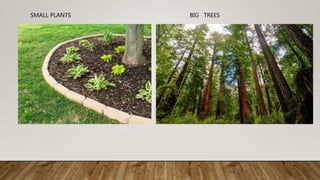
SMALL PLANTS BIG TREES
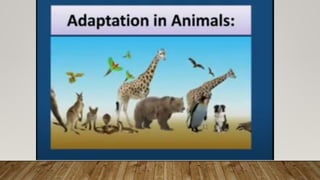
What is adaptation?
• Adaptation describes how a plant or animal
is able to survive in various environmental
conditions.
• Well adapted organisms can cope with the
different aspects of their environment. For
example, the temperature.
Gradual changes occur in the body
and also in the behavior of organisms
which helps them to adjust to their
surroundings. Such changes are
called adaptation.
Define Adaptation
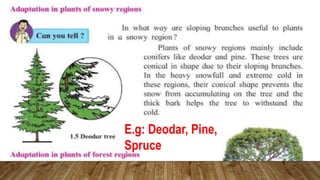
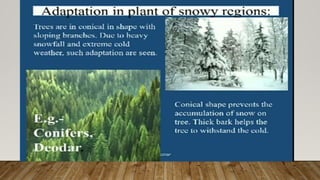
E.g: Deodar, Pine,
Spruce
CONE
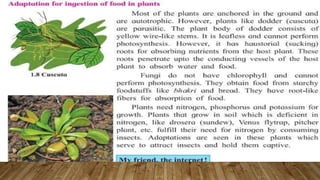
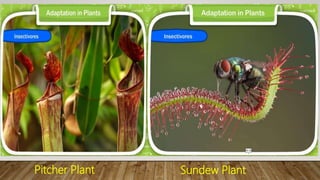
Sundew Plant
Pitcher Plant
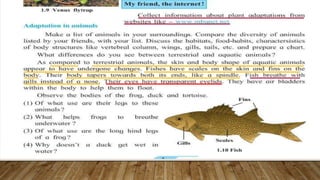
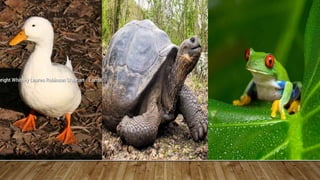
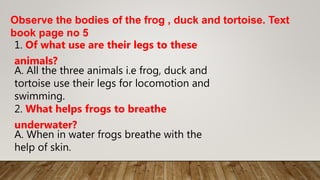
Observe the bodies of the frog , duck and tortoise. Text
book page no 5
1. Of what use are their legs to these
animals?
A. All the three animals i.e frog, duck and
tortoise use their legs for locomotion and
swimming.
2. What helps frogs to breathe
underwater?
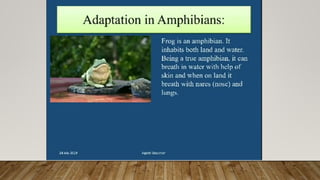
A. When in water frogs breathe with the
help of skin.
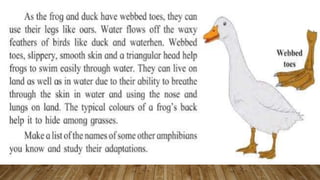
3. Of what use are the long hind legs of the frog?
A. When on land frog uses its hind legs for jumping.
When is water the same legs are used for
swimming as oars.
4. Why doesn’t a duck get wet in water?
A. Water flows off from the waxy layer of feathers
thus duck does not get wet even in water.
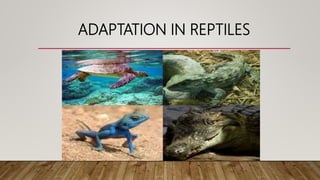
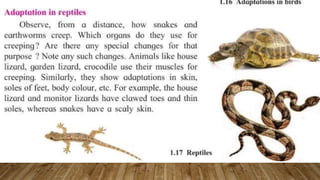
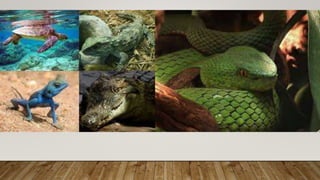
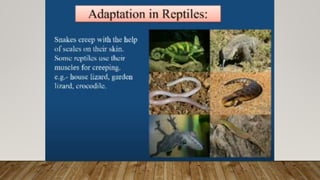
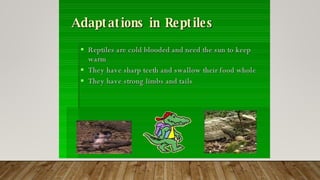
ADAPTATION IN REPTILES
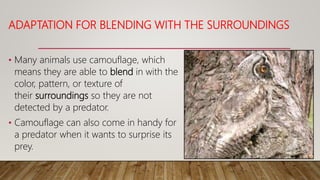
ADAPTATION FOR BLENDING WITH THE SURROUNDINGS
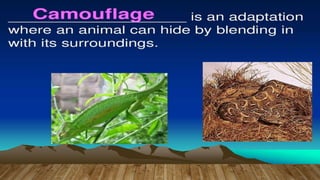
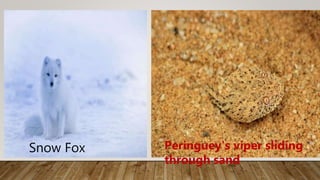
• Many animals use camouflage, which
means they are able to blend in with the
color, pattern, or texture of
their surroundings so they are not
detected by a predator.
• Camouflage can also come in handy for
a predator when it wants to surprise its
prey.
Snow Fox Peringuey's viper sliding
through sand
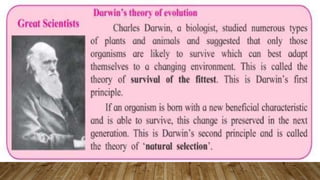
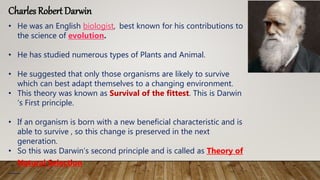
Charles Robert Darwin
• He was an English biologist, best known for his contributions to
the science of evolution.
• He has studied numerous types of Plants and Animal.
• He suggested that only those organisms are likely to survive
which can best adapt themselves to a changing environment.
• This theory was known as Survival of the fittest. This is Darwin
‘s First principle.
• If an organism is born with a new beneficial characteristic and is
able to survive , so this change is preserved in the next
generation.
• So this was Darwin’s second principle and is called as Theory of
Natural Selection
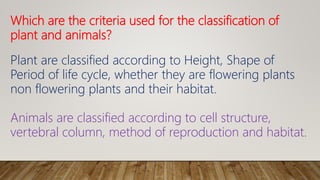
Which are the criteria used for the classification of
plant and animals?
Plant are classified according to Height, Shape of
Period of life cycle, whether they are flowering plants
non flowering plants and their habitat.
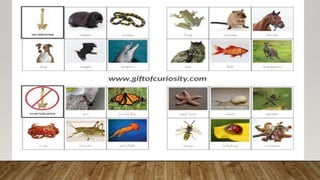
Animals are classified according to cell structure,
vertebral column, method of reproduction and habitat.
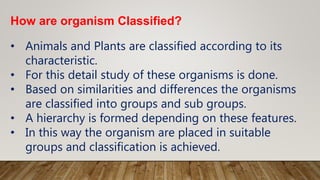
How are organism Classified?
• Animals and Plants are classified according to its
characteristic.
• For this detail study of these organisms is done.
• Based on similarities and differences the organisms
are classified into groups and sub groups.
• A hierarchy is formed depending on these features.
• In this way the organism are placed in suitable
groups and classification is achieved.
Classification of living organisms
• It is necessary to classify the living things
because it is difficult to study and remember all
the diverse organisms in this world.
• Different Scientists have used different criteria
and gave the method of classification
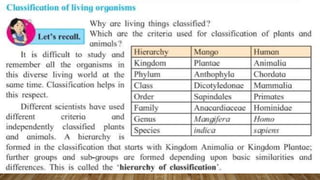
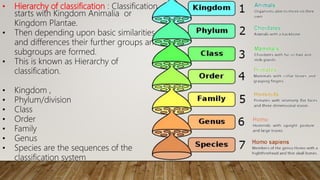
• Hierarchy of classification : Classification
starts with Kingdom Animalia or
Kingdom Plantae.
• Then depending upon basic similarities
and differences their further groups and
subgroups are formed.
• This is known as Hierarchy of
classification.
• Kingdom ,
• Phylum/division
• Class
• Order
• Family
• Genus
• Species are the sequences of the
classification system
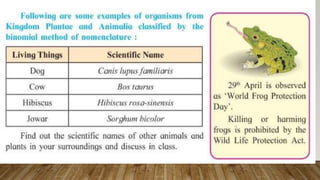
Binomial nomenclature by Carl Linnaeus
• Binomial Nomenclature is used to identify each
organism. This method was suggested by Carl
Linnaeus.
• Every living organism has given uniform name
throughout the world.
• This is called the scientific name. Scientific name consist
of two part – The first part is genus and second part is
species.
• As per the guidelines of International Code of
Nomenclature, every organism has a binomial name.
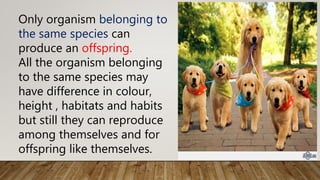
Only organism belonging to
the same species can
produce an offspring.
All the organism belonging
to the same species may
have difference in colour,
height , habitats and habits
but still they can reproduce
among themselves and for
offspring like themselves.
THANK YOU

Chapter 1 the living world adaptation and classification

  • 1.
    SCHOLAR’S ACADEMY THE LIVINGWORLD : ADAPTATION AND CLASSIFICATION STD VII
  • 4.
  • 9.
    What is adaptation? •Adaptation describes how a plant or animal is able to survive in various environmental conditions. • Well adapted organisms can cope with the different aspects of their environment. For example, the temperature.
  • 10.
    Gradual changes occurin the body and also in the behavior of organisms which helps them to adjust to their surroundings. Such changes are called adaptation. Define Adaptation
  • 16.
  • 17.
  • 27.
  • 33.
    Observe the bodiesof the frog , duck and tortoise. Text book page no 5 1. Of what use are their legs to these animals? A. All the three animals i.e frog, duck and tortoise use their legs for locomotion and swimming. 2. What helps frogs to breathe underwater? A. When in water frogs breathe with the help of skin.
  • 34.
    3. Of whatuse are the long hind legs of the frog? A. When on land frog uses its hind legs for jumping. When is water the same legs are used for swimming as oars. 4. Why doesn’t a duck get wet in water? A. Water flows off from the waxy layer of feathers thus duck does not get wet even in water.
  • 46.
  • 57.
    ADAPTATION FOR BLENDINGWITH THE SURROUNDINGS • Many animals use camouflage, which means they are able to blend in with the color, pattern, or texture of their surroundings so they are not detected by a predator. • Camouflage can also come in handy for a predator when it wants to surprise its prey.
  • 59.
    Snow Fox Peringuey'sviper sliding through sand
  • 61.
    Charles Robert Darwin •He was an English biologist, best known for his contributions to the science of evolution. • He has studied numerous types of Plants and Animal. • He suggested that only those organisms are likely to survive which can best adapt themselves to a changing environment. • This theory was known as Survival of the fittest. This is Darwin ‘s First principle. • If an organism is born with a new beneficial characteristic and is able to survive , so this change is preserved in the next generation. • So this was Darwin’s second principle and is called as Theory of Natural Selection
  • 63.
    Which are thecriteria used for the classification of plant and animals? Plant are classified according to Height, Shape of Period of life cycle, whether they are flowering plants non flowering plants and their habitat. Animals are classified according to cell structure, vertebral column, method of reproduction and habitat.
  • 64.
    How are organismClassified? • Animals and Plants are classified according to its characteristic. • For this detail study of these organisms is done. • Based on similarities and differences the organisms are classified into groups and sub groups. • A hierarchy is formed depending on these features. • In this way the organism are placed in suitable groups and classification is achieved.
  • 65.
    Classification of livingorganisms • It is necessary to classify the living things because it is difficult to study and remember all the diverse organisms in this world. • Different Scientists have used different criteria and gave the method of classification
  • 66.
    • Hierarchy ofclassification : Classification starts with Kingdom Animalia or Kingdom Plantae. • Then depending upon basic similarities and differences their further groups and subgroups are formed. • This is known as Hierarchy of classification. • Kingdom , • Phylum/division • Class • Order • Family • Genus • Species are the sequences of the classification system
  • 68.
    Binomial nomenclature byCarl Linnaeus • Binomial Nomenclature is used to identify each organism. This method was suggested by Carl Linnaeus. • Every living organism has given uniform name throughout the world. • This is called the scientific name. Scientific name consist of two part – The first part is genus and second part is species. • As per the guidelines of International Code of Nomenclature, every organism has a binomial name.
  • 69.
    Only organism belongingto the same species can produce an offspring. All the organism belonging to the same species may have difference in colour, height , habitats and habits but still they can reproduce among themselves and for offspring like themselves.
  • 71.