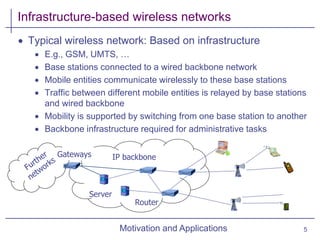
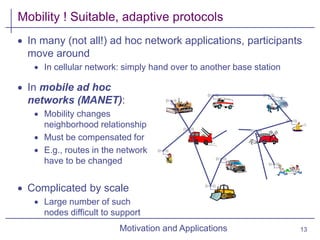
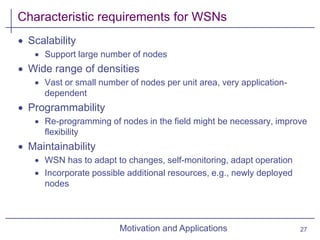
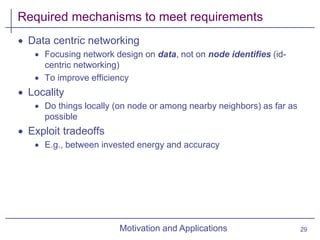
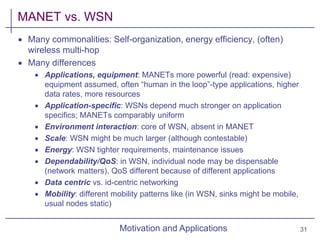
Wireless sensor networks (WSNs) aim to monitor physical environments and phenomena through randomly deployed sensor nodes that measure and communicate data wirelessly. WSNs can be used for applications like disaster relief, environmental/habitat monitoring, building management, and precision agriculture. Compared to traditional wireless networks, WSNs face unique challenges due to limited node resources, random deployment in potentially hazardous areas, and an emphasis on long-term, unattended operation. Effective WSN design requires addressing issues like energy efficiency, fault tolerance, quality of service, and lifetime to support the monitoring goals of different application domains.