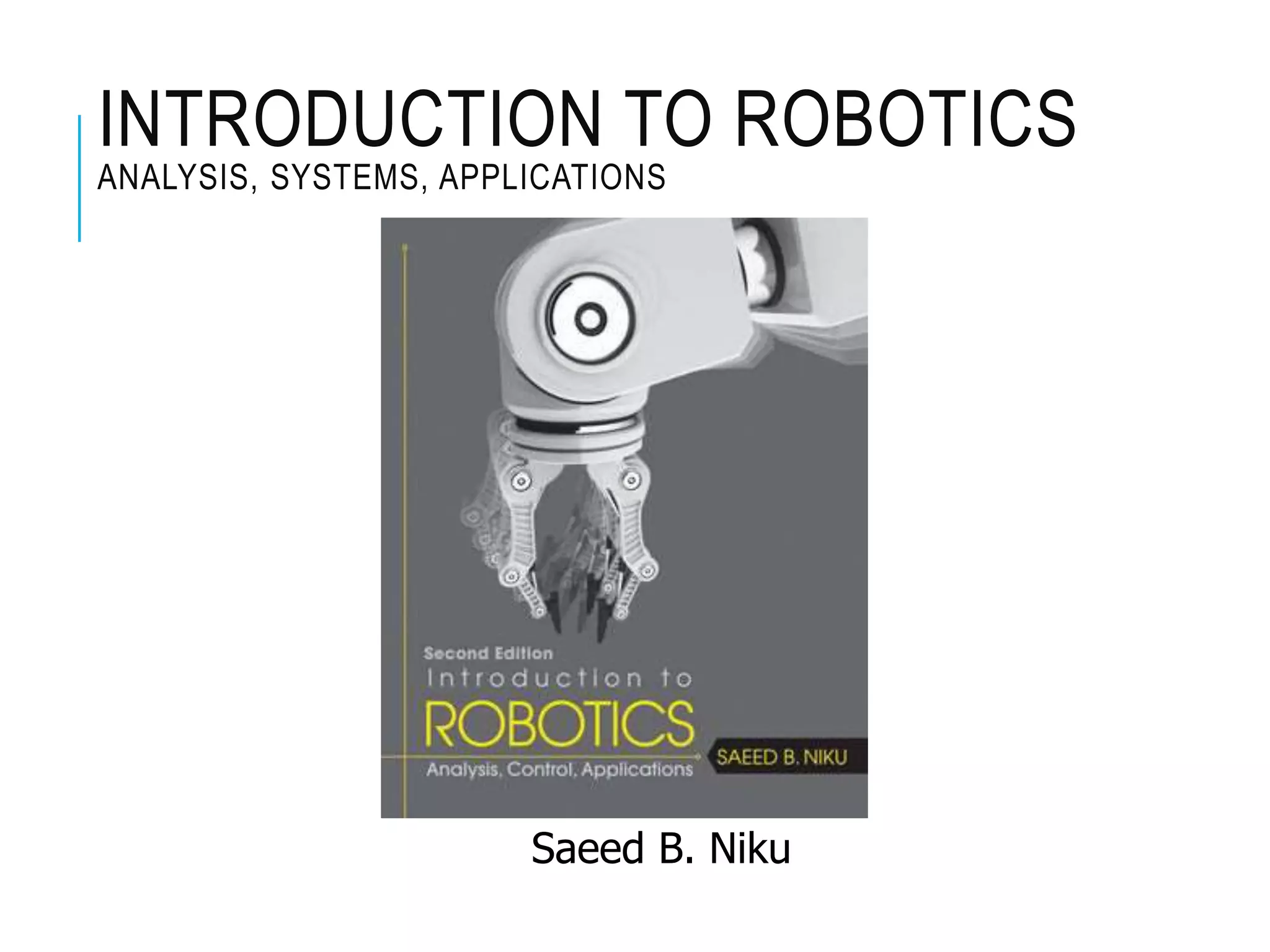
INTRODUCTION TO ROBOTICS
ANALYSIS, SYSTEMS, APPLICATIONS
Saeed B. Niku
CHAPTER 1
FUNDAMENTALS
1. Introduction
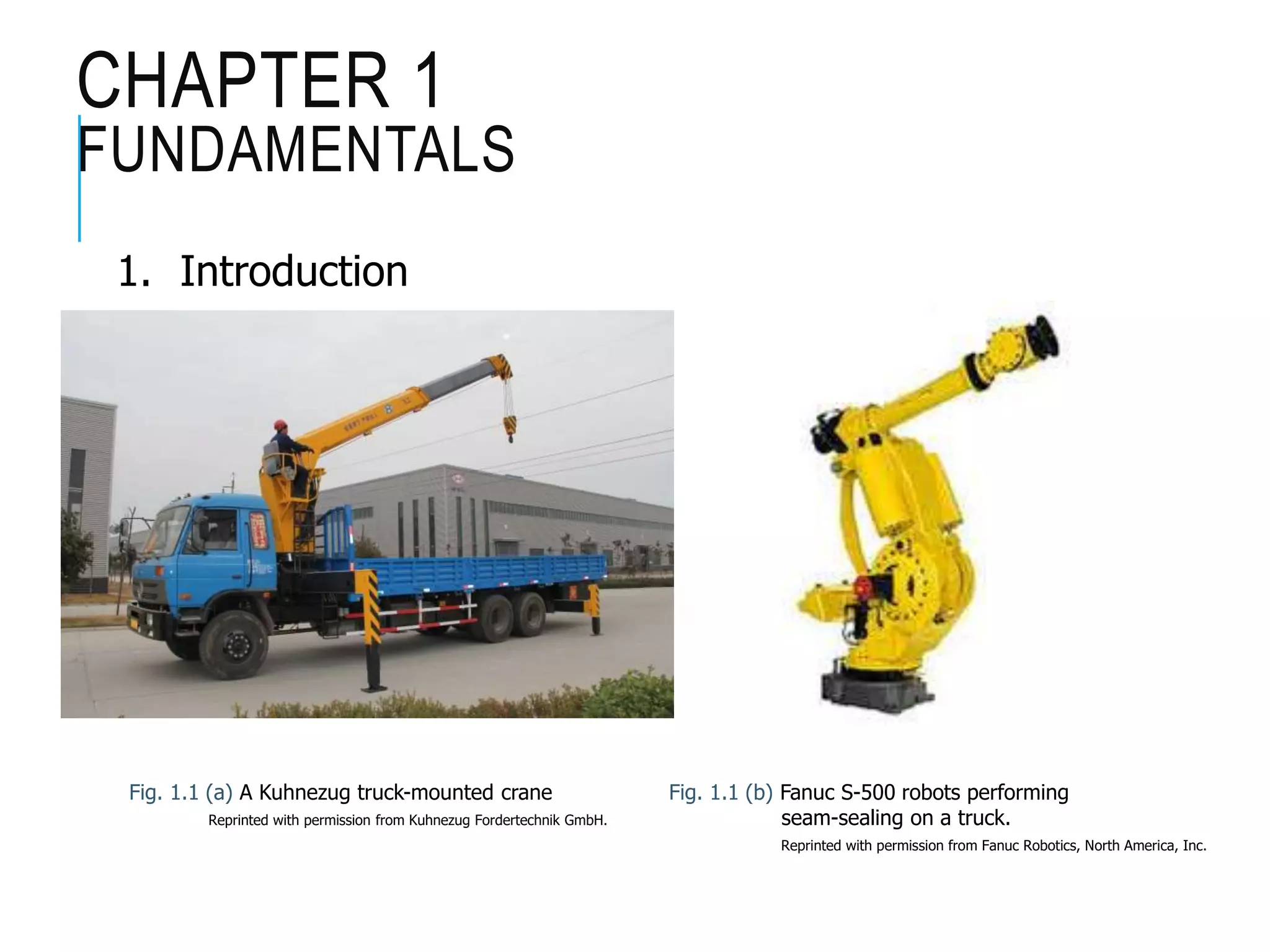
Fig. 1.1 (a) A Kuhnezug truck-mounted crane
Reprinted with permission from Kuhnezug Fordertechnik GmbH.
Fig. 1.1 (b) Fanuc S-500 robots performing
seam-sealing on a truck.
Reprinted with permission from Fanuc Robotics, North America, Inc.
WHAT IS A ROBOT
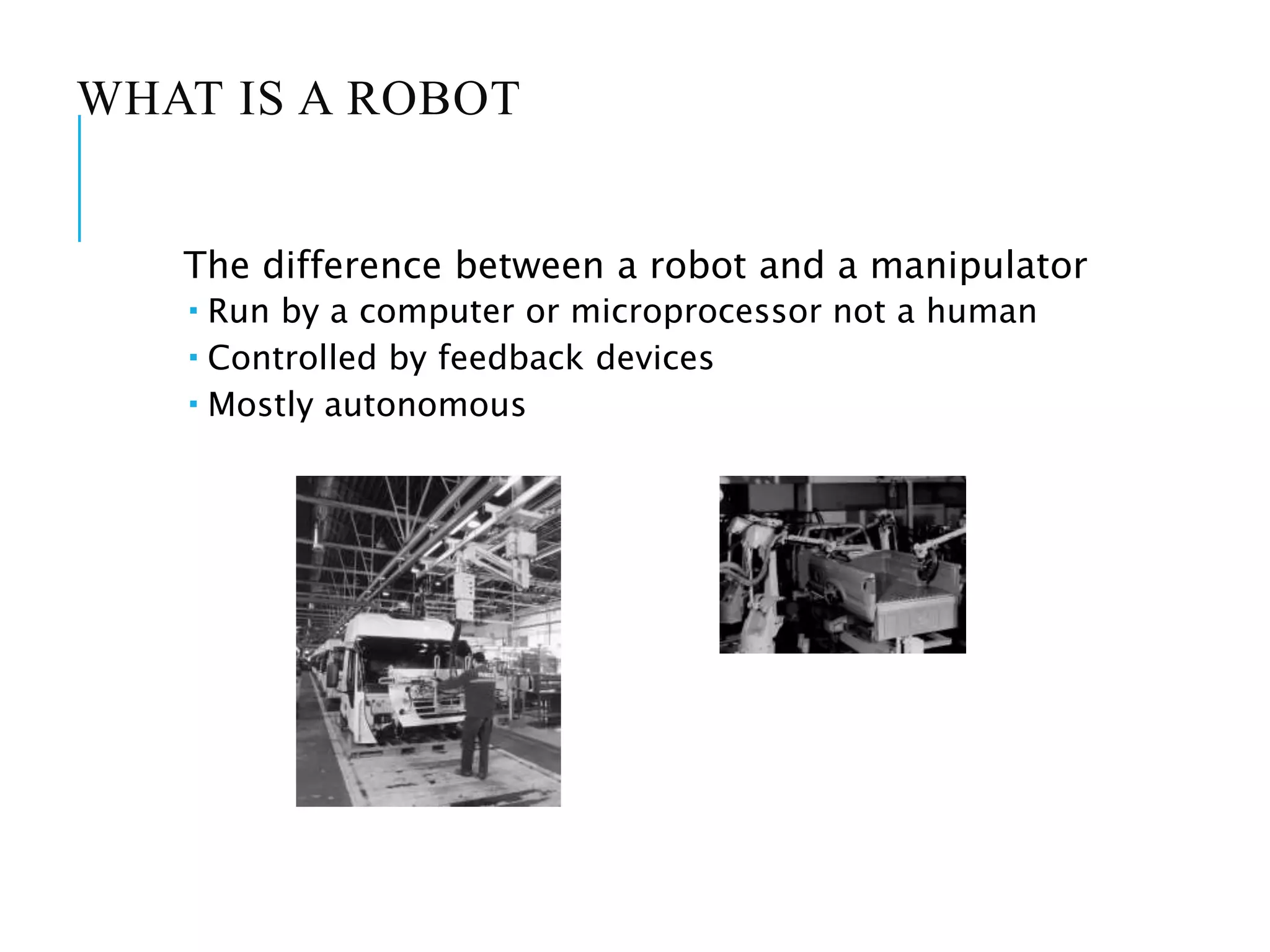
The difference between a robot and a manipulator
 Run by a computer or microprocessor not a human
 Controlled by feedback devices
 Mostly autonomous
WHAT IS A ROBOT ?
Random House Dictionary A machine that
resembles a human being and does
mechanical routine tasks on command.
Robotics Association of America An industrial
robot is a re-programmable, multifunctional
manipulator designed to move materials,
parts, tools, or specialized devices through
variable programmed motions for the
performance of a variety of tasks.
WHAT IS A ROBOT ?
A manipulator (or an industrial robot) is
composed of a series of links connected
to each other via joints. Each joint
usually has an actuator (a motor for eg.)
connected to it.
These actuators are used to cause
relative motion between successive
links. One end of the manipulator is
usually connected to a stable base and
the other end is used to deploy a tool.
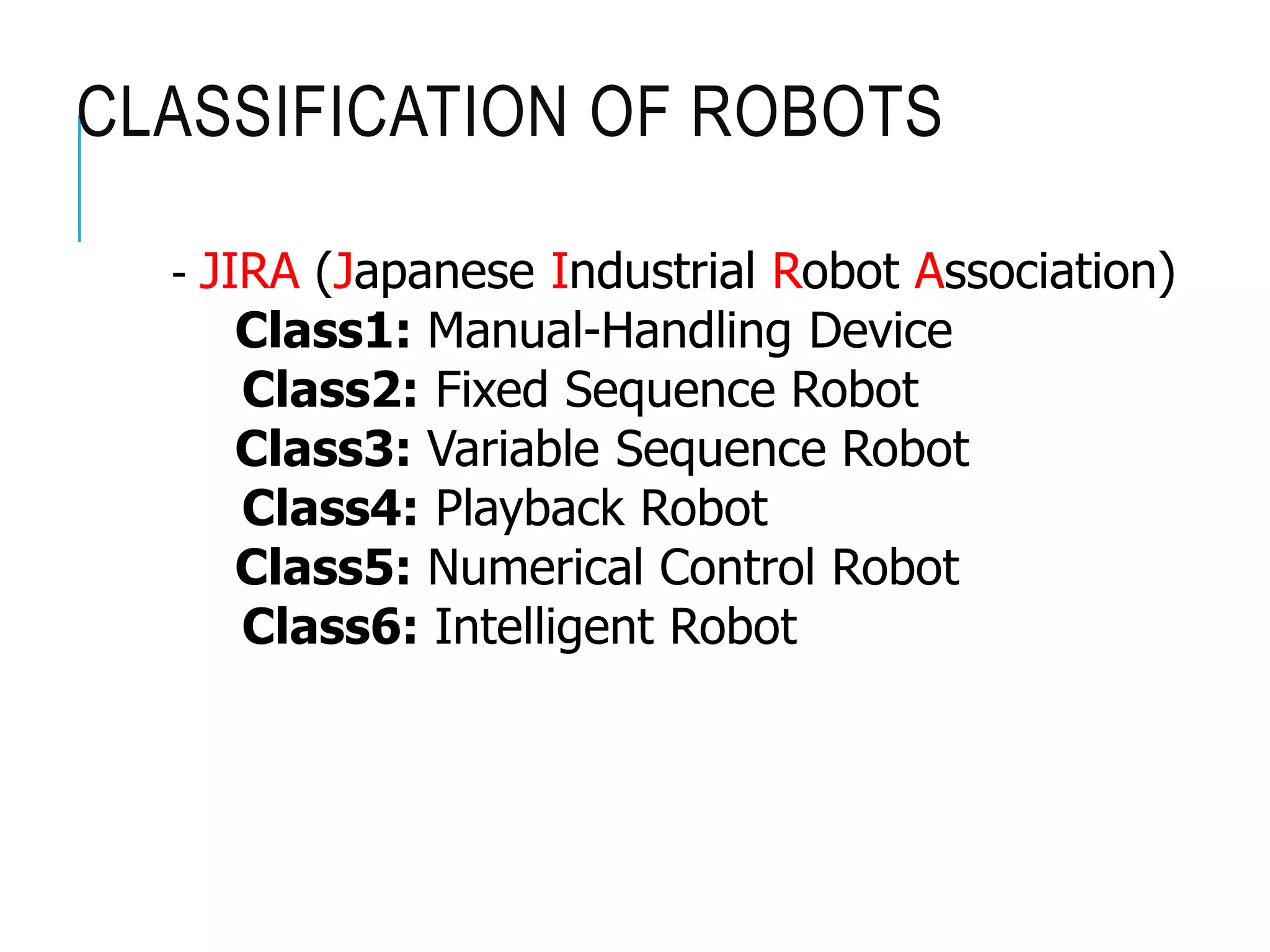
CLASSIFICATION OF ROBOTS
- JIRA (Japanese Industrial Robot Association)
Class1: Manual-Handling Device
Class2: Fixed Sequence Robot
Class3: Variable Sequence Robot
Class4: Playback Robot
Class5: Numerical Control Robot
Class6: Intelligent Robot
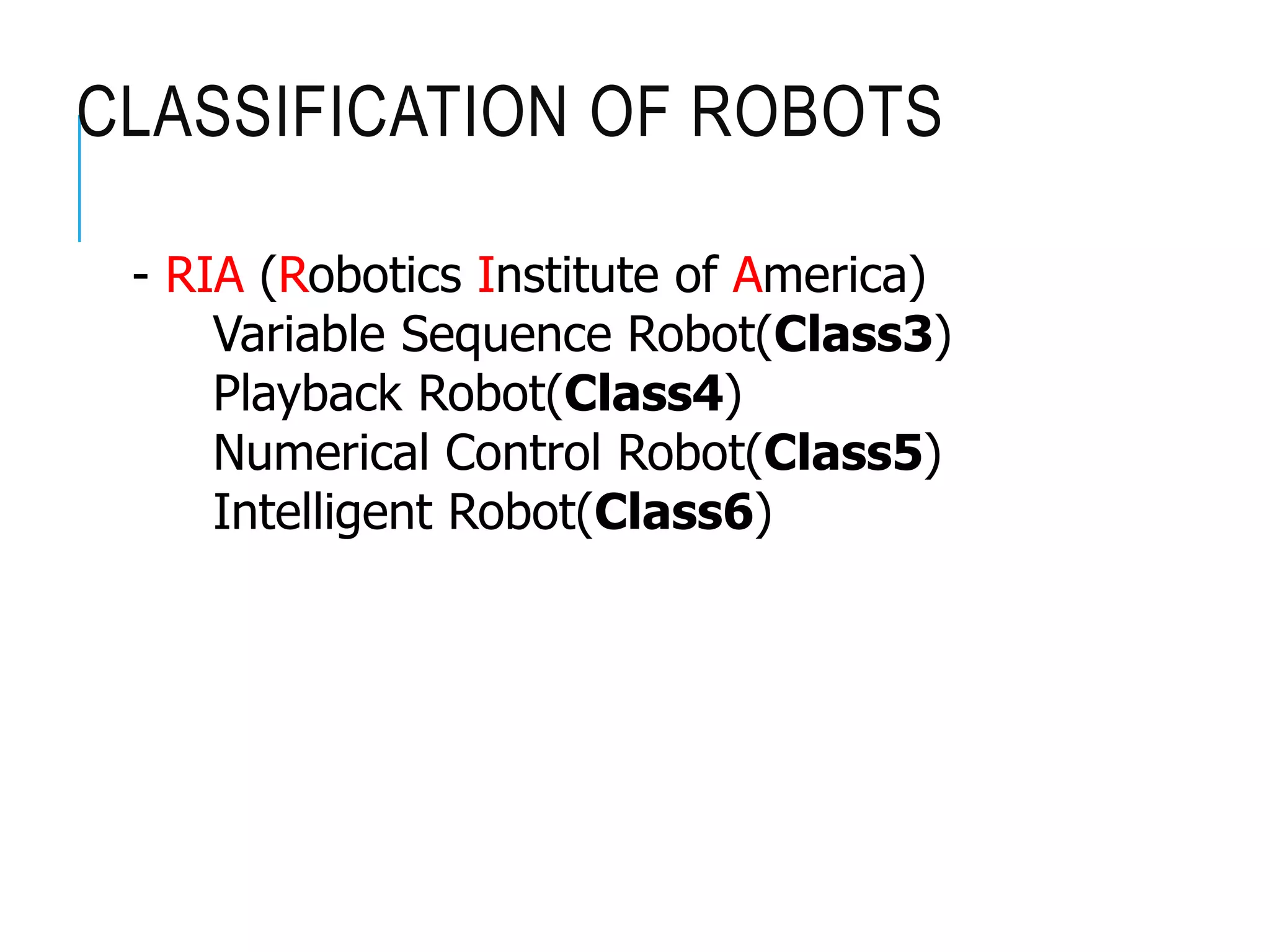
CLASSIFICATION OF ROBOTS
- RIA (Robotics Institute of America)
Variable Sequence Robot(Class3)
Playback Robot(Class4)
Numerical Control Robot(Class5)
Intelligent Robot(Class6)
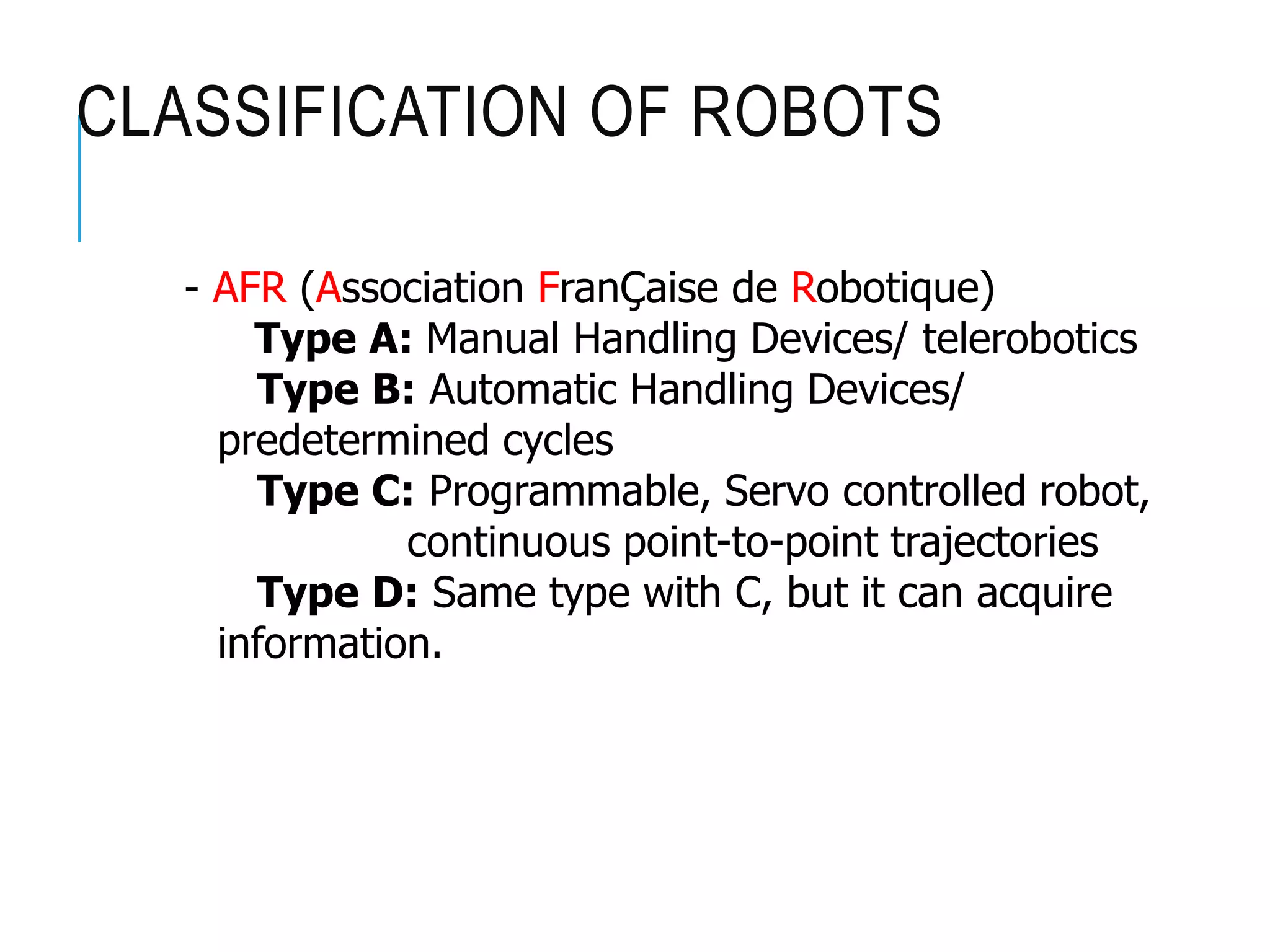
CLASSIFICATION OF ROBOTS
- AFR (Association FranÇaise de Robotique)
Type A: Manual Handling Devices/ telerobotics
Type B: Automatic Handling Devices/
predetermined cycles
Type C: Programmable, Servo controlled robot,
continuous point-to-point trajectories
Type D: Same type with C, but it can acquire
information.
WHAT IS ROBOTICS?
Robotics is the art, knowledge base, and the know-how
of designing, applying, and using robots in human
endeavors.
Robotics is an interdisciplinary subject that benefits from
mechanical engineering, electrical and electronic
engineering, computer science, biology, and many other
disciplines.
WHAT IS ROBOTICS
 History of Robotics
1922: Karel Čapek’s novel, Rossum’s Universal Robots, word “Robota” (worker)
1952: NC machine (MIT)
1955: Denavit-Hartenberg Homogeneous Transformation
1967: Mark II (Unimation Inc.)
1968: Shakey (SRI) - intelligent robot
1973: T3 (Cincinnati Milacron Inc.)
1978: PUMA (Unimation Inc.)
1983: Robotics Courses
21C: Walking Robots, Mobile Robots, Humanoid Robots
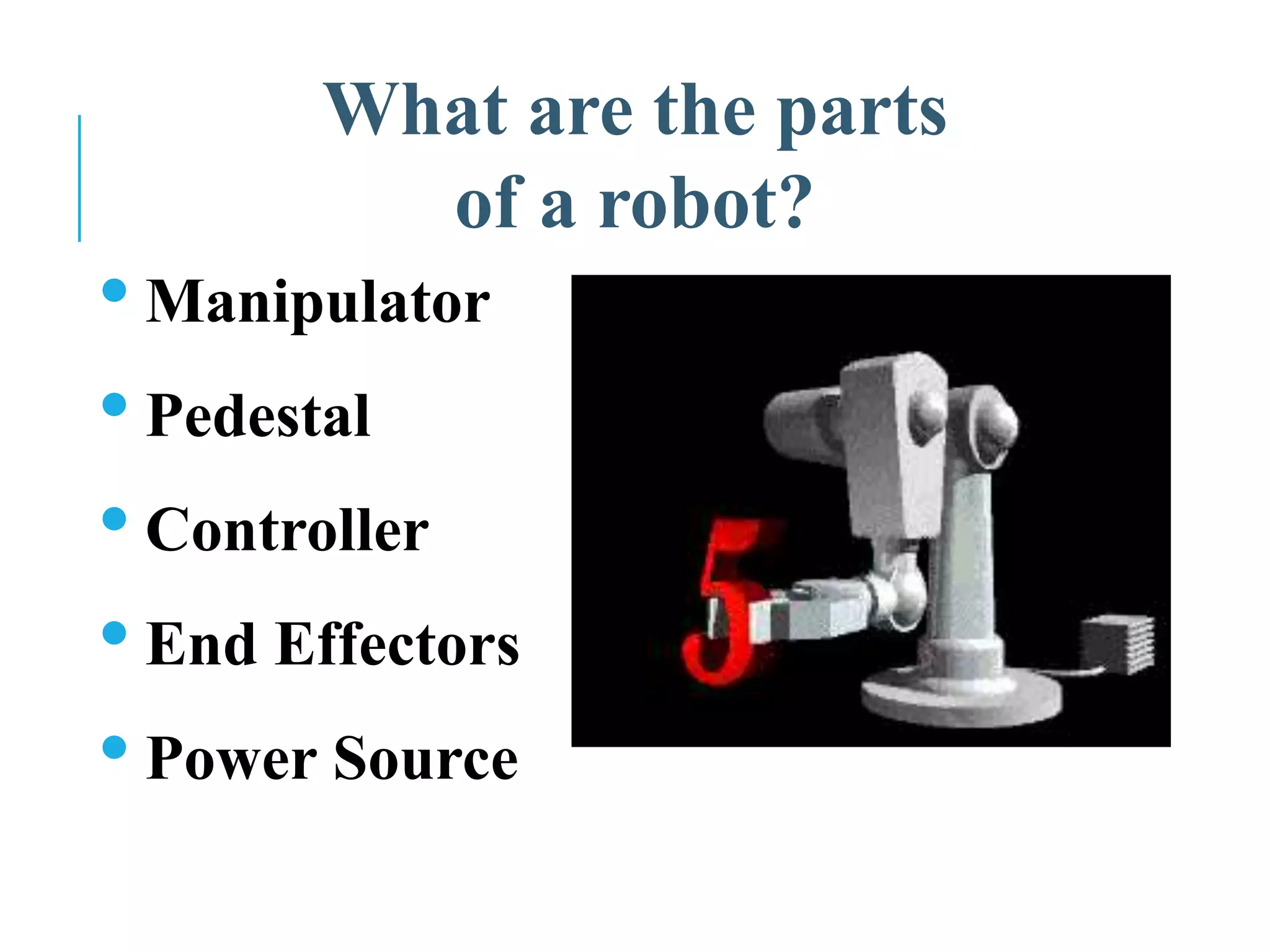
What are the parts
of a robot?
• Manipulator
• Pedestal
• Controller
• End Effectors
• Power Source
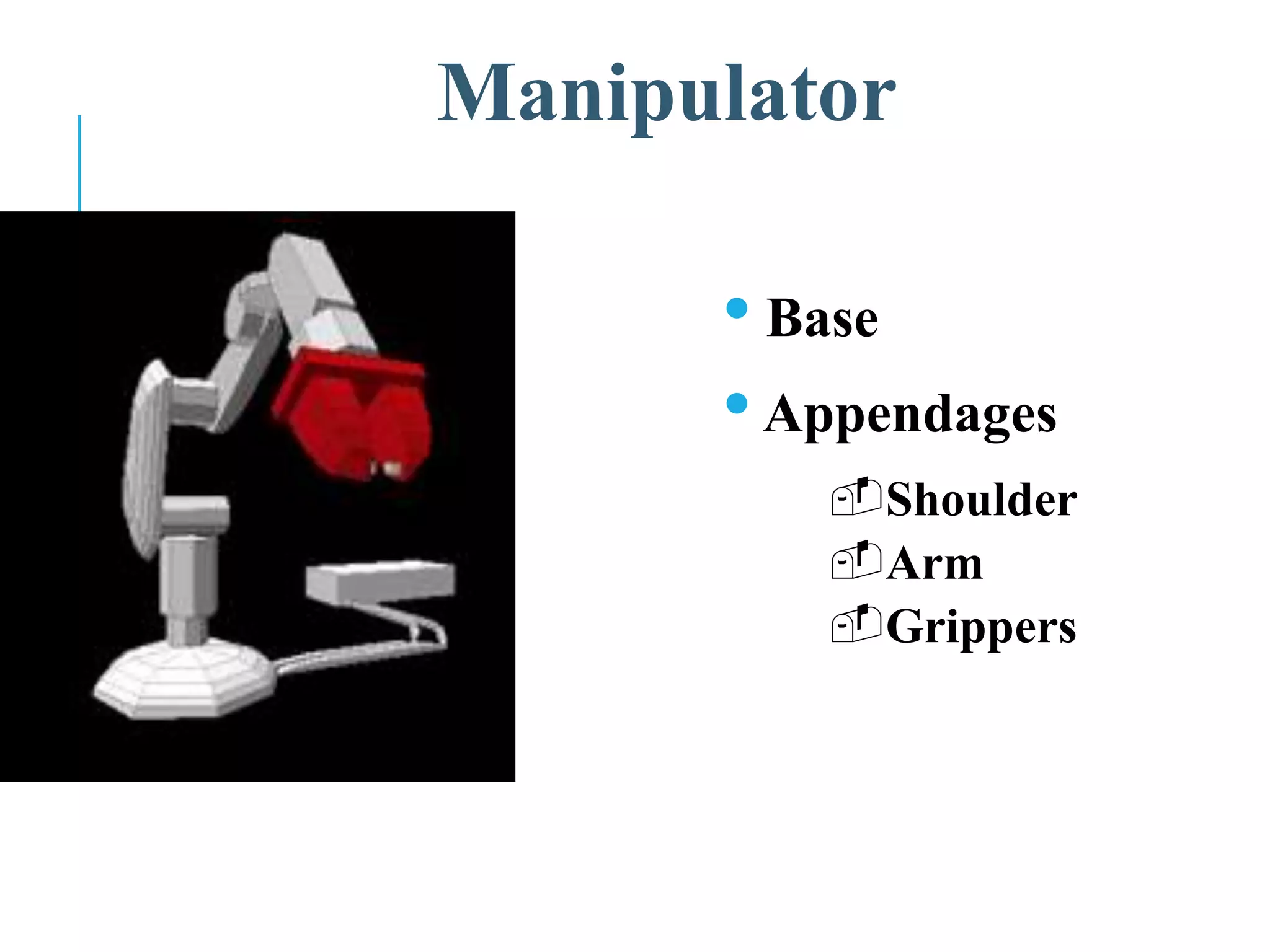
Manipulator
• Base
•Appendages
Shoulder
Arm
Grippers
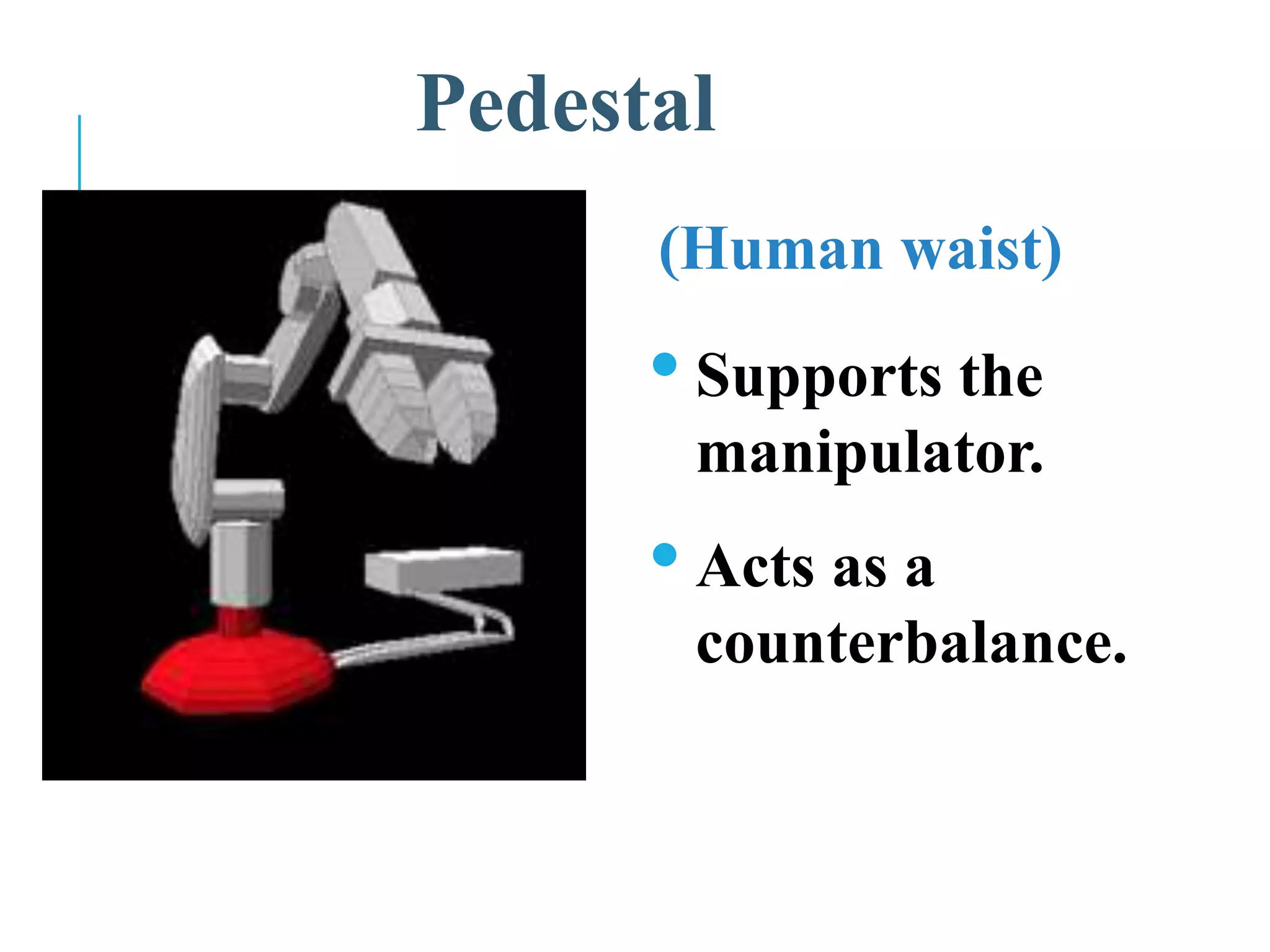
Pedestal
(Human waist)
•Supports the
manipulator.
•Acts as a
counterbalance.
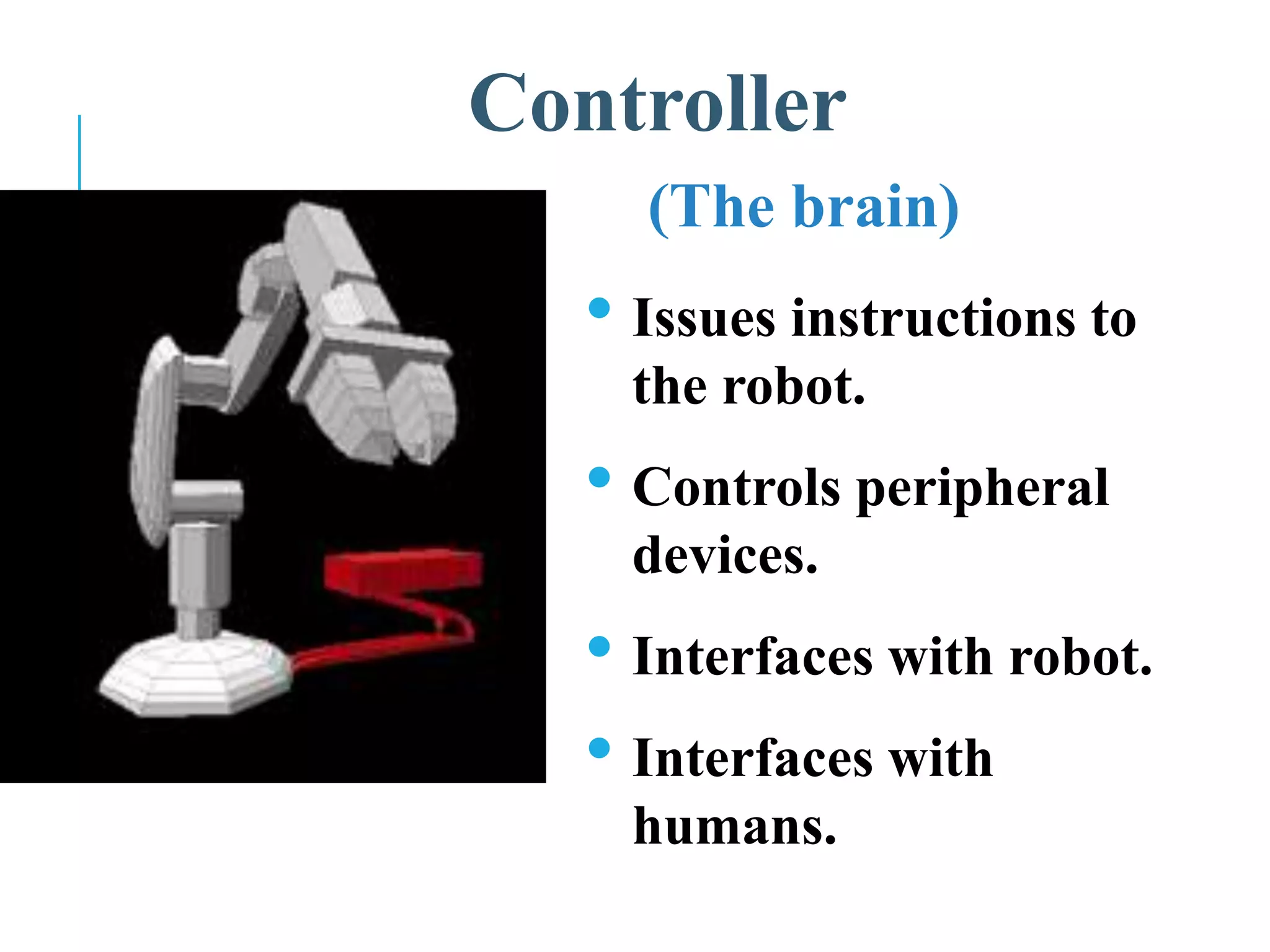
Controller
(The brain)
• Issues instructions to
the robot.
• Controls peripheral
devices.
• Interfaces with robot.
• Interfaces with
humans.
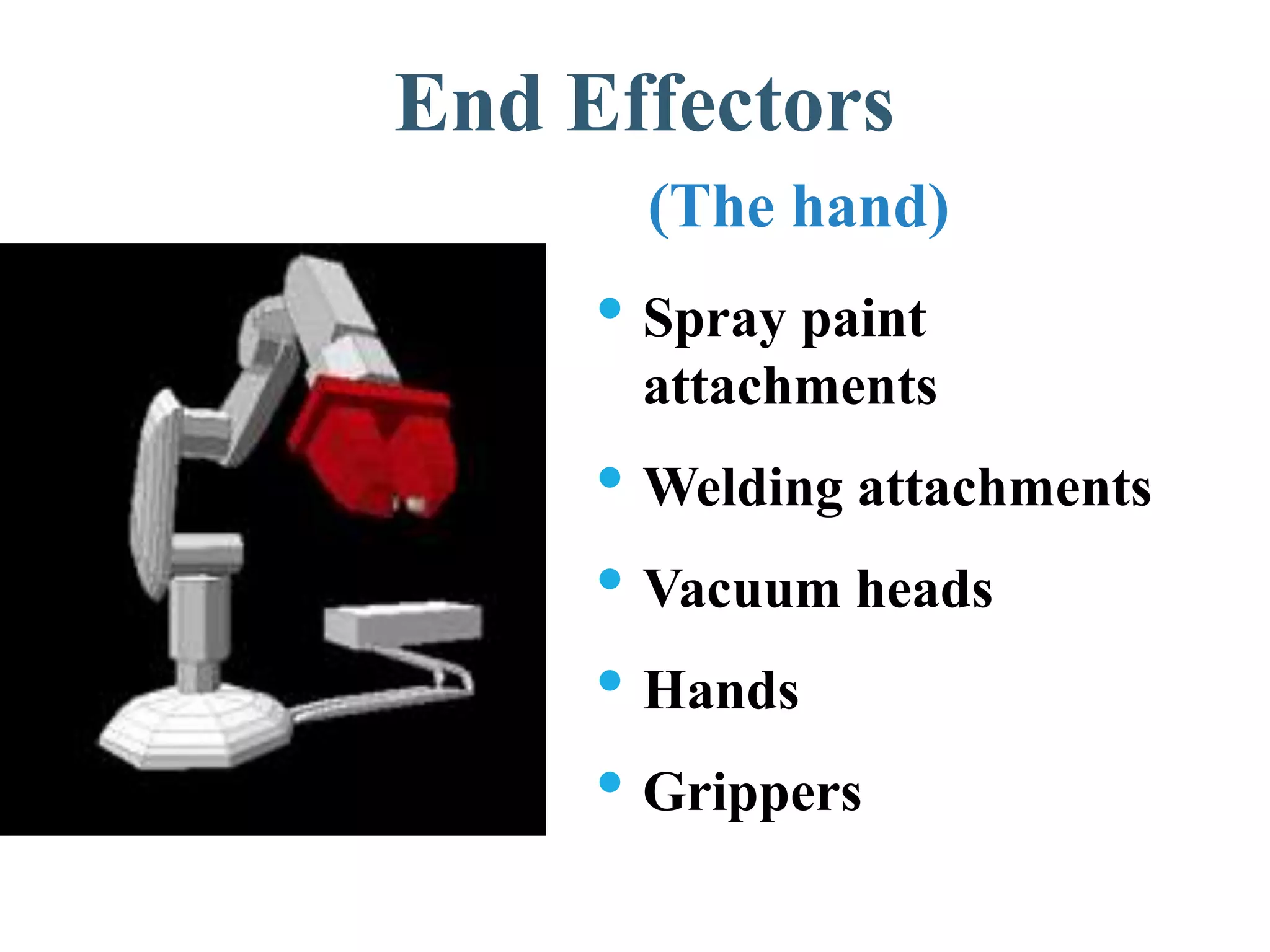
End Effectors
(The hand)
• Spray paint
attachments
• Welding attachments
• Vacuum heads
• Hands
• Grippers
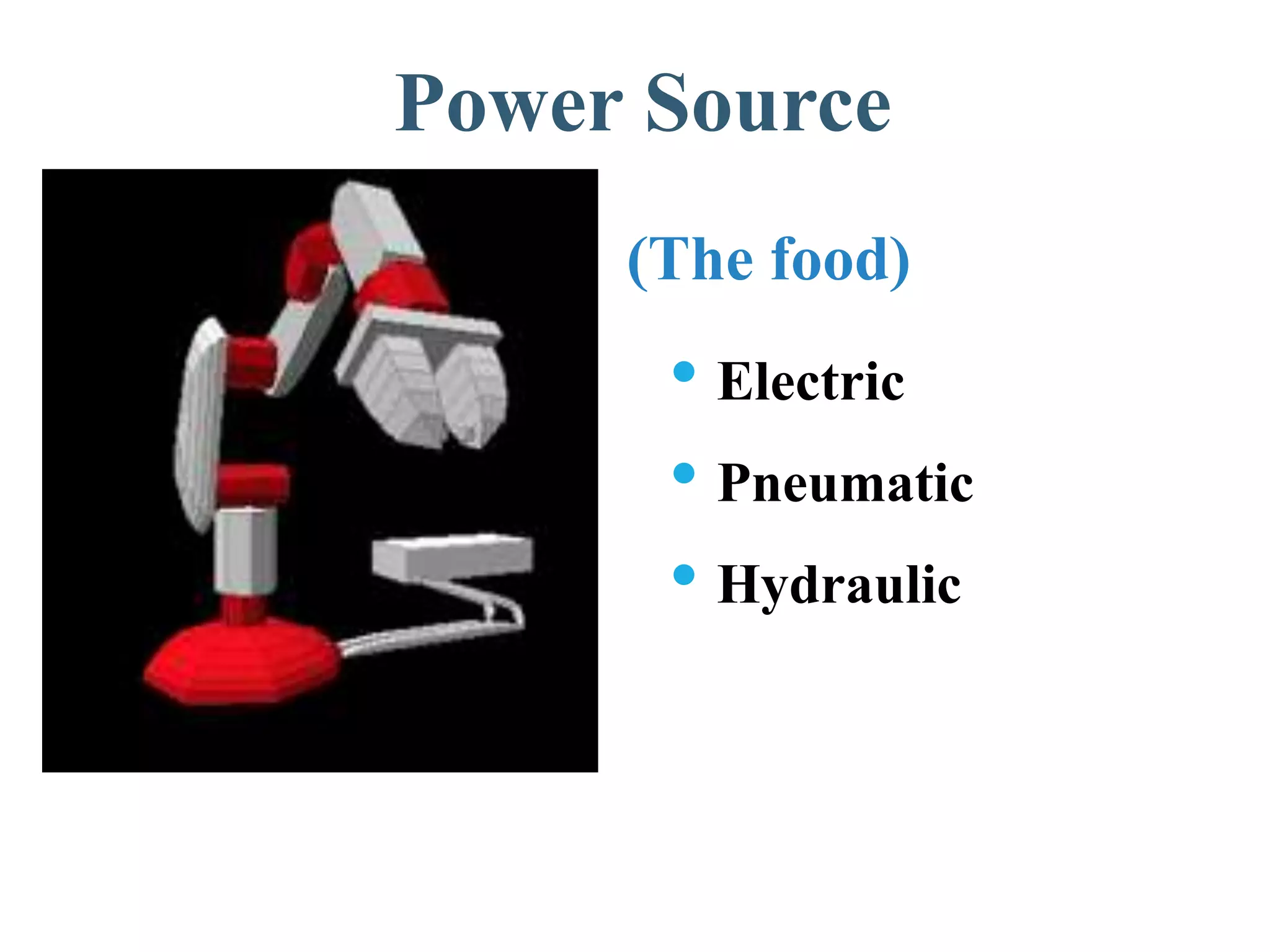
Power Source
(The food)
• Electric
• Pneumatic
• Hydraulic
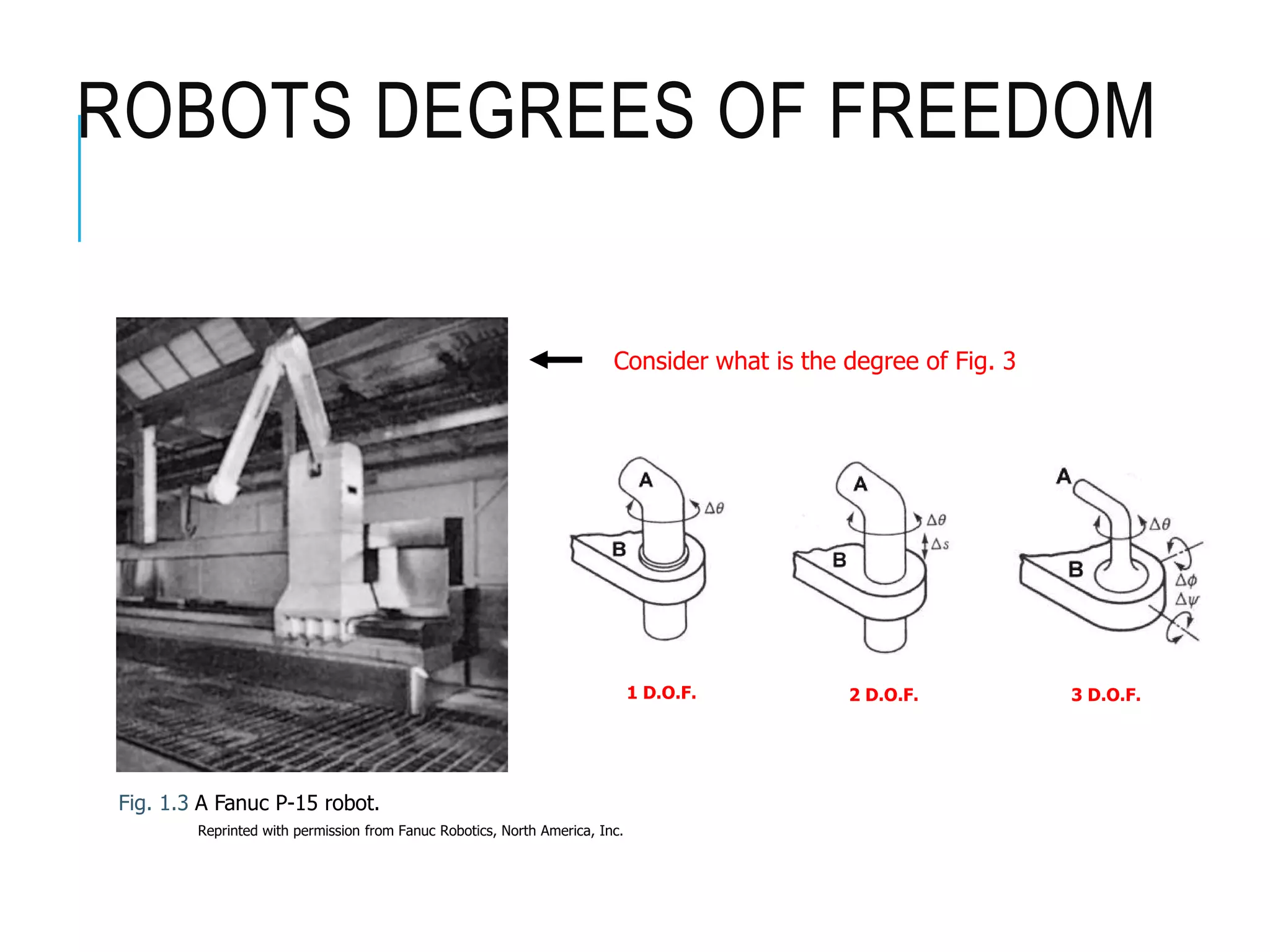
Robots degrees of freedom
 Degrees of Freedom: Number of
independent position variables which
would has to be specified to locate all
parts of a mechanism.
 In most manipulators this is usually the
number of joints.
Fig. 1.3 A Fanuc P-15 robot.
Reprinted with permission from Fanuc Robotics, North America, Inc.
Consider what is the degree of Fig. 3
1 D.O.F. 2 D.O.F. 3 D.O.F.
ROBOTS DEGREES OF FREEDOM
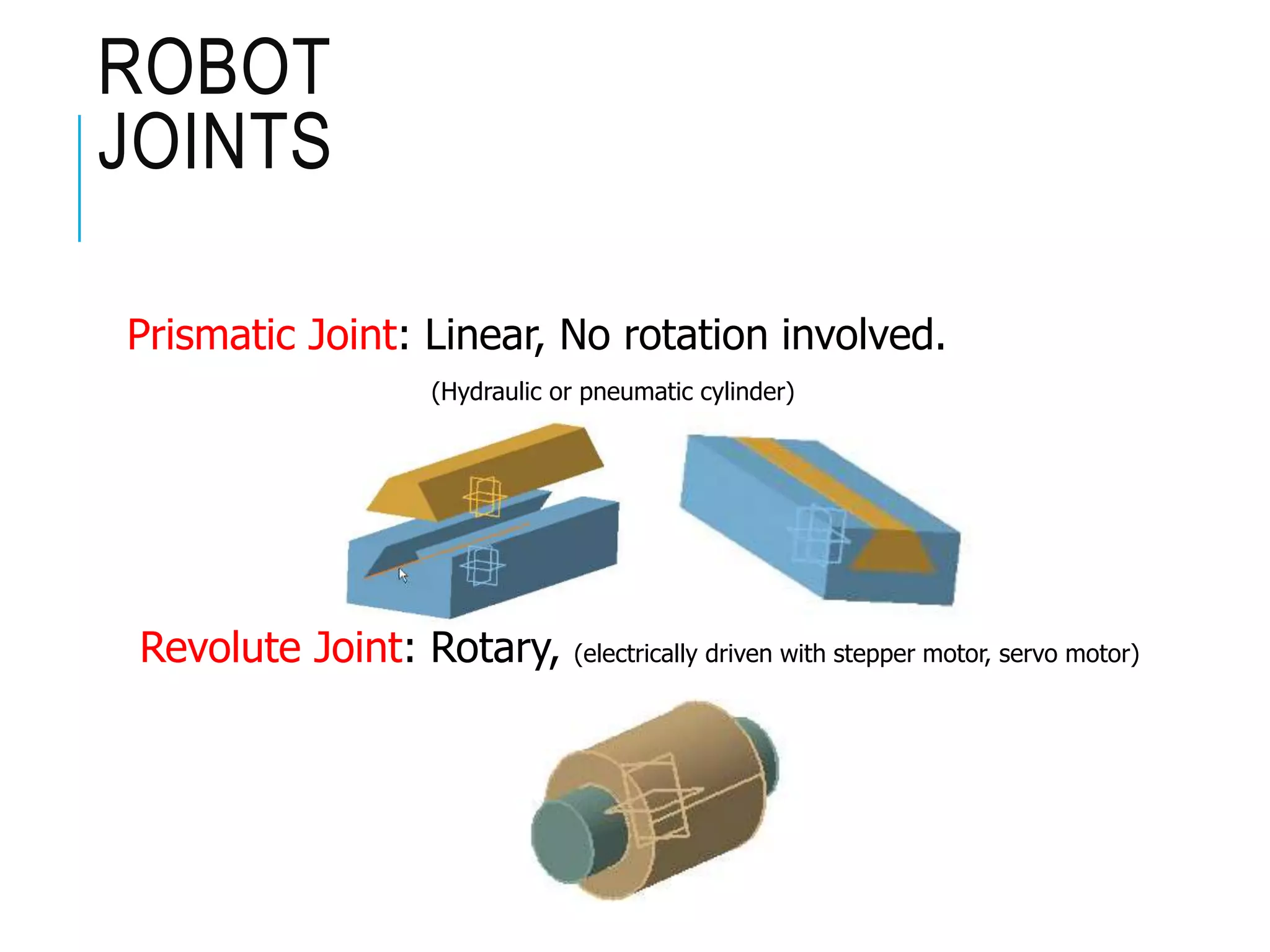
ROBOT
JOINTS
Prismatic Joint: Linear, No rotation involved.
(Hydraulic or pneumatic cylinder)
Revolute Joint: Rotary, (electrically driven with stepper motor, servo motor)
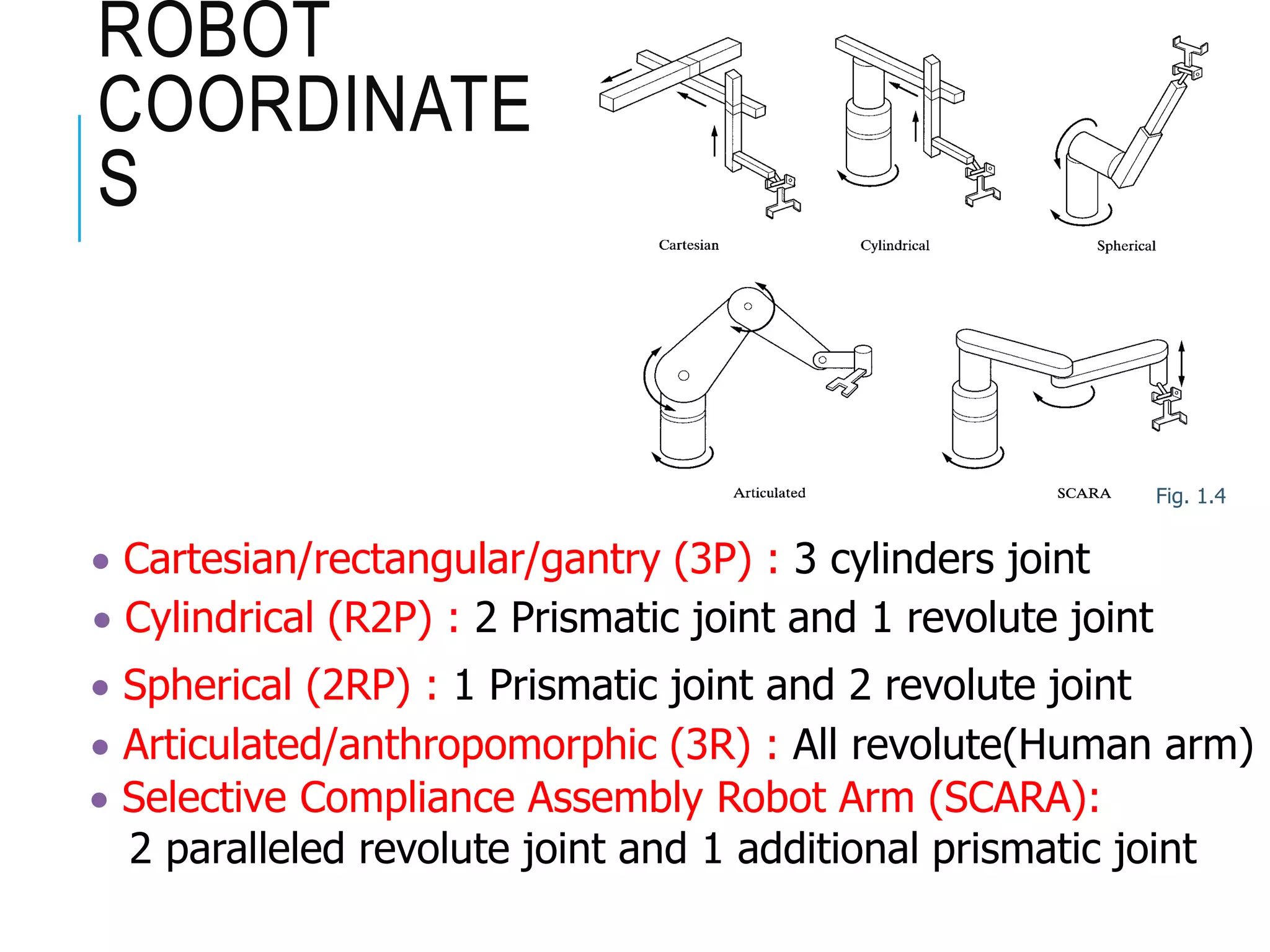
ROBOT
COORDINATE
S
 Cartesian/rectangular/gantry (3P) : 3 cylinders joint
 Cylindrical (R2P) : 2 Prismatic joint and 1 revolute joint
Fig. 1.4
 Spherical (2RP) : 1 Prismatic joint and 2 revolute joint
 Articulated/anthropomorphic (3R) : All revolute(Human arm)
 Selective Compliance Assembly Robot Arm (SCARA):
2 paralleled revolute joint and 1 additional prismatic joint
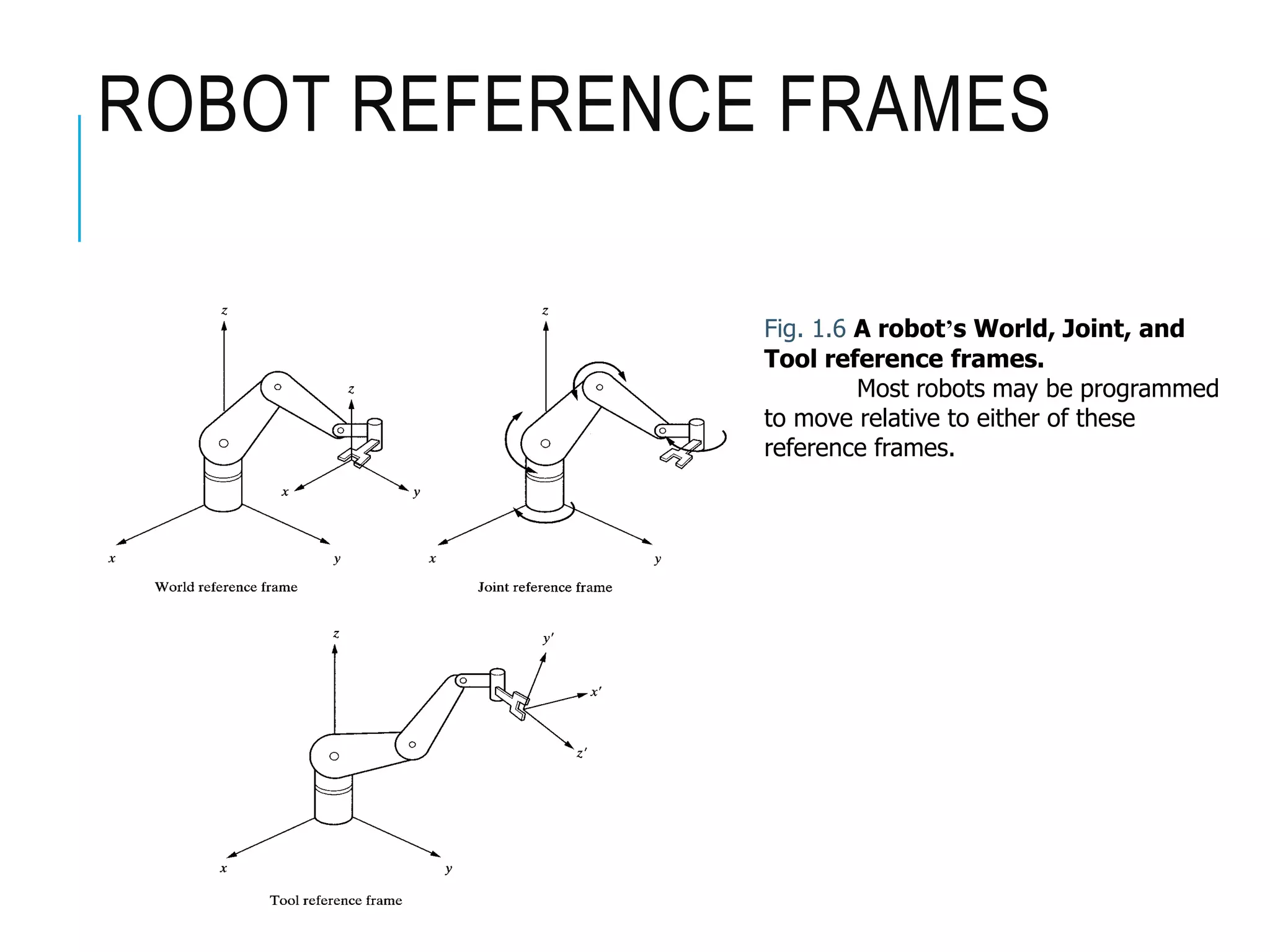
ROBOT REFERENCE FRAMES
Fig. 1.6 A robot’s World, Joint, and
Tool reference frames.
Most robots may be programmed
to move relative to either of these
reference frames.
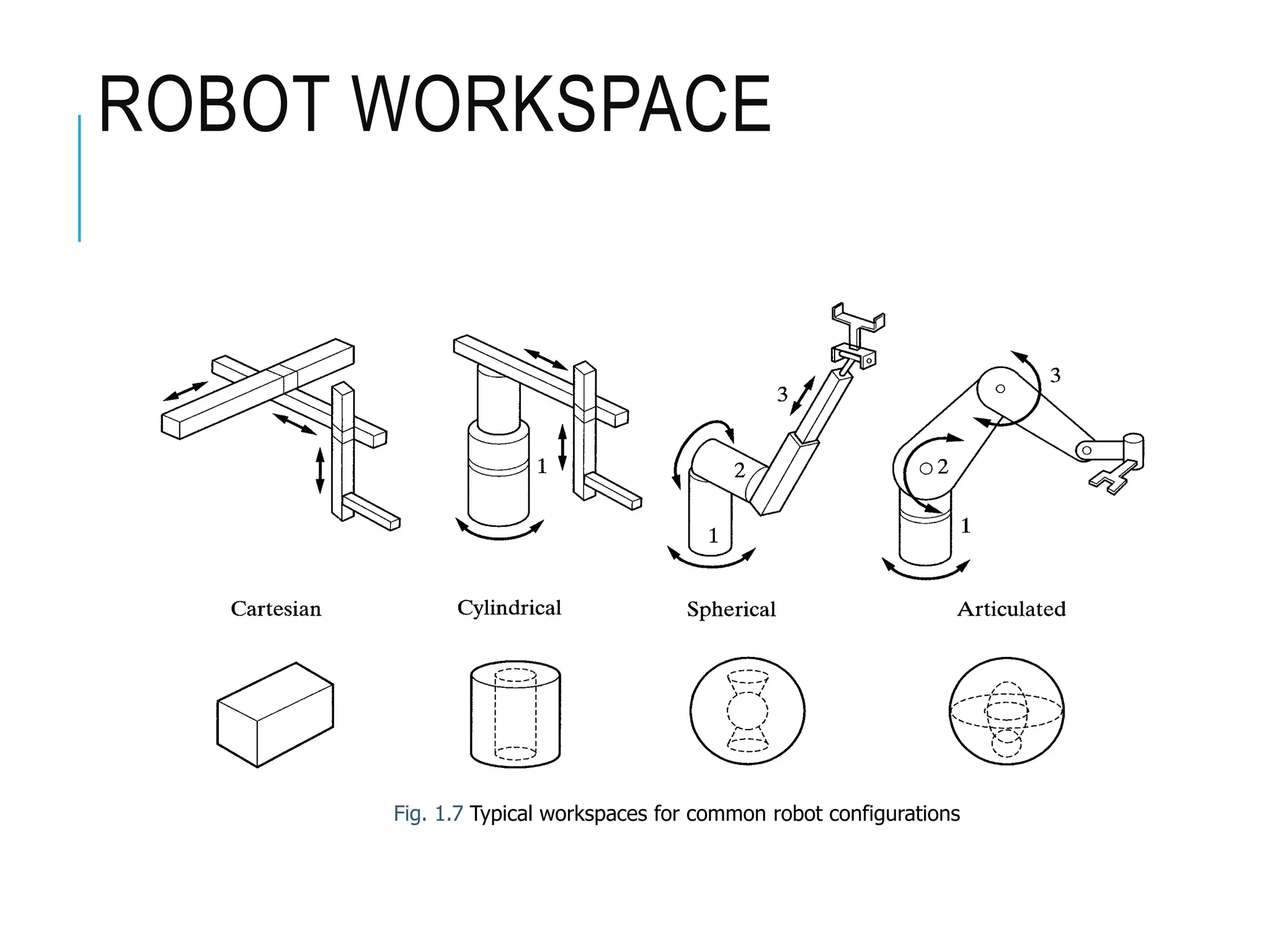
ROBOT WORKSPACE
Fig. 1.7 Typical workspaces for common robot configurations
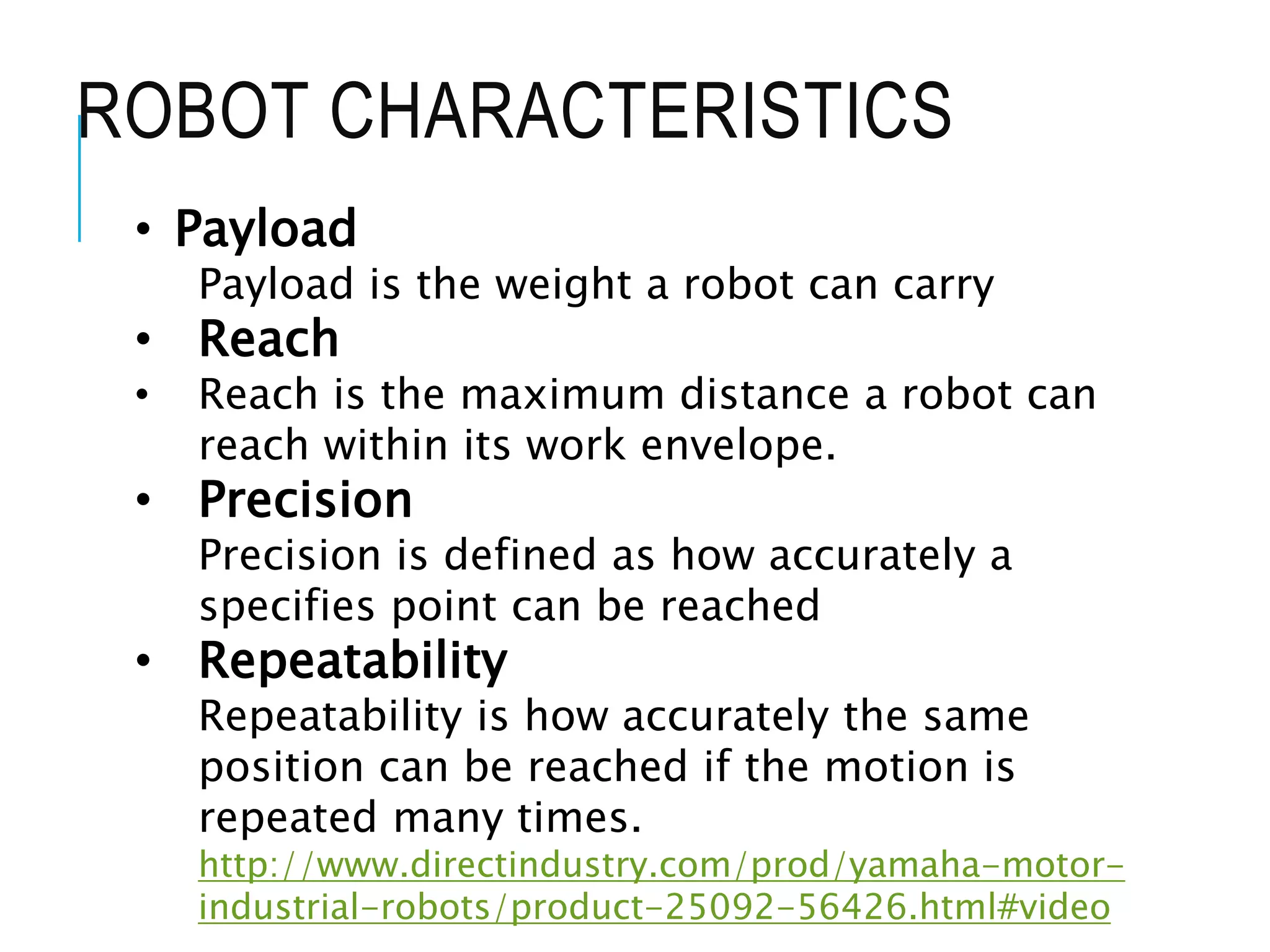
ROBOT CHARACTERISTICS
• Payload
Payload is the weight a robot can carry
• Reach
• Reach is the maximum distance a robot can
reach within its work envelope.
• Precision
Precision is defined as how accurately a
specifies point can be reached
• Repeatability
Repeatability is how accurately the same
position can be reached if the motion is
repeated many times.
http://www.directindustry.com/prod/yamaha-motor-
industrial-robots/product-25092-56426.html#video
CHAPTER 1
FUNDAMENTALS
 Robot Languages
Microcomputer Machine Language Level: the most basic and
very efficient but difficult to understand to follow.
Point-to-Point Level: Funky Cincinnati Milacron’s T3
It lacks branching, sensory information.
Primitive Motion Level: VAL by Unimation™
Interpreter based language.
Structured Programming Level: This is a compiler based
but more difficult to learn.
Task-Oriented Level: Not exist yet and proposed IBM in the 1980s.
CHAPTER 1
FUNDAMENTALS
 Robot Application
Machine loading
Pick and place operations
Welding
Painting
Sampling
Assembly operation
Manufacturing
Surveillance
Medical applications
Assisting disabled individuals
Hazardous environments
Underwater, space, and remote locations
CHAPTER 1
FUNDAMENTALS
 Robot Application
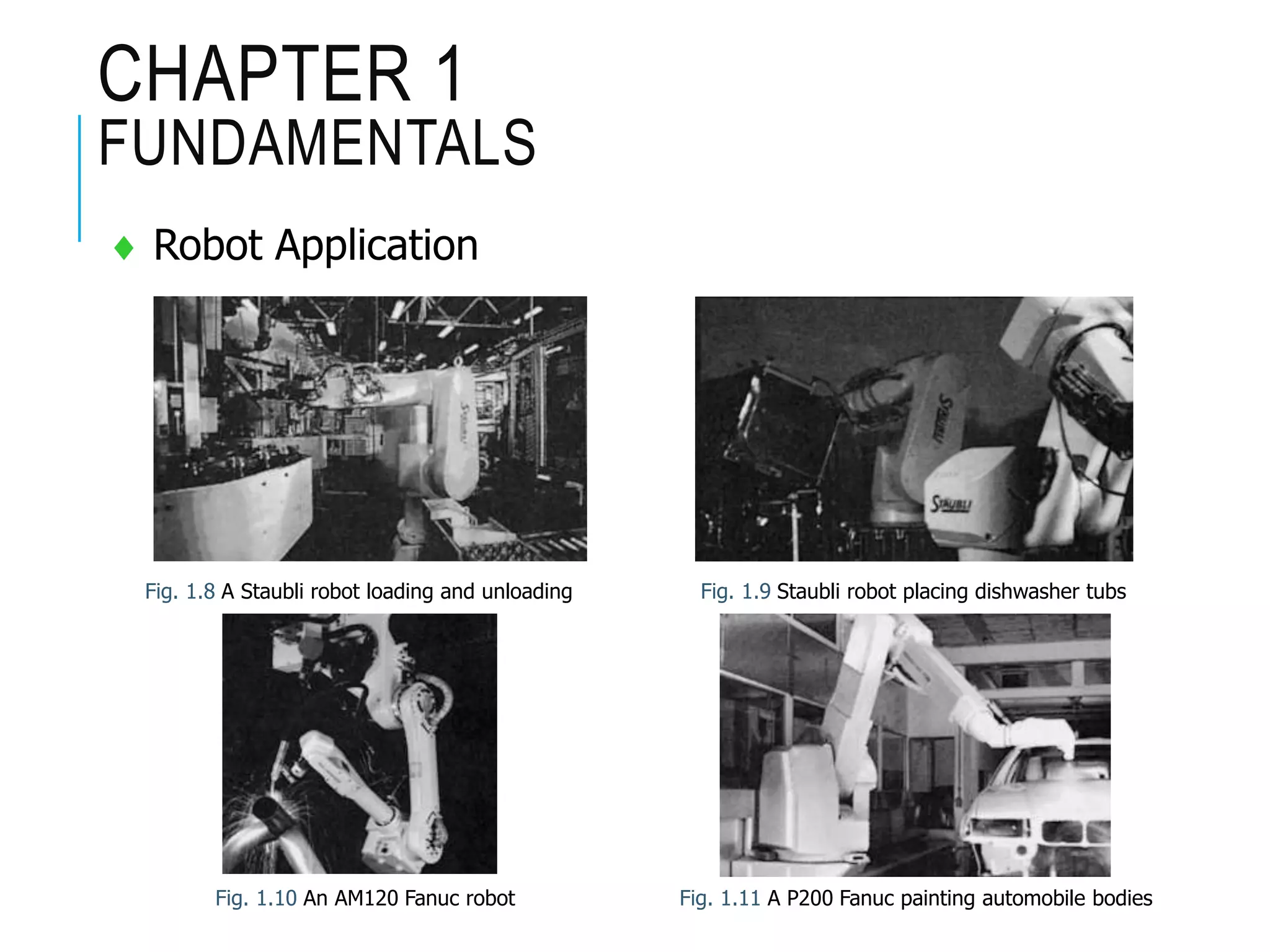
Fig. 1.8 A Staubli robot loading and unloading Fig. 1.9 Staubli robot placing dishwasher tubs
Fig. 1.10 An AM120 Fanuc robot Fig. 1.11 A P200 Fanuc painting automobile bodies
CHAPTER 1
FUNDAMENTALS
 Robot Application
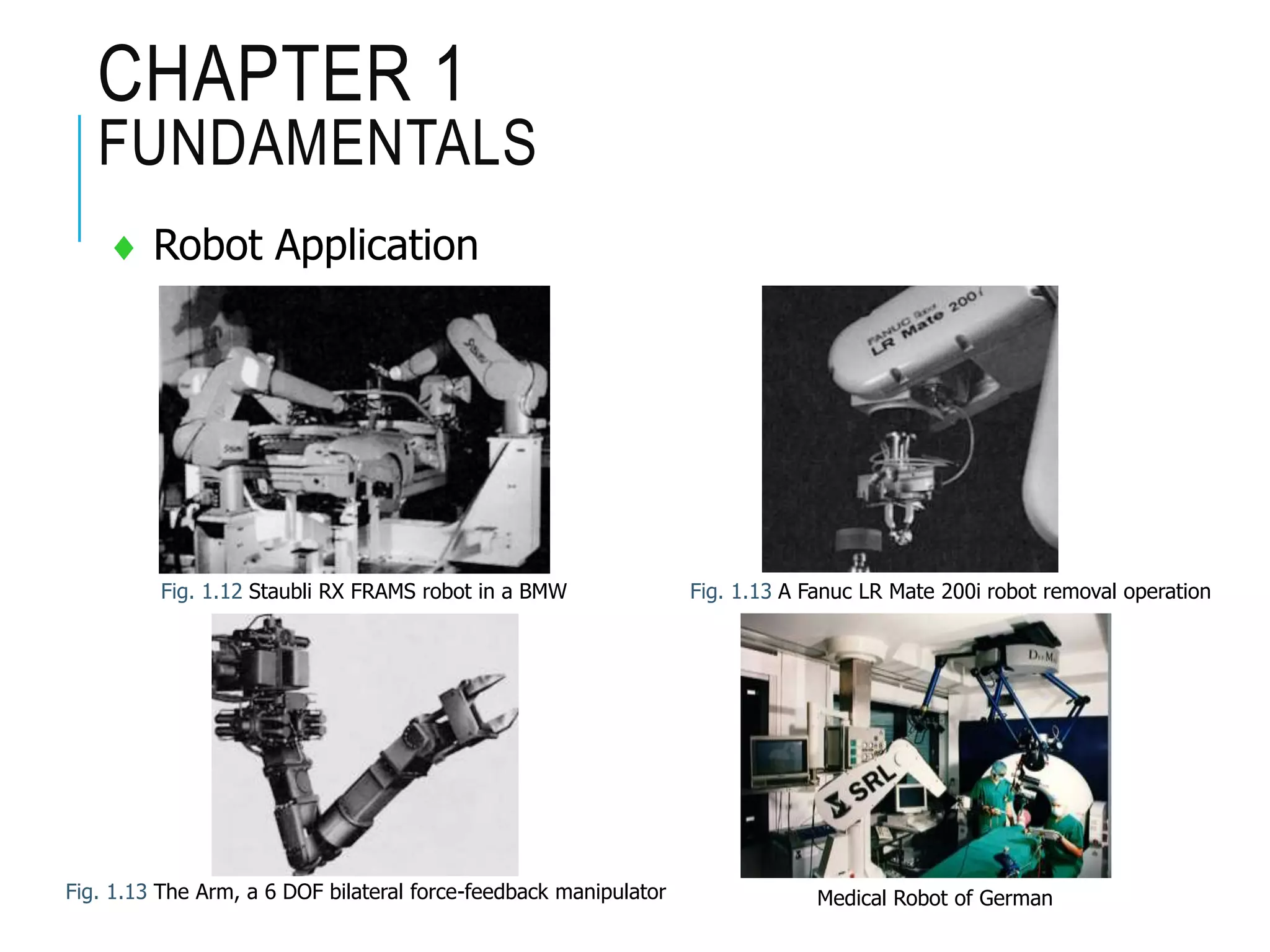
Fig. 1.12 Staubli RX FRAMS robot in a BMW Fig. 1.13 A Fanuc LR Mate 200i robot removal operation
Fig. 1.13 The Arm, a 6 DOF bilateral force-feedback manipulator Medical Robot of German
ADVANTAGES VS. DISADVANTAGES
OF ROBOTS
 Robots increase productivity, safety, efficiency, quality, and
consistency of products.
 Robots can work in hazardous environments without the need.
 Robots need no environmental comfort.
 Robots work continuously without experiencing fatigue of problem.
 Robots have repeatable precision at all times.
 Robots can be much more accurate than human. .
 Robots can process multiple stimuli or tasks simultaneously.
 Robots lack capability to respond in emergencies.
 Robots, although superior in certain senses, have limited
capabilities in Degree of freedom, Dexterity, Sensors, Vision
system, real time response.
 Robots are costly, due to Initial cost of equipment, Installation
costs, Need for Peripherals, Need for training, Need for
programming.
 Robots replace human workers creating economic problems

Chapter 1 - Fundamentals.ppt

  • 1.
    INTRODUCTION TO ROBOTICS ANALYSIS,SYSTEMS, APPLICATIONS Saeed B. Niku
  • 2.
    CHAPTER 1 FUNDAMENTALS 1. Introduction Fig.1.1 (a) A Kuhnezug truck-mounted crane Reprinted with permission from Kuhnezug Fordertechnik GmbH. Fig. 1.1 (b) Fanuc S-500 robots performing seam-sealing on a truck. Reprinted with permission from Fanuc Robotics, North America, Inc.
  • 3.
    WHAT IS AROBOT The difference between a robot and a manipulator  Run by a computer or microprocessor not a human  Controlled by feedback devices  Mostly autonomous
  • 4.
    WHAT IS AROBOT ? Random House Dictionary A machine that resembles a human being and does mechanical routine tasks on command. Robotics Association of America An industrial robot is a re-programmable, multifunctional manipulator designed to move materials, parts, tools, or specialized devices through variable programmed motions for the performance of a variety of tasks.
  • 5.
    WHAT IS AROBOT ? A manipulator (or an industrial robot) is composed of a series of links connected to each other via joints. Each joint usually has an actuator (a motor for eg.) connected to it. These actuators are used to cause relative motion between successive links. One end of the manipulator is usually connected to a stable base and the other end is used to deploy a tool.
  • 6.
    CLASSIFICATION OF ROBOTS -JIRA (Japanese Industrial Robot Association) Class1: Manual-Handling Device Class2: Fixed Sequence Robot Class3: Variable Sequence Robot Class4: Playback Robot Class5: Numerical Control Robot Class6: Intelligent Robot
  • 7.
    CLASSIFICATION OF ROBOTS -RIA (Robotics Institute of America) Variable Sequence Robot(Class3) Playback Robot(Class4) Numerical Control Robot(Class5) Intelligent Robot(Class6)
  • 8.
    CLASSIFICATION OF ROBOTS -AFR (Association FranÇaise de Robotique) Type A: Manual Handling Devices/ telerobotics Type B: Automatic Handling Devices/ predetermined cycles Type C: Programmable, Servo controlled robot, continuous point-to-point trajectories Type D: Same type with C, but it can acquire information.
  • 9.
    WHAT IS ROBOTICS? Roboticsis the art, knowledge base, and the know-how of designing, applying, and using robots in human endeavors. Robotics is an interdisciplinary subject that benefits from mechanical engineering, electrical and electronic engineering, computer science, biology, and many other disciplines.
  • 10.
    WHAT IS ROBOTICS History of Robotics 1922: Karel Čapek’s novel, Rossum’s Universal Robots, word “Robota” (worker) 1952: NC machine (MIT) 1955: Denavit-Hartenberg Homogeneous Transformation 1967: Mark II (Unimation Inc.) 1968: Shakey (SRI) - intelligent robot 1973: T3 (Cincinnati Milacron Inc.) 1978: PUMA (Unimation Inc.) 1983: Robotics Courses 21C: Walking Robots, Mobile Robots, Humanoid Robots
  • 11.
    What are theparts of a robot? • Manipulator • Pedestal • Controller • End Effectors • Power Source
  • 12.
  • 13.
  • 14.
    Controller (The brain) • Issuesinstructions to the robot. • Controls peripheral devices. • Interfaces with robot. • Interfaces with humans.
  • 15.
    End Effectors (The hand) •Spray paint attachments • Welding attachments • Vacuum heads • Hands • Grippers
  • 16.
    Power Source (The food) •Electric • Pneumatic • Hydraulic
  • 17.
    Robots degrees offreedom  Degrees of Freedom: Number of independent position variables which would has to be specified to locate all parts of a mechanism.  In most manipulators this is usually the number of joints.
  • 18.
    Fig. 1.3 AFanuc P-15 robot. Reprinted with permission from Fanuc Robotics, North America, Inc. Consider what is the degree of Fig. 3 1 D.O.F. 2 D.O.F. 3 D.O.F. ROBOTS DEGREES OF FREEDOM
  • 19.
    ROBOT JOINTS Prismatic Joint: Linear,No rotation involved. (Hydraulic or pneumatic cylinder) Revolute Joint: Rotary, (electrically driven with stepper motor, servo motor)
  • 20.
    ROBOT COORDINATE S  Cartesian/rectangular/gantry (3P): 3 cylinders joint  Cylindrical (R2P) : 2 Prismatic joint and 1 revolute joint Fig. 1.4  Spherical (2RP) : 1 Prismatic joint and 2 revolute joint  Articulated/anthropomorphic (3R) : All revolute(Human arm)  Selective Compliance Assembly Robot Arm (SCARA): 2 paralleled revolute joint and 1 additional prismatic joint
  • 21.
    ROBOT REFERENCE FRAMES Fig.1.6 A robot’s World, Joint, and Tool reference frames. Most robots may be programmed to move relative to either of these reference frames.
  • 22.
    ROBOT WORKSPACE Fig. 1.7Typical workspaces for common robot configurations
  • 23.
    ROBOT CHARACTERISTICS • Payload Payloadis the weight a robot can carry • Reach • Reach is the maximum distance a robot can reach within its work envelope. • Precision Precision is defined as how accurately a specifies point can be reached • Repeatability Repeatability is how accurately the same position can be reached if the motion is repeated many times. http://www.directindustry.com/prod/yamaha-motor- industrial-robots/product-25092-56426.html#video
  • 24.
    CHAPTER 1 FUNDAMENTALS  RobotLanguages Microcomputer Machine Language Level: the most basic and very efficient but difficult to understand to follow. Point-to-Point Level: Funky Cincinnati Milacron’s T3 It lacks branching, sensory information. Primitive Motion Level: VAL by Unimation™ Interpreter based language. Structured Programming Level: This is a compiler based but more difficult to learn. Task-Oriented Level: Not exist yet and proposed IBM in the 1980s.
  • 25.
    CHAPTER 1 FUNDAMENTALS  RobotApplication Machine loading Pick and place operations Welding Painting Sampling Assembly operation Manufacturing Surveillance Medical applications Assisting disabled individuals Hazardous environments Underwater, space, and remote locations
  • 26.
    CHAPTER 1 FUNDAMENTALS  RobotApplication Fig. 1.8 A Staubli robot loading and unloading Fig. 1.9 Staubli robot placing dishwasher tubs Fig. 1.10 An AM120 Fanuc robot Fig. 1.11 A P200 Fanuc painting automobile bodies
  • 27.
    CHAPTER 1 FUNDAMENTALS  RobotApplication Fig. 1.12 Staubli RX FRAMS robot in a BMW Fig. 1.13 A Fanuc LR Mate 200i robot removal operation Fig. 1.13 The Arm, a 6 DOF bilateral force-feedback manipulator Medical Robot of German
  • 28.
    ADVANTAGES VS. DISADVANTAGES OFROBOTS  Robots increase productivity, safety, efficiency, quality, and consistency of products.  Robots can work in hazardous environments without the need.  Robots need no environmental comfort.  Robots work continuously without experiencing fatigue of problem.  Robots have repeatable precision at all times.  Robots can be much more accurate than human. .  Robots can process multiple stimuli or tasks simultaneously.  Robots lack capability to respond in emergencies.  Robots, although superior in certain senses, have limited capabilities in Degree of freedom, Dexterity, Sensors, Vision system, real time response.  Robots are costly, due to Initial cost of equipment, Installation costs, Need for Peripherals, Need for training, Need for programming.  Robots replace human workers creating economic problems