Chapter 1 Vocab and Notes


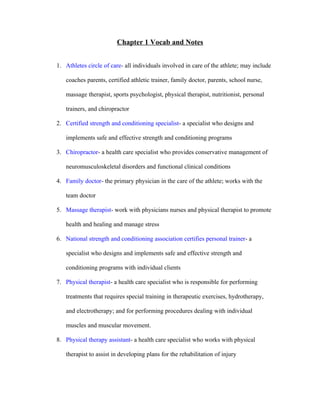
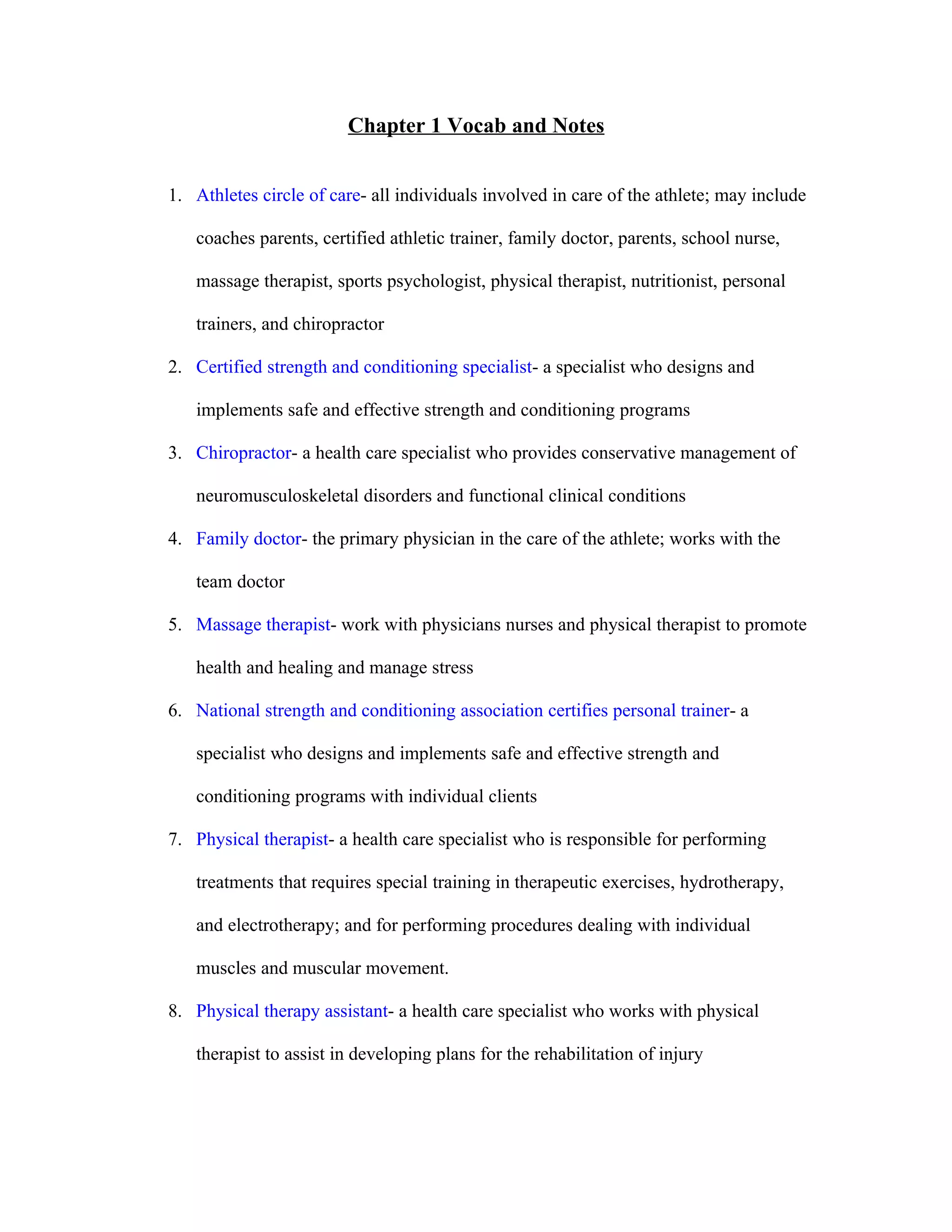
1. Athletes circle of care- all individuals involved in care of the athlete; may include

   coaches parents, certified athletic trainer, family doctor, parents, school nurse,

   massage therapist, sports psychologist, physical therapist, nutritionist, personal

   trainers, and chiropractor

2. Certified strength and conditioning specialist- a specialist who designs and

   implements safe and effective strength and conditioning programs

3. Chiropractor- a health care specialist who provides conservative management of

   neuromusculoskeletal disorders and functional clinical conditions

4. Family doctor- the primary physician in the care of the athlete; works with the

   team doctor

5. Massage therapist- work with physicians nurses and physical therapist to promote

   health and healing and manage stress

6. National strength and conditioning association certifies personal trainer- a

   specialist who designs and implements safe and effective strength and

   conditioning programs with individual clients

7. Physical therapist- a health care specialist who is responsible for performing

   treatments that requires special training in therapeutic exercises, hydrotherapy,

   and electrotherapy; and for performing procedures dealing with individual

   muscles and muscular movement.

8. Physical therapy assistant- a health care specialist who works with physical

   therapist to assist in developing plans for the rehabilitation of injury
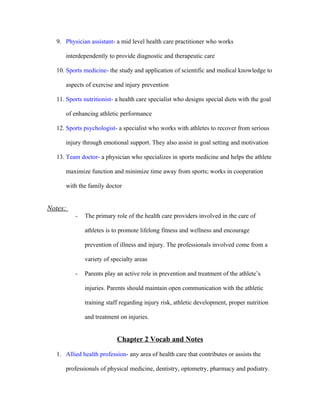
9. Physician assistant- a mid level health care practitioner who works

     interdependently to provide diagnostic and therapeutic care

  10. Sports medicine- the study and application of scientific and medical knowledge to

     aspects of exercise and injury prevention

  11. Sports nutritionist- a health care specialist who designs special diets with the goal

     of enhancing athletic performance

  12. Sports psychologist- a specialist who works with athletes to recover from serious

     injury through emotional support. They also assist in goal setting and motivation

  13. Team doctor- a physician who specializes in sports medicine and helps the athlete

     maximize function and minimize time away from sports; works in cooperation

     with the family doctor


Notes:
         -   The primary role of the health care providers involved in the care of

             athletes is to promote lifelong fitness and wellness and encourage

             prevention of illness and injury. The professionals involved come from a

             variety of specialty areas

         -   Parents play an active role in prevention and treatment of the athlete’s

             injuries. Parents should maintain open communication with the athletic

             training staff regarding injury risk, athletic development, proper nutrition

             and treatment on injuries.


                           Chapter 2 Vocab and Notes

  1. Allied health profession- any area of health care that contributes or assists the

     professionals of physical medicine, dentistry, optometry, pharmacy and podiatry.
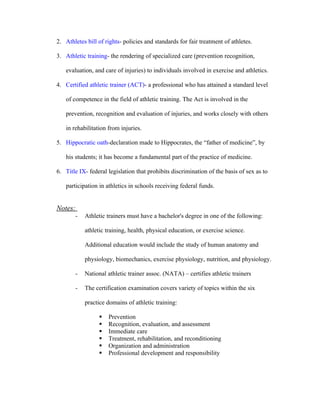
2. Athletes bill of rights- policies and standards for fair treatment of athletes.

3. Athletic training- the rendering of specialized care (prevention recognition,

   evaluation, and care of injuries) to individuals involved in exercise and athletics.

4. Certified athletic trainer (ACT)- a professional who has attained a standard level

   of competence in the field of athletic training. The Act is involved in the

   prevention, recognition and evaluation of injuries, and works closely with others

   in rehabilitation from injuries.

5. Hippocratic oath-declaration made to Hippocrates, the “father of medicine”, by

   his students; it has become a fundamental part of the practice of medicine.

6. Title IX- federal legislation that prohibits discrimination of the basis of sex as to

   participation in athletics in schools receiving federal funds.


Notes:
       -   Athletic trainers must have a bachelor's degree in one of the following:

           athletic training, health, physical education, or exercise science.

           Additional education would include the study of human anatomy and

           physiology, biomechanics, exercise physiology, nutrition, and physiology.

       -   National athletic trainer assoc. (NATA) – certifies athletic trainers

       -   The certification examination covers variety of topics within the six

           practice domains of athletic training:

                    Prevention
                    Recognition, evaluation, and assessment
                    Immediate care
                    Treatment, rehabilitation, and reconditioning
                    Organization and administration
                    Professional development and responsibility
-


-

-

Chapter 1 and 2

  • 1.
    Chapter 1 Vocaband Notes 1. Athletes circle of care- all individuals involved in care of the athlete; may include coaches parents, certified athletic trainer, family doctor, parents, school nurse, massage therapist, sports psychologist, physical therapist, nutritionist, personal trainers, and chiropractor 2. Certified strength and conditioning specialist- a specialist who designs and implements safe and effective strength and conditioning programs 3. Chiropractor- a health care specialist who provides conservative management of neuromusculoskeletal disorders and functional clinical conditions 4. Family doctor- the primary physician in the care of the athlete; works with the team doctor 5. Massage therapist- work with physicians nurses and physical therapist to promote health and healing and manage stress 6. National strength and conditioning association certifies personal trainer- a specialist who designs and implements safe and effective strength and conditioning programs with individual clients 7. Physical therapist- a health care specialist who is responsible for performing treatments that requires special training in therapeutic exercises, hydrotherapy, and electrotherapy; and for performing procedures dealing with individual muscles and muscular movement. 8. Physical therapy assistant- a health care specialist who works with physical therapist to assist in developing plans for the rehabilitation of injury
  • 2.
    9. Physician assistant-a mid level health care practitioner who works interdependently to provide diagnostic and therapeutic care 10. Sports medicine- the study and application of scientific and medical knowledge to aspects of exercise and injury prevention 11. Sports nutritionist- a health care specialist who designs special diets with the goal of enhancing athletic performance 12. Sports psychologist- a specialist who works with athletes to recover from serious injury through emotional support. They also assist in goal setting and motivation 13. Team doctor- a physician who specializes in sports medicine and helps the athlete maximize function and minimize time away from sports; works in cooperation with the family doctor Notes: - The primary role of the health care providers involved in the care of athletes is to promote lifelong fitness and wellness and encourage prevention of illness and injury. The professionals involved come from a variety of specialty areas - Parents play an active role in prevention and treatment of the athlete’s injuries. Parents should maintain open communication with the athletic training staff regarding injury risk, athletic development, proper nutrition and treatment on injuries. Chapter 2 Vocab and Notes 1. Allied health profession- any area of health care that contributes or assists the professionals of physical medicine, dentistry, optometry, pharmacy and podiatry.
  • 3.
    2. Athletes billof rights- policies and standards for fair treatment of athletes. 3. Athletic training- the rendering of specialized care (prevention recognition, evaluation, and care of injuries) to individuals involved in exercise and athletics. 4. Certified athletic trainer (ACT)- a professional who has attained a standard level of competence in the field of athletic training. The Act is involved in the prevention, recognition and evaluation of injuries, and works closely with others in rehabilitation from injuries. 5. Hippocratic oath-declaration made to Hippocrates, the “father of medicine”, by his students; it has become a fundamental part of the practice of medicine. 6. Title IX- federal legislation that prohibits discrimination of the basis of sex as to participation in athletics in schools receiving federal funds. Notes: - Athletic trainers must have a bachelor's degree in one of the following: athletic training, health, physical education, or exercise science. Additional education would include the study of human anatomy and physiology, biomechanics, exercise physiology, nutrition, and physiology. - National athletic trainer assoc. (NATA) – certifies athletic trainers - The certification examination covers variety of topics within the six practice domains of athletic training:  Prevention  Recognition, evaluation, and assessment  Immediate care  Treatment, rehabilitation, and reconditioning  Organization and administration  Professional development and responsibility
  • 4.