P ART  III S TAFFING THE  S ALES  T EAM
C HAPTER  8 P LANNING FOR AND  R ECRUITING  S UCCESSFUL  S ALESPEOPLE
What sales human resource management is and what its key  relationships are. The importance of planning for sales personnel needs. What people planning and employment planning are. What recruitment means and why it is so important. The recruiting process: what it is, who does it, and where  recruits are sought. L EARNING  O BJECTIVES A successful sales force is determined by who is hired; this is the end result of sales human resource management. This chapter should help you understand:
W HAT IS  S ALES  H UMAN  R ESOURCE  M ANAGEMENT? Sales human resource management (SHRM) refers to activities undertaken to attract, develop, and maintain effective sales force personnel within an organization.
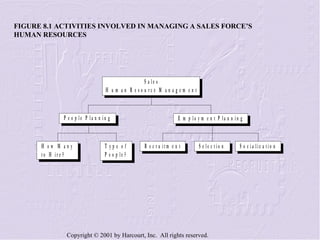
FIGURE 8.1 ACTIVITIES INVOLVED IN MANAGING A SALES FORCE’S HUMAN RESOURCES
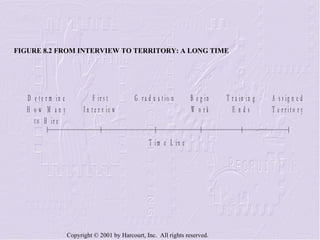
FIGURE 8.2 FROM INTERVIEW TO TERRITORY: A LONG TIME
What’s a salesperson worth? A salesperson’s worth depends on what the salesperson costs to the company and on the profits from the products he or she sells.
Selecting someone who will become an above-average performer improves the overall performance of the sales group. A successful hire is someone who performs above average. Goal: Hire above-average performers.
W HO  D OES  T HE  P LANNING? National sales manager. Field sales managers. Top management.
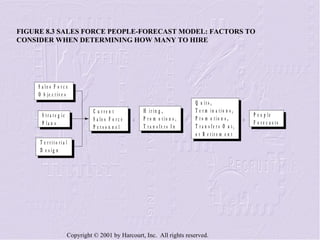
FIGURE 8.3 SALES FORCE PEOPLE-FORECAST MODEL: FACTORS TO CONSIDER WHEN DETERMINING HOW MANY TO HIRE
D ETERMINING THE  T YPE OF  P ERSON FOR THE  J OB A job analysis refers to the formal study of jobs to define specific roles or activities to be performed in sales promotions. The three steps in the job analysis are to: 1.  Examine the total sales force and each job, and determine how each job relates to other jobs. 2.  Select the jobs to be analyzed. 3.  Collect the necessary information through observation of what people actually do in the jobs, interviews of people in the jobs, and questionnaires completed by job holders.
J OB  D ESCRIPTIONS AND  S PECIFICATIONS FOR  S UCCESSFUL  P EOPLE Job specifications convert job descriptions into the qualifications.
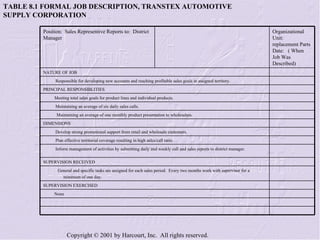
TABLE 8.1 FORMAL JOB DESCRIPTION, TRANSTEX AUTOMOTIVE SUPPLY CORPORATION None SUPERVISION EXERCISED General and specific tasks are assigned for each sales period.  Every two months work with supervisor for a  minimum of one day. SUPERVISION RECEIVED Inform management of activities by submitting daily and weekly call and sales reports to district manager. Plan effective territorial coverage resulting in high sales/call ratio. Develop strong promotional support from retail and wholesale customers. DIMENSIONS Maintaining an average of one monthly product presentation to wholesalers. Maintaining an average of six daily sales calls. Meeting total sales goals for product lines and individual products. PRINCIPAL RESPONSIBLITIES Responsible for developing new accounts and reaching profitable sales goals in assigned territory. NATURE OF JOB Organizational Unit:  replacement Parts Date:  ( When Job Was Described) Position:  Sales Representive Reports to:  District Manager
W HAT ARE  J OB  S PECIFICATIONS FOR  S UCCESFUL  S ALESPEOPLE? Intelligence Education Personality Experience Appearance
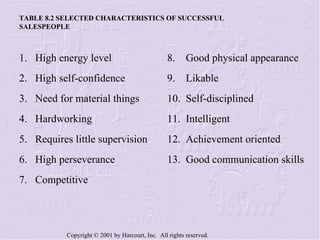
TABLE 8.2 SELECTED CHARACTERISTICS OF SUCCESSFUL SALESPEOPLE 7.  Competitive 13.  Good communication skills 6.  High perseverance 12.  Achievement oriented 5.  Requires little supervision 11.  Intelligent 4.  Hardworking 10.  Self-disciplined 3.  Need for material things 9.  Likable 2.  High self-confidence 8.  Good physical appearance 1.  High energy level
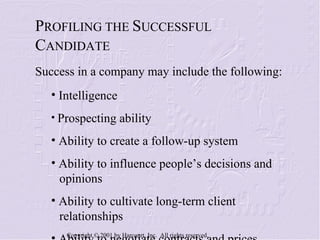
P ROFILING THE  S UCCESSFUL  C ANDIDATE Intelligence Prospecting ability Ability to create a follow-up system Ability to influence people’s decisions and  opinions Ability to cultivate long-term client  relationships Ability to negotiate contracts and prices Success in a company may include the following:
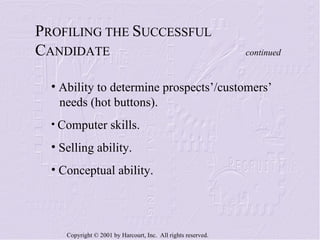
P ROFILING THE  S UCCESSFUL  C ANDIDATE    continued Ability to determine prospects’/customers’  needs (hot buttons). Computer skills. Selling ability. Conceptual ability.
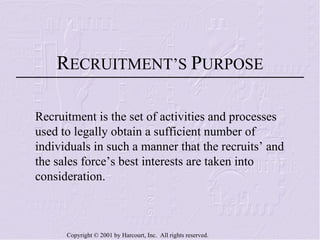
R ECRUITMENT’S  P URPOSE Recruitment is the set of activities and processes used to legally obtain a sufficient number of individuals in such a manner that the recruits’ and the sales force’s best interests are taken into consideration.
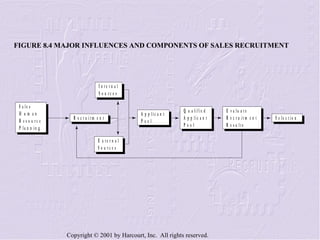
FIGURE 8.4 MAJOR INFLUENCES AND COMPONENTS OF SALES RECRUITMENT
Equal Employment Opportunity Commission (EEOC)   is the principal governmental agency responsible for monitoring discriminatory practices. L EGAL  I NFLUENCES
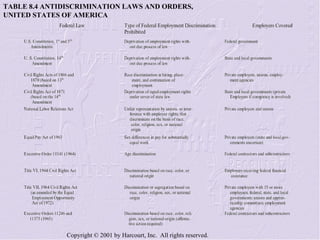
TABLE 8.4 ANTIDISCRIMINATION LAWS AND ORDERS, UNITED STATES OF AMERICA
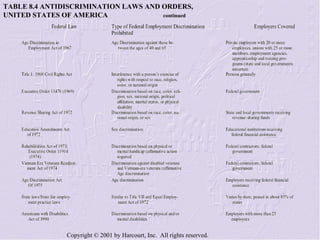
TABLE 8.4 ANTIDISCRIMINATION LAWS AND ORDERS, UNITED STATES OF AMERICA continued
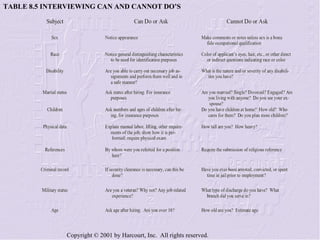
TABLE 8.5 INTERVIEWING CAN AND CANNOT DO’S
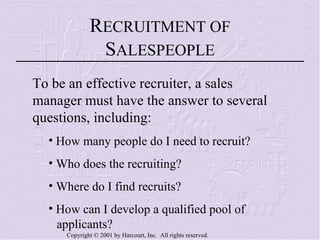
To be an effective recruiter, a sales manager must have the answer to several questions, including:  How many people do I need to recruit? Who does the recruiting? Where do I find recruits? How can I develop a qualified pool of  applicants? How can recruiting programs be evaluated? R ECRUITMENT OF  S ALESPEOPLE
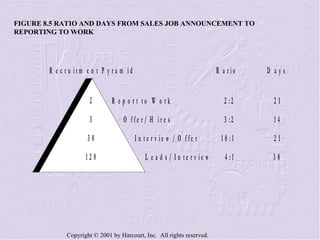
FIGURE 8.5 RATIO AND DAYS FROM SALES JOB ANNOUNCEMENT TO REPORTING TO WORK
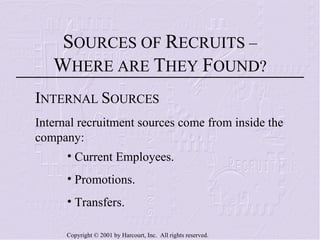
Current Employees. Promotions. Transfers. S OURCES OF  R ECRUITS –  W HERE ARE  T HEY  F OUND? I NTERNAL  S OURCES Internal recruitment sources come from inside the company:
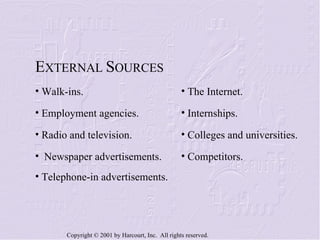
E XTERNAL  S OURCES Telephone-in advertisements. Competitors. Newspaper advertisements. Colleges and universities. Radio and television. Internships. Employment agencies. The Internet. Walk-ins.
R EALISTIC  J OB  P REVIEWS  H ELP  B OTH  C OMPANY AND  R ECRUITS A “realistic job preview” means that a person is given pertinent information about the job without distortion or exaggeration.
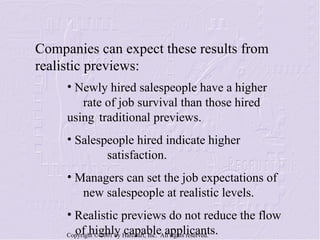
Newly hired salespeople have a higher  rate of job survival than those hired using  traditional previews. Salespeople hired indicate higher  satisfaction. Managers can set the job expectations of  new salespeople at realistic levels. Realistic previews do not reduce the flow  of highly capable applicants. Companies can expect these results from realistic previews:
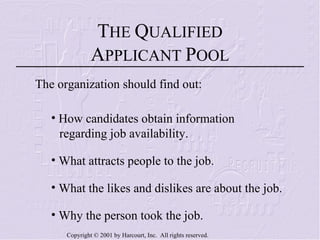
T HE  Q UALIFIED  A PPLICANT  P OOL The organization should find out: How candidates obtain information  regarding job availability. What attracts people to the job. What the likes and dislikes are about the job. Why the person took the job.
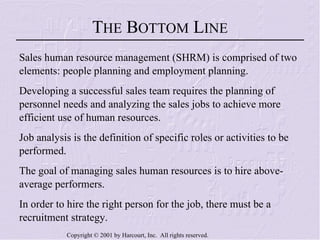
T HE  B OTTOM  L INE Sales human resource management (SHRM) is comprised of two elements: people planning and employment planning. Developing a successful sales team requires the planning of personnel needs and analyzing the sales jobs to achieve more efficient use of human resources. Job analysis is the definition of specific roles or activities to be performed. The goal of managing sales human resources is to hire above-average performers. In order to hire the right person for the job, there must be a recruitment strategy.

Chapter 08

  • 1.
  • 2.
    P ART III S TAFFING THE S ALES T EAM
  • 3.
    C HAPTER 8 P LANNING FOR AND R ECRUITING S UCCESSFUL S ALESPEOPLE
  • 4.
    What sales humanresource management is and what its key relationships are. The importance of planning for sales personnel needs. What people planning and employment planning are. What recruitment means and why it is so important. The recruiting process: what it is, who does it, and where recruits are sought. L EARNING O BJECTIVES A successful sales force is determined by who is hired; this is the end result of sales human resource management. This chapter should help you understand:
  • 5.
    W HAT IS S ALES H UMAN R ESOURCE M ANAGEMENT? Sales human resource management (SHRM) refers to activities undertaken to attract, develop, and maintain effective sales force personnel within an organization.
  • 6.
    FIGURE 8.1 ACTIVITIESINVOLVED IN MANAGING A SALES FORCE’S HUMAN RESOURCES
  • 7.
    FIGURE 8.2 FROMINTERVIEW TO TERRITORY: A LONG TIME
  • 8.
    What’s a salespersonworth? A salesperson’s worth depends on what the salesperson costs to the company and on the profits from the products he or she sells.
  • 9.
    Selecting someone whowill become an above-average performer improves the overall performance of the sales group. A successful hire is someone who performs above average. Goal: Hire above-average performers.
  • 10.
    W HO D OES T HE P LANNING? National sales manager. Field sales managers. Top management.
  • 11.
    FIGURE 8.3 SALESFORCE PEOPLE-FORECAST MODEL: FACTORS TO CONSIDER WHEN DETERMINING HOW MANY TO HIRE
  • 12.
    D ETERMINING THE T YPE OF P ERSON FOR THE J OB A job analysis refers to the formal study of jobs to define specific roles or activities to be performed in sales promotions. The three steps in the job analysis are to: 1. Examine the total sales force and each job, and determine how each job relates to other jobs. 2. Select the jobs to be analyzed. 3. Collect the necessary information through observation of what people actually do in the jobs, interviews of people in the jobs, and questionnaires completed by job holders.
  • 13.
    J OB D ESCRIPTIONS AND S PECIFICATIONS FOR S UCCESSFUL P EOPLE Job specifications convert job descriptions into the qualifications.
  • 14.
    TABLE 8.1 FORMALJOB DESCRIPTION, TRANSTEX AUTOMOTIVE SUPPLY CORPORATION None SUPERVISION EXERCISED General and specific tasks are assigned for each sales period. Every two months work with supervisor for a minimum of one day. SUPERVISION RECEIVED Inform management of activities by submitting daily and weekly call and sales reports to district manager. Plan effective territorial coverage resulting in high sales/call ratio. Develop strong promotional support from retail and wholesale customers. DIMENSIONS Maintaining an average of one monthly product presentation to wholesalers. Maintaining an average of six daily sales calls. Meeting total sales goals for product lines and individual products. PRINCIPAL RESPONSIBLITIES Responsible for developing new accounts and reaching profitable sales goals in assigned territory. NATURE OF JOB Organizational Unit: replacement Parts Date: ( When Job Was Described) Position: Sales Representive Reports to: District Manager
  • 15.
    W HAT ARE J OB S PECIFICATIONS FOR S UCCESFUL S ALESPEOPLE? Intelligence Education Personality Experience Appearance
  • 16.
    TABLE 8.2 SELECTEDCHARACTERISTICS OF SUCCESSFUL SALESPEOPLE 7. Competitive 13. Good communication skills 6. High perseverance 12. Achievement oriented 5. Requires little supervision 11. Intelligent 4. Hardworking 10. Self-disciplined 3. Need for material things 9. Likable 2. High self-confidence 8. Good physical appearance 1. High energy level
  • 17.
    P ROFILING THE S UCCESSFUL C ANDIDATE Intelligence Prospecting ability Ability to create a follow-up system Ability to influence people’s decisions and opinions Ability to cultivate long-term client relationships Ability to negotiate contracts and prices Success in a company may include the following:
  • 18.
    P ROFILING THE S UCCESSFUL C ANDIDATE continued Ability to determine prospects’/customers’ needs (hot buttons). Computer skills. Selling ability. Conceptual ability.
  • 19.
    R ECRUITMENT’S P URPOSE Recruitment is the set of activities and processes used to legally obtain a sufficient number of individuals in such a manner that the recruits’ and the sales force’s best interests are taken into consideration.
  • 20.
    FIGURE 8.4 MAJORINFLUENCES AND COMPONENTS OF SALES RECRUITMENT
  • 21.
    Equal Employment OpportunityCommission (EEOC) is the principal governmental agency responsible for monitoring discriminatory practices. L EGAL I NFLUENCES
  • 22.
    TABLE 8.4 ANTIDISCRIMINATIONLAWS AND ORDERS, UNITED STATES OF AMERICA
  • 23.
    TABLE 8.4 ANTIDISCRIMINATIONLAWS AND ORDERS, UNITED STATES OF AMERICA continued
  • 24.
    TABLE 8.5 INTERVIEWINGCAN AND CANNOT DO’S
  • 25.
    To be aneffective recruiter, a sales manager must have the answer to several questions, including: How many people do I need to recruit? Who does the recruiting? Where do I find recruits? How can I develop a qualified pool of applicants? How can recruiting programs be evaluated? R ECRUITMENT OF S ALESPEOPLE
  • 26.
    FIGURE 8.5 RATIOAND DAYS FROM SALES JOB ANNOUNCEMENT TO REPORTING TO WORK
  • 27.
    Current Employees. Promotions.Transfers. S OURCES OF R ECRUITS – W HERE ARE T HEY F OUND? I NTERNAL S OURCES Internal recruitment sources come from inside the company:
  • 28.
    E XTERNAL S OURCES Telephone-in advertisements. Competitors. Newspaper advertisements. Colleges and universities. Radio and television. Internships. Employment agencies. The Internet. Walk-ins.
  • 29.
    R EALISTIC J OB P REVIEWS H ELP B OTH C OMPANY AND R ECRUITS A “realistic job preview” means that a person is given pertinent information about the job without distortion or exaggeration.
  • 30.
    Newly hired salespeoplehave a higher rate of job survival than those hired using traditional previews. Salespeople hired indicate higher satisfaction. Managers can set the job expectations of new salespeople at realistic levels. Realistic previews do not reduce the flow of highly capable applicants. Companies can expect these results from realistic previews:
  • 31.
    T HE Q UALIFIED A PPLICANT P OOL The organization should find out: How candidates obtain information regarding job availability. What attracts people to the job. What the likes and dislikes are about the job. Why the person took the job.
  • 32.
    T HE B OTTOM L INE Sales human resource management (SHRM) is comprised of two elements: people planning and employment planning. Developing a successful sales team requires the planning of personnel needs and analyzing the sales jobs to achieve more efficient use of human resources. Job analysis is the definition of specific roles or activities to be performed. The goal of managing sales human resources is to hire above-average performers. In order to hire the right person for the job, there must be a recruitment strategy.