11
Chapter 11Chapter 11
Interest GroupsInterest Groups
22Copyright © 2013 CengageCopyright © 2013 Cengage
 WHO GOVERNS?WHO GOVERNS?
1.1. Do interest groups dominateDo interest groups dominate
government, and is any particulargovernment, and is any particular
lobby politically unbeatable?lobby politically unbeatable?
2.2. Why do people join interest groups?Why do people join interest groups?
 TO WHAT ENDS?TO WHAT ENDS?
1.1. Is the proliferation of political actionIs the proliferation of political action
committees (PACs) and other groupscommittees (PACs) and other groups
good or bad for America’sgood or bad for America’s
representative democracy?representative democracy?
2.2. Should interest groups’ politicalShould interest groups’ political
activities be restricted by law?activities be restricted by law?
33Copyright © 2013 CengageCopyright © 2013 Cengage
44
The Rise of Interest GroupsThe Rise of Interest Groups
 An interest groupAn interest group is any organizationis any organization
that seeks to influence public policy.that seeks to influence public policy.
 The conditions that lead to the riseThe conditions that lead to the rise
of interest groups areof interest groups are
• Broad economic developmentsBroad economic developments
• Government policyGovernment policy
• Leadership exercisedLeadership exercised
• Increased governmental activitiesIncreased governmental activities
Copyright © 2013 CengageCopyright © 2013 Cengage
55
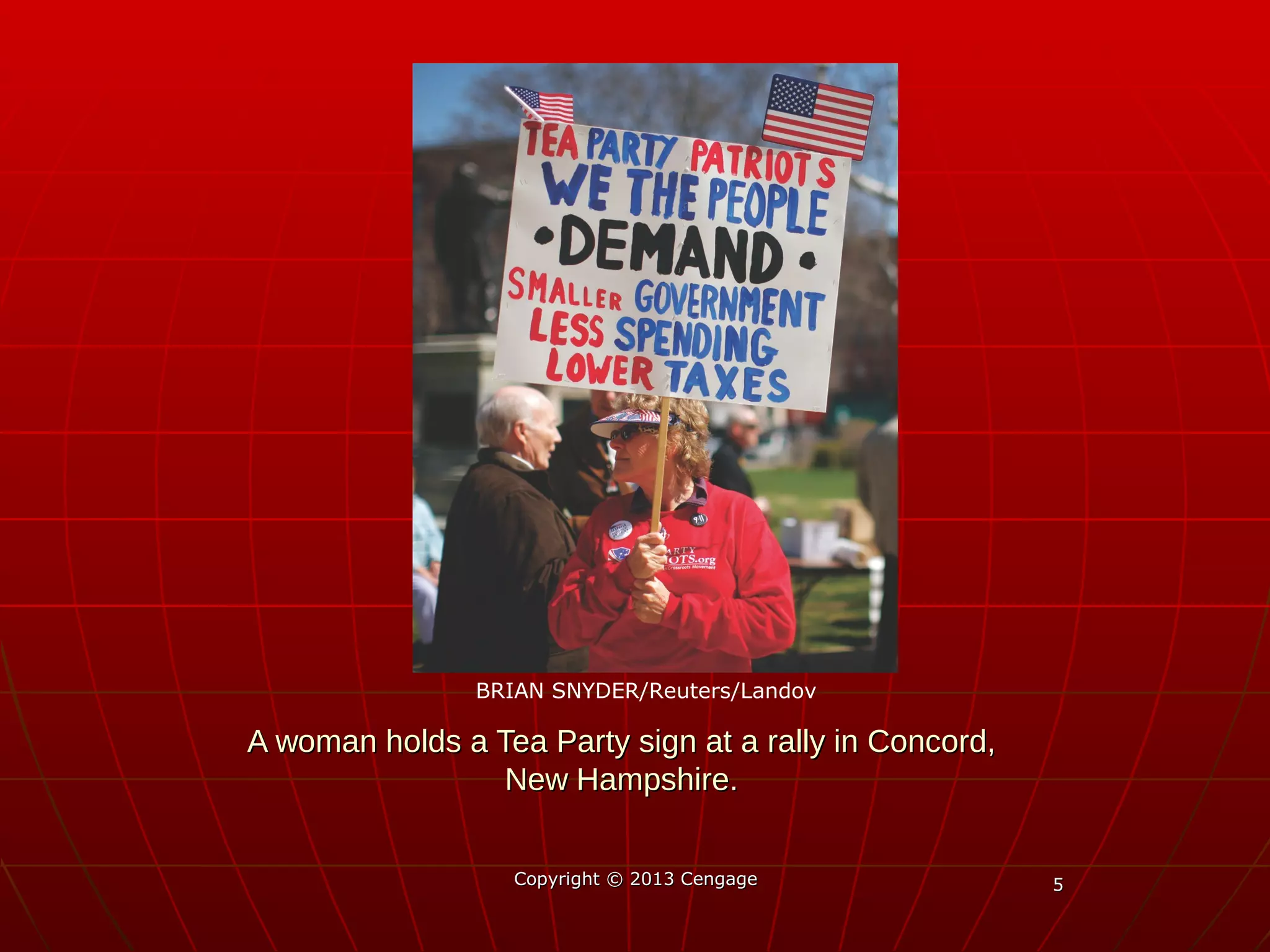
A woman holds a Tea Party sign at a rally in Concord,A woman holds a Tea Party sign at a rally in Concord,
New Hampshire.New Hampshire.
Copyright © 2013 CengageCopyright © 2013 Cengage
BRIAN SNYDER/Reuters/Landov
66Copyright © 2013 CengageCopyright © 2013 Cengage
77
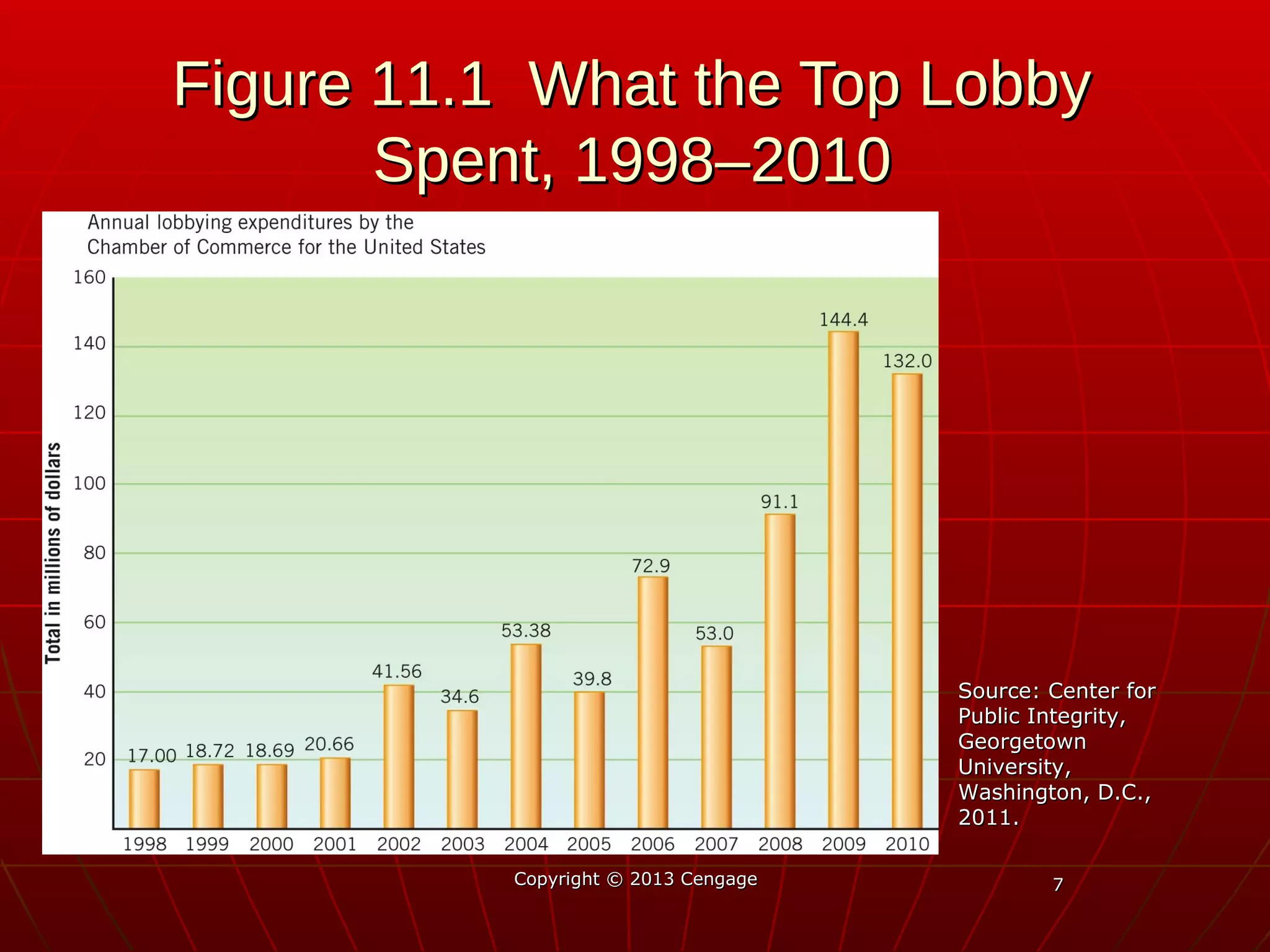
Figure 11.1 What the Top LobbyFigure 11.1 What the Top Lobby
Spent, 1998–2010Spent, 1998–2010
Copyright © 2013 CengageCopyright © 2013 Cengage
Source: Center forSource: Center for
Public Integrity,Public Integrity,
GeorgetownGeorgetown
University,University,
Washington, D.C.,Washington, D.C.,
2011.2011.
88
Kinds of OrganizationsKinds of Organizations
 Institutional InterestsInstitutional Interests
 Membership InterestsMembership Interests
Copyright © 2013 CengageCopyright © 2013 Cengage
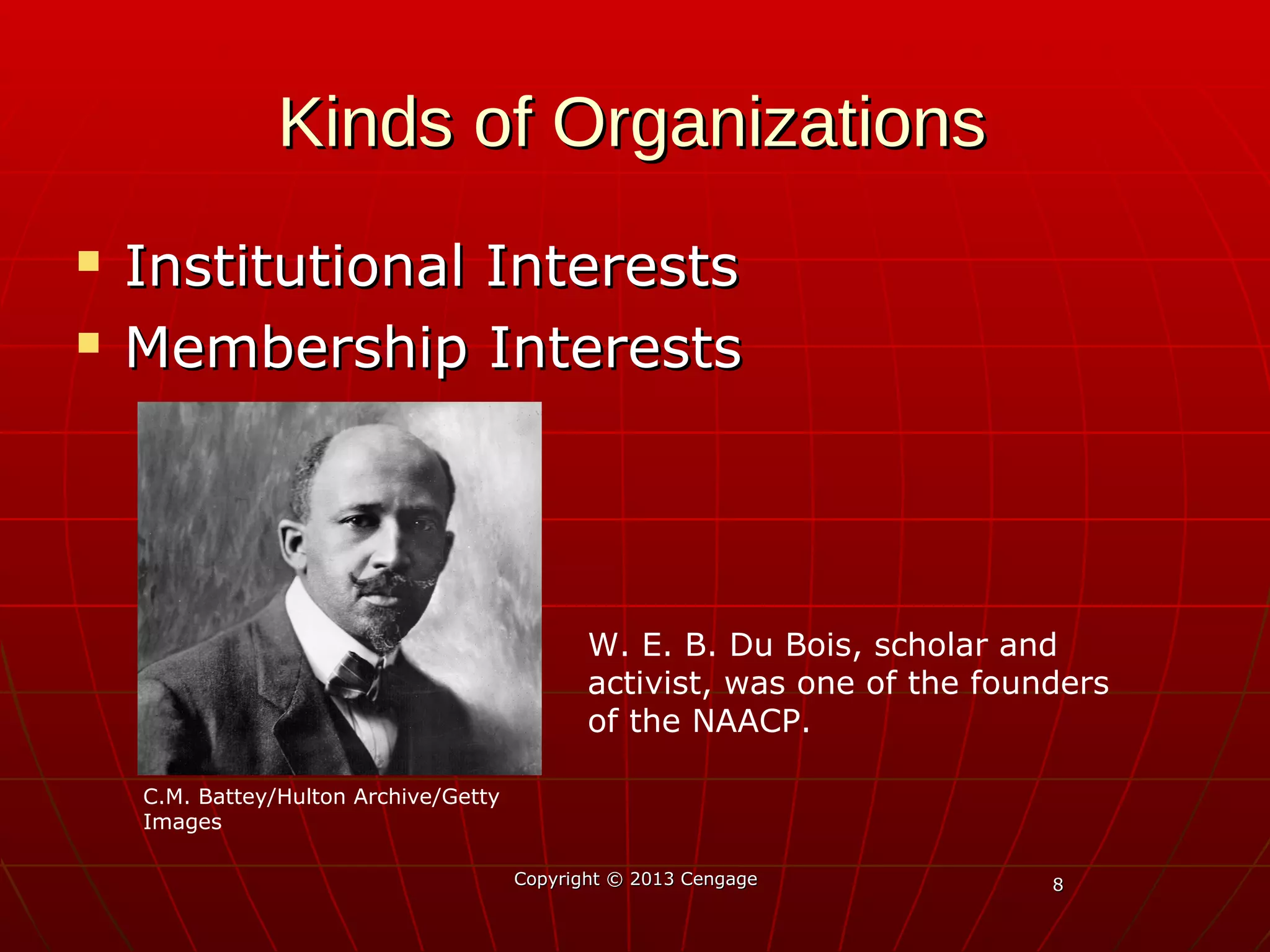
W. E. B. Du Bois, scholar and
activist, was one of the founders
of the NAACP.
C.M. Battey/Hulton Archive/Getty
Images
99
Getting and Keeping MembersGetting and Keeping Members
 Incentives to JoinIncentives to Join
• SolidaritySolidarity
• MaterialMaterial
• PurposivePurposive
Copyright © 2013 CengageCopyright © 2013 Cengage
The Service Employees
International Union, a large and
growing force, listens to Andy
Stern, its president until 2010.
Bill Clark/CQ-Roll Call Group/Roll Call/Getty Images
1010Copyright © 2013 CengageCopyright © 2013 Cengage
1111Copyright © 2013 CengageCopyright © 2013 Cengage
1212
The Influence of the StaffThe Influence of the Staff
 Some members of an interest groupSome members of an interest group
may not care about many of themay not care about many of the
issues with which the group getsissues with which the group gets
involved.involved.
 What the interest group does mayWhat the interest group does may
reflect what thereflect what the staffstaff wantswants thanthan
what thewhat the membersmembers believebelieve..
Copyright © 2013 CengageCopyright © 2013 Cengage
1313
Interest Groups and SocialInterest Groups and Social
MovementsMovements
 The Environmental MovementThe Environmental Movement
 The Feminist MovementThe Feminist Movement
 The Union MovementThe Union Movement
Copyright © 2013 CengageCopyright © 2013 Cengage
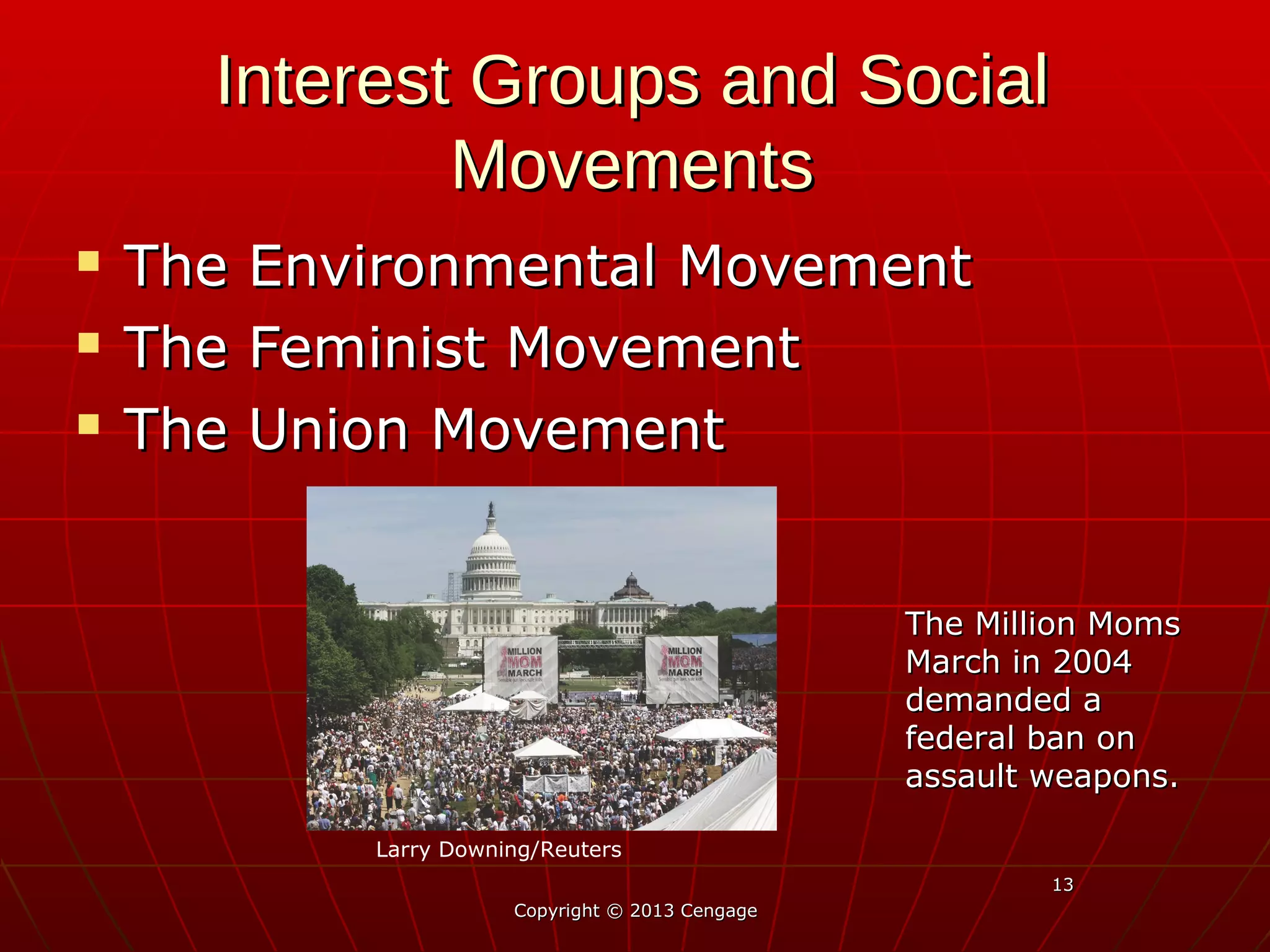
The Million MomsThe Million Moms
March in 2004March in 2004
demanded ademanded a
federal ban onfederal ban on
assault weapons.assault weapons.
Larry Downing/Reuters
1414
Funds for Interest GroupsFunds for Interest Groups
 Foundation GrantsFoundation Grants
 Federal Grants andFederal Grants and
ContractsContracts
 Direct MailDirect Mail
Copyright © 2013 CengageCopyright © 2013 Cengage
1515
Upper Class Bias?Upper Class Bias?
 Do interest groups reflect an upper-Do interest groups reflect an upper-
class bias?class bias?
 Those most likely to belong to aThose most likely to belong to a
voluntary association havevoluntary association have
• Higher incomesHigher incomes
• College degreesCollege degrees
• Professional or technical jobsProfessional or technical jobs
Copyright © 2013 CengageCopyright © 2013 Cengage
1616
Upper Class Bias?Upper Class Bias?
 Consider:Consider:
• Do interest groups and lobbyists alwaysDo interest groups and lobbyists always
get what they want?get what they want?
• Are business-oriented groups dividedAre business-oriented groups divided
among themselves?among themselves?
• Are there profound cleavages of opinionAre there profound cleavages of opinion
among the upper class?among the upper class?
Copyright © 2013 CengageCopyright © 2013 Cengage
1717
Farmers once had greatFarmers once had great
influence in Congress andinfluence in Congress and
could get their way withcould get their way with
a few telephone calls.a few telephone calls.
Today, they often mustToday, they often must
use mass protestuse mass protest
methods.methods.
Copyright © 2013 CengageCopyright © 2013 Cengage
JP/Laffront/Sygma/Corbis
1818
The Activities of Interest GroupsThe Activities of Interest Groups
 InformationInformation
 EarmarksEarmarks
 Public SupportPublic Support
 Money and PACsMoney and PACs
 The “Revolving Door”The “Revolving Door”
 Civil DisobedienceCivil Disobedience
Copyright © 2013 CengageCopyright © 2013 Cengage
1919Copyright © 2013 CengageCopyright © 2013 Cengage
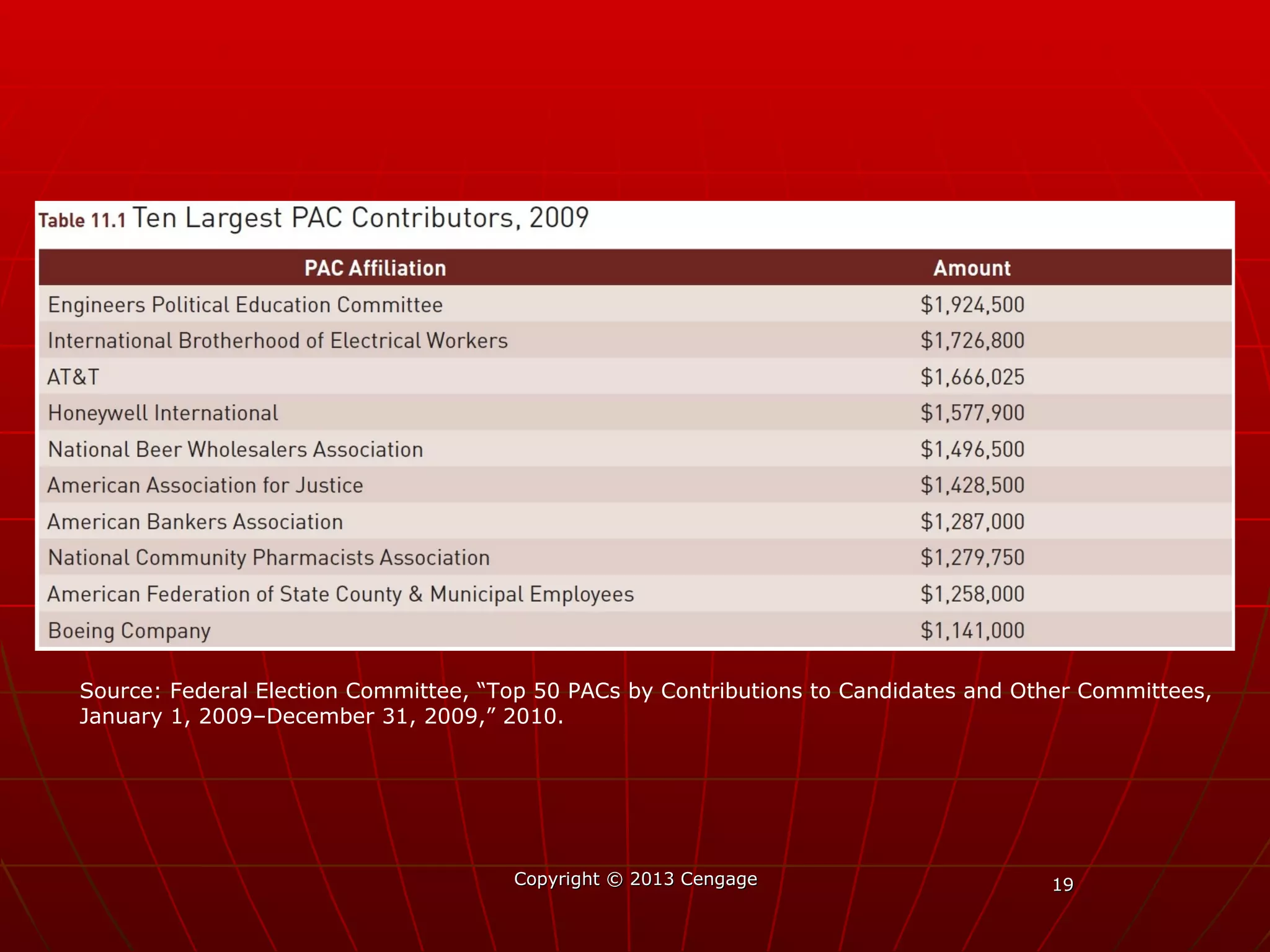
Source: Federal Election Committee, “Top 50 PACs by Contributions to Candidates and Other Committees,
January 1, 2009–December 31, 2009,” 2010.
2020
Figure 11.2 Political Action CommitteesFigure 11.2 Political Action Committees
(PACs)(PACs)
Copyright © 2013 CengageCopyright © 2013 Cengage
2121Copyright © 2013 CengageCopyright © 2013 Cengage
Jack Abramoff, convicted of unethical behavior in handling
lobbying claims by certain Indian tribes, is sworn in before a
congressional committee investigating this.
Tom Williams/CQ-Roll Call Group/Roll Call/Getty Images
2222Copyright © 2013 CengageCopyright © 2013 Cengage
2323
Lawsuits, such asLawsuits, such as
this one againstthis one against
Proposition 8 whichProposition 8 which
banned same sexbanned same sex
marriage inmarriage in
California, areCalifornia, are
often moreoften more
effective thaneffective than
protestprotest
demonstrations indemonstrations in
changing policies.changing policies.
Copyright © 2013 CengageCopyright © 2013 Cengage
Fred Prouser/Reuters/Landov
2424
Regulating Interest GroupsRegulating Interest Groups
 19461946 – Federal Regulation of– Federal Regulation of
Lobbying ActLobbying Act
 19951995 – Congress unanimously– Congress unanimously
passed lobbying billpassed lobbying bill
• Tightened registration and disclosureTightened registration and disclosure
requirementsrequirements
• Broadened definition of a lobbyistBroadened definition of a lobbyist
• Did not cover grass roots organizationsDid not cover grass roots organizations
Copyright © 2013 CengageCopyright © 2013 Cengage
2525
Regulating Interest GroupsRegulating Interest Groups
 20072007 – New regulations took effect– New regulations took effect
• No gifts of any value from registered lobbyistsNo gifts of any value from registered lobbyists
or firms that employ lobbyistsor firms that employ lobbyists
• No reimbursements for travel costs fromNo reimbursements for travel costs from
registered lobbyist or firms that employregistered lobbyist or firms that employ
lobbyistslobbyists
• No reimbursement for travel costs, no matterNo reimbursement for travel costs, no matter
the source, if the trip is in any part organizedthe source, if the trip is in any part organized
or requested by a registered lobbyist or firmor requested by a registered lobbyist or firm
that employs lobbyiststhat employs lobbyists
Copyright © 2013 CengageCopyright © 2013 Cengage
2626
M E M O R A N D U MM E M O R A N D U M
To:To: Kathleen Moore, Senate majority leaderKathleen Moore, Senate majority leader
From:From: Christopher Franklin, chief of staffChristopher Franklin, chief of staff
Subject:Subject: Full federal financing of presidential campaignsFull federal financing of presidential campaigns
Every presidential election since 1976 has been financed inEvery presidential election since 1976 has been financed in
part by federal funds. Now presidential candidates say theypart by federal funds. Now presidential candidates say they
will forego public funding for the general election, given thewill forego public funding for the general election, given the
vastly greater resources available through private fund-vastly greater resources available through private fund-
raising. Congress needs to decide whether elections are araising. Congress needs to decide whether elections are a
public investment or a political free market for citizens andpublic investment or a political free market for citizens and
candidates.candidates.
Copyright © 2013 CengageCopyright © 2013 Cengage
WHAT WOULD YOU DO?WHAT WOULD YOU DO?
2727
Arguments for:Arguments for:
1. Legal precedents are promising. Federal matching funds already1. Legal precedents are promising. Federal matching funds already
go to presidential primary candidates who have raised at leastgo to presidential primary candidates who have raised at least
$5,000, in contributions of $250 or less, in each of twenty states.$5,000, in contributions of $250 or less, in each of twenty states.
For the general election, each major party nominee already isFor the general election, each major party nominee already is
eligible for federal funding if he or she agrees to spend no moreeligible for federal funding if he or she agrees to spend no more
than that amount.than that amount.
2. The funding required would be small. Allocating $1 billion out of2. The funding required would be small. Allocating $1 billion out of
the public treasury for a presidential election every four years isthe public treasury for a presidential election every four years is
hardly a fiscal drain on a nearly $2 trillion annual budget.hardly a fiscal drain on a nearly $2 trillion annual budget.
3. The effects would be pervasive. Candidates and party leaders3. The effects would be pervasive. Candidates and party leaders
would stop covertly courting big donors with phone calls, lunches,would stop covertly courting big donors with phone calls, lunches,
and personal visits, and would focus instead on the needs ofand personal visits, and would focus instead on the needs of
average citizens.average citizens.
Copyright © 2013 CengageCopyright © 2013 Cengage
WHAT WOULD YOU DO?WHAT WOULD YOU DO?
2828
Arguments against:Arguments against:
1. Constitutional precedent for requiring political candidates to accept1. Constitutional precedent for requiring political candidates to accept
public funds is weak. Inpublic funds is weak. In Buckley v. ValeoBuckley v. Valeo (1976), the Supreme Court(1976), the Supreme Court
upheld limits on campaign contributions for candidates who acceptupheld limits on campaign contributions for candidates who accept
public money, but it also defined spending money for politicalpublic money, but it also defined spending money for political
purposes as expression protected by the First Amendment, therebypurposes as expression protected by the First Amendment, thereby
giving individuals the right to raise and spend as much of their owngiving individuals the right to raise and spend as much of their own
money as they choose, if they forego federal funds.money as they choose, if they forego federal funds.
2. Campaign spending would soon spiral once again. The federal2. Campaign spending would soon spiral once again. The federal
government may not restrict spending by individuals or organizationsgovernment may not restrict spending by individuals or organizations
working independently from the political parties, and federal fundsworking independently from the political parties, and federal funds
would merely supplement, not supplant, private fund-raising.would merely supplement, not supplant, private fund-raising.
3. Less than 10 percent of taxpayers currently supports public financing3. Less than 10 percent of taxpayers currently supports public financing
through voluntary federal income tax checkoffs, and voters likelythrough voluntary federal income tax checkoffs, and voters likely
would view bankrolling elections as serving politicians, not thewould view bankrolling elections as serving politicians, not the
people.people.
Copyright © 2013 CengageCopyright © 2013 Cengage
WHAT WOULD YOU DO?WHAT WOULD YOU DO?
2929
Your decision:Your decision:
Support Legislation?Support Legislation?
Oppose Legislation?Oppose Legislation?
Copyright © 2013 CengageCopyright © 2013 Cengage
WHAT WOULD YOU DO?WHAT WOULD YOU DO?

Chap11

  • 1.
    11 Chapter 11Chapter 11 InterestGroupsInterest Groups
  • 2.
    22Copyright © 2013CengageCopyright © 2013 Cengage  WHO GOVERNS?WHO GOVERNS? 1.1. Do interest groups dominateDo interest groups dominate government, and is any particulargovernment, and is any particular lobby politically unbeatable?lobby politically unbeatable? 2.2. Why do people join interest groups?Why do people join interest groups?  TO WHAT ENDS?TO WHAT ENDS? 1.1. Is the proliferation of political actionIs the proliferation of political action committees (PACs) and other groupscommittees (PACs) and other groups good or bad for America’sgood or bad for America’s representative democracy?representative democracy? 2.2. Should interest groups’ politicalShould interest groups’ political activities be restricted by law?activities be restricted by law?
  • 3.
    33Copyright © 2013CengageCopyright © 2013 Cengage
  • 4.
    44 The Rise ofInterest GroupsThe Rise of Interest Groups  An interest groupAn interest group is any organizationis any organization that seeks to influence public policy.that seeks to influence public policy.  The conditions that lead to the riseThe conditions that lead to the rise of interest groups areof interest groups are • Broad economic developmentsBroad economic developments • Government policyGovernment policy • Leadership exercisedLeadership exercised • Increased governmental activitiesIncreased governmental activities Copyright © 2013 CengageCopyright © 2013 Cengage
  • 5.
    55 A woman holdsa Tea Party sign at a rally in Concord,A woman holds a Tea Party sign at a rally in Concord, New Hampshire.New Hampshire. Copyright © 2013 CengageCopyright © 2013 Cengage BRIAN SNYDER/Reuters/Landov
  • 6.
    66Copyright © 2013CengageCopyright © 2013 Cengage
  • 7.
    77 Figure 11.1 Whatthe Top LobbyFigure 11.1 What the Top Lobby Spent, 1998–2010Spent, 1998–2010 Copyright © 2013 CengageCopyright © 2013 Cengage Source: Center forSource: Center for Public Integrity,Public Integrity, GeorgetownGeorgetown University,University, Washington, D.C.,Washington, D.C., 2011.2011.
  • 8.
    88 Kinds of OrganizationsKindsof Organizations  Institutional InterestsInstitutional Interests  Membership InterestsMembership Interests Copyright © 2013 CengageCopyright © 2013 Cengage W. E. B. Du Bois, scholar and activist, was one of the founders of the NAACP. C.M. Battey/Hulton Archive/Getty Images
  • 9.
    99 Getting and KeepingMembersGetting and Keeping Members  Incentives to JoinIncentives to Join • SolidaritySolidarity • MaterialMaterial • PurposivePurposive Copyright © 2013 CengageCopyright © 2013 Cengage The Service Employees International Union, a large and growing force, listens to Andy Stern, its president until 2010. Bill Clark/CQ-Roll Call Group/Roll Call/Getty Images
  • 10.
    1010Copyright © 2013CengageCopyright © 2013 Cengage
  • 11.
    1111Copyright © 2013CengageCopyright © 2013 Cengage
  • 12.
    1212 The Influence ofthe StaffThe Influence of the Staff  Some members of an interest groupSome members of an interest group may not care about many of themay not care about many of the issues with which the group getsissues with which the group gets involved.involved.  What the interest group does mayWhat the interest group does may reflect what thereflect what the staffstaff wantswants thanthan what thewhat the membersmembers believebelieve.. Copyright © 2013 CengageCopyright © 2013 Cengage
  • 13.
    1313 Interest Groups andSocialInterest Groups and Social MovementsMovements  The Environmental MovementThe Environmental Movement  The Feminist MovementThe Feminist Movement  The Union MovementThe Union Movement Copyright © 2013 CengageCopyright © 2013 Cengage The Million MomsThe Million Moms March in 2004March in 2004 demanded ademanded a federal ban onfederal ban on assault weapons.assault weapons. Larry Downing/Reuters
  • 14.
    1414 Funds for InterestGroupsFunds for Interest Groups  Foundation GrantsFoundation Grants  Federal Grants andFederal Grants and ContractsContracts  Direct MailDirect Mail Copyright © 2013 CengageCopyright © 2013 Cengage
  • 15.
    1515 Upper Class Bias?UpperClass Bias?  Do interest groups reflect an upper-Do interest groups reflect an upper- class bias?class bias?  Those most likely to belong to aThose most likely to belong to a voluntary association havevoluntary association have • Higher incomesHigher incomes • College degreesCollege degrees • Professional or technical jobsProfessional or technical jobs Copyright © 2013 CengageCopyright © 2013 Cengage
  • 16.
    1616 Upper Class Bias?UpperClass Bias?  Consider:Consider: • Do interest groups and lobbyists alwaysDo interest groups and lobbyists always get what they want?get what they want? • Are business-oriented groups dividedAre business-oriented groups divided among themselves?among themselves? • Are there profound cleavages of opinionAre there profound cleavages of opinion among the upper class?among the upper class? Copyright © 2013 CengageCopyright © 2013 Cengage
  • 17.
    1717 Farmers once hadgreatFarmers once had great influence in Congress andinfluence in Congress and could get their way withcould get their way with a few telephone calls.a few telephone calls. Today, they often mustToday, they often must use mass protestuse mass protest methods.methods. Copyright © 2013 CengageCopyright © 2013 Cengage JP/Laffront/Sygma/Corbis
  • 18.
    1818 The Activities ofInterest GroupsThe Activities of Interest Groups  InformationInformation  EarmarksEarmarks  Public SupportPublic Support  Money and PACsMoney and PACs  The “Revolving Door”The “Revolving Door”  Civil DisobedienceCivil Disobedience Copyright © 2013 CengageCopyright © 2013 Cengage
  • 19.
    1919Copyright © 2013CengageCopyright © 2013 Cengage Source: Federal Election Committee, “Top 50 PACs by Contributions to Candidates and Other Committees, January 1, 2009–December 31, 2009,” 2010.
  • 20.
    2020 Figure 11.2 PoliticalAction CommitteesFigure 11.2 Political Action Committees (PACs)(PACs) Copyright © 2013 CengageCopyright © 2013 Cengage
  • 21.
    2121Copyright © 2013CengageCopyright © 2013 Cengage Jack Abramoff, convicted of unethical behavior in handling lobbying claims by certain Indian tribes, is sworn in before a congressional committee investigating this. Tom Williams/CQ-Roll Call Group/Roll Call/Getty Images
  • 22.
    2222Copyright © 2013CengageCopyright © 2013 Cengage
  • 23.
    2323 Lawsuits, such asLawsuits,such as this one againstthis one against Proposition 8 whichProposition 8 which banned same sexbanned same sex marriage inmarriage in California, areCalifornia, are often moreoften more effective thaneffective than protestprotest demonstrations indemonstrations in changing policies.changing policies. Copyright © 2013 CengageCopyright © 2013 Cengage Fred Prouser/Reuters/Landov
  • 24.
    2424 Regulating Interest GroupsRegulatingInterest Groups  19461946 – Federal Regulation of– Federal Regulation of Lobbying ActLobbying Act  19951995 – Congress unanimously– Congress unanimously passed lobbying billpassed lobbying bill • Tightened registration and disclosureTightened registration and disclosure requirementsrequirements • Broadened definition of a lobbyistBroadened definition of a lobbyist • Did not cover grass roots organizationsDid not cover grass roots organizations Copyright © 2013 CengageCopyright © 2013 Cengage
  • 25.
    2525 Regulating Interest GroupsRegulatingInterest Groups  20072007 – New regulations took effect– New regulations took effect • No gifts of any value from registered lobbyistsNo gifts of any value from registered lobbyists or firms that employ lobbyistsor firms that employ lobbyists • No reimbursements for travel costs fromNo reimbursements for travel costs from registered lobbyist or firms that employregistered lobbyist or firms that employ lobbyistslobbyists • No reimbursement for travel costs, no matterNo reimbursement for travel costs, no matter the source, if the trip is in any part organizedthe source, if the trip is in any part organized or requested by a registered lobbyist or firmor requested by a registered lobbyist or firm that employs lobbyiststhat employs lobbyists Copyright © 2013 CengageCopyright © 2013 Cengage
  • 26.
    2626 M E MO R A N D U MM E M O R A N D U M To:To: Kathleen Moore, Senate majority leaderKathleen Moore, Senate majority leader From:From: Christopher Franklin, chief of staffChristopher Franklin, chief of staff Subject:Subject: Full federal financing of presidential campaignsFull federal financing of presidential campaigns Every presidential election since 1976 has been financed inEvery presidential election since 1976 has been financed in part by federal funds. Now presidential candidates say theypart by federal funds. Now presidential candidates say they will forego public funding for the general election, given thewill forego public funding for the general election, given the vastly greater resources available through private fund-vastly greater resources available through private fund- raising. Congress needs to decide whether elections are araising. Congress needs to decide whether elections are a public investment or a political free market for citizens andpublic investment or a political free market for citizens and candidates.candidates. Copyright © 2013 CengageCopyright © 2013 Cengage WHAT WOULD YOU DO?WHAT WOULD YOU DO?
  • 27.
    2727 Arguments for:Arguments for: 1.Legal precedents are promising. Federal matching funds already1. Legal precedents are promising. Federal matching funds already go to presidential primary candidates who have raised at leastgo to presidential primary candidates who have raised at least $5,000, in contributions of $250 or less, in each of twenty states.$5,000, in contributions of $250 or less, in each of twenty states. For the general election, each major party nominee already isFor the general election, each major party nominee already is eligible for federal funding if he or she agrees to spend no moreeligible for federal funding if he or she agrees to spend no more than that amount.than that amount. 2. The funding required would be small. Allocating $1 billion out of2. The funding required would be small. Allocating $1 billion out of the public treasury for a presidential election every four years isthe public treasury for a presidential election every four years is hardly a fiscal drain on a nearly $2 trillion annual budget.hardly a fiscal drain on a nearly $2 trillion annual budget. 3. The effects would be pervasive. Candidates and party leaders3. The effects would be pervasive. Candidates and party leaders would stop covertly courting big donors with phone calls, lunches,would stop covertly courting big donors with phone calls, lunches, and personal visits, and would focus instead on the needs ofand personal visits, and would focus instead on the needs of average citizens.average citizens. Copyright © 2013 CengageCopyright © 2013 Cengage WHAT WOULD YOU DO?WHAT WOULD YOU DO?
  • 28.
    2828 Arguments against:Arguments against: 1.Constitutional precedent for requiring political candidates to accept1. Constitutional precedent for requiring political candidates to accept public funds is weak. Inpublic funds is weak. In Buckley v. ValeoBuckley v. Valeo (1976), the Supreme Court(1976), the Supreme Court upheld limits on campaign contributions for candidates who acceptupheld limits on campaign contributions for candidates who accept public money, but it also defined spending money for politicalpublic money, but it also defined spending money for political purposes as expression protected by the First Amendment, therebypurposes as expression protected by the First Amendment, thereby giving individuals the right to raise and spend as much of their owngiving individuals the right to raise and spend as much of their own money as they choose, if they forego federal funds.money as they choose, if they forego federal funds. 2. Campaign spending would soon spiral once again. The federal2. Campaign spending would soon spiral once again. The federal government may not restrict spending by individuals or organizationsgovernment may not restrict spending by individuals or organizations working independently from the political parties, and federal fundsworking independently from the political parties, and federal funds would merely supplement, not supplant, private fund-raising.would merely supplement, not supplant, private fund-raising. 3. Less than 10 percent of taxpayers currently supports public financing3. Less than 10 percent of taxpayers currently supports public financing through voluntary federal income tax checkoffs, and voters likelythrough voluntary federal income tax checkoffs, and voters likely would view bankrolling elections as serving politicians, not thewould view bankrolling elections as serving politicians, not the people.people. Copyright © 2013 CengageCopyright © 2013 Cengage WHAT WOULD YOU DO?WHAT WOULD YOU DO?
  • 29.
    2929 Your decision:Your decision: SupportLegislation?Support Legislation? Oppose Legislation?Oppose Legislation? Copyright © 2013 CengageCopyright © 2013 Cengage WHAT WOULD YOU DO?WHAT WOULD YOU DO?