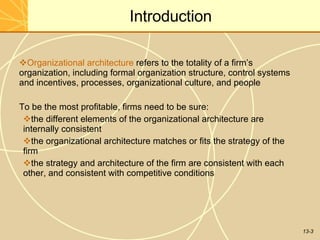
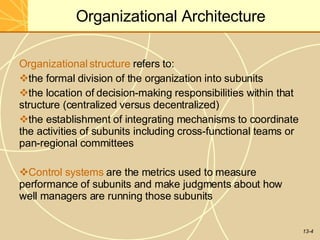
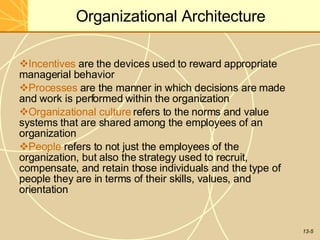
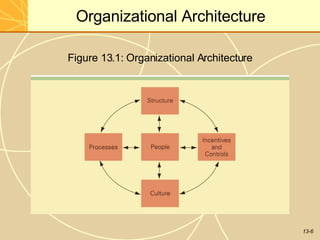
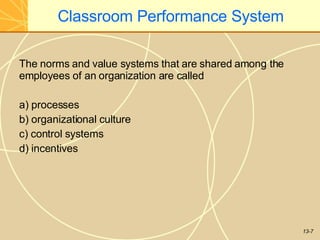
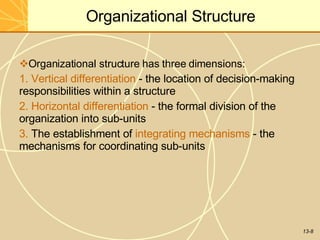
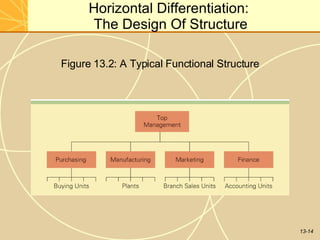
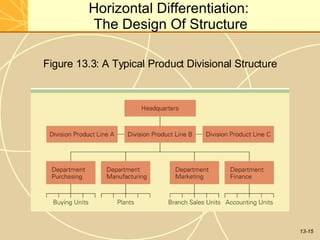
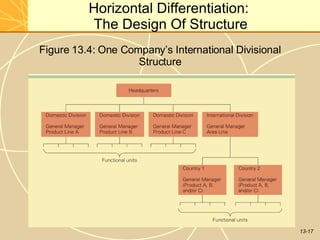
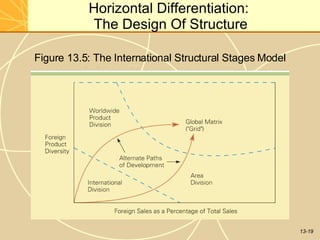
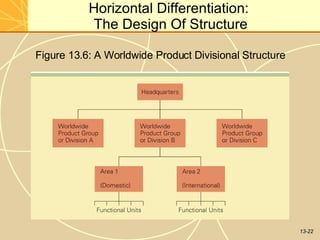
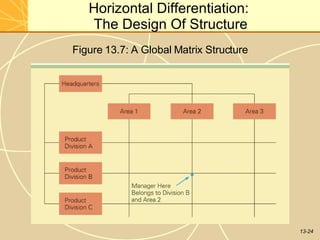
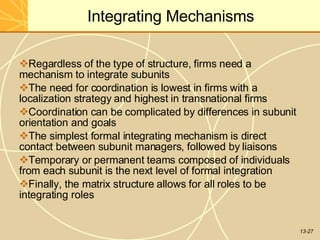
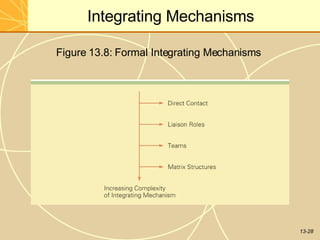
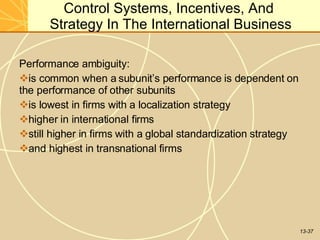
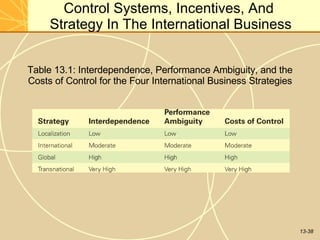
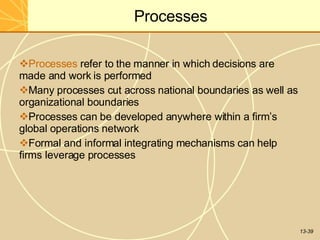
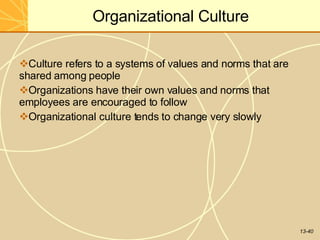
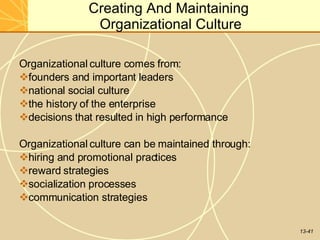
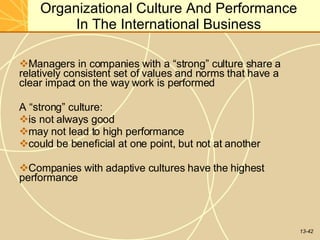
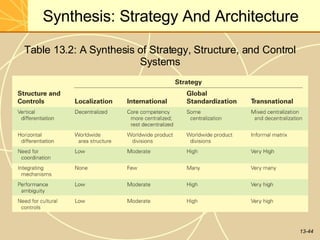
The document discusses organizational architecture and how it relates to international business strategy. It defines organizational architecture as including organizational structure, control systems, incentives, processes, culture, and human resources. It then examines each of these elements in detail. For example, it discusses different types of organizational structures like functional, divisional, matrix and how they relate to different stages of international expansion. It also analyzes how factors like performance ambiguity and need for integration vary based on whether a firm pursues a localization, international, global standardization or transnational strategy. The matrix structure is said to be common for firms pursuing a transnational strategy due to their high need for coordination across borders.