* * Chapter Two Understanding How Economics Affects Business Copyright   © 2010 by The McGraw-Hill Companies, Inc. All rights reserved. McGraw-Hill/Irwin
The MAJOR BRANCHES of  ECONOMICS * What Is  Economics? Economics –  how society employs resources to produce goods and services for consumption among various groups and individuals. Macroeconomics – “Big” Concentrates on the operation of a nation’s  economy as a whole . Microeconomics – “Small” Concentrates on behavior of people and organizations in markets for  particular products or services. LG1 * 2-
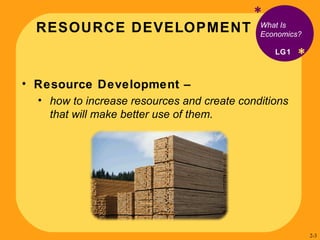
RESOURCE DEVELOPMENT * Resource Development –  how to increase resources and create conditions that will make better use of them. What Is  Economics? LG1 * 2-
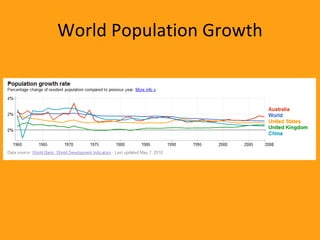
THOMAS MALTHUS and  the DISMAL SCIENCE * The Secret to Creating a Wealthy Economy Resources would run out if the rich had most of the wealth and the poor had most of the population,  This belief led  the writer Thomas Carlyle to call  economics “The Dismal Science.” Neo-Malthusians believe there are too many people in the world and believe the answer is radical birth control . LG1 * 2-
World Population Growth
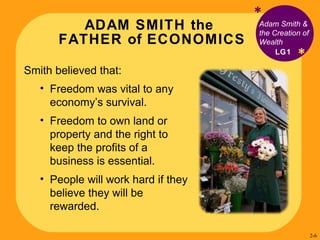
ADAM SMITH the  FATHER of ECONOMICS * Adam Smith & the Creation of Wealth Smith believed that:  Freedom was vital to any economy’s survival. Freedom to own land or property and the right to keep the profits of a business is essential. People will work hard if they believe they will be rewarded. LG1 * 2-
ADAM SMITH the  FATHER of ECONOMICS Invisible Hand
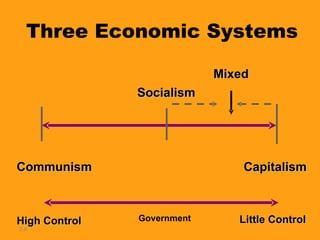
Three Economic Systems 2- Communism Socialism Capitalism Mixed High Control Little Control Government
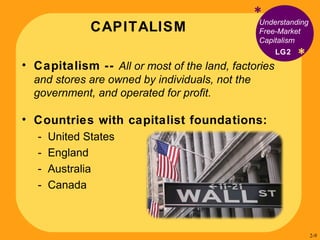
CAPITALISM * * Understanding Free-Market Capitalism Capitalism --  All or most of the land, factories and stores are owned by individuals, not the government, and operated for profit. Countries with capitalist foundations: United States England Australia Canada LG2 2-
Free-Market  Capitalism Rights 2- Private Property Business Ownership/ Profits Freedom of Competition Freedom of Choice
SOCIALISM * * Understanding Socialism Socialism –  based on premise that some basic businesses, like utilities, should be owned by the government in order to more evenly distribute profits among the people. Entrepreneurs run smaller businesses  Citizens are highly taxed  Government is more involved in protecting the environment and the poor LG3 2-
COMMUNISM * * Understanding Communism Communism –  government makes  almost all  economic decisions and  owns almost all the major factors of production.  Prices don’t reflect demand which may lead to shortages of items, including food and clothing. Most communist countries today suffer severe economic depression and citizens fear the government. LG3 2-
Where is This? http://images.google.com/imgres?imgurl=http://strangemaps.files.wordpress.com/2007/12/1207koreaelectricitygrikf0.jpg&imgrefurl=http://strangemaps.wordpress.com/2007/12/16/218-koreas-dark-half/&usg=__YKejMC75cgXfP689w826Re5jRig=&h=700&w=548&sz=63&hl=en&start=21&sig2=wqr7GrODDT9BLQCikNy2jA&um=1&tbnid=vAaKo6KGi2keSM:&tbnh=140&tbnw=110&prev=/images%3Fq%3DKorea%26ndsp%3D18%26hl%3Den%26rls%3Dcom.microsoft:*:IE-Address%26rlz%3D1I7WZPA_en%26sa%3DN%26start%3D18%26um%3D1& ei=QXieSom9F8LilAeU06jHDQ http://www.youtube.com/watch?v=ImAthUIqEfU  2-
MIXED ECONOMIES * * The Trend  Toward Mixed Economies Mixed Economies –  Some allocation of resources is made by the market and some by the government. Neither free-market nor command economies have created sound economic conditions so countries use a mix of the two economic systems. LG4 2-
GROSS DOMESTIC PRODUCT * * Gross Domestic Product Gross Domestic Product (GDP) –  Total value of final goods and services produced in a country in a given year.  As long as a company is within a country’s border, their numbers go into the country’s GDP (even if they are foreign-owned). When the GDP changes, businesses feel the effect. The high U.S. GDP (about $14 trillion) is what enables us to enjoy a high standard of living. LG5 2-
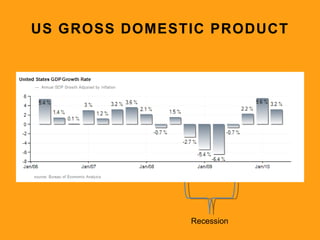
US GROSS DOMESTIC PRODUCT Recession
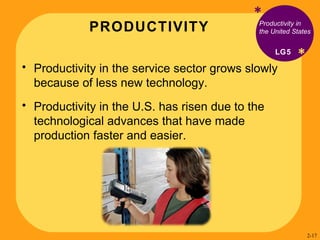
PRODUCTIVITY * * Productivity in the United States Productivity in the service sector grows slowly because of less new technology.  Productivity in the U.S. has risen due to the technological advances that have made production faster and easier. LG5 2-
BUSINESS CYCLES * * The Business Cycle Business Cycles –  Periodic rises and falls that occur in economies over time.  Four Phases of Long-Term Business Cycles: Economic Boom Recession – Two or more consecutive quarters of decline in the GDP. Depression – A severe recession. Recovery – When the economy stabilizes and starts to grow. This leads to an Economic Boom. LG5 2-
FISCAL POLICY * * Stabilizing the Economy Through Fiscal Policy Fiscal Policy –  federal government’s efforts to keep economy stable  increasing or decreasing taxes or government spending.  Tools of Fiscal Policy: Taxation Government Spending LG6 2-
MONETARY POLICY * * Using Monetary Policy to Keep the Economy Growing Monetary Policy –  management of money supply and interest rates by Federal Reserve Bank (the Fed).  The Fed’s most visible role is increasing and lowering interest rates. When the economy is booming, the Fed tends to increase interest rates. When the economy is in a recession, the Fed tends to decrease the interest rates. LG6 2-

BUS110 Chap 2 - Understanding How Economics Affects Business

  • 1.
    * * ChapterTwo Understanding How Economics Affects Business Copyright © 2010 by The McGraw-Hill Companies, Inc. All rights reserved. McGraw-Hill/Irwin
  • 2.
    The MAJOR BRANCHESof ECONOMICS * What Is Economics? Economics – how society employs resources to produce goods and services for consumption among various groups and individuals. Macroeconomics – “Big” Concentrates on the operation of a nation’s economy as a whole . Microeconomics – “Small” Concentrates on behavior of people and organizations in markets for particular products or services. LG1 * 2-
  • 3.
    RESOURCE DEVELOPMENT *Resource Development – how to increase resources and create conditions that will make better use of them. What Is Economics? LG1 * 2-
  • 4.
    THOMAS MALTHUS and the DISMAL SCIENCE * The Secret to Creating a Wealthy Economy Resources would run out if the rich had most of the wealth and the poor had most of the population, This belief led the writer Thomas Carlyle to call economics “The Dismal Science.” Neo-Malthusians believe there are too many people in the world and believe the answer is radical birth control . LG1 * 2-
  • 5.
  • 6.
    ADAM SMITH the FATHER of ECONOMICS * Adam Smith & the Creation of Wealth Smith believed that: Freedom was vital to any economy’s survival. Freedom to own land or property and the right to keep the profits of a business is essential. People will work hard if they believe they will be rewarded. LG1 * 2-
  • 7.
    ADAM SMITH the FATHER of ECONOMICS Invisible Hand
  • 8.
    Three Economic Systems2- Communism Socialism Capitalism Mixed High Control Little Control Government
  • 9.
    CAPITALISM * *Understanding Free-Market Capitalism Capitalism -- All or most of the land, factories and stores are owned by individuals, not the government, and operated for profit. Countries with capitalist foundations: United States England Australia Canada LG2 2-
  • 10.
    Free-Market CapitalismRights 2- Private Property Business Ownership/ Profits Freedom of Competition Freedom of Choice
  • 11.
    SOCIALISM * *Understanding Socialism Socialism – based on premise that some basic businesses, like utilities, should be owned by the government in order to more evenly distribute profits among the people. Entrepreneurs run smaller businesses Citizens are highly taxed Government is more involved in protecting the environment and the poor LG3 2-
  • 12.
    COMMUNISM * *Understanding Communism Communism – government makes almost all economic decisions and owns almost all the major factors of production. Prices don’t reflect demand which may lead to shortages of items, including food and clothing. Most communist countries today suffer severe economic depression and citizens fear the government. LG3 2-
  • 13.
    Where is This?http://images.google.com/imgres?imgurl=http://strangemaps.files.wordpress.com/2007/12/1207koreaelectricitygrikf0.jpg&imgrefurl=http://strangemaps.wordpress.com/2007/12/16/218-koreas-dark-half/&usg=__YKejMC75cgXfP689w826Re5jRig=&h=700&w=548&sz=63&hl=en&start=21&sig2=wqr7GrODDT9BLQCikNy2jA&um=1&tbnid=vAaKo6KGi2keSM:&tbnh=140&tbnw=110&prev=/images%3Fq%3DKorea%26ndsp%3D18%26hl%3Den%26rls%3Dcom.microsoft:*:IE-Address%26rlz%3D1I7WZPA_en%26sa%3DN%26start%3D18%26um%3D1& ei=QXieSom9F8LilAeU06jHDQ http://www.youtube.com/watch?v=ImAthUIqEfU 2-
  • 14.
    MIXED ECONOMIES ** The Trend Toward Mixed Economies Mixed Economies – Some allocation of resources is made by the market and some by the government. Neither free-market nor command economies have created sound economic conditions so countries use a mix of the two economic systems. LG4 2-
  • 15.
    GROSS DOMESTIC PRODUCT* * Gross Domestic Product Gross Domestic Product (GDP) – Total value of final goods and services produced in a country in a given year. As long as a company is within a country’s border, their numbers go into the country’s GDP (even if they are foreign-owned). When the GDP changes, businesses feel the effect. The high U.S. GDP (about $14 trillion) is what enables us to enjoy a high standard of living. LG5 2-
  • 16.
    US GROSS DOMESTICPRODUCT Recession
  • 17.
    PRODUCTIVITY * *Productivity in the United States Productivity in the service sector grows slowly because of less new technology. Productivity in the U.S. has risen due to the technological advances that have made production faster and easier. LG5 2-
  • 18.
    BUSINESS CYCLES ** The Business Cycle Business Cycles – Periodic rises and falls that occur in economies over time. Four Phases of Long-Term Business Cycles: Economic Boom Recession – Two or more consecutive quarters of decline in the GDP. Depression – A severe recession. Recovery – When the economy stabilizes and starts to grow. This leads to an Economic Boom. LG5 2-
  • 19.
    FISCAL POLICY ** Stabilizing the Economy Through Fiscal Policy Fiscal Policy – federal government’s efforts to keep economy stable increasing or decreasing taxes or government spending. Tools of Fiscal Policy: Taxation Government Spending LG6 2-
  • 20.
    MONETARY POLICY ** Using Monetary Policy to Keep the Economy Growing Monetary Policy – management of money supply and interest rates by Federal Reserve Bank (the Fed). The Fed’s most visible role is increasing and lowering interest rates. When the economy is booming, the Fed tends to increase interest rates. When the economy is in a recession, the Fed tends to decrease the interest rates. LG6 2-

Editor's Notes

  • #9 See Learning Goal 2: Explain what capitalism is and how free markets work. See text pages: 34-40 See Learning Goal 3: Discuss the major differences between socialism and communism. See text pages: 41-42 See Learning Goal 4: Explain the trend toward mixed economies. See text pages: 43-45
  • #11 See Learning Goal 2: Explain what capitalism is and how free markets work. See text pages: 34-40