Channelopathies
By
Aboul Naga Abdul Rady
• Ion channels
• Types of ion channels
• Mechanism of channel formation and
disruption
• channelopathy
• Consequences of ion channel mutations
• Diseases related to channelopathy
Contents
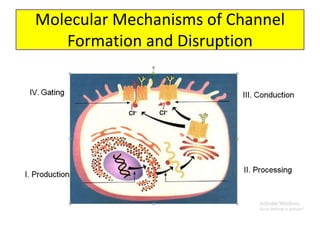
Molecular Mechanisms of Channel
Formation and Disruption
Channelopathies?
• 1. Definition: Disorders of ion channels or ion channel
disease
• Diseases that result from defects in ion channel
function. Mostly caused by mutations of ion channels.
4. Numerous mutation sites may cause
similar channelopathy
• e.g. cystic fibrosis where >1000 different
mutations of CFTR described
• 3. Increasingly recognized as important cause
of disease (>30 diseases).
Consequences of Ion Channel
Mutations
1- Mutation of ion channel can alter
2- Abnormal gain of function
3- Loss of function.
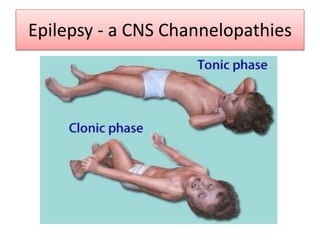
Epilepsy - a CNS Channelopathies
• • Glucose enters the cell via the GLUT2
transporter
• • Glycolytic and mitochondrial metabolism
leads to an increase in ATP
• • This results in KATP channel closure,
membrane depolarization,
• • Opening of voltage-gated Ca2+ channels,
Ca2+influx,
• • Exocytosis of insulin granules (insulin
secretion).
4- Cystic Fibrosis: Cl- Channel Disease
• Cystic fibrosis (CF) is autosomal recessive disease
• CF is a chronic, progressive, life threatening genetic
disorder of pediatrics.
• It affect white population (1 in 3200 live births) but is
uncommon among Asian and African population
• It affects exocrine glands (mainly sweat glands) and
mucus gland present on the epithelial lining of lungs,
pancreas, intestine, and reproductive system.
• CF is a defect in epithelial chloride channel protein,
causes membrane to become impermeable to Chloride
ion.
• Impaired function of CFTR cause the
production of hypertonic salty sweat, and
ultimately dehydration.
• Loss of CFTR function to secrete chloride ion
• Loss or reduction of Cl- ion in luminal secretion
• Followed by active luminal Na+ absorption
through ENaC
• Increases passive water absorption from the
lumen
• Impaired mucociliary action, accumulation of
thick, viscous, dehydrated mucus
• Obstruction of air passage and recurrent
pulmonary infections
5-kidney channelopathies
channelopathy.pptx
channelopathy.pptx
channelopathy.pptx
channelopathy.pptx
channelopathy.pptx
channelopathy.pptx
channelopathy.pptx
channelopathy.pptx
channelopathy.pptx
channelopathy.pptx
channelopathy.pptx

channelopathy.pptx

  • 1.
  • 2.
    • Ion channels •Types of ion channels • Mechanism of channel formation and disruption • channelopathy • Consequences of ion channel mutations • Diseases related to channelopathy Contents
  • 4.
    Molecular Mechanisms ofChannel Formation and Disruption
  • 5.
    Channelopathies? • 1. Definition:Disorders of ion channels or ion channel disease • Diseases that result from defects in ion channel function. Mostly caused by mutations of ion channels.
  • 6.
    4. Numerous mutationsites may cause similar channelopathy • e.g. cystic fibrosis where >1000 different mutations of CFTR described • 3. Increasingly recognized as important cause of disease (>30 diseases).
  • 7.
    Consequences of IonChannel Mutations 1- Mutation of ion channel can alter 2- Abnormal gain of function 3- Loss of function.
  • 13.
    Epilepsy - aCNS Channelopathies
  • 15.
    • • Glucoseenters the cell via the GLUT2 transporter • • Glycolytic and mitochondrial metabolism leads to an increase in ATP • • This results in KATP channel closure, membrane depolarization, • • Opening of voltage-gated Ca2+ channels, Ca2+influx, • • Exocytosis of insulin granules (insulin secretion).
  • 16.
    4- Cystic Fibrosis:Cl- Channel Disease • Cystic fibrosis (CF) is autosomal recessive disease • CF is a chronic, progressive, life threatening genetic disorder of pediatrics. • It affect white population (1 in 3200 live births) but is uncommon among Asian and African population • It affects exocrine glands (mainly sweat glands) and mucus gland present on the epithelial lining of lungs, pancreas, intestine, and reproductive system. • CF is a defect in epithelial chloride channel protein, causes membrane to become impermeable to Chloride ion.
  • 17.
    • Impaired functionof CFTR cause the production of hypertonic salty sweat, and ultimately dehydration.
  • 19.
    • Loss ofCFTR function to secrete chloride ion • Loss or reduction of Cl- ion in luminal secretion • Followed by active luminal Na+ absorption through ENaC • Increases passive water absorption from the lumen • Impaired mucociliary action, accumulation of thick, viscous, dehydrated mucus • Obstruction of air passage and recurrent pulmonary infections
  • 21.