Louis Aylward
Business Change Manager
OD & Change team
Creating
successful change
engaging people with change
in the workplace
Personal responses to change
How change fails – a story
ACES model
Building on today
“The vast majority of large scale change efforts fail…
John Kotter
“The vast majority of large scale change efforts fail. Which means that the
probability that you have actually experienced a failure, and your people
know that and are pessimistic, therefore, about trying something again, is
very high.”
John Kotter
Personal responses to change
How change fails – a story
ACES model
Building on today
Personal responses to change
How change fails – a story
ACES model
Building on today
Change as a personal response
People don’t like change.People don’t like change which is done to them.
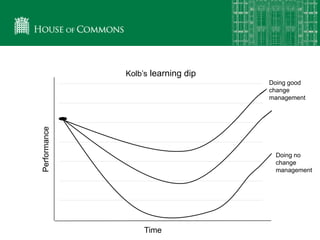
Kolb’s learning dip
Time
Performance
Doing no
change
management
Doing good
change
management
People like change.People can handle change which they can learn.
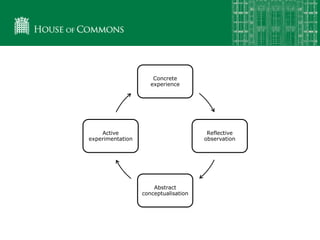
Concrete
experience
Reflective
observation
Abstract
conceptualisation
Active
experimentation
Proposition
It helps to see change as a learning
process
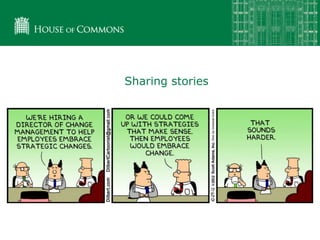
Sharing stories
Personal responses to change
How change fails – a short story
ACES model
Building on today
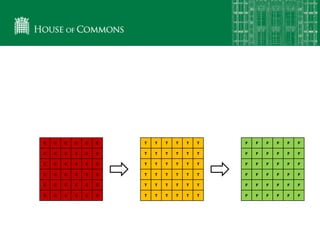
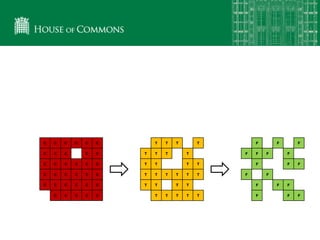
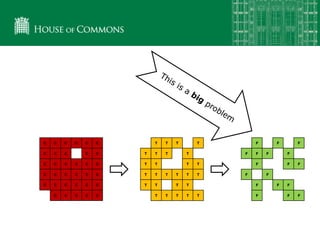
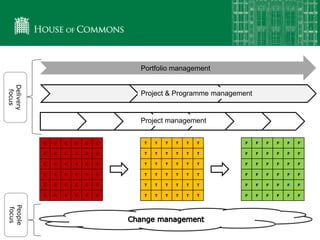
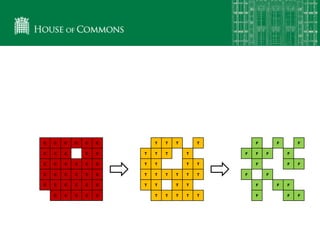
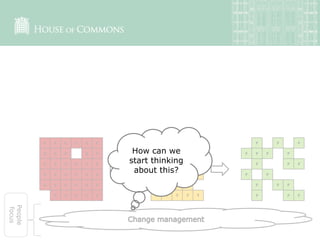
So if change is a learning process what happens when lots of
people (each with a personal response) go through change in the
workplace?
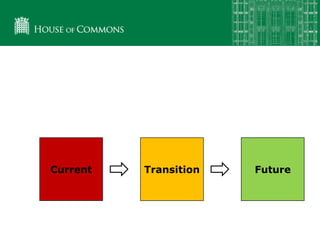
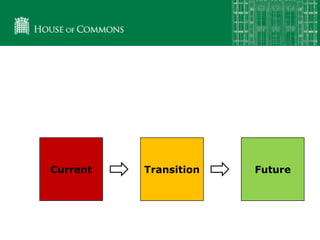
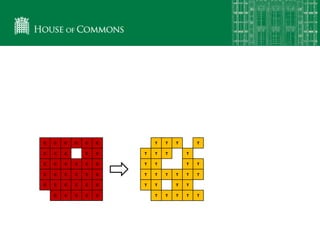
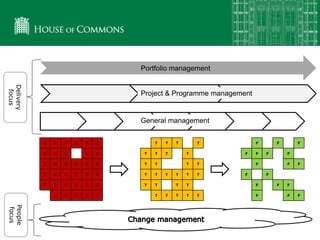
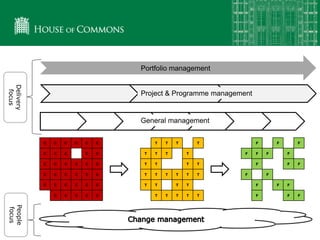
Current Transition Future
Change as a personal response
Current Transition Future
C C C C C C T T T T T T F F F F F F
C C C C C C
C C C C C C
C C C C C C
C C C C C C
C C C C C C
C C C C C C
C C C C C C
C C C C C
C C C C C C
C C C C C C
C C C C C C
C C C C C
C C C C C C T T T T F F F F F F
C C C C C T T T T F F F F F F
C C C C C C T T T T F F F F F F
C C C C C C T T T T T T F F F F F F
C C C C C C T T T T F F F F F F
C C C C C T T T T T F F F F F F
C C C C C C T T T T F F F
C C C C C T T T T F F F F
C C C C C C T T T T F F F
C C C C C C T T T T T T F F
C C C C C C T T T T F F F
C C C C C T T T T T F F F
C C C C C C T T T T F F F
C C C C C T T T T F F F F
C C C C C C T T T T F F F
C C C C C C T T T T T T F F
C C C C C C T T T T F F F
C C C C C T T T T T F F F
C C C C C C T T T T F F F
C C C C C T T T T F F F F
C C C C C C T T T T F F F
C C C C C C T T T T T T F F
C C C C C C T T T T F F F
C C C C C T T T T T F F F
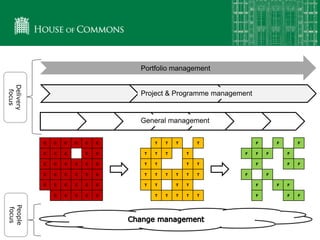
Portfolio management
Project & Programme management
General management
Delivery
focus
People
focus
C C C C C C T T T T F F F
C C C C C T T T T F F F F
C C C C C C T T T T F F F
C C C C C C T T T T T T F F
C C C C C C T T T T F F F
C C C C C T T T T T F F F
Portfolio management
Project & Programme management
General management
Delivery
focus
People
focus
C C C C C C T T T T F F F
C C C C C T T T T F F F F
C C C C C C T T T T F F F
C C C C C C T T T T T T F F
C C C C C C T T T T F F F
C C C C C T T T T T F F F
Portfolio management
Project & Programme management
General management
Delivery
focus
People
focus
C C C C C C T T T T T T F F F F F F
Portfolio management
Project & Programme management
Project management
Delivery
focus
People
focus
C C C C C C T T T T F F F
C C C C C T T T T F F F F
C C C C C C T T T T F F F
C C C C C C T T T T T T F F
C C C C C C T T T T F F F
C C C C C T T T T T F F F
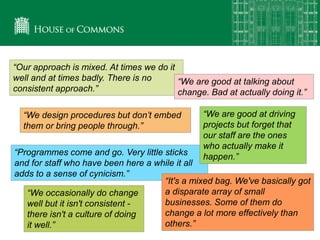
“We occasionally do change
well but it isn't consistent -
there isn't a culture of doing
it well.”
“Programmes come and go. Very little sticks
and for staff who have been here a while it all
adds to a sense of cynicism.”
“Our approach is mixed. At times we do it
well and at times badly. There is no
consistent approach.”
“We are good at talking about
change. Bad at actually doing it.”
“It's a mixed bag. We've basically got
a disparate array of small
businesses. Some of them do
change a lot more effectively than
others.”
“We design procedures but don’t embed
them or bring people through.”
“We are good at driving
projects but forget that
our staff are the ones
who actually make it
happen.”
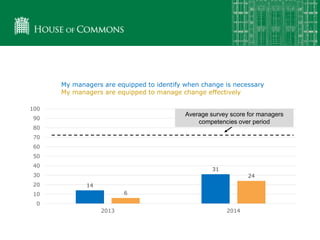
14
31
6
24
0
10
20
30
40
50
60
70
80
90
100
2013 2014
My managers are equipped to identify when change is necessary
My managers are equipped to manage change effectively
Average survey score for managers
competencies over period
We trained hard. But it seemed that every time we were beginning
to form into teams, we would be reorganised.
I was to learn later in life that we tend to meet any new situation
by reorganising. And what a wonderful method it can be for
creating the illusion of progress while producing confusion,
inefficiency and demoralisation.
Gaius Petronius Arbiter, The Satyricon
1st century AD
Sharing stories
C C C C C C T T T T F F F
C C C C C T T T T F F F F
C C C C C C T T T T F F F
C C C C C C T T T T T T F F
C C C C C C T T T T F F F
C C C C C T T T T T F F F
People
focus
How can we
start thinking
about this?
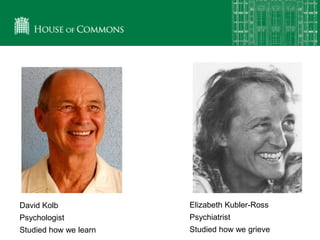
David Kolb
Psychologist
Studied how we learn
Elizabeth Kubler-Ross
Psychiatrist
Studied how we grieve
C C C C C C T T T T F F F
C C C C C T T T T F F F F
C C C C C C T T T T F F F
C C C C C C T T T T T T F F
C C C C C C T T T T F F F
C C C C C T T T T T F F F
People
focus
Great, but
what can I do
with that?
Personal responses to change
How change fails – a story
ACES model
Building on today
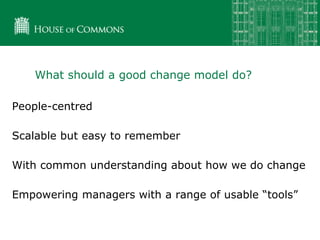
What should a good change model do?
People-centred
Scalable but easy to remember
With common understanding about how we do change
Empowering managers with a range of usable “tools”
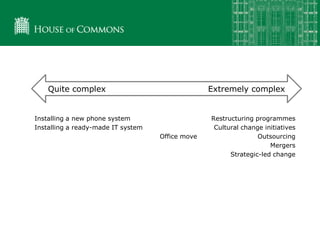
Installing a new phone system
Installing a ready-made IT system
Office move
Restructuring programmes
Cultural change initiatives
Outsourcing
Mergers
Strategic-led change
Quite complex Extremely complex
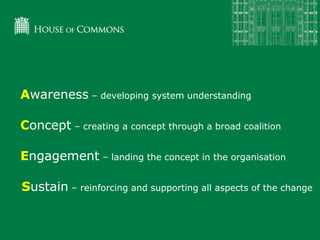
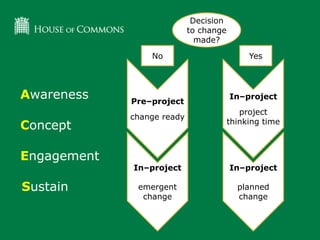
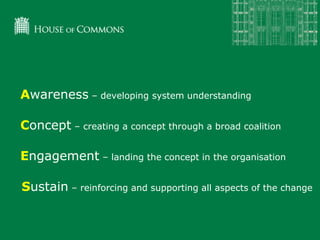
Awareness – developing system understanding
Concept – creating a concept through a broad coalition
Engagement – landing the concept in the organisation
Sustain – reinforcing and supporting all aspects of the change
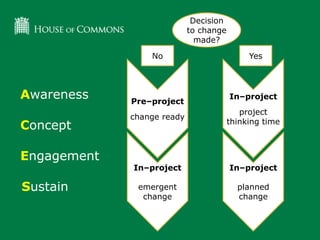
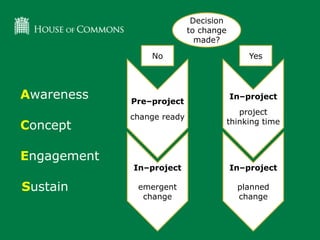
Awareness
Concept
Engagement
Sustain
Pre–project
change ready
In–project
emergent
change
In–project
project
thinking time
In–project
planned
change
No
Decision
to change
made?
Yes
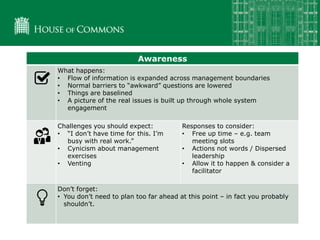
Awareness
What happens:
• Flow of information is expanded across management boundaries
• Normal barriers to “awkward” questions are lowered
• Things are baselined
• A picture of the real issues is built up through whole system
engagement
Challenges you should expect:
• “I don’t have time for this. I’m
busy with real work.”
• Cynicism about management
exercises
• Venting
Responses to consider:
• Free up time – e.g. team
meeting slots
• Actions not words / Dispersed
leadership
• Allow it to happen & consider a
facilitator
Don’t forget:
• You don’t need to plan too far ahead at this point – in fact you probably
shouldn’t.
Awareness
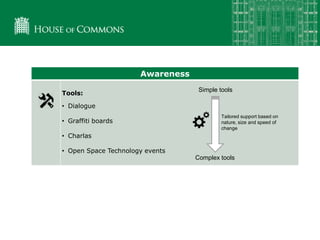
Tools:
• Dialogue
• Graffiti boards
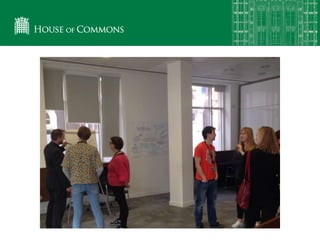
• Charlas
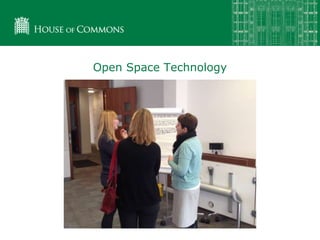
• Open Space Technology events
Simple tools
Complex tools
Tailored support based on
nature, size and speed of
change
Awareness
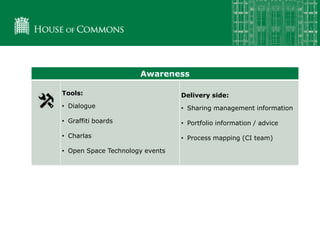
Tools:
• Dialogue
• Graffiti boards
• Charlas
• Open Space Technology events
Delivery side:
• Sharing management information
• Portfolio information / advice
• Process mapping (CI team)
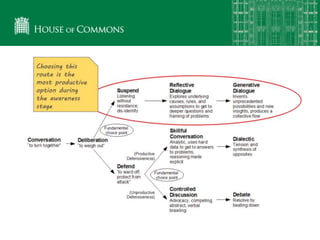
Dialogue is about thinking together rather than thinking
alone
Dialogue demands that we both let go of our own
invested positions for a while
Dialogue
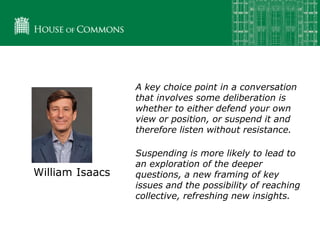
William Isaacs
A key choice point in a conversation
that involves some deliberation is
whether to either defend your own
view or position, or suspend it and
therefore listen without resistance.
Suspending is more likely to lead to
an exploration of the deeper
questions, a new framing of key
issues and the possibility of reaching
collective, refreshing new insights.
What resources would you need to put William Isaacs’ ideas
about dialogue into practice?
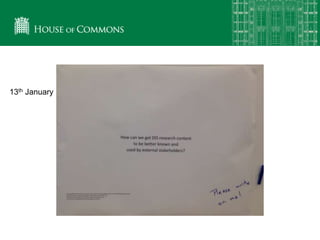
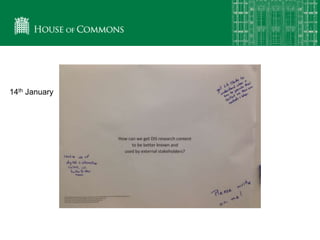
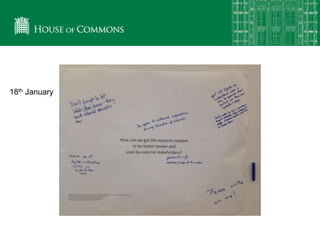
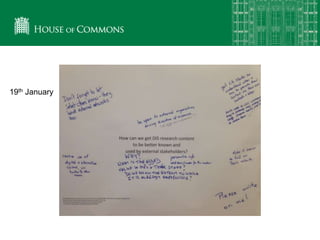
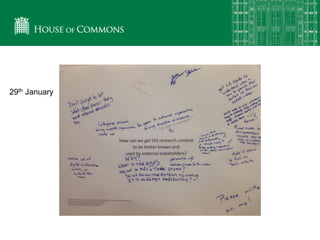
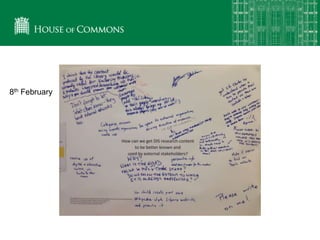
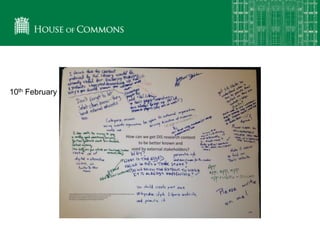
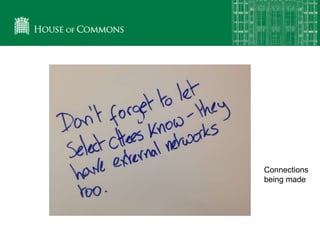
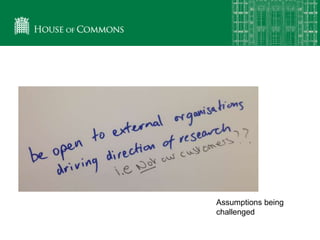
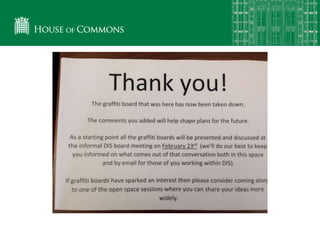
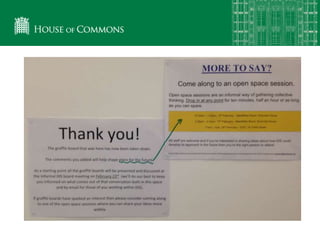
Graffiti boards
13th January
14th January
18th January
19th January
29th January
8th February
10th February
Connections
being made
Assumptions being
challenged
Doing graffiti boards online…
What resources would you need to use Graffiti boards where
you work?
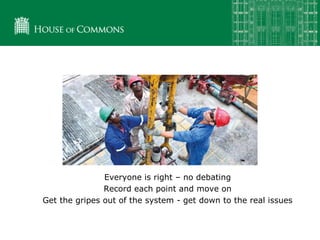
Charlas
Everyone is right – no debating
Record each point and move on
Get the gripes out of the system - get down to the real issues
What resources would you need to run a Charla?
Open Space Technology
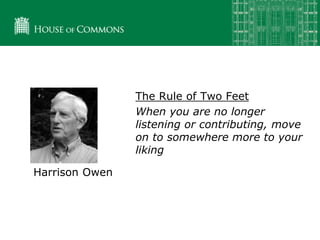
Harrison Owen
The Rule of Two Feet
When you are no longer
listening or contributing, move
on to somewhere more to your
liking
What resources would you need to run an Open Space
Technology event?
Awareness – develop system understanding
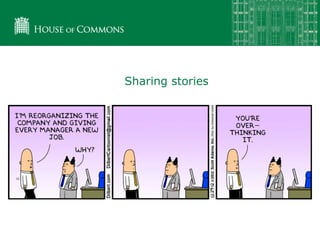
Sharing stories
Concept
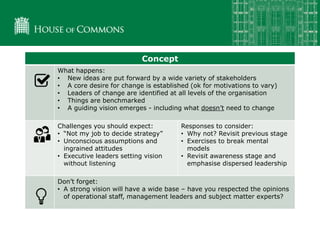
What happens:
• New ideas are put forward by a wide variety of stakeholders
• A core desire for change is established (ok for motivations to vary)
• Leaders of change are identified at all levels of the organisation
• Things are benchmarked
• A guiding vision emerges - including what doesn’t need to change
Challenges you should expect:
• “Not my job to decide strategy”
• Unconscious assumptions and
ingrained attitudes
• Executive leaders setting vision
without listening
Responses to consider:
• Why not? Revisit previous stage
• Exercises to break mental
models
• Revisit awareness stage and
emphasise dispersed leadership
Don’t forget:
• A strong vision will have a wide base – have you respected the opinions
of operational staff, management leaders and subject matter experts?
Awareness
Tools:
• Concept questions
• C=[DVF] > R
• A pilot project
• De Bono’s hats and Walt’s strategy
Simple tools
Complex tools
Concept questions
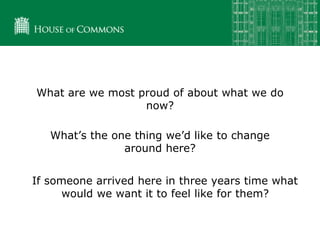
What are we most proud of about what we do
now?
What are we most proud of about what we do
now?
What’s the one thing we’d like to change
around here?
What are we most proud of about what we do
now?
What’s the one thing we’d like to change
around here?
If someone arrived here in three years time what
would we want it to feel like for them?
What resources would you need to ask concept questions?
C=[DVF]>R
Change Dissatisfaction
with status
quo
Vision of what
is possible
First concrete
steps towards
vision
Resistance to
change
How could you use the change equation?
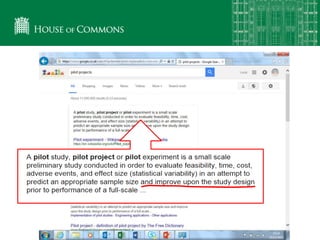
A pilot project
What resources would you need to a pilot project?
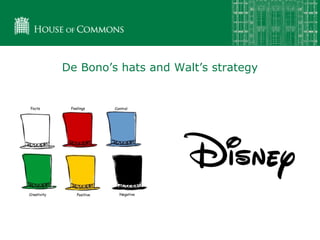
De Bono’s hats and Walt’s strategy
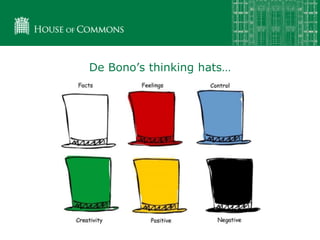
De Bono’s thinking hats…
The Disney Creative Strategy
What resources would you need to do one of these creative exercises?
Concept – creating a change concept through a broad coalition
Awareness
Concept
Engagement
Sustain
Pre–project
change ready
In–project
emergent
change
In–project
project
thinking time
In–project
planned
change
No
Decision
to change
made?
Yes
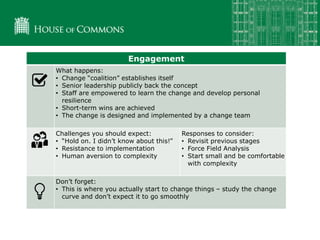
Engagement
What happens:
• Change “coalition” establishes itself
• Senior leadership publicly back the concept
• Staff are empowered to learn the change and develop personal
resilience
• Short-term wins are achieved
• The change is designed and implemented by a change team
Challenges you should expect:
• “Hold on. I didn’t know about this!”
• Resistance to implementation
• Human aversion to complexity
Responses to consider:
• Revisit previous stages
• Force Field Analysis
• Start small and be comfortable
with complexity
Don’t forget:
• This is where you actually start to change things – study the change
curve and don’t expect it to go smoothly
Awareness
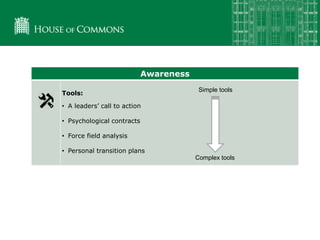
Tools:
• A leaders’ call to action
• Psychological contracts
• Force field analysis
• Personal transition plans
Simple tools
Complex tools
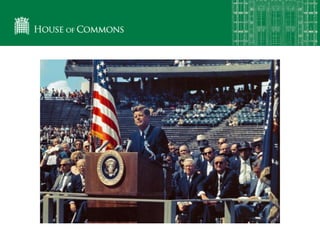
“We choose to go to the moon in this decade and do the other things,
not because they are easy, but because they are hard, because that
goal will serve to organize and measure the best of our energies and
skills, because that challenge is one that we are willing to accept, one
we are unwilling to postpone, and one which we intend to win… And it
will be done before the end of this decade.”
Leader’s call to action
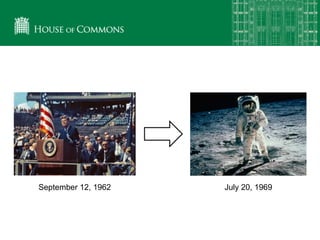
September 12, 1962 July 20, 1969
What do you need for an effective call to action?
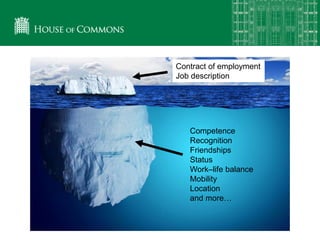
Psychological contracts
Competence
Recognition
Friendships
Status
Work–life balance
Mobility
Location
and more…
Contract of employment
Job description
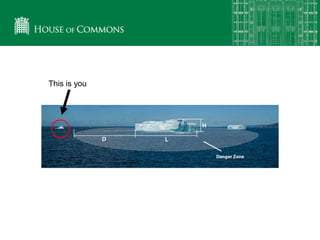
This is you
Personal transition plans
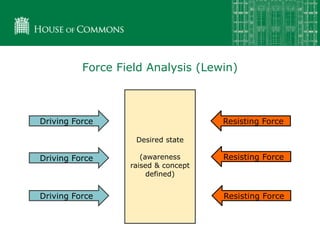
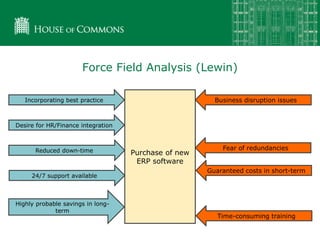
Force Field Analysis (Lewin)
Desired state
(awareness
raised & concept
defined)
Driving Force
Driving Force
Driving Force
Resisting Force
Resisting Force
Resisting Force
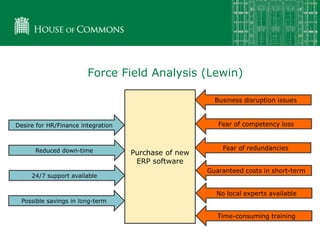
Force Field Analysis (Lewin)
Purchase of new
ERP software
Reduced down-time
24/7 support available
Business disruption issues
Fear of redundancies
Guaranteed costs in short-term
Possible savings in long-term
Desire for HR/Finance integration Fear of competency loss
Time-consuming training
No local experts available
Force Field Analysis (Lewin)
Purchase of new
ERP software
Reduced down-time
24/7 support available
Business disruption issues
Fear of redundancies
Guaranteed costs in short-term
Highly probable savings in long-
term
Desire for HR/Finance integration
Time-consuming training
Incorporating best practice
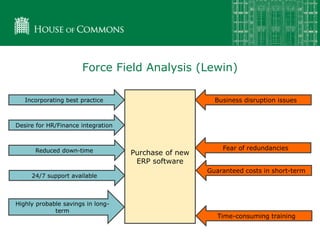
Force Field Analysis (Lewin)
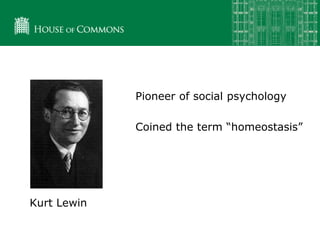
Kurt Lewin
Pioneer of social psychology
Coined the term “homeostasis”
Purchase of new
ERP software
Reduced down-time
24/7 support available
Business disruption issues
Fear of redundancies
Guaranteed costs in short-term
Highly probable savings in long-
term
Desire for HR/Finance integration
Time-consuming training
Incorporating best practice
Force Field Analysis (Lewin)
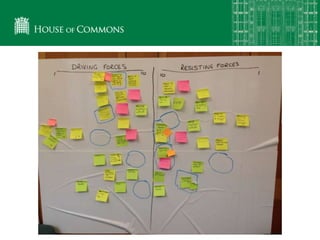
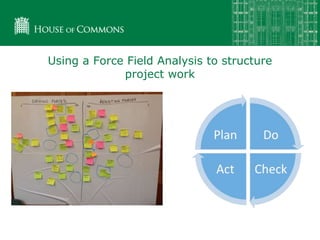
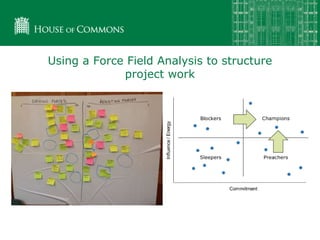
Using a Force Field Analysis to structure
project work
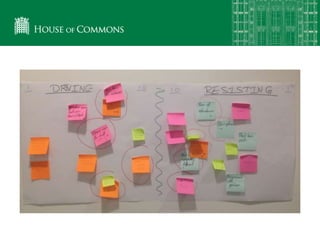
Using a Force Field Analysis to structure
project work
Engagement – landing the concept in the organisation
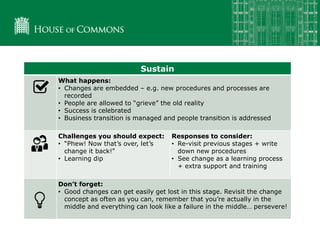
Sustain
What happens:
• Changes are embedded – e.g. new procedures and processes are
recorded
• People are allowed to “grieve” the old reality
• Success is celebrated
• Business transition is managed and people transition is addressed
Challenges you should expect:
• “Phew! Now that’s over, let’s
change it back!”
• Learning dip
Responses to consider:
• Re-visit previous stages + write
down new procedures
• See change as a learning process
+ extra support and training
Don’t forget:
• Good changes can get easily get lost in this stage. Revisit the change
concept as often as you can, remember that you’re actually in the
middle and everything can look like a failure in the middle… persevere!
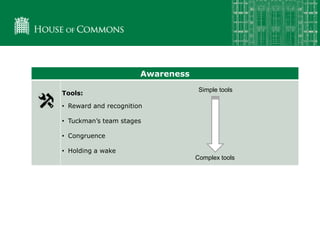
Awareness
Tools:
• Reward and recognition
• Tuckman’s team stages
• Congruence
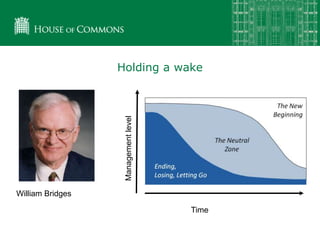
• Holding a wake
Simple tools
Complex tools
Now say thank you
Reward and recognition
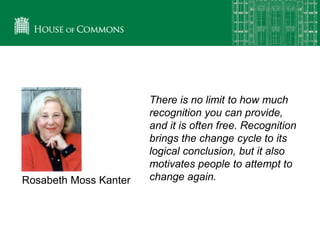
There is no limit to how much
recognition you can provide,
and it is often free. Recognition
brings the change cycle to its
logical conclusion, but it also
motivates people to attempt to
change again.Rosabeth Moss Kanter
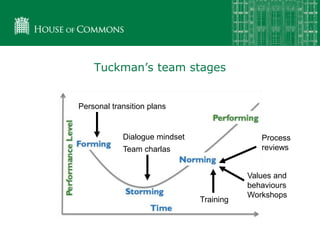
Tuckman’s team stages
Dialogue mindset
Team charlas
Values and
behaviours
Workshops
Process
reviews
Training
Personal transition plans
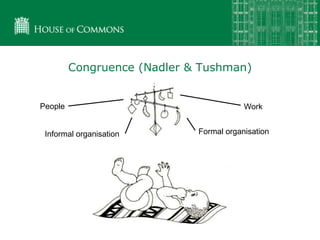
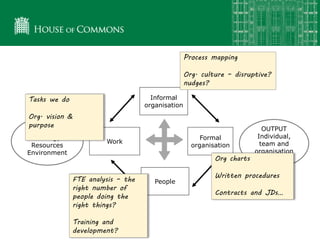
Congruence (Nadler & Tushman)
Formal organisationInformal organisation
WorkPeople
Formal
organisation
Work
Informal
organisation
People
INPUT
Strategy
Resources
Environment
OUTPUT
Individual,
team and
organisation
performance
Process mapping
Org. culture – disruptive?
nudges?
Org charts
Written procedures
Contracts and JDs…
FTE analysis – the
right number of
people doing the
right things?
Training and
development?
Tasks we do
Org. vision &
purpose
Holding a wake
Time
Managementlevel
William Bridges
Sustain – reinforcing and supporting all aspects of the change
Awareness – developing system understanding
Concept – creating a concept through a broad coalition
Engagement – landing the concept in the organisation
Sustain – reinforcing and supporting all aspects of the change
Awareness
Concept
Engagement
Sustain
Pre–project
change ready
In–project
emergent
change
In–project
project
thinking time
In–project
planned
change
No
Decision
to change
made?
Yes
Give me a date… any date
Sharing stories
Personal responses to change
How change fails – a story
ACES model
Taking it further
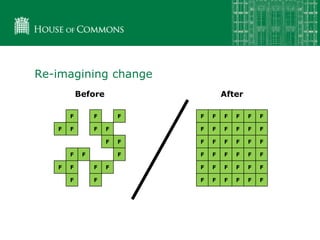
Re-imagining change
Before After
F F F F F F F F F
F F F F F F F F F F
F F F F F F F F
F F F F F F F F F
F F F F F F F F F F
F F F F F F F F
Training: CI
Training:
Intelligent
Manager
Training:
Leading
successful
change
Network:
Staying in
touch
1-2-1: your
date
Website: OD &
Change site
Coaching:
Participating in
change
Network:
Brown bag
lunches
Support:
working with
you
Taking it further
Training: CI
Training:
Intelligent
Manager
Training:
Leading
successful
change
Network:
Staying in
touch
1-2-1: your
date
Website: OD &
Change site
Coaching:
Participating in
change
Network:
Brown bag
lunches
Support:
working with
you
Training: CI
Training:
Intelligent
Manager
Training:
Leading
successful
change
Network:
Staying in
touch
1-2-1: your
date
Website: OD &
Change site
Coaching:
Participating in
change
Network:
Brown bag
lunches
Support:
working with
you
Training: CI
Training:
Intelligent
Manager
Training:
Leading
successful
change
Network:
Staying in
touch
1-2-1: your
date
Website: OD &
Change site
Coaching:
Participating in
change
Network:
Brown bag
lunches
Support:
working with
you
Training: CI
Training:
Intelligent
Manager
Training:
Leading
successful
change
Network:
Staying in
touch
Network:
Brown bag
lunches
Website: OD &
Change site
Coaching:
Participating in
change
Network:
Brown bag
lunches
Support:
working with
you
Training: CI
Training:
Intelligent
Manager
Training:
Leading
successful
change
Network:
Staying in
touch
Network:
Brown bag
lunches
SharePoint:
OD & Change
site
Coaching:
Participating in
change
Network:
Brown bag
lunches
Support:
working with
you
Training: CI
Training:
Intelligent
Manager
Training:
Leading
successful
change
Network:
Staying in
touch
Network:
Brown bag
lunches
Sharepoint:
OD & Change
site
1-2-1: your
date
OD and Change Team
Louis Aylward –
aylwardl@parliament.uk
More information on the OD and
Change intranet pages
Andy Vallins (Head of OD and
Change) – vallinsa@parliament.uk
Thank you
Change toolkit - ACES

Change toolkit - ACES

Editor's Notes

  • #2 Welcome / personal introduction / a little housekeeping and roughly how day is expected to run / explain toys and handbook in detail / any questions at this point? / quick introductions round the room
  • #4 Here’s what John Kotter (a very famous theorist and practitioner when it comes to change) said. He did research into how many change projects fail – anyone want to guess what percentage Kotter reckoned failed? 70%
  • #5 And if that doesn’t convince you then… IBM recently did a survey and found a 19% increase in change success when the programme had a dedicated change manager working on it
  • #8 And I think we all know that the way we react to changes can vary enormously from person to person…. [SHOW IMAGES] So the first thing I’d like you do is think of a change you’ve been part of outside work. Something impactful but which you chose to enter into. How did you find it? How did you respond? What did you do? Think about that on your own for a moment and then when you’re ready tell you partner about it for a minute or so…
  • #9 So we all gladly sign up for quite massive changes in our personal life and manage them fairly well. And many people would say that when you hear people say this… [CLICK] they actually mean this [CLICK] Why might people not like change which is done to them? [ASK GROUP]… and what you tend to get when change happens to people is that it looks like this [CLICK]
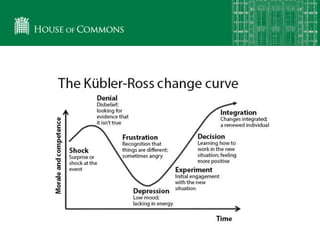
  • #10 Has anyone seen this before? [EXPLAIN A BIT ABOUT KUBLER-ROSS AND BACKGROUND]. What’s interesting is that this is the model which many organisations use as the basis for managing their people through change… and it’s based on grief and bereavement! If I was in an organisation that was constantly asking me go through this cycle I’d probably leave… That said, I think the Kubler-Ross change curve has a place in change management – particularly where we’re forcing change through because it needs to happen urgently or where you are re-structuring and changing the fundamentals of someone’s identity in work. So I think this is an interesting starting point but maybe we can look at something else [CLICK]
  • #11 And Kolb didn’t think that change was a smooth process either. In fact he coined the term “learning dip” to explain the distress we feel during change. Did the change you talked about earlier reflect the Kubler-Ross change curve? Was it more of a learning cycle? Did you notice a learning dip?
  • #12 So we all gladly sign up for quite massive changes in our personal life and manage them fairly well. And many people would say that when you hear people say this… [CLICK] they actually mean this [CLICK] Why might people not like change which is done to them? [ASK GROUP]… and what you tend to get when change happens to people is that it looks like this [CLICK]
  • #13 ….Like this. [EXPLAIN A BIT ABOUT KOLB]. And what’s good about this is that it can work for changes of all types. You could map this on to the Kubler-Ross change curve and use it to understand what you were feeling during a really impactful change and it can also explain what we go through when we experience other, smaller changes.
  • #19 Think of a change you’ve been part of outside work. It can be big or small – formal or informal. How did you find it? What made it a positive experience? What made it a negative experience?
  • #33 Does this sound familiar to you? What are your thoughts on the Commons and how it does change management?
  • #48 More in handbook.
  • #49 More in handbook. Isaacs co-founded the organisational learning center at MIT and works at MIT’s Sloan School of Management.
  • #50 More in handbook. Isaacs co-founded the organisational learning center at MIT and works at MIT’s Sloan School of Management.
  • #51 Basic idea – so what do you think?
  • #65 Basic idea – so what do you think?
  • #66 Explain origin of concept
  • #67 Explain process and handbook ref. – any thoughts? Ref. Industry technique with good example or Peter Hunter and Breaking the Mould. Ref. also Lean Coffee.. EXAMPLE IN ACTION - KU student office teams post re-structure
  • #68 Can you imagine running a charla? What might stop you?
  • #72 More in handbooks. Complex workshop – example of seeing it in practice KU when Fin functional groupings up for grabs
  • #73 Can you imagine running a charla? What might stop you?
  • #76 UAL business plan consolidation – getting it wrong – coloured brochures Eurostar – Waterloo to St. Pancras – office move tours etc. The “duck” charla Kingston – Q&A session for new joiners with “David” calling our programme “necessary evil” and the polarities exercise Kingston – The student management TOM vs. the Finance TOM “locked down” vs. a few simple sessions on function groupings Derby Gate office move with party and inviting old people back Drama school taping out the new office in the studio UAL exit interview with PVC 80/20 on planned change vs. emergent change Tim Youngs sledgehammer story The anonymous estates person implementing changes to time recording he didn’t believe in
  • #79 Some examples – can you imagine yourself asking these questions of colleagues?
  • #80 Some examples – can you imagine yourself asking these questions of colleagues?
  • #81 Some examples – can you imagine yourself asking these questions of colleagues?
  • #82 Some examples – can you imagine yourself asking these questions of colleagues? Other questions to add to this list? What is the corporate vision?
  • #84 Simple way of understanding where you are. Not scientifically accurate but this isn’t science – it’s about people and it’s about consensus. Nice tool and repeatable also. EXAMPLE IN ACTION – UAL business plan consolidation
  • #86 Simple way of understanding where you are. Not scientifically accurate but this isn’t science – it’s about people and it’s about consensus. Nice tool and repeatable also. EXAMPLE IN ACTION – UAL business plan consolidation
  • #87 Explain it’s there and represents customised support then move on.
  • #88 Can you imagine running a charla? What might stop you?
  • #89 Before bringing in the picture ask the group – has anyone heard of the thinking hats? What do they know? Ref. also Disney Creative Strategy – Dreamer / Realist / Critic EXAMPLE IN ACTION - ASDA
  • #90 Before bringing in the picture ask the group – has anyone heard of the thinking hats? What do they know? Ref. also Disney Creative Strategy – Dreamer / Realist / Critic EXAMPLE IN ACTION - ASDA
  • #91 Before bringing in the picture ask the group – has anyone heard of the thinking hats? What do they know? Ref. also Disney Creative Strategy – Dreamer / Realist / Critic EXAMPLE IN ACTION – ASDA EXAMPLE IN ACTION – HOLYROOD USING IT FOR THEIR OUTREACH PLAN (LEE BRIDGES)
  • #98 Can they guess who it is?
  • #99 Background – Russians put first man in space in April 1961. USA move their own space programme from low-tempo to high-tempo almost immediately. Costs triple and growing resistance from other federal departments. JFK tackles this head on and leaves no one in doubt of the priority of the project. JFK not an astronaut or a rocket scientist and certainly not a project manager but…
  • #100 …his call to action arguably did more than anything to ensure a man on the moon by 1969. Simple thing but often doesn’t happen or happens too early or too late or too quietly. What is your experience of how leaders call their colleagues to action?
  • #102 Thoughts? Have you seen it done well? Make everyone a hero – Rosabeth Moss Kanter Writing relatively recently(2002 essay “The Enduring Skills of Change Leaders” and most recent book in 2015)
  • #105 Handbook. We started by saying that change was a personal thing and here we return to that theme with a very tangible, usable tool. EXAMPLE IN ACTION – Finance re-structure in KU
  • #107 DIS example
  • #108 DIS example
  • #109 Example of this in UAL system implementation.
  • #119 Thoughts? Have you seen it done well?
  • #120 Thoughts? Have you seen it done well?
  • #121 Probably many of you familiar with this. Walk through – similarities to Kolb learning dip… A way to structure thoughts about teams. To allow for a storming stage… it’s not unusual. Tuckman = psychologist – “Developmental Sequence in small groups” 1965 article
  • #122 David Nadler, MBA from Harvard, PhD in Psychology Michael Tushman, BS in Electrical Engineering, PhD in Organisational Studies
  • #123 Exercise… how could you use this to structure your thoughts and actions about a re-structure of the area you work in?
  • #124 Handbooks – “It isn’t the changes that do you in. It’s the transitions…” EXAMPLE IN ACTION – Eurostar move Waterloo to St. Pancras / KU IT re-structure - dept barbecue
  • #131 Follow the instructions on pages 27 and 28 of your handbook and complete the activities using the tools you have learnt about earlier in the workshop