CHAMPS
 Chapter 4
Expectations
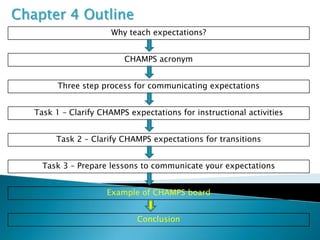
Chapter 4 Outline
                       Why teach expectations?


                          CHAMPS acronym


         Three step process for communicating expectations


   Task 1 – Clarify CHAMPS expectations for instructional activities


        Task 2 – Clarify CHAMPS expectations for transitions


     Task 3 – Prepare lessons to communicate your expectations


                     Example of CHAMPS board


                             Conclusion
Why teach
                Students need to be familiar with
expectations?   the classroom procedures,
                routines, and expectations to
                become common and know how
                to function in the classroom.


                Students new and old have to be
                introduced to the uniqueness of
                the classroom procedures,
                routines and expectations that
                each teacher requires.


                The teacher has to state the
                classroom procedures, routines
                and expectations clearly and base
                them on the environment, since
                (home/school) procedures,
                routines and expectations may be
                different.
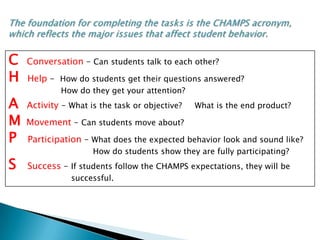
C   Conversation – Can students talk to each other?
H   Help – How do students get their questions answered?
             How do they get your attention?
A   Activity – What is the task or objective?   What is the end product?

M   Movement – Can students move about?
P   Participation – What does the expected behavior look and sound like?
                     How do students show they are fully participating?
S   Success – If students follow the CHAMPS expectations, they will be
               successful.
1. Teach your    2. Observe       3. Provide
expectations     student          feedback
before the       behavior by      during and
activity or      circulating      immediately
transition       and visually     after the
begins.          scanning.        activity.


                Begin the cycle
                again for the
                next activity.
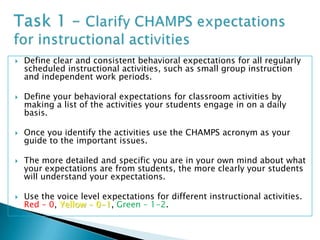
   Define clear and consistent behavioral expectations for all regularly
    scheduled instructional activities, such as small group instruction
    and independent work periods.

   Define your behavioral expectations for classroom activities by
    making a list of the activities your students engage in on a daily
    basis.

   Once you identify the activities use the CHAMPS acronym as your
    guide to the important issues.

   The more detailed and specific you are in your own mind about what
    your expectations are from students, the more clearly your students
    will understand your expectations.

   Use the voice level expectations for different instructional activities.
    Red – 0, Yellow – 0-1, Green – 1-2.
   Define clear and consistent behavioral expectations for the
    common transitions (within and between activities) that occur
    during a typical school day.

   Transitions can be problematic in terms of student behavior.
    When your expectations are clearly defined and communicate
    for transitions, your transitions will be well managed and
    efficient. Some examples: Before the bell rings, after the bell
    rings, getting out paper and pencil, moving to and from a small
    group location, putting things away, handing things out, leaving
    and entering the classroom, clean up after project activities.

   Make your expectations based on the structural needs of your
    classroom.
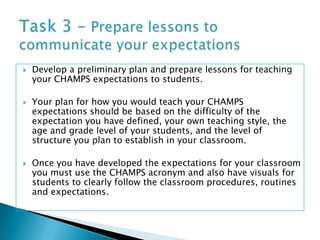
   Develop a preliminary plan and prepare lessons for teaching
    your CHAMPS expectations to students.

   Your plan for how you would teach your CHAMPS
    expectations should be based on the difficulty of the
    expectation you have defined, your own teaching style, the
    age and grade level of your students, and the level of
    structure you plan to establish in your classroom.

   Once you have developed the expectations for your classroom
    you must use the CHAMPS acronym and also have visuals for
    students to clearly follow the classroom procedures, routines
    and expectations.
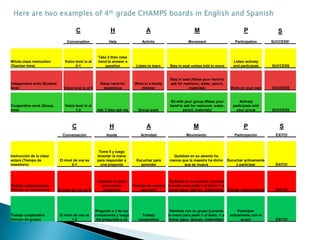
C                      H                    A                           M                              P                S
                                 Conversation                Help               Activity                   Movement                      Participation      SUCCESS!


                                                       Take 5 then raise
Whole class instruction         Voice level is at      hand to answer a                                                                 Listen actively
(Teacher time)                        0-1                 question           Listen to learn    Stay in seat unless told to move        and participate     SUCCESS


                                                                                                Stay in seat (Raise your hand to
Independent work (Student                               Raise hand for      Work in a timely    ask for restroom, water, pencil,
time)                          Voice level is at 0       assistance            manner                      materials)                 Work on your own      SUCCESS


                                                                                                Sit with your group (Raise your             Actively
Cooperative work (Group         Voice level is at                                               hand to ask for restroom, water,        participate with
time)                                 1-2             Ask 3 then ask me       Group work                pencil, materials)                your group        SUCCESS


                                    C                        H                     A                          M                               P                S
                              Conversación                 Ayuda               Actividad                  Movimiento                     Participación        ÉXITO!


                                                       Tome 5 y luego
Instrucción de la clase                               levantar la mano                           Quédese en su asiento ha
entera (Tiempo de           El nivel de voz es        para responder a       Escuchar para     menos que la maestra ha dicho         Escuchar activamente
maestra/o)                          0-1                 una pregunta           aprender               que se mueva                       y participar         ÉXITO!


                                                      Levantar la mano                         Quédese en su asiento (Levanta
Trabajo independiente                                   para recibir       Trabajar de manera la mano para pedir ir al baño, ir a
(Tiempo de estudiante)      El nivel de voz es 0         asistencia             oportuna       tomar agua, lápices, materiales) Trabaja independiente         ÉXITO!


                                                     Pregunte a 3 de tus                        Siéntese con su grupo (Levanta             Participar
Trabajo cooperativo         El nivel de voz es       companeros y luego         Trabajo        la mano para pedir ir al baño, ir a    activamente con el
(tiempo de grupo)                   1-2               me preguntas a mí       cooperativo       tomar agua, lápices, materiales)            grupo             ÉXITO!
CONCLUSION

Champs chapter 4

  • 1.
  • 2.
    Chapter 4 Outline Why teach expectations? CHAMPS acronym Three step process for communicating expectations Task 1 – Clarify CHAMPS expectations for instructional activities Task 2 – Clarify CHAMPS expectations for transitions Task 3 – Prepare lessons to communicate your expectations Example of CHAMPS board Conclusion
  • 3.
    Why teach Students need to be familiar with expectations? the classroom procedures, routines, and expectations to become common and know how to function in the classroom. Students new and old have to be introduced to the uniqueness of the classroom procedures, routines and expectations that each teacher requires. The teacher has to state the classroom procedures, routines and expectations clearly and base them on the environment, since (home/school) procedures, routines and expectations may be different.
  • 4.
    C Conversation – Can students talk to each other? H Help – How do students get their questions answered? How do they get your attention? A Activity – What is the task or objective? What is the end product? M Movement – Can students move about? P Participation – What does the expected behavior look and sound like? How do students show they are fully participating? S Success – If students follow the CHAMPS expectations, they will be successful.
  • 5.
    1. Teach your 2. Observe 3. Provide expectations student feedback before the behavior by during and activity or circulating immediately transition and visually after the begins. scanning. activity. Begin the cycle again for the next activity.
  • 6.
    Define clear and consistent behavioral expectations for all regularly scheduled instructional activities, such as small group instruction and independent work periods.  Define your behavioral expectations for classroom activities by making a list of the activities your students engage in on a daily basis.  Once you identify the activities use the CHAMPS acronym as your guide to the important issues.  The more detailed and specific you are in your own mind about what your expectations are from students, the more clearly your students will understand your expectations.  Use the voice level expectations for different instructional activities. Red – 0, Yellow – 0-1, Green – 1-2.
  • 7.
    Define clear and consistent behavioral expectations for the common transitions (within and between activities) that occur during a typical school day.  Transitions can be problematic in terms of student behavior. When your expectations are clearly defined and communicate for transitions, your transitions will be well managed and efficient. Some examples: Before the bell rings, after the bell rings, getting out paper and pencil, moving to and from a small group location, putting things away, handing things out, leaving and entering the classroom, clean up after project activities.  Make your expectations based on the structural needs of your classroom.
  • 8.
    Develop a preliminary plan and prepare lessons for teaching your CHAMPS expectations to students.  Your plan for how you would teach your CHAMPS expectations should be based on the difficulty of the expectation you have defined, your own teaching style, the age and grade level of your students, and the level of structure you plan to establish in your classroom.  Once you have developed the expectations for your classroom you must use the CHAMPS acronym and also have visuals for students to clearly follow the classroom procedures, routines and expectations.
  • 9.
    C H A M P S Conversation Help Activity Movement Participation SUCCESS! Take 5 then raise Whole class instruction Voice level is at hand to answer a Listen actively (Teacher time) 0-1 question Listen to learn Stay in seat unless told to move and participate SUCCESS Stay in seat (Raise your hand to Independent work (Student Raise hand for Work in a timely ask for restroom, water, pencil, time) Voice level is at 0 assistance manner materials) Work on your own SUCCESS Sit with your group (Raise your Actively Cooperative work (Group Voice level is at hand to ask for restroom, water, participate with time) 1-2 Ask 3 then ask me Group work pencil, materials) your group SUCCESS C H A M P S Conversación Ayuda Actividad Movimiento Participación ÉXITO! Tome 5 y luego Instrucción de la clase levantar la mano Quédese en su asiento ha entera (Tiempo de El nivel de voz es para responder a Escuchar para menos que la maestra ha dicho Escuchar activamente maestra/o) 0-1 una pregunta aprender que se mueva y participar ÉXITO! Levantar la mano Quédese en su asiento (Levanta Trabajo independiente para recibir Trabajar de manera la mano para pedir ir al baño, ir a (Tiempo de estudiante) El nivel de voz es 0 asistencia oportuna tomar agua, lápices, materiales) Trabaja independiente ÉXITO! Pregunte a 3 de tus Siéntese con su grupo (Levanta Participar Trabajo cooperativo El nivel de voz es companeros y luego Trabajo la mano para pedir ir al baño, ir a activamente con el (tiempo de grupo) 1-2 me preguntas a mí cooperativo tomar agua, lápices, materiales) grupo ÉXITO!
  • 10.