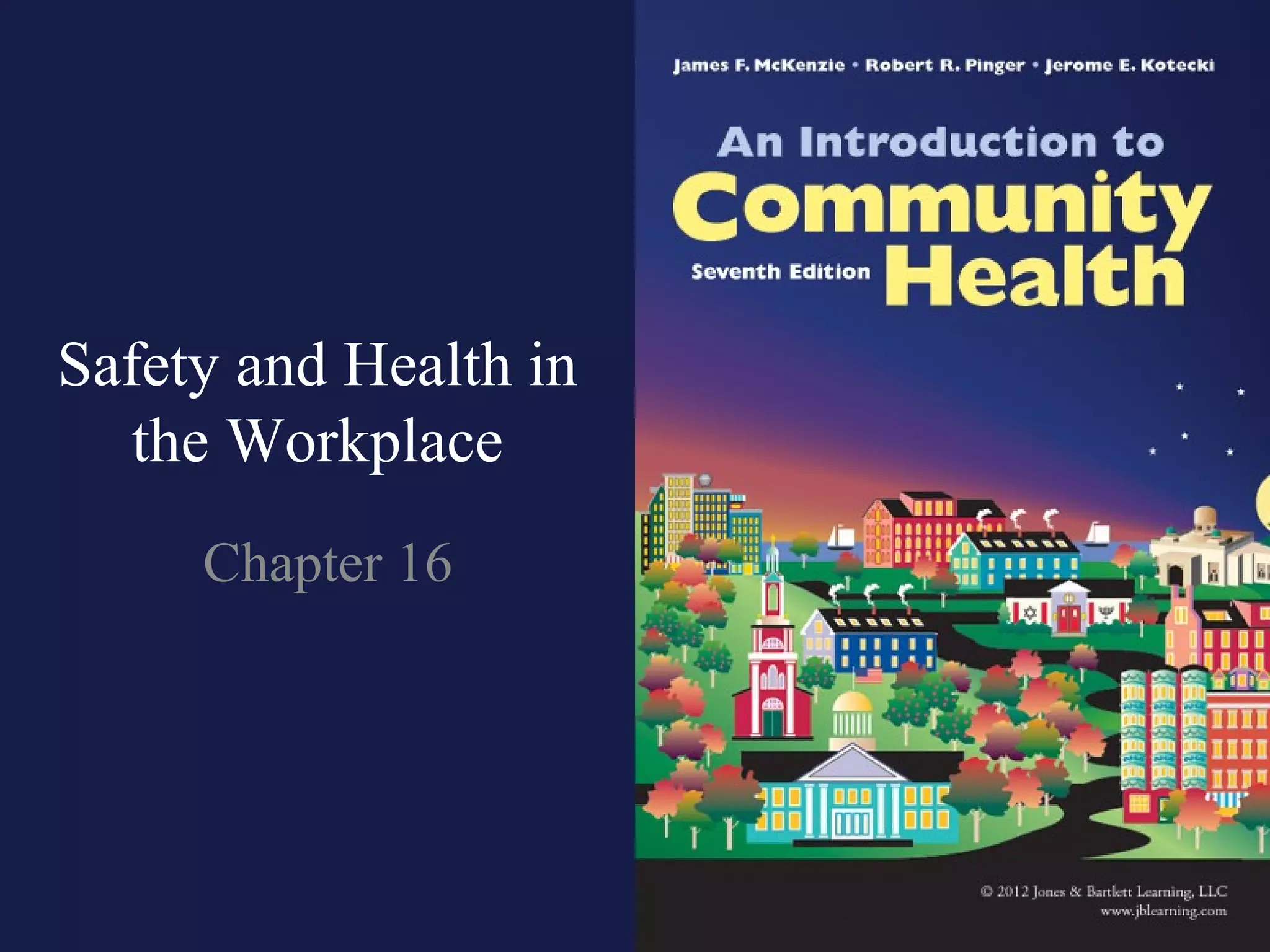
Safety and Health in
   the Workplace
     Chapter 16
Introduction
• Occupational disease
  • Occupational illness
• Occupational injury
Scope of the Problem
• 14 workers die each day in U.S. from injury
  sustained at work
• Fatalities have declined significantly over past
  100 years
• Reporting of illness versus injury
• Economic impact
Importance of Occupational Safety and
        Health to the Community
• Industry is a subset of the larger community
• Affects workplace and those outside the
  worksite
• Workers themselves are a community
History of Occupational Safety and Health
               Problems
• Before 1970
  • Industrial revolution
  • State legislation
     • Child labor laws
     • Worker’s compensation laws
  • Federal legislation
     • Bureau of Labor-1884
     • Many laws from 1908-1970
     • Occupational Safety and Health Act of 1970
Occupational Safety and Health Act of
            1970 (OSHAct)
• To ensure employers in private sector furnish
  each employee a workplace free from
  recognized hazards causing or likely to cause
  death or serious physical harm
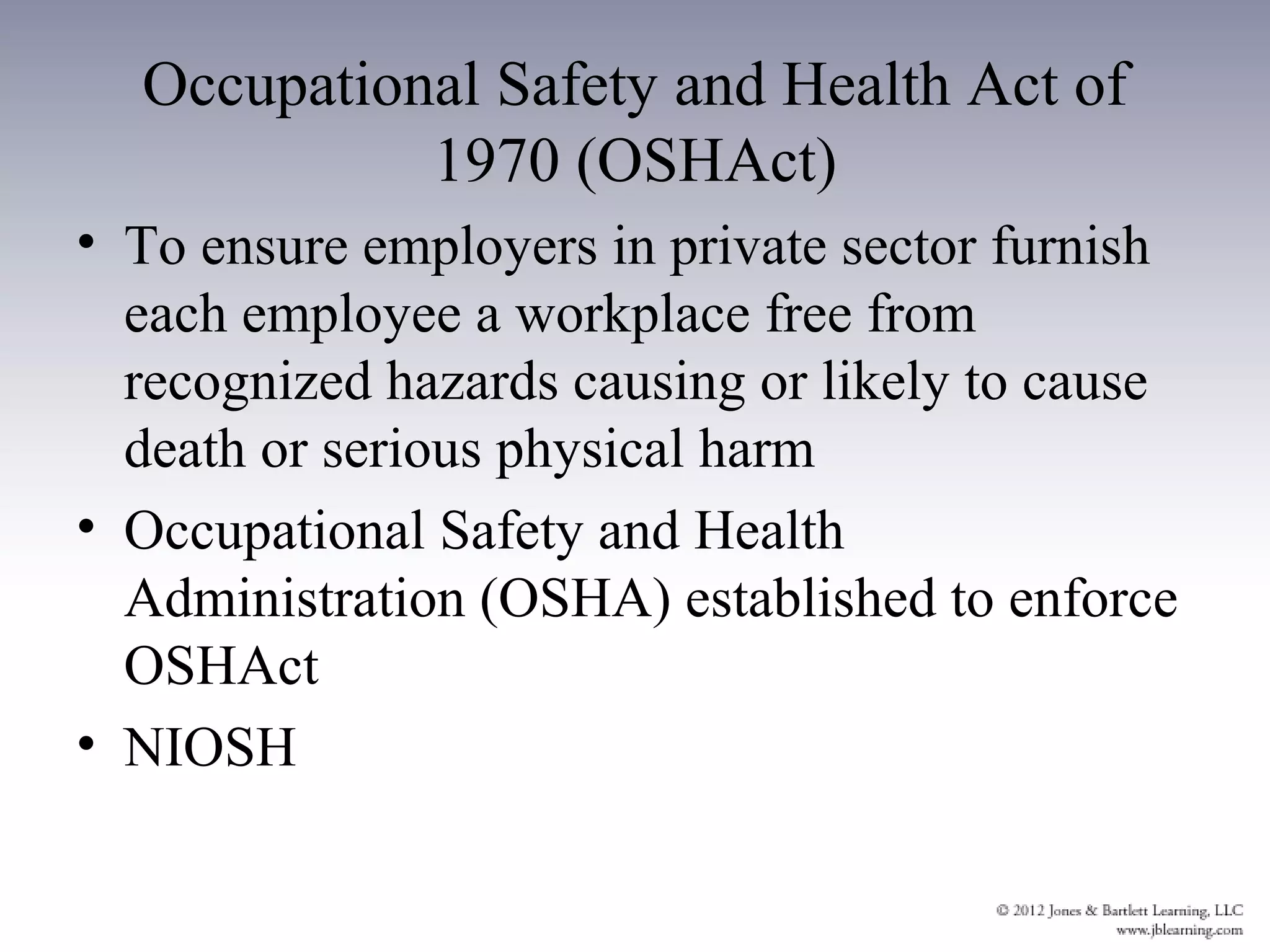
• Occupational Safety and Health
  Administration (OSHA) established to enforce
  OSHAct
• NIOSH
Prevalence of Occupational Injuries,
           Diseases, and Deaths
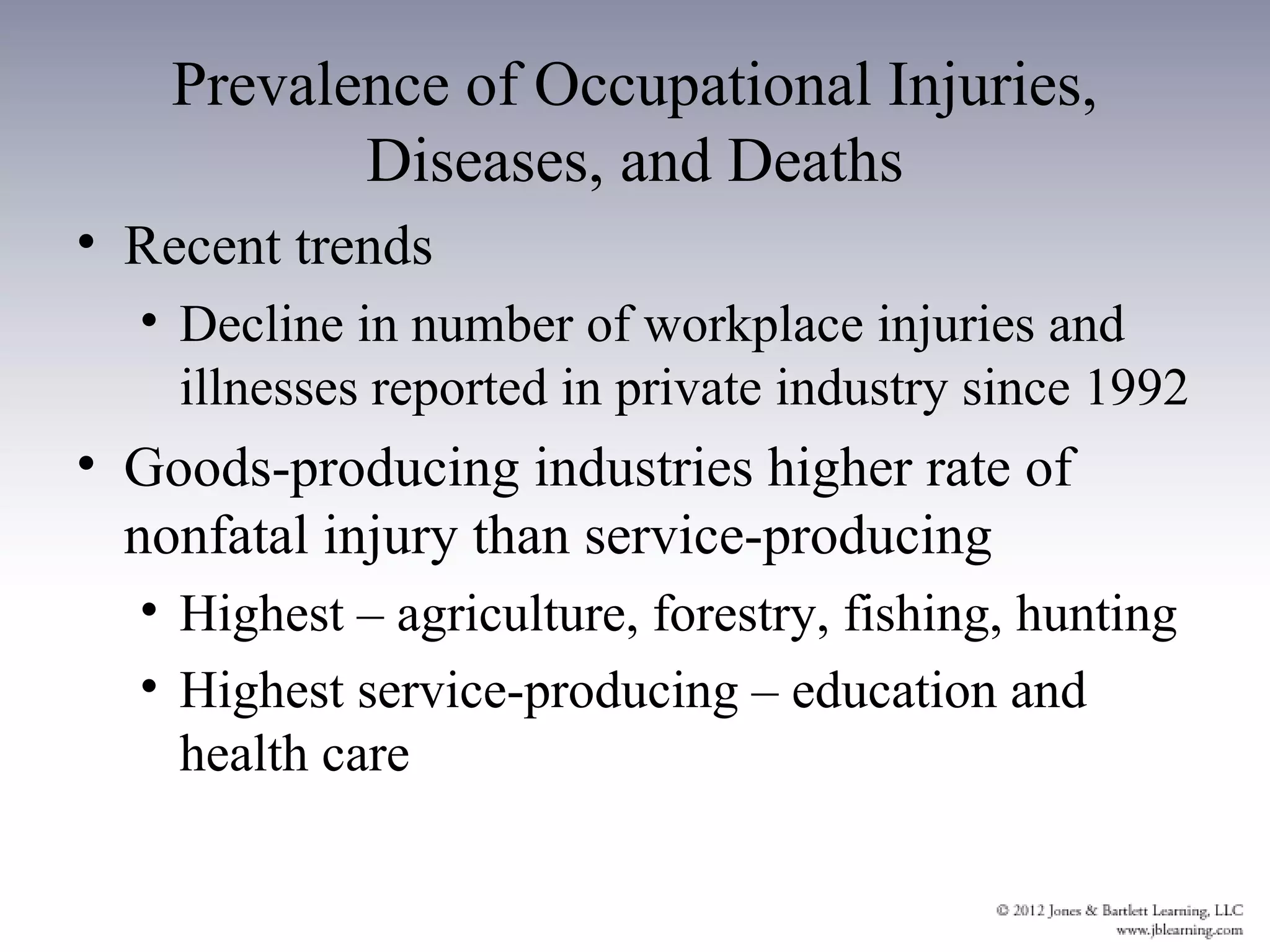
• Recent trends
  • Decline in number of workplace injuries and
    illnesses reported in private industry since 1992
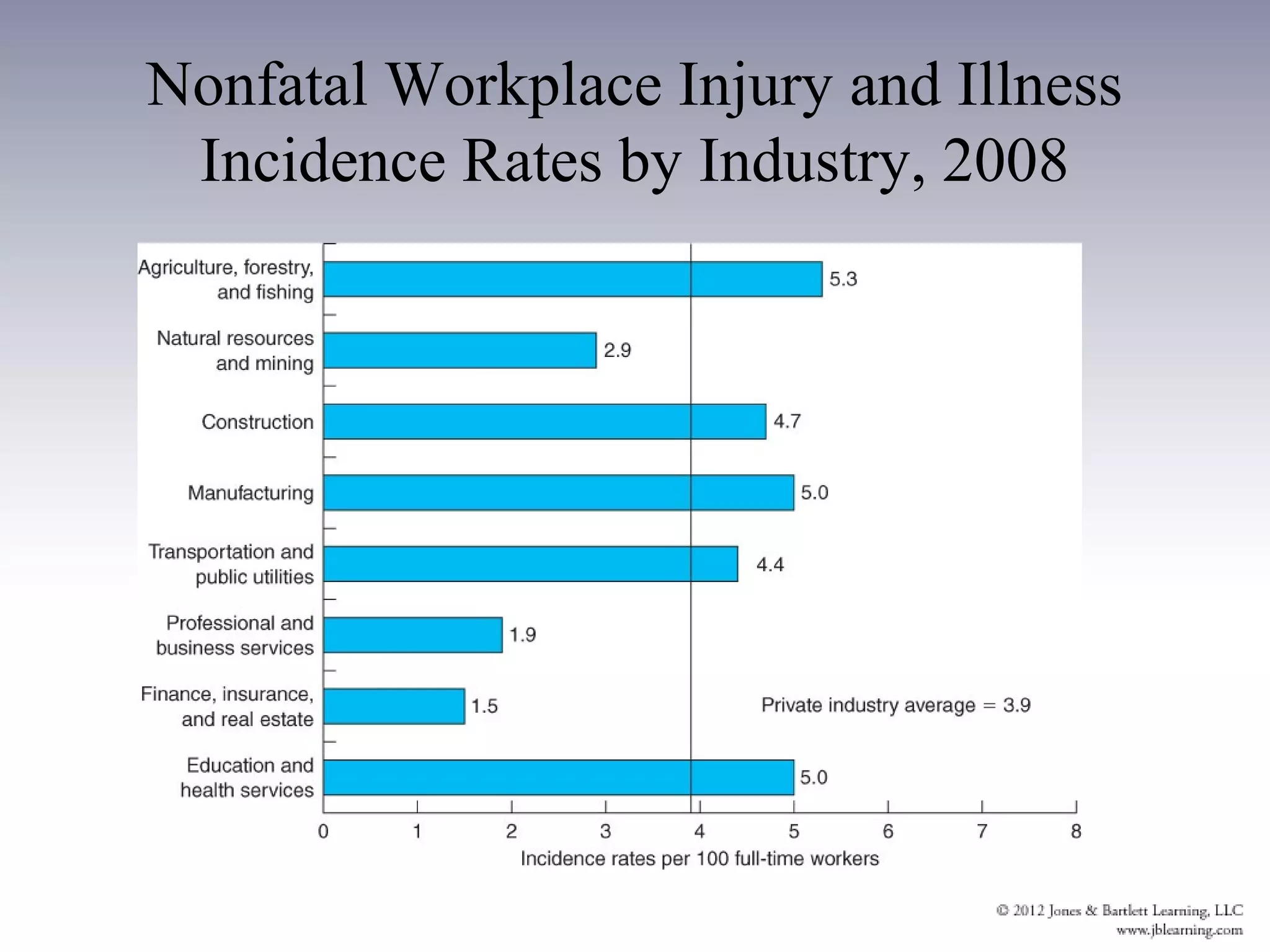
• Goods-producing industries higher rate of
  nonfatal injury than service-producing
  • Highest – agriculture, forestry, fishing, hunting
  • Highest service-producing – education and
    health care
Nonfatal Workplace Injury and Illness
 Incidence Rates by Industry, 2008
Unintentional Injuries in the Workplace
• Minor injuries – cuts, bruises, abrasions, minor
  burns
• Major injuries – amputations, fractures, severe
  lacerations, eye losses, acute poisonings,
  severe burns
• Reported by many sources
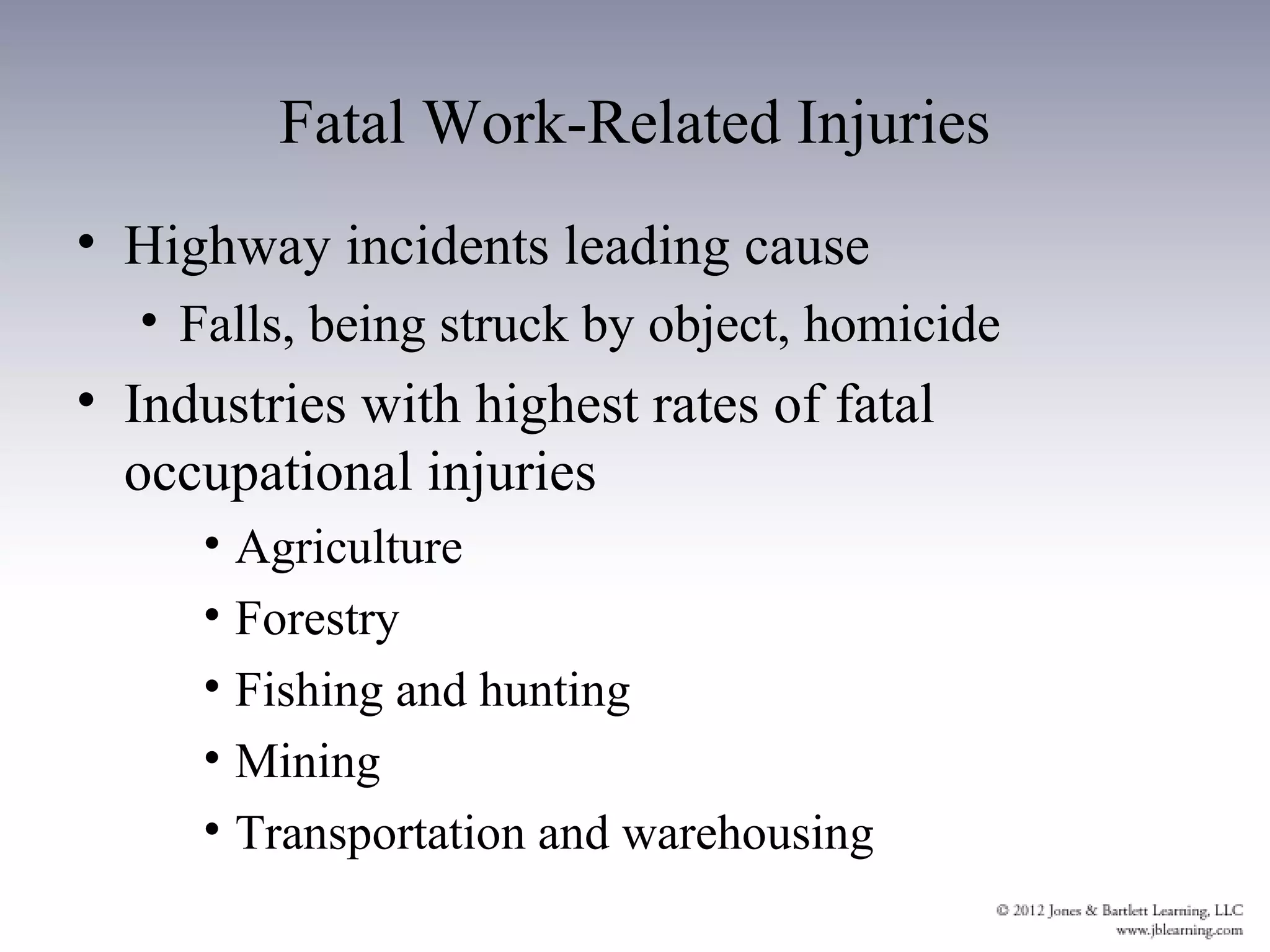
Fatal Work-Related Injuries
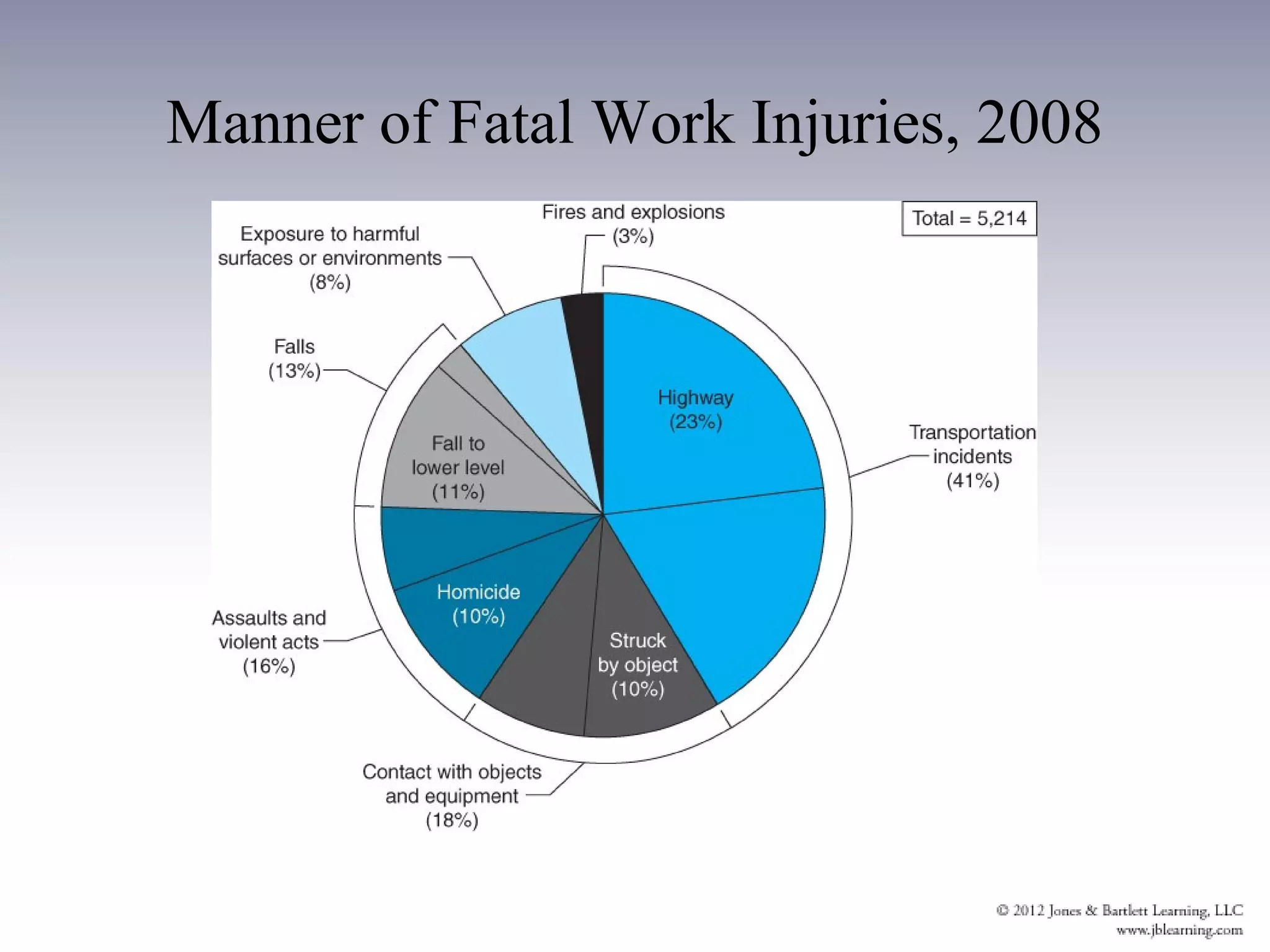
• Highway incidents leading cause
  • Falls, being struck by object, homicide
• Industries with highest rates of fatal
  occupational injuries
     • Agriculture
     • Forestry
     • Fishing and hunting
     • Mining
     • Transportation and warehousing
Manner of Fatal Work Injuries, 2008
Nonfatal Work-Related Injuries
• Males account for majority of treatment
• Younger workers highest nonfatal workplace
  injury/illness rate
• Disabling injuries and illnesses
  • Repeat trauma disorders
Characteristics of Workers Involved in
           Work-Related Injuries
•   Age
•   Gender
•   Poverty and race
•   Geographic differences in workplace injuries
•   Temporal variations in workplace injuries
•   Workplace injuries by industry and occupation
       • Fatal and nonfatal occupational injuries and
         illnesses
       • Agricultural safety and health
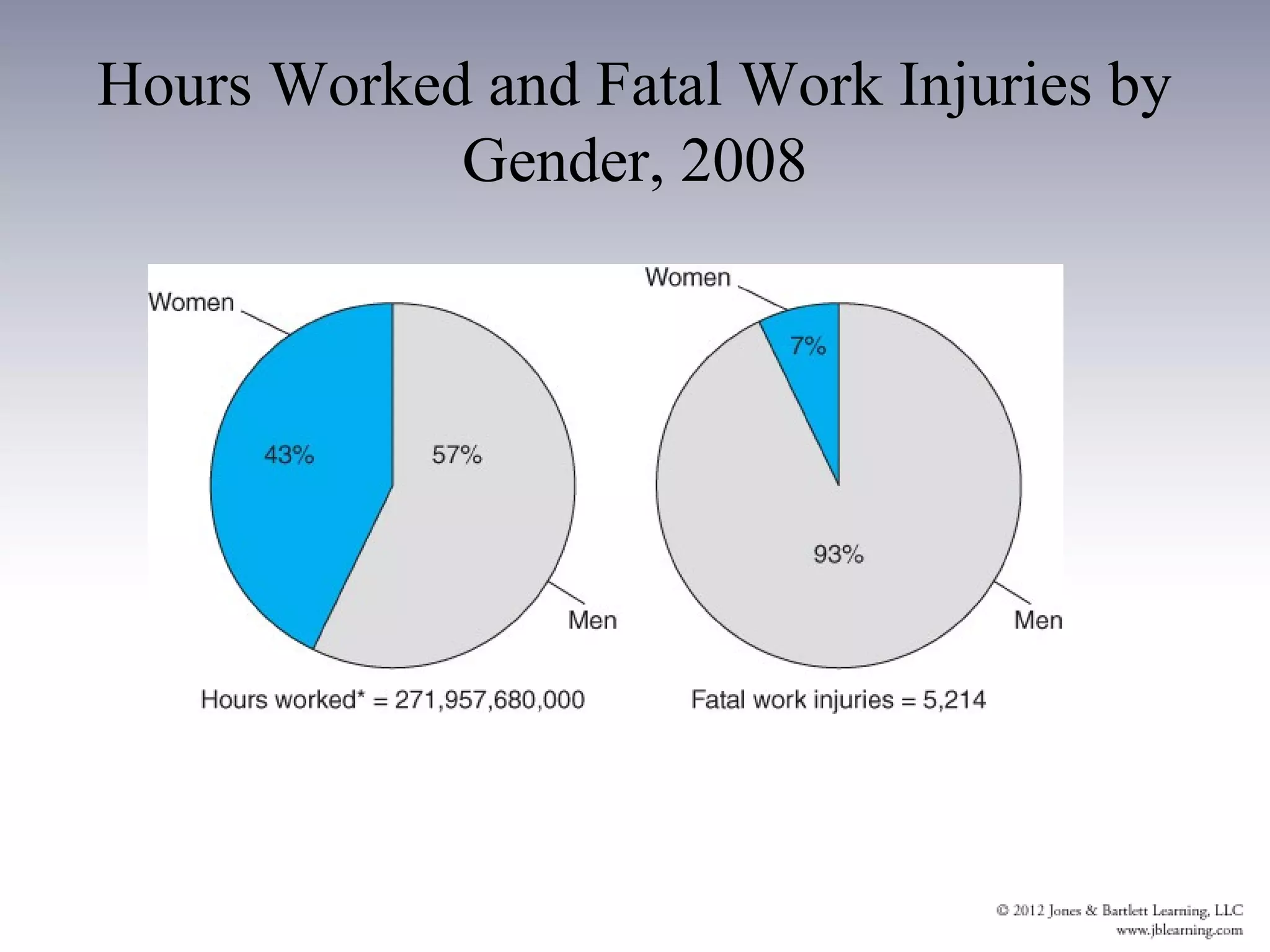
Hours Worked and Fatal Work Injuries by
            Gender, 2008
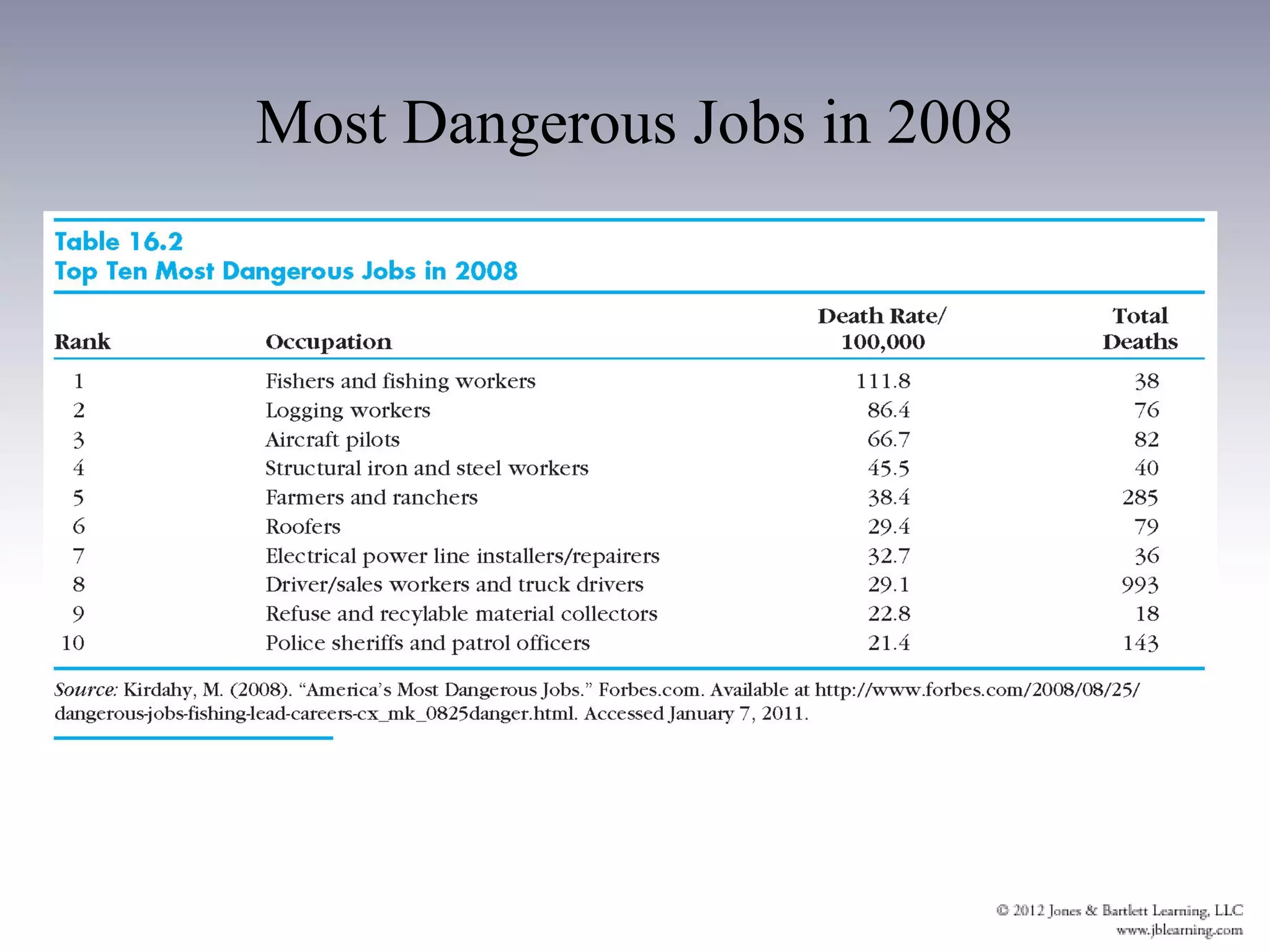
Most Dangerous Jobs in 2008
Prevention and Control of Unintentional
        Injuries in the Workplace
• Four fundamental tasks
  •   Anticipation
  •   Recognition
  •   Evaluation
  •   Control
Workplace Violence: Intentional
          Workplace Injuries
• 1.7 million victims each year
• Homicides third leading cause of workplace
  fatalities
  • Second leading cause of workplace death for
    women
• Some occupations more dangerous than others
Categories of Workplace Violence
•   Criminal intent (Type I)
•   Customer/client (Type II)
•   Worker-on-worker (Type III)
•   Personal relationship (Type IV)
Risk Factors for Workplace Violence
•   Working with the public
•   Working around money or valuables
•   Working alone
•   Working late at night
•   Jobs with higher risk
    • Taxicab drivers
    • Jobs in liquor stores
    • Detective and protective services
Prevention Strategies
• Environmental designs
• Administrative controls
• Behavior strategies
Occupational Illnesses and Disorders
• Illness more difficult to acquire data on than
  injury
• Difficult to link occupational exposure
• Some conditions slow to develop and difficult
  to associate with the workplace
Types of Occupational Illnesses
•   Musculoskeletal disorders
•   Skin diseases and disorders
•   Noise-induced hearing loss
•   Respiratory disorders
    •   Pneumoconiosis
    •   Asbestosis
    •   Silicosis
    •   Byssinosis
Other Work-Related Diseases and
               Disorders
• Poisonings
  • Agricultural workers
• Infections
  • Health care industry
  • Hazardous drugs
• Anxiety, stress, neurotic disorders
Prevention and Control of Occupational
            Diseases and Disorders
•   Requires vigilance of employer and employee
•   Agent-host-environment model
•   Identification and evaluation of agents
•   Standard setting for the handling of and
    exposure to causative agents
•   Elimination or substitution of causative factors
•   Engineering controls
•   Environmental monitoring
•   Medical screenings
Resources for the Prevention of Workplace
          Injuries and Diseases
• Occupational safety and health professionals
  •   Safety engineers
  •   Certified safety professionals
  •   Health physicists
  •   Industrial hygienists
  •   Occupational physicians
  •   Occupational health nurses
Occupational Safety and Health Programs
•   Preplacement examinations
•   Disease prevention programs
•   Safety programs
•   Worksite health promotion programs
•   Employee assistance programs
Discussion Questions
• How can employees advocate for safer
  workplaces?

• What occupational injury prevention strategies
  can prove to be most effective in the coming
  decades?

Ch16 outline

  • 1.
    Safety and Healthin the Workplace Chapter 16
  • 2.
    Introduction • Occupational disease • Occupational illness • Occupational injury
  • 3.
    Scope of theProblem • 14 workers die each day in U.S. from injury sustained at work • Fatalities have declined significantly over past 100 years • Reporting of illness versus injury • Economic impact
  • 4.
    Importance of OccupationalSafety and Health to the Community • Industry is a subset of the larger community • Affects workplace and those outside the worksite • Workers themselves are a community
  • 5.
    History of OccupationalSafety and Health Problems • Before 1970 • Industrial revolution • State legislation • Child labor laws • Worker’s compensation laws • Federal legislation • Bureau of Labor-1884 • Many laws from 1908-1970 • Occupational Safety and Health Act of 1970
  • 6.
    Occupational Safety andHealth Act of 1970 (OSHAct) • To ensure employers in private sector furnish each employee a workplace free from recognized hazards causing or likely to cause death or serious physical harm • Occupational Safety and Health Administration (OSHA) established to enforce OSHAct • NIOSH
  • 7.
    Prevalence of OccupationalInjuries, Diseases, and Deaths • Recent trends • Decline in number of workplace injuries and illnesses reported in private industry since 1992 • Goods-producing industries higher rate of nonfatal injury than service-producing • Highest – agriculture, forestry, fishing, hunting • Highest service-producing – education and health care
  • 8.
    Nonfatal Workplace Injuryand Illness Incidence Rates by Industry, 2008
  • 9.
    Unintentional Injuries inthe Workplace • Minor injuries – cuts, bruises, abrasions, minor burns • Major injuries – amputations, fractures, severe lacerations, eye losses, acute poisonings, severe burns • Reported by many sources
  • 10.
    Fatal Work-Related Injuries •Highway incidents leading cause • Falls, being struck by object, homicide • Industries with highest rates of fatal occupational injuries • Agriculture • Forestry • Fishing and hunting • Mining • Transportation and warehousing
  • 11.
    Manner of FatalWork Injuries, 2008
  • 12.
    Nonfatal Work-Related Injuries •Males account for majority of treatment • Younger workers highest nonfatal workplace injury/illness rate • Disabling injuries and illnesses • Repeat trauma disorders
  • 13.
    Characteristics of WorkersInvolved in Work-Related Injuries • Age • Gender • Poverty and race • Geographic differences in workplace injuries • Temporal variations in workplace injuries • Workplace injuries by industry and occupation • Fatal and nonfatal occupational injuries and illnesses • Agricultural safety and health
  • 14.
    Hours Worked andFatal Work Injuries by Gender, 2008
  • 15.
  • 16.
    Prevention and Controlof Unintentional Injuries in the Workplace • Four fundamental tasks • Anticipation • Recognition • Evaluation • Control
  • 17.
    Workplace Violence: Intentional Workplace Injuries • 1.7 million victims each year • Homicides third leading cause of workplace fatalities • Second leading cause of workplace death for women • Some occupations more dangerous than others
  • 18.
    Categories of WorkplaceViolence • Criminal intent (Type I) • Customer/client (Type II) • Worker-on-worker (Type III) • Personal relationship (Type IV)
  • 19.
    Risk Factors forWorkplace Violence • Working with the public • Working around money or valuables • Working alone • Working late at night • Jobs with higher risk • Taxicab drivers • Jobs in liquor stores • Detective and protective services
  • 20.
    Prevention Strategies • Environmentaldesigns • Administrative controls • Behavior strategies
  • 21.
    Occupational Illnesses andDisorders • Illness more difficult to acquire data on than injury • Difficult to link occupational exposure • Some conditions slow to develop and difficult to associate with the workplace
  • 22.
    Types of OccupationalIllnesses • Musculoskeletal disorders • Skin diseases and disorders • Noise-induced hearing loss • Respiratory disorders • Pneumoconiosis • Asbestosis • Silicosis • Byssinosis
  • 23.
    Other Work-Related Diseasesand Disorders • Poisonings • Agricultural workers • Infections • Health care industry • Hazardous drugs • Anxiety, stress, neurotic disorders
  • 24.
    Prevention and Controlof Occupational Diseases and Disorders • Requires vigilance of employer and employee • Agent-host-environment model • Identification and evaluation of agents • Standard setting for the handling of and exposure to causative agents • Elimination or substitution of causative factors • Engineering controls • Environmental monitoring • Medical screenings
  • 25.
    Resources for thePrevention of Workplace Injuries and Diseases • Occupational safety and health professionals • Safety engineers • Certified safety professionals • Health physicists • Industrial hygienists • Occupational physicians • Occupational health nurses
  • 26.
    Occupational Safety andHealth Programs • Preplacement examinations • Disease prevention programs • Safety programs • Worksite health promotion programs • Employee assistance programs
  • 27.
    Discussion Questions • Howcan employees advocate for safer workplaces? • What occupational injury prevention strategies can prove to be most effective in the coming decades?