





Palliative Care vs.
Curative Care
CE Provider
Information
VITAS® Healthcare programs are provided CE credits
for their Nurses/Social Workers and Nursing Home
Administrators through: VITAS®
Healthcare Corporation
of Florida, Inc./CE Broker Number: 50-2135. Approved
By: Florida Board of Nursing/Florida Board of Nursing
Home Administrators/Florida Board of Clinical Social
Workers, Marriage and Family Therapy & Mental
Health Counseling.
VITAS® Healthcare programs in Illinois are provided CE
credit for their Nursing Home Administrators and
Respiratory Therapists through: VITAS®
Healthcare
Corporation of Illinois, Inc./8525 West 183 Street,
Tinley Park, IL 60487/NHA CE Provider Number:
139000207/RT CE Provider Number: 195000028/
Approved By the Illinois Division of Profession Regulation
for: Licensed Nursing Home Administrators and Illinois
Respiratory Care Practitioner.
2
CE Provider
Information
(cont.)
VITAS®
Healthcare, #1222, is approved to offer social work
continuing education by the Association of Social Work
Boards (ASWB) Approved Continuing Education (ACE)
program. Organizations, not individual courses, are
approved as ACE providers. State and provincial regulatory
boards have the final authority to determine whether an
individual course may be accepted for continuing education
credit. VITAS®
Healthcare maintains responsibility for this
course. ACE provider approval period: 06/06/2018 –
06/06/2021. Social workers completing this course receive
1.0 continuing education credits.
VITAS®
Healthcare Corporation of California, 310
Commerce, Suite 200, Irvine, CA 92602. Provider approved
by the California Board of Registered Nursing, Provider
Number 10517, expiring 01/31/2021.
Exceptions to the above are as follows: AL: No
NHAs, DE: No NHAs, DC: No NHAs, GA: No NHAs, KS:
No NHAs, NJ: No NHAs, OH: No NHAs, PA: No NHAs, TX:
No NHAs, VA: No NHAs, WI: No NHAs and Nurses are not
required – RT only receive CE Credit in Illinois
3
Objectives
• Describe the history and philosophy of
the hospice and palliative movement.
• Identify the difference between palliative
and curative care.
• List the benefits of palliative care in the
patient with advanced illness.
4
How People
Die
• <10% die suddenly of an unexpected
event, heart attack (MI), accident, etc.
• >90% die of a protracted, life-threatening
illness
– Predictable steady decline with a
relatively short “advanced” phase (cancer)
– Slow decline punctuated by periodic
crises (advanced cardiac disease,
advanced lung disease, Alzheimer’s/
dementia)
5
Emanuel, LL et. al. (2003). The Education in Palliative and End of Life Care Curriculum
(EPEC Project). Northwestern School University Feinberg School of Medicine.
Dying Then
and Now
• 19th Century:
– In 1900 4% of America’s population was
>65 years of age1
– In 1900, life expectancy was 49 years
of age2
– Most people died at home
• Today:
– Nearly 15% of the U.S. population is
>65 years3
– 2017 life expectancy in the U.S. was
78.6 years4
– Approximately 37% of Americans die
in acute-care hospitals and 19% die
in nursing homes5
6
1Werner, CA. The Older Population: 2010. 2010 Census Briefs. November 2011, p. 3. Retrieved from https://www.census.gov/prod/cen2010/briefs/c2010br-09.pdf
2Arias, E. CDC National Vital Statistics Reports,Volume 54, Number 14 United States Life Tables, 2003, p. 30. Retrieved from https://www.cdc.gov/nchs/data/nvsr/nvsr54/nvsr54_14.pdf
32017, April. Facts for Features: Older Americans Month, May 2017. United States Census Bureau. Retrieved from: https://www.census.gov/newsroom/facts-for-features/2017/cb17-ff08.html
42017. Life Expectancy. Centers for Disease Control and Prevention. Retrieved from https://www.cdc.gov/nchs/fastats/life-expectancy.htm.
52016, April 8. QuickStats: Percentage Distribution of Deaths, by Place of Death, United States, 2000-2014. Retrieved from https://www.cdc.gov/mmwr/volumes/65/wr/mm6513a6.htm
Death and
Dying in the
Future
• By 2060, an estimated 48 million people (47% of all
deaths globally) will die with serious health-related
suffering, which represents an 87% increase from 26
million people in 2016. 83% of these deaths will occur in
low-income and middle-income countries.
• Serious health-related suffering will increase in all
regions, with the largest proportional rise in low-income
countries (155% increase between 2016 and 2060).
Globally, serious health-related suffering will increase
most rapidly among people aged 70 years or older
(183% increase between 2016 and 2060).
• In absolute terms, it will be driven by rises in cancer
deaths (16 million people, 109% increase between 2016
and 2060).
• The condition with the highest proportional increase in
serious health-related suffering will be dementia (6
million people, 264% increase between
2016 and 2060).”
Sleeman, K., et al. (2019). The escalating burden of serious related suffering: projections to 2060 by world regions, age groups,
and health conditions. The Lancet, 7(7);882-892. Retrieved from: https://doi.org/10.1016/S2214-109X(19)30172-X
7
The Future
of Palliative
Care:
“Cornerstone
of Global
Health”
• Palliative care is increasingly recognized by international
health organizations as a cornerstone of global health,
and there have been strong, coordinated calls to integrate
palliative care within health systems.
• Available evidence indicates that palliative care improves
quality of life, symptom control, and patient and caregiver
satisfaction, often at lower cost than the alternative.
• Despite these benefits, palliative care is frequently not
mentioned in high-profile strategies in low-income,
middle-income and high-income countries, and provision
is often insufficient to meet population needs.
• It has been estimated that just 14% of the people who
need palliative care receive it, and that most of those are
in high-income settings
Sleeman, K., et al. (2019). The escalating burden of serious related suffering: projections to 2060 by world regions, age groups,
and health conditions. The Lancet, 7(7);882-892. Retrieved from: https://doi.org/10.1016/S2214-109X(19)30172-X
8
Hospice
History
• Linguistic root words:
– Hospital
– Hospitality
– Shelter
– Respite
– Caring
• A place of refuge and solace
9
Hospice
History (cont.)
10
• 1967 Dame Cicely Saunders opened St.
Christopher’s in London
• 1969 “On Death and Dying” by Elisabeth
Kubler-Ross brought death and dying into
the mainstream
• 1974 New Haven Hospice of Connecticut
established
• 1978 VITAS founded
• 1978 National Hospice Organization formed
• National Hospice & Palliative Care
Organization (NHPCO)
• Mission: “To lead and mobilize social change
for improved care at the end of life”
What Is
Palliative
Care?
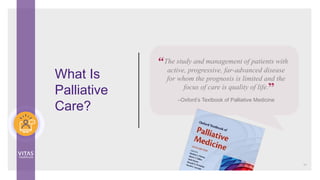
The study and management of patients with
active, progressive, far-advanced disease
for whom the prognosis is limited and the
focus of care is quality of life.
–Oxford’s Textbook of Palliative Medicine
11
“
”
Palliative care is patient and family-centered
care that optimizes quality of life by
anticipating, preventing, and treating
suffering. Palliative care throughout the
continuum of illness involves addressing
physical, intellectual, emotional, social, and
spiritual needs and to facilitate patient
autonomy, access to information and choice.
National Consensus Project for Quality
Palliative Care
Palliative
Care:
Definition
12
Explanation of Palliative Care. National Hospice and Palliative Care Organization.
Retrieved from https://www.nhpco.org/palliative-care-overview/explanation-of-palliative-care/
Explanation
of Palliative
Care (cont.)
• Palliative Care is:
– Appropriate at any stage in a serious illness
– Beneficial when provided along with
curative treatments
– Provided over time to patients based on
their needs
– Offered in all care settings
– Focused on what is most important to the
patient, family and caregiver(s)
– Interdisciplinary to attend to the patient's
holistic care needs
13
2018. Clinical Practice Guidelines for Quality Palliative Care, 4th Edition. National Coalition for Hospice and Palliative Care.
Retrieved from https://www.nationalcoalitionhpc.org/wp-content/uploads/2018/10/NCHPC-NCPGuidelines_4thED_web_FINAL.pdf
Palliative
Care
• Manages pain and symptoms
• Regards dying as a normal process
• Neither hastens nor postpones death
• Integrates psychological and spiritual care
• Supports patient and family
• Incorporates a team approach
• Enhances quality of life
• Is applicable early in the course of illness
14
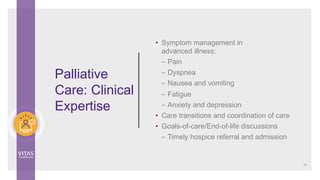
• Symptom management in
advanced illness:
– Pain
– Dyspnea
– Nausea and vomiting
– Fatigue
– Anxiety and depression
• Care transitions and coordination of care
• Goals-of-care/End-of-life discussions
– Timely hospice referral and admission
Palliative
Care: Clinical
Expertise
15
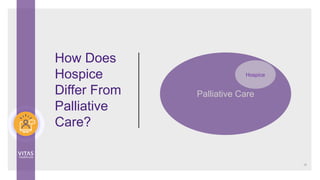
How Does
Hospice
Differ From
Palliative
Care?
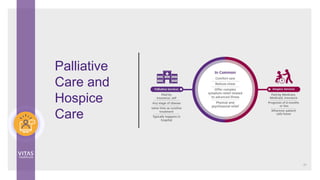
Palliative Care
Hospice
16
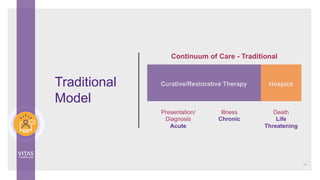
Traditional
Model
Continuum of Care - Traditional
Presentation/
Diagnosis
Acute
Illness
Chronic
Death
Life
Threatening
17
Robinson, K., Sutton, S., Von Gunten, C. F., Ferris, F. D., Molodyko, N., Martinez, J., & Emanuel, L. L. (2004). Assessment of the education
for physicians on end-of-life care (EPEC™) project. Journal of Palliative Medicine, 7(5), 637-645. https://doi.org/10.1089/jpm.2004.7.637
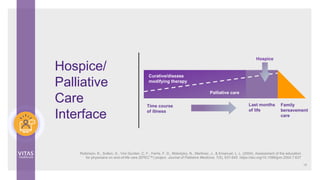
Hospice
Curative/disease
modifying therapy
Time course
of illness
Last months
of life
Palliative care
Family
bereavement
care
Hospice/
Palliative
Care
Interface
18
Support for
Palliative
Care
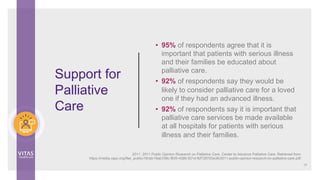
• 95% of respondents agree that it is
important that patients with serious illness
and their families be educated about
palliative care.
• 92% of respondents say they would be
likely to consider palliative care for a loved
one if they had an advanced illness.
• 92% of respondents say it is important that
palliative care services be made available
at all hospitals for patients with serious
illness and their families.
19
2011. 2011 Public Opinion Research on Palliative Care. Center to Advance Palliative Care. Retrieved from
https://media.capc.org/filer_public/18/ab/18ab708c-f835-4380-921d-fbf729702e36/2011-public-opinion-research-on-palliative-care.pdf
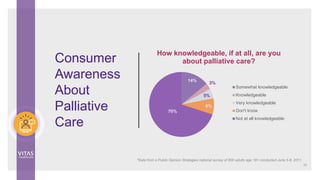
14%
3%
5%
8%
70%
How knowledgeable, if at all, are you
about palliative care?
Somewhat knowledgeable
Knowledgeable
Very knowledgeable
Don't know
Not at all knowledgeable
*Data from a Public Opinion Strategies national survey of 800 adults age 18+ conducted June 5-8, 2011.
Consumer
Awareness
About
Palliative
Care
20
Palliative
Care and
Hospice
Care
21
Hospice
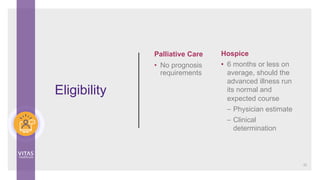
• 6 months or less on
average, should the
advanced illness run
its normal and
expected course
– Physician estimate
– Clinical
determination
Eligibility
Palliative Care
• No prognosis
requirements
22
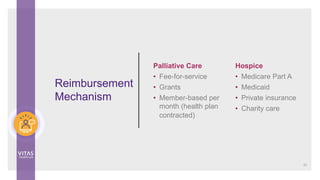
Hospice
• Medicare Part A
• Medicaid
• Private insurance
• Charity care
Reimbursement
Mechanism
Palliative Care
• Fee-for-service
• Grants
• Member-based per
month (health plan
contracted)
23
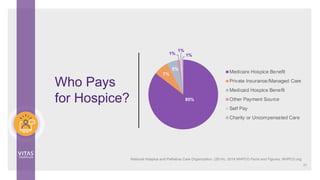
85%
7%
5%
1%
1%
1%
Medicare Hospice Benefit
Private Insurance/Managed Care
Medicaid Hospice Benefit
Other Payment Source
Self Pay
Charity or Uncompensated Care
Who Pays
for Hospice?
24
National Hospice and Palliative Care Organization. (2014). 2014 NHPCO Facts and Figures. NHPCO.org
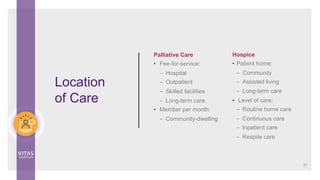
Hospice
• Patient home:
– Community
– Assisted living
– Long-term care
• Level of care:
– Routine home care
– Continuous care
– Inpatient care
– Respite care
Location
of Care
Palliative Care
• Fee-for-service:
– Hospital
– Outpatient
– Skilled facilities
– Long-term care
• Member per month:
– Community-dwelling
25
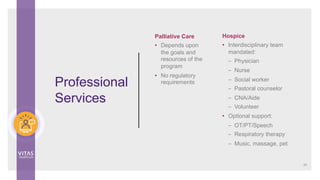
Professional
Services
Palliative Care
• Depends upon
the goals and
resources of the
program
• No regulatory
requirements
Hospice
• Interdisciplinary team
mandated:
– Physician
– Nurse
– Social worker
– Pastoral counselor
– CNA/Aide
– Volunteer
• Optional support:
– OT/PT/Speech
– Respiratory therapy
– Music, massage, pet
26
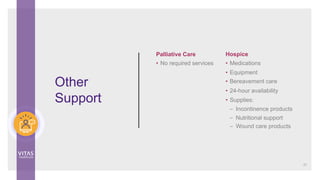
Other
Support
Palliative Care
• No required services
Hospice
• Medications
• Equipment
• Bereavement care
• 24-hour availability
• Supplies:
– Incontinence products
– Nutritional support
– Wound care products
27
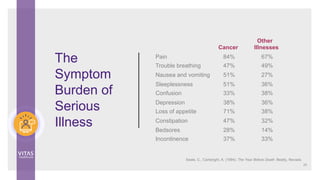
The
Symptom
Burden of
Serious
Illness
Other
Cancer Illnesses
Pain 84% 67%
Trouble breathing 47% 49%
Nausea and vomiting 51% 27%
Sleeplessness 51% 36%
Confusion 33% 38%
Depression 38% 36%
Loss of appetite 71% 38%
Constipation 47% 32%
Bedsores 28% 14%
Incontinence 37% 33%
Seale, C., Cartwright, A. (1994). The Year Before Death. Beatty, Nevada.
28
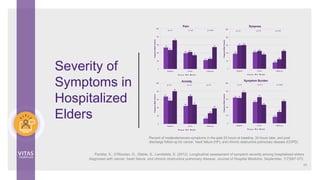
Severity of
Symptoms in
Hospitalized
Elders
Pantilat, S., O’Riordan, D., Dibble, S., Landefeld, S. (2012). Longitudinal assessment of symptom severity among hospitalized elders
diagnosed with cancer, heart failure, and chronic obstructive pulmonary disease. Journal of Hospital Medicine, September, 7(7)567-572.
Percent of moderate/severe symptoms in the past 24 hours at baseline, 24 hours later, and post
discharge follow-up for cancer, heart failure (HF), and chronic obstructive pulmonary disease (COPD).
29
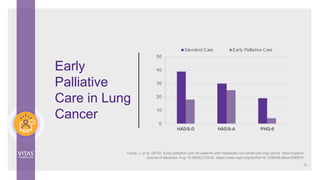
Early
Palliative
Care in Lung
Cancer
Temel, J. et al. (2010). Early palliative care for patients with metastatic non-small-cell lung cancer. New England
Journal of Medicine, Aug 19;363(8):733-42. https://www.nejm.org/doi/full/10.1056/NEJMoa1000678
0
10
20
30
40
50
HADS-D HADS-A PHQ-9
Standard Care Early Palliative Care
30
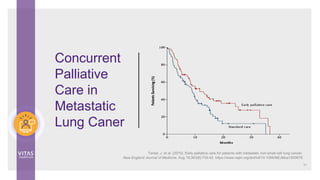
Concurrent
Palliative
Care in
Metastatic
Lung Caner
Temel, J. et al. (2010). Early palliative care for patients with metastatic non-small-cell lung cancer.
New England Journal of Medicine, Aug 19;363(8):733-42. https://www.nejm.org/doi/full/10.1056/NEJMoa1000678
31
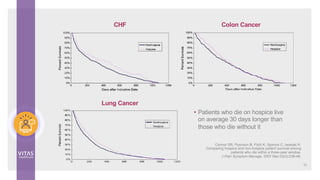
• Patients who die on hospice live
on average 30 days longer than
those who die without it
Lung Cancer
CHF Colon Cancer
32
Connor SR, Pyenson B, Fitch K, Spence C, Iwasaki K.
Comparing hospice and non-hospice patient survival among
patients who die within a three-year window.
J Pain Symptom Manage. 2007 Mar;33(3):238-46.
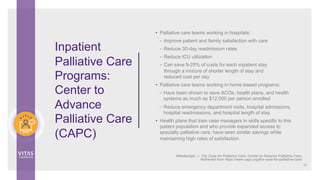
• Palliative care teams working in hospitals:
– Improve patient and family satisfaction with care
– Reduce 30-day readmission rates
– Reduce ICU utilization
– Can save 9-25% of costs for each inpatient stay
through a mixture of shorter length of stay and
reduced cost per day
• Palliative care teams working in home-based programs:
– Have been shown to save ACOs, health plans, and health
systems as much as $12,000 per person enrolled
– Reduce emergency department visits, hospital admissions,
hospital readmissions, and hospital length of stay
• Health plans that train case managers in skills specific to this
patient population and who provide expanded access to
specialty palliative care, have seen similar savings while
maintaining high rates of satisfaction
Inpatient
Palliative Care
Programs:
Center to
Advance
Palliative Care
(CAPC)
33
Mittelberger, J. The Case for Palliative Care. Center to Advance Palliative Care.
Retrieved from https://www.capc.org/the-case-for-palliative-care/
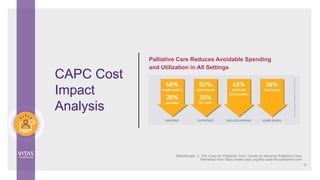
CAPC Cost
Impact
Analysis
Palliative Care Reduces Avoidable Spending
and Utilization in All Settings
34
Mittelberger, J. The Case for Palliative Care. Center to Advance Palliative Care.
Retrieved from https://www.capc.org/the-case-for-palliative-care/
Cost Savings
Associated
With US
Hospital
Palliative Care
Consultation
Programs
35
Arch Intern Med. 2008;168(16):1783-1790. doi:10.1001/archinte.168.16.1783
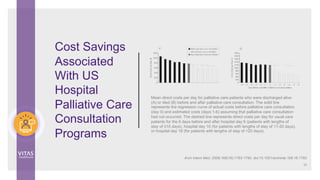
Mean direct costs per day for palliative care patients who were discharged alive
(A) or died (B) before and after palliative care consultation. The solid line
represents the regression curve of actual costs before palliative care consultation
(day 0) and estimated costs (days 1-6) assuming that palliative care consultation
had not occurred. The dashed line represents direct costs per day for usual care
patients for the 6 days before and after hospital day 6 (patients with lengths of
stay of ≤10 days), hospital day 10 (for patients with lengths of stay of 11-20 days),
or hospital day 18 (for patients with lengths of stay of >20 days).
Cost Savings
Associated
With US
Hospital
Palliative Care
Consultation
Programs
36
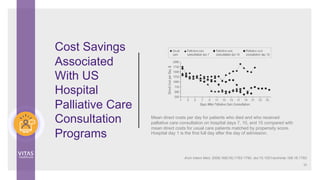
Mean direct costs per day for patients who died and who received
palliative care consultation on hospital days 7, 10, and 15 compared with
mean direct costs for usual care patients matched by propensity score.
Hospital day 1 is the first full day after the day of admission.
Arch Intern Med. 2008;168(16):1783-1790. doi:10.1001/archinte.168.16.1783
Routine Care
vs. Inpatient
Palliative
Care
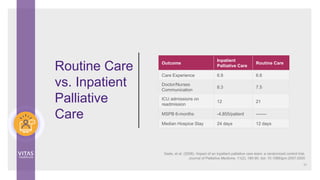
Gade, et al. (2008). Impact of an inpatient palliative care team: a randomized control trial.
Journal of Palliative Medicine, 11(2), 180-90. doi: 10.1089/jpm.2007.0055
Outcome
Inpatient
Palliative Care
Routine Care
Care Experience 6.9 6.6
Doctor/Nurses
Communication
8.3 7.5
ICU admissions on
readmission
12 21
MSPB 6-months -4,855/patient -------
Median Hospice Stay 24 days 12 days
37
Where Do
Patients
Spend Their
Last Days?
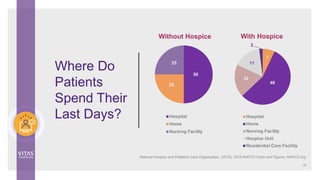
7
48
32
11
2
With Hospice
Hospital
Home
Nursing Facility
Hospice Unit
Residential Care Facility
50
25
25
Without Hospice
Hospital
Home
Nursing Facility
38
National Hospice and Palliative Care Organization. (2018). 2018 NHPCO Facts and Figures. NHPCO.org
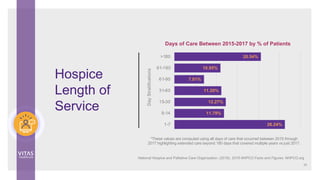
Hospice
Length of
Service
Days of Care Between 2015-2017 by % of Patients
39
National Hospice and Palliative Care Organization. (2018). 2018 NHPCO Facts and Figures. NHPCO.org
26.24%
11.79%
12.27%
11.20%
7.01%
10.95%
20.54%
1-7
8-14
15-30
31-60
61-90
91-180
>180
DayStratifications
*These values are computed using all days of care that occurred between 2015 through
2017 highlighting extended care beyond 180 days that covered multiple years vs just 2017.
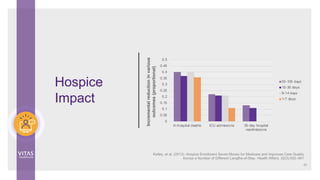
0
0.05
0.1
0.15
0.2
0.25
0.3
0.35
0.4
0.45
0.5
In-hospital deaths ICU admissions 30-day hospital
readmissions
Incrementalreductioninvarious
outcomes(proportional)
53-105 days
15-30 days
8-14 days
1-7 days
Hospice
Impact
40
Kelley, et al. (2013). Hospice Enrollment Saves Money for Medicare and Improves Care Quality
Across a Number of Different Lengths-of-Stay. Health Affairs, 32(3):552–561
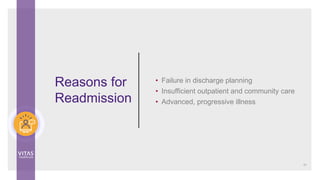
• Failure in discharge planning
• Insufficient outpatient and community care
• Advanced, progressive illness
Reasons for
Readmission
41
Care
Transitions
42
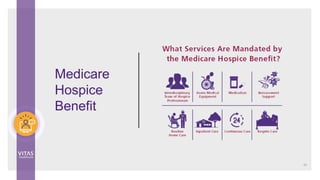
Medicare
Hospice
Benefit
43
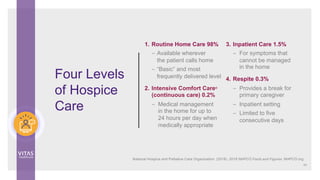
Four Levels
of Hospice
Care
44
1. Routine Home Care 98%
– Available wherever
the patient calls home
– “Basic” and most
frequently delivered level
2. Intensive Comfort Care®
(continuous care) 0.2%
– Medical management
in the home for up to
24 hours per day when
medically appropriate
3. Inpatient Care 1.5%
– For symptoms that
cannot be managed
in the home
4. Respite 0.3%
– Provides a break for
primary caregiver
– Inpatient setting
– Limited to five
consecutive days
National Hospice and Palliative Care Organization. (2018). 2018 NHPCO Facts and Figures. NHPCO.org
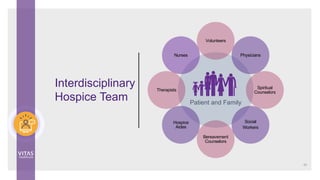
Patient and Family
Volunteers
Physicians
Spiritual
Counselors
Social
Workers
Bereavement
Counselors
Hospice
Aides
Therapists
Nurses
Interdisciplinary
Hospice Team
45
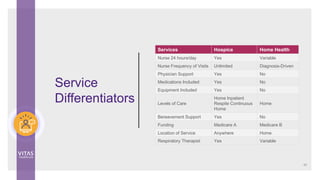
Services Hospice Home Health
Nurse 24 hours/day Yes Variable
Nurse Frequency of Visits Unlimited Diagnosis-Driven
Physician Support Yes No
Medications Included Yes No
Equipment Included Yes No
Levels of Care
Home Inpatient
Respite Continuous
Home
Home
Bereavement Support Yes No
Funding Medicare A Medicare B
Location of Service Anywhere Home
Respiratory Therapist Yes Variable
Service
Differentiators
46
Bereavement
• Hospice provides bereavement services and
offers grief and loss support for family after
the patient dies
• For up to 13 months following a death,
hospice provides:
– Grief education resources, letters, cards
– Phone support and/or visits if needed or
requested by family
– Bereavement support groups
– Annual memorial activities
– Memory Bears
47
Kelley, et al. (2013). Hospice enrollment saves money for Medicare and improves care quality
across a number of different lengths of stay. Health Affairs, 32(3):552–561
Hospice
Impact:
Satisfaction
• Hospice care is associated with better
symptom relief, patient goal attainment
and quality of EOL care.
• Families of patients enrolled in hospice
more often reported that patients received
“just the right amount” of pain medicine and
help with dyspnea.
• Families of patients enrolled in hospice also
more often reported that patients’ EOL wishes
were followed and EOL care was “excellent.”
• Families of patients who received >30 days
of hospice care reported the highest quality
EOL outcomes.
48
Hospice:
In Conclusion
• Hospice is:
– A service, not a place
– Provided in the patient’s preferred
setting, whether a private residence,
nursing home, assisted living facility or
inpatient hospice setting
– Care that comforts and supports when
an advanced illness no longer responds
to curative treatments
– Making the most of the time that remains
– Covered by the Medicare
Hospice Benefit
49
• Palliative care supports persons with
advanced illness and facilitates more
timely hospice referral.
• Hospice and palliative care supports:
– Patients and families
– Clinicians
– Hospitals and health systems
• All successful palliative care programs
partner with a hospice.
Summary
50
You matter because you are you. You matter to the
last moment of life, and we will do all we can,
not only to help you die peacefully, but also to
live until you die.
—Dame Cicely Saunders
St. Christopher’s Hospice London, England
Partner
With Hospice
51
“
”
Questions?
Arias, E. CDC National Vital Statistics Reports,Volume 54, Number 14
United States Life Tables, 2003, p. 30. Retrieved from
https://www.cdc.gov/nchs/data/nvsr/nvsr54/nvsr54_14.pdf
Centers for Disease Control and Prevention, National Center for Health
Statistics. (2018). Underlying Cause of Death 1999-2017. CDC WONDER
Online Database. Retrieved from http://wonder.cdc.gov/ucd-icd10.html
Center to Advance Palliative Care. (2011). 2011 Public Opinion
Research on Palliative Care. Retrieved from
https://media.capc.org/filer_public/18/ab/18ab708c-f835-4380-921d-
fbf729702e36/2011-public-opinion-research-on-palliative-care.pdf
Emanuel, et. al. (2003). The Education in Palliative and End of Life Care
Curriculum (EPEC Project). Northwestern School University Feinberg
School of Medicine.
Gade, et al. (2008). Impact of an inpatient palliative care team: a
randomized control trial. Journal of Palliative Medicine, 11(2), 180-90.
doi: 10.1089/jpm.2007.0055
Hamel, et. al. (April 2017). Views and Experiences with End-of-Life
Medical Care in the U.S. Kaiser Family Foundation. Retrieved from
https://www.kff.org/other/report/views-and-experiences-with-end-of-
life-medical-care-in-the-u-s/
Kelley, et al. (2013). Hospice enrollment saves money for Medicare
and improves care quality across a number of different lengths-of-stay.
Health Affairs, 32(3), 552–561.
53
References
Mittelberger, J. The Case for Palliative Care. Center to Advance Palliative Care.
Retrieved from https://www.capc.org/the-case-for-palliative-care/
Morrison, et al. (2008). Cost savings associated with US hospital palliative care
consultation programs. Archives of Internal Medicine, 168(16), 1783-90. doi:
10.1001/archinte.168.16.1783
Pantilat, S., O’Riordan, D., Dibble, S., Landefeld, S. (2012). Longitudinal
assessment of symptom severity among hospitalized elders diagnosed with
cancer, heart failure, and chronic obstructive pulmonary disease. Journal of
Hospital Medicine, September, 7(7)567-572.
Robinson, K., Sutton, S., Von Gunten, C. F., Ferris, F. D., Molodyko, N.,
Martinez, J., & Emanuel, L. L. (2004). Assessment of the education for
physicians on end-of-life care (EPEC™) project. Journal of Palliative Medicine,
7(5), 637-645. https://doi.org/10.1089/jpm.2004.7.637
Seale, C., Cartwright, A. (1994). The Year Before Death. Beatty, Nevada.
Sleeman, K., et al. (2019). The escalating burden of serious related suffering:
projections to 2060 by world regions, age groups, and health conditions.
The Lancet, 7(7); 882-892. Retrieved from: https://doi.org/10.1016/S2214-
109X(19)30172-X
Temel, et al. (Aug. 2010). Early palliative care for patients with metastatic
non-small-cell lung cancer. NEJM 363(8): 733-741. Retrieved from
https://www.nejm.org/doi/full/10.1056/NEJMoa1000678
Werner, CA. The Older Population: 2010. 2010 Census Briefs. November 2011,
p. 3. Retrieved from https://www.census.gov/prod/cen2010/briefs/c2010br-09.pdf
54
References
(cont.)
Palliative Care vs.
Curative Care

Palliative vs. Curative Care

  • 1.
  • 2.
    CE Provider Information VITAS® Healthcareprograms are provided CE credits for their Nurses/Social Workers and Nursing Home Administrators through: VITAS® Healthcare Corporation of Florida, Inc./CE Broker Number: 50-2135. Approved By: Florida Board of Nursing/Florida Board of Nursing Home Administrators/Florida Board of Clinical Social Workers, Marriage and Family Therapy & Mental Health Counseling. VITAS® Healthcare programs in Illinois are provided CE credit for their Nursing Home Administrators and Respiratory Therapists through: VITAS® Healthcare Corporation of Illinois, Inc./8525 West 183 Street, Tinley Park, IL 60487/NHA CE Provider Number: 139000207/RT CE Provider Number: 195000028/ Approved By the Illinois Division of Profession Regulation for: Licensed Nursing Home Administrators and Illinois Respiratory Care Practitioner. 2
  • 3.
    CE Provider Information (cont.) VITAS® Healthcare, #1222,is approved to offer social work continuing education by the Association of Social Work Boards (ASWB) Approved Continuing Education (ACE) program. Organizations, not individual courses, are approved as ACE providers. State and provincial regulatory boards have the final authority to determine whether an individual course may be accepted for continuing education credit. VITAS® Healthcare maintains responsibility for this course. ACE provider approval period: 06/06/2018 – 06/06/2021. Social workers completing this course receive 1.0 continuing education credits. VITAS® Healthcare Corporation of California, 310 Commerce, Suite 200, Irvine, CA 92602. Provider approved by the California Board of Registered Nursing, Provider Number 10517, expiring 01/31/2021. Exceptions to the above are as follows: AL: No NHAs, DE: No NHAs, DC: No NHAs, GA: No NHAs, KS: No NHAs, NJ: No NHAs, OH: No NHAs, PA: No NHAs, TX: No NHAs, VA: No NHAs, WI: No NHAs and Nurses are not required – RT only receive CE Credit in Illinois 3
  • 4.
    Objectives • Describe thehistory and philosophy of the hospice and palliative movement. • Identify the difference between palliative and curative care. • List the benefits of palliative care in the patient with advanced illness. 4
  • 5.
    How People Die • <10%die suddenly of an unexpected event, heart attack (MI), accident, etc. • >90% die of a protracted, life-threatening illness – Predictable steady decline with a relatively short “advanced” phase (cancer) – Slow decline punctuated by periodic crises (advanced cardiac disease, advanced lung disease, Alzheimer’s/ dementia) 5 Emanuel, LL et. al. (2003). The Education in Palliative and End of Life Care Curriculum (EPEC Project). Northwestern School University Feinberg School of Medicine.
  • 6.
    Dying Then and Now •19th Century: – In 1900 4% of America’s population was >65 years of age1 – In 1900, life expectancy was 49 years of age2 – Most people died at home • Today: – Nearly 15% of the U.S. population is >65 years3 – 2017 life expectancy in the U.S. was 78.6 years4 – Approximately 37% of Americans die in acute-care hospitals and 19% die in nursing homes5 6 1Werner, CA. The Older Population: 2010. 2010 Census Briefs. November 2011, p. 3. Retrieved from https://www.census.gov/prod/cen2010/briefs/c2010br-09.pdf 2Arias, E. CDC National Vital Statistics Reports,Volume 54, Number 14 United States Life Tables, 2003, p. 30. Retrieved from https://www.cdc.gov/nchs/data/nvsr/nvsr54/nvsr54_14.pdf 32017, April. Facts for Features: Older Americans Month, May 2017. United States Census Bureau. Retrieved from: https://www.census.gov/newsroom/facts-for-features/2017/cb17-ff08.html 42017. Life Expectancy. Centers for Disease Control and Prevention. Retrieved from https://www.cdc.gov/nchs/fastats/life-expectancy.htm. 52016, April 8. QuickStats: Percentage Distribution of Deaths, by Place of Death, United States, 2000-2014. Retrieved from https://www.cdc.gov/mmwr/volumes/65/wr/mm6513a6.htm
  • 7.
    Death and Dying inthe Future • By 2060, an estimated 48 million people (47% of all deaths globally) will die with serious health-related suffering, which represents an 87% increase from 26 million people in 2016. 83% of these deaths will occur in low-income and middle-income countries. • Serious health-related suffering will increase in all regions, with the largest proportional rise in low-income countries (155% increase between 2016 and 2060). Globally, serious health-related suffering will increase most rapidly among people aged 70 years or older (183% increase between 2016 and 2060). • In absolute terms, it will be driven by rises in cancer deaths (16 million people, 109% increase between 2016 and 2060). • The condition with the highest proportional increase in serious health-related suffering will be dementia (6 million people, 264% increase between 2016 and 2060).” Sleeman, K., et al. (2019). The escalating burden of serious related suffering: projections to 2060 by world regions, age groups, and health conditions. The Lancet, 7(7);882-892. Retrieved from: https://doi.org/10.1016/S2214-109X(19)30172-X 7
  • 8.
    The Future of Palliative Care: “Cornerstone ofGlobal Health” • Palliative care is increasingly recognized by international health organizations as a cornerstone of global health, and there have been strong, coordinated calls to integrate palliative care within health systems. • Available evidence indicates that palliative care improves quality of life, symptom control, and patient and caregiver satisfaction, often at lower cost than the alternative. • Despite these benefits, palliative care is frequently not mentioned in high-profile strategies in low-income, middle-income and high-income countries, and provision is often insufficient to meet population needs. • It has been estimated that just 14% of the people who need palliative care receive it, and that most of those are in high-income settings Sleeman, K., et al. (2019). The escalating burden of serious related suffering: projections to 2060 by world regions, age groups, and health conditions. The Lancet, 7(7);882-892. Retrieved from: https://doi.org/10.1016/S2214-109X(19)30172-X 8
  • 9.
    Hospice History • Linguistic rootwords: – Hospital – Hospitality – Shelter – Respite – Caring • A place of refuge and solace 9
  • 10.
    Hospice History (cont.) 10 • 1967Dame Cicely Saunders opened St. Christopher’s in London • 1969 “On Death and Dying” by Elisabeth Kubler-Ross brought death and dying into the mainstream • 1974 New Haven Hospice of Connecticut established • 1978 VITAS founded • 1978 National Hospice Organization formed • National Hospice & Palliative Care Organization (NHPCO) • Mission: “To lead and mobilize social change for improved care at the end of life”
  • 11.
    What Is Palliative Care? The studyand management of patients with active, progressive, far-advanced disease for whom the prognosis is limited and the focus of care is quality of life. –Oxford’s Textbook of Palliative Medicine 11 “ ”
  • 12.
    Palliative care ispatient and family-centered care that optimizes quality of life by anticipating, preventing, and treating suffering. Palliative care throughout the continuum of illness involves addressing physical, intellectual, emotional, social, and spiritual needs and to facilitate patient autonomy, access to information and choice. National Consensus Project for Quality Palliative Care Palliative Care: Definition 12 Explanation of Palliative Care. National Hospice and Palliative Care Organization. Retrieved from https://www.nhpco.org/palliative-care-overview/explanation-of-palliative-care/
  • 13.
    Explanation of Palliative Care (cont.) •Palliative Care is: – Appropriate at any stage in a serious illness – Beneficial when provided along with curative treatments – Provided over time to patients based on their needs – Offered in all care settings – Focused on what is most important to the patient, family and caregiver(s) – Interdisciplinary to attend to the patient's holistic care needs 13 2018. Clinical Practice Guidelines for Quality Palliative Care, 4th Edition. National Coalition for Hospice and Palliative Care. Retrieved from https://www.nationalcoalitionhpc.org/wp-content/uploads/2018/10/NCHPC-NCPGuidelines_4thED_web_FINAL.pdf
  • 14.
    Palliative Care • Manages painand symptoms • Regards dying as a normal process • Neither hastens nor postpones death • Integrates psychological and spiritual care • Supports patient and family • Incorporates a team approach • Enhances quality of life • Is applicable early in the course of illness 14
  • 15.
    • Symptom managementin advanced illness: – Pain – Dyspnea – Nausea and vomiting – Fatigue – Anxiety and depression • Care transitions and coordination of care • Goals-of-care/End-of-life discussions – Timely hospice referral and admission Palliative Care: Clinical Expertise 15
  • 16.
  • 17.
    Traditional Model Continuum of Care- Traditional Presentation/ Diagnosis Acute Illness Chronic Death Life Threatening 17
  • 18.
    Robinson, K., Sutton,S., Von Gunten, C. F., Ferris, F. D., Molodyko, N., Martinez, J., & Emanuel, L. L. (2004). Assessment of the education for physicians on end-of-life care (EPEC™) project. Journal of Palliative Medicine, 7(5), 637-645. https://doi.org/10.1089/jpm.2004.7.637 Hospice Curative/disease modifying therapy Time course of illness Last months of life Palliative care Family bereavement care Hospice/ Palliative Care Interface 18
  • 19.
    Support for Palliative Care • 95%of respondents agree that it is important that patients with serious illness and their families be educated about palliative care. • 92% of respondents say they would be likely to consider palliative care for a loved one if they had an advanced illness. • 92% of respondents say it is important that palliative care services be made available at all hospitals for patients with serious illness and their families. 19 2011. 2011 Public Opinion Research on Palliative Care. Center to Advance Palliative Care. Retrieved from https://media.capc.org/filer_public/18/ab/18ab708c-f835-4380-921d-fbf729702e36/2011-public-opinion-research-on-palliative-care.pdf
  • 20.
    14% 3% 5% 8% 70% How knowledgeable, ifat all, are you about palliative care? Somewhat knowledgeable Knowledgeable Very knowledgeable Don't know Not at all knowledgeable *Data from a Public Opinion Strategies national survey of 800 adults age 18+ conducted June 5-8, 2011. Consumer Awareness About Palliative Care 20
  • 21.
  • 22.
    Hospice • 6 monthsor less on average, should the advanced illness run its normal and expected course – Physician estimate – Clinical determination Eligibility Palliative Care • No prognosis requirements 22
  • 23.
    Hospice • Medicare PartA • Medicaid • Private insurance • Charity care Reimbursement Mechanism Palliative Care • Fee-for-service • Grants • Member-based per month (health plan contracted) 23
  • 24.
    85% 7% 5% 1% 1% 1% Medicare Hospice Benefit PrivateInsurance/Managed Care Medicaid Hospice Benefit Other Payment Source Self Pay Charity or Uncompensated Care Who Pays for Hospice? 24 National Hospice and Palliative Care Organization. (2014). 2014 NHPCO Facts and Figures. NHPCO.org
  • 25.
    Hospice • Patient home: –Community – Assisted living – Long-term care • Level of care: – Routine home care – Continuous care – Inpatient care – Respite care Location of Care Palliative Care • Fee-for-service: – Hospital – Outpatient – Skilled facilities – Long-term care • Member per month: – Community-dwelling 25
  • 26.
    Professional Services Palliative Care • Dependsupon the goals and resources of the program • No regulatory requirements Hospice • Interdisciplinary team mandated: – Physician – Nurse – Social worker – Pastoral counselor – CNA/Aide – Volunteer • Optional support: – OT/PT/Speech – Respiratory therapy – Music, massage, pet 26
  • 27.
    Other Support Palliative Care • Norequired services Hospice • Medications • Equipment • Bereavement care • 24-hour availability • Supplies: – Incontinence products – Nutritional support – Wound care products 27
  • 28.
    The Symptom Burden of Serious Illness Other Cancer Illnesses Pain84% 67% Trouble breathing 47% 49% Nausea and vomiting 51% 27% Sleeplessness 51% 36% Confusion 33% 38% Depression 38% 36% Loss of appetite 71% 38% Constipation 47% 32% Bedsores 28% 14% Incontinence 37% 33% Seale, C., Cartwright, A. (1994). The Year Before Death. Beatty, Nevada. 28
  • 29.
    Severity of Symptoms in Hospitalized Elders Pantilat,S., O’Riordan, D., Dibble, S., Landefeld, S. (2012). Longitudinal assessment of symptom severity among hospitalized elders diagnosed with cancer, heart failure, and chronic obstructive pulmonary disease. Journal of Hospital Medicine, September, 7(7)567-572. Percent of moderate/severe symptoms in the past 24 hours at baseline, 24 hours later, and post discharge follow-up for cancer, heart failure (HF), and chronic obstructive pulmonary disease (COPD). 29
  • 30.
    Early Palliative Care in Lung Cancer Temel,J. et al. (2010). Early palliative care for patients with metastatic non-small-cell lung cancer. New England Journal of Medicine, Aug 19;363(8):733-42. https://www.nejm.org/doi/full/10.1056/NEJMoa1000678 0 10 20 30 40 50 HADS-D HADS-A PHQ-9 Standard Care Early Palliative Care 30
  • 31.
    Concurrent Palliative Care in Metastatic Lung Caner Temel,J. et al. (2010). Early palliative care for patients with metastatic non-small-cell lung cancer. New England Journal of Medicine, Aug 19;363(8):733-42. https://www.nejm.org/doi/full/10.1056/NEJMoa1000678 31
  • 32.
    • Patients whodie on hospice live on average 30 days longer than those who die without it Lung Cancer CHF Colon Cancer 32 Connor SR, Pyenson B, Fitch K, Spence C, Iwasaki K. Comparing hospice and non-hospice patient survival among patients who die within a three-year window. J Pain Symptom Manage. 2007 Mar;33(3):238-46.
  • 33.
    • Palliative careteams working in hospitals: – Improve patient and family satisfaction with care – Reduce 30-day readmission rates – Reduce ICU utilization – Can save 9-25% of costs for each inpatient stay through a mixture of shorter length of stay and reduced cost per day • Palliative care teams working in home-based programs: – Have been shown to save ACOs, health plans, and health systems as much as $12,000 per person enrolled – Reduce emergency department visits, hospital admissions, hospital readmissions, and hospital length of stay • Health plans that train case managers in skills specific to this patient population and who provide expanded access to specialty palliative care, have seen similar savings while maintaining high rates of satisfaction Inpatient Palliative Care Programs: Center to Advance Palliative Care (CAPC) 33 Mittelberger, J. The Case for Palliative Care. Center to Advance Palliative Care. Retrieved from https://www.capc.org/the-case-for-palliative-care/
  • 34.
    CAPC Cost Impact Analysis Palliative CareReduces Avoidable Spending and Utilization in All Settings 34 Mittelberger, J. The Case for Palliative Care. Center to Advance Palliative Care. Retrieved from https://www.capc.org/the-case-for-palliative-care/
  • 35.
    Cost Savings Associated With US Hospital PalliativeCare Consultation Programs 35 Arch Intern Med. 2008;168(16):1783-1790. doi:10.1001/archinte.168.16.1783 Mean direct costs per day for palliative care patients who were discharged alive (A) or died (B) before and after palliative care consultation. The solid line represents the regression curve of actual costs before palliative care consultation (day 0) and estimated costs (days 1-6) assuming that palliative care consultation had not occurred. The dashed line represents direct costs per day for usual care patients for the 6 days before and after hospital day 6 (patients with lengths of stay of ≤10 days), hospital day 10 (for patients with lengths of stay of 11-20 days), or hospital day 18 (for patients with lengths of stay of >20 days).
  • 36.
    Cost Savings Associated With US Hospital PalliativeCare Consultation Programs 36 Mean direct costs per day for patients who died and who received palliative care consultation on hospital days 7, 10, and 15 compared with mean direct costs for usual care patients matched by propensity score. Hospital day 1 is the first full day after the day of admission. Arch Intern Med. 2008;168(16):1783-1790. doi:10.1001/archinte.168.16.1783
  • 37.
    Routine Care vs. Inpatient Palliative Care Gade,et al. (2008). Impact of an inpatient palliative care team: a randomized control trial. Journal of Palliative Medicine, 11(2), 180-90. doi: 10.1089/jpm.2007.0055 Outcome Inpatient Palliative Care Routine Care Care Experience 6.9 6.6 Doctor/Nurses Communication 8.3 7.5 ICU admissions on readmission 12 21 MSPB 6-months -4,855/patient ------- Median Hospice Stay 24 days 12 days 37
  • 38.
    Where Do Patients Spend Their LastDays? 7 48 32 11 2 With Hospice Hospital Home Nursing Facility Hospice Unit Residential Care Facility 50 25 25 Without Hospice Hospital Home Nursing Facility 38 National Hospice and Palliative Care Organization. (2018). 2018 NHPCO Facts and Figures. NHPCO.org
  • 39.
    Hospice Length of Service Days ofCare Between 2015-2017 by % of Patients 39 National Hospice and Palliative Care Organization. (2018). 2018 NHPCO Facts and Figures. NHPCO.org 26.24% 11.79% 12.27% 11.20% 7.01% 10.95% 20.54% 1-7 8-14 15-30 31-60 61-90 91-180 >180 DayStratifications *These values are computed using all days of care that occurred between 2015 through 2017 highlighting extended care beyond 180 days that covered multiple years vs just 2017.
  • 40.
    0 0.05 0.1 0.15 0.2 0.25 0.3 0.35 0.4 0.45 0.5 In-hospital deaths ICUadmissions 30-day hospital readmissions Incrementalreductioninvarious outcomes(proportional) 53-105 days 15-30 days 8-14 days 1-7 days Hospice Impact 40 Kelley, et al. (2013). Hospice Enrollment Saves Money for Medicare and Improves Care Quality Across a Number of Different Lengths-of-Stay. Health Affairs, 32(3):552–561
  • 41.
    • Failure indischarge planning • Insufficient outpatient and community care • Advanced, progressive illness Reasons for Readmission 41
  • 42.
  • 43.
  • 44.
    Four Levels of Hospice Care 44 1.Routine Home Care 98% – Available wherever the patient calls home – “Basic” and most frequently delivered level 2. Intensive Comfort Care® (continuous care) 0.2% – Medical management in the home for up to 24 hours per day when medically appropriate 3. Inpatient Care 1.5% – For symptoms that cannot be managed in the home 4. Respite 0.3% – Provides a break for primary caregiver – Inpatient setting – Limited to five consecutive days National Hospice and Palliative Care Organization. (2018). 2018 NHPCO Facts and Figures. NHPCO.org
  • 45.
  • 46.
    Services Hospice HomeHealth Nurse 24 hours/day Yes Variable Nurse Frequency of Visits Unlimited Diagnosis-Driven Physician Support Yes No Medications Included Yes No Equipment Included Yes No Levels of Care Home Inpatient Respite Continuous Home Home Bereavement Support Yes No Funding Medicare A Medicare B Location of Service Anywhere Home Respiratory Therapist Yes Variable Service Differentiators 46
  • 47.
    Bereavement • Hospice providesbereavement services and offers grief and loss support for family after the patient dies • For up to 13 months following a death, hospice provides: – Grief education resources, letters, cards – Phone support and/or visits if needed or requested by family – Bereavement support groups – Annual memorial activities – Memory Bears 47
  • 48.
    Kelley, et al.(2013). Hospice enrollment saves money for Medicare and improves care quality across a number of different lengths of stay. Health Affairs, 32(3):552–561 Hospice Impact: Satisfaction • Hospice care is associated with better symptom relief, patient goal attainment and quality of EOL care. • Families of patients enrolled in hospice more often reported that patients received “just the right amount” of pain medicine and help with dyspnea. • Families of patients enrolled in hospice also more often reported that patients’ EOL wishes were followed and EOL care was “excellent.” • Families of patients who received >30 days of hospice care reported the highest quality EOL outcomes. 48
  • 49.
    Hospice: In Conclusion • Hospiceis: – A service, not a place – Provided in the patient’s preferred setting, whether a private residence, nursing home, assisted living facility or inpatient hospice setting – Care that comforts and supports when an advanced illness no longer responds to curative treatments – Making the most of the time that remains – Covered by the Medicare Hospice Benefit 49
  • 50.
    • Palliative caresupports persons with advanced illness and facilitates more timely hospice referral. • Hospice and palliative care supports: – Patients and families – Clinicians – Hospitals and health systems • All successful palliative care programs partner with a hospice. Summary 50
  • 51.
    You matter becauseyou are you. You matter to the last moment of life, and we will do all we can, not only to help you die peacefully, but also to live until you die. —Dame Cicely Saunders St. Christopher’s Hospice London, England Partner With Hospice 51 “ ”
  • 52.
  • 53.
    Arias, E. CDCNational Vital Statistics Reports,Volume 54, Number 14 United States Life Tables, 2003, p. 30. Retrieved from https://www.cdc.gov/nchs/data/nvsr/nvsr54/nvsr54_14.pdf Centers for Disease Control and Prevention, National Center for Health Statistics. (2018). Underlying Cause of Death 1999-2017. CDC WONDER Online Database. Retrieved from http://wonder.cdc.gov/ucd-icd10.html Center to Advance Palliative Care. (2011). 2011 Public Opinion Research on Palliative Care. Retrieved from https://media.capc.org/filer_public/18/ab/18ab708c-f835-4380-921d- fbf729702e36/2011-public-opinion-research-on-palliative-care.pdf Emanuel, et. al. (2003). The Education in Palliative and End of Life Care Curriculum (EPEC Project). Northwestern School University Feinberg School of Medicine. Gade, et al. (2008). Impact of an inpatient palliative care team: a randomized control trial. Journal of Palliative Medicine, 11(2), 180-90. doi: 10.1089/jpm.2007.0055 Hamel, et. al. (April 2017). Views and Experiences with End-of-Life Medical Care in the U.S. Kaiser Family Foundation. Retrieved from https://www.kff.org/other/report/views-and-experiences-with-end-of- life-medical-care-in-the-u-s/ Kelley, et al. (2013). Hospice enrollment saves money for Medicare and improves care quality across a number of different lengths-of-stay. Health Affairs, 32(3), 552–561. 53 References
  • 54.
    Mittelberger, J. TheCase for Palliative Care. Center to Advance Palliative Care. Retrieved from https://www.capc.org/the-case-for-palliative-care/ Morrison, et al. (2008). Cost savings associated with US hospital palliative care consultation programs. Archives of Internal Medicine, 168(16), 1783-90. doi: 10.1001/archinte.168.16.1783 Pantilat, S., O’Riordan, D., Dibble, S., Landefeld, S. (2012). Longitudinal assessment of symptom severity among hospitalized elders diagnosed with cancer, heart failure, and chronic obstructive pulmonary disease. Journal of Hospital Medicine, September, 7(7)567-572. Robinson, K., Sutton, S., Von Gunten, C. F., Ferris, F. D., Molodyko, N., Martinez, J., & Emanuel, L. L. (2004). Assessment of the education for physicians on end-of-life care (EPEC™) project. Journal of Palliative Medicine, 7(5), 637-645. https://doi.org/10.1089/jpm.2004.7.637 Seale, C., Cartwright, A. (1994). The Year Before Death. Beatty, Nevada. Sleeman, K., et al. (2019). The escalating burden of serious related suffering: projections to 2060 by world regions, age groups, and health conditions. The Lancet, 7(7); 882-892. Retrieved from: https://doi.org/10.1016/S2214- 109X(19)30172-X Temel, et al. (Aug. 2010). Early palliative care for patients with metastatic non-small-cell lung cancer. NEJM 363(8): 733-741. Retrieved from https://www.nejm.org/doi/full/10.1056/NEJMoa1000678 Werner, CA. The Older Population: 2010. 2010 Census Briefs. November 2011, p. 3. Retrieved from https://www.census.gov/prod/cen2010/briefs/c2010br-09.pdf 54 References (cont.)
  • 55.