Off Grid Electrical Power Systems
.
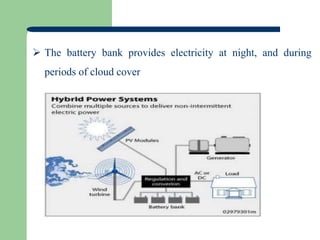
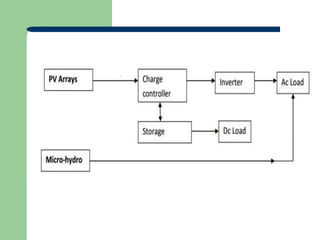
 Off grid, electricity can be generated by single-source system
using solar photovoltaic panel, wind turbine generators, micro-
hydro power plant or fuel-powered combustion engine generator
sets, or by integrating, one or more types of these electricity-
generating sources in a so-called hybrid system,
 Hybrid system can supply power to AC or DC load or both. It
may require AC, DC or both types of buses power conversion
devices are used to transform power.
 An off grid power system will need somewhere to store the
generated electricity and this is usually stored in batteries.
 The battery bank provides electricity at night, and during
periods of cloud cover
Rural electrification
 Rural electrification is the process of bringing electrical
power to rural and remote areas.
 Electricity is used not only for lighting and household
purposes, but it also allows for mechanization of many
farming operations, such as threshing, milking, and hoisting
grain for storage.
 In areas facing labor shortages, this allows for greater
productivity at reduced cost
Social and economic benefits
 Allow activities to occur after daylight hours, including
education. In impoverished and undeveloped areas, small
amounts of electricity can free large amounts of human time
and labor.
 In the poorest areas, people carry water and fuel by hand, their
food storage may be limited, and their activity is limited to
daylight hours.
 Reduce isolation through telecoms
 Improve safety with the implementation of street lighting, lit
road signs.
Social and economic benefits
 Improve healthcare by electrifying remote rural clinics.
 Reduces the need for candles and kerosene lamps with their
inherent fire safety risks and improves indoor air quality.
 Improve productivity, through the use of electricity for
irrigation, crop processing, and other activities.
Ch-10-Grid off.ppt

Ch-10-Grid off.ppt

  • 1.
    Off Grid ElectricalPower Systems .
  • 2.
     Off grid,electricity can be generated by single-source system using solar photovoltaic panel, wind turbine generators, micro- hydro power plant or fuel-powered combustion engine generator sets, or by integrating, one or more types of these electricity- generating sources in a so-called hybrid system,  Hybrid system can supply power to AC or DC load or both. It may require AC, DC or both types of buses power conversion devices are used to transform power.  An off grid power system will need somewhere to store the generated electricity and this is usually stored in batteries.
  • 3.
     The batterybank provides electricity at night, and during periods of cloud cover
  • 5.
    Rural electrification  Ruralelectrification is the process of bringing electrical power to rural and remote areas.  Electricity is used not only for lighting and household purposes, but it also allows for mechanization of many farming operations, such as threshing, milking, and hoisting grain for storage.  In areas facing labor shortages, this allows for greater productivity at reduced cost
  • 6.
    Social and economicbenefits  Allow activities to occur after daylight hours, including education. In impoverished and undeveloped areas, small amounts of electricity can free large amounts of human time and labor.  In the poorest areas, people carry water and fuel by hand, their food storage may be limited, and their activity is limited to daylight hours.  Reduce isolation through telecoms  Improve safety with the implementation of street lighting, lit road signs.
  • 7.
    Social and economicbenefits  Improve healthcare by electrifying remote rural clinics.  Reduces the need for candles and kerosene lamps with their inherent fire safety risks and improves indoor air quality.  Improve productivity, through the use of electricity for irrigation, crop processing, and other activities.