1.1
Chapter 1
Introduction
Copyright © The McGraw-Hill Companies, Inc. Permission required for reproduction or display.
1.2
1-1 DATA COMMUNICATIONS1-1 DATA COMMUNICATIONS
The termThe term telecommunicationtelecommunication means communication at ameans communication at a
distance. The worddistance. The word datadata refers to information presentedrefers to information presented
in whatever form is agreed upon by the parties creatingin whatever form is agreed upon by the parties creating
and using the data.and using the data. Data communicationsData communications are theare the
exchange of data between two devices via some form ofexchange of data between two devices via some form of
transmission medium such as a wire cable.transmission medium such as a wire cable.
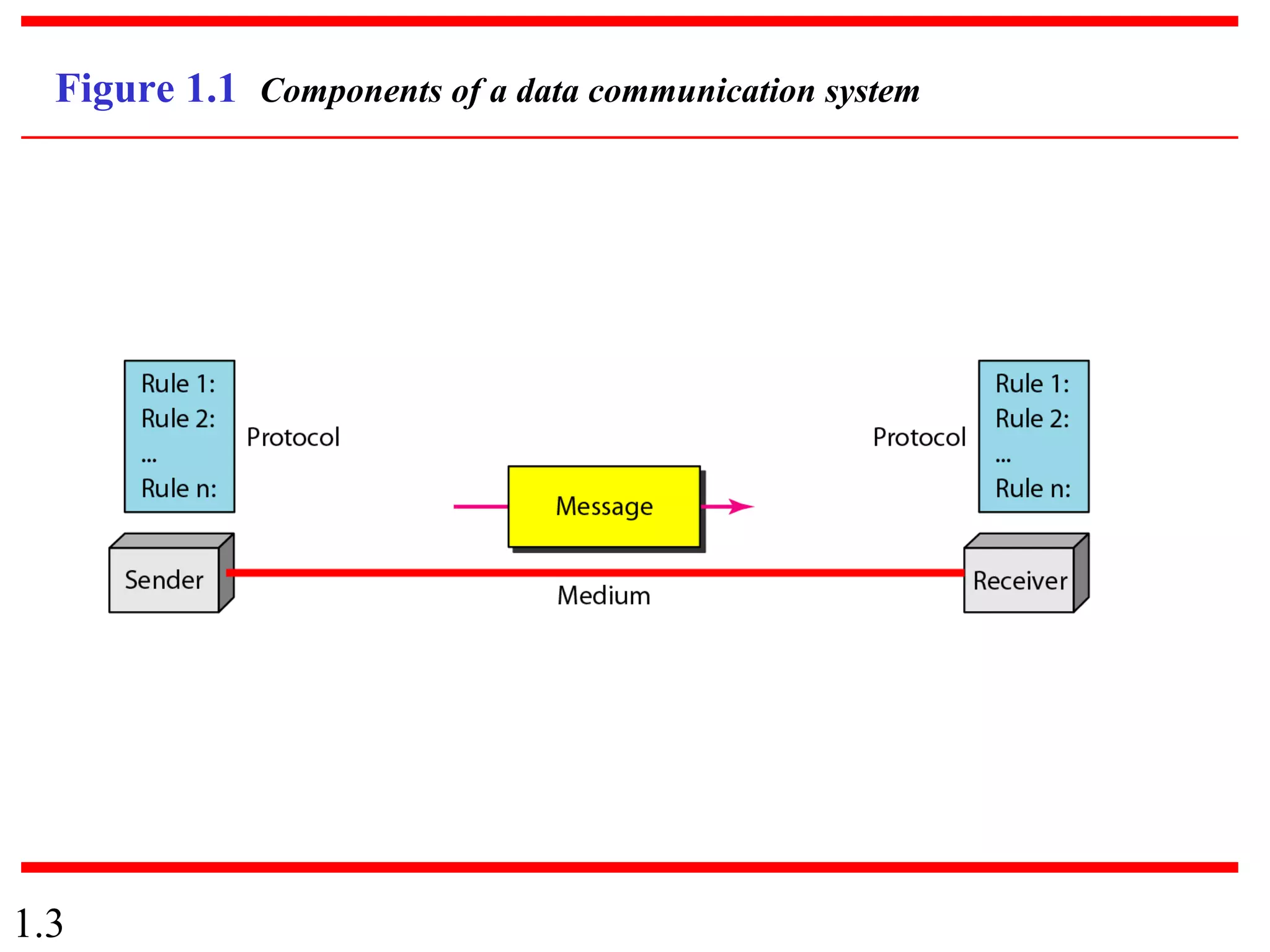
 Components of a data communications system
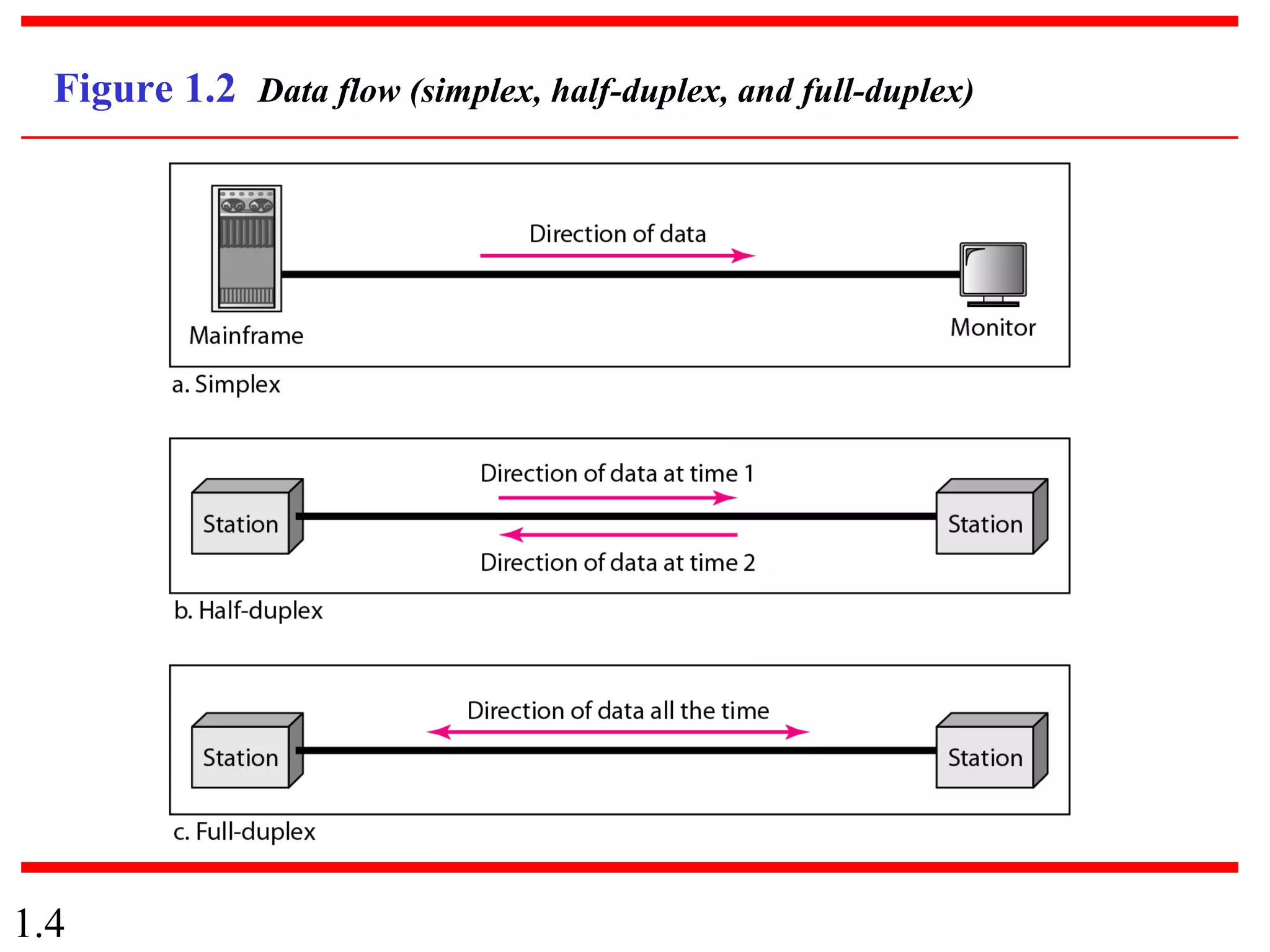
 Data Flow
Topics discussed in this section:Topics discussed in this section:
1.3
Figure 1.1 Components of a data communication system
1.4
Figure 1.2 Data flow (simplex, half-duplex, and full-duplex)
1.5
1-2 NETWORKS1-2 NETWORKS
AA networknetwork is a set of devices (often referred to asis a set of devices (often referred to as nodesnodes))
connected by communicationconnected by communication linkslinks. A node can be a. A node can be a
computer, printer, or any other device capable of sendingcomputer, printer, or any other device capable of sending
and/or receiving data generated by other nodes on theand/or receiving data generated by other nodes on the
network. A link can be a cable, air, optical fiber, or anynetwork. A link can be a cable, air, optical fiber, or any
medium which can transport a signal carryingmedium which can transport a signal carrying
information.information.
 Network Criteria
 Physical Structures
 Categories of Networks
Topics discussed in this section:Topics discussed in this section:
1.6
Network Criteria
 Performance
 Depends on Network Elements
 Measured in terms of Delay and Throughput
 Reliability
 Failure rate of network components
 Measured in terms of availability/robustness
 Security
 Data protection against corruption/loss of data due to:
 Errors
 Malicious users
1.7
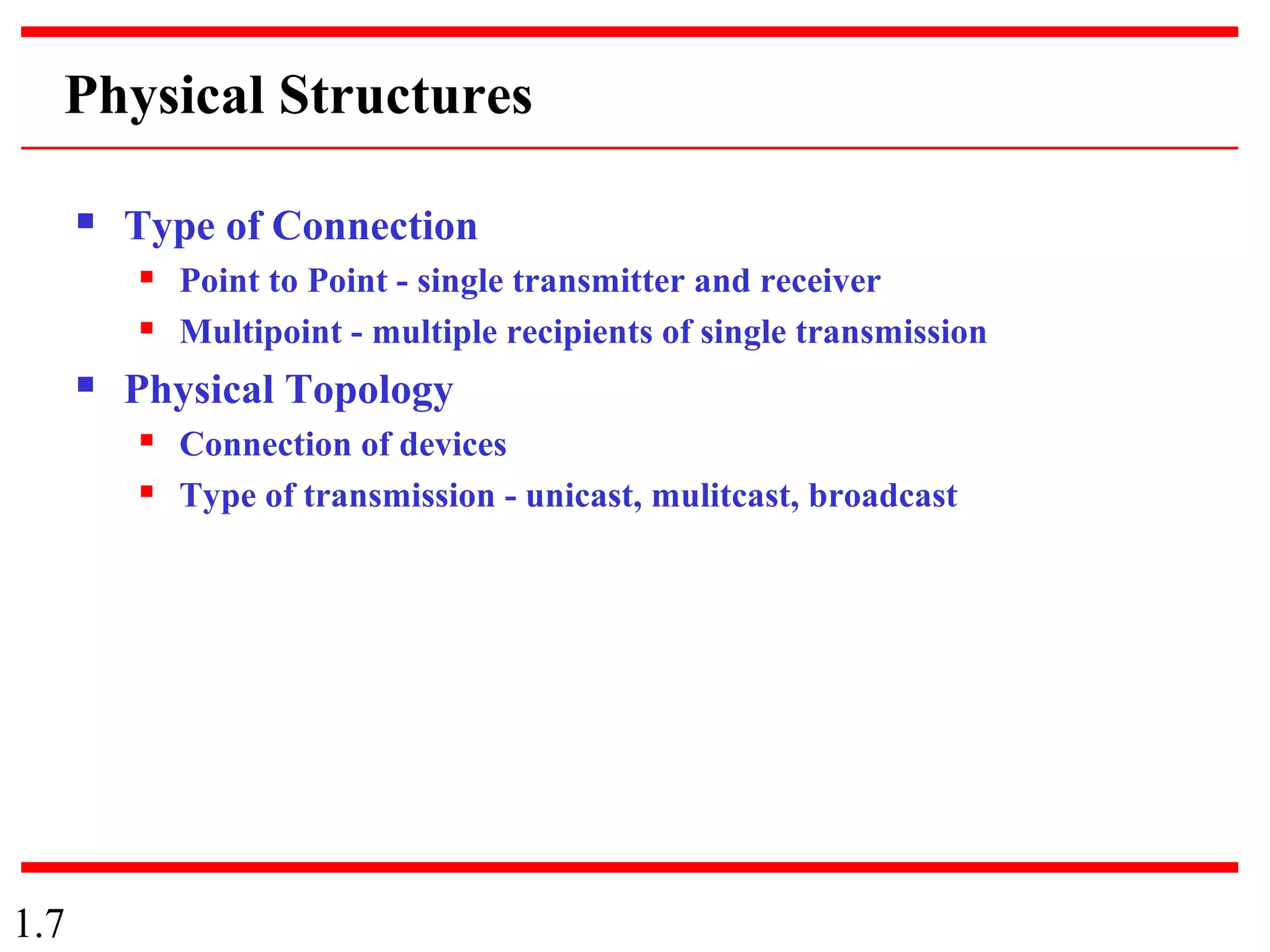
Physical Structures
 Type of Connection
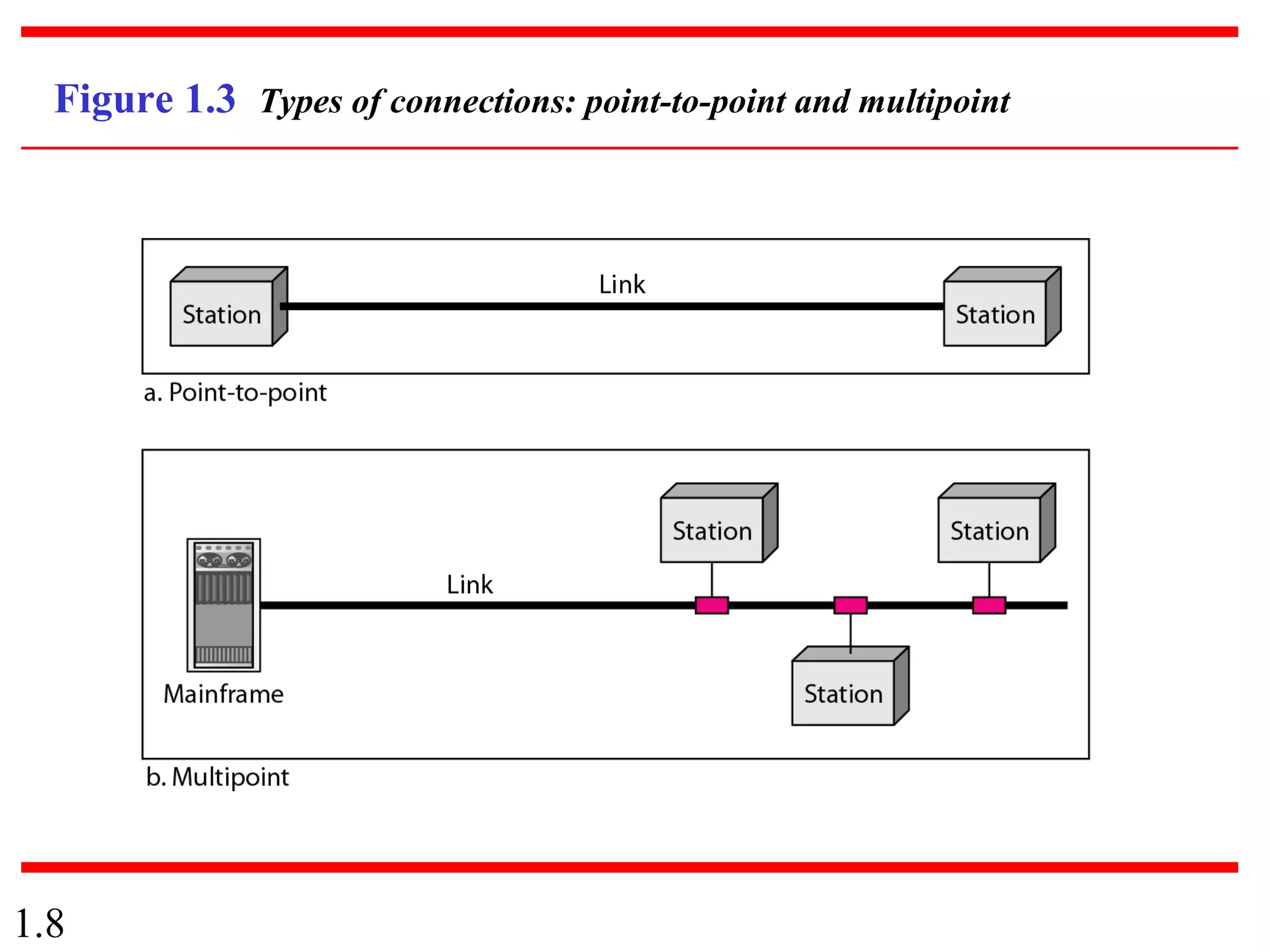
 Point to Point - single transmitter and receiver
 Multipoint - multiple recipients of single transmission
 Physical Topology
 Connection of devices
 Type of transmission - unicast, mulitcast, broadcast
1.8
Figure 1.3 Types of connections: point-to-point and multipoint
1.9
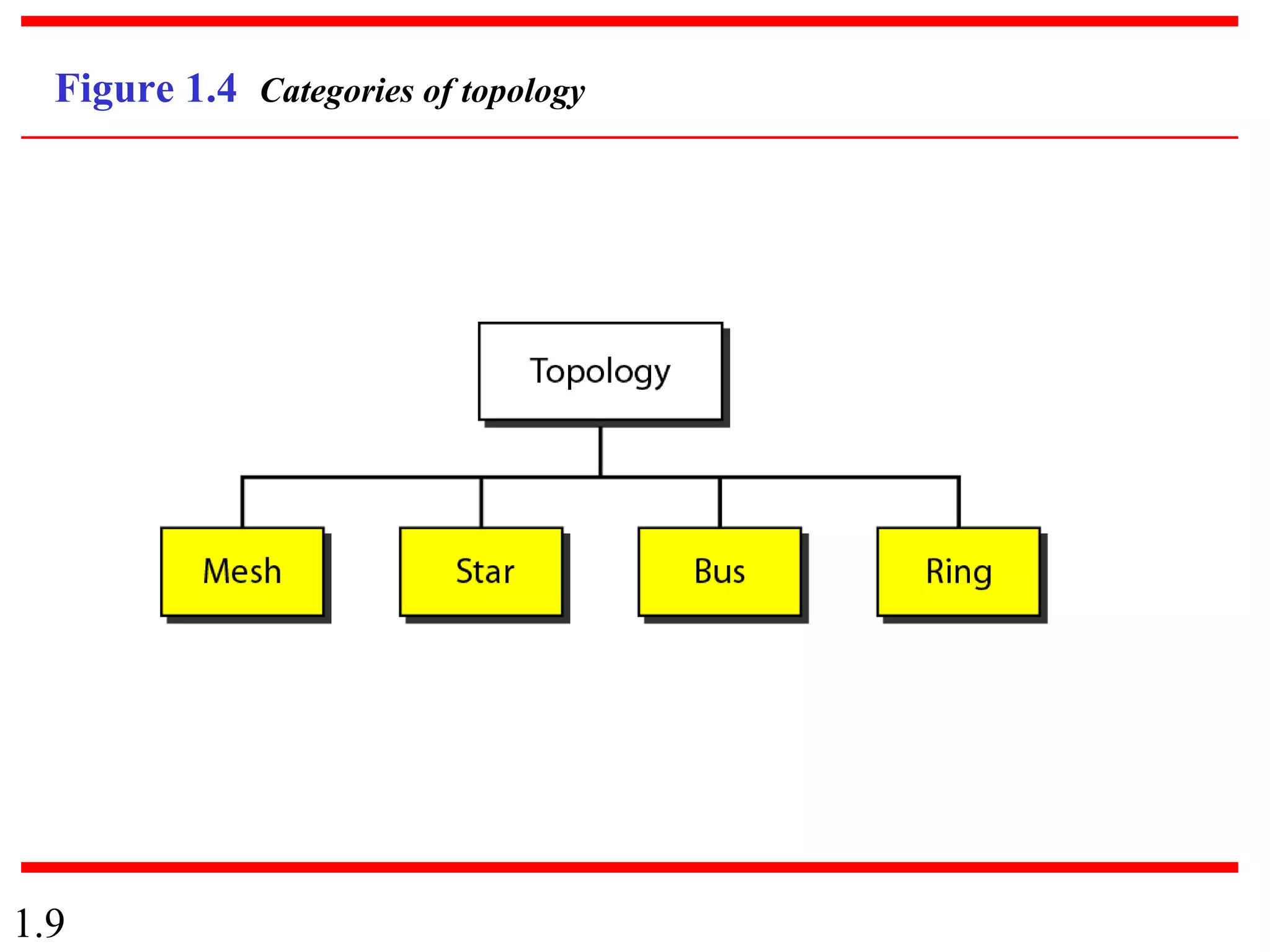
Figure 1.4 Categories of topology
1.10
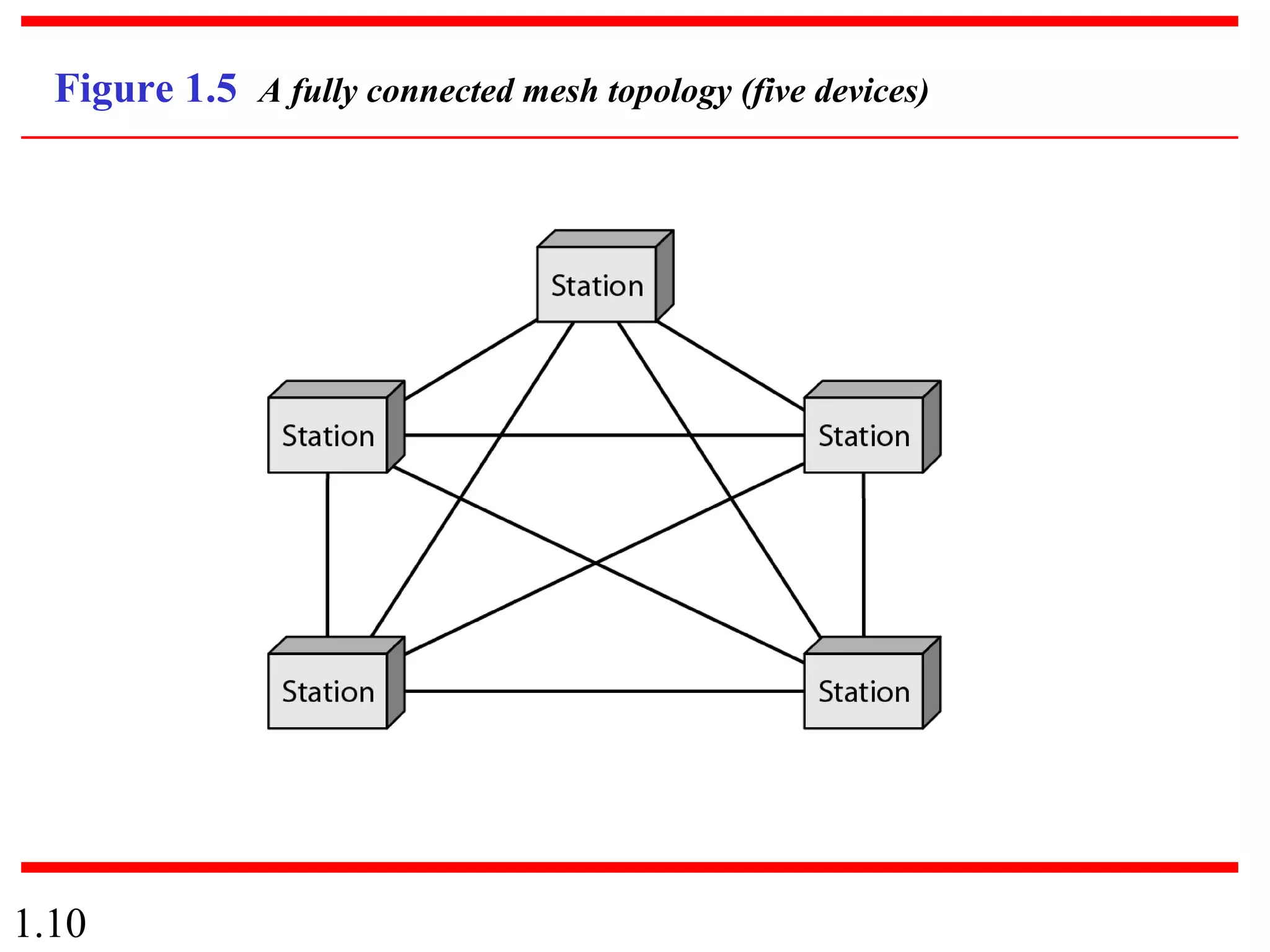
Figure 1.5 A fully connected mesh topology (five devices)
1.11
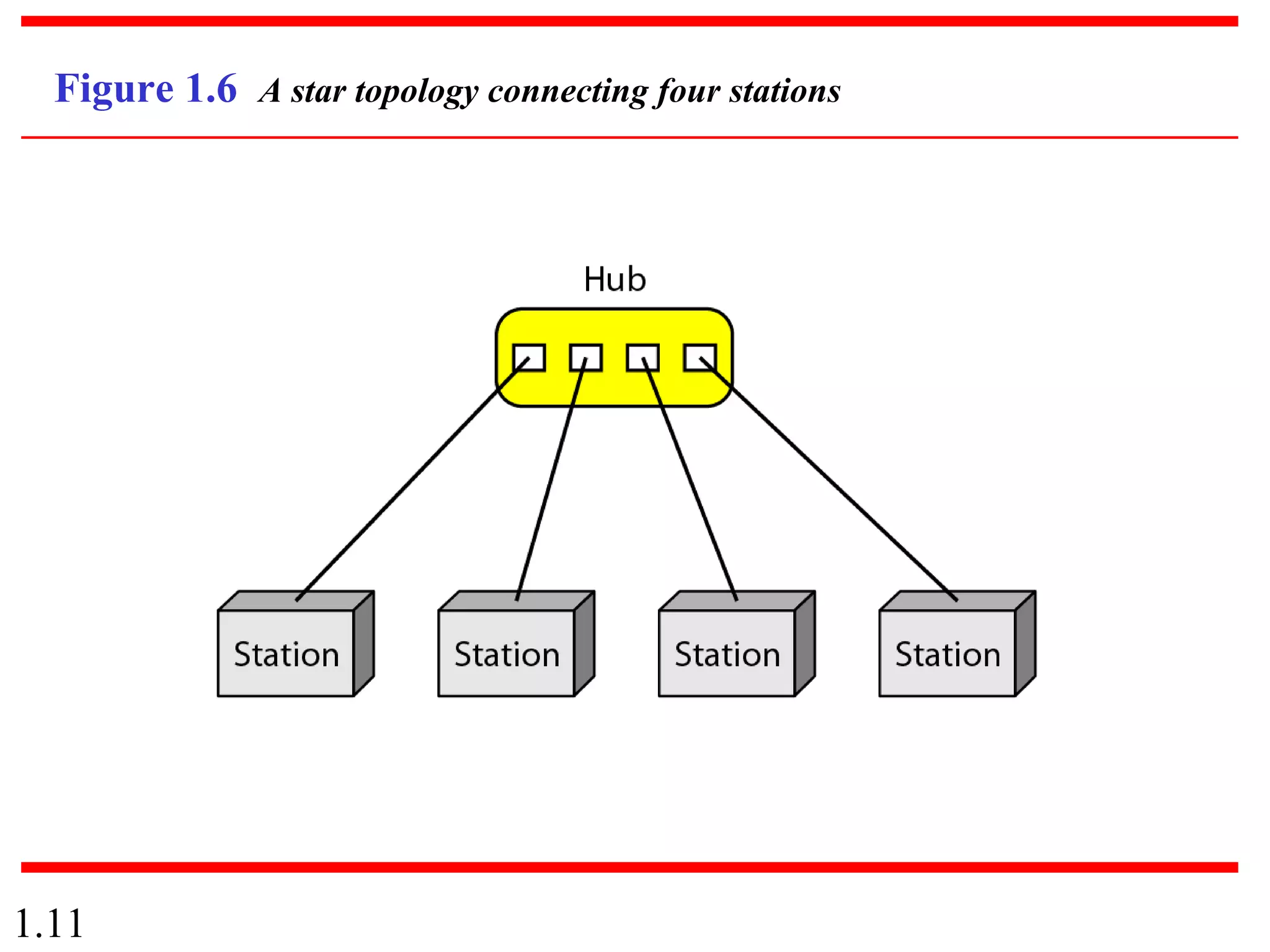
Figure 1.6 A star topology connecting four stations
1.12
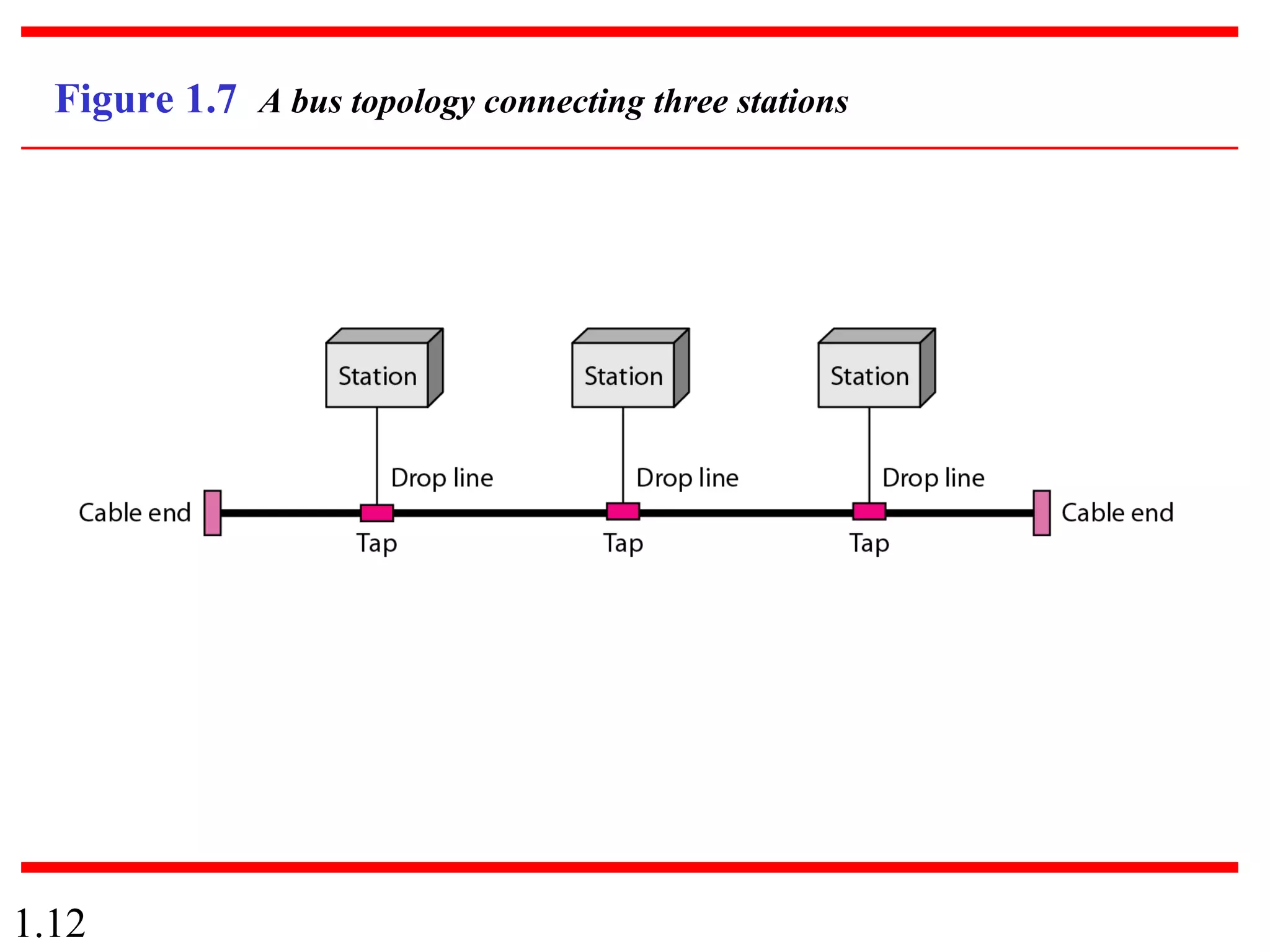
Figure 1.7 A bus topology connecting three stations
1.13
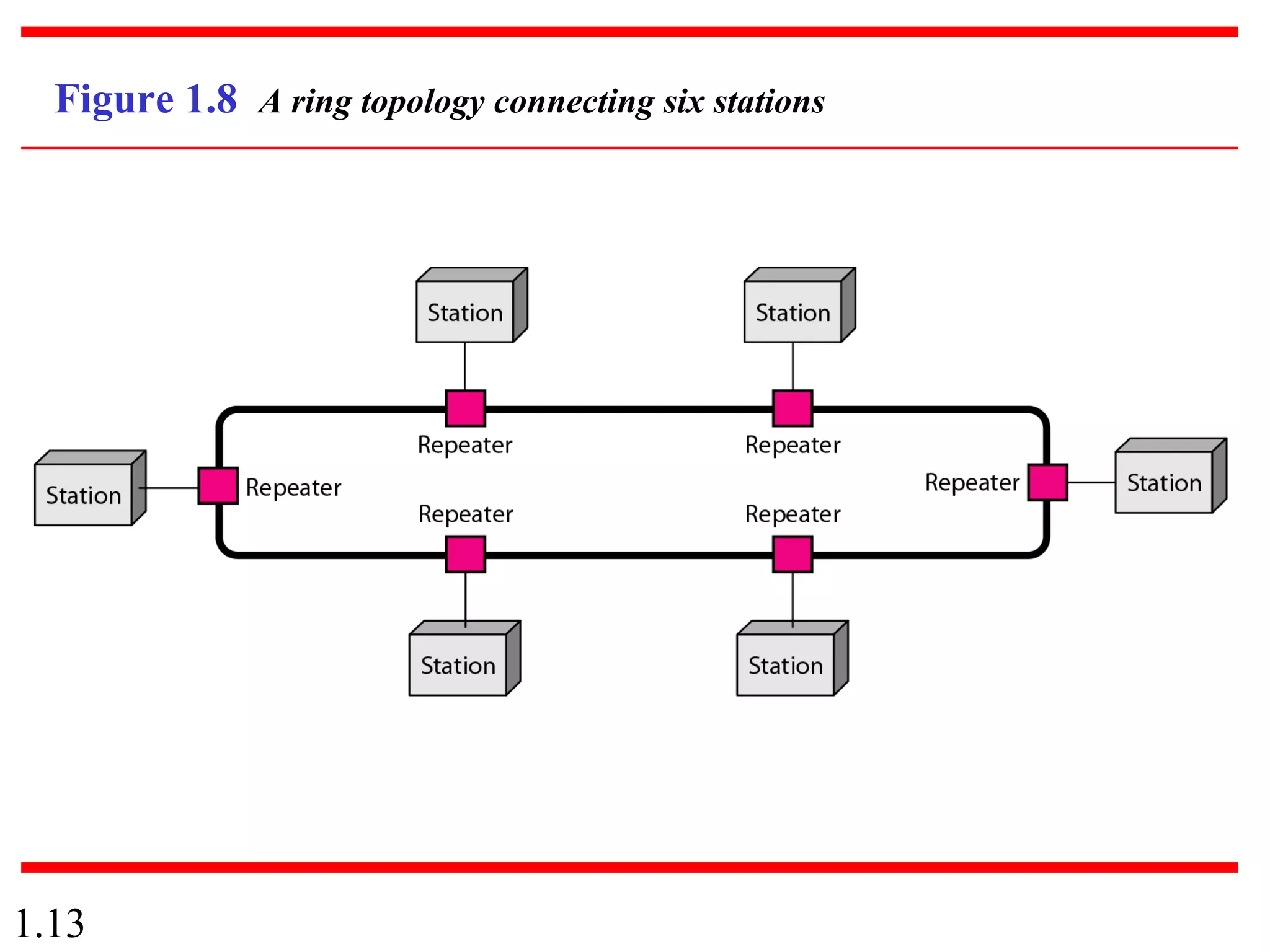
Figure 1.8 A ring topology connecting six stations
1.14
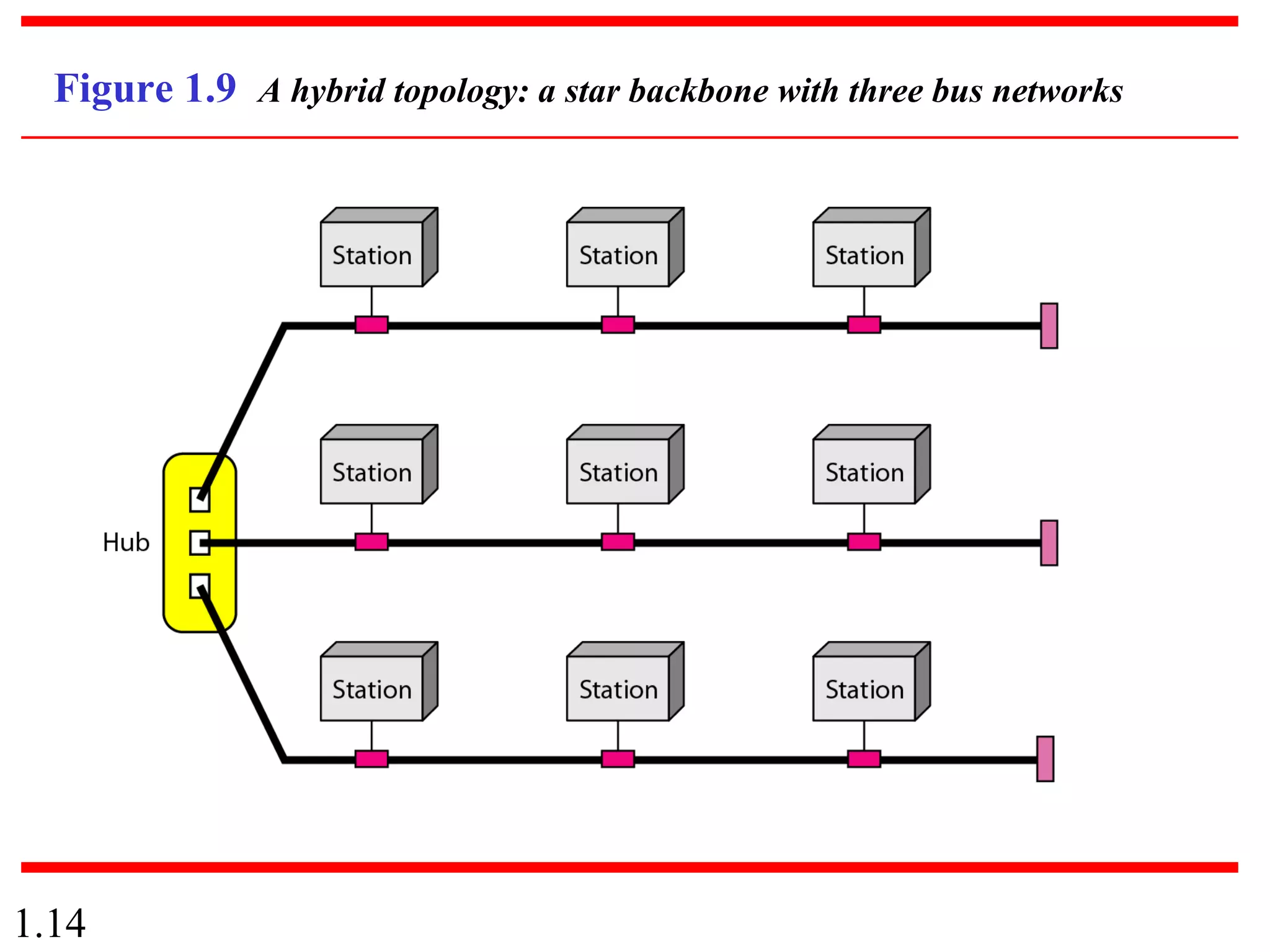
Figure 1.9 A hybrid topology: a star backbone with three bus networks
1.15
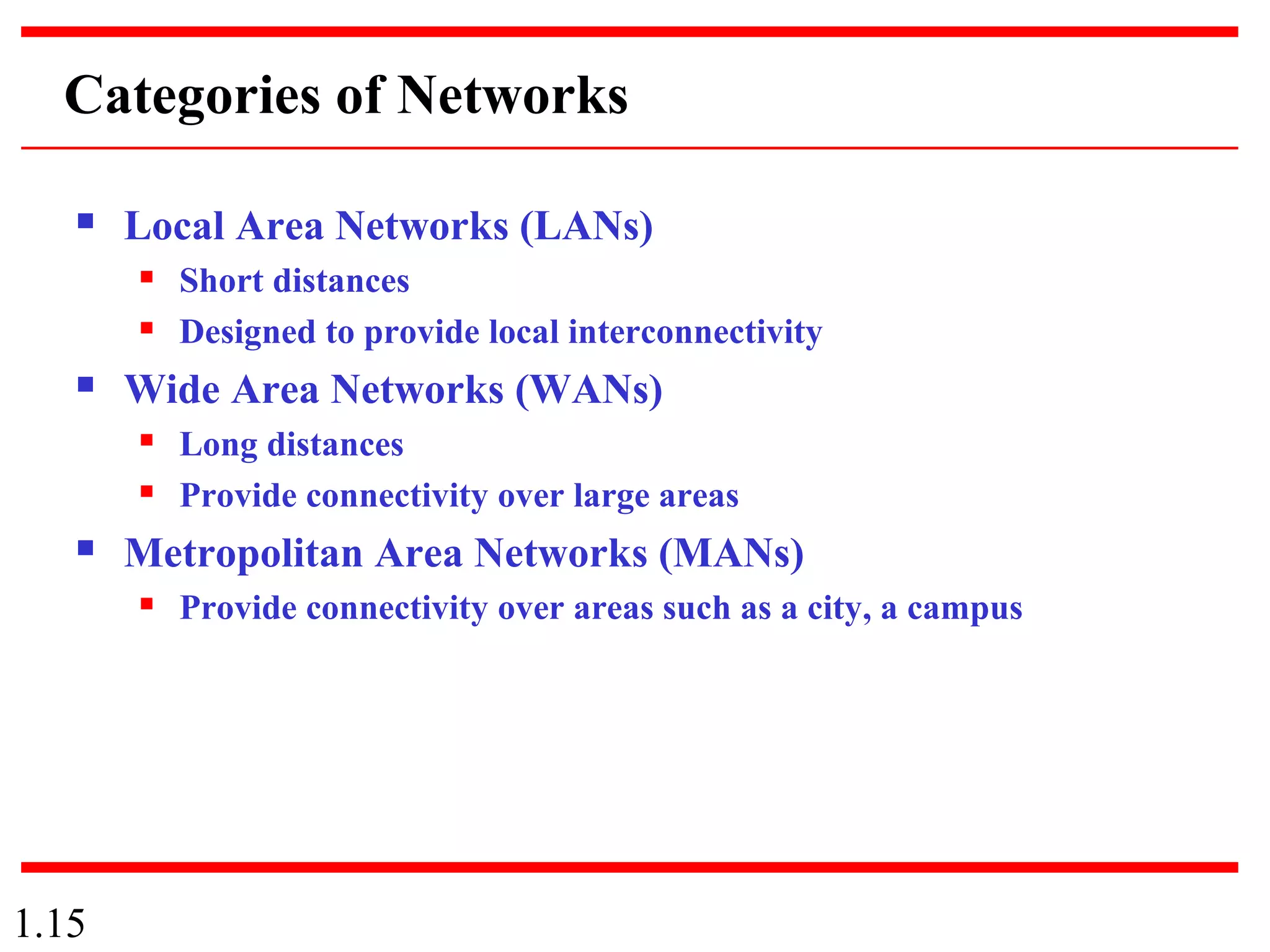
Categories of Networks
 Local Area Networks (LANs)
 Short distances
 Designed to provide local interconnectivity
 Wide Area Networks (WANs)
 Long distances
 Provide connectivity over large areas
 Metropolitan Area Networks (MANs)
 Provide connectivity over areas such as a city, a campus
1.16
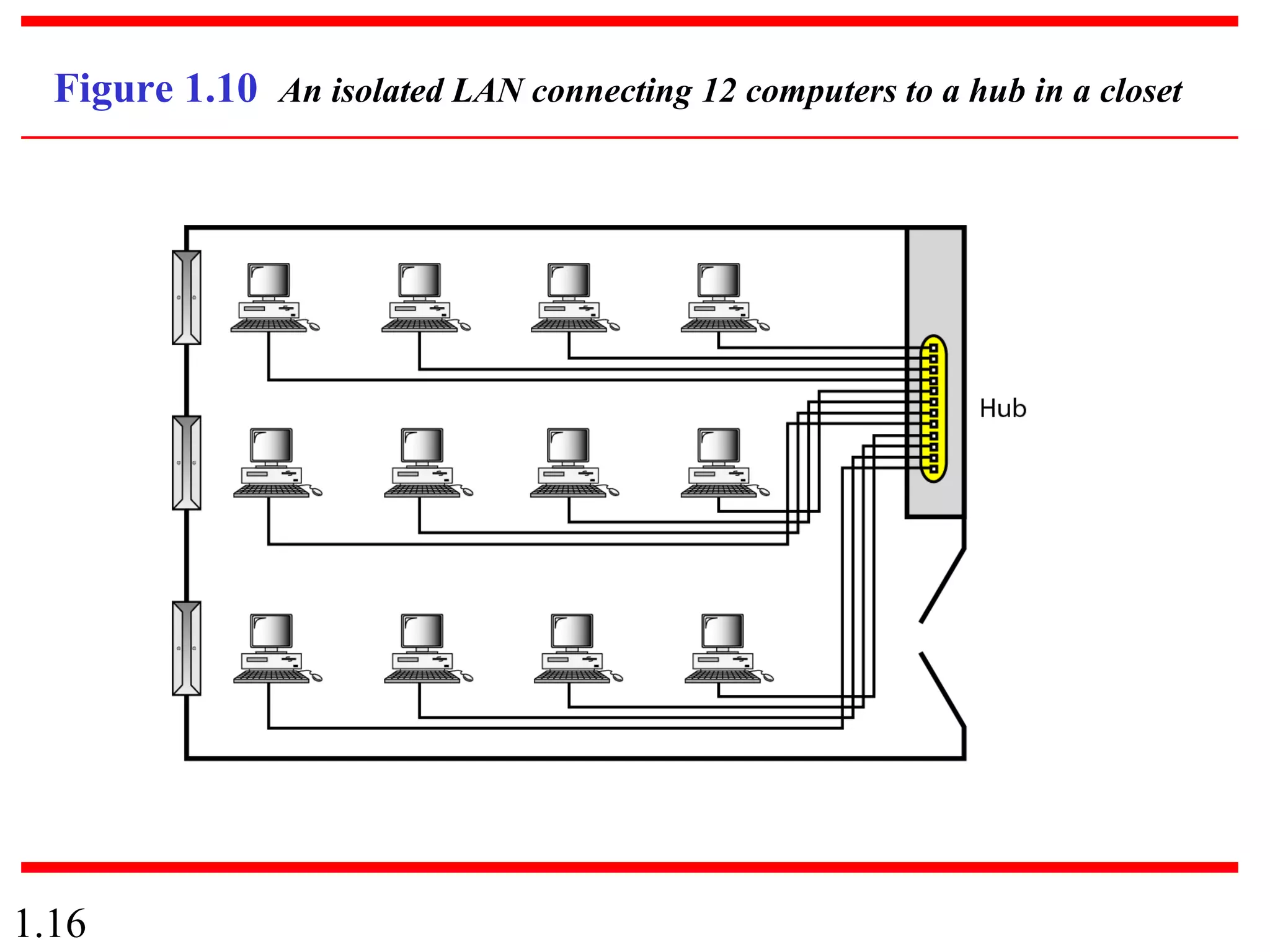
Figure 1.10 An isolated LAN connecting 12 computers to a hub in a closet
1.17
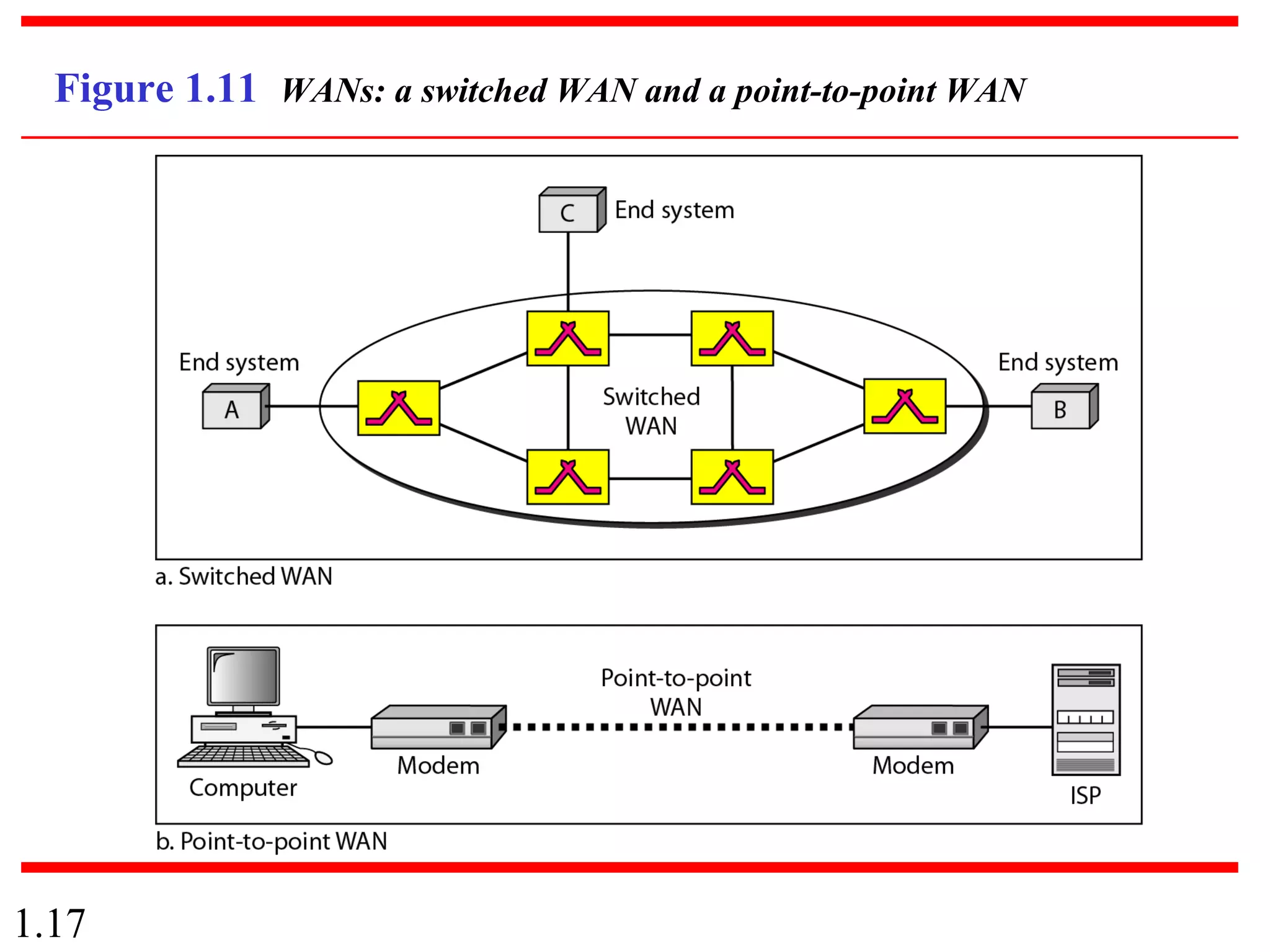
Figure 1.11 WANs: a switched WAN and a point-to-point WAN
1.18
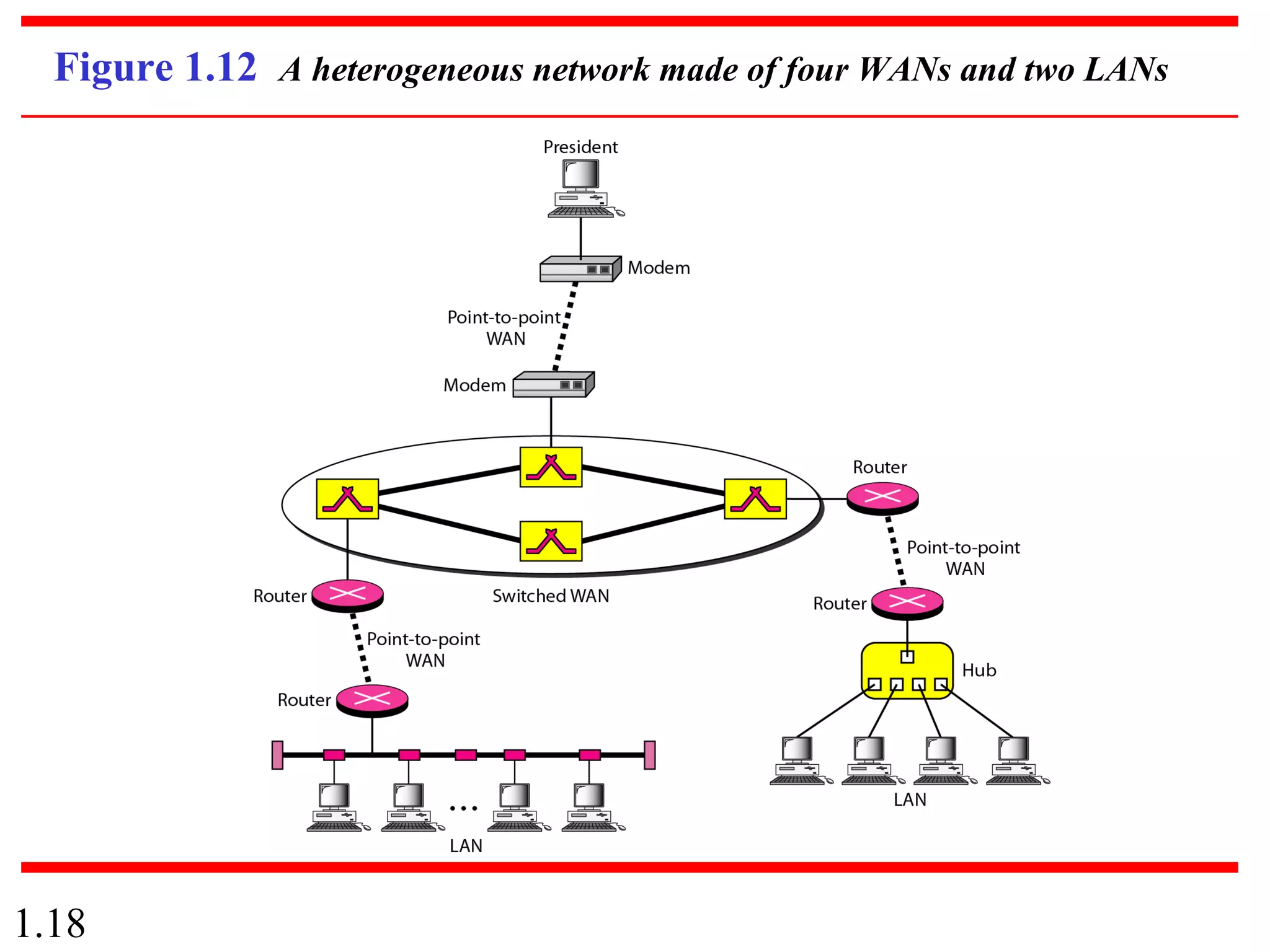
Figure 1.12 A heterogeneous network made of four WANs and two LANs
1.19
1-3 THE INTERNET1-3 THE INTERNET
TheThe InternetInternet has revolutionized many aspects of our dailyhas revolutionized many aspects of our daily
lives. It has affected the way we do business as well as thelives. It has affected the way we do business as well as the
way we spend our leisure time. The Internet is away we spend our leisure time. The Internet is a
communication system that has brought a wealth ofcommunication system that has brought a wealth of
information to our fingertips and organized it for our use.information to our fingertips and organized it for our use.
Organization of the Internet
Internet Service Providers (ISPs)
Topics discussed in this section:Topics discussed in this section:
1.20
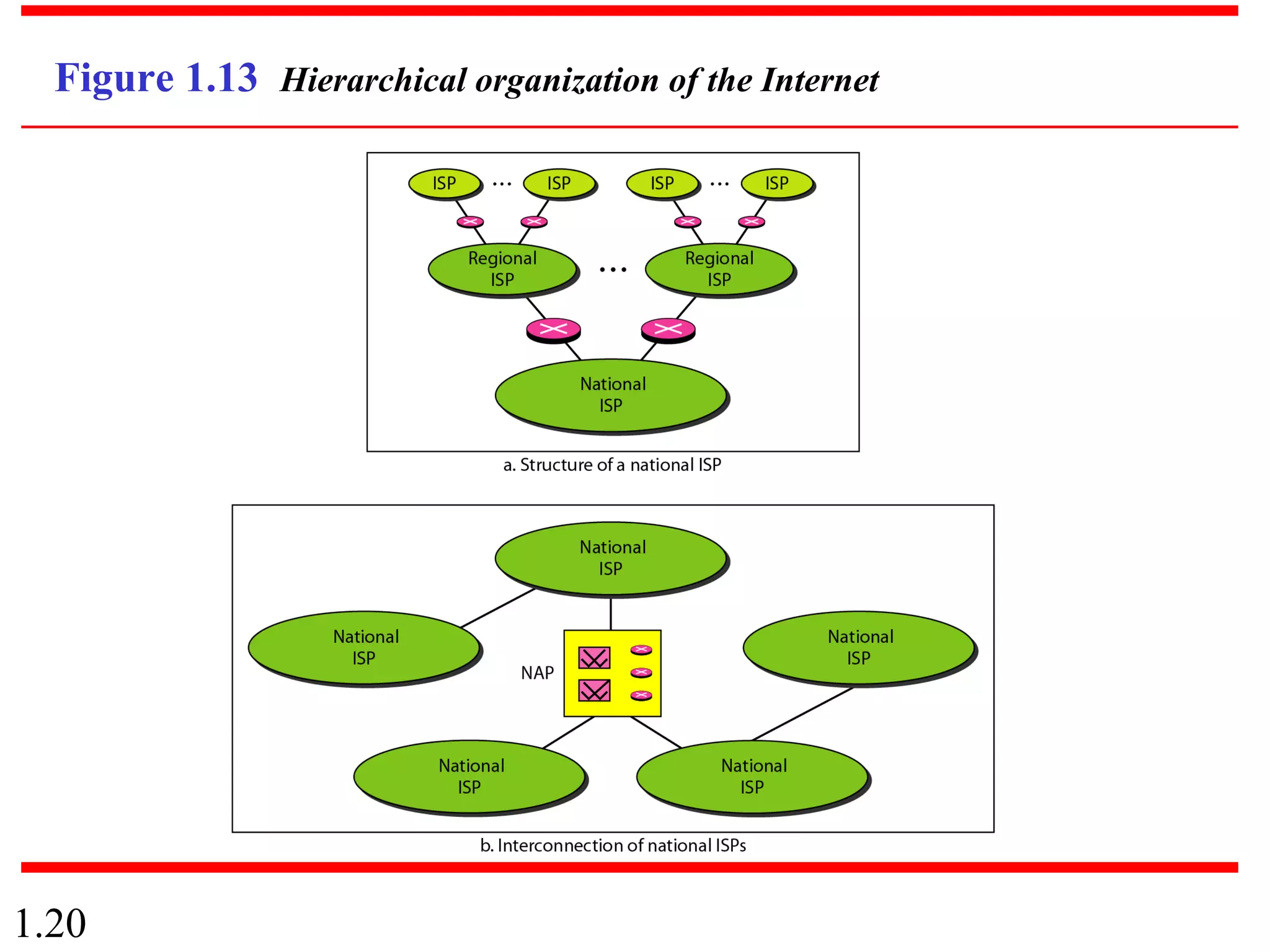
Figure 1.13 Hierarchical organization of the Internet
1.21
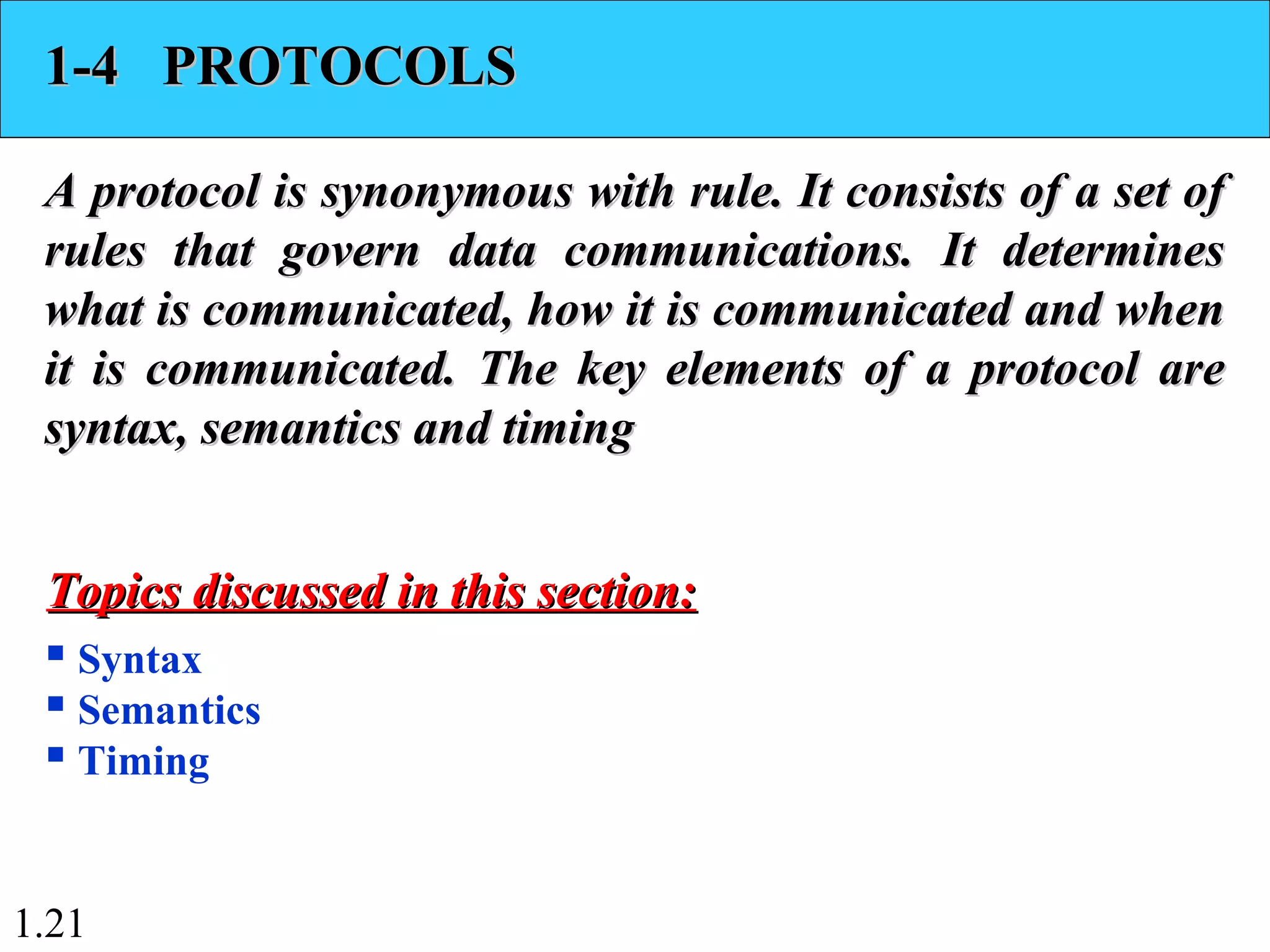
1-4 PROTOCOLS1-4 PROTOCOLS
A protocol is synonymous with rule. It consists of a set ofA protocol is synonymous with rule. It consists of a set of
rules that govern data communications. It determinesrules that govern data communications. It determines
what is communicated, how it is communicated and whenwhat is communicated, how it is communicated and when
it is communicated. The key elements of a protocol areit is communicated. The key elements of a protocol are
syntax, semantics and timingsyntax, semantics and timing
 Syntax
 Semantics
 Timing
Topics discussed in this section:Topics discussed in this section:
1.22
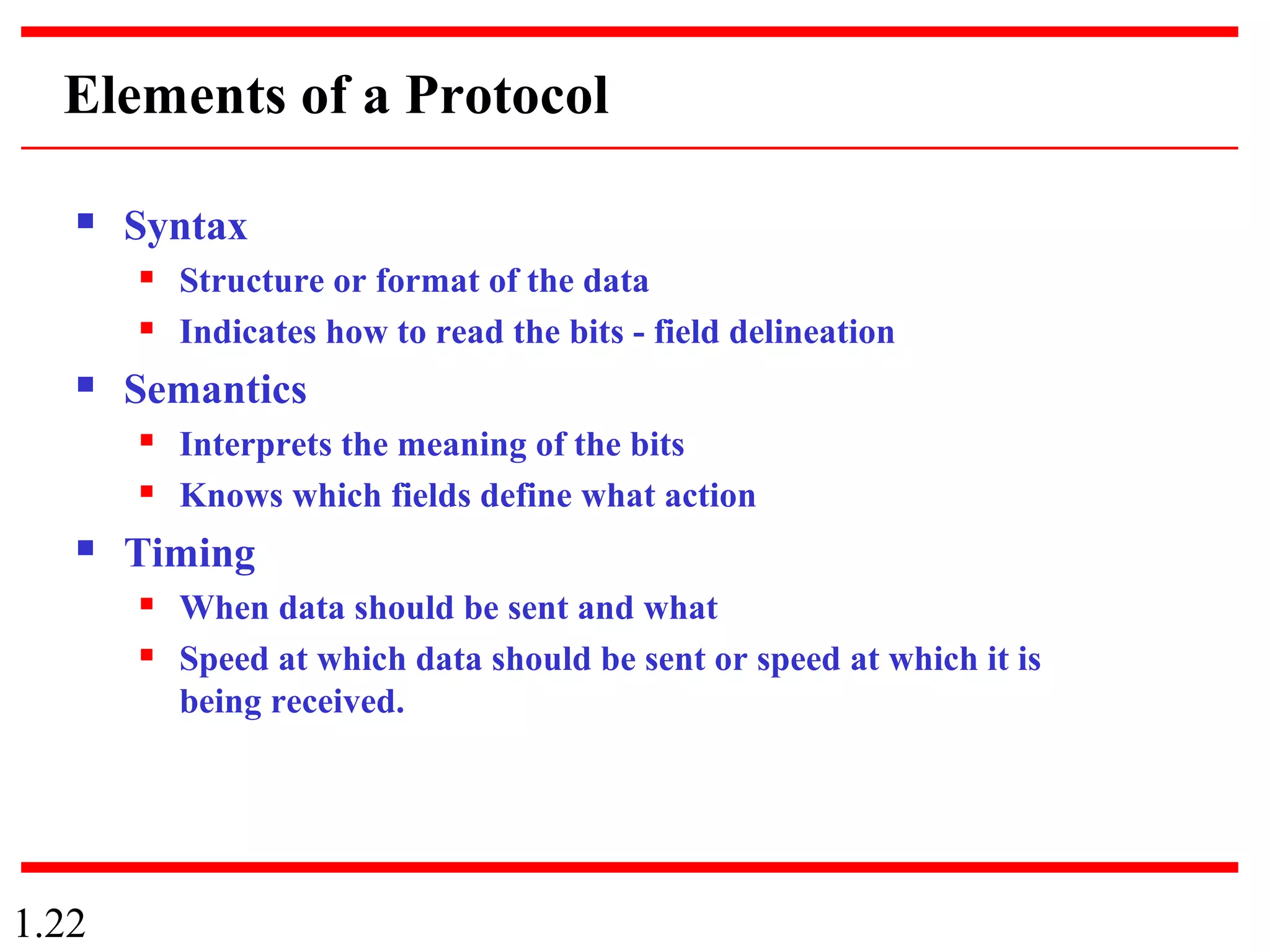
Elements of a Protocol
 Syntax
 Structure or format of the data
 Indicates how to read the bits - field delineation
 Semantics
 Interprets the meaning of the bits
 Knows which fields define what action
 Timing
 When data should be sent and what
 Speed at which data should be sent or speed at which it is
being received.

Ch1 v1

  • 1.
    1.1 Chapter 1 Introduction Copyright ©The McGraw-Hill Companies, Inc. Permission required for reproduction or display.
  • 2.
    1.2 1-1 DATA COMMUNICATIONS1-1DATA COMMUNICATIONS The termThe term telecommunicationtelecommunication means communication at ameans communication at a distance. The worddistance. The word datadata refers to information presentedrefers to information presented in whatever form is agreed upon by the parties creatingin whatever form is agreed upon by the parties creating and using the data.and using the data. Data communicationsData communications are theare the exchange of data between two devices via some form ofexchange of data between two devices via some form of transmission medium such as a wire cable.transmission medium such as a wire cable.  Components of a data communications system  Data Flow Topics discussed in this section:Topics discussed in this section:
  • 3.
    1.3 Figure 1.1 Componentsof a data communication system
  • 4.
    1.4 Figure 1.2 Dataflow (simplex, half-duplex, and full-duplex)
  • 5.
    1.5 1-2 NETWORKS1-2 NETWORKS AAnetworknetwork is a set of devices (often referred to asis a set of devices (often referred to as nodesnodes)) connected by communicationconnected by communication linkslinks. A node can be a. A node can be a computer, printer, or any other device capable of sendingcomputer, printer, or any other device capable of sending and/or receiving data generated by other nodes on theand/or receiving data generated by other nodes on the network. A link can be a cable, air, optical fiber, or anynetwork. A link can be a cable, air, optical fiber, or any medium which can transport a signal carryingmedium which can transport a signal carrying information.information.  Network Criteria  Physical Structures  Categories of Networks Topics discussed in this section:Topics discussed in this section:
  • 6.
    1.6 Network Criteria  Performance Depends on Network Elements  Measured in terms of Delay and Throughput  Reliability  Failure rate of network components  Measured in terms of availability/robustness  Security  Data protection against corruption/loss of data due to:  Errors  Malicious users
  • 7.
    1.7 Physical Structures  Typeof Connection  Point to Point - single transmitter and receiver  Multipoint - multiple recipients of single transmission  Physical Topology  Connection of devices  Type of transmission - unicast, mulitcast, broadcast
  • 8.
    1.8 Figure 1.3 Typesof connections: point-to-point and multipoint
  • 9.
  • 10.
    1.10 Figure 1.5 Afully connected mesh topology (five devices)
  • 11.
    1.11 Figure 1.6 Astar topology connecting four stations
  • 12.
    1.12 Figure 1.7 Abus topology connecting three stations
  • 13.
    1.13 Figure 1.8 Aring topology connecting six stations
  • 14.
    1.14 Figure 1.9 Ahybrid topology: a star backbone with three bus networks
  • 15.
    1.15 Categories of Networks Local Area Networks (LANs)  Short distances  Designed to provide local interconnectivity  Wide Area Networks (WANs)  Long distances  Provide connectivity over large areas  Metropolitan Area Networks (MANs)  Provide connectivity over areas such as a city, a campus
  • 16.
    1.16 Figure 1.10 Anisolated LAN connecting 12 computers to a hub in a closet
  • 17.
    1.17 Figure 1.11 WANs:a switched WAN and a point-to-point WAN
  • 18.
    1.18 Figure 1.12 Aheterogeneous network made of four WANs and two LANs
  • 19.
    1.19 1-3 THE INTERNET1-3THE INTERNET TheThe InternetInternet has revolutionized many aspects of our dailyhas revolutionized many aspects of our daily lives. It has affected the way we do business as well as thelives. It has affected the way we do business as well as the way we spend our leisure time. The Internet is away we spend our leisure time. The Internet is a communication system that has brought a wealth ofcommunication system that has brought a wealth of information to our fingertips and organized it for our use.information to our fingertips and organized it for our use. Organization of the Internet Internet Service Providers (ISPs) Topics discussed in this section:Topics discussed in this section:
  • 20.
    1.20 Figure 1.13 Hierarchicalorganization of the Internet
  • 21.
    1.21 1-4 PROTOCOLS1-4 PROTOCOLS Aprotocol is synonymous with rule. It consists of a set ofA protocol is synonymous with rule. It consists of a set of rules that govern data communications. It determinesrules that govern data communications. It determines what is communicated, how it is communicated and whenwhat is communicated, how it is communicated and when it is communicated. The key elements of a protocol areit is communicated. The key elements of a protocol are syntax, semantics and timingsyntax, semantics and timing  Syntax  Semantics  Timing Topics discussed in this section:Topics discussed in this section:
  • 22.
    1.22 Elements of aProtocol  Syntax  Structure or format of the data  Indicates how to read the bits - field delineation  Semantics  Interprets the meaning of the bits  Knows which fields define what action  Timing  When data should be sent and what  Speed at which data should be sent or speed at which it is being received.