


Human Environment Interaction: North America
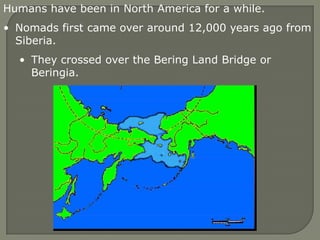
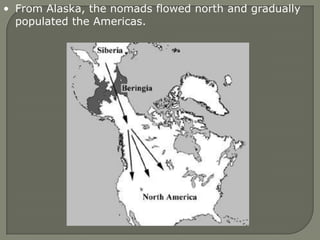
Humans have been in North America for a while.Nomads first came over around 12,000 years ago from Siberia.
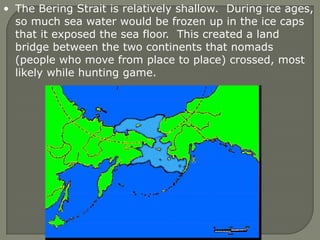
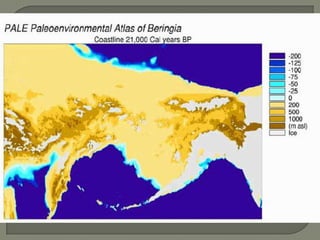
They crossed over the Bering Land Bridge or Beringia.The Bering Strait is relatively shallow.  During ice ages, so much sea water would be frozen up in the ice caps that it exposed the sea floor.  This created a land bridge between the two continents that nomads (people who move from place to place) crossed, most likely while hunting game.
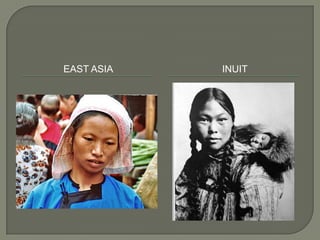
From Alaska, the nomads flowed north and gradually populated the Americas.East AsiaInuit
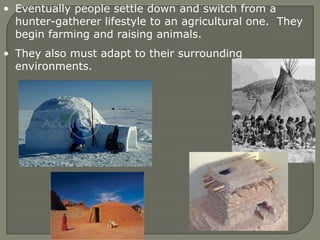
Eventually people settle down and switch from a hunter-gatherer lifestyle to an agricultural one.  They begin farming and raising animals.
They also must adapt to their surrounding environments.Eventually cities pop upWhere they are and what the land is like determines how the city develops.
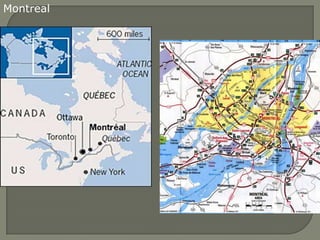
Let’s look at each of the book’s two examples:Montreal
On a big island where two important rivers meet: the St. Lawrence River and the Ottawa River
Located here because of the rivers.  Prime trading and transportation location.
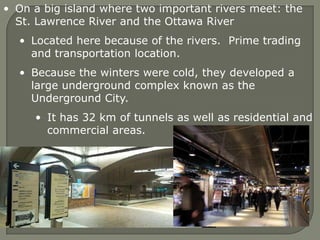
Because the winters were cold, they developed a large underground complex known as the Underground City.
It has 32 km of tunnels as well as residential and commercial areas.Los Angeles
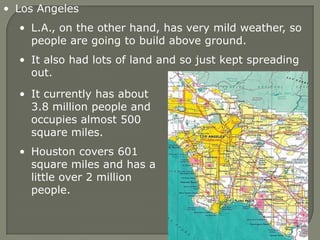
L.A., on the other hand, has very mild weather, so people are going to build above ground.
It also had lots of land and so just kept spreading out.
It currently has about 3.8 million people and occupies almost 500 square miles.
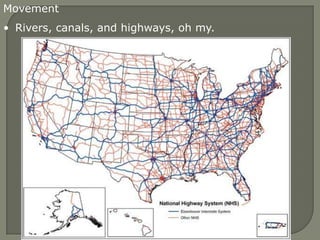
Houston covers 601 square miles and has a little over 2 million people.MovementRivers, canals, and highways, oh my.St. Lawrence Seaway
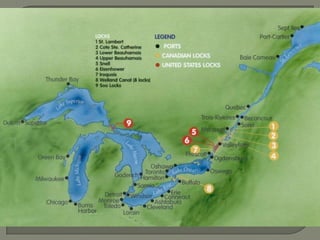
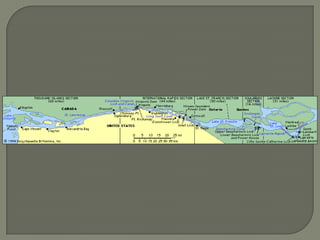
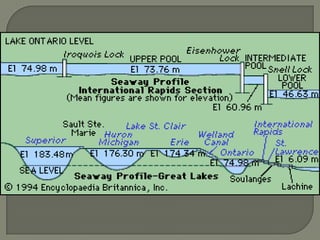
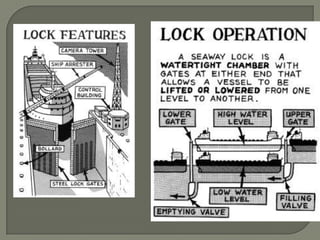
A canal system built to connect the Great Lakes to each other (they’re not naturally connected) and with the sea.
This way, ships can travel from the Atlantic to industrial centers along the Lakes, e.g. Detroit and Chicago.
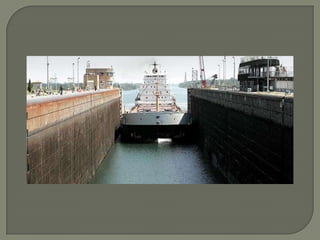
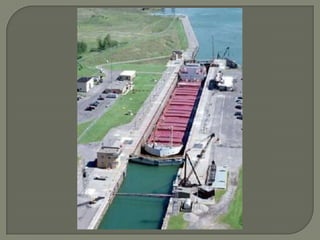
Because the Lakes are at differing elevations, however, a lock system is used.
Time-Lapse Video of the Erie Canal
The Seaway was made for trade purposes, but there’s debate about how successful it is.
It’s too small by today’s standards and many parts are too shallow.  Only 10% of oceangoing vessels can navigate the entire route.

ch, 5.3 human environment interaction

  • 1.
  • 2.
    Humans have beenin North America for a while.Nomads first came over around 12,000 years ago from Siberia.
  • 3.
    They crossed overthe Bering Land Bridge or Beringia.The Bering Strait is relatively shallow. During ice ages, so much sea water would be frozen up in the ice caps that it exposed the sea floor. This created a land bridge between the two continents that nomads (people who move from place to place) crossed, most likely while hunting game.
  • 4.
    From Alaska, thenomads flowed north and gradually populated the Americas.East AsiaInuit
  • 5.
    Eventually people settledown and switch from a hunter-gatherer lifestyle to an agricultural one. They begin farming and raising animals.
  • 6.
    They also mustadapt to their surrounding environments.Eventually cities pop upWhere they are and what the land is like determines how the city develops.
  • 7.
    Let’s look ateach of the book’s two examples:Montreal
  • 8.
    On a bigisland where two important rivers meet: the St. Lawrence River and the Ottawa River
  • 9.
    Located here becauseof the rivers. Prime trading and transportation location.
  • 10.
    Because the winterswere cold, they developed a large underground complex known as the Underground City.
  • 11.
    It has 32km of tunnels as well as residential and commercial areas.Los Angeles
  • 12.
    L.A., on theother hand, has very mild weather, so people are going to build above ground.
  • 13.
    It also hadlots of land and so just kept spreading out.
  • 14.
    It currently hasabout 3.8 million people and occupies almost 500 square miles.
  • 15.
    Houston covers 601square miles and has a little over 2 million people.MovementRivers, canals, and highways, oh my.St. Lawrence Seaway
  • 16.
    A canal systembuilt to connect the Great Lakes to each other (they’re not naturally connected) and with the sea.
  • 17.
    This way, shipscan travel from the Atlantic to industrial centers along the Lakes, e.g. Detroit and Chicago.
  • 18.
    Because the Lakesare at differing elevations, however, a lock system is used.
  • 24.
    Time-Lapse Video ofthe Erie Canal
  • 25.
    The Seaway wasmade for trade purposes, but there’s debate about how successful it is.
  • 26.
    It’s too smallby today’s standards and many parts are too shallow. Only 10% of oceangoing vessels can navigate the entire route.