Ch 24-2 Sun and seasons
Earth The Earth moves in two ways Rotation – the Earth’s spinning on its’ axis This causes day and night Takes 24 hours to complete Revolution – Movement around the sun This causes the seasons Takes 365 1/4 days to complete
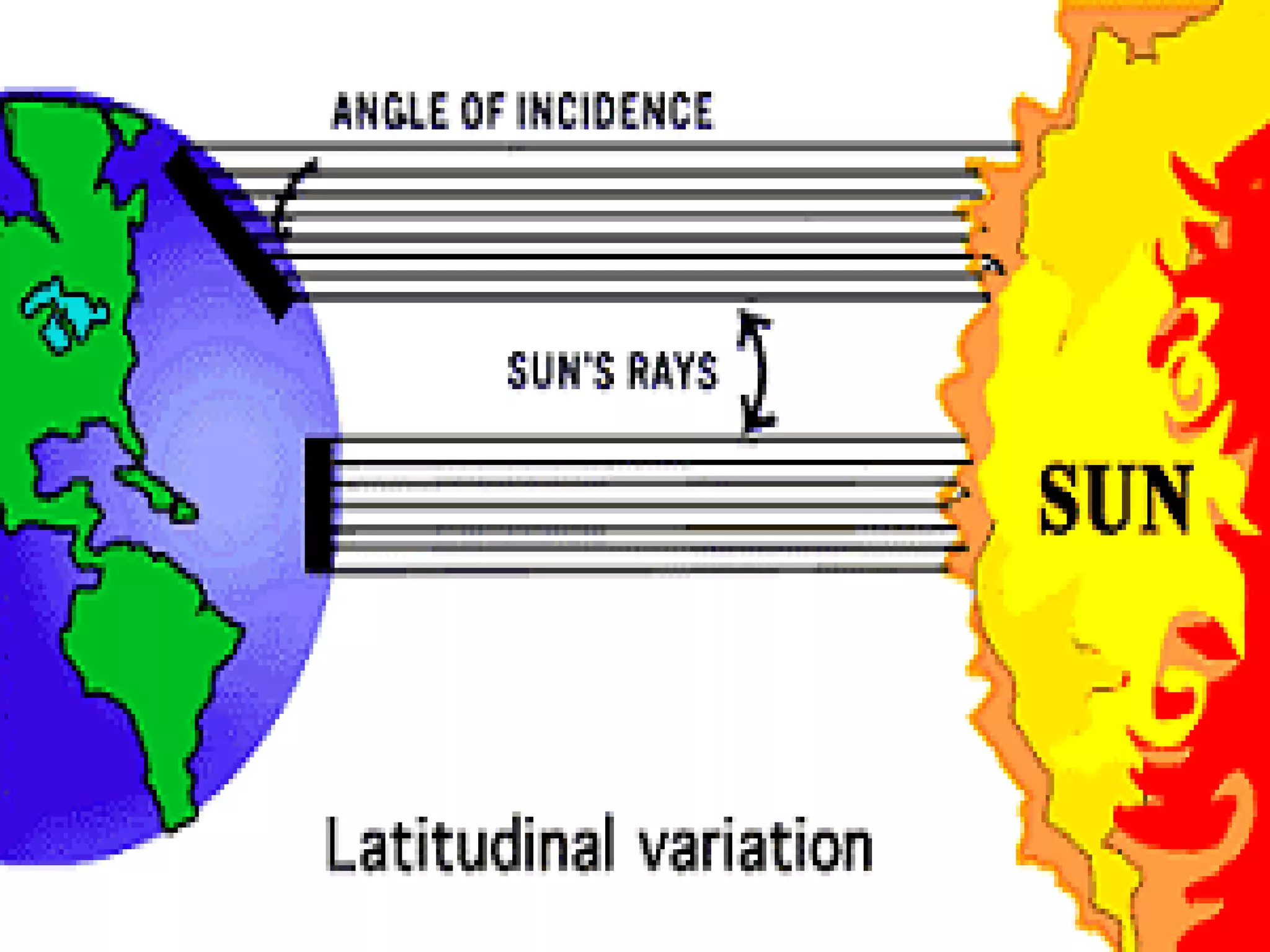
Latitude Zones Latitude measures degrees north and south of the equator 0 degrees is equator, 90 degrees are the poles Three regions Tropics below 23.5 degrees north and south Temperate between 23.5 and 66.5 degrees Polar above 66.5 degrees
 
Seasons The Earth’s axis is tilted 23.5 degrees. As Earth orbits the sun its axis changes relative to the sun At some point the sun is closer to the north tropic line (our summer) and southern tropic (our winter) The seasons are caused by the tilt of the Earth’s axis as it moves around the sun.
 
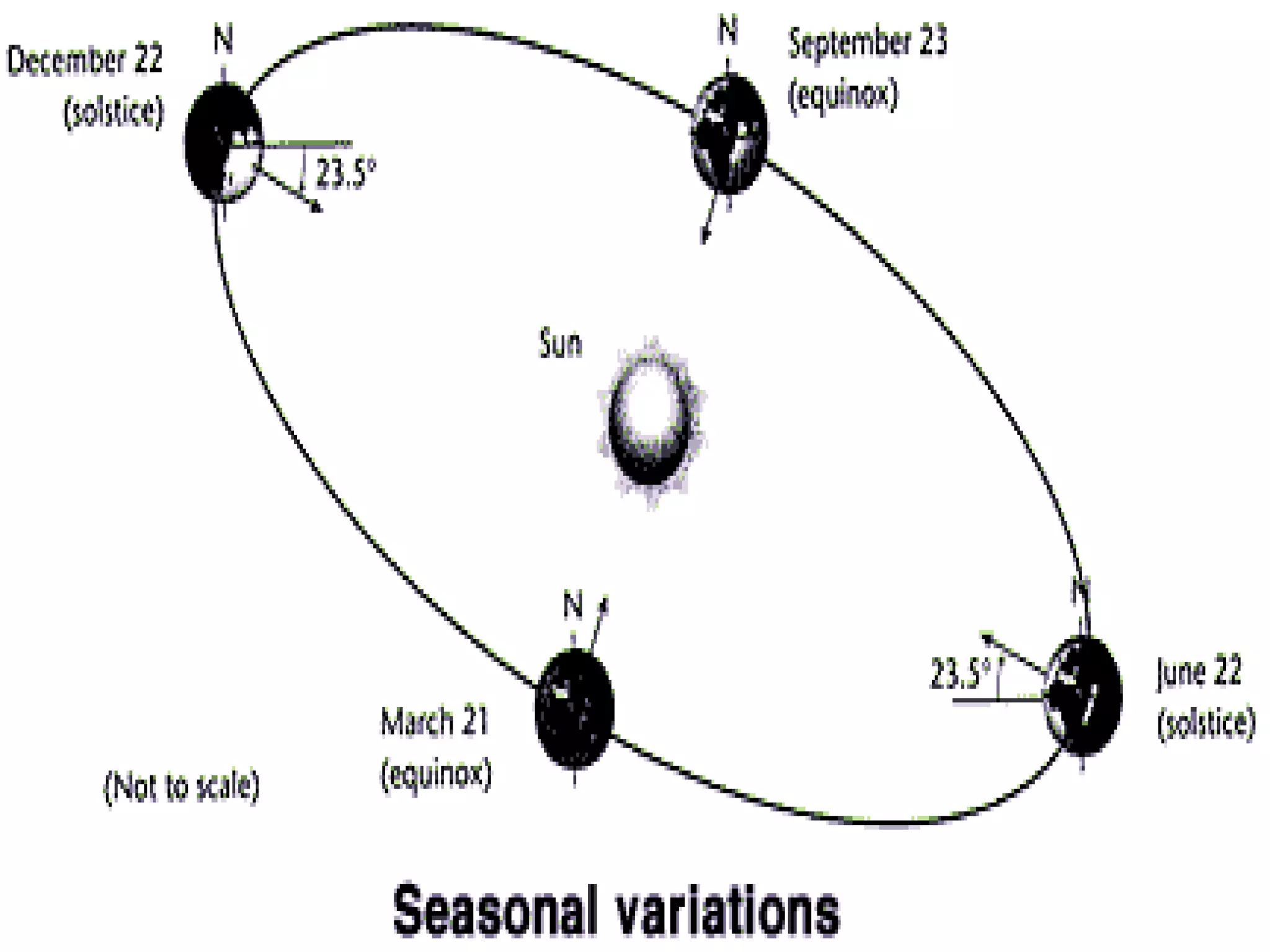
Seasons Solstice  occurs twice a year when the sun is directly overhead of 23.5 degrees June 21 summer solstice longest day of sun, December 21 winter solstice shortest day of sun Equinox  occurs twice a year when the sun is directly above the equator. March 21 spring equinox, September 22 is Autumn equinox
Ch 24 2

  • 1.
    Ch 24-2 Sunand seasons
  • 2.
    Earth The Earthmoves in two ways Rotation – the Earth’s spinning on its’ axis This causes day and night Takes 24 hours to complete Revolution – Movement around the sun This causes the seasons Takes 365 1/4 days to complete
  • 3.
    Latitude Zones Latitudemeasures degrees north and south of the equator 0 degrees is equator, 90 degrees are the poles Three regions Tropics below 23.5 degrees north and south Temperate between 23.5 and 66.5 degrees Polar above 66.5 degrees
  • 4.
  • 5.
    Seasons The Earth’saxis is tilted 23.5 degrees. As Earth orbits the sun its axis changes relative to the sun At some point the sun is closer to the north tropic line (our summer) and southern tropic (our winter) The seasons are caused by the tilt of the Earth’s axis as it moves around the sun.
  • 6.
  • 7.
    Seasons Solstice occurs twice a year when the sun is directly overhead of 23.5 degrees June 21 summer solstice longest day of sun, December 21 winter solstice shortest day of sun Equinox occurs twice a year when the sun is directly above the equator. March 21 spring equinox, September 22 is Autumn equinox