INSIDE OUR EARTH
L AY E R S O F E A RT H , R O C K S A N D M I N E R A L S
LAYERS OF THE
EARTH
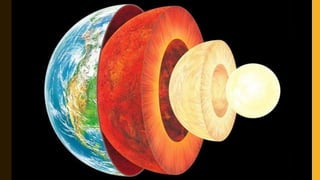
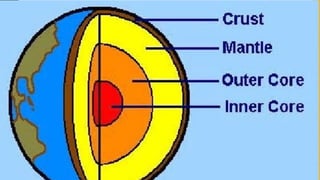
CRUST
• It is the outermost solid layer of the earth.
• It is made up of the lightest materials.
• It is 35 kms on the continental masses and 5 km on the
oceanic masses.
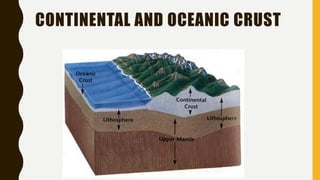
• The continental crust is mainly made up of silica and alumina
hence called SIAL.
• The oceanic crust is made of silica and magnesium hence
called SIMA.
• The crust comprises only 1 percent of the earth’s crust.
CONTINENTAL AND OCEANIC CRUST
MANTLE
• Mantle is made up of the molten rocks.
• It is 2900 kms deep beneath the crust.
• The average temperatures in this layer are 2200 degree
Celsius.
• It is made up of denser material.
• Mantle comprises 84 percent of the earth’s surface.
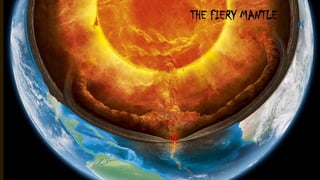
MANTLE THE FIERY MANTLE
CORE
• It is the innermost, hottest and densest layer of the earth.
• The main ingredients in this layer are nickle and ferrum. Hence
it is called NIFE.
• The inner core has average temperatures of 6000 degrees
Celsius.
• Due to the extreme pressure of the overlying layers, the inner
core is in soild stae.
• It comprises of 15 percent of the earth’s volume.
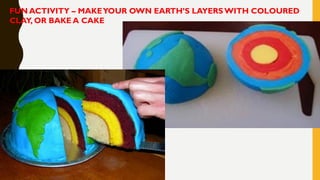
FUN ACTIVITY – MAKEYOUR OWN EARTH’S LAYERS WITH COLOURED
CLAY, OR BAKE A CAKE
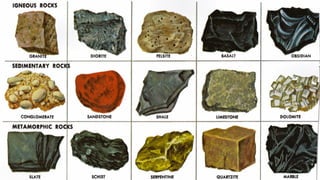
TYPES OF
ROCKS
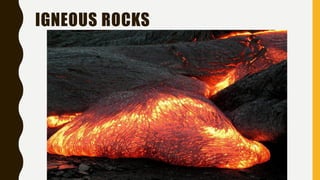
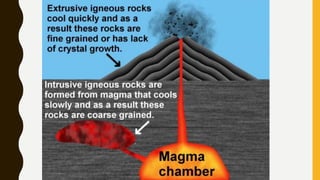
IGNEOUS ROCKS
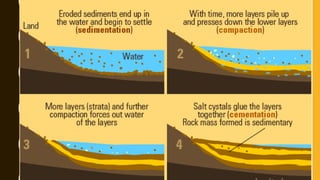
SEDIMENTARY ROCKS
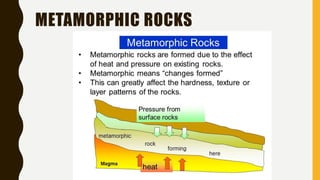
METAMORPHIC ROCKS
ROCK CYCLE
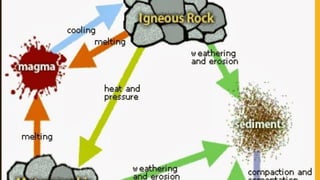
• When the molten magma cools; it solidifies to
become igneous rock.
• These igneous rocks are broken down into small
particles that are transported and deposited to form
sedimentary rocks.
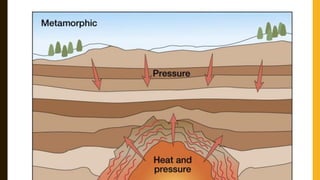
• When the igneous and sedimentary rocks are
subjected to heat and pressure they change into
metamorphic rocks.
• The metamorphic rocks which are still under great
heat and pressure melt down to form molten magma.
• This molten magma again can cool down and solidify
into igneous rocks
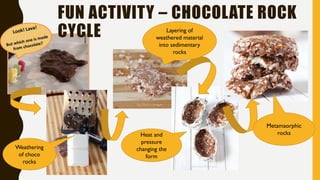
FUN ACTIVITY – CHOCOLATE ROCK
CYCLE
Weathering
of choco
rocks
Layering of
weathered material
into sedimentary
rocks
Heat and
pressure
changing the
form
Metamaorphic
rocks
MINERALS
WHAT ARE MINERALS
• Minerals are naturally occurring substances
which have certain physical properties and
definite chemical composition.
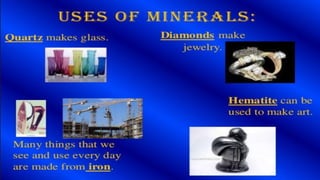
• Some are used as fuels. For example, coal,
natural gas and petroleum.
• They are also used in industries – iron, aluminium,
gold, uranium, etc, in medicine, in fertilisers, etc.
R E C A P
• The earth’s interior is made of three distinct concentric circles –
crust mantle and core.
• Crust is our home – the outermost layer – made of lightest
material – forming continental and oceanic crusts,
• Mantle forms the biggest part of earth’s volume and is made of
molten rocks.
• Core is the densest layer made of iron and nickel that is
responsible for earth’s gravity.
• There are three ajor types of rocks – igneous, sedimentary and
metamorphic.
• Igneous are formed by the solidification of lava.When the
weathered rock segments sre solidified – sedimentary rocks are
formed.The rocks under heat and pressure are metamorphosed
to form the metamorphic rocks.
• Rocks contain substances of definite chemical compositions
called minerals that are useful in various industries.

Ch 2 Inside Our Earth 2.pdf

  • 1.
    INSIDE OUR EARTH LAY E R S O F E A RT H , R O C K S A N D M I N E R A L S
  • 2.
  • 5.
    CRUST • It isthe outermost solid layer of the earth. • It is made up of the lightest materials. • It is 35 kms on the continental masses and 5 km on the oceanic masses. • The continental crust is mainly made up of silica and alumina hence called SIAL. • The oceanic crust is made of silica and magnesium hence called SIMA. • The crust comprises only 1 percent of the earth’s crust.
  • 6.
  • 7.
    MANTLE • Mantle ismade up of the molten rocks. • It is 2900 kms deep beneath the crust. • The average temperatures in this layer are 2200 degree Celsius. • It is made up of denser material. • Mantle comprises 84 percent of the earth’s surface.
  • 8.
  • 9.
    CORE • It isthe innermost, hottest and densest layer of the earth. • The main ingredients in this layer are nickle and ferrum. Hence it is called NIFE. • The inner core has average temperatures of 6000 degrees Celsius. • Due to the extreme pressure of the overlying layers, the inner core is in soild stae. • It comprises of 15 percent of the earth’s volume.
  • 11.
    FUN ACTIVITY –MAKEYOUR OWN EARTH’S LAYERS WITH COLOURED CLAY, OR BAKE A CAKE
  • 12.
  • 13.
  • 15.
  • 17.
  • 20.
    ROCK CYCLE • Whenthe molten magma cools; it solidifies to become igneous rock. • These igneous rocks are broken down into small particles that are transported and deposited to form sedimentary rocks. • When the igneous and sedimentary rocks are subjected to heat and pressure they change into metamorphic rocks. • The metamorphic rocks which are still under great heat and pressure melt down to form molten magma. • This molten magma again can cool down and solidify into igneous rocks
  • 22.
    FUN ACTIVITY –CHOCOLATE ROCK CYCLE Weathering of choco rocks Layering of weathered material into sedimentary rocks Heat and pressure changing the form Metamaorphic rocks
  • 23.
  • 24.
    WHAT ARE MINERALS •Minerals are naturally occurring substances which have certain physical properties and definite chemical composition. • Some are used as fuels. For example, coal, natural gas and petroleum. • They are also used in industries – iron, aluminium, gold, uranium, etc, in medicine, in fertilisers, etc.
  • 26.
    R E CA P • The earth’s interior is made of three distinct concentric circles – crust mantle and core. • Crust is our home – the outermost layer – made of lightest material – forming continental and oceanic crusts, • Mantle forms the biggest part of earth’s volume and is made of molten rocks. • Core is the densest layer made of iron and nickel that is responsible for earth’s gravity. • There are three ajor types of rocks – igneous, sedimentary and metamorphic. • Igneous are formed by the solidification of lava.When the weathered rock segments sre solidified – sedimentary rocks are formed.The rocks under heat and pressure are metamorphosed to form the metamorphic rocks. • Rocks contain substances of definite chemical compositions called minerals that are useful in various industries.