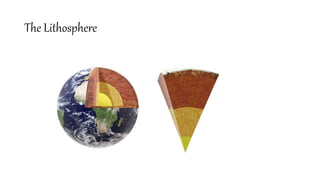
The Lithosphere
Lesson objectives
After this lesson, learners will be able to :
• Define lithosphere
• Differentiate between Earth’s layers.
• Identify different types of rocks
• Value the importance of the lithosphere
The Lithosphere
The lithosphere is considered the outer layer of the Earth.
It consists of all the mountains, rocks, stones, top soil and sand found
on the planet.
It also includes all the rocks under the sea and under the surface of
the Earth.
The lithosphere is found all around us and we interact quite closely
with it everyday.
Continue
OCEANIC: Which is associated with oceanic crust
and exists in the ocean basins.
Continental: This is associated with continental crust
(mountains, plateaus, plains).
The lithosphere is important because it provides us
forests, grasslands for grazing, land for agriculture
and human settlements and I also a rich source of
minerals.
Lithosphere is where the living things on Earth
thrive and strive.
Lithosphere
What is inside
the earth?
This Photo by Unknown Author is licensed under CC BY
This how earth look like inside
There are three(3)
layers of the earth.
 Lithosphere is
considered as the outer
layer of the earth.
 Inside the earth there
are three layers.
 Namely; crust, mantle,
and core.
 Each layer is divided
into two.
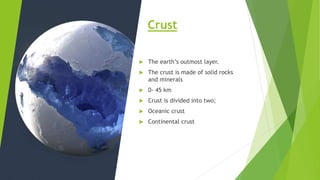
Crust
 The earth’s outmost layer.
 The crust is made of solid rocks
and minerals
 0- 45 km
 Crust is divided into two;
 Oceanic crust
 Continental crust
Mantle
 Mantle is the mostly – solid bulk of the earth’s interior .
 45- 2900 km
 The mantle lies between Earth’s dense, super-heated
core and its thin outer layer crust.
 The mantle is about 2 900 km thick and makes up a
whopping 84% of Earth’s total volume.
 It is divided into two;
 The lower mantle
 The upper mantle
Core
 Earth’s core is the very hot, very
dense centre of our planet.
 2900- 6371 km
 The core has two parts;
 Inner core (solid);
 The temperature of the Earth’s
inner core is about the same
temperature as the surface of the
sun.
 Outer core ( liquid)
The Rock Cycle
The rock cycle
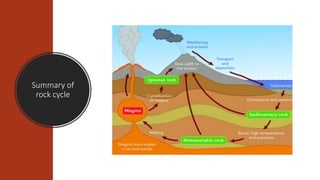
 The rock cycle is a natural continuous process in which
rocks form, are broken down and re-form again over long
periods of time.
 Wind, water, heat and cold cause the weathering of rocks
on the surface of the Earth. The rocks are broken up into
smaller and smaller pieces and form sand
 Wind and water wash the sand and small stones away
and deposit them as sediments into lakes and the ocean.
This process is called deposition.
Continue
 The sediments settle at the bottom of the oceans, lakes and
rivers. Over time they get covered with more layers of sediment.
The pressure from the additional layers causes the sediments to
compact and solidify to form sedimentary rock.
 The sedimentary rock may be buried deeper and deeper
beneath the surface of the Earth through movement in the Earth's
crust (where oceanic plates and continental plates meet). The
rocks can also be pushed deeper (subducted) into the Earth. As
the rocks move deeper into the Earth, temperature and pressure
increase.
CONTINUE
 Rocks become more compact as processes of compaction and
cementation occur. As the chemical compounds in the rocks
change, due to heat and pressure, metamorphic rock is formed.
 Over time the metamorphic rock can move deeper into the
Earth, melt and become magma.
 Magma moves towards the surface of the Earth through
volcanic pipes. The hot magma cools slowly on its way to the
surface and forms igneous rock. Magma can also break through
the surface as lava in volcanoes. In this case, the lava will
solidify quickly on the surface to form igneous rocks. Igneous
rock can form in the crust or on the surface.
 Igneous rocks get eroded by wind and water and the whole
process starts again.
Summary of
rock cycle
TYPES OF
ROCKS
THERE ARE THREE TYPES OF ROCKS
1. SEDIMENTARY
ROCK
2. METAMORPHIC
ROCK.
3. IGNEOUS ROCK.
SEDIMENTARY ROCKS
-Sedimentary refers to “ small pieces”
-Sedimentary rocks are types of rock that are formed by
the deposition of small particles and organic particles on
the floor of oceans at the earth’s surface.
-They are made from other rocks , once living things and
the precipitates.
-Examples includes, limestone, sandstone, and shale.
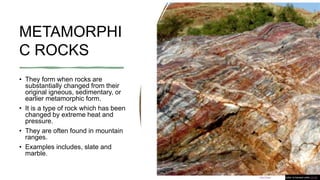
METAMORPHI
C ROCKS
• They form when rocks are
substantially changed from their
original igneous, sedimentary, or
earlier metamorphic form.
• It is a type of rock which has been
changed by extreme heat and
pressure.
• They are often found in mountain
ranges.
• Examples includes, slate and
marble.
This Photo by Unknown Author is licensed under CC BY
IGNEOUS ROCK
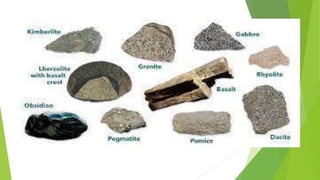
-It is the type of rock that is formed through the
cooling and solidification of magma or lava.
- They are used in flooring, landscaping and
construction projects.
-Their examples includes granite, basalt etc.
CONCLUSION
Lithosphere is the outer part of the earth.
Upper portion of the mantle and the crust.
Rock cycle Rock formation
Heat causes expansion of rocks a cold causes contraction.
Types of rocks, Sedimentary(layered), metamorphic
(Sedimentary and Igneous) and igneous rocks(molten rock).
ASSESSMENT
https://www.socrative.com
ROOM
NAME
:MANARE
LOGIN AS A
STUDENT
ENTER YOUR
NAME

natural science lithosphere.pptx

  • 1.
  • 2.
    Lesson objectives After thislesson, learners will be able to : • Define lithosphere • Differentiate between Earth’s layers. • Identify different types of rocks • Value the importance of the lithosphere
  • 3.
    The Lithosphere The lithosphereis considered the outer layer of the Earth. It consists of all the mountains, rocks, stones, top soil and sand found on the planet. It also includes all the rocks under the sea and under the surface of the Earth. The lithosphere is found all around us and we interact quite closely with it everyday.
  • 4.
    Continue OCEANIC: Which isassociated with oceanic crust and exists in the ocean basins. Continental: This is associated with continental crust (mountains, plateaus, plains). The lithosphere is important because it provides us forests, grasslands for grazing, land for agriculture and human settlements and I also a rich source of minerals. Lithosphere is where the living things on Earth thrive and strive.
  • 5.
  • 6.
    What is inside theearth? This Photo by Unknown Author is licensed under CC BY
  • 7.
    This how earthlook like inside
  • 8.
    There are three(3) layersof the earth.  Lithosphere is considered as the outer layer of the earth.  Inside the earth there are three layers.  Namely; crust, mantle, and core.  Each layer is divided into two.
  • 9.
    Crust  The earth’soutmost layer.  The crust is made of solid rocks and minerals  0- 45 km  Crust is divided into two;  Oceanic crust  Continental crust
  • 10.
    Mantle  Mantle isthe mostly – solid bulk of the earth’s interior .  45- 2900 km  The mantle lies between Earth’s dense, super-heated core and its thin outer layer crust.  The mantle is about 2 900 km thick and makes up a whopping 84% of Earth’s total volume.  It is divided into two;  The lower mantle  The upper mantle
  • 11.
    Core  Earth’s coreis the very hot, very dense centre of our planet.  2900- 6371 km  The core has two parts;  Inner core (solid);  The temperature of the Earth’s inner core is about the same temperature as the surface of the sun.  Outer core ( liquid)
  • 12.
  • 13.
    The rock cycle The rock cycle is a natural continuous process in which rocks form, are broken down and re-form again over long periods of time.  Wind, water, heat and cold cause the weathering of rocks on the surface of the Earth. The rocks are broken up into smaller and smaller pieces and form sand  Wind and water wash the sand and small stones away and deposit them as sediments into lakes and the ocean. This process is called deposition.
  • 14.
    Continue  The sedimentssettle at the bottom of the oceans, lakes and rivers. Over time they get covered with more layers of sediment. The pressure from the additional layers causes the sediments to compact and solidify to form sedimentary rock.  The sedimentary rock may be buried deeper and deeper beneath the surface of the Earth through movement in the Earth's crust (where oceanic plates and continental plates meet). The rocks can also be pushed deeper (subducted) into the Earth. As the rocks move deeper into the Earth, temperature and pressure increase.
  • 15.
    CONTINUE  Rocks becomemore compact as processes of compaction and cementation occur. As the chemical compounds in the rocks change, due to heat and pressure, metamorphic rock is formed.  Over time the metamorphic rock can move deeper into the Earth, melt and become magma.  Magma moves towards the surface of the Earth through volcanic pipes. The hot magma cools slowly on its way to the surface and forms igneous rock. Magma can also break through the surface as lava in volcanoes. In this case, the lava will solidify quickly on the surface to form igneous rocks. Igneous rock can form in the crust or on the surface.  Igneous rocks get eroded by wind and water and the whole process starts again.
  • 16.
  • 17.
  • 18.
    THERE ARE THREETYPES OF ROCKS 1. SEDIMENTARY ROCK 2. METAMORPHIC ROCK. 3. IGNEOUS ROCK.
  • 19.
  • 20.
    -Sedimentary refers to“ small pieces” -Sedimentary rocks are types of rock that are formed by the deposition of small particles and organic particles on the floor of oceans at the earth’s surface. -They are made from other rocks , once living things and the precipitates. -Examples includes, limestone, sandstone, and shale.
  • 21.
    METAMORPHI C ROCKS • Theyform when rocks are substantially changed from their original igneous, sedimentary, or earlier metamorphic form. • It is a type of rock which has been changed by extreme heat and pressure. • They are often found in mountain ranges. • Examples includes, slate and marble. This Photo by Unknown Author is licensed under CC BY
  • 22.
  • 23.
    -It is thetype of rock that is formed through the cooling and solidification of magma or lava. - They are used in flooring, landscaping and construction projects. -Their examples includes granite, basalt etc.
  • 25.
    CONCLUSION Lithosphere is theouter part of the earth. Upper portion of the mantle and the crust. Rock cycle Rock formation Heat causes expansion of rocks a cold causes contraction. Types of rocks, Sedimentary(layered), metamorphic (Sedimentary and Igneous) and igneous rocks(molten rock).
  • 26.